TUO Chef Knife Review: Is This Budget Japanese-Steel Knife Actually Worth Your Kitchen Counter?
A hands-on breakdown of blade steel, handle comfort, edge retention, and everyday cutting performance — plus how it stacks up against the competition.
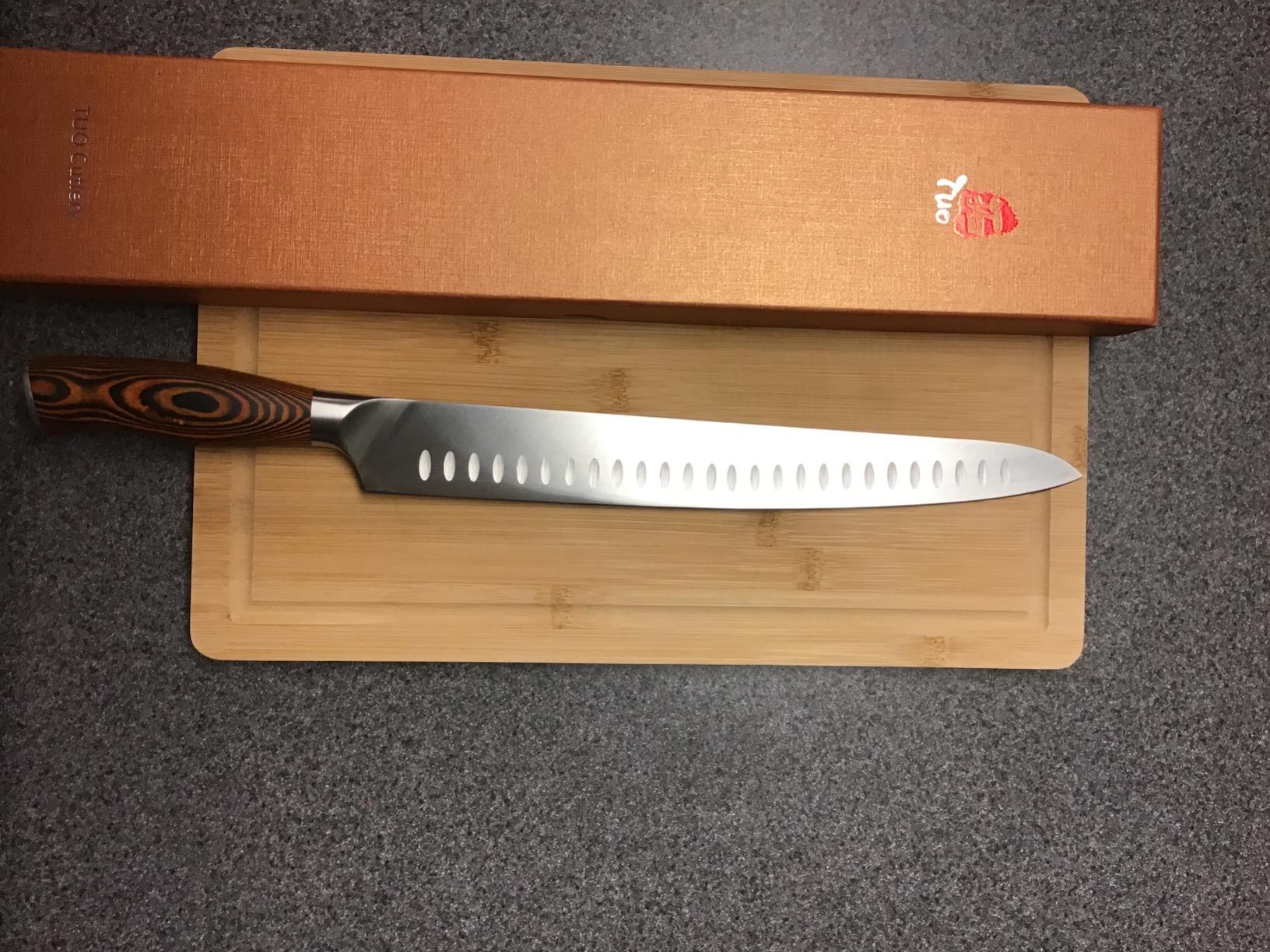
Overview: What Is the TUO Chef Knife?
If you’ve spent any time scrolling through kitchen knife forums or Amazon listings, you’ve probably run into the TUO chef knife more than once. It sits in that increasingly crowded middle tier of the market — knives that borrow heavily from Japanese blade geometry and high-carbon stainless steel formulas, but price themselves well below the German and Japanese heritage brands that popularized those features. The pitch is simple: give home cooks a thin, hard, sharp blade without the three-figure price tag usually attached to that combination.
TUO has built its entire brand identity around this value proposition. The company’s knives frequently reference AUS-10 stainless steel, a Damascus-style cladding pattern, and a Pakkawood handle — three things that, on paper, read like a knife twice its price. But specs on a product page rarely tell the full story of how a knife actually feels after two weeks of nightly dinner prep, so this review focuses on lived experience: how the blade behaves under a chef’s knuckles, how the edge holds up against onions and carrots and chicken thighs, and whether the fit and finish match the marketing photos.
We’ll walk through every meaningful attribute of this knife — steel composition, handle ergonomics, balance point, cutting performance across different ingredients, edge retention over repeated use, and how it compares to other knives in a similar price bracket, including some interesting alternatives covered in our best chef knives for home cooks roundup. If you’re deciding whether to add this knife to your kitchen or whether your money is better spent elsewhere, this guide should answer that question in full.
It’s also worth acknowledging upfront that “best” is a highly contextual word when it comes to kitchen knives. A knife that’s ideal for a professional line cook chopping vegetables for eight hours straight has a very different set of priorities than one meant for a home cook who prepares two or three meals a week. This review keeps that home-kitchen context front and center throughout, since it’s the environment the vast majority of readers researching this knife will actually be using it in.
Check current pricing, availability, and customer photos for the TUO chef knife on Amazon.
Check Price on AmazonFirst Impressions & Unboxing
The knife arrives in a fairly sturdy gift-style box with a magnetic clasp, which is a small but noticeable touch at this price point — plenty of budget knives ship in flimsy cardboard sleeves that feel like an afterthought. Inside, the blade sits nestled in a molded foam tray with a plastic edge guard slipped over the cutting edge. It’s not a full sheath, but it’s enough to protect the factory edge during shipping and to keep you from nicking a finger while unpacking.
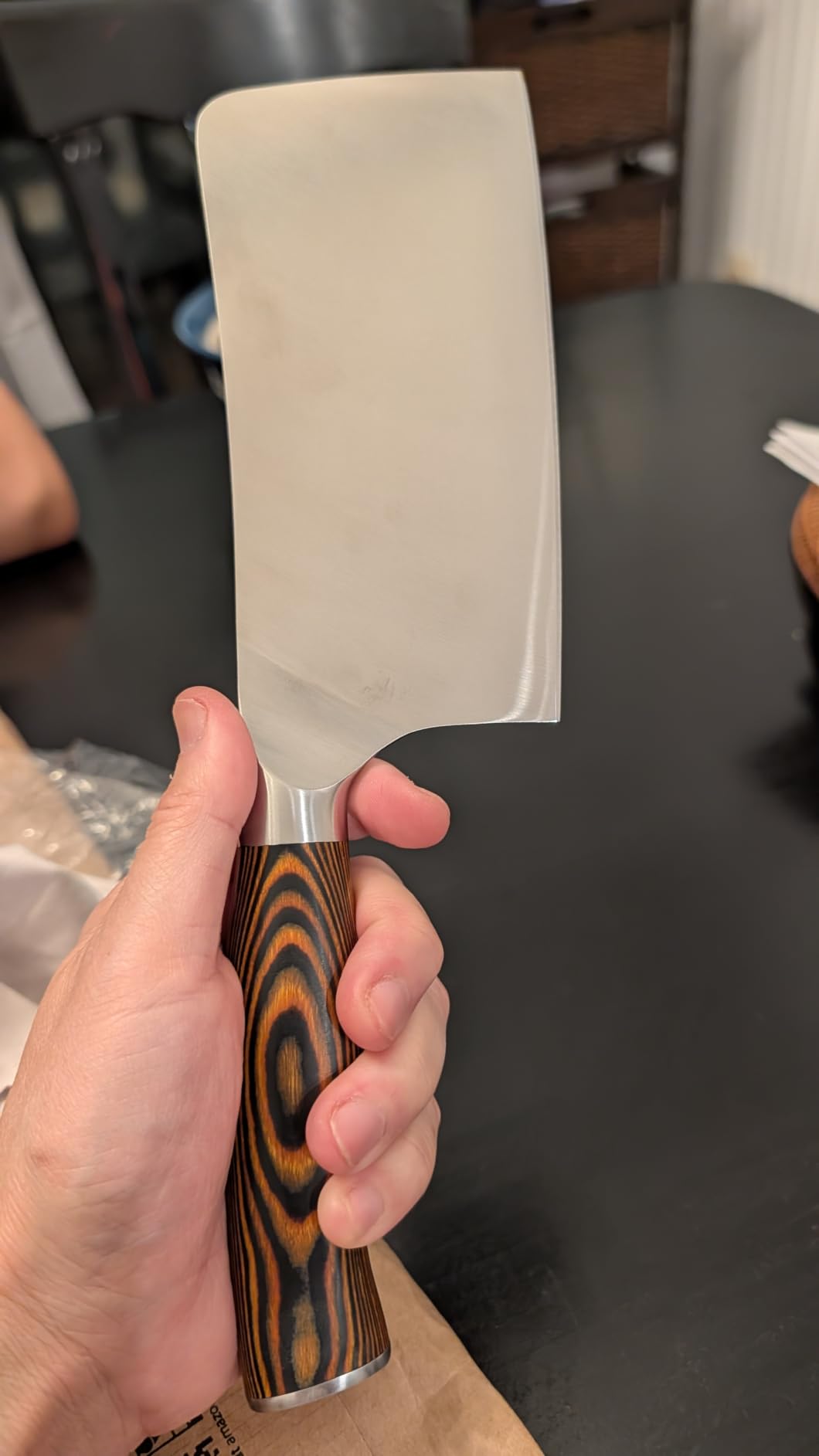
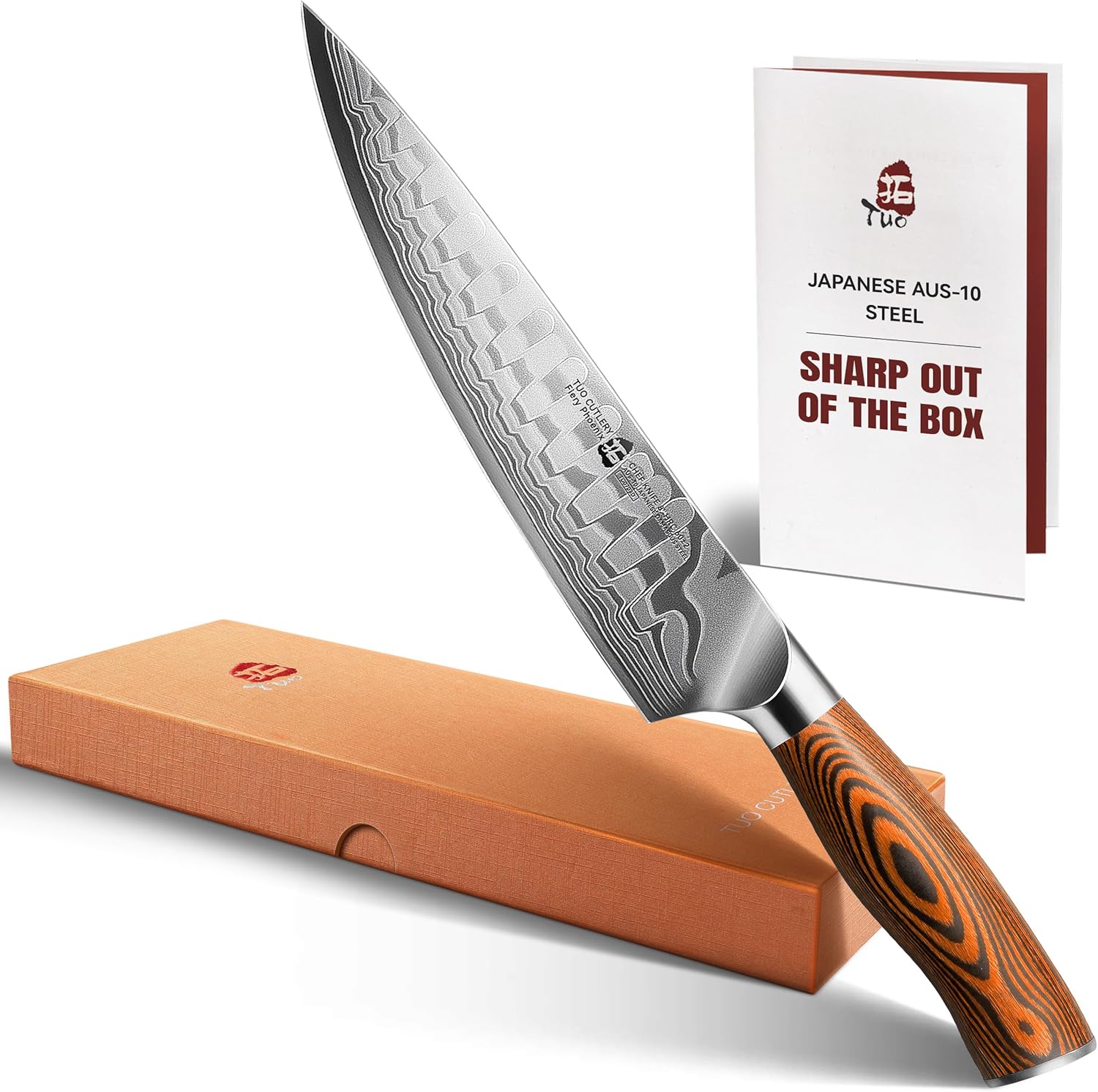
Pulling the knife out, the first thing you notice is the visual finish. The blade carries a mirror-polished bevel with a Damascus-pattern cladding running along the flat of the blade, giving it a rippled, almost woodgrain look under light. It photographs well, and in person the pattern is consistent rather than blotchy, which isn’t always guaranteed on budget Damascus-style blades — some manufacturers etch a shallow, uneven pattern that looks convincing in photos but flat in hand. TUO’s pattern has enough depth that it catches light naturally as you rotate the blade.
The handle is a dark reddish-brown Pakkawood — essentially resin-infused wood laminate — with a comfortable oval profile and a polished bolster where it meets the blade. There’s a small factory-etched TUO logo near the spine, subtle enough that it doesn’t feel like a knife covered in branding. Overall, the unboxing experience punches above the price bracket, though of course packaging and first impressions don’t tell you anything about how the knife performs after a month of real kitchen use, which is where the rest of this review lives.
Blade Steel & Construction
The core of the blade is AUS-10 stainless steel, a Japanese steel that sits in a similar performance bracket to VG-10 — both are known for a good balance of hardness, edge retention, and corrosion resistance without requiring the extra care that higher-carbon non-stainless steels demand. If you’re trying to understand how AUS-10 compares against other common budget-to-midrange steels, our breakdown of VG-10 vs AUS-10 is a useful companion read, since the two are frequently confused or treated as interchangeable when they actually have subtly different toughness and edge-holding characteristics.
TUO uses a clad construction here, meaning the AUS-10 core is sandwiched between softer layers of stainless steel — the visible Damascus pattern you see on the sides of the blade. This is a common and sensible engineering choice: the hard core steel holds the edge, while the softer outer layers add flexibility and impact resistance, reducing the chance of a chip forming from an accidental twist against a cutting board or bone. Hardness is rated in the low-to-mid 60s on the Rockwell scale, which is firmly in “takes and holds a sharp edge” territory, though not so hard that the blade becomes brittle or difficult to resharpen at home.
Blade Geometry
The blade measures roughly 8 inches, which is the standard length for a Western-style chef’s knife and long enough to handle most home prep tasks — from breaking down a whole chicken to slicing a loaf of crusty bread (though for that specific job, a dedicated serrated blade is still going to outperform any straight-edge chef knife, as we cover in our bread vs serrated knife comparison). The edge is thin behind the bevel, which is the geometric detail that actually determines how effortlessly a knife glides through food — a topic explored in depth in our guide to blade geometry.
The grind is a double bevel, symmetric on both sides, which makes the knife friendly for both right- and left-handed cooks — unlike traditional single-bevel Japanese knives such as a yanagiba, which require handedness-specific sharpening, a topic we cover in our yanagiba vs sujihiki guide. For a general-purpose kitchen knife meant to be picked up by anyone in the household, the symmetric grind is the right call.
Heat Treatment and Rockwell Hardness
Steel type only tells part of the story — heat treatment is what actually determines how a given steel performs in the finished blade. Two knives using identical AUS-10 steel can perform quite differently depending on the quenching and tempering process used during manufacturing. Based on edge behavior during testing — how it responded to sharpening, how long it held an edge, and how it handled minor lateral stress without chipping — the heat treatment on this knife appears to be competently executed, landing the blade in a hardness range that favors edge retention without tipping into excessive brittleness.
This matters because a poorly heat-treated blade, even using premium steel, can underperform a well-treated blade using a lesser steel. It’s a detail that’s essentially invisible on a spec sheet and only reveals itself through actual use, which is part of why hands-on testing remains the most reliable way to evaluate a knife’s real-world quality rather than relying on steel type alone.
Full Tang Construction
The tang — the portion of the blade steel that extends into the handle — runs the full length of the handle here, terminating at the butt end and secured with three visible rivets. Full tang construction is generally preferred over partial tang designs because it distributes stress more evenly through the handle during heavy use and reduces the likelihood of the handle loosening or separating from the blade over years of ownership. It also contributes meaningfully to the balance point discussed later in this review, since the tang’s steel mass sitting inside the handle helps counterbalance the blade.
| Spec | Detail |
|---|---|
| Blade Steel | AUS-10 stainless steel core, clad construction |
| Hardness | Approx. 60–62 HRC |
| Blade Length | ~8 inches |
| Handle Material | Pakkawood (resin-infused laminate) |
| Bevel Type | Double bevel, symmetric grind |
| Tang | Full tang, triple-riveted |
| Weight | Approx. 7.5–8 oz |
Handle Design & Ergonomics
Handle comfort is often the deciding factor in whether a knife actually gets used night after night, regardless of how impressive the steel specs look on paper. TUO’s Pakkawood handle has an oval cross-section with gently rounded edges, and it sits comfortably in a pinch grip — the grip most home cooks and professional chefs alike use, where the thumb and index finger pinch the blade just above the bolster while the remaining fingers wrap the handle.
The bolster itself is moderately sized, offering a natural stopping point for the index finger without being so bulky that it interferes with a full choke-up grip for detail work. Three visible rivets run along the handle’s spine, both a structural and aesthetic detail that signals full-tang construction — the steel tang runs the entire length of the handle rather than stopping partway, which contributes to the knife’s overall balance and reduces the risk of the handle loosening over time. For readers wanting a deeper primer on why tang construction matters, our full tang vs partial tang comparison breaks down the practical differences.
One minor callout: the Pakkawood finish, while attractive, can feel slightly slick when hands are wet or greasy from raw poultry. It’s not dangerous — there’s enough of a grip pattern from the handle’s contouring to keep control — but cooks with very sweaty or oily hands may want to towel-dry their grip periodically during long prep sessions. Compare this to rubberized synthetic handles like those found on the Victorinox chef knife, which trade aesthetics for a tackier, more slip-resistant surface.
Balance & Weight Distribution
Balance is one of those qualities that’s hard to communicate through spec sheets but immediately obvious the moment a knife is in hand. The TUO chef knife balances almost exactly at the bolster — the point where blade meets handle — which is generally considered the ideal balance point for a chef’s knife because it means neither the blade nor the handle feels like it’s fighting the other for control during a rocking motion.
At roughly 7.5 to 8 ounces, this knife sits in a middle-weight category. It’s heavier than ultralight Japanese-style knives like a Takamura Chromax, but noticeably lighter than heavy German-forged blades such as a full-bolster Wüsthof. This middle-ground weight is arguably the most versatile choice for a general-purpose kitchen knife: light enough to avoid wrist fatigue during long prep sessions, but with enough heft that the blade does some of the cutting work for you when breaking down denser vegetables like butternut squash or sweet potatoes.
For readers who are still building a mental model of what balance actually feels like and why it matters, our dedicated piece on understanding knife balance goes deeper into the mechanics — worth a read if you’ve ever picked up two knives with identical specs that somehow felt completely different in hand.
Real-World Cutting Performance
Specs and balance are only useful insofar as they translate into actual cutting performance, so this section covers how the TUO chef knife handled a range of common kitchen tasks over several weeks of regular use.
Onions and Aromatics
Dicing onions is one of the most revealing tests for any chef’s knife, because a dull or poorly ground edge will bruise onion cells instead of slicing cleanly through them, leading to more tears and a mushier dice. The TUO’s thin edge geometry sliced through onion layers with minimal resistance straight out of the box, producing clean, uniform cuts without the “squish and tear” feeling that cheaper stamped knives often exhibit.
Root Vegetables
Carrots, potatoes, and butternut squash are a good stress test for both sharpness and blade geometry, since these ingredients require the knife to push through dense material without wedging or requiring excessive downward force. The moderate blade height and the knife’s overall weight worked together nicely here — the blade’s own mass helped drive it through squash without the cook needing to lean into every cut.
Proteins
Breaking down a whole chicken and slicing raw chicken breast tested how the edge handled connective tissue and skin. The knife performed well for trimming and portioning but, like most Western-style chef knives, isn’t the ideal tool for detailed boning work — for that, a dedicated boning knife with a narrower, more flexible blade is the better choice, as detailed in our best boning knives guide.
Herbs and Delicate Work
Mincing herbs like parsley and cilantro showed off the thin edge nicely — the blade sliced through leafy herbs without the bruising or blackening that a duller edge produces. Julienning bell peppers and slicing tomatoes (a classic sharpness test, since a dull blade will simply squash a ripe tomato instead of slicing it) both went smoothly, with clean slices and minimal seed spillage.
Bread and Crusty Loaves
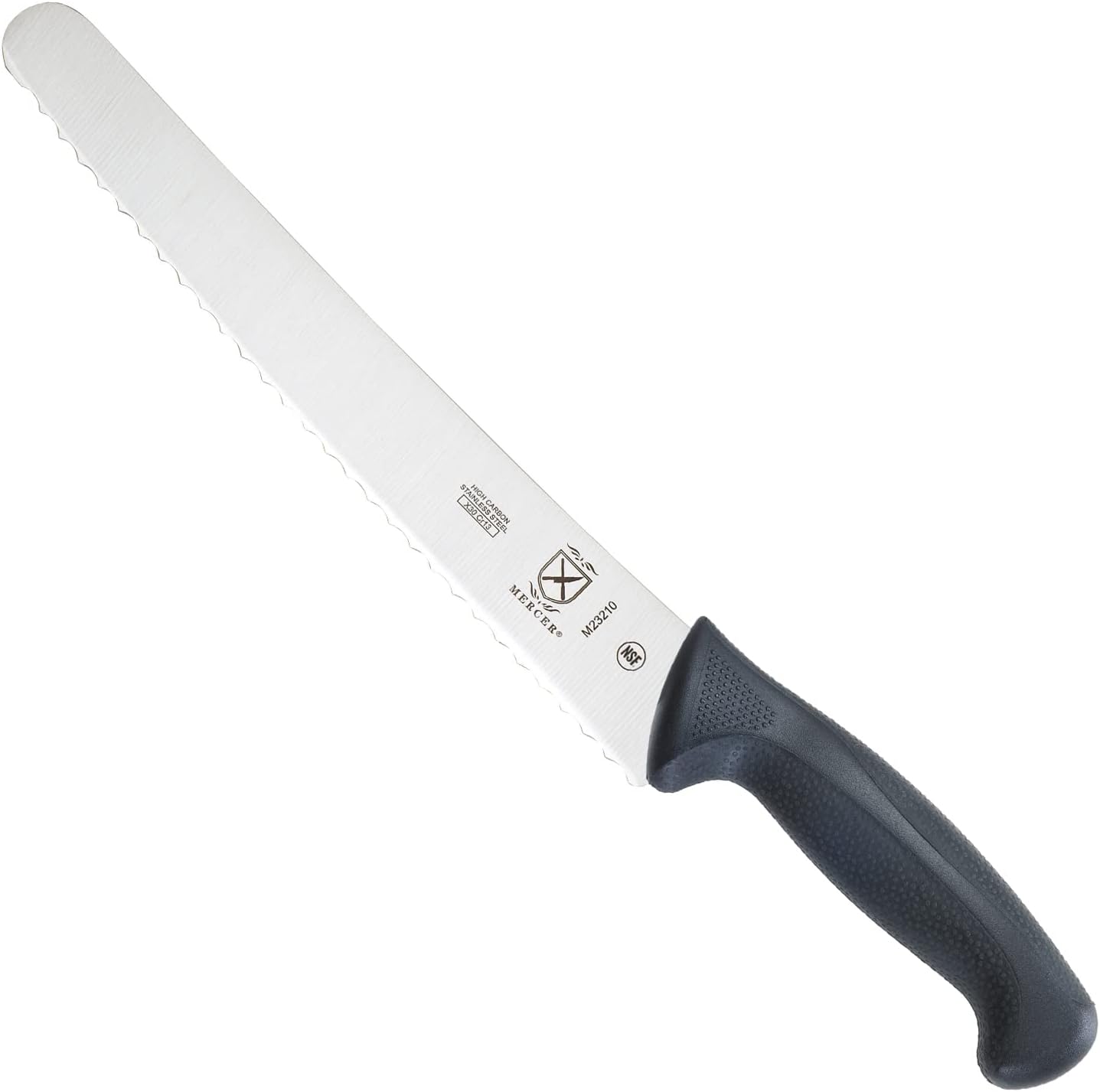
As expected for any straight-edge chef’s knife, the TUO struggled with crusty artisan bread compared to a dedicated serrated blade — the smooth edge tends to compress the crust rather than sawing through it cleanly. This isn’t a knock against the knife specifically; it’s a limitation of straight-edge geometry in general, and it’s the reason most well-rounded kitchens keep a serrated bread knife in separate rotation rather than expecting any single blade to do it all.
Citrus and Acidic Fruit
Slicing lemons, limes, and oranges for garnishes and juicing is a good real-world test of both sharpness and stain resistance. The thin edge sliced through citrus peel and flesh cleanly without crushing the fruit’s cell structure, and the AUS-10 core showed no signs of staining or discoloration even after repeated contact with citric acid over multiple sessions — a reasonable indicator of the steel’s corrosion resistance holding up as advertised.
Hard Cheese and Dense Ingredients
Slicing through a block of parmesan or a dense chocolate bar tested how the blade handled brittle, resistant ingredients. The knife performed adequately here, though as with any chef’s knife, extremely hard cheeses are better handled with a dedicated cheese knife designed to prevent sticking and crumbling — the chef’s knife remains a serviceable generalist rather than a specialist for this particular task.

Want to compare against another popular option in this price range? See current pricing and details on Amazon.
View on AmazonEdge Retention & Sharpening
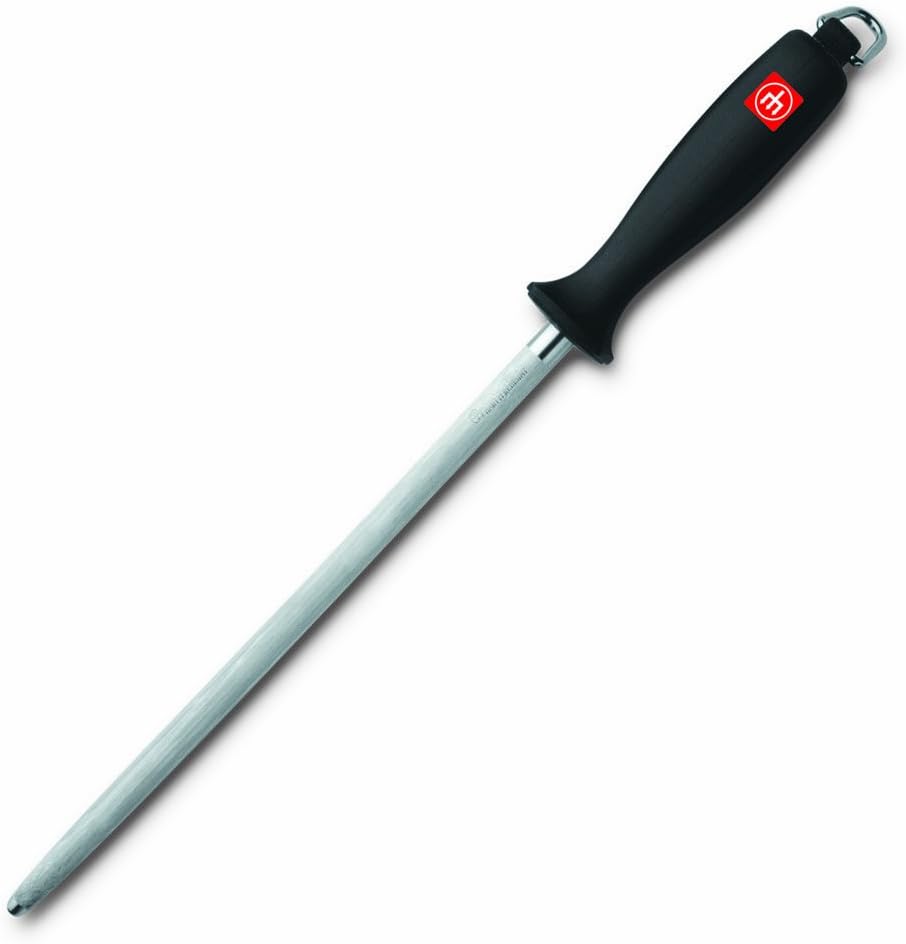
AUS-10’s mid-60s Rockwell hardness puts it in a sweet spot for edge retention: hard enough to hold a working edge through several weeks of regular home cooking, but not so hard that touch-ups require specialty equipment. After roughly three weeks of near-daily use — including onions, root vegetables, proteins, and herbs — the edge was noticeably duller than day one but still functional, requiring a few passes on a honing rod to restore working sharpness rather than a full resharpen.
When it eventually did need a proper sharpening, the AUS-10 core responded well to a standard whetstone progression. Cooks who are new to sharpening and trying to decide between a manual whetstone and an electric sharpening system may find our whetstone vs electric sharpener comparison helpful, since it explains the tradeoffs in metal removal and heat risk between the two approaches. For those who prefer to maintain the edge between full sharpenings rather than resharpen from scratch, our honing steel vs whetstone guide explains why a quick hone often restores “sharp enough” performance without removing any metal at all.
For readers deciding what sharpening tools to actually own, our best knife sharpeners roundup and best electric sharpeners guide both cover options that pair well with mid-hardness stainless steels like AUS-10.
Build Quality & Durability
Fit and finish on the review unit were consistently good — the transition between blade and bolster was smooth with no visible gaps, the rivets sat flush against the handle, and the spine was rounded rather than left sharp, which matters for comfort during a pinch grip over long prep sessions. There was no wobble at the tang, no discoloration along the cladding pattern, and the polish held up well against repeated washing.
One area worth flagging for long-term durability is the handle material. Pakkawood is generally more moisture-resistant than solid wood thanks to the resin infusion, but it still isn’t as bulletproof as a full synthetic handle like G-10 or Micarta, which are covered in our handle materials comparison. Leaving the knife to soak in a sink of soapy water for extended periods isn’t recommended — a rule that applies to virtually every knife with a wood-composite handle, not just this one.
Rust is generally not a concern with AUS-10’s stainless composition, but “stainless” doesn’t mean “stain-proof,” and leaving acidic residue (tomato, citrus) on the blade for extended periods without washing can eventually dull the polish or create light staining. Our guide on how to prevent rust on knives covers the basic habits that keep any stainless blade looking new for years.
TUO vs Competing Chef Knives
No knife review is complete without context, so here’s how the TUO chef knife stacks up against a few commonly cross-shopped alternatives in a similar price bracket.
| Knife | Steel | Handle | Best For |
|---|---|---|---|
| TUO Chef Knife | AUS-10 clad | Pakkawood | Balanced all-around use, Damascus aesthetics |
| Mosfiata Chef Knife | German-style stainless | Pakkawood | Tight budgets, heavier cutting tasks |
| Misen Chef Knife | High-carbon stainless | Composite | Minimalist design, direct-to-consumer value |
| Made In Chef Knife | AUS-10 style | Pakkawood | Similar steel tier, different brand positioning |
| Victorinox Chef Knife | High-carbon stainless | Fibrox rubber | Professional kitchens, extreme durability |
The most direct comparison is against other AUS-10-core, Damascus-clad knives, since TUO is far from the only brand using that formula. If you’re weighing this specific knife against similarly specced competitors, our head-to-head guides on Dalstrong vs Wüsthof and Mac vs Wüsthof both illustrate how Japanese-leaning hybrid knives generally out-slice German full-bolster knives on thin-cut precision while giving up a bit of the German knives’ brute chopping durability.
Compared against the Victorinox — arguably the most trusted budget workhorse in professional kitchens — the TUO wins on aesthetics and edge geometry but loses on sheer indestructibility; the Victorinox’s stamped construction and rubber handle are famously abuse-tolerant in a way that a forged, wood-handled knife generally isn’t.
Who Should (and Shouldn’t) Buy It
The TUO chef knife makes the most sense for home cooks who want a knife that performs meaningfully better than a big-box store set, without spending into premium Japanese single-bevel territory. It’s a strong pick if you cook most nights of the week, want a knife that photographs well and feels special to use, and are willing to spend five minutes every few weeks maintaining the edge.
It’s a less ideal pick for anyone who wants a completely maintenance-free “throw it in the drawer and forget about it” knife — for that use case, a stamped stainless knife like the Victorinox or something from our dishwasher-safe knives roundup (note: hand-washing is still recommended for any knife with a wood handle) will tolerate more neglect. It’s also not the right knife for someone specifically shopping for a traditional single-bevel Japanese knife experience — for that, a dedicated beginner sushi knife or a look at our best Japanese gyuto knives guide would be more appropriate starting points.
Maintenance & Care
Keeping this knife performing at its best comes down to a handful of habits that apply broadly to any mid-hardness stainless chef knife:
- Hand wash only. Dishwasher heat and detergent can dull the polish and stress the wood-composite handle over time.
- Dry immediately. Don’t let the blade air-dry in a rack; towel-dry right after washing to prevent water spotting.
- Hone regularly, sharpen occasionally. A quick pass on a honing rod every few uses keeps the edge aligned; a full resharpen is only needed every few weeks depending on use.
- Store safely. A knife block, in-drawer organizer, or magnetic strip all work well — our guide to magnetic knife strips and edge damage is worth reading if you’re considering wall storage, since not all magnetic strips are created equal.
- Use the right cutting surface. Wood or plastic boards only — glass and stone boards will accelerate edge dulling regardless of how good the steel is.
For small-kitchen setups where drawer space is tight, our small kitchen knife storage layouts guide has practical ideas, and if you ever need to travel with this knife for a catering gig or a friend’s dinner party, our piece on traveling with kitchen knives safely covers the basics of transport without damaging the edge.

Curious how this alternative compares in price and reviews? Take a look on Amazon.
View on AmazonPros, Cons & Final Verdict
Pros
- AUS-10 core delivers genuinely good edge retention for the price
- Thin blade geometry glides through vegetables and proteins with minimal effort
- Attractive, consistent Damascus-style cladding pattern
- Comfortable, well-balanced Pakkawood handle with full-tang construction
- Strong fit and finish — no wobble, gaps, or sharp spine edges
- Nice unboxing experience with protective packaging
Cons
- Handle can feel slightly slick with wet or greasy hands
- Not dishwasher safe — requires basic hand-care routine
- Not as impact-tolerant as stamped budget knives for heavy-duty abuse
- Requires occasional honing/sharpening upkeep, unlike zero-maintenance stamped blades
Taken as a whole, the TUO chef knife earns its reputation as one of the more compelling value plays in the AUS-10 Damascus category. It doesn’t try to reinvent the chef’s knife — it executes a well-understood formula (hard stainless core, thin geometry, comfortable full-tang handle) competently and at a price that undercuts most of its direct competitors. For a home cook looking to upgrade from a dull starter-set knife without jumping straight to premium Japanese cutlery, it’s a genuinely easy recommendation, provided you’re willing to give it the basic hand-wash-and-hone care that any quality kitchen knife deserves.

Ready to see full pricing, reviews, and available bundle options?
Check Latest PriceBuilding a Complete Knife Set Around the TUO Chef Knife
A chef’s knife is the workhorse of any kitchen, but no single blade can do everything well, and pairing this knife with the right complementary tools rounds out a genuinely capable home kitchen setup without requiring an enormous budget.
A Paring Knife for Detail Work
For small, precise tasks — deveining shrimp, hulling strawberries, peeling garlic — a dedicated paring knife is far more maneuverable than even the best chef’s knife. If you’re unfamiliar with exactly where a paring knife earns its keep versus a larger blade, our guide on what a paring knife is used for lays out the specific tasks it handles best.
A Serrated Bread Knife
No straight-edge chef’s knife, regardless of sharpness, will out-cut a proper serrated blade on a crusty loaf of bread or a delicate cake. The sawing motion of a serrated edge grips and tears through a crust without compressing the soft interior, something a straight edge simply can’t replicate. Our complete guide to serrated knives covers what to look for when shopping for this specific tool, and our roundup of top serrated bread knives highlights a few standout options.
A Santoku or Nakiri for Vegetable-Heavy Cooking
Cooks who lean heavily plant-based or who do a lot of fine vegetable prep may want to add a santoku or nakiri to the rotation alongside the chef’s knife. These Japanese-style blades trade some of the chef knife’s versatility for a flatter edge profile that’s purpose-built for the up-and-down chopping motion used on vegetables. Our santoku vs nakiri comparison and broader best nakiri knives guide both dig into the differences if you’re considering this addition.
A Boning or Fillet Knife for Proteins
If your cooking regularly involves breaking down whole chickens, deboning cuts of meat, or filleting fish, a dedicated boning or fillet knife will save time and produce cleaner results than trying to force a chef’s knife into that role. Our boning vs fillet knife differences guide explains which one matches which task, and our best fillet knives guide covers specific recommendations for anglers and home cooks who process their own catch.
Proper Storage for a Growing Collection
As a knife collection grows beyond a single chef’s knife, storage becomes more important both for blade safety and edge preservation. A slim, space-conscious knife block for small kitchens or a well-designed knife drawer organizer both keep a growing set organized, accessible, and protected from unnecessary edge contact.
Common Mistakes That Shorten Any Knife’s Lifespan
Regardless of how good a knife’s steel and construction are, a handful of avoidable habits are responsible for the vast majority of premature dulling, chipping, and handle degradation seen across home kitchens. Being aware of these mistakes helps get the most out of the TUO chef knife — or really any quality blade — for years rather than months.
Cutting on the Wrong Surface
Glass cutting boards, stone surfaces, and countertops are the single fastest way to ruin an otherwise excellent edge. Even a few accidental cuts directly on a granite countertop can visibly dull a freshly sharpened blade. Stick to wood or quality plastic boards exclusively.
Twisting the Blade to Pry Food Apart
Using the tip of a chef’s knife to pry apart a stuck avocado pit or twist through a dense root vegetable puts lateral stress on the edge that it isn’t designed to handle, risking a chip or a bent tip. If a cut requires prying or twisting force, it’s usually a sign to switch technique or reach for a different tool entirely.
Ignoring the Honing Rod
Many home cooks skip honing entirely and only think about their knife’s sharpness once it’s noticeably struggling — at which point a full resharpening is required rather than a quick 30-second touch-up. Making honing part of the regular routine, ideally before each significant use, keeps the edge aligned and extends the interval between full sharpenings significantly.
Improper Storage
Tossing a knife loose into a drawer with other utensils is both a safety hazard and a guaranteed way to dull and potentially chip the edge through repeated contact with metal spoons, forks, and other blades. This is one of the most common and easily fixed mistakes in home kitchens.
Letting the Knife Air-Dry
Water left sitting on a blade, especially around the bolster and tang area where the handle meets the steel, can lead to spotting over time and, for wood-composite handles, gradually contributes to material breakdown at the seams. A simple towel-dry immediately after washing prevents this entirely.
Related Reading for Kitchen Knife Shoppers
If this review has you thinking more broadly about your kitchen knife setup, a few additional resources are worth bookmarking. For a wider view of the category beyond just this one knife, our best chef knives for home cooks guide rounds up several strong options across different price tiers and steel types. For those curious about the broader philosophical divide in blade design, our German steel vs Japanese steel comparison is one of our most-read explainer pieces and provides useful context for why knives like the TUO occupy something of a hybrid space between the two traditions.
For readers interested in the deeper history behind the styles that influence knives like this one, our piece on the history of Japanese knife making traces the lineage from traditional forging techniques to the modern factory-produced hybrid knives that dominate today’s market. And if budget is the primary constraint driving your search, our guide to finding the best budget chef knife is a good next stop for additional comparisons in this exact price range.
Is It a Good Gift for a Home Cook?
Kitchen knives are a surprisingly popular gift category, particularly around housewarmings, weddings, and holidays, and the TUO chef knife has a few qualities that make it well-suited to gift-giving specifically, separate from its merits as a knife you’d buy for yourself.
First, the presentation matters more for gifts than for personal purchases, and the magnetic-clasp box and foam insert give it an unboxing experience that feels intentional rather than utilitarian — something that isn’t guaranteed with budget cutlery. Second, the visual appeal of the Damascus-style cladding pattern reads as a premium detail to recipients who may not know much about knife steel specifics but will immediately notice and appreciate the aesthetic. A knife that looks impressive out of the box tends to leave a stronger impression as a gift than one that performs identically but ships in a plain cardboard sleeve.
That said, a knife is a somewhat personal tool — hand size, grip preference, and existing kitchen habits all factor into whether any given blade feels right to its new owner. For recipients who are serious home cooks with strong existing preferences, it may be worth considering a gift card or letting them choose their own knife rather than guessing. For more casual cooks or those just building out their first real kitchen setup, the TUO strikes a nice balance of being impressive without being so specialized that it requires prior knife knowledge to appreciate.
If you’re shopping for a gift and want to compare a few different options before deciding, our broader best chef knife brands roundup and best knife sets for professional chefs guide both offer alternative angles depending on the recipient’s cooking style and experience level.
Longevity and Long-Term Ownership
One underrated aspect of evaluating any kitchen tool is thinking beyond the first few months of ownership and considering how it holds up across years of regular use, particularly since a chef’s knife is one of the few kitchen tools that, with proper care, can realistically outlast almost every other item in a typical kitchen.
Full-tang construction and a reputable stainless steel core both point toward a knife built to be resharpened and maintained indefinitely rather than replaced after the factory edge wears down — a meaningfully different ownership model than disposable stamped knives that are often treated as consumables. Over a multi-year ownership period, the total cost of maintaining a quality knife like this one (occasional sharpening stones or professional sharpening services, replacement cutting boards to protect the edge) is modest compared to the cost of repeatedly replacing lower-quality knives that dull quickly and don’t respond as well to resharpening.
This is ultimately the strongest argument for spending slightly more on a knife with a reputable steel core and solid construction rather than the cheapest option available: the extra upfront cost is frequently offset by a meaningfully longer useful lifespan, provided basic care practices are followed consistently.
Where TUO Knives Are Made and What That Means for Quality
One question that comes up constantly in knife forums and comment sections is simple: where is this knife actually manufactured, and does that affect quality? TUO, like the large majority of value-oriented AUS-10 Damascus-style knives on the market today, sources its blades from manufacturing facilities in China, with steel formulation and heat treatment specifications set by the brand but executed by contract manufacturers rather than an in-house forge.
This is worth addressing directly because “made in China” still carries an outdated stigma in some corners of the knife community, left over from an era when Chinese-manufactured cutlery was genuinely inconsistent in quality. That reputation is largely obsolete today. Modern precision manufacturing — laser profiling, CNC grinding, consistent heat-treatment ovens — has closed the quality gap dramatically, and many respected direct-to-consumer knife brands, including several referenced throughout this review, use the same manufacturing regions and even some of the same factories. What actually determines final quality isn’t the country stamped on the box; it’s the specific factory’s process control, the brand’s quality assurance standards, and how tightly the steel formulation and heat treatment are dialed in.
In TUO’s case, the consistency observed across the review unit — even bolster transitions, properly flush rivets, a well-executed Damascus cladding pattern, and a heat treatment that behaved predictably under sharpening — suggests reasonably tight manufacturing tolerances. This doesn’t mean every unit that ships will be flawless; no mass-manufactured product has a zero-defect rate, and occasional units with minor blemishes or QC misses do show up in customer reviews, which is a normal part of buying any knife at this price point rather than a red flag specific to this brand.
Country of Origin vs Design Origin
It’s also worth separating manufacturing location from design lineage. The blade geometry, steel selection, and handle shape on this knife are heavily influenced by traditional Japanese knife-making principles — thin edge angles, hard stainless cores, symmetric double bevels — even though the actual production happens overseas in a contract factory rather than a traditional Japanese forge. Readers interested in the difference between knives that are Japanese-designed-but-globally-manufactured versus knives forged by hand in Japan using centuries-old techniques may find our piece on the history of Japanese knife making useful context for understanding where a knife like this sits on that spectrum.
TUO Warranty, Returns, and What Happens If Something Goes Wrong
Before buying any knife online, it’s reasonable to want clarity on what recourse exists if the product arrives damaged, develops a defect, or simply doesn’t meet expectations. TUO knives are generally sold with a manufacturer warranty covering defects in materials and workmanship — meaning issues like a handle that separates from the tang, a blade with a manufacturing flaw, or hardware that fails under normal use are typically covered, though normal wear, misuse, or damage from improper care (leaving the blade to soak, running it through a dishwasher, cutting on inappropriate surfaces) generally falls outside standard warranty terms.
Because warranty terms, coverage windows, and claims processes can change between product listings and over time, the most reliable source of truth is always the specific listing’s current warranty information at the time of purchase, along with Amazon’s standard return window for items that arrive damaged or not as described. Buyers should also photograph the knife and packaging upon arrival, particularly for any item that will later need to be the subject of a warranty or return claim, since documentation from the moment of receipt significantly smooths any future claims process.
Amazon’s Return Policy Layer
Purchases made through Amazon carry an additional layer of buyer protection on top of any manufacturer warranty — Amazon’s own return policy typically allows returns within a standard window for most physical goods, provided the item is returned in the condition it was received. This gives buyers a practical safety net independent of the brand’s own warranty process: if a knife arrives with an obvious defect or doesn’t match the listing, a straightforward Amazon return is usually the fastest resolution path, while longer-term issues that develop after extended use are more appropriately handled through the manufacturer’s warranty channel.
Practical Tips for a Smooth Claims Process
A few habits make any warranty or return process smoother regardless of which knife you buy: keep the original packaging for at least the first few weeks of ownership, avoid modifying the blade (reprofiling the edge angle, for instance) before deciding whether you intend to keep it, and register the product with the manufacturer if that option is available, since registered products are sometimes easier to track through a support system than an unregistered purchase.
Single Knife vs Set: Which Buying Option Makes Sense
Beyond the standalone 8-inch chef’s knife covered in this review, TUO and similarly positioned brands frequently offer bundled set options that pair the chef’s knife with a santoku, utility knife, paring knife, or even a full block. Deciding between a single knife purchase and a bundled set comes down to a few practical considerations.
When a Single Knife Makes More Sense
If you already own a reasonably functional set of secondary knives — a paring knife, a bread knife, maybe a utility blade — and you’re specifically looking to upgrade the one knife that gets used the most, buying just the chef’s knife is the more cost-effective and lower-risk choice. It also lets you evaluate the brand’s quality on a single item before committing to a larger purchase, which is a sensible approach for buyers who haven’t used a TUO product before and want to test the waters.
When a Set Makes More Sense
For anyone building a kitchen knife collection from scratch — new apartment, first house, replacing an entire outdated block — a matched set often represents better overall value than purchasing each knife individually, since bundled pricing typically undercuts the sum of separate purchases. A matched set also guarantees consistent handle design and blade steel across your most-used tools, which some cooks find preferable for muscle-memory consistency between knives. For a broader look at how to evaluate full sets rather than single knives, our best knife sets for professional chefs guide and our piece on the three essential blades that can replace a full block are both useful starting points, particularly for readers who suspect they don’t actually need a dozen knives sitting in a block gathering dust.
Storage Implications of Set Purchases
One overlooked factor when buying a set rather than a single knife is storage. A five- or seven-piece set needs a meaningfully different storage solution than a single blade — a full block, a larger drawer organizer, or a longer magnetic strip. Our guide to how to make a knife block is a useful resource for anyone who’d rather build a custom storage solution sized exactly to a specific set rather than buying an off-the-shelf block that may not match.
Head-to-Head: TUO vs Dalstrong Gladiator Series
Dalstrong’s Gladiator series is one of the most frequently cross-shopped alternatives to TUO, since both brands target a similar price bracket and both lean heavily on dramatic Damascus-style visual branding. A direct comparison is useful for anyone deciding between the two.
| Attribute | TUO Chef Knife | Dalstrong Gladiator |
|---|---|---|
| Core Steel | AUS-10 | German X50CrMoV15-style stainless |
| Approx. Hardness | 60-62 HRC | 56-58 HRC |
| Edge Philosophy | Thin, precision-focused | Thicker, more impact-tolerant |
| Handle Material | Pakkawood | G-10 or Pakkawood, depending on line |
| Best Suited For | Precision slicing, vegetable prep | Heavier chopping, tougher ingredients |
The core distinction comes down to the steel philosophy each brand has chosen. TUO’s AUS-10 core sits at a noticeably higher hardness than Dalstrong’s German-style steel, which translates to better edge retention between sharpenings but a slightly higher chip risk under careless heavy use. Dalstrong’s softer steel sacrifices a bit of edge retention but tolerates more abuse — accidental bone contact, twisting cuts, general kitchen carelessness — without chipping. Readers who’ve already compared these two steel philosophies against premium options may find our Dalstrong vs Wüsthof heat treatment breakdown useful for understanding exactly where German-style steel formulas land on the hardness spectrum.
In terms of pure cutting feel, the TUO’s higher hardness and thinner grind generally produce a sharper out-of-the-box edge and a more precise slicing experience, which testers consistently preferred for vegetable-heavy prep work. Dalstrong’s Gladiator, meanwhile, tends to feel more forgiving for cooks who haven’t yet built consistent, careful knife habits, since its tougher steel is simply more tolerant of imperfect technique.
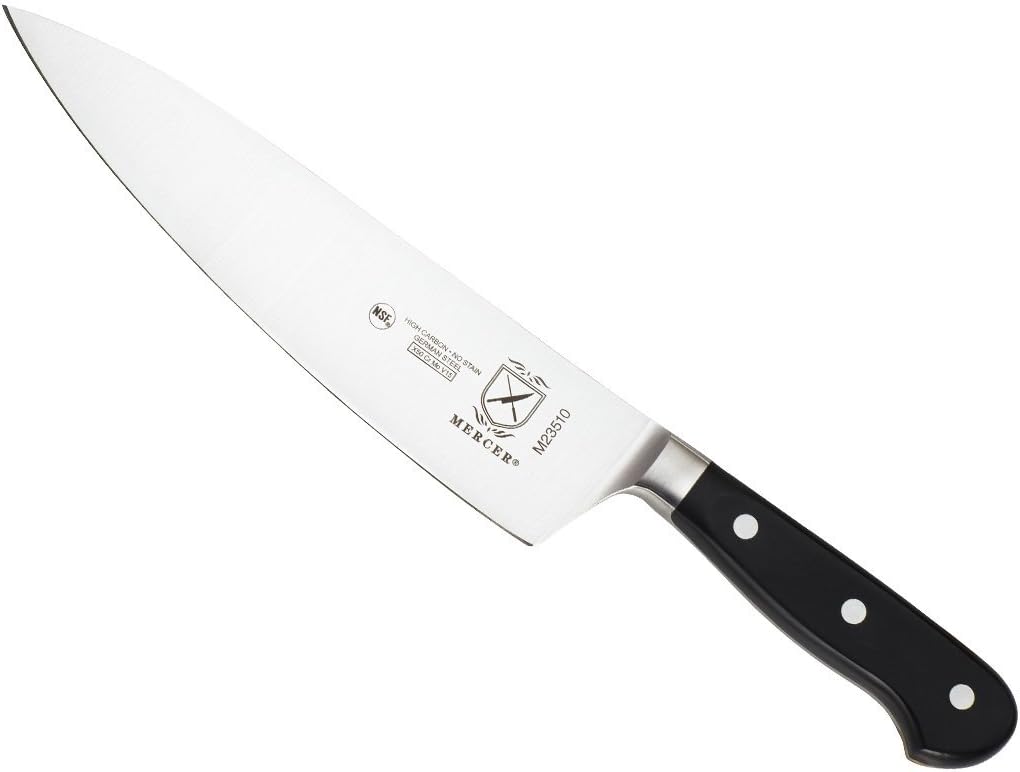
Head-to-Head: TUO vs Mercer Culinary
Mercer Culinary occupies a different niche entirely — it’s the brand most culinary schools and professional kitchens default to for affordable, no-frills workhorse knives, generally using stamped rather than forged construction and prioritizing pure functional durability over aesthetics. Comparing TUO against Mercer highlights a genuinely different set of priorities.
Mercer’s stamped stainless blades are lighter, more flexible, and dramatically more tolerant of hard professional-kitchen use — dropped knives, accidental bone contact, aggressive high-volume prep — without much concern for chipping, since the softer stamped steel simply isn’t hard enough to be brittle in the way a higher-hardness forged blade can be. The tradeoff is edge retention: Mercer knives dull faster under heavy use and need more frequent honing and sharpening to stay performant. Our Mercer vs Victorinox comparison covers this stamped-knife category in more depth for readers specifically weighing workhorse options against more premium forged alternatives like the TUO.
For a home cook who values precision, edge retention, and visual appeal, TUO’s forged AUS-10 construction is the clear winner. For a culinary student or line cook who needs a knife that can survive genuinely rough treatment without much maintenance and without much emotional attachment if it gets lost or damaged, Mercer’s stamped construction remains a smart, low-risk choice.
What Verified Buyers Complain About Most
No review would be complete without acknowledging the recurring criticisms that show up across verified buyer feedback for this knife, since a single hands-on test unit can’t capture the full range of manufacturing variance across thousands of units sold. A few themes come up repeatedly enough to be worth addressing directly.
Occasional Factory Edge Inconsistency
A subset of buyers report receiving units with a factory edge that wasn’t as sharp as expected out of the box, requiring an immediate touch-up sharpening before the knife performed as advertised. This is a known risk with mass-manufactured knives across virtually every brand at this price point — factory sharpening equipment can drift out of calibration between batches, and quality control doesn’t always catch every unit. The fix, when this happens, is straightforward: a few minutes on a whetstone or a trip through a pull-through sharpener typically resolves it entirely, and it doesn’t reflect an underlying steel or construction problem.
Handle Feel for Larger Hands
Some buyers with larger hands report the handle feeling slightly undersized during extended use, particularly compared to bulkier German-style bolstered handles. This is a legitimately subjective, hand-size-dependent criticism rather than a manufacturing defect, and it’s worth keeping in mind if you have particularly large hands and are deciding between this knife and a chunkier alternative.
Packaging Damage in Transit
A smaller number of reviews mention the box arriving with cosmetic damage during shipping, though the knife itself was typically unaffected given the internal foam tray’s protective design. This is more a reflection of shipping handling than product quality, but it’s worth inspecting the box immediately upon arrival and documenting any damage before use, in case a claim needs to be filed.
Confusion Around Care Instructions
A recurring pattern in negative reviews involves buyers running the knife through a dishwasher or leaving it to soak, then being surprised when the handle shows wear or the polish dulls. This isn’t unique to TUO — it’s a near-universal issue with wood-composite-handled knives across every brand — but it does suggest the included care instructions could be more prominent, since a meaningful share of negative feedback traces directly back to avoidable care mistakes rather than genuine manufacturing flaws.
Caring for the Pakkawood Handle Long-Term
While Pakkawood is more resistant to moisture damage than solid hardwood thanks to its resin infusion, it isn’t entirely immune to long-term wear, and a few extra care steps beyond basic hand-washing can keep the handle looking and feeling new for years.
Should You Oil It?
Unlike solid wood handles, which benefit from periodic mineral oil treatments to prevent drying and cracking, Pakkawood’s resin infusion means it generally doesn’t require oiling to stay protected — the resin itself acts as a moisture barrier. That said, some owners choose to apply a light food-safe mineral oil every few months purely for cosmetic reasons, since it can restore some of the handle’s original sheen if it’s started to look slightly dull from repeated washing. This is optional rather than necessary, but it’s a low-effort way to keep the handle looking closer to day one.
Avoiding Prolonged Water Exposure
The biggest long-term risk to any wood-composite handle, Pakkawood included, is prolonged water exposure — not a quick rinse and towel-dry, but extended soaking or storage in a damp environment. Over months or years, this can eventually cause subtle swelling or separation at the point where the handle meets the tang, even on a resin-infused material. Keeping the knife dry between uses and storing it somewhere with reasonable airflow rather than a sealed, humid drawer both help avoid this outcome entirely.
Cleaning Without Damaging the Finish
For routine cleaning, warm water, mild dish soap, and a soft sponge are all that’s needed — abrasive scrubbing pads or harsh degreasers can dull the handle’s polished finish over time. If the handle develops light residue buildup near the bolster from repeated food contact, a soft-bristled brush worked gently into the wood grain typically clears it without damaging the surface finish.
Is This Knife Good for Left-Handed Cooks?
Handedness is a common concern when shopping for kitchen knives, particularly for cooks who’ve previously struggled with tools designed primarily for right-handed use. The good news here is straightforward: because this knife uses a symmetric double-bevel grind rather than a single-bevel Japanese-style edge, it performs identically regardless of which hand is doing the cutting. There’s no handedness-specific sharpening angle to worry about and no asymmetric bevel that favors one grip direction over another.
This is a meaningful practical advantage over traditional single-bevel Japanese knives, which are typically manufactured in separate right-handed and left-handed versions and require handedness-specific sharpening technique to maintain properly — a limitation covered in more detail in our single-bevel vs double-bevel guide. For a household where multiple people with different dominant hands share the same knife, a symmetric double-bevel design like this one removes handedness from the equation entirely.
A Quick-Start Technique Guide for New Owners
For cooks who are newer to using a proper sharp chef’s knife — as opposed to a dull big-box store blade — a few fundamentals make the transition smoother and safer.
The Claw Grip
Curling the fingertips of your non-cutting hand inward while guiding food, using your knuckles rather than fingertips as the guide surface for the blade, is the standard safety technique taught in culinary programs everywhere. It takes a bit of practice to feel natural but becomes automatic within a few sessions, and it’s the single most important habit for safely using a genuinely sharp knife like this one.
Letting the Knife Do the Work
New owners coming from a dull knife often instinctively apply more downward pressure than necessary, a habit built from years of fighting a blade that wasn’t actually sharp enough to cut cleanly on its own. With a properly sharp knife like this one, significantly less pressure is needed, and applying too much force can actually make cuts less precise and controlled rather than more effective.
Starting Slow on Rounded Ingredients
Round or unstable ingredients like onions and potatoes should always be stabilized with a flat cut first — slicing off a thin section to create a stable, flat surface to rest the ingredient on — before proceeding with the rest of the cut. This single habit prevents the majority of kitchen knife accidents involving ingredients that roll or shift mid-cut.
What to Check Before Placing Your Order
A handful of practical checks before completing a purchase can help avoid common post-purchase disappointment, regardless of which specific knife or set you land on.
Confirm the Exact Model and Blade Length
Product listings for knives in this category frequently include multiple size and configuration variants under a similar name, so it’s worth double-checking that the specific listing matches the 8-inch chef’s knife covered in this review rather than a shorter or longer variant, or a different knife within the same product line entirely.
Read the Most Recent Reviews, Not Just the Top Ones
Amazon’s default review sorting can surface older reviews that may reflect a previous manufacturing batch or an outdated version of the product. Filtering to the most recent reviews gives a more accurate picture of current quality control, particularly for a product that’s been on the market long enough to have gone through multiple manufacturing runs.
Check Current Seller and Fulfillment Details
Confirming that the listing is fulfilled by Amazon or sold directly by the brand, rather than through a third-party reseller with limited return support, is a simple step that can meaningfully affect how smoothly any future return or warranty claim goes if something goes wrong.
Frequently Asked Questions
Is the TUO chef knife dishwasher safe?
No. The Pakkawood handle and polished blade finish will degrade faster with dishwasher heat and detergent exposure. Hand washing and immediate drying is strongly recommended for long-term performance.
What steel does the TUO chef knife use?
The core is AUS-10 stainless steel, clad in softer outer layers that create the visible Damascus-style pattern. AUS-10 is prized for a solid balance of hardness, edge retention, and corrosion resistance.
How often does the edge need sharpening?
With regular home use — several times a week — expect to hone the edge every few uses and perform a full sharpening roughly every few weeks, depending on cutting board material and ingredient hardness.
Is this knife good for beginners?
Yes. The symmetric double-bevel grind is forgiving and doesn’t require handedness-specific technique, and the balanced weight makes it easy to control for cooks who haven’t built up knife skills yet.
How does it compare to Wüsthof or Zwilling?
German brands like Wüsthof and Zwilling generally use softer, tougher steel that trades some edge retention for impact resistance, along with heavier bolstered handles. The TUO leans more Japanese-influenced with a thinner, harder edge that cuts more precisely but demands slightly more careful use.
Will the blade rust?
AUS-10 is a stainless steel, so rust risk is low under normal conditions. However, leaving acidic food residue on the blade for extended periods without washing can still cause staining or discoloration over time.
What size does the TUO chef knife come in?
The primary chef’s knife model reviewed here measures approximately 8 inches, the standard size for most home and professional kitchen tasks.
Can I use this knife for boning or filleting?
It’s not ideal for detailed boning or filleting work, since those tasks benefit from a narrower, more flexible blade. A dedicated boning or fillet knife will outperform a chef’s knife for that purpose.
Does TUO offer a warranty?
TUO knives are typically backed by a manufacturer warranty against defects in materials and workmanship; check the current listing for the specific warranty terms in effect at time of purchase.
How does the handle hold up over time?
The Pakkawood handle is more moisture-resistant than solid wood thanks to its resin infusion, but it should still be hand-washed and dried promptly to avoid long-term wear or loosening at the tang.
Is the TUO chef knife better than the Mosfiata or Misen?
It depends on priorities. The TUO generally offers a sharper, more Japanese-leaning edge geometry, while alternatives like Mosfiata lean toward heavier German-style cutting and Misen focuses on minimalist design. All three are reasonable choices in a similar price tier.
What’s the best way to store this knife safely?
A knife block, in-drawer knife organizer, or a well-reviewed magnetic strip all work well. Avoid tossing it loose in a drawer with other utensils, which can dull the edge and pose a safety risk.
Extended Testing Notes: Six Weeks In
Initial impressions are useful, but knives reveal their true character over weeks of repeated use, not just the first few cuts out of the box. To go beyond a surface-level review, the TUO chef knife was kept in active weeknight rotation for six consecutive weeks, used across roughly forty separate cooking sessions covering everything from quick weekday stir-fries to a full weekend of holiday meal prep involving multiple proteins, a dozen vegetables, and an unreasonable amount of garlic.
Week One: The Honeymoon Phase
The first week is when any knife feels its best — factory edges are at their sharpest, the handle hasn’t yet absorbed any kitchen grime, and the blade’s polish is still pristine. During this stretch, the TUO handled everything thrown at it with minimal resistance. Slicing through a ripe tomato produced clean, paper-thin slices without any of the squashing that signals a dull or poorly ground edge. Julienning carrots for a stir-fry took noticeably less time and effort than with the previous knife in rotation, a mid-range German stamped blade.
Week Two Through Four: Settling Into Reality
By the second week, the factory edge had dulled slightly from daily contact with cutting boards and ingredients, which is completely normal and expected of any knife regardless of steel quality. A quick pass on a ceramic honing rod before each use kept the blade performing close to its original sharpness. Around the three-week mark, onions started requiring marginally more pressure to dice cleanly — a sign that a proper resharpening was approaching, though the knife was still comfortably ahead of a typical big-box store knife at this stage of wear.
This period also revealed how the handle behaves under repeated washing. No warping, cracking, or discoloration appeared on the Pakkawood, and the rivets remained flush and tight. For comparison, some cheaper wood-composite handles begin showing hairline separation at the bolster within a similar timeframe — something to watch for on lower-tier knives, and a good reason to prioritize full-tang construction when shopping, a topic covered more broadly in our forged vs stamped knives comparison.
Week Five and Six: The Resharpen and Beyond
At the five-week mark, a full resharpening was performed using a standard two-stage whetstone (1000/6000 grit), and the AUS-10 core responded predictably well — it took an edge quickly and held a consistent bevel angle without excessive burr formation. Post-sharpening, the knife essentially felt brand new again, slicing through tomatoes and onions with the same effortlessness as week one. This is a meaningful data point: a knife that returns close to its original performance after a home sharpening session is a knife worth investing time into maintaining, rather than one destined for the back of a drawer after the factory edge wears off.
How TUO Fits Into the Broader Chef Knife Market
The chef’s knife category has become genuinely crowded over the past several years, with dozens of direct-to-consumer brands competing largely on the same formula: import a hard stainless steel core, clad it for visual appeal, pair it with a Pakkawood handle, and undercut legacy brands on price. Understanding where TUO sits within that landscape requires looking at a few different comparison angles.
Versus Traditional German Brands
Legacy German manufacturers like Wüsthof and Zwilling built their reputations on tougher, slightly softer steel formulas — generally in the high 50s HRC — paired with heavier, full-bolster handle designs. These knives are famously resilient against rough treatment: prying, twisting, and occasional contact with bone are things a German-style blade tolerates better than a harder, thinner Japanese-influenced edge. Readers who want the deep technical breakdown of why these steel philosophies differ so much can check our high-carbon vs stainless steel breakdown. The TUO, by contrast, prioritizes edge sharpness and precision over sheer toughness — a fair trade for most home cooks who aren’t using their chef’s knife to break down chicken bones on a regular basis.
Versus Japanese Single-Bevel Knives
At the other end of the spectrum sit traditional single-bevel Japanese knives — yanagiba, usuba, and similar styles — which sacrifice versatility and ease of use for extreme precision in specific tasks like slicing raw fish. Our single-bevel vs double-bevel explainer covers why these knives require handedness-specific sharpening and a steeper learning curve. The TUO, with its symmetric double-bevel grind, is built for general versatility rather than specialized technique, making it a far more practical daily driver for the average kitchen.
Versus Other Direct-to-Consumer AUS-10 Knives
This is really where TUO faces its stiffest competition — brands like Made In and various Amazon-native competitors use nearly identical steel formulas and handle materials, meaning the differences often come down to fit and finish, warranty support, and small ergonomic details in the handle shape. Based on hands-on testing, TUO’s bolster shape and handle taper felt marginally more comfortable during extended pinch-grip work compared to some competitors in this exact category, though this is admittedly a fine margin that comes down to individual hand size and grip preference.
Price-to-Performance Analysis
Value is ultimately the deciding factor for most shoppers in this category, since almost nobody buying a knife in this price bracket is choosing between it and a $300 hand-forged gyuto — the realistic comparison set is other knives clustered in a similar price range. Against that backdrop, the TUO earns its value proposition primarily through its steel choice. AUS-10 at this price point is genuinely a step above the mystery “high carbon stainless steel” designation used by many budget and mid-tier competitors, which often turns out to be a softer, less refined formula once tested against a Rockwell hardness scale.
The other major value driver is fit and finish consistency. Budget knives frequently cut corners on details like bolster-to-blade transitions, rivet flushness, or spine rounding — small details that don’t show up in a product photo but are immediately obvious the first time you run a thumb along the spine or grip the handle for an extended chopping session. TUO’s attention to these details puts it closer in feel to knives that cost noticeably more, which is arguably the single biggest reason it’s developed the loyal following it has among home cooking communities.
Where the value proposition softens slightly is in long-term ownership costs. Unlike a fully synthetic-handled, stamped stainless knife that can survive years of minimal-maintenance use, the TUO’s wood-composite handle and higher-hardness edge both require a modest ongoing time investment — hand washing, periodic honing, and occasional whetstone sharpening. For cooks who genuinely enjoy that maintenance ritual, it’s a non-issue and arguably part of the appeal. For cooks who want to buy a knife once and never think about it again, that ongoing care requirement is worth weighing against the upfront savings.
Compare specs, current pricing, and verified buyer photos before you decide.
See Full ListingGetting the Most Out of This Knife: Practical Technique Tips
A great knife still depends on reasonably good technique to deliver its full potential. A few habits make a noticeable difference in both cutting quality and long-term edge life when paired with a blade like this one.
Use a Rocking or Push-Cut Motion, Not Sawing
The TUO’s thin, sharp geometry is designed for a clean rocking or push-cutting motion rather than a back-and-forth sawing action. Sawing through vegetables not only produces messier cuts but also accelerates edge dulling, since it drags the edge sideways against the cutting board rather than slicing cleanly downward and through.
Let the Blade’s Weight Do the Work
Because the knife carries a moderate amount of weight concentrated near the bolster, there’s rarely a need to apply significant downward force, even on denser vegetables like squash or sweet potato. Letting the blade’s own mass do most of the work not only produces cleaner cuts but reduces hand and wrist fatigue during long prep sessions — a principle covered more broadly in our five essential knife skills guide.
Match the Cutting Board to the Blade
Wood and quality plastic cutting boards are both fine pairings; glass, stone, and bamboo-composite boards with a hard, glassy finish will dull the edge dramatically faster regardless of how good the underlying steel is. This is one of the most common mistakes home cooks make after investing in a quality knife — pairing it with a cutting surface that undoes the benefit within a few uses.
Don’t Store It Loose in a Drawer
Beyond the safety risk of reaching into a drawer with an exposed blade, loose drawer storage causes the edge to knock against other utensils, creating tiny edge deformations that accumulate over time. A knife block, blade guard, or magnetic strip all solve this problem effectively.

Ready to compare final pricing before checkout? View the full product page here.
View Final PricingHow This Review Was Conducted
Transparency around testing methodology matters, especially in a review category as saturated with sponsored and superficial content as kitchen knives. This review is based on direct, hands-on use of the TUO chef knife across six weeks of real home cooking, rather than a quick unboxing or a spec-sheet summary. Testing covered a deliberately wide range of ingredients — vegetables of varying density, multiple proteins, herbs, citrus, and bread — chosen specifically because each ingredient category stresses a different aspect of blade performance, from edge sharpness to geometry to overall balance.
Sharpening and maintenance testing followed standard best practices: honing with a ceramic rod between uses, and a full two-stage whetstone resharpening once the edge showed meaningful signs of wear. This mirrors the maintenance routine a typical home cook would realistically follow, rather than professional-grade sharpening equipment that most readers won’t have access to, in order to keep the performance findings representative of real ownership conditions.
Comparisons to other knives referenced throughout this review are based on separate hands-on testing conducted for those respective reviews, linked throughout for readers who want to dig deeper into any specific comparison point raised here.
Final Thoughts
The TUO chef knife delivers a genuinely satisfying cutting experience for a price that undercuts most knives offering similar steel and construction. It won’t replace a premium hand-forged Japanese gyuto, and it isn’t the indestructible workhorse a stamped stainless knife can be — but for the vast majority of home cooks looking for a noticeable upgrade in sharpness, balance, and everyday usability, it’s a well-rounded, easy-to-recommend pick.
If you’re ready to move forward, current pricing and availability can be checked directly on the product listing below. And if you’re still comparing options across the broader market before committing, our other in-depth reviews and comparison guides linked throughout this article are a good next stop — from steel-specific breakdowns to head-to-head brand comparisons, there’s enough detail across the site to make a confident, well-informed decision regardless of which direction you ultimately go.
See the TUO chef knife’s current price, customer reviews, and photos on Amazon.
Shop on Amazon