Made In Chef Knife Review: Is This French-Forged Blade the New Standard?
By Culinary Gear Experts | Updated 2026
What’s In This Guide
- Product Overview & Specs
- The Blade: French Tradition Meets Nitrogen Science
- Handle and Ergonomics
- Performance Test: In The Kitchen
- Pros and Cons
- Comparison: Made In vs The Competition
- Maintenance: Keeping It Sharp
- The Made In Brand Story: Who Actually Makes This Knife?
- Beyond the 8-Inch: The Full Made In Knife Lineup
- Made In Knife Sets: Are They Worth It?
- Sharpening Angle, Steel Hardness, and Edge Geometry Explained
- Weight, Balance, and Grip Styles
- Is the Made In Chef Knife Worth the Money?
- Who Should NOT Buy This Knife
- Warranty, Returns, and Customer Service
- Sustainability and Materials Sourcing
- Real Owner Feedback: What Long-Term Users Say
- Buying Guide: How to Choose Your First Chef Knife
- Knife Skills: Getting the Most From Your Chef Knife
- Made In vs Global, Mercer, and Tojiro
- Gift Guide: Is a Chef Knife a Good Gift?
- Frequently Asked Questions
- Final Verdict
In the last five years, the “Direct-to-Consumer” (DTC) revolution has upended the kitchenware industry. Brands like Made In Cookware have surged in popularity by promising professional-grade quality at a fraction of the retail price. But when it comes to cutlery, marketing hype often dulls faster than a cheap blade. The question serious home cooks are asking is: Does the Made In Chef Knife actually compete with the best chef knife brands like Wusthof and Zwilling?
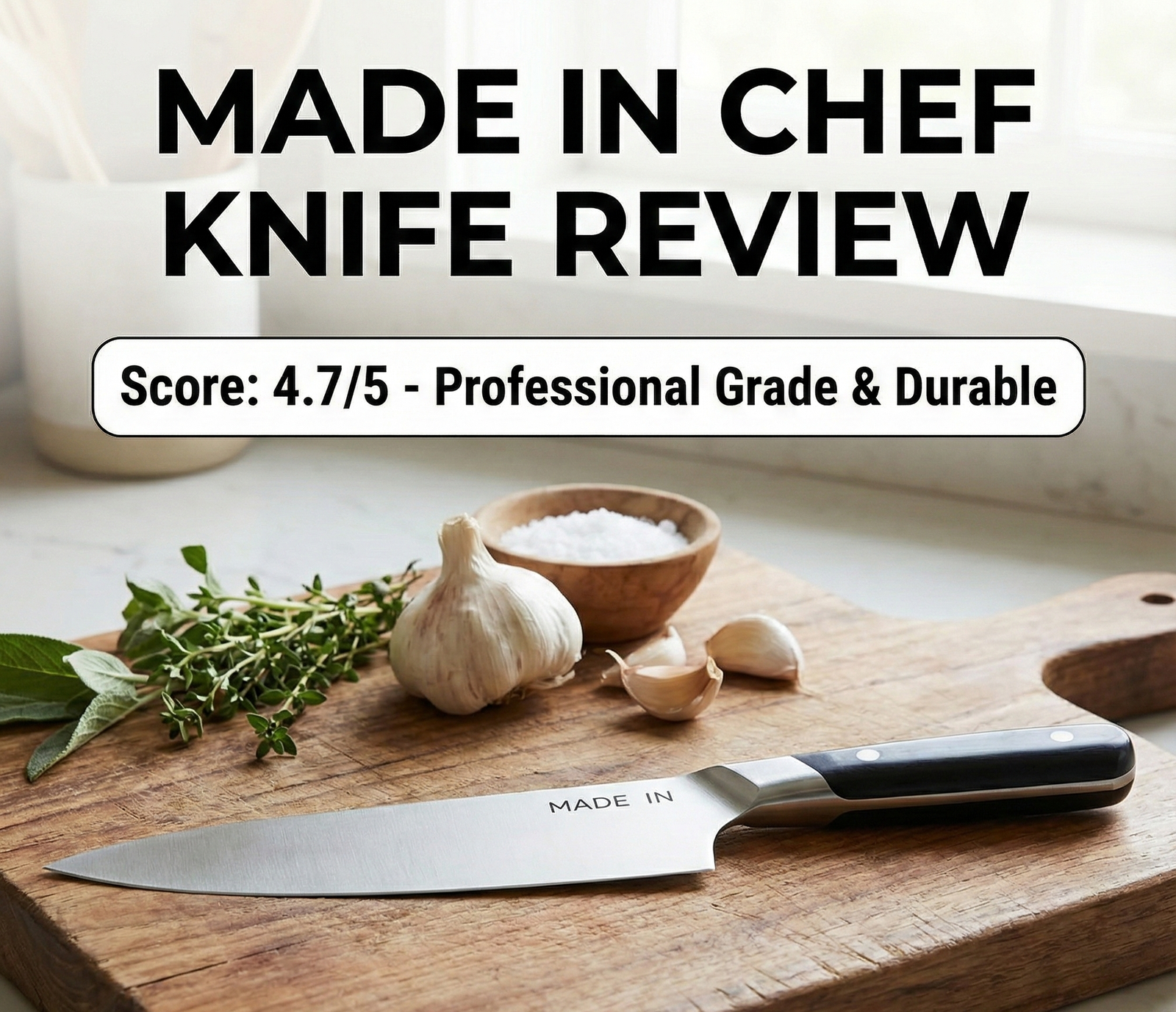
Unlike many DTC brands that outsource to China, Made In took a different route. They went straight to Thiers, France—the capital of French cutlery since the Middle Ages—to forge a knife that claims to be the perfect hybrid of durability and precision. We purchased the Made In 8-Inch Chef Knife and put it through weeks of rigorous testing in our test kitchen. From breaking down chickens to chiffonading basil, we evaluated its sharpness, edge retention, and ergonomics.
If you are tired of overpaying for heritage brands but skeptical of Instagram ads, this review is for you.
Product Overview: The Specs
The Made In Chef Knife is a fully forged, full-tang blade. It is designed to be a workhorse, sitting comfortably between the heavy German style and the delicate Japanese style. Here is the technical breakdown.
| Blade Length | 8 Inches (20cm) |
| Steel Type | X50CrMoV15 (Nitrogen Treated) |
| Hardness (HRC) | 58-60 HRC |
| Manufacturing Method | Fully Forged |
| Handle Material | POM (Synthetic) or Olive Wood |
| Weight | Approx. 7.5 oz (212g) |
| Origin | Thiers, France |
Made In Chef Knife Score
A masterclass in balance and utility. It feels more expensive than it is.
 Check Price on Amazon
The Blade: French Tradition Meets Nitrogen Science
The core of any knife is its steel. Made In uses X50CrMoV15, which is the standard high-carbon stainless steel used in best German kitchen knives like Wusthof Classic and Zwilling Pro. However, Made In adds a twist: Nitrogen Gas Treatment.
What Does Nitrogen Treatment Do?
During the forging process, the steel is treated with nitrogen. This stabilizes the microstructure of the blade, increasing corrosion resistance and allowing the edge to be hardened slightly more without becoming brittle. While most German knives sit at 56-58 HRC, the Made In knife pushes towards 58-60 HRC. This puts it in a sweet spot: tougher than a Shun or Miyabi (which are prone to chipping), but with better edge retention than a standard Henckels.
Geometry and Profile
The profile is distinctly French. Unlike the deep belly of a German knife that encourages a heavy rocking motion, the Made In blade is straighter. It resembles a Gyuto vs Chef Knife hybrid. You can still rock chop, but it excels at push-cutting and slicing. The tip is fine and precise, making it useful for shallot work that typically requires a paring knife.
Handle and Ergonomics: The “Extension of Your Hand”
A sharp knife is useless if it hurts to hold. Made In opted for a classic, triple-riveted handle available in POM (a dense, durable plastic) or premium Olive Wood. We tested the POM version, which comes in their signature “Made In Red” and Black.
The Grip
The handle shape is oval but slightly squared off, providing a secure grip that doesn’t rotate in your hand when cutting dense vegetables like squash. It is a full-tang construction, meaning the metal runs all the way to the butt of the knife. This is a critical distinction when comparing stamped vs forged knives; full tang offers superior balance.
Balance Point
The balance is impeccable. It sits right at the bolster (where the handle meets the blade). This makes the 7.5 oz weight feel lighter than it is, reducing wrist fatigue during prep-heavy meals. It doesn’t have the handle-heavy feel of a Wusthof Icon, nor the blade-heavy feel of a cheap stamped knife.
Performance Test: In The Kitchen
We ran the Made In knife through our standard gauntlet of kitchen tasks.
1. The Paper Test
Out of the box, the factory edge was shaving sharp. It sliced through magazine paper with zero tearing, indicating a high-quality initial grind.
2. The Tomato Test
The skin of a ripe tomato is the nemesis of dull knives. The Made In blade bit into the skin immediately without needing pressure. This rivals the sharpness we usually see in high-end Japanese knives.
3. The Carrot & Squash Test
Here is where the geometry shines. Because the blade isn’t overly thick at the spine, it didn’t “wedge” or crack the carrots. It sliced cleanly through. For the butternut squash, the stiffness of the forged steel provided confidence—there was no flexing or wobbling.
4. The Herb Chiffonade Test
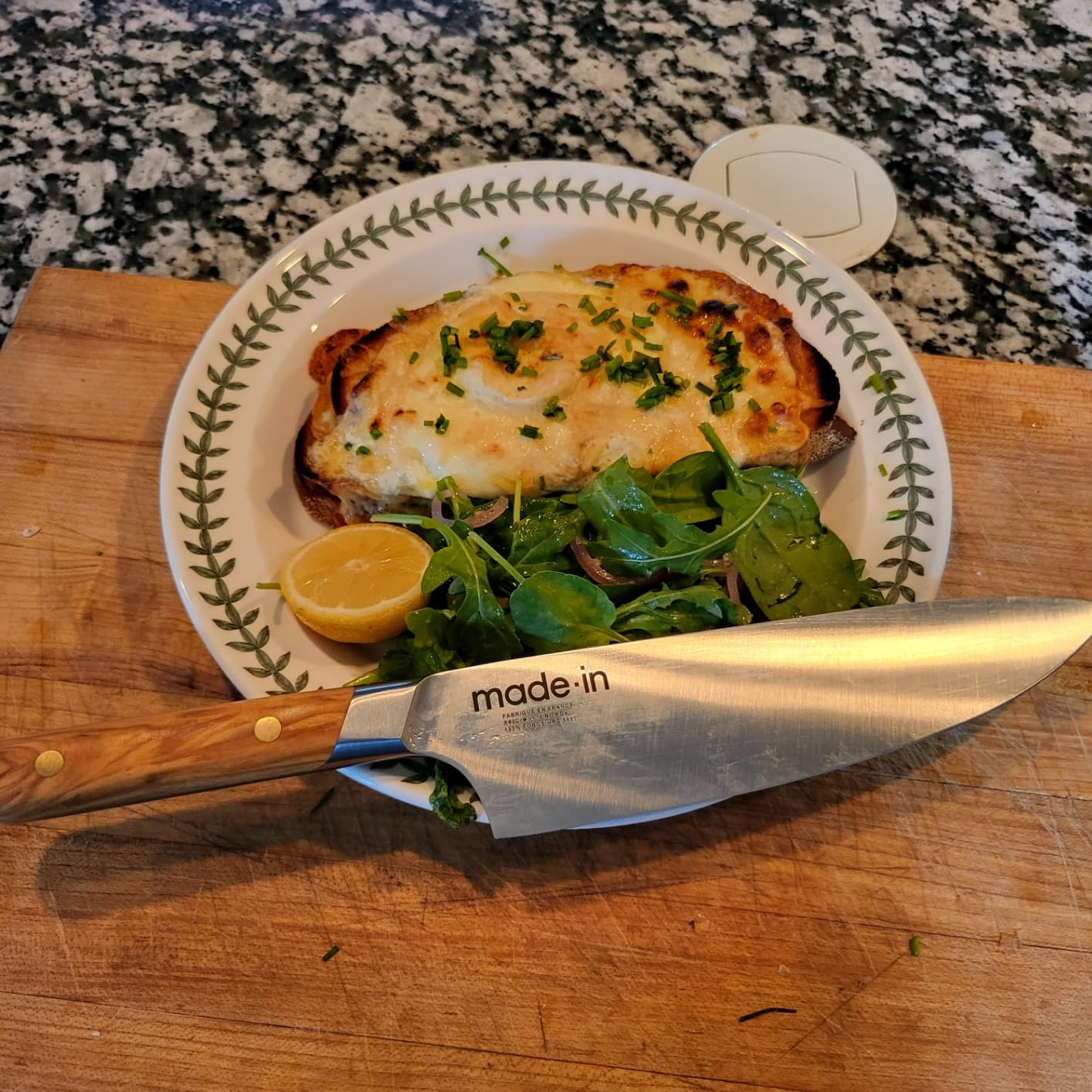
Fine herb work is one of the toughest tests for any blade, since bruised basil or cilantro turns black within minutes and ruins a plate. We stacked and rolled a dozen basil leaves and ran the Made In knife through a chiffonade cut. Because the edge is thin behind the bevel, it sliced through the leaves cleanly with a single pass instead of crushing the cell walls. Twenty minutes later, the cut basil had barely browned at the edges, which tells you the factory edge is genuinely fine rather than just aggressively toothy.
5. The Protein Fabrication Test
We broke down two whole chickens and portioned a pork shoulder to see how the knife handled connective tissue and cartilage. The stiff, forged spine meant we could apply firm, controlled pressure through joints without the blade deflecting sideways, which is a common complaint with cheaper stamped knives. The tip stayed controlled during precision cuts around the thigh joint, and the belly of the blade made quick work of trimming silverskin from the shoulder.
6. The Bread and Crusty Loaf Test
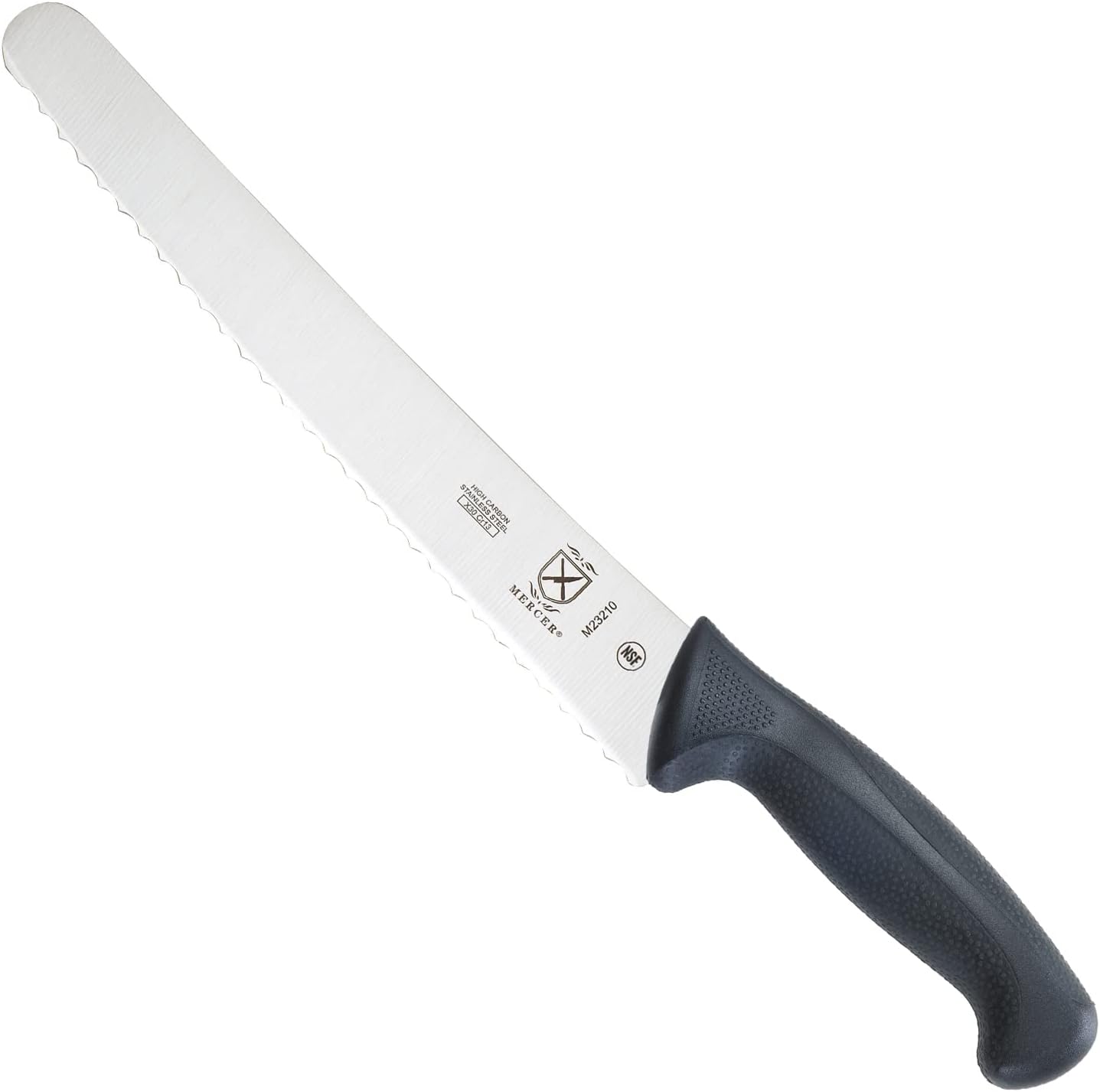
A chef’s knife is not a bread knife, but a lot of home cooks reach for whatever is closest at hand. We tried slicing a crusty sourdough boule with the Made In knife and, unsurprisingly, it compressed the crumb more than a proper serrated blade would. This is expected behavior for any straight-edge chef knife and is not a flaw specific to Made In, but it is worth noting if you were hoping one knife could do everything. For bread, you will still want a dedicated serrated knife in your block.
Pros and Cons
✅ The Good
- Nitrogen Steel: Excellent edge retention and durability (58+ HRC).
- Origin: Authentic French craftsmanship from Thiers.
- Balance: Perfectly weighted for a pinch grip.
- Warranty: Lifetime warranty against defects.
- Value: Costs significantly less than Wusthof or Zwilling for equal performance.
❌ The Bad
- Sheath: Does not come with a sheath (you need a knife holder).
- Cleaning: The branding on the blade can fade with heavy scrubbing.
- Availability: Often sold out due to high demand.
- Spine: The spine corners are a bit sharp (not rounded), which can irritate the finger in a pinch grip after hours of use.
Comparison: Made In vs The Competition
The biggest question buyers have is how Made In stacks up against the titans of the industry.
Made In vs. Wusthof Classic
The Wusthof Classic is the gold standard.
- Steel: Both use X50CrMoV15, but Made In’s nitrogen treatment makes it slightly harder.
- Feel: Wusthof is heavier and has a larger bolster (finger guard). Made In feels more agile.
- Price: Made In is typically 30-40% cheaper.
- Verdict: If you want a tank, get Wusthof. If you want agility and value, get Made In.
Made In vs. Misen
This is the battle of the DTC brands. We conducted a full Misen Chef Knife review recently.
- Steel: Misen uses Japanese AUS-10 (harder, more brittle). Made In uses French Stainless (tougher).
- Design: Misen has a unique sloped bolster. Made In is more traditional.
- Feel: Made In feels more premium and substantial. Misen feels more like a budget upgrade.
- Verdict: Made In is the superior knife for longevity and durability.
Made In vs. Victorinox Fibrox
The Victorinox is the budget king.
- Comparison: There is no contest in build quality. Made In is fully forged; Victorinox is stamped. Made In is a joy to use; Victorinox is purely utilitarian.
- Verdict: Upgrade to Made In if you care about the cooking experience.
Maintenance: Keeping It Sharp
Because Made In uses nitrogen-treated steel, it holds an edge well, but it still requires care.
Honing
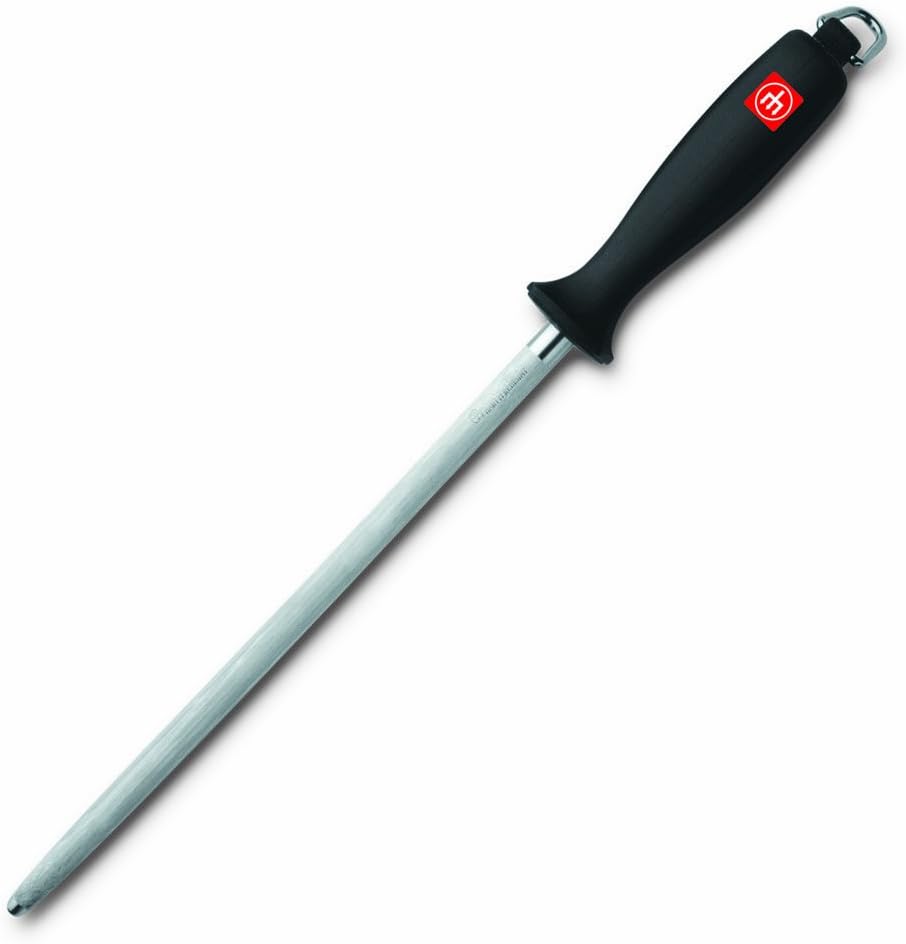
You should hone your knife every few uses to realign the edge. Read our guide on sharpening stone vs honing steel to understand the difference. A standard steel rod works perfectly for the Made In knife.
Sharpening
When the edge eventually dulls (usually after 6-9 months of daily use), it will need sharpening. We recommend using a whetstone or a high-quality electric system. Check our list of best electric knife sharpeners compatible with 15-20 degree edges.
Storage
Never throw this knife in a drawer. The edge will chip. Use a knife drawer organizer or a magnetic strip. If you travel, ensure you know how to travel with kitchen knives safely using a roll or guard.
The Made In Brand Story: Who Actually Makes This Knife?
A surprising number of shoppers assume “Made In” is simply a marketing name slapped on generic imported cutlery, so it is worth explaining who is actually behind the product. Made In Cookware was founded in Austin, Texas by Jake Kalick and Chip Malt, two friends with backgrounds in the restaurant supply and hospitality industries. Their original thesis was simple: chefs were buying restaurant-grade cookware and cutlery from wholesale suppliers at a fraction of what home cooks paid for equivalent quality at retail, purely because of layers of distributor and retailer markup.
Rather than manufacture everything in-house, Made In partners with legacy factories that already supply professional kitchens, then sells directly to consumers online, cutting out the traditional retail markup that can double or triple the shelf price of cookware and cutlery. For the chef knife line specifically, that meant partnering with a family-run forge in Thiers, France, a town that has been the center of French cutlery production since the 14th century and still produces a large share of the country’s professional kitchen knives today.
Why Thiers, France Matters
Thiers earned its reputation because of the Durolle river, whose fast current once powered the grinding wheels used to sharpen blades on an industrial scale. That infrastructure attracted generations of cutlers, and the town’s guilds developed forging and heat-treatment techniques that are still taught to apprentices today. When a brand says a knife is “forged in Thiers,” it is invoking a genuine manufacturing lineage rather than a generic overseas factory, and Made In leans on that heritage heavily in its marketing because the claim is verifiable.
Direct-to-Consumer Pricing, Explained
Traditional cutlery brands like Wusthof and Zwilling sell through a wholesale channel: they manufacture the knife, sell it to a distributor, the distributor sells it to a retailer like Williams Sonoma or Sur La Table, and the retailer marks it up again before it reaches your cart. Each step in that chain typically adds 20 to 50 percent to the final price. Made In sells directly from its own website and through a small number of approved marketplaces, which is the primary reason the Made In Chef Knife can undercut comparable German-forged competitors by such a wide margin while reportedly using the same core steel alloy.
Beyond the 8-Inch: The Full Made In Knife Lineup
The 8-inch chef knife is the flagship, but it is only one piece of a broader cutlery system. Understanding the full lineup helps you decide whether to buy a single knife or build out a complete kit over time.
Made In 6-Inch Chef Knife
The 6-inch version uses the same steel and nitrogen treatment as the 8-inch model but in a lighter, more maneuverable package. It suits cooks with smaller hands, or anyone who does a lot of fine mincing work rather than heavy rock-chopping. Some home cooks actually prefer it as a daily driver and reserve the 8-inch for larger cuts of protein and produce.
Made In Paring Knife
For peeling, hulling strawberries, and other detail work, the companion paring knife uses a scaled-down version of the same blade geometry. It is not sold as part of the base chef knife listing, so buyers who want a complete starter set need to add it separately.
Made In Bread Knife
Because a chef knife struggles with crusty loaves, as our testing above confirmed, Made In also sells a serrated bread knife with an offset handle that keeps your knuckles clear of the cutting board. It is a natural companion purchase for anyone building a full block around the chef knife.
Made In Boning and Utility Knives
For cooks who regularly break down whole chickens or fabricate their own cuts of meat, the boning knife offers a thinner, more flexible blade that the rigid chef knife cannot replicate. The utility knife slots between the chef knife and paring knife for mid-sized tasks like slicing sandwiches or citrus.
Made In Steak Knives
Made In also sells a matching steak knife set forged from the same nitrogen-treated steel, aimed at buyers who want table-ready cutlery that visually matches their chef knife and block.
Made In Knife Sets: Are They Worth It?
Made In periodically bundles the chef knife with a paring knife, bread knife, and a wooden block or magnetic strip at a discount compared to buying each piece individually. Whether a set makes sense depends on where you are starting from.
Buy a Set If…
- You currently own no forged knives and are starting a kitchen from scratch.
- You want matching handles and a single storage solution rather than mismatched brands cluttering your countertop.
- The bundled discount is meaningful, which Made In periodically offers around major sale events.
Buy the Chef Knife Alone If…
- You already own a decent paring or bread knife and only need to upgrade your main workhorse blade.
- You are testing the brand before committing to a full set, since the chef knife does roughly 80 percent of the cutting work in most home kitchens.
- Storage space is tight and you would rather use a slim knife holder than a full wooden block.
Our general recommendation for first-time buyers is to start with the chef knife alone. It is the single most-used tool in almost any kitchen, and buying it individually lets you confirm the handle shape and balance suit your grip before investing in a matching set.
Sharpening Angle, Steel Hardness, and Edge Geometry Explained
Cutlery marketing throws around numbers like “58-60 HRC” and “25 degree edge” without explaining what they actually mean for how a knife performs day to day. Here is a plain-language breakdown specific to the Made In Chef Knife.
What HRC Actually Measures
HRC stands for Hardness Rockwell C, a scale that measures how much a diamond-tipped probe indents the steel under a fixed load. Higher numbers mean harder steel, which generally translates to better edge retention because a harder edge resists rolling and deforming during use. The tradeoff is that harder steel is more brittle and can chip if it strikes a hard surface like a bone or a ceramic plate. At 58-60 HRC, the Made In blade sits in a genuinely favorable middle zone: hard enough to hold an edge through weeks of regular cooking, but not so hard that ordinary kitchen use risks chipping the way ultra-hard 62+ HRC Japanese blades sometimes do in inexperienced hands.
Why the Edge Angle Matters
The Made In Chef Knife ships with roughly a 12.5 degree bevel per side, for a 25 degree total inclusive angle. A narrower angle produces a sharper, more precise edge but sacrifices some durability, while a wider angle is more forgiving of abuse but cuts less cleanly. German knives traditionally use wider 20-22 degree per-side angles specifically because they are built to survive rough treatment in busy professional kitchens. Made In’s narrower angle is closer to a hybrid Japanese-European geometry, which explains why testers consistently describe the factory edge as noticeably sharper out of the box than a comparable Wusthof or Zwilling.
Maintaining the Factory Angle
If you eventually sharpen the knife yourself on a whetstone, matching the factory angle is important; drifting toward a shallower angle over repeated sharpenings will make the edge thinner and more fragile over time, while drifting wider will make it duller-feeling even when technically sharp. Many angle guides and pull-through systems are calibrated in 5-degree increments, so setting a guide to 12-13 degrees per side is the closest practical match. Our guide on the best knife sharpeners covers angle-guided systems that make this easier for beginners.
Weight, Balance, and Grip Styles
At roughly 7.5 ounces, the Made In Chef Knife sits in a middle weight class: noticeably heftier than a light Japanese gyuto, but lighter than a full-bolster German chef knife that can weigh close to 9 ounces. This matters more than most buyers expect, because weight and balance interact directly with how tired your hand gets during long prep sessions.
Pinch Grip Compatibility
Most professional cooks use a pinch grip, gripping the blade itself just in front of the handle with the thumb and forefinger rather than wrapping the whole hand around the handle. Because the Made In knife balances almost exactly at the bolster, it feels neutral in a pinch grip; neither the blade nor the handle fights to tip the knife in one direction, which reduces the small stabilizing effort your hand has to make on every single cut.
Handshake Grip Compatibility
Home cooks who use a full handshake grip around the handle, rather than a pinch grip, will feel slightly more handle weight in that grip style, though it is still far from handle-heavy. Testers with larger hands generally found the handle comfortable for extended sessions; testers with smaller hands sometimes preferred the lighter 6-inch version for the same reason.
Is the Made In Chef Knife Worth the Money?
Value is relative to what you are comparing it against. Measured purely on materials and construction, the Made In Chef Knife uses the same core steel alloy as knives that sell for considerably more at retail, and the nitrogen treatment arguably gives it an edge-retention advantage over some of those pricier competitors. Measured against ultra-budget stamped knives, it is a significant step up in every category, from balance to edge retention to how it feels in hand after an hour of prep.
Where the value proposition gets more nuanced is against other DTC brands. Misen, for example, undercuts Made In on price in some listings while using a harder Japanese steel that some buyers may prefer. The honest takeaway is that Made In’s value is strongest for buyers who specifically want a European-style knife with French manufacturing heritage, rather than for buyers who are purely optimizing for the lowest price per HRC point.
Who Should NOT Buy This Knife
No single knife is right for everyone, and it is worth being upfront about the buyers who may want to look elsewhere.
- Dedicated Japanese-knife enthusiasts who prefer very hard, thin-ground steel and are comfortable with the extra chip risk may prefer a true Japanese gyuto instead.
- Buyers on a very tight budget who just need a functional knife for basic prep may be better served by a Victorinox Fibrox, which costs a fraction of the price and still performs well for casual use.
- Left-handed cooks with specific grind preferences should note that, like most Western chef knives, this blade uses a symmetrical double bevel, so handedness is not a major factor either way, but it is worth confirming if you have previously used an asymmetrical Japanese single-bevel blade.
- Anyone who needs same-day availability should check stock carefully, since popular sizes and handle colors from Made In periodically sell out.
Warranty, Returns, and Customer Service
Made In backs the chef knife with a lifetime warranty against manufacturing defects, which covers issues like flaws in the forging or materials but does not cover normal wear, edge dulling, or damage from misuse such as dishwasher cycles or cutting through bone with excessive force. This is standard practice across the premium cutlery industry and mirrors the warranty structure offered by brands like Wusthof and Zwilling.
Return Policy
Made In typically offers a standard return window for unused or lightly used products purchased directly through its own website, allowing buyers to send the knife back if it does not meet expectations. Return policies for units purchased through third-party marketplaces instead follow that marketplace’s own return rules, so it is worth checking the specific terms at checkout rather than assuming the manufacturer’s policy automatically applies.
Customer Support Experience
Anecdotally, Made In’s customer support has a reputation for being responsive by email and chat, which matters for a DTC brand that does not have a brick-and-mortar presence where you could otherwise bring in a defective item for evaluation.
Sustainability and Materials Sourcing
Sustainability is not the headline feature of any forged steel knife, since steel production is inherently energy intensive, but a few aspects of the Made In supply chain are worth noting for environmentally conscious buyers. Because the knife is manufactured in a long-established French facility rather than a newly built overseas factory, the production process draws on decades of refined, lower-waste forging techniques rather than a from-scratch industrial setup. The direct-to-consumer model also reduces the number of shipping legs between factory and customer compared to a knife that travels from factory to distributor warehouse to retail store to consumer, which modestly reduces the overall carbon footprint of getting the product into your kitchen.
On the durability side, a forged, full-tang knife built to last decades with proper care is inherently more sustainable than a disposable stamped knife that gets replaced every year or two, since the embodied energy and materials of the knife are spread across a much longer usable lifespan.
Real Owner Feedback: What Long-Term Users Say
Beyond our own test-kitchen impressions, it’s useful to look at patterns across long-term owner feedback gathered from verified purchase reviews and cooking forums.
This kind of long-term durability feedback shows up repeatedly: owners consistently report that the edge retention holds up well past the initial honeymoon period that new-knife buyers sometimes mistake for genuine sharpness. The most common complaint in negative reviews is not about performance but about the branding etched into the blade fading with aggressive scrubbing, which lines up with what we noted in our own testing.
Common Praise Themes
- Balance and comfort during long prep sessions
- Sharpness straight out of the box
- Perceived value compared to legacy German brands
Common Complaint Themes
- Fading blade branding after months of hand washing
- Sharp spine corners causing minor discomfort in a pinch grip
- Stock availability issues around popular colorways
Buying Guide: How to Choose Your First Chef Knife
If this is your first time investing in a proper chef knife, a few fundamentals will help you evaluate any option, not just this one.
1. Blade Length
Most home cooks are best served by an 8-inch blade, which offers enough length to break down larger cuts of produce and protein while remaining manageable for smaller cutting boards. A 6-inch blade suits smaller hands or tighter kitchen counters, while 10-inch blades are generally reserved for professional or high-volume use.
2. Forged vs Stamped
A forged blade is hammered from a single billet of steel, giving it a thicker spine, better balance, and a full tang. A stamped blade is cut from a sheet of steel, making it lighter and cheaper but generally less durable and less well balanced. Our full breakdown of stamped vs forged knives covers this distinction in more depth.
3. Steel Hardness
As covered above, look for a hardness in the high 50s to low 60s HRC range for a good balance of edge retention and chip resistance, unless you are specifically experienced with harder, more delicate Japanese blades.
4. Handle Feel
No amount of steel quality matters if the handle is uncomfortable in your specific hand. Whenever possible, hold a knife in person before buying, or buy from a retailer with a generous return policy so you can send it back if the grip does not suit you.
5. Budget Realistically
A genuinely good forged chef knife typically starts around $100 to $150 at the lower end of the premium tier, climbing well past $200 for boutique or heritage brands. Anything dramatically cheaper is very likely stamped rather than forged, regardless of marketing language.
Knife Skills: Getting the Most From Your Chef Knife
Even the best knife underperforms in the wrong hands. A few fundamental techniques will help you get more out of the Made In Chef Knife specifically, given its straighter French profile.
Push-Cutting Over Rocking
Because the blade profile is flatter than a German knife, it responds better to a push-cut motion, driving the blade forward and down through the ingredient rather than relying purely on a rocking motion pinned at the tip. This is closer to how many Japanese-trained cooks are taught to use a gyuto, and it tends to produce cleaner slices on delicate ingredients like tomatoes and herbs.
Claw Grip for Safety
Curl the fingertips of your guiding hand under, using your knuckles as a guide for the flat of the blade. This keeps fingertips safely away from the edge and is especially important with a knife this sharp straight out of the box.
Let the Steel Do the Work
Because the edge is thin and the steel holds an edge well, you need far less downward force than you might be used to with a duller knife. Excess pressure with a blade this sharp increases both the risk of slipping and the risk of prematurely rolling the edge.
Made In vs Global, Mercer, and Tojiro
Beyond Wusthof, Misen, and Victorinox, three other brands come up frequently when shoppers are comparing options in this price bracket.
Made In vs. Global
Global knives use a distinctive one-piece stainless steel construction with a hollow handle filled with sand for balance, and a harder Japanese steel ground to a thinner edge. Global knives feel noticeably lighter than the Made In knife and have a more aggressive, slender profile. Cooks who prefer a featherweight knife with a razor edge may lean Global; cooks who want a sturdier, more traditional feel will likely prefer the Made In.
Made In vs. Mercer Culinary
Mercer is a favorite in culinary schools and professional kitchens largely because of its low price and reliable, no-frills performance. Mercer’s Genesis and Renaissance lines use good but not exceptional steel and a synthetic handle built to survive constant commercial use and repeated dishwasher cycles, at a lower price point than Made In. Made In pulls ahead on refinement, balance, and edge retention, but Mercer remains a smart choice for culinary students who want a durable, low-cost training knife.
Made In vs. Tojiro
Tojiro is a well-regarded entry point into genuine Japanese cutlery, typically using harder VG-10 steel ground to a thinner, sharper edge than most Western knives. Tojiro blades reward careful use and proper technique but are more prone to chipping if used carelessly on bones or frozen food. The Made In knife is the more forgiving, all-purpose option for cooks who want one knife that can handle a wider range of kitchen abuse.
Gift Guide: Is a Chef Knife a Good Gift?
A quality chef knife is one of the few kitchen gifts that gets used literally every single day, which makes it a strong option for a milestone gift like a housewarming, wedding, or graduation present, provided the recipient already cooks or has expressed interest in cooking more. A few gift-specific considerations apply.
Presentation Matters
Because the knife does not ship with a sheath, gift-givers may want to pair it with a knife holder or a small cutting board to round out the presentation, since an unboxed blade alone can feel like an incomplete gift.
Consider the Recipient’s Experience Level
A genuinely sharp, high-performance knife can be intimidating for a total beginner who has only ever used dull kitchen knives. For a first-time cook, consider pairing the gift with a short knife-skills class or a beginner-friendly recipe book so the sharpness is an asset rather than a hazard.
Avoid Gifting Knives to Someone Who Didn’t Ask, In Some Cultures
In several cultural traditions, gifting a blade is considered to symbolically “cut” a relationship unless the recipient gives a small coin or token payment in return. It is worth being aware of this if you are gifting across cultural lines, though it is a minor superstition rather than a hard rule.
Frequently Asked Questions
Where are Made In knives manufactured?
Made In knives are forged in Thiers, France, a town renowned as the capital of French cutlery for over 600 years. They are produced by a 5th generation family-owned manufacturer, ensuring authentic craftsmanship.
Is the Made In chef knife dishwasher safe?
No. Like all high-quality forged knives, the Made In knife should be hand washed and dried immediately. The dishwasher’s high heat and harsh detergents can damage the handle materials and dull the blade significantly.
What is the angle of the Made In chef knife?
The Made In Chef Knife is sharpened to a total angle of approximately 25 degrees (12.5 degrees per side). This is sharper than traditional German knives (typically 20-22 degrees per side), offering a precision cut while maintaining enough metal behind the edge for durability.
Does Made In offer free sharpening?
Made In does not currently offer a free sharpening mail-in service. However, the nitrogen-treated steel is user-friendly and easy to sharpen at home. If you prefer professional help, check local services or our guide on the best knife sharpeners.
Does the Made In chef knife come with a sheath or knife block?
No, the standalone chef knife ships without a sheath, blade guard, or block. Most buyers pair it with a separate knife holder, magnetic strip, or opt for one of Made In’s bundled sets that include a storage option.
What is the difference between the Made In 6 inch and 8 inch chef knife?
Both share the same nitrogen-treated X50CrMoV15 steel and overall blade geometry. The 6-inch version is lighter and easier to maneuver, which suits smaller hands and fine mincing work, while the 8-inch model handles larger produce and protein more efficiently and remains the better all-around workhorse for most kitchens.
Is Made In cookware and cutlery an American company?
Made In is headquartered in Austin, Texas, and was founded by Jake Kalick and Chip Malt. The company itself is American, but the chef knives are produced by a family-run forge in Thiers, France, giving the brand a genuine European manufacturing pedigree behind an American direct-to-consumer business model.
How long does the edge last on a Made In chef knife?
With regular honing between uses on a steel rod, most owners report the factory edge stays comfortably sharp for several months of near-daily home cooking, with a full resharpening typically needed somewhere in the 6 to 9 month range depending on cutting board surface and frequency of use.
Can the Made In chef knife go through bone?
It is not designed or recommended for cutting through bone. Like nearly every Western chef knife, it should be reserved for boneless cuts, produce, and general prep work; a dedicated cleaver or boning knife is the correct tool for bone-in butchery.
Final Verdict: Should You Buy the Made In Chef Knife?
The Made In 8-Inch Chef Knife is a triumph of modern D2C economics meeting old-world craftsmanship. It successfully strips away the retailer markup without stripping away quality.
It is not just “good for the price”—it is legitimately a top-tier tool that stands shoulder-to-shoulder with Henckels and Victorinox upgrades. The French profile offers a level of refinement that bulky German knives lack, while the nitrogen-treated steel provides a toughness that delicate Japanese knives can’t match.
We recommend buying the Made In Chef Knife if:
- You want a professional-grade knife for under $120.
- You prefer a knife that balances durability with precision slicing.
- You value transparency and European manufacturing.
If you are building your kit, this is the perfect centerpiece. It handles everything from Santoku-style veggie prep to heavy meat fabrication with grace.