Solingen’s Finest: The Ultimate Guide to the Best German Kitchen Knives
In the world of culinary tools, few terms command as much respect as “German steel.” It evokes images of uncompromising quality, centuries of craftsmanship, and a blade that is not just sharp, but virtually indestructible. A German kitchen knife is more than a cutting tool; it’s a lifetime investment in performance. It’s the dependable, powerful, and perfectly balanced workhorse that forms the backbone of professional and home kitchens across the globe. Today, we’re diving deep into the heart of Solingen, the legendary “City of Blades,” to find the absolute best knives Germany has to offer.
What You’ll Find In This Guide
- The Indestructible Intern
- How We Define a Superior German Knife
- The Honor Roll: Quick Picks
- In-Depth Reviews
- Understanding Solingen Steel
- Full Tang vs. Half Tang vs. Stamped
- German Steel Hardness Explained
- Building a Complete German Knife Set
- Wüsthof Product Line Guide
- Zwilling Product Line Guide
- Complete Maintenance Guide
- Whetstone vs. Honing Steel vs. Electric
- Common Mistakes That Damage Knives
- German Knives vs. French Knives
- Left-Handed Cooks and German Knives
- Budget Breakdown by Price Tier
- The History of Solingen
- Essential Knife Skills
- Overlooked Buying Considerations
- FAQ
The Indestructible Intern: A Lesson in German Resilience
My first real restaurant job was in a high-volume French bistro. The kitchen was a chaotic ballet of blistering heat and intense pressure. On my first day, the executive chef handed me a beat-up, worn-down chef’s knife. The handle was scarred, the logo was faded, but it felt impossibly solid in my hand. “This is your knife,” he said. “It was my first knife. Don’t break it.” That knife was a Wüsthof Classic, and over the next year, I put it through absolute hell. It chopped through countless cases of onions, broke down whole chickens, and was occasionally used (I’m not proud of this) to pry open stubborn cans. It was dropped, abused, and sharpened aggressively on the house’s electric sharpener.
Through it all, it never chipped, bent, or failed me. It just kept taking an edge and asking for more. Meanwhile, I saw other cooks with fancier, more delicate knives that would chip or break under the intense pressure. That Wüsthof taught me the core truth of German cutlery: it is built to endure. It’s not just about sharpness; it’s about resilience. This guide is a tribute to that indestructible spirit—a search for the knives that will be the reliable heart of your kitchen for decades to come.
Forged in Fire: How We Define a Superior German Knife
The “Made in Germany” label, especially from Solingen, carries immense weight. To honor that tradition, we established a rigorous set of criteria to evaluate these culinary titans. We looked beyond the brand name to the specific attributes that make German knives the workhorses of the world.
Our Core Philosophy: A great German knife is a perfect synthesis of three elements: a tough, durable blade that holds a practical edge; a comfortable, secure handle that offers total control; and a robust, balanced construction (full tang and bolster) that makes the knife feel like a natural extension of your hand.
- Steel Quality (The Solingen Standard): The soul of the knife. We focused on knives forged from high-carbon stainless steel, specifically the German standard X50CrMoV15. This steel provides an excellent combination of toughness (resistance to chipping), stain resistance, and the ability to be easily honed and sharpened.
- Construction (Forged, Full Tang, Full Bolster): We prioritized traditionally forged knives. A forged knife is made from a single piece of steel, giving it superior strength. We looked for a **full tang** (the steel extends to the end of the handle) for perfect balance and a **full bolster** (the thick piece of metal between the blade and handle) which acts as a finger guard and adds to the balance.
- Edge Geometry & Sharpness: German knives are typically sharpened to a 20-degree angle per side. This is a robust, durable edge that may not feel as razor-thin as a Japanese blade but holds up far better to vigorous chopping and heavy use. We tested for a keen, durable edge that could be easily maintained.
- Handle Ergonomics & Material: The handle is your interface with the blade. We looked for comfortable, triple-riveted handles made from high-impact, durable synthetic materials like Polyoxymethylene (POM), which resists fading and discoloration.
- Brand Heritage & Craftsmanship: We focused on the titans of Solingen—brands with centuries of experience. The fit and finish, the seamless transition from bolster to handle, and the overall feeling of quality were all heavily considered. This is where the great debate between the top brands, detailed in articles like Wüsthof vs. Zwilling vs. Shun, truly comes to life.
The Honor Roll: The Best German Knives You Can Buy
If you’re ready to invest in a lifetime of quality cutting, these are the best German knives you can buy.
| Knife | Image | Brand | Best For | Check on Amazon |
|---|---|---|---|---|
| Wüsthof Classic 8″ Chef’s Knife |  |
Wüsthof | The Indestructible Workhorse | View Price |
| Zwilling Pro 8″ Chef’s Knife |  |
Zwilling J.A. Henckels | Ergonomics & Modern Design | View Price |
| Messermeister Meridian Elité 9″ Chef’s Knife |  |
Messermeister | Best for a Lighter Touch | View Price |
| Wüsthof Classic 7″ Santoku |  |
Wüsthof | Best for Vegetables | View Price |
| Henckels International Classic 8″ Chef’s Knife |  |
Henckels | Best Value Forged Option | View Price |
The Titans of Solingen: In-Depth Reviews of the Best German Knives
We chopped, diced, and carved our way through a mountain of ingredients to put these legendary blades to the ultimate test. Here’s how they performed.
1. Wüsthof Classic 8-Inch Chef’s Knife (The Indestructible Workhorse)
This is arguably the most recognizable and respected chef’s knife on the planet. The Wüsthof Classic is the definition of a German workhorse. Forged from a single piece of high-carbon stainless steel, it features a full bolster and a full tang, giving it a feeling of perfect balance and immense strength. The 8-inch blade has a classic profile that excels at rock-chopping, and its 58 Rockwell hardness makes the steel tough enough to absorb punishment but soft enough to be easily sharpened to a screaming edge.
This knife feels powerful and precise. It gives you the confidence to tackle any task in the kitchen. It’s the standard against which all other workhorse knives are measured, a fact highlighted in our detailed Wüsthof vs. Victorinox comparison. If you could only own one knife for the rest of your life, this would be a top contender.
Who is this best for?
Anyone, from a professional chef to a serious home cook, who wants the undisputed benchmark for a durable, all-purpose, high-performance chef’s knife.
- Legendary durability and resilience
- Perfectly balanced with a full tang and bolster
- Made in Solingen, Germany, for over 200 years
- Extremely comfortable and secure handle
- Easy to hone and sharpen
Pros
- Heavier than Japanese-style knives
- Premium price point
Cons
2. Zwilling Pro 8-Inch Chef’s Knife (Ergonomics & Modern Design)
Zwilling J.A. Henckels brings a touch of modern innovation to the classic German knife. The Zwilling Pro is also forged in Solingen from a proprietary steel formula and is ice-hardened (FRIODUR) for enhanced sharpness and corrosion resistance. Its most distinctive feature is the curved bolster, designed by architect Matteo Thun. This curve encourages a proper “pinch grip,” making the knife exceptionally comfortable and an extension of your hand. The blade also has a slightly broader curve than the Wüsthof, making it a rock-chopping machine.
This knife feels a bit more refined and “designed” than the classic Wüsthof, and many chefs prefer its unique ergonomics. It represents the pinnacle of Zwilling’s engineering, a topic we dive into in our Zwilling vs. Henckels guide, which clarifies the difference between the company’s brands. For a modern take on German perfection, the Zwilling Pro is a masterpiece.
Who is this best for?
The cook who values modern ergonomics and a refined feel, and those who use a pinch grip and will benefit from the innovative curved bolster.
- Unique curved bolster for superior comfort and control
- Ice-hardened blade for excellent edge retention
- Slightly more curved blade is great for rock-chopping
- Impeccable German fit and finish
Pros
- Curved bolster can be tricky with some sharpeners
- Also a premium price point
Cons
3. Messermeister Meridian Elité 9-Inch Chef’s Knife (Best for a Lighter Touch)
Messermeister, “the knife master,” is the hidden gem of Solingen. This boutique, woman-owned company creates knives with a slightly different philosophy. The Meridian Elité line is also forged from the same German steel, but it’s known for having a thinner blade profile, closer to a Japanese knife. It also features a quarter-bolster instead of a full bolster, which makes the knife lighter and allows for sharpening the entire length of the blade. This results in a German knife with the soul of a workhorse but the agility of a more nimble blade.
This 9-inch version offers extra length for tackling larger projects without feeling unwieldy. It’s for the cook who finds other German knives a bit too heavy but still wants that German durability. Messermeister offers a fantastic alternative to the big two and is a favorite among professional chefs. After using it, you might just find your new favorite among the best chef knife brands.
Who is this best for?
The chef who wants German durability but prefers a lighter, more agile knife with a thinner blade. An excellent “hybrid” choice.
- Lighter and more nimble than other German knives
- Quarter-bolster allows for full-length sharpening
- Hand-finished for an exceptionally sharp edge out of the box
- Classic, comfortable handle design
Pros
- Less brand recognition than Wüsthof or Zwilling
- Thinner blade is slightly less robust for heavy-duty tasks
Cons
4. Wüsthof Classic 7-Inch Santoku (Best for Vegetables)

While the chef’s knife is the king of versatility, the Santoku is the master of vegetables. This Wüsthof Classic Santoku brings German engineering to the Japanese-style blade. It has a flatter belly, a sheepsfoot tip, and a shorter 7-inch length, making it ideal for quick, downward chops rather than rock-chopping. The hollow-ground indentations (kullenschliff) create air pockets to reduce friction and prevent food from sticking—a massive help when dicing potatoes or cucumbers.
It has all the hallmarks of the Wüsthof Classic line: forged, full tang, and incredibly durable. It’s the perfect companion to a German chef’s knife, giving you a specialized tool for veggie-heavy prep. The German vs. Japanese knife debate is fascinating, especially when one style is made by the other, as we explore in our Shun vs. Wüsthof article. This is German steel perfected for a Japanese task.
Who is this best for?
The home cook who does a lot of vegetable prep and wants a specialized blade that excels at dicing, mincing, and slicing, with the durability of German steel.
- Excels at vegetable prep with its flat edge
- Hollow-ground edge reduces food sticking
- Shorter blade is very nimble and easy to control
- Features the same legendary Classic build quality
Pros
- Less versatile than a traditional chef’s knife
- Not ideal for rock-chopping motion
Cons
5. Henckels International Classic 8-Inch Chef’s Knife (Best Value Forged Option)
Want the feel and durability of a forged German knife without the steep price tag of a Wüsthof or a premium Zwilling? The Henckels International Classic line is the answer. These knives are made in Spain, but they are designed by Zwilling and forged from high-quality German steel. This 8-inch chef’s knife features a full bolster and a full tang, giving it the authentic weight and balance you expect from a German knife.
While the fit and finish may not be quite as refined as its more expensive cousins, the performance is exceptional for the price. It’s a true forged knife that offers incredible durability and value. It’s a fantastic entry point into the world of German cutlery and a perfect choice for those looking for the best budget chef knife that is still forged. Our Henckels vs. Victorinox comparison shows just how well this value-forged knife stacks up against the king of stamped blades.
Who is this best for?
The home cook on a budget who wants the balance, durability, and feel of a true forged German knife at an unbeatable price point.
- True forged construction at an incredible price
- Features a full bolster and full tang for great balance
- Made with high-quality German stainless steel
- Excellent entry into the world of German knives
Pros
- Made in Spain, not Solingen
- Edge may require more frequent honing
Cons
Understanding Solingen Steel: The Science Behind X50CrMoV15
Ask any Solingen cutler what makes their knives different, and the conversation will inevitably turn to metallurgy. The steel used by Wüsthof, Zwilling, and most of the other major German manufacturers is a high-carbon, chromium-molybdenum-vanadium stainless alloy, most commonly referred to by its European standard designation, X50CrMoV15. That alphanumeric string looks intimidating, but it actually tells you almost everything you need to know about how the steel will behave under a cutting board.
The “X” indicates a highly alloyed steel. The “50” refers to the carbon content, expressed as roughly 0.5% carbon by weight, which is a moderate amount compared to premium Japanese powdered steels that can run much higher. The “Cr” stands for chromium, present at around 15%, which is what gives the blade its stain resistance and keeps rust at bay even in a busy, humid kitchen. Small additions of molybdenum and vanadium round out the recipe, refining the grain structure of the steel and adding a measure of toughness and wear resistance that a plain chromium steel would lack.
What does a moderate carbon content actually mean for your cooking? In practical terms, it means the steel is not the hardest on the market. Most German blades land in the 56 to 58 Rockwell hardness range, whereas a premium Japanese blade might reach 62 or higher. A harder steel can hold a thinner, sharper edge for longer, but it is also more brittle and prone to micro-chipping if it strikes a bone, hits a ceramic plate, or gets twisted while cutting through something dense like a butternut squash. German steel trades some of that outright edge retention for toughness, which is precisely why a Solingen blade can survive years of hard restaurant use, being dropped, and being sharpened by someone in a hurry without ever developing a chip.
There’s also a manufacturing dimension to the story. Most premium German knives are drop-forged, meaning a single steel blank is heated and stamped under enormous pressure into the rough shape of a blade, bolster, and tang all at once. This process compresses the grain structure of the steel and reduces internal voids, which contributes to the knife’s strength and rigidity. Some manufacturers, including Zwilling with its FRIODUR process, add a proprietary ice-hardening step that cools the blade to sub-zero temperatures after tempering. This extra step refines the crystalline structure of the steel even further, nudging the hardness up a notch and improving corrosion resistance without sacrificing the toughness that defines the German style.
The bottom line for a home cook is this: German steel is engineered as a compromise, and it’s a remarkably successful one. You get a blade that takes a genuinely sharp edge, resists chipping under real kitchen abuse, shrugs off moisture and acidic ingredients without staining, and can be brought back to life with nothing more than a honing steel and, once or twice a year, a proper sharpening. That combination of properties is exactly why the “workhorse” reputation has stuck for over a century.
Full Tang vs. Half Tang vs. Stamped: Why Construction Matters
When shopping for a German knife, you will frequently see the phrase “full tang” used as a badge of honor, and for good reason. The tang is the portion of the steel that extends from the blade into the handle. On a full-tang knife, that steel runs the entire length of the handle, is visible along the top, bottom, and often the sides of the grip, and is secured with rivets through slabs of handle material. This construction distributes weight evenly along the length of the knife, contributes to a balance point that sits right around the bolster, and makes the knife extremely resistant to snapping or loosening over years of use.
A half tang, sometimes called a partial tang, only extends part of the way into the handle. This is more common on cheaper knives or on specialty blades where weight reduction is the goal. While a well-made partial tang knife can still be perfectly functional, it generally will not feel as substantial in the hand, and over time the joint between the tang and the handle scales can become a weak point, especially if the knife is ever used to pry or twist.
Then there is the distinction between forged and stamped construction, which is separate from the tang question but often discussed alongside it. A forged knife starts as a thick billet of steel that is heated and hammered or pressed into shape, which naturally creates a full bolster—the thick collar of metal between the blade and the handle. A stamped knife is cut from a flat sheet of steel, similar to a cookie cutter, and typically does not include a bolster unless one is welded on separately. Stamped knives are lighter, often less expensive, and can still be quite sharp, but they usually lack the substantial, front-heavy balance that defines the classic German feel.
The bolster itself serves several practical purposes beyond aesthetics. It acts as a natural finger guard, keeping your hand from sliding forward onto the blade during aggressive chopping. It also adds forward weight that many cooks find helps power through dense vegetables and joints with less wrist fatigue. The tradeoff is that a full bolster can make it harder to sharpen the very back of the blade’s edge, since the bolster itself gets in the way of a sharpening stone or steel—a limitation that boutique brands like Messermeister have addressed with their quarter-bolster design, which trims the bolster back just enough to expose the entire cutting edge for sharpening while still preserving a comfortable transition into the handle.
When you’re evaluating any German knife, take a moment to look at the spine near the handle and the underside of the grip. If you can see a continuous strip of steel sandwiched between two handle scales, secured by three visible rivets, you are looking at genuine full-tang construction—the hallmark of a knife built to be a lifelong kitchen partner rather than a disposable tool.
German Steel Hardness Explained: A Rockwell Scale Deep Dive
You will see the abbreviation HRC scattered throughout knife marketing copy, and it’s worth understanding what it actually measures. HRC stands for Rockwell Hardness, Type C, a standardized test that presses a diamond cone into a metal sample under a fixed load and measures how deep the indentation goes. A higher number means the steel resists deformation more strongly, which usually correlates with better edge retention, while a lower number generally means the steel is tougher and less prone to chipping or cracking.
Most premium German kitchen knives fall in a fairly tight band between 56 and 58 HRC. Wüsthof’s Classic line, for example, is tempered to roughly 58 HRC, which the company has calibrated specifically to balance edge retention with ease of home sharpening. Zwilling’s ice-hardened FRIODUR steel typically lands closer to 57 HRC, with the proprietary tempering process aimed at squeezing out slightly better wear resistance without pushing the steel into the more brittle territory that higher hardness numbers can bring.
To put these numbers in context, a basic stamped kitchen knife from a big-box store might be tempered to only 52 or 53 HRC, which explains why those blades dull so quickly and need constant honing. On the other end of the spectrum, many premium Japanese gyuto knives are hardened to 61, 62, or even higher, especially when made from powdered steels or clad with harder cutting cores. That extra hardness lets the manufacturer grind a much thinner, more acute edge angle, often 12 to 15 degrees per side compared to the German standard of around 20 degrees per side, which is part of why Japanese blades feel so much sharper fresh out of the box.
The catch is that hardness and toughness sit at opposite ends of a see-saw. As hardness increases, the steel’s ability to flex and absorb impact without cracking generally decreases. This is why a 62 HRC Japanese blade might chip if it strikes a chicken bone at the wrong angle, while a 58 HRC German blade will simply roll or dull slightly at that same point of contact—an outcome that a home cook can fix in thirty seconds with a honing steel, rather than requiring a trip to a professional sharpener to repair a chip.
For the vast majority of home cooking tasks, the German hardness range represents a sweet spot. You get a blade sharp enough for clean, effortless cuts through onions, herbs, and proteins, but forgiving enough to survive the occasional collision with a bone, a frozen ingredient, or a granite countertop without suffering permanent damage. If your cooking style involves heavy-duty tasks like breaking down whole chickens, splitting squash, or crushing garlic with the flat of the blade, a German-hardness knife will hold up far better over time than a harder, thinner Japanese-style blade used the same way.
Beyond the Chef’s Knife: Building a Complete German Knife Set
A single excellent chef’s knife will handle the overwhelming majority of tasks in a home kitchen, but a truly complete set rounds out your capabilities for jobs a large chef’s knife simply isn’t designed for. Understanding the roles of these supporting players will help you prioritize your next purchases.
The Paring Knife
A paring knife is the small, nimble counterpart to your chef’s knife, typically featuring a 3 to 4 inch blade. It excels at detail work: peeling fruit, deveining shrimp, hulling strawberries, trimming small vegetables, and any task performed in the hand rather than on a cutting board. German paring knives follow the same full-tang, forged construction as their larger siblings, just scaled down, which gives them surprising heft and control compared to the flimsy paring knives that often come bundled in cheap block sets.
The Bread Knife
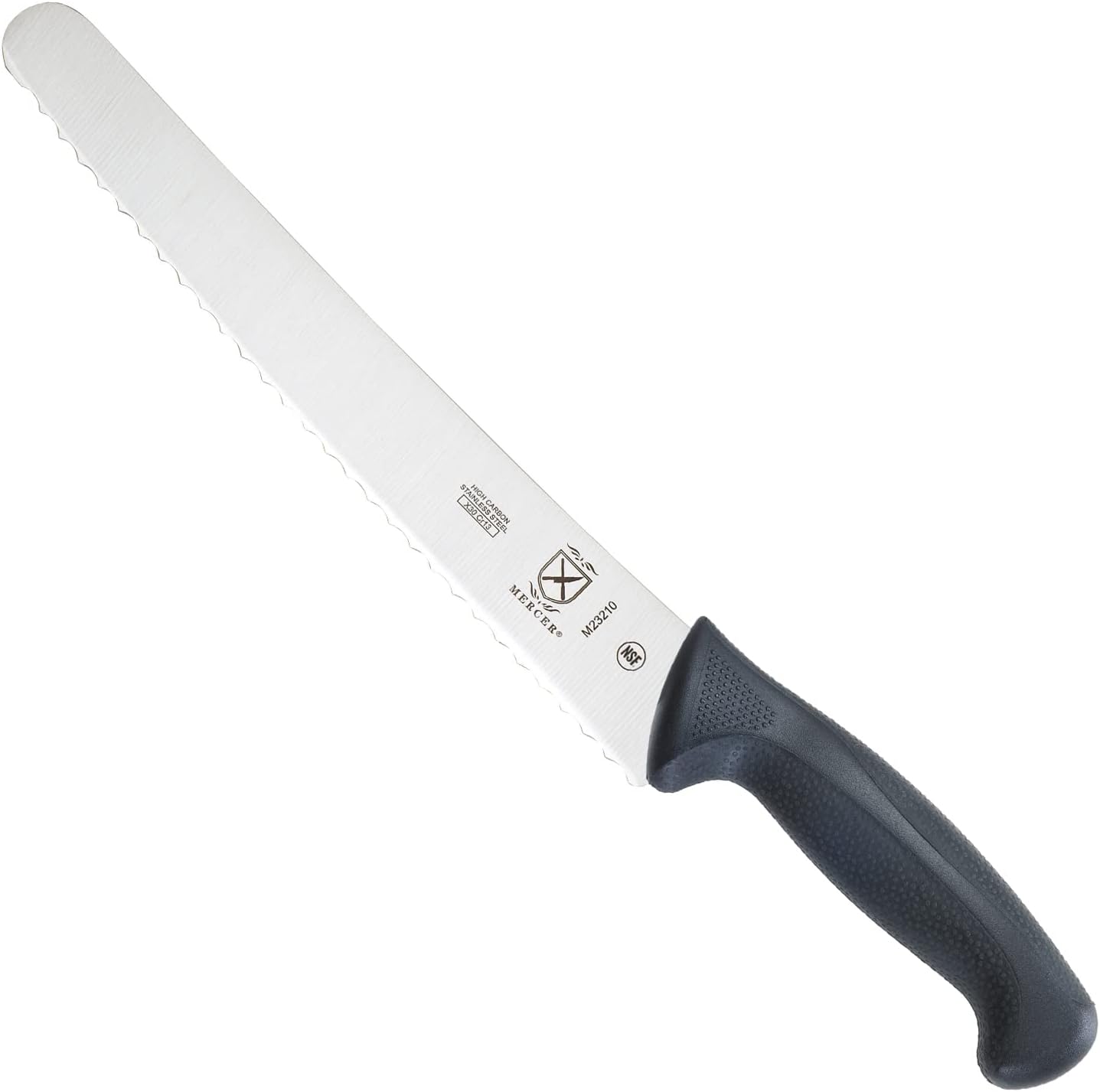
A serrated bread knife is essential for slicing through crusty loaves without crushing the soft interior, and its scalloped teeth are also fantastic for cleanly cutting tomatoes, citrus, and delicate cakes without tearing the surface. German bread knives typically run 8 to 10 inches long with a wavy or pointed serration pattern, and because the serrations do the bulk of the cutting work, these blades stay functional for years longer between sharpenings than a straight edge would.
The Utility Knife
Sitting between the paring knife and the chef’s knife in size, a utility knife (usually 4.5 to 6 inches) is the tool many cooks reach for when a chef’s knife feels too large but a paring knife feels too small—slicing a sandwich, trimming fat from a small cut of meat, or portioning smaller fruits and vegetables.
The Boning and Fillet Knife
For cooks who break down whole chickens, debone roasts, or clean fish, a dedicated boning or fillet knife is invaluable. These blades are thin, narrow, and flexible, designed to maneuver around joints and bones with precision that a rigid chef’s knife cannot match. German boning knives tend to have slightly more flex and a semi-flexible spine compared to some Japanese equivalents, which many butchers find more forgiving when working close to bone.
The Santoku
As covered in our review of the Wüsthof Classic 7-Inch Santoku above, this hybrid style borrows a flatter profile from Japanese knife design while retaining German steel and construction, making it a fantastic specialist for high-volume vegetable prep.
The Cleaver
A true German-style cleaver is a heavy, rectangular-bladed knife built for splitting through bone and cartilage, crushing garlic, and scooping prepped ingredients off the cutting board with its broad flat side. It’s a specialty tool, but for cooks who process whole cuts of meat regularly, it earns its place in the block.
If you’re building out a set piece by piece rather than buying a pre-packaged block, a sensible order of acquisition is: chef’s knife first, followed by a paring knife, then a bread knife, and finally a utility or boning knife depending on your specific cooking habits. This mirrors the priority order most professional culinary schools recommend to students building their own knife rolls.
Wüsthof Product Line Guide: Classic, Classic Ikon, Gourmet, and Epicure
Wüsthof produces several distinct lines, and understanding the differences will help you choose the right one for your budget and preferences, and will also help you decode the many “Wüsthof Classic vs. Classic Ikon” style questions you’ll encounter while shopping.
Wüsthof Classic
The line reviewed in depth above, Classic is the flagship series and has remained largely unchanged in design for decades. It features a synthetic POM handle, a traditional straight bolster, triple-riveted construction, and the brand’s signature 58 HRC steel. It is the benchmark against which most other German knives, including Wüsthof’s own other lines, are measured.
Wüsthof Classic Ikon
Classic Ikon shares the same blade geometry and steel as the standard Classic line but swaps in a redesigned, more ergonomic handle with a subtly different curve intended to fit a wider range of hand sizes and grip styles. It also features a half-bolster design on some pieces, which allows for full-length sharpening similar to the Messermeister approach discussed earlier. Classic Ikon typically commands a modest price premium over standard Classic for the upgraded handle.
Wüsthof Gourmet
Gourmet is Wüsthof’s value-oriented line. Rather than being forged, Gourmet knives are stamped from steel, which makes them noticeably lighter and more affordable while still using a comparable steel formula. They lack a full bolster, which some cooks prefer for its lighter feel and easier sharpening, while others miss the substantial front-weighted balance of the forged lines.
Wüsthof Epicure
A more recent addition, Epicure blends a forged German blade with a warm walnut handle for a more rustic, high-end aesthetic, appealing to cooks who want the performance of the Classic line with a different look on their countertop or knife block.
For most home cooks, the standard Classic line remains the best all-around value, offering the full forged construction and legendary durability the brand is known for at a price point well below the Ikon upgrade. Ikon becomes worth the premium primarily for cooks who have tried the standard Classic handle and found it slightly too thin or straight for their grip.
Zwilling Product Line Guide: Pro, Four Star, and Twin Signature
Zwilling J.A. Henckels, like Wüsthof, maintains a tiered lineup, and shoppers often struggle to differentiate between the company’s various series, especially since Zwilling also owns the separate Henckels International budget brand covered in our review above.
Zwilling Pro
Reviewed in depth earlier in this guide, Pro is a premium forged line distinguished by its sculpted, curved bolster designed for a comfortable pinch grip, along with the brand’s ice-hardened FRIODUR steel.
Zwilling Four Star
Four Star is a longstanding, slightly more traditional forged line with a full bolster and a classic profile closer in spirit to the Wüsthof Classic. It has been part of Zwilling’s catalog for decades and remains popular among cooks who prefer a more conventional handle shape than the Pro line’s sculpted design.
Zwilling Twin Signature
Twin Signature sits below Four Star and Pro in the lineup, offering forged construction and a full bolster at a more accessible price point, making it a solid middle-ground option between the flagship lines and the stamped Henckels International budget series.
Choosing between these lines largely comes down to handle shape and budget. Cooks who use a pinch grip and want maximum ergonomic support tend to prefer Pro. Those who want a more traditional, straightforward handle at a lower cost than Pro often gravitate toward Four Star or Twin Signature.
Complete Maintenance Guide: Keeping Your German Knife Sharp for Life
A German knife’s legendary lifespan is not an accident of manufacturing alone; it also depends heavily on how the knife is cared for day to day. The good news is that proper maintenance is simple and takes only a few minutes a week.
Washing and Drying
Always hand wash your knife immediately after use with warm water and mild dish soap, then dry it thoroughly with a towel before putting it away. Never leave a knife soaking in a sink full of water, and never run it through a dishwasher. The combination of harsh detergents, prolonged moisture exposure, high heat, and the knife knocking against other utensils in the dishwasher rack can dull the edge, pit the steel, and damage the handle material over time, even on stainless steel that resists rust reasonably well when hand-washed.
Storage
How you store a knife matters almost as much as how you wash it. Tossing a knife loose into a drawer where it can knock against other utensils is one of the fastest ways to roll or chip an edge. A knife block, an in-drawer knife organizer with individual slots, or a magnetic strip mounted on the wall are all excellent options that keep the edge protected and the blade easily accessible.
Honing vs. Sharpening
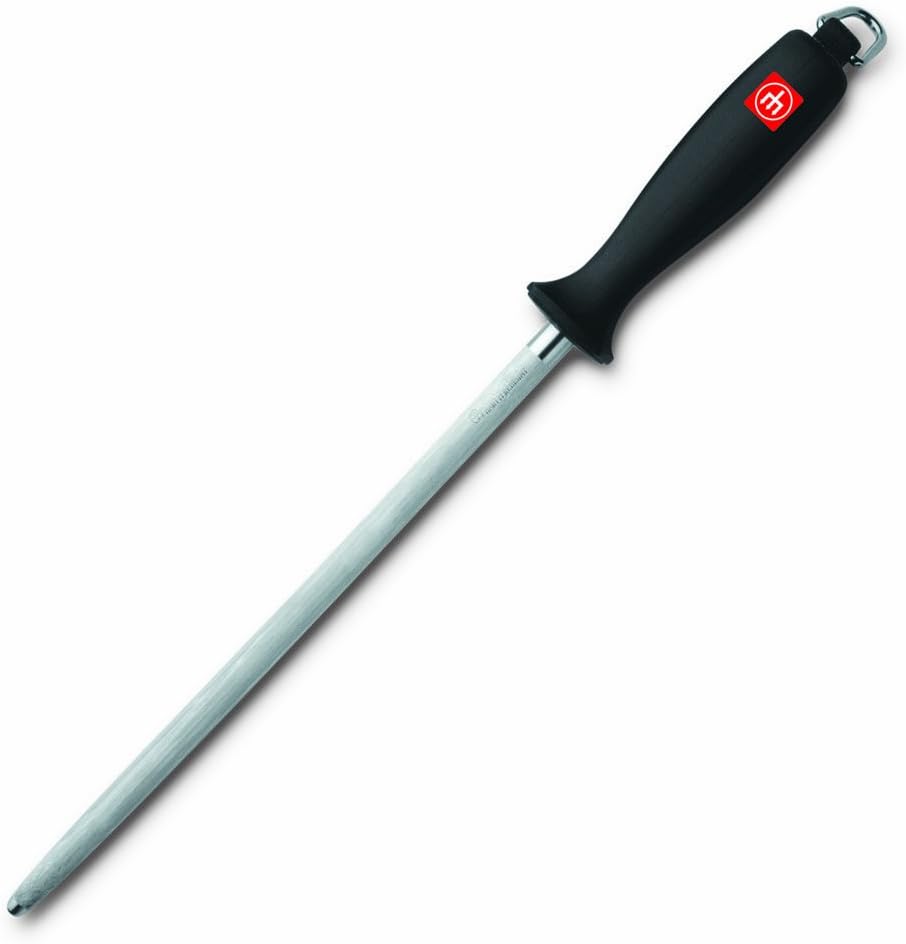
These two terms are often used interchangeably, but they describe different processes. Honing realigns the microscopic edge of the blade, which naturally rolls slightly out of true with regular use, using a honing steel (sometimes called a sharpening steel, somewhat confusingly). It does not remove metal; it simply straightens what’s already there, and should be done every few uses, or even before every use in a professional kitchen. Sharpening, by contrast, actually grinds away a small amount of steel to create a fresh edge, and is typically needed only once or twice a year for a knife that is honed regularly.
Cutting Surfaces
Always cut on a wood or high-quality plastic cutting board. Glass, marble, ceramic plates, and stone countertops are far harder than the steel of your knife and will dull or chip the edge almost immediately, no matter how well-made the blade is.
Avoiding Twisting and Prying
A kitchen knife is designed for controlled, straight cutting motions, not for prying open packaging, twisting a lid, or being used as a screwdriver. Even the toughest German steel can chip or bend under lateral stress it wasn’t designed to handle.
Common Mistakes That Damage German Knives
Even a knife built to last decades can be shortened in life by a handful of avoidable habits. Watch for these common mistakes.
- Dishwasher cycles. As covered above, the heat, harsh detergent, and jostling of a dishwasher are among the fastest ways to degrade both the edge and the handle of a quality knife.
- Cutting on hard surfaces. Glass and stone cutting boards look sleek but are essentially sandpaper for your knife’s edge.
- Storing loose in a drawer. Metal-on-metal contact with other utensils rolls and chips edges surprisingly quickly.
- Skipping regular honing. A knife that’s never honed will feel dull much sooner, tempting owners to apply excessive pressure while cutting, which is both less safe and harder on the blade.
- Using the knife to pry or twist. Popping open a can, prying apart frozen food, or twisting a stuck lid puts lateral stress the blade wasn’t designed for.
- Letting food residue sit on the blade. Acidic ingredients like citrus, tomatoes, and onions left on the steel for extended periods can contribute to staining and pitting over time, even on stainless steel.
- Improper sharpening angle. Using a whetstone or pull-through sharpener at an angle far off from the blade’s intended 20-degree edge can create an uneven, weak edge that dulls faster and looks inconsistent.
German Knives vs. French Knives: How Do They Compare?
Long before “German steel” became a marketing term, French cutlers in towns like Thiers were producing some of Europe’s most respected kitchen knives, and brands like Sabatier remain beloved by many traditionalists. So how does classic French cutlery stack up against modern Solingen production?
The traditional French chef’s knife profile, often associated with the term “Sabatier” (which is technically a style name used by multiple manufacturers rather than a single trademarked brand), tends to have a slightly straighter edge with less belly curve than the modern German profile, encouraging a push-cut or slide motion rather than the rock-chop favored by German-style blades. French carbon steel knives, when made from true high-carbon (non-stainless) steel, can take an exceptionally keen edge and are prized by traditionalists, but they require diligent drying and occasional oiling to prevent rust, since they lack the chromium content of modern stainless formulations.
Modern German knives, by contrast, universally use stainless steel formulations that all but eliminate the rust concern, while still delivering a comparably tough, durable blade. Construction methods have also converged significantly; both traditions favor forged, full-tang knives with a substantial bolster. The most meaningful difference for a home cook today is less about country of origin and more about specific blade geometry and handle ergonomics, since many contemporary “French style” knives sold today are stainless and share more in common with German production than with historical carbon steel Sabatiers.
In practice, most cooks who compare a quality modern German knife against a quality modern French-style knife find the differences to be a matter of handle feel and blade curvature preference rather than one tradition being objectively superior to the other.
Left-Handed Cooks and German Knives
One underappreciated advantage of most German kitchen knives is that they are fundamentally ambidextrous. Unlike some traditional single-bevel Japanese knives, which are ground and sharpened for use by a specific hand, the double-bevel edge standard on virtually all German blades (including every knife reviewed in this guide) cuts equally well whether held in the right or left hand. The symmetrical bolster and handle shape on lines like the Wüsthof Classic and Zwilling Pro further support comfortable use for left-handed cooks without any special accommodation needed.
The one area where left-handed cooks should pay a little extra attention is bread knives with an angled or offset serration pattern, as a small number of designs are optimized for a particular hand. When in doubt, a symmetrical wavy-edge bread knife, which is the more common style among German manufacturers, will serve both left- and right-handed cooks equally well.
Budget Breakdown: What You Get at Each Price Tier
German knives span a wide price range, and understanding what that money actually buys you can make shopping much less confusing.
Entry Level
At the lower end of the German knife market, you’ll find stamped rather than forged construction, often without a full bolster, and simpler handle materials. These knives, exemplified by lines like Henckels International, still use genuine German-formulated steel and can deliver years of reliable service, especially for cooks who are just starting to build their kitchen and want an upgrade from generic department-store cutlery.
Mid-Range
This is where the classic forged, full-tang, full-bolster construction becomes standard, along with more refined heat treatment and fit and finish. The flagship Wüsthof Classic and Zwilling Pro lines reviewed in this guide sit comfortably in this tier, delivering the core performance and durability the German reputation is built on without venturing into ultra-premium pricing.
Premium and Boutique
At the top of the market sit refined variants like Wüsthof Classic Ikon, along with boutique manufacturers like Messermeister, which often incorporate hand-finishing, upgraded handle materials, and design refinements like quarter-bolsters for full-length sharpening. The performance gains over mid-range knives are often incremental rather than dramatic, but the fit, finish, and ergonomic polish can be noticeably improved for cooks who use their knives daily.
For the vast majority of home cooks, the mid-range tier delivers the best balance of price and performance, which is precisely why the Wüsthof Classic remains the most commonly recommended single chef’s knife purchase across the cutlery world.
The History of Solingen: Centuries of Blacksmithing Excellence
Solingen’s reputation as the “City of Blades” did not emerge overnight. The region’s cutlery tradition dates back to the medieval period, when local blacksmiths took advantage of the area’s fast-flowing rivers to power water mills used for grinding and polishing blades, along with access to nearby iron ore deposits and dense forests that supplied charcoal for forging. By the sword-making era of the Middle Ages, Solingen smiths had already developed a reputation for quality that would carry forward into the industrial age.
As demand for swords declined, Solingen’s craftsmen pivoted toward cutlery, scissors, and kitchen knives, refining their forging and tempering techniques over generations. Companies like Wüsthof, founded in the late 18th century, and J.A. Henckels, whose twin-figure trademark dates back even further, became institutions within the city, training generations of apprentices in the specific craft of blade making.
Today, the term “Solingen” carries legal protection in the European Union similar to a geographic designation of origin, meaning products can only be labeled as genuine Solingen goods if key stages of production actually occur within the region. This designation helps preserve the centuries-old standards of craftsmanship that built the city’s reputation in the first place, and it’s part of why “Made in Solingen” remains a meaningful marker of quality rather than just a marketing phrase.
Essential Knife Skills to Maximize Your German Blade
Even the best knife in the world performs only as well as the technique behind it. A few foundational skills will help you get the most out of a German chef’s knife’s balance and rock-chopping design.
The Pinch Grip
Rather than wrapping all four fingers around the handle, professional cooks pinch the blade itself between thumb and forefinger just above the bolster, with the remaining fingers curled around the handle. This grip places your hand closer to the blade’s center of balance, giving you far more control and precision than a full-handle grip.
The Claw Grip
On your guiding hand, curl your fingertips under so your knuckles, rather than your fingertips, face the blade. This “claw” position keeps your fingers safely out of the blade’s path while still allowing you to guide the food being cut.
The Rock Chop
German knives, with their curved belly, are purpose-built for the rock-chop motion: keeping the tip of the blade in light contact with the cutting board while rocking the heel of the blade up and down through the ingredient, advancing forward with each stroke. This technique is faster and more efficient than lifting the entire knife off the board for every cut.
The Push Cut and Slice
For longer, cleaner cuts through items like proteins or larger vegetables, drawing or pushing the blade through in a single smooth motion, rather than sawing back and forth, produces a cleaner cut and puts less strain on the knife’s edge.
Maintaining Consistency
Uniform knife cuts aren’t just about presentation; consistently sized pieces cook at the same rate, which is a meaningful practical benefit beyond aesthetics. Practicing basic cuts like the julienne, brunoise, and chiffonade will pay dividends in both speed and consistency over time.
Frequently Overlooked Buying Considerations
Beyond steel type and brand reputation, a handful of practical factors can meaningfully affect your satisfaction with a new German knife.
Blade Length
While 8-inch chef’s knives are the most popular size and a sensible default for most kitchens, cooks with smaller hands or limited counter space sometimes prefer a 6-inch chef’s knife, while those who cook for large groups or work with big cuts of meat may prefer a 10-inch blade. Handling a knife in person, or at minimum checking detailed dimension listings, is worthwhile before committing to a size.
Handle Material
Most modern German handles use POM (Polyoxymethylene) or a similar synthetic polymer, valued for its durability, moisture resistance, and grip even when wet. Some premium and boutique lines offer wood handles for a different aesthetic and feel, though these typically require slightly more care to avoid drying out or warping over time.
Weight and Balance Point
Full-bolster forged knives tend to balance right around the bolster itself, which many cooks find ideal for control. Lighter, stamped, or quarter-bolster knives shift the balance point slightly, which some cooks prefer for reduced wrist fatigue during long prep sessions. There’s no universally “correct” answer here; it comes down to personal preference and how you use the knife.
Warranty
Many major German manufacturers offer generous warranties against manufacturing defects, sometimes for the lifetime of the product, though these warranties typically do not cover normal wear, misuse, or damage from dishwashers. Reading the specific warranty terms for a given line can be a useful tiebreaker between similarly priced options.
Country of Manufacture
Not every knife sold by a German brand is actually made in Germany. As discussed in our review of the Henckels International line above, some budget-friendly lines are designed by German companies but manufactured in other countries, such as Spain or China, to hit a lower price point. This isn’t necessarily a dealbreaker, but it’s worth knowing exactly what you’re purchasing, especially if “Made in Solingen” specifically matters to you.
Gifting a German Knife: What to Know Before You Buy for Someone Else
A quality German knife makes an outstanding gift for the cook in your life, whether it’s a wedding registry item, a housewarming present, or a milestone birthday gift for someone who has been cooking with hand-me-down cutlery for years. That said, a few considerations can make the difference between a gift that gets used every day and one that ends up in a drawer.
First, think about hand size and grip style if you know the recipient well. Someone with smaller hands may appreciate a 6-inch chef’s knife over the more common 8-inch size, and a cook who tends to use a pinch grip might especially enjoy the sculpted bolster of a Zwilling Pro, while someone who prefers a more traditional handle shape may lean toward a Wüsthof Classic. If you’re unsure, an 8-inch Wüsthof Classic is the safest, most broadly appealing choice, since it’s the size and style most cooking instructors and professional kitchens default to.
Second, consider whether the recipient already owns a chef’s knife. If so, a complementary piece like a paring knife, a bread knife, or a honing steel can be an excellent way to round out their existing collection without duplicating what they already have. A boxed honing steel paired with a knife is also a thoughtful way to signal that you want the gift to last, since regular honing is the single easiest thing an owner can do to extend a blade’s life between sharpenings.
Finally, presentation matters. Many premium German knives ship in attractive branded boxes that feel appropriately special for a gift-giving occasion, and pairing the knife with a basic bamboo cutting board or an entry-level whetstone can turn a single knife into a more complete “starter kit” for a cook who is just beginning to build serious kitchen equipment.
Knife Rolls, Travel, and Transporting German Knives Safely
For culinary students, personal chefs, caterers, and cooks who travel between kitchens, safely transporting a German knife is a real practical concern. A dedicated knife roll or knife case, typically made from canvas, leather, or a padded nylon material, holds each blade in its own individual slot or sleeve, preventing the blades from knocking against one another and dulling their edges in transit.
If you don’t own a dedicated knife roll, a well-fitted blade guard or sheath is the minimum protection you should use any time a knife leaves your kitchen, whether it’s headed to a friend’s house for a dinner party or into a bag for a culinary class. Blade guards also protect you: a loose knife rattling around in a bag is a genuine safety hazard, not just a risk to the edge.
When flying with knives, remember that kitchen knives, including German chef’s knives, are prohibited in carry-on luggage under TSA rules and must be packed in checked baggage, ideally in a rigid case or wrapped securely inside a knife roll to prevent both injury to baggage handlers and damage to the blade itself.
Knife Block Sets vs. Buying Individual Pieces: Which Makes More Sense?
Walk into any kitchen store and you’ll find elaborate knife block sets promising a dozen or more pieces for one bundled price. These sets can look like tremendous value on paper, but they come with real tradeoffs worth understanding before you buy.
The biggest issue with most large block sets is that they pad out the count with pieces most home cooks rarely use, such as multiple steak knives of varying sizes, redundant utility knives, or specialty blades like tomato knives that overlap heavily with tools you likely already own. The manufacturing budget that would otherwise go toward premium steel and construction on a smaller set of knives instead gets spread thin across a dozen mediocre pieces.
Buying individual pieces from a manufacturer’s flagship line, starting with a chef’s knife and adding a paring knife, bread knife, and honing steel as your budget allows, generally delivers better performance per dollar than a large boxed set at a similar total price. It also lets you build out your collection gradually and intentionally, rather than committing to a fixed bundle all at once.
That said, curated block sets from premium lines like Wüsthof Classic or Zwilling Pro, containing a sensible core selection of four to seven genuinely useful pieces along with a matching wooden block, can still represent solid value and a convenient all-in-one purchase for someone furnishing a kitchen from scratch, as long as you check the specific pieces included rather than assuming more knives automatically means more value.
More Reader Questions About German Kitchen Knives
How often should I actually sharpen my German knife?
For a home cook using their knife daily, a full sharpening once or twice a year is typically sufficient, provided you’re honing the blade regularly between sharpenings. A busy professional kitchen might sharpen weekly or biweekly given the sheer volume of cutting involved. The honing steel is what keeps the edge functional day to day; sharpening is only needed when honing no longer restores that crisp feeling.
Can I use a German knife on frozen food?
Occasional light contact with partially frozen food is generally fine given the toughness of German steel, but cutting through solidly frozen items regularly is hard on any kitchen knife and will accelerate dulling or even chipping. If you frequently work with frozen ingredients, consider partially thawing them first or using a dedicated tool designed for that purpose.
Why does my new German knife feel heavier than my old knife?
Full-tang, full-bolster forged construction, the hallmark of premium German knives, is inherently heavier than the stamped, bolster-less knives commonly sold in cheap starter sets. Many cooks find this weight actually reduces the effort needed to chop through dense vegetables, since the knife’s own mass does more of the work, though it can take a short adjustment period if you’re used to a much lighter blade.
Is it normal for a German knife’s handle to feel slightly different between lines?
Yes. As covered in our product line breakdowns above, brands like Wüsthof and Zwilling offer multiple handle shapes across their various lines, from the traditional straight profile of the Classic and Four Star lines to the sculpted, curved bolsters of Classic Ikon and Pro. Handling a few different lines in person, if possible, is the best way to determine which shape suits your grip.
Do German knives come pre-sharpened out of the box?
Yes, reputable German manufacturers ship their knives with a factory edge that is genuinely sharp and ready to use immediately. That said, many cooks find the edge even better after the first professional sharpening or careful whetstone session, since factory edges are optimized for consistency across mass production rather than being hand-finished to the same degree as a boutique sharpening service might achieve.
What’s the difference between a chef’s knife and a santoku?
A chef’s knife has a curved belly designed for the rock-chop motion and typically measures 8 inches, making it the most versatile all-purpose blade. A santoku has a flatter edge and a shorter, often sheepsfoot-shaped blade around 5 to 7 inches, designed more for an up-and-down chopping motion and excelling especially at fine vegetable prep, as discussed in our review of the Wüsthof Classic Santoku above.
Should I buy a German knife or a Japanese knife as my first serious knife?
For most home cooks, a German knife is the more forgiving and versatile first serious purchase, thanks to its durability, ease of maintenance, and tolerance for the occasional beginner mistake, such as an imperfect honing angle or accidental contact with a bone. Japanese knives reward more careful technique and maintenance but can offer a sharper out-of-the-box edge for cooks who are ready to commit to more careful handling.
Rust, Pitting, and Discoloration: Causes and Fixes
Even high-chromium German stainless steel is not entirely immune to staining under the wrong conditions, and understanding why can help you avoid the problem entirely. Small dark spots or a hazy discoloration on the blade usually result from acidic foods, particularly citrus, tomatoes, onions, or vinegar-based ingredients, being left in contact with the steel for an extended period, especially if the knife isn’t dried promptly after washing. Salt residue combined with moisture is another common culprit, since salt accelerates oxidation on almost any steel, stainless or not.
The fix for minor surface staining is usually simple: a paste made from baking soda and a small amount of water, gently rubbed onto the affected area with a soft cloth, can lift light discoloration without damaging the polished finish of the blade. For more stubborn spots, a specialized stainless steel cleaner or a very fine polishing compound designed for cutlery can restore the original shine. True rust, which appears as an orange, rough texture rather than a simple gray or black spot, is rarer on quality German stainless steel but can occur if a knife is left wet for a prolonged period or stored in a humid environment; in these cases, a rust eraser or fine-grit wet sandpaper used carefully along the grain of the steel can often remove it before it spreads deeper into the metal.
Prevention remains far easier than any cure. Rinsing and drying your knife immediately after use, avoiding prolonged contact with acidic or salty ingredients, and storing the knife somewhere dry rather than in a damp sink area will keep a German blade looking factory-fresh for decades.
German Steel vs. Ceramic Knives: A Quick Comparison
Ceramic knives occasionally show up as an alternative to steel cutlery, marketed on the strength of their extreme hardness and ability to hold an edge without dulling for a very long time. It’s worth understanding how they compare to a German steel knife before considering one as a substitute.
Ceramic blades, typically made from zirconium oxide, are extremely hard, often exceeding 80 on the Rockwell C-equivalent scale, which is far beyond even the hardest steel kitchen knives. This hardness means the edge stays sharp for an unusually long time under normal use. However, that same hardness makes ceramic blades brittle in a way steel simply isn’t. A ceramic knife can shatter or chip catastrophically if dropped on a hard floor, twisted while cutting, or used on anything remotely resembling bone, frozen food, or a hard-skinned squash. Ceramic blades also cannot be honed with a standard honing steel and require specialized diamond sharpening equipment when they do eventually dull.
For the overwhelming majority of kitchen tasks and cooking styles, a German steel knife’s combination of toughness, ease of maintenance, and forgiving nature makes it a far more practical primary knife than a ceramic blade, which is better suited as a specialty tool for very specific, delicate tasks like slicing boneless fruit where its chip resistance to acid and lack of any metallic taste transfer are genuine advantages.
Longevity as Sustainability: The Environmental Case for Buy-It-For-Life Cutlery
It’s worth stepping back to consider the broader value proposition of a German knife beyond pure kitchen performance. A cheap stamped knife that dulls quickly, chips easily, and gets replaced every year or two generates a steady stream of discarded steel and plastic, along with the manufacturing footprint of producing a replacement again and again. A well-maintained German knife, by contrast, is genuinely capable of lasting several decades, and it’s not uncommon to find Wüsthof or Henckels knives from the 1970s or 1980s still in active daily use in family kitchens, having outlived several generations of appliances around them.
This durability is part of a broader “buy it for life” philosophy that has gained renewed popularity among cooks who would rather invest more upfront in a single high-quality tool than repeatedly replace cheaper alternatives. Beyond the environmental angle, there’s a practical financial case as well: amortized over a twenty or thirty year lifespan, even a premium German chef’s knife works out to a remarkably small cost per year of use compared to cycling through disposable knives that need replacing every season.
Typical Weight and Balance by Knife Style
To help set expectations when shopping, here’s a general comparison of how different German knife styles tend to feel in the hand. Exact figures vary by specific model, but these ranges reflect the typical construction differences discussed throughout this guide.
| Knife Style | Typical Construction | Relative Weight | Balance Point |
|---|---|---|---|
| Forged Full-Bolster Chef’s Knife | Full tang, full bolster | Heaviest | Right at the bolster |
| Quarter-Bolster Chef’s Knife | Full tang, partial bolster | Medium | Slightly forward of the handle |
| Stamped Chef’s Knife | Full tang, no bolster | Lightest | Closer to the handle |
| Santoku | Full tang, full or partial bolster | Light to medium | Centered, neutral |
| Paring Knife | Full tang, small bolster | Very light | Centered |
Cooks who chop for long stretches at a time, such as during holiday meal prep or batch cooking, often find that a well-balanced, front-weighted forged knife reduces wrist fatigue since the knife’s own mass contributes to the cutting motion. Cooks with smaller hands or those doing more delicate, detail-oriented work sometimes prefer the lighter feel of a stamped or quarter-bolster design instead. Neither approach is objectively correct; it comes down to matching the tool to your own cutting style and the specific tasks you do most often in your kitchen.
Your German Knife Questions, Answered
What makes German knives from Solingen so special?
Solingen, Germany, has been a center for blade-making for centuries and has a protected designation of origin (like Champagne in France). Knives from Solingen are globally recognized for their incredibly high standards of manufacturing. They are typically forged from a single piece of high-carbon stainless steel, feature robust construction like a full tang and bolster for perfect balance, and use a steel formula (X50CrMoV15) that is prized for being extremely tough, chip-resistant, and easy to sharpen. They are the definition of a kitchen workhorse.
What is the difference between Wüsthof and Zwilling J.A. Henckels?
They are the two titans of Solingen and their rivalry is legendary. While both produce knives of exceptional quality, there are subtle differences. Wüsthof generally uses a slightly softer steel (58 HRC) which many chefs find easier to sharpen and incredibly tough. Zwilling often uses a slightly harder, proprietary ice-hardened steel (FRIODUR, typically 57 HRC) which can offer slightly better edge retention. Aesthetically, Wüsthof’s premier “Classic” line has a more traditional, angular design, while Zwilling’s “Pro” line features a modern, curved bolster for a different feel. It often boils down to personal preference in balance and ergonomics.
Are German knives better than Japanese knives?
Neither is better, they are just different tools for different philosophies. Think of it like a durable pickup truck versus a high-performance racecar. A German knife is the pickup truck: robust, powerful, incredibly durable, and can handle any job you throw at it. A Japanese knife is the racecar: lighter, harder, thinner, and capable of surgical precision, but also more delicate. For all-around, heavy-duty kitchen work, German knives are unparalleled. For delicate, precise slicing, Japanese knives excel.
How do I care for my German knife?
Caring for a German knife is simple. First, always hand wash it with warm, soapy water and dry it immediately; never put it in the dishwasher, even if you own a set of dishwasher safe steak knives, as the harsh environment is bad for a fine-edged chef’s knife. Second, store it properly in a block, on a magnetic strip, or in a drawer organizer—never loose in a drawer. Finally, hone it regularly with a honing steel (once a week is great) to maintain the edge, and have it sharpened once or twice a year when honing no longer brings back the sharpness.
The Final Verdict: Investing in a Legacy of Quality
A German kitchen knife is more than just a purchase; it’s an adoption. It’s a tool that, with a little care, will become a trusted partner in your kitchen for the rest of your life. The feeling of quality, the perfect balance, and the sheer cutting power of a well-made Solingen blade is something every serious cook should experience.
For the purist who wants the undisputed, time-tested champion of the kitchen, the Wüsthof Classic 8-Inch Chef’s Knife is a flawless choice. It is the benchmark against which all others are judged.
For the cook who appreciates a more modern, ergonomic feel without sacrificing an ounce of German power, the Zwilling Pro 8-Inch Chef’s Knife is an innovative masterpiece. And for those who want that legendary forged quality at a more accessible price, the Henckels International Classic offers unbeatable value.
Choose any knife from this list, and you are not just buying a piece of steel. You are investing in centuries of tradition, precision engineering, and a legacy of culinary excellence that you will feel with every single cut.