Best Boning Knives for Butchers and Home Cooks
A deep, practical guide to choosing a boning knife that actually earns its place on your cutting board — whether you’re breaking down whole chickens at home or working a butcher’s bench all day.
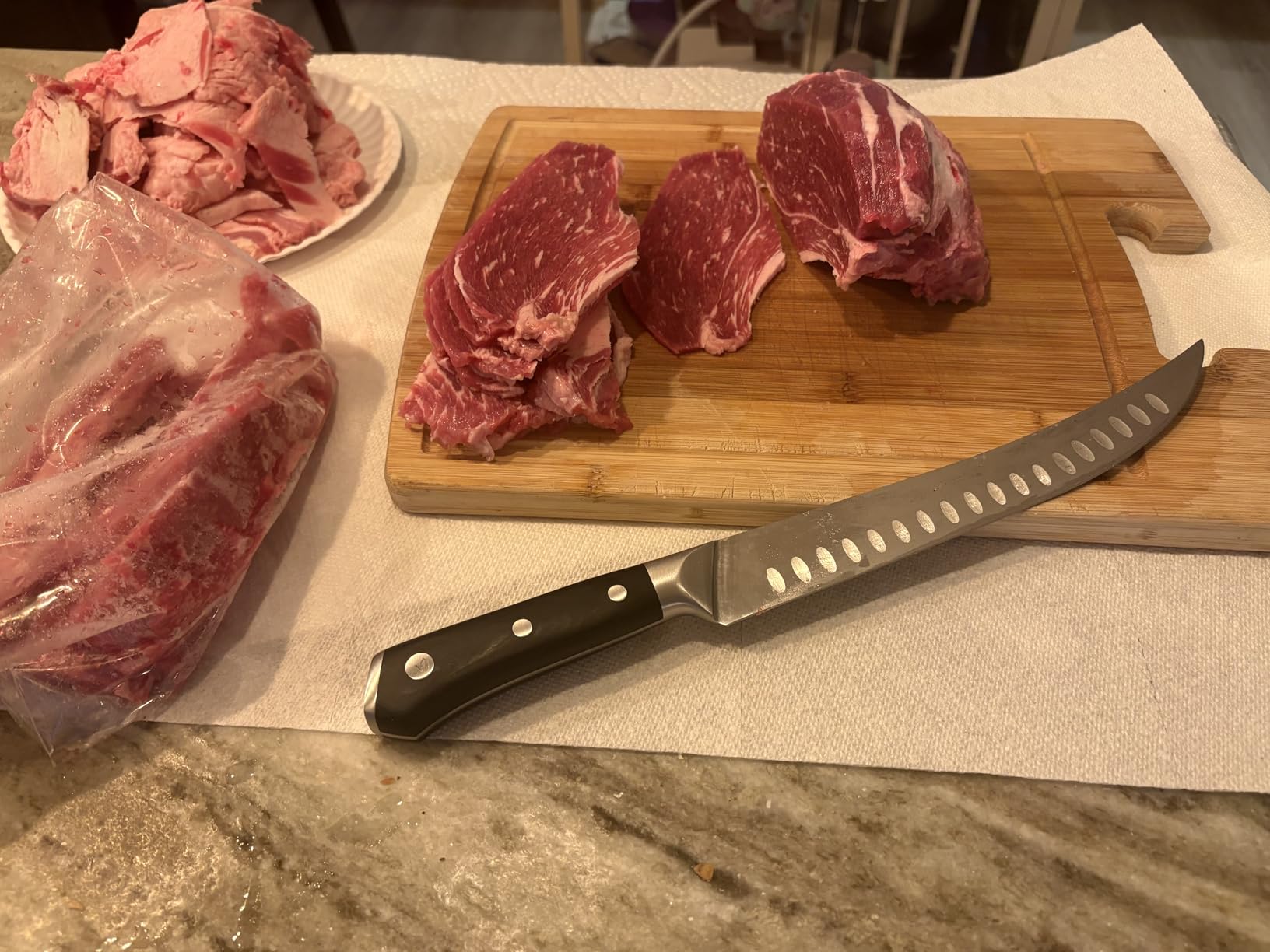
There’s a strange kind of confidence that comes from holding the right boning knife. The blade slides along a bone without fighting you, the tip finds the joint on the first try, and the whole job feels less like labor and more like technique. That confidence, though, only shows up when the knife itself is right — the correct flex, the correct steel, the correct handle for your hand. Get any of those wrong and even a simple task like breaking down a chicken thigh turns into a wrestling match with cartilage.
This guide exists to close that gap. We’re going to walk through what actually makes a boning knife good (not just what marketing copy claims), compare seven knives that consistently show up in both professional kitchens and home butchering setups, and help you land on the one that fits your hands, your cutting board, and your budget. Along the way we’ll also touch on blade geometry, steel choice, and the kind of maintenance that keeps a boning knife performing for years instead of months — topics covered in more depth in our breakdown of modern blade steels if you want to go deeper after this.
Whether you’re a butcher working a bench for eight hours a day or a home cook who breaks down a chicken once every couple of weeks, the underlying principles covered here apply the same way: match the flex to the job, keep the edge properly maintained, and let the tool’s geometry do the precise work your hands alone can’t. By the end of this guide you’ll have a clear, practical framework for evaluating any boning knife you come across, not just the seven we’ve highlighted below.
What Exactly Is a Boning Knife?
A boning knife is a narrow, pointed blade designed for one specific job: separating meat from bone with as little waste and as much control as possible. Unlike a chef’s knife, which is built for chopping, slicing, and general prep, a boning knife is a precision instrument. Its narrow profile lets it slip into tight joints, follow the contour of a rib cage, or trim silverskin off a tenderloin without tearing the surrounding muscle.
The blade is usually shorter than a chef’s knife — typically between 5 and 7 inches — because length isn’t the goal here; maneuverability is. A shorter blade is easier to control at odd angles, and boning almost always involves odd angles: reaching around a joint, working close to a spine, or trimming fat from the underside of a cut you can barely see.
What separates a boning knife from a generic paring knife is the flex. Many boning knives have a semi-flexible or fully flexible blade, which allows the edge to bend and hug the shape of a bone as you cut. That flex is not a defect — it’s the entire point. A stiff blade fights the bone; a flexible one works with it. This is also why boning knives share some design DNA with fillet knives, which we’ll compare directly later in this guide, and why understanding the differences between boning and fillet knives matters before you commit to a purchase.
It helps to think of a boning knife less as a single tool and more as a category that spans a fairly wide range of use cases. A poultry processor separating breast meat from bone all day has different needs than a home cook removing a lamb shank bone once a month, and both of those needs differ again from a fisherman filleting a catch on a dock. What ties all of these use cases together is the underlying philosophy: minimize waste, maximize control, and let the blade do the precise work that a heavier knife simply can’t.
Historically, boning knives evolved directly out of butcher shop necessity. Before pre-packaged, pre-trimmed meat became the norm in most grocery stores, home cooks regularly bought whole or partial carcasses and did their own breakdown work at home. The boning knife was, and still is in many households and professional kitchens, the tool that makes that breakdown efficient rather than wasteful. Even today, as more people return to whole-animal cooking, nose-to-tail eating, and home butchery as a way to save money and control quality, the boning knife has remained just as relevant as it was decades ago.
It’s also worth noting that a boning knife isn’t meant to replace a chef’s knife or a cleaver — it’s a complementary tool. A chef’s knife handles the bulk chopping, dicing, and general prep. A cleaver handles heavy bone-through cuts. The boning knife fills the gap between those two: the close, careful, bone-adjacent work that neither of the other tools is designed to do well. Understanding this division of labor is part of what makes a kitchen or butcher’s station efficient, and it’s a theme that comes up again when comparing cleavers versus butcher knives for heavier work.
Types of Boning Knives
Not every boning knife is built the same, and the differences aren’t cosmetic — they change how the knife performs on different cuts of meat.
Flexible Boning Knives
These have thin, springy blades that bend easily along the spine of a fish or the curve of a chicken breastbone. They excel at delicate, close-to-the-bone work where you need the blade to conform to the shape rather than cut straight through it. Poultry processors and anyone regularly working with fish lean toward flexible blades.
Semi-Stiff (Semi-Flexible) Boning Knives
This is the most common style, and for good reason — it’s the generalist. A semi-stiff blade has enough give to navigate joints but enough backbone to push through tougher connective tissue and small bones without buckling. If you only own one boning knife, this is almost always the category it should come from.
Stiff Boning Knives
Stiff blades are built for heavier work: beef, pork, and large cuts where you need force behind the edge rather than flexibility around it. Butchers breaking down primal cuts or removing large bones from a roast often prefer a stiff blade because it transmits more cutting power without wobbling.
Curved vs. Straight Blades
Curved boning knives have a gentle upward sweep near the tip, which helps the blade hug rounded bones and joints — ideal for poultry and general butchery. Straight boning knives offer more control for long, even strokes, which suits fish filleting and precise trimming work. Several knives in our lineup below, including the Mercer Culinary and Victorinox models, use a curved profile specifically for this reason.
Breaking Knives — A Related but Distinct Category
Some product lines, including sets like the Cutluxe butcher set above, include what’s sometimes called a “breaking knife” alongside a true boning knife. Breaking knives are longer and stiffer, designed for the first stage of processing a large primal cut — separating major muscle groups before the finer boning work begins. If you’re regularly processing whole or half animals at home, having both a breaking knife and a true boning knife in rotation will save considerable time compared to trying to do both jobs with a single blade.
Granton Edge Variants
A small number of boning knives feature a Granton edge — the scalloped indentations sometimes seen on slicing knives — designed to reduce friction and prevent meat from sticking to the blade as you cut. This is less common on true boning knives than on slicers, but it does show up occasionally on hybrid designs, and it’s worth knowing what the feature does if you see it listed on a product page.
Single-Bevel vs. Double-Bevel Boning Knives
Most Western-style boning knives use a double bevel, meaning both sides of the edge are ground symmetrically. This is the more forgiving, versatile option for most users. Some Japanese-influenced boning and honesuki-style knives use a single bevel, which can produce an extremely clean, precise cut in the hands of an experienced user but requires more practice to control. If single-bevel geometry interests you, our explainer on single-bevel versus double-bevel blade designs lays out the tradeoffs in more detail.
Key Features That Actually Matter
Blade Steel
Steel choice determines edge retention, ease of sharpening, and corrosion resistance. Most boning knives use high-carbon stainless steel, which strikes a balance between staying sharp through repeated bone contact and resisting rust from constant moisture exposure. If you want a broader understanding of how different steels perform under stress, our comparison of D2 versus 8Cr13MoV is a useful reference point, even though boning knives typically use softer, tougher alloys than premium pocket knife steels.
Blade Length
Most boning knives fall between 5 and 6.5 inches. Shorter blades (5 inches) offer tighter control for detailed trimming; longer blades (6.5 inches) cover more surface area on bigger cuts. Home cooks processing chicken and smaller cuts usually do fine with 5–6 inches; butchers working full carcasses often prefer the extra reach of 6–7 inches.
Handle Ergonomics
Boning is repetitive, and a poor handle will cause hand fatigue and blisters faster than almost any other kitchen task. Look for textured, non-slip grips — many manufacturers use polypropylene or fibrox-style handles specifically because they stay grippy even when wet with fat or blood.
Bolster and Tang
A full tang (where the steel extends through the entire handle) generally offers better balance and durability, though many quality boning knives use a partial tang without sacrificing performance, since the blade itself doesn’t need the reinforced strength a chef’s knife or cleaver does.
Flex Rating
As covered above, flex isn’t a spec sheet afterthought — it’s arguably the single most important characteristic of a boning knife. Manufacturers rarely quantify it precisely, so reading reviews and, where possible, handling the knife before buying is the most reliable way to judge it.
Weight and Balance
A boning knife should feel light in the hand relative to its length — this isn’t a knife you want to feel fatigued holding after ten minutes of work. Balance point matters too: a knife that’s blade-heavy will tire your wrist faster during the small, repetitive motions boning requires, while a handle-heavy knife can feel unstable when you’re applying fine control near the tip. Most well-designed boning knives balance close to the bolster, right where your grip naturally sits.
Corrosion Resistance
Because boning work constantly exposes the blade to moisture, blood, and fat, corrosion resistance is a bigger practical concern here than it is for a dry-use knife like a pocket folder. High-carbon stainless alloys are the standard answer, offering a workable middle ground between the superior edge retention of plain high-carbon steel and the low-maintenance rust resistance of standard stainless. For a deeper look at how these categories differ under real use, see our breakdown of high-carbon steel versus stainless steel.
Handle Material Options
Handle materials on boning knives generally fall into three camps: textured polymer (like Fibrox or polypropylene), wood or pakkawood, and composite/G-10-style synthetics. Polymer handles are the most water-resistant and easiest to maintain, which is why they dominate commercial kitchens. Wood handles offer warmth and grip but require more care to avoid drying out or cracking under repeated moisture exposure. Composite handles split the difference, often mimicking the look of wood while offering better durability. Our broader guide to knife handle materials covers these tradeoffs in more depth.
Blade Thickness and Grind
Thinner blades flex more easily and slice more cleanly through soft tissue, but they’re also more prone to chipping if they contact bone at the wrong angle with too much force. Thicker blades sacrifice some of that delicate slicing ability in exchange for durability. Understanding this tradeoff — sometimes described in terms of “thin behind the edge” geometry — can help explain why some boning knives feel dramatically different from others even at the same nominal length. Our guide on blade geometry explains this concept in more technical detail.
How to Choose the Right Boning Knife
Start with what you’ll actually be cutting most often. If your kitchen sees a lot of whole chickens, fish, or delicate trimming, lean toward a flexible or semi-flexible blade. If you’re regularly breaking down beef or pork with larger bones, a stiffer blade will serve you better and last longer under that kind of resistance.
Next, think about frequency. A home cook who bones a chicken once every couple of weeks doesn’t need the same blade steel or handle durability as someone processing meat daily. Spending more on a professional-grade knife makes sense if you’re using it constantly; for occasional use, a well-reviewed mid-range option will handle the job without issue.
Finally, consider hand size and grip style. Boning knives are used in close, controlled motions, so a handle that feels awkward in your hand will show up as fatigue within minutes. Where possible, test the grip — or at minimum, read enough reviews to understand how the handle sizing runs.
Budget is the next practical filter. Boning knives span a wide price range, from inexpensive commercial-grade blades under thirty dollars to premium hand-forged options well beyond that. In our experience, the sweet spot for most buyers — home cooks and light-duty professionals alike — sits in the middle of that range, where you get genuinely good steel and a comfortable handle without paying for boutique branding you won’t notice in day-to-day use. If you process meat rarely, there’s little reason to spend at the top end; if you use the knife daily, spending more upfront on a knife with better edge retention often saves money on sharpening and replacement over time.
Also think about whether you want a single do-everything boning knife or a small set that covers multiple flex levels. Many serious home cooks eventually end up with two: a semi-stiff all-purpose blade for general work, and a more flexible secondary blade reserved for fish or delicate poultry trimming. This mirrors how professional butchers typically outfit their own knife rolls, rotating between two or three boning blades depending on the task at hand rather than relying on a single knife to do everything equally well.
Lastly, don’t overlook the practical matter of maintenance requirements before you buy. A knife with premium steel that’s difficult to resharpen at home may not be the right choice if you don’t have access to proper sharpening equipment or don’t want to send it out regularly. Matching the knife’s maintenance demands to your actual habits — not your aspirational habits — will make you far happier with the purchase a year down the line.
Top 7 Boning Knives Reviewed
We looked at build quality, flex behavior, edge retention, handle comfort, and value for money across these seven knives. Here’s how each one stacks up.

1. Cutluxe Butcher Knife Set
The Cutluxe set is built for people who want more than one blade in rotation — it typically pairs a boning-style knife with a cleaver or breaking knife, which makes it a strong pick for anyone processing whole animals or large cuts at home. The forged full-tang construction gives it a heavier, more substantial feel than most single boning knives, which some butchers prefer for leverage on tougher joints.
In practical use, the extra heft in the Cutluxe set pays off most noticeably when working through larger joints on pork shoulder or beef chuck, where a lighter blade can feel like it’s fighting you. The tradeoff is that this weight makes the knife a poorer choice for delicate poultry work, where a lighter touch usually produces cleaner results. Buyers who process a mix of large and small cuts often end up pairing this set with a second, lighter boning knife for exactly that reason. The forged bolster also adds a meaningful safety margin, keeping fingers further from the working edge during high-force cuts.
Pros
- Full-tang forged construction feels durable
- Comes as a set, good value for multi-blade needs
- Comfortable pakkawood-style handle
Cons
- Heavier than dedicated flex boning knives
- Less ideal for delicate poultry trimming
Check current pricing and availability on Amazon.
View on Amazon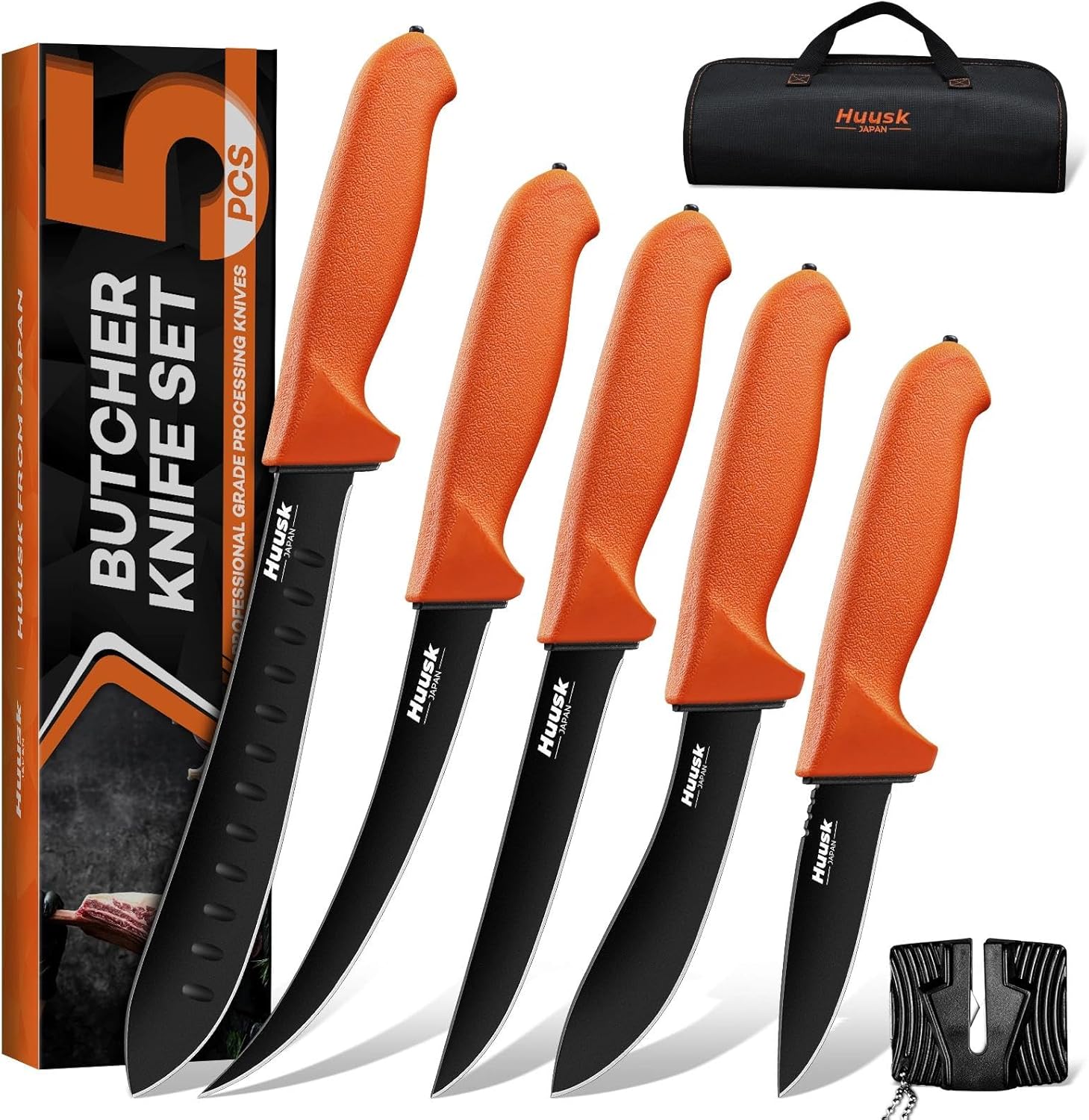
2. Huusk Butcher Knife Set
Huusk built its reputation on a distinctive handmade-look blade with a wooden handle, and the butcher set extends that aesthetic into a genuinely functional tool. It leans toward the stiffer end of the flex spectrum, which suits home cooks who want one knife capable of both boning and general heavy-duty trimming.
What stands out most about the Huusk is how well it bridges the gap between a display-worthy kitchen knife and an actual working tool. The blade holds a serviceable edge for typical home-use frequency, and the wood handle, while requiring occasional oiling, offers a warmer, more tactile grip than most polymer alternatives. It’s a particularly good fit for home cooks who want a single knife to handle both weekend roast prep and the occasional whole-chicken breakdown, without needing to invest in multiple specialized blades right away.
Pros
- Distinctive, comfortable wood handle
- Solid edge retention out of the box
- Good all-around versatility
Cons
- Wood handle needs occasional care to avoid drying out
- Not the best choice for fish filleting
Check current pricing and availability on Amazon.
View on Amazon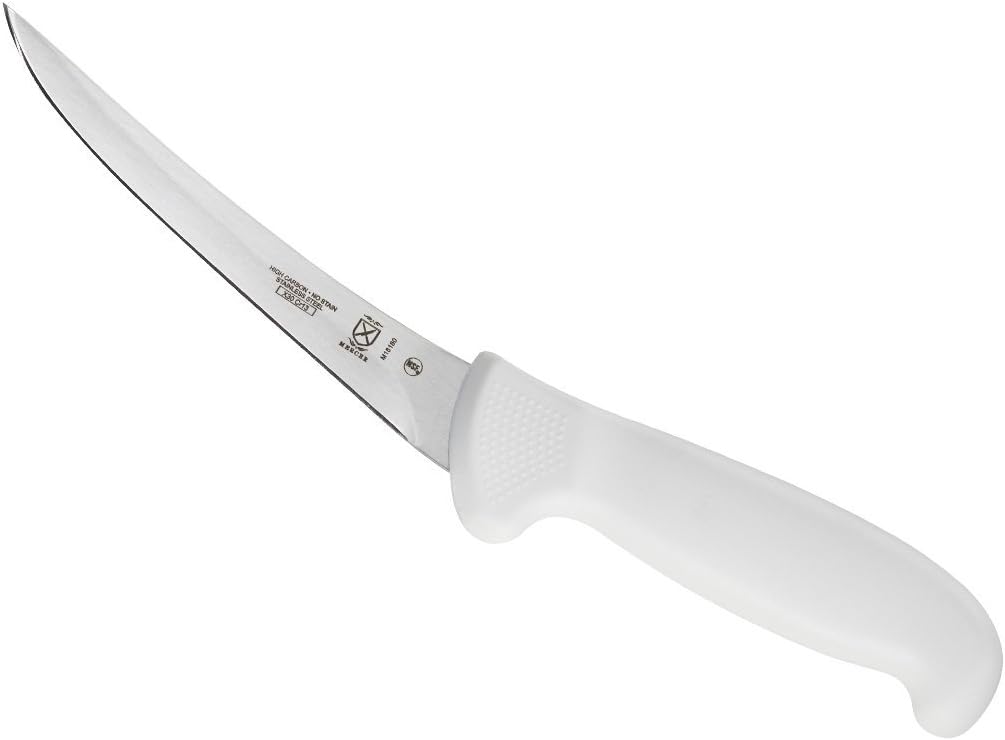
3. Mercer Culinary Ultimate White, 6-Inch Curved Boning Knife
This is a favorite in culinary schools and professional kitchens for a reason: the curved, semi-flexible blade hits the sweet spot for general-purpose boning across poultry, pork, and beef. The high-visibility white handle also serves a practical purpose in commercial settings — it’s easy to spot and easy to keep track of on a busy line.
The Mercer’s biggest strength is its sheer versatility. It’s flexible enough to follow the contours of a chicken breastbone cleanly, yet stiff enough to handle light beef and pork trimming without excessive wobble. This all-around competence is exactly why it shows up so often on culinary school supply lists — students need one knife that performs reasonably well across a wide range of assignments, and the Mercer delivers that without forcing compromises in any single direction. It’s also relatively inexpensive to replace, which matters in high-turnover training kitchens and busy home kitchens alike.
Pros
- Excellent semi-flex balance for varied tasks
- NSF-certified, textured non-slip handle
- Trusted by culinary professionals
Cons
- White handle shows staining over time
- Not as flexible as dedicated fish boning blades
Check current pricing and availability on Amazon.
View on Amazon
4. Victorinox 6-Inch Curved Fibrox Pro Boning Knife
Victorinox has a long-standing reputation in commercial kitchens, and the Fibrox Pro boning knife is a workhorse. The semi-stiff blade offers a controlled flex that professional butchers rely on for consistent, repeatable cuts, while the Fibrox handle remains one of the grippiest options available even when covered in fat or moisture.
What separates the Victorinox from many competitors at a similar price point is consistency — batch to batch, the flex and edge geometry tend to feel remarkably uniform, which matters a great deal in a commercial setting where multiple staff members might be using the exact same knife model on different shifts. The stamped, lightweight construction also reduces wrist fatigue over long boning sessions compared to heavier forged alternatives, making it a favorite among butchers who spend hours at the bench rather than minutes.
Pros
- Exceptional grip even when wet
- Consistent semi-stiff flex, great for daily use
- Backed by a well-established brand
Cons
- Basic aesthetics compared to wood-handled options
- Edge needs regular honing under heavy use
Check current pricing and availability on Amazon.
View on Amazon
5. imarku Fillet Knife 6-Inch, German High Carbon Stainless Steel
Marketed primarily as a fillet knife, this imarku model doubles effectively as a flexible boning knife thanks to its thin, springy German stainless blade. It’s a strong pick for households that process both fish and poultry and don’t want to own two separate flexible blades.
The German high-carbon stainless construction gives this knife a slightly harder edge than many pure fillet knives, which means it holds its sharpness a bit longer under regular use while still retaining enough flex for close bone-following work. Home cooks who fish regularly and also handle poultry at home tend to get the most value out of this model, since it removes the need to switch between two separate specialized knives for what are, functionally, fairly similar tasks.
Pros
- Very flexible blade, ideal for fish and poultry
- German high-carbon steel holds an edge well
- Comfortable, ergonomic handle
Cons
- Too flexible for heavier beef or pork bone work
- Requires careful storage to protect the thin edge
Check current pricing and availability on Amazon.
View on Amazon
6. Dexter Russell 1483 Boning Knife
Dexter Russell has supplied professional butcher shops for generations, and the 1483 model is a no-frills, purpose-built boning knife. It favors function over aesthetics, with a high-carbon stainless blade that’s easy to resharpen quickly during a busy shift — a detail that matters far more on a working bench than in a home kitchen. For anyone curious how Dexter Russell’s broader lineup performs, our full Dexter Russell knives review covers additional models worth considering.
What the 1483 lacks in visual polish, it makes up for in raw reliability. This is the kind of knife that shows up in butcher shops precisely because it does its job without complaint, shift after shift, and can be resharpened in under a minute between tasks without specialized equipment. For anyone who values function over form and wants a knife they won’t feel precious about using hard, the Dexter Russell remains one of the most dependable options on the market at its price point.
Pros
- Trusted commercial-grade brand
- Easy to resharpen quickly
- Excellent value for professional use
Cons
- Utilitarian look, not designed for display
- Handle grip is basic compared to premium options
Check current pricing and availability on Amazon.
View on Amazon
7. HOSHANHO Boning Knife, 6-Inch
HOSHANHO takes a hand-forged approach to its boning knife, with a distinctive aesthetic and a well-balanced semi-stiff blade. It’s a solid middle-ground option for home cooks who want a knife that looks striking on a magnetic strip but still performs reliably on real cutting tasks. If you’re curious how hand-forged construction compares to mass-produced stamped blades in general, our guide to hand-forged knives explains the tradeoffs.
Beyond its looks, the HOSHANHO earns its spot on this list through genuinely solid balance — the weight distribution between blade and handle feels intentional rather than accidental, which translates into less wrist strain during extended use. It’s a good choice for someone furnishing a home kitchen who wants their tools to feel as good as they perform, without stepping into true premium, boutique pricing territory.
Pros
- Attractive hand-forged design
- Balanced semi-stiff flex for varied tasks
- Comfortable grip for extended use
Cons
- Less widely available replacement parts/sheaths
- Not purpose-built for high-volume commercial use
Check current pricing and availability on Amazon.
View on AmazonSide-by-Side Comparison Table
| Knife | Flex Type | Blade Length | Best For | Handle |
|---|---|---|---|---|
| Cutluxe Butcher Set | Stiff | ~6 in (set) | Whole-animal home butchery | Pakkawood-style |
| Huusk Butcher Set | Semi-stiff | ~6 in | General home use | Wood |
| Mercer Culinary Ultimate White | Semi-flexible | 6 in | All-purpose professional boning | Textured polypropylene |
| Victorinox Fibrox Pro | Semi-stiff | 6 in | Daily commercial use | Fibrox non-slip |
| imarku Fillet/Boning | Flexible | 6 in | Fish and poultry | Ergonomic composite |
| Dexter Russell 1483 | Semi-flexible | 6 in | Professional butcher shops | Polypropylene |
| HOSHANHO | Semi-stiff | 6 in | Home cooks wanting style + function | Wood/composite |
Ready to upgrade your kitchen? Browse our top-rated pick on Amazon now.
View on AmazonBoning Knife vs. Fillet Knife: What’s the Real Difference?
These two knives are often confused because they look similar — both are narrow, pointed, and often flexible. The distinction is in intent. A boning knife is designed to work around bone and cartilage, so even flexible versions retain enough backbone to apply some cutting force. A fillet knife is designed almost exclusively for soft flesh — typically fish — and is built with maximum flexibility so it can glide along a rib cage without cutting into it.
If your work regularly involves both, a knife like the imarku model above, which sits closer to the fillet end of the spectrum but retains boning capability, can serve as a reasonable single-knife solution. But if you process fish and meat in serious volume, owning a dedicated version of each will always outperform a hybrid. Our detailed comparison of boning versus fillet knives for fish cutting goes further into this distinction if you want to explore it before buying.
Professional Butcher vs. Home Cook Needs
Professional butchers use their boning knife for hours at a stretch, often on the same repetitive motion across dozens or hundreds of animals. That kind of use demands a blade that resharpens quickly, a handle that won’t cause fatigue over a full shift, and steel that’s tough rather than ultra-hard, since a blade that’s too brittle will chip under constant bone contact. This is why knives like the Dexter Russell and Victorinox models remain staples in commercial kitchens — they’re built for endurance, not showroom appeal.
Home cooks have different priorities. Volume is lower, so edge retention matters less than it does commercially, and a knife gets used in shorter, less repetitive bursts. This opens the door to more stylistically distinctive options — like the Huusk or HOSHANHO — where aesthetics and comfort can weigh more heavily in the decision without sacrificing much practical performance.
There’s also a meaningful difference in how often each group replaces their knives. Commercial kitchens often treat boning knives as semi-disposable tools, replacing them every year or two as part of routine equipment turnover, since the cost of a mid-range blade is negligible compared to the labor hours it supports. Home cooks, by contrast, often keep the same boning knife for many years, which makes it worth investing a bit more upfront in a blade with strong corrosion resistance and durable construction, since it’s likely to remain in service far longer than its commercial counterpart.
Training and comfort level also factor into the decision differently for each group. A culinary student or apprentice butcher is actively building technique and may benefit from a forgiving, well-balanced knife like the Mercer Culinary model, which tolerates minor technique errors more gracefully than a stiffer, less forgiving blade. An experienced home cook who only bones meat occasionally might actually prefer a slightly stiffer knife, since it requires less finesse to control predictably during infrequent use.
Basic Boning Technique and Grip
Good technique matters as much as the knife itself. Hold the handle with a relaxed pinch grip — thumb and forefinger pinching the blade just above the bolster — which gives far more control than a full-fist grip. Let the tip of the knife do the work of finding joints and following bone contours, rather than forcing the blade through resistance.
Work in short, controlled strokes rather than long sweeping cuts. Boning is about precision, not speed, especially when you’re still building muscle memory. Keep your non-cutting hand’s fingers curled inward and away from the blade path at all times, and always cut away from your body whenever the angle allows it. If you want a broader foundation in blade handling, our guide to essential knife skills every home cook should master covers grip and control fundamentals that apply directly to boning work.
A useful mental model when starting out is to let the knife trace the bone rather than cut through meat in a straight line. Run the tip of the blade along the surface of the bone itself, applying just enough pressure to stay in contact with it, and let the natural separation between muscle and bone guide the path of the cut. This approach wastes far less meat than trying to estimate where the bone sits and cutting blind.
For poultry specifically, a common technique is to start at a joint, flex the limb to expose the connective tissue, and use the tip of the boning knife to sever the tendons at that joint before working the blade along the bone itself. For larger cuts like a leg of lamb or a pork shoulder, working in stages — first exposing the bone at one end, then following it through the cut — tends to produce cleaner results than attempting to remove the entire bone in one continuous motion.
Practice matters more than almost any piece of equipment here. Even an average knife, used with good technique, will consistently outperform a premium knife in inexperienced hands. If boning is new to you, start with simpler cuts like chicken thighs before moving on to more complex tasks like a whole ham or a rack of lamb.
Sharpening and Maintenance
A dull boning knife is genuinely more dangerous than a sharp one, because dull blades require more force and are more likely to slip off bone unexpectedly. Hone the edge with a honing steel before and after significant use to keep the edge aligned, and plan to properly sharpen the blade on a whetstone every few weeks depending on how often it’s used.
Hand wash and dry boning knives immediately after use rather than leaving them to soak or running them through a dishwasher — prolonged moisture exposure accelerates corrosion even on stainless blades, and dishwasher heat and detergent can dull the edge faster than normal use. Store the knife in a sheath, block, or on a magnetic strip rather than loose in a drawer, both for blade protection and basic safety. For more detail on keeping an edge in top shape, see our guide on how to prevent rust on knives.
When it comes time for a full sharpening, a whetstone remains the gold standard for boning knives specifically, because it allows you to control the exact angle applied to a thin, sometimes flexible blade — something pull-through sharpeners can struggle with, occasionally removing more material than necessary or applying uneven pressure along a curved edge. If you’re new to whetstone sharpening, start with a coarser grit to reset a dull or slightly damaged edge, then move to progressively finer grits to polish and refine it. Our comparison of honing steel versus whetstone use explains when each tool is appropriate.
Between full sharpenings, a few passes on a honing steel before each significant use session will keep the edge aligned and performing consistently. This is a quick habit — often under a minute — but it meaningfully extends the interval between full sharpenings and keeps the knife performing predictably throughout a boning session rather than degrading noticeably partway through.
Safety Tips When Boning Meat
Beyond keeping the blade sharp, use a cut-resistant glove on your non-dominant hand whenever you’re working close to bone — the risk of slipping increases significantly when cutting near a hard, unpredictable surface. Work on a stable, non-slip cutting board, and never bone meat that’s actively wobbling or shifting under your hand.
Keep the blade pointed away from your body and away from any nearby fingers at all times, and resist the temptation to rush — most boning injuries happen when someone forces a cut instead of repositioning the meat or adjusting their grip. Take breaks during long sessions; fatigue is one of the biggest contributors to slips.
Always keep a first-aid kit within reach whenever boning meat, even for routine tasks, since even experienced hands occasionally slip. Pay close attention to hand placement on your non-dominant side. A common habit among experienced butchers is to use the knuckles, rather than fingertips, to stabilize meat close to the cutting path — knuckles present a rounder, less exposed surface if the blade contacts your hand unexpectedly. This single habit, more than almost any other, tends to separate experienced cutters from beginners in terms of injury rate.
Lighting and workspace setup matter more than most people expect. Boning work involves fine visual judgment about where connective tissue and bone actually sit, and poor lighting increases the odds of a misjudged cut. Set up your cutting station with strong, direct light, and keep the surrounding area clear of clutter that could cause you to lose focus or balance mid-cut.
Common Buying Mistakes to Avoid
The most common mistake is buying a blade that’s too flexible for the intended task — a fully flexible fish-style blade will struggle and flex unpredictably against beef or pork bone. The opposite mistake is just as common: buying an overly stiff blade for delicate poultry work, which makes it far too easy to tear meat instead of cleanly separating it from bone.
Another frequent misstep is ignoring handle comfort in favor of blade specs alone. A boning knife with excellent steel but a slippery or poorly shaped handle will underperform a more modest blade with a grip that actually fits your hand. Finally, don’t assume a longer blade is automatically better — for boning specifically, control usually matters more than reach.
Buyers also frequently underestimate how much maintenance habits should influence the purchase decision. A premium steel that requires careful whetstone sharpening isn’t the right choice for someone who has no interest in learning that skill or investing in the equipment. In that case, a knife with a slightly softer, easier-to-maintain steel and access to a reliable pull-through sharpener will actually deliver better real-world performance over time than a “better” steel left to dull and rust from neglect.
Finally, resist the urge to buy based purely on visual appeal or brand recognition without reading into the actual flex rating and intended use case. A beautifully finished knife that’s the wrong flex for your primary task will always underperform a plainer knife that’s correctly matched to the job — form should follow function here, not the other way around.
Building Out a Complete Butchery Knife Kit
A boning knife rarely works alone in a serious home butchery or professional setup. Most kits build around three or four core blades: a boning knife for close, precise separation work; a breaking or butcher knife for the initial reduction of large primal cuts; a cleaver for bone-through chopping; and often a slicing knife for portioning finished cuts cleanly. Understanding how these tools divide labor helps you avoid asking your boning knife to do a job it was never designed for — like chopping through a rib bone, which will damage even a high-quality edge quickly.
If you’re just starting to build a home butchery kit, prioritize the boning knife and a basic cleaver first, then add a dedicated breaking knife once your volume justifies it. For comparison, our guide on the best cleaver knives for heavy-duty chopping pairs well with this article if you’re outfitting a full setup rather than a single blade.
It’s also worth having a dedicated sharpening system as part of that kit rather than treating it as an afterthought. A whetstone or quality pull-through sharpener, paired with a honing steel for maintenance between full sharpenings, keeps every blade in the kit performing at its best. Our comparison of whetstones versus electric sharpeners can help you decide which approach fits your workflow and available time.
Storing Your Boning Knife Properly
Because boning knives are used so close to bone and cartilage, edge damage from improper storage shows up faster than it does on knives used mainly for softer food prep. Tossing a boning knife loose into a drawer with other utensils is one of the fastest ways to dull or chip a thin, flexible edge, since the blade can knock against metal or ceramic items every time the drawer opens.
A magnetic strip is one of the most space-efficient and blade-friendly storage options, provided it’s rated for kitchen knives and mounted securely. A knife block with individual slots also works well, particularly for flexible blades that can otherwise bend awkwardly if stored improperly. If you’re specifically outfitting a small kitchen, our guide to small kitchen knife storage layouts offers practical setups that work even in limited counter or wall space.
For transport — whether you’re taking a boning knife to a hunting camp, a shared kitchen, or a butchery class — a rigid sheath or dedicated knife roll is essential. Loose blades in a bag are a genuine safety hazard, and even a short trip in a backpack pocket without protection can dull or damage a thin flexible edge. If travel comes up regularly, our guide on how to travel with kitchen knives safely is worth a read before your next trip.
Technique Mistakes That Damage a Boning Knife
Even a high-quality boning knife will underperform or degrade quickly if it’s used incorrectly. One of the most common mistakes is twisting the blade sideways while it’s still embedded in bone or cartilage — this lateral stress is exactly the kind of force thin, flexible blades aren’t designed to handle, and it’s a leading cause of chipped or bent tips.
Another frequent error is using a boning knife to pry, rather than cut, meat away from bone. Prying puts uneven stress on the edge and can permanently warp a flexible blade. Instead, use small, controlled slicing motions and let the tip do the navigating rather than forcing the blade through resistance.
Finally, avoid using a boning knife on frozen or even partially frozen meat. The added hardness of partially frozen tissue and bone puts far more stress on a thin edge than the knife is designed to withstand, increasing the risk of both blade damage and a dangerous slip. Always let meat come to a proper working temperature before starting any boning work.
A Closer Look at Boning Knife Steel Choices
Steel selection on a boning knife is less about chasing the hardest, most exotic alloy and more about finding a steel that tolerates repeated, controlled contact with bone without chipping. This is a meaningfully different priority than, say, choosing steel for a pocket knife meant mostly for slicing rope or cardboard, where maximum edge retention often wins out. Boning knives favor toughness — the ability to flex and absorb impact without fracturing — over raw hardness.
German stainless alloys, commonly used in knives like the imarku model reviewed above, tend to sit in a moderate hardness range that favors this toughness. They sharpen relatively easily, which matters for knives that see frequent honing, and they resist the kind of corrosion that constant moisture and acidic tissue contact would otherwise cause. Japanese-style high-carbon stainless steels, by contrast, can push harder and hold an edge longer, but often at some cost to the flex characteristics that make a true boning knife useful — which is part of why you’ll rarely see ultra-premium Japanese super-steels on dedicated flexible boning blades.
For readers who want to understand steel selection at a deeper technical level — hardness ratings, edge retention curves, and how different alloys respond to sharpening — our comparison guides on S35VN versus S45VN and MagnaCut versus M390 offer useful context, even though these particular premium steels are more common in pocket and hunting knives than in dedicated kitchen boning blades.
Regional Boning Styles Worth Knowing
Boning technique and knife design vary meaningfully by culinary tradition. Western-style boning, common in American and European butcher shops, tends to favor semi-flexible, double-beveled blades used with a pull-cut motion that follows the bone’s natural contour. This is the style most of the knives in our lineup above are optimized for.
Japanese-style poultry and fish preparation often uses a honesuki — a triangular, single-beveled boning knife with a stiffer profile than most Western equivalents, designed for extremely precise joint separation with minimal wasted motion. While a honesuki requires more practice to master than a typical Western boning knife, it rewards that practice with remarkably clean results on poultry in particular.
Understanding these regional differences isn’t just academic — it can help explain why a knife that works beautifully for one style of cutting might feel awkward or inefficient when applied to another. If your cooking draws from multiple traditions, it may be worth eventually owning knives suited to each style rather than forcing one blade to handle techniques it wasn’t designed for. Our overview of the history of Japanese knife making offers useful background if this is a direction you want to explore further.
What You’re Really Paying For at Each Price Point
Entry-level boning knives, typically priced under twenty-five dollars, usually deliver a functional blade with basic stainless steel and a simple polymer handle. These are perfectly adequate for occasional home use, though edge retention and long-term durability tend to be the first areas where cost-cutting shows up.
Mid-range boning knives, generally in the twenty-five to fifty dollar range — where most of the knives reviewed in this guide land — typically offer noticeably better steel, more refined flex characteristics, and handles designed with real ergonomic consideration rather than an afterthought. This tier represents the best value for most buyers, professional and home cook alike.
Premium boning knives, priced above fifty or sixty dollars, often bring hand-forging, superior steel treatment, and sometimes decorative elements like Damascus patterning. For daily professional use, that investment can pay off in edge retention and longevity. For occasional home use, the practical performance gains over a well-chosen mid-range knife are usually smaller than the price difference would suggest — though there’s nothing wrong with buying a premium knife simply because you enjoy using well-made tools.
Seasonal and Occasion-Based Boning Scenarios
Certain times of year put boning knives to particularly heavy use, and thinking ahead about those occasions can inform which knife makes sense for your household. Holiday seasons centered around whole turkeys, hams, or roasts tend to be the single heaviest annual use case for most home cooks, and having a properly flexible, sharp boning knife on hand before that day arrives — rather than discovering a dull, mismatched blade mid-preparation — makes a noticeable difference in both the final presentation and the amount of time spent at the counter.
Hunting season is another scenario where a dedicated boning knife earns its keep. Field-dressed game often needs to be broken down efficiently, sometimes away from a proper kitchen setup, which puts a premium on a knife that’s both effective and easy to maintain in less-than-ideal conditions. If hunting and field processing is part of your routine, our guide on field dressing knives pairs well with the boning-specific guidance in this article.
Home canning and preserving seasons, particularly for those who buy meat in bulk to portion and freeze, also see heavy boning knife use. In these cases, edge retention becomes especially important, since the knife may be in near-continuous use for a full afternoon or longer while breaking down a large bulk purchase into individual portions.
Fishing trips and the days immediately following them represent yet another use case, particularly for anyone who fillets their own catch. A dedicated flexible boning or fillet knife, kept sharp and ready, turns what could be a tedious cleanup task into a quick, efficient process — and a dull or overly stiff blade turns the same task into a frustrating one.
Across all of these scenarios, the common thread is preparation. Checking your blade’s sharpness and confirming it’s the right flex for the task ahead of time — rather than in the middle of the job — consistently produces better results and a safer experience than reaching for whatever knife happens to be closest when the work begins.
The Boning Knife Brand Landscape
Understanding who makes what — and why certain names keep coming up — helps put the seven knives reviewed above into a wider context. The boning knife market roughly splits into three camps: legacy commercial cutlery brands, mid-market direct-to-consumer brands, and boutique or hand-forged makers. Each camp optimizes for a different buyer, and knowing which camp a brand belongs to tells you a lot about what to expect before you even read a single review.
Legacy commercial brands like Victorinox and Dexter Russell built their reputations decades ago supplying restaurants, meat processing plants, and culinary schools. Their design philosophy prioritizes consistency, ease of resharpening, and predictable performance across thousands of units — this is why a Victorinox Fibrox Pro purchased today feels nearly identical to one purchased a decade ago. That consistency is a genuine strength for professional buyers who need every knife on a team to behave the same way, but it also means these brands rarely chase trends or dramatic aesthetic redesigns. If you’re weighing multiple legacy options, our comparisons like Zwilling versus Henckels illustrate how even within this tier, subtle differences in heat treatment and grind angle separate otherwise similar-looking products.
Mid-market direct-to-consumer brands, a category that includes companies like Cutluxe and imarku, typically emerged more recently and sell primarily online rather than through commercial foodservice distributors. Their strength is usually value — offering features like full-tang forged construction or premium-looking finishes at price points below what legacy brands charge for comparable specs. The tradeoff is sometimes less proven long-term durability, since these brands haven’t had decades of real-world use to validate their designs the way Dexter Russell or Victorinox have.
Boutique and hand-forged makers, represented here by brands like Huusk and HOSHANHO, lean into craftsmanship narratives and distinctive aesthetics. These knives often photograph beautifully and can perform very well, but buyers should evaluate them on the same practical criteria — flex, steel, handle comfort — rather than being swayed purely by the story behind the brand. A hand-forged blade isn’t automatically better than a machine-ground one; it’s simply made differently, and the quality still depends entirely on execution.
Knowing which camp a brand sits in also helps set realistic expectations for customer support and warranty service. Legacy commercial brands typically have the most robust support infrastructure, built around decades of servicing foodservice accounts, while newer direct-to-consumer brands vary widely in this regard. If long-term support matters to you — particularly for a knife you intend to use daily for years — factor that into the decision alongside the blade specs themselves.
Protective Gear Worth Pairing With a Boning Knife
A great boning knife is only half of a safe, efficient setup. The other half is the supporting gear that reduces risk during repetitive, close-quarters cutting work. Cut-resistant gloves are the single most impactful addition for most users — rated gloves made from materials like high-performance polyethylene fibers can significantly reduce the severity of an accidental slip without meaningfully sacrificing dexterity, which matters enormously for a task that depends on fine motor control.
A properly sized, non-slip cutting board is the next priority. Boning work generates lateral force as you follow the contour of a bone, and a board that shifts mid-cut is a genuine hazard. Rubber-backed boards or boards secured with a damp towel underneath are simple, low-cost solutions that meaningfully reduce risk. For anyone processing large volumes at home, a dedicated butcher block with a non-slip base is worth the investment.
An apron with a reinforced front panel is worth considering for anyone doing regular butchery work, particularly when processing larger cuts where knife angle and force can vary more unpredictably than with smaller, more controlled tasks. While not strictly necessary for occasional light poultry work, it becomes increasingly valuable as cutting volume and cut size increase.
Finally, a properly stocked first-aid kit close to the cutting station is not optional. Even highly experienced cutters occasionally nick themselves, and having supplies on hand for immediate treatment — rather than needing to search for them after an injury has already occurred — meaningfully reduces the severity of minor incidents. This is true whether you’re working in a professional facility or a home kitchen, and it’s a habit worth building before it’s ever actually needed.
A Cut-by-Cut Breakdown of Common Boning Tasks
Different cuts of meat present genuinely different challenges, and understanding what each one demands from a boning knife helps explain why flex, length, and stiffness recommendations vary so much across this guide.
Whole Chicken and Poultry Quarters
Poultry bones are relatively small and the joints are close together, which is exactly the environment where a flexible or semi-flexible blade shines. The knife needs to navigate tight curves around the thigh joint and follow the ribcage closely without gouging into the breast meat. A 5 to 6-inch curved, semi-flexible blade — like the Mercer Culinary model reviewed above — handles this task especially well.
Pork Shoulder and Loin
Pork presents larger bones and thicker connective tissue than poultry, requiring a knife with a bit more backbone. A semi-stiff blade in the 6-inch range strikes the right balance here, offering enough flex to follow bone contours while providing enough resistance to push through tougher tissue without excessive effort.
Beef Primal Cuts
Beef bones are the largest and often the most demanding of the common home butchery tasks. A stiffer blade, sometimes paired with a dedicated breaking knife for the initial separation of major muscle groups, produces the cleanest results. This is where knives like the Cutluxe set, with its heavier forged construction, earn their keep.
Whole Fish
Fish require the most flexible blade of any common task, since the goal is to glide along a thin ribcage without cutting into the flesh at all. A dedicated flexible fillet-style blade, like the imarku model, is purpose-built for exactly this scenario and will outperform a stiffer general boning knife noticeably on this specific task.
Lamb Legs and Racks
Lamb sits somewhere between pork and beef in terms of bone size and tissue density, and a semi-stiff to stiff blade generally handles it well. The relatively long, straight bone structure of a lamb leg also rewards a knife with good length control, since you’ll often be working along a single continuous bone rather than navigating multiple small joints.
See real-time pricing on our top all-around pick for home and professional use.
View on AmazonTwo Buying Paths: Budget-Conscious vs. Professional-Grade
Rather than treating every buyer as if they’re shopping from the same starting point, it helps to think in terms of two distinct buying paths, since the right knife genuinely differs depending on which path describes you.
The Budget-Conscious Home Cook
If you bone meat occasionally — holidays, the occasional whole chicken, maybe a fish filleting trip once or twice a year — prioritize a knife that’s comfortable, reasonably sharp out of the box, and easy to maintain without specialized equipment. Spending extra for premium steel or hand-forged construction delivers diminishing returns at this usage frequency, since the knife simply won’t see enough hours of work to justify the premium. A knife like the Mercer Culinary or HOSHANHO fits this path well, offering solid performance without unnecessary expense.
The Serious Home Butcher or Working Professional
If you’re processing meat weekly or daily — running a home butchery operation, working a professional kitchen, or supplying a family with regularly purchased whole or half animals — the calculation shifts. Here, investing in better steel, a more ergonomic handle, and potentially a small set of knives covering different flex levels pays for itself through reduced fatigue, better edge retention, and fewer replacement purchases over time. The Victorinox Fibrox Pro and Dexter Russell 1483 are built specifically for this kind of sustained, repetitive use.
Recognizing which path actually describes your usage — rather than your aspirational usage — is one of the most reliable ways to avoid both overspending and underspending on a boning knife.
Sustainability and Whole-Animal Cooking
Boning knives play a quiet but important role in reducing food waste. Removing bone efficiently, without stripping away usable meat in the process, directly translates into getting more usable product from every cut you purchase — whether that’s a whole chicken, a fish, or a larger cut like a pork shoulder. A dull or poorly matched knife wastes meat through torn, uneven cuts; a sharp, well-matched blade recovers significantly more usable product from the same starting piece.
This connects to a broader movement toward whole-animal and nose-to-tail cooking, where buyers purchase less processed, less expensive cuts and do their own breakdown work at home rather than paying a premium for pre-trimmed, boneless products at the grocery store. Beyond the cost savings, this approach also tends to produce better stock and broth from retained bones, since home cooks doing their own boning naturally end up with bone scraps that would otherwise be discarded during commercial processing.
For anyone interested in this direction, a boning knife is genuinely one of the highest-leverage tool purchases available — it directly enables a category of cooking that’s both more economical and, for many people, more satisfying than relying entirely on pre-processed cuts.
Troubleshooting Common Boning Knife Problems
The Blade Feels Like It’s “Skating” Off the Bone
This usually indicates either a dull edge or an angle mismatch between the blade and the bone surface. Start by honing the edge; if the problem persists, reconsider your cutting angle rather than applying more force, which increases the risk of a slip.
The Blade Keeps Bending Too Much to Control
If a flexible blade feels unmanageable, you may be using a knife with more flex than your current task requires. Beef and pork generally call for a stiffer blade than poultry or fish — reconsider whether you’re matching flex to the job correctly.
The Tip Has Chipped or Bent
This is most often caused by using the tip to pry rather than cut, or by contacting bone at too aggressive an angle. A chipped tip can sometimes be reground by a professional sharpening service, though severe damage may shorten the usable blade length permanently.
The Handle Feels Slippery Mid-Task
Fat and moisture buildup on a handle is common during extended boning sessions. Pause periodically to wipe both the handle and your hands dry, and consider a textured polymer handle for future purchases if this is a recurring issue with your current knife.
The Edge Dulls Unusually Fast
This can indicate either a lower-quality steel that simply doesn’t hold an edge as long, or a technique issue where the blade is contacting bone more than necessary. Review your cutting path to ensure you’re following the bone’s contour rather than repeatedly striking it directly.
A Brief History of the Boning Knife
The boning knife as a distinct tool category emerged alongside the professionalization of butchery itself. In earlier eras, general-purpose knives handled most kitchen and butchery tasks indiscriminately, but as meat processing scaled up — first in medieval market towns, later in industrial slaughterhouses — the inefficiency of using one knife for every task became obvious. Specialized blades began to emerge for specific stages of the process: breaking knives for initial separation, boning knives for close bone work, and slicing knives for final portioning.
By the early twentieth century, commercial cutlery manufacturers in Germany, France, and the United States had largely standardized the modern boning knife shape: a narrow, pointed blade with a length typically between five and seven inches, available in varying degrees of flex depending on the target market. This basic template has remained remarkably stable for over a century, a testament to how well the original design solved the underlying problem. Modern materials science has changed what the blade is made of and how it’s manufactured, but the fundamental geometry — narrow, pointed, appropriately flexible — has changed very little.
What has changed more significantly is accessibility. Boning knives were once tools found almost exclusively in professional butcher shops and industrial meat processing facilities. Today, thanks to affordable manufacturing and direct-to-consumer sales channels, a genuinely capable boning knife is available to any home cook for a modest price — part of a broader trend where professional-grade kitchen tools have become mainstream household items rather than trade-specific equipment. This shift has coincided with, and arguably helped drive, renewed home interest in whole-animal cooking, butchery classes, and nose-to-tail eating that would have required professional training or equipment access just a few decades ago.
Head-to-Head: How the Seven Knives Really Compare
Numbers on a spec sheet only tell part of the story, so it’s worth walking through how these seven knives actually compare against each other on the dimensions that matter most in daily use, rather than in isolation.
Best for Absolute Beginners
The Mercer Culinary Ultimate White is the easiest recommendation for someone who has never used a dedicated boning knife before. Its balanced semi-flex forgives minor technique errors, and the widely available replacement cost means a beginner won’t feel anxious about damaging an expensive investment while still learning proper grip and cutting angle.
Best for Daily Professional Use
Between the Victorinox Fibrox Pro and the Dexter Russell 1483, the choice largely comes down to personal handle preference, since both are built for sustained, repetitive commercial use. The Victorinox edges ahead slightly on grip security when hands are wet or greasy, while the Dexter Russell edges ahead on how quickly it can be resharpened mid-shift with basic equipment.
Best for Fish and Delicate Poultry
The imarku fillet/boning hybrid is the clear standout here, with flex characteristics purpose-built for following thin bone structures without tearing surrounding flesh. Neither the Cutluxe set nor the Huusk set is well suited to this specific task, since both lean toward stiffer blade profiles.
Best for Heavy Beef and Pork Work
The Cutluxe set’s forged, full-tang construction gives it a genuine edge for pushing through larger joints and tougher connective tissue, particularly when paired with its included breaking or cleaver-style companion blade. The Huusk set is a reasonable secondary option in this category, though its single-knife design means it lacks the specialized breaking capability the Cutluxe set offers.
Best Value for Occasional Home Use
The HOSHANHO strikes the best balance for someone who wants a knife that looks good, performs reliably, and doesn’t require the maintenance discipline that premium steels demand — ideal for the cook who bones meat a handful of times per year rather than weekly.
Best for Aesthetic-Conscious Kitchens
Both the Huusk and HOSHANHO stand out visually compared to the more utilitarian Dexter Russell and Victorinox options, making them stronger choices for open kitchens or magnetic strip display where appearance factors into the buying decision alongside pure function.
Boning Knives as Gifts: What to Consider
Boning knives make excellent, genuinely useful gifts for anyone who cooks seriously, hunts, fishes, or has expressed interest in whole-animal cooking — but a few considerations help avoid a mismatched gift. First, consider the recipient’s existing skill level. A complete beginner will get more use out of a forgiving, semi-flexible all-purpose knife like the Mercer Culinary model than a highly specialized flexible fillet-style blade they may not yet know how to use well.
Second, think about what the recipient already owns. If they’ve mentioned wanting to get into home butchery but currently only have a chef’s knife, a boning knife fills a genuine gap in their toolkit. If they already have a full set including a boning knife, consider whether a complementary piece — like a breaking knife or a dedicated fillet knife — might serve them better than a duplicate of what they already use.
Third, presentation matters more for gifts than for a purely functional personal purchase. The hand-forged aesthetic of a knife like the HOSHANHO or the striking wood handle of the Huusk tends to read as more thoughtful and gift-appropriate than a purely utilitarian commercial blade, even if the commercial option might be the objectively better daily-use tool for a serious cook.
Finally, pair the knife with a small maintenance kit — a honing steel or a basic whetstone — if the recipient doesn’t already own one. A boning knife left to dull without proper care loses much of its value quickly, and including the tools to maintain it shows a level of thoughtfulness that the knife alone doesn’t convey.
Tips From Experienced Butchers
Talk to enough working butchers and a few pieces of advice come up again and again, regardless of which specific brand or model they personally prefer. The first is to resist the urge to buy the most expensive knife available before you’ve developed real technique. Many experienced butchers actually recommend learning on a modest, inexpensive blade first, since mistakes and adjustments during the learning process are far less costly on a twenty-dollar knife than on a hundred-dollar one.
The second piece of advice is to sharpen more often than feels necessary. Professional butchers typically hone their blade multiple times throughout a single shift, well before the edge feels noticeably dull to an untrained hand. Waiting until a blade feels dull before addressing it means you’ve likely already been working with reduced performance and increased slip risk for some time.
The third common recommendation is to let the meat move, not just the knife. Repositioning the cut as you work — rotating it to present a better angle rather than forcing the blade into an awkward position — is a habit that separates efficient, safe cutting from effortful, riskier technique. This applies whether you’re working with a five-dollar chicken thigh or an expensive primal cut.
Finally, most experienced butchers emphasize that knife choice matters less than consistent practice. A mid-range, well-maintained boning knife in experienced hands will outperform a top-tier blade used inconsistently or without proper technique, every time. This is worth remembering if you find yourself agonizing over the marginal differences between two similarly capable knives on this list — either would serve you well if paired with good habits.
Boning Knife Glossary
| Term | Meaning |
|---|---|
| Flex | How much a blade bends under lateral pressure; ranges from stiff to fully flexible. |
| Bolster | The thicker section where blade meets handle, adding balance and finger protection. |
| Full tang | Blade steel that extends the entire length of the handle for added strength and balance. |
| Partial tang | Blade steel that extends only partway into the handle, common on lighter boning knives. |
| Honing | Realigning a blade’s existing edge using a honing steel, done frequently between full sharpenings. |
| Sharpening | Removing material to create a new, sharper edge, typically done with a whetstone. |
| Granton edge | Scalloped indentations along a blade designed to reduce sticking and friction. |
| Breaking knife | A longer, stiffer companion blade used for initial separation of large primal cuts. |
| Single bevel | An edge ground on only one side, common on some Japanese-style boning knives. |
| Double bevel | An edge ground symmetrically on both sides, the standard for most Western boning knives. |
How a Boning Knife Compares to Other Kitchen Knives
It’s easy to assume any sufficiently sharp, pointed knife can do a boning knife’s job, but side-by-side comparisons make the differences obvious quickly.
Boning Knife vs. Chef’s Knife
A chef’s knife is a generalist, built with a wider, heavier blade optimized for chopping, dicing, and rocking motions across a cutting board. Attempting to bone meat with a chef’s knife usually means fighting the blade’s width and weight in tight spaces, and the lack of flex makes it nearly impossible to follow curved bone contours cleanly. Our comparison of German versus Japanese chef’s knife steel is a useful companion read if you’re building out a full knife roll rather than a single specialized blade.
Boning Knife vs. Paring Knife
Paring knives are short, simple blades meant for small-scale peeling, trimming, and detail work on fruits and vegetables. While a paring knife’s small size might seem similar to a boning knife’s precision-oriented design, paring knives lack the flex and blade profile needed to navigate bone and joint structures safely and effectively. Our explainer on what a paring knife is actually used for clarifies this distinction further.
Boning Knife vs. Utility Knife
A utility knife sits in size between a paring knife and a chef’s knife, and while it can handle some light trimming tasks, it lacks the specialized flex and narrow profile that makes true boning work efficient. If you’re trying to decide whether a utility knife might substitute for a boning knife in a pinch, our utility knife uses guide outlines exactly where that substitution works and where it falls short.
Boning Knife vs. Santoku
A santoku, like a chef’s knife, is built for broad chopping and slicing tasks rather than precision bone work. Its flat profile and lack of flex make it a poor substitute for a boning knife, though the two tools frequently sit side by side in a well-equipped kitchen serving very different purposes. See our guide on what a santoku knife is used for for more on where it excels instead.
The consistent theme across all of these comparisons is specialization. Kitchen knives generally perform best when matched closely to their intended task, and boning is specialized enough — involving bone contact, tight joints, and the need for controlled flex — that no generalist blade truly substitutes for a dedicated boning knife once your cutting tasks become frequent or serious.
Warranty, Returns, and What to Expect After Purchase
Before finalizing a purchase, it’s worth understanding what kind of support backs each knife, since kitchen knives — even good ones — occasionally arrive with minor defects or fail to meet expectations once handled in person. Legacy commercial brands like Victorinox and Dexter Russell typically offer straightforward manufacturer warranties covering defects in materials and workmanship, reflecting decades of established customer service infrastructure built around foodservice accounts.
Newer direct-to-consumer brands vary more widely in their post-purchase support. Some offer generous satisfaction guarantees specifically because they’re trying to build trust with first-time buyers who can’t handle the product before purchasing; others offer more limited support. When comparing similarly priced knives, checking the specific return and warranty terms — rather than assuming they’re standardized across the market — is a worthwhile step, particularly for a purchase you intend to use for years.
It’s also useful to inspect a newly arrived boning knife carefully before its first real use. Check that the edge is even and free of visible nicks, that the handle is securely attached with no wobble at the bolster, and that the blade sits straight rather than showing any visible warp. Catching a manufacturing defect immediately, while the return window is still open, is far easier than discovering it mid-task weeks or months later.
Considerations for Left-Handed Users
Most boning knives, including all seven reviewed in this guide, use symmetrical double-bevel grinds, which means they perform identically regardless of which hand you cut with — a meaningful advantage over single-bevel designs, which are typically ground specifically for right-handed or left-handed use and can feel notably awkward in the opposite hand.
Handle shape is the more relevant consideration for left-handed users. Symmetrical handles, common on knives like the Victorinox Fibrox Pro and Mercer Culinary model, work equally well for either hand. Some more contoured or ergonomically shaped handles are subtly designed with a right-handed grip in mind, which can create minor discomfort for left-handed users during extended use. If you’re left-handed and particularly sensitive to handle ergonomics, prioritizing a straight, symmetrical handle design over a heavily contoured one is a reasonable way to sidestep this issue entirely.
Teaching Boning Skills Safely
For families or mentors interested in teaching boning technique to a less experienced cook — whether a teenager, a culinary student, or simply a curious adult beginner — a few adjustments make the learning process both safer and more effective. Start with the smallest, simplest task available: boning a single chicken thigh is far more forgiving than attempting a whole bird or a larger cut, and it lets a beginner build fundamental grip and cutting-angle skills before tackling more complex joints.
Use a knife on the more forgiving end of the flex spectrum for early lessons — a semi-flexible blade like the Mercer Culinary model tolerates a wider range of angles and pressures than a fully flexible or fully stiff blade, making it easier for a beginner to get consistent results while they’re still developing feel for the task. Supervise closely during the first several sessions, paying particular attention to non-dominant hand placement, which is where most beginner mistakes and near-misses occur.
Finally, resist the urge to correct every small technique deviation immediately. Boning is a skill built through repetition and feel as much as through instruction, and beginners often need to make a few technique adjustments on their own before advice fully clicks. Focus safety corrections on genuinely risky habits — poor hand placement, forcing the blade, cutting toward the body — while allowing more stylistic technique variations to develop naturally with practice.
Climate and Environment Considerations for Blade Care
Where you live and work affects how a boning knife ages, something buyers rarely think about until corrosion or handle issues show up unexpectedly. In humid climates, even well-maintained stainless blades benefit from more frequent, thorough drying after use, since ambient moisture in the air slows natural evaporation and gives corrosion more opportunity to take hold on any residual dampness left on the blade. Storing knives in a well-ventilated area rather than a sealed drawer becomes particularly important in these conditions.
In drier climates, the bigger risk shifts toward handle materials rather than the blade itself. Wood and pakkawood handles, like those on the Huusk and HOSHANHO models, can dry out and develop small cracks over time in low-humidity environments if never conditioned with food-safe mineral oil. A simple periodic oiling routine — every few months, or whenever the wood starts to look visibly dry — prevents this kind of long-term handle degradation and keeps the grip both comfortable and structurally sound.
Temperature swings matter too, particularly for anyone storing knives in an uninsulated garage, outbuilding, or hunting camp rather than a climate-controlled kitchen. Repeated freezing and thawing cycles can be harder on wood handles and certain adhesives used in handle construction than consistent room-temperature storage. If you process game or fish seasonally in a location without climate control, consider bringing knives inside for storage between uses rather than leaving them exposed to those temperature swings indefinitely.
None of these environmental factors should discourage anyone from investing in a quality boning knife — they’re simply useful context for setting realistic maintenance expectations based on where you actually live and work, rather than assuming every knife will age identically regardless of local conditions.
How to Read Online Reviews for Boning Knives Critically
Online reviews are a genuinely useful resource, but boning knives in particular attract a specific kind of review noise worth learning to filter out. A large share of negative reviews on any boning knife stem from a mismatch between the buyer’s task and the blade’s flex rating, rather than an actual manufacturing defect. A one-star review complaining that a flexible fillet-style blade “feels flimsy and unstable” is often describing exactly correct behavior for that blade’s intended use on fish and poultry — it simply wasn’t the right tool for whatever heavier task the reviewer applied it to.
When evaluating reviews, look specifically for mentions of what the reviewer was actually cutting. A cluster of positive reviews describing successful use on chicken and fish, paired with a handful of negative reviews describing frustration cutting through beef bone, tells you the knife performs well within its intended flex category rather than indicating inconsistent quality. This pattern shows up repeatedly across nearly every flexible or semi-flexible boning knife on the market, including several models reviewed in this guide.
Photos included with reviews are particularly valuable for boning knives specifically, since they let you visually assess blade finish, handle wear over time, and — in the case of reviews posted months after purchase — how well the edge and handle have held up under real use. Text-only reviews, especially very short ones, provide far less reliable signal than reviews accompanied by clear photos or detailed descriptions of the specific cutting tasks performed.
Finally, pay attention to review recency and volume together rather than either factor alone. A knife with thousands of reviews averaging a strong rating over several years demonstrates more reliable long-term performance than a newer product with a smaller number of enthusiastic but unproven reviews, even if the newer product’s average rating looks slightly higher on the surface.
Where Boning Knife Design Is Headed
While the core geometry of a boning knife has stayed remarkably consistent for over a century, a few gradual trends are shaping how newer models are designed and marketed. Steel technology continues to improve incrementally even at the mid-range price points most boning knives occupy, with manufacturers increasingly offering alloys that balance edge retention and ease of sharpening more effectively than older-generation stainless steels did just a decade ago.
Handle design has also seen steady refinement, with more brands now offering ergonomically contoured grips informed by repetitive-motion research rather than relying purely on traditional straight-handle shapes. This shift particularly benefits professional users who spend hours at a bench, where even small ergonomic improvements compound significantly over a full shift or a full career.
Direct-to-consumer sales channels have also changed how boning knives reach buyers. A decade ago, most people encountered boning knives primarily through restaurant supply stores or specialty cutlery shops. Today, brands can iterate faster and respond directly to customer feedback through online reviews, which has contributed to the wider variety of flex options, handle materials, and price points now available compared to what was on the market previously.
What hasn’t changed, and likely won’t change significantly, is the fundamental principle underlying every recommendation in this guide: match the blade’s flex and stiffness to the task, prioritize a handle that fits your hand comfortably, and maintain the edge consistently. Materials and manufacturing methods will keep evolving, but the core skill of matching the right boning knife to the right job remains the single most important factor in getting good results, regardless of how advanced the underlying technology becomes.
Frequently Asked Questions
What length boning knife is best for beginners?
A 5 to 6-inch blade is generally the easiest starting point, offering enough length to work through most cuts while remaining highly maneuverable for beginners still developing control.
Should a boning knife be flexible or stiff?
It depends on what you’re cutting. Flexible blades suit poultry and fish, while stiffer blades handle beef and pork better. A semi-stiff blade is the best general-purpose compromise if you only want one knife.
Can I use a boning knife as a fillet knife?
A semi-flexible boning knife can handle light fish filleting, but a dedicated fillet knife with more flex will give cleaner results on delicate fish flesh over time.
What steel is best for a boning knife?
High-carbon stainless steel is the most common and practical choice, balancing edge retention, ease of sharpening, and resistance to the moisture boning knives are regularly exposed to.
How often should I sharpen my boning knife?
Hone before and after heavy use sessions, and perform a full sharpening on a whetstone roughly every few weeks depending on frequency of use and the type of meat being processed.
Is a curved or straight boning knife better?
Curved blades work well for poultry and general butchery since they follow rounded bones naturally. Straight blades offer more control for long, even cuts, which suits fish and precise trimming.
Do I need a different knife for chicken versus beef?
Ideally yes. A flexible or semi-flexible blade suits chicken’s smaller, more delicate bones, while beef benefits from a stiffer blade that can apply more force without buckling.
What’s the difference between a boning knife and a butcher knife?
A butcher knife is typically larger and heavier, designed for breaking down bigger cuts and chopping through bone, while a boning knife is smaller and more precise, meant to work around bone rather than through it.
Can home cooks really benefit from a dedicated boning knife?
Yes. Even occasional tasks like breaking down a whole chicken, trimming a roast, or deboning a leg of lamb become noticeably easier and safer with a purpose-built boning knife instead of a general chef’s knife.
How do I know if a boning knife’s handle fits my hand?
Grip the handle the way you’d normally hold a knife and check that your fingers wrap comfortably without excessive spread or crowding, and that the material stays grippy when your hand is damp.
Is it safe to put a boning knife in the dishwasher?
It’s best avoided. Dishwasher heat, detergent, and contact with other utensils can dull the edge and accelerate wear on the handle material over time. Hand washing and immediate drying will keep the knife performing better for much longer.
What’s the ideal blade hardness for a boning knife?
Most boning knives fall in a moderate hardness range, generally referenced in Rockwell scale terms, that favors toughness over maximum edge retention. This helps the blade resist chipping when it inevitably makes contact with bone during normal use.
Final Verdict
There isn’t a single “best” boning knife for everyone — the right pick depends on what you’re cutting and how often you’re cutting it. For most home cooks, the Mercer Culinary Ultimate White or Victorinox Fibrox Pro offer the best balance of control, comfort, and durability. For dedicated fish and poultry work, the imarku fillet/boning knife is hard to beat. And for serious home butchery or professional use, the Dexter Russell 1483 and Cutluxe set deliver the toughness needed for daily, high-volume work.
Whichever you choose, pairing it with proper technique and regular maintenance will do more for your results than any single spec on a product page. A well-matched, properly cared-for boning knife will outlast and outperform a more expensive blade that’s mismatched to your actual cutting habits, so take the time to weigh flex, steel, and handle fit against what you’ll genuinely be using the knife for week to week.
Shop Top-Rated Boning Knives