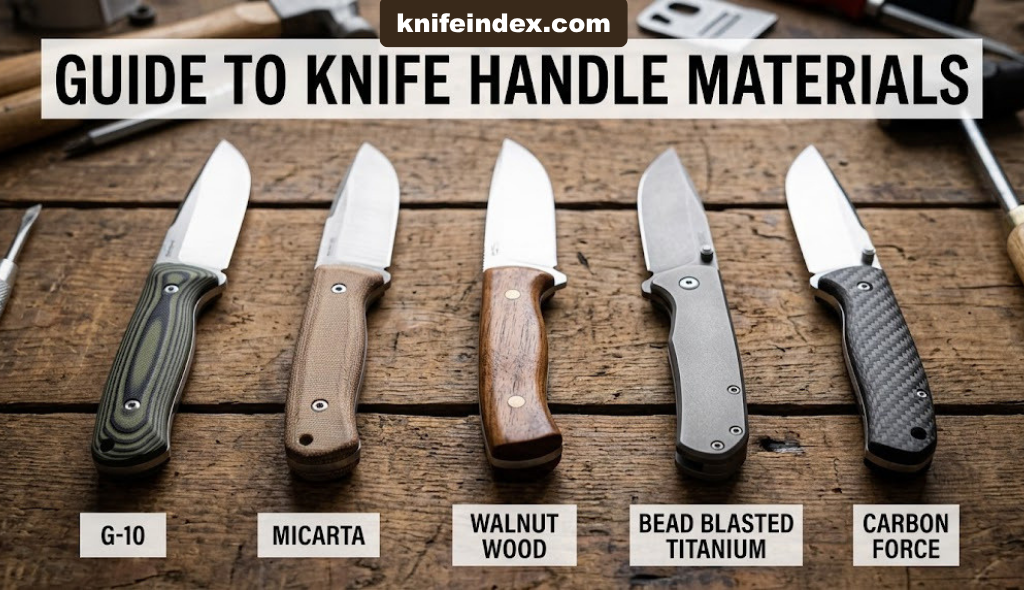
Knife Handle Materials Compared: A Complete Guide to G-10, Micarta, Wood, Titanium, and More
Every knife handle material trades off grip, weight, durability, and looks differently — this guide breaks down exactly what you’re getting with each one so you can choose with confidence.
Why Handle Material Matters More Than You Think
When most people shop for a knife, they obsess over the steel. Is it S30V or 8Cr13MoV? Does it hold an edge? Will it rust? These are fair questions, and steel choice genuinely matters — you can compare options like D2 vs 8Cr13MoV or MagnaCut vs M390 if you want to go deep on that topic. But the handle is the part of the knife you actually touch. It’s what decides whether a knife feels like an extension of your hand or a slippery liability the moment things get wet, cold, or greasy.
Handle material affects five things directly: grip security, weight and balance, durability under abuse, comfort over long use, and aesthetics. A blade can be flawless and still make for a miserable knife if the handle is the wrong choice for the job. A hunter field dressing a deer needs a completely different handle than a chef breaking down vegetables for six hours a day, and both need something different from a collector who wants a knife that looks stunning on a shelf.
This guide walks through every major handle material used in modern knives — from budget-friendly injection-molded polymers to premium hand-fit natural materials — and explains exactly where each one shines and where it falls short. Whether you’re shopping for a folding EDC knife, a fixed-blade hunting knife, or a kitchen workhorse, understanding handle material will make you a smarter buyer than 90% of people browsing knife listings.
The Hidden Role of Handle Construction
It’s worth noting that handle material is only half the story — how that material is attached to the knife matters just as much. Folding knives typically use either full-tang liners with handle scales pinned or screwed on top, or a “framelock” design where the handle material itself forms the structural frame, as seen on many titanium folders. Fixed blades usually use either full-tang construction, where the steel runs the entire length of the handle with scales riveted or bonded on either side, or hidden-tang construction, where a narrower steel shaft is set into a handle block and secured with epoxy and a pommel. Full-tang designs are generally stronger and preferred for hard-use knives, while hidden-tang designs allow for more elaborate handle shapes, particularly on traditional Japanese kitchen knives where the wa-handle is fitted over a narrow tang and can be replaced if it ever wears out.
Understanding this distinction matters because even the best handle material can fail prematurely if it’s poorly fitted or bonded. A loose G-10 scale on an otherwise excellent knife will rattle and eventually crack, while a well-fitted hidden-tang wood handle on a quality Japanese knife can outlast the person who bought it. When shopping, look for reviews that specifically mention fit and finish, not just the material name on the spec sheet.
How Manufacturing Method Shapes the Final Feel
Two knives can use identical handle material and still feel completely different depending on how that material was shaped. CNC-milled G-10 scales with precisely calculated jimping (the small grooves cut for thumb placement) will feel entirely different from injection-molded FRN with rounded, ergonomic contours baked directly into the mold. Hand-shaped wood or Micarta scales, meanwhile, can be contoured in ways that machine-cut synthetic materials rarely match, since a skilled maker can taper and round a handle to fit the natural curve of a hand rather than sticking to flat, machine-friendly geometry. This is part of why custom and semi-custom knives — even ones using the same raw material as a mass-produced knife — often command significantly higher prices and loyal followings.
G-10: The Workhorse Synthetic
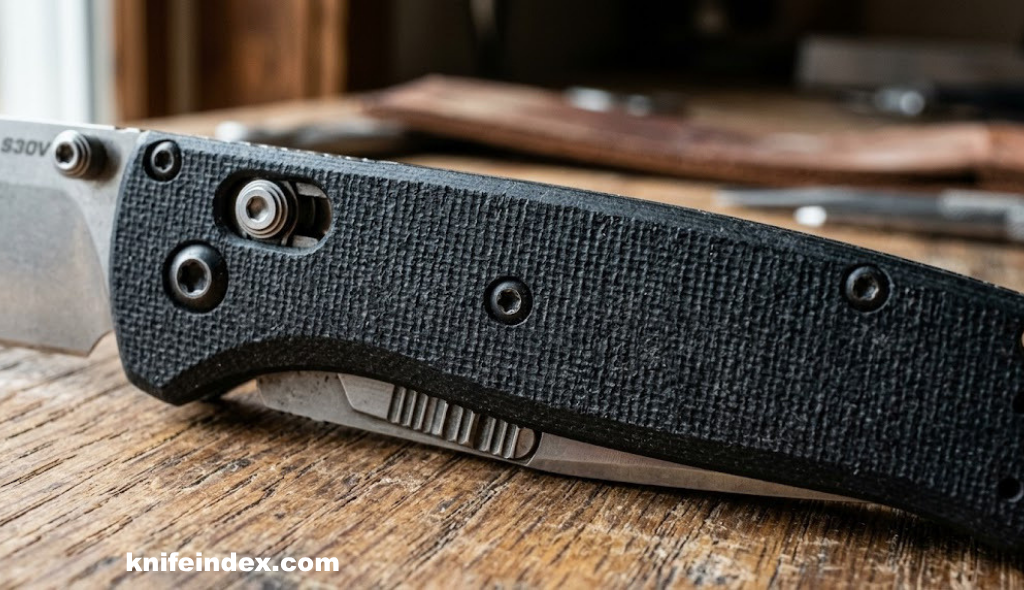
G-10 is a fiberglass laminate. Manufacturers stack layers of woven fiberglass cloth, saturate them in epoxy resin, and compress the whole thing under heat until it becomes a dense, rigid slab. That slab gets cut and machined into handle scales. The result is a material that’s essentially immune to water, oil, and most solvents, and it doesn’t care about temperature swings the way wood or bone can.
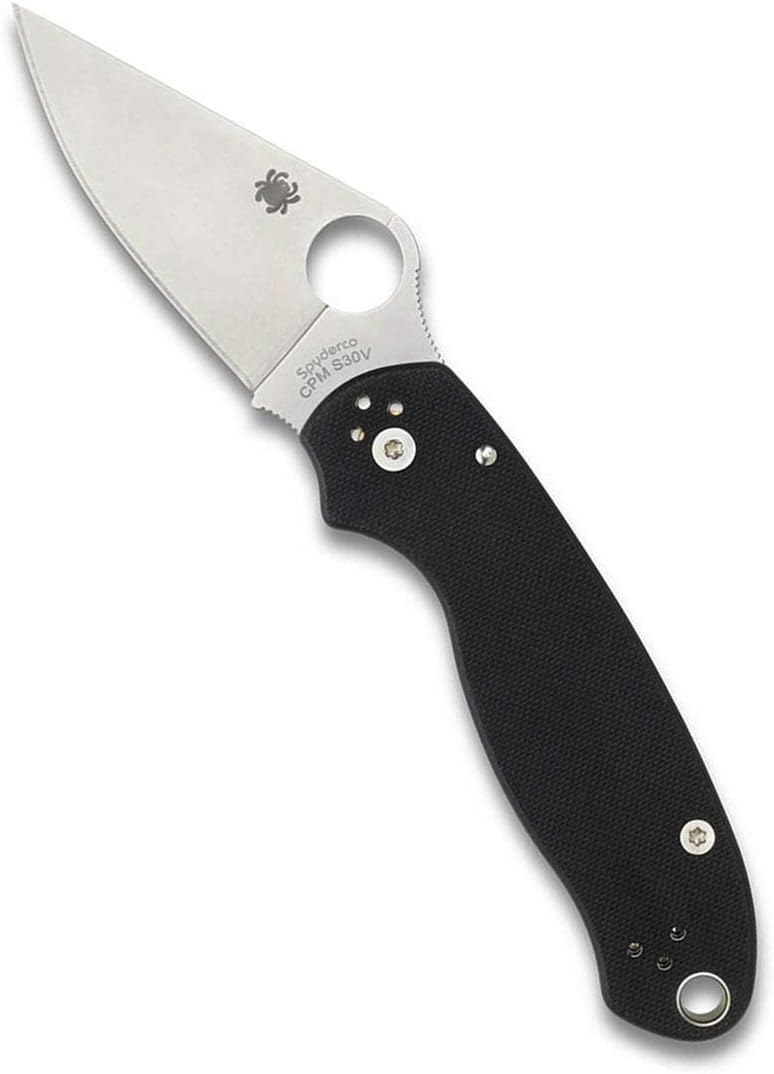
What makes G-10 so popular on working knives — you’ll see it on everything from budget folders to premium tactical fixed blades — is that it can be textured aggressively without becoming fragile. Manufacturers mill peaks, valleys, and diamond patterns directly into the surface, giving you serious grip even with wet or gloved hands. Knives like the Benchmade Bugout and many budget-friendly options such as the QSP Hawk use G-10 for exactly this reason.
Why G-10 Wins on Durability
Because it’s a composite rather than a single material, G-10 doesn’t have a grain direction to worry about. It won’t split along a weak plane the way wood can, and it won’t crack from a hard drop the way some ceramics or brittle synthetics might. Manufacturers can also dye G-10 in nearly any color and layer contrasting colors together, which is why you’ll see G-10 handles in everything from stealth black to bright orange for search-and-rescue visibility.
Pros
- Extremely durable and impact resistant
- Fully waterproof, won’t rot or swell
- Excellent grip when textured
- Lightweight relative to metal handles
- Inexpensive to manufacture at scale
Cons
- Feels less “premium” than natural materials
- Aggressive texture can be abrasive against bare skin
- Limited aesthetic depth compared to wood or carbon fiber
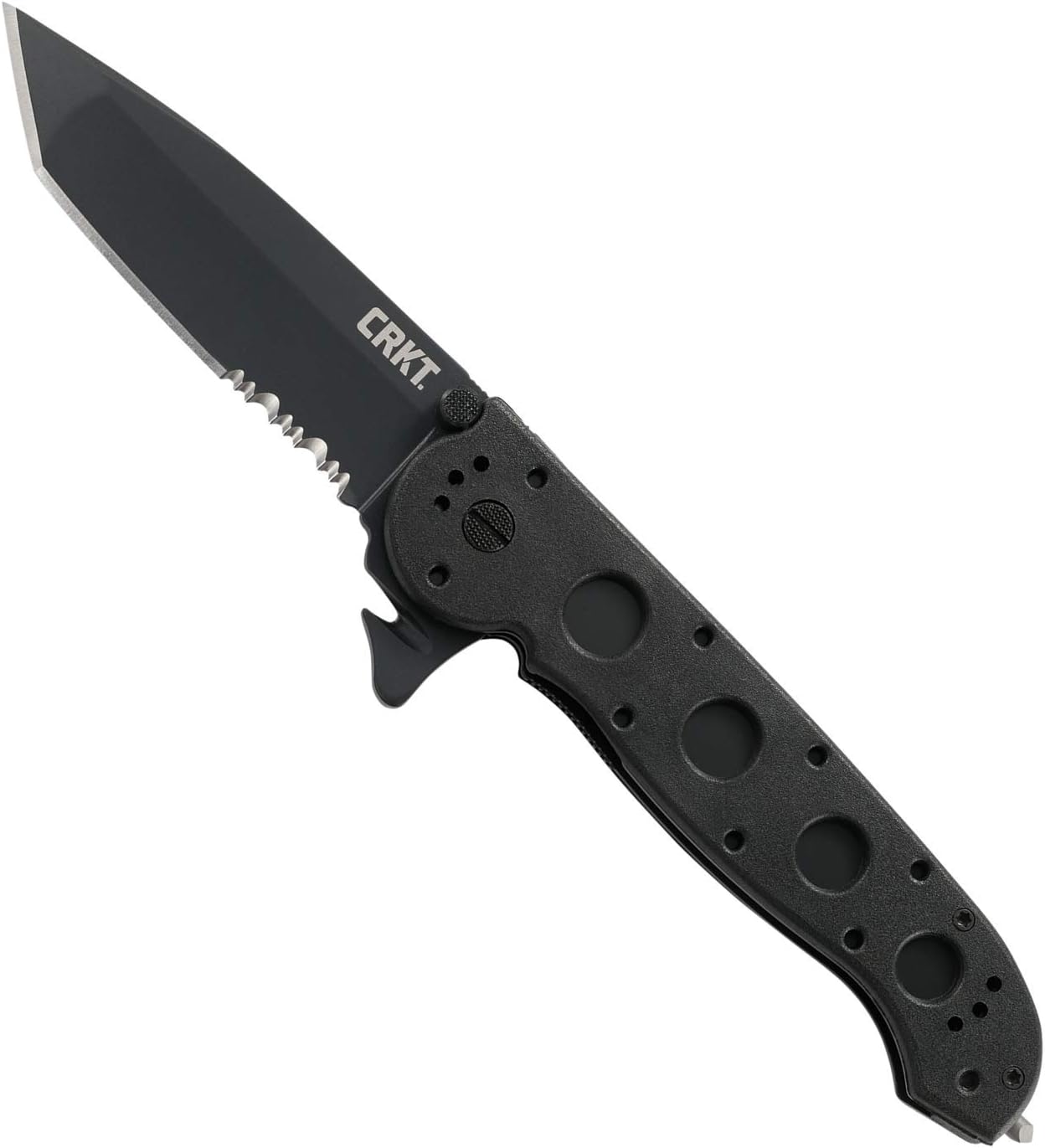
If you want a real-world example of G-10 done right on a budget knife, the Civivi Elementum and CRKT Pilar both use it to keep costs down without sacrificing a secure grip.
Texture Patterns and What They Actually Do
Not all G-10 texture is created equal. Manufacturers can mill patterns ranging from subtle stippling to aggressive peaks that feel almost like coarse sandpaper. Lighter texture is more comfortable for extended handling and pocket carry, since it won’t wear on bare skin or fabric linings over months of use. Heavier texture is reserved for knives meant to be used in wet, muddy, or bloody conditions — think hunting or tactical knives — where the extra bite in the material matters more than everyday comfort. Some manufacturers blend the two, running smoother texture along the palm-contact areas and reserving aggressive milling for the thumb ramp and index finger choil where slip resistance matters most during hard cutting tasks.
Why Manufacturers Love G-10 for Mid-Tier Production
From a manufacturing standpoint, G-10 is a dream material. Sheets can be cut with a CNC router into dozens of identical scales in a single production run, with almost no material waste and virtually no variance between units — a key reason G-10 shows up across budget, mid-tier, and even some premium knives. Compare this to natural materials like wood or bone, where every raw blank varies slightly and requires more careful inspection and hand-fitting. This consistency is a major reason knives like the CRKT Squid can hit an aggressive price point while still delivering a handle that feels secure and well-finished.

Check Price on Amazon
Micarta: The Vintage Favorite With a Modern Following
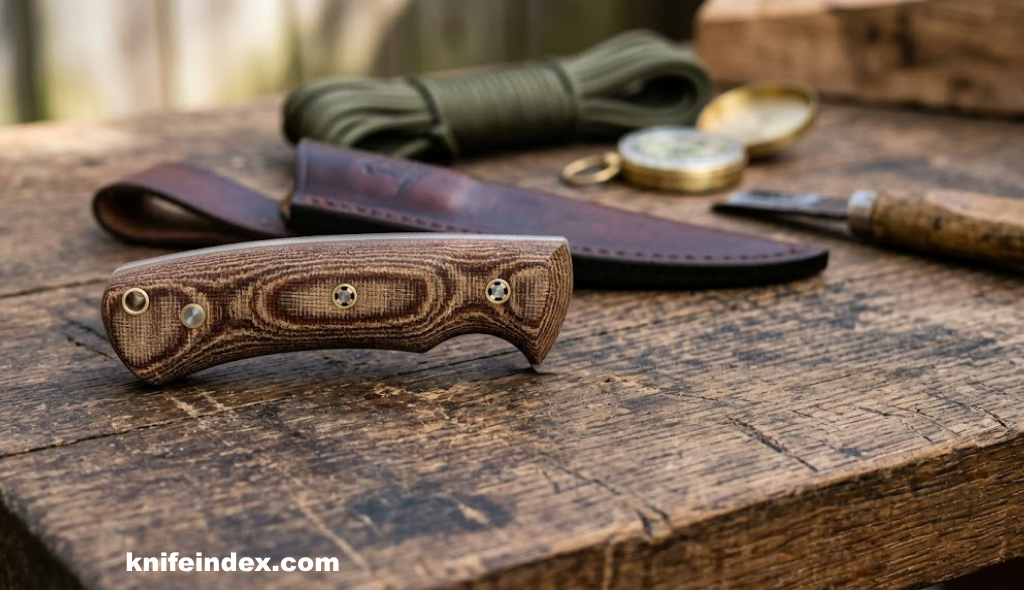
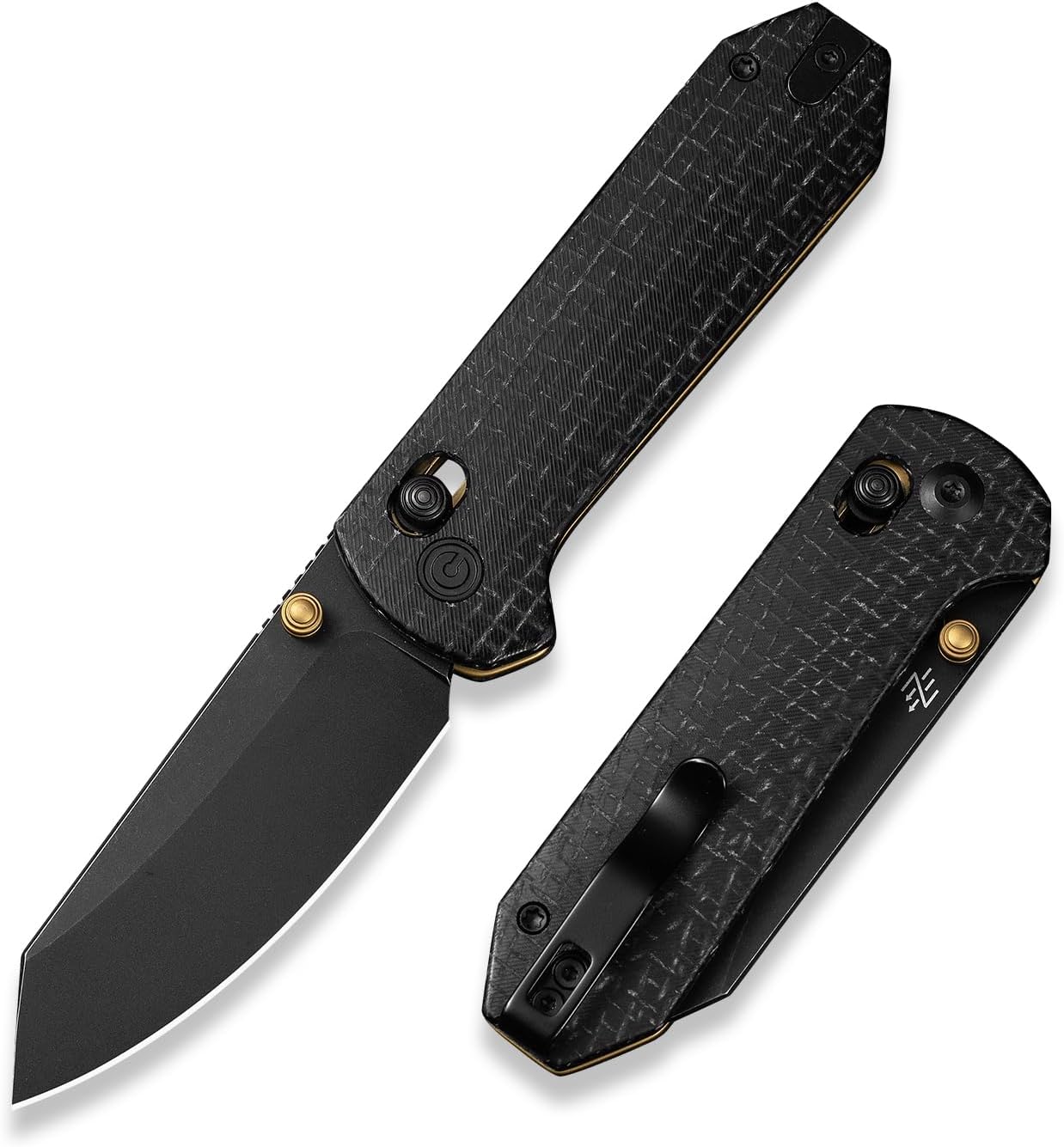
Micarta predates G-10 by decades and uses a similar layering process, but instead of fiberglass it’s built from layers of canvas, linen, or paper soaked in phenolic resin and pressed under heat. The result is a material with a warmer, more organic feel than G-10, and one that actually improves with age — the surface develops a subtle patina and the texture becomes more tactile the more it’s handled.
Canvas Micarta is the most common variant on knives, prized for its grippy, almost leather-like texture when finished with a light sanding. Linen Micarta trades a bit of that grip for a smoother, more refined look often used on gentleman’s folders. You’ll find Micarta on knives ranging from rugged bushcraft blades to premium collector pieces, and it’s a favorite among custom knife makers because it can be shaped, sanded, and polished into subtle contours that synthetic G-10 struggles to replicate as gracefully.
Micarta vs G-10 at a Glance
The two materials are often compared directly because they’re both resin-based laminates, but they feel noticeably different in hand. G-10 tends to feel harder and more mechanical, while Micarta feels warmer and slightly softer to the touch, even though its actual hardness is comparable. Micarta also tends to be marginally less impact-resistant than G-10 in extreme drop tests, though for the vast majority of users this difference is irrelevant.
Pros
- Warm, organic feel unlike any synthetic
- Ages beautifully with a natural patina
- Strong grip without being abrasive
- Waterproof and rot-resistant
Cons
- Generally pricier than G-10
- Slightly less impact-resistant than G-10
- Color options are more limited (mostly earth tones)
Knives like the Benchmade 940 Osborne in certain configurations and various Kizer models showcase Micarta at its best, blending old-world material with modern manufacturing precision.
The Different Types of Micarta You’ll Encounter
Beyond standard canvas and linen, several specialty Micarta variants have become popular in the custom knife world. Burlap Micarta uses a coarser weave for an even grippier, more rustic texture, often favored on bushcraft and camp knives where a secure grip matters more than refinement. Paper Micarta, sometimes called “richlite” in certain formulations, produces a smoother, more uniform surface often used on kitchen knife handles where a cleaner look is preferred. Some makers also produce colored or dyed Micarta, injecting pigment into the resin before pressing to produce green, red, or blue variants while keeping the layered structure intact — though these tend to lose some of the natural patina effect that makes traditional canvas and linen Micarta so beloved by long-time users.
Why Micarta Develops a Patina and Why That’s a Good Thing
Unlike G-10, which is essentially chemically inert at the surface, Micarta’s resin-and-fabric structure interacts subtly with skin oils, moisture, and UV exposure over years of handling. The surface darkens slightly, the texture smooths in the areas that see the most contact, and the overall look develops character that’s unique to that specific knife’s history. This is part of why Micarta has such a devoted following among users who carry the same knife for a decade or more — the handle becomes a physical record of how much it’s been used, similar to the patina that develops on carbon steel blades over time, which we cover in our guide to knife patina and how it develops.
Check Price on Amazon
Carbon Fiber: Lightweight Luxury
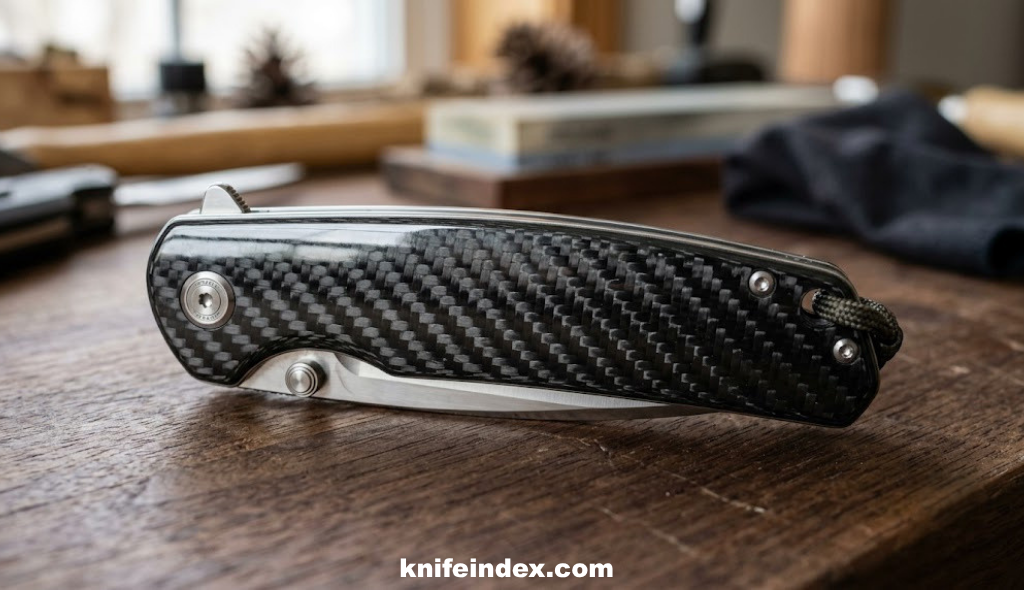
Carbon fiber is the material knife enthusiasts reach for when they want maximum visual impact and minimum weight. It’s made from woven carbon strands bonded in resin, producing that unmistakable crosshatch weave pattern under a glossy or matte finish. Structurally it’s similar in concept to G-10 and Micarta — layers pressed together with resin — but the carbon fibers themselves are stiffer and lighter than fiberglass, giving finished handles a distinctly premium, almost jewelry-like quality.
The catch is that carbon fiber handle scales are almost always used as overlays bonded to a G-10 or metal substructure rather than as a standalone structural material, because pure carbon fiber can be brittle under concentrated stress. This hybrid approach gives you the light weight and striking looks of carbon fiber with the toughness of the material underneath.
Pros
- Exceptionally lightweight
- Premium, high-end visual appeal
- Waterproof and chemically inert
- Won’t fade or discolor over time
Cons
- Most expensive common synthetic option
- Can be slippery when polished glossy
- Brittle if used without a backing material
Premium folders from brands featured in our Spyderco Paramilitary 2 review and other flagship-tier knives frequently offer carbon fiber variants at a price premium over their G-10 counterparts, and the weight savings are noticeable the moment you pick one up.
Wood: Timeless Warmth With Real Trade-Offs
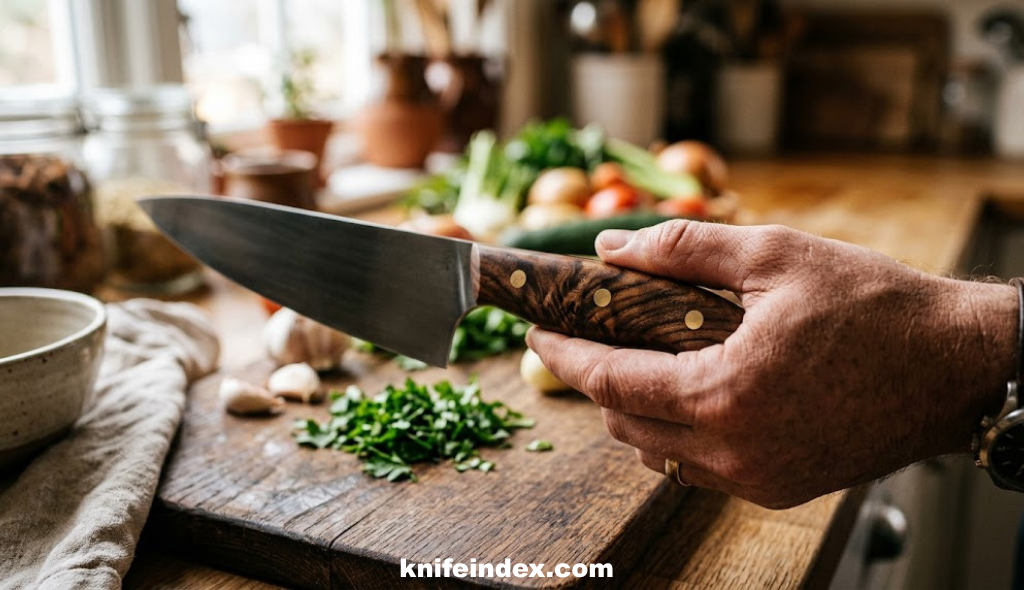
Wood is the original knife handle material, and it remains popular for a simple reason: nothing else looks or feels quite like it. Walnut, olive wood, cocobolo, blackwood, and dozens of other species each bring their own grain pattern, color, and density to a finished knife. A well-made wood handle has a natural warmth in cold weather that synthetic and metal handles can’t match, and the tactile experience of holding polished, oiled wood is genuinely different from anything else on this list.
The trade-off is durability and maintenance. Wood is porous, which means it can absorb moisture, oils, and odors if left untreated or exposed to prolonged wet conditions. Cheaper wood handles can also swell, shrink, or crack with humidity and temperature swings, especially if the wood wasn’t properly stabilized before manufacturing.
Stabilized Wood Changes the Equation
Modern manufacturers increasingly use stabilized wood, where raw wood is vacuum-infused with resin under pressure, filling the natural pores and dramatically improving water resistance and structural stability. Stabilized wood retains the visual character of natural wood while behaving much more like a synthetic in terms of durability. This is why you’ll see wood handles on both budget knives like the Kiwi kitchen knives and premium Japanese blades discussed in guides like the history of Japanese knife making, where traditional wa-handles remain the standard on gyuto and santoku knives.
Pros
- Unmatched natural beauty and grain variation
- Comfortable, warm in hand
- Stabilized versions resist moisture well
- Traditional choice for Japanese kitchen knives
Cons
- Untreated wood can crack, swell, or rot
- Requires periodic oiling for longevity
- Can be slippery when wet without added texture
- More prone to scratches and dents than synthetics

Check Price on Amazon
Titanium: Premium Strength Without the Weight of Steel
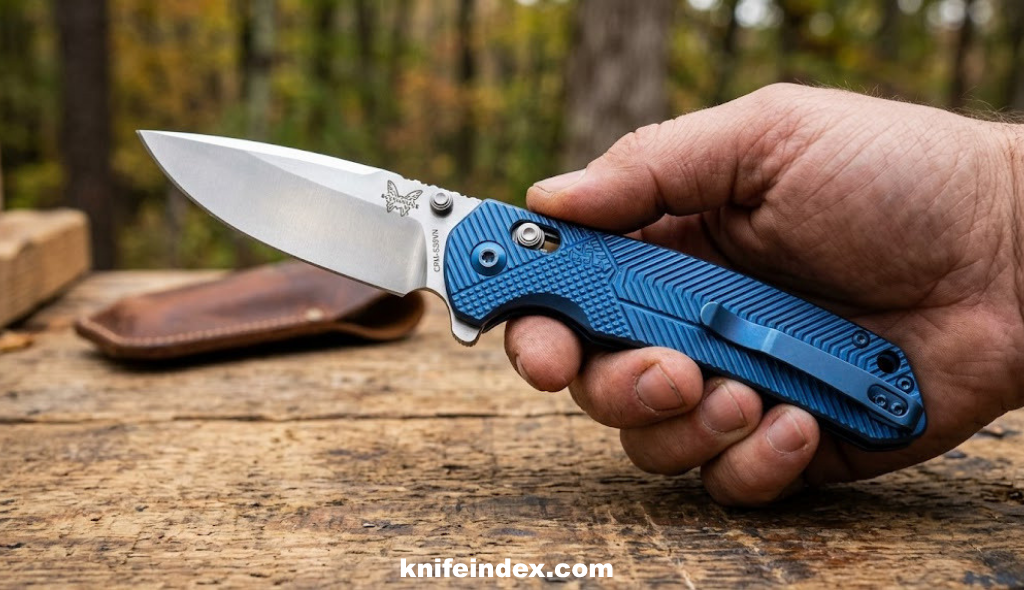
Titanium sits at the top of most collectors’ wish lists, and for good reason. It’s roughly 40% lighter than steel while offering comparable strength, it’s naturally corrosion-resistant, and it can be anodized into a wide spectrum of colors through a simple electrochemical process rather than paint or coating — meaning the color won’t chip or wear off the way a painted finish would.
Titanium handles are common on premium folders, often paired with a “flipper” opening mechanism and a framelock, where a section of the titanium handle itself acts as the locking bar. High-end knives from makers featured in our Chris Reeve Sebenza review and the Umnumzaan breakdown are essentially the gold standard for what a titanium framelock knife can be — precision-milled, perfectly fitted, and built to outlast the owner.
Pros
- Extremely strong relative to its weight
- Naturally corrosion-resistant
- Anodized colors won’t chip or fade like paint
- Enables strong, reliable framelock designs
Cons
- Expensive to machine and manufacture
- Can feel cold and slick without texture
- Smooth titanium is one of the more slippery handle options when wet
Brands like Microtech also lean on titanium for premium automatic and OTF knives — see our breakdowns of the Microtech Ultratech and UTX-85 for how titanium components factor into those builds.
Check Price on Amazon
Aluminum: The Budget-Friendly Metal Option
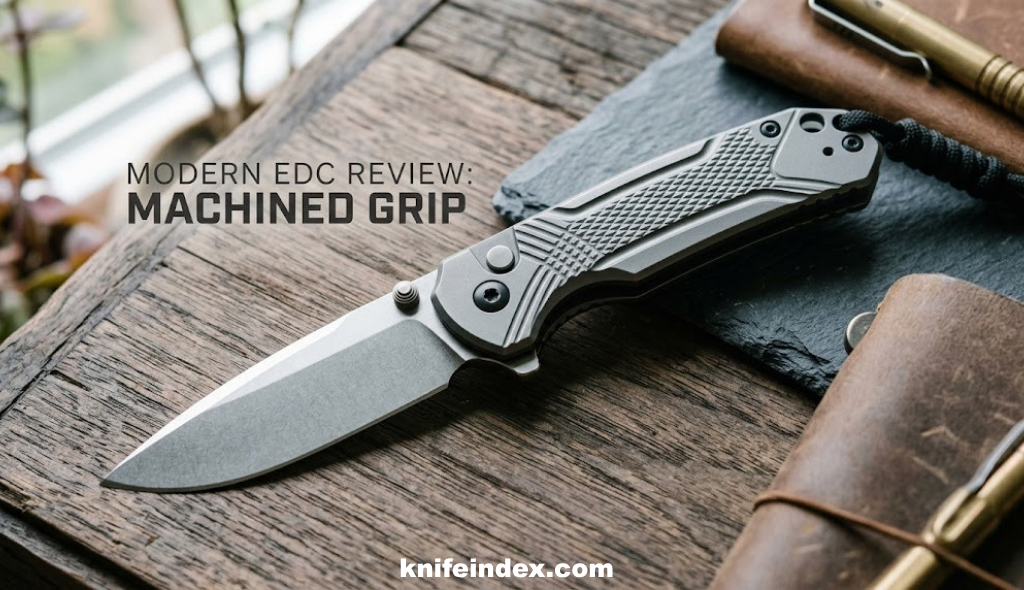
Aluminum offers many of titanium’s benefits — light weight relative to steel, corrosion resistance, the ability to be anodized in bright colors — at a fraction of the manufacturing cost. It’s softer than titanium, which means it’s easier to machine into complex shapes and textures but also more prone to dents and scratches from hard use over time.
You’ll see aluminum handles most often on mid-range folders where manufacturers want a metal handle feel without the titanium price tag, as well as on rescue and dive knives where corrosion resistance and bright, visible anodized colors (like orange or yellow) matter for safety.
Pros
- Lightweight and corrosion-resistant
- Much cheaper to manufacture than titanium
- Anodizes well into bright safety colors
Cons
- Dents and scratches more easily than titanium or steel
- Not as strong under stress as titanium
- Can feel less “premium” once worn
Zytel / FRN: Budget Polymer That Punches Above Its Weight
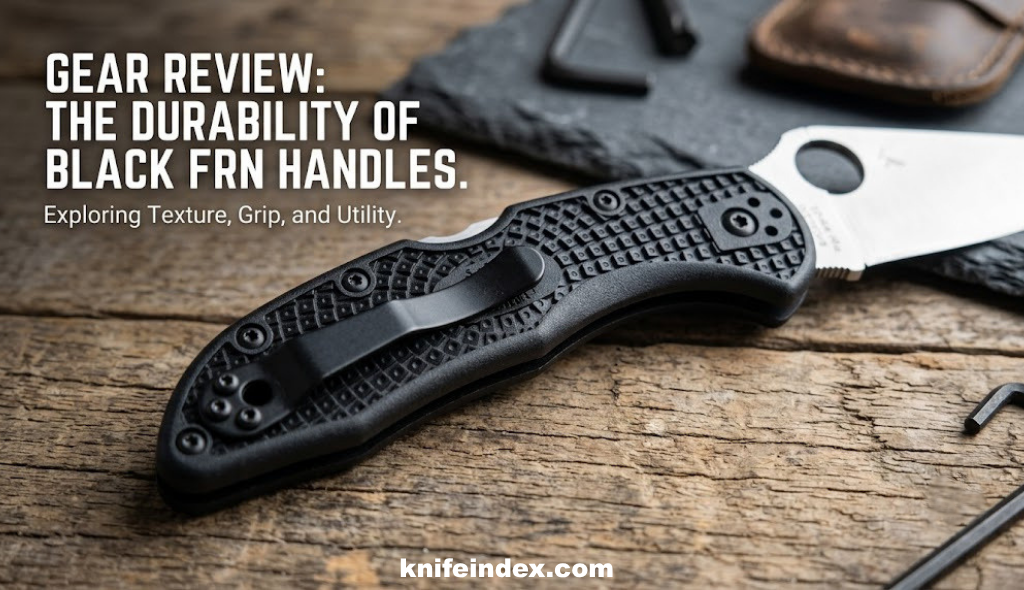
Zytel (a DuPont-trademarked nylon compound) and FRN (fiberglass-reinforced nylon) are injection-molded polymers used heavily on budget and mid-range knives. Because they’re injection-molded rather than machined from sheet stock like G-10 or Micarta, manufacturers can produce complex ergonomic shapes, integrated finger grooves, and aggressive texture patterns at very low cost.
Spyderco has built much of its budget and mid-tier lineup around FRN, and the results genuinely hold up — the Spyderco Delica 4 and Spyderco Tenacious both use FRN handles that have earned a reputation for being nearly indestructible despite their low weight and low cost.
Pros
- Very inexpensive to manufacture
- Extremely lightweight
- Can be molded into ergonomic shapes G-10 can’t easily achieve
- Tough and impact-resistant despite low cost
Cons
- Looks and feels less premium than composites or metal
- Can flex slightly under heavy pressure
- Surface texture wears smoother over years of use
Bone, Horn, and Stag: Traditional and Collectible
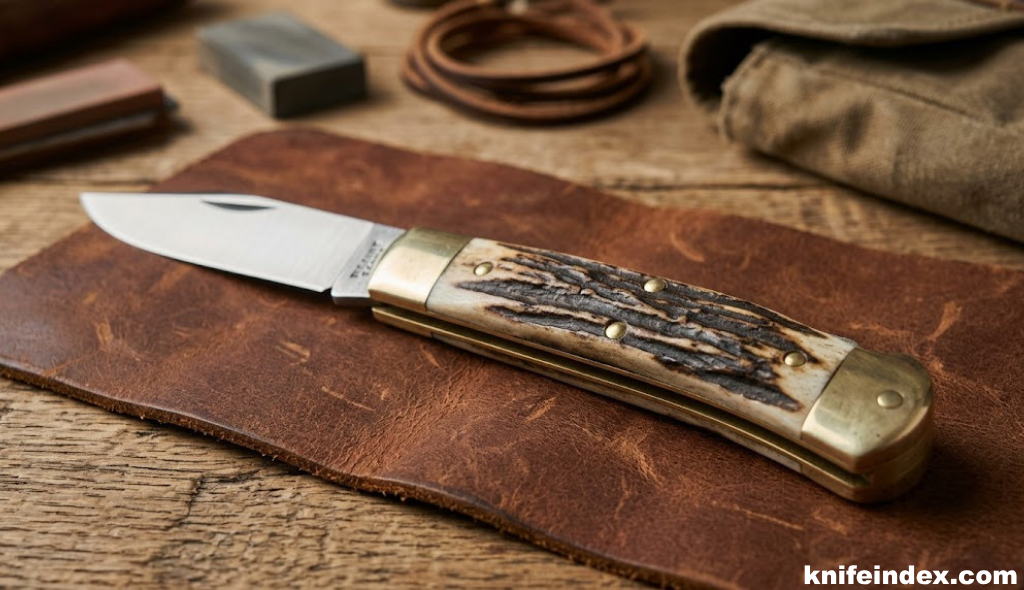
Natural materials like bone, buffalo horn, and deer stag remain popular on traditional slipjoint pocket knives and collector pieces. Bone is typically dyed and jigged (textured to mimic stag) before being fitted as handle scales, giving each knife a unique, slightly irregular pattern that mass-produced synthetics can’t replicate. Genuine stag, cut from deer antler, is prized specifically because no two pieces look alike — the natural texture and coloring vary knife to knife.
These materials are almost exclusively found on traditional-style knives rather than modern tactical or work knives, since they’re more fragile and require more care than composites. They’re a favorite among collectors who value heritage and craftsmanship over pure utility.
Pros
- Unique, one-of-a-kind appearance
- Strong heritage and collector appeal
- Comfortable, warm in hand
Cons
- More fragile than synthetics or metal
- Can crack with extreme temperature or humidity swings
- Not ideal for hard daily-use knives
Stainless Steel: All-Metal Toughness
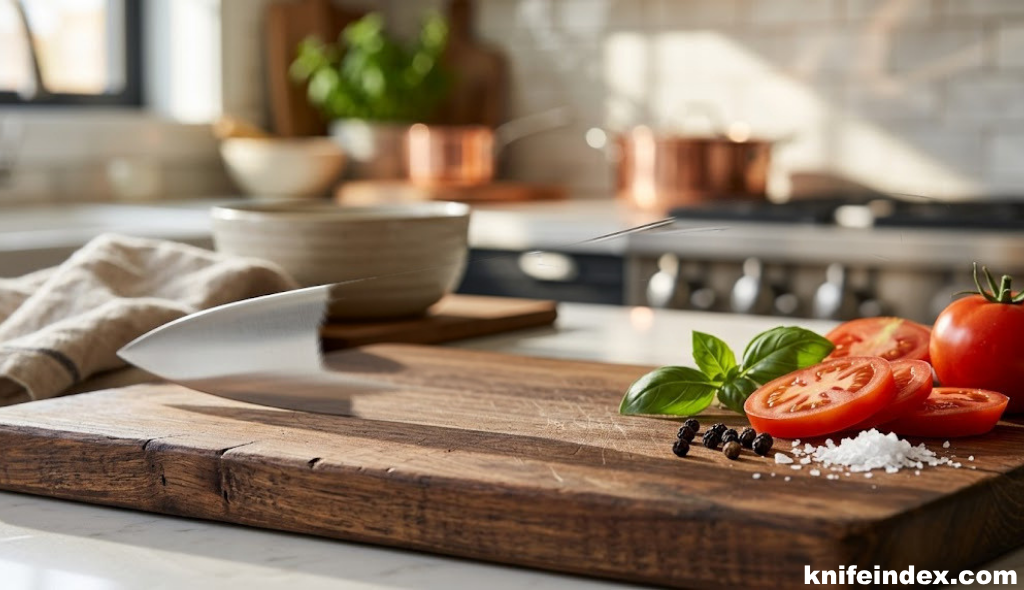
Some knives skip separate handle scales entirely and use stainless steel handles, either bonded to the frame or, in the case of integral knives, machined from the exact same billet as the blade itself. Steel handles are essentially indestructible under normal use, resistant to corrosion when properly finished, and give a knife a substantial, reassuring heft.
The obvious downside is weight — a full steel handle adds significant mass compared to titanium, aluminum, or any synthetic, which is why steel-handled knives tend to be reserved for fixed blades or larger folders where weight is less of a concern than raw durability. Steel can also get cold to the touch and slippery when wet unless textured or checkered.
Pros
- Nearly indestructible under normal use
- Substantial, high-quality feel
- Corrosion-resistant when properly finished
Cons
- Heaviest common handle material
- Cold in hand during winter use
- Can be slippery without added texture
Full Comparison Table: Every Material Side by Side
Here’s a quick reference for how each material stacks up across the factors that matter most when choosing a knife.
| Material | Weight | Grip in Wet Conditions | Durability | Maintenance | Typical Price Tier |
|---|---|---|---|---|---|
| G-10 | Light | Excellent | Excellent | Minimal | Budget–Mid |
| Micarta | Light | Very Good | Very Good | Minimal | Mid–Premium |
| Carbon Fiber | Very Light | Fair (glossy) | Good (needs backing) | Minimal | Premium |
| Wood (stabilized) | Moderate | Fair | Good | Occasional oiling | Mid–Premium |
| Titanium | Light | Fair (smooth) | Excellent | Minimal | Premium |
| Aluminum | Light | Good | Good | Minimal | Budget–Mid |
| Zytel / FRN | Very Light | Good | Very Good | None | Budget |
| Bone / Horn / Stag | Moderate | Fair | Fair | Careful handling | Mid–Collector |
| Stainless Steel | Heavy | Fair | Excellent | Minimal | Mid–Premium |
How to Choose the Right Handle Material for Your Use Case
There’s no single “best” handle material — only the best material for what you’re actually going to do with the knife. Here’s how to think through it based on real use cases.
For Everyday Carry (EDC)
G-10, FRN, and aluminum are excellent everyday choices because they’re light, low-maintenance, and hold up to pocket carry and daily fidgeting. If budget allows, titanium adds a premium feel without sacrificing practicality. Knives like the best pocket knives for everyday carry lean heavily on these materials for exactly this reason.
For Outdoor and Survival Use
G-10 and Micarta dominate here because they perform reliably wet, cold, or muddy without becoming a liability. Fixed blades like the Morakniv Garberg and knives covered in our field dressing knife guide typically favor these textured synthetics for secure grip in the field.
For Kitchen Knives
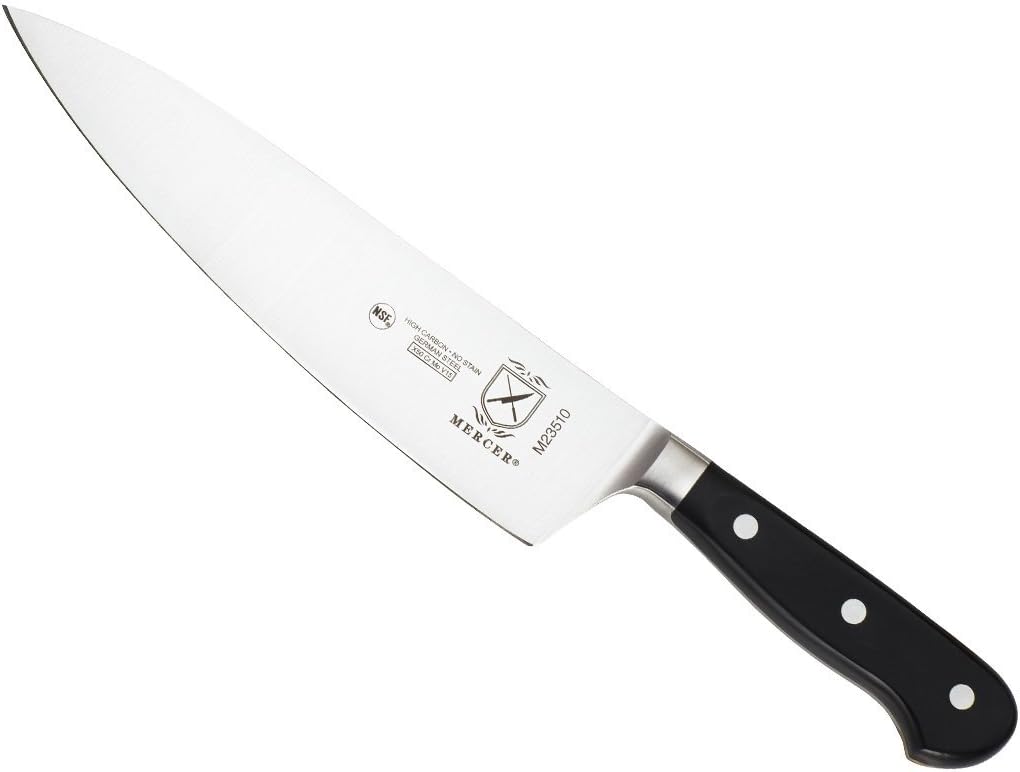
Stabilized wood, resin-composite (often called “pakkawood”), and FRN dominate the kitchen knife world. Wood provides that traditional feel prized in Japanese blades discussed in our German vs Japanese steel comparison, while synthetic composites offer easier cleanup and dishwasher tolerance — though hand washing is still recommended for any quality knife.
For Collectors and Gentleman’s Folders
Carbon fiber, titanium, bone, and stag shine here, where visual character and craftsmanship matter as much as raw function. A knife meant to be admired and pocketed for special occasions benefits from materials that show individuality — no two stag or bone handles look exactly alike.
For Heavy-Duty and Tactical Use
G-10 remains the standard for tactical and rescue knives because of its unmatched durability-to-cost ratio, though titanium framelocks are increasingly popular for premium tactical folders where budget isn’t the primary constraint.
Handle Care and Maintenance Tips
Different materials need different care routines to stay in top condition for years.
- G-10 / Micarta / Carbon Fiber: Wipe clean with mild soap and water. No oiling needed. Avoid harsh solvents on carbon fiber’s resin coating.
- Wood: Apply food-safe mineral oil or a dedicated wood conditioner every few months, especially for kitchen knives. Never soak in water or run through a dishwasher.
- Titanium / Aluminum: Wipe down after use; avoid abrasive cleaners on anodized finishes to preserve color.
- Zytel / FRN: Virtually maintenance-free — rinse and dry.
- Bone / Horn / Stag: Keep away from prolonged moisture and extreme temperature swings; a light coat of mineral oil occasionally helps prevent drying and cracking.
- Stainless Steel: Dry thoroughly after washing to prevent water spotting; occasional light oiling on pivots and joints keeps folders smooth.
Whatever material you choose, proper knife storage also plays a role in longevity — check out our guide on how to make a knife block or storing knives without a block for handle-friendly storage options that avoid unnecessary scuffing.

Check Price on Amazon
Frequently Asked Questions
What is the most durable knife handle material?
G-10 and titanium are generally considered the two most durable handle materials for everyday abuse, since both resist cracking, warping, and moisture damage far better than wood, bone, or other natural materials.
Is Micarta better than G-10?
Neither is strictly better — Micarta offers a warmer, more organic feel and ages with a natural patina, while G-10 is slightly more impact-resistant and typically less expensive. The right choice depends on whether you prioritize feel or raw toughness.
Why do some premium knives use titanium handles instead of steel?
Titanium is roughly 40% lighter than steel while offering comparable strength, and it can be anodized into permanent colors without paint or coating, making it ideal for premium folders where weight and finish quality both matter.
Do wood knife handles need special care?
Untreated wood handles benefit from periodic oiling to prevent drying and cracking, and should never be soaked or run through a dishwasher. Stabilized wood is far more resistant to moisture damage and requires less maintenance.
Is carbon fiber stronger than G-10?
Pure carbon fiber can actually be more brittle than G-10 under concentrated impact, which is why most carbon fiber handles are bonded to a G-10 or metal substrate rather than used as a standalone structural material.
What handle material is best for wet or outdoor conditions?
Textured G-10 and Micarta are widely considered the best choices for wet or outdoor use because their milled texture provides secure grip even when soaked, unlike smooth metal or polished wood.
Are FRN and Zytel handles cheap-feeling or low quality?
Despite their low manufacturing cost, FRN and Zytel handles are genuinely tough and impact-resistant, and are used on well-regarded knives precisely because they hold up to hard use while keeping weight and price down.
Why do bone and stag handles vary so much in appearance?
Bone and stag are natural materials with inherent variation in grain, color, and texture, so each finished handle is naturally unique — a quality collectors specifically seek out rather than avoid.
Can I put a wood-handled knife in the dishwasher?
No — even stabilized wood handles should be hand washed and dried promptly, since prolonged heat and moisture exposure in a dishwasher can degrade the finish and shorten the handle’s lifespan over time.
Is aluminum a good alternative to titanium?
Aluminum offers similar light weight and corrosion resistance to titanium at a much lower cost, making it a solid mid-range option, though it’s softer and more prone to denting under heavy use than titanium.
Which handle material is best for a first knife purchase?
G-10 or FRN handles are usually the best starting point for a first knife, since they’re inexpensive, low-maintenance, and durable enough to handle the learning curve of regular carry and use without special care.
Do handle materials affect a knife’s balance?
Yes — heavier materials like stainless steel shift a knife’s balance point toward the handle, while lighter materials like carbon fiber or FRN keep the balance closer to the blade, which affects how the knife feels in use.
Conclusion: Match the Material to the Mission
There’s no universally “best” knife handle material — there’s only the best material for how you actually plan to use the knife. G-10 and FRN cover everyday carry and hard outdoor use without complaint. Micarta and stabilized wood bring warmth and character to knives you’ll want to hold onto for decades. Titanium and carbon fiber deliver premium performance and looks for collectors who don’t mind paying for it. And traditional materials like bone and stag keep heritage alive on knives built to be admired as much as used.
The smartest approach is to think about where the knife will spend most of its life — a wet jobsite, a kitchen counter, a dress pocket, or a display case — and let that answer guide your material choice more than trends or marketing. Once you’ve nailed down the right handle material, pair it with the right steel by browsing our steel comparison guides to build a knife collection that actually fits how you live.

Shop Knives on Amazon