CRKT Pilar Review: The Best Budget Designer Knife Ever Made?
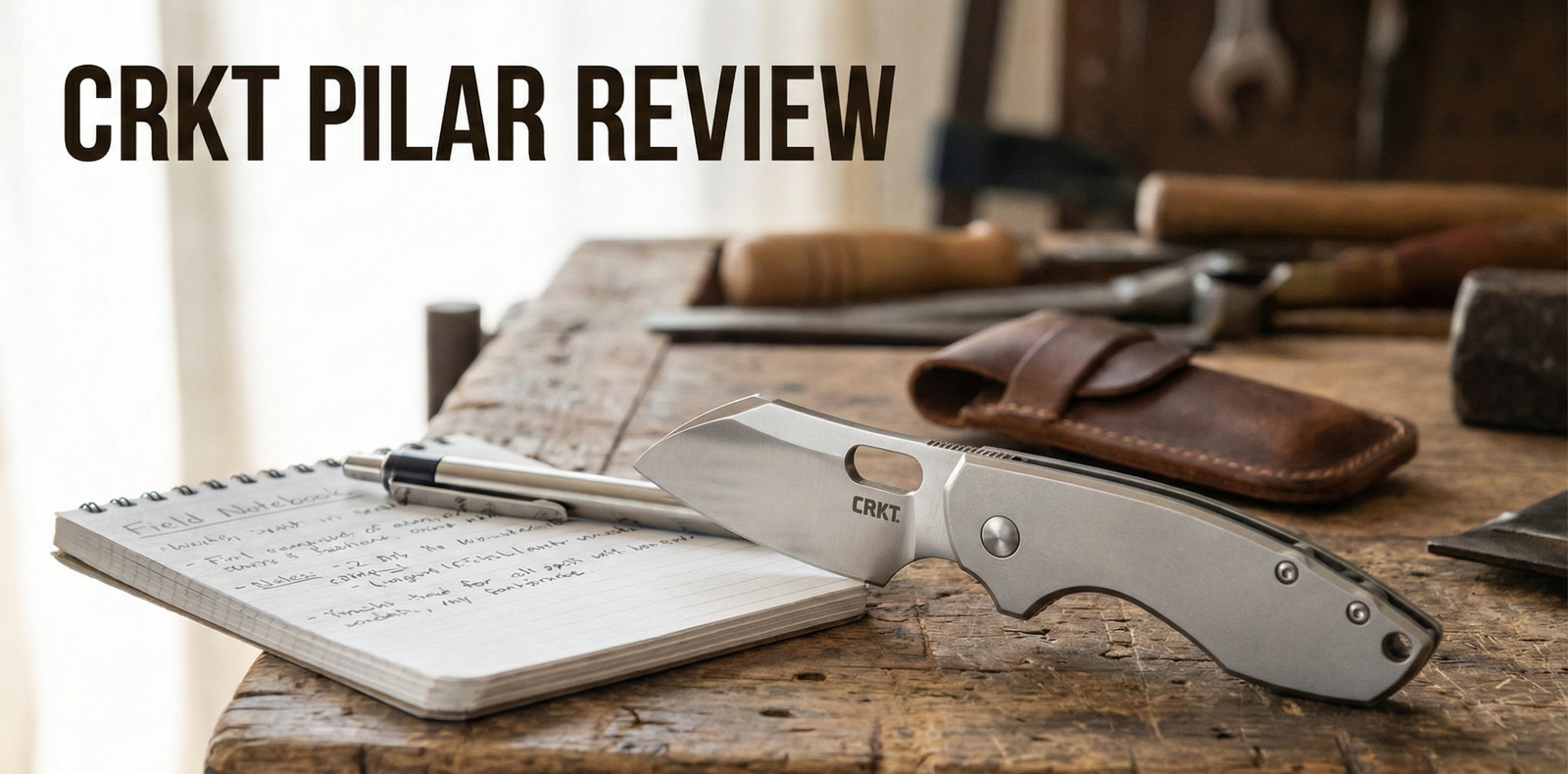
Every once in a while, a knife comes along that punches so far above its weight class that it disrupts the entire industry. The CRKT Pilar is one of those knives. Named after Ernest Hemingway’s beloved fishing boat, the Pilar is a masterclass in minimalist design.
Designed by the legendary Danish knifemaker Jesper Voxnaes, this compact folder brings custom-level aesthetics to the masses for the price of a few pizzas. It’s stubby, it’s heavy for its size, and it has a blade steel that snobs turn their noses up at. Yet, it remains one of the most beloved EDC knives of the last decade.
Why? Because it proves that great design matters more than exotic materials. In this comprehensive review, we will explore why this little tank of a knife belongs in your collection, even if you already own blades costing ten times as much.
What makes the Pilar’s story especially interesting is timing. It launched into a market saturated with tactical-looking folders — assisted openers with aggressive serrations, aluminum scales, and clip points sharp enough to worry airport security. Into that landscape dropped a knife that looked more like a jeweler’s tool than a weapon, and the enthusiast community immediately understood what it was looking at: a design-forward everyday carry piece that happened to also be genuinely useful. That combination is rarer than it sounds, and it’s a big part of why the Pilar still shows up on “best budget EDC” lists nearly a decade after its release.
The Story Behind the Name: Hemingway’s Boat
CRKT rarely names a knife by accident, and the Pilar is no exception. The Pilar was the 38-foot fishing boat Ernest Hemingway purchased in 1934 and used for decades of marlin fishing off the coast of Cuba and Key West. It was rugged, purpose-built, unglamorous, and utterly reliable — traits CRKT clearly wanted associated with this little folder.
There’s a nice symmetry here for knife nerds who like to dig into naming conventions. Hemingway’s boat wasn’t flashy; it was a working vessel that got the job done trip after trip in demanding saltwater conditions. The CRKT Pilar knife channels that same “unglamorous workhorse” energy. It doesn’t have a fighter’s pointed tip or a tactical black coating. It has a stubby, friendly-looking blade that just happens to out-perform its looks. If you’re the type of EDC enthusiast who likes knowing the backstory behind a design, this bit of trivia is a nice conversation starter the next time someone asks about the knife clipped in your pocket.
It’s also worth noting that Jesper Voxnaes has talked in interviews about wanting to design knives that don’t look intimidating. A sheepsfoot blade with a rounded spine and no aggressive point reads as a tool rather than a weapon to the average bystander — which matters a great deal for people who carry a knife at the office, on a plane layover, or around family members who are uneasy about pointed blades.

Technical Specifications
The Pilar is small but dense. It feels like a solid ingot of steel in the hand. It challenges the modern trend of “lightweight everything” by embracing heft and sturdiness.
| Blade Length | 2.4 inches (61 mm) |
|---|---|
| Overall Length | 5.9 inches (150 mm) |
| Closed Length | 3.5 inches (89 mm) |
| Blade Thickness | 0.145 inches (3.7 mm) |
| Weight | 4.2 ounces (119 g) |
| Blade Material | 8Cr13MoV Stainless Steel |
| Handle Material | Stainless Steel (Base Model) |
| Lock Type | Frame Lock |
| Designer | Jesper Voxnaes |
| Pivot Type | Phillips-head screw, PTFE/bronze washers |
| Country of Manufacture | Taiwan |
| Typical Street Price | $25–$35 (base stainless model) |
These numbers only tell part of the story. On paper, a 2.4-inch blade sounds like a novelty knife you’d hesitate to actually use. In hand, the story is completely different — the choil-forward grip and the reinforced sheepsfoot tip make the cutting edge feel considerably more capable than the tape-measure figures suggest. We’ll get into exactly why in the ergonomics section below.
Design & The “Cleaver” Blade
The blade is a modified sheepsfoot design, often referred to as a “cleaver” style. It features a high flat grind and a prominent swedge. This shape is incredibly useful for urban EDC tasks. Unlike a drop point or clip point, the sheepsfoot has a reinforced tip that is perfect for draw cuts—like opening boxes without slicing the contents inside.
Jesper Voxnaes is known for his “compact but capable” philosophy. The Pilar embodies this. It looks friendly enough to use in a coffee shop (thanks to the lack of an aggressive point) but sturdy enough to tackle hard work. If you are exploring different types of knives and their uses, you’ll find the sheepsfoot blade is safer and often more practical for daily utility than tactical shapes.
Look closely at the blade’s spine and you’ll notice the swedge — a partial secondary bevel ground into the top of the blade near the tip. Purists sometimes describe the Pilar’s profile as a hybrid between a wharncliffe and a cleaver, since the edge runs almost dead straight from the choil to the tip before curving up sharply. That straight run is a huge functional advantage for anyone who does a lot of push cuts: breaking down cardboard boxes, slicing open shrink-wrap, or portioning food on a cutting board. A curved belly (like you’d find on a drop point) is great for slicing motions, but a straight edge like the Pilar’s tracks a ruler-straight line far more predictably, which is exactly what you want when you’re trying to cut cleanly through a single layer of material without gouging whatever is underneath.
Why a Non-Threatening Blade Shape Matters
There’s a practical, non-aesthetic reason so many EDC-focused buyers gravitate toward the Pilar’s blade shape: perception. A drop point or a tanto with an aggressive point reads as “weapon” to most bystanders, security guards, and HR departments. A sheepsfoot blade, by contrast, reads as “tool.” That distinction matters if you carry a knife into an office building, use it at a school pickup line, or hand it to a coworker to open a package. The Pilar’s blunt, rounded spine and lack of a piercing tip make it one of the more socially low-friction knives you can clip into your pocket.
Ergonomics: The Finger Choil Magic
How do you make a 2.4-inch blade feel like a full-sized knife? The answer is the finger choil. The Pilar features a massive cutout at the base of the blade that allows you to choke up on the knife.
When you place your index finger in the choil, your grip effectively extends onto the blade itself. This gives you:
- Full four-finger grip: Even with large hands, you can get a solid hold.
- Precision control: Your hand is closer to the cutting edge, allowing for fine detail work.
- Security: The choil acts as a guard, preventing your hand from slipping forward.
This design trick turns a “three-finger” knife into a hard-use tool.
How the Choil Compares to Other Small EDC Knives
Most sub-3-inch folders force you into an awkward pinch grip, where two or three fingers curl around a handle that’s simply too short for a full hand. That’s fine for light tasks, but it becomes fatiguing and even unsafe once you’re applying real pressure — think trimming rope, breaking down a stack of Amazon boxes, or prepping camp kindling. The Pilar sidesteps this entirely. Because the choil eats into the blade’s own real estate rather than the handle’s, your whole hand — pinky included — wraps around the knife in a full, closed-fist grip. Reviewers and forum users consistently cite this as the single biggest reason the Pilar punches above its size class; it’s less “small knife with a workaround” and more “full-size grip on a knife that happens to be small.”
Grip Positions for Different Tasks
Experienced Pilar owners tend to switch between two grips depending on the job. For fine, controlled cuts — opening an envelope, trimming a hangnail on packaging tape, whittling a small notch — a pinch grip with the finger choked forward of the choil gives maximum blade control. For harder push cuts and general utility work, sliding the index finger fully into the choil and wrapping the remaining three fingers and thumb around the handle gives you leverage closer to what you’d expect from a 3.5-to-4-inch blade. Being able to shift between these two grips on the fly, without repositioning the knife in your hand, is a big part of what makes the Pilar feel so versatile for its size.

Experience the “Voxnaes Grip.” Big knife ergonomics in a pocket-friendly package.
Check Price on Amazon8Cr13MoV: Is It Good Enough?
The standard Pilar uses 8Cr13MoV steel. In the modern era of MagnaCut and M390, 8Cr13MoV is considered a budget steel. It is soft and will lose its shaving edge relatively quickly.
However, it is also incredibly tough and very easy to sharpen. For a knife at this price point, it is acceptable. It resists rust reasonably well and takes a wicked edge with just a few passes on a strop. If you are new to knife maintenance, learning how stainless steels perform versus harder steels makes the 8Cr13MoV a great learning platform.
Note: CRKT also releases D2 versions and premium S35VN limited runs for those who demand better edge retention.
8Cr13MoV vs. Premium Steels: A Realistic Comparison
It helps to put 8Cr13MoV in context rather than just labeling it “budget” and moving on. Roughly speaking, it sits in a similar performance tier to AUS-8 and slightly below 14C28N — decent edge retention, good toughness, easy re-sharpening, and reasonable rust resistance thanks to its chromium content. Compare that to something like MagnaCut or M390, which hold an edge two to four times longer under similar cutting conditions but require diamond stones or a quality ceramic rod to properly resharpen. For a knife that’s going to live in a junk drawer, get borrowed by family members, and occasionally get used to pry something it shouldn’t — all common fates for a sub-$30 EDC blade — 8Cr13MoV’s ease of maintenance is arguably more valuable than raw edge retention. You can bring this blade back to hair-popping sharp on a basic two-sided whetstone in about five minutes, something that isn’t true of harder powder-metallurgy steels.
Corrosion Resistance in Real-World Use
8Cr13MoV typically carries around 13% chromium content, which puts it comfortably in stainless territory. In practice, owners report the Pilar holds up well to normal EDC exposure — pocket lint, occasional rain, humid weather — without staining. Where it can develop spotting is prolonged exposure to acidic foods (citrus, tomatoes) or salt water without a wipe-down afterward. This is standard behavior for any budget stainless steel and not unique to the Pilar; a quick wipe with a cloth after use is all it takes to keep the blade looking factory-fresh for years.
Deployment & Frame Lock
The Pilar uses an elongated thumb hole (the “Vox hole”) for deployment. It can be slow-rolled open or flicked with the middle finger (“Spydie flick”). The action runs on Teflon and bronze washers. It isn’t a drop-shut guillotine like a bearing knife, but it is smooth and reliable.
The lock is a sturdy stainless steel frame lock. It utilizes the handle scale itself to lock the blade open. Because the handle is steel, the lockup is incredibly strong—perhaps overkill for a knife this size. There is zero blade play, instilling massive confidence.
Breaking In the Action
New Pilar owners frequently report that the action feels stiffer out of the box than it does after a week or two of regular use. This is normal for a washer-based folder — the PTFE and bronze washers need to seat and burnish against the blade tang before they reach peak smoothness. A few dozen open-close cycles, combined with a drop of light oil on the pivot, typically loosens things up considerably. If the knife still feels gritty after a proper break-in period, it’s worth checking pivot tension rather than assuming the knife is simply “rough” — see the maintenance section below for the fix.
Detent and Flicking Technique
The Pilar’s detent (the small ball or spring tension that holds the blade closed until deliberately opened) is tuned to be firm enough to prevent accidental opening in the pocket, but not so firm that it fights you on deployment. Most owners find the “Spydie flick” — a quick snap of the middle finger through the thumb hole — becomes reliable after a short practice period. If you’re struggling to get consistent flicks, two things usually help: slightly backing off the pivot screw (a quarter turn at a time) and making sure the washers are lightly lubricated rather than dry.
Pocket Carry Experience
At 4.2 ounces, the Pilar is heavy for its size. For comparison, the much larger Ontario RAT 2 weighs only 2.75 ounces. You will feel the Pilar in your pocket.
However, the smooth stainless steel scales allow it to slide in and out of the pocket easily. The pocket clip is reversible (tip-up or tip-down) but only for right-hand carry. It is a sleek, minimalist design that carries fairly deep.
If weight is a major concern for you, you might want to look at lighter keychain options, but you will sacrifice the robust ergonomics that the Pilar offers.
Clip Tension and Retention
The Pilar’s spring steel pocket clip has noticeably strong retention compared to many budget folders. It grips the fabric of jeans, chinos, and even thicker canvas work pants without loosening over time — a common complaint with cheaper stamped clips that lose tension after a few months. The tradeoff is that the clip can feel a bit tight when first pulling the knife out of a tighter pocket, and some owners choose to carry it in a front pocket rather than clipped to a waistband for that reason.
Left-Handed Carry Considerations
This is one of the more commonly searched limitations of the knife, so it’s worth addressing directly: the stock pocket clip position only supports right-hand, tip-up or tip-down carry. Left-handed users can still open, use, and carry the knife (the frame lock and thumb hole are ambidextrous), but they’ll need to carry it in a non-clipped pocket or source an aftermarket left-hand clip from the same third-party makers who sell custom scales. This is a known gap in the design and one of the more legitimate criticisms leveled at CRKT by left-handed EDC enthusiasts.
Real-World Cutting Tests
Specs and grip geometry only tell part of the story — the real test of any EDC knife is what happens when you actually put it to work for a few weeks. Here’s how the Pilar performs across the tasks most owners actually use it for.
Cardboard and Package Opening
This is the Pilar’s bread and butter. The straight edge and reinforced tip make quick work of tape seams and box flaps, and because the tip isn’t needle-sharp, there’s minimal risk of plunging too deep and damaging whatever’s packed inside. Owners who process a lot of shipping boxes — whether for a small business or just heavy online shopping habits — consistently rate this as the knife’s strongest use case.
Food Prep
Surprisingly capable for its size. The flat grind and straight edge let it handle basic slicing tasks — citrus, cheese, sandwich prep — reasonably well, though the short blade length means you’ll be making more passes than you would with a proper kitchen knife. It’s not a replacement for a chef’s knife, but as a camp or desk-drawer option for quick food tasks, it holds its own.
Rope and Cordage
The choil grip really shines here. Having your finger anchored close to the edge gives you the leverage to saw through paracord, twine, and rope without the blade twisting in your hand. It won’t out-cut a dedicated rescue hook, but for general cordage work it’s more than adequate.
Light Whittling and Wood Tasks
The Pilar can handle light whittling — shaving kindling, notching a tent stake, cleaning up a stick — but the short blade and stout grind mean it’s not built for detailed carving work. Serious whittlers will want a dedicated thin-ground knife instead, but for occasional campsite use, the Pilar gets the job done.
The Full Pilar Lineup: Which Version Should You Buy?
One of the most common points of confusion for first-time buyers is realizing just how many Pilar variants CRKT has released over the years. Here’s a breakdown of the family so you can pick the right one.
| Pilar (Standard) | 2.4″ blade, 8Cr13MoV steel, stainless handle, 4.2 oz — the original and best value entry point. |
|---|---|
| Pilar Copper | Same core knife with copper handle scales that develop a unique patina with age and handling. |
| Pilar Large (Pilar III) | 2.67″ blade, 6.6″ overall length, typically D2 steel — better for large hands, more usable edge length. |
| Pilar D2 | Upgraded D2 tool steel for improved edge retention over the base 8Cr13MoV, same geometry. |
| Pilar S35VN Limited Runs | Occasional premium releases with S35VN steel and upgraded fit and finish for collectors. |
For most buyers, the standard stainless 8Cr13MoV model is the right starting point — it’s the version that made the Pilar famous, it’s the cheapest way into the lineup, and it demonstrates everything that makes the design special. If you have larger hands or want a bit more blade length for general utility work, the Pilar Large is worth the modest price bump. Collectors and steel enthusiasts who already own a standard Pilar often pick up the copper or D2 versions as a second knife rather than a replacement.
Should You Wait for a Premium Steel Release?
CRKT periodically runs limited releases in higher-end steels like S35VN. These sell out quickly and command a premium over the standard model. Unless edge retention is a genuine priority for your use case, most owners are better served buying the standard version now and simply resharpening more often — the difference in real-world performance is smaller than steel snobs make it sound, especially for a knife primarily used on cardboard, rope, and light food prep.

Want more style? Check out the Copper scale version for a unique patina over time.
Check Price on AmazonMaintenance, Cleaning & Lubrication
The Pilar is about as low-maintenance as folding knives get, but a little routine care goes a long way toward keeping the action smooth and the blade rust-free for years.
Basic Cleaning Routine
- Wipe after use: Especially after cutting food, citrus, or anything acidic — a quick wipe with a cloth prevents spotting on the 8Cr13MoV blade.
- Flush the pivot area: Pocket lint and debris tend to collect around the washers. A blast of compressed air or a soft brush every few weeks keeps the action clean.
- Avoid submerging in water: The frame lock mechanism and washers aren’t sealed, so avoid running the knife under water pressure or soaking it.
Lubricating the Pivot
A single drop of light knife oil (or even sewing machine oil in a pinch) on the pivot, worked in by opening and closing the blade a dozen times, is usually all it takes to restore smooth action if the knife starts feeling gritty. Avoid over-oiling — excess oil just attracts more pocket lint and dust, which can actually make the action feel worse over time. Wipe away any excess with a cloth after lubricating.
Disassembly Basics
The Pilar is a straightforward Phillips-head build, which makes it one of the more approachable knives for a first-time disassembly if you want to deep-clean the washers or swap scales. Lay the parts out in order as you remove them, keep track of washer orientation, and take a reference photo before you start if it’s your first time — reassembling a frame lock knife with the pivot tension slightly off is the most common mistake beginners make, and it’s easily avoided by tightening gradually and testing blade play after each small adjustment.
Aftermarket Scales & Customization
Few budget knives have generated the kind of aftermarket support the Pilar enjoys. Small custom shops and hobbyist machinists produce replacement scales in an enormous range of materials, and swapping them is a simple Phillips-head job.
- Copper and brass: Develop a natural patina with handling, giving each knife a one-of-a-kind aged look over time.
- Titanium: Cuts weight significantly compared to the stock stainless scales while adding a premium feel.
- Carbon fiber: The lightest common option, with a distinctive woven texture.
- Micarta and G10: Add grippy texture that the smooth factory stainless scales lack, addressing one of the more common ergonomic criticisms.
This aftermarket ecosystem is a big part of why the Pilar has such staying power in EDC communities online — it’s less a single product and more a platform that owners can personalize over years of ownership, the same way people mod a pocket watch or a mechanical keyboard.
Knife Laws & Legal Carry
With a 2.4-inch blade, the Pilar falls under the length restrictions in place in most U.S. states and municipalities, which commonly cap fixed and folding blades somewhere between 2.5 and 4 inches for everyday carry without a special permit. That said, knife law is a genuine patchwork in the United States, and locking blades specifically are restricted or banned outright in a handful of cities regardless of length.
A few points worth knowing before you carry:
- Locking mechanism matters: Because the Pilar uses a frame lock, some jurisdictions that are lenient on non-locking folders treat it differently. Always check local ordinances, not just state law.
- Blade length under 2.5″: Puts the Pilar under the threshold used by many of the stricter U.S. cities, which is one reason it’s a popular pick for EDC in places like Los Angeles and New York.
- International travel: Locking folders face additional restrictions outside the U.S., including parts of the UK and Canada. Never assume a knife legal at home is legal to pack for international travel.
- Workplace and venue policies: Even where a knife is legally carryable, many offices, schools, courthouses, and event venues prohibit any blade regardless of size — worth checking independently of the law itself.
This section is general information, not legal advice. Knife laws change and vary significantly by city and county — always verify current local regulations before carrying.
Where to Buy & What It Should Cost
The standard stainless steel Pilar typically street-prices between $25 and $35, making it one of the more affordable ways to own a design from a recognized custom knifemaker. Prices fluctuate with sales events, so it’s worth comparison shopping rather than buying the first listing you find.
Typical Price Tiers Across the Lineup
- Standard stainless Pilar: The most affordable entry point into the lineup.
- Copper or D2 versions: A modest step up for upgraded materials.
- Pilar Large: Priced a bit above the standard model for the added blade length and handle real estate.
- Limited premium-steel runs: Command the highest prices and tend to sell out quickly.
Buying through an authorized retailer matters more than people realize with a popular, widely-counterfeited design like this one — off-brand knockoffs of the Pilar’s silhouette exist, and they don’t carry CRKT’s fit, finish, or warranty support. Sticking to recognized retail channels is the safest way to guarantee you’re getting the genuine Voxnaes-designed knife rather than a clone with a mystery steel.

Get the knife that everyone is talking about. Rugged, stylish, and incredibly affordable.
Check Price on AmazonWho Should (and Shouldn’t) Buy the Pilar
Great For
- First-time EDC knife buyers who want to understand what good ergonomics feel like without a big financial commitment.
- Gift-givers looking for something that feels special and well-designed but doesn’t carry a premium price tag — a favorite pick for birthdays, graduations, and stocking stuffers among knife-curious recipients.
- Design and industrial-design enthusiasts who appreciate a knife as much for its aesthetics as its function.
- Office and urban carry where a non-threatening blade profile and small size matter.
- Knife modders and tinkerers who want a platform with a huge aftermarket scale ecosystem to personalize over time.
Maybe Look Elsewhere If
- You need a knife for heavy, sustained outdoor or survival use — the short blade and softer steel aren’t built for batoning or bushcraft-grade tasks.
- You’re strictly weight-conscious for ultralight carry — at 4.2 ounces, lighter keychain folders exist for gram-counters.
- You’re left-handed and want factory clip support out of the box.
- You want a knife that holds a working edge for weeks of heavy use without touch-ups — premium steel options will serve you better.
Pilar vs. The Competition
CRKT Pilar vs. CRKT Squid
The Squid is another Lucas Burnley design that competes directly. The Squid is lighter and has thumb studs. The Pilar has the finger choil and the clever blade. If you want a slicer, get the Pilar. If you want a piercer, get the Squid.
CRKT Pilar vs. Spyderco Techno 2
The Techno 2 is the “premium” version of this concept (titanium, CTS-XHP steel). It costs roughly $250. The Pilar gives you 90% of the design aesthetic and 70% of the functionality for 20% of the price. It is the best budget alternative to a custom Slysz or Voxnaes blade.
CRKT Pilar vs. CRKT Pineapple
The Pineapple is one of the fastest-opening knives CRKT makes and weighs a full ounce less than the Pilar, making it the pick for fidget-friendly deployment. However, its GRN scales feel noticeably cheaper in hand than the Pilar’s stainless steel construction, and its ergonomics don’t come close to matching the choil-driven grip that defines the Pilar experience.
CRKT Pilar vs. Byrd Robin 2
The Robin 2 is roughly half the Pilar’s weight and every bit as non-threatening in profile, making it a strong pick for anyone who wants a light, low-cost, dress-slacks-friendly EDC. Its lockback action is mostly a two-handed operation, though, and the fit and finish simply isn’t in the same league as the Pilar’s frame lock construction.
CRKT Pilar vs. Cold Steel Tuff Lite
The Tuff Lite trades the Pilar’s steel-handle heft for a nearly indestructible Triad lock and a much lighter overall build. It’s arguably the tougher knife of the two for pure hard-use abuse, but it gives up the ergonomic choil grip and design pedigree that make the Pilar stand out. Choose the Tuff Lite if bomb-proof reliability is your only criterion; choose the Pilar if you want the best all-around blend of ergonomics, looks, and everyday utility.
CRKT Pilar vs. Pilar Large
The obvious in-house comparison. The Large adds roughly a quarter-inch of usable blade and a more substantial handle, which large-handed users often prefer. The standard Pilar remains the better pocket citizen for smaller pockets and lighter carry preferences, and it’s the version most associated with the design’s original reputation.
Pros & Cons
The Pros
- World-class design by Jesper Voxnaes.
- Incredible ergonomics (finger choil).
- Rock-solid frame lock construction.
- Sheepsfoot blade is excellent for utility.
- High customization potential (aftermarket scales).
- Affordable entry point into a recognized custom design.
- Easy to sharpen and maintain even for beginners.
The Cons
- Heavy for its size (4.2 oz).
- 8Cr13MoV steel requires frequent sharpening.
- Teflon washers can be tricky to tune.
- Clip is not left-hand friendly.
- Smooth stainless scales can feel slick without texture.
- Short blade limits it for heavier outdoor tasks.
Frequently Asked Questions
Is the CRKT Pilar good for EDC?
Yes, it is excellent for urban EDC. The sheepsfoot blade is non-threatening and perfect for opening packages, while the small size makes it easy to carry in most jurisdictions.
What is the difference between Pilar and Pilar Large?
The Pilar Large (Pilar III) has a 2.67-inch blade and an overall length of 6.6 inches. It offers more handle real estate and often comes in D2 steel, making it better for larger hands.
Does the Pilar rust?
The 8Cr13MoV steel is stainless, but bead-blasted finishes can be prone to spotting if left wet. Wipe it down after use, especially if cutting fruit or using it in humid environments.
Can I flick the Pilar open?
Yes. With practice, you can use your middle finger to “Spydie flick” the deployment hole. It may require adjusting the pivot screw to find the sweet spot between smooth action and zero blade play.
Are there custom scales available?
Yes, the Pilar has a massive aftermarket community. You can find scales in copper, brass, carbon fiber, micarta, and titanium to customize the look and feel.
Is the frame lock safe?
Yes, the stainless steel frame lock is incredibly strong. Because the entire handle scale acts as the lock bar, it is very difficult to accidentally disengage during use.
How do I sharpen the sheepsfoot blade?
The blade has a relatively straight edge with a slight belly. It is very easy to sharpen on flat stones or guided systems. Check our guide on sharpening techniques for tips.
Is it legal to carry?
With a blade under 2.5 inches, it is legal in most US states and many cities with length restrictions. However, it is a locking knife, so check local laws regarding locking folders.
How much does the CRKT Pilar cost?
The standard stainless steel model typically street-prices between $25 and $35. Copper, D2, and Large variants run somewhat higher, and limited premium-steel releases command the highest prices of the lineup.
What is the best knife oil for the Pilar’s pivot?
Any light knife-specific oil works well — a single drop worked in by opening and closing the blade repeatedly is enough. Avoid over-oiling, since excess oil attracts pocket lint that can gum up the washers over time.
Is the Pilar good for left-handed users?
The frame lock and thumb hole are ambidextrous, so left-handed users can open and use the knife without issue. The factory pocket clip, however, only supports right-hand carry, which is a common criticism from left-handed EDC enthusiasts.
Can the Pilar handle food prep?
Yes, reasonably well for its size. The flat grind and straight edge manage basic slicing tasks like citrus and cheese, though the short blade means more passes than a full-size kitchen knife would require.
Get the knife that everyone is talking about. Rugged, stylish, and incredibly affordable.
Check Price on AmazonJesper Voxnaes: The Designer Behind the Knife
To really understand why the Pilar looks and handles the way it does, it helps to know a bit about the man who drew it. Jesper Voxnaes is a Danish knifemaker who built his reputation in the custom knife world long before CRKT came calling for a production collaboration. His custom work — often small, sculptural fixed blades and folders sold through limited runs to serious collectors — is characterized by clean flowing lines, generous choils, and a rejection of anything that looks tactical for tactical’s sake.
When production companies like CRKT partner with custom makers, the results are a mixed bag. Sometimes the production version loses everything that made the custom original special, reduced to a rough approximation stamped out in cheaper materials. The Pilar is one of the rare cases where the collaboration actually worked. Voxnaes reportedly worked closely with CRKT’s engineering team to make sure the choil geometry, the blade’s swedge line, and the overall proportions survived the transition from hand-ground custom steel to mass-produced stainless. That attention to detail is why knife reviewers who are normally skeptical of budget “designer collabs” consistently single out the Pilar as an exception worth taking seriously.
Voxnaes has gone on to collaborate with CRKT on several other models — the Bona Fide, the Batum, and others — but the Pilar remains the collaboration most credited with introducing his design language to a mainstream audience. If you enjoy the Pilar’s grip philosophy, it’s worth exploring his other CRKT collaborations, since many share the same choil-forward approach to ergonomics in different blade shapes and sizes.
Fit, Finish & Manufacturing Quality
Budget knives frequently cut corners in ways that aren’t obvious from a spec sheet: sloppy blade centering, uneven grinds, rough machining marks left visible on show surfaces, or scales that don’t quite mate flush with the liners. The Pilar has earned a reputation for punching well above its price point on exactly these fit-and-finish details.
Blade Centering and Grind Consistency
Out-of-box blade centering on the Pilar is consistently praised across owner reviews — the blade sits evenly between the scales when closed, without the rubbing or off-center wobble that plagues cheaper import folders. The flat grind is even from ricasso to tip on most production units, without the visible waviness that shows up on knives ground quickly on automated equipment without careful quality control.
Machining and Assembly
Look closely at the choil cutout, the lock bar cutouts, and the thumb hole, and you’ll notice clean, consistent edges without the burrs or tool marks that used to be standard on knives in this price bracket. This is part of a broader shift in Asian manufacturing quality over the past decade — factories in Taiwan, where the Pilar is produced, have significantly closed the gap with higher-cost domestic manufacturing, and the Pilar is frequently cited as proof of how far that gap has closed for budget knives specifically.
Quality Control Consistency
No production run is flawless, and occasional units do ship with minor blemishes — a slightly off-center blade, a bit of extra play that tightens up after break-in, or cosmetic finish inconsistencies on the satin scales. These reports are the exception rather than the rule, and CRKT’s warranty support (see below) means an outlier unit is easy to address rather than something you’re stuck with.
CRKT’s Warranty & Customer Support
CRKT backs its knives with a standard limited warranty covering manufacturing defects in materials and workmanship, and the company has a longstanding reputation in the knife community for straightforward, no-hassle customer service. If you receive a Pilar with an obvious defect — a stuck lock, a badly off-center blade, a chipped edge out of the box — CRKT’s support team is generally responsive to resolving the issue, whether that means a replacement or repair.
It’s worth noting that warranty coverage typically applies to manufacturing defects rather than normal wear and tear or damage from misuse (prying, batoning, or using the tip as a screwdriver, for example). Keeping your original purchase receipt or order confirmation is good practice regardless of which retailer you buy from, since it’s the easiest way to establish proof of purchase if you ever need to make a claim.
Building an EDC Loadout Around the Pilar
Because the Pilar is small, light on visual bulk (even if not light on actual weight), and non-threatening in profile, it pairs naturally with a broader everyday carry loadout without dominating your pockets. Common pairings reported by owners include a slim wallet, a compact multi-tool, and a keychain flashlight — the Pilar’s reversible clip means it can ride comfortably in a front pocket alongside these other items without excessive bulk.
Pocket Dump Placement
Given its 3.5-inch closed length, the Pilar tucks easily into a front pants pocket, a jacket pocket, or a small EDC pouch. Owners who carry it alongside a phone often report the smooth stainless scales are gentle on pocket linings and screen surfaces compared to knives with more aggressive jimping or texture — a small but appreciated side benefit of the otherwise-criticized slick handle finish.
Backup or Primary Blade?
For most urban and office-based carry scenarios, the Pilar works well as a primary blade — it’s capable enough for the box-opening, package-trimming, food-prep reality of daily life. For outdoor-focused users who need a larger tool for camp chores, many treat the Pilar as a secondary, precision-oriented blade alongside a larger fixed blade or folder better suited to heavier bushcraft work.
Final Verdict
The CRKT Pilar is a triumph of design. It proves that you don’t need to spend hundreds of dollars to get a knife that feels custom, looks amazing, and works hard. While the steel isn’t premium and the weight is substantial, the ergonomics and utility are unmatched at this price point.
If you appreciate industrial design and want a reliable companion for your daily tasks, the Pilar is a must-have. It isn’t just a budget knife; it’s a modern classic.
Whether you go with the standard stainless model, spring for the copper scales, or size up to the Pilar Large, you’re buying into a design pedigree that’s rare to find below the hundred-dollar mark. Pair it with basic maintenance — a drop of oil now and then, a quick strop every couple of weeks, a wipe-down after acidic foods — and this little knife will comfortably outlast its price tag many times over.