Stainless Steel vs. Carbon Steel Knife: The Ultimate Metallurgy Guide
In the culinary world, there is a dividing line that separates the casual cook from the obsessive enthusiast. It isn’t the price of their stove or the freshness of their ingredients. It is the metal in their hand.
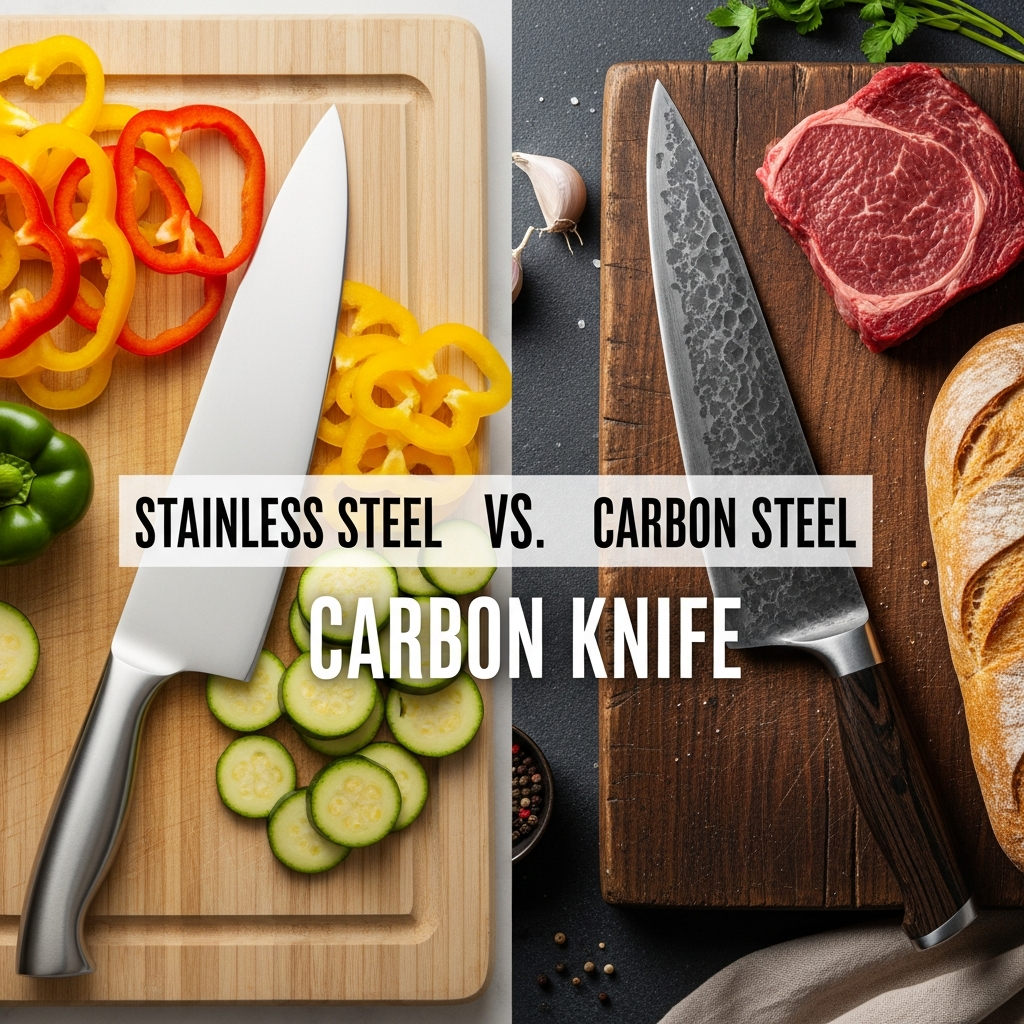
The debate of Stainless Steel vs. Carbon Steel is the most fundamental choice you will make when building your kit. On one side, you have the gleaming, low-maintenance reliability of stainless steel—the material of choice for German powerhouses like Wusthof. On the other side, you have the dark, reactive, razor-edged allure of high-carbon steel—the soul of traditional Japanese blades.
If you are browsing knifeindex.com/ trying to decide between a “beater” knife or a “laser,” this guide is for you. We will strip away the metallurgy jargon and explain exactly how these steels perform, how they age, and which one belongs in your knife block.
1. The Science: What Makes Steel “Stainless”?
To understand the difference, we must look at the chemistry. All steel is essentially iron and carbon.
Carbon makes the steel hard (so it can get sharp).
Iron makes up the bulk of the blade.
The magic ingredient is Chromium.
- Stainless Steel: Contains at least 10.5% (usually 13%+) Chromium. This creates an invisible oxide layer that protects the iron from rusting.
- Carbon Steel: Contains very little Chromium (often less than 1%). It prioritizes Carbon content for extreme hardness but lacks the protective shield against rust.
External Insight
Knifewear, the authority on Japanese steel, puts it simply: “Stainless steel is like a raincoat… Carbon steel is like a tuxedo.” Read their deep dive here: Carbon Steel vs Stainless Steel Knives.
2. Stainless Steel: The Modern Workhorse
Stainless steel is the standard for a reason. It is tough, forgiving, and stays shiny. This is the material used in almost all major chef knife brands in the West.
Pros of Stainless Steel
- Corrosion Resistance: You can cut a lemon and leave the knife on the counter for an hour. It won’t rust.
- Toughness: Stainless steel is generally softer (56-58 HRC), meaning it is less likely to chip if you hit a bone. This makes it ideal for boning knives and meat cleavers.
- Low Maintenance: It requires less babying.
Cons of Stainless Steel
- Edge Retention: Because it is softer, it loses its “screaming” sharpness faster than carbon steel. You will need to hone it often (See best knife sharpeners).
- Sharpening Difficulty: Some stainless alloys can feel “gummy” on a whetstone, making them harder to deburr.
Best Brands: Wusthof and Victorinox are the kings of stainless steel.
3. Carbon Steel: The Enthusiast’s Choice
Carbon steel is a living material. It reacts to the food you cut. Over time, it develops a patina—a discoloration (blue, grey, or purple) that actually helps protect the blade. It is the favorite of sushi chefs and those who love traditional Japanese profiles.
Pros of Carbon Steel
- Extreme Sharpness: It can be ground to a much finer angle (10-15 degrees) than stainless. It gets sharper and stays sharper.
- Ease of Sharpening: Despite being hard (60-64 HRC), the grain structure of carbon steel makes it incredibly easy to sharpen on water stones.
- “Bite”: Professional chefs describe carbon steel as having a “bite” that grips food (like tomato skin) instantly.
Cons of Carbon Steel
- Reactivity: If you cut an onion, the knife might smell metallic. If you leave it wet for 5 minutes, it will rust. You must wipe it dry immediately. (Learn how to remove rust if you forget).
- Brittleness: It is hard like glass. If you drop it or twist it in a squash, it will chip. Do not use it for carving bone-in roasts.
Best Brands: Look for brands like Tojiro (specifically their Shirogami lines) or specialized makers discussed in our Kamikoto vs Shun guide.
4. The Middle Ground: High-Carbon Stainless
Today, you don’t always have to choose. Modern metallurgy gives us “super steels” like VG-10, SG2, and X50CrMoV15. These contain high carbon for sharpness and high chromium for rust resistance.
This is the category where Shun, Miyabi, and Dalstrong live.
- Shun: Uses VG-MAX (High Carbon Stainless). See Shun vs Wusthof.
- Miyabi: Uses SG2 Powder Steel. See Miyabi vs Wusthof.
- Global: Uses CROMOVA 18. See Global vs Wusthof.
5. Head-to-Head: The Specs Breakdown
| Feature | Stainless Steel | Carbon Steel | High-Carbon Stainless |
|---|---|---|---|
| Rust Resistance | High (Excellent) | Low (Poor) | Moderate to High |
| Sharpness Potential | Good | Extreme | Very High |
| Edge Retention | Moderate | Excellent | Very Good |
| Maintenance | Low (Wash & Go) | High (Wipe Dry Instantly) | Medium (Don’t Soak) |
| Typical Brands | Wusthof, Victorinox | Traditional Japanese | Shun, Miyabi, Mac |
6. Which One Do You Need? (By Knife Type)
Chef’s Knife / Gyuto
If this is your daily driver for everything from chicken to garlic, High-Carbon Stainless is the sweet spot. It offers the best of both worlds. (See What is a Chef Knife Used For?).
Vegetable Knives (Nakiri/Santoku)
For precision vegetable work, Carbon Steel is magical. The thin, hard edge glides through produce. Just keep it dry! (See Santoku vs Nakiri).
Bread and Utility
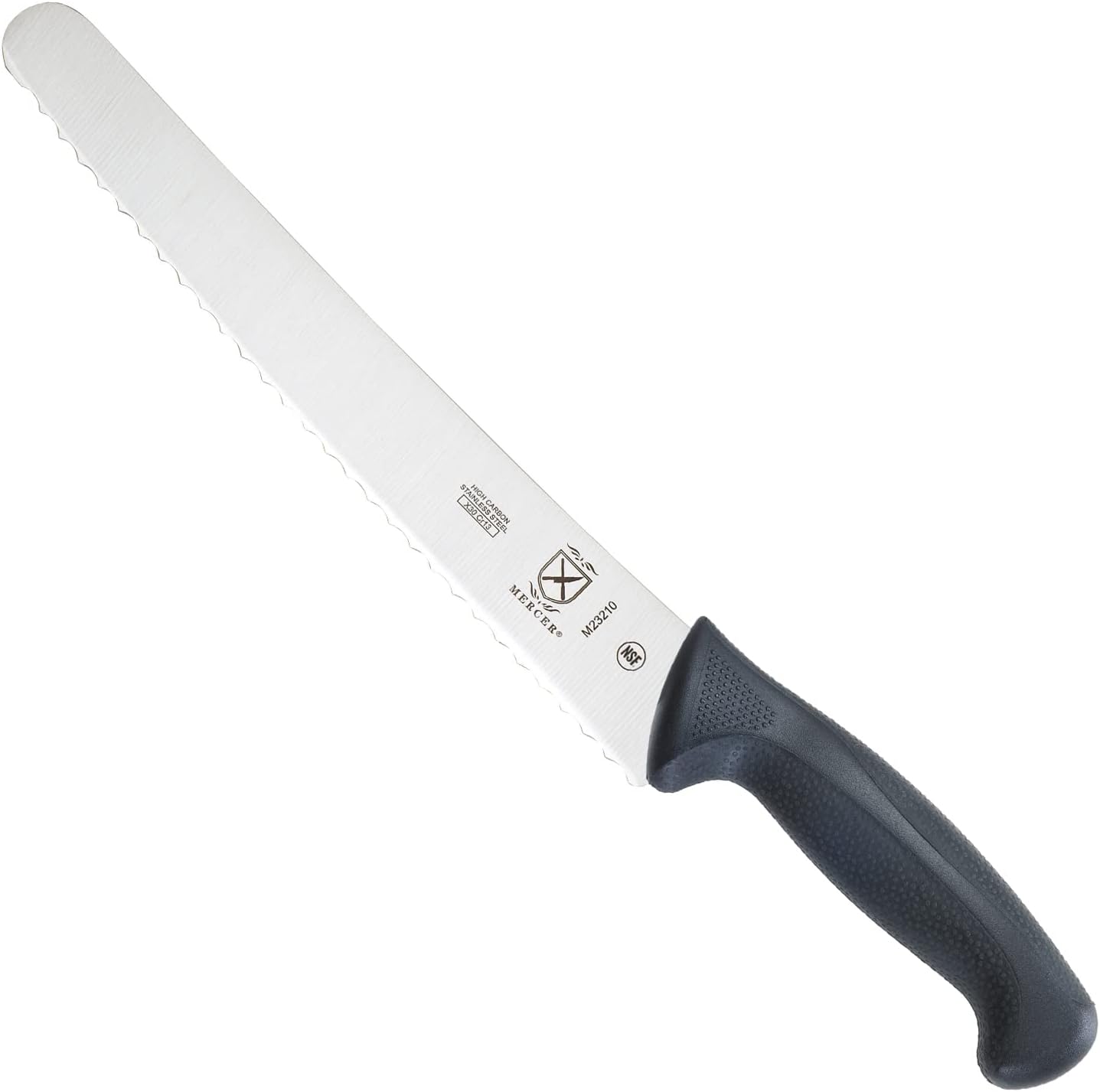
Stick to Stainless Steel. Serrated knives are hard to sharpen, so you want a tough steel that doesn’t chip. Plus, cutting acidic tomatoes with a utility knife is safer with stainless. (See Bread vs Serrated Knife).
Butchery (Cleaver/Boning)
Stainless Steel is mandatory. You are dealing with wet, bloody proteins and hitting bones. Carbon steel is too brittle. (See Meat vs Vegetable Cleaver).
7. Top Product Recommendations
We have tested the best affordable and premium options to find the leaders in each steel category.
 Wüsthof Classic Ikon (Stainless)
The ultimate German workhorse. Forged from X50CrMoV15 stainless steel. It is stain-resistant, tough, and easy to maintain. Perfect for busy home cooks.
Check Price on Amazon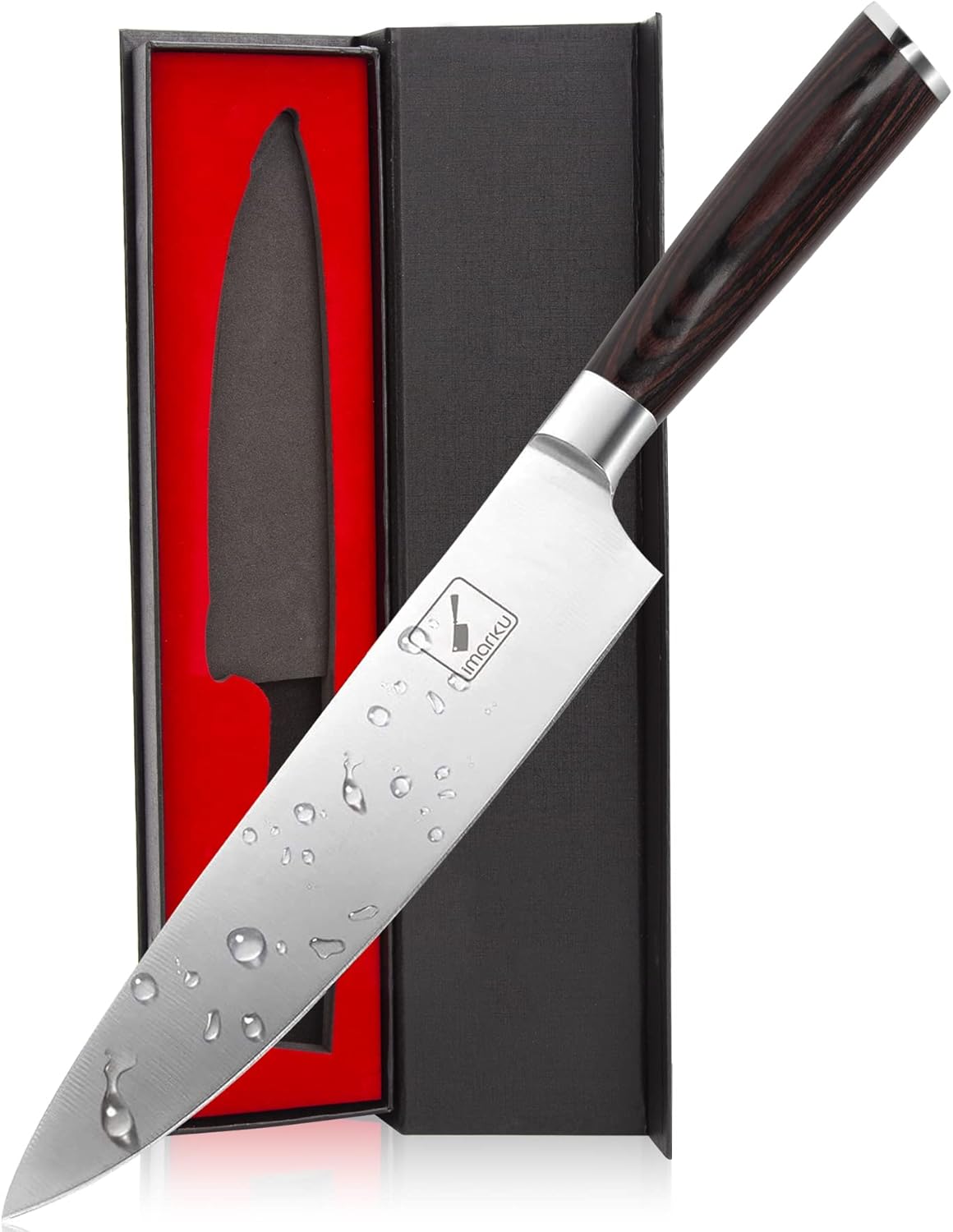 Imarku Japanese Chef Knife)
The gateway drug to high performance. It uses a VG10 core (High Carbon) clad in stainless steel. You get the cutting power of carbon with easier maintenance.
Check Price on Amazon8. Maintenance: The Deal Breaker
Be honest with yourself about your cleaning habits.
- The “Sink Leaver”: If you leave knives in the sink after dinner, BUY STAINLESS. Brands like Mercer or Victorinox are perfect for you. Carbon steel will be ruined in one night.
- The “Dishwasher User”: Stop. Neither steel belongs in the dishwasher. Heat destroys the temper. See our guide to dishwasher safe knives for the only exceptions.
- The “Ritualist”: If you enjoy the process of wiping down your knife and oiling it, Carbon Steel will reward you with an edge that feels like a lightsaber.
Storage Essentials
Carbon steel needs airflow to stay dry.
Best: Magnetic Knife Strip.
Good: Drawer Organizer (ensure knife is dry).
Avoid: Sealed wooden blocks if you live in a humid area. (See How to Store Knives Without a Block).
9. Comparisons to Other Brands
How do the big brands fit into this?
- Zwilling vs. Henkels: Zwilling (German Stainless) vs Henckels (Budget Stainless). See comparison.
- Dalstrong: Offers both. Their “Gladiator” is German Stainless; their “Shogun” is Japanese High-Carbon. See Dalstrong vs Wusthof.
- Mac: Uses a high-carbon alloy that is stain-resistant but not fully stainless. See Mac vs Wusthof.
10. Understanding Hardness: The Rockwell (HRC) Scale Explained
Every knife spec sheet throws around a number followed by “HRC,” and most shoppers skim right past it. That number is the Rockwell Hardness Scale rating, and it is arguably more useful for predicting how a knife will feel in daily use than the marketing copy around it. The test itself involves pressing a diamond cone into the steel under a fixed load and measuring how deep the indentation goes. Shallower indentation means harder steel, and harder steel means a higher number on the scale.
For kitchen cutlery, you will typically see numbers ranging from the low 50s up into the low-to-mid 60s. A soft budget stainless blade might sit around 52-54 HRC. A workhorse German stainless knife like a Wusthof or Zwilling usually lands in the 56-58 HRC range. Premium high-carbon stainless “super steels” such as VG-10, SG2, or AUS-10 typically fall between 60 and 63 HRC. Traditional Japanese carbon steels like Shirogami (White steel) and Aogami (Blue steel) are often pushed even further, sometimes touching 64-66 HRC in the hands of a skilled smith.
Hardness is not automatically “better.” It is a trade-off dial. As hardness climbs, edge retention improves and the blade can be sharpened to a finer, more acute angle. But toughness drops, meaning the risk of a chip or a hairline crack increases if the edge meets something unexpectedly hard, like a frozen chicken thigh or a fork left in the sink. This is exactly why a butcher’s cleaver is intentionally kept softer than a sushi yanagiba. The cleaver needs to survive impacts. The yanagiba only needs to slice.
When you are comparing two knives on a spec sheet, use HRC as a quick proxy for the trade-off you are signing up for. A 66 HRC blade will hold a hair-splitting edge for a remarkably long time between sharpenings, but you will need to treat it more like a scalpel than a screwdriver. A 56 HRC blade will never feel quite as “screaming sharp,” but it will shrug off the kind of abuse that would chip a harder edge instantly.
11. A Deep Dive Into Specific Steel Alloys
“Stainless” and “carbon” are really umbrella categories. Underneath each label sit dozens of specific alloys, each formulated with a slightly different recipe of iron, carbon, chromium, molybdenum, vanadium, and other trace elements. Knowing a handful of the common names will help you decode any product listing instantly.
1095 High Carbon Steel
1095 is a simple, no-nonsense American carbon steel long favored by outdoor and bushcraft knife makers, and it also appears in a number of budget-friendly kitchen cleavers and camp cooking blades. It contains close to 0.95% carbon and almost no chromium, so it takes an aggressive edge and sharpens easily, but it will flash-rust if you so much as breathe on it wrong near a humid sink.
Shirogami (White Steel) and Aogami (Blue Steel)
These are the two legendary Japanese carbon steel families behind most traditional single-bevel blades. Shirogami, or “White Steel,” is prized for being extremely pure, containing very few alloying elements beyond iron and carbon. That purity means it takes the sharpest possible edge and is beloved by sushi chefs, but it is also more difficult to forge and slightly more reactive. Aogami, or “Blue Steel,” adds a small amount of chromium and tungsten to the same base recipe, improving edge retention and toughness at a very slight cost to outright sharpness. Aogami Super, a further refined version, is often considered the pinnacle of traditional carbon cutlery steel.
AUS-8 and AUS-10
These are Japanese stainless steels frequently found in mid-range Western-style kitchen knives and outdoor knives alike. AUS-8 sits at a moderate hardness (around 57-59 HRC) and is known for being forgiving and easy to re-sharpen, making it a popular choice for budget and mid-tier product lines. AUS-10 pushes the carbon content higher for improved edge retention while retaining solid stainless properties.
440C and 420 Stainless
440C is a higher-end stainless alloy with good edge retention for its category, often used in Western cutlery and some tactical knives. 420 stainless, by contrast, is a softer, more affordable steel commonly found in entry-level knife sets and hotel-grade cutlery. It resists rust extremely well but will need frequent honing.
VG-10 and VG-MAX
VG-10 is arguably the most famous “super steel” in the kitchen knife world, used extensively by Shun and countless Japanese and Western hybrid brands. It is a high-carbon stainless steel that balances sharpness, edge retention, and rust resistance impressively well, which is why it shows up in mid-to-premium product lines across the board. VG-MAX is Shun’s proprietary refinement of the VG-10 formula, adding extra alloying elements for improved edge holding.
SG2 / R2 Powder Steel
SG2, also marketed as R2, is a powder-metallurgy stainless steel used by Miyabi and other premium Japanese brands. The powder metallurgy process creates an exceptionally fine, uniform grain structure, which allows the steel to be both very hard and reasonably tough at the same time, a combination that is difficult to achieve with traditionally cast steel.
D2 Tool Steel
D2 sits in an unusual gray zone. It contains enough chromium (around 12%) to offer meaningfully improved rust resistance over true carbon steel, but not quite enough to be classified as fully stainless, so it is often called “semi-stainless.” It is prized in the tool and outdoor knife world for extreme edge retention.
Damascus and San Mai Construction
Damascus is not actually a steel type, it is a construction method. Modern “Damascus” kitchen knives are made by folding and forge-welding multiple layers of two different steels together, then etching the surface to reveal a rippling pattern. The visible pattern is largely aesthetic, but the process can also add a small amount of flexibility to the spine. San Mai, meaning “three layers” in Japanese, is a related cladding technique where a hard carbon or stainless core is sandwiched between two softer outer layers of steel. This gives the blade a hard, sharp cutting edge while the softer cladding adds shock absorption and reduces the risk of a catastrophic crack.
12. Forged vs. Stamped: How Construction Method Changes the Equation
Steel choice is only half of the story. How a blade is actually shaped changes its performance almost as much as the alloy does, and this is a topic that gets far less attention than it deserves.
Forged Blades
A forged knife starts as a single billet of hot steel that is hammered, pressed, or rolled into shape, either by hand or by industrial drop-forge machinery. This process compresses the grain structure of the metal, generally producing a blade with a fuller tang, more balanced heft, and a reputation for durability. Most premium German stainless knives and traditional Japanese carbon knives are forged.
Stamped Blades
A stamped knife is cut from a flat sheet of pre-rolled steel, similar to a cookie cutter punching shapes from dough. Stamped blades are typically lighter, more affordable, and faster to manufacture. Modern stamping technology has improved enormously, and a well-made stamped blade from a reputable brand can outperform a poorly forged one, so this distinction matters less than it once did, but it still shows up in price points and overall balance.
Mono-Steel vs. Clad Construction
A mono-steel knife is made entirely from a single piece of one alloy, edge to spine. A clad knife, as discussed above with San Mai, sandwiches a hard core steel between softer outer layers. Clad construction is especially common with harder carbon and powder steels, since it lets manufacturers use an extremely hard, sharp, but somewhat brittle core steel without sacrificing overall blade toughness.
13. How a Patina Actually Forms: A Step-By-Step Look
The patina process confuses a lot of new carbon steel owners, so it is worth walking through exactly what happens at a chemical level.
- Bare Steel: A brand new carbon blade is essentially raw iron and carbon exposed to the air, with no protective oxide layer.
- First Contact: The moment the blade touches an acidic or reactive food, like onion, citrus, tomato, or protein, a thin layer of iron oxide begins to form on the surface.
- Color Shift: Early oxidation often appears as a grey or straw-yellow tint. With repeated use, this deepens into blues, purples, and eventually near-black tones.
- Stabilization: Once a full, even patina layer covers the blade, it acts as a passive barrier that dramatically slows further oxidation, similar in principle to the way chromium oxide protects stainless steel, just far less robust.
- Maintenance Mode: A patina’d blade still needs to be dried after use, but it becomes noticeably more forgiving than a bare, freshly sharpened carbon edge.
Many enthusiasts choose to force a patina intentionally rather than waiting for it to develop naturally through cooking. A common method involves wiping the blade with diluted vinegar or yellow mustard, letting it sit for a few minutes, then rinsing and drying thoroughly. This creates an even, attractive patina before the knife ever meets a cutting board, and it also gives new owners a chance to practice careful drying habits from day one.
14. Rust Removal and Long-Term Prevention
Even careful owners eventually see a spot of surface rust, especially after a forgotten overnight soak. The good news is that light surface rust on carbon steel is almost always cosmetic and fully fixable.
- Baking Soda Paste: Mix baking soda with a small amount of water into a paste, apply it with a soft cloth or cork, and gently rub in the direction of the grain until the rust lifts.
- Barkeeper’s Friend: A mildly abrasive cleaning powder that many enthusiasts keep specifically for knife maintenance, effective on both light rust and stubborn food staining.
- Fine Steel Wool or Sandpaper: For more established spots, very fine grit steel wool (000 or finer) or 1000+ grit sandpaper can remove rust without damaging the underlying temper, provided you are gentle and consistent with direction.
- Prevention Habits: Wipe the blade dry immediately after every single cut, never let it air dry on its own, and apply a very thin coat of food-safe mineral oil or camellia oil if the knife will not be used for several days.
Stainless steel is not entirely immune either. While true rust is rare, stainless blades can develop surface pitting or discoloration if left in contact with salt, acidic marinades, or bleach-based cleaners for extended periods. The same basic rule applies across both categories: wash, dry, and put away promptly, and neither steel will give you trouble.
15. Price and Value: What Are You Actually Paying For?
A common assumption is that carbon steel is always the “premium” option and stainless is always the “budget” pick, but the reality is more nuanced once you look across the full market.
Entry-level carbon steel knives, particularly simple 1095 or basic Japanese carbon blades without fancy cladding, can actually be some of the most affordable knives available, since the steel itself is cheap to produce and the forging process for a simple mono-steel blade is relatively straightforward. Meanwhile, high-carbon stainless “super steels” like SG2 or VG-MAX often command a significant price premium precisely because achieving both hardness and rust resistance in one alloy requires more complex metallurgy and tighter manufacturing tolerances.
What you are really paying for as prices climb is usually some combination of: tighter heat-treatment consistency, more skilled hand-finishing, better fit and finish on the handle and bolster, and brand reputation built on decades of reliability. A $40 stainless knife and a $400 stainless knife can use chemically similar steel, but the more expensive knife will typically hold its factory edge longer and feel more refined in hand due to superior heat treatment and craftsmanship.
16. Food Safety, Taste, and the “Metallic Flavor” Question
New carbon steel owners sometimes worry about the metallic taste or discoloration that appears when cutting onions, garlic, or citrus with a bare blade. This reaction is a mild oxidation response and is not considered a food safety hazard by culinary authorities, but it can subtly affect flavor and appearance in delicate raw preparations, which is one reason some chefs prefer stainless or fully patina’d carbon blades specifically for dishes like ceviche, citrus salads, or garnish work.
Once a stable patina has formed, this reactivity drops dramatically, and most professional carbon steel users report no noticeable taste transfer during normal cooking. Stainless steel, thanks to its passive chromium oxide layer, essentially never reacts with food in this way, which is part of why it remains the default choice in most commercial kitchens and food safety-conscious environments.
17. Lifespan, Reprofiling, and Long-Term Ownership
A quality knife, regardless of steel type, is a genuinely long-term investment when cared for properly. Both stainless and carbon steel blades can last for decades, and many traditional Japanese carbon knives are passed down through generations of professional chefs.
Over years of regular sharpening, any knife will gradually lose a small amount of material from the edge, and eventually the blade profile may need “reprofiling,” a more aggressive sharpening session that restores the original geometry. Carbon steel, being easier to remove material from on a whetstone, is generally faster and less labor-intensive to reprofile than a harder stainless super steel. On the other hand, stainless blades need reprofiling far less often in the first place, since they are less prone to chipping-related damage that would necessitate it.
Handle material also plays into longevity. Traditional Japanese knives often use a simple wooden handle (wa-handle) that can be replaced inexpensively if it cracks or wears out, effectively extending the usable life of the blade itself almost indefinitely. Western-style full-tang knives with riveted synthetic or wood handles are more difficult to re-handle but are also generally more resistant to loosening over time.
18. Professional Kitchens vs. Home Cooks: Different Priorities
Walk into a busy professional kitchen and you will typically see stainless or high-carbon stainless knives dominating the line, and there is a practical reason for this beyond simple preference. Line cooks move fast, handle wet ingredients constantly, and do not always have time to dry a blade the instant it touches water. A knife that can survive a hectic dinner service without developing rust spots is simply more practical in that environment.
Sushi and traditional Japanese kitchens are a notable exception, where carbon steel yanagiba and deba knives remain the gold standard specifically because the extreme sharpness and fine edge geometry are considered essential for clean, undamaged cuts of raw fish. In this context, the extra maintenance burden is accepted as part of the craft.
Home cooks generally fall somewhere in between. If you cook daily and want a single reliable all-purpose knife, high-carbon stainless is usually the most practical starting point. If you already own a stainless workhorse and want a second knife purely for the joy of an exceptional edge on vegetable prep, a carbon steel nakiri or gyuto is a rewarding addition to the kit.
19. A Brief History: Solingen vs. Sakai Bladesmithing Traditions
The stainless-versus-carbon divide is not just a metallurgy question, it echoes two very different cutlery traditions with centuries of history behind them. Solingen, Germany, has been a center of blade forging since the medieval era, and German cutlery makers embraced stainless steel enthusiastically in the twentieth century as chromium-alloy technology matured, prioritizing durability and mass consistency for a broad consumer market.
Sakai, Japan, developed an entirely separate bladesmithing tradition rooted in swordsmithing techniques, historically producing single-bevel carbon steel blades for professional chefs using methods passed down through apprenticeships. This tradition prioritized the pursuit of the sharpest possible edge above nearly everything else, a philosophy that still defines many Japanese carbon steel knives today. Understanding this historical context helps explain why the two steel categories are also, in many ways, two different philosophies about what a knife is for.
20. Environmental and Sustainability Considerations
A knife that lasts decades rather than years is inherently a more sustainable purchase than one that gets replaced every couple of seasons, regardless of steel type. From this angle, both stainless and carbon steel knives compare favorably to cheap, disposable stamped cutlery that dulls quickly and ends up discarded.
Carbon steel production, in general, is somewhat less resource and energy intensive than high-chromium stainless production, since it requires fewer alloying elements to mine and refine. However, this difference is relatively minor in the context of a knife’s total lifecycle, and the single biggest sustainability factor for either steel type remains how long you actually keep and maintain the knife before replacing it.
21. Expanded FAQ: More Questions Answered
Frequently Asked Questions (FAQ)
Yes, it can. “Stainless” means it stains less, not never. If you leave a stainless knife in lemon juice or saltwater, it will pit and corrode. Always wash and dry.
A patina is a layer of oxidation that forms on carbon steel. It turns the blade grey, blue, or yellow. Unlike rust (red iron oxide), patina (black iron oxide) is stable and protects the steel from active rust. It is a badge of honor for carbon knife owners.
Yes, but it might react. In the beginning, cutting onions with a fresh carbon knife might turn the onions slightly brown or metallic. Once the patina forms, this reactivity stops.
Carbon steel has a finer grain structure, allowing it to get sharper than stainless steel. However, a sharp stainless knife (like a Victorinox) is sharper than a dull carbon knife. Maintenance matters most.
HRC stands for Rockwell Hardness, C-scale, a standardized measurement of how resistant the steel is to indentation. Higher HRC generally means better edge retention and finer sharpening potential, but also increased brittleness. Most kitchen knives fall somewhere between 54 and 66 HRC.
Not inherently. Damascus refers to a layered construction method, not a performance-defining alloy on its own. The actual cutting performance still depends on the core steel used inside the pattern, which can be either stainless or carbon.
Yes. Many owners intentionally apply diluted vinegar, mustard, or a coffee soak to the blade to develop an even, protective patina before regular use, rather than waiting for one to form naturally through cooking.
D2 is often called “semi-stainless.” It contains enough chromium to offer noticeably better rust resistance than true carbon steel, but not quite enough to meet the technical threshold for full stainless classification.
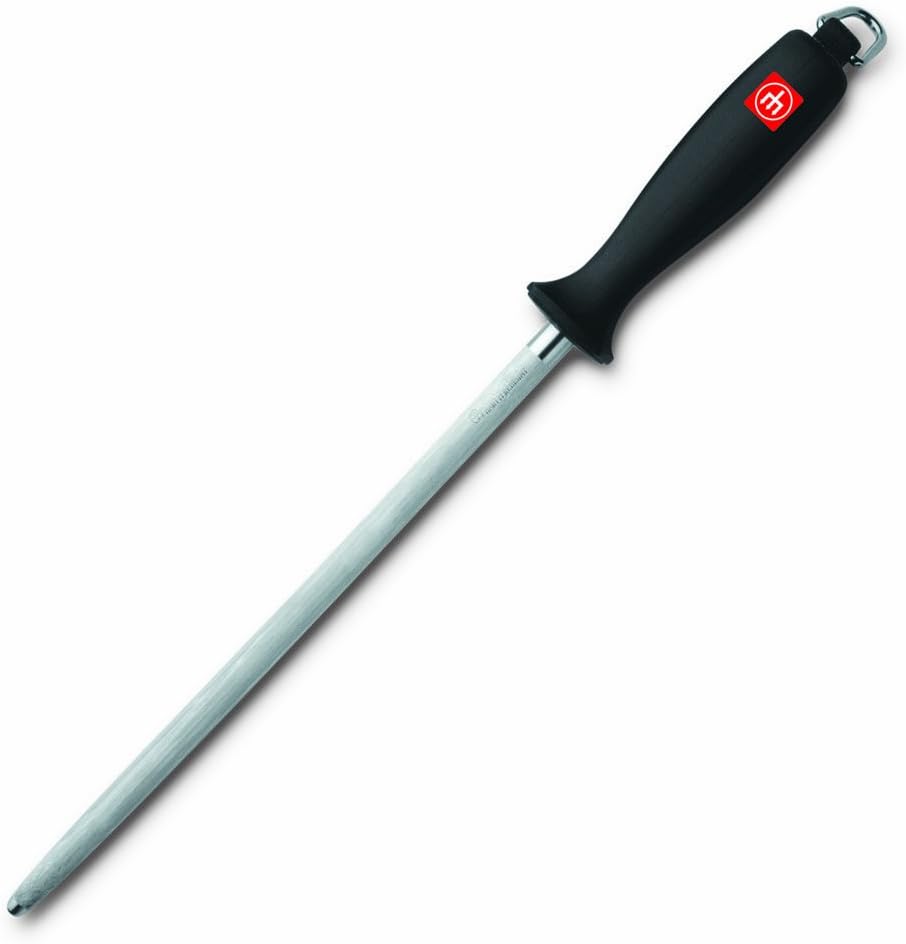
Stainless knives typically need honing every few uses and a full sharpening every few weeks with regular use, since the softer edge dulls faster. Carbon steel knives hold their edge significantly longer between full sharpenings, though they still benefit from frequent light honing on a steel rod.
For serious cooks who sharpen infrequently and want maximum edge retention, yes. Powder metallurgy steels offer an unusually good balance of hardness and toughness, though they can take slightly longer to sharpen from scratch due to their fine, wear-resistant grain structure.
22. Quick Buying Checklist Before You Decide
- Do you realistically dry your knife immediately after every use? If not, lean stainless.
- Are you buying one all-purpose knife or building a specialized collection? A single knife favors high-carbon stainless; a collection can include a dedicated carbon steel vegetable knife.
- Will the knife see heavy bone contact or butchery work? Choose tougher stainless steel over brittle high-hardness carbon.
- Do you enjoy the ritual of maintenance, oiling, and patina development as part of the cooking hobby? Carbon steel will reward that enthusiasm.
- What is your sharpening skill level? Beginners often find softer stainless and AUS-8 style steels more forgiving to learn on.
23. Sharpening Technique: Whetstone Grits Explained for Each Steel Type
Owning either steel type eventually means owning a whetstone, and the grit progression you use matters just as much as the stone brand. Grit numbers describe the coarseness of the abrasive particles, with lower numbers being coarser and higher numbers being finer.
- 220-400 Grit (Coarse): Reserved for repair work, reprofiling a damaged edge, or fixing a chip. Both stainless and carbon steel respond well here, though carbon steel removes material noticeably faster due to its more forgiving grain structure.
- 1000 Grit (Medium): The everyday sharpening stone for most home cooks. This is where you will restore a dull edge on either steel type back to functional sharpness.
- 3000-6000 Grit (Fine): Used for polishing and refining the edge after the medium stone. Carbon steel tends to take a noticeably crisper, more mirror-like polish at this stage than stainless, thanks to its finer natural grain.
- 8000+ Grit (Ultra-Fine): Mostly the domain of carbon steel enthusiasts chasing a true hair-splitting edge, common in traditional Japanese single-bevel sharpening routines. Stainless steel can be taken to this level too, but the returns are less dramatic due to the softer, less refined grain structure of most stainless alloys.
One overlooked detail: stainless steel’s chromium carbides can feel slightly “gummy” against a stone, meaning the steel smears rather than cutting cleanly, which is why some sharpeners describe certain stainless alloys as harder to get a clean burr off despite being objectively softer. Carbon steel, by contrast, tends to form a cleaner, more predictable burr that is easier to feel and remove during the final deburring pass.
24. Honing Rods, Strops, and Between-Sharpening Maintenance
Sharpening on a stone is only part of the maintenance picture. Between full sharpening sessions, a honing rod (sometimes incorrectly called a “sharpening steel”) realigns a rolled edge rather than removing metal. Stainless knives, with their softer edges, roll more easily during normal cutting and therefore benefit from more frequent honing, often before every use in a professional setting. Carbon steel edges hold their alignment longer and need honing less frequently, though a leather strop charged with fine polishing compound is a popular way for carbon steel owners to maintain that mirror edge between full sharpenings.
25. Common Myths About Stainless and Carbon Steel, Debunked
Myth: Carbon steel knives are unsafe to cook with.
False. Carbon steel has been used in professional kitchens worldwide for centuries and remains fully food-safe when properly cared for. The oxidation and patina that form are cosmetic and flavor-related concerns, not health hazards recognized by food safety authorities.
Myth: Stainless steel never needs sharpening.
False. All steel dulls with use, stainless included. Stainless simply tends to dull more gradually in terms of visible damage but loses working sharpness at a comparable or even faster rate than a well-maintained carbon blade.
Myth: A darker patina means a worse knife.
False. A deep, even, dark patina is often a sign of a well-used, well-cared-for carbon knife. Uneven, blotchy patina usually just reflects inconsistent drying habits rather than any flaw in the steel itself.
Myth: All Damascus knives are premium carbon steel.
False. Damascus is a construction pattern, not a steel guarantee. Budget Damascus-patterned knives with mediocre core steel are common on the market, so the pattern alone should never be the deciding factor in a purchase.
Myth: Higher HRC always means a better knife.
False. Higher hardness without a corresponding increase in toughness simply produces a blade that is more prone to chipping. The best knives balance hardness against toughness for their intended use case rather than maximizing hardness alone.
26. Case Study Snapshots: How Different Cooks Actually Use Each Steel
The Home Cook Who Batch-Cooks on Sundays
A single high-carbon stainless gyuto handles the entire weekly meal-prep session, from onions to proteins to citrus, without any special drying ritual required between tasks. This profile benefits most from the “best of both worlds” alloys discussed earlier in this guide.
The Sushi Enthusiast
A dedicated carbon steel yanagiba, cleaned and dried immediately after every session, delivers the kind of clean, undamaged sashimi cuts that a slightly duller all-purpose knife simply cannot match. The extra maintenance is treated as part of the ritual rather than a burden.
The Weekend Butcher
Breaking down a whole chicken or trimming a pork shoulder calls for a tough stainless boning knife or cleaver that can handle occasional contact with bone and connective tissue without chipping, prioritizing durability over ultimate sharpness.
The Camping Cook
Outdoors, where consistent drying is harder to guarantee, a simple stainless or coated carbon blade designed for field use tends to be more forgiving than a delicate high-polish carbon edge that demands daily attention.
27. Comparing Steel Choice Across Cuisines
Different culinary traditions have gravitated toward different steel philosophies based on their signature techniques. Japanese cuisine, with its emphasis on precise, clean cuts of raw fish and delicate vegetables, historically demanded the extreme sharpness carbon steel provides. Western and French culinary traditions, built around braising, roasting, and heavier protein work, developed alongside stainless steel’s durability advantages. Southeast Asian and Chinese kitchens often favor a versatile all-purpose cleaver-style blade, frequently made from a tough, moderately hard carbon or stainless alloy capable of both chopping and fine slicing in one tool. Recognizing which tradition your own cooking style leans toward can help guide the steel decision as much as any spec sheet.
28. How Steel Choice Interacts With Cutting Board Material
Your cutting board matters more than most people realize when it comes to edge retention, regardless of steel type. Hard surfaces like glass, stone, or bamboo dull an edge significantly faster than a softer end-grain wood or quality synthetic board. This effect is proportionally more noticeable on carbon steel and high-hardness stainless super steels, since their finer edges are more sensitive to abrasive contact. Pairing a premium carbon steel knife with a glass cutting board essentially wastes much of the steel’s sharpness advantage within just a few uses.
29. Warranty, Service, and Long-Term Brand Support
Because both stainless and carbon steel knives are marketed as long-term investments, warranty policy is worth factoring into a purchase decision. Established German brands like Wusthof and Zwilling are known for offering strong lifetime warranties against manufacturing defects, along with in-house sharpening and re-handling services in some regions. Japanese carbon steel makers, particularly smaller artisan workshops, may not offer formal warranties in the Western sense, but many will re-handle or even reforge a blade for a loyal customer as part of the craft tradition. When comparing brands, checking after-sales support can be just as important as comparing the steel spec sheet itself.
30. Beyond Steel: How Ceramic and Titanium Knives Compare
No steel comparison is complete without briefly addressing the alternatives some shoppers consider instead. Ceramic blades, made from zirconium oxide, hold an incredibly sharp edge for a very long time and never rust, but they are extremely brittle and can shatter if dropped or twisted, making them unsuitable for anything beyond light slicing duty. Titanium-coated or titanium-alloy blades offer excellent corrosion resistance and are notably lightweight, but pure titanium generally cannot be hardened to the same edge-holding level as quality steel, so titanium knives are often reserved for niche or novelty use rather than serious kitchen work. For the vast majority of cooks, traditional steel, whether stainless or carbon, remains the more practical and versatile choice.
31. A Glossary of Terms You’ll See on Product Listings
- Full Tang: The blade steel extends the entire length of the handle, improving balance and durability.
- Bolster: The thick junction between blade and handle, adding weight, balance, and finger protection.
- Kanji Stamp: Japanese characters etched or stamped into the blade, often indicating the maker, steel type, or workshop.
- Wa-Handle: A traditional Japanese-style round or octagonal wooden handle, typically lighter than Western handles and easily replaceable.
- Yo-Handle: A Western-style riveted handle, often found on hybrid Japanese-Western knives.
- Single Bevel: An edge ground on only one side, common on traditional Japanese carbon knives, producing an extremely clean, precise cut.
- Double Bevel: An edge ground symmetrically on both sides, the standard for most Western knives and general-purpose Japanese knives alike.
- Deba: A traditional Japanese carbon steel knife designed for breaking down whole fish.
- Gyuto: A Japanese interpretation of the Western chef’s knife, often available in both carbon and stainless versions.
32. Final Decision Framework: A Simple Flow to Follow
If you have read this far and still feel torn, use this simplified decision flow. First, ask whether you can commit to drying the blade immediately after every single use, without exception. If the honest answer is no, stop here and choose stainless steel. If the answer is yes, ask whether your priority is a single versatile knife or a specialized collection. A single versatile knife points toward a high-carbon stainless alloy like VG-10 or SG2. A specialized collection opens the door to a dedicated traditional carbon steel blade for precision vegetable or fish work, paired with a tough stainless knife for heavier tasks. Either path, followed consistently, will reward you with a knife that performs beautifully for many years.
Conclusion: The Verdict
The battle of Stainless Steel vs. Carbon Steel is a choice between convenience and performance.
Choose Stainless Steel If: You want a low-maintenance tool. You cook for a family, you might get distracted and leave the knife wet, or you do heavy-duty butchery. It is the practical choice.
Choose Carbon Steel If: You are chasing the ultimate edge. You treat cooking as a craft, you enjoy caring for your tools, and you want to experience the effortless cutting ability of traditional metallurgy.
For most home cooks, a High-Carbon Stainless blade (like VG10 or X50CrMoV15) is the perfect compromise. Check out our knife set reviews to find collections that use these modern super-steels.