
Mercer vs. Victorinox: The Battle for the Best Budget Knife
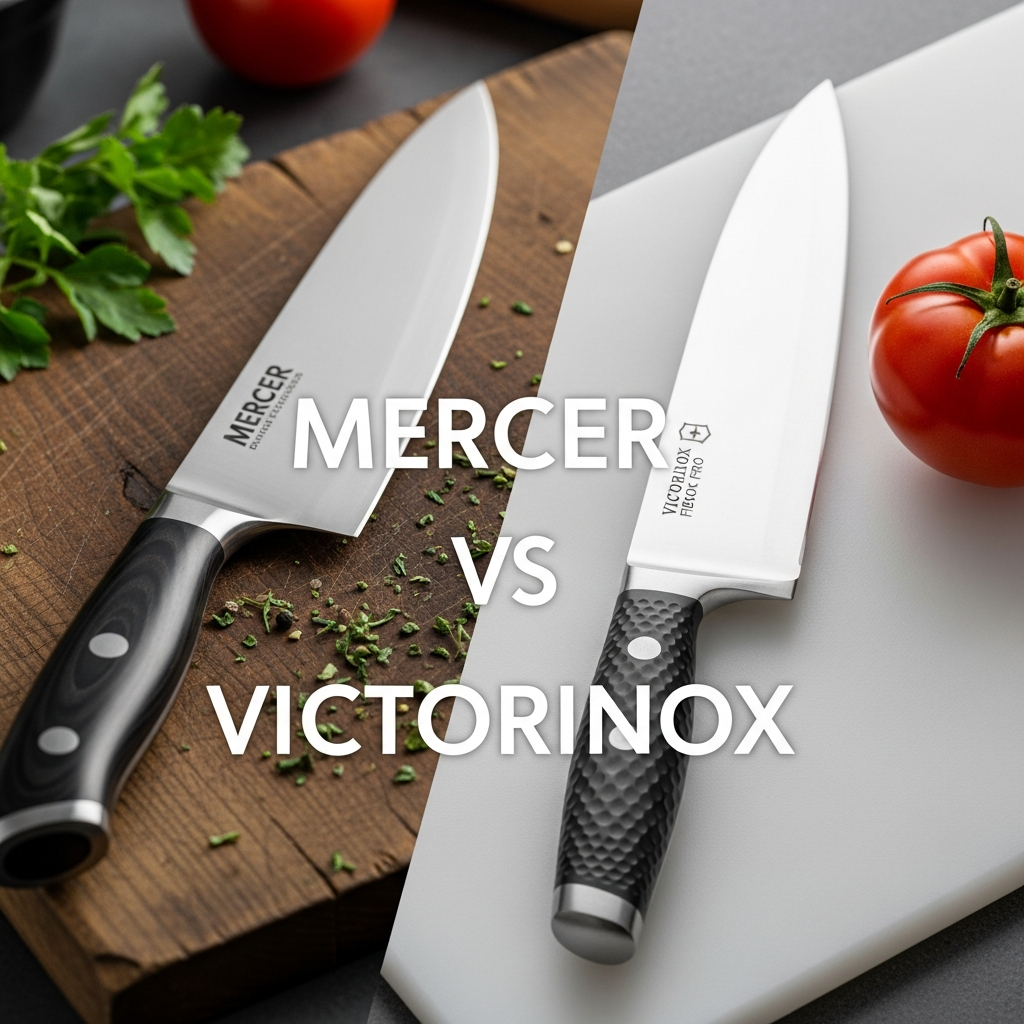
In the world of kitchen cutlery, there is a constant battle for the title of “Best Value.” While expensive brands grab headlines with Damascus steel and exotic wood handles, two names quietly dominate the professional kitchens and culinary schools of the world: Mercer Culinary and Victorinox.
If you are browsing knifeindex.com/ looking for a knife that performs like a $150 tool but costs less than $50, you have inevitably landed on these two. They are the titans of the affordable chef knives market.
But which one is right for you? Is it the Swiss precision of Victorinox, the brand behind the Swiss Army Knife? Or is it Mercer, the brand trusted by 90% of North American culinary academies? In this comprehensive Mercer vs. Victorinox comparison, we will break down the steel, the ergonomics, and the performance to declare a winner.
1. The Contenders: Swiss Engineering vs. Culinary Education
Victorinox: The Butcher’s Choice
Founded in Ibach, Switzerland in 1884, Victorinox is royalty in the knife world. While famous for multi-tools, their kitchen cutlery division is a powerhouse. Their Fibrox Pro line is legendary. It is ugly, utilitarian, and cuts better than knives five times its price. It is the darling of professional butchers and a staple in our Victorinox chef knife reviews.
Mercer Culinary: The Student’s Choice
Mercer is a younger company, based in New York with manufacturing primarily in Taiwan. They have cornered the market on culinary education. If you walk into a cooking school, you will likely see a Mercer knife roll. They offer incredible value and a wider variety of aesthetic options than Victorinox. (See how they stack up against luxury brands in our Mercer vs. Wusthof guide).
External Insight
For a detailed breakdown of the handle materials and specific grip differences, check out Prudent Reviews’ analysis: Mercer vs. Victorinox: Which Kitchen Knives Are Better?
2. Head-to-Head: The Specs Breakdown
We are comparing the industry standards: The Victorinox Fibrox Pro vs. the Mercer Culinary Millennia (and the upgraded Renaissance line).
| Feature | Victorinox Fibrox Pro | Mercer Millennia | Mercer Renaissance |
|---|---|---|---|
| Steel | X55CrMo14 (Swiss) | X30Cr13 (Japanese Steel) | X50CrMoV15 (German Steel) |
| Hardness | 55-56 HRC | 53-54 HRC | 56 HRC |
| Construction | Stamped | Stamped | Forged |
| Handle | TPE (Non-Slip, Textured) | Santoprene/Polypropylene | Delrin (Triple Rivet) |
| Origin | Switzerland | Taiwan | Taiwan |
| Price | $$ (Mid-Budget) | $ (Ultra-Budget) | $$ (Mid-Budget) |
3. Construction and Steel: The Core Difference
Stamped vs. Forged
This is a critical distinction. (Learn more in our guide: Difference Between Stamped and Forged Knives).
- Victorinox: Almost exclusively stamped. The blades are punched from a sheet of steel, ground, and tempered. This makes them lightweight and flexible.
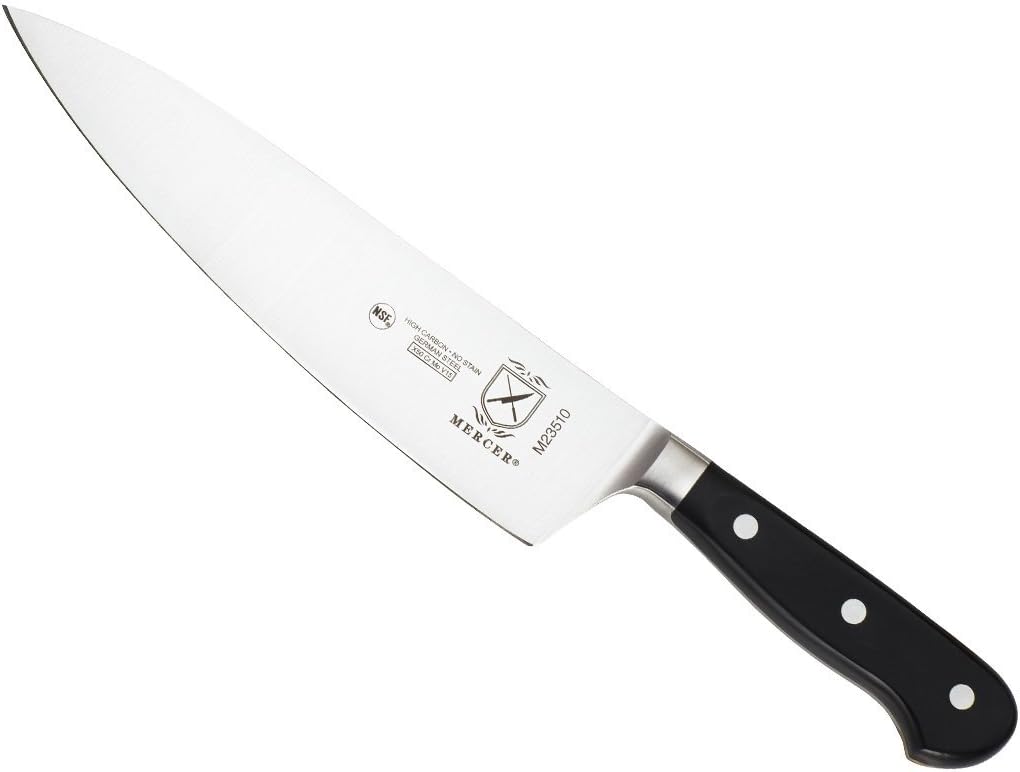
- Mercer: Offers both. The Millennia line is stamped (competitor to Fibrox). However, Mercer’s Renaissance and Genesis lines are forged, featuring a bolster and full tang. This gives them a weight and balance similar to German kitchen knives like Wusthof.
The Steel Quality
Victorinox uses a proprietary Swiss blend (X55CrMo14). It is known for being easy to sharpen and holding an edge reasonably well. It is very stain-resistant.
Mercer’s budget Millennia line uses softer Japanese steel (X30Cr13), which dulls faster. However, their forged lines use X50CrMoV15—the exact same German steel used by Wusthof and Zwilling. This is a huge value proposition.
4. Design & Ergonomics: Comfort in the Hand
Victorinox Fibrox Handle
It isn’t pretty. It looks like rough black plastic. But the ergonomics are world-class. The TPE material is grippy even when wet or greasy, which is why butchers love it. It is large and comfortable for all hand sizes.
Mercer Millennia Handle
Also focuses on grip with a mix of Santoprene (for comfort) and Polypropylene (for durability). It features a textured finger guard which is excellent for safety, especially for students learning what a chef knife is used for.
Mercer Renaissance Handle
This handle mimics the classic triple-riveted look of Henckels or Wusthof. It is smooth, rounded, and feels more “premium” than the rubbery grips of the budget lines.
5. The Chef’s Knife Battle
The 8-inch Chef’s knife is the most important tool in your kit. Here is how the best-sellers compare.
 Victorinox Fibrox Pro 8″ Chef’s Knife
The king of versatility. Lightweight, razor-sharp out of the box, and indestructible. It handles everything from tomatoes to squash with ease.
Check Price on Amazon Mercer Renaissance 8″ Chef’s Knife
The premium feel on a budget. A fully forged blade with a bolster and triple-riveted handle. It offers the weight and balance of a $150 German knife for a fraction of the cost.
Check Price on Amazon6. Specialty Knives: Bread, Veggies, and Paring
The Bread Knife
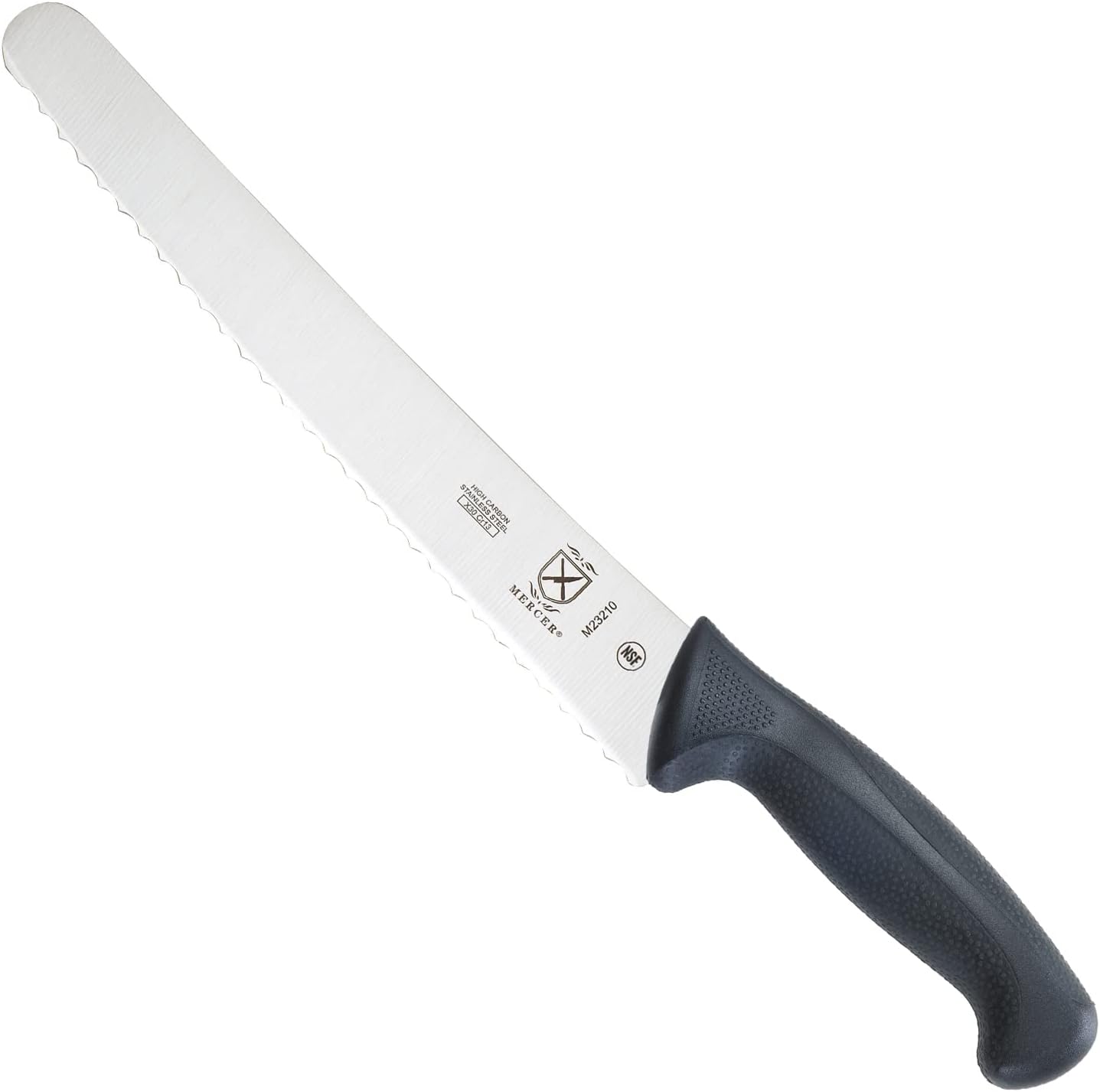
This is a slam dunk for Mercer. The Mercer Millennia Bread Knife is widely considered the best bread knife for the money. Its wide, aggressive serrations cut through crusty sourdough better than knives costing ten times as much. Victorinox’s bread knife is good, but Mercer’s is legendary.
Vegetable Knives (Santoku/Nakiri)
Both brands make excellent stamped Santokus (See What is a Santoku used for?). Victorinox’s fluted edge is great for preventing sticking. Mercer offers a Nakiri in their Genesis line that is a fantastic entry point for vegetable cleavers.
Paring Knives
For detailed work, Victorinox paring knives are the industry standard. They are cheap, sharp, and available in a rainbow of colors. (Read what is a paring knife used for). Mercer’s paring knives are also excellent, but Victorinox holds a slight edge in sharpness retention.
7. Comparisons to Premium Brands
How do these budget kings stack up against the luxury market?
- Vs. Wusthof: Mercer’s Renaissance line mimics Wusthof Classic. Wusthof has better heat treatment and finish, but Mercer is 80% of the knife for 30% of the price. (See Dalstrong vs Wusthof for more premium comparisons).
- Vs. Zwilling: Victorinox competes with Zwilling’s stamped lines (Henckels International). Victorinox generally offers better steel quality than budget Henckels. (See Zwilling vs Henkel).
- Vs. Dalstrong: If you want flash and “wow factor,” Dalstrong wins. If you want pure utility, Victorinox wins. (See Dalstrong vs Victorinox).
8. Maintenance and Durability
Budget knives need love too. Here is how to keep them running.
- Sharpening: Both brands use steel that is easy to sharpen. You don’t need fancy stones; a simple electric sharpener or standard manual sharpener works wonders.
- Rust: Both are highly rust-resistant. However, if you leave them wet, spots can appear. Learn how to remove rust easily.
- Dishwasher: Both brands often claim to be dishwasher safe (especially the plastic-handled lines). We strongly advise against it. High heat ruins the temper and handles. See our dishwasher safe guide for more info.
9. Storage and Sets
Because these knives are affordable, people often buy large sets.
- Knife Rolls: Mercer sells excellent knife bags because of their culinary school connection.
- Blocks: If you buy a set, ensure the block is hygienic. (See best knife sets with blocks).
- Drawers: For loose knives, a drawer organizer is essential to protect the edges (and your fingers).
10. The Utility Knife Face-Off
Between the towering 8-inch chef’s knife and the tiny 3-inch paring knife sits the most underrated blade in any kitchen: the utility knife. Typically running between 4 and 6 inches, this is the knife you reach for when a chef’s knife feels like overkill and a paring knife feels too small — slicing a sandwich, trimming chicken cutlets, portioning a block of cheese, or breaking down a head of lettuce.
Victorinox’s utility knife lineup borrows directly from the Fibrox Pro DNA. The 4.5-inch and 6-inch variants share the same textured TPE handle, the same stamped Swiss steel, and the same laser-tested edge that the brand is known for. Because the blade is thin and flexible, it excels at tasks that require a bit of finesse, like trimming silverskin off a chicken breast or slicing a ripe tomato without crushing the flesh.
Mercer’s utility knife story is a little more fragmented, in a good way. The Millennia line offers a nearly identical stamped utility knife at a similar price point, while the Genesis and Renaissance lines step it up with a forged bolster that adds heft and a more substantial, chef-knife-like feel in a smaller package. If you like the idea of a “mini chef’s knife” rather than a scaled-down paring knife, Mercer’s forged utility options have the edge.
| Utility Knife Trait | Victorinox Fibrox Utility | Mercer Millennia Utility | Mercer Genesis Utility |
|---|---|---|---|
| Blade Length | 4.5″ / 6″ | 4.5″ / 5″ | 4.5″ / 6″ |
| Flex | Moderate-High | Moderate | Low (Stiffer, Forged) |
| Best For | Delicate trim work | Everyday budget prep | Heavier portioning |
| Feel | Featherlight | Featherlight | Balanced, bolstered |
For most home cooks, either brand’s utility knife is a worthwhile addition to a knife roll, and given the low cost of entry, it’s common to see cooks own both a Victorinox and a Mercer utility knife simply to have options on hand for different textures of food.
11. Boning and Fillet Knives: Where Victorinox Pulls Ahead
This is the category where Victorinox’s butcher heritage truly shines, and it’s also one of the biggest keyword gaps in most Mercer vs. Victorinox comparisons online. Boning and fillet knives are thin, flexible blades designed to hug bone and separate connective tissue, and they demand a completely different steel geometry than a chef’s knife.
Victorinox Boning Knives
Victorinox essentially invented the modern commercial boning knife category. Their boning knives come in stiff, semi-flex, and flex variations, a level of granularity that Mercer simply doesn’t match. A stiff boning knife is built for beef and pork, where you need to push through tough connective tissue. A flex boning knife bends almost like a fillet knife, ideal for poultry and fish. Butchers, meat processors, and hunters overwhelmingly reach for Victorinox in this category, and it’s a major reason the brand has such a stronghold in commercial meat-cutting environments.
Mercer Boning Knives
Mercer’s boning knives are solid, budget-friendly performers, but they are typically offered in fewer flex options. They get the job done for home butchery, breaking down a whole chicken, or trimming a pork shoulder, but serious full-time butchers tend to gravitate toward Victorinox for the wider range of flex profiles.
Fillet Knives for Fish
For anglers and home cooks who process their own catch, Victorinox’s flex fillet knives are considered some of the best on the market at any price point, easily outperforming knives costing three or four times as much. Mercer does make fillet knives, and they’re perfectly serviceable for occasional use, but if fish processing is a serious hobby or part of your livelihood, Victorinox is the safer recommendation.
12. Cleavers: Heavy-Duty Chopping Power
Cleavers rarely get airtime in budget knife comparisons, but both brands make them, and the difference in approach is stark.
Victorinox’s cleavers lean toward the traditional Western butcher cleaver: thick spine, heavy stamped or forged blade, and a shape built to break through joints and small bones with authority. They’re a favorite in butcher shops that need a reliable, no-frills chopping tool that can take a beating day after day.
Mercer’s cleaver offerings, particularly in their Asian-inspired lines, lean toward the vegetable cleaver or Chinese-style chef’s knife shape — a broad, rectangular blade that’s actually thinner and lighter than a true bone cleaver. This makes Mercer’s cleaver-style knives more versatile for home cooks who want one tool that can chop vegetables, crush garlic with the flat of the blade, and scoop ingredients into a pan, rather than a dedicated bone-breaking tool.
If your definition of “cleaver” means breaking down chicken quarters or splitting ribs, Victorinox’s heavier-duty options are the better fit. If you want a do-it-all vegetable cleaver for a home kitchen, Mercer’s lighter version is more practical day-to-day.
13. Kitchen Shears: The Overlooked Category
Kitchen shears rarely make it into a “chef’s knife” comparison, but both companies build them, and they say a lot about each brand’s design philosophy.
Victorinox shears are famously robust, often fully take-apart for cleaning, with a spring-loaded action that professional kitchens rely on for everything from breaking down poultry to snipping herbs. The take-apart design is a small detail that matters enormously for hygiene in commercial kitchens, since bits of food can get lodged in the pivot of cheaper shears.
Mercer’s shears are similarly well-regarded, often bundled into their student kits, and tend to have a slightly more ergonomic, softer-grip handle that’s comfortable for extended use during long prep shifts. For a home cook who just needs shears for spatchcocking a chicken or opening packaging, either brand’s shears will outperform a generic drugstore pair by a wide margin.
14. Full Product Line Comparison
One of the most searched but least answered questions in this category is simply: “what are all the different lines each brand makes?” Here’s the breakdown.
Victorinox Lines
- Fibrox Pro: The flagship. Stamped blade, black TPE handle, the benchmark budget-professional line.
- Rosewood: Same Swiss steel as Fibrox, but with a classic wood handle for cooks who want a more traditional aesthetic.
- Grand Maître: A step up in fit and finish, aimed at cooks who want a slightly more refined look without leaving the Victorinox ecosystem.
- Swiss Classic: A retail-focused line often sold in colorful sets, popular for gifting and home kitchens.
- Swiss Modern: A newer, more design-forward line with a sleeker handle profile aimed at a younger, style-conscious buyer.
Mercer Lines
- Millennia: The entry-level workhorse. Stamped blade, Santoprene/polypropylene handle, the direct Fibrox competitor.
- Renaissance: Forged, bolstered, triple-riveted — the “German knife on a budget” line.
- Genesis: Mercer’s premium forged line, often cited as their best all-around performer, sitting just above Renaissance in fit and finish.
- Praxis: A forged line with a slightly different handle geometry, marketed toward cooks who want a full-tang knife with a more contoured grip.
- Zum: Mercer’s Japanese-influenced, higher-hardness line for cooks who want thinner, sharper edges more akin to Japanese single-bevel or hybrid-bevel knives.
- Culinary Créations / Millennia Colors: Budget lines aimed at retail and gifting, similar in spirit to Victorinox’s Swiss Classic sets.
Understanding these sub-lines matters enormously when shopping, because a lot of online comparisons collapse “Mercer” and “Victorinox” into single monolithic brands, when in reality each company sells knives spanning several different price tiers and use cases.
15. Weight and Balance: A Deeper Look
Weight and balance are frequently mentioned in passing but rarely quantified, so let’s get specific. A typical Victorinox Fibrox Pro 8-inch chef’s knife weighs in around 6 to 7 ounces, with the balance point sitting slightly forward of the bolster area (since there isn’t a traditional bolster) — this makes it feel nimble and quick in the hand, ideal for rapid chopping and rock-chopping techniques.
Mercer’s Millennia 8-inch chef’s knife weighs in a similar range, since it’s also stamped, and shares that same nimble, forward-light feel. However, Mercer’s forged Renaissance and Genesis 8-inch knives typically weigh closer to 8 to 9 ounces, with the balance point sitting right at the bolster, which is the traditional “German knife” balance that many culinary-trained cooks were taught on. This heavier, more centered balance can reduce wrist fatigue during long chopping sessions because more of the work is done by the knife’s own momentum rather than the cook’s arm strength.
Neither balance philosophy is objectively better — it’s a matter of technique and preference. Cooks trained in the French classical style with a rocking chop often prefer the lighter, nimbler stamped knives. Cooks who favor a push-cut or pull-cut style, common with German and some hybrid techniques, often prefer the heavier, bolster-balanced forged knives.
16. Edge Angle and Sharpening Philosophy
Both brands ship their knives with a similar edge angle philosophy, generally in the 15 to 20 degree per side range, which is standard for a Western-style double-bevel knife intended for general use.
Victorinox is known for laser-testing every blade for sharpness before it leaves the factory, and the company has historically marketed this quality-control step heavily. Out of the box, most reviewers find Victorinox knives to be noticeably sharper than most competitors in the same price bracket, Mercer included.
Mercer’s edge, while good, is occasionally reported as slightly less keen out of the box, though this gap closes quickly once a knife has been through a few sharpening cycles. Because both brands use relatively soft, easy-to-sharpen stainless steel, the sharpening learning curve is gentle. A cook using a basic whetstone, a pull-through sharpener, or an electric sharpening system will have no trouble maintaining either brand at a scary-sharp level with just a few minutes of maintenance per week.
17. Left-Handed Use
Left-handed cooks are an underserved audience in most knife marketing copy, so it’s worth addressing directly. The good news: nearly every knife from both Mercer and Victorinox in the standard chef’s, utility, and paring categories is fully ambidextrous, since the blade grind is a symmetric double bevel and the handle has no asymmetric bolster shape that would favor one hand.
Where handedness does matter is in specialty blades. Bread knives with certain serration patterns can feel slightly different depending on which hand is doing the sawing motion, though this is a minor consideration. Kitchen shears are the real exception — spring-loaded shears with an offset pivot can be noticeably less comfortable for left-handed users, and it’s worth checking current listings from either brand for a left-hand-friendly version if that’s a priority.
18. Color and Customization Options
For households or commercial kitchens that color-code knives to prevent cross-contamination (a common food-safety practice separating knives used for raw meat, poultry, seafood, and produce), color options matter a great deal.
Victorinox’s Swiss Classic line is the clear winner here, frequently sold in sets spanning red, yellow, green, blue, and black handles, making it simple to build out a full color-coded set for a health-inspected commercial kitchen. Their Fibrox Pro line is more commonly available in black, though colored bolster or handle accents do appear in some retail SKUs.
Mercer also offers colored handle options, particularly in their Millennia Colors and Culinary Créations retail sets, though the selection can be less consistent across their full lineup compared to Victorinox’s dedicated color-coding sets. For a commercial kitchen specifically building a HACCP-compliant color-coded knife station, Victorinox’s Swiss Classic sets tend to be the more turnkey solution.
19. Culinary School Partnerships and Professional Adoption
We touched on Mercer’s dominance in culinary education earlier, but it’s worth expanding on why. Mercer has spent decades building direct relationships with culinary school bookstores, offering discounted student kits that bundle a chef’s knife, paring knife, utility knife, and knife roll at a price point that’s accessible to students already stretched thin by tuition. This has created a powerful network effect: students learn on Mercer, develop muscle memory and brand loyalty on Mercer, and often continue buying Mercer once they enter professional kitchens.
Victorinox, meanwhile, has built its professional reputation from the other direction — through decades of adoption in butcher shops, meat processing plants, and high-volume commercial kitchens where durability and edge retention under heavy daily use matter more than brand prestige. Line cooks in busy restaurants who didn’t necessarily attend culinary school, but instead worked their way up through the trade, are more likely to have been handed a Victorinox by a sous chef or kitchen manager who trusted its toughness.
Both paths lead to enormous professional credibility, just via different routes — one through formal education, the other through the trenches of working kitchens.
20. Awards and Professional Recognition
Neither brand chases flashy consumer awards the way some premium cutlery companies do, since their target market is professionals who care about performance over prestige. That said, both brands have been repeatedly named “best budget knife” or “best value knife” picks across major cooking publications and culinary review sites for years running, a testament to their consistency rather than any single award cycle. Victorinox in particular has a long history of recommendations from professional chef associations and culinary trade publications specifically for its Fibrox Pro line, cementing its reputation as the default “first knife” recommendation for anyone entering the trade.
21. Cost Per Year: A Value Analysis
Since both brands sit at a similar price point, the real value question is: how long will the knife last, and what does that translate to in cost per year of ownership?
A well-maintained Victorinox Fibrox Pro, sharpened regularly and hand-washed, can realistically last 10 to 15 years or more in a home kitchen, and commercial kitchens routinely report multi-year service lives even under daily heavy use. At a typical budget price point, that works out to just a few dollars per year of ownership.
Mercer’s knives show similarly strong longevity numbers. The stamped Millennia line, being a more basic construction, may need blade replacement or resharpening service slightly sooner under heavy commercial use, but the forged Renaissance and Genesis lines are built to last just as long as their Victorinox counterparts, given their full-tang, bolstered construction is inherently more robust against wear at the handle-to-blade junction.
In either case, both brands offer an outstanding cost-per-year figure compared to premium European or Japanese cutlery, which is precisely why they dominate the budget-to-mid-tier segment of the market.
22. Manufacturing, Origin, and Sustainability
Victorinox manufactures its kitchen cutlery in Switzerland, a fact the brand leans on heavily in its marketing, and the company has a long-published record of environmental and labor practices tied to its Swiss manufacturing base, including energy-efficient production facilities.
Mercer’s manufacturing is based primarily in Taiwan, a country with a strong, mature cutlery manufacturing industry that also supplies many other well-known knife brands. Taiwanese steel manufacturing has improved dramatically over the past two decades, and Mercer’s forged lines in particular benefit from this maturity, which is part of why their Genesis and Renaissance lines are able to compete so closely with German-made knives on both steel quality and construction technique despite the significant price difference.
23. Warranty and Customer Support
Both brands stand behind their products, though the specifics of coverage can change over time, so it’s always worth checking current warranty terms directly from the manufacturer or retailer before purchase. Broadly speaking, Victorinox has built a strong reputation for standing behind manufacturing defects, an extension of the same guarantee culture that built their multi-tool business into a household name. Mercer similarly offers manufacturer support for defects in materials and workmanship, and given the brand’s deep relationship with culinary schools, replacement parts and customer service inquiries tend to be handled efficiently since students and instructors are a core, vocal customer base that the company actively works to retain.
24. Buying Guide: Which Knife Fits Which Cook?
The Home Cook Just Starting Out
Start with a Victorinox Fibrox Pro chef’s knife. It’s the safest, most universally recommended first knife, with a low learning curve and forgiving, lightweight feel.
The Culinary Student
Mercer Millennia, ideally as part of a student kit bundle. It’s what your instructors will be using as a reference point, and the bundled kits are typically the most economical way to assemble a full roll.
The Home Cook Who Wants a “Premium Feel” Without Premium Pricing
Mercer Renaissance or Genesis. The forged construction, bolster, and triple-riveted handle deliver a German-knife experience at a fraction of the cost.
The Butcher, Hunter, or Serious Meat Processor
Victorinox boning and fillet knives, hands down. The range of flex options is unmatched at this price point.
The Baker
Mercer Millennia Bread Knife. Its aggressive serration pattern is widely regarded as best-in-class for crusty artisan loaves.
The Commercial Kitchen Building a Color-Coded Station
Victorinox Swiss Classic sets, for the breadth of handle color options available to satisfy food-safety color-coding requirements.
25. Knife Safety and Handling Best Practices
Regardless of which brand you choose, a few universal safety habits apply. Always cut on a stable board, never on a plate or in your hand. Keep your knives sharp — counterintuitively, a dull knife is more dangerous than a sharp one, because it requires more force and is more likely to slip. Use a claw grip with your guiding hand, tucking fingertips behind your knuckles. Store knives in a block, sheath, or on a magnetic strip rather than loose in a drawer, both to protect the edge and to prevent accidental cuts when reaching in. And always wash knives by hand immediately after use, drying them fully before storage to prevent spotting or corrosion, even on the highly stain-resistant steels both Mercer and Victorinox use.
Frequently Asked Questions (FAQ)
For forged knives, yes. Mercer’s Renaissance line offers a premium forged feel that Victorinox doesn’t really compete with. For stamped knives, Victorinox Fibrox holds an edge slightly better than Mercer Millennia.
Mercer offers aggressive educational pricing and builds durable, standardized kits. They provide a high-quality tool that allows students to learn proper sharpening and cutting techniques without risking a $200 knife.
Victorinox is famous for its out-of-the-box sharpness. They use a laser-tested edge process. Mercer is also sharp, but Victorinox often feels slightly keener initially.
Absolutely. In fact, we recommend the Victorinox Fibrox as the #1 starting knife for any home cook. It is capable of professional-level work.
Victorinox, without much debate. Their range of stiff, semi-flex, and flex boning knives is unmatched at this price point and is the preferred choice among butchers and meat processors.
Yes. The Mercer Renaissance and Genesis lines use forged German steel (X50CrMoV15) and full-tang, bolstered construction, delivering a feel very close to Wusthof or Zwilling at a much lower price.
Many are marketed as dishwasher safe, but we strongly recommend hand-washing both brands. Dishwasher heat and detergent can dull edges faster and degrade handle materials over time.
Victorinox, primarily through its Swiss Classic line, which is popular for commercial kitchens that need color-coded knives for food safety compliance.
Yes, in almost all cases. Standard chef’s, utility, and paring knives from both brands use a symmetric double-bevel edge that works equally well for right- or left-handed cooks. Kitchen shears are the main exception to check carefully.
With regular sharpening and proper hand-washing, both brands can realistically last a decade or more, even under heavy commercial use, making their cost-per-year of ownership extremely low.
Victorinox manufactures its kitchen cutlery in Switzerland. Mercer’s manufacturing is based primarily in Taiwan, a country with a mature, well-regarded cutlery production industry.
Victorinox. Their flex fillet knives are considered some of the best in the industry at any price point, thanks to decades of experience building flexible boning and fillet blades.
Conclusion: The Final Verdict
The battle of Mercer vs. Victorinox comes down to what you want your knife to feel like.
Choose Victorinox If: You prioritize performance over everything else. You want a lightweight, nimble knife that takes a screaming sharp edge and is easy to maintain. It is the ultimate utility tool. It’s also the clear winner if you need boning, fillet, or color-coded commercial knives.
Choose Mercer If: You want the “feel” of a pro German knife on a budget. If you prefer the weight of a bolster and the look of a riveted handle, the Mercer Renaissance is unbeatable value. Also, choose Mercer for the Bread Knife—it is simply the best, and for culinary school kits and student bundles.
Whichever you choose, you are getting one of the best values in the cutlery industry. Treat them well, keep them sharp, and they will last for decades.
















Pingback: Chef Knife vs Santoku: Rocking Motion vs Push-Cut Efficiency