CRKT Squid Review: The Quintessential “Pocket Tank” You Can Actually Afford
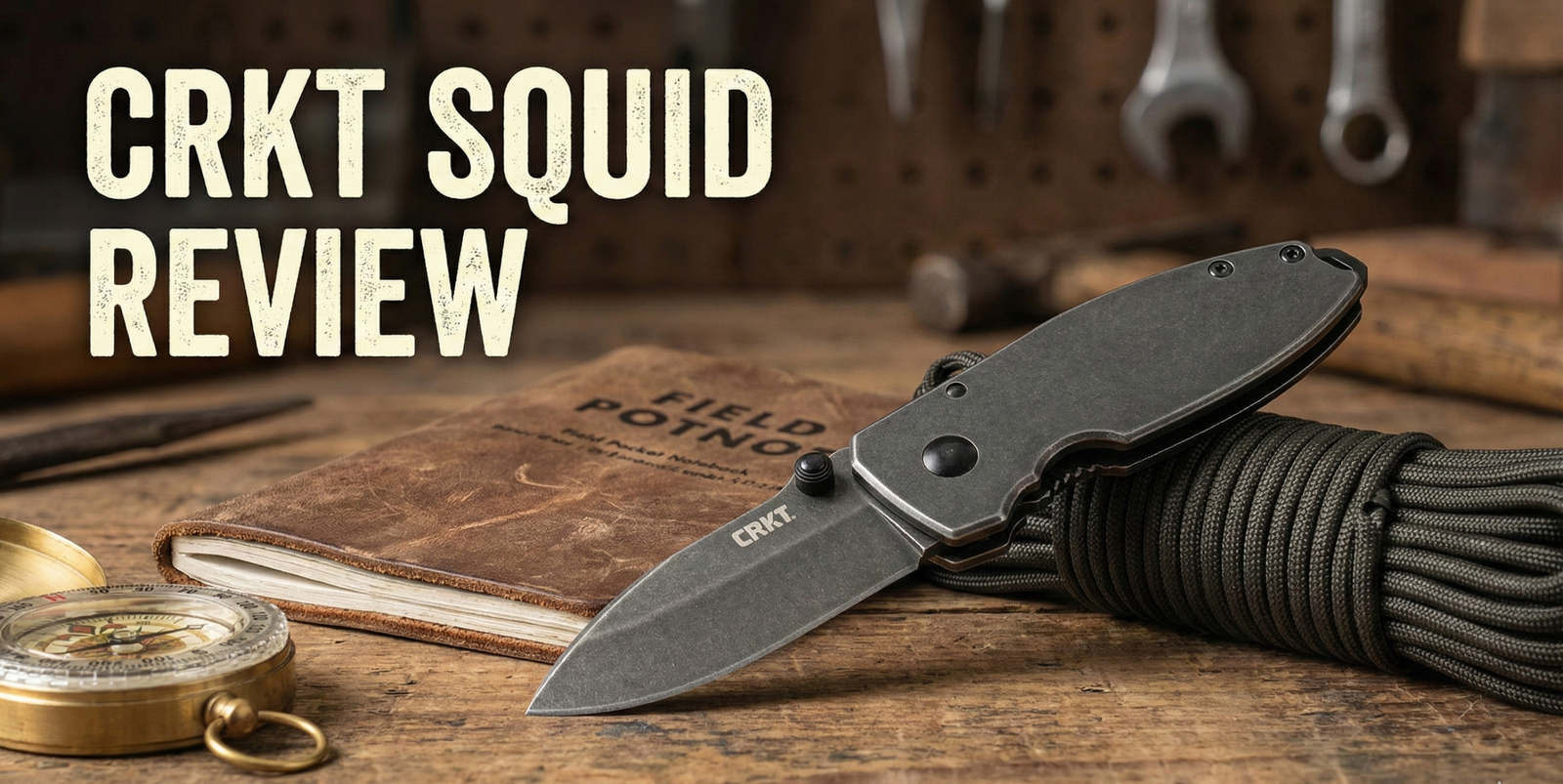
The vast majority of “budget” folding knives on the market unfortunately feel exactly like budget knives. They exhibit lateral blade play, their thin plastic handles rattle when tapped, and overall, they feel entirely disposable. The Columbia River Knife & Tool (CRKT) Squid, masterfully designed by custom knife maker Lucas Burnley, completely destroys this prevailing stereotype. The moment you pick it up, it feels less like a cheap pocket knife and more like a solid, dense ingot of stainless steel that just happens to have a razor-sharp cutting edge attached to it.
Visually modeled after the aerodynamic shape of a rocket (or the hydrodynamic profile of a squid, depending on the designer’s mood), this knife is incredibly compact, undeniably stout, and aggressively simple in its execution. Burnley specifically designed it to bridge the massive gap between a tactical “hard-use” folder and an unobtrusive gentleman’s carry. It’s small enough to drop into the tiny coin pocket of your jeans without a second thought, yet ruggedly tough enough to scrape staples, cut heavy zip-ties, or lightly pry open a paint can in an absolute emergency (though, legally, we don’t officially recommend using any knife as a pry bar).
But is this genuinely the ultimate “beater” knife for the working professional? Does the exceptionally heavy stainless steel construction weigh it down too much for modern EDC (Everyday Carry) standards where ultra-lightweight carbon fiber usually rules? In this highly detailed, comprehensive review, we will break down the metallurgy, the locking mechanics, and the real-world utility to explain exactly why this little tank has remained a massive, undisputed bestseller for CRKT for over a decade.

Compact, incredibly affordable, and legitimately built to last a lifetime. See exactly why the original Squid remains an absolute fan favorite.
Check Price on AmazonTechnical Specifications
The CRKT Squid is a fascinating study in material density. It packs an astonishing amount of steel into a very small, pocket-friendly footprint. While many modern knife manufacturers are engaged in a relentless “arms race” to create the absolute lightest knife possible by skeletonizing liners and using flimsy plastics, the Squid stubbornly and successfully embraces its substantial heft.
| Blade Length | 2.25 inches (57.1 mm) |
|---|---|
| Overall Length | 5.70 inches (144.7 mm) |
| Closed Length | 3.48 inches (88.3 mm) |
| Blade Thickness | 0.11 inches (2.8 mm) |
| Weight | 3.50 ounces (99.2 g) |
| Blade Material | 8Cr13MoV Stainless Steel (Base Model) |
| Handle Material | 2Cr13 Stainless Steel (Base Model) |
| Lock Mechanism | Integral Frame Lock |
| Designer | Lucas Burnley |
CRKT’s History & The Burnley Partnership
To really appreciate why the Squid exists in the first place, it helps to understand the company that builds it. Columbia River Knife & Tool was founded in 1994 by Rod Bremer and Paul “Duane” Dwyer, both of whom came out of the Oregon-based Buck Knives sales organization with a very specific philosophy: partner with talented independent designers, pay them fairly for their intellectual property, and then use large-scale overseas manufacturing to bring those designs to market at prices that a working tradesperson could actually justify. That founding philosophy is the entire reason a knife like the Squid can exist for well under thirty dollars while still carrying a genuine designer pedigree.
Lucas Burnley, the man behind the Squid, is not a nameless in-house engineer. He is a full-time custom knifemaker based in Albuquerque, New Mexico, who has been hand-building bespoke folders and fixed blades since the early 2000s. Burnley’s custom work regularly sells for many hundreds of dollars, and his design language is instantly recognizable to collectors: aggressive, faceted geometry; bold, chunky proportions; and a willingness to make handles that look almost architectural rather than purely organic. When CRKT approached him about collaborating on a production line, Burnley brought that same sensibility to a mass-manufactured price point, and the Squid was one of the very first results of that partnership.
What makes the Burnley/CRKT relationship particularly interesting from a design history perspective is that the Squid wasn’t originally conceived as a stand-alone product. It grew out of Burnley’s fascination with extremely compact, high-density “gentleman’s tactical” folders — knives that could pass as an office accessory but which, underneath the polish, were built with the structural mentality of a much larger hard-use tool. That duality is baked into every single design decision on the knife, from the frame lock construction down to the deep-carry clip.
Since the Squid’s original release, Burnley and CRKT have continued collaborating on an entire family of related designs, including the Pilar line, the Minimalist fixed blade, and several other compact frame lock folders. Collectors often refer to this loose family as the “Burnley compacts,” and the Squid is widely regarded as the design that put the collaboration on the map with mainstream EDC buyers.
Blade Geometry: The Ultimate Drop Point Utility
The blade of the Squid is a wide, stubby, classic drop point design. In the cutlery world, the drop point is universally recognized as the “Jack of all trades” profile. It possesses plenty of sweeping belly for effective slicing tasks (like breaking down cardboard boxes or slicing an apple), while the tip drops down just enough to remain highly reinforced and robust for piercing tasks (like opening blister packaging or clam-shells).
Crucially, CRKT utilizes a hollow grind on the primary bevel of the blade. Because the blade stock is actually quite thick for such a short knife (0.11 inches), a standard flat grind would make it feel like a wedge. The hollow grind curves inward, aggressively thinning the steel directly behind the cutting edge. This specific geometry ensures that despite its thick spine, the Squid is a remarkably capable and aggressive slicer, passing through dense materials with minimal resistance.
It’s worth pausing on just how unusual this grind choice is for a knife at this price point. Hollow grinds require more precise, more expensive grinding equipment than a simple flat or saber grind, because the curvature has to be consistent along the entire length of the edge or the knife will cut unevenly. Many budget manufacturers skip the hollow grind entirely and rely on a cheaper saber grind with a secondary bevel that leaves more meat behind the edge, sacrificing slicing performance for manufacturing simplicity. CRKT’s decision to hollow-grind the Squid despite its rock-bottom price is a strong signal of how seriously the company treats this particular design.
Metallurgy: 8Cr13MoV vs. The D2 Upgrades
The classic, base-model CRKT Squid utilizes 8Cr13MoV stainless steel for its blade. As we have extensively discussed in our definitive guide comparing stainless vs. carbon steels, 8Cr13MoV is a decidedly budget-tier, Chinese-produced stainless steel. It is not going to hold a hair-shaving edge forever if you are cutting abrasive materials all day.
However, it has distinct advantages for a “beater” knife: it is incredibly easy to sharpen in the field using just a simple ceramic pocket stone, and it is highly resistant to rust and corrosion, even if you put it away wet. For a knife that routinely costs less than a decent dinner, it performs admirably and exactly as expected.
The Premium Upgrade: If you love the design of the Squid but absolutely demand better edge retention for heavy daily cutting, CRKT has recently released upgraded versions featuring D2 tool steel and occasionally Sandvik 12C27. D2 will hold its edge significantly longer than 8Cr13MoV, but requires slightly more care to prevent rust. Furthermore, custom makers frequently release limited “Sprint Runs” of the Squid in ultra-premium M390 steel.
Understanding Rockwell Hardness on the Squid
Steel choice only tells half the story; heat treatment tells the rest. CRKT typically runs its 8Cr13MoV blades to a Rockwell hardness of roughly 58-59 HRC, which sits in a comfortable middle ground for a budget stainless. Pushed much harder, 8Cr13MoV can become brittle and prone to micro-chipping at the edge; kept much softer, it would roll over too easily under lateral pressure. The 58-59 HRC target strikes a sensible balance between edge retention and toughness for a knife that’s explicitly marketed as a hard-use beater rather than a delicate slicer. The D2 variants, by contrast, are typically heat treated closer to 59-61 HRC, which is part of why they hold an edge measurably longer under the same cutting conditions.
How 8Cr13MoV Compares to Other Budget Steels
It’s useful to place 8Cr13MoV in context against the other budget steels you’ll see on similarly priced knives. AUS-8, a Japanese steel found on many Cold Steel and older SOG models, is roughly comparable in edge retention but slightly more corrosion resistant. 440C, an older American stainless still used by some manufacturers, generally out-holds 8Cr13MoV at the edge but is markedly more difficult to sharpen from scratch. Nitro-V and 14C28N, both increasingly common on newer budget offerings, edge out 8Cr13MoV in corrosion resistance and toughness while remaining similarly easy to sharpen. None of this makes 8Cr13MoV a bad choice — it remains one of the most field-serviceable steels on the market, which matters enormously for a knife whose entire ethos is “beat on it and don’t worry.”
Built Like a Tank: The Stainless Frame Lock
The absolute defining characteristic of the original Squid—and the primary reason for its immense popularity—is its Stainless Steel Frame Lock construction. Rather than using thin metal liners hidden beneath plastic scales, the entire handle of the knife acts as the structural locking mechanism.
When you deploy the blade via the thumb studs, a massive, thick slab of the stainless steel handle physically bends inward, sliding directly behind the blade tang. This locks the blade open with absolute, bank-vault security. There is zero flex in the handle when you squeeze it tightly. You could likely drive a heavy pickup truck over this knife, and while it might get scratched, the structural integrity would remain intact. This rugged, overbuilt construction makes it ideal for dirty, gritty, demanding jobs where you wouldn’t ever want to risk damaging a delicate, $200 titanium folder.
Lock-Up Consistency Over Time
One common concern with frame lock knives generally is “lock stick” — a phenomenon where the steel lock bar drags or catches against the blade tang during closing, sometimes requiring a firm push or even a light tap to release. Because the Squid’s lock bar and blade tang are both hardened stainless steel rather than a steel lock bar against a softer titanium contact point, lock stick is comparatively rare on this model, though it can appear on early production examples until the contact surfaces polish themselves in through use. A drop of oil at the pivot and lock interface typically resolves any stickiness within the first few dozen open-close cycles.
Blade Play Assessment
Out of the box, well-made Squid units exhibit essentially zero vertical or lateral blade play — you can grip the closed handle and try to wiggle the open blade up-down and side-to-side, and a healthy unit simply won’t move. This is a notable achievement for a sub-$30 knife, and it’s a direct result of the frame lock’s substantial contact area with the tang, which is considerably larger and more robust than what you’d find on a typical liner lock at this price.
Where It’s Made & Quality Control
Like the overwhelming majority of CRKT’s catalog, the Squid is manufactured overseas, primarily in Chinese production facilities that CRKT has worked with for years and vetted extensively for tolerances and consistency. This is a point that occasionally raises eyebrows among knife buyers who associate “Made in China” with lower quality, but the reality in the modern cutlery industry is considerably more nuanced.
CRKT’s Oregon-based team designs the knife, works directly with Lucas Burnley to finalize the geometry and tolerances, and then partners with a small number of trusted overseas factories that specialize in precision CNC-machined folding knife components. The company maintains its own quality control processes on top of factory-level inspection, and units that fail to meet tolerance specifications for blade centering, lock engagement, or pivot smoothness are rejected before reaching retail channels. This is fundamentally the same manufacturing model used by nearly every major budget-to-midrange knife brand today, including Kershaw, SOG, and Civivi.
Common Quality Control Complaints
No mass-produced knife at this price is immune to occasional quality control misses, and the Squid is no exception. The most commonly reported issues in owner feedback include minor blade centering imperfections (where the blade doesn’t sit perfectly centered between the handle scales when closed), occasional inconsistent factory edges that need immediate touch-up sharpening, and very rarely, a scratchy pivot that loosens up after a short break-in period. None of these issues are structural or safety-related, and CRKT’s warranty process (covered later in this guide) handles legitimate defects without much friction.
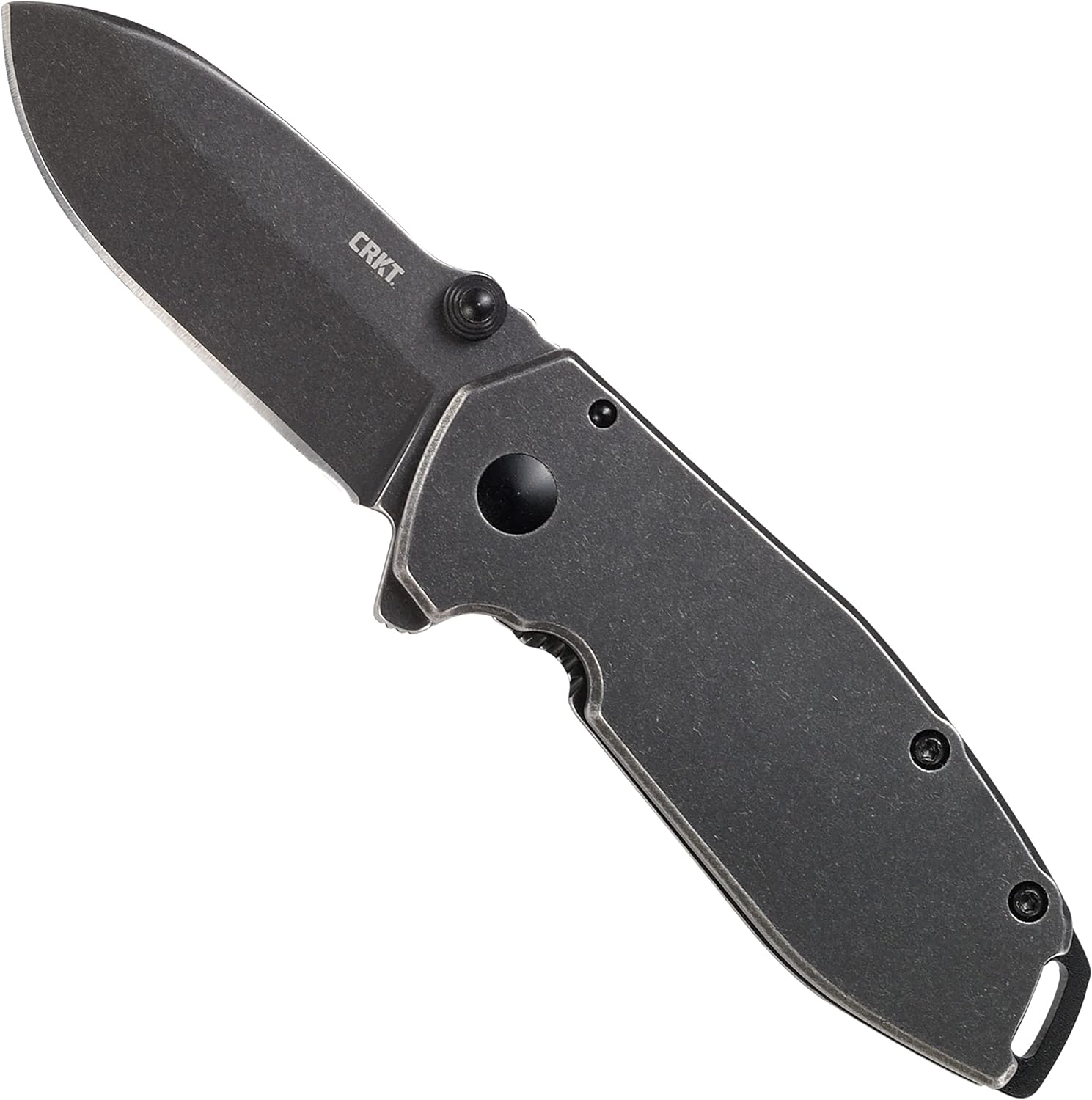
Prefer a more tactical, subdued look? The Black Stonewash finish excels at hiding daily scratches, scuffs, and fingerprints, looking incredible even after years of hard use.
Check Price on AmazonErgonomics & The “Lanyard Trick”
At first glance, the diminutive 3.48-inch handle looks far too small to offer a comfortable or secure grip, especially for users with large or extra-large hands. However, Burnley’s ergonomic design is surprisingly accommodating. The handle features a subtle, sweeping curve that naturally fits the palm of the hand, and there is highly functional, grippy jimping (texture grooves) machined into the spine of the blade where your thumb rests, providing excellent control during push-cuts.
The Lanyard Hole Extender
The Squid features a very prominent, generously sized lanyard hole at the rear of the handle. On a knife of this specific size, a lanyard isn’t just a decorative accessory; it serves a vital mechanical function. By tying a simple paracord fob or a “snake knot” lanyard to the rear, you effectively extend the grip length of the handle. When gripped, the paracord drops into your palm, allowing you to achieve a full, highly secure four-finger grip. This simple trick makes the tiny Squid feel much larger and safer during heavy cutting tasks. If you’re comparing this to typical smaller keychain knives or Swiss Army Knives, the Squid offers significantly more substantial purchase and leverage.
Hand Size Recommendations
For users with small to medium hands (roughly a men’s glove size of small to large), the Squid’s handle alone provides a perfectly comfortable three-finger grip with the pinky naturally curling under the butt of the handle. For users with large or XL hands, we’d strongly recommend either adding a lanyard for the extra purchase described above, or considering the larger Squid XM variant covered later in this guide, which adds nearly three-quarters of an inch of additional handle length specifically to accommodate bigger hands.
Grip Texture and Wet-Hand Performance
One legitimate ergonomic weakness worth flagging honestly: the smooth, polished stainless steel scales on the standard Squid can become genuinely slippery when your hands are wet, sweaty, or covered in oil or grease — a real consideration for tradespeople who might reach for this knife with dirty hands on a job site. The Black Stonewash finish helps marginally by adding a bit of surface texture compared to the mirror-polished satin finish, but neither factory finish comes close to the grip security offered by textured G10 or Micarta scales. This is precisely the gap that the aftermarket customization scene (detailed further down) has stepped in to fill.
Deployment: Washers, Thumb Studs, and Break-in
The original manual Squid is deployed using dual, stepped thumb studs. They are large, easy to locate by touch, and offer excellent traction for your thumb. The pivot action typically runs on Teflon (PTFE) washers.
It is important to manage expectations here: out of the box, the action is rarely “drop-shut” or meant to be a frictionless fidget toy. The deployment is smooth, deliberate, and secure. Over time, as the metal detent ball wears a natural track into the blade tang and the washers compress, the action becomes significantly smoother. You can easily “flick” the blade open with a flick of your thumb and a slight snap of the wrist. It is highly reliable in dirty environments, as Teflon washers are less likely to seize up from pocket lint or sand compared to ball bearings.
The Break-In Timeline
Most owners report a noticeable improvement in deployment smoothness within the first 100-200 open-close cycles, with the action reaching its final, fully broken-in character somewhere around the 500-cycle mark. This isn’t unique to the Squid — nearly every washer-based folder benefits from a break-in period as the Teflon compresses into its final shape and the pivot components seat against one another. A few drops of light oil at the pivot during this period can meaningfully accelerate the process.
Pivot Adjustment
The Squid’s pivot uses a standard T6 or T8 Torque screw (depending on production run) that can be adjusted with an inexpensive precision screwdriver set. If the action feels too loose (with any perceptible blade wobble) or too tight (sluggish, sticky deployment), a quarter-turn adjustment in either direction usually dials it back in. We’d recommend checking pivot tightness every few months of regular carry, since normal use gradually works fasteners loose on any folding knife.
Long-Term Maintenance & Care
One of the most underrated aspects of the Squid’s ownership experience is just how little dedicated maintenance it actually demands compared to more delicate premium folders. That said, a small amount of routine care will keep it running smoothly and looking sharp for decades.
Cleaning Routine
Because the Squid lacks the bearing systems and tight tolerances found on more expensive folders, cleaning is refreshingly simple. Warm water, mild dish soap, and an old toothbrush are sufficient to flush pocket lint and grime out from around the pivot and lock bar. Dry the knife thoroughly afterward, particularly around the pivot, before applying a fresh drop of oil.
Lubrication
A single drop of light machine oil or a purpose-made knife lubricant (such as those from Nano-Oil or Tuf-Glide) applied to the pivot area every one to two months of regular carry is generally all the Squid needs. Because the washers are PTFE rather than ball bearings, over-lubricating won’t meaningfully improve action beyond a certain point, so there’s no need to be excessive here.
Rust Prevention
Both the 8Cr13MoV blade steel and the 2Cr13 handle steel are genuinely corrosion resistant stainless alloys, but “stainless” does not mean “stain-proof.” If the knife is exposed to salt water, sweat, or acidic residue (citrus juice is a surprisingly common culprit) and then put away wet, small surface spots can develop over time. A quick wipe-down with a dry cloth after any wet use, combined with an occasional light coat of oil on the blade, will prevent essentially all corrosion issues over the life of the knife.
Handling Scratches and Wear
The satin-finished Silver models will show fine scratches from normal pocket carry fairly readily, since any polished stainless surface reveals surface marks more than a matte or stonewashed finish. This is purely cosmetic and doesn’t affect performance, but if you’d prefer a knife that visually hides years of hard use, the Black Stonewash version is the better choice for that specific reason — the tumbled, textured finish camouflages scuffs almost completely.
The Deep Carry Pocket Experience
Weighing in at exactly 3.50 ounces, the Squid is undeniably heavy for a knife sporting only a 2.25-inch blade. (For context, a Benchmade Bugout features a 3.24-inch blade but weighs only 1.8 ounces). However, because the Squid’s overall profile is so short, flat, and compact, it carries exceptionally well. It rests flat against the leg and virtually disappears in the pocket until you need it.
The pocket clip is a true deep-carry style clip, meaning the knife sits all the way down in the pocket, showing absolutely nothing but the small steel clip to the outside world. It is highly discreet, making it completely office-friendly and socially acceptable, despite its rugged, heavy-duty build quality.
Comparing Carry Weight to Alternatives
To put the Squid’s 3.5-ounce weight in perspective against other coin-pocket-sized options: a similarly-sized Spyderco Dragonfly 2 in FRN weighs roughly 1.2 ounces, while a CRKT Pilar sits around 2.5 ounces. The Squid is meaningfully heavier than both. Whether that matters to you comes down entirely to personal priorities — some carriers genuinely enjoy the reassuring heft of a dense pocket knife as a tactile confirmation that it’s there, while ultralight EDC enthusiasts building a minimalist loadout may find the Squid’s weight a deal-breaker relative to its blade length.
Traveling & TSA Considerations
Because the Squid is a locking folding knife, it is not permitted in carry-on luggage under current TSA regulations, regardless of its short 2.25-inch blade length. TSA prohibits nearly all knives with a fixed or locking blade from carry-on bags, with the narrow exception of certain small round-bladed items like plastic butter knives. If you’re flying with your Squid, it must be packed in checked luggage.
Packing Tips for Checked Luggage
- Close the blade fully and consider wrapping the knife in a soft cloth or placing it inside a hard case to prevent it from working loose or damaging other items during handling.
- Declare the item if required by your airline, and check both departure and destination country regulations, since locking-blade knives are restricted or banned entirely in some international jurisdictions (the UK, for example, restricts locking folders under certain circumstances).
- If you frequently travel and don’t want to deal with checked-baggage logistics, consider picking up a second, non-locking slip joint knife specifically for carry-on trips, and reserve the Squid for domestic road trips or destinations where you’ll have checked luggage anyway.
State and Local Carry Laws
Within the United States, knife laws vary dramatically by state, county, and even city. The Squid’s 2.25-inch blade keeps it comfortably under blade-length restrictions in the overwhelming majority of jurisdictions, but a small number of cities impose additional restrictions specifically on locking-blade knives or automatic knives (which does not apply to the manual Squid, but does apply to the OutBurst assisted-opening version in some jurisdictions). Always verify current local ordinances before carrying, since laws do change and enforcement varies by location.
The Aftermarket: Customizing Your Squid
Because the CRKT Squid is so affordable and so universally loved, it has developed a massive cult following, which in turn has spawned a vibrant aftermarket customization scene. This is rare for a sub-$30 knife.
Companies like Flytanium manufacture precision-milled replacement “show side” scales for the Squid. You can easily remove the factory stainless steel scale and replace it with solid Copper, Brass, lightweight Carbon Fiber, or grippy Micarta. This allows you to personalize the aesthetic of the knife, significantly reduce its overall weight, or add traction, effectively turning a cheap beater knife into a personalized, high-end piece of custom EDC gear.
Popular Aftermarket Upgrades
- Titanium pocket clips: Several small-batch machinists produce deep-carry titanium clips as direct drop-in replacements for the stock steel clip, shaving a few grams and adding a splash of anodized color.
- Aftermarket pivot hardware: Bronze or titanium pivot collars and screws are popular swaps that can smooth out deployment and add a premium visual touch.
- Custom lanyards: Given how functionally important the lanyard hole is on this specific knife, paracord “snake knot” and “cobra weave” lanyards are an extremely popular and cheap first upgrade for new owners.
- Replacement pocket clip finishes: Anodized titanium clips in blue, purple, or bronze are a common way owners personalize an otherwise subdued knife without touching the blade itself.
Should You Actually Customize Yours?
Whether the aftermarket scene is worth diving into really depends on what you want from the knife. If your Squid is purely a beater that lives in a work bag and gets abused daily, the stock configuration is genuinely hard to improve upon functionally. But if you’ve fallen for the design and want a knife that feels more personally yours — or one that solves the wet-grip slipperiness mentioned earlier — swapping in a set of textured Micarta or G10 scales is widely regarded within the CRKT community as the single highest-value upgrade available.
Every Squid Variant Explained
Over its production life, CRKT has expanded the original Squid into a small family of related models, each targeting a slightly different use case or price point. Understanding the full lineup helps make sure you’re buying the exact version that fits your needs.
Original Squid (Silver Stonewash / Satin)
The baseline model covered throughout most of this review: 8Cr13MoV blade steel, 2Cr13 stainless handle, manual thumb-stud deployment, frame lock. This is the version most commonly recommended as an entry point into the design.
Squid Black Stonewash
Functionally identical to the original, but finished in a tumbled black stonewash coating that hides scratches and fingerprints far better than the polished silver version, at a marginal price premium.
Squid Assisted (OutBurst)
This variant integrates CRKT’s OutBurst spring-assist mechanism, meaning the blade fires open under spring tension once the thumb stud has been pushed past the detent point. Deployment is dramatically faster, though this version may be subject to additional legal restrictions in jurisdictions that regulate assisted-opening or “switchblade-adjacent” knives, so verify local law before purchasing.
Squid XM
The “Extra Medium” scaled-up version. Where the original Squid carries a 2.25-inch blade, the XM extends this to roughly 2.95 inches with a proportionally longer handle, transforming the design from a coin-pocket knife into a legitimate full-size primary EDC option for users with larger hands or those who simply want more cutting edge.
Limited Sprint Runs
Periodically, CRKT and Burnley collaborate on small-batch “Sprint Run” releases featuring premium upgrades such as M390 or CPM-154 blade steel, carbon fiber inlays, or titanium framelocks in place of the standard stainless construction. These runs sell out quickly and typically carry a significant price premium over the standard production models, but they represent the closest thing to a “custom Burnley Squid” that most collectors will ever realistically own.
Real-World Use Case Breakdown
Specs and steel charts only tell part of the story. Here’s how the Squid actually performs across the specific tasks most EDC buyers care about.
Cardboard and Package Opening
This is arguably the Squid’s bread-and-butter task, and it excels here. The hollow-ground drop point slices through single and double-wall cardboard with minimal drag, and the compact blade length is more than sufficient for breaking down shipping boxes for recycling.
Food Prep
Usable in a pinch — slicing an apple, cutting cheese, opening a bag of chips at a campsite — but not ideal as a dedicated kitchen tool. The thick stock and hollow grind aren’t optimized for fine food prep the way a full flat grind would be, and most owners would reach for a dedicated kitchen knife over the Squid for anything beyond casual outdoor use.
Rope and Cordage
The Squid handles paracord, twine, and most rope diameters cleanly thanks to its sharp factory edge and aggressive belly. For thicker, tougher cordage under tension, the shorter 2.25-inch blade can feel a bit limiting compared to a full-size 3.5-inch folder, though it remains entirely capable for typical EDC rope-cutting tasks.
Light Prying and Pry-Adjacent Tasks
While no folding knife should ever be used as a dedicated pry bar, the Squid’s exceptional structural rigidity means it tolerates the occasional light prying task (popping a paint can lid, separating stuck packaging) with far less risk of lock failure or blade damage than a typical liner-lock budget folder.
Fine Detail Work
This is the Squid’s weakest use case. The lack of a forward finger choil means you can’t choke up on the blade for controlled detail cutting, and the stubby handle limits the fine motor control available compared to knives specifically designed for whittling or detail work.

Want lightning-fast, effortless deployment? Check out the newer Assisted Opening version featuring CRKT’s OutBurst spring assist mechanism.
Check Price on AmazonSquid vs. The Competition: Budget Heavyweights
CRKT Squid vs. CRKT Pilar
This is the most common debate within the CRKT lineup. The CRKT Pilar (designed by Jesper Voxnaes) is another compact, heavy frame lock. However, the Pilar features a prominent forward finger choil (allowing you to choke up on the blade) and a sheepsfoot blade shape. The Squid has a drop point blade and no finger choil, giving you slightly more usable cutting edge. If you want a dedicated utility slicer, get the Pilar. If you want a more traditional, piercing-capable blade shape, get the Squid.
CRKT Squid vs. Ontario RAT Model 2
The legendary Ontario RAT 2 is significantly longer, lighter (due to nylon handles instead of solid steel), and features a full flat grind, making it a vastly superior pure slicer for food prep or fine tasks. However, the RAT 2 is a liner lock. The Squid is shorter, far tougher, and structurally thicker. The Squid is a vastly better heavy-duty box cutter, package opener, and light pry tool.
CRKT Squid vs. Civivi Elementum
If you are willing to spend slightly more, the Civivi Elementum offers premium ceramic ball bearing action, superior D2 steel, and lighter G10 handles. The Elementum is the “finer” tool, while the Squid remains the indestructible blunt instrument.
CRKT Squid vs. Kershaw Chill
The Kershaw Chill is another compact, budget-friendly frame lock folder that frequently gets cross-shopped against the Squid. The Chill uses a G10 handle scale over a partial steel liner rather than a full stainless frame lock, making it noticeably lighter than the Squid at the cost of some of that reassuring density and structural overbuilt-ness. Both use similar budget stainless steels with comparable edge retention. If lighter carry weight matters more to you than raw structural toughness, the Chill is worth cross-shopping; if you want the “pocket tank” feel, the Squid wins decisively.
CRKT Squid vs. SOG Twitch II
The SOG Twitch II is a slightly larger assisted-opening folder with a similar budget price point. It offers a longer blade (2.6 inches) and lighter aluminum handle scales, making it a better choice for buyers who want faster deployment and a bit more cutting edge without the Squid’s added heft. However, the Twitch II’s aluminum-and-liner construction simply can’t match the Squid’s structural bombproof-ness, and its lock is a comparatively less robust liner lock rather than a full frame lock.
Squid vs. Traditional Slip-Joint Pocket Knives
For buyers coming from a traditional non-locking slip joint (like a classic Case Trapper or a Swiss Army Knife), the jump to the Squid represents a significant step up in cutting capability and structural security, thanks to the locking frame lock mechanism, at the cost of the slip joint’s simplicity, lighter weight, and broader legal carry allowances in restrictive jurisdictions that specifically prohibit locking blades.
What The EDC Community Says
Beyond our own hands-on impressions, the Squid has built a genuinely devoted following across online knife communities, forums, and enthusiast review channels over more than a decade on the market. A few consistent themes emerge across owner feedback.
Consistent Praise Points
The most frequently repeated praise in community discussion centers on the knife’s disproportionate “value density” — the sense that you’re getting a level of fit, finish, and structural confidence that simply shouldn’t be possible at this price. Long-time EDC forum members often cite the Squid as a frequent recommendation for newcomers asking for a first “real” locking knife, precisely because it teaches good habits (careful blade awareness given its weight and edge) without requiring a large financial commitment.
Common Criticisms
The most consistent critique echoes what we found in our own testing: the weight-to-blade-length ratio is simply not for everyone, particularly buyers coming from ultralight titanium-and-carbon-fiber folders. A smaller but vocal group of owners also mention that the factory edge, while serviceable, sometimes needs an immediate touch-up out of the box — a minor and easily solved issue, but one worth being aware of before your first cut.
Tradesperson and Professional Feedback
Among tradespeople — electricians, HVAC technicians, warehouse workers — the Squid shows up repeatedly in “what’s in your work bag” discussions specifically because of its combination of low replacement cost and genuine structural durability. Workers who go through knives quickly due to job-site conditions frequently mention keeping a Squid as a dedicated “beater” specifically so they don’t feel bad if it gets lost, scratched, or damaged, while still trusting it to perform reliably day to day.
Is the Squid a Good Gift?
The Squid shows up on a surprising number of holiday and birthday gift guides within the knife community, and for good reason. Its combination of low price, strong brand recognition (CRKT is a household name among knife enthusiasts), and genuinely impressive build quality make it a low-risk, high-perceived-value gift for a wide range of recipients.
Who It’s a Great Gift For
- A new graduate starting their first trade job or apprenticeship who needs a reliable, affordable everyday tool.
- An outdoorsy friend or family member who doesn’t already own a dedicated locking EDC knife.
- A “knife guy” or “knife girl” who appreciates designer collaborations and might enjoy adding a Burnley design to their collection at low financial risk.
- A stocking-stuffer or small milestone gift where a larger, more expensive knife wouldn’t be appropriate.
Who It’s Not Ideal For
If the recipient lives in a jurisdiction with strict locking-blade knife laws (some UK regions, certain US municipalities, or various international destinations), verify local legality before gifting. It’s also a less ideal gift for someone who has specifically expressed a preference for ultralight EDC gear, given the Squid’s notably above-average weight for its blade length.
Value & Price History
The Squid has maintained a remarkably stable price position since its original release, typically retailing in the low-to-mid twenty dollar range for the base manual model, with the Black Stonewash and Assisted OutBurst variants commanding a modest premium of a few additional dollars. This pricing stability is somewhat unusual in an industry where steel and manufacturing costs have fluctuated significantly over the past several years, and it speaks to CRKT’s confidence in the design’s ongoing sales volume supporting efficient large-batch production.
Cost Per Year of Ownership
Given widely reported owner experiences of Squid units lasting many years — often a decade or more — of regular carry and use with only routine sharpening and occasional pivot maintenance, the effective cost-per-year of ownership is exceptionally low compared to nearly any other locking folder on the market, budget or premium. This “buy it once, use it for a decade” value proposition is a significant part of the knife’s enduring popularity.
Resale and Secondary Market
Because the Squid remains in continuous production and is widely available new, used examples don’t command any significant secondary-market premium the way discontinued or limited Sprint Run versions sometimes do. The exception is genuinely rare early-production or special edition Squids, which occasionally trade among collectors for modestly more than current retail, though this remains a niche corner of the broader CRKT collecting community.
Warranty & Customer Support
CRKT backs the Squid, like the rest of its production knife lineup, with a limited lifetime warranty against manufacturing defects in materials and workmanship. This covers issues like a defective lock mechanism, a pivot that fails prematurely under normal use, or a blade with a metallurgical flaw — the kinds of problems that stem from the manufacturing process itself rather than from ordinary wear and tear or misuse.
What’s Typically Covered
- Lock mechanism failures under normal, non-abusive use.
- Pivot or fastener defects present from the factory.
- Blade steel flaws such as inclusions or improper heat treatment.
- Handle scale defects, including premature cracking not caused by impact damage.
What’s Typically Not Covered
- Normal edge wear requiring routine sharpening.
- Cosmetic scratching or patina from ordinary carry.
- Damage from prying, throwing, or other clearly abusive use outside the knife’s intended purpose.
- Lost or stolen knives.
How to File a Warranty Claim
CRKT’s customer service process typically starts with contacting the company directly through their official support channels, describing the issue and, in most cases, providing photos of the defect. For confirmed manufacturing defects, CRKT has a strong industry reputation for either repairing or replacing the unit without significant hassle, which is a meaningful part of the overall value proposition when you factor total cost of ownership over many years of use.
Pros & Cons Summary
The Pros
- Incredibly durable, overbuilt “tank-like” frame lock construction.
- Ultra-compact size makes it highly non-threatening and legal in strict jurisdictions.
- True deep-carry pocket clip ensures discreet, secure carry.
- Lucas Burnley’s design language looks far more premium than the price suggests.
- Extremely affordable price point makes it the ultimate guilt-free “beater” knife.
- Massive aftermarket for custom copper, brass, and carbon fiber scales.
- Backed by CRKT’s limited lifetime warranty against manufacturing defects.
- Exceptionally low long-term cost of ownership given typical multi-year service life.
The Cons
- Objectively heavy for its size (3.5 oz for a 2.25″ blade).
- Base model 8Cr13MoV steel requires highly frequent sharpening.
- Teflon washers can feel slightly stiff and deliberate until fully broken in.
- Smooth, all-stainless steel scales can be quite slippery when wet or oily.
- Lacks a forward finger choil for choking up on detailed work.
- Not permitted in carry-on luggage due to its locking mechanism.
- Pocket clip is not reversible for left-hand carry.
Expert Frequently Asked Questions (FAQ)
The classic, original model is strictly a manual folder deployed via thumb studs. However, CRKT recognized the demand for faster deployment and now sells a “Squid Assisted” model that utilizes their OutBurst spring mechanism to fire the blade out automatically once you start pushing the thumb stud. Make sure to double-check the product description to know exactly which version you are purchasing.
The “XM” stands for “Extra Medium.” The Squid XM is the scaled-up, larger version of the original design. It features a longer 2.95-inch blade (compared to the original’s 2.25-inch blade) and a lengthened handle, effectively transforming it from a compact coin-pocket knife into a highly capable, full-sized primary EDC knife for those with larger hands.
The handle is manufactured from 2Cr13 stainless steel, which is highly resistant to rust and corrosion. The “Black Stonewash” versions are even more resistant due to the protective oxide coating. However, like any metal tool exposed to acidic sweat or salt water, it should be wiped down periodically to maintain its finish.
No, on the standard base models, the pocket clip is typically fixed in the right-hand, tip-up carry position and cannot be reversed. While the thumb studs are dual-sided (allowing a lefty to open it), carrying and extracting it from the left pocket is not optimal due to the clip placement.
With a cutting edge of only 2.25 inches, the Squid easily falls under the highly restrictive 2.5-inch blade length limit enforced by many strict jurisdictions (such as certain federal buildings or cities like Boston or Chicago). However, because it features a locking mechanism (the frame lock), it may be illegal in international locations like the UK. You must always verify your specific local ordinances before carrying.
Not in carry-on luggage. Because the Squid is a locking folding knife, TSA regulations require it to be packed in checked baggage only. Attempting to carry it through airport security checkpoints will result in confiscation, so plan accordingly if you’re traveling by air.
For moderate daily EDC use, most owners find a quick touch-up on a ceramic pocket stone every one to two weeks keeps the edge working well, with a more thorough full sharpening session needed every few months depending on cutting volume and material. Because 8Cr13MoV is such an easy steel to sharpen, this maintenance takes only a few minutes.
Yes. The Squid is covered by CRKT’s limited lifetime warranty against manufacturing defects in materials and workmanship. This covers issues like a faulty lock or a metallurgical defect in the blade, though it does not cover normal wear, cosmetic scratching, or damage from abusive use like prying.
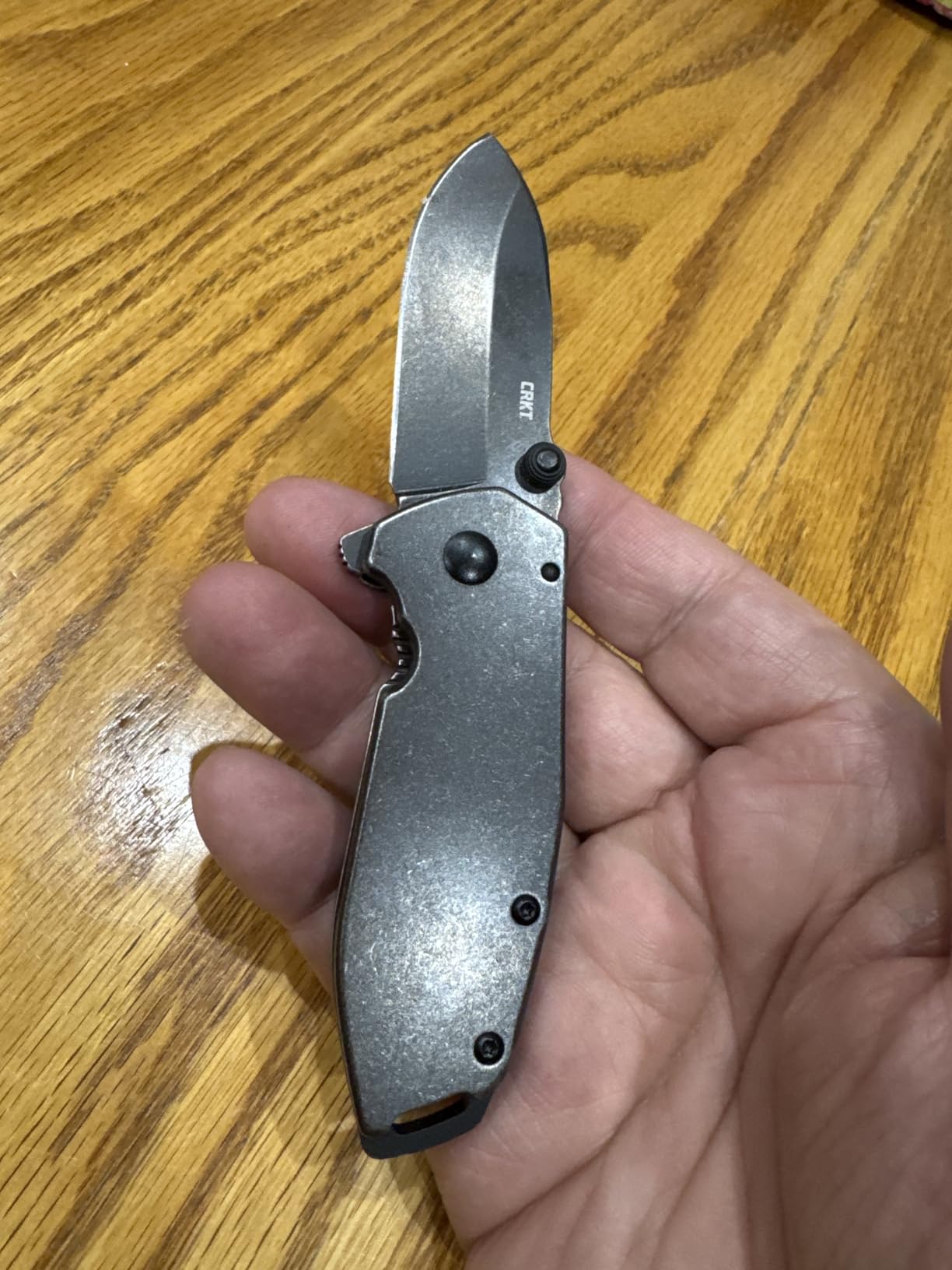
Get the iconic knife that completely redefined the budget EDC category. Rugged, utterly reliable, and ready for absolutely anything.
Check Availability on AmazonFinal Verdict: The Ultimate Guilt-Free Beater
The CRKT Squid is, without exaggeration, a modern classic. It serves as definitive proof that an everyday carry knife absolutely doesn’t have to be expensive, delicate, or forged from space-age materials to be truly excellent. It offers a level of raw, structural durability and industrial trustworthiness that is exceedingly rare in the sub-$30 budget category.
If you are looking for a highly capable knife that you can mercilessly beat on, drop on concrete, lend to a careless coworker, and use for tasks you wouldn’t dare subject a $200 titanium folder to—all without feeling a shred of guilt—the Squid is the definitive answer. It is the absolute perfect entry point into the brilliant world of Lucas Burnley designs, and it remains a mandatory staple for any serious EDC collection.