Civivi Elementum Review: The Unchallenged “Gold Standard” of Budget EDC Knives?
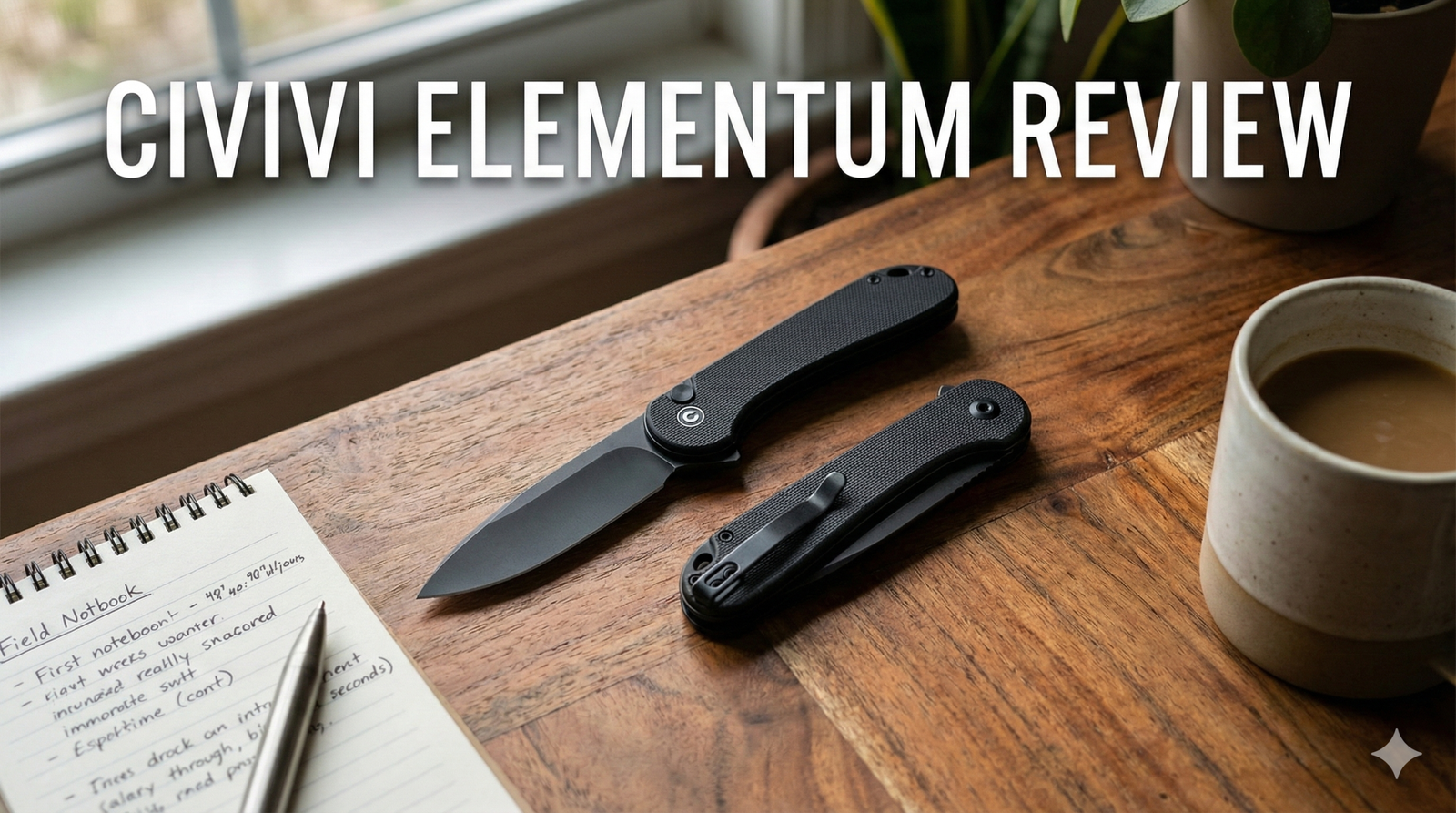
If you were to ask any knife enthusiast five years ago for a “great budget knife recommendation,” you would almost exclusively hear names like the Ontario RAT Model 2 or the Spyderco Tenacious. Today, however, the answer has overwhelmingly and decisively shifted to a single name: the Civivi Elementum.
Produced by WE Knife Co’s highly successful budget-friendly sister brand, the Elementum didn’t just quietly enter the everyday carry (EDC) market; it aggressively conquered it. By offering premium features like caged ceramic ball bearings, durable D2 tool steel, and an unassuming, elegant minimalist aesthetic for under $50 (at its initial launch), it shattered consumer expectations. It rapidly became the “Honda Civic” of the knife world—supremely reliable, incredibly affordable, heavily customizable, and universally respected across all demographics.
But the knife market is ruthless. With Elementum prices steadily creeping up over the last few years, and fierce new Chinese competitors like Kizer, Sencut, and Vosteed flooding the scene with impressive budget options, does the original Elementum still wear the crown? In this exhaustively detailed review, we break down every single aspect of this modern classic—from blade geometry to pivot mechanics—to see if it remains the absolute best gateway drug into quality cutlery.
We are also going deeper than a typical spec sheet. Beyond the basics of blade steel and handle material, this guide walks through the factory sharpening angle, the actual usable cutting edge versus the marketed blade length, a full resharpening walkthrough, a realistic long-term maintenance routine for the ceramic bearing pivot, current knife law and TSA carry considerations, and a full breakdown of every premium steel variant Civivi currently offers. If you searched for “is the Civivi Elementum a good first knife,” “Elementum vs other budget EDC knives,” or “how to sharpen a D2 Civivi Elementum,” this review is built to answer all of it in one place.
The Pedigree: The WE Knife Co. Connection
To understand why the Civivi Elementum is so good, you must understand its parent company. WE Knife Co. established itself as a premier Chinese manufacturer producing ultra-high-end, titanium-handled, M390 steel frame-locks that competed directly with Chris Reeve and Benchmade. They proved that “Made in China” could mean world-class quality.
Civivi was created as WE’s budget arm. The brilliant strategy was to take the exact same state-of-the-art CNC machining tolerances, strict quality control protocols, and impeccable assembly line standards used for $300 WE knives, and apply them to less expensive materials (like G10 and D2 steel). The Elementum is the purest distillation of this philosophy. You are essentially getting a luxury knife’s fit and finish wrapped in a blue-collar material package.

Simple. Reliable. Perfectly engineered. See exactly why everyone is still talking about the legendary Elementum.
Check Price on AmazonTechnical Specifications
The Elementum hits the absolute “Goldilocks” sweet spot for EDC sizing. It isn’t so large that it will terrify office coworkers when you open a package, but it isn’t so small that it becomes useless for real work. It finds a perfect, utilitarian middle ground.
| Blade Length | 2.96 inches (75.2 mm) |
|---|---|
| Overall Length | 6.99 inches (177.6 mm) |
| Closed Length | 4.03 inches (102.4 mm) |
| Blade Thickness | 0.12 inches (3.0 mm) |
| Weight | 2.89 ounces (82 g) |
| Blade Material | D2 Tool Steel (Standard) |
| Handle Material | G10, Micarta, Wood, or Carbon Fiber |
| Pivot Assembly | Caged Ceramic Ball Bearings |
| Lock Mechanism | Nested Stainless Steel Liner Lock |
Minimalist Design Philosophy
The pure genius of the Elementum lies in the fact that it actively refuses to be “tactical.” There are no aggressive skull logos, no jagged serrations, no thumb ramps covered in painful jimping, and no over-the-top “murdered out” styling. It is, at its core, a gentleman’s utility folder designed for the real world.
The simple drop point blade shape is highly functional, offering plenty of belly for slicing and a sharp enough tip for piercing blister packs. The handle shape is completely neutral. It lacks deep, restrictive finger grooves, meaning it doesn’t force your hand into one specific position. This lack of “features” is actually its greatest feature. It slips into a suit pocket at a wedding just as easily and appropriately as it clips into dirty denim in a garage.
Blade Geometry: The Power of the Hollow Grind
Most budget knives utilize a flat grind or a saber grind because it is significantly cheaper and easier to mass-produce on grinding machines. Civivi took the harder route and implemented a deep hollow grind on the Elementum.
A hollow grind means the blade actually curves inward (concave) as it descends toward the cutting edge. This geometry makes the steel extremely thin directly “behind the edge” (BTE). The result? The Elementum is a terrifyingly efficient slicer. Whether you are gliding through a ripe apple without cracking it or breaking down double-walled corrugated cardboard boxes, the hollow grind drastically reduces friction, allowing the blade to pass through material with almost zero resistance.
D2 Tool Steel Performance & Maintenance
The baseline Elementum utilizes D2 Tool Steel. For decades, D2 has been highly respected for its phenomenal edge retention—it will stay sharp far, far longer than the softer 8Cr13MoV or AUS-8 steels typically found on gas station knives or entry-level Spydercos.
However, D2 carries a caveat: it is a “semi-stainless” steel. It lacks the chromium content required to be truly rust-proof. If you live in a highly humid coastal environment, or if you sweat heavily and carry the knife close to your body, the blade can develop micro-pitting, surface rust, or a dark patina.
Pro Tip: To keep your D2 Elementum pristine, simply wipe the blade dry after cutting anything wet (especially acidic fruit like apples or lemons) and occasionally apply a microscopic drop of mineral oil or highly specialized knife oil (like KPL) to the steel. If you completely despise maintenance, look for the upgraded Elementum models featuring S35VN or Nitro-V stainless steels.
Blade Hardness (HRC) Explained
Steel type only tells half the story. The other half is heat treatment, which is expressed in the knife world as HRC, or Rockwell C hardness. Civivi tempers the standard D2 Elementum to roughly 58-60 HRC, a range that most cutlery metallurgists consider the sweet spot for a working folder. Go softer than 56 HRC and an edge rolls over almost immediately on cardboard. Push much harder than 62 HRC and the edge becomes so brittle that microscopic chips can appear the first time the tip contacts a staple or a piece of grit hiding inside a rope.
The 58-60 HRC window Civivi settled on is a calculated compromise. It is hard enough that the D2 edge resists rolling under normal EDC pressure, yet forgiving enough that a home sharpener with a basic set of stones can restore the edge without fighting the steel’s grain structure the entire time. Compare this to some ultra-premium flagship knives that push S90V or M390 to 61-62 HRC for extreme wear resistance; those blades cut longer between sharpenings but genuinely punish anyone without diamond abrasives when the edge finally does need attention.
For context, a typical kitchen knife runs somewhere around 52-56 HRC because kitchen steels prioritize easy touch-ups over raw wear resistance, while a straight razor can run as high as 65 HRC because it never actually touches anything harder than hair. The Elementum’s hardness rating sits squarely in “do real work every day, still sharpen it on a Sunday afternoon without cursing” territory, which is precisely the zone a do-it-all EDC blade needs to occupy.
The Pivot: Ceramic Ball Bearing Action
This is precisely where Civivi changed the entire landscape of the budget knife market. Prior to the Elementum, sub-$50 knives usually ran on cheap teflon or phosphor bronze washers, resulting in a stiff, gritty deployment that required significant wrist-flicking to open. The Elementum completely bypasses washers and runs on caged ceramic ball bearings.
The result is nothing short of addictive. When you pull back on the flipper tab, the perfectly tuned detent breaks cleanly, and the blade fires out with a highly satisfying, authoritative “thwack” that feels identical to a knife costing four times as much. When you disengage the liner lock, the blade practically drops shut under its own weight. It is incredibly fidget-friendly. Be warned: once you experience this frictionless ceramic action, it becomes very difficult to go back to stiff, washer-based budget knives.

Upgrade your grip texture. The beautiful Micarta version offers a premium, warm, fabric-like feel that actually gets grippier when wet.
Check Price on AmazonHandle Options: G10 vs. Micarta vs. Wood
One of the Elementum’s greatest strengths as a product line is the staggering variety of materials available. You can purchase handles in:
- G10 (Fiberglass Laminate): Highly durable, moderately grippy, unaffected by temperature, and available in almost every color of the rainbow.
- Micarta (Canvas or Linen): A highly desirable fabric-based composite. It feels slightly softer, warmer in the hand, and uniquely gets grippier when your hands are sweaty or wet. Over time, Micarta absorbs oils from your hands and develops a beautiful, personalized dark patina.
- Natural Wood: Cuibourtia or dark Ebony wood options provide a highly classic, traditional “gentleman’s folder” aesthetic perfect for formal carry.
- Carbon Fiber: Offered on premium sprint runs for a high-tech, ultra-lightweight, visually striking feel.
Regardless of the material, the handle shape remains simple and universally comfortable. The stainless steel liner lock is deeply scalloped and easily accessible for closing, and all the edges of the handle scales are smoothly chamfered (rounded off) so there are absolutely no sharp hot spots digging into your palm during heavy use.
Deep Carry Profile & Weight
The Elementum features a fantastic, folded-over deep carry pocket clip right out of the box. This means the knife sits entirely submerged in your pocket, with absolutely nothing sticking out above the pocket hem except the clip itself. It is the definition of discreet carry.
Weighing in at a mere 2.89 ounces (slightly lighter for the Micarta versions), it adheres strictly to the “ounce-per-inch” rule of EDC. It is light enough that you will genuinely forget you are carrying it in lightweight summer shorts. While it isn’t quite as minuscule as dedicated keychain knives, it is vastly more comfortable to carry than heavy, chunky “tank” knives like the RAT 1 or cold Steel Recon 1.
How to Resharpen the Elementum (Step-by-Step)
Because D2 is a semi-stainless tool steel with large chromium carbides, it behaves differently on the stones than a simple stainless like 8Cr13MoV. Here is the process most experienced owners recommend for restoring a truly sharp edge without wasting hours of effort:
- Start coarse: Use a 400-600 grit diamond stone or plate to establish the bevel, especially if the edge has any visible flat spots or rolls. D2’s carbides are hard enough that aluminum oxide stones will glaze over quickly, so diamond abrasives are strongly preferred.
- Match the factory angle: Use a guided system (like a Worksharp Ken Onion or a simple clamp guide) set to 15-17 degrees per side to stay consistent with the factory geometry, unless you are intentionally reprofiling thinner.
- Progress through grits: Move to a 1000 grit stone to refine the edge, then finish on a 3000-6000 grit stone or a leather strop loaded with compound for a polished, hair-popping finish.
- Deburr carefully: D2 tends to form a stubborn wire edge. Alternate light passes on each side and finish with several very light strokes to fully remove the burr before testing sharpness.
- Test on paper, not skin: A properly sharpened Elementum should slice printer paper cleanly with almost no tearing and shave arm hair with minimal pressure.
Owners who dislike freehand sharpening consistently report excellent results running the Elementum through a Work Sharp Precision Adjust or a similar clamp-style guided sharpener, since the flat sharpening choil gives the guide clamp a clean, even surface to grip without interference from the handle or pivot hardware.
Cleaning, Lubrication & Long-Term Care Routine
The ceramic bearing pivot that makes the Elementum feel so premium also demands a slightly different maintenance approach than a traditional washer knife. Ceramic bearings do not tolerate thick, gummy oils well; heavy grease will actually slow the action down and attract lint, pocket debris, and fine dust that eventually turns into an abrasive paste inside the pivot.
For routine upkeep, most experienced owners recommend the following light maintenance cycle roughly every one to two months of daily carry:
- Compressed air first: Blast the pivot area from multiple angles to dislodge pocket lint and dust before applying any lubricant.
- Use a thin, dry-type lubricant: A ceramic-friendly, low-viscosity oil like Nano-Oil 10-weight or a PTFE-based dry lube works best. Avoid thick gun oils or petroleum jelly, which will gum up the tiny bearing cages over time.
- One drop per bearing race: Open the blade halfway, apply a single small drop to each exposed bearing race, then cycle the blade open and closed a dozen times to distribute the lubricant evenly.
- Wipe excess immediately: Excess oil on the outside of the handle attracts more debris than it prevents, so always wipe the scales and liners dry after lubricating.
- Full disassembly annually: If you carry the knife daily, a full teardown with the T8 and T6 Torx bits once a year lets you flush out any accumulated grit and re-lubricate the bearings from a completely clean state. Work over a towel or a shallow tray, since the loose ceramic balls will scatter instantly if the cage tips over.
Blade care follows the same rust-prevention logic covered earlier: dry the D2 steel after any wet cutting task, store the knife in a low-humidity environment when not in use, and consider a light coat of camellia oil or mineral oil on the blade flats if you live somewhere humid or coastal.
Aftermarket Customization
Because the Elementum has become so ubiquitous, a massive aftermarket ecosystem has sprung up around it. Companies like Flytanium manufacture replacement scales in solid copper, brass, and aerospace titanium, allowing you to completely transform the weight and aesthetic of the knife. You can also easily purchase aftermarket titanium deep-carry clips from companies like LynchNW to further personalize your blade.
The Elementum Family Tree (Variants Explained)
Civivi recognized they struck gold and quickly expanded the lineup. If the standard model isn’t perfect, consider these variants:
- Button Lock Elementum: Removes the flipper tab and liner lock in favor of a push-button mechanism. It is slightly larger (3.47″ blade) and incredibly fun to swing open and closed.
- Elementum II (Button Lock Flipper): The ultimate hybrid. It keeps the convenient size and flipper tab of the original but upgrades to the fidget-friendly button lock mechanism and premium Nitro-V steel.
- Mini Elementum: A tiny, keychain-sized version with a 1.8-inch blade, perfect for highly restrictive office environments.
- Fixed Blade Elementum: For campers and outdoorsmen, a full-tang fixed blade version exists, mimicking the exact handle ergonomics of the folder.
Is Civivi a Trustworthy Brand?
Skepticism toward budget Chinese cutlery is understandable given decades of genuinely low-quality gas-station knives flooding the market. Civivi’s reputation, however, is built on something more substantial than marketing: its direct lineage to WE Knife Co., a manufacturer that earned respect in the high-end custom and mid-tech knife community by producing frame locks and integral knives that compete directly with American titans like Chris Reeve Knives and Benchmade’s premium lines.
That shared factory floor matters. The same CNC machining centers, the same quality control checkpoints, and largely the same assembly technicians who fit WE’s $300+ knives together also fit the Elementum. Civivi simply substitutes G10 for titanium and D2 for M390 to hit a dramatically lower price point, without cutting corners on tolerances, detent tuning, or lock geometry. This is a meaningfully different manufacturing philosophy than a no-name knife brand sourcing generic castings from an unrelated factory and slapping a logo on them.
User sentiment across knife-collecting communities consistently backs this up: owners routinely describe fit and finish that “blows the Ontario RAT out of the water” and steel performance that “rivals brands selling for double or triple the price.” Civivi has also built a track record of over half a decade of consistent releases, active customer support, and a stable warranty program, all of which are strong signals of a manufacturer playing the long game rather than a fly-by-night operation chasing a single viral product cycle.
Knife Laws, TSA Rules & Legal Carry Considerations
Knife legality is a genuinely confusing patchwork in the United States, and the Elementum’s dimensions were clearly chosen with this in mind. At 2.96 inches of blade length, it slides in just under the common 3-inch threshold used by many states and municipalities, including notoriously strict jurisdictions like Illinois. That said, blade length limits are only part of the picture — some cities layer additional restrictions on top, most notably Chicago’s stricter 2.5-inch municipal cap, so always verify local ordinances rather than assuming state law is the final word.
Lock type also matters legally. Because the Elementum is a one-hand-opening, locking flipper knife, it falls into a different legal category than a traditional slip-joint or non-locking folder in some jurisdictions. A handful of cities and countries specifically restrict or ban knives that lock and can be opened with one hand, regardless of blade length, so travelers should research their destination carefully before packing one for a trip.
For air travel, the rule is simple and universal: the Elementum, like virtually any fixed or folding knife, cannot go in a carry-on bag under current TSA guidelines. It must be packed in checked luggage, ideally inside a hard case or wrapped securely to protect the edge and prevent it from puncturing other items or triggering a manual bag search. Attempting to carry any locking folder through a TSA checkpoint will result in confiscation at best.
Internationally, carry laws are considerably stricter. The United Kingdom, for example, generally prohibits carrying any locking folding knife in public without a specific, justifiable reason, regardless of blade length. Always research your specific country and city before assuming a knife legal in your home state will be legal to carry elsewhere.
Real-World Use Cases & Task Testing
Specs and marketing copy only go so far. Here is how the Elementum actually performs across the tasks most EDC owners realistically encounter on a weekly basis:
- Cardboard breakdown: The hollow grind and thin stock make quick work of Amazon boxes and shipping tape, though heavy double-walled cardboard will dull the factory edge noticeably faster than lighter single-wall boxes.
- Food prep at a campsite: Slicing fruit, cutting cordage for a tarp, or breaking down kindling for a small fire are all well within the Elementum’s comfort zone, though it is not a substitute for a dedicated fixed-blade camp knife for heavier bushcraft tasks like batoning wood.
- Opening mail and blister packs: This is the knife’s bread and butter. The drop point tip pierces plastic clamshell packaging cleanly without excessive force, and the belly makes short work of envelopes.
- Light whittling: The thin edge and neutral ergonomics make the Elementum a surprisingly capable choice for basic whittling and small wood-carving projects, though dedicated whittling knives with thinner, more acute edge geometry will outperform it for detailed figure carving.
- Rope and cordage cutting: The hollow grind slices through paracord and rope cleanly, though the fairly generous choil means very short cuts close to the handle require a bit more attention to hand placement.
- Fine detail work: Using the sharpening choil as a forward finger rest, many owners find the Elementum surprisingly precise for tasks like trimming loose threads, opening small packages, or cleaning fingernails in a pinch.
Elementum vs. The World
Civivi Elementum vs. Ontario RAT Model 2
The Ontario RAT 2 was the former undisputed king of budget knives. The RAT 2 feels much more like a disposable “tool”—it runs on slow phosphor bronze washers (which are arguably better at keeping out dirt and grit in construction environments) and utilizes thumb studs. The Elementum feels vastly more “premium”—it utilizes fast bearings and a modern flipper tab. If you lay drywall for a living, get the RAT. If you work in an office or want a smooth fidget toy, get the Elementum.
Civivi Elementum vs. Spyderco Tenacious
The Spyderco Tenacious is significantly larger, heavier, and much wider in the pocket. It offers slightly better ergonomics for users with massive hands or those wearing work gloves. However, the standard Tenacious uses highly inferior steel (8Cr13MoV) compared to the Elementum’s robust D2, meaning the Spyderco will dull much faster. The Elementum is an objectively better value regarding material science.
Civivi Elementum vs. Kizer Vanguard Series
Kizer, another highly respected Chinese manufacturer with its own premium and budget divisions, offers the Vanguard series as a direct shot at the Elementum’s market position. Vanguard knives often ship with washers rather than bearings, which keeps the price slightly lower but sacrifices some of that addictive, frictionless deployment feel. Blade steel is comparable, frequently featuring 154CM or D2 depending on the specific model. The Elementum wins on pivot feel and clip design; the Vanguard sometimes wins on ergonomic handle shaping for larger hands, depending on the specific model chosen.
Civivi Elementum vs. Sencut Knives
Sencut is a newer budget brand backed by the same manufacturing group as Civivi and We Knife, which means quality control and machining tolerances are similarly impressive for the price. Sencut models often undercut the Elementum slightly on price while offering similar bearing-pivot systems and D2 or 9Cr18MoV steel options. The trade-off tends to be brand recognition and resale value — the Elementum has a much larger established following, more aftermarket support, and stronger community trust built over a longer track record.
Civivi Elementum vs. CJRB Pyrite
CJRB is a genuinely budget-focused sister brand under the same corporate umbrella, and the Pyrite is often cited as the closest direct competitor to the Elementum in terms of size and role. The Pyrite typically uses AR-RPM9 powder steel, a genuinely impressive stainless option for the price, and frequently costs noticeably less than the Elementum. However, the Elementum still generally holds an edge in fit, finish, and overall polish, reflecting its slightly higher position in the same manufacturing family’s lineup.
Civivi Elementum vs. Ganzo & Generic Budget Brands
Sub-$30 brands like Ganzo occupy a genuinely different tier. While some Ganzo models offer surprisingly decent value, quality control is far less consistent, steels are typically softer stainless options like 440C or unspecified “stainless steel,” and bearing pivots are rare at that price point. The Elementum costs more, but the jump in blade steel, fit and finish, and long-term reliability is substantial enough that most experienced buyers consider it worth the difference for a knife carried daily for years rather than replaced annually.
Buyer’s Guide: Which Elementum Should You Get?
With so many variants now available, choosing the right configuration can feel more complicated than it needs to be. Use this quick decision framework to narrow things down:
- First quality knife on a tight budget: Get the standard liner-lock Elementum in D2 steel with G10 handles. It delivers the best overall value and is the version most aftermarket parts are designed to fit.
- You hate maintenance or live somewhere humid: Choose an S35VN or Nitro-V version. The extra cost buys genuine peace of mind against rust and micro-pitting.
- You want the smoothest possible fidget feel: Go with the Button Lock Elementum or Elementum II. The push-button mechanism is even more satisfying to cycle than the liner lock flipper.
- You need something for a restrictive office or dress code: The Mini Elementum’s 1.8-inch blade keeps a low profile while retaining the same premium bearing action and materials.
- You want a camping or bushcraft companion: Look at the Fixed Blade Elementum, which mirrors the folder’s ergonomics without any moving parts to fail in the field.
- You want a showcase piece for a growing collection: The Damascus or Micarta limited runs offer the best aesthetics for display and gifting, even if the standard D2 model remains the more practical daily user.
Is the Elementum a Good Gift?
Pocket knives make surprisingly effective gifts precisely because a genuinely good one is rarely something people buy for themselves — most owners simply carry whatever knife they already have until it breaks or gets lost. The Elementum hits nearly every box for a thoughtful, practical gift: it is immediately useful, visually understated enough to suit almost any recipient’s taste, and priced comfortably in the range most people consider appropriate for a birthday, graduation, groomsman, or holiday gift without feeling either cheap or excessive.
For a father, uncle, or coworker who already carries a beat-up gas station knife, upgrading them to an Elementum is often a genuinely memorable experience, since the difference in action and cutting performance is immediately obvious the first time they open it. For a more personal or higher-budget gift, the Micarta or wood-handled variants add a warmer, more premium visual presentation that photographs beautifully when unwrapped. Just be mindful of state and local knife laws before shipping one across state lines or internationally, since some regions restrict receiving certain knife types by mail.
Long-Term Ownership & Durability Reports
Short-term impressions are easy to fake with a well-tuned demo unit, so long-term ownership reports matter far more when evaluating a budget knife’s real value. Multi-year Elementum owners across knife forums and review sites consistently report that the ceramic bearing pivot maintains its smooth action remarkably well, provided basic maintenance (cleaning and light re-lubrication every couple of months) is kept up. The detent, which determines how crisply the blade snaps open, tends to remain consistent rather than loosening dramatically with age, a common complaint on cheaper flipper knives.
The most frequently reported long-term wear points are the pocket clip’s finish, which can develop light scratching from repeated insertion and removal, and the blade’s factory edge, which some owners find rolls or develops flat spots slightly faster than the “phenomenal edge retention” reputation of D2 steel might suggest — a nuance worth setting expectations around, since heat treatment quality varies somewhat by production batch. None of these issues are structural or safety-related; they are cosmetic or maintenance-related observations from owners who have carried the knife daily for one to three years or longer.
Overall, the consensus from long-term owners is that the Elementum ages gracefully. G10 handles show essentially no wear beyond minor surface scuffing, Micarta develops an attractive patina that many owners consider a feature rather than a flaw, and the lock geometry on the liner lock versions has not shown a widespread pattern of stick or lock rock developing over extended use.
Warranty & Customer Support
Civivi backs the Elementum with a standard manufacturer’s warranty covering defects in materials and workmanship, and the brand has built a reasonably strong reputation for responsive customer service compared to many budget overseas cutlery brands. Common warranty-covered issues include lock failures, pivot problems present from the factory, and structural defects; normal wear items like a dulled edge or scratched clip finish are not covered, which is standard across the entire knife industry.
Owners who have needed to use the warranty generally report a straightforward process: documenting the issue with photos, reaching out through Civivi’s official support channels or the retailer of purchase, and receiving either a replacement part or a full replacement knife within a reasonable turnaround window. Buying through an authorized retailer (rather than a questionable third-party marketplace listing) is strongly recommended to ensure warranty claims are honored without complication.
Pros & Cons Summary
The Pros
- Incredible, frictionless action thanks to caged ceramic ball bearings.
- D2 tool steel offers phenomenal edge retention for the price point.
- A true deep-carry pocket clip is included as a standard feature.
- A massive, diverse variety of handle materials and blade finishes.
- The thin hollow grind makes it an elite, effortless slicer.
- Highly unthreatening, gentlemanly design suitable for any environment.
The Cons
- D2 steel is semi-stainless and can develop rust if heavily neglected.
- The standard pocket clip is NOT reversible for left-handed carry.
- Ball bearings can get gummed up if you drop the knife in fine sand or mud.
- The baseline price has steadily increased since its highly affordable initial launch.
- The smooth G10 versions can lack traction in wet conditions.
Expert Frequently Asked Questions
Does the Civivi Elementum rust easily?
The standard model utilizes D2 steel, which is semi-stainless. It can indeed rust if left wet, covered in acidic fruit juice, or heavily exposed to corrosive sweat. However, Civivi often coats their blades in black stonewash or uses a fine satin finish that helps resist initial corrosion. Wiping the blade down after use and occasionally oiling it prevents rust completely.
Is the pocket clip reversible for lefties?
No. On the standard liner-lock Elementum, the pocket clip is rigidly set for right-hand, tip-up carry only. The handle scales are not milled to accept the clip on the opposite side. Left-handed users may find deploying the flipper tab perfectly fine, but pocket extraction is less optimal.
What is the difference with the Button Lock Elementum II?
The Elementum II is the highly anticipated sequel. It maintains the exact same dimensions and flipper tab as the original, but entirely replaces the internal liner lock with a plunge button lock. This allows you to press the button and freely swing the blade open and closed without your fingers ever crossing the blade path. It also upgrades the steel to highly stainless Nitro-V.
Is the D2 steel hard to sharpen?
D2 is a hard, wear-resistant steel with large carbides. It absolutely takes more effort and time to sharpen than softer budget steels (like 420HC or 8Cr13MoV), but the trade-off is that it holds that sharp edge significantly longer. We highly recommend using diamond sharpening stones for the best, fastest results on D2.
Is the Elementum legal to carry everywhere?
With a blade length measuring just under the crucial 3-inch mark (2.96″), it complies perfectly with the vast majority of strict US state and city length limits. However, because it is a locking knife featuring a flipper mechanism, it may be strictly prohibited in restrictive international jurisdictions like the UK or specific cities like NYC. Always verify your local knife ordinances.
Can I disassemble the Elementum for cleaning?
Yes, absolutely. The Elementum utilizes standard, high-quality Torx hardware (usually T8 for the pivot and T6 for the body/clip screws) and is very straightforward to take apart for deep cleaning and lubrication. Just be extremely careful when removing the blade, as the tiny ceramic ball bearings in the cages can easily fall out and be lost on your floor.
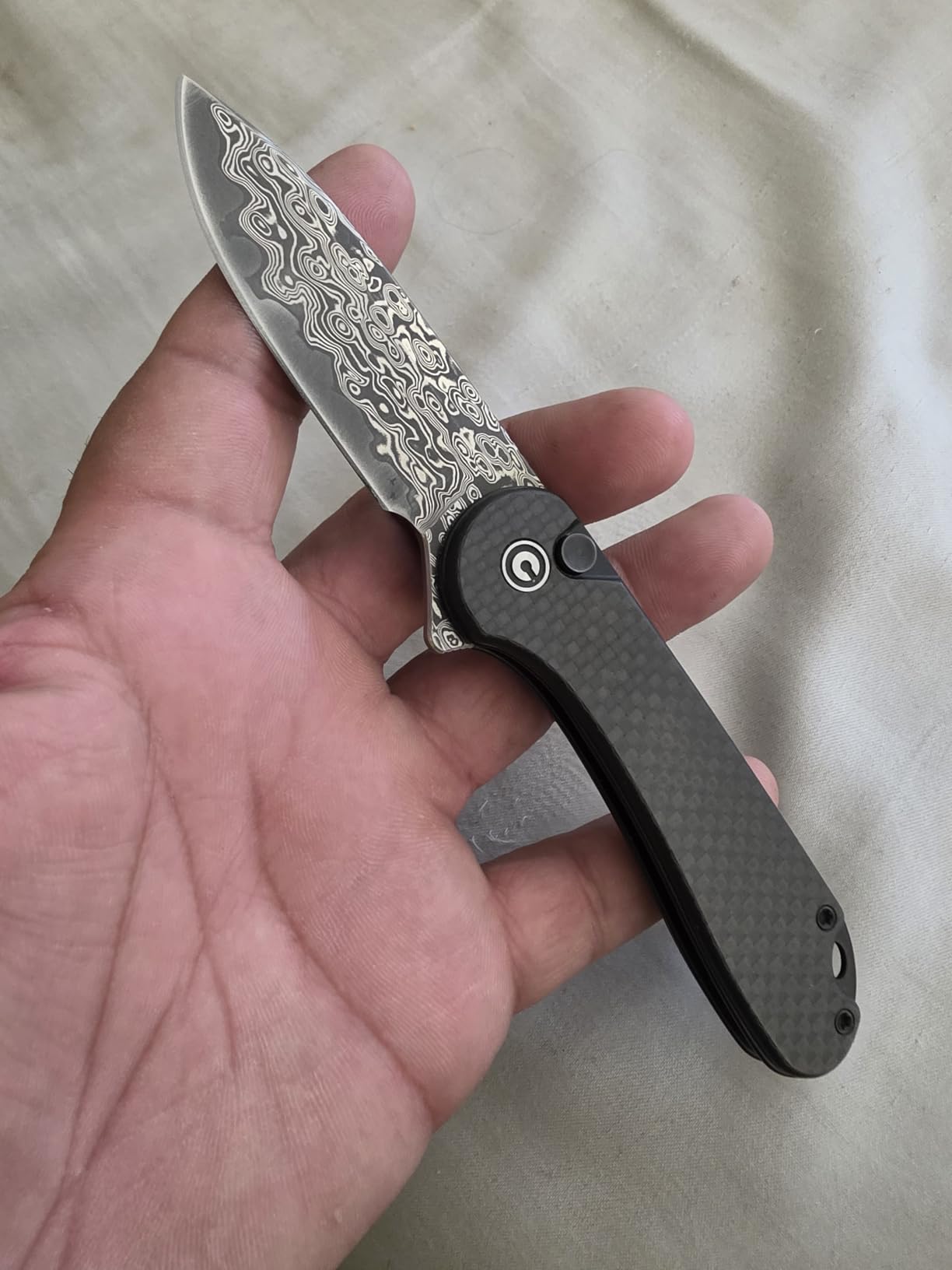
Start your EDC collection the right way. The Elementum is the industry benchmark for a very profound reason.
Check Availability on AmazonFinal Verdict: The Undisputed Gateway Knife
The Civivi Elementum is nothing short of a masterpiece of modern budget manufacturing. It single-handedly raised the collective bar for what consumers now expect from a sub-$60 pocket knife. It masterfully combines clean, unpretentious lines, premium internal mechanics, and flawless, snappy action in a package that universally appeals to almost everyone—from hardcore knife snobs to casual users just needing to open Amazon boxes.
If you are looking for your very first “real” quality pocket knife to replace a gas-station beater, or if you simply want a highly reliable EDC tool that feels significantly more expensive than it actually is, the Elementum remains the safest, smartest, and most satisfying bet on the market today. It truly earned its title as the new gold standard.