Ontario RAT 2 Review: The Pocket-Sized Champion of Value
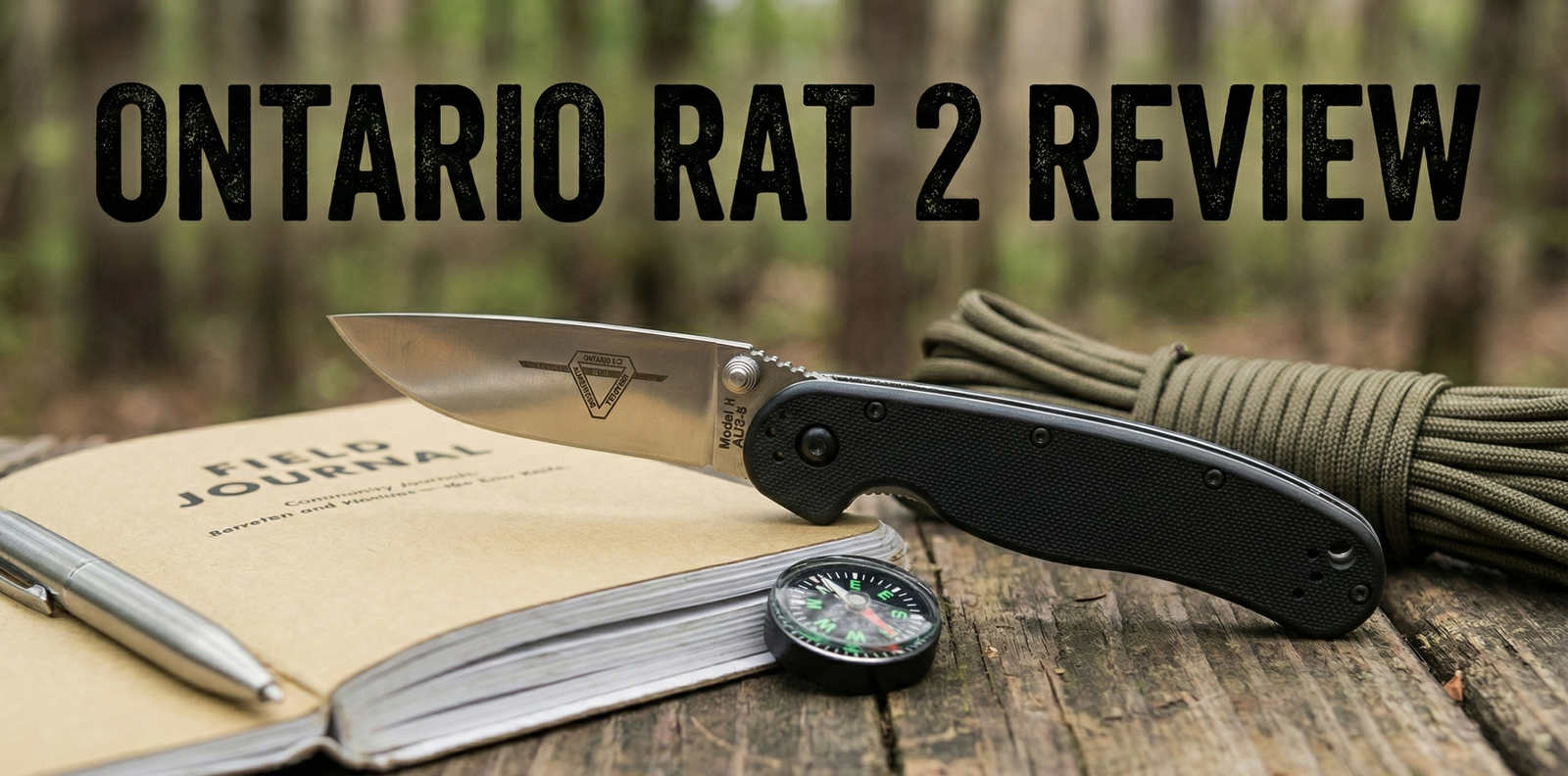
In the world of Everyday Carry (EDC), bigger isn’t always better. While the original Ontario RAT 1 is a legendary survival workhorse, it’s often too large, heavy, and aggressive for an office environment or a pair of slacks. Enter the Ontario RAT 2.
Often dismissed as just a “shrunken down” version of its big brother, the RAT 2 actually fills a completely different niche. It transitions from a survival tool to a refined, high-performance EDC slicer that disappears in the pocket. It retains the rugged DNA of Randall’s Adventure & Training designs but packages it in a form factor that is friendly, legal in more places, and incredibly capable.
Is this the best budget EDC knife on the market today? Does the move to a smaller handle ruin the ergonomics that made the RAT famous? We put the RAT 2 through its paces to find out.

Compact, lightweight, and razor-sharp. The perfect companion for your daily adventures.
Check Price on AmazonTechnical Specifications
The RAT 2 hits the “Goldilocks” dimensions for an everyday carry knife. It is small enough to be non-threatening but large enough to get a four-finger grip for most hands.
| Blade Length | 3.0 inches (7.62 cm) |
|---|---|
| Overall Length | 7.0 inches (17.78 cm) |
| Closed Length | 4.1 inches (10.41 cm) |
| Blade Thickness | 0.095 inches (2.4 mm) |
| Weight | 2.75 ounces (78 g) |
| Handle Material | Nylon 6 (Glass Reinforced Nylon) |
| Blade Steel | AUS-8 or D2 Tool Steel |
| Lock Type | Liner Lock |
RAT Origins & Manufacturing: What Does “RAT” Even Mean?
Before diving deeper into the knife itself, it’s worth answering a question that trips up a huge number of first-time buyers: what does the acronym “RAT” actually stand for? It has nothing to do with rodents. RAT stands for Randall’s Adventure & Training, a jungle survival school founded by Jeff Randall and Mike Perrin. The two men ran wilderness and survival courses in the Amazon rainforest and needed a tool tough enough to survive that environment while still being affordable enough to hand out to students who might lose or damage it in the field. That brief — bombproof, cheap to replace, easy to use — is baked into every RAT knife Ontario has produced since, including the RAT 2.
Ontario Knife Company licensed the RAT design and began manufacturing it under their own name, which is why you’ll sometimes see the knife referred to as the “Ontario RAT 2,” the “RAT II,” or simply the “RAT-2” depending on the retailer. All of these names refer to the exact same knife. Ontario Knife Company itself has a long American manufacturing legacy dating back to 1889 in Franklinville, New York, where the company still produces many of its fixed-blade and military contract knives, including the legendary RAT 1 siblings and OKC combat blades.
Why Is the RAT 2 Made in Taiwan?
This is one of the most searched questions about this knife, and it deserves a straight answer. Unlike Ontario’s domestically produced fixed blades, the RAT 2 folder (along with the RAT 1 folder) is manufactured in Taiwan. This isn’t a red flag — Taiwan has one of the most respected cutlery manufacturing industries in the world, home to well-regarded factories that also produce components and full knives for brands like Spyderco, CRKT, and Cold Steel. Taiwanese production allows Ontario to hit the aggressive price point that makes the RAT 2 so appealing in the first place, without sacrificing the tight tolerances needed for a smooth-actioning liner lock folder.
In practical terms, this means the fit and finish on the RAT 2 is consistently good across production runs — centered blades, even grinds, and liner locks that engage in the same position knife after knife. Quality control complaints are rare for this model, and when they do surface, they’re usually addressed without argument by Ontario’s warranty department, which still operates out of the company’s New York headquarters.
Warranty & Customer Support
Ontario Knife Company backs the RAT 2 with a warranty against manufacturing defects. If you experience a problem with the pivot, lock, or grind that isn’t the result of abuse or normal wear, Ontario’s customer service team has a strong reputation in the knife community for handling replacements and repairs quickly and without excessive back-and-forth. This is a meaningful part of the value proposition — you aren’t just buying a cheap knife, you’re buying a cheap knife from a company that stands behind seventy-plus years of American cutlery manufacturing experience.
Design & Ergonomics: Small but Mighty
Shrinking a knife design is risky. Often, you lose the ergonomics that made the original great. However, Ontario nailed the transition with the RAT 2. The handle is made from the same Nylon 6 material as the RAT 1—it’s smooth, durable, and won’t shred your pockets.
The Grip
The defining feature of the RAT series is the deep finger choil (the cutout for your index finger). This feature remains on the RAT 2, locking your hand into position. While those with massive hands might find their pinky finger dangling slightly, for the vast majority of users, it provides a secure, confident grip that feels safer than many smaller keychain knives.
The open-pillar construction allows for easy cleaning, and the full stainless steel liners give the knife a rigidity that feels premium, despite the budget price tag.
The 3-inch Slicer: D2 vs. AUS-8
The RAT 2 features a 3-inch drop point blade with a full flat grind. Because the blade stock is thinner (0.095 inches) than the RAT 1, the RAT 2 is an absolute laser beam when cutting. It slices through apples, cardboard, and packages with less resistance than knives costing ten times as much.
Steel Selection
Like its big brother, the RAT 2 comes in two flavors. Choosing the right one depends on your needs:
- AUS-8 Stainless: Great for wet environments and easy to sharpen. Ideal if you are just learning how different steels perform.
- D2 Tool Steel: The enthusiast’s choice. It holds an edge significantly longer but requires a bit more care to prevent corrosion.
If you plan to use this knife for office tasks and dry environments, the D2 upgrade is highly recommended. It turns a budget knife into a serious cutting tool.

Get the D2 Steel version for superior edge retention that lasts through the toughest work weeks.
Check Price on AmazonGrind Geometry & Jimping: Why a Drop Point and Not a Sheepsfoot?
Ontario chose a classic drop point profile for the RAT 2, and it’s worth understanding why that matters compared to alternatives you’ll see mentioned in the budget EDC space, like the sheepsfoot blade found on knives such as the QSP Penguin. A drop point has a convex curve running from the spine down to the tip, which keeps the point strong and centered on the blade’s spine — ideal for piercing tasks, general utility work, and light food prep. A sheepsfoot, by contrast, has a straight edge and a spine that curves down to meet it, which removes the point almost entirely in favor of maximum control during push cuts and a design that’s harder to accidentally stab yourself with.
For a true generalist EDC knife meant to open mail, break down boxes, cut rope, strip wire, and occasionally handle food prep duties, the drop point on the RAT 2 is the more versatile choice. If your use case leans heavily toward controlled slicing and safety-focused cutting (for example, cutting seatbelts or webbing in a rescue context), a sheepsfoot design like the Penguin might suit you better — but for the 90% of daily tasks most people actually use a pocket knife for, the RAT 2’s geometry wins.
Jimping and Spine Control
Running along the spine of the blade, just forward of the handle, you’ll find jimping — the small machined grooves that give your thumb extra traction during detail cuts. This is a feature often overlooked in budget knife reviews, but it makes a real difference in control when you choke up on the blade for precision work like opening a package seam or trimming a loose thread. The jimping on the RAT 2 is moderate rather than aggressive; it won’t chew up your thumb during extended use the way some tactical folders can, but it provides enough bite to keep your grip locked in place.
Full Flat Grind vs. Hollow Grind
The RAT 2 uses a full flat grind, meaning the blade tapers evenly from the spine all the way to the edge with no secondary bevel transition partway down. This is part of why the knife slices so effortlessly compared to knives with a hollow grind or a saber grind — there’s simply less material behind the edge creating drag as it passes through material. The tradeoff is that a full flat grind edge is marginally less durable for prying or batoning tasks, which is a non-issue for a knife whose entire purpose is precise, controlled EDC cutting rather than bushcraft chores best left to the RAT 1 or a dedicated fixed blade.
Colorways: Black, OD Green, Coyote Brown & Desert Tan
One detail that rarely gets covered in depth is just how many color and finish combinations the RAT 2 ships in. Ontario offers the handle scales in several colors, and buyers frequently want to know which combination represents the best value or the most useful look for their situation.
- Black on Black: The most common configuration, pairing a black-coated blade with black Nylon 6 scales. This is the most discreet, professional-looking option and hides scratches and wear the best over time.
- OD Green: A nod to the RAT 2’s military-adjacent roots, olive drab scales pair well with a satin or black blade and are popular with outdoor and preparedness-minded buyers.
- Coyote Brown / Desert Tan: Frequently paired with the upgraded D2 steel option, these earth-tone scales are popular among buyers who want their EDC knife to visually match other gear like backpacks and duty belts.
- Satin Blade, Black Handle: A more “gentleman’s knife” look, showing off the grind lines of the blade rather than hiding them under a black coating.
Functionally, the color of the scales makes no difference to performance — it’s purely a matter of preference and how the knife will blend with the rest of your gear. The black coating on some blade options does add a very thin layer of corrosion resistance, which can be a minor bonus for the AUS-8 versions used near saltwater or high humidity.
Deployment & Lockup
The RAT 2 uses phosphor bronze washers in the pivot. Out of the box, it might feel a little stiff, but give it a week. Once broken in, the action on the RAT 2 is legendary. It snaps open with a satisfying “thwack” using the dual thumb studs.
Many users report that the RAT 2 actually has better action than the RAT 1 because the blade is lighter, making it incredibly snappy to flick open. The liner lock engages securely every time, with no blade play in any direction.
EDC Carry Experience
This is where the RAT 2 shines. Weighing in at just 2.75 ounces, it disappears in the pocket. You can carry it in gym shorts, dress slacks, or jeans without feeling weighed down.
It features a 4-way positionable pocket clip, making it fully ambidextrous. The clip tension is excellent—secure enough to hold, but smooth enough to draw quickly. For an office setting, it is discreet and unassuming, lacking the aggressive “tactical” look of larger folders.
Complete Sharpening & Maintenance Guide
A knife is only as good as its edge, and the RAT 2 rewards a little regular maintenance with performance that punches well above its price. Here’s exactly how to keep it cutting like new, broken down by steel type and task.
Sharpening the AUS-8 Version
AUS-8 is one of the most sharpening-friendly steels on the market, which makes the RAT 2 an excellent knife for beginners to practice on. A basic two-sided whetstone (coarse/fine combination stone, roughly 400/1000 grit) is all you need. Maintain the RAT 2’s factory edge angle, which sits at approximately 20 degrees per side, and you’ll be back to hair-popping sharp in ten to fifteen minutes even as a beginner. AUS-8 doesn’t hold that edge as long as D2, so plan on a light touch-up every few weeks with moderate daily use.
Sharpening the D2 Version
D2 is a semi-stainless tool steel prized for edge retention, but it’s noticeably harder to sharpen than AUS-8 because of its higher carbide content. A diamond stone or ceramic rod will cut through D2 far more efficiently than a standard aluminum oxide stone, which can glaze over and struggle to remove material. Because D2 holds an edge so much longer, you’ll be sharpening far less often — many RAT 2 D2 owners report going three to six months of daily EDC use between full sharpening sessions, relying on a leather strop loaded with honing compound to maintain the edge in between.
Preventing Rust on the D2 Blade
D2 is often mislabeled as a stainless steel, but it’s more accurately described as “semi-stainless” — it contains enough chromium to resist rust better than a true carbon steel, but not enough to be fully corrosion-proof like AUS-8 or standard stainless blades. If you carry the D2 RAT 2, wipe the blade down after exposure to moisture, sweat, or food acids, and apply a light coat of mineral oil or a dedicated knife oil if you know it will sit unused for a while. This single habit prevents the vast majority of the surface staining and pitting that D2 owners occasionally complain about online.
Cleaning the Liner Lock and Pivot
Pocket lint, dust, and grit will eventually work their way into the pivot and liner lock mechanism of any folding knife, and the RAT 2’s open-back construction actually makes this easier to deal with than sealed-back competitors. Periodically flush the pivot area with compressed air or a can of electronics duster, then apply a drop of light lubricant (a PTFE-based knife oil or even a synthetic bicycle chain lube works well) to the pivot and washer contact points. Cycle the blade open and closed a dozen times to work the lubricant in, then wipe away any excess. This five-minute maintenance routine, done every month or two, is why so many RAT 2 owners report the action getting smoother rather than looser over years of use.
Customization & Aftermarket Scales Deep Dive
The RAT 2 has developed a genuine cult following in the knife modification community, largely because Ontario never bothered to hide the screw construction behind proprietary fasteners or adhesive. Every RAT 2 is fully disassemblable with a basic screwdriver set, which has opened the door to a thriving aftermarket parts scene.
Popular Aftermarket Scale Materials
- G10: A fiberglass laminate that’s lighter than the stock nylon and available in dozens of colors and textures, from smooth “sculpted” contours to aggressive checkering for wet-weather grip.
- Carbon Fiber: The premium choice for owners who want to shed weight and add a high-end look. Carbon fiber scales can transform the RAT 2’s appearance from budget workhorse to boutique collectible.
- Micarta: A canvas or linen resin composite that develops a unique patina and improved grip texture the more it’s handled — a favorite among traditional knife enthusiasts.
- Titanium: The most expensive upgrade path, sometimes exceeding the cost of the knife itself, but it offers a lifetime of durability and a satisfying heft.
Beyond scales, the aftermarket also supports upgraded pocket clips (including deep-carry options that address one of the stock knife’s few real complaints), custom pivot screws in anodized colors, and even drop-in replacement blades in premium steels like CPM-154 or S35VN for buyers who want RAT 2 ergonomics with a higher-end edge. Very few knives at this price point support this level of modification, and it’s a major reason the RAT 2 keeps showing up on “best budget knife to customize” lists across the community.
RAT 2 vs. The Competition
Ontario RAT 2 vs. Ontario RAT 1
The Ontario RAT 1 is a survival tank (5 oz, 3.6″ blade). The RAT 2 is an EDC scalpel (2.75 oz, 3″ blade). If you are going camping, take the RAT 1. If you are going to work, the grocery store, or around the house, the RAT 2 is infinitely more comfortable to carry.
Ontario RAT 2 vs. Spyderco Delica 4
The Spyderco Delica 4 is the main rival. The Delica is lighter and has better grip texture, but it uses a back lock (slower to close) and costs significantly more. The RAT 2 offers a more “fidget-friendly” liner lock and feels more robust due to the full steel liners, usually at half the price.
Ontario RAT 2 vs. QSP Penguin
The QSP Penguin is the RAT 2’s closest rival in the budget sheepsfoot category, and it’s a common cross-shop for buyers researching this review. The Penguin typically ships with D2 steel standard and Micarta or G10 scales instead of nylon, giving it a more premium feel out of the box. However, the Penguin’s sheepsfoot blade sacrifices the piercing tip that makes the RAT 2’s drop point so versatile for general utility work. If your priority is a refined, safety-oriented slicer, the Penguin is worth a look. If you want a true do-everything blade shape with a stronger tip, the RAT 2’s drop point pulls ahead.
Ontario RAT 2 vs. Kershaw Cryo
The Kershaw Cryo takes a completely different approach: an all-steel, framelock construction that trades the RAT 2’s light weight and slicing prowess for a tank-like, overbuilt feel. The Cryo’s assisted-opening mechanism (via Kershaw’s SpeedSafe system) makes it noticeably faster to deploy one-handed, but its stock 8Cr13MoV steel doesn’t hold an edge nearly as well as the RAT 2’s AUS-8, let alone the D2 upgrade. For buyers who want a knife that feels heavier and more substantial in hand — even at the cost of pocket comfort — the Cryo is the classic alternative. For everyday slicing tasks and long-term carry comfort, the RAT 2 remains the smarter pick.
Ontario RAT 2 vs. Kershaw Clash (Serrated Alternative)
One limitation worth flagging: the RAT 2 is not available with a serrated edge or a combo edge — it only ships as a plain edge blade (a difference from the RAT 1, which does offer combo-edge options). If a partially serrated blade for rope- and strap-cutting is a hard requirement, the Kershaw Clash is a common recommendation, pairing a 3.1-inch drop point with an effective serrated section near the handle. The tradeoff is that serrations are harder to sharpen at home and don’t slice as cleanly through cardboard and packaging — the exact tasks most RAT 2 owners use their knife for daily. For pure day-to-day utility, the RAT 2’s full plain edge remains the more practical option for the vast majority of buyers.
Who Should Buy the RAT 2? A Use-Case Breakdown
Rather than a generic recommendation, it helps to map the RAT 2 against specific buyer situations, since “best knife” always depends on what you’re actually going to do with it.
The First-Time Knife Buyer
If this is your first “real” pocket knife — not a $5 gas station folder, but a purpose-built EDC tool — the RAT 2 is close to an ideal starting point. It teaches you what a well-executed liner lock, a properly ground blade, and a comfortable ergonomic grip actually feel like, without the financial risk of a $150+ knife you might lose or decide you don’t like.
The Gift Buyer
The RAT 2 shows up constantly on “best knife to gift” lists, and for good reason. It’s inexpensive enough that giving one doesn’t feel like an obligation to reciprocate, but well-made enough that it doesn’t read as a throwaway gesture. The variety of color options also makes it easy to personalize for the recipient.
The Office / Professional Carry Use Case
For opening mail, breaking down Amazon boxes, and general desk-drawer utility duty, the RAT 2’s understated look and light weight make it far less conspicuous than a tactical-styled folder. The 4-way pocket clip means it can be carried tip-up or tip-down depending on your dress code and personal preference.
The Backup / Beater Knife Buyer
Many owners of higher-end knives keep a RAT 2 specifically as a “beater” — a knife they aren’t afraid to lend to a coworker, use to cut into drywall, or leave in a toolbox where it might get lost or damaged. At this price point, that peace of mind is worth a lot.
Who Should Look Elsewhere
Buyers with very large hands may find the choil and handle length cramped compared to the RAT 1. Anyone needing a serrated or combo edge, or a knife rated for harder prying and batoning tasks, should also consider a different model in the lineup or step up to a heavier-duty design.
Cost-Per-Use Value Analysis
It’s easy to say a knife is “good value,” but it’s more useful to actually break down what that means. At a street price that frequently lands well under $30 for the AUS-8 version and modestly more for D2, the RAT 2 competes directly with knives priced two to four times higher, like the Spyderco Delica 4 or Kershaw’s mid-tier offerings.
Assuming a moderate EDC lifespan of five to ten years of daily carry — which is realistic given the durability of the liner lock and steel liner construction — the RAT 2 works out to a cost of a few cents per day of ownership. Even factoring in an occasional sharpening kit purchase or an aftermarket scale upgrade down the line, few tools in anyone’s daily carry rotation deliver this much functional utility per dollar spent. This is a major reason the RAT 2 consistently appears on “best knife under $30” and “best budget EDC” roundups across the knife review community.
Long-Term Durability: What Owners Report After a Year
Short-term first impressions are one thing, but long-term ownership reports tell the real story of a budget knife. Across owner forums and long-term review updates, a few consistent patterns emerge for the RAT 2 after twelve or more months of regular carry.
- Lock stability: The liner lock shows minimal to no lock stick or lock rock after a year of daily opening and closing, a strong showing for a knife in this price bracket.
- Pivot wear: With occasional lubrication, the phosphor bronze washers continue to provide smooth action; owners who skip maintenance entirely report the action becoming slightly gritty but rarely failing outright.
- Handle scales: The Nylon 6 scales resist cracking and UV fading far better than cheaper ABS plastic handles found on off-brand competitors, though the surface can develop a slight sheen from pocket friction over time.
- Edge retention over time: AUS-8 owners report needing touch-ups roughly every two to three weeks of daily use, while D2 owners frequently go multiple months, confirming Ontario’s steel choice claims hold up outside of controlled testing.
Taken together, these long-term reports reinforce the RAT 2’s reputation as a knife that doesn’t just perform well out of the box, but continues to earn its keep years into ownership — a rarer trait than the price tag would suggest.
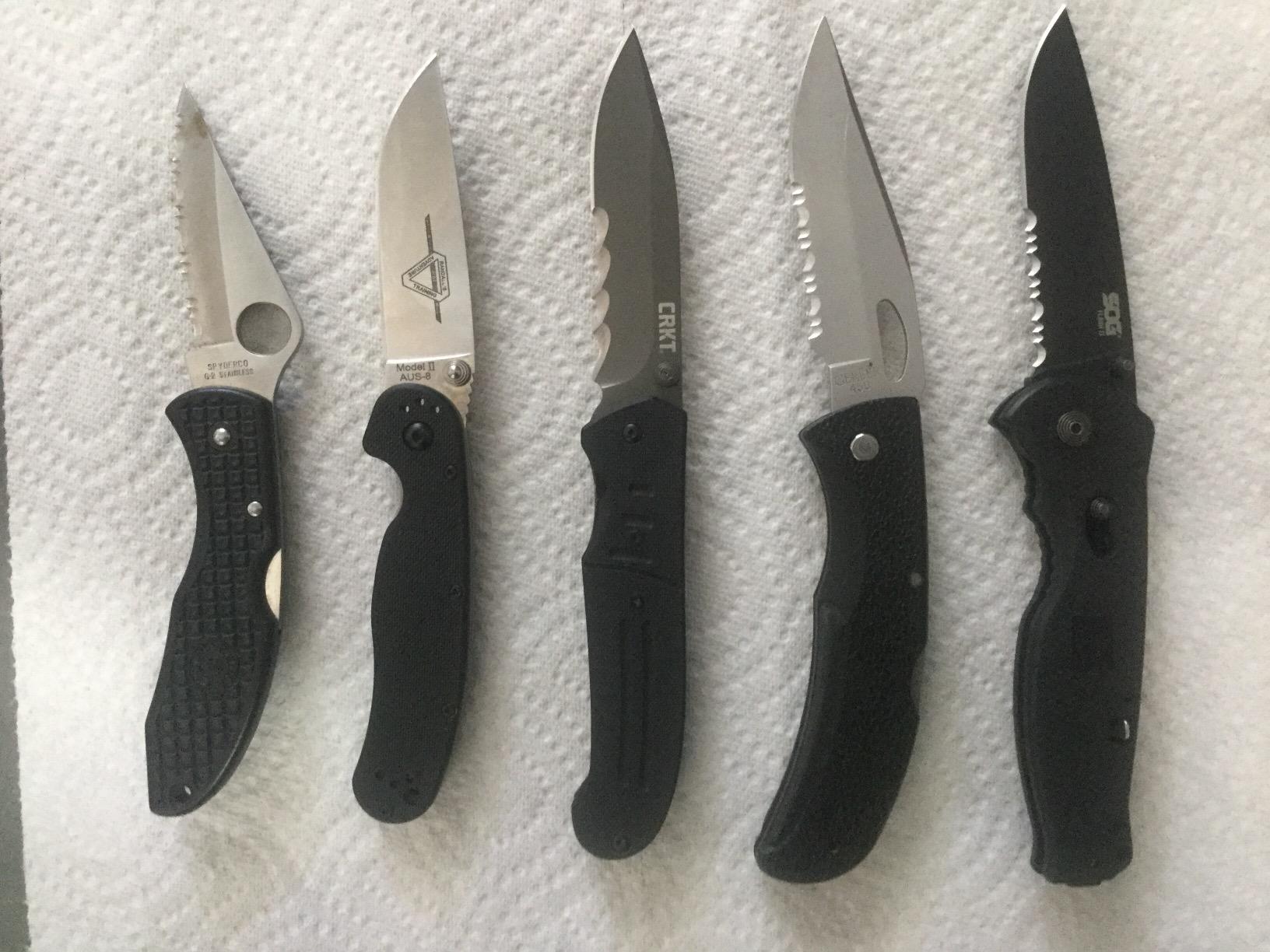
Why pay double? The RAT 2 delivers premium performance at an entry-level price.
Check Price on AmazonPros & Cons
The Pros
- Perfect EDC size (3-inch blade).
- Incredible slicing geometry (Full Flat Grind).
- D2 steel option available for edge retention.
- Fully ambidextrous 4-way pocket clip.
- Snappy action on bronze washers.
The Cons
- Handle scales can be slippery (Nylon 6).
- Not a deep-carry clip (some handle shows).
- Might be too small for very large hands.
- D2 version can rust if not maintained.
Frequently Asked Questions
Is the Ontario RAT 2 legal to carry?
In many places, yes. The 3-inch blade length complies with many “under 3.5 inch” or “under 3 inch” laws. However, it locks, which is restricted in places like the UK. Always check your local laws.
Is the RAT 2 good for self-defense?
Generally, no. It is a small utility tool. The handle doesn’t offer enough purchase for high-stress tactical use compared to the larger RAT 1. It is designed for cutting boxes, not combat.
Can I change the scales?
Yes! There is a huge aftermarket community. You can buy Carbon Fiber, G10, Micarta, and even Titanium scales to customize your RAT 2.
How often do I need to sharpen the D2 version?
D2 holds a working edge for a long time. For average EDC use (packages, mail, loose threads), you might only need to sharpen it once every few months, with occasional stropping in between.
Is it assisted opening?
No, the RAT 2 is a manual folder. However, the detent is tuned so well that it flies open like an assisted knife once you overcome the initial resistance.
Does it have ball bearings?
No, it uses phosphor bronze washers. This is preferred for a work knife as washers are more resistant to dirt and grit than ball bearings.
What is the difference between RAT 1 and RAT 2?
Size and Weight. RAT 1 is 3.6″ blade / 5 oz. RAT 2 is 3.0″ blade / 2.75 oz. The RAT 2 is roughly 20% smaller and nearly half the weight.
What does “RAT” stand for?
RAT stands for Randall’s Adventure & Training, the jungle survival school that originally designed the knife. Ontario Knife Company licensed and manufactures the design under their own brand.
Where is the Ontario RAT 2 made?
The RAT 2 folder is manufactured in Taiwan, a country with a well-respected cutlery manufacturing industry that also produces knives for brands like Spyderco and CRKT. Ontario’s domestic New York factory focuses primarily on fixed blades and military contract knives.
Does the RAT 2 come in a serrated version?
No. Unlike the RAT 1, the RAT 2 is only available with a plain edge blade. Buyers who need a serrated or combo edge should look at alternatives like the Kershaw Clash.
What colors does the RAT 2 come in?
Common configurations include black-on-black, OD green, coyote brown, and desert tan, with either a satin or black-coated blade. Color has no effect on performance, only appearance.
Is the RAT 2 a good gift for a first-time knife owner?
Yes. Its low price, solid ergonomics, and dependable liner lock make it a common recommendation for someone’s first “real” pocket knife or as a low-risk gift.
Can the RAT 2 be taken apart for cleaning or upgrades?
Yes. The RAT 2 uses standard screw construction rather than proprietary or adhesive-bonded parts, making it fully disassemblable with a basic screwdriver set for cleaning, lubrication, or aftermarket scale swaps.
How much does the Ontario RAT 2 typically cost?
Street pricing for the AUS-8 version is usually well under $30, with the D2 version priced modestly higher. This puts it well below competitors like the Spyderco Delica 4 while offering comparable everyday functionality.
Does the RAT 2 have a lanyard hole?
Yes. A lanyard hole is built into the base of the handle, allowing for a paracord lanyard or fob for easier retrieval from a pocket or bag.
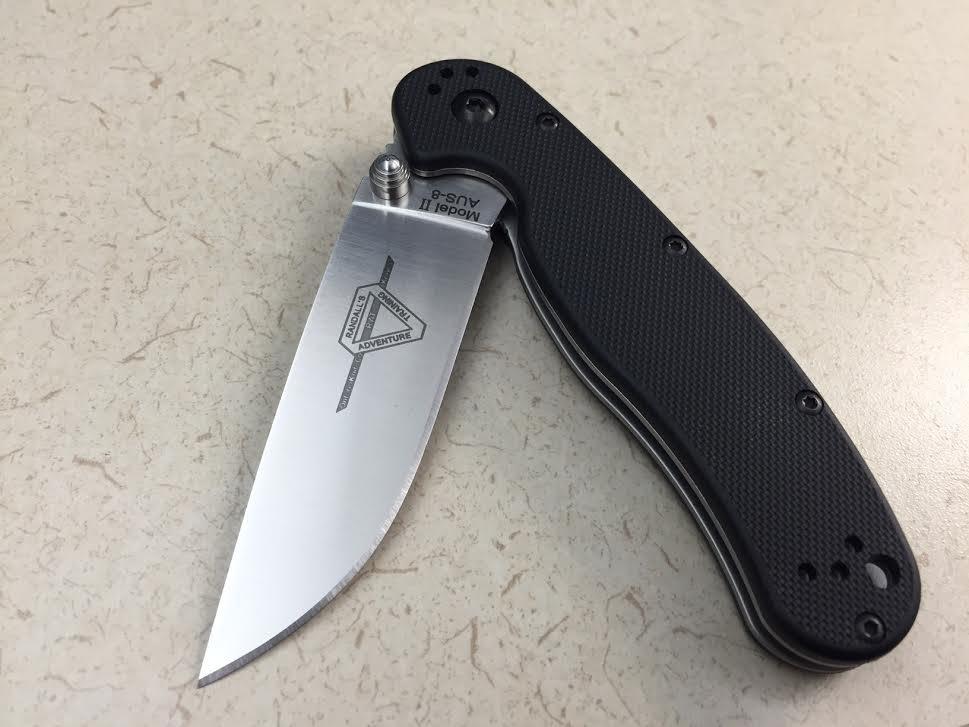
The search for the perfect budget EDC is over. Grab a RAT 2 and feel the difference.
Check Price on AmazonFinal Verdict
The Ontario RAT 2 is more than just a smaller version of a famous knife; it is a masterpiece of budget engineering in its own right. It takes the durability of a survival tool and refines it into a package that fits into modern life.
For the price, there are very few knives that can compete with the action, ergonomics, and cutting performance of the RAT 2. Whether you are a seasoned collector or buying your first “real” knife, the RAT 2 belongs in your pocket.