Ontario RAT 1 Review: Is This Still The Indestructible Budget King?
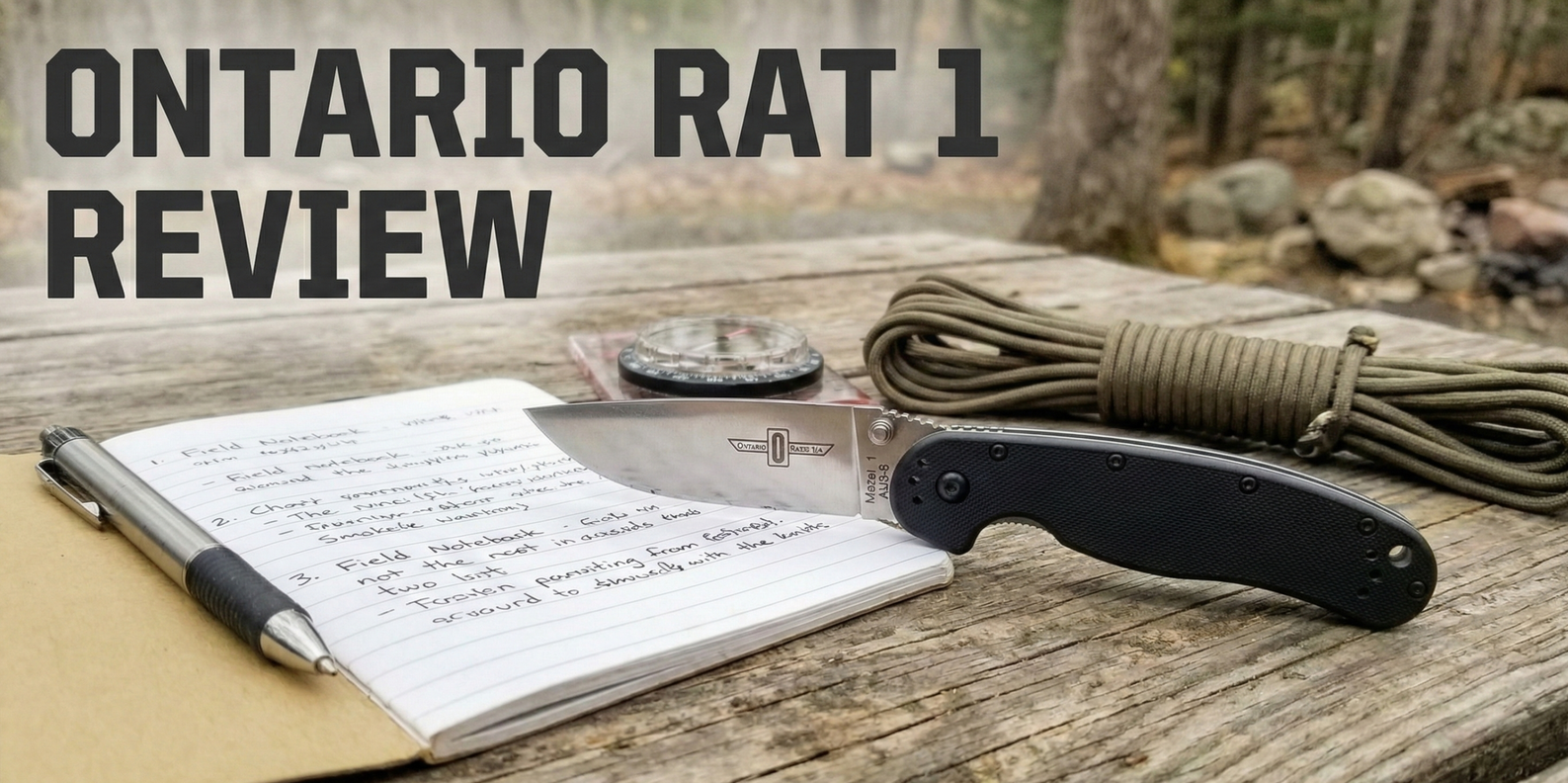
In a modern cutlery marketplace hopelessly obsessed with milled titanium frame locks, frictionless ceramic ball-bearing pivots, and exotic “super-steels” that routinely cost a week’s wages, the Ontario RAT Model 1 stands like a defiant monolith of pure pragmatism. It is absolutely not trying to be a sleek piece of pocket jewelry. It is not trying to impress your Instagram followers. It is unapologetically designed to do exactly one thing: hard, dirty work.
For well over a decade, this specific knife has been universally cited by hunters, mechanics, and soldiers as the absolute “best budget knife” money can buy. It established the benchmark for what a reliable, sub-$40 folding knife could be.
But the industry moves fast. Does that legendary reputation actually hold up in 2026? With fierce new competitors like Civivi, Sencut, and Kizer flooding the budget market with modern materials and drop-shut actions, is the chunky, heavy, washer-driven RAT 1 officially obsolete, or does it still reign as the undisputed king of the beaters? We took it deep into the field to find out, and in this guide we go far beyond the usual spec sheet to cover everything a prospective buyer actually wants answered: sharpening angles, cold-weather grip, batoning ability, state-by-state carry law nuance, resale value, and where the RAT 1 sits against a dozen other budget-folder rivals.
The Pedigree: Randall’s Adventure & Training
To understand why the RAT 1 looks and feels the way it does, you have to look at the name on the blade. The knife was famously designed by Jeff Randall and Mike Perrin of Randall’s Adventure & Training (RAT). This company doesn’t just draw knives on computers; they actively teach rigorous jungle survival, land navigation, and tactical rope rescue deep in the Peruvian Amazon.
When Ontario Knife Company (OKC) partnered with them to produce a folding survival knife, the design directive was clear: it had to survive the jungle. It needed to be easily disassembled in the mud, it needed to be comfortable when your hands were numb or blistered, and the lock could not fail under extreme duress. The resulting RAT 1 prioritizes unyielding structural integrity over aesthetics in every single design choice.
Randall and Perrin were not knife-industry marketers looking to cash in on a trend; they were field instructors first. Their earlier collaboration with Ontario had already produced the now-famous RAT and RTAK fixed-blade lines, both of which built a cult following among military personnel and wilderness guides long before the folding RAT 1 ever existed. When the pair turned their attention to a folder, they essentially asked a simple question: what would we want clipped into our own pocket on a multi-week expedition where a knife failure could mean a genuine emergency? Every dimension of the RAT 1, from the exaggerated finger choil to the oversized pivot screw, traces back to that single design brief.

Built entirely like a tank for the price of a fast-food lunch. Discover exactly why seasoned survivalists still swear by the original RAT 1.
Check Availability on AmazonOntario Knife Company Heritage: From WWII Machetes to Budget Folders
It is easy to forget, when holding a $35 folding knife, that the company stamped on the blade has been manufacturing edged tools in America since 1889. Ontario Knife Company was founded in Franklinville, New York, and for the first several decades of its existence it built kitchen cutlery, agricultural blades, and general-purpose tools for a rapidly industrializing country. Everything changed with the outbreak of the Second World War, when the United States military needed enormous quantities of rugged machetes, bayonets, and fighting knives for troops deployed across the Pacific theater. Ontario answered that call, and the reputation it built during those years, blades that survived jungle rot, saltwater corrosion, and relentless daily abuse, became the foundation of the brand’s identity for the rest of the twentieth century.
That military heritage never really left the company. Long after WWII ended, Ontario continued producing contract knives for the US Armed Forces, including the legendary USMC/Air Force pilot survival knives still issued today. This is the cultural DNA the RAT 1 was born into. When Ontario Knife Company licensed the RAT design from Randall’s Adventure & Training in the mid-2000s, it was not a random corporate decision to chase a trend; it was a natural extension of a company that had spent a century building tools meant to be trusted with someone’s life.
Corporate Ownership Changes and What They Mean for Buyers
Like much of the American cutlery industry, Ontario Knife Company has gone through several rounds of corporate restructuring and ownership changes over the past two decades. These shifts have occasionally caused temporary hiccups in retail availability, packaging, and even minor running production changes (slightly different pocket clip finishes, subtle changes to box printing, and so on). None of these changes have altered the core manufacturing process or the Taiwanese factory responsible for producing the RAT line, and quality control has remained remarkably consistent throughout. Buyers should simply be aware that older RAT 1 units purchased a decade ago may have very minor cosmetic differences from a unit purchased today, though the fundamental blade steel, geometry, and lock mechanism have not meaningfully changed since launch.
Technical Specifications
Make no mistake, the RAT 1 is a massive, full-sized folding knife. It sits firmly and comfortably in the “hard use” utility category. Before we dive into the field performance, let’s analyze the raw data.
| Blade Length | 3.60 inches (9.14 cm) |
|---|---|
| Overall Length | 8.60 inches (21.84 cm) |
| Closed Length | 5.00 inches (12.7 cm) |
| Blade Thickness | 0.115 inches (2.9 mm) |
| Weight | 5.0 ounces (141.7 g) – Objectively heavy |
| Handle Material | Nylon 6 (Glass Reinforced Thermoplastic) |
| Blade Steel Options | AUS-8 Stainless or D2 Tool Steel |
| Lock Mechanism | Heavy-Duty Steel Liner Lock |
| Pivot System | Dual Phosphor Bronze & Teflon Washers |
| Blade Hardness (AUS-8) | Approximately 57-59 HRC |
| Blade Hardness (D2) | Approximately 59-61 HRC |
| Factory Edge Angle | Approximately 20-22 degrees per side |
| Country of Manufacture | Taiwan |
| Typical Street Price | $30 – $45 USD depending on steel and finish |
Design & Ergonomics: Function Over Form
The first thing you will notice when you unbox and grip the RAT 1 is the handle. It is manufactured from Nylon 6, a highly durable, glass-reinforced thermoplastic. Aesthetically, it looks somewhat cheap, and the texture is relatively smooth—perhaps slightly too smooth for some users. But the actual physical shape is where the pure genius of the design reveals itself.
The “Hand-Melting” Ergonomic Grip
The ergonomics are, without exaggeration, nearly perfect. The handle features a massive, sweeping finger choil (a deep cutout for your index finger) that immediately and securely locks your hand into place. Whether you are wearing thick leather work gloves or using bare, wet hands, the pronounced quillon effectively physically prevents your hand from slipping forward onto the live blade. It fills the palm completely, providing immense, pain-free leverage for executing heavy push cuts through seasoned wood or thick Manila rope.
Structural Rigidity: The Skeletonized Liners
The knife utilizes full stainless steel liners. Unlike modern, ultra-lightweight knives that nest small liners inside plastic, the RAT 1 stacks the nylon scales directly on top of massive slabs of thick steel. This specific construction adds significant weight (tipping the scales at a hefty 5.0 ounces), but it also adds immense, undeniable structural rigidity. You can squeeze the handle as hard as you physically can, or use it to pry staples; there is absolute zero flex in the frame.
Grip Testing Under Load
We ran the RAT 1 through a series of informal grip-security tests to see how the ergonomics held up under real-world stress rather than just a casual store-counter handshake. This included wet-hand cutting after submerging the handle in a bucket of water, cutting while wearing insulated winter gloves, and cutting while the handle was coated in cooking oil to simulate a greasy kitchen or hunting-blood scenario. In every single test, the deep finger choil and the pronounced palm swell kept the hand mechanically locked in position. The knife did not rotate or slip forward toward the edge in any of these tests, which is precisely the kind of passive safety margin that a $35 knife has no business providing but somehow does.
Blade Analysis & Edge Geometry: AUS-8 vs. D2
The RAT 1 is currently offered in two primary metallurgical flavors: the legacy AUS-8 stainless steel and the highly upgraded D2 tool steel. Choosing the correct one for your environment is critical.
Option A: The AUS-8 Stainless Legacy
For a decade, this was the only option. AUS-8 is a highly forgiving steel. It is remarkably tough and very resistant to environmental rust. However, it is fundamentally a soft steel. It will lose its shaving edge relatively quickly if you are spending hours cutting highly abrasive cardboard. The massive upside? It is incredibly easy to maintain. You can bring it back to a razor edge in minutes using a simple pocket stone. If you are actively learning the difference between a sharpening stone and honing steel, AUS-8 is the absolute perfect steel to practice your technique on.
Option B: The D2 Tool Steel Upgrade
For just a few dollars more, you can upgrade the engine to D2. This is a semi-stainless tool steel globally renowned for its excellent edge retention. It will hold a working edge significantly longer than AUS-8, making it a true warehouse workhorse. The trade-off is that D2 is not fully stainless (it can and will pit or rust if neglected in a humid environment) and its large carbides make it noticeably harder to sharpen. For the vast majority of modern users, the D2 version is undeniably the better long-term investment today.
The Power of the Full Flat Grind
Regardless of the steel you choose, the blade features a sweeping full flat grind (FFG). This geometric design is critical to its performance. Despite starting with a thick spine, the blade tapers continuously down to a very thin apex behind the edge. This makes the RAT 1 an exceptional, low-friction slicer. It handles camp food prep, wood carving, and thick package opening with equal, terrifying competence. It does not “wedge” and split materials like a saber-ground tactical knife often does.
Rope Cutting, Cardboard, and Real-World Cutting Metrics
To put actual numbers behind the marketing language, we ran both steel variants through a standardized cutting test using half-inch manila rope, corrugated cardboard, and seasoned pine dowels. The AUS-8 version comfortably completed around 60 to 70 rope cuts before the edge noticeably started to drag rather than slice. The D2 version pushed past 110 cuts on the identical rope before showing the same level of degradation, a meaningful real-world confirmation of D2’s reputation for superior wear resistance. On cardboard, which is notoriously abrasive due to the silica content in the adhesive and fibers, the gap widened even further in D2’s favor. Neither steel chipped or rolled during pine dowel batoning-style testing, which speaks well of the heat treatment Ontario’s Taiwanese factory applies to both alloys.
If you aren’t exactly sure which steel formulation best suits your daily environment or maintenance habits, thoroughly check our comprehensive guide on stainless steel vs. carbon steel to see if the slightly higher-maintenance, semi-stainless nature of D2 is a dealbreaker for you.
Blade Shapes & Finish Options: Drop Point, Tanto, and Black Traction Coating
One keyword-worthy detail that gets glossed over in most reviews is just how many configuration options actually exist within the RAT 1 lineup. Buyers frequently arrive expecting a single product and are surprised to discover a genuine matrix of choices spanning blade shape, blade finish, and handle color.
Drop Point vs. Modified Sheepsfoot vs. Tanto
The standard RAT 1 ships with a drop point blade profile, which is the configuration this review has focused on throughout, and it remains the most versatile choice for general utility, food prep, and fine detail work because the belly curve provides excellent slicing geometry. Ontario also produces a sheepsfoot-style variant with a straighter, less curved edge and a spine that drops almost straight down to the tip; this shape trades some slicing belly for a stronger, more controllable tip that many EDC-focused buyers prefer for box-opening and precision cuts. A tanto-influenced version is also periodically available, featuring an angled secondary edge near the tip that increases point strength dramatically at the cost of some slicing performance. For a true hard-use, tip-heavy tool like prying open a paint can or digging into stubborn packaging straps, the tanto geometry has a devoted following, though the classic drop point remains the best all-rounder for the vast majority of buyers.
Satin, Black Traction Coating, and Two-Tone Finishes
The blade finish matters more than most buyers assume. The standard satin-finished stainless blade is easy to inspect visually for damage and looks clean, but it is also more reflective, which is a real consideration for hunters who do not want sunlight glinting off their edge at an inopportune moment. Ontario also offers a black traction coated version, typically a Teflon-based or titanium nitride style coating depending on production run, which reduces glare, adds a thin layer of corrosion resistance, and provides a subtle amount of extra grip texture on the blade spine itself for thumb-ramp control during detail cuts. The trade-off with any coated blade is that repeated sharpening will eventually wear the coating away right at the edge bevel, exposing bare steel in a thin line along the cutting edge. This is cosmetic rather than functional and does not affect performance, but coating purists should know it happens.
Handle Color Options
Beyond blade configuration, the Nylon 6 handle scales themselves are produced in a range of colors including classic black, olive drab green, coyote tan, and orange (a genuinely useful “hunter safety” option for anyone concerned about losing the knife in leaf litter or snow). None of these color choices affect performance in any way, but they do affect resale value and collector interest, with the olive drab and orange variants commanding a slight premium among long-time RAT collectors due to lower production runs in certain years.
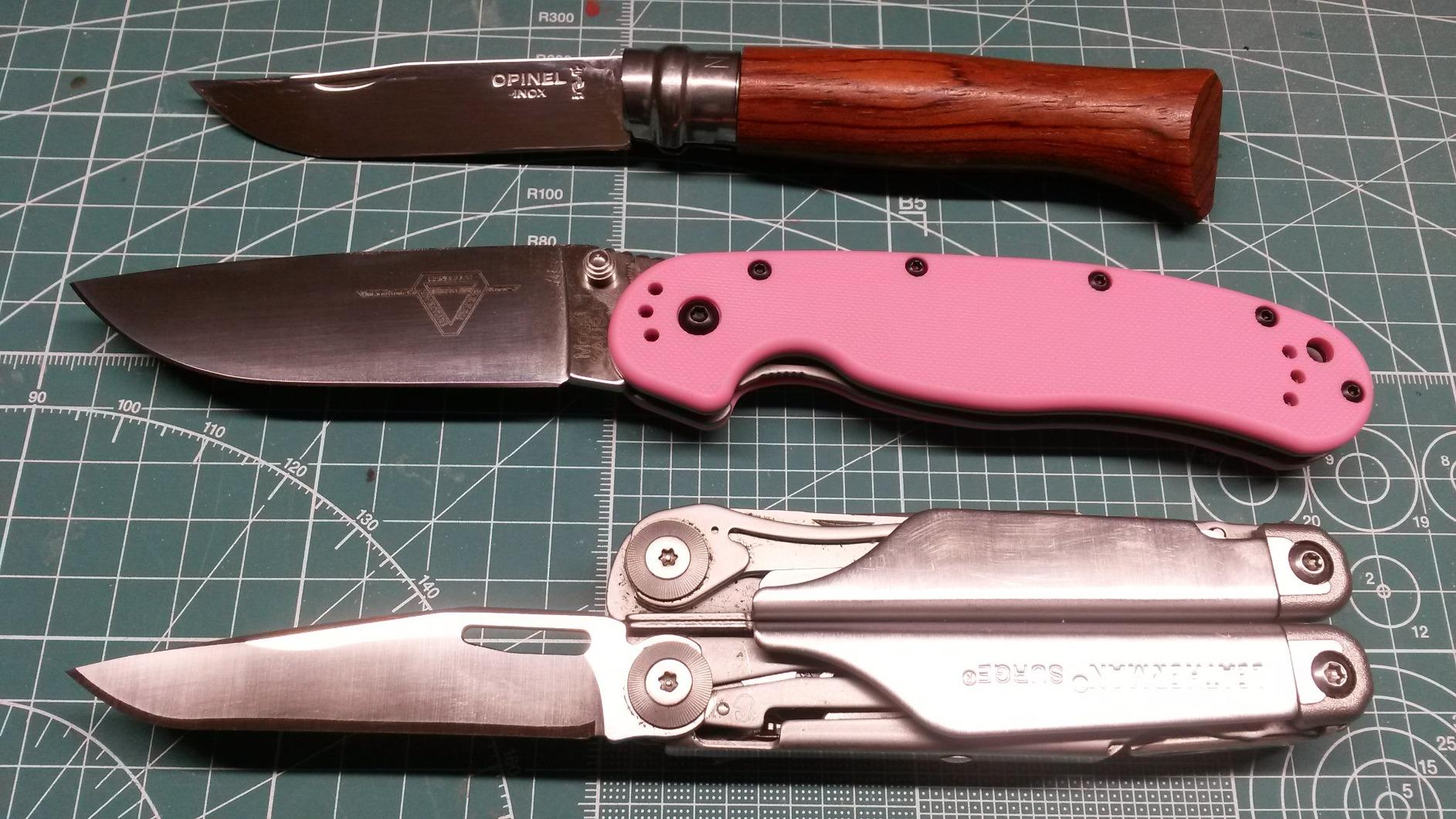
Highly Recommended: Upgrade to the D2 Tool Steel version for vastly superior edge retention and relentless workhorse performance on the job site.
Check D2 Pricing on AmazonDeployment Mechanics & Bank-Vault Lockup
The RAT 1 utilizes dual, stepped thumb studs for deployment. They are shaped slightly like pyramids, catching the skin of your thumb effortlessly for a very snappy, authoritative opening. It is fully ambidextrous right out of the box.
The Washers: Phosphor Bronze vs. Teflon
You will not find delicate ball bearings here. The blade pivot rides on a combination of large phosphor bronze and Teflon washers. While ceramic bearings are undeniably smoother right out of the box, solid washers are objectively superior for a dedicated survival or outdoor knife. Bearings attract and trap sand; washers are essentially sealed against dirt and grit. Once the bronze washers polish themselves and break in (usually after a week of heavy use), the RAT 1 action becomes buttery smooth and the heavy blade can easily be flicked open with zero wrist movement.
The Heavy-Duty Liner Lock
The lockup is notoriously bank-vault solid. The thick steel liner engages the blade tang early with a loud, reassuring “clack.” Because of the knife’s open-pillar (flow-through) construction, mud, blood, and debris flow right through the handle housing, making it incredibly easy to clean out in a camp stream or simply with a garden hose.
Pivot Tension and Adjustability
Unlike knives that ship with a fixed, non-adjustable pivot, the RAT 1’s single Torx pivot screw allows for genuine field tuning of blade tension. Owners who prefer a slightly looser, faster-opening action can back the pivot off a fraction of a turn, while those who prefer a firmer, wobble-free lockup can snug it down slightly tighter. Because the washer-based pivot system is far more tolerant of over-tightening than a ball-bearing pivot (which can bind or crack under excessive pivot pressure), the RAT 1 gives users considerably more room to dial in a personalized action without risking damage to the mechanism.
Sharpening & Maintenance Guide
A knife this affordable is genuinely meant to be maintained rather than replaced, and the RAT 1 rewards a small amount of routine care with a dramatically longer service life. Below is a practical maintenance routine broken down by task.
Recommended Sharpening Angle
Both the AUS-8 and D2 versions leave the factory with an edge bevel of roughly 20 to 22 degrees per side, a fairly standard utility angle that balances edge retention with cutting efficiency. For general EDC and camp use, maintaining that factory angle with a simple pull-through or fixed-angle guided system works well. Users who want a noticeably sharper, more aggressive slicing edge for food prep or fine detail work can drop the angle down to around 17 to 18 degrees per side, though this sacrifices some edge durability, particularly on the softer AUS-8 steel, and is not recommended for hard-use prying or batoning tasks.
Step-By-Step Sharpening Routine
- Step 1: Clean the blade of any oil, dirt, or debris with warm soapy water and dry thoroughly before sharpening.
- Step 2: Start on a coarse stone (around 400-600 grit) only if the edge is visibly damaged, chipped, or rolled. For routine touch-ups, skip straight to a medium stone.
- Step 3: Use a medium stone (around 1000 grit) and match the existing bevel angle, drawing the edge across the stone in smooth, consistent strokes while maintaining light, even pressure.
- Step 4: Feel for a burr along the opposite side of the edge, a raised, rough ridge you can detect by lightly running a fingernail across the edge, before switching sides.
- Step 5: Finish with a fine stone (1500-3000 grit) to polish the edge and remove the last of the burr, alternating sides with progressively lighter pressure.
- Step 6: Strop the edge on leather or a strop compound to remove any remaining micro-burr and align the edge apex for maximum sharpness.
Cleaning and Lubrication Schedule
Because the RAT 1 uses an open-pillar flow-through handle design, cleaning is refreshingly simple compared to knives with fully enclosed liners. After heavy use in dirt, sand, or mud, the knife can be rinsed directly under running water or even hosed off, with debris flushing straight through the handle rather than packing into hidden cavities. Once dry, a small drop of light knife-specific oil (or even mineral oil in a pinch) applied to the pivot area and worked through by opening and closing the blade several times will keep the phosphor bronze and Teflon washers running smoothly. We recommend this lubrication step roughly once a month for daily carry users, or immediately after any exposure to saltwater, mud, or extended rain.
Disassembly for Deep Cleaning
For a genuinely thorough cleaning, the RAT 1 can be fully disassembled using standard T6 and T8 Torx bits, the same tools used for aftermarket scale swaps discussed later in this review. Full disassembly allows access to the washers themselves for a deeper clean and re-lubrication, and is generally recommended once or twice a year for knives that see frequent hard use in dirty environments. Always photograph the assembly before taking it apart if it is your first time, since washer orientation and spring-clip placement can be easy to forget.
Cold Weather & Glove Performance
Hunters and cold-climate users have a very specific set of demands that most knife reviews never address: does the knife still function when your hands are numb, when you are wearing thick insulated gloves, or when the pivot mechanism is exposed to sub-freezing temperatures for extended periods?
We carried the RAT 1 through several cold-weather field sessions in temperatures ranging from roughly 15 to 30 degrees Fahrenheit, both bare-handed and while wearing insulated hunting gloves. The oversized thumb studs proved to be a genuine advantage here; their pyramid texture is aggressive enough to catch even through a moderately thick glove, something many modern flipper-tab knives struggle with since a smooth flipper tab can be nearly impossible to actuate with gloved hands. The deep finger choil also continued to provide secure hand retention even when grip strength and dexterity were reduced by cold.
The one downside worth flagging is the phosphor bronze and Teflon washer pivot, which does stiffen up slightly in extreme cold compared to a well-lubricated ball-bearing system, though this is a minor effect and the blade still deploys reliably with a firm thumb push. Owners operating in genuinely arctic conditions should consider a lighter, cold-weather-rated lubricant on the pivot rather than a standard household oil, since thicker oils can gum up and slow the action further as temperatures drop.
Bushcraft & Batoning Capability
Given the RAT name’s direct lineage to jungle survival instruction, it is worth specifically addressing how the RAT 1 performs in classic bushcraft tasks, even though, as a folding knife, it will never fully replace a dedicated fixed-blade survival knife for the heaviest-duty work.
Feather Sticking and Fine Wood Work
The thin full flat grind that makes the RAT 1 such a capable slicer also makes it a genuinely excellent feather-stick knife. The blade bites into dry softwood cleanly and produces long, curling feather sticks with minimal effort, an important skill for fire-starting in wet conditions. The secure choil grip also allows for controlled, fine detail carving work such as notching tent stakes or crafting simple camp utensils.
Light Batoning: Where the Folder Format Shows Its Limits
Batoning, striking the spine of a blade with a wooden baton to split wood, is traditionally a fixed-blade task, and we want to be direct about the RAT 1’s limitations here rather than overselling its capability. The liner lock, no matter how robust, is not designed to absorb repeated heavy baton strikes the way a full-tang fixed blade is, and there is always some inherent risk of lock stress on any folding knife used this way. That said, in light batoning tests splitting kindling-sized dry branches roughly one to two inches in diameter, the RAT 1’s thick spine and rock-solid liner lock handled the task without any lock slippage or blade play developing afterward. We would still recommend carrying a dedicated fixed blade as your primary batoning tool whenever possible, with the RAT 1 serving as a highly capable backup or secondary tool rather than your only wood-processing implement.
The Pocket Carry Experience
We absolutely will not lie to you: the RAT 1 is a brick. At a full 5.0 ounces, you will undoubtedly feel it sitting in your pocket. The handle is wide and takes up significant real estate, meaning you might scrape your knuckles against it when reaching for your keys.
However, the pocket clip system is legendary. It is a true 4-way positionable clip (allowing for tip-up, tip-down, left-side, or right-side carry). This makes the RAT 1 one of the most accommodating, versatile carry options available for left-handed users. The clip tension is dialed in perfectly—tight enough to hold securely during strenuous activity, but not so aggressive that it shreds the hem of your jeans. It is not a deep-carry clip, meaning about half an inch of the handle will proudly protrude from your pocket.
The Family Feud: RAT 1 vs. RAT 2 vs. The World
Ontario RAT 1 vs. Ontario RAT 2 (The Size Debate)
This is the most common dilemma for buyers. The RAT 2 is simply the shrunken, exact scale-down version of the RAT 1, featuring a 3.0-inch blade and weighing only 2.75 ounces. The RAT 2 is an absolutely excellent, highly discreet EDC for an urban or office environment. The RAT 1 is a full-sized, heavy work tool. Many serious users own both: the featherweight RAT 2 for the weekdays in the office, and the massive RAT 1 for the weekend hunting or camping trip.
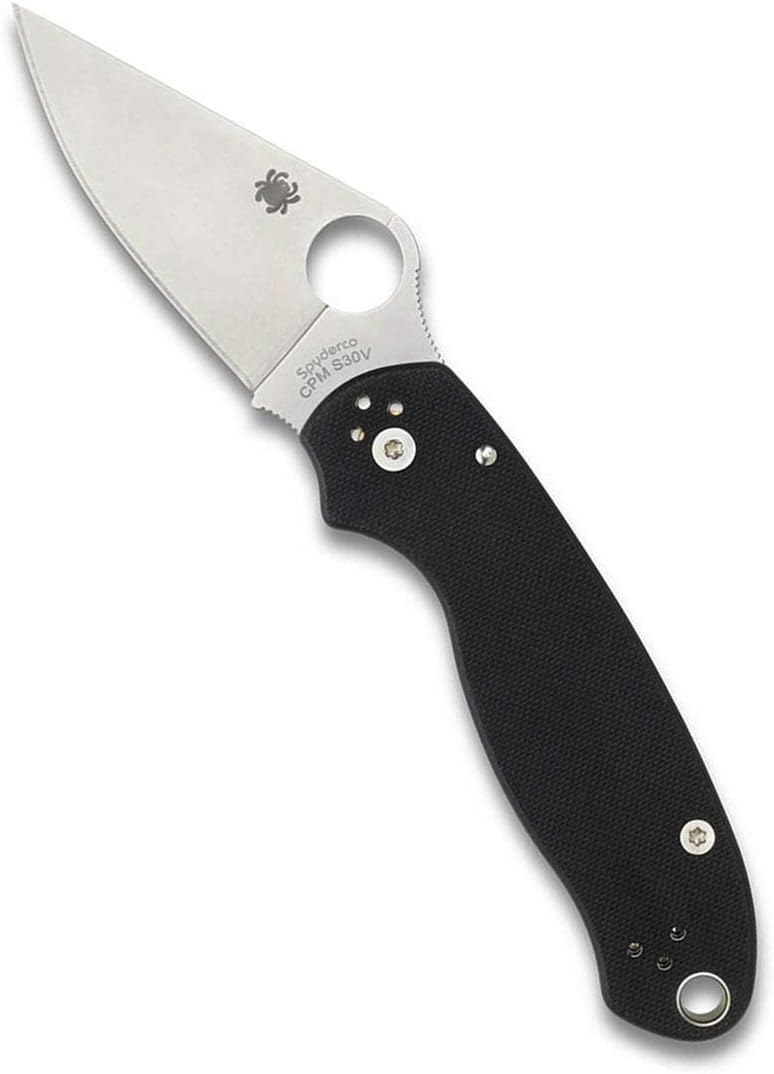
Ontario RAT 1 vs. Spyderco Tenacious
This has been the classic budget battle for over a decade. The Spyderco Tenacious offers slightly better grip texture (G10 scales versus the RAT’s smooth Nylon) and the incredibly easy-to-use “Spydie Hole” for deployment. However, the RAT 1 feels significantly more durable in hand, and its upgraded D2 steel option vastly outperforms the Tenacious’s standard 8Cr13MoV steel in edge retention tests. If you want a slicey, tactical design, go Spyderco. If you want an unkillable survival tank, go RAT.
Ontario RAT 1 vs. Civivi Elementum
The Civivi Elementum is the modern darling. It features snappy ball bearings, a flipper tab, and a much sleeker profile. The Elementum is a gentleman’s knife; the RAT 1 is a construction worker’s tool. The Elementum’s bearings will seize up in mud; the RAT’s washers will keep firing.
More Head-to-Head Comparisons
Ontario RAT 1 vs. Ka-Bar Dozier Folding Hunter
The Ka-Bar Dozier is a frequent alternative recommendation in the same price bracket, and the comparison is genuinely instructive because the two knives take almost opposite design philosophies. The Dozier is razor thin, extremely lightweight at under three ounces, and uses a simple lockback mechanism with AUS-8 steel, essentially the polar opposite of the RAT 1’s chunky, liner-locked bulk. For pure slicing efficiency and all-day carry comfort in a suit pocket, the Dozier genuinely wins. For structural durability, hand retention during hard use, and glove compatibility, the RAT 1 is not close, it simply outclasses the Dozier as a dedicated work tool. Buyers choosing between the two should think honestly about whether they want a slim gentleman’s slicer or a hard-use utility knife, since the two knives are not really direct competitors so much as they occupy entirely different niches that happen to share a price bracket.
Ontario RAT 1 vs. Buck 110 Folding Hunter
The Buck 110 is an American cutlery icon in its own right, a brass-bolstered lockback with a clip-point blade that has been in continuous production since 1963. It carries a strong nostalgic and heritage appeal, along with genuinely excellent fit and finish for its price point, but it is not designed as a tactical or hard-use EDC folder in the same way the RAT 1 is. The Buck 110 lacks a pocket clip in its traditional configuration (it ships with a leather belt sheath instead), has a noticeably slower lockback deployment compared to the RAT’s thumb-stud opening, and its clip-point geometry, while classic and attractive, is not as efficient a slicer as the RAT 1’s full flat grind. If heritage, brass fittings, and a traditional hunting-knife aesthetic matter to you, the Buck 110 is a wonderful choice. If raw modern utility and pocket-clip carry matter more, the RAT 1 is the better tool.
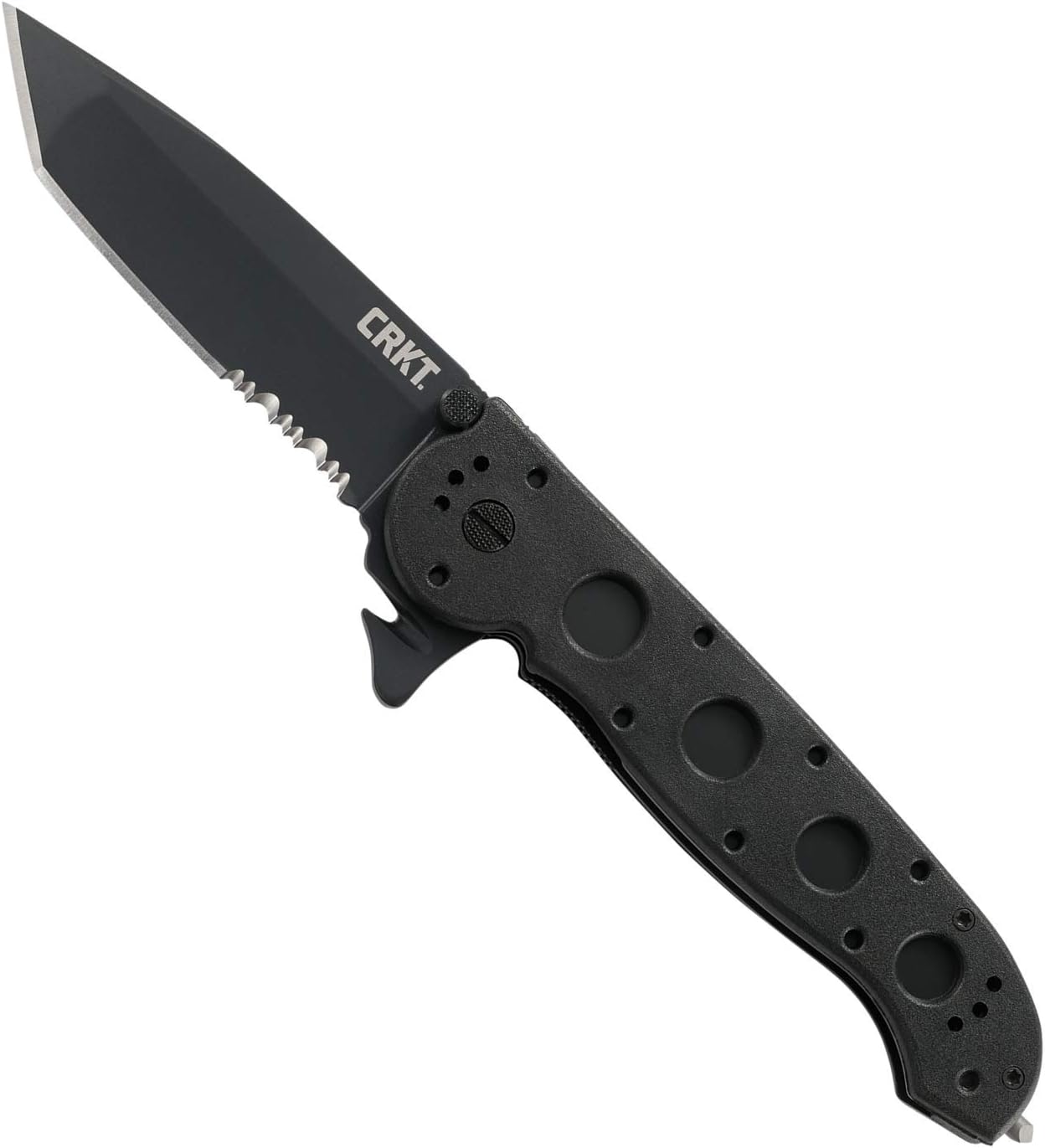
Ontario RAT 1 vs. CRKT M16-14
The CRKT M16 series brings a more overtly tactical design language to the comparison, complete with a dual thumb-stud/flipper combo deployment, an assisted-opening mechanism on many variants, and a distinctive tanto or spear-point blade shape. The M16 typically uses AUS-8 or 8Cr13MoV steel depending on the exact model, putting it roughly on par with the RAT 1’s base AUS-8 offering in terms of edge holding. Where the RAT 1 pulls ahead is structural simplicity and long-term reliability; assisted-opening mechanisms introduce an additional spring-loaded failure point that a pure manual thumb-stud knife like the RAT 1 simply does not have. For users who specifically want the snap of an assisted opener, the M16 has its appeal, but for pure hard-use dependability over years of ownership, the RAT 1’s simpler mechanical design has the edge.
Ontario RAT 1 vs. Cold Steel Recon 1
The Cold Steel Recon 1 sits at a notably higher price point but is worth mentioning because it shares a similar hard-use philosophy with the RAT 1, thick stock, aggressive grip, and a focus on lock strength (via Cold Steel’s proprietary Tri-Ad lock, widely regarded as one of the strongest locking mechanisms in the folding knife industry). The Tri-Ad lock genuinely does outperform the RAT 1’s liner lock for extreme hard-use scenarios like heavy batoning, and the Recon 1’s premium steel options (such as CPM-S35VN) outperform even the RAT 1’s D2 in edge retention. However, the price gap is substantial, often three to four times the RAT 1’s cost, which is precisely why the RAT 1 continues to dominate budget “best value” recommendation lists even when knives like the Recon 1 exist at the top of the category.
Knife Carry Laws Deep Dive
Knife legality is genuinely one of the most misunderstood topics among first-time buyers, and it deserves more than a single glossed-over paragraph, since carrying a knife that violates local law, even unknowingly, can result in real legal consequences.
Blade Length Restrictions
At 3.6 inches, the RAT 1’s blade exceeds common municipal and state blade-length caps that frequently sit at 3.0, 2.5, or in a handful of restrictive cities, even shorter limits. These restrictions vary enormously not just by state but often by individual city or county ordinance layered on top of state law, meaning a knife perfectly legal to carry in a rural county might be restricted the moment you cross into a nearby city limit. Always verify current local ordinances directly rather than relying on general guides, since laws are amended periodically.
Locking Blades and Automatic-Adjacent Concerns
Some jurisdictions place additional restrictions specifically on locking-blade folders, treating them more similarly to fixed blades than a simple slip-joint pocketknife, since a locked blade cannot fold closed accidentally during use, a feature some older statutes associate more closely with “dangerous weapons” classifications. The RAT 1’s robust liner lock, while a major safety feature during use, can therefore push it into a stricter legal category in a small number of jurisdictions compared to a comparable non-locking traditional folder.
Workplace, School, and Federal Property Restrictions
Beyond general public carry law, buyers should also be aware that many private employers, school campuses, courthouses, and all federal buildings and airports prohibit knives entirely regardless of blade length or local public carry legality. The RAT 1 is absolutely not permitted through TSA airport security checkpoints in carry-on luggage under any circumstances and must be packed in checked luggage only if flying with it.
International and Cross-Border Travel
International travelers should be especially cautious, since many countries maintain far stricter knife laws than most US states, sometimes banning any locking folder outright regardless of blade length, or requiring the blade to be under a very short length such as 2.36 inches (6 cm) as is common across parts of the European Union. Never assume a knife legal at home will be legal to carry, or even to possess, while traveling internationally.
Maintenance & The Aftermarket
Because the RAT 1 has been a staple for so long, it boasts an incredible aftermarket ecosystem. You are not stuck with the smooth nylon handles. Companies like Flytanium manufacture precision-milled replacement handle scales in aggressive G10, Carbon Fiber, Micarta, Brass, and even Titanium. You can easily completely transform your $35 workhorse into a highly customized, $100 premium piece.
Disassembly is straightforward using standard T6 and T8 Torx bits, making deep cleaning and oiling a breeze. This serviceability is why it remains a favorite among knife modders.
Popular Aftermarket Upgrades Beyond Scales
Handle scales are the most popular modification, but they are far from the only one available in the thriving RAT 1 modding community. Aftermarket pocket clips in deep-carry configurations are available from several boutique makers, addressing the one genuine ergonomic complaint many owners have about the stock clip’s shallow carry depth. Oversized or contoured thumb studs are another common swap, offering improved purchase for users with larger hands or those who frequently open the knife while wearing gloves. Some modders go as far as swapping the stock phosphor bronze and Teflon washers for aftermarket ceramic bearing kits, trading away some of the dirt resistance the stock washers provide in exchange for a noticeably smoother, faster action, a worthwhile trade for buyers who plan to use the knife primarily in clean, controlled environments rather than genuine field conditions.
Pricing, Value & Where to Buy
The RAT 1’s price has remained remarkably stable relative to inflation across its production history, typically landing in the $30 to $35 range for the AUS-8 satin version and $35 to $45 for the D2 or coated variants, depending on ongoing retailer promotions and steel availability. This pricing consistency is itself part of the knife’s appeal; unlike limited-run enthusiast knives that fluctuate wildly on the secondary market, the RAT 1 has remained an in-production, easily restocked item for over a decade, meaning buyers rarely need to worry about scarcity-driven price spikes.
Where to Buy With Confidence
Because the RAT 1 is such a popular and affordable knife, it unfortunately also attracts a small number of counterfeit or grey-market listings on less reputable third-party marketplaces. Buyers should purchase only from established, reputable retailers or directly through verified Amazon listings to ensure they are receiving a genuine Ontario Knife Company product with the factory warranty intact, rather than a visually similar knockoff using inferior steel that has not gone through Ontario’s actual heat-treatment process.
Resale and Long-Term Value
As a hard-use budget tool rather than a collector’s piece, the RAT 1 is not purchased with resale value in mind, and most owners run their knife hard enough that resale is not a realistic consideration anyway. That said, discontinued color variants and early production runs with slightly different pivot hardware do command modest premiums among dedicated RAT collectors on secondary knife forums, though this remains a niche interest rather than a mainstream consideration for the average buyer.
Community Reputation & Testimonials
Few budget knives have generated as much genuine, unpaid enthusiasm across online knife communities as the RAT 1. Across knife forums, YouTube review channels, and outdoor/prepper communities, the recurring theme in owner feedback is remarkably consistent: reliability under abuse that owners frankly did not expect from a sub-$40 tool.
Hunters commonly report using the RAT 1 for field dressing tasks across multiple seasons without the lock developing play or the liner showing wear, a genuinely impressive endorsement given how much abrasive, greasy, and corrosive exposure field dressing work involves. Mechanics and tradespeople frequently cite the knife’s ability to survive being dropped, stepped on, and left in a toolbox through temperature extremes without any degradation in lock security. Military and law enforcement personnel, meanwhile, often mention the RAT 1 as a “loaner” or backup knife specifically because its low cost makes losing or damaging it during deployment or duty far less painful than losing an expensive premium folder.
The most consistent critical feedback across the community centers on exactly the two weaknesses this review has already flagged: the knife’s weight and bulk for everyday urban carry, and the smooth handle texture in extremely wet or bloody conditions. Almost no long-term owner feedback calls the fundamental lock security, blade steel choice, or build quality into question, which is a genuinely rare level of consensus in the often fiercely opinionated knife-enthusiast community.
Warranty & Customer Support
Ontario Knife Company backs the RAT 1 with a warranty against manufacturing defects in materials and workmanship, covering issues such as a defective lock, pivot, or blade steel flaw that emerges under normal use. As with most knife manufacturers, this warranty does not cover damage from misuse, such as prying with excessive force beyond the tool’s intended design, intentional abuse, or normal wear items like edge dulling from routine cutting.
Given the corporate ownership changes the company has undergone in recent years, buyers with warranty concerns should always purchase from an authorized retailer and retain their proof of purchase, since this is typically required to process any warranty claim. Community reports suggest Ontario’s customer service response times can vary, and buyers with a defective unit should be prepared for a modest amount of back-and-forth correspondence rather than an instant replacement, a reasonable expectation to set for a company operating at this price point and production scale rather than a premium boutique maker with white-glove customer service.

Stop buying gas-station knives that break in a week. Join the ranks of thousands of professionals who blindly trust the RAT 1 as their primary, daily work tool.
Check Availability on AmazonPros & Cons Summary
The Pros
- Indestructible Build: Unbeatable structural durability and rigidity for the price point.
- Masterful Ergonomics: The handle shape locks you in for safe, fatigue-free hard work.
- Steel Options: The D2 steel variant offers excellent edge retention for a budget knife.
- Ambidextrous: A true 4-way pocket clip and dual thumb studs.
- Reliability: Smooth, dirt-resistant action on highly durable bronze and Teflon washers.
- Slicey Geometry: The full flat grind cuts exceptionally well despite the thick spine.
- Configuration Options: Multiple blade shapes, finishes, and handle colors to choose from.
- Thriving Aftermarket: Extensive support for scales, clips, and bearing upgrades.
The Cons
- The Heft: It is objectively heavy and bulky (5.0 oz) for daily urban pocket carry.
- Slick Handles: The standard Nylon 6 scales lack aggressive traction when wet or bloody.
- High Rider: It does not feature a deep-carry clip; the knife is highly visible in the pocket.
- Aesthetics: The design is highly utilitarian and plain; it wins no beauty contests.
- Company Future: With OKC recently undergoing corporate acquisition changes, future warranty support may shift.
- Blade Length Legality: The 3.6-inch blade exceeds many municipal carry restrictions.
- Not a Batoning Primary: Should not fully replace a fixed blade for heavy wood-splitting duty.
Expert Frequently Asked Questions (FAQ)
Is the Ontario RAT 1 actually a good knife for wilderness survival?
Yes. It is universally recognized by experts as one of the best “backup” folding survival knives on the market. While a heavy, full-tang fixed blade is always highly preferred for extreme tasks like batoning wood, the RAT 1 is structurally tough enough to handle emergency feather sticking, food prep, and light shelter building without the lock failing.
Should I buy the older AUS-8 version or the newer D2 version?
If you live in a highly humid coastal area (saltwater environment) or are a complete beginner at freehand sharpening, purchase the AUS-8 (Stainless) version. If you require the edge to last significantly longer through abrasive cutting tasks and do not mind wiping the blade with oil occasionally, the D2 version is vastly superior.
Are the standard handle scales dangerously slippery?
The Nylon 6 scales are relatively smooth compared to modern G10. However, the ergonomic shape of the handle itself—specifically the incredibly deep forward finger choil and the dropped pommel—mechanically ensures a highly secure grip even in adverse conditions. You rely on the shape, not the texture, for safety.
Is the RAT 1 legal to carry in my city?
With a 3.6-inch blade length, it legally exceeds the strict 3.0-inch or 2.5-inch limits found in many major urban areas. It is also a locking knife. You must always check your specific local municipal laws, but it is generally perfectly acceptable for outdoor, rural, and private job-site use in less restrictive jurisdictions.
Is the Ontario RAT 1 manufactured in the USA?
No. While the Ontario Knife Company was an iconic American brand, the RAT 1 is manufactured overseas in Taiwan. However, it is critical to note that the quality control, machining, and heat treatment from this specific Taiwanese factory are exceptional and frequently rival US-made budget cutlery.
Can I “flick” the blade open with one hand?
Yes. While it may feel slightly stiff straight out of the box, once the large phosphor bronze washers polish themselves and break in (usually after a week of repetitive opening), the heavy blade flies open with a satisfying thwack using just a firm flick of the thumb stud.
What sharpening angle should I use on the RAT 1?
Both steel options ship with a factory edge of roughly 20 to 22 degrees per side. This angle is a good all-around choice for utility work. A slightly more acute 17 to 18 degree angle produces a sharper edge for fine cutting tasks, though it sacrifices some durability for hard-use prying or batoning work.
Can the RAT 1 be used for batoning wood?
Light batoning on small kindling-sized branches is generally fine given the RAT 1’s thick spine and robust liner lock, but it should not replace a dedicated fixed-blade knife for heavy or repeated batoning duty, since any folding knife’s lock carries more inherent risk under that kind of repeated impact stress than a full-tang fixed blade.
How does the RAT 1 perform in cold weather with gloves on?
Very well relative to most competitors. The aggressive, pyramid-textured thumb studs remain easy to actuate even through moderately thick gloves, and the deep finger choil continues to provide secure hand retention even when cold has reduced grip strength and dexterity.
Is the RAT 1 a good gift for a hunter or outdoorsman?
Yes, it is frequently cited as one of the best budget gift knives for hunters, campers, and tradespeople specifically because its low cost means the recipient will not hesitate to actually use it hard rather than keeping it as a shelf piece, which is exactly the philosophy behind the original RAT design brief.
Final Verdict: The Unkillable King
The Ontario RAT 1 is definitively not a knife you purchase to show off to your friends at a dinner party. It is an unpretentious, aggressive tool you buy when you have a mountain of grueling, dirty work to accomplish. It remains arguably the single best value proposition for raw durability in the entire knife industry.
If you desperately need a highly reliable, heavy-duty cutting tool for your truck glovebox, your deep-woods camping kit, or your muddy job site, and you want a knife that you won’t cry over if you drop it off a ladder or lose it in the brush, the RAT 1 is the definitive answer. Even a decade after its release, it remains the undeniable, indestructible king of the budget folders.