Morakniv Companion Review: The Undisputed King of the Budget Fixed-Blade World?
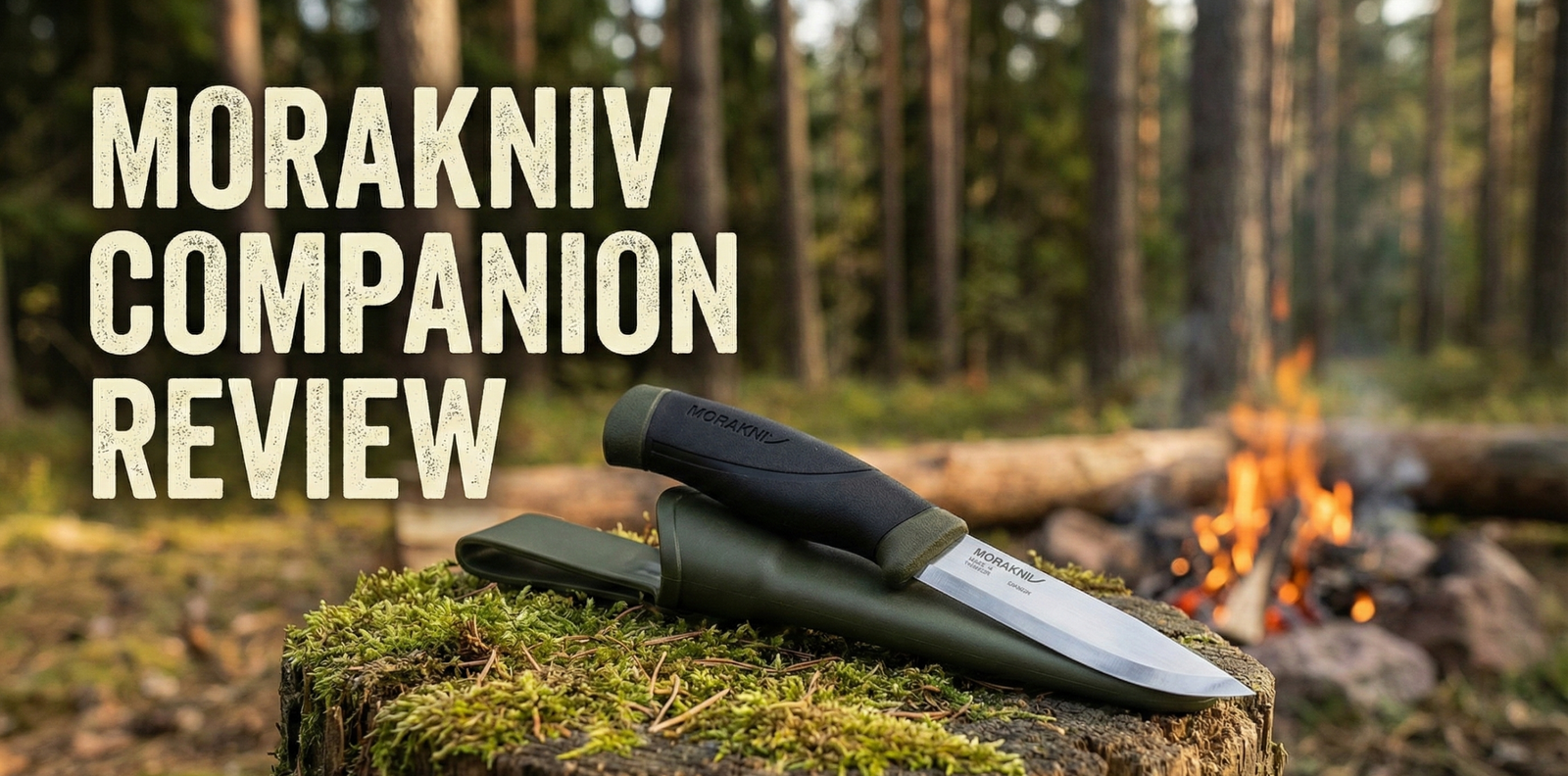
In a modern cutlery market utterly saturated with $300 “super-steel” tactical survival knives, heavily marketed folding cleavers, and custom blades that look far more like expensive jewelry than functional tools, the Morakniv Companion stands as a humble, unapologetic, and fiercely defiant outlier. Manufactured exclusively in Sweden and routinely retailing for less than the price of a standard fast-food lunch, this incredibly simple fixed-blade knife has arguably successfully performed more genuine, grueling work in the world’s forests than any expensive custom blade ever forged.
But how can a knife this astonishingly cheap actually be this good? Is it merely inflated romantic hype generated by thousands of YouTube bushcrafters, or is the Morakniv Companion genuinely the ultimate, undeniable value proposition in the entire outdoor gear industry? Whether you are a seasoned wilderness survivalist assembling a bug-out bag, an enthusiastic weekend car camper, or simply a homeowner looking for a phenomenally reliable toolbox knife, this comprehensive review will brutally strip away the myths and examine the raw, mathematical performance of this Swedish icon.
We are going to dissect absolutely everything—from the specific physics of its famous Scandi grind geometry and the metallurgical makeup of its steel options, to the internet-fueled controversy surrounding its partial rat-tail tang construction—to definitively help you decide if this $15 to $20 blade deserves a permanent spot on your belt.
The Deep Roots: A Brief History of Morakniv
To truly respect the Companion, you must understand where it comes from. The town of Mora, located in the Dalarna province of Sweden, has been a globally recognized epicenter of knife-making for over 400 years. The modern company known as “Morakniv” was officially formed in 2005 through the strategic merger of two legendary, centuries-old local rival factories: Frosts Knivfabrik (founded in 1891) and KJ Eriksson (founded in 1912).
Their driving philosophy has never deviated: utilize automated, highly efficient, state-of-the-art Swedish manufacturing to produce an exceptionally sharp, durable, and highly utilitarian tool at a price point accessible to every single working-class citizen. There are no unnecessary tactical frills here—only pure, distilled Scandinavian utility.

Join literally millions of seasoned outdoor enthusiasts worldwide who swear by the Mora. It is flawlessly reliable, terrifyingly sharp, and undeniably affordable.
Check Availability on AmazonTechnical Specifications
The inherent genius of the Companion lies entirely in its deceptive simplicity. It is extraordinarily lightweight, meticulously balanced directly at the index finger, and sized specifically for general, highly controlled utility tasks rather than attempting to act as a heavy, exhausting wood-chopping hatchet replacement.
| Specification | Detail |
|---|---|
| Blade Length | 4.1 inches (104 mm) |
| Overall Length | 8.6 inches (218 mm) |
| Blade Thickness | 0.10 inch (2.5 mm) – Standard Version |
| Weight (Knife Only) | 4.1 ounces (116 g) |
| Blade Material Options | Sandvik 12C27 (Stainless) or UHB-20C (High Carbon) |
| Handle Material | High-Friction TPE Rubber over Polymer Core |
| Grind Profile | True Scandinavian (Scandi) Grind |
| Country of Origin | Proudly Made in Sweden |
The Physics of the Scandi Grind
The single feature that makes the Morakniv Companion so legendary among woodworkers and survivalists is its blade geometry: the Scandi Grind (Scandinavian Grind).
Unlike the vast majority of Western pocket knives or kitchen knives that feature a flat grind terminating into a tiny, secondary “micro-bevel” at the very edge, a true Scandi grind utilizes a single, wide, continuous flat bevel that descends directly to the absolute cutting edge with zero secondary bevel.
Why is this important? It acts as a perfect wedge. When you press a Scandi grind into a piece of wood, the wide, flat bevel acts as a built-in angle guide, naturally biting incredibly deep into the timber with minimal physical exertion. It forces the wood fibers apart effortlessly, making it the undisputed, absolute king of carving feather sticks, notching tent stakes, or fashioning intricate figure-four trap triggers. It gives you surgical control over wood that a hollow-ground tactical knife simply cannot replicate.
Metallurgy: The Great Carbon vs. Stainless Debate
When purchasing a Morakniv Companion, you are immediately faced with a critical decision: which steel should you choose? Mora uses exceptional, highly consistent Swedish steel from Sandvik and Uddeholm. Here is the definitive breakdown:
1. The High Carbon Steel (UHB-20C / 1095 Equivalent)
The carbon steel model utilizes steel chemically similar to traditional 1095 high-carbon. It is heat-treated slightly harder (around 59-60 HRC). Because it lacks heavy chromium carbides, it takes a significantly keener, more aggressive “biting” edge, and it is vastly easier to resharpen in the field using natural stones.
Crucially, the 90-degree spine of a carbon steel Mora will effortlessly throw massive showers of sparks when struck against a ferrocerium rod (essential for survival fire starting).
The Caveat: It has zero rust resistance. If you put it away wet, it will rust overnight. Bushcrafters usually circumvent this by forcing a dark protective “patina” on the blade using hot vinegar or mustard.
2. The Stainless Steel (Sandvik 12C27)
The stainless model uses Sandvik 12C27, a highly refined, remarkably clean Swedish steel heat-treated to around 57-58 HRC. This is the ultimate, anxiety-free, low-maintenance option. It resists environmental rust incredibly well, making it the mandatory choice for highly humid environments, maritime fishing, kayaking, or food preparation (where acidic fruit juice would instantly ruin a carbon blade). If you are curious about how these specific metallurgies compare to other budget folders, check out our comprehensive guide on stainless steel vs. carbon steel.
Recommendation: For general camping, hiking, and food prep, buy the Stainless. For dedicated, hardcore bushcraft and fire-making, buy the Carbon.
The Controversy: Demystifying the “Rat-Tail Tang”
In the online survival community, there is a vocal, highly dogmatic obsession with “Full Tang” knives (where the steel of the blade runs the entire length and width of the handle, exposed on all sides). The Morakniv Companion does not have a full tang. It features a partial “rat-tail” or “stick” tang.
The steel of the blade extends approximately three-quarters of the way down into the handle, tapering slightly, where it is permanently encased in incredibly tough, injection-molded polymer. Critics loudly claim this is a fatal structural weakness. Reality and millions of users dictate otherwise.
Unless you are recklessly using the knife as a crowbar to pry open heavy wooden crates, or violently batonning the handle itself with a rock, the tang will absolutely not fail during normal wilderness tasks. The injection molding process surrounds the steel so tightly that the handle acts as a highly effective shock absorber. It is more than strong enough for carving, skinning, and moderate batonning through kindling.
Handle Ergonomics & High-Friction Grip
The handle of the Companion is constructed from an impact-resistant polymer core completely over-molded with a high-friction TPE (Thermoplastic Elastomer) rubber. Aesthetically, it is not particularly pretty or photogenic. It lacks the luxurious warmth of carved wood or the premium, tactical feel of the G10 scales found on an Ontario RAT 1.
However, functionally, it is an absolute masterpiece of ergonomics. The barrel-like shape naturally swells in the middle, perfectly filling the palm of the hand to eliminate hot spots and cramping during prolonged, hours-long wood carving sessions. More importantly, the TPE rubber is exceptionally “grippy.” Even when your hands are numb from the freezing cold, soaking wet from rain, or slick with blood while field-dressing game, your grip on the Companion remains fiercely locked in. While it lacks a massive, protruding finger guard, the friction of the rubber ensures your hand will rarely slip forward onto the cutting edge if used properly.
The Polymer Sheath: Basic but Brilliant
The included sheath is a piece of hard, molded polymer plastic. It certainly doesn’t possess the rustic, heritage charm of hand-stitched leather, nor the modular, tactical versatility of a modern Kydex rig. However, it is phenomenally practical.
The knife seats into the sheath deeply and clicks securely into place with an audible snap, held firmly by molded friction. It features a highly ergonomic thumb ramp at the top that perfectly assists you in deploying the knife smoothly with one hand. The belt clip is a simple, slide-over design that easily hooks onto your belt, the hem of your pants, or a backpack strap without requiring you to undo your belt.
Thoughtful Details & DIY Mods: Look closely at the bottom of the sheath, and you will find a small, deliberate drainage hole. This ensures that if you put the knife away in a downpour, water instantly drains out, drastically reducing the chance of rust. Furthermore, because the sheath is simple plastic, the bushcraft community loves modifying it. It is incredibly common to see users wrap the sheath in 10 feet of 550 paracord and super-glue a ferrocerium fire-starter rod directly to the side, creating a complete, ultra-lightweight survival system.
Field Performance: The Bushcraft Reality
We took the Morakniv Companion deep into the field to execute standard, critical camp tasks. Here is exactly where this budget blade dominates.
- Feather Sticking: The primary test of any bushcraft knife. The thin 2.5mm blade stock and the acute 27-degree inclusive Scandi grind allow the Companion to effortlessly shave microscopic, curly ribbons of dry wood to create highly combustible tinder. It outperforms knives that cost ten times as much in this specific metric.
- Batoning (Wood Splitting): Can you baton with a Mora? Yes, but with strict caveats. By striking the spine of the knife with a heavy wooden branch (a baton), you can easily split 2-to-3 inch thick logs to access dry wood in the center. However, you must avoid massive, twisted knots, and you must strike the blade cleanly. It is a knife, not a splitting maul.
- Camp Kitchen: Unlike excessively thick, ¼-inch “sharpened pry bar” survival knives that brutally shatter apples and tear meat, the thin, 2.5mm stock of the standard Companion actually makes it a remarkably adept, highly capable camp kitchen knife for slicing onions, tomatoes, and steaks.
Care, Cleaning & Rust Prevention: Making Your Mora Last a Lifetime
A knife this affordable can feel disposable, but treat a Morakniv Companion with even minimal care and it will comfortably outlast knives costing ten times as much. The maintenance routine differs significantly depending on which steel you bought, so it pays to understand exactly what your specific blade needs after every outing.
Cleaning After Use
After any session involving food, sap, or game, wash the blade under warm water using mild dish soap and a soft sponge. Avoid the dishwasher entirely — the combination of high heat, harsh detergent, and prolonged moisture exposure is brutal on both the TPE handle and any exposed carbon steel, and repeated dishwasher cycles can loosen the bond between the tang and the polymer handle over time. Dry the blade immediately and thoroughly with a clean cloth, paying particular attention to the junction where the blade meets the handle, since moisture likes to hide and linger in that seam.
Oiling the Carbon Steel Version
If you purchased the high-carbon UHB-20C model, oiling is not optional — it is the single habit that determines whether your knife survives its first season. After cleaning and drying the blade, apply a few drops of a light mineral oil, camellia oil, or a dedicated gun/knife oil to a cloth and wipe the entire blade surface, working the oil into the plunge line near the handle. This creates a thin barrier that dramatically slows oxidation. Store the knife in a slightly humid garage or a damp backpack pocket without oiling it, and you can expect visible surface rust within 24 to 48 hours.
Building and Maintaining a Patina
Many carbon steel owners intentionally speed up a controlled, even oxidation layer known as a patina rather than fighting rust altogether. Wiping the blade with diluted white vinegar, yellow mustard, or slices of raw potato for 10 to 15 minutes produces a dark gray-black finish that is far more corrosion-resistant than bare, polished steel. A patina is cosmetic and functional at the same time — once established, it dramatically reduces the frequency of active rust spots, though it does not eliminate the need for occasional oiling.
Caring for the Stainless Steel Version
The Sandvik 12C27 stainless model is far more forgiving. It does not require routine oiling for rust prevention, though a light coat of oil before long-term storage never hurts, particularly in coastal or high-humidity climates. Simply dry it after use and it will remain rust-free for years of ordinary use.
Handle and Sheath Care
The TPE rubber handle needs essentially no maintenance, though a wipe with a damp cloth removes any built-up grime or pine sap. If sap does bond to the rubber, a small amount of rubbing alcohol on a rag will lift it without damaging the material. The polymer sheath should be periodically checked for cracking around the belt clip, and the retention can be restored somewhat by gently warming and reshaping the plastic if it becomes loose from years of insertion and removal.
Storage Tip: Never store the Morakniv Companion long-term inside its sheath if there is any residual moisture. The enclosed, airless environment of the polymer sheath traps humidity against the blade far more effectively than open air, which is one of the most common causes of surprise rust spots on carbon steel models that looked perfectly clean when they were put away.
Hunting, Fishing & Field Dressing Performance
Beyond bushcraft and camp chores, the Morakniv Companion has earned a devoted following among hunters and anglers who need a genuinely sharp, disposable-feeling blade for messy, blood-heavy work without babying an expensive custom skinner.
Field Dressing and Skinning Game
The thin 2.5mm blade stock and acute Scandi edge translate directly into excellent cutting efficiency on hide and connective tissue, requiring far less force than a thick, wedge-shaped survival blade. Many deer hunters carry a Companion specifically for the initial gutting cut and hide work, reserving a dedicated gut hook or caping knife for detail work around the skull. The high-friction rubber handle genuinely earns its keep here — when your hands are slick with blood in cold weather, a slippery wood or polished synthetic handle becomes a real safety hazard, while the Mora’s TPE grip stays locked in.
Fishing Use
For anglers, the stainless 12C27 version is the clear choice, since saltwater and fish slime accelerate corrosion on any carbon blade almost immediately. The thin edge is well suited to filleting smaller panfish and trout, though serious filet specialists will still prefer a longer, more flexible dedicated fillet knife for larger fish. As a general-purpose knife that also handles line cutting, bait prep, and shore lunch cooking, it is hard to beat for the price.
Cleaning Blood and Organic Residue
Blood and animal fat should never be left on the blade, even briefly, as the combination of moisture and organic acids is aggressive toward carbon steel in particular. Rinse and dry the blade as soon as practical after field dressing, and give it a wipe of oil before it goes back in the sheath if you are running the carbon model.
Whittling & Wood Carving Projects for Beginners
Because the Scandi grind offers such precise, controllable cuts, the Companion has become something of a default entry point into recreational whittling and spoon carving, hobbies that have seen a genuine resurgence in recent years.
- Feather Sticks: The classic first project and also a legitimate fire-starting skill — thin, curled shavings left attached to a stick that catch a spark or flame almost instantly.
- Simple Spoons and Sporks: The Companion’s straight edge handles the roughing-out stage of a spoon extremely well, though a dedicated hook knife is genuinely necessary for hollowing the bowl — the Mora simply cannot reach into a tight concave curve.
- Tent Stakes and Notches: Carving a clean point or a notch for a bow-drill set or shelter lashing is where the wide, flat Scandi bevel truly shines, since it naturally rides along the wood grain without wandering.
- Whistle and Simple Toys: A popular beginner project for introducing kids to supervised knife safety, since the tasks are low-risk and highly rewarding.
New carvers should always cut away from their body, use a thumb-push technique for controlled detail cuts, and expect to resharpen more frequently than they think — a genuinely sharp edge is dramatically safer than a dull one, since it requires far less force and is less likely to slip.
Backpacking & Ultralight Considerations
At just 4.1 ounces for the knife alone, and roughly 5.5 to 6 ounces including the sheath, the Companion sits in a genuinely reasonable weight class for backpackers who still want a full fixed-blade rather than a folder. It will never compete with a genuinely ultralight 2-ounce paring-style trail knife, but for hikers who value the strength and one-handed deployment speed of a fixed blade over saving the last ounce, it is a sensible compromise.
Thru-hikers and long-distance backpackers who do carry it typically use it for food prep, minor gear repairs, cutting moleskin or tape for blisters, and general camp utility rather than heavy bushcraft work, since most maintained trails don’t demand batoning firewood. Ounce-counters chasing the lightest possible base weight will often swap to a small folding knife or a fixed blade under 2 ounces instead, but for car camping, backcountry hunting trips, or anyone who prioritizes capability over shaving grams, the Companion remains an easy recommendation.
Best First Knife: Beginners, Kids & Scouting Programs
The Morakniv Companion has quietly become something of a default recommendation in Scouting and youth outdoor education programs, and for good reason. Its low price means a lost or damaged knife is a minor inconvenience rather than a financial disaster, and the forgiving Scandi grind teaches proper sharpening technique from day one rather than letting bad habits form on a more complex bevel.
For younger or first-time users, instructors often recommend the smaller 12/10 or Basic 511 models, or simply supervising closely with the standard Companion, emphasizing the “blood circle” and “toe-in” safety zones taught in most bushcraft curricula. The high-visibility orange and neon green handle colors are particularly popular for younger carvers, since a dropped knife in leaf litter is recovered in seconds rather than triggering a search. As a gift for a new camper, hunter, or scout, it consistently ranks as one of the lowest-risk, highest-reward purchases in the entire outdoor knife category.
The Mora Family Tree: Which Companion is Right for You?
Because the Companion design is so fundamentally flawless, Morakniv produces several highly specialized variations based on the exact same handle:
- Companion Heavy Duty (HD): The beefed-up brother. It features a thicker 3.2mm carbon steel blade and a slightly thicker, more robust handle. If your primary goal is aggressively batonning firewood and abusing the blade, get the HD.
- Companion Spark: Integrated survival. This model features a slightly modified handle that holds a high-quality ferrocerium fire-starter rod securely inside the pommel, and the spine is factory-ground to a sharp 90-degree angle specifically for throwing massive showers of sparks.
- Companion Rescue (Serrated): Features a blunt, rounded safety tip (to avoid stabbing patients) and a heavily serrated edge designed exclusively to violently rip through thick seatbelts, climbing ropes, and heavy tactical webbing in emergency scenarios.
Mora vs. The Global Competition
How does the Companion stack up against other legendary options in the outdoor community?
Morakniv Companion vs. Mora Garberg
The Garberg is Morakniv’s premium, indestructible, full-tang survival knife, costing roughly $80 to $100. The Garberg utilizes superior 14C28N steel and a thicker blade. The Garberg is objectively the tougher, more professional tool, capable of surviving literal warfare. However, the Companion is lighter, slices food better, and costs 80% less. The Companion is the backpacker’s choice; the Garberg is the apocalyptic survivalist’s choice.
Morakniv vs. Budget Folders (Ontario RAT / Civivi)
Compared to budget folding knives like the Ontario RAT 2 or the Civivi Elementum, the Mora Companion offers exponentially more structural strength. A folding knife features a moving pivot and a locking mechanism, which are inherent points of catastrophic failure when subjected to heavy outdoor work or dirt. If you are heading into the woods to process timber, a $15 fixed-blade Mora is infinitely safer and more reliable than a $50 folding knife.
Morakniv vs. Hultafors Craftsman
Hultafors (another legendary Swedish company) makes the Craftsman series, which is the exact direct competitor to the Companion. The Hultafors usually features slightly tougher carbon steel (SK5 equivalent) and a slightly thicker tip. It is a fantastic alternative, but the Morakniv handle ergonomics are generally considered more universally comfortable.
Companion vs. Bushcraft Survival Black (Basic 511): Which Sibling Wins?
Beyond the Heavy Duty, shoppers frequently get stuck deciding between the standard Companion and Morakniv’s dedicated Bushcraft Survival Black, and it is worth settling the comparison directly since the two are marketed almost identically.
The Bushcraft Survival Black uses a thicker 3.2mm carbon blade with a factory-finished, sharp 90-degree spine ready to throw ferro rod sparks immediately out of the box — no filing required, unlike the standard Companion. It also ships with a slightly larger, more aggressive finger guard and a black powder coating intended to reduce carbon steel corrosion. In exchange for that extra capability, it is heavier, less nimble for fine carving, and noticeably more expensive.
The older Basic 511, meanwhile, is essentially a wood-handled, more traditional-looking predecessor to the Companion line, using the same 2.5mm carbon or stainless blade stock but with a more classic, slimmer profile and a leather-style (or in some versions polymer) sheath. It carves with a very similar feel to the Companion, but purists tend to prefer its more understated, heritage aesthetic over the Companion’s modern rubberized handle.
For pure survival and fire-starting capability, the Bushcraft Survival Black wins outright. For everyday carving precision, lighter carry weight, and the lowest possible price, the standard Companion remains the better all-around pick for most buyers.
Avoiding Counterfeits: Where to Buy a Genuine Morakniv
Because the Companion is so wildly popular and inexpensive, it has unfortunately attracted a steady stream of counterfeit and knockoff listings, particularly on third-party marketplace sellers. A fake Morakniv typically uses dramatically inferior, unmarked steel that will not hold an edge and may bend or snap under normal use, completely undermining the value proposition that makes the real knife worthwhile.
Genuine Morakniv blades are always laser-etched with “Mora of Sweden” along with the specific steel type near the spine, and the packaging clearly states manufacture in Sweden. Buying directly from Morakniv’s authorized retail partners, or from large marketplace listings fulfilled and sold directly by the retailer rather than an unverified third-party seller, is the safest way to guarantee you receive authentic Swedish steel rather than a cosmetically similar imitation.
Red Flags to Watch For: Prices dramatically below the typical $12-$20 range, missing or blurry laser etching on the blade, a sheath that doesn’t click securely into place, and generic or misspelled packaging are all common signs of a counterfeit listing rather than a genuine Morakniv product.
Pros & Cons Summary
The Pros
- Unbeatable Value: Simply the most cutting performance you can legally buy for under $20.
- Elite Geometry: The true Scandi grind is terrifyingly sharp, highly efficient for woodcarving, and incredibly easy for beginners to maintain.
- Flawless Ergonomics: The TPE rubber handle offers a secure, hot-spot-free grip even in freezing, wet, or bloody conditions.
- Featherweight: At just 4.1 oz, it adds virtually zero weight to a hiking pack or bug-out bag.
- High Visibility: Available in bright safety orange or neon green, making it virtually impossible to lose in dense forest brush.
The Cons
- Structural Limits: The partial “rat-tail” tang is not designed to survive extreme lateral prying or abusive survival tactics.
- Unfinished Spine: On the standard models, the spine is left rounded and unfinished from the stamping process, meaning it will not strike a ferro rod effectively without manual filing.
- Sheath Retention: The plastic friction-fit sheath can slowly loosen over years of heavy use, potentially causing the knife to rattle.
- Rust Prone (Carbon Models): The high-carbon versions require meticulous maintenance and oiling to prevent rapid environmental rusting.
Expert Frequently Asked Questions (FAQ)
Can I strike a ferrocerium fire rod with the standard Morakniv Companion?
Out of the box, no. On the standard Companion models, the spine of the blade is left slightly rounded and unpolished from the factory stamping process. To strike hot sparks from a ferro rod effectively, you need a sharp, 90-degree spine. You must use a metal file to flatten the spine yourself, or simply purchase the specialized “Companion Spark” or “Bushcraft Black” models which arrive with precisely ground, 90-degree spines.
Is the Morakniv Companion a “Full Tang” knife?
No, it features a partial “rat-tail” or “stick” tang. The steel extends roughly 3/4 of the way through the rubber handle. While it is certainly not as structurally bombproof as a heavy full-tang knife (like the Mora Garberg or ESEE 3), it is exceptionally durable for standard bushcraft, carving, and camp tasks, generally only failing under extreme, abusive lateral prying.
How do I properly sharpen the Scandi grind?
The Scandi grind is widely considered the absolute easiest grind for beginners to learn to sharpen freehand. Because there is no tiny secondary edge bevel, you simply place the wide, flat primary bevel entirely flat against your whetstone, apply slight pressure, and push. The massive geometry of the blade acts as a built-in angle guide, ensuring perfect, razor-sharp results every time. Read more on how to use sharpening stones effectively.
Does the plastic sheath securely fit MOLLE webbing on tactical backpacks?
Not natively. The sheath features a standard slide-on belt clip designed for leather belts or pant waistbands. However, because the sheath is simple, rigid plastic, the outdoor community frequently uses heavy-duty zip-ties or tightly woven paracord to securely lash the sheath directly to the PALS/MOLLE webbing on tactical gear.
Which color handle should I absolutely get?
If you are actively using the knife outdoors in the woods, hunting, or camping, we highly recommend purchasing the High-Visibility Orange or Neon Green. While Tactical Black or Military Olive Drab looks undeniably cool, if you drop a dark green knife in a pile of autumn leaves or tall grass at dusk, it will vanish instantly. High-vis colors are highly practical safety and recovery features.
Is a fixed-blade knife like the Mora legal to carry every day?
Because the Companion is a fixed blade with a 4.1-inch cutting edge, open or concealed carry is often heavily restricted in dense urban areas or specific cities. However, for active camping, hunting, fishing, and deep-woods outdoor activities, it is generally perfectly legal and accepted. You must absolutely check your specific local and state knife laws regarding fixed-blade carry.
How do I stop my carbon steel Companion from rusting?
Dry the blade thoroughly after every use and apply a light coat of mineral oil or dedicated knife oil before storage. Many owners also force a protective patina using vinegar or mustard, which meaningfully slows further oxidation. Never store the knife wet inside its sheath, since the enclosed plastic traps moisture directly against the steel.
Is the Morakniv Companion good for hunting and field dressing?
Yes. The thin blade stock and sharp Scandi edge cut through hide and connective tissue with minimal effort, and the high-friction rubber handle stays secure even when hands are bloody or wet. Most serious hunters pair it with a dedicated gut hook or caping knife for detail work, using the Companion for the initial field dressing cuts.
How can I tell if my Morakniv Companion is authentic?
Genuine Morakniv blades are laser-etched with “Mora of Sweden” and the specific steel designation near the spine, and packaging confirms manufacture in Sweden. Prices well below the typical retail range, blurry etching, and sheaths that don’t click securely into place are all warning signs of a counterfeit.

Do not overthink this purchase. For roughly the price of a movie ticket, acquire the most reliable, sharpest, and objectively useful outdoor tool you will likely ever own.
Check Availability on AmazonFinal Verdict: The Undisputed King of Utility
The Morakniv Companion is the absolute, dictionary definition of “all killer, no filler.” It doesn’t arrogantly boast milled aerospace titanium scales, it doesn’t feature frictionless ceramic ball bearings, and it definitely doesn’t flip open with a flashy, satisfying click. It just flawlessly executes the one task it was designed to do: it cuts.
If you genuinely need a knife to look incredibly cool on your Instagram feed or to show off to friends at an office desk, you should absolutely buy something else. But, if you need a dependable, unyielding knife to aggressively process wood, cleanly prepare camp food, and comfortably survive in the rugged outdoors without weighing down your pack or emptying your wallet, the Morakniv Companion remains the undisputed, undefeated king. At its price point, every single household, tackle box, emergency kit, and backpack should proudly contain at least one.