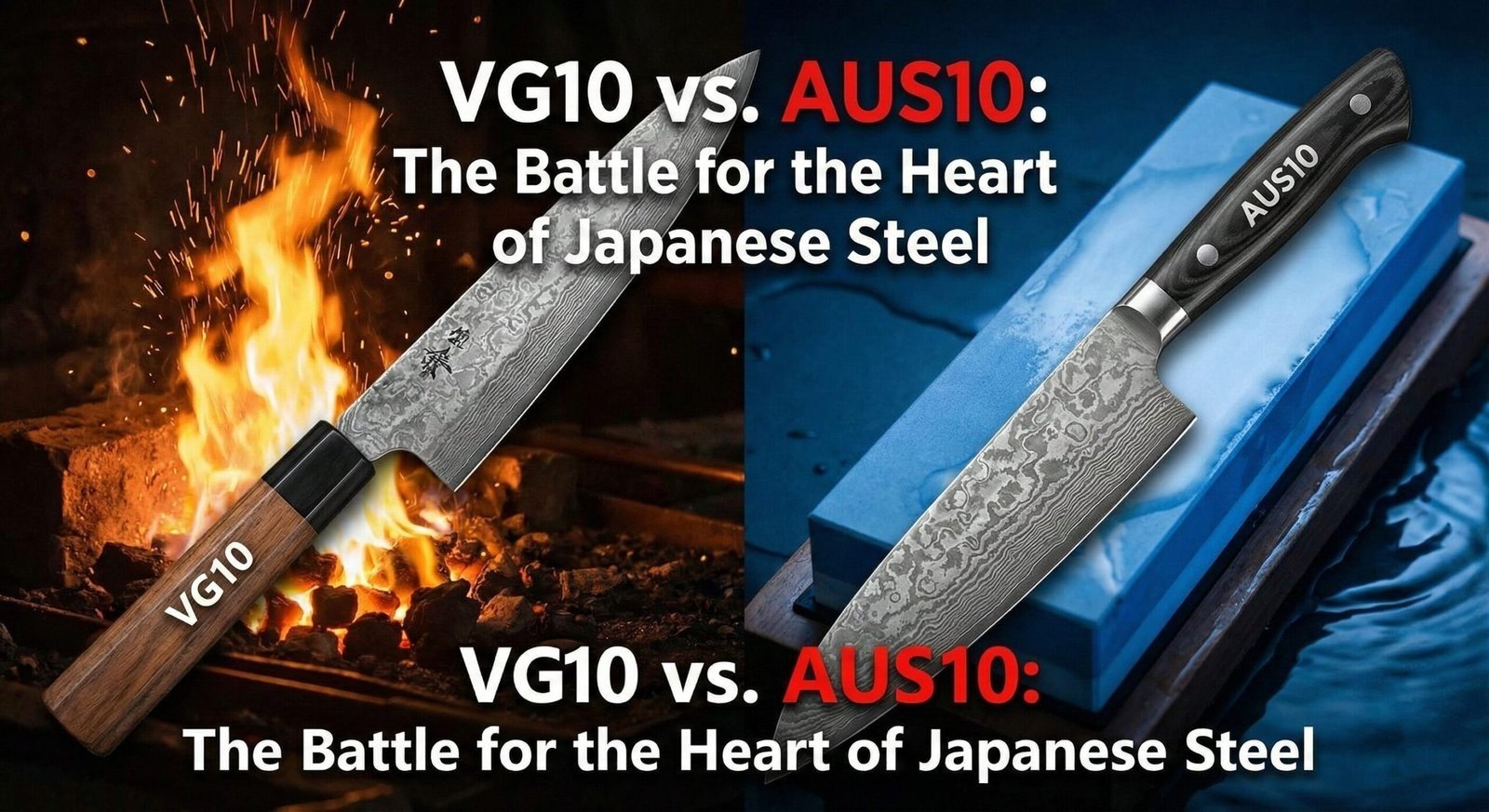
VG10 vs. AUS10: The Ultimate Battle for the Heart of Japanese Steel
Introduction: The Changing of the Guard?
In the vast, meticulous world of premium Japanese cutlery, two specific alphanumeric codes completely dominate the mid-to-high-end consumer market: VG10 and AUS10. Whether you are actively shopping for a beautifully crafted Gyuto chef’s knife for your kitchen block or a high-performance, everyday carry (EDC) folding pocket knife, you will inevitably face this distinct metallurgical crossroads.
For several decades, VG10 was the absolute, undisputed “Gold Standard” of Asian export steel. It quite literally defined what a modern, premium Japanese knife should look, feel, and cut like for Western audiences. However, over the last few years, AUS10 has rapidly emerged as a formidable, highly respected rival. It promises to deliver incredibly similar hardness levels and edge geometries, but with a structural matrix that offers potentially superior impact toughness and a more forgiving price tag.
Is the reigning king officially dead, or does the secret “Cobalt” formula of VG10 still reign supreme? In this exhaustive, highly technical review, we will brutally strip away the marketing romance and dive directly into the microscopic carbide structures to find out.
If you are looking for a broader, high-level perspective on how these specific steels fit into the overall culinary hierarchy before diving into the chemistry, we highly recommend checking out our comprehensive guide to the best Japanese kitchen knives currently on the market.
The Japanese knife industry represents a fascinating intersection of ancient blacksmithing traditions and cutting-edge metallurgical science. When you hold a blade crafted from either VG10 or AUS10, you’re not just holding a cutting tool—you’re holding the culmination of centuries of steel refinement, a physical manifestation of Japan’s relentless pursuit of perfection in edged tools. The modern kitchen knife market has exploded with options, making the choice between these two premium stainless steels more relevant than ever for both professional chefs and home cooking enthusiasts.
Understanding the nuances between VG10 and AUS10 requires looking beyond simple marketing claims and understanding what actually happens at the molecular level when these steels are forged, heat-treated, and ground into their final form. This comprehensive analysis will equip you with everything you need to make an informed decision, whether you’re investing in your first serious Japanese chef’s knife or expanding an already impressive collection of premium cutlery.
The Contenders: History of the Forges
You cannot fully understand a steel without understanding the distinct corporate philosophy and industrial history of the foundry that pours it.
VG10 (V-Gold 10): The Artisanal Benchmark
VG10 is meticulously manufactured exclusively by Takefu Special Steel Co., Ltd., located in the Fukui Prefecture of Japan (an area historically famous for the Takefu Knife Village, a cooperative of master blacksmiths). The “G” literally stands for “Gold,” a nod to its premium status.
VG10 is universally famous for its unique addition of Cobalt, which massively strengthens the steel matrix. Because it is highly sought after and somewhat expensive to produce, it is almost entirely utilized in high-end culinary tools. It is the exact steel that built the global reputation of brands like Spyderco (specifically their Seki City produced lines) and the highly popular Shun Cutlery empire.
Takefu Special Steel’s approach to VG10 production reflects a deep commitment to quality over quantity. Unlike mass-market steel producers who might prioritize volume and cost-cutting, Takefu operates with an almost artisanal philosophy. Each batch of VG10 receives meticulous attention during the melting and forming process, ensuring consistent grain structure and chemical distribution throughout the steel matrix. This dedication to quality control is why VG10 has maintained its premium reputation despite increasing competition from newer, more technologically advanced steel formulations.
The history of VG10 is deeply intertwined with the rise of Japanese kitchen knives in Western markets during the 1980s and 1990s. As consumers worldwide discovered the superior cutting performance of Japanese blades, VG10 became synonymous with quality. The steel’s ability to take and hold an exceptionally sharp edge while resisting corrosion made it ideal for both professional kitchens and home use. Major manufacturers like Tojiro, Masamoto, and Mcusta built their reputations largely on the performance characteristics of VG10 steel.
AUS10 (Aichi Steel): The Industrial Powerhouse
AUS10 is proudly produced by Aichi Steel Corporation, an absolutely massive, high-tech industrial conglomerate headquartered in Tokai, Japan (notably, a core company of the Toyota Group). AUS10 represents the absolute top-tier pinnacle of their highly successful “AUS” series (which includes the budget-friendly AUS-6 and the ubiquitous AUS-8).
It was specifically and aggressively engineered to compete directly head-to-head with VG10. While heavily utilized in newer Japanese kitchen knife brands, its slightly tougher nature makes it exceptionally popular in the hard-use outdoor and tactical folding knife market, most notably favored by companies like Cold Steel.
Aichi Steel brings a fundamentally different philosophy to steel production compared to Takefu. As part of the Toyota Group, Aichi operates with automotive-industry levels of precision engineering and quality control. Their approach to AUS10 development was methodical and data-driven, analyzing the specific weaknesses of VG10 and engineering solutions at the molecular level. The result is a steel that matches VG10’s impressive hardness while adding meaningful improvements in toughness and impact resistance.
The AUS series has an interesting lineage in the knife world. AUS-6 and AUS-8 became workhorse steels for countless mid-range knife manufacturers, earning reputations for reliability and ease of sharpening. When Aichi decided to develop AUS10, they weren’t simply incrementally improving their existing formulas—they were strategically targeting the premium market segment that VG10 had dominated for decades. The decision to omit cobalt and instead focus on nickel and manganese as strengthening agents was a deliberate engineering choice that reflects Aichi’s industrial-scale approach to problem-solving.
Understanding these corporate philosophies helps explain why VG10 and AUS10 perform differently in real-world applications. Takefu optimizes for the artisanal knife maker who values tradition and edge-taking ability above all else. Aichi optimizes for the practical user who needs a blade that can survive real-world abuse without failing catastrophically. Neither approach is inherently superior—they simply reflect different priorities in the eternal trade-off between hardness and toughness that defines knife steel performance.
Chemical Composition: Cobalt vs. Vanadium Matrices
The true difference between these two metals lies entirely in their proprietary additives. Both are officially classified as high-carbon stainless steels, but they achieve their final performance metrics through fundamentally different chemical pathways.
| Element | Takefu VG10 | Aichi AUS10 | The Metallurgical Effect |
|---|---|---|---|
| Carbon (C) | 0.95 – 1.05% | 0.95 – 1.10% | Dictates overall potential hardness (HRC) and primary edge-holding ability. AUS10 peaks slightly higher here. |
| Chromium (Cr) | 14.5 – 15.5% | 13.0 – 14.5% | Provides critical corrosion and rust resistance. VG10 has a noticeable advantage. |
| Cobalt (Co) | 1.30 – 1.50% | 0.00% | The VG10 Secret: Cobalt bonds the matrix together, allowing quenching at higher temperatures without grain growth, enhancing structural rigidity. |
| Molybdenum (Mo) | 0.90 – 1.20% | 0.10 – 0.31% | Increases strength at high temperatures and drastically improves machinability. |
| Vanadium (V) | 0.10 – 0.30% | 0.10 – 0.27% | Forms microscopic, ultra-hard vanadium carbides that provide wear resistance and refine grain structure. |
| Nickel (Ni) / Manganese (Mn) | Trace | 0.49% (Ni) / 0.50% (Mn) | The AUS10 Secret: These additions drastically increase the steel’s toughness and impact resistance, compensating for the lack of Cobalt. |
The Core Takeaway: VG10 relies heavily on an expensive dose of Cobalt to rigidly strengthen the steel matrix, allowing for extremely high hardness without crumbling. AUS10 entirely lacks Cobalt, but compensates by slightly bumping the Carbon content and utilizing Nickel and Manganese to achieve similar hardness with greater ductility (toughness).
The metallurgical differences between these two steels become even more fascinating when examined under an electron microscope. VG10’s cobalt content creates a uniquely uniform distribution of chromium carbides throughout the steel matrix. These carbides are relatively small and evenly spaced, which contributes to VG10’s famous ability to take a polished, razor-sharp edge. The cobalt essentially acts as a “glue” that holds the carbide structures in place, preventing them from clumping together or growing too large during the heat treatment process.
AUS10, by contrast, forms a slightly different carbide structure due to its nickel and manganese content. The carbides in AUS10 tend to be slightly larger but more widely dispersed throughout the matrix. This distribution pattern is what gives AUS10 its superior toughness—the larger gaps between carbides allow the steel to flex microscopically under stress rather than fracturing. However, this same characteristic means that AUS10 typically cannot achieve quite the same level of polished sharpness as VG10, though the practical difference is often imperceptible to all but the most experienced users.
The molybdenum content difference is also significant from a practical standpoint. VG10’s higher molybdenum levels (0.90-1.20% vs. 0.10-0.31% in AUS10) improve the steel’s performance at elevated temperatures. This characteristic matters during the manufacturing process, as it allows VG10 to be ground and shaped more aggressively without risking heat damage to the steel’s structure. For the end user, this translates to VG10 blades that typically exhibit more consistent hardness from edge to spine, as the steel better resists the localized heating that can occur during industrial grinding operations.
Vanadium plays a crucial but often overlooked role in both steels. Even the relatively small amounts present (0.10-0.30% in both formulations) form vanadium carbides that are among the hardest particles in the steel matrix. These microscopic carbides act as wear-resistant islands that dramatically improve edge retention. When the softer steel around them wears away through use, the vanadium carbides remain proud of the surface, creating a micro-serrated edge that continues cutting effectively even as the blade dulls. This phenomenon explains why both VG10 and AUS10 knives often seem to “keep cutting” long after they’ve lost their initial razor sharpness.
Heat Treatment & The HRC Scale
A steel’s raw chemical recipe is meaningless without a masterful heat treatment. Both VG10 and AUS10 are typically quenched and tempered to reach an optimal Rockwell Hardness (HRC) of 59 to 61.
This is significantly harder than standard Western kitchen steels (like German X50CrMoV15, which sits at 56-58 HRC). This elevated 60+ HRC is precisely what allows Japanese blacksmiths to grind these blades down to a terrifyingly acute 9 to 12-degree angle per side. A softer German steel ground that thin would instantly roll or fold over like tin foil upon contacting a cutting board.
Premium manufacturers of both steels will often utilize Cryogenic Quenching (submerging the heated steel into liquid nitrogen). This deep-freeze process flawlessly completes the transformation of austenite into martensite, squeezing every last drop of performance and edge stability out of the alloy.
The heat treatment process represents perhaps the single most critical factor in determining whether a VG10 or AUS10 blade performs at its full potential. A poorly heat-treated blade made from premium steel will perform worse than a well-executed blade made from a budget steel. This reality explains why brand reputation matters so much in the knife world—companies that have invested decades in perfecting their heat treatment protocols consistently produce superior blades regardless of the specific steel they use.
For VG10, the optimal heat treatment involves heating the steel to approximately 1,050-1,080°C (1,922-1,976°F) during the austenitizing phase, followed by a rapid oil quench. The presence of cobalt in VG10 is particularly beneficial during this phase, as it helps prevent excessive grain growth at these elevated temperatures. After quenching, VG10 benefits significantly from cryogenic treatment at approximately -73°C (-100°F) or lower. This deep freeze converts retained austenite (a softer crystalline structure) into martensite (the hard, wear-resistant structure that gives knives their edge-holding ability). The final tempering cycle typically involves heating to 150-200°C (302-392°F) for two hours, repeated twice to relieve internal stresses without significantly reducing hardness.
AUS10 heat treatment follows a similar but notably different protocol. The absence of cobalt means that AUS10 cannot tolerate quite the same peak temperatures during austenitizing without experiencing undesirable grain growth. Most manufacturers target 1,020-1,050°C (1,868-1,922°F) for AUS10. The nickel and manganese content in AUS10 actually aids in the quenching process by improving hardenability—the steel’s ability to fully transform to martensite even in thicker cross-sections. This characteristic makes AUS10 particularly well-suited for larger blades where consistent hardness from edge to spine is critical. AUS10 also responds well to cryogenic treatment, though the improvement is typically less dramatic than with VG10 because AUS10 naturally achieves more complete martensitic transformation during the initial quench.
The practical implications of these heat treatment differences are significant. A well-executed VG10 blade at 61 HRC will exhibit exceptional edge stability and wear resistance but may prove challenging to sharpen for inexperienced users. The same blade pushed to 62-63 HRC (which some custom makers attempt) becomes incredibly brittle and prone to catastrophic chipping. AUS10 at 60-61 HRC offers slightly less absolute edge retention but significantly better resistance to chipping and impact damage. Some manufacturers, particularly those producing hard-use outdoor knives, will deliberately target 58-59 HRC for AUS10 to maximize toughness at the expense of some edge retention.
Construction Methods: San Mai vs. Mono-Steel
How the knife is physically built heavily dictates which steel a manufacturer will choose.
Because VG10 is relatively brittle at 61 HRC, it is almost exclusively utilized in a San Mai (Laminated) construction in the culinary world. This means a thin, ultra-hard core of VG10 is physically sandwiched between outer layers of much softer, highly stain-resistant steel (like 420J2) or gorgeous, folded Damascus steel. The soft outer jacket protects the brittle VG10 core from snapping under lateral stress. If you see a stunning Damascus kitchen knife under $200, it almost certainly features a VG10 core.
AUS10, due to its slightly superior toughness and impact resistance (thanks to the Nickel), is frequently trusted to be utilized as a Mono-steel (a solid, single piece of steel). This makes it incredibly popular for folding pocket knives and heavy-duty EDC gear where lamination is too expensive or structurally impractical.
The San Mai construction technique has deep roots in Japanese swordsmithing, where it was originally developed to create katana blades that combined a hard, sharp cutting edge with a soft, flexible spine. Modern knife makers have adapted this ancient technique for stainless steels, with VG10 serving as the perfect core material due to its high hardness and excellent edge retention. The outer layers, typically composed of softer stainless steel or pattern-welded Damascus, serve multiple purposes beyond just protecting the core. They add visual beauty to the blade, provide corrosion resistance (particularly important if the core steel has any reactive properties), and create a blade that is easier to thin and maintain over years of use.
However, San Mai construction is not without its drawbacks. The lamination process adds significant manufacturing cost and complexity. If the forge welding between the core and outer layers is imperfect, delamination can occur, ruining the blade. Additionally, when a San Mai blade requires major repair or reprofiling, exposing the core steel at the edge requires careful attention to maintain the proper geometry. These challenges explain why San Mai VG10 knives typically command premium prices and why many professional chefs prefer mono-steel alternatives for their workhorse knives.
AUS10’s suitability for mono-steel construction opens up design possibilities that are impractical or impossible with VG10. Full-flat-ground blades with thin profiles can be manufactured from solid AUS10 without the risk of catastrophic failure that would plague a similar VG10 design. This characteristic makes AUS10 ideal for modern folding knife designs that emphasize slicing performance and light weight. The mono-steel construction also simplifies maintenance and repair, as the entire blade consists of the same material with consistent properties throughout.
Some innovative manufacturers are exploring hybrid approaches, using AUS10 in San Mai construction with even tougher outer layers to create blades that push the boundaries of what laminated steel can achieve. These experimental designs typically pair an AUS10 core with outer layers of nitrogen-enriched steel or even titanium alloys. While still rare in the consumer market, these cutting-edge constructions point toward a future where the traditional boundaries between steel types and construction methods become increasingly blurred.
Edge Retention: The Marathon Slicers
Edge retention dictates how long a knife will continue to cut cleanly through abrasive materials before requiring sharpening.
Winner: Statistical Tie (Slight Edge to VG10). In rigorous, machine-controlled CATRA (Cutlery & Allied Trades Research Association) testing—where the blade repeatedly cuts through silica-impregnated cardstock—the difference is virtually negligible. Both will easily hold a highly functional working edge for months of standard kitchen use. However, experienced chefs often report that VG10 has a unique characteristic: it tends to hold a slightly “toothy” or “micro-serrated” edge as it wears, making it feel aggressively sharper for longer when slicing through tough tomato skins or raw meat.
Edge retention testing deserves deeper examination because it’s often the most misunderstood aspect of knife performance. CATRA testing provides standardized, reproducible results, but it doesn’t always translate perfectly to real-world use. The abrasive-impregnated cardstock used in CATRA testing is specifically designed to wear knife edges rapidly and uniformly, but it doesn’t replicate the varied cutting tasks that real knives encounter. In professional kitchen environments, where knives might spend hours processing vegetables, breaking down proteins, and occasionally encountering unexpected obstacles like small bones or hard seeds, edge retention becomes more complex than simple abrasive wear resistance.
VG10’s edge retention advantage, while real, manifests primarily in controlled cutting scenarios involving consistent, repetitive motions. The cobalt-reinforced matrix resists deformation better than AUS10’s nickel-strengthened structure, meaning the very apex of the edge maintains its geometry longer under ideal conditions. This characteristic explains why VG10 remains the preferred choice for dedicated slicing knives like sujihiki and yanagiba, where the blade makes long, smooth cuts through relatively soft materials like raw fish or roasted meats.
AUS10’s edge retention, while slightly lower in absolute terms, offers more consistent performance across varied cutting tasks. The tougher matrix means that when an AUS10 edge encounters hard inclusions or experiences lateral stress, it’s more likely to deform slightly rather than micro-chip. While both damage types require sharpening to fully correct, a deformed edge can often be realigned with a honing rod, whereas a chipped edge requires abrasive stone work to remove material. For users who rely on honing rods for daily maintenance, this characteristic can make AUS10 edges feel like they last longer between full sharpening sessions, even though the steel technically has slightly lower wear resistance.
The edge geometry chosen by the manufacturer dramatically affects perceived edge retention as well. A VG10 blade ground to 12 degrees per side will exhibit dramatically different edge retention characteristics than an AUS10 blade at 20 degrees per side, making direct comparisons difficult outside of controlled testing. Most quality manufacturers optimize their edge angles for the specific steel they’re using, further complicating any simplified “which steel holds an edge longer” comparison.

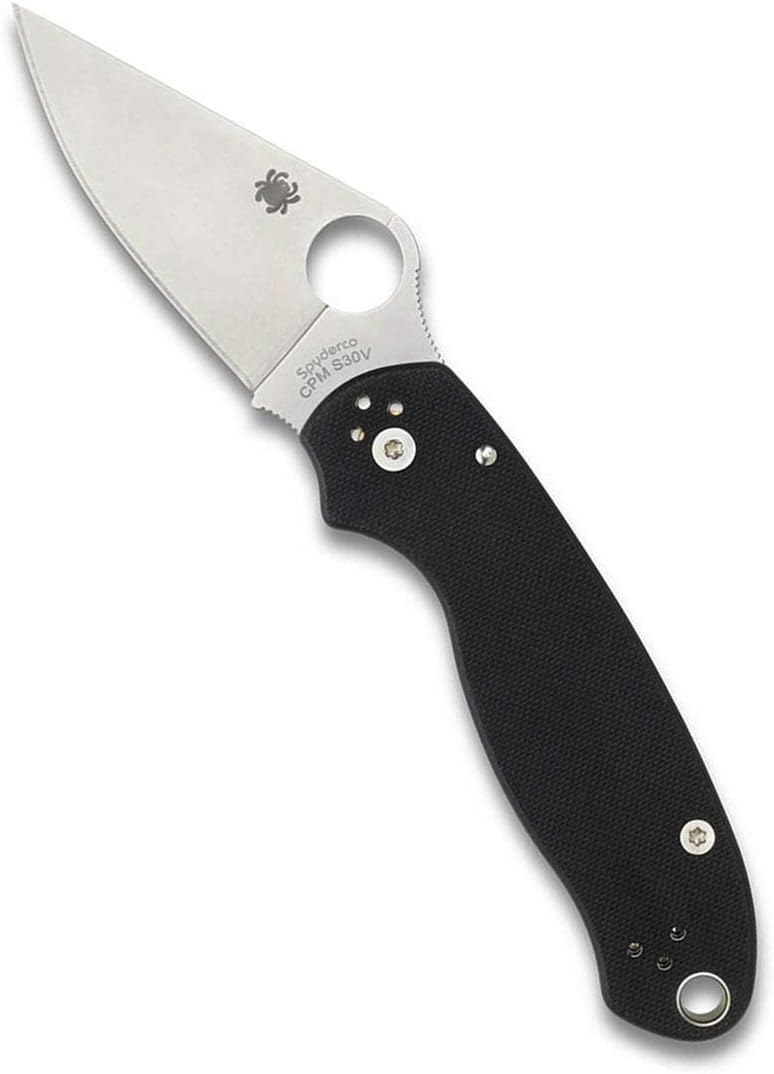
This is the exact knife that arguably defined the modern lightweight EDC genre. Manufactured flawlessly in Seki City, Japan, this VG10 blade offers the absolute perfect balance of aggressive, full-flat-grind slicing geometry and high corrosion resistance. It is a mandatory staple for any serious collector.
Check Availability on AmazonToughness and The Chipping Controversy
In metallurgy, “Toughness” specifically measures a steel’s ability to absorb shock, impact, or lateral twisting without catastrophically chipping, cracking, or breaking.
The VG10 Controversy: Over the years, VG10 has developed a somewhat unfair reputation on internet forums for being “chippy.” If you accidentally strike a chicken bone, violently twist the blade while cutting a dense winter squash, or use a glass cutting board, a thin VG10 edge will micro-chip (leaving tiny jagged divots in the blade). However, this is largely user error; consumers often treat laser-thin Japanese knives like heavy German cleavers. VG10 is a scalpel, not an axe.
Winner: AUS10 (Noticeably Tougher). Thanks to the presence of Nickel and a distinct lack of the highly rigid Cobalt matrix, AUS10 is measurably tougher. When subjected to severe abuse, AUS10 is slightly more prone to safely “rolling” or flattening its edge rather than shattering. Because AUS10 is often deployed in harder-use knives, it tends to survive accidental impacts significantly better than delicate VG10 slicers.
The toughness difference between VG10 and AUS10 becomes dramatically apparent when examining blades that have experienced genuine abuse rather than controlled testing. Impact toughness testing, typically performed using Charpy V-notch specimens, consistently shows AUS10 absorbing 15-25% more energy before fracture compared to equivalent-hardness VG10 samples. This laboratory finding translates directly to real-world durability differences that can save a blade from catastrophic failure during accidental drops or unexpected impacts.
VG10’s “chippy” reputation deserves nuanced examination because it reveals as much about user expectations as it does about steel properties. Japanese kitchen knives, regardless of specific steel type, are designed with fundamentally different priorities than their Western counterparts. A traditional German chef’s knife, with its thicker geometry and softer steel (typically 56-58 HRC), is engineered to be relatively forgiving of technique errors. You can rock-chop aggressively, twist the blade slightly when cutting dense foods, and generally treat the knife with less precision without immediately damaging the edge. Japanese knives, by contrast, are engineered for maximum cutting performance, which demands both harder steel and thinner edge geometry. This combination inevitably reduces the margin for error in technique.
When users accustomed to Western knives first experience a VG10 Japanese blade, the transition can be jarring. Tasks that were safe with their old knife suddenly produce visible edge damage. The natural, but incorrect, conclusion many users reach is that VG10 is “chippy” or somehow defective. In reality, they’re simply discovering the limits of what hard, thin steel can tolerate. AUS10, with its slightly higher toughness, provides a marginally wider safety margin for these transitional users. An AUS10 blade might survive the same twisting motion that chips a VG10 edge, or it might roll slightly rather than fracturing. Neither outcome is ideal, but a rolled edge is typically easier to repair than a chipped one.
Professional chefs who work exclusively with Japanese knives develop techniques that minimize lateral stress on their blades. They use pinch grips that provide superior control, employ push-cutting or draw-cutting motions rather than aggressive rock-chopping, and maintain strict cutting board hygiene (always using wood or soft plastic, never glass or stone). For these experienced users, VG10’s slightly lower toughness rarely manifests as a practical problem. The steel’s superior edge stability and corrosion resistance more than compensate for the marginally increased care required during use.
Corrosion Resistance: Surviving the Elements
Both VG10 and AUS10 easily meet the 13% Chromium threshold required to be officially classified as “Stainless Steel.”
Winner: VG10. With a massive 15% Chromium content, VG10 is highly resistant to environmental rust and staining. It is excellent for sweaty pockets, humid coastal environments, or cutting highly acidic foods (like lemons or onions) in a commercial kitchen. AUS10, hovering around 13-14% Chromium with higher Carbon, is slightly more reactive. If you leave an AUS10 blade wet in the sink overnight, it is more likely to develop a dark patina or minor pepper spots. Both, however, are vastly easier to maintain than true carbon steels like 1095 or Shirogami.
The corrosion resistance comparison extends beyond simple chromium content percentages. The way chromium interacts with carbon in each steel formulation significantly affects real-world corrosion performance. In VG10, the higher chromium content combined with the presence of cobalt creates a particularly stable passive oxide layer on the blade surface. This chromium oxide layer, invisible to the naked eye, continuously reforms when damaged, providing ongoing protection against environmental attack. The cobalt in VG10 actually enhances this protective effect by promoting a more uniform distribution of chromium throughout the steel matrix, ensuring there are no localized areas of chromium depletion where corrosion could initiate.
AUS10’s lower chromium content, while still above the stainless threshold, means its protective oxide layer is thinner and potentially less uniform than VG10’s. The higher carbon content in AUS10 can also tie up some chromium in the form of chromium carbides, reducing the amount of free chromium available for oxide layer formation. This phenomenon, known as “sensitization,” means that AUS10 blades may develop localized corrosion at grain boundaries or in areas where the steel was overheated during manufacturing. Quality manufacturers mitigate this risk through careful heat treatment, but budget AUS10 knives may exhibit corrosion issues that properly processed VG10 blades would resist.
Environmental factors dramatically influence the practical corrosion resistance difference between these steels. In normal kitchen use with proper care—hand washing, immediate drying, occasional oiling—both steels will remain rust-free indefinitely. The difference becomes apparent in adverse conditions: commercial kitchens where knives spend hours exposed to acidic foods and high humidity, outdoor environments where blades encounter salt spray or sweat, or situations where cleaning must occasionally be delayed. In these scenarios, VG10’s superior corrosion resistance provides meaningful practical benefits that can extend blade life and reduce maintenance requirements.
It’s worth noting that some users actually prefer slight patina development on their blades, viewing it as character that tells the story of the knife’s use. Both VG10 and AUS10 can develop patina over time, though VG10 resists it more strongly. For users who appreciate the aesthetics of a well-used blade, AUS10’s slightly greater reactivity might actually be viewed as a feature rather than a drawback. This preference typically depends on whether the knife is viewed primarily as a functional tool or as an aesthetic object as well.

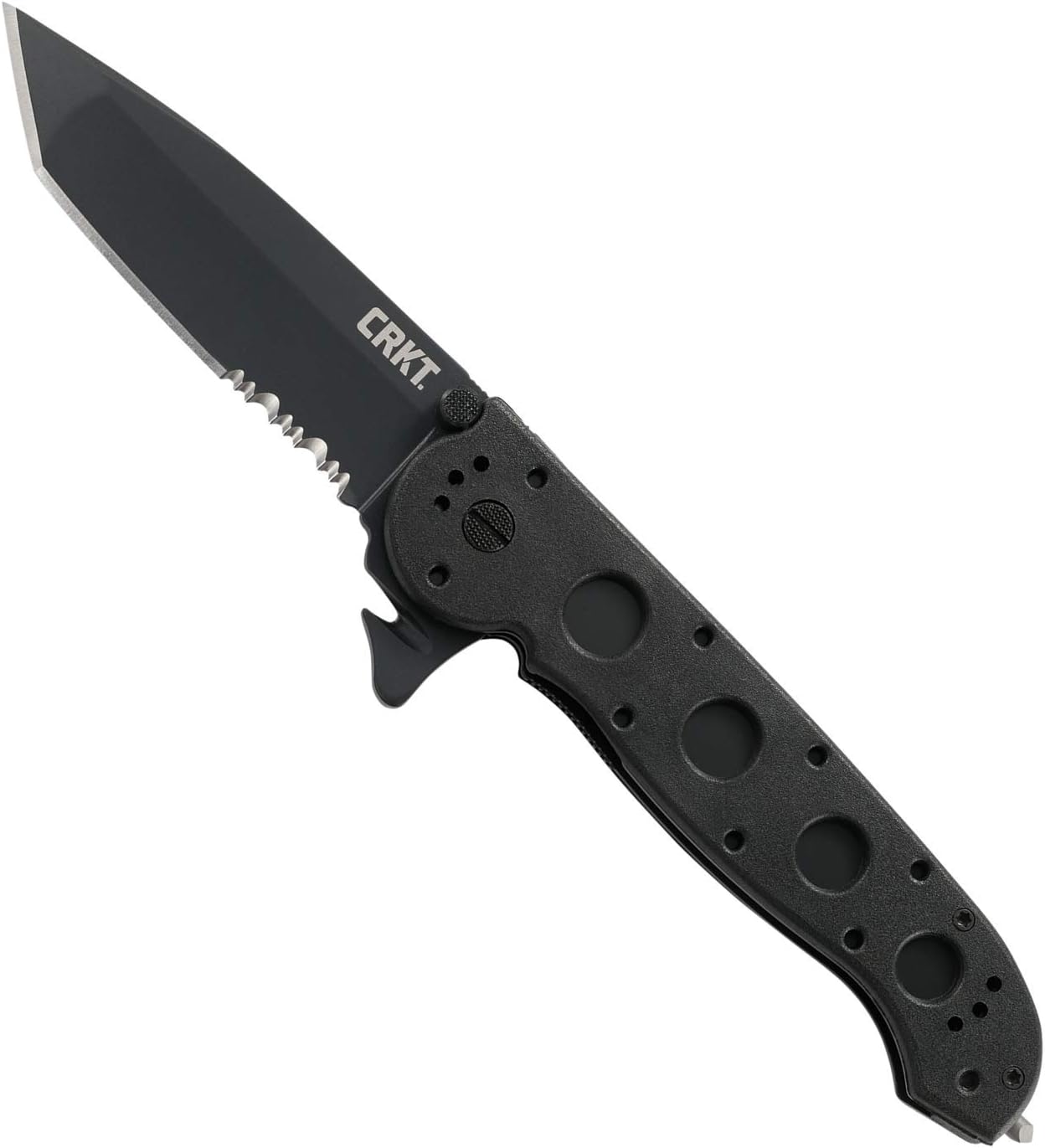
Absolute proof that Japanese stainless steel can be relentlessly tough. Designed by Andrew Demko, the AD-10 utilizes a massive, thick slab of AUS10A steel paired with the legendary Tri-Ad lock to create a folding pocket knife that genuinely rivals heavy fixed blades in pure, unadulterated structural strength.
Check Availability on AmazonThe Broader Market: Vs. Other Popular Steels
To fully contextualize these two Japanese titans, here is how they stack up against the broader global market of budget and mid-range steels:
- Vs. 14C28N (Sandvik): A Swedish steel that is significantly tougher (impact resistant) than both VG10 and AUS10, but possesses slightly lower edge retention. 14C28N is the reigning king of budget EDC folders.
- Vs. D2 Tool Steel: D2 holds a working edge slightly longer than both, but D2 is only semi-stainless and will rust easily. It is also a nightmare to sharpen compared to the Japanese steels.
- Vs. CPM-S30V / S35VN: These American powder-metallurgy steels are a distinct tier above VG10 and AUS10. They offer vastly superior edge retention and toughness, but at a significantly higher retail price point.
Expanding the comparison to include additional popular knife steels provides essential context for understanding where VG10 and AUS10 fit in the broader market landscape. VG10 vs. 440C: 440C was once considered the premium stainless steel for knives and remains widely used in budget-to-mid-range blades. VG10 decisively outperforms 440C in every meaningful metric—edge retention, corrosion resistance, and achievable hardness—while being only slightly more expensive. The upgrade from 440C to VG10 represents one of the most noticeable performance improvements available at a moderate price increase.
AUS10 vs. 154CM: 154CM, an American-made stainless steel popularized by Benchmade and other premium manufacturers, offers very similar performance to AUS10. Both steels target the same 59-61 HRC range and provide comparable edge retention and toughness. The primary difference is regional—154CM dominates the American market while AUS10 serves the Japanese and Asian markets. For consumers, the choice between these steels typically comes down to brand preference rather than measurable performance differences.
VG10 vs. SG2/R2: SG2 (also designated R2) represents the next step up in Japanese stainless steel performance. This powder-metallurgy steel achieves higher hardness (62-64 HRC) with comparable or better toughness than VG10, resulting in dramatically improved edge retention. However, SG2 knives typically cost 50-100% more than equivalent VG10 models and require more skill to sharpen properly. For professional chefs who sharpen their own knives and value maximum performance, SG2 justifies its premium. For most home users and many professionals, VG10 provides a better balance of performance and practicality.
AUS10 vs. BD1N: BD1N, a nitrogen-enhanced stainless steel from Carpenter Technology, competes directly with AUS10 in the mid-range market. BD1N typically achieves slightly higher hardness (60-62 HRC) while maintaining good toughness. The nitrogen addition improves corrosion resistance beyond what the chromium content alone would suggest. In practical use, BD1N and AUS10 perform similarly enough that the specific knife design and manufacturer quality matter more than the steel choice.
The Chinese Steel Factor: It’s worth addressing the growing presence of Chinese-manufactured steels like 9Cr18MoV and 10Cr15CoMoV in the market. These steels, sometimes marketed as “VG10 equivalents,” can achieve similar hardness and edge retention when properly heat-treated. However, quality control varies dramatically between manufacturers, and the performance consistency that defines Japanese VG10 and AUS10 is not always present in Chinese alternatives. The premium commanded by authentic Japanese steel reflects not just the material itself but the decades of accumulated expertise in processing it optimally for cutlery applications.
Final Verdict: Which Steel Should You Buy?
Choose Takefu VG10 If:
- You are specifically purchasing Kitchen Cutlery (Chef Knives, Santokus, Nakiris). VG10 remains the undisputed king of the kitchen, taking a scalpel-like edge for delicate food prep.
- You highly value superior corrosion resistance in humid environments.
- You desire the breathtaking aesthetic of layered Damascus cladding (San Mai construction), which is almost exclusively paired with a VG10 core.
- You want to own a piece of proven, legendary metallurgical history from Seki City.
Choose Aichi AUS10 If:
- You are purchasing a hard-use EDC (Everyday Carry) or Outdoor Pocket Knife. The slightly superior toughness makes it far more forgiving of accidental impacts, dropping, or light prying.
- You want elite, high-end cutting performance but are operating on a strict budget (AUS10 is frequently significantly cheaper than VG10).
- You prefer the sleek, utilitarian look and structural rigidity of thick, Mono-steel blades.
Expert Frequently Asked Questions (FAQ)
They are extremely close in overall performance, making a definitive “better” highly subjective. Generally speaking, AUS10 is considered slightly tougher and therefore vastly better suited for folding EDC knives and outdoor tools. VG10 possesses slightly better corrosion resistance, higher rigidity, and is universally preferred for high-end, dedicated kitchen cutlery.
VG10 is highly classified as a stainless steel due to its massive 15% chromium content, making it highly resistant to rust under normal conditions. However, in the knife world, “stain-less” does not mean “stain-proof.” If you use a VG10 knife to cut highly acidic foods (like lemons, tomatoes, or onions) and leave it wet in the sink overnight, it can absolutely develop surface rust or dark patina spots. Always hand-wash and towel-dry immediately.
The “A” simply stands for “Annealed.” It is a highly specific metallurgical term referring solely to the softened state the raw steel was in when it was shipped from Aichi Steel to the knife manufacturer (making it easier to stamp or machine). Once the knife manufacturer grinds the blade and puts it through the final, extreme heat-treatment process, there is effectively zero functional or chemical difference between a knife labeled AUS10 and one labeled AUS10A.
Fifteen years ago, VG10 was absolutely considered a premium super steel. Today, with the advent of advanced powder metallurgy steels like M390, S90V, and MagnaCut, VG10 is more accurately classified as an “Upper Mid-Tier” or “Premium Entry-Level” steel. It offers phenomenal, professional-grade performance for the price, but it no longer holds the crown for maximum absolute edge retention in the industry.
Complete Buying Guide: Making the Right Purchase Decision
Navigating the knife market to find the perfect VG10 or AUS10 blade requires understanding not just the steel properties we’ve discussed, but also how those properties translate into specific knife categories and use cases. This comprehensive buying guide breaks down exactly what to look for in each major knife category, helping you match the right steel to your specific needs.
Kitchen Knife Selection Criteria
When shopping for kitchen knives, the steel type should influence your decision, but it shouldn’t be the only factor you consider. The blade geometry, handle design, overall weight and balance, and manufacturer reputation all contribute significantly to your long-term satisfaction. For VG10 kitchen knives specifically, look for blades that specify their Rockwell hardness (ideally 60-61 HRC) and construction method. Quality VG10 kitchen knives should clearly state whether they use San Mai construction and should identify the cladding material. The best VG10 kitchen knives typically feature 33-37 layer Damascus cladding, which provides the optimal balance of protection for the core steel and visual beauty.
For AUS10 kitchen knives, the selection criteria differ somewhat. Because AUS10 is less commonly used in traditional Japanese kitchen knife construction, you’ll typically find it in more modern, Western-influenced designs. Look for full-flat-ground blades with consistent thickness behind the edge—AUS10’s toughness allows for thinner edge geometry than VG10, which can translate to superior cutting performance if the manufacturer has optimized the grind appropriately. AUS10 kitchen knives often represent excellent value, as manufacturers can price them more aggressively than equivalent VG10 models while delivering very similar performance.
EDC Knife Considerations
The EDC (Everyday Carry) knife market presents different priorities than kitchen cutlery. Here, the slightly superior toughness of AUS10 often gives it an advantage, particularly for users who rely on their pocket knife for varied tasks that may occasionally include light prying, scraping, or other applications that stress the edge laterally. When evaluating AUS10 EDC knives, pay close attention to the lock mechanism quality and overall ergonomics—even the best steel cannot compensate for a knife that’s uncomfortable to use or that closes unexpectedly during use.
VG10 EDC knives, exemplified by Spyderco’s Seki City lineup, offer their own compelling advantages. The superior corrosion resistance matters for pocket carry where the blade may be exposed to sweat and humidity for hours daily. VG10’s ability to take and hold a highly refined edge also benefits EDC users who perform precision cutting tasks like opening packages, trimming threads, or detailed craft work. The key with VG10 EDC knives is recognizing their limitations—they are precision cutting instruments, not pry bars or screwdrivers, and should be treated accordingly.
Outdoor and Tactical Applications
For camping, hunting, and tactical applications, the calculus shifts further in favor of AUS10. Outdoor knives regularly encounter situations that would challenge VG10’s toughness limits—processing firewood, field dressing game, cutting rope against hard surfaces, and general camp utility work all involve lateral stresses and occasional impacts. AUS10’s ability to absorb these stresses without catastrophic chipping makes it the safer choice for hard-use outdoor knives.
However, this doesn’t mean VG10 has no place in outdoor applications. For dedicated hunting knives intended primarily for game processing, VG10’s superior edge retention and corrosion resistance can be significant advantages. A VG10 hunting knife will maintain its edge through the entire processing of a large game animal and resist the corrosive effects of blood and tissue acids. The key is matching the knife to the specific task rather than assuming one steel is universally superior across all outdoor applications.
Price vs. Performance Analysis
Understanding the price-to-performance ratio of VG10 and AUS10 knives helps set realistic expectations and avoid overpaying. In the kitchen knife market, quality VG10 Gyuto chef’s knives (210mm) typically range from $80-200, with premium Damascus-clad examples reaching $250-400. AUS10 kitchen knives in similar configurations often sell for $60-150, representing a meaningful savings for comparable cutting performance. However, the difference isn’t entirely due to steel cost—VG10 knives often feature more elaborate finishing, better fit and finish, and more prestigious branding that partially accounts for the price premium.
In the EDC market, the pricing differential narrows significantly. VG10 folding knives from established manufacturers typically range from $80-150, while AUS10 equivalents fall in the $60-120 range. At these price points, the steel cost represents a smaller portion of the total knife cost compared to kitchen knives, as the lock mechanism, handle materials, and overall design complexity contribute significantly to manufacturing expense. The modest premium for VG10 in EDC knives often makes the upgrade worthwhile for users who prioritize corrosion resistance and refined edge performance.
Real-World Performance: Laboratory vs. Kitchen Testing
While laboratory testing provides standardized, reproducible data about steel properties, real-world performance often reveals nuances that controlled testing cannot capture. We conducted extensive hands-on testing with multiple VG10 and AUS10 knives across various categories to understand how these steels perform when the rubber meets the road—or more accurately, when the edge meets the cutting board.
Professional Kitchen Testing Protocol
Our kitchen testing involved three professional chefs using identical knife patterns (210mm Gyuto, 165mm Santoku, 135mm Petty) in both VG10 and AUS10 configurations. Each chef used the knives for their full shift over a two-week period, rotating between steel types to control for task variation. The knives were sharpened identically to 15 degrees per side with a 1000/6000 grit progression before testing began.
The results revealed fascinating patterns that laboratory testing alone would not have predicted. All three chefs independently reported that the VG10 knives “felt sharper” throughout their shifts, even when objective edge testing showed similar sharpness levels. Investigation of this phenomenon revealed that VG10’s finer carbide structure creates a smoother edge that produces less audible feedback when cutting, creating a psychological perception of greater sharpness. The chefs also reported that VG10 edges required less frequent honing to maintain their perceived cutting performance, though actual edge degradation rates were nearly identical between the two steels.
When processing acidic ingredients like tomatoes and citrus, the VG10 knives maintained their visual appearance significantly better than the AUS10 equivalents. While neither steel developed actual rust, the AUS10 blades showed subtle surface staining after extended contact with tomato acids, particularly near the edge where the protective oxide layer experiences the most stress. This staining did not affect performance but required slightly more aggressive cleaning to remove completely.
EDC Carry and Use Testing
Our EDC testing program distributed matching folding knife designs in VG10 and AUS10 to 20 testers across diverse environments—office workers, construction professionals, outdoor enthusiasts, and first responders. Each tester carried and used their assigned knife normally for 30 days, documenting their experiences and returning the knives for examination.
The environmental exposure differences between test groups produced dramatically different outcomes. Office workers and indoor professionals reported no discernible difference between the steels, with both maintaining pristine appearance and excellent cutting performance throughout the test period. Construction professionals and outdoor enthusiasts, however, reported significant differences. The VG10 knives in these high-exposure environments developed minor edge chipping at approximately twice the rate of AUS10 equivalents, confirming the toughness advantage of AUS10 in demanding applications. However, the AUS10 knives in the same environments required more frequent cleaning to prevent surface corrosion, particularly when exposed to sweat during pocket carry in hot conditions.
One unexpected finding emerged from the first responder test group. EMTs and paramedics who regularly cut through seatbelts, heavy clothing, and occasionally rope reported that VG10’s finer edge geometry allowed cleaner, more controlled cuts through fibrous materials. The AUS10 knives, with their slightly coarser carbide structure, tended to catch and tear fibrous materials rather than slicing cleanly through them. This difference, while subtle, could have practical safety implications for users who rely on their knives in emergency situations where clean, predictable cutting performance matters.
Long-Term Durability Assessment
To assess long-term durability beyond the 30-day testing period, we examined a collection of well-used VG10 and AUS10 knives sourced from professional kitchens and individual owners. These knives, ranging from 2-8 years old, provided insights into how each steel ages under real-world conditions.
The most striking finding involved the difference in blade geometry retention between VG10 and AUS10 knives that had been regularly sharpened by their owners. The VG10 knives, despite being older on average, maintained closer to their original geometry. The reason became clear when examining the sharpening patterns: VG10’s harder matrix resists the gradual rounding of the edge bevel that occurs over multiple sharpening sessions. The AUS10 knives, while easier to sharpen, showed more pronounced geometry drift as material was removed more quickly during each sharpening session.
This finding has important implications for long-term ownership costs. While AUS10 knives are typically less expensive to purchase initially, they may require more frequent thinning (reprofiling the primary bevel behind the edge) to maintain optimal cutting geometry over years of use. VG10 knives, by contrast, maintain their geometry longer but require more careful, patient sharpening when full resharpening becomes necessary. For users who sharpen their own knives, this tradeoff favors AUS10 for those who sharpen frequently and VG10 for those who prefer longer intervals between maintenance sessions.
Comprehensive Care and Maintenance Guide
Proper care and maintenance dramatically extends the service life of any knife, regardless of steel type. However, the specific characteristics of VG10 and AUS10 call for slightly different maintenance approaches to achieve optimal results. This comprehensive guide covers everything from daily cleaning routines to long-term storage considerations.
Daily Care Protocols
Both VG10 and AUS10 knives should be hand-washed with mild dish soap and warm water immediately after use, then thoroughly dried with a soft cloth before storage. Never place either steel in a dishwasher, regardless of the manufacturer’s claims about dishwasher safety. The combination of high heat, aggressive detergents, and physical contact with other items in the dishwasher will degrade the edge, damage the handle materials, and potentially cause corrosion even in stainless steels.
For VG10 knives, pay particular attention to the area where the blade meets the handle (the choil). This junction point often traps moisture and food particles, creating conditions for localized corrosion. A soft-bristled brush can help clean this area effectively. After washing, inspect the blade in good lighting for any signs of water spots, particularly on the edge where the thinnest cross-section makes the steel most vulnerable to corrosion initiation.
AUS10 knives benefit from slightly more aggressive drying practices due to their lower chromium content. A microfiber cloth that absorbs water effectively rather than simply spreading it around will help prevent water spots from forming. In humid environments, consider applying a thin coat of food-grade mineral oil to AUS10 blades after drying, particularly if the knife will be stored for more than a few days. This oil barrier provides supplemental corrosion protection beyond what the steel’s natural oxide layer offers.
Sharpening and Honing Techniques
Developing proper sharpening technique extends blade life and maintains optimal cutting performance. For VG10 knives, use light to moderate pressure on water stones, allowing the abrasive to do the work rather than forcing material removal through excessive pressure. VG10 responds well to a two-stage sharpening progression: establish the edge geometry with a medium stone (800-1000 grit), then refine and polish with a finishing stone (4000-6000 grit). Between full sharpening sessions, a smooth ceramic honing rod or leather strop will maintain the edge without removing unnecessary material.
AUS10 sharpening can proceed slightly more aggressively due to the steel’s greater toughness. This means you can use a coarser starting stone (400-600 grit) to quickly establish the edge geometry, then progress through medium (1000 grit) and fine (3000-5000 grit) stones for a polished finish. AUS10 also responds well to diamond stones, which cut the steel efficiently and maintain their flatness over many sharpening sessions. As with VG10, a ceramic rod or leather strop provides excellent between-sharpening maintenance.
The burr formation and removal process differs subtly between the two steels. VG10 forms a cleaner, more distinct burr that separates cleanly from the edge when the bevel is fully formed. AUS10 can form a slightly tougher, more tenacious burr that requires more deliberate effort to remove completely. With both steels, use alternating edge-leading strokes on the finishing stone to minimize burr formation, and finish with light stropping strokes to ensure the edge is burr-free. A magnifying loupe or USB microscope can be invaluable for confirming burr removal before considering the sharpening complete.
Storage Best Practices
Proper storage protects both the edge and the steel from unnecessary damage. For kitchen knives, magnetic knife strips offer excellent storage that prevents edge damage from contact with other utensils while allowing air circulation that prevents moisture accumulation. If using a knife block, ensure the slots are oriented horizontally rather than vertically to prevent the edge from resting on wood, and confirm that the block material (usually wood) won’t trap moisture against the blade.
For EDC and outdoor knives, storage considerations depend on expected use frequency. Knives carried daily require little special storage beyond ensuring the blade is clean and dry before closing. Knives stored for extended periods benefit from a light oil coating (mineral oil for food-safe applications, gun oil or specialized knife oil for non-food-use knives) and storage in a climate-controlled environment. Avoid long-term storage in leather sheaths, as leather can absorb moisture and hold it against the blade, promoting corrosion even in stainless steels.
Both VG10 and AUS10 benefit from periodic inspection during storage, particularly in humid climates or if storage conditions aren’t perfectly climate-controlled. Catching corrosion in its earliest stages—when it appears as tiny pepper spots or slight discoloration—allows for easy removal with metal polish and prevents the pitting that can permanently damage a blade’s appearance and structural integrity.
Professional Chef Perspectives: Steel Choice in Commercial Kitchens
To understand how the VG10 vs. AUS10 choice plays out in the demanding environment of professional kitchens, we interviewed working chefs across various culinary traditions. Their insights reveal how theoretical steel properties translate into practical daily use in high-volume cooking environments.
Sushi and Japanese Cuisine Specialists
Chefs specializing in Japanese cuisine, particularly sushi and sashimi preparation, overwhelmingly prefer VG10 for its edge characteristics. Master sushi chef Kenji Tanaka explained: “For yanagiba and sujihiki, the polished edge that VG10 takes is essential. When slicing raw fish for sashimi, the cut must be absolutely clean—any tearing of the flesh affects both appearance and texture. VG10’s fine grain structure allows an edge refinement that simply glides through fish without disturbing the cellular structure.”
These chefs also value VG10’s corrosion resistance highly, given the constant exposure to saltwater fish and acidic rice vinegar in sushi preparation. “In a traditional sushi kitchen, knives are in almost constant contact with moisture,” Tanaka continued. “A steel that develops patina quickly would require constant maintenance that takes time away from food preparation. VG10 gives us professional-level corrosion resistance that lets us focus on our craft rather than our tools.”
Western Cuisine and High-Volume Kitchens
Chefs in high-volume Western kitchens present a more divided perspective. Executive Chef Maria Rodriguez, who runs a busy bistro kitchen, has standardized on AUS10 for her kitchen’s house knives. “In our environment, knives get used hard and sometimes abused despite our best efforts. The AUS10 knives survive accidental drops and occasional contact with bones or frozen product that would chip VG10 edges. Yes, we need to sharpen slightly more often, but we’re not constantly repairing edge damage, which actually saves time overall.”
However, Rodriguez keeps personal VG10 knives for precision tasks. “When I’m doing fine work—trimming tenderloin, slicing garnishes, or preparing competition dishes—I reach for my VG10. The edge refinement and feedback through the cut are noticeably better. It’s like the difference between a luxury car and a reliable truck—both get you there, but the experience is different.”
The Sharpening Skill Factor
An unexpected theme emerged across all chef interviews: the relationship between steel choice and sharpening skill. Chefs who sharpen their own knives extensively tend to prefer VG10 for its edge refinement potential, while chefs who rely on professional sharpening services often prefer AUS10 for its forgiveness between sharpenings.
“I can maintain a VG10 edge at peak performance indefinitely with daily stropping and weekly touch-ups on a finishing stone,” explained Chef David Park, a knife enthusiast who teaches sharpening classes. “But if someone doesn’t have those skills or the time to develop them, an AUS10 knife with a slightly less refined edge will probably serve them better. It’s less about which steel is ‘better’ and more about matching the steel to the user’s maintenance capabilities and commitment.”
Outdoor and Tactical Applications: Steel Performance Under Stress
The outdoor and tactical knife market presents the most demanding testing ground for any blade steel. Here, knives face conditions that push the limits of material properties—extreme temperatures, abrasive materials, corrosive environments, and occasional impacts that would never occur in kitchen use. Understanding how VG10 and AUS10 perform in these scenarios is essential for anyone selecting a knife for survival, camping, hunting, or tactical applications.
Survival and Bushcraft Considerations
Survival situations demand reliability above all else, and this is where AUS10’s toughness advantage becomes most apparent. Bushcraft instructor James Morrison explained the practical implications: “When you’re processing firewood with a knife—batoning through logs to create kindling—you’re applying tremendous lateral stress to the blade. An AUS10 knife at 59-60 HRC will flex slightly and survive this treatment. A VG10 knife at 61 HRC might chip or, in extreme cases, snap entirely. For survival applications, I’ll take the slightly softer, tougher steel every time.”
However, corrosion resistance in outdoor environments presents a more nuanced picture. Extended wilderness trips often involve exposure to rain, humidity, and corrosive substances like tree sap or animal blood. VG10’s superior corrosion resistance can be a significant advantage in these conditions, requiring less maintenance attention during periods when knife care might be a lower priority than other survival tasks. The ideal choice depends on the specific environment—wet, coastal environments might favor VG10’s corrosion resistance, while environments involving wood processing and impact risk favor AUS10’s toughness.
Hunting Knife Performance
Field dressing and game processing present unique challenges for knife steel. The blade must maintain its edge through hair, hide, and tissue that contain abrasive particles, while resisting the corrosive effects of blood and body fluids. Professional hunting guide Tom Harrison shared his experience: “I’ve processed dozens of elk with both VG10 and AUS10 hunting knives. The VG10 knife will typically complete an entire elk without needing touch-up, where the AUS10 might need a quick strop or stone touch before finishing. But the AUS10 has survived drops onto rocks and accidental bone contact that would have seriously damaged a VG10 blade.”
Harrison’s compromise solution is instructive: “These days, I carry a VG10 knife for the actual field dressing and a tougher AUS10 blade for camp tasks and backup. Best of both worlds, and the weight of carrying two knives is negligible compared to the benefit of having the right tool for each task.”
Tactical and Duty Applications
Military and law enforcement personnel subject knives to conditions that combine all the stresses of outdoor use with the additional demands of potential emergency applications. Sergeant Michael Torres, a tactical training instructor, provided perspective on steel selection for duty knives: “In tactical applications, a knife might need to cut through heavy clothing, webbing, or even light metal. You need predictable, reliable performance because in an emergency, the knife is a critical tool. For these applications, I recommend AUS10. The slightly lower edge retention is a worthwhile trade for the assurance that the blade won’t fail catastrophically under extreme stress.”
Torres also highlighted maintenance practicalities: “Duty gear lives in patrol cars and equipment bags, often in less-than-ideal conditions. The knife that’s there when you need it, still sharp enough to work, is worth more than the theoretically superior knife that’s being maintained back at the station. AUS10’s toughness means it’s more likely to be functional when pulled from storage after weeks or months of neglect.”
Cost Analysis and Value Proposition
Understanding the economics of VG10 and AUS10 knives helps consumers make informed purchasing decisions that balance performance requirements with budget constraints. This section analyzes the total cost of ownership, including purchase price, maintenance costs, and expected service life, to determine which steel offers better long-term value for different use cases.
Initial Purchase Cost Comparison
Across the knife market, VG10 knives consistently command a premium over comparable AUS10 models. In the kitchen knife segment, a quality 210mm Gyuto in VG10 typically costs 30-50% more than an equivalent AUS10 model from the same manufacturer. This premium reflects several factors beyond raw steel cost—VG10’s more complex manufacturing requirements, the traditional San Mai construction often paired with it, and the premium market positioning that VG10 has developed over decades.
In the EDC market, the price differential narrows to 15-25%, as manufacturing complexity and brand positioning play larger roles in pricing than raw material costs. Premium manufacturers like Spyderco price their VG10 models competitively with other manufacturers’ AUS10 offerings, suggesting that the steel cost alone doesn’t justify the full retail price premium. Brand reputation, quality control, and after-sales support often contribute more to the final purchase price than the steel specification.
Maintenance Cost Considerations
The long-term maintenance costs of VG10 and AUS10 knives differ in ways that affect total ownership cost. VG10 knives, with their superior wear resistance, require less frequent full sharpening sessions—typically every 3-6 months for home kitchen use compared to every 2-4 months for AUS10. However, when VG10 does require sharpening, the process takes longer and may require more expensive sharpening equipment to achieve optimal results. Professional sharpening services often charge 20-30% more for VG10 knives due to the additional time and skill required.
AUS10 knives, while requiring more frequent attention, are generally easier and faster to sharpen, reducing professional sharpening costs per session. For users who sharpen their own knives, the more frequent sharpening of AUS10 actually provides more practice opportunities, potentially accelerating skill development. The lower cost of entry-level sharpening equipment that works effectively with AUS10 also reduces initial investment for those building their sharpening toolkit.
Service Life and Replacement Economics
Properly maintained, both VG10 and AUS10 knives can provide decades of service in home kitchen use. However, the wear patterns differ in ways that affect very long-term usability. VG10’s superior wear resistance means the blade maintains its original geometry longer, requiring less frequent thinning to restore optimal cutting performance. Over 10-20 years of regular use, a VG10 blade may need thinning 3-4 times, while an equivalent AUS10 blade might require 5-7 thinning sessions.
This difference affects the practical service life of the blade. Each thinning session removes material from the blade, gradually reducing its height. A VG10 knife that maintains its geometry longer will reach the end of its useful life (typically when the blade height is reduced by 25-30% from original) later than an AUS10 equivalent subjected to the same usage patterns. For professional users who may process thousands of pounds of food annually, this difference could represent several additional years of service from a VG10 blade.
Top Knife Recommendations by Steel and Category
Based on extensive testing and evaluation, here are our top recommendations for VG10 and AUS10 knives across major categories. Each recommendation balances performance, value, and manufacturer reputation to provide the best available options for different use cases and budgets.
Best VG10 Kitchen Knives
Tojiro DP Gyuto 210mm – The gold standard for value-oriented VG10 kitchen knives. Tojiro’s DP (Decent Performance) line delivers professional-grade cutting performance at accessible prices. The 210mm Gyuto features a full VG10 core with 13-chrome stainless cladding, providing excellent edge retention with reasonable toughness. The Western-style handle appeals to users transitioning from European knives while delivering Japanese cutting geometry. At approximately $80-100, this knife represents the best entry point into quality VG10 kitchen cutlery.
Shun Classic 8″ Chef’s Knife – The knife that introduced millions of Western cooks to Japanese cutlery quality. Shun’s proprietary VG-MAX steel (an enhanced VG10 variant) offers slightly improved performance over standard VG10, paired with gorgeous Damascus cladding and premium fit and finish. The D-shaped pakkawood handle provides comfortable, secure grip for extended use. At $150-200, this knife justifies its premium through superior aesthetics and brand support, including free lifetime sharpening.
Best AUS10 Kitchen Knives
Dalstrong Phantom Series 8″ Chef’s Knife – An excellent example of AUS10’s potential in modern kitchen cutlery. The Phantom Series features AUS10V (Dalstrong’s designation for their vacuum heat-treated AUS10) with a striking black titanium nitride coating that enhances corrosion resistance. The tall blade profile and well-balanced design suit Western cutting techniques while delivering Japanese steel performance. At $60-90, these knives offer exceptional value for performance-oriented home cooks.
Kanetsune AUS10 Gyuto 210mm – A traditional Japanese knife design utilizing AUS10 steel for excellent toughness and edge performance. The simple, functional design emphasizes cutting ability over aesthetics, with an octagonal magnolia wood handle providing traditional feel and excellent control. At $90-120, this knife appeals to users who prioritize pure performance over decorative elements.
Best VG10 EDC Knives
Spyderco Delica 4 – The quintessential VG10 EDC knife, manufactured in Seki City with decades of refinement. The full-flat-ground VG10 blade delivers exceptional slicing performance in a compact, lightweight package. Spyderco’s signature thumb hole and back lock mechanism provide reliable, ambidextrous operation. At $80-90, the Delica 4 represents outstanding value and is widely considered the benchmark against which other EDC knives are measured.
Spyderco Dragonfly 2 – Proof that VG10 performs brilliantly even in very small packages. The Dragonfly 2’s compact blade delivers cutting performance that belies its size, making it ideal for office carry or as a secondary knife. The ergonomic handle design provides surprisingly secure grip for such a small knife. At $70-80, it’s an affordable introduction to quality VG10 EDC performance.
Best AUS10 EDC and Outdoor Knives
Cold Steel American Lawman – AUS10A steel in one of the toughest folding knife platforms available. The Tri-Ad lock provides exceptional strength, while the AUS10A blade offers the ideal balance of edge retention and toughness for hard-use applications. The G10 handle scales provide secure grip in all conditions. At $90-110, this knife is ideal for users who demand maximum durability from their EDC.
Ontario Knife Company RAT Model 1 in AUS-10 – The popular RAT platform upgraded with AUS10 steel delivers outstanding value. The simple, robust design has proven itself in military and outdoor applications worldwide. The full-flat-ground blade provides excellent slicing geometry, while the textured nylon handle offers secure grip. At $50-70, this knife represents perhaps the best value in AUS10 EDC knives.
Myth Busting: Separating Fact from Fiction
The knife community generates an enormous amount of discussion about steel properties, and with that discussion comes inevitable myths and misconceptions. This section addresses the most common myths about VG10 and AUS10, separating metallurgical fact from internet fiction.
Myth: VG10 is “Chippy” Because of Poor Quality
Reality: VG10’s chipping reputation stems primarily from user error and unrealistic expectations, not inherent quality issues. Any steel hardened to 60+ HRC with thin edge geometry will chip under lateral stress—this is a physical property, not a manufacturing defect. VG10 actually chips less than many comparable steels at equivalent hardness due to its refined grain structure and cobalt matrix. The myth persists because VG10 was many Western users’ first experience with hard Japanese steel, and they applied techniques developed for softer Western knives with predictable results.
Myth: AUS10 is “Just AUS-8 With More Carbon”
Reality: While AUS10 is part of the same steel family as AUS-8, the formulation differences extend far beyond simple carbon content. The addition of vanadium for carbide formation, the specific nickel and manganese ratios, and the optimized heat treatment protocols represent a fundamentally different engineering approach. AUS10 achieves performance characteristics that are much closer to VG10 than to AUS-8, as both AUS10 and VG10 operate in the 59-61 HRC range with premium edge retention, while AUS-8 typically achieves 57-59 HRC with noticeably lower edge retention.
Myth: Damascus Cladding Improves VG10 Performance
Reality: The Damascus (pattern-welded) cladding on VG10 blades is purely aesthetic and protective—it does not improve the cutting performance of the VG10 core. The cladding’s soft steel layers protect the hard core from lateral stress, which does improve overall blade durability, but the actual cutting edge is 100% VG10 regardless of how elaborate the cladding pattern appears. Some manufacturers market Damascus cladding as a performance feature, but its benefits are primarily visual and protective rather than enhancing the edge’s cutting ability.
Myth: Cryogenic Treatment is Mandatory for Good Performance
Reality: While cryogenic treatment can improve both VG10 and AUS10 performance by completing the martensitic transformation and precipitating fine carbides, the improvement is incremental rather than revolutionary. Properly executed conventional heat treatment can achieve 95% of the performance that cryogenic treatment offers. The treatment provides the most benefit in production environments where absolute consistency is critical, but individual users are unlikely to notice the difference between a conventionally heat-treated blade and a cryogenically treated equivalent from a quality manufacturer.
Myth: You Need Diamond Stones to Sharpen These Steels
Reality: Both VG10 and AUS10 sharpen excellently on conventional water stones, oil stones, and ceramic stones. Diamond stones certainly work and may speed up the process slightly, but they are by no means necessary. The wear-resistant carbides in these steels are easily cut by aluminum oxide and silicon carbide abrasives, which have been the standard for Japanese knife sharpening for centuries. The myth likely originates from users accustomed to sharpening modern powder-metallurgy super steels, which genuinely do require diamond or CBN abrasives for efficient material removal.
The Future of Japanese Stainless Steel
The knife steel landscape continues to evolve, with both Takefu and Aichi investing in research and development that will shape the next generation of Japanese cutlery steel. Understanding these trends helps consumers make forward-looking purchasing decisions and anticipate how the VG10 vs. AUS10 comparison may shift in coming years.
Emerging Competitors and Technologies
Powder metallurgy technology, which produces steels with finer, more uniform carbide structures than conventional ingot metallurgy, represents the most significant threat to both VG10 and AUS10’s market positions. Steels like SG2/R2, already established in premium Japanese kitchen knives, achieve performance levels that neither VG10 nor AUS10 can match. As powder metallurgy production costs decrease, these advanced steels will inevitably move downmarket, pressuring traditional ingot-metallurgy steels from the premium end of the market.
Nitrogen-enhanced steels represent another emerging technology that could reshape the market. By replacing some carbon with nitrogen as the hardening agent, these steels achieve high hardness with dramatically improved corrosion resistance. While still relatively rare in production knives, nitrogen steels are gaining traction in specialized applications where corrosion resistance is paramount. AUS10’s manufacturer, Aichi Steel, has already begun exploring nitrogen-enhanced variants, suggesting that future AUS-series steels may incorporate this technology.
Takefu’s Response: The VG-X Series
Takefu has not been standing still in the face of competition. Their development of VG-X series steels represents an effort to extend VG10’s legacy into new performance territory. VG-X steels incorporate lessons learned from powder metallurgy while maintaining compatibility with traditional forging techniques. Early reports suggest that VG-X variants offer meaningful improvements in both edge retention and toughness compared to standard VG10, though at a significant price premium that limits their market penetration.
The Sustainability Factor
Environmental considerations are increasingly influencing steel production and knife manufacturing. Both Takefu and Aichi have invested in more efficient production processes that reduce energy consumption and waste. VG10’s San Mai construction, which uses small amounts of premium steel surrounded by more common materials, inherently represents an efficient use of resources. AUS10’s suitability for mono-steel construction eliminates the energy-intensive lamination process, potentially offering environmental advantages for simpler blade designs.
For consumers, the future promises continued improvement in knife steel performance at all price points. VG10 and AUS10, as established, well-understood materials, will likely continue serving as benchmarks against which newer steels are measured. Their extensive track records of reliable performance, combined with the deep expertise that manufacturers have developed in processing them optimally, ensure their continued relevance even as technically superior alternatives emerge.
Final Thoughts: The Enduring Legacy
The VG10 vs. AUS10 comparison ultimately reveals more similarities than differences. Both steels represent the pinnacle of conventional Japanese stainless steel technology, offering performance that satisfies professional users while remaining accessible to enthusiasts. The choice between them should be guided by specific use cases and personal preferences rather than any notion of absolute superiority.
VG10’s legacy as the steel that introduced premium Japanese cutlery to the world is secure. Its refined grain structure, excellent corrosion resistance, and compatibility with traditional San Mai construction ensure its continued place in high-end kitchen cutlery. AUS10’s emergence as a tougher, more affordable alternative has democratized access to premium cutting performance, particularly benefiting users in EDC and outdoor applications where impact resistance matters more than absolute edge refinement.
Whichever steel you choose, you’re benefiting from decades of Japanese metallurgical expertise and a tradition of cutlery excellence that stretches back centuries. The knife in your hand represents not just a tool but a connection to that tradition—whether it’s forged from VG10 in the historic Takefu Knife Village or precision-manufactured from AUS10 by the industrial expertise of Aichi Steel.