Best Nakiri Knives for Vegetable Prep
If you spend more time chopping cabbage, carrots, and onions than you do slicing steak, a dedicated nakiri belongs in your knife roll. This guide breaks down the sharpest, best-balanced, and most durable nakiri knives on the market, along with the geometry, steel, and handle details that actually matter when your cutting board is covered in produce.
What Is a Nakiri Knife?
A nakiri is a Japanese-style vegetable knife defined by its flat edge, rectangular blade profile, and a thin, double-beveled edge designed for clean, straight-down cuts. Unlike a chef’s knife, which curves toward the tip to allow a rocking motion, the nakiri’s flat profile is built for a push-cut or pull-cut motion where the entire edge contacts the cutting board at once. That geometry is exactly what you want when you’re breaking down a pile of onions, dicing carrots into uniform coins, or shredding cabbage for slaw.
The word “nakiri” translates loosely to “vegetable cutter,” and the blade has been a staple in Japanese home kitchens for generations. Traditional nakiris are single-bevel tools closely related to the usuba, but most versions sold to Western home cooks today use a double bevel, which makes the knife far easier to sharpen and use for someone who didn’t grow up training on Japanese blades. If you want a deeper technical breakdown of that distinction, the guide on nakiri vs. usuba bevel differences covers exactly where the two diverge.
Because the blade is thin and flat, a nakiri excels at slicing vegetables into paper-thin ribbons, batons, or uniform dice without the wedging and tearing you get from a thicker Western-style blade. It won’t replace a chef’s knife for breaking down proteins, but for produce-heavy cooking, it’s one of the most efficient tools you can own.
Why Vegetable Prep Deserves Its Own Blade
Most home cooks reach for whatever knife is closest, usually a chef’s knife, and push through vegetable prep with a tool that wasn’t optimized for the job. A chef’s knife has a curved belly built for rocking through meat and herbs, and that curve actually works against you when you’re trying to make flat, even cuts through a stack of zucchini or a head of cabbage.
A nakiri’s flat edge means the full length of the blade touches the board in one motion. That translates into faster, more consistent cuts, less bruising on delicate vegetables like tomatoes or cucumbers, and noticeably less fatigue during long prep sessions. If you cook with vegetables as a primary ingredient rather than a garnish, the difference is immediately noticeable the first time you use one.
The tall blade height on most nakiris also protects your knuckles from scraping the cutting board, and it gives you a flat surface to scoop and transfer chopped vegetables into a pan or bowl, a small feature that ends up saving real time over the course of a week of cooking.

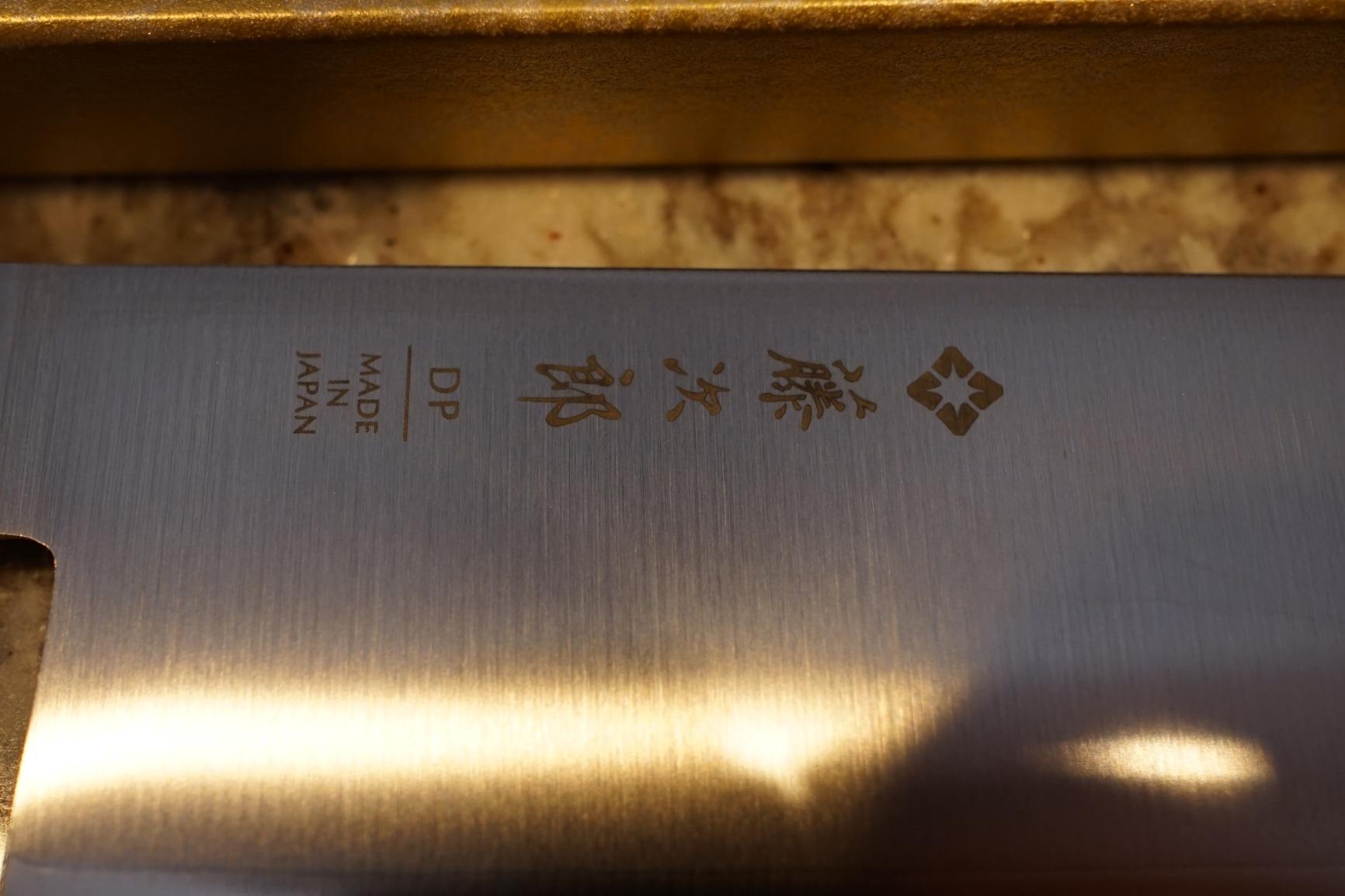
Tojiro Kitchen Knife F-502
A budget-friendly, VG-10 core nakiri that punches well above its price point.
Check Price on AmazonHow We Evaluated These Knives
Every nakiri on this list was assessed against the same set of practical criteria rather than marketing claims. Edge retention was tested by running each blade through a repeated rotation of onions, carrots, celery, and butternut squash to see how quickly the edge started to drag rather than glide. Steel hardness and composition were cross-referenced against manufacturer specs to understand realistic sharpening intervals, an area covered in more depth in our Rockwell hardness breakdown for kitchen knives.
Balance and handle comfort were judged during extended prep sessions, since a knife that feels great for five cuts can feel very different after forty-five minutes of continuous chopping. We also weighed value for money, factoring in included accessories like saya covers, warranty terms, and how easy each blade is to maintain for someone without professional sharpening experience.
Finally, we looked at versatility. While every knife here is primarily a vegetable tool, some handle secondary tasks like mincing herbs or breaking down softer fruits noticeably better than others, and that flexibility factored into the final rankings.
Top Nakiri Knife Picks
1. Tojiro Kitchen Knife F-502 — Best Overall Value
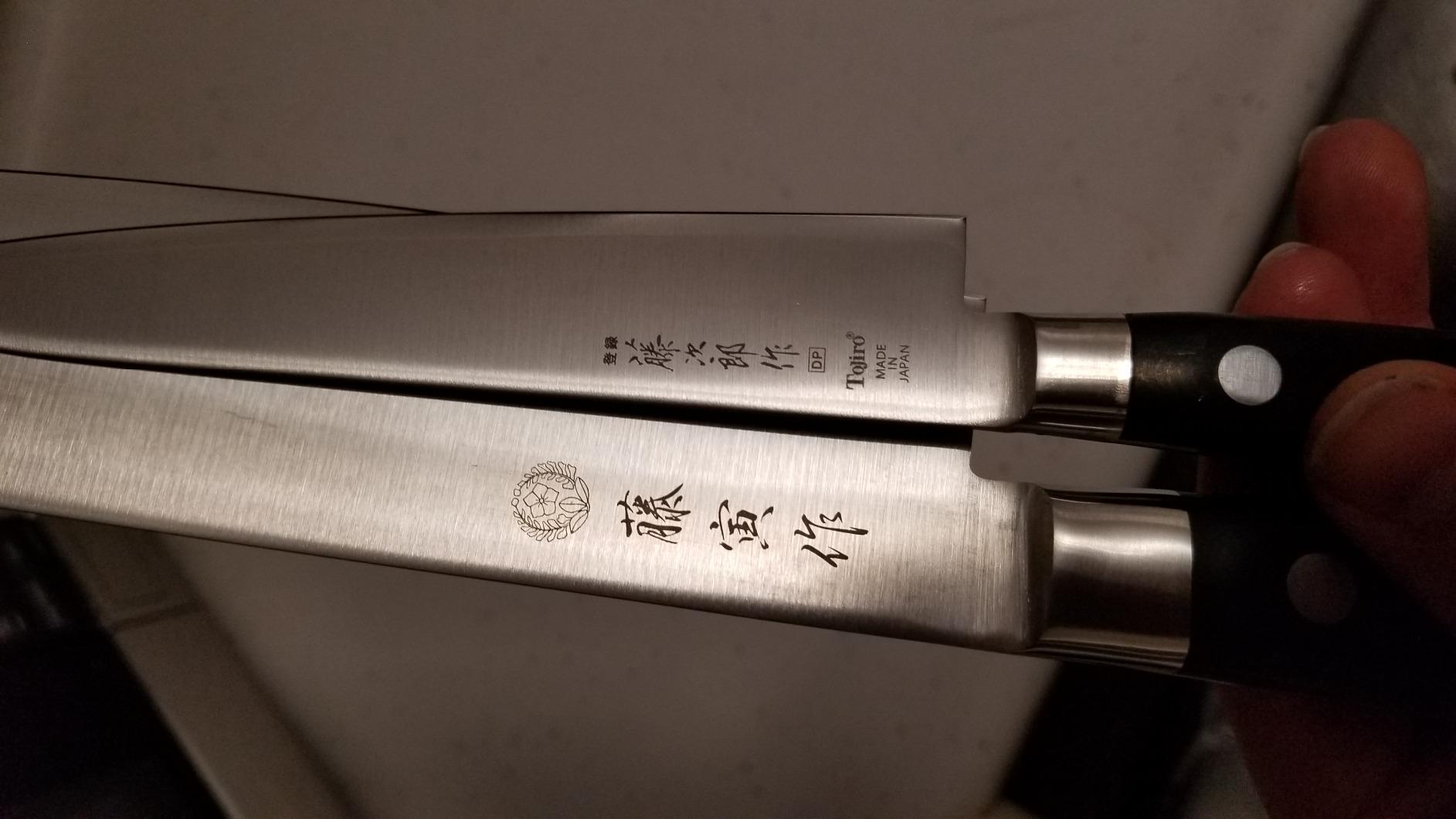
The Tojiro F-502 remains one of the most recommended entry points into Japanese-style nakiri knives, and for good reason. It uses a VG-10 stainless steel core clad in softer stainless layers, giving it a hardness in the 60-61 HRC range without the brittleness that can come with harder mono-steel blades. That combination means it holds a working edge through several sessions of vegetable prep before it needs touching up.
The blade geometry is thin behind the edge, which lets it glide through dense vegetables like sweet potatoes and beets with minimal wedging. The handle is a simple pakkawood D-shaped grip that feels secure even with wet hands. If you’re comparing steel options across the Tojiro lineup and similar VG-10 blades, the VG-10 vs. AUS-10 comparison is worth a read before you commit.
Pros
- Excellent edge retention for the price
- Thin, precise blade geometry
- Comfortable pakkawood handle
Cons
- No included saya sheath
- Handle shape favors right-handed users slightly
Tojiro Kitchen Knife F-502
The value pick that most closely matches performance to price.
View on Amazon2. Mac Knife Japanese Series Vegetable Cleaver, 6-1/2-Inch — Best for Precision Cuts
Mac Knife has built a reputation among professional kitchens for consistent factory sharpening, and this vegetable cleaver is no exception. It arrives with an edge sharp enough for immediate use, and the high-carbon stainless steel formula resists staining while still taking a fine edge. The blade is slightly lighter than some competitors, which some cooks prefer for long prep sessions where wrist fatigue becomes a factor.
Where this knife really stands out is in fine julienne and brunoise work. The thinness of the blade lets it pass through delicate herbs and soft vegetables without crushing cell walls, which matters if you care about presentation or are working with something like fresh basil that bruises easily.
Pros
- Factory edge is exceptionally sharp out of the box
- Lightweight design reduces fatigue
- Stain-resistant high-carbon steel
Cons
- Lighter weight may feel less substantial to some users
- Handle is a simple resin design, not premium wood

Mac Knife Japanese Series Vegetable Cleaver, 6.5-Inch
Precision-focused nakiri ideal for fine julienne and herb work.
View on Amazon3. Shun Classic 6.5″ Nakiri Knife — Best Premium Everyday Option
The Shun Classic line uses VG-MAX steel, a proprietary formula that builds on VG-10 with added vanadium and tungsten for improved edge retention. This nakiri carries Shun’s signature Damascus cladding, which isn’t just cosmetic; the layered stainless steel adds some flexibility and corrosion resistance around the harder cutting core.
The D-shaped Pakkawood handle is contoured for a secure pinch grip, and the blade’s slight curve toward the heel makes it a touch more comfortable than a completely flat profile if you’re transitioning from Western-style knives. For readers weighing this against other premium options, the Shun vs. Wusthof comparison breaks down how Japanese and German philosophies differ in the kitchen.
Pros
- VG-MAX steel offers strong edge retention
- Comfortable ergonomic handle
- Attractive Damascus cladding
Cons
- Higher price point than entry-level options
- Requires occasional professional sharpening for best results
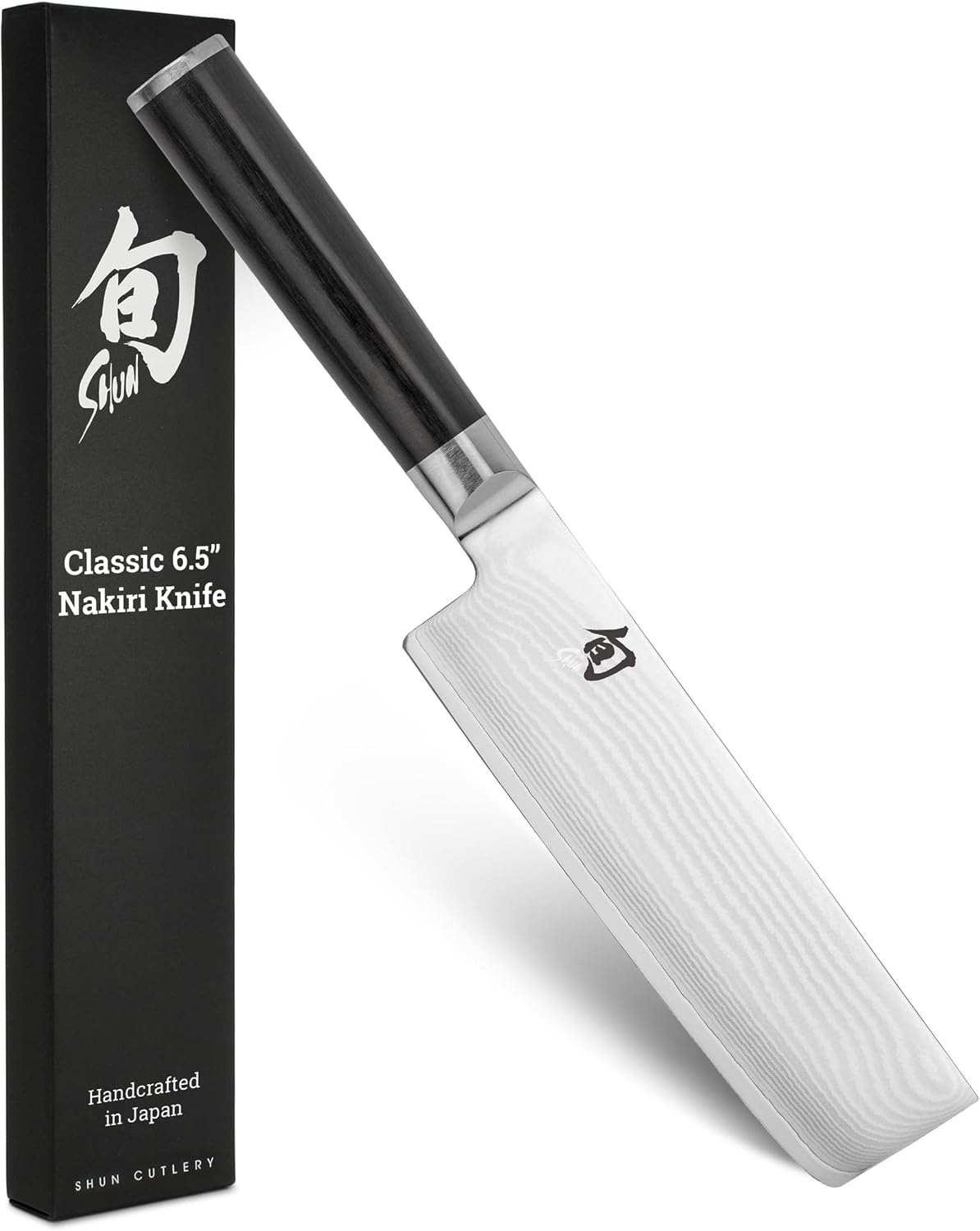
Shun Classic 6.5″ Nakiri Knife
A premium daily driver with excellent steel and comfortable ergonomics.
View on Amazon4. Miyabi Birchwood SG2 Japanese Nakiri Knife — Best Splurge
Miyabi’s Birchwood SG2 line represents the high end of what’s realistically available to home cooks. The SG2 (also called R2) powdered steel core is clad in over 100 layers of Damascus steel and hardened to roughly 63 HRC, giving it edge retention that rivals many high-end knives used in professional kitchens. The birchwood handle is treated under high pressure for durability and has a distinctive look that sets it apart from typical pakkawood.
This is not a knife for someone who wants to toss it in a drawer with other utensils. It rewards careful handling, hand washing, and occasional honing, but in return delivers an edge that stays working-sharp far longer between sharpening sessions than most nakiris on this list. If you’re deciding between high-end steel families, our Miyabi vs. Shun steel comparison covers the practical differences in more depth.
Pros
- Exceptional edge retention from SG2 powdered steel
- Beautiful Damascus cladding and birchwood handle
- Holds a very fine, precise edge
Cons
- Premium price
- Less forgiving of improper care

Miyabi Birchwood SG2 Nakiri Knife
Top-tier steel and craftsmanship for cooks who want the best available.
View on Amazon5. Yoshihiro VG10 16 Layer Hammered Damascus Nakiri — Best Traditional Aesthetic
Yoshihiro built its reputation on traditionally forged Japanese blades, and this hammered Damascus nakiri brings that heritage into a practical vegetable knife. The hammered tsuchime finish isn’t purely decorative; the dimpled surface creates small air pockets that help reduce food sticking to the blade during prep, particularly useful with starchy vegetables like potatoes.
The VG-10 core is hardened to a similar range as the Tojiro but benefits from more traditional hand-finishing, giving it a slightly finer factory edge. The octagonal magnolia wood handle with a buffalo horn ferrule is a distinctly traditional touch that also happens to feel excellent in hand for extended use.
Pros
- Hammered finish reduces food-sticking
- Traditional handle construction feels premium
- Sharp factory edge
Cons
- Handle shape may take adjustment for Western-trained users
- Hammered finish requires more careful drying to avoid spotting

Yoshihiro VG10 16 Layer Hammered Damascus Nakiri
Traditional Japanese craftsmanship with a hammered anti-stick finish.
View on Amazon6. Global 7″ Hollow Ground Vegetable Knife — Best for Modern Kitchens
Global knives are instantly recognizable by their all-steel construction and dimpled handle design, and this vegetable knife carries that same distinctive aesthetic. The CROMOVA 18 stainless steel formula is engineered for both edge retention and corrosion resistance, making it a low-maintenance option for cooks who don’t want to worry about spotting or rust.
The hollow-ground dimples along the blade face serve the same food-release purpose as Yoshihiro’s hammered finish, while the seamless steel handle construction means there’s no wood or resin to maintain, crack, or separate over time. It’s noticeably lighter than the traditional wood-handled options on this list, which some cooks love and others find takes adjustment.
Pros
- Fully sealed, low-maintenance steel construction
- Excellent corrosion resistance
- Distinctive, modern design
Cons
- Lighter balance takes some adjustment
- Steel handle can feel slippery when wet

Global 7″ Hollow Ground Vegetable Knife
Sleek, all-steel construction with a hollow-ground non-stick edge.
View on Amazon7. TUO Nakiri Knife 6.5 Inch — Best Budget Pick
TUO has carved out a niche among budget-conscious cooks who still want Damascus-clad steel and ergonomic handle design without the premium price tag. This nakiri uses a high-carbon stainless core wrapped in a Damascus pattern, delivering solid edge retention for casual to moderate home use.
The ergonomic Pakkawood handle with a full tang design gives it a reassuring heft for a knife at this price point. It won’t match the edge retention of the Miyabi or Shun options over long stretches, but for someone testing whether a nakiri fits their cooking style before investing in a premium blade, it’s a sensible starting point. Our broader TUO chef knife review covers how the brand performs across their wider lineup.
Pros
- Affordable entry into Damascus-clad nakiris
- Comfortable full-tang handle
- Good beginner option
Cons
- Edge retention is average compared to premium picks
- Damascus pattern is more cosmetic than functional at this price tier

TUO Nakiri Knife 6.5 Inch
A budget-friendly Damascus-clad nakiri that’s great for first-timers.
View on AmazonSide-by-Side Comparison Table
| Knife | Steel | Hardness | Handle | Best For |
|---|---|---|---|---|
| Tojiro F-502 | VG-10 clad | ~60-61 HRC | Pakkawood | Best overall value |
| Mac Vegetable Cleaver | High-carbon stainless | ~58-59 HRC | Resin | Fine precision cuts |
| Shun Classic Nakiri | VG-MAX Damascus | ~60-61 HRC | Pakkawood, D-shape | Everyday premium use |
| Miyabi Birchwood SG2 | SG2 powdered steel | ~63 HRC | Birchwood | Best splurge / edge retention |
| Yoshihiro VG10 Damascus | VG-10 hammered Damascus | ~60-61 HRC | Magnolia/horn | Traditional aesthetic |
| Global Hollow Ground | CROMOVA 18 | ~56-58 HRC | Steel (sealed) | Low-maintenance modern kitchens |
| TUO Nakiri 6.5″ | High-carbon Damascus-clad | ~58-60 HRC | Pakkawood, full tang | Budget entry point |
Steel Types Explained
Steel choice drives almost everything about how a nakiri performs day to day: how long it holds an edge, how easy it is to sharpen, and how much care it demands. VG-10, used in the Tojiro, Yoshihiro, and as the base for Shun’s VG-MAX formula, is a stainless steel prized for a solid balance of hardness, edge retention, and corrosion resistance, which is why it shows up across so many mid-to-premium nakiris.
SG2, also marketed as R2, is a powdered stainless steel used in the Miyabi Birchwood. Powdered steels are manufactured through a process that creates a finer, more uniform grain structure than traditionally forged steel, which allows manufacturers to push hardness higher (often into the low 63 HRC range) without sacrificing too much toughness. The tradeoff is that harder steels are typically more brittle and can chip if used incorrectly, such as cutting through bone or twisting the blade during a cut.
CROMOVA 18, found in the Global vegetable knife, prioritizes corrosion resistance and low-maintenance performance slightly more than raw edge retention, which fits Global’s design philosophy of an all-steel, dishwasher-adjacent (though still hand-wash recommended) knife. If you’re trying to decide between stainless families more broadly, our high-carbon vs. stainless steel breakdown is a useful primer, and the MagnaCut vs. M390 comparison is worth reading if you’re curious how modern powder steels stack up against older stainless standards outside the kitchen knife space.
Handle Materials and Balance
Handle material affects grip security, moisture resistance, and long-term durability more than most buyers expect. Pakkawood, a resin-impregnated wood composite used on the Tojiro, Shun, and TUO knives, offers a good middle ground: it looks and feels like natural wood but resists water absorption and cracking far better than solid wood alone.
Magnolia wood with a buffalo horn ferrule, as seen on the Yoshihiro, is a traditional Japanese handle style (called a wa-handle) that’s typically lighter and shifts the balance point of the knife closer to the blade. Some cooks prefer this for precision work, since it can make fine cuts feel more controlled, though it takes adjustment if you’re used to a heavier, Western-style handle.
Global’s steel handle is a departure from both, with a sealed, dimpled design that eliminates any wood-related maintenance entirely. It shifts balance toward the handle rather than the blade, which some cooks find reduces fatigue over long prep sessions, while others feel it makes fine control slightly harder. Understanding why knife balance matters can help you decide which handle philosophy fits your prep style, and our guide on handle materials compared goes deeper into how each option holds up over years of use.
Nakiri vs. Santoku vs. Usuba
The santoku is probably the closest competitor to the nakiri in most kitchens, since both are marketed as all-purpose or vegetable-forward blades. The key difference is blade profile: a santoku has a slight curve near the tip that allows some rocking motion, making it more versatile for mixed prep involving proteins and vegetables. A nakiri’s completely flat edge is more specialized, sacrificing some versatility for superior performance specifically on vegetables. For a full side-by-side, see nakiri vs. santoku for vegetable cutting.
The usuba is the nakiri’s more traditional, single-bevel ancestor, used almost exclusively by trained Japanese chefs for extremely thin, precise cuts like katsuramuki (rotary peeling). Single-bevel blades require different sharpening technique and are considerably less forgiving for home cooks, which is why the double-bevel nakiri has become the more popular choice outside professional kitchens.
If your cooking style genuinely splits evenly between meat and vegetables, a santoku or a traditional gyuto might serve you better as a single knife. But if vegetables make up the bulk of your prep work, whether for a plant-forward diet or high-volume meal prepping, a nakiri’s specialized geometry will outperform a general-purpose blade every time.
Cutting Technique with a Nakiri
Because the blade is flat, a nakiri is meant to be used with a straight push-cut or pull-cut rather than the rocking motion common with curved chef’s knives. Lift the blade straight up, bring it down through the vegetable in one continuous motion, and let the full edge exit the board before lifting again. Trying to rock a nakiri the way you would a chef’s knife will lift the tip off the board and produce uneven cuts.
For julienne and brunoise work, the flat profile actually makes it easier to produce uniform batons, since you can stack thin slices and cut through them evenly without the blade curving away from your guide hand. This is one reason professional kitchens often keep a nakiri alongside a gyuto specifically for high-volume vegetable prep like mirepoix or slaw.
If you’re building out your broader knife skills, our guide on the five essential knife skills every home cook should master covers grip, guide-hand positioning, and cutting techniques that translate well from a nakiri to nearly every other knife in your kitchen.
Care, Sharpening, and Storage
Every knife on this list should be hand-washed and dried immediately rather than left to air dry or run through a dishwasher, even the stainless-heavy options like the Global. Dishwasher detergents and the heat cycle can dull edges prematurely and, over time, degrade handle materials, especially wood composites.
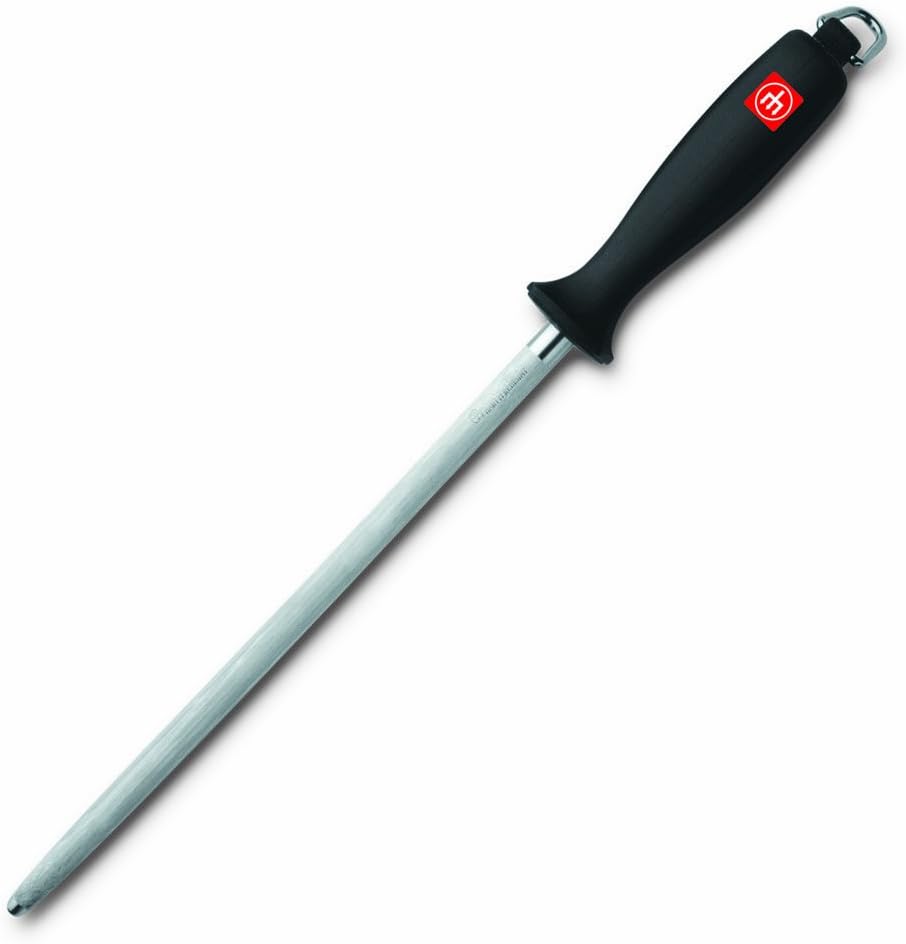
Sharpening frequency depends heavily on steel hardness. Softer steels like those used in budget nakiris need more frequent honing and sharpening, while harder powdered steels like SG2 hold their edge longer but require more skill (or a professional) to resharpen correctly once they do dull. Whetstones remain the gold standard for Japanese-style blades; our comparison of whetstone vs. electric sharpeners explains why electric systems can remove more material than necessary on thin Japanese geometry.
For storage, avoid tossing any nakiri loose into a drawer where it can knock against other utensils and chip the thin edge. A magnetic strip, a blade guard, or a slotted block all work well; our small kitchen magnetic strip layout guide is a good starting point if counter space is limited. If rust or light discoloration does appear on a high-carbon blade, our guide on removing rust from kitchen knives walks through safe methods that won’t damage the edge.
Buying Guide: What to Look For
Blade length is the first decision to make. Most nakiris fall between 5.5 and 7 inches, and the right size depends on your cutting board space and hand size. A 6.5-inch blade, the size of most knives on this list, hits a comfortable middle ground for the vast majority of home cooks.
Steel hardness (HRC) tells you roughly how long an edge will last and how much care it needs. Anything in the high 50s to low 60s HRC range is a sensible target for a home kitchen: hard enough for solid edge retention, but not so hard that everyday accidental drops or twists risk chipping the blade.
Handle shape matters more than most buyers expect on first purchase. A D-shaped Western handle, like the Tojiro and Shun, tends to feel familiar to cooks coming from Western knife sets. A traditional wa-handle, like the Yoshihiro, is lighter and shifts balance toward the blade, which some cooks find gives them more precise control once they adjust to it.
Finally, consider maintenance tolerance honestly. If you know you won’t hand-wash and dry a knife religiously, a lower-maintenance option like the Global will serve you better long term than a high-carbon blade that needs more attentive care, regardless of how good that blade’s steel technically is.
Ready to Upgrade Your Vegetable Prep?
Explore the full lineup of nakiri knives featured in this guide and find the one that fits your kitchen.
Shop Nakiri KnivesBlade Length and Sizing Guide
Nakiri blades are commonly sold in three general size bands, and picking the right one matters more than most first-time buyers assume. Compact nakiris in the 5-inch to 5.5-inch range are popular in smaller Japanese kitchens and among cooks with smaller hands, since the shorter blade is easier to control during fine work like mincing shallots or trimming green beans. The tradeoff is that a shorter blade covers less board surface per stroke, so batch prep on a large pile of vegetables takes more repeated motions to get through.
The 6-inch to 6.5-inch range is the sweet spot for the overwhelming majority of home cooks, and it’s no coincidence that most of the knives in this guide, including the Tojiro F-502, the Shun Classic, and the TUO Nakiri, land squarely in this window. It’s long enough to make quick work of a full head of cabbage or a bag of onions, but still short enough to feel nimble in a smaller hand or on a standard-sized cutting board.
Larger 7-inch nakiris, like the Global Hollow Ground model in this list, appeal to cooks who regularly process large volumes of vegetables, whether for meal prep, canning, or feeding a big household. The longer edge covers more ground per cut, which can meaningfully cut down prep time when you’re working through several pounds of produce at once. The downside is that a longer blade needs a bit more counter and board space to use comfortably, and it can feel unwieldy for someone who mostly does small, precise cuts.
Blade height, which is the distance from the cutting edge to the spine, is a separate measurement worth paying attention to alongside length. Most nakiris run somewhere between 1.8 and 2.2 inches tall, and a taller blade does two useful things: it keeps your knuckles further from the board during a full downward chop, and it gives you more flat surface area to scoop chopped ingredients off the board. If you have larger hands or tend to grip further back on the spine, a taller blade will generally feel more comfortable than a shorter one.
When you’re choosing between these size bands, think honestly about what you actually cook. Someone who preps a few servings of stir-fry vegetables a couple of times a week will get plenty of value out of a compact or mid-size nakiri, while someone doing weekly batch cooking for a family, or running a home-based meal prep side business, will likely appreciate the extra coverage of a 7-inch blade even if it takes a session or two to adjust to the added length.
Ceramic Nakiri Knives: Pros and Cons
Every knife covered so far in this guide uses some form of steel, but ceramic nakiris exist as a distinct category worth understanding before you buy. Ceramic blades are typically made from zirconium oxide, fired and ground to an extremely hard, fine edge. That hardness, often well above what even premium powdered steels like SG2 reach, means a ceramic nakiri can hold a working edge for a remarkably long time under normal vegetable-prep use, sometimes going a year or more between sharpenings for a light home cook.
Ceramic also solves two maintenance headaches at once: it will not rust, and it will not pick up or transfer food odors or flavors the way some carbon steels can, which makes it a favorite for slicing garlic, onions, or anything else with a strong smell that you don’t want lingering into your next prep session. The material is also noticeably lighter than steel, which some cooks find reduces fatigue during long chopping sessions.
The tradeoffs, however, are significant enough that ceramic remains a secondary rather than primary recommendation for most home cooks. Ceramic is brittle compared to steel, and it does not flex at all under lateral pressure. A drop onto a hard floor, a twist while working through a dense root vegetable, or an attempt to cut through something with a pit or a bone can chip or shatter the edge outright, in a way steel simply won’t. Resharpening a chipped ceramic edge also typically requires specialized diamond abrasives rather than a standard whetstone, since ceramic is far too hard for conventional sharpening stones to touch.
Ceramic nakiris tend to make the most sense as a dedicated, lightweight tool for someone who mostly slices soft produce like tomatoes, cucumbers, and leafy greens, kept carefully separate from denser root vegetables and squash where the brittleness becomes a real liability. If your prep work regularly includes winter squash, sweet potatoes, or anything else that demands the blade twist or lever through resistance, a steel nakiri like the Tojiro or Shun will hold up far better over the long run.
Carbon Steel vs. Stainless Steel Nakiris
Nearly every nakiri marketed to home cooks today, including every model featured earlier in this guide, uses some form of stainless steel, but true high-carbon (non-stainless) nakiris still exist, particularly among traditional Japanese blacksmiths, and it’s worth understanding what sets them apart before assuming stainless is always the better choice.
Carbon steel, without the chromium content that makes a steel “stainless,” can typically be sharpened to a finer, more acute edge and often takes that edge with less effort at the whetstone. Many professional cooks who grew up using carbon steel blades describe them as feeling noticeably sharper in actual use, not just on paper. The catch is that carbon steel reacts with the acids and moisture in vegetables, forming a gray-blue patina over time and, if left wet or uncleaned, actual rust. That patina is not purely cosmetic: many carbon steel users deliberately develop it early with a diluted vinegar soak because it forms a mild protective layer against further corrosion, but it does mean carbon steel demands a stricter drying-and-oiling routine than stainless.
Stainless nakiris, including VG-10 blades like the Tojiro and Yoshihiro, trade a small amount of that theoretical sharpness ceiling for dramatically lower maintenance. Modern stainless formulas have closed much of the performance gap that once existed between the two categories, which is a major reason stainless has become the default choice for nakiris sold outside of specialty Japanese cutlery shops. For a home cook without the time or interest in a strict maintenance routine, a stainless nakiri like any of the picks in this guide will deliver excellent results with a fraction of the upkeep that a traditional carbon steel blade demands.
If you do want to experiment with carbon steel down the line, treat it as a second knife rather than a replacement for your primary stainless nakiri, and commit to hand-drying it immediately after every single use, since even a few hours sitting wet on a cutting board is enough to start visible surface rust on an unprotected carbon edge.
Left-Handed Nakiri Considerations
Handle shape is the main place where left-handed cooks need to pay closer attention than right-handed cooks when shopping for a nakiri. D-shaped Western handles, like the ones on the Tojiro F-502 and the Shun Classic, are molded with an asymmetric contour designed to sit comfortably in a right hand. A left-handed cook can still use one of these knives without much trouble for straight push cuts, but the contour will feel slightly less secure during more twisting or angled grips.
Wa-handles, the traditional Japanese octagonal or oval handle style seen on the Yoshihiro in this guide, are typically symmetric and work equally well for either hand, which makes them a safer default recommendation if you’re left-handed and don’t want to think about handle orientation at all. Fully sealed steel handles, like the one on the Global vegetable knife, are also symmetric for the same reason.
Blade grind is a separate consideration and matters far less for a nakiri than it does for a traditional single-bevel Japanese knife like a usuba or a yanagiba. Because every knife recommended in this guide uses a double bevel, ground evenly on both sides of the edge, left-handed cooks can use any of them without the tracking or veering issues that plague single-bevel blades ground for a specific hand. If you do ever consider a traditional single-bevel usuba down the road, make sure to explicitly buy or special-order a left-handed grind, since a right-handed single-bevel edge will consistently pull cuts off-line for a left-handed user.
Nakiri Knife Sets and What’s Included
Some shoppers prefer buying a nakiri as part of a broader knife set rather than as a standalone blade, and it’s worth understanding what that typically buys you versus purchasing individual pieces. A nakiri-inclusive set usually bundles the vegetable knife alongside a santoku or gyuto for general use, a paring knife for small detail work, and sometimes a honing rod and a wooden or bamboo block for storage.
The main advantage of a set is upfront convenience and often a modest per-knife cost savings compared to buying each piece separately, along with matched aesthetics if that matters to you. The main downside is that set nakiris are sometimes a manufacturer’s mid-tier offering rather than their flagship line, since a set is priced to be accessible as a whole package. If edge performance on the nakiri specifically is your top priority, a standalone premium blade like the Shun Classic or Miyabi Birchwood will usually outperform the nakiri included in a general knife set at a similar total price point.
Sets also make sense as a starter kitchen setup for someone building a knife collection from scratch, such as a first apartment or a wedding registry, where having a paring knife and a general-purpose blade alongside the nakiri solves several needs in one purchase. If you already own a solid chef’s knife or santoku and a paring knife, buying a single dedicated nakiri, like any of the standalone picks in this guide, is usually the more cost-effective route to improving your specific vegetable-prep performance.
Where Nakiri Knives Are Made
Country and region of manufacture is a detail that genuinely affects quality, price, and character across the nakiri market, and it’s worth knowing the major production hubs before you buy. Seki City, in Japan’s Gifu Prefecture, is one of the country’s oldest and largest cutlery manufacturing centers, with a blacksmithing tradition dating back centuries to sword production. Many mass-market and mid-premium Japanese brands, including lines similar to the Tojiro and Shun knives in this guide, are produced in or around Seki, combining traditional forging knowledge with modern factory precision to keep prices reasonable without sacrificing steel quality.
Sakai City, near Osaka, is Japan’s other major cutlery hub and is generally associated with more traditional, often hand-finished blades, frequently produced through a specialized division of labor where separate craftsmen handle forging, sharpening, and handle fitting. Knives from Sakai, including many Yoshihiro products, tend to command a premium tied to that hand-finishing process and the reputation of individual workshops.
Not every nakiri sold today is made in Japan. A number of Western and Chinese manufacturers now produce nakiri-style blades, sometimes using imported Japanese steel like VG-10 combined with domestic manufacturing to hit a lower price point, which is part of how budget-friendly options like the TUO Nakiri can offer Damascus-clad steel at an accessible cost. These knives can absolutely perform well for home use, but they typically won’t carry the same hand-finishing detail or resale value as a blade produced by an established Seki or Sakai workshop.
For most home cooks, country of origin matters less than the specific steel, hardness, and grind quality of the individual knife, but if you’re drawn to the craft and history side of Japanese cutlery, knowing whether a blade comes from Seki, Sakai, or elsewhere gives useful context for what you’re actually paying for beyond the marketing copy on the box.
Common Nakiri Buying Mistakes
The single most common mistake first-time buyers make is choosing a nakiri based purely on visual appeal, particularly Damascus patterning, without checking the actual core steel and hardness underneath. A hammered or Damascus-clad exterior can sit over a wide range of core steels, from budget high-carbon stainless up through premium powdered steel, and the pattern itself tells you nothing about how the knife will actually perform at the cutting board.
A second frequent mistake is buying a blade that’s too hard for the buyer’s actual sharpening habits and comfort level. A high-HRC steel like SG2, found in the Miyabi Birchwood, delivers outstanding edge retention, but it also demands more skill and patience to resharpen correctly once it does dull, and it’s less forgiving of an accidental twist or drop. A cook who isn’t planning to learn proper whetstone technique, or send the knife out for professional sharpening periodically, will likely be happier and get more consistent performance from a moderately hard, easier-to-maintain steel in the 58 to 61 HRC range.
Ignoring handle fit is another common oversight, especially when buying online without ever holding the knife first. A D-shaped handle that feels perfectly secure to one person can feel awkward or slightly small to another with larger hands, and a heavier all-steel handle like Global’s can feel unbalanced to someone used to a lighter wa-handle. Reading detailed reviews that mention handle circumference and weight distribution, rather than just steel specs, can help avoid a mismatch.
Finally, many buyers underestimate the maintenance commitment a given knife actually requires relative to their real habits, not their intentions. It’s easy to plan on hand-washing and drying a knife immediately after every use, but if your actual kitchen routine involves leaving dishes in the sink for a while, a lower-maintenance option like a stainless CROMOVA 18 blade or a well-sealed pakkawood handle will hold up far better over the long term than a high-maintenance carbon steel or delicate hammered finish that needs more careful handling than your routine can reliably provide.
Nakiri for Meal Prep and Plant-Based Cooking
Anyone who does regular batch meal prep, especially around a vegetable-forward or plant-based diet, tends to get outsized value from a dedicated nakiri compared to cooks who only prep vegetables occasionally. Weekly meal prep routines typically involve processing large, repetitive volumes of the same few vegetables, diced onions for a week of stir-fries, shredded cabbage for slaw, or a full sheet pan’s worth of root vegetables, and the nakiri’s flat edge is purpose-built for exactly that kind of high-repetition, uniform cutting.
The uniformity a nakiri produces also matters more than it might initially seem for meal prep specifically, since evenly sized pieces cook at the same rate. Unevenly cut vegetables in a roasting pan or stir-fry mean some pieces finish before others, leading to a mix of undercooked and overcooked results in the same dish. The nakiri’s flat profile makes it easier to produce consistent dice and julienne cuts across a large batch than a curved chef’s knife, where cut size naturally varies more as your hand fatigues over a long prep session.
For plant-based cooks specifically, whose knife work skews even more heavily toward vegetables, fruits, and legumes rather than proteins, a nakiri can reasonably become a true primary knife rather than a secondary specialty tool. If you already know your weekly cooking is 80 or 90 percent produce, it’s worth considering a slightly larger nakiri, like the 7-inch Global featured in this guide, to maximize the board coverage advantage during long batch-prep sessions.
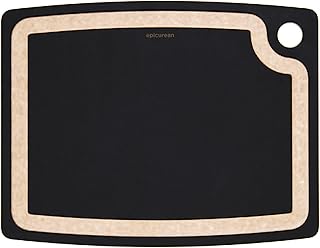
One practical tip for meal-prep-heavy households: pair your nakiri with a large, stable cutting board that has enough surface area to hold a full head of cabbage or several pounds of root vegetables at once, since a small board will bottleneck your prep speed regardless of how good the knife itself is.
Nakiri vs. Mandoline: When to Use Each
A mandoline slicer and a nakiri solve overlapping but distinct problems, and understanding when each tool actually wins makes both more useful in your kitchen. A mandoline excels at producing extremely thin, perfectly uniform slices at a fixed thickness, which is difficult to replicate by hand with any knife, including a nakiri, no matter how skilled the user. For tasks like paper-thin potato slices for a gratin, uniform cucumber rounds for pickling, or consistent apple slices for a tart, a mandoline will out-perform hand-cutting on both speed and uniformity.
Where the nakiri wins is in flexibility, safety, and cleanup. A mandoline requires a separate tool, typically has a narrower range of cuts it handles well (mostly slices, with some models offering julienne blades), and carries a real risk of finger injury if used without the included guard, a risk significant enough that many kitchen injury guides list mandolines as a leading cause of home knife-related cuts. A nakiri, by contrast, handles slicing, dicing, shredding, and rough chopping all with one tool, cleans up with a simple hand wash rather than disassembling multiple plastic parts, and carries a more familiar and controllable risk profile for most home cooks.
In practice, the two tools complement each other well in a kitchen that does a lot of vegetable prep. Reach for the mandoline when a recipe specifically calls for very thin, uniform slices at scale, such as scalloped potatoes or a large batch of pickles, and reach for the nakiri for everything else, including any cut where thickness doesn’t need to be machine-precise or where you need more than one shape of cut in the same prep session.
Tang, Bolster, and Spine Thickness Explained
Tang refers to how far the blade’s steel extends into the handle, and it’s a meaningful durability and balance factor on a nakiri. A full tang, like the one on the TUO Nakiri in this guide, runs the complete length of the handle and is usually visible as a metal strip along the top and bottom of the grip. This construction adds weight toward the handle end, which some cooks find improves balance and gives extra reassurance during heavier chopping.
A partial or hidden tang, common on many traditional Japanese wa-handled knives including styles similar to the Yoshihiro, extends only partway into the handle and is typically friction-fit or secured with a small pin rather than fully bonded along the handle’s length. This isn’t a weakness for a vegetable knife specifically, since a nakiri never experiences the twisting or prying stress that might challenge a partial tang on a knife used for tougher tasks; it simply results in a lighter, blade-forward balance that many traditionally trained cooks actually prefer for precision work.
Bolster, the thicker collar of metal where the blade meets the handle on some Western-style knives, is largely absent on most nakiris, including every model in this guide. That’s intentional: a bolster adds weight and a transition point that isn’t especially useful on a flat-edged vegetable knife, and its absence keeps the nakiri lighter and better balanced for the push-cut motion the blade is designed around.
Spine thickness, measured at the top of the blade near the handle, directly affects how a nakiri feels moving through dense vegetables. A thinner spine, typically under 2mm on premium nakiris, tapers more aggressively toward the edge and wedges less when cutting through something dense like a butternut squash or a large potato. Thicker spines, more common on budget blades, can still cut well but require slightly more downward force to push through the densest vegetables, which becomes more noticeable over a long prep session.
Gift Guide: Nakiri Knives for Different Cooks
For a cook who already owns several knives and appreciates craftsmanship, the Miyabi Birchwood SG2 or the Yoshihiro Hammered Damascus make memorable gifts precisely because they’re the kind of purchase many enthusiasts hesitate to make for themselves. Both combine premium materials with visual flourishes, the Damascus cladding and the birchwood handle on the Miyabi, and the traditional magnolia-and-horn handle on the Yoshihiro, that read clearly as a considered, higher-end gift rather than a generic kitchen tool.
For a cook just starting to build a serious knife collection, or a college student or new-apartment gift where budget matters more, the Tojiro F-502 or TUO Nakiri 6.5″ both deliver genuinely good performance without asking the gift-giver to spend at premium levels. These make particularly good choices for someone who has expressed interest in cooking more but hasn’t yet invested in dedicated Japanese-style knives.
For the health-conscious cook or someone newly committed to eating more vegetables, whether for a New Year’s resolution, a doctor’s recommendation, or a shift toward plant-based eating, pairing a nakiri gift with a good cutting board and perhaps a simple vegetable-forward cookbook makes for a themed gift that signals genuine thought rather than a random kitchen gadget.
Low-maintenance gift recipients, including cooks who travel frequently, share a kitchen, or have historically been hard on their knives, are usually better served by the Global Hollow Ground vegetable knife, since its sealed steel construction and strong corrosion resistance forgive a less-than-perfect care routine far better than a wood-handled or high-carbon option would.
Glossary of Nakiri and Japanese Knife Terms
Nakiri — a Japanese double-bevel vegetable knife with a flat edge and rectangular blade profile.
Usuba — the traditional single-bevel ancestor of the nakiri, used primarily by trained Japanese chefs.
Santoku — a general-purpose Japanese knife with a slight curve near the tip, allowing some rocking motion unlike a nakiri.
Gyuto — the Japanese equivalent of a Western chef’s knife, used for a broad range of tasks including meat.
Wa-handle — a traditional Japanese handle style, typically octagonal or oval, often made of magnolia wood with a horn ferrule.
Yo-handle — a Western-style handle, typically a riveted, contoured D-shape, fitted to a Japanese blade profile.
HRC (Rockwell Hardness) — a numerical scale measuring how hard a steel is, which correlates with edge retention and brittleness.
Tsuchime — a hammered surface finish that reduces food sticking during slicing.
Damascus cladding — layered steel folded around a harder core, adding some flexibility and a distinctive visual pattern.
Powdered steel — steel manufactured through a process that produces a finer, more uniform grain structure, allowing for higher hardness without excess brittleness.
Saya — a traditional wooden blade sheath used for storage and transport.
Katsuramuki — a traditional rotary peeling technique, typically performed with an usuba, used to create extremely thin continuous vegetable sheets.
Warranty, Returns, and Buying Confidently
Warranty terms vary meaningfully across the brands featured in this guide, and it’s worth checking current manufacturer policies before you buy, since coverage can change and typically excludes damage from misuse like dishwasher cycles, chipping from cutting bone, or rust from improper drying. Established Japanese cutlery brands generally stand behind manufacturing defects for a defined period, while offering little to no coverage for the kind of wear and tear that comes from normal sharpening and use.
When buying online, especially for a premium knife like the Miyabi Birchwood or Shun Classic, purchasing through an authorized retailer matters more than it might for less specialized goods. Counterfeit and gray-market Japanese knives are a real problem in the space, and buying through a reputable, authorized channel is the most reliable way to ensure you’re getting genuine steel and craftsmanship, along with valid warranty coverage if something does go wrong.
If a knife arrives with an uneven grind, a warped blade, or a handle that isn’t properly seated, that’s a legitimate defect worth requesting a replacement for, distinct from routine sharpening needs. Most reputable sellers will handle a genuine manufacturing defect without much friction, particularly within the first several weeks of purchase, so don’t hesitate to reach out if something feels off with a new knife straight out of the box.
Finally, keep your original packaging and any documentation for at least the first few weeks after a purchase, since some return and warranty processes require proof of purchase date and original packaging to process a claim, particularly for higher-value knives like the premium picks in this guide.
Frequently Asked Questions
Is a nakiri knife worth buying if I already have a chef’s knife?
Yes, if vegetables make up a significant portion of your cooking. A nakiri’s flat edge produces cleaner, faster, and more uniform cuts on produce than a curved chef’s knife, and the two tools complement each other rather than compete.
Can a nakiri replace a chef’s knife entirely?
Not comfortably. Nakiris are not designed for tasks like breaking down poultry, cutting through bone, or the rocking motion used for mincing herbs at speed. It’s best treated as a specialized addition rather than a full replacement.
What size nakiri should I buy?
A 6.5-inch blade suits most home cooks and cutting board sizes. Larger 7-inch blades can be useful if you regularly prep large quantities of vegetables, while smaller blades around 5.5 inches suit tighter kitchens or smaller hands.
How often does a nakiri need sharpening?
This depends on steel hardness and usage frequency, but as a general rule, honing before each use and full sharpening every one to three months for regular home use keeps most nakiris performing well.
Are nakiri knives dishwasher safe?
No. Even stainless-heavy options like the Global should be hand-washed and dried immediately. Dishwasher heat and detergent can dull edges and damage handle materials over repeated cycles.
What’s the difference between a nakiri and a usuba?
A usuba is traditionally single-beveled and used by trained Japanese chefs for extremely precise cuts, while most nakiris sold today are double-beveled, making them significantly easier to sharpen and use for home cooks.
Is a heavier or lighter nakiri better?
It depends on personal preference and prep style. Lighter blades reduce fatigue during long sessions and suit fine precision work, while slightly heavier blades can feel more stable for cooks used to Western-style knives.
Can a nakiri cut meat or fruit?
It can handle soft fruits and boneless proteins in a pinch, but it isn’t designed for tougher cuts of meat or anything involving bone. Stick to vegetables and soft produce for the best results and to protect the edge.
Why do some nakiris have a hammered or dimpled finish?
The hammered (tsuchime) or hollow-ground finish creates small air pockets between the blade and the food, which reduces sticking, particularly with starchy vegetables like potatoes and squash.
What’s the best beginner nakiri?
The Tojiro F-502 and TUO Nakiri 6.5″ are both excellent starting points, offering solid steel performance and comfortable handles without the price tag of premium options like the Miyabi Birchwood.
Final Verdict
A nakiri knife is one of the highest-value additions you can make to a kitchen built around vegetable-forward cooking. The Tojiro F-502 remains the smartest starting point for most home cooks thanks to its balance of price, steel quality, and edge geometry. If you’re ready to invest in something that will last for years with proper care, the Shun Classic or Miyabi Birchwood SG2 deliver noticeably better long-term edge retention and craftsmanship. And if you simply want to try the format before committing, the TUO Nakiri 6.5″ offers a low-risk way to see whether this blade shape fits how you actually cook.
Whichever option you choose, pairing it with proper care, the right cutting board, and a consistent sharpening routine will keep it performing at its best for years of vegetable prep to come.
Shop the Full Nakiri Lineup on Amazon