Global G-2 Chef Knife Review: Is It Worth It?
A deep, practical look at the knife that made dimpled steel handles famous — and whether it still deserves a spot in your knife block.
Quick Verdict: Is the Global G-2 Worth It?
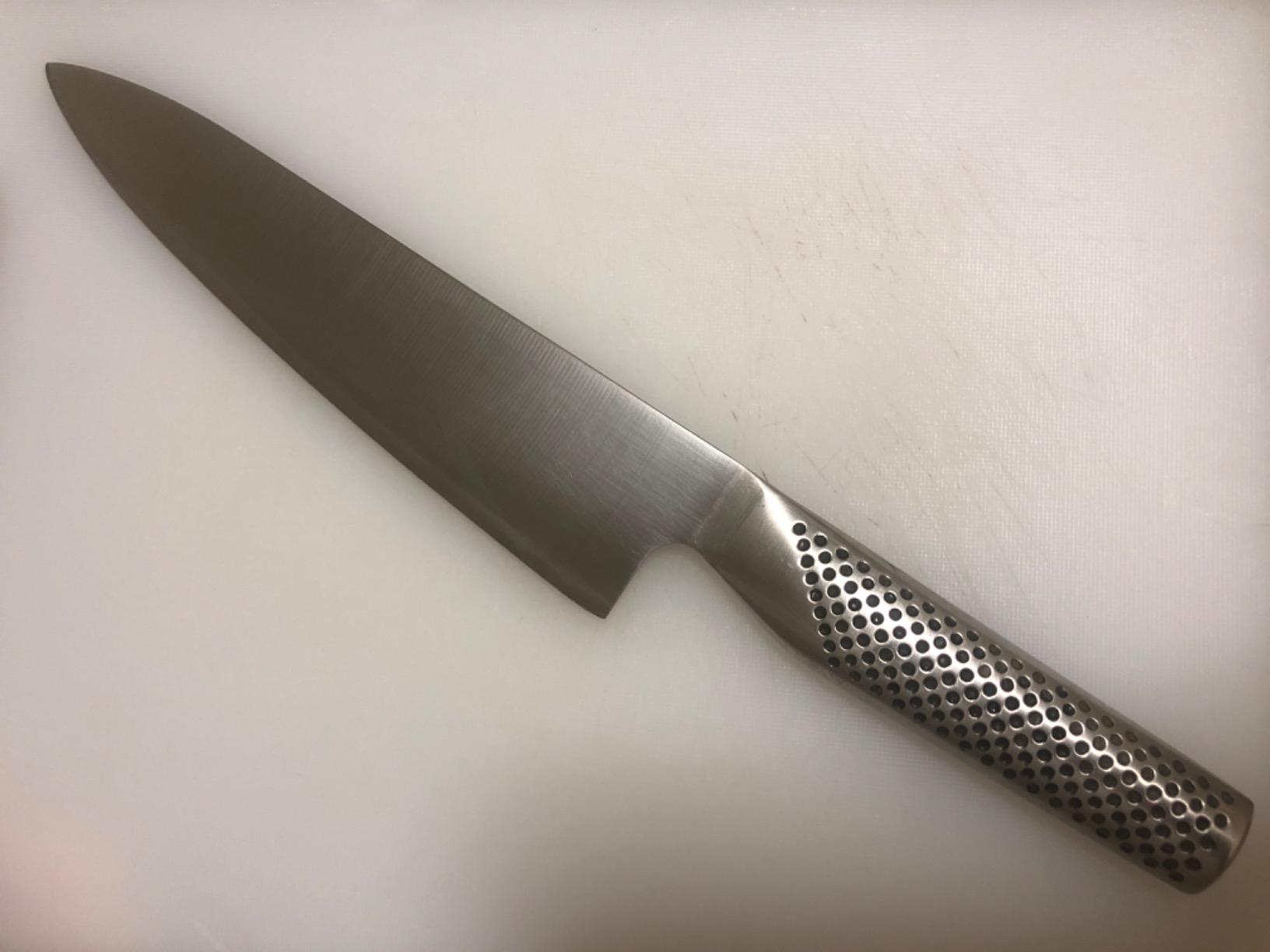
The Global G-2 has been a fixture in home and professional kitchens for decades, instantly recognizable by its all-steel dimpled handle and razor-thin blade. If you’ve ever browsed a best chef knives guide, chances are the G-2 showed up near the top, and for good reason. It’s light, it’s nimble, and it slices through vegetables with a precision that heavier German knives simply can’t match.
But “worth it” depends entirely on what you value in a knife. If you want a blade that feels like an extension of your hand, glides through onions without wedging, and looks striking on a magnetic strip, the G-2 earns its keep. If you prefer a heavier, more forgiving knife that can handle rougher tasks like breaking down a chicken or splitting a squash, you may find the G-2’s thin edge and light weight less confidence-inspiring.
In short: the G-2 is worth it for cooks who prioritize speed, control, and a genuinely enjoyable slicing experience over brute-force durability. Below, we break down exactly why — and where it falls short — after a full technical and hands-on evaluation.

Lightweight CROMOVA 18 stainless steel, iconic dimpled handle, hollow-ground edge.
Check Price on AmazonGlobal’s Origin & the G-2’s Reputation
Global knives were designed in Japan by Komin Yamada in the early 1980s, with a clear goal: build a knife that bridged Japanese cutting philosophy with a shape Western cooks would find familiar. The G-2, the brand’s original chef’s knife, became the flagship model almost immediately. Unlike traditional Japanese single-bevel blades, the G-2 uses a double-bevel edge sharpened symmetrically, which makes it approachable for both left- and right-handed cooks — a detail that matters if you’ve read our guide on handedness and blade geometry in other cutlery contexts.
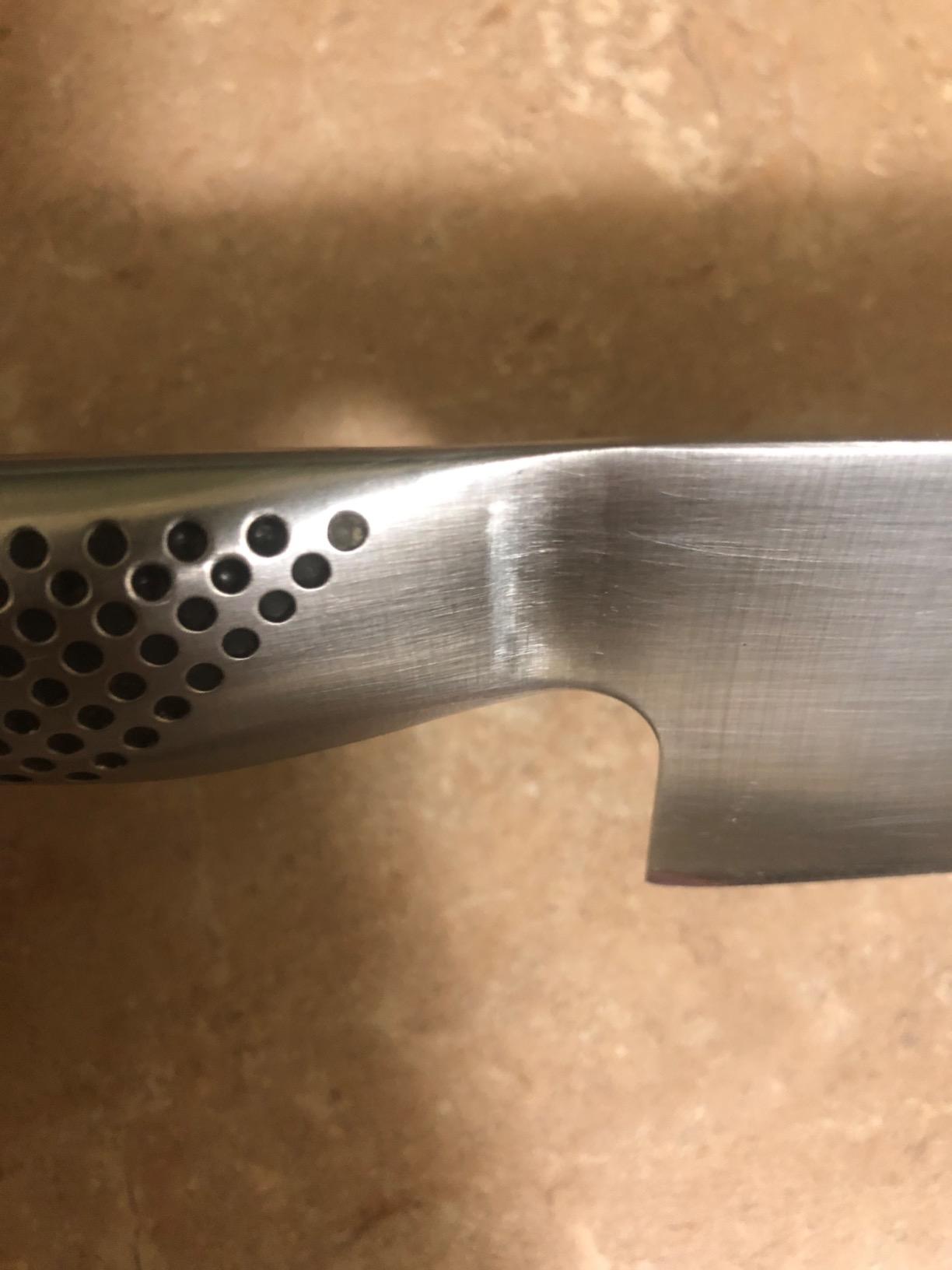
What set the G-2 apart visually was its one-piece, hollow-handle construction. Instead of a wood or composite scale riveted onto a tang, Global forges the blade and handle from a single continuous piece of CROMOVA 18 stainless steel, then fills the hollow handle with sand to balance the knife perfectly at the bolster. This design choice is why the G-2 still looks unlike almost anything else on a knife rack, decades after it was introduced.
Today the G-2 sits in an interesting spot in the market: it’s often the first “premium” knife home cooks buy, priced well below boutique Japanese gyutos but noticeably above mass-market stamped knives. If you’re curious how it stacks up against other icons in that price bracket, our best chef knife brands roundup covers where Global sits relative to Wüsthof, Shun, and Mac.
Global G-2 Specifications
| Spec | Detail |
|---|---|
| Blade Length | 8 inches (20 cm) |
| Steel | CROMOVA 18 stainless steel |
| Hardness | Approximately 56-58 HRC |
| Edge Style | Double bevel, hollow-ground with dimples for release |
| Handle Material | Stainless steel, hollow, sand-filled for balance |
| Handle Texture | Dimpled grip surface |
| Weight | Roughly 6.5 oz (185g), notably light |
| Construction | Single-piece forged blade and handle |
| Country of Origin | Made in Japan |
| Dishwasher Safe | Not recommended despite steel construction |
For context on how Rockwell hardness ratings affect real-world performance, our explainer on understanding Rockwell hardness in kitchen knives is a useful companion read before you commit to any premium blade.
Steel, Hardness & Edge Retention
The G-2 is built from CROMOVA 18, a proprietary molybdenum-vanadium stainless steel that Global developed specifically for its knives. It isn’t a “super steel” by modern standards — you won’t get the edge retention of something like S45VN or MagnaCut, which we cover in depth in our S35VN vs S45VN comparison — but it was engineered with a specific goal: hold a sharp, thin edge while resisting corrosion in a way that older Japanese carbon steels could not.
At roughly 56-58 HRC, the G-2 sits in a comfortable middle ground. It’s harder than most German stamped knives, which typically run 54-56 HRC, but softer than premium powder-metallurgy Japanese blades that can reach 62-64 HRC. That hardness translates to a knife that’s easy to sharpen at home, resists chipping reasonably well, and holds a working edge for one to two weeks of daily home use before it needs a touch-up.
Where the G-2 shines is corrosion resistance. Because CROMOVA 18 has a high chromium content, the blade shrugs off acidic ingredients like tomatoes, citrus, and vinegar-based marinades without staining or pitting — a meaningful advantage if you’ve dealt with the patina issues discussed in our guide to knife patina.
| Steel Trait | G-2 (CROMOVA 18) | Typical German Steel (X50CrMoV15) | Premium Japanese Powder Steel |
|---|---|---|---|
| Hardness (HRC) | 56-58 | 54-56 | 60-64 |
| Edge Retention | Moderate-Good | Moderate | Excellent |
| Corrosion Resistance | Excellent | Excellent | Good-Excellent |
| Ease of Home Sharpening | Easy | Easy | Moderate-Hard |
| Chip Resistance | Good | Very Good | Moderate |
Blade Geometry & Cutting Feel
This is where the G-2 truly separates itself from Western-style knives. The blade is thin behind the edge and hollow-ground with a series of dimples running along the lower portion — a feature meant to reduce surface contact with food and prevent sticking, particularly on starchy vegetables like potatoes. For a deeper technical breakdown of why this matters, see our piece on blade geometry and thin-behind-the-edge design.
The result is a knife that cuts with noticeably less resistance than a typical German chef’s knife. Thin slices of onion, garlic, and herbs happen almost effortlessly, and the blade tracks in a straight line rather than wedging food apart. This is closer in feel to a Japanese gyuto than to a Wüsthof or Zwilling, which makes sense given Global’s design lineage — a comparison we explore further in German steel vs Japanese steel knives.
The tip is fine and slightly upswept, giving good control for detail work like trimming fat or scoring fish skin, though it’s not as pointed as a santoku-style tip. If precision vegetable work is your priority, it’s worth reading our nakiri vs santoku comparison to see how the G-2’s geometry compares to dedicated vegetable knives.
Handle Design & Ergonomics
The dimpled steel handle is the G-2’s most polarizing feature. Cooks either love it or find it takes real getting used to. Because the handle is hollow and sand-filled rather than solid, it’s dramatically lighter than the wood, G-10, or Micarta handles found on most Western and even many Japanese knives — a topic we cover in more detail in our knife handle materials comparison.
The dimples exist to improve grip when hands are wet or greasy, and they genuinely work — the texture bites into your palm just enough to prevent slipping without feeling abrasive. That said, some cooks with larger hands report the handle feels slightly undersized, and the all-metal construction can feel cold or slick during the first few uses before your grip adapts.
Because the handle has no seams, rivets, or bolster gaps, it’s also one of the most hygienic handle designs on the market — there’s no crevice for bacteria or food residue to hide in, unlike riveted wood-scale handles.
Weight & Balance
At around 6.5 ounces, the G-2 is one of the lightest 8-inch chef’s knives you can buy. For comparison, a Wüsthof Classic of the same blade length weighs closer to 8-9 ounces, and heavier German cleavers and butcher knives can weigh well over a pound — see our best cleaver knives guide for the other end of that spectrum.
The sand-filled handle isn’t just for weight reduction — it’s specifically engineered to shift the balance point to right at the bolster, where your index finger and thumb naturally pinch the blade. This makes the G-2 feel almost weightless in a pinch grip, reducing fatigue during long prep sessions. Understanding why this matters is covered well in our guide to knife balance.
The tradeoff is that some cooks accustomed to heavier knives initially feel like the G-2 lacks “chopping power.” In practice, the light weight simply requires a slightly different technique — more of a push-and-pull slicing motion rather than relying on the knife’s own mass to fall through food.
Kitchen Performance Testing
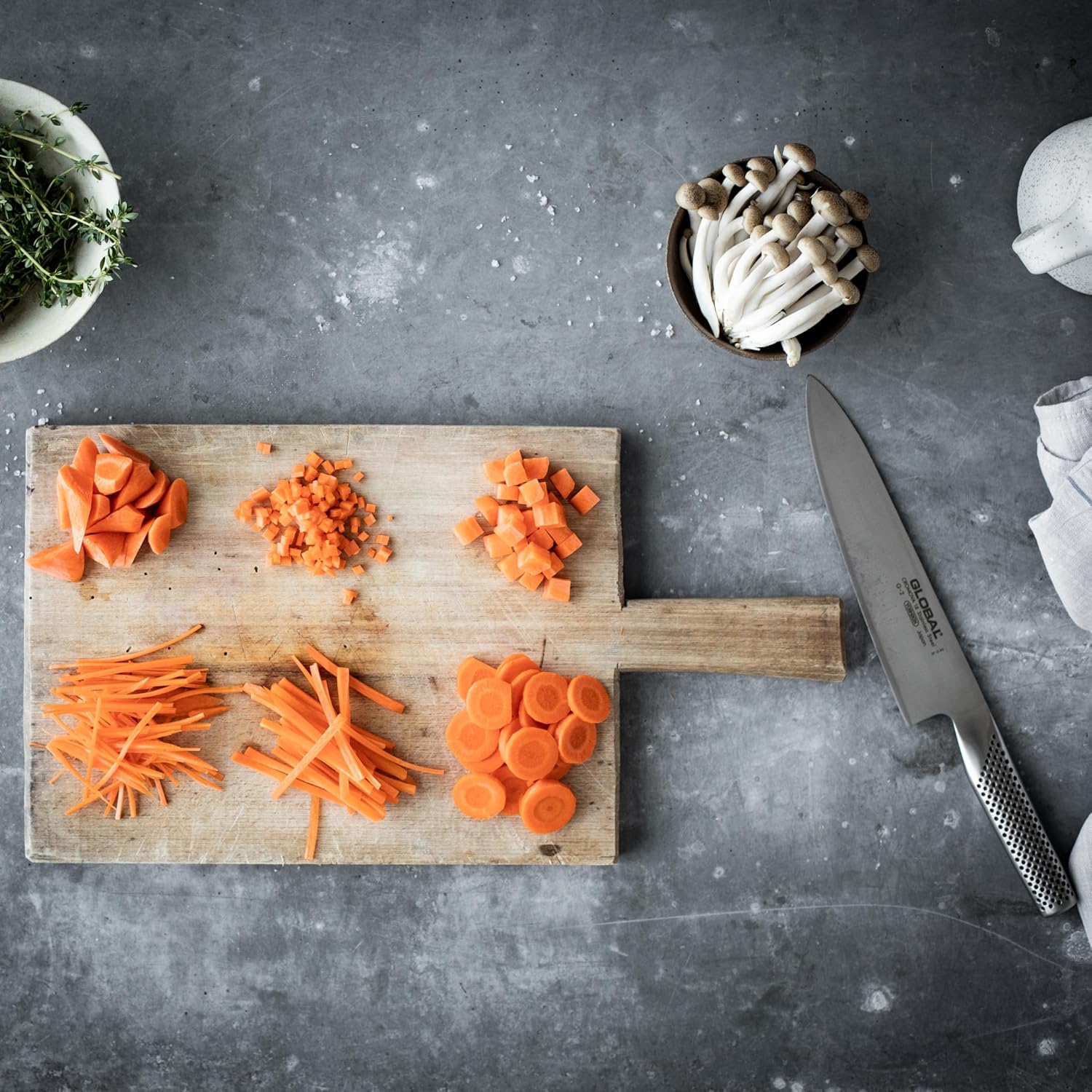
We put the G-2 through the standard battery of home kitchen tasks: dicing onions, julienning carrots, mincing garlic and herbs, slicing tomatoes, breaking down a whole chicken, and portioning a butternut squash.
Vegetable Prep
This is where the G-2 excels. Onions separated cleanly with minimal tearing, and the thin edge sliced through tomato skin without the sawing motion often needed with duller or thicker blades. Herb mincing was fast and precise thanks to the light tip control.
Protein Work
Breaking down chicken was more mixed. The thin blade handled clean cuts through joints well, but cutting through smaller bones is not recommended — like most Japanese-style chef’s knives, the G-2 isn’t designed for bone contact. For that kind of work, our best boning knives guide is a better starting point.
Hard Vegetables
Butternut squash and other dense produce required more careful technique. Because the blade is light and thin, plunging straight down through very dense skins felt less confidence-inspiring than with a heavier German knife. A rocking or scoring-then-splitting technique worked better than a straight chop.

Stock and pricing shift often on this model — check the live listing before buying.
View on AmazonSharpening & Maintenance
The G-2’s hollow-ground edge sharpens easily on a standard whetstone, and its moderate hardness means you won’t fight the steel the way you might with a harder Japanese powder-steel blade. We recommend a 1000/6000 grit combination stone for routine maintenance — our whetstone vs electric sharpener comparison explains why stones are gentler on thin edges like this one.
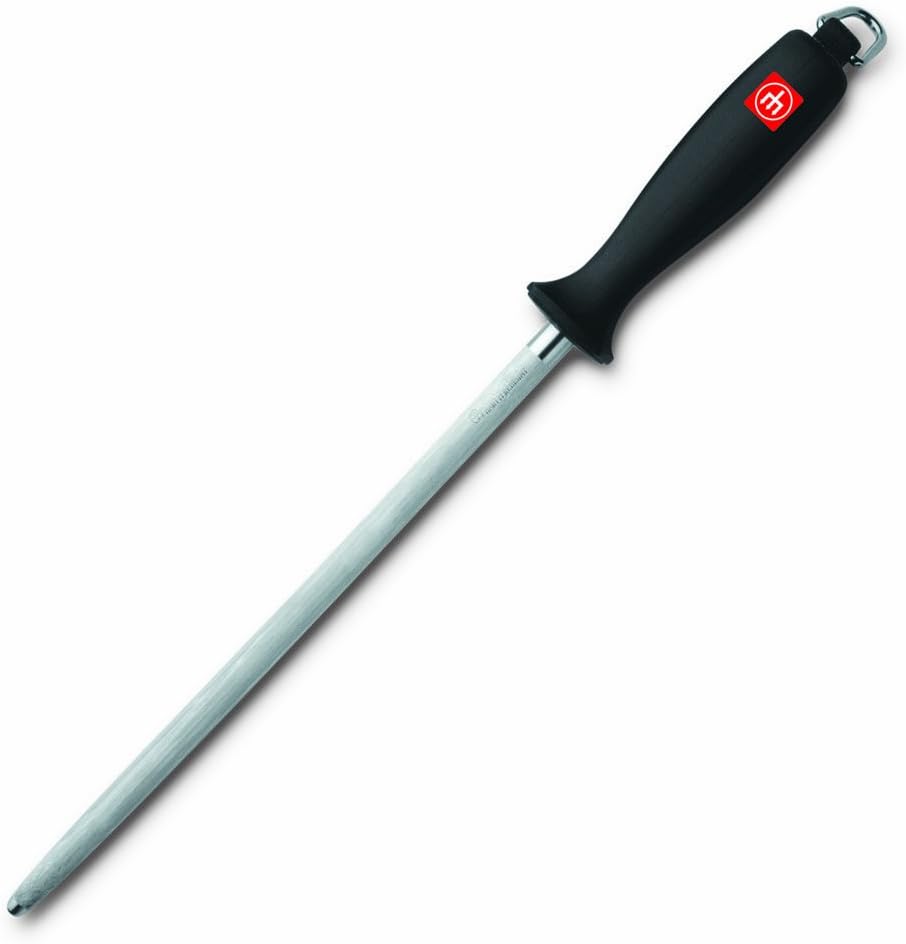
Because the blade angle is narrower than most German knives (closer to 15 degrees per side rather than 20), you’ll want to match your sharpening angle carefully to avoid rounding the edge. A honing steel used between sharpenings helps maintain that edge alignment — the difference between honing and sharpening is explained in our honing steel vs whetstone guide.
Despite being stainless and dishwasher-labeled by some retailers, hand washing is strongly recommended. Dishwasher detergent and heat can dull the edge faster and, over time, cause pitting on the handle’s dimpled surface. For general upkeep, our guide to removing rust from kitchen knives is useful, though the G-2 rarely develops true rust thanks to its chromium content.
How the G-2 Compares to Rivals
The G-2 doesn’t exist in a vacuum — it competes directly with several other well-known chef’s knives in a similar price bracket. We’ve covered many of these matchups in dedicated comparisons.
| Knife | Weight Feel | Edge Thinness | Best For |
|---|---|---|---|
| Global G-2 | Very Light | Very Thin | Fast vegetable prep, control-focused cooks |
| Wüsthof Classic | Heavier, Bolster-Forward | Moderate | All-purpose chopping, bone-adjacent tasks |
| Shun Classic | Light-Moderate | Very Thin | Precision slicing, Japanese-style cuts |
| Mac Chef Series | Light | Thin | Value-focused precision cooking |
If you’re deciding between the G-2 and a German alternative, our Zwilling vs Wüsthof face-off will help you understand the German side of the equation. For a more direct Japanese-brand rival, our Shun vs Global comparison and Mac vs Global comparison go into far more detail on handle feel, price, and edge geometry than we can cover in a single section here. There’s also a dedicated look at Miyabi vs Shun steel differences if you’re weighing higher-end Japanese options against the G-2’s more accessible price point.
Pros
- Extremely light and nimble in hand
- Thin, sharp edge excels at vegetable prep
- Excellent corrosion resistance
- One-piece hygienic construction with no crevices
- Easy to sharpen at home on a standard whetstone
- Ambidextrous double-bevel edge
Cons
- Not ideal for heavy chopping or bone contact
- Dimpled steel handle takes adjustment for some hand sizes
- Edge retention is moderate compared to premium powder steels
- Feels less “substantial” than heavier German knives
- Not truly dishwasher safe long term
Who Should Buy the G-2?
The G-2 is best suited to home cooks who do a lot of vegetable, herb, and fine-slicing prep and want a knife that feels fast and effortless in hand. It’s also a strong choice for cooks transitioning from a basic stamped Western knife into their first genuinely premium blade, since the price point is accessible relative to boutique Japanese gyutos.
If your cooking involves frequent butchery, breaking down whole chickens, or splitting hard squash and melons regularly, you may be better served by a heavier German knife or a dedicated cleaver alongside the G-2 rather than relying on it for everything.
Worthy Alternatives to Consider
If the G-2’s handle style or weight isn’t quite right for you, a few alternatives are worth researching before you buy. The Shun Classic chef knife offers a similarly thin edge with a more traditional pakkawood handle. The Wüsthof Classic 8-inch is the go-to if you want more heft and bone-adjacent durability. For budget-conscious buyers, our best budget chef knife guide outlines strong options well below the G-2’s price point.
Long-Term Ownership Notes
Owners who’ve used the G-2 for years consistently report that the biggest factor in long-term satisfaction is technique adaptation — cooks who lean into the knife’s light weight and thin edge rather than fighting it tend to love the knife indefinitely. Those who continue to use heavy-handed chopping motions borrowed from German knife habits are more likely to chip the edge or feel disappointed.
Storage matters too. Because the blade is thin, tossing it loosely into a drawer with other utensils is a fast way to dull or chip the edge. A blade guard, knife roll, or dedicated knife block will meaningfully extend its working life.

One of the most recognizable Japanese chef’s knives on the market.
Shop the Global G-2

Frequently Asked Questions
Is the Global G-2 a good beginner knife?
It can be, especially for cooks who want to move straight into a lightweight, precision-oriented knife. However, first-time buyers coming from very basic knives sometimes find the light weight and steel handle take a short adjustment period.
Is the Global G-2 dishwasher safe?
Although the all-steel construction survives dishwasher cycles physically, hand washing is strongly recommended to protect the edge and keep the handle’s finish looking sharp long term.
What steel does the Global G-2 use?
It uses CROMOVA 18, a proprietary stainless steel developed by Global that balances edge retention, sharpenability, and strong corrosion resistance.
How does the G-2 compare to a Wüsthof Classic?
The G-2 is lighter and thinner, favoring speed and precision, while the Wüsthof is heavier and more robust, favoring chopping power and bone-adjacent durability. Our Global vs Wüsthof comparison covers this in depth.
Can the Global G-2 cut through bone?
No. Like most thin Japanese-style blades, the G-2 is not designed for bone contact and can chip if used that way. Use a dedicated boning or butcher knife for that task.
Why does the G-2 handle have dimples?
The dimples improve grip security when hands are wet or greasy, and they also appear on the lower blade to reduce food sticking during slicing.
How often does the G-2 need sharpening?
With regular home use, expect to touch up the edge every one to two weeks and do a full sharpening every few months, depending on cutting board material and usage frequency.
Is the Global G-2 good for left-handed cooks?
Yes. The double-bevel edge is sharpened symmetrically, making it fully ambidextrous, unlike traditional single-bevel Japanese knives.
Does the G-2’s light weight make it feel flimsy?
Not flimsy, but it does feel different from heavier knives. The weight is intentionally shifted for balance rather than removed for cost-cutting, so control feels precise rather than weak.
What size G-2 should I buy?
The 8-inch model is the most popular and versatile size for most home cooks. Smaller utility and paring sizes exist in the same lineup for detail work.
Inside the Forging Process: How the G-2 Is Actually Made
Understanding why the G-2 performs the way it does starts with how it’s manufactured. Unlike stamped knives, which are cut from a flat sheet of steel with a die, the G-2 is forged — a single billet of CROMOVA 18 is heated and hammered into shape, then the handle portion is formed hollow and later filled with sand for weight distribution. This forging process is part of why Global knives carry a premium over stamped competitors, a distinction our forged vs stamped knives guide explains in more technical detail.
Forging aligns the steel’s grain structure more consistently than stamping, which contributes to the blade’s ability to take and hold a thinner edge without excessive chipping. It also explains the seamless transition from blade to bolster to handle — there’s no welding, riveting, or gluing involved, which is unusual even among high-end knives. Most premium Western knives, including many covered in our forging vs stamping breakdown, still use separate handle scales attached to a forged or stamped blank.
The hollow-handle-with-sand-fill technique is genuinely unusual in the knife world. Most manufacturers add weight through denser handle materials or a full metal tang sandwiched between scales, as seen in traditional full-tang designs discussed in our full tang vs partial tang comparison. Global inverted that approach — rather than adding mass, they engineered a way to precisely tune balance by controlling exactly how much sand goes into the handle cavity during assembly.
The Science Behind the Dimples
The dimpled section along the lower blade isn’t decorative — it’s a food-release feature borrowed from the Granton edge concept used on slicing knives, but adapted here to run further up the blade. When a flat blade surface cuts through starchy vegetables like potatoes or sweet potatoes, suction and friction can cause slices to stick to the blade face, slowing down prep and requiring you to knock food off with the flat of the knife.
The small air pockets created by the dimples reduce the surface area in contact with the food, breaking that suction. In our testing, this was most noticeable when slicing raw potato and cucumber — food released from the blade face far more readily than with a flat-ground German knife of comparable thinness. It’s a small detail, but for cooks doing high-volume prep, it adds up to real time savings over the course of a shift or a big holiday cooking session.
It’s worth noting the dimples serve a secondary grip function as well, continuing from the blade onto the handle itself, which is part of why the handle and lower blade share a visually continuous dimpled texture rather than looking like two different design elements bolted together.
Professional Kitchen Perspectives
Global knives, including the G-2, have a long history in professional sushi and Japanese restaurant kitchens, as well as increasing adoption in Western fine-dining prep stations where speed and precision on vegetables matter as much as raw chopping power. Line cooks who favor the G-2 tend to cite the same reasons home testers do: reduced wrist fatigue during long prep shifts and a thin edge that requires less resharpening pressure throughout a busy service.
That said, professional butchers and cooks doing heavy protein breakdown tend to reach for something sturdier. It’s common in professional kitchens to see a G-2 or similar thin Japanese-style knife used specifically for vegetable and garnish stations, while a separate heavier knife — sometimes a German chef’s knife, sometimes a cleaver — handles protein prep. This division of labor mirrors what we recommend for home cooks in our three essential blades guide, which argues that no single knife, including the G-2, should be expected to do every job in the kitchen equally well.
What Home Cooks and Enthusiast Communities Say
Across cooking forums and enthusiast communities, the G-2 tends to generate strongly positive but nuanced feedback. The most consistent praise centers on the knife’s cutting feel — many long-term owners describe a noticeable improvement in knife skills after switching to the G-2, simply because its thin edge and light weight make it easier to execute controlled, precise cuts rather than relying on force.
Common points of friction in community discussions include the handle’s cold, metallic first impression (which most owners report fading after a few weeks of regular use), and occasional complaints about edge retention compared to newer super-steel Japanese knives that have entered the market since the G-2’s original release. Because CROMOVA 18 predates many of the powder-metallurgy steels covered in our complete guide to knife steel types, it’s reasonable to expect more frequent touch-ups than you’d get from a modern VG-10 or higher-end steel blade.
Enthusiasts also frequently recommend the G-2 as a “gateway” knife for cooks moving from mass-market Western knives into more serious Japanese cutlery, since its price and availability make it far more accessible than boutique gyutos while still delivering a genuinely different cutting experience.
Is the Global G-2 a Good Gift?
The G-2’s distinctive look — sleek, all-metal, and instantly recognizable — makes it a popular gift choice for cooks who already own a basic knife set and are ready to upgrade. It arrives well-presented in most retail packaging, and because it’s a single well-known model rather than a boxed set, it avoids the common gifting pitfall of buying redundant knives someone doesn’t need.
It’s a stronger gift for someone who already does a reasonable amount of home cooking and will appreciate the difference in cutting feel, rather than a total beginner who may not yet notice the distinction between a $30 knife and a $70-100 one. If you’re shopping for a more casual cook, it may be worth pairing the G-2 with a simpler complementary tool, or considering the broader gifting advice in guides covering gift-worthy knives for other categories of cutlery.
Warranty, Durability & What to Expect Long-Term
Global typically backs the G-2 with a limited lifetime warranty against manufacturing defects, though this varies slightly by retailer and region, so it’s worth confirming coverage details with your specific seller at the time of purchase. The warranty generally covers issues like flaws in the steel or handle seal, but not damage from misuse — including bone contact, dishwasher damage, or drops onto hard surfaces, which can chip the thin edge or dent the hollow handle.
In terms of real-world durability, the single-piece steel construction means there’s no handle to loosen or crack over time, which is a common failure point in riveted wood-handle knives. The main long-term wear factor is the edge itself, which will show a cumulative grind-down over years of sharpening — a natural process common to all knives that get regular whetstone maintenance rather than just periodic honing.
Where and How to Buy Authentic Global Knives
Because Global is a well-known brand, counterfeit or gray-market listings occasionally appear on third-party marketplaces. When buying, look for consistent branding on the packaging, a clearly stamped “Global” logo near the bolster, and pricing that isn’t dramatically below the typical market range — unusually steep discounts are a common red flag for counterfeit kitchenware in general.
Buying through a reputable retailer or a verified Amazon listing is the simplest way to ensure you’re getting an authentic knife backed by manufacturer warranty support. It’s also worth checking whether your specific listing includes a single knife or a set, since Global sells the G-2 both individually and bundled with smaller utility and paring knives from the same line.
Buying through a verified listing protects your warranty coverage.
View Verified ListingGetting the Most Out of the G-2: Technique Tips
Because the G-2 rewards a lighter touch than heavier Western knives, a few technique adjustments can dramatically improve your experience with it. First, favor a push or pull slicing motion over a straight downward chop — let the thin edge do the work rather than trying to force the blade through with weight it doesn’t have. This is one of the core skills covered in our five essential knife skills guide.
Second, use a pinch grip on the bolster rather than gripping the handle further back. Because the G-2’s balance point sits right at the bolster, a pinch grip gives you the most control and lets you feel the blade’s natural balance rather than fighting against it.
Third, invest in a proper end-grain or edge-grain wood cutting board rather than glass, stone, or bamboo. Harder surfaces accelerate edge wear on any thin-ground blade, and the difference is especially noticeable on a knife like the G-2 that’s designed to hold a fine edge.
Where the G-2 Fits in Global’s Full Lineup
Global sells dozens of blade shapes under the same construction philosophy, and understanding where the G-2 sits helps clarify whether it’s really the right model for your kitchen. The G-2 is the standard 8-inch chef’s knife — the workhorse of the range — but Global also offers smaller utility and paring knives, dedicated bread knives with serrated edges, santoku-style vegetable knives, and even cleaver-style Asian chef’s knives, all sharing the same dimpled steel handle language.
If your prep work leans heavily toward small, precise cuts like trimming herbs or peeling garlic, a smaller companion blade alongside the G-2 may serve you better than trying to use the 8-inch knife for every task. Similarly, if you frequently prep dense vegetables like squash or cabbage, pairing the G-2 with a santoku or nakiri-style blade from the same line — or from a competing brand as outlined in our best nakiri knives guide — rounds out a more complete knife roll without asking one blade to do everything.
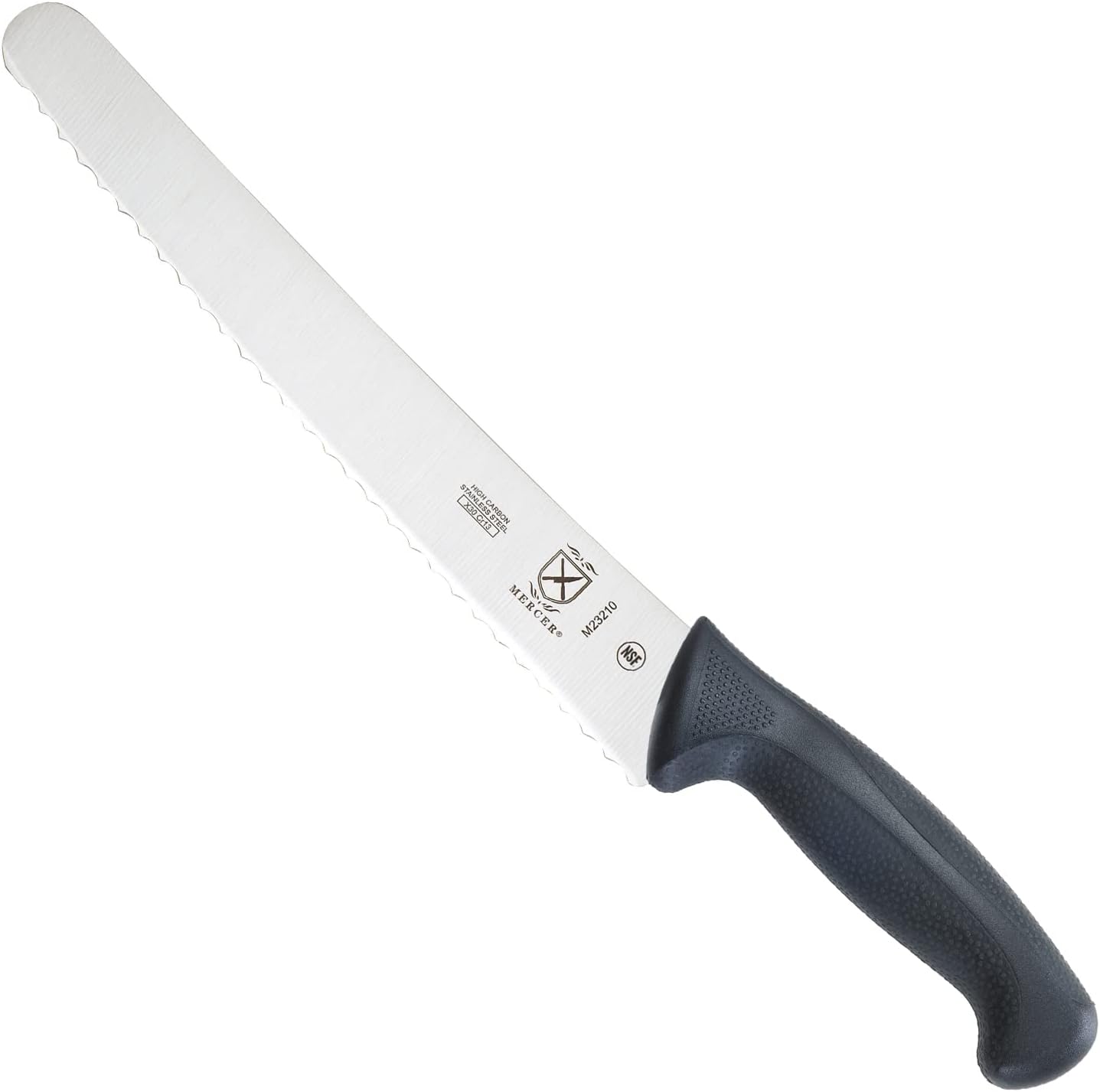
For bread and other crusty items, Global’s serrated options avoid putting undue stress on the G-2’s fine edge, echoing the general principle covered in our bread vs serrated knife comparison: a smooth, thin edge like the G-2’s should never be used to saw through hard crusts, since it will dull and potentially chip the blade far faster than intended.
Price-to-Performance: Is the Premium Justified?
The G-2 sits in a middle tier of the market — more expensive than mass-market stamped knives from brands covered in our budget cutlery roundups, but meaningfully cheaper than hand-forged boutique Japanese gyutos that can run several times its price. That positioning is intentional, and it’s part of why the G-2 has remained popular for so long: it delivers a genuinely different cutting experience from entry-level knives without asking buyers to commit to enthusiast-level pricing.
When you break down the cost relative to what you’re getting — forged single-piece construction, a distinctive and functional handle design, strong corrosion resistance, and a blade geometry that meaningfully improves everyday cutting tasks — the price premium over basic stamped knives is easy to justify for anyone who cooks regularly. Where the value proposition gets murkier is for buyers who rarely cook and would be equally satisfied with a far cheaper option; in that case, the difference in cutting feel may never be fully appreciated enough to matter.
Final Verdict
The Global G-2 remains one of the most distinctive and genuinely useful chef’s knives you can buy at its price point. Its thin, sharp edge and remarkably light balance make everyday vegetable prep faster and more enjoyable, and its corrosion-resistant, one-piece steel construction means it will still look and perform well years down the road with proper care.
It isn’t the right tool for heavy-duty butchery or bone work, and the dimpled steel handle isn’t universally loved on first touch. But for cooks who value speed, precision, and a knife that rewards good technique, the G-2 earns its long-standing reputation. If that sounds like your kitchen style, it’s very much worth it.
Check today’s price and availability before it changes.
Buy the Global G-2 on Amazon