Wusthof Classic 8-Inch Chef Knife Review: Is the German Icon Still Worth Buying?
A hands-on breakdown of the geometry, steel, edge retention, balance, and everyday performance of one of the most recognizable chef knives on the market.

Quick Overview: What the Wusthof Classic 8-Inch Chef Knife Gets Right
The Wusthof Classic 8-inch chef knife has been a fixture in professional and home kitchens for decades, and it’s still one of the first names that comes up whenever someone asks for a recommendation on a “no drama” everyday chef knife. It’s forged from a single billet of steel, finished with the brand’s traditional triple-riveted handle, and priced in that upper-mid-range zone where you’re paying for consistency rather than novelty.
Before getting into the details, here’s how it stacks up across the categories that actually matter for daily cooking.
Performance Snapshot
If you want a knife you can pick up cold, without a manual, and immediately feel confident dicing an onion or breaking down a chicken, this is a strong candidate. If you’re chasing the thinnest possible edge or the longest possible time between honing sessions, you’ll want to read the steel and geometry sections closely before deciding, and it’s worth comparing it against alternatives like the Zwilling Pro or a full Zwilling vs. Henckels breakdown before you commit.
Check current pricing, availability, and customer photos for the Wusthof Classic 8-Inch Chef Knife.
Check Price on AmazonFirst Impressions and Unboxing
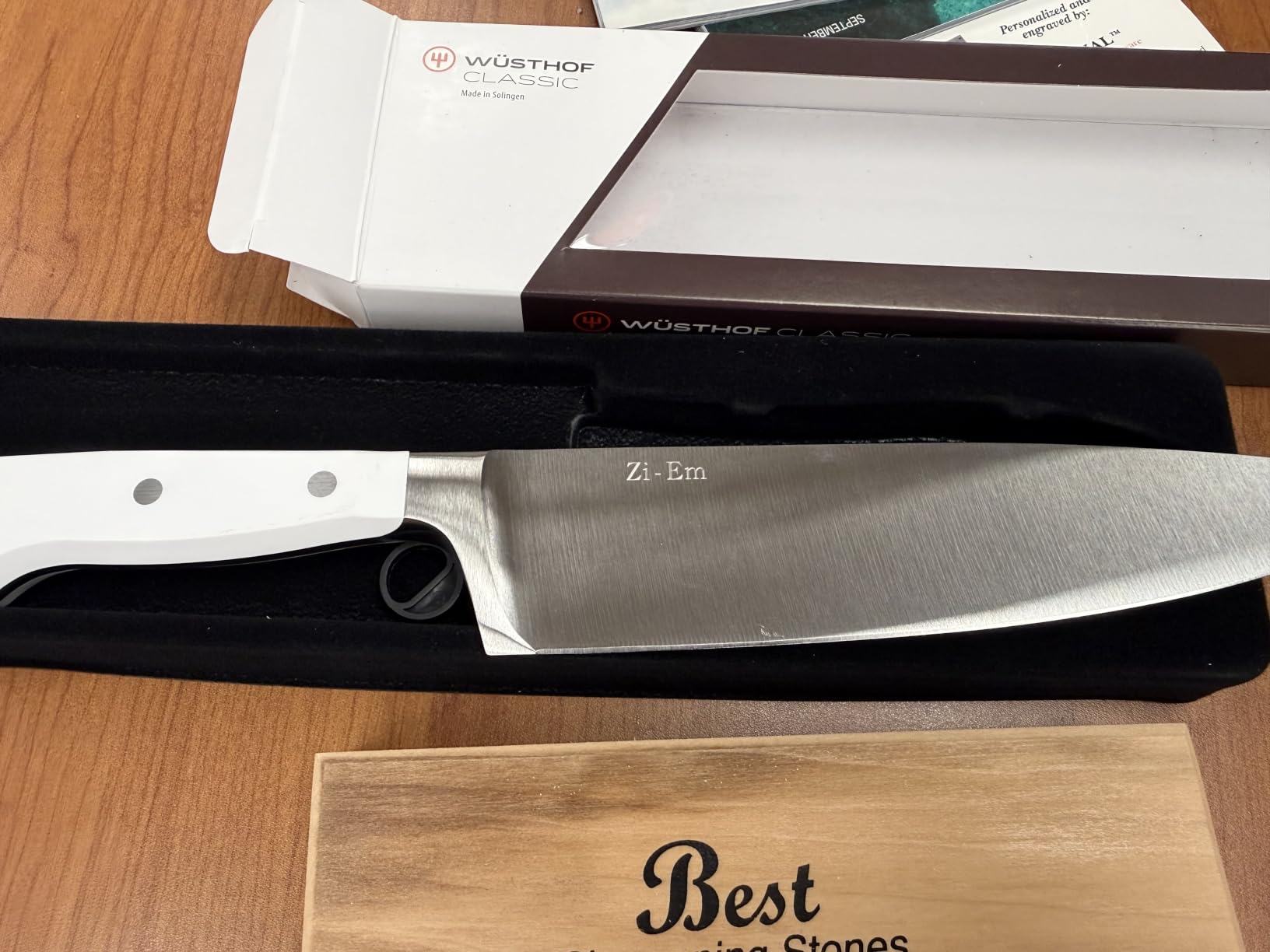
Out of the box, the Classic 8-inch doesn’t try to impress you with packaging theater. It arrives in a simple cardboard sleeve with a plastic edge guard, which is honestly refreshing if you’ve unboxed knives that come wrapped in more foam than a television. The blade has a factory edge that’s genuinely sharp — sharp enough to shave arm hair, which is more than can be said for a lot of knives at this price point.
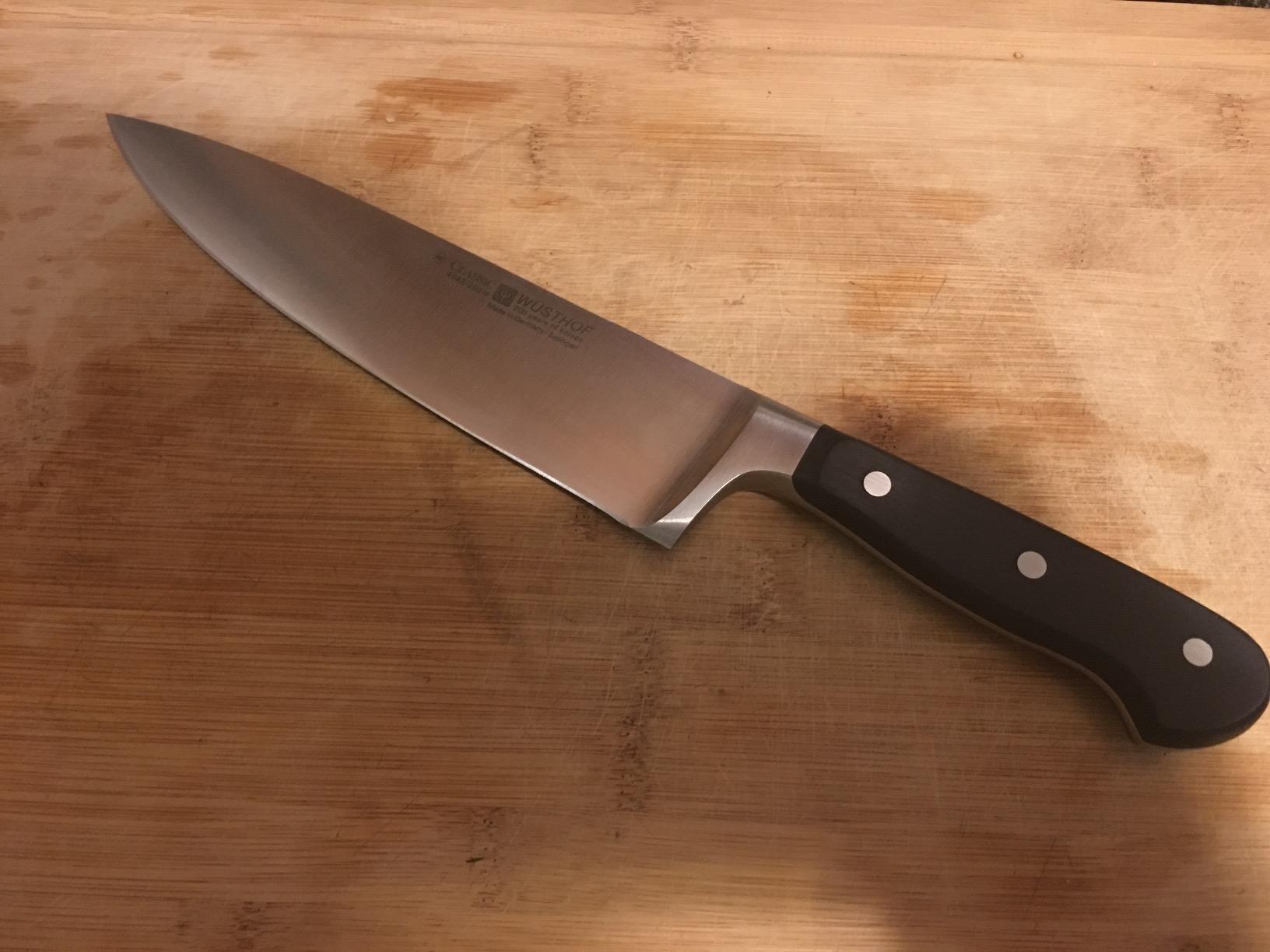
The first thing most people notice when they pick it up is the weight distribution. It doesn’t feel blade-heavy or handle-heavy; it settles into your hand right around the bolster, which is exactly where Wusthof designed the balance point to sit. The polished bolster transitions smoothly into the handle with no seams you can catch a fingernail on, and the spine has a light rounding that makes prolonged pinch-grip use noticeably more comfortable than knives with a sharp, unfinished spine.


Construction and Build Quality
Wusthof forges the Classic line from a single piece of high-carbon stainless steel, which means the blade, bolster, and tang are one continuous piece of metal rather than separate parts welded or stamped together. This is what people mean when they talk about a “full tang, forged” construction, and it’s part of why the knife has that reassuring heft without feeling clunky.
The handle is made from a synthetic polymer designed to resist cracking, staining, and moisture absorption — a deliberate departure from older wood-handled traditions. It’s secured with three visible rivets, a detail that’s as much about heritage branding as function at this point, since modern adhesives and molding techniques would hold the handle just fine without them. Still, it looks the part, and it’s held up well across generations of use in professional kitchens.
The bolster — the thick junction between blade and handle — is fully polished and blended into the cutting edge, meaning you can sharpen the entire length of the blade, heel included, without the bolster getting in the way. This is a genuine advantage over cheaper knives with an unfinished, oversized bolster that blocks the heel from ever meeting a whetstone properly. For more on how bolster design affects sharpening down the line, see this breakdown of stamped vs. forged bolster geometry.
| Spec | Detail |
|---|---|
| Blade Length | 8 inches (20 cm) |
| Steel Type | X50CrMoV15 high-carbon stainless |
| Hardness | Approx. 58 HRC |
| Construction | Full tang, forged, single-piece bolster |
| Handle Material | Synthetic polymer, triple-riveted |
| Blade Grind | Double bevel, full flat grind |
| Weight | Approx. 8 oz (227 g) |
| Dishwasher Safe | Not recommended |
| Country of Origin | Germany (Solingen) |
Steel, Hardness, and Edge Retention
The Classic 8-inch uses Wusthof’s proprietary X50CrMoV15 stainless steel, hardened to roughly 58 on the Rockwell scale. That’s a hardness level chosen deliberately for toughness over outright edge retention — it’s a steel built to resist chipping when it hits a chicken bone or an errant avocado pit, not to hold a hair-splitting edge for three weeks straight.
If you’ve spent time with Japanese-style knives running harder steels like VG-10 or AUS-10, the difference will be obvious within the first week. This knife will need touch-ups more often, but it’s also far more forgiving of the kind of abuse a busy home kitchen dishes out. If you want the deeper technical comparison, this high-carbon vs. stainless steel breakdown and this piece on why some knives stay sharp longer are both worth a read.
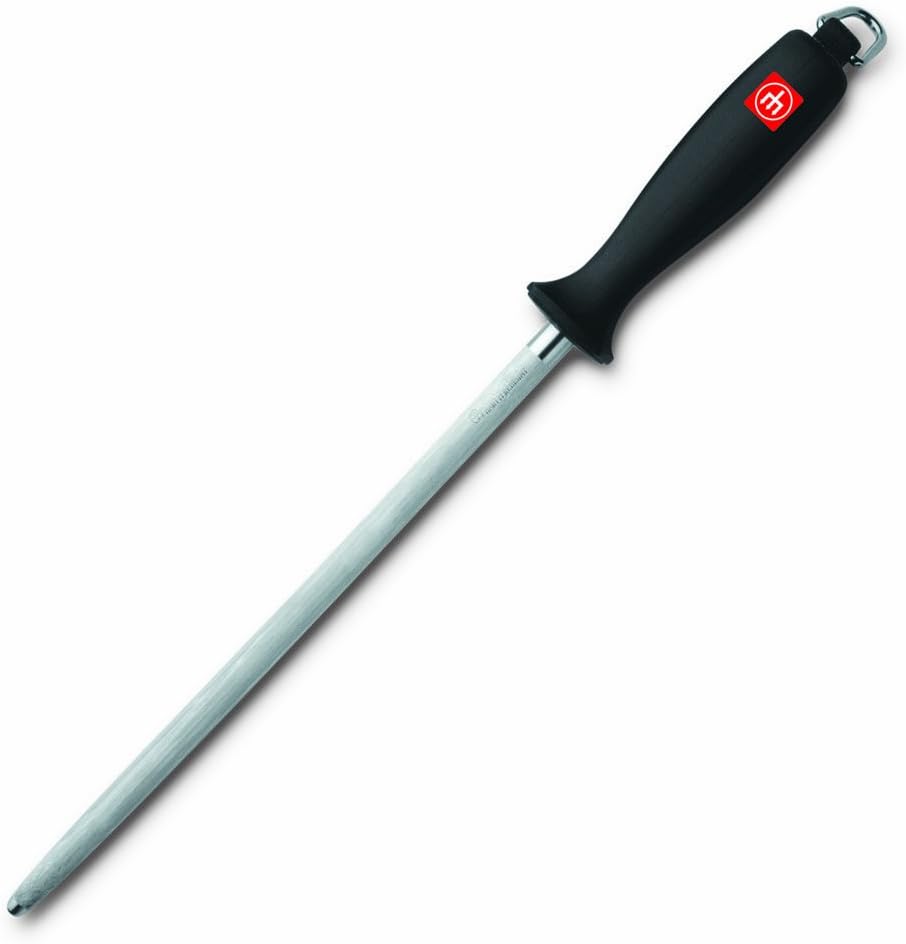
In practical terms: expect to hone the edge with a honing steel every one to two uses, and expect to need an actual sharpening (stone or system) every 4–8 weeks with regular cooking, depending on your cutting board material and how much you’re breaking down proteins with bone-in cuts.
| Steel | Approx. Hardness | Edge Retention | Toughness |
|---|---|---|---|
| Wusthof X50CrMoV15 (this knife) | 58 HRC | Moderate | High |
| VG-10 (many Japanese knives) | 60–61 HRC | High | Moderate |
| AUS-10 | 58–59 HRC | Moderate-High | High |
| D2 (some Western budget knives) | 59–61 HRC | High | Lower |
For a closer look at how steel choice plays out on the pocket-knife side of things, where the tradeoffs are similar, see 14C28N vs. Nitro-V or MagnaCut vs. M390.
See real owner reviews and current stock levels for the Wusthof Classic 8-Inch.
View on AmazonBlade Geometry and Cutting Feel
The Classic’s blade uses a full flat grind with a moderate belly curve, which is what gives it that classic “rocking” cutting motion — the technique most home cooks learn first, where the tip stays anchored on the board and the heel lifts and falls in an arc. This geometry is friendlier for rock-chopping herbs and vegetables than the flatter profile you’ll find on a santoku or a nakiri, both of which favor a straight push-cut instead.
Behind the edge, the blade is on the thicker side compared to Japanese gyutos, which trades a bit of fine slicing precision for durability. It’ll still glide through a tomato without crushing it, but it won’t feel as effortless as a thinner Japanese blade on something like a paper-thin cucumber slice. If ultra-thin slicing is your priority, it’s worth comparing this against something like the Takamura Chromax or reading up on blade geometry and thin-vs-thick behind the edge.
The tip is a fairly standard drop point, useful for detail work like trimming fat or scoring, though it’s not as needle-fine as a Japanese-style tip.
Handle, Balance, and Ergonomics
This is arguably where the Classic earns its reputation. The handle shape is a traditional Western oval-ish profile that fits a wide range of hand sizes without feeling like it was designed for one grip style only. Whether you use a full handshake grip or a pinch grip with your index finger and thumb on the blade itself, the transition from bolster to handle doesn’t create hot spots or pressure points during long prep sessions.
Balance point sits almost exactly at the bolster, which means the knife feels neutral in the hand rather than tip-heavy or handle-heavy. That neutrality matters more than people expect — a knife that fights your wrist for 20 minutes of dicing onions will tire you out a lot faster than one that just goes where you point it.
The synthetic handle material also means it won’t swell, crack, or absorb odors the way some wood handles can over years of use, which matters if this knife is going to see daily action rather than occasional weekend cooking.
Real Kitchen Performance: Onions, Herbs, Proteins, and Bread
On onions, the knife performs about as well as you’d want from a chef knife in this class — clean vertical and horizontal cuts with minimal cell-wall crushing, assuming the edge is properly maintained. On fresh herbs, the moderate belly curve makes quick work of a rock-chop, though very hard mincing of something like rosemary stems will dull the edge faster than softer herbs.
For proteins, this is where the toughness of the steel shows its value. Breaking down a chicken, trimming silverskin off a tenderloin, or portioning a pork shoulder all feel confident in hand, and the edge doesn’t roll or chip the way a harder, more brittle steel might if it catches a piece of cartilage. It’s not designed to go through bone — for that, you’d want a dedicated cleaver or boning knife, and it’s worth checking a guide like best boning knives for butchers and home cooks if that’s a regular task for you.
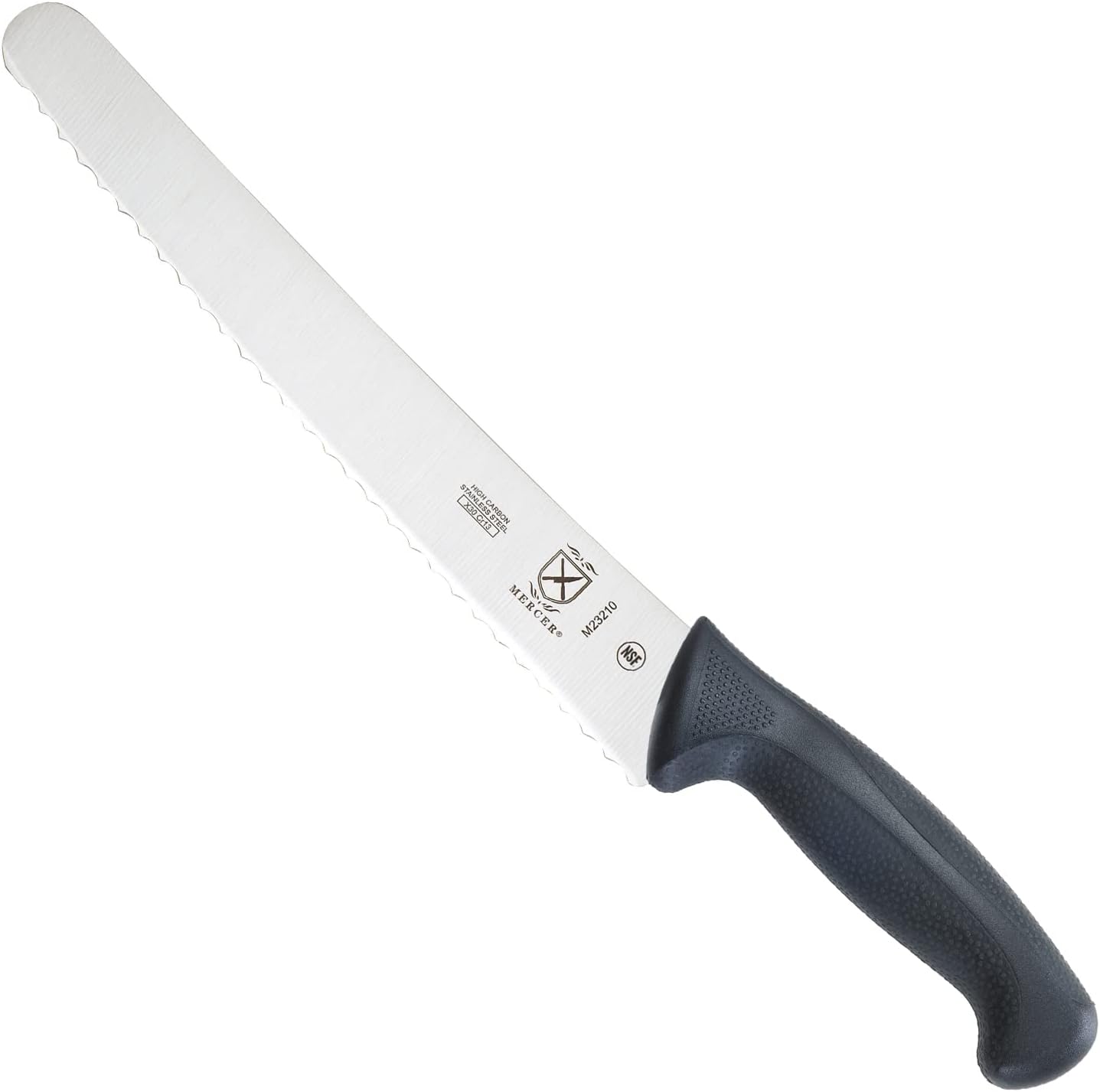
Bread is the one category where this knife isn’t the right tool — a chef knife, forged or otherwise, will tear a crusty loaf rather than slice it cleanly. That’s a job for a dedicated serrated knife; see top serrated bread knives for crusty loaves for options that pair well alongside this one.
Where It Excels
- Dense vegetables (carrots, squash, potatoes)
- Onions and alliums
- Boneless protein trimming and portioning
- General all-purpose mincing and dicing
Where It Struggles
- Crusty bread (needs a serrated knife)
- Ultra-thin sashimi-style slicing
- Cutting through bone or frozen food
- Extended cuts requiring a razor-thin edge
Ready to add this to your kitchen? Check today’s price and shipping options.
Check Price on AmazonDurability and Long-Term Ownership
Wusthof backs the Classic line with a limited lifetime warranty against manufacturing defects, and the design itself is built for the long haul — this isn’t a knife that’s meant to be replaced every few years. The stainless composition resists rust and staining far better than high-carbon (non-stainless) blades, provided you’re still hand-washing and drying it promptly rather than leaving it wet in a sink. For general rust-prevention habits that apply to any stainless kitchen knife, this guide on how to prevent rust on knives is a useful reference, even though this steel is fairly rust-resistant by design.
The handle material has proven durable across decades of the Classic line’s production, without the swelling or hairline cracking that plagued some older wood-handled knives. Owners who’ve had theirs for 10+ years of regular use typically report the biggest wear point is the edge itself needing periodic reprofiling — normal for any knife in active rotation, not a defect specific to this model.
How the Wusthof Classic Compares to Other Popular Chef Knives
It’s worth seeing how the Classic stacks up against a few of its most common cross-shopped alternatives, since the “which chef knife should I actually buy” decision usually comes down to a handful of names.
| Knife | Origin | Steel Hardness | Best For |
|---|---|---|---|
| Wusthof Classic 8″ | Germany | ~58 HRC | All-purpose durability, easy sharpening |
| Zwilling Pro | Germany | ~57 HRC | Similar niche, slightly different grind |
| Shun Classic | Japan | ~60-61 HRC | Thinner, sharper edge; more delicate care |
| Victorinox Fibrox | Switzerland | ~55-56 HRC | Budget-friendly, professional kitchen staple |
For a deeper dive on the German-vs-Japanese question broadly, this German steel vs. Japanese steel comparison lays out the tradeoffs well, and if you’re deciding between Wusthof specifically and its closest domestic rival, see Zwilling vs. Wusthof: German knife brands face off. If budget is the deciding factor, Wusthof vs. Victorinox for heavy chopping is directly relevant.
Pros and Cons Summary
Pros
- Excellent balance and neutral handle feel
- Tough steel resists chipping on hard use
- Easy to sharpen even for beginners
- Full tang, forged single-piece construction
- Bolster fully blended into the edge for full-length sharpening
- Backed by a limited lifetime warranty
Cons
- Edge retention is only moderate compared to harder steels
- Not dishwasher safe
- Thicker behind the edge than most Japanese gyutos
- Premium price relative to entry-level Western knives
Who Should (and Shouldn’t) Buy This Knife
This knife makes the most sense for home cooks and working chefs who want one dependable blade that can handle 90% of daily kitchen tasks without babying it. If you cook multiple times a week, want a knife that forgives a slightly imperfect cutting board or an occasional bone contact, and don’t want to think much about maintenance beyond regular honing, the Classic 8-inch is a very safe recommendation.
It’s a less ideal fit if your priority is razor-thin Japanese-style slicing work, or if you specifically want a knife that holds an edge for a month without touch-ups — in those cases, a harder-steel gyuto is worth exploring instead, and this guide to best Japanese gyuto knives for home chefs is a good starting point. Budget-conscious buyers who cook only occasionally might also be better served by something like the best budget chef knife roundup rather than paying the premium this knife commands.
Care and Storage Tips to Extend Its Life
- Hand-wash and dry immediately — never run it through a dishwasher, which can dull the edge and damage the handle over time.
- Hone before most uses with a ceramic or steel honing rod to keep the edge aligned between sharpenings.
- Store it in a way that protects the edge from contact with other metal — a block, magnetic strip, or blade guard all work well; see how to make a knife block or how to store knives without a block for options.
- Use a wood or soft plastic cutting board — glass or stone boards will accelerate edge wear significantly.
- If rust spots ever appear, address them quickly using a method like the one in how to remove rust from kitchen knives.
Frequently Asked Questions
Is the Wusthof Classic 8-inch chef knife dishwasher safe?
No. Wusthof explicitly recommends hand-washing and immediate drying. Dishwasher heat and detergent can dull the edge, discolor the blade, and degrade the handle material over time.
What steel does the Wusthof Classic chef knife use?
It uses Wusthof’s proprietary X50CrMoV15 high-carbon stainless steel, hardened to approximately 58 HRC — a balance chosen for toughness and ease of sharpening rather than maximum edge retention.
How often does this knife need to be sharpened?
With regular home use, expect a full sharpening every 4–8 weeks, with honing (not sharpening) before most cooking sessions to keep the edge aligned in between.
Is the 8-inch size the right choice, or should I get the 6-inch or 10-inch?
The 8-inch is the most versatile size for most home cooks, offering enough blade length for larger produce while still being maneuverable. A 6-inch suits smaller hands or tighter cutting boards, while a 10-inch is better suited to larger-scale prep or bigger proteins.
Can this knife go through bones or frozen food?
It’s not designed for that. Bone contact and frozen food can chip the edge. For bone-in tasks, a dedicated cleaver, boning knife, or butcher knife is the safer tool.
How does the Wusthof Classic compare to Japanese chef knives?
Japanese chef knives (gyutos) typically use harder steel for a thinner, sharper edge with better retention, but they’re more brittle and require more careful handling. The Wusthof Classic trades some of that edge retention for toughness and ease of maintenance.
Is the Wusthof Classic worth the price compared to budget chef knives?
For most people who cook regularly, yes — the build quality, balance, and long-term durability generally justify the price gap over entry-level knives, though occasional cooks may not need to spend this much.
What’s the recommended sharpening angle for this knife?
Wusthof’s factory edge is set around 14–17 degrees per side, and matching that angle when sharpening keeps performance consistent with the factory edge.
Does the handle material hold up over years of use?
Yes. The synthetic polymer handle resists cracking, swelling, and moisture absorption far better than traditional wood handles, and it’s held up well across decades of the product line.
Is this knife good for both left- and right-handed cooks?
Yes. The blade grind and handle shape are symmetrical, making it equally comfortable for left- and right-handed users.
Does Wusthof offer a warranty on the Classic line?
Yes, Wusthof backs the Classic series with a limited lifetime warranty covering manufacturing defects.
Final Verdict
The Wusthof Classic 8-inch chef knife earns its long-standing reputation the practical way — not through flashy marketing, but through genuinely solid engineering choices that hold up to years of daily cooking. The balance is excellent, the steel is tough enough to handle real kitchen abuse, and the sharpening process is approachable enough that you won’t need to become a whetstone expert just to keep it performing well.
It’s not the sharpest knife you can buy, and it’s not the knife for someone chasing paper-thin sashimi cuts. But as an everyday workhorse that can go from onions to chicken to herbs without complaint, it remains one of the safest, most dependable recommendations in its price bracket.

See today’s price, reviews, and availability for the Wusthof Classic 8-Inch Chef Knife.
Check Latest Price on Amazon