10 Best Essential Knives in the Kitchen: The Ultimate Chef’s Guide
There is an old saying in professional kitchens: “A dull knife is a dangerous knife.” But more than that, a bad knife is a joy-killer. It turns the meditative act of preparing a meal into a frustrating battle against a tomato skin. If you are browsing knifeindex.com/, you likely know that upgrading your cutlery is the single best investment you can make for your cooking.
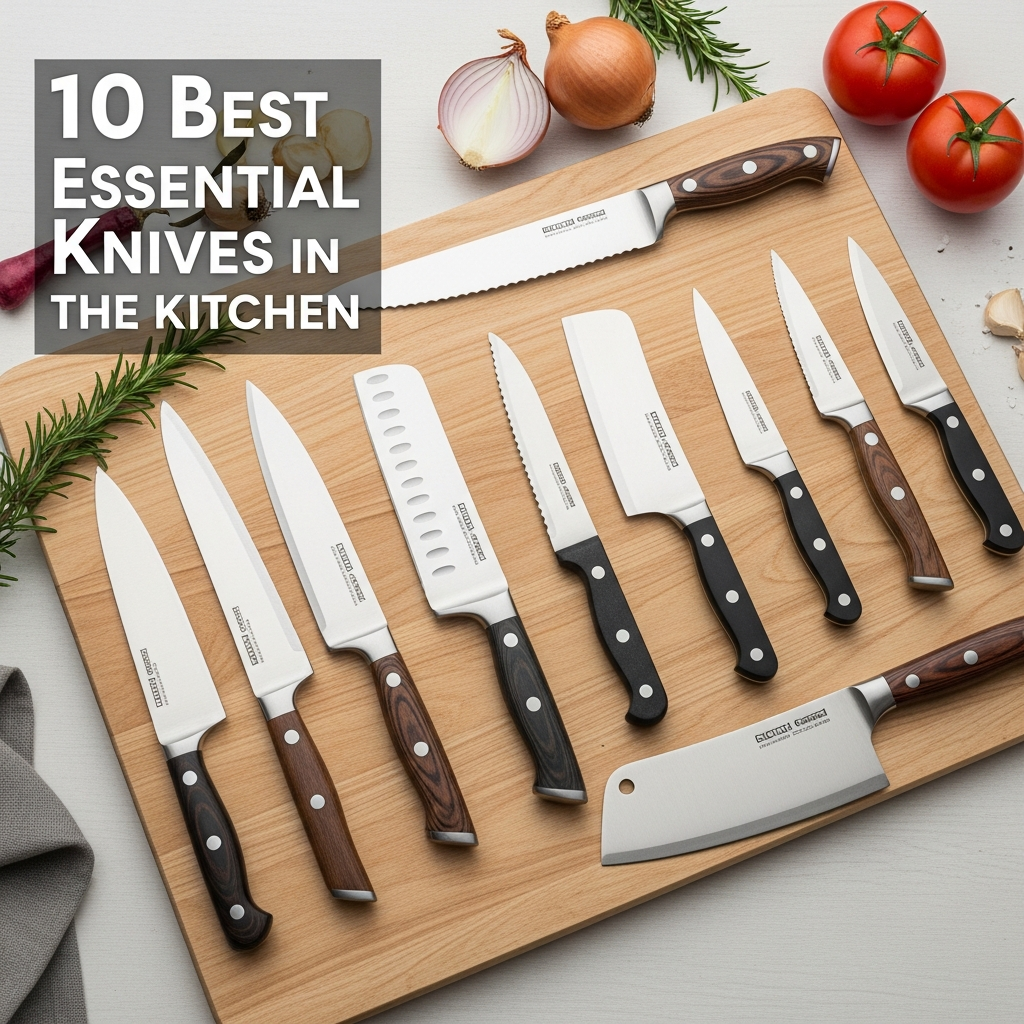
But do you really need a 20-piece block? Probably not. Most chefs rely on a core rotation. However, knowing which 10 knives cover every possible scenario—from butchering a chicken to peeling a grape—is the secret to a complete kitchen.
In this massive guide, we have curated the 10 Best Essential Knives. We have battle-tested the titans, comparing Shun vs. Wusthof, analyzing budget heroes in our Victorinox reviews, and breaking down the metallurgy of Carbon vs. Stainless steel.
Understanding Kitchen Knife Anatomy and Terminology
Before diving into specific knife recommendations, it’s crucial to understand the fundamental components that make a great kitchen knife. Whether you’re a professional chef or a home cooking enthusiast, knowing knife anatomy helps you make informed purchasing decisions. The blade, bolster, tang, handle, and edge geometry all play critical roles in how a knife performs during everyday meal preparation.
Blade Materials and Construction: Modern kitchen knives typically fall into three categories: forged knives, stamped knives, and ceramic blades. Forged knives are made from a single piece of heated steel that’s pounded into shape, creating a denser molecular structure. Stamped knives are cut from large sheets of steel like cookie cutters. While forged knives generally offer superior balance and durability, modern manufacturing techniques have narrowed the quality gap significantly. Understanding the difference between stamped and forged knives is essential for any serious cook.
Edge Angles Explained: Western-style knives typically feature a 20-22 degree edge angle on each side, creating a durable but slightly less sharp cutting edge. Japanese knives traditionally use a 15-16 degree angle, resulting in exceptional sharpness but requiring more careful maintenance. Some specialized knives use a single-bevel edge, where only one side is sharpened, popular in traditional Japanese sushi knives. The edge angle directly affects how the knife cuts through different foods, from delicate herbs to tough root vegetables.
Handle Materials and Ergonomics: Knife handles come in various materials including wood, synthetic composites, stainless steel, and hybrid materials. Traditional wooden handles, often made from pakkawood or rosewood, offer natural warmth and excellent grip when wet. Synthetic handles like Fibrox, polypropylene, and G10 provide superior durability and hygiene, making them favorites in commercial kitchens. The shape of the handle—whether D-shaped, octagonal, or western-style—significantly impacts comfort during extended prep sessions. A well-designed handle reduces hand fatigue and provides confident control over the cutting edge.
Essential Knife Skills Every Home Cook Should Master
Investing in quality knives is only half the equation. Developing proper knife skills transforms your cooking experience from frustrating to meditative. Professional chefs spend years perfecting their cutting techniques, but home cooks can dramatically improve their efficiency and safety by mastering a few fundamental skills.
The Claw Grip Technique: The most important safety technique in knife handling is the claw grip. Curl your fingertips inward on the hand holding the food, using your knuckles as a guide for the blade. This position naturally protects your fingertips from the cutting edge while providing stability. Practice this grip with onions, carrots, and celery until it becomes muscle memory. Professional chefs can slice vegetables at incredible speeds because the claw grip eliminates the fear of cutting themselves.
Proper Cutting Board Setup: A stable cutting surface is essential for safe knife work. Always place a damp paper towel or non-slip mat under your cutting board to prevent movement. Wooden cutting boards are preferred for their knife-friendly surface and natural antimicrobial properties, though plastic boards offer convenient dishwasher sanitization. Avoid glass or marble cutting boards, as they rapidly dull knife edges and create dangerous slipping conditions. Your cutting board should be large enough to accommodate your longest knife with room to spare.
The Rocking Motion: Western chef knives with curved bellies are designed for the classic rocking chop. Place the tip of the knife on the cutting board and rock the blade up and down while moving the food underneath. This technique excels at mincing herbs, garlic, and onions. The curved blade maintains constant contact with the board, providing stability and control. Practice this motion without food first, focusing on maintaining a consistent rhythm and keeping the knife tip anchored.
The Push Cut and Pull Cut: Japanese-style knives with flatter profiles excel at push and pull cutting techniques. The push cut involves pushing the blade forward and down through the food in one smooth motion. The pull cut draws the blade backward toward you, using the entire length of the edge. These techniques produce cleaner cuts with less cellular damage, preserving the texture and appearance of delicate ingredients like fish and soft herbs. Mastering both push and pull cuts gives you versatility across different knife styles.
Chopping, Dicing, and Mincing Distinctions: Understanding the difference between rough chops, medium dice, small dice, and fine mince helps you follow recipes accurately. A rough chop produces irregular pieces suitable for stocks and soups. A medium dice (approximately 1/2 inch) works for most sautéed dishes. Small dice (1/4 inch) is ideal for garnishes and salsas. Fine mince reduces ingredients like garlic and ginger to near-paste consistency, distributing flavor evenly throughout dishes. Each size requires slightly different knife techniques and blade control.
The Complete Guide to Knife Maintenance and Longevity
Quality kitchen knives represent a significant investment, and proper maintenance ensures they perform beautifully for decades. Many home cooks unknowingly damage their knives through improper storage, cleaning, and sharpening practices. Understanding comprehensive knife care extends blade life and maintains optimal cutting performance.
Daily Honing vs. Periodic Sharpening: One of the most common misconceptions in knife care is confusing honing with sharpening. A honing steel realigns the microscopic edge of your blade that bends during regular use. Professional chefs hone their knives daily or even multiple times during a long prep session. Sharpening actually removes metal to create a new edge, typically needed every few months for home cooks. Understanding when to hone versus when to sharpen prevents unnecessary metal removal and extends blade life. Our comprehensive guide on sharpening stones versus honing steels explains this distinction in detail.
Whetstone Sharpening Technique: For those seeking the sharpest possible edge, water stone sharpening is the gold standard. Start with a coarse grit stone (around 400-600) for damaged or very dull blades, progress to a medium grit (1000-2000) for regular sharpening, and finish with a fine grit (3000-8000) for polishing. Maintaining a consistent angle throughout the sharpening stroke is crucial—even a few degrees of variation can round your edge. Practice on inexpensive knives before attempting to sharpen your premium blades. The satisfying feeling of a properly whetstone-sharpened knife gliding through paper is worth the learning curve.
Proper Washing and Drying: Despite what some manufacturers claim, hand washing is the only safe method for quality kitchen knives. Hot dishwasher water and aggressive detergents damage handle materials, loosen rivets, and dull cutting edges through contact with other items. Wash knives immediately after use with mild dish soap and warm water, always holding the handle and wiping the blade away from your hand. Dry thoroughly with a soft cloth, paying special attention to the area where the blade meets the handle—trapped moisture here leads to corrosion and bacterial growth. Even stainless steel can develop rust spots if left wet for extended periods.
Storage Solutions Comparison: Proper knife storage protects both your blades and your fingers. Magnetic wall strips keep knives accessible while preventing blade-to-blade contact. In-drawer organizers with individual slots protect edges and make selection easy. Traditional knife blocks work well but can harbor bacteria if knives are inserted while damp. For professional chefs or those with extensive collections, knife rolls and bags provide portable protection. Never store knives loose in drawers where edges bang against other utensils—this rapidly dulls blades and creates a laceration hazard when reaching into the drawer. Explore our recommendations for the best knife drawer organizers and magnetic knife holders.
Matching Knives to Your Cooking Style and Cuisine
Different cooking traditions demand different knife profiles. Understanding which knives align with your culinary preferences prevents unnecessary purchases and ensures you have the right tools for the dishes you actually prepare. A knife collection optimized for French cuisine differs significantly from one suited to Japanese or vegetarian cooking.
French and Western Cuisine: Traditional Western cooking emphasizes the chef’s knife as the universal tool. The curved belly facilitates the rocking chop motion essential for mincing herbs, dicing mirepoix, and breaking down poultry. A boning knife handles meat fabrication, while a paring knife manages detail work. Western cooks typically work with heavier, more robust knives that can handle occasional bone contact and tough root vegetables. The German-style chef knife, with its substantial weight and durable steel, perfectly suits this cooking tradition.
Japanese Cuisine: Japanese cooking demands specialized knives for specific tasks. The santoku excels at vegetable preparation with its flat profile and granton edge. The nakiri, essentially a vegetable cleaver, produces precise cuts for stir-fries and salads. Sushi chefs require yanagiba slicers for raw fish and deba knives for fish butchery. Japanese knives typically feature harder steel that holds an incredibly sharp edge but requires careful technique to avoid chipping. The emphasis is on clean, single-stroke cuts that preserve ingredient integrity and appearance. Understanding what a nakiri knife is used for and santoku knife applications helps determine if Japanese-style knives suit your cooking.
Vegetarian and Plant-Based Cooking: Vegetable-forward cooking benefits from knives optimized for produce preparation. A nakiri’s straight edge eliminates the accordion effect when chopping leafy greens and herbs. A thin-bladed santoku glides through tomatoes and soft fruits without crushing. Many vegetarian cooks prefer lighter Japanese-style knives that reduce fatigue during extended vegetable prep sessions. Ceramic knives maintain exceptional sharpness for fruit and vegetable work, though their brittleness makes them unsuitable for hard seeds or frozen foods. The absence of meat butchery means vegetarian cooks can focus on precision slicing and consistent dice sizes.
BBQ and Meat-Focused Cooking: Barbecue enthusiasts and meat-centric cooks need robust knives for trimming, slicing, and serving. A stiff boning knife handles silver skin removal and brisket trimming. A granton-edge slicer produces clean cuts through roasted meats without shredding. A heavy cleaver processes ribs and breaks down primal cuts. These knives typically feature thicker spines and tougher steel that withstands contact with cutting boards during forceful cuts. Many BBQ cooks also invest in a quality brisket slicing knife with an extra-long blade for clean, single-stroke slices through large roasts.
What Professional Chefs Look for in Kitchen Knives
Professional kitchens operate under demands that home cooks rarely experience. Line cooks may process hundreds of pounds of vegetables in a single shift. Their knife preferences, shaped by volume, speed, and durability requirements, offer valuable insights for serious home cooks building their collections.
Balance and Fatigue Reduction: Professional chefs prioritize knife balance above almost all other factors. A well-balanced knife feels like an extension of the hand, with the weight distributed so the blade does the work rather than the cook’s wrist. The balance point typically sits where the blade meets the handle on Western knives, or slightly forward on Japanese styles. During an eight-hour prep shift, even minor balance issues compound into significant fatigue. Chefs often describe finding “their” knife as a personal revelation, like a musician finding the perfect instrument.
Edge Retention Under Volume: A knife that needs sharpening after a single shift is useless in professional settings. Restaurant cooks demand edge retention that survives hundreds of cuts without significant degradation. This requirement explains why many professionals prefer harder Japanese steel despite increased chipping risk. The trade-off between edge retention and toughness becomes a daily calculation. Many chefs maintain multiple knives and rotate them to distribute wear, extending time between sharpening sessions.
Hygiene and Sanitation Compliance: Health department regulations influence professional knife choices significantly. Seamless handle construction eliminates bacterial harborage points. Non-porous synthetic handles survive frequent sanitizing solution exposure. Some jurisdictions require color-coded knives to prevent cross-contamination between protein and produce preparation. These considerations, while less critical for home kitchens, inform design features that benefit all users. Manufacturers increasingly offer NSF-certified knife lines that meet commercial sanitation standards.
The Restaurant Knife Kit: Most professional cooks assemble personal knife kits rather than relying on house knives. A typical kit includes an 8-10 inch chef’s knife, a 3-4 inch paring knife, a flexible boning knife, a serrated bread knife, and often a santoku or nakiri for vegetable work. Many chefs add specialized tools like oyster knives, channel knives for garnishes, and plating tweezers. The kit reflects their station responsibilities and personal technique preferences. Culinary students learn quickly that investing in quality knives accelerates their skill development and professional advancement.
Building Your Knife Collection on Any Budget
Quality kitchen knives span an enormous price range, from under $10 to over $1,000 per blade. Understanding where to invest and where to save helps build a functional collection without unnecessary expense. The most expensive knife isn’t always the best choice for your specific needs.
The Entry-Level Collection ($50-150): For cooks building their first serious knife set on a limited budget, prioritizing a quality chef’s knife yields the greatest return. The Victorinox Fibrox chef’s knife, widely used in culinary schools, delivers professional performance at a fraction of premium prices. Supplement with an inexpensive paring knife and a budget bread knife, and you can handle 90% of home cooking tasks. Upgrade individual pieces as budget allows, starting with the knife you use most frequently. Our guide to affordable chef knives identifies hidden gems that outperform their price points.
The Mid-Range Investment ($200-500): With a moderate budget, you can acquire knives that professional chefs would recognize and respect. This range opens access to forged German knives like the Wusthof Classic series and entry-level Japanese brands like Tojiro and MAC. A mid-range collection typically includes a quality chef’s knife, a paring knife, a serrated bread knife, and a utility or petty knife. At this price point, steel quality and heat treatment significantly improve, resulting in better edge retention and overall longevity.
The Premium Collection ($500+): Serious enthusiasts and professionals may invest in premium Japanese artisan knives, custom handles, and specialized blade steels. Powder metallurgy steels like SG2 and ZDP-189 offer extraordinary edge retention. Hand-forged Damascus cladding adds aesthetic beauty to functional excellence. Premium collections often include task-specific knives that casual cooks might never need—single-bevel sushi knives, dedicated poultry shears, and custom-length slicers. These investments reflect deep passion for culinary craft rather than practical necessity.
Seasonal Cooking and Holiday Meal Preparation
Certain times of year demand specific knife capabilities that casual everyday cooking doesn’t require. Holiday meal preparation, canning season, and outdoor cooking seasons each present unique challenges that highlight the importance of a well-rounded knife collection.
Thanksgiving and Holiday Roasts: The annual Thanksgiving feast demands knives capable of turkey carving, pie slicing, and volume vegetable preparation. A long slicing knife with granton edge produces clean turkey slices without shredding delicate breast meat. A quality bread knife handles crusty dinner rolls and pie crusts equally well. Sharp paring knives make quick work of pearl onions and Brussels sprout trimming. The holiday kitchen particularly benefits from well-maintained knives, as dull blades turn festive meal preparation into dangerous frustration. Many families discover their knife deficiencies most acutely during holiday cooking marathons.
Summer Grilling and BBQ Season: Outdoor cooking shifts knife demands toward meat preparation and serving. A stiff boning knife becomes essential for trimming briskets and removing silver skin from ribs. A long slicer presents grilled steaks beautifully when cutting against the grain. Tomato knives with serrated edges handle ripe summer produce without crushing. Watermelon and melon season tests blade length and rigidity, with longer blades producing cleaner cuts through large fruits.
Canning and Preserving Season: Late summer and fall bring preserving projects that demand hours of repetitive cutting. Consistent dice sizes matter more than speed when processing tomatoes for sauce or peaches for preserves. A comfortable handle that prevents fatigue during extended sessions becomes paramount. Paring knives see heavy use coring fruits and trimming blemishes. The volume of cutting during canning season often reveals ergonomic deficiencies in knives that felt acceptable during shorter sessions.
Comprehensive Kitchen Knife Safety Protocols
Kitchen knives cause more injuries than any other cooking tool, yet most accidents are preventable through proper technique and awareness. Professional kitchen safety protocols, developed through decades of high-pressure experience, offer lessons applicable to home kitchens of all sizes.
The Falling Knife Rule: The most important knife safety rule in any kitchen: never try to catch a falling knife. Step back and let it hit the floor. The instinct to grab a falling object is powerful, but the consequences of catching a falling blade can be catastrophic. Professional kitchens drill this rule into every new hire. Damaged flooring or a chipped blade is infinitely preferable to severed tendons.
Carrying and Passing Knives: When walking with a knife, hold it at your side with the blade pointing down and the sharp edge facing behind you. Announce “sharp behind” when passing behind other cooks. When handing a knife to someone else, place it on a surface and let them pick it up—never pass a knife directly from hand to hand. These protocols, standard in professional kitchens, prevent countless accidents in home settings when adopted.
Cutting Board Stability: An unstable cutting surface causes more knife injuries than dull blades. Always ensure your board sits firmly with no rocking or sliding. Use a damp cloth, non-slip mat, or specialized board stabilizer. When cutting round vegetables like onions or squash, create a flat surface first by slicing a small portion off one side—this prevents rolling and provides stability for subsequent cuts.
Knife Sharpness and Safety: Contrary to popular belief, sharp knives are safer than dull ones. Dull blades require more force to cut, increasing the likelihood of losing control. Sharp knives cut predictably with minimal pressure, responding exactly to your movements. When a sharp knife does cause an injury, the clean cut typically heals faster with less scarring than the ragged wound from a dull blade. Maintaining sharp edges is itself a safety practice.
Beyond the Basics: Specialized Kitchen Knives Explained
While the essential ten knives cover most cooking scenarios, understanding specialized blades helps cooks make informed decisions about expanding their collections. Many specialty knives solve specific problems that general-purpose blades handle poorly.
The Fillet Knife: Distinct from boning knives, fillet knives feature thinner, more flexible blades designed specifically for fish. The extreme flexibility allows the blade to follow the contour of bones and skin, maximizing yield from expensive fish. Professional fishmongers use fillet knives with blades up to 12 inches for large species. The thin edge requires frequent sharpening but produces the clean cuts essential for attractive fish presentation. Understanding the difference between boning and fillet knives prevents purchasing the wrong tool for your needs.
The Cimeter and Breaking Knives: Butchers use curved cimeter knives for portioning large primal cuts into retail cuts. The sweeping curve enables clean, single-stroke cuts through muscle groups. Breaking knives feature similar curves with slightly stiffer blades for separating joints. These specialized butchery tools rarely appear in home kitchens but represent important categories for meat enthusiasts processing whole animals.
The Cheese Knife: Different cheese types require different blade geometries. Soft cheeses benefit from knives with holes or indentations that prevent sticking. Hard aged cheeses demand sturdy blades that won’t flex under pressure. Specialized cheese knives often feature offset handles that provide knuckle clearance when cutting on boards. While a chef’s knife handles most cheese tasks adequately, dedicated cheese knives excel at presentation and serving.
The Tomato Knife: This specialized serrated knife features a forked tip for transferring slices. The fine serrations penetrate tomato skins without crushing delicate flesh. While a well-sharpened straight edge can handle tomatoes, dedicated tomato knives simplify the task and reduce accidents from forcing dull blades through tough skins.
Knife Steel Types and Their Real-World Performance
The steel used in knife construction determines edge retention, ease of sharpening, corrosion resistance, and overall durability. Understanding steel types helps cooks match knives to their maintenance habits and cooking styles.
Carbon Steel Performance: Traditional carbon steel offers exceptional sharpness and edge retention, taking a finer edge than most stainless alternatives. The patina that develops over time protects against further corrosion while adding character. However, carbon steel requires immediate drying after use and regular oiling to prevent rust. The reactive surface can discolor acidic foods like onions and citrus. Chefs who embrace the maintenance requirements often become carbon steel devotees, citing superior cutting feel and edge quality. Compare carbon steel versus stainless steel knives to understand the trade-offs.
VG-10 and VG-MAX Steel: These Japanese stainless steels, found in Shun and Tojiro knives, offer an excellent balance of edge retention and corrosion resistance. The high carbon content enables hardness levels above 60 HRC while remaining reasonably easy to sharpen. VG-MAX, an evolution of VG-10, adds cobalt and tungsten for improved edge holding. These steels represent the sweet spot for many home cooks transitioning from Western knives to Japanese performance.
Powder Metallurgy Steels: Premium steels like SG2, R2, and ZDP-189 use powder metallurgy processes that produce extremely fine, uniform carbide structures. The result is exceptional edge retention at high hardness levels without the brittleness that typically accompanies hard steel. Knives made from these steels command premium prices but offer cutting performance that traditional ingot steels cannot match. The trade-off is increased difficulty in sharpening—these hard steels require diamond stones or extended whetstone sessions.
Damascus Steel Construction: Modern Damascus steel combines a hard core steel with alternating layers of softer cladding. The distinctive wavy pattern, while beautiful, serves functional purposes—the softer outer layers absorb shock and prevent crack propagation. True Damascus construction differs from acid-etched patterns applied to uniform steel. Quality Damascus knives from reputable manufacturers represent both functional and aesthetic achievements.
Advanced Knife Grips for Different Cutting Tasks
The way you hold your knife dramatically affects cutting precision, speed, and fatigue. Professional chefs develop grip repertoires that adapt to different ingredients and cutting techniques.
The Pinch Grip Mastery: The pinch grip, where thumb and forefinger grip the blade just forward of the handle, provides maximum control. This grip lowers your hand position, bringing the blade closer to the cutting board and improving visibility. Professional chefs use the pinch grip almost exclusively, reserving handle grips for tasks requiring brute force. Learning to trust the pinch grip represents a milestone in knife skill development, transforming awkward cutting into fluid motion.
The Handle Grip Applications: Gripping only the handle sacrifices control for comfort on certain tasks. Heavy cleaver work and tasks requiring downward force benefit from the fuller hand engagement of the handle grip. Cooks with smaller hands or those working with large, heavy knives may prefer handle grips for extended sessions. The key is conscious grip selection rather than defaulting to whatever feels natural.
The Forward Grip for Precision: Placing the index finger along the spine of the blade provides extreme tip control for detail work. This grip excels at scoring, making decorative cuts, and navigating around bones. The forward position limits cutting force but maximizes precision. Paring knife work often employs variations of this grip for peeling and intricate trimming.
Sustainable and Ethical Knife Manufacturing
Environmental consciousness increasingly influences consumer knife choices. Understanding manufacturing impacts helps cooks align their purchases with their values without compromising performance.
Traditional Craft Preservation: Many Japanese knife-making regions, like Seki City and Sakai, maintain centuries-old forging traditions. Purchasing from these artisans supports cultural preservation and sustainable small-scale manufacturing. Traditional techniques often produce knives with distinct performance characteristics impossible to replicate through industrial processes. The higher cost reflects fair labor practices and multi-generational expertise rather than marketing premiums.
Materials Sustainability: Knife steel production carries significant environmental impact through mining and energy-intensive processing. Some manufacturers now offer recycled steel options or source from suppliers with documented environmental practices. Handle materials present similar considerations—sustainably harvested wood versus petroleum-based synthetics. Consumers increasingly demand transparency about material sourcing and manufacturing waste management.
Longevity as Sustainability: The most sustainable knife is one that lasts decades rather than years. Quality knives that accept repeated sharpening outlast cheap alternatives dozens of times over. The initial investment premium amortizes over years of use while keeping disposable knives out of landfills. Manufacturers offering lifetime warranties and sharpening services implicitly commit to product longevity, aligning business incentives with environmental responsibility.
Top 3 Quick Picks (For the Busy Chef)
| Category | Product | Why We Love It |
|---|---|---|
| Best Overall Chef Knife | Wüsthof Classic Ikon 8″ | Perfect balance, German durability, ergonomic handle. |
| Best Value | Victorinox Fibrox Pro | Unbeatable performance for the price. The industry standard. |
| Best Japanese Slicer | Shun Classic Santoku | Razor-sharp VG-MAX steel with stunning Damascus finish. |

1. The Chef’s Knife: Wüsthof Classic Ikon
If you only own one knife, this is it. The 8-inch Chef’s Knife is the extension of your arm. We chose the Wüsthof Classic Ikon because it represents the pinnacle of German kitchen knives. Unlike the standard Classic, the Ikon features a half-bolster, which allows you to sharpen the entire length of the blade—a critical feature for longevity.
It excels at the “rocking motion” due to its curved belly. Whether you are disjointing a chicken or mincing parsley, the forged high-carbon stainless steel (X50CrMoV15) is tough enough to withstand abuse without chipping.
- Forged Steel
- 58 HRC Hardness
- Contoured Handle
- Half-Bolster
Pros
- Indestructible handle comfort.
- Easy to sharpen (See honing guide).
- Perfect balance for heavy prep.
Compare it: Wusthof vs. Victorinox or Zwilling vs. Henkel.

2. The Asian Chef Knife: Shun Classic 8″
For those who prefer finesse over force, the Shun Classic is the answer. This is a quintessential example of Japanese craftsmanship available to the mass market. It features a VG-MAX super steel core clad in 68 layers of Damascus stainless steel.
The blade is thinner and harder (61 HRC) than the Wusthof, allowing for a sharper edge (16 degrees). It glides through tomatoes without pressure. However, it is more brittle—don’t use this on bones! (Read stamped vs forged to understand why).
- VG-MAX Core
- Damascus Cladding
- D-Shaped Handle
- Handcrafted in Japan
Pros
- Stunning aesthetic.
- Razor-sharp out of the box.
- Lifetime sharpening support from Kai.
Compare it: Miyabi vs. Shun or Dalstrong vs. Shun.

3. The Santoku: Mac Professional Series
The Santoku (“Three Virtues”) is shorter and flatter than a Chef’s knife, designed for an up-and-down chopping motion. If you find an 8-inch knife intimidating, this is your best friend. The Mac Professional is a favorite of celebrity chefs for a reason.
It features dimples (Granton edge) to prevent food from sticking. It is the ultimate tool for prep work, bridging the gap in the Chef Knife vs. Santoku debate perfectly.
- High Carbon Steel
- Granton Edge
- 60 HRC Hardness
- Thin Geometry
Pros
- Scary sharp edge retention.
- Lightweight and agile.
- Food releases easily.
Read more: What is a Santoku Knife Used For?

4. The Beater: Victorinox Fibrox Pro
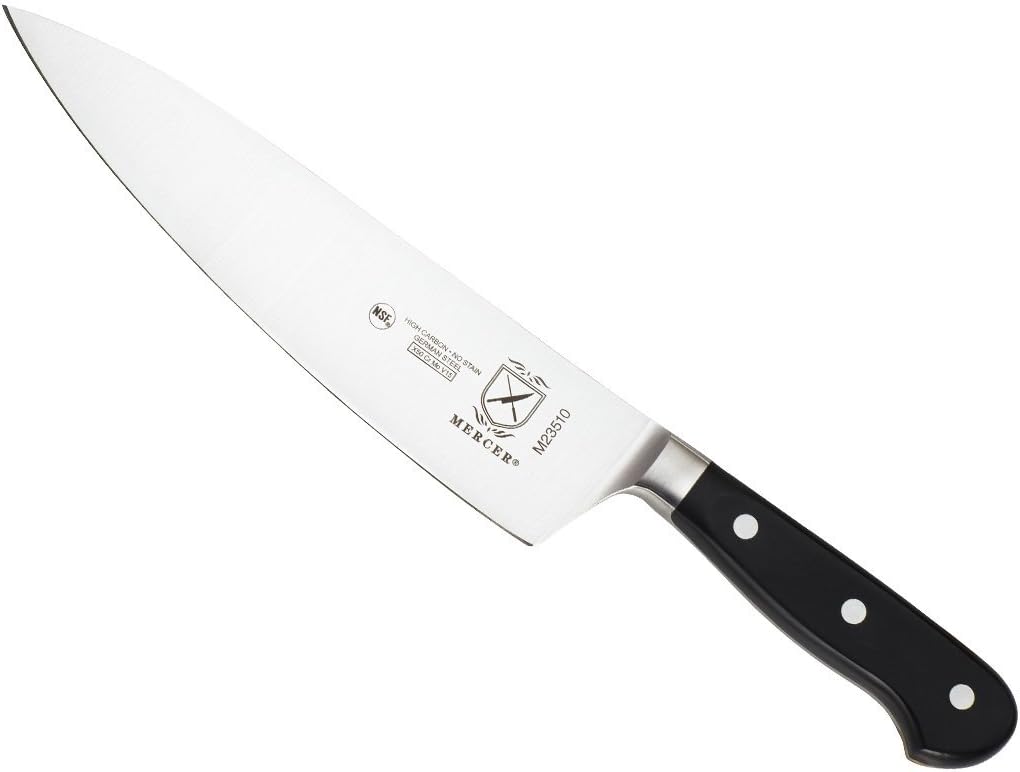
Every kitchen needs a knife you aren’t afraid to abuse. The Victorinox Fibrox is the king of affordable chef knives. Used in commercial kitchens worldwide, its non-slip handle and stamped blade are virtually indestructible.
It cuts melons, squash, and semi-frozen meats that you wouldn’t dare touch with your expensive Shun. It is the perfect “guest knife” for when your in-laws help cook.
- Stamped Swiss Steel
- Non-Slip Handle
- Dishwasher Safe (Technically)
- Under $50
Pros
- Incredible value for money.
- Easy to sharpen.
- Great grip when wet.
Cons
See comparison: Mercer vs. Victorinox.

5. The Paring Knife: Wüsthof Classic 3.5″
For “air work”—peeling apples, hulling strawberries, or deveining shrimp—you need a Paring Knife. The Wusthof Classic offers the perfect handle length to control the tip with precision.
While you can buy cheap paring knives, a forged one offers better balance. However, if you lose small knives often, consider the budget-friendly Victorinox paring knife featured in our best sets review.
Pros
- Surgical precision.
- Durable full tang.
Cons
See also: Paring Knife vs. Utility Knife.

6. The Bread Knife: Mercer Culinary Renaissance
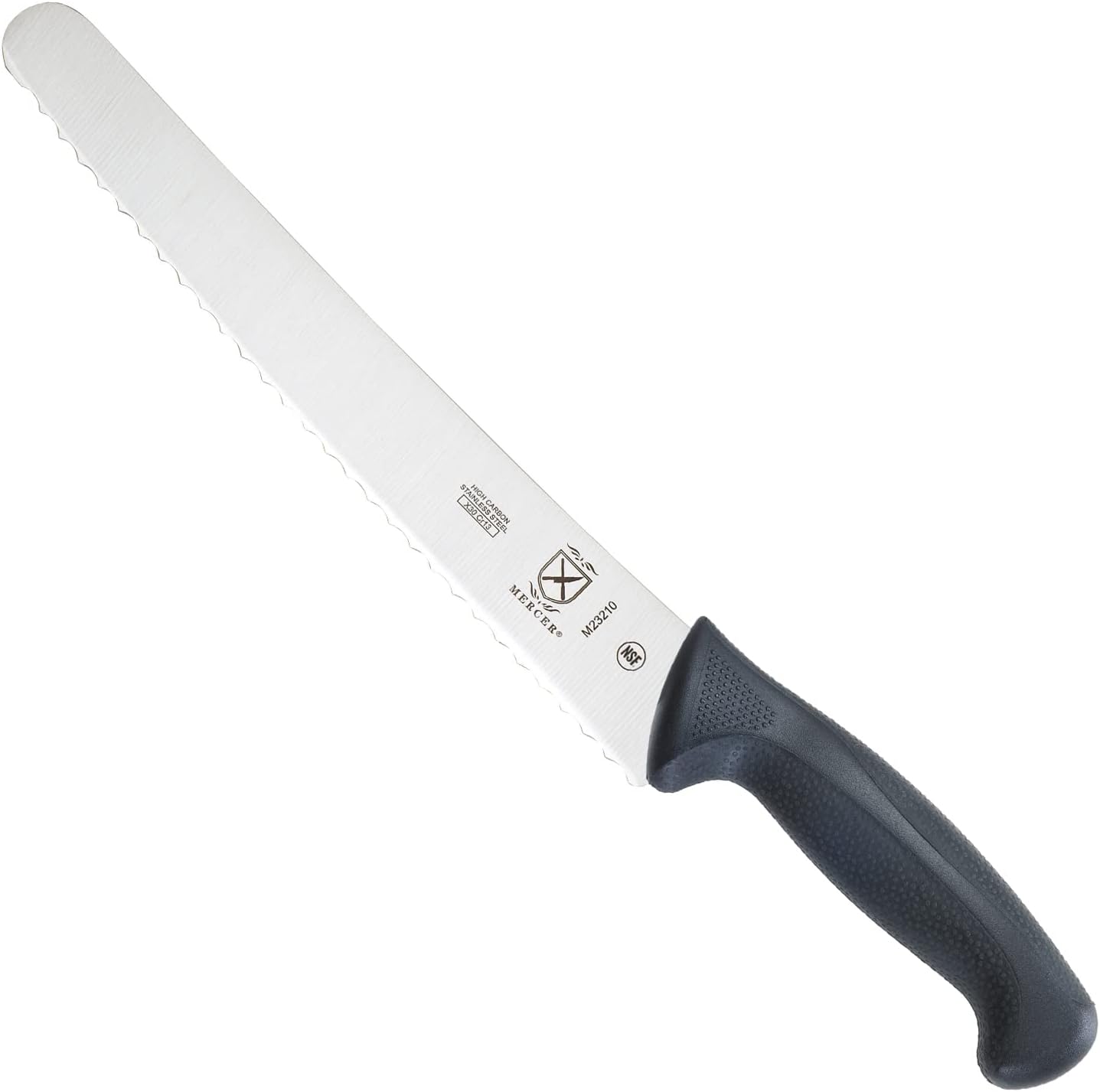
Don’t spend $150 on a bread knife. The Mercer Renaissance is widely regarded as the best bread knife value on the market. Its aggressive serrations bite into crusty sourdough without crushing the soft interior.
It is also excellent for slicing tomatoes and leveling cakes. The handle is triple-riveted and feels premium, despite the low price point.
Pros
- Cuts hard crusts effortlessly.
- Stiff blade for straight cuts.
- Forged German Steel.
Cons
Learn more: Bread Knife vs. Serrated Knife.

7. The Boning Knife: Dalstrong Gladiator
If you break down whole chickens or trim briskets, a flexible boning knife is essential. The Dalstrong Gladiator offers a curved, flexible blade that hugs bones to maximize meat yield.
Dalstrong’s G10 handle is impervious to moisture, making it great for bloody/messy butchery tasks. It is a standout in our Dalstrong vs Wusthof comparisons.
See the difference: Boning Knife vs. Fillet Knife.

8. The Nakiri: Tojiro DP
For vegetarians or prep-heavy cooks, the Tojiro DP Nakiri is a revelation. Its flat edge and rectangular shape eliminate the “accordion” effect when chopping onions or cabbage.
Tojiro offers high-end VG-10 steel at a budget price, often beating out flashier brands in our Tojiro vs Shun reviews. Just keep it dry!
Deep dive: What is a Nakiri Knife Used For?

9. The Utility Knife: Zwilling Pro 6″
Too big for a paring knife, too small for a chef’s knife—the Utility knife is the “sandwich knife.” Great for slicing salami, cheese, or cutting a bagel. The Zwilling Pro features a curved bolster for a perfect pinch grip.
Is it necessary? Read Paring Knife vs. Utility Knife.

10. The Meat Cleaver: Heavy Duty Chopper
Do not use your Japanese knives on bones! You need a dedicated cleaver. A heavy, thick spine allows you to chop through chicken joints and ribs. Look for soft, tough steel that won’t chip.
See more: Cleaver vs. Butcher Knife.
Gift-Giving Guide: Knives for Every Occasion
Quality kitchen knives make exceptional gifts for weddings, housewarmings, graduations, and holidays. However, knife gifting carries cultural considerations and practical factors that thoughtful givers should understand before purchasing.
Cultural Considerations: In many Asian cultures, gifting knives traditionally symbolizes severing a relationship. This superstition persists in various forms worldwide. The common workaround involves including a coin with the knife gift, which the recipient “pays” back to the giver, technically making it a purchase rather than a gift. Understanding these cultural nuances prevents unintended offense and shows genuine thoughtfulness.
Wedding and Registry Knives: Kitchen knives rank among the most popular wedding registry items, representing the couple’s new household establishment. Quality knife sets in the $200-500 range offer decades of daily use. When selecting wedding knives, neutral handle materials and classic blade shapes appeal to the broadest range of cooking styles. Including a honing steel and storage solution creates a complete gift that demonstrates comprehensive thinking.
Culinary Student Gifts: Students entering culinary programs need professional-grade tools that meet school requirements. Many programs publish specific knife lists for incoming students. The Victorinox Fibrox line frequently appears on these lists for its combination of performance, durability, and reasonable cost. A quality knife roll or bag for transporting tools to and from class complements individual knife gifts perfectly.
Debunking Common Kitchen Knife Myths
Kitchen folklore perpetuates numerous misconceptions about knife selection, use, and maintenance. Separating myth from reality helps cooks make better decisions and avoid damaging expensive tools.
Myth: “Expensive Knives Stay Sharp Forever” – No knife stays sharp indefinitely. All steel dulls with use, regardless of price. Premium knives may hold an edge longer between sharpenings, but they still require regular maintenance. The belief that expensive knives never need sharpening leads to dangerous dull blades and disappointed owners.
Myth: “A Sharpening Steel Sharpens Knives” – As discussed earlier, honing steels realign edges but don’t create new ones. Misunderstanding this distinction leads cooks to wonder why their knives grow duller despite regular “sharpening” with a steel. Eventually, the rolled edge breaks off, requiring actual sharpening to restore cutting performance.
Myth: “Dishwashers Are Fine for Stainless Steel Knives” – While stainless steel resists corrosion better than carbon steel, dishwasher environments still damage knives. High heat affects tempering, detergents attack handle materials, and contact with other items chips edges. Hand washing takes seconds and preserves your investment for years.
Myth: “Heavier Knives Cut Better” – Weight aids chopping through dense foods but doesn’t determine sharpness or cutting performance. Japanese knives demonstrate that lightweight blades can deliver superior cutting experiences through better steel and geometry. The “heft equals quality” perception persists from marketing that equated weight with durability.
Buyer’s Guide: How to Choose Your Arsenal
1. The Steel: Hardness vs. Durability
Understanding metallurgy is key.
- German Steel (X50CrMoV15): Softer (58 HRC), tougher, easier to sharpen. Best for heavy duty. (e.g., Wusthof, Zwilling).
- Japanese Steel (VG10, SG2): Harder (60+ HRC), holds an edge longer, but brittle. Best for slicing. (e.g., Shun, Miyabi). See AUS-10 vs VG10.
- Ceramic: Stays sharp forever but shatters if dropped. See Ceramic vs Steel.
2. Brand Battles: Who to Trust?
We have done the comparisons so you don’t have to:
3. Storage and Maintenance
Never store these in a drawer loose!
- Storage: Use a drawer organizer, a magnetic strip, or a classic block. Read how to store knives without a block.
- Rust: Even stainless can rust. Learn how to remove rust.
- Travel: If you are a pro, check out our best knife bag guide.
How We Test and Evaluate Kitchen Knives
Our knife recommendations result from systematic testing protocols designed to reveal real-world performance differences. Understanding our methodology helps readers evaluate whether our priorities align with their cooking needs.
Out-of-Box Sharpness Testing: We measure initial sharpness using standardized paper cutting tests, assessing how cleanly each knife slices through newsprint and magazine paper. The “tomato test”—slicing a ripe tomato without supporting it—reveals practical sharpness better than any instrument. Knives that struggle with tomato skins out of the box indicate poor factory edges or inferior steel.
Edge Retention Assessment: We perform controlled cutting sessions on standardized materials (carrots, celery, onions) and retest sharpness at regular intervals. While laboratory edge retention testing uses specialized equipment, practical kitchen testing better reflects real-world performance. Knives that maintain usable sharpness through a week of heavy home cooking earn top marks in this category.
Ergonomic Evaluation: Multiple testers with different hand sizes use each knife for extended prep sessions. We evaluate handle comfort, balance point location, and fatigue development over time. A knife that feels perfect to a large-handed tester might cause cramping for someone with smaller hands, so we report the range of tester experiences rather than a single subjective opinion.
Durability and Toughness: We don’t abuse knives intentionally, but we do test reasonable durability limits. This includes contact with chicken bones (for appropriate knives), accidental board contact, and typical kitchen mishandling. Knives that chip or roll edges during normal use receive appropriate criticism. We also evaluate how each knife responds to sharpening attempts, as some premium steels require specialized equipment that home cooks may lack.
Frequently Asked Questions (FAQ)
Yes. Cutting crusty bread or ripe tomatoes with a straight edge dulls the blade quickly. A serrated knife saws through hard exteriors without crushing the soft interior.
We usually recommend buying individual knives to get the best quality for each task (e.g., a cheap bread knife but an expensive chef’s knife). However, some sets are excellent value—check our best knife set reviews.
For German knives, a standard manual sharpener or honing steel works. For Japanese knives, use a whetstone or a specific electric sharpener. Learn the difference in Whetstone vs Electric Sharpener.
No. High heat ruins handles and dulls edges. Even dishwasher safe steak knives degrade over time. Hand wash only.
A chef’s knife features a curved belly designed for the rocking chop motion, while a santoku has a flatter profile optimized for up-and-down chopping. Chef’s knives typically range from 8-10 inches, while santokus are usually 5-7 inches. The santoku often includes a granton edge to prevent food sticking. Both can serve as primary kitchen knives—the choice comes down to cutting technique preference. Read our detailed comparison: Chef Knife vs. Santoku Knife.
For home cooks, professional sharpening every 6-12 months typically suffices, with regular honing between sharpenings. Heavy users may need quarterly sharpening. Signs your knife needs sharpening include: difficulty slicing tomato skins, requiring pressure to cut onions, and visible edge reflections under bright light. When your honing steel no longer restores cutting performance, it’s time for actual sharpening.
For cooks who appreciate precision cutting and are willing to maintain their knives properly, quality Japanese knives absolutely justify their cost. The superior edge retention and cutting feel transform daily meal preparation. However, casual cooks who prefer low-maintenance tools may find German-style knives more practical. Japanese knives require commitment to proper technique, immediate cleaning, and careful storage. If you’re willing to provide that care, the performance reward is substantial.
Start with an 8-inch chef’s knife—it handles approximately 80% of kitchen cutting tasks. Choose between German-style (Wusthof, Zwilling) for durability and rocking cuts, or Japanese-style (Shun, Tojiro) for precision and push cuts. Budget $50-150 for a quality entry point. Once comfortable with your chef’s knife, add a paring knife and bread knife to complete the essential trio. From there, expand based on what you actually cook.
Sharpening serrated knives requires specialized tapered sharpening rods that match the gullet size between teeth. While possible at home, most cooks find professional serrated knife sharpening more practical. The good news: quality serrated knives maintain useful sharpness for years because the serrations protect the cutting edges from board contact. Many home cooks never sharpen their bread knives, instead replacing them when they eventually dull.
End-grain wooden cutting boards offer the best combination of knife-friendliness and durability. The wood fibers separate slightly under the blade edge, reducing wear compared to plastic or bamboo. Edge-grain wood boards provide a more affordable alternative with good performance. Avoid glass, marble, and extremely hard bamboo boards that rapidly dull knife edges. Regardless of material, always cut on a stable, non-slip surface.
Our Recommended Knife Collection by Cooking Style
After extensive testing and real-world use, we’ve distilled our recommendations into curated collections optimized for different cooking approaches. These groupings represent the best value at each price point based on our testing.
The Minimalist Collection (3 Knives): Wusthof Classic Ikon 8″ Chef’s Knife, Victorinox 3.25″ Paring Knife, Mercer Culinary Renaissance Bread Knife. These three knives handle virtually every home cooking task. Total investment: approximately $250-300. This collection prioritizes the chef’s knife where performance matters most while economizing on specialty blades.
The Enthusiast Collection (5 Knives): Add a Tojiro DP Santoku for vegetable prep and a Dalstrong Gladiator Boning Knife for meat work to the Minimalist Collection. This expands your capabilities for Japanese cooking techniques and whole protein butchery. Total investment: approximately $400-500. The santoku provides an alternative cutting experience that many cooks prefer for produce-heavy sessions.
The Professional Collection (7 Knives): Further expand with a Zwilling Pro Utility Knife for sandwich and small tasks plus a dedicated Nakiri for vegetable-focused cooking. This collection covers every scenario a serious home cook encounters. Total investment: approximately $600-800. At this level, knife selection becomes personal preference rather than capability limitation.
Conclusion
Building your knife collection is a journey. Start with the Chef’s Knife, Paring Knife, and Bread Knife. These three will handle 90% of your cooking. Once you master those, expand into Santokus, Nakiris, and Boning knives based on what you cook most.
Remember, the best knife is the one that feels good in your hand. Whether you choose the German reliability of Wusthof or the Japanese precision of Tojiro, keep them sharp, keep them clean, and happy cooking!
The journey to building your ideal knife collection takes time, and that’s perfectly fine. Each knife you add should fill a specific gap in your cooking workflow. Avoid the temptation to purchase large sets that include blades you’ll never use—those neglected knives represent wasted money and storage space. Instead, let your cooking guide your purchases. When you find yourself repeatedly thinking “I wish I had a knife that could…” that’s the moment to research and invest in the right tool.
We update this guide regularly as new products enter the market and established manufacturers update their lines. The fundamentals of quality knife construction change slowly, but specific model recommendations evolve as we test new releases. Bookmark this page and check back before making significant knife purchases. Our commitment to honest, hands-on testing ensures our recommendations reflect real kitchen performance rather than marketing claims.
Thank you for trusting KnifeIndex with your kitchen knife education. We’re passionate about helping cooks at every level find tools that make cooking more joyful and less frustrating. Whether you’re equipping your first apartment kitchen or upgrading a well-worn collection, the right knife transforms meal preparation from chore to craft. Now go cook something delicious—with a properly sharp knife, of course.