What is a Serrated Knife Used For? The Ultimate Guide to the “Saw” of the Kitchen
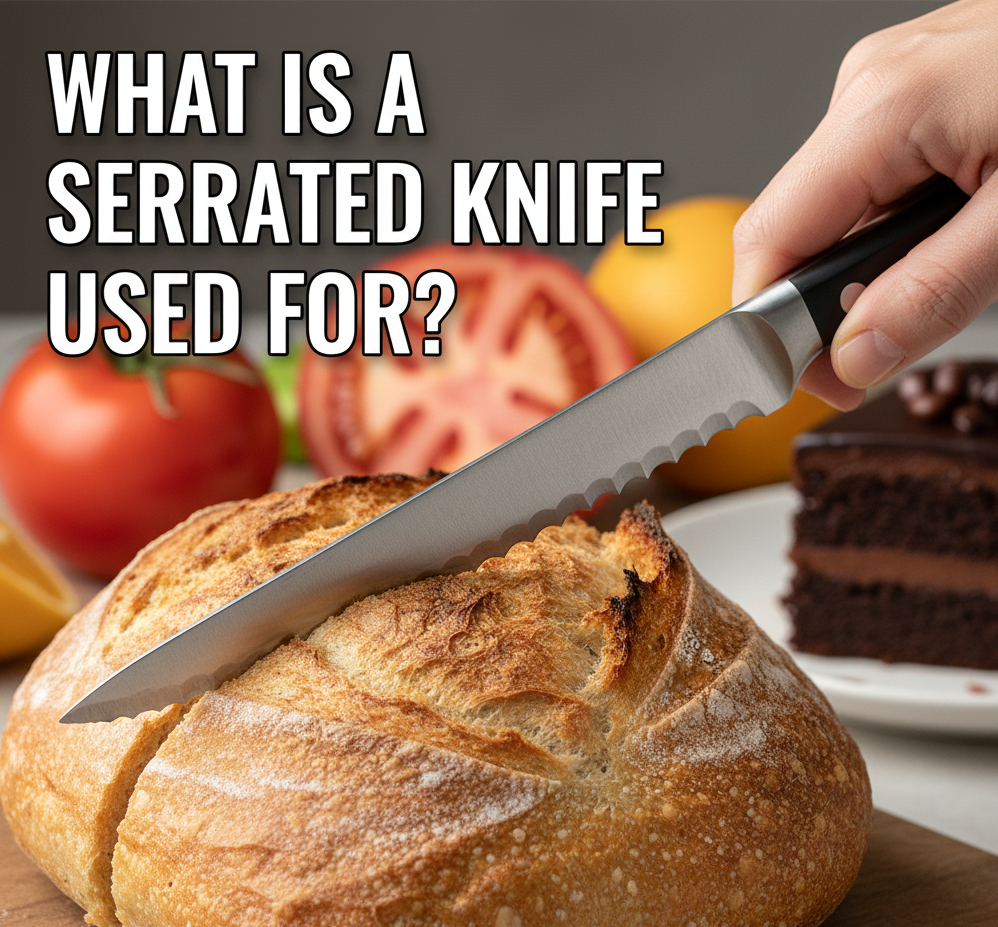
In the culinary world, the Chef’s knife is often hailed as the king of the kitchen. However, there is a silent hero that sits in every knife block—often misunderstood and underutilized. That hero is the serrated knife.
While most people immediately associate it with slicing a baguette, asking “what is a serrated knife used for” opens a door to a wide range of culinary tasks. From the delicate skin of a ripe tomato to the waxy exterior of a butternut squash, the serrated blade is an essential tool that complements your primary blade.
Whether you are comparing the best German kitchen knives to their Japanese counterparts, or simply looking to upgrade your affordable kitchen setup, understanding the mechanics of serration will change the way you cook.
The Mechanics: Why the “Teeth” Matter
Unlike a straight-edged blade (like a Chef’s or Santoku knife) which cuts by pushing apart fibers, a serrated knife works like a saw. It features gullets (the hollows between points) and teeth (the sharp points).
This design reduces the contact area between the blade and the food. By concentrating the downward pressure onto the sharp points, the knife can easily penetrate hard, crusty, or waxy surfaces without crushing the soft interior beneath. This is why a dull straight-edge knife will squash a tomato, while a serrated knife glides right through.
The Physics Behind Serrated Blades: Pressure Distribution and Cutting Efficiency
To truly understand what a serrated knife is used for, we need to explore the fundamental physics that makes these blades so effective. The serrated edge operates on a principle called localized pressure concentration. When you apply downward force on a straight-edge blade, that pressure distributes evenly across the entire cutting surface. This requires the blade to be exceptionally sharp to initiate a cut, as the force per square millimeter remains relatively low. However, with a serrated blade, the same amount of force concentrates onto the microscopic points of each individual tooth, dramatically increasing the pressure per contact point by a factor of ten or more.
This explains why a serrated knife can effortlessly penetrate a crusty sourdough loaf even when the blade has seen months of use without sharpening. The physics of stress concentration—a concept well-known in mechanical engineering—works in the cook’s favor. The teeth act as stress risers, initiating fractures in the food’s surface with minimal effort. Once the initial penetration occurs, the gullets (the curved recesses between teeth) create a sawing action that progressively widens the cut without requiring the continuous push-cutting motion demanded by straight blades.
Micro-Serrations vs. Macro-Serrations: Understanding Edge Geometry
The knife industry distinguishes between two primary categories of serration patterns. Macro-serrations are the visible, pronounced waves or points you can easily see with the naked eye—these are typical on traditional bread knives and steak knives. They excel at aggressive cutting tasks like breaking through hard crusts or tough meat fibers. Micro-serrations, by contrast, are nearly invisible to the unaided eye and are often found on high-end Japanese blades. These microscopic teeth create a blade that behaves almost like a hybrid between straight and serrated edges, offering clean cuts with reduced tearing. Understanding this distinction helps explain why certain serrated knives perform better on delicate pastries while others shine on crusty artisan loaves.
The angle of the serration grind also plays a critical role. Most Western serrated knives feature a chisel grind, where only one side of the blade is beveled while the other remains flat. This asymmetrical design pushes the cut material away from the blade, reducing friction and preventing the food from sticking. Japanese manufacturers often employ a double-bevel serration, which provides a more balanced cut but requires more precise manufacturing techniques. When you’re evaluating the best chef knife brands, pay attention to how they engineer their serrated edges—the difference in cutting performance can be dramatic.
The Historical Evolution of Serrated Knives: From Stone Tools to Modern Kitchens
The serrated knife is far older than most people realize. Archaeological evidence suggests that serrated stone tools date back over 2.5 million years to the Oldowan period, where early hominids discovered that chipping flint into a jagged edge created a more effective cutting implement for processing animal hides and fibrous plant materials. The principle hasn’t changed fundamentally since then—discontinuous cutting edges simply work better on materials with heterogeneous textures.
In the modern era, the serrated bread knife as we know it was patented by Joseph E. Burns of Syracuse, New York, in 1921. Burns observed that traditional straight-edge knives crushed bread rather than cut it, and he developed a blade with alternating high and low points that could saw through crust without compression. His patent drawing bears a striking resemblance to the bread knives we use today, though contemporary metallurgy and manufacturing techniques have refined the design significantly. The Burns patent expired in the 1930s, leading to widespread adoption by manufacturers across America and Europe.
World War II and the Rise of Serrated Cutlery
Interestingly, World War II accelerated the development of serrated knife technology. Military kitchens needed knives that could remain functional for extended periods without access to sharpening equipment. Serrated blades proved ideal for field conditions—they could cut through ration packaging, bread, and meat even after substantial use. Post-war, returning soldiers brought an appreciation for these low-maintenance blades back to civilian life, contributing to the serrated knife’s permanent place in American kitchens. This historical context helps explain why serrated steak knives became standard in American restaurants while European establishments often preferred straight-edge alternatives.
Top 5 Uses for a Serrated Knife
1. Crusty Bread and Pastries
This is the most obvious use. A high-quality blade, like those found in our guide to the best bread knife, allows you to saw through a hard sourdough crust without compressing the airy crumb inside. It is equally effective on delicate pastries like mille-feuille, where a straight blade would shatter the layers.
2. Soft-Skinned Fruits and Vegetables
Have you ever tried to slice a ripe tomato with a dull knife? It’s a mess. The teeth of a serrated utility knife catch the slick skin of tomatoes, plums, and peaches, allowing for thin, perfect slices without bruising the flesh. This is a task where even the best Japanese kitchen knives can struggle if they aren’t razor-sharp.
3. Waxy and Tough Skins
Foods with slippery or tough exteriors like peppers, eggplants, melons, and pineapples are safer to cut with serrations. The teeth grip the surface, preventing the blade from slipping sideways and cutting your hand. When processing a whole pineapple, a serrated knife allows you to remove the spiky skin with controlled, safe strokes that would be dangerously unpredictable with a straight blade.
4. Cakes and Tortes
For leveling cakes or slicing delicate sponge cakes, a long serrated knife is non-negotiable. It cuts through the cake structure gently rather than compressing it. Professional pastry chefs often use serrated knives to split genoise sponges horizontally into multiple even layers—a task that would be nearly impossible with a straight blade without tearing the delicate crumb structure.
5. Cooked Meats (Steak)
While a carving knife is great for roasts, serrations are standard for table service. The best dishwasher safe steak knives almost always feature serrations to help diners cut through fibers on a ceramic plate without instantly dulling the blade.
Beyond the Basics: 10 More Surprising Uses for a Serrated Knife
While the five categories above cover the most common applications, experienced cooks know that a serrated knife can tackle an impressively wide range of kitchen tasks. Here are ten additional ways to put your serrated blade to work:
6. Chocolate and Candy Making
When working with blocks of chocolate or sheets of brittle, a serrated knife provides controlled breaking power. The teeth grip the chocolate surface, allowing you to score precise lines before applying pressure. This prevents the shattered, uneven pieces that often result from using a straight blade on hard confections. Professional chocolatiers keep a dedicated serrated knife for portioning ganache slabs and cutting through layered chocolate bark without causing fractures that ruin the presentation.
7. Frozen Foods and Ice Cream Cakes
Attempting to cut through a frozen dessert with a standard knife is an exercise in frustration—and potentially dangerous. The sawing action of a serrated blade, combined with the reduced surface contact area, allows you to portion frozen lasagnas, ice cream cakes, and semifreddo desserts without thawing. The teeth create friction heat at the micro-level, slightly melting the contact surface just enough to ease the blade through while leaving the surrounding areas frozen solid. Many professional caterers consider a serrated knife essential equipment for dessert service.
8. Crafting and Non-Kitchen Applications
Beyond culinary uses, serrated knives excel at cutting foam for upholstery projects, trimming floral foam for arrangements, slicing through thick cardboard for recycling, and even cutting synthetic fabrics that tend to slip under straight blades. Hobbyists who work with EVA foam for cosplay and prop-making frequently use serrated utility knives because the teeth grip the material and prevent wandering cuts. While you shouldn’t use your kitchen bread knife for these tasks, understanding this versatility highlights the fundamental mechanical advantage of serration.
9. Cheese Service
Soft-ripened cheeses like brie and camembert present a unique cutting challenge—the bloomy rind resists penetration while the interior paste is almost liquid at room temperature. A serrated knife grips the rind without applying the compressive force that would cause a straight blade to squash the cheese. For harder aged cheeses like Parmesan and aged Gouda, the teeth provide the initial bite needed to break through the crystalline structure without shattering the wedge into crumbles.
10. Citrus Supremes and Segmenting
While professional chefs typically use a straight paring knife for supreme cuts (removing citrus segments from their membranes), home cooks often find greater success with a small serrated utility knife. The teeth catch the slippery membrane surface, providing the control needed to separate segments cleanly. This is particularly helpful when working with grapefruits and pomelos, whose thick pith resists straight blades.
11. Cutting Sandwiches and Wraps
A serrated knife cuts through layered sandwiches without compressing the bread. This is especially important for tall deli sandwiches, club sandwiches held together with frilled picks, and wraps that contain multiple textures. The sawing motion separates ingredients cleanly rather than squashing them together into an unappetizing compressed mass. Many sandwich shops use serrated knives exclusively for this reason.
12. Preparing Squash and Gourds
Butternut squash, acorn squash, and pumpkins have notoriously tough exteriors that challenge even well-maintained straight blades. A serrated knife provides the grip and penetrating power to safely break through the hard shell. The teeth create a controlled entry point, after which the blade can follow through with reduced risk of slipping—a common cause of kitchen injuries during fall cooking season.
13. Angel Food Cake and Chiffon Cakes
These egg-white-leavened cakes have an extremely delicate, spongy structure that collapses under the pressure of a straight blade. The traditional tool for cutting angel food cake is actually a specialized serrated cake breaker with fine teeth, but a standard serrated bread knife works nearly as well when used with a gentle sawing motion. The key is letting the teeth do the work rather than applying downward pressure.
14. Trimming Artichokes
Preparing fresh artichokes involves cutting through tough, fibrous leaves and a thorny choke. A serrated knife makes quick work of trimming the thorny leaf tips and cutting through the stem end. The sawing action separates fibers cleanly rather than crushing them, which can cause browning and oxidation that affects the artichoke’s appearance and flavor.
15. Portioning Large Melons
Watermelons and cantaloupes have thick rinds that resist straight blades while their interiors are soft and easily damaged. A long serrated knife allows you to saw through the rind with control, then continue through the flesh without mangling it. For watermelon carving and decorative fruit displays, serrated blades provide the precision needed for clean geometric cuts.
Types of Serrated Knives: It’s Not Just One Size
When browsing reviews on knifeindex.com/, you will encounter different variations:
- The Bread Knife: Usually 8 to 10 inches long. Designed for large loaves.
- The Serrated Utility Knife: Usually 5 to 6 inches. This is the “tomato knife” or sandwich knife. It bridges the gap between a paring knife and a bread knife.
- The Offset Serrated Knife: The handle is set higher than the blade, allowing you to slice all the way to the cutting board without your knuckles hitting the counter.
Serration Pattern Comparison Table
| Serration Type | Best For | Crumb Production | Sharpening Difficulty | Common Brands |
|---|---|---|---|---|
| Pointed/Aggressive | Crusty artisan bread, hard rinds | Moderate to High | Difficult | Wusthof, Henckels |
| Rounded/Scalloped | Soft bread, cakes, tomatoes | Low | Moderate | Shun, Global, MAC |
| Wave/Undulating | General purpose, sandwiches | Very Low | Easier | Victorinox, Mercer |
| Double-Serrated | Heavy-duty bread cutting | Moderate | Very Difficult | Wusthof Classic Ikon |
| Micro-Serrated | Pastry, delicate fruits | Minimal | Professional Only | Miyabi, Enso |
Steel Matters: How Blade Material Affects Serrated Knife Performance
The steel used in a serrated knife significantly impacts its cutting performance, edge retention, and longevity. Since serrated blades are more difficult to sharpen than straight edges, choosing the right steel composition becomes even more critical. Here’s what you need to know about the metallurgy behind your serrated knife.
High-Carbon Stainless Steel
Most premium serrated knives use high-carbon stainless steel alloys, which balance the edge retention of carbon steel with the corrosion resistance of stainless. Steels like X50CrMoV15 (common in German knives) and VG-10 (prevalent in Japanese blades) offer excellent performance. The chromium content (typically 14-16%) forms a passive oxide layer that prevents rust, while the carbon content (0.5-1.0%) provides the hardness needed to maintain those tiny serration points through extended use. When comparing brands in our Shun vs. Wusthof analysis, the steel composition accounts for much of the performance difference.
Stamped vs. Forged Serrated Blades
The manufacturing method matters. Forged serrated knives start as a single piece of heated steel shaped under high pressure, resulting in a denser molecular structure and generally superior durability. The serrations are ground into the forged blank after the basic shape is established. Stamped serrated knives are cut from a large sheet of steel like a cookie cutter, then heat-treated and sharpened. While stamped blades are lighter and less expensive, they typically can’t match the edge retention of forged counterparts. However, for serrated blades specifically, the performance gap narrows because the sawing action compensates somewhat for lower steel quality. This explains why budget-friendly options like the Victorinox pastry knife can still deliver impressive results.
Damascus Steel Serrated Knives
For those who appreciate aesthetic beauty alongside function, Damascus steel serrated knives offer a stunning visual element. The distinctive wavy pattern results from forge-welding multiple layers of different steel alloys together, then etching the blade to reveal the layered structure. While the Damascus cladding doesn’t directly improve serration performance (the core cutting steel is typically VG-10 or similar), it does provide some practical benefits. The layered structure can create microscopic variations in hardness that help reduce food sticking. More importantly, Damascus-clad serrated knives often command premium prices and are featured prominently in our best chef knife brands guide for their combination of artistry and function.
Key Insight: Because serrated knives are seldom resharpened by home cooks, investing in a higher-quality steel that maintains its edge longer is often more cost-effective over the knife’s lifespan than purchasing budget options that require more frequent professional sharpening or replacement.
Ergonomics and Safety: Using a Serrated Knife Correctly
The unique cutting mechanics of serrated blades require slightly different handling techniques compared to straight-edge knives. Understanding proper ergonomics not only improves cutting results but also significantly reduces injury risk. Serrated knife injuries tend to be more severe than straight-blade cuts because the sawing action can tear tissue rather than creating a clean incision.
The Proper Grip for Serrated Cutting
Unlike the pinch grip recommended for chef’s knives, a serrated knife benefits from a full-handle grip where all fingers wrap around the handle. This provides the stability needed for the back-and-forth sawing motion. Your index finger should rest along the side of the handle (not the spine of the blade) to guide the cutting direction. The thumb should wrap around the opposite side, creating a secure, controlled hold. Many offset serrated knives feature ergonomic handle contours specifically designed to accommodate this grip style.
Sawing Technique vs. Pressure Technique
The most common mistake novice cooks make with serrated knives is applying excessive downward pressure instead of using a proper sawing motion. Let the teeth do the work. Begin each cut with light forward-and-backward strokes, allowing the serrations to gradually penetrate the food’s surface. Only after the teeth have established a groove should you increase the stroke length and speed. Applying heavy pressure before the teeth have engaged invites the blade to slip sideways—a dangerous situation, especially with round foods like melons or hard squashes.
Cutting Board Selection Matters
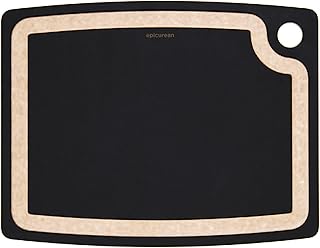
Serrated knives are particularly sensitive to cutting board material. End-grain wood boards are ideal because the wood fibers separate slightly under the teeth, then close back after the cut, minimizing blade wear. Edge-grain and bamboo boards are harder and can dull serrations more quickly. Glass, marble, and composite stone boards should never be used with serrated knives—the extreme hardness will rapidly deform the fine tooth points, effectively destroying the blade’s cutting ability. If you’re investing in quality cutlery, pairing it with appropriate boards is essential. See our recommendations for the best cutting surfaces that complement premium knife sets.
Top Recommended Serrated Knives
Based on performance, steel quality, and value, here are three top picks available on Amazon that we frequently discuss in our brand comparisons like Shun vs. Wusthof and Victorinox reviews.
 Wüsthof Classic Ikon 9″ Double Serrated
A German masterpiece often cited in Wusthof vs. Victorinox battles. It features a unique double-serration technology that stays sharp longer and cuts smoother.
Check Price on Amazon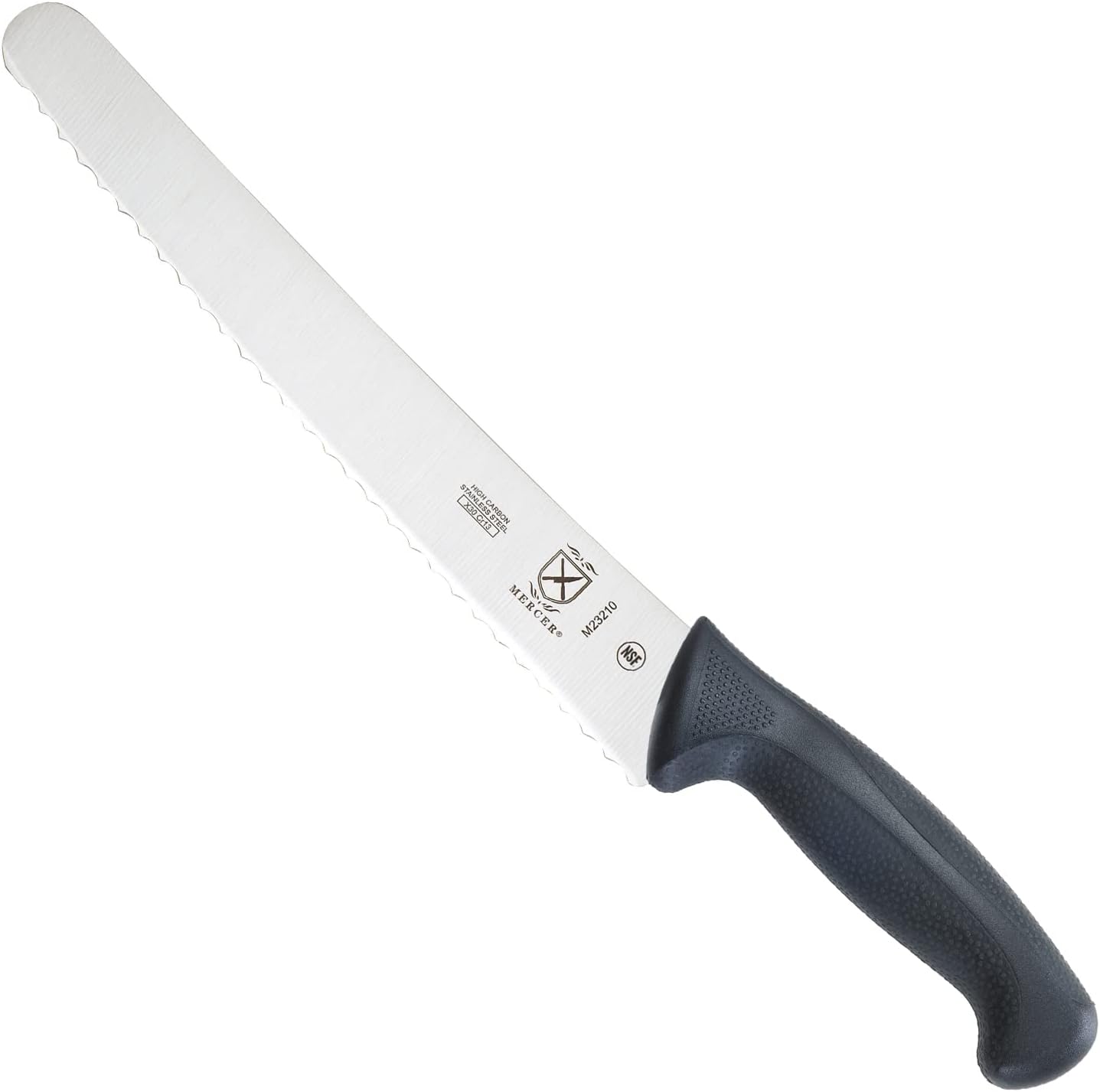 Mercer Culinary Millennia 10-Inch
Widely considered the best budget knife brand choice for culinary students. High carbon steel and an ergonomic handle make it a steal.
Check Price on Amazon Shun Classic 9-Inch Bread Knife
For those who love the aesthetic of Damascus steel. This blade is thinner and sharper than Western counterparts. See our best chef knife brands guide for more on Shun.
Check Price on AmazonHow to Choose the Right Serrated Knife for Your Kitchen
Selecting the ideal serrated knife requires balancing several factors: your cooking style, the types of food you prepare most frequently, your budget, and your willingness to maintain the blade. Here’s a systematic approach to making the right choice.
Step 1: Determine Your Primary Use Case
If you bake crusty artisan bread weekly, invest in a dedicated 9-10 inch bread knife with aggressive serrations. If you primarily need a serrated blade for tomatoes, citrus, and occasional sandwich duty, a 5-6 inch serrated utility knife will serve you better and take up less drawer space. For those who frequently prepare both bread and delicate produce, consider purchasing two separate knives rather than compromising with a single general-purpose tool. The performance difference between a specialized bread knife and a utility serrated knife is substantial enough to justify the additional investment.
Step 2: Evaluate Handle Design
The handle design dramatically affects comfort during extended use. Offset handles (where the handle sits above the blade plane) provide knuckle clearance for cutting all the way through large items. This design is particularly valuable for bread knives, as it allows you to complete the cut without your knuckles contacting the cutting board. Inline handles (traditional design where handle and blade share the same axis) offer a more familiar feel and are common on utility serrated knives. Pay attention to handle material as well—textured synthetic handles like Fibrox or Santoprene provide secure grip even when wet or greasy, while polished wood handles offer aesthetic appeal but require more careful handling.
Step 3: Consider Blade Length
Blade length should match your typical cutting tasks. Here’s a quick reference:
- 5-6 inches: Ideal for tomatoes, bagels, citrus, small loaves, and general utility work. The serrated utility knife size.
- 7-8 inches: A versatile middle ground suitable for medium boules, sandwich loaves, and larger fruit like melons.
- 9-10 inches: The standard bread knife length. Necessary for large artisan boules, batards, and cake leveling. Longer blades produce straighter, more even slices with fewer strokes.
- 12+ inches: Specialty length for commercial bakeries and catering. Excessive for most home kitchens.
Step 4: Assess Serration Style
Refer back to the comparison table above and match the serration style to your needs. If you primarily cut soft sandwich bread and delicate pastries, scalloped or wave serrations produce fewer crumbs. If you tackle crusty sourdough and hard-rind squash, pointed serrations provide better initial bite. Many manufacturers now offer progressive serration patterns where the teeth geometry changes along the blade length—more aggressive near the handle for initial penetration, transitioning to finer serrations near the tip for clean finishing cuts.
Maintenance: The Tricky Part
One downside to serrated knives is sharpening. Unlike a straight edge that can be honed on a rod or run through an electric device, serrations require you to sharpen each individual gullet.
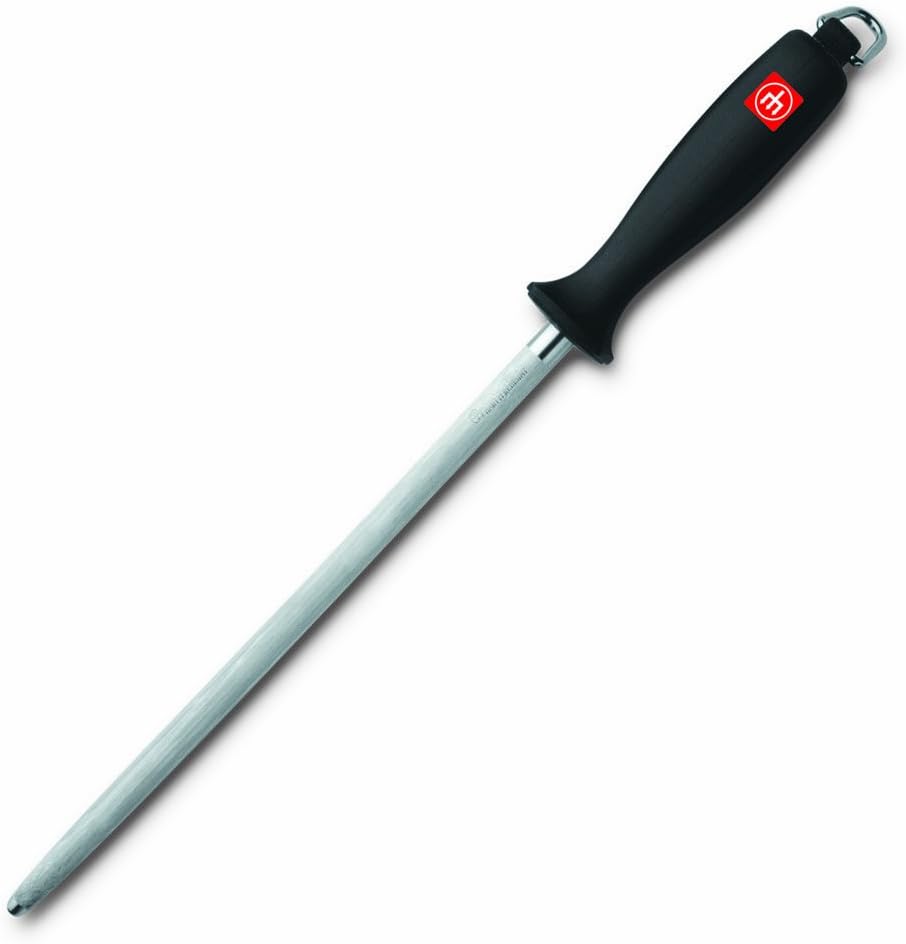
If you are investing in high-end cutlery, we recommend reading our guides on the best manual sharpeners (ceramic rods are best for this) or checking if the best knife electric sharpeners you own have a serrated slot (some do!).
Furthermore, storage is key. Do not throw a serrated knife in a drawer; it will scratch your other tools. Use a proper knife drawer organizer, a magnetic strip, or a universal knife holder.
Step-by-Step Guide to Sharpening a Serrated Knife at Home
While professional sharpening is recommended for high-end serrated knives, you can maintain moderately priced blades at home with the right tools and technique. Here’s the detailed process:
- Gather the Right Tools: You’ll need a tapered diamond or ceramic sharpening rod designed for serrated knives. The rod should taper from a diameter that fits comfortably inside your knife’s gullets to a larger base. DMT and Spyderco both manufacture excellent serration sharpening rods. Avoid triangular stones—they’re designed for straight-edge touch-ups and won’t properly address curved gullets.
- Identify the Beveled Side: Examine your serrated knife carefully. Most Western serrated knives are chisel-ground, meaning only one side has visible bevels on the serrations. The flat side (usually the left side when holding the knife) should not be sharpened—you only work on the beveled side. Japanese serrated knives may have bevels on both sides and require a different approach.
- Match the Rod to the Gullet: Find the section of your tapered rod that matches the diameter of the first serration gullet. The rod should make full contact with the curved surface without forcing. Starting with the rod too thick will only sharpen the tips while neglecting the recessed cutting surfaces where dulling actually occurs.
- Sharpen One Gullet at a Time: Position the rod in the first gullet at the same angle as the existing bevel (typically 13-17 degrees for German knives, 10-15 for Japanese). Apply light, consistent pressure and rotate the rod while pulling it toward you, following the curve of the gullet. Make 3-5 passes per gullet, then move to the next. Patience is essential—rushing through this process produces inconsistent results.
- Address the Burr: After sharpening all gullets on the beveled side, you’ll have created a microscopic burr (a thin wire of displaced metal) along the cutting edge. Very lightly draw the sharpening rod across the flat side of the blade at a very shallow angle (nearly flat against the blade) to remove this burr. Use only one or two extremely light passes—aggressive work on the flat side will ruin the blade geometry.
- Test and Adjust: Test the knife on a ripe tomato or piece of bread. If certain sections cut better than others, those serrations may need additional attention. Mark the dull sections with a small piece of tape and revisit them. Professional sharpeners often use magnification to verify edge consistency, but the food test is sufficient for home maintenance.
When to Seek Professional Sharpening
Send your serrated knife to a professional sharpener if: the blade has visible chips or flat spots on the teeth, you’ve attempted home sharpening but performance hasn’t improved, the knife is a premium brand (Shun, Wusthof, etc.) worth the $15-25 professional service fee, or you simply don’t have the time and patience for individual gullet work. Most home cooks can go 2-5 years between professional sharpenings with proper care and cutting board selection.
Common Mistakes When Using a Serrated Knife (And How to Avoid Them)
Even experienced home cooks sometimes misuse serrated knives, leading to poor results, damaged blades, or injuries. Here are the most frequent errors and their solutions:
Mistake #1: Using a Serrated Knife as a General-Purpose Blade
Many people reach for the serrated knife for every cutting task because “it’s always sharp.” While understandable, this habit accelerates wear on the serrations and delivers subpar results for tasks better suited to straight blades. Chopping herbs, dicing onions, and mincing garlic with a serrated knife produces ragged, bruised cuts rather than clean separations. Reserve your serrated blade for tasks that benefit from its specific cutting mechanics.
Mistake #2: Storing Serrated Knives Improperly
Tossing a serrated knife into a crowded utensil drawer damages not only the knife but everything around it. The hardened teeth can scratch other knives, chip ceramic items, and even cut unsuspecting fingers reaching into the drawer. Always use blade guards, a designated knife block slot, a magnetic strip, or an in-drawer organizer with individual slots. The teeth of a serrated knife are surprisingly fragile—contact with other metal objects can bend or flatten individual points, creating dead spots in the cutting edge.
Mistake #3: Applying Excessive Force
The serrated knife should be guided, not forced. Pushing down hard while sawing dramatically increases the risk of the blade slipping off round or hard surfaces. Let the teeth engage and progress through the food at their own pace. If you find yourself applying significant pressure, the knife likely needs sharpening or you’re using the wrong tool for the task.
Mistake #4: Cutting on Inappropriate Surfaces
As mentioned earlier, glass and stone cutting boards are serrated knife killers. But even some plastic boards can be problematic—very hard, brittle plastics can chip serration points over time. Choose wood or softer polyethylene boards, and avoid cutting directly on plates, countertops, or metal sheet pans. The few seconds saved by skipping the cutting board will cost you months of blade life.
Mistake #5: Neglecting Cleaning Between Serrations
Food particles easily become trapped in the gullets of a serrated knife, especially when cutting sticky items like dried fruit, cheese, or cake with frosting. These residues can harbor bacteria and, over time, cause pitting corrosion on carbon steel blades. Use a soft brush (a dedicated dish brush or even a clean toothbrush) to gently clean between the serrations after each use. Avoid abrasive scrubbers that can scratch the blade surface.
Deep Dive Comparisons
If you are building your kitchen kit, you are likely debating brands. Here is how serrated knives factor into the big rivalries:
- Zwilling vs. Henckels: Zwilling (the premium line) usually offers forged serrated knives which are heavier and more durable than the stamped Henckels versions. Read more: Zwilling vs Henkel Knives.
- Victorinox vs. Wusthof: Victorinox uses a stamped blade that is incredibly sharp and light (and cheap!), while Wusthof is forged and heavy. For bread, the lightness of Victorinox is often preferred. Read more: Victorinox vs Zwilling.
- Japanese vs. German: Japanese serrations (like Shun) are often gentler (scalloped), while German ones are more aggressive. Learn more: Henckels vs Victorinox.
MAC vs. Tojiro: Japanese Serrated Knife Showdown
Within the Japanese knife market, MAC and Tojiro represent two distinct approaches to serrated blade design. MAC uses their proprietary molybdenum steel with a unique scalloped serration pattern that produces exceptionally clean cuts with minimal tearing. Their serrated blades are thinner than German equivalents, reducing wedging in dense breads. Tojiro offers remarkable value with their DP (Decarburization Prevention) line, featuring VG-10 steel cores clad in softer stainless. Their serrations tend toward the wavy pattern, making them versatile performers that bridge Eastern and Western cutting styles. For cooks exploring Japanese cutlery beyond the well-known Shun brand, both MAC and Tojiro deserve serious consideration and frequently appear in discussions about the best Japanese kitchen knives.
Electric Knives vs. Traditional Serrated Knives
Electric carving knives—essentially motorized serrated blades—deserve mention in any comprehensive discussion of serrated cutting tools. These devices use two reciprocating serrated blades that move in opposite directions, creating a mechanical sawing action that requires virtually no effort from the user. While traditionalists (including most professional chefs) prefer manual serrated knives for their control and simplicity, electric knives have legitimate applications. They excel at carving large roasts and turkeys with uniform, thin slices, and they’re particularly helpful for cooks with arthritis or limited hand strength. However, electric knives are bulkier to store, require power access, and their blades are generally not replaceable—when they dull, the entire unit often needs replacement. For most home kitchens, a quality manual serrated knife provides better long-term value and versatility.
Ceramic Serrated Knives: A Different Approach
Ceramic blades represent an interesting alternative to steel serrated knives. Made from zirconium oxide (zirconia), ceramic blades offer extreme hardness—significantly harder than any steel knife—which translates to exceptional edge retention. A ceramic serrated knife can maintain its cutting ability for years without sharpening under normal home use. However, this hardness comes with significant brittleness. Ceramic blades cannot flex and will chip or snap if twisted during cutting or dropped on hard surfaces. For serrated applications specifically, ceramic performs well on soft bread, tomatoes, and citrus but struggles with hard-crusted artisan loaves where the impact forces can damage the brittle teeth. Kyocera is the dominant manufacturer in this category, and their ceramic serrated knives have developed a loyal following among cooks who prioritize low maintenance and are careful with their tools.
Serrated Knives in Professional Kitchens: What the Pros Know
Walk into any professional kitchen during service and you’ll observe a different relationship with serrated knives than what’s typical in home kitchens. Chefs and line cooks use serrated blades strategically rather than as default tools, and their insights can transform how home cooks approach these versatile implements.
The “Two-Knife” Station Setup
In many restaurant kitchens, each station features a chef’s knife and a serrated utility knife as the core cutting tools. The serrated knife handles bread service, tomato slicing for sandwiches, cake portioning for pastry stations, and any task involving tough-skinned produce. Professional cooks learn early that reaching for the serrated knife at the right moment saves time and produces better plate presentation. They don’t view the serrated knife as a “specialty” tool but as an essential complement to their primary blade.
Serrated Knives and Food Presentation
Professional chefs understand that cutting technique directly affects food appearance. A serrated knife, used correctly, produces visibly different results than a straight blade on certain foods. The slight texture created by serration teeth on a tomato slice, for example, can hold seasoning better than a perfectly smooth cut. For bread service, the minimal crumb production of a quality serrated knife keeps plates clean and presentations sharp—a detail that discerning diners notice, even subconsciously. Pastry chefs rely on serrated blades to create clean layer separations in entremets and layered cakes where a compressed or torn layer would ruin the visual geometry of the final product.
Speed and Efficiency Considerations
In high-volume settings, the ability to cut quickly without stopping to hone or sharpen is invaluable. Serrated knives maintain functional sharpness through hundreds of cuts that would degrade a straight edge. A busy brunch service might require slicing dozens of bagels, tomatoes, and citrus fruits—tasks that would quickly dull a chef’s knife but barely affect a quality serrated blade. This practical durability explains why even Michelin-starred kitchens keep serrated knives within easy reach despite their reputation as “low-tech” tools.
For a broader look at vegetable preparation, you might also consider specialized blades. While a serrated knife handles tomatoes well, for chopping bulk vegetables, you should look into what a Nakiri knife is used for.
Integrating a Serrated Knife Into Your Knife Collection
Building a well-rounded knife collection requires thoughtful consideration of how each blade complements the others. The serrated knife should be viewed not as an afterthought but as an integral component that fills specific gaps in your cutting capabilities.
The Minimalist Collection (3 Knives)
If you’re building the smallest functional knife set, these three blades cover the vast majority of kitchen tasks: an 8-inch chef’s knife for general chopping and slicing, a 3.5-inch paring knife for in-hand work and precision tasks, and a serrated utility or bread knife (6-10 inches depending on whether you bake bread). This trio handles approximately 95% of home cooking needs. The serrated component is non-negotiable—attempting to substitute a chef’s knife for bread and tomato cutting will frustrate you and accelerate wear on your primary blade.
The Enthusiast Collection (5-7 Knives)
Expanding to a larger set allows for specialization. Add a dedicated bread knife (9-10 inches) and a serrated utility knife (5-6 inches) as separate tools. The bread knife handles large loaves and cake leveling, while the utility knife becomes your go-to for tomatoes, citrus, bagels, and sandwiches. This separation extends the life of both blades by matching each to appropriate tasks. Additional knives like a Santoku, Nakiri, or boning knife fill out the collection based on your cooking style. Review our guide to the best knife sets with blocks for curated options that include quality serrated components.
The Professional Collection (8+ Knives)
Professional and serious enthusiast collections often include multiple serrated knives for different applications: a heavy German bread knife for crusty loaves, a lighter Japanese serrated knife for soft breads and pastries, and an offset serrated knife for sandwich work and cake leveling. Some also include serrated steak knives for table service. At this level, steel type, handle material, and serration pattern become nuanced considerations rather than afterthoughts. The investment is justified by the performance differences in specific applications.
Frequently Asked Questions (FAQ)
Yes, but it takes patience. You need a tapered diamond rod or ceramic rod. You must sharpen inside each “tooth” individually. Many home cooks prefer to send them to a professional once a year.
Yes. Even a razor-sharp chef knife will dull quickly if used on crusty bread. The hard crust acts like sandpaper to a fine edge. Using a serrated knife preserves your chef knife for other tasks.
An offset handle (where the handle is higher than the blade) prevents your knuckles from hitting the cutting board before the blade cuts all the way through the food. This is common in professional kitchens.
Never carry them loose. If you are a professional or a student, invest in the best knife bag for chefs to keep your serrated blades safe and secure.
With proper care, a quality serrated knife can last 10-20 years or more. The limiting factor is usually not the steel wearing out but the cumulative effect of tooth damage from improper storage, cutting on hard surfaces, or aggressive sharpening that gradually changes the serration geometry. Budget stamped serrated knives may last 3-7 years with regular use before replacement becomes more economical than professional sharpening.
For cooked roasts and poultry, a serrated knife can produce acceptable slices, especially on meats with a crust or skin. However, it will tear the meat fibers more than a properly sharpened straight carving knife, resulting in slightly rougher slice surfaces and marginally more moisture loss. For presentation carving, a straight blade is superior. For casual family meals, the difference is negligible, and the serrated knife’s forgiveness on ceramic plates makes it practical for table service.
This depends on your usage frequency and standards. If you bake crusty bread weekly and value clean, crumb-free slices, a premium serrated knife ($100-200) provides noticeable improvements in cutting ease and results. If you use a serrated knife occasionally for tomatoes and the occasional baguette, a mid-range option ($30-60) will serve you well. The performance curve flattens more quickly for serrated knives than for chef’s knives—a $200 bread knife isn’t four times better than a $50 one, while a $200 chef’s knife often is four times better than a $50 one.
Technically, some serrated knives are labeled dishwasher-safe (particularly those with synthetic handles like Fibrox). However, we strongly recommend hand washing all quality knives. Dishwasher detergents are abrasive and corrosive to blade steel, the high heat can damage handle materials, and—most critically for serrated knives—contact with other items in the dishwasher can damage the delicate teeth. A quick hand wash with mild soap and immediate drying takes 30 seconds and dramatically extends blade life.
While often used interchangeably, these terms describe different edge geometries. Serrated edges have distinct, pointed teeth separated by curved or angular gullets—they genuinely saw through material. Scalloped edges feature smooth, rounded waves without sharp points—they cut more like a straight blade with reduced surface contact. Scalloped edges produce fewer crumbs and tears but provide less aggressive bite on hard crusts. Some manufacturers use “scalloped” to describe gentler serration patterns, blurring the distinction.
Most serrated knives with a chisel grind (single-bevel serrations) are designed for right-handed users, with the bevel on the right side of the blade when held in cutting position. Left-handed users may experience the blade drifting slightly during cuts. Some manufacturers produce left-handed or ambidextrous serrated knives with symmetrical grinds. If you’re left-handed and notice your serrated knife pulling to one side, look for brands that offer left-handed options or use double-bevel serrations.
Sustainability and the Serrated Knife: Making Eco-Conscious Choices
The kitchen knife industry, like many manufacturing sectors, is increasingly focused on sustainability. Serrated knives present unique considerations in this context due to their specialized sharpening requirements and often shorter practical lifespans compared to straight-edge knives.
The Longevity Factor
The most environmentally friendly knife is the one you don’t need to replace. Premium serrated knives with high-quality steel, while more expensive initially, can last decades with proper care—keeping knives out of landfills and reducing manufacturing demand. The environmental cost of producing one high-end knife is offset against the multiple budget knives it replaces over time. When calculating the true cost of a knife purchase, factoring in longevity provides a more complete picture than purchase price alone.
Sharpening vs. Replacement
Professional sharpening services extend knife life significantly. For the cost of a new budget serrated knife ($20-30), you can often have a quality knife professionally sharpened 2-3 times, extending its life by years. This is both economically and environmentally preferable to the disposable-knife mindset. Some manufacturers now offer lifetime sharpening services with their premium knives, recognizing that keeping products in use is the most effective sustainability strategy.
Packaging and Materials
When purchasing, consider the packaging your knife comes in. Many premium manufacturers have reduced plastic packaging in favor of recycled cardboard and minimal materials. Some brands offer knife-only purchases without blocks or accessories, reducing waste for customers who already have storage solutions. These choices, while small individually, accumulate across the millions of knives sold annually.
Conclusion
So, what is a serrated knife used for? It is the master of textures—capable of conquering the hard-soft dichotomy of crusty bread and the slippery-delicate nature of tomatoes. It is a vital component of any kitchen arsenal. From the physics of pressure concentration that makes serration so effective, to the historical evolution from stone tools to modern Damascus steel, to the practical considerations of choosing, using, and maintaining these specialized blades, understanding your serrated knife transforms it from a misunderstood drawer-dweller into one of your most valuable kitchen tools.
The serrated knife deserves respect not as a “backup” when your chef’s knife dulls, but as a purpose-built instrument that handles specific tasks better than any straight blade ever could. Whether you’re slicing a crusty artisan boule, portioning a delicate genoise sponge, breaking down a pineapple, or simply cutting a perfect tomato slice for your sandwich, the right serrated knife makes the difference between struggling and flowing through the task with confidence and precision.
To ensure your kitchen is fully equipped, browse our extensive reviews on knife sets with blocks to find a collection that includes a top-tier serrated blade. For those building their collection piece by piece, start with a quality bread knife if you bake, or a serrated utility knife if your primary need is produce work. Either investment will pay dividends in cutting performance and kitchen enjoyment for years to come.
For further reading on blade geometries and edge types, check out this external guide on The Essential Uses of a Serrated Knife.