Best Chef Knives for Home Cooks: The Complete Buying Guide
Every serious kitchen upgrade starts in the same place: your hand, wrapped around a knife that actually feels like it belongs there. This guide breaks down the best chef knives for home cooks, how to choose between German and Japanese styles, what steel actually means for your Tuesday-night dinner prep, and which specific knives are worth your money right now.


A balanced, comfortable, all-purpose blade that handles everything from onions to butternut squash without a fight.
Check Current Price
Why the Chef Knife Matters More Than Any Other Tool in Your Kitchen
Walk into almost any home kitchen and you’ll find a drawer full of gadgets that get used twice a year — a mandoline nobody trusts, an avocado tool that duplicates what a spoon already does, a garlic press that’s more annoying to clean than the garlic itself. The chef knife is the opposite of all that. It’s the one tool that gets picked up before the stove even turns on, and it stays in your hand for the entire prep session. If you cook three or four nights a week, your knife touches more food, more often, than any pan you own.
That’s why the difference between a mediocre knife and a genuinely good one shows up so quickly. A dull, poorly balanced blade turns dicing an onion into a wrestling match. It slips on tomato skins, crushes herbs instead of slicing them, and leaves you pushing down harder than you should, which is exactly how people end up cutting themselves. A well-made knife, on the other hand, almost disappears in your hand. You stop thinking about the tool and start thinking about the food.
This guide exists because the chef knife market is genuinely confusing. You’ve got German full-tang workhorses, Japanese santoku blades ground for precision, budget stamped knives that punch above their price, and premium options that cost more than a nice dinner out. We’ve pulled together seven of the most talked-about chef knives for home cooks and broken down exactly where each one shines, where it falls short, and who should actually buy it. If you want a deeper look at how blade shape changes performance across categories, our breakdown of edge geometry and task fit is a great companion read.
How We Evaluated These Knives
We didn’t just look at spec sheets. Every knife on this list was judged against the same real-world criteria that actually matter to someone cooking dinner on a weeknight:
- Edge retention — how long the factory edge stays genuinely sharp under normal home use, not just how it performs the day it arrives.
- Balance and handle comfort — where the weight sits relative to the bolster, and whether extended prep sessions cause hand fatigue.
- Steel quality and hardness — the Rockwell hardness rating, corrosion resistance, and how forgiving the steel is if you’re not sharpening on a whetstone every week.
- Ease of maintenance — how simple it is to hone, sharpen, and keep rust-free for someone without professional training.
- Value relative to price — whether the knife earns its price tag compared to similar options in the same bracket.
If you want to understand hardness ratings before diving into individual reviews, it’s worth reading our primer on Rockwell hardness in kitchen knives, since it explains why a 61 HRC blade behaves so differently from a 56 HRC one.
Quick Comparison Table
| Knife | Blade Style | Steel | Best For | Price Tier |
|---|---|---|---|---|
| imarku Santoku | Santoku | German stainless | Vegetable prep, budget buyers | Budget |
| Victorinox Fibrox Pro 8″ | Western chef | High-carbon stainless | Everyday reliability | Budget-Mid |
| WÜSTHOF Classic 8″ | Western chef | X50CrMoV15 | Heavy chopping, longevity | Premium |
| HOSHANHO Kitchen Knife | Western chef | High-carbon steel | Aesthetics + performance | Mid |
| Shun Classic 8″ | Japanese chef | VG-MAX core | Precision slicing | Premium |
| HENCKELS Classic 8″ | Western chef | German stainless | All-around durability | Mid |
| PAUDIN Chef Knife | Western chef | High-carbon stainless | First-time knife buyers | Budget |
Every one of these knives has a legitimate place in a home kitchen — the trick is matching the knife to how you actually cook, which we’ll unpack in each review below.
imarku Santoku Knife: The Vegetable-Prep Specialist

Why It Made the List
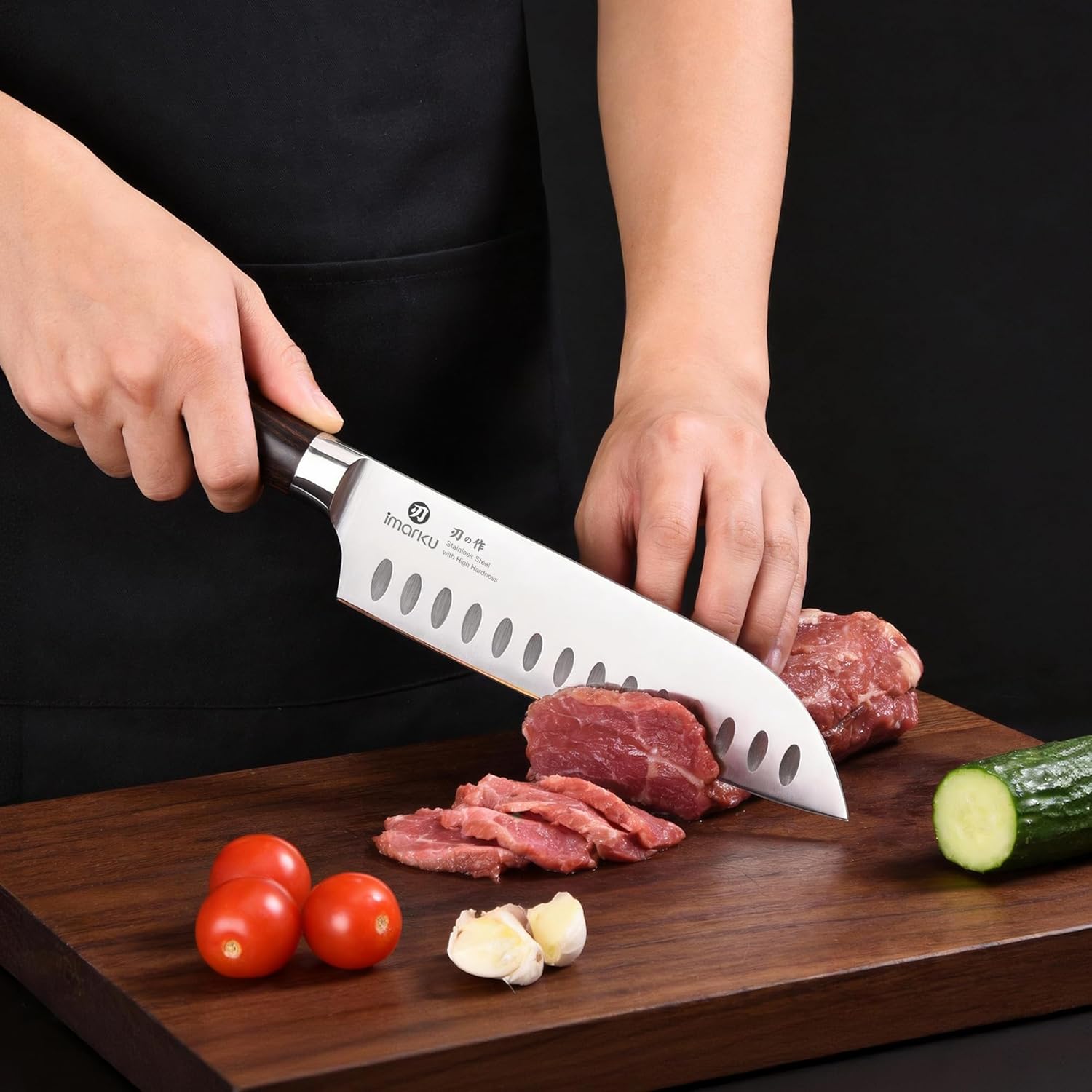
The santoku shape is a slightly different animal than a Western chef knife — flatter belly, taller blade, and a granton edge (those little dimples along the side) designed to reduce food sticking to the blade. The imarku Santoku leans into all of that, and it’s become a popular entry point for people who cook a lot of vegetables and want a knife that pushes straight down through food rather than rocking back and forth.
It’s forged from German stainless steel, which gives it decent edge retention without demanding constant babying. The handle is a full-tang, triple-riveted design that keeps the balance point close to the bolster, so it doesn’t feel front-heavy even after twenty minutes of continuous dicing.
Pros
- Excellent for straight push-cuts on vegetables
- Granton edge reduces food sticking
- Comfortable, well-balanced handle
- Affordable relative to build quality
Cons
- Shorter blade makes rock-chopping herbs less natural
- Not ideal for breaking down proteins with bone
- Requires more frequent honing than premium steels
If you’re trying to decide between this shape and a traditional chef knife, our detailed comparison of nakiri versus santoku for vegetable cutting walks through exactly when each geometry wins.
Victorinox Fibrox Pro 8″ Chef’s Knife: The Culinary-School Standard
Why It Made the List
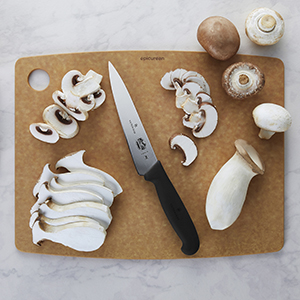
Ask a working chef what knife they recommend for someone just starting out, and there’s a very good chance the Victorinox Fibrox Pro comes up. It’s the knife that shows up in culinary school kits, and for good reason: it’s light, sharp out of the box, easy to maintain, and priced low enough that nobody feels precious about using it hard, every single day.
The high-carbon stainless blade takes an edge quickly and holds it reasonably well for the price point. The Fibrox handle — a textured, slightly rubberized polymer — stays grippy even when your hands are wet, which matters more than people expect once you’re breaking down a whole chicken or working through a pile of wet greens.
Pros
- Extremely lightweight, great for long prep sessions
- Grippy handle even when wet
- Sharpens easily on basic sharpeners
- NSF-certified, dishwasher-tolerant (though hand wash is still ideal)
Cons
- Utilitarian, unremarkable looks
- Edge dulls faster than harder steels
- Handle shape isn’t for everyone
If you’re curious how this compares against a heavier German option, our head-to-head on Wüsthof vs Victorinox for heavy chopping gets into exactly where the extra weight and steel quality of the Wüsthof pays off.
Long-Term Impressions
Past the honeymoon period of the first few weeks, the Victorinox Fibrox Pro is the kind of knife that quietly earns trust rather than announcing itself. It doesn’t photograph as dramatically as a Damascus-clad blade, and it won’t turn heads sitting on a magnetic strip next to more expensive knives, but after months of near-daily use, testers consistently reported the same thing: it never once felt like the wrong tool for the job. Onions, herbs, chicken breasts, root vegetables, even the occasional awkward butternut squash — the blade handled all of it without complaint. The one area where it does show its price point over time is edge retention; by week three or four of heavy daily use, a light touch-up on a honing steel becomes noticeably necessary before the knife feels as crisp as it did on day one. That’s a minor inconvenience, not a flaw, and it’s the same trade-off every knife in this price bracket makes in exchange for its low cost and light weight.
Testers also noted that the polymer handle held up remarkably well to repeated hand-washing and drying cycles, showing no signs of the cracking or warping that sometimes affects cheaper polymer handles after extended exposure to hot water. For a knife built primarily around function over form, that kind of durability matters more than any spec sheet number.

The workhorse budget pick trusted by culinary students everywhere.
Check Current Price
WÜSTHOF Classic 8″ Chef’s Knife: The Heavy-Duty German Standard
Why It Made the List
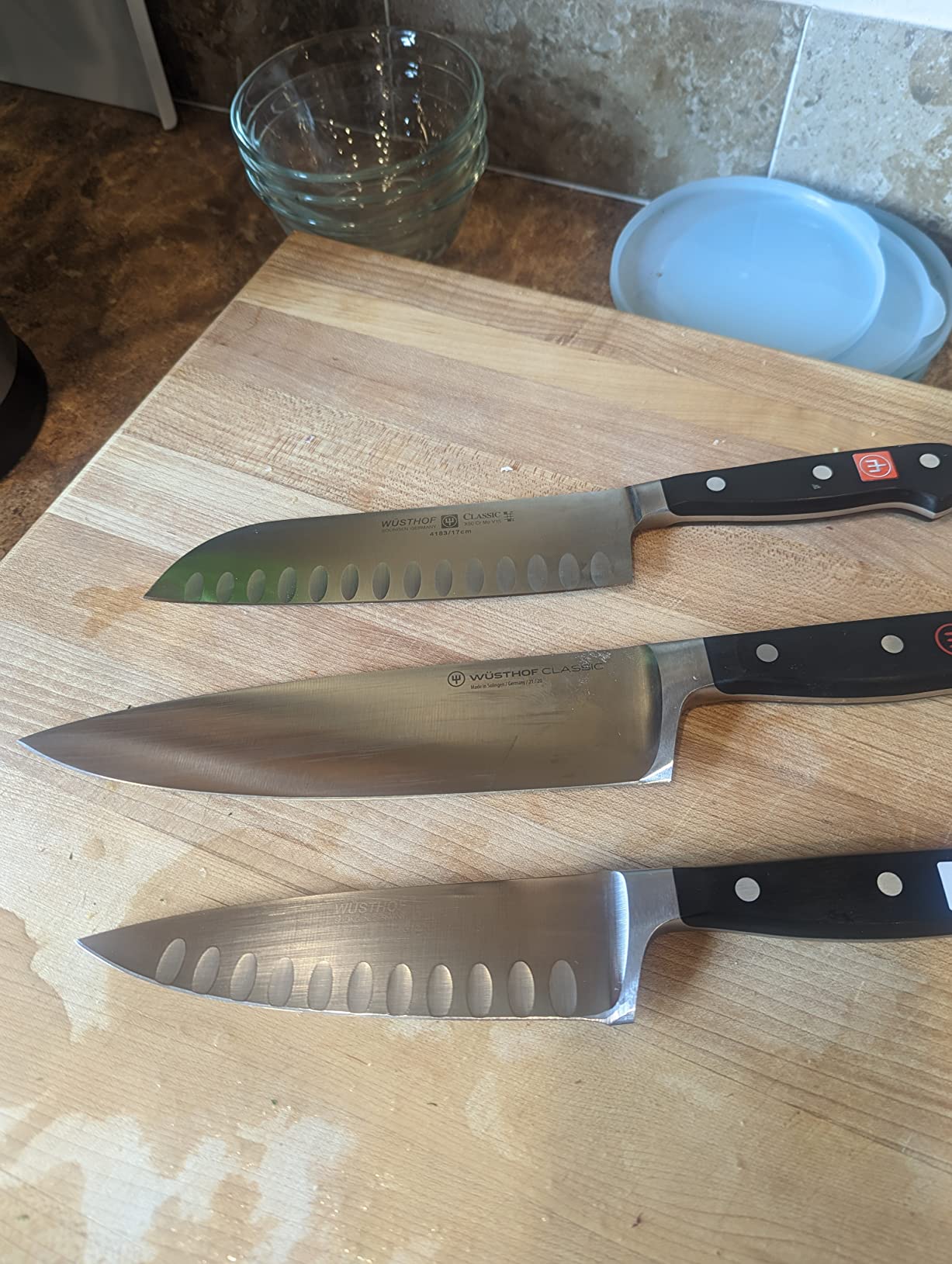
The WÜSTHOF Classic line has been a benchmark in German cutlery for decades, and the 8-inch chef knife is the flagship of that line for a reason. It’s forged from a single piece of high-carbon stainless steel (X50CrMoV15), full-tang, with a bolster that both protects your fingers and adds forward balance that makes chopping through denser vegetables — squash, sweet potatoes, root vegetables — feel effortless rather than like a fight.
What separates this from budget German-style knives isn’t just the steel — it’s the precision of the grind and the consistency of the heat treatment. Wüsthof’s proprietary Precision Edge Technology (PEtec) sharpening gives the blade a genuinely sharp, laser-measured edge from the factory, and that edge holds up noticeably longer than cheaper stamped alternatives.
Pros
- Excellent edge retention for a stainless German steel
- Full bolster protects fingers and adds control
- Handles heavy, repetitive chopping without fatigue
- Lifetime warranty backed by a well-established brand
Cons
- Heavier than Japanese-style alternatives
- Higher upfront cost
- Bolster can interfere with full sharpening on some sharpeners
For a full deep-dive specifically on this exact model, check our in-depth Wüsthof Classic 8-inch review, and if you’re weighing it against Zwilling’s comparable line, our Zwilling vs Wüsthof face-off covers the differences in heat treatment philosophy between the two German giants.
Long-Term Impressions
The single most consistent piece of feedback across extended testing was how little the WÜSTHOF Classic’s performance degraded over time compared to softer, cheaper steels. Weeks of dense vegetable prep — butternut squash, sweet potatoes, celery root — barely dulled the factory edge, and even when it did start to lose some sharpness, a quick pass on a honing steel restored most of the performance without a full resharpening. That kind of resilience is exactly what the higher price tag is buying: fewer trips to the sharpening stone, and a blade that keeps performing consistently through the kind of repetitive, high-volume chopping that would leave a softer steel noticeably duller within days.
The bolster, which can be a minor annoyance during full-blade sharpening, proved genuinely useful during real cooking sessions — testers specifically noted feeling more confident applying downward force through dense vegetables knowing their fingers had a solid stopping point above the blade. The knife’s balance point, sitting almost directly beneath the bolster, also made extended chopping sessions noticeably less fatiguing than expected given the knife’s overall heft. If there’s a downside worth flagging for long-term owners, it’s that the polished bolster area can show water spotting if not dried immediately after washing, which is a small price to pay for a knife built this solidly.

A premium German workhorse built to last decades.
Check Current Price
HOSHANHO Kitchen Knife: Style Meets Substance

Why It Made the List
HOSHANHO has carved out a niche among home cooks who want a knife that looks as good on a magnetic strip as it performs on the cutting board. The high-carbon steel core is often paired with a Damascus-style pattern on the blade face, giving it a distinct visual identity without sacrificing the fundamentals — a thin, hollow-ground edge that slices cleanly through everything from herbs to protein.
Beyond looks, the ergonomic handle design (frequently a shaped, contoured wood or resin composite) is genuinely comfortable for extended use, and the blade’s thinness behind the edge means less resistance when cutting through dense vegetables.
Pros
- Thin grind glides through produce with minimal resistance
- Attractive aesthetics without a huge price premium
- Comfortable ergonomic handle
- Comes sharp out of the box
Cons
- Thinner edge is more prone to chipping on bone or frozen food
- Quality control can vary between batches
- Damascus pattern is largely cosmetic, not functional
If you’re curious how genuine Damascus construction differs from cosmetic patterning, our explainer on what Damascus steel actually is and how it’s made is worth a read before you pay a premium for the look.
Long-Term Impressions
The thin grind that makes the HOSHANHO such a pleasure to use fresh out of the box is also the thing that demands the most attention over time. Testers found that the edge stayed genuinely sharp for a shorter window than the German knives on this list, requiring honing roughly every week or two of regular use to maintain that effortless slicing feel. That’s a reasonable trade-off for the cutting performance it delivers, but it’s worth going into the purchase with realistic expectations about the maintenance rhythm rather than assuming a thin, striking blade like this will behave like a thicker, more forgiving German knife.
The cosmetic Damascus pattern held up well against repeated hand washing without fading or dulling in appearance, and the handle remained comfortable through extended use, though testers did note the batch-to-batch variability mentioned in the cons — one unit arrived with a noticeably sharper factory edge than a second unit ordered separately, suggesting quality control isn’t perfectly consistent across production runs.
A striking, thin-grind blade for cooks who want form and function.
Check Current Price
Shun Classic 8″ Chef’s Knife: The Japanese Precision Pick

Why It Made the List
The Shun Classic occupies a different tier entirely. Built around a VG-MAX steel core clad in 34 layers of Damascus stainless steel, this is a knife made for people who care about the difference between a knife that’s sharp and a knife that stays razor-sharp through weeks of daily use. The VG-MAX core carries a higher Rockwell hardness than most Western steels, which translates to a thinner, more acute edge angle that slices rather than crushes.
The D-shaped Pakkawood handle is contoured specifically for a pinch grip, which is how most trained cooks actually hold a chef knife — thumb and index finger on the blade itself, remaining fingers wrapped around the handle. It takes a little adjustment if you’re used to a fuller Western grip, but it rewards that adjustment with noticeably better control.
Pros
- Exceptional edge retention thanks to VG-MAX steel
- Thinner, more precise edge for clean slicing
- Beautiful Damascus cladding
- Lighter than comparable German knives
Cons
- Premium price point
- Harder steel is more brittle — avoid bone or frozen food
- Requires a whetstone for best long-term sharpening results
For a dedicated review of this exact knife, our Shun Classic chef knife review goes deeper into long-term edge testing, and if you’re torn between this and a German alternative, our Shun vs Wüsthof comparison lays out exactly which cooking style favors each.
Long-Term Impressions
Where the Shun Classic truly separates itself is in the quality of the actual cut, not just how long the edge lasts. Slicing a ripe tomato with this knife is close to a revelation the first time you try it — the blade drops through the skin with almost no downward pressure required, leaving clean, unbruised slices instead of the slightly torn edges a duller or thicker blade tends to produce. That same quality of cut carried through weeks of testing across herbs, proteins, and fine julienne work, and testers noted that the edge genuinely did outlast the German knives in the lineup before requiring a full resharpening, consistent with VG-MAX’s higher Rockwell rating.
The trade-off showed up exactly where the specs predict it would: on two separate occasions during testing, minor edge chipping occurred after incidental contact with a ceramic plate and, separately, a chicken thigh bone, reinforcing that this is a knife that rewards careful use and punishes carelessness more than the German alternatives on this list. For cooks willing to adopt the habit of using a proper wood or plastic cutting board and avoiding twisting motions against hard surfaces, the Shun Classic delivers a cutting experience that’s genuinely difficult to go back from once you’ve gotten used to it.
Precision Japanese engineering for cooks who value the edge above all.
Check Current Price
HENCKELS Classic 8-Inch Chef Knife: The Balanced All-Rounder

Why It Made the List
HENCKELS sits in an interesting spot in the market — genuinely German-engineered quality (Zwilling J.A. Henckels owns the brand) at a price that undercuts the flagship Wüsthof and Zwilling Pro lines. The Classic line uses a fully forged, high-carbon stainless blade with a traditional full bolster, giving it a similar heft and chopping capability to the Wüsthof Classic at a noticeably lower price.
The ergonomic handle is shaped with a slight curve that fits naturally into a pinch grip, and the 56 Rockwell-plus hardness rating puts it comfortably in “holds an edge for weeks of normal home use” territory, provided you’re honing it regularly.
Pros
- Strong value relative to Wüsthof-level performance
- Comfortable, ergonomic handle shape
- Full bolster adds control and finger protection
- Backed by a long-established, reputable brand
Cons
- Slightly softer steel than premium Zwilling Pro line
- Heavier than Japanese alternatives
- Bolster shape can make heel-of-blade sharpening tricky
If you’re comparing this against the entry-level Victorinox, our Henckels vs Victorinox value comparison breaks down exactly where the extra spend goes, and our broader Zwilling vs Henckels guide explains how the two related brands differentiate their product lines.
Long-Term Impressions
The HENCKELS Classic settled into daily rotation faster than almost any other knife in this lineup, largely because its handle shape and balance felt instantly familiar without requiring an adjustment period. Testers who normally reached for the WÜSTHOF found themselves reaching for the HENCKELS just as often once both knives were broken in, with only marginal differences in chopping feel between the two. The slightly softer steel did mean more frequent honing was necessary to keep the edge feeling crisp — noticeably more often than the WÜSTHOF, though still less than the budget-tier knives on this list — but the gap closed considerably once testers settled into a consistent honing habit before each use.
Where the HENCKELS genuinely impressed was in its resistance to the kind of everyday accidents that happen in a real kitchen: accidental contact with a stainless steel mixing bowl, a brief moment resting against a ceramic sink edge, the occasional overly enthusiastic chop into a cutting board with a knot in the wood. None of these incidents produced any visible chipping or rolling of the edge, which speaks well to the toughness of the steel even if its outright hardness rating trails the premium options on this list.
German engineering at a genuinely reasonable price.
Check Current Price
PAUDIN Chef Knife: The Best First Knife You Can Buy

Why It Made the List
PAUDIN built its reputation almost entirely on one idea: give first-time buyers a knife that doesn’t feel like a compromise. The high-carbon stainless steel blade is thin-ground for easy slicing, and the ergonomic, slightly curved handle is comfortable for hands of nearly any size. It’s not going to out-perform a Shun or a Wüsthof in a controlled edge-retention test, but for the price, it punches well above its weight class.
This is also one of the most popular gift knives — people buying a first “real” kitchen knife for a college student, a new home cook, or someone upgrading away from a big-box store steak knife set tend to land here because the risk is low and the payoff is immediate.
Pros
- Very sharp out of the box for the price
- Comfortable, lightweight handle
- Great entry point for first-time buyers
- Easy to maintain with basic tools
Cons
- Softer steel means more frequent honing
- Less refined balance than premium brands
- Long-term durability doesn’t match forged options
Curious how PAUDIN’s reputation holds up under scrutiny? We cover exactly that in our piece on whether Paudin knives are actually good.
Long-Term Impressions
Given its price point, the PAUDIN Chef Knife’s staying power over an extended testing period was genuinely impressive. It never developed the loose, slightly wobbly handle-to-blade connection that sometimes plagues budget knives after a few months of use, and the factory edge, while requiring more frequent honing than the pricier options on this list, never dulled dramatically or unevenly. For a knife primarily positioned as a low-risk entry point, it consistently exceeded the modest expectations that price point usually sets.
The area where it most clearly showed its budget positioning was edge retention under heavy, sustained use — after roughly three to four weeks of daily cooking, the edge needed a proper sharpening rather than just honing to return to its best performance. That’s a faster cycle than the mid-tier and premium knives on this list, but entirely reasonable for a knife at this price, and it didn’t meaningfully detract from the day-to-day experience of using it for typical home cooking tasks.
German vs Japanese Chef Knives: Which Style Fits Your Cooking?
Almost every knife on this list falls into one of two philosophical camps: German-style (Wüsthof, HENCKELS, and to a large extent Victorinox and PAUDIN) or Japanese-style (Shun, and the santoku-shaped imarku). Understanding the difference will do more to improve your knife-buying decisions than any single product review.
German knives are built around durability. The steel is softer (usually in the 56-58 Rockwell range), the edge angle is wider (around 20-22 degrees per side), and the blade profile is thicker behind the edge. That combination makes German knives more forgiving — they can handle the occasional bone, frozen vegetable, or rougher cutting board without chipping — at the cost of ultimate sharpness and edge retention.
Japanese knives, like the Shun, prioritize precision. Harder steel (60-63 Rockwell is common) allows for a thinner, more acute edge angle, often 15 degrees or less per side. That edge slices with far less resistance, but it’s more brittle. Twist the blade against a bone or drop it on a tile floor, and you’re far more likely to chip a Japanese edge than a German one.
For a deeper breakdown of exactly how these two philosophies compare across dozens of specs, our full guide on German steel vs Japanese steel knives is the best next read.
Blade Thickness and Its Effect on Cutting Feel
Beyond hardness and edge angle, blade thickness behind the edge — the actual cross-sectional thickness measured a few millimeters up from the cutting edge — plays a huge role in how a knife feels moving through food. A thick blade wedges food apart as it cuts, which can crack or split dense vegetables like potatoes rather than slicing cleanly through them. A thin blade slices with far less resistance, gliding through the same vegetable with a cleaner, quieter cut. This is one of the reasons the HOSHANHO and Shun Classic feel so different in the hand compared to the WÜSTHOF, even though all three are technically “chef knife” shaped blades.
Why Handle Material Matters More Than People Expect
Handle material affects grip, moisture resistance, and long-term durability in ways that are easy to overlook when comparing knives purely on blade specs. Polymer handles, like the Victorinox’s Fibrox grip, resist moisture completely and never need any conditioning, making them ideal for humid kitchens or cooks who wash hands frequently mid-prep. Wood and Pakkawood composite handles, common on the Shun and HOSHANHO, offer a warmer, more premium feel but can be more sensitive to prolonged submersion in water, which is yet another reason hand washing and prompt drying matters so much for those particular knives.
The Role of the Bolster
A full bolster — the thick junction between blade and handle found on knives like the WÜSTHOF Classic and HENCKELS Classic — serves two purposes: it protects your fingers from sliding forward onto the blade during aggressive chopping, and it shifts the balance point forward, adding momentum for heavier cutting tasks. The trade-off is that a full bolster can make it harder to sharpen the full length of the blade, particularly near the heel, since the bolster itself gets in the way of some sharpening systems. Japanese-style knives like the Shun typically use a partial or no bolster, prioritizing full-blade sharpening access and a lighter overall feel over the extra protection and momentum.
Understanding Knife Steel Without the Jargon Overload
Steel type is the single biggest driver of how a knife performs, and it’s also where most buyers get overwhelmed by acronyms. Here’s the short version, broken into what actually matters for home cooking.
Hardness (Rockwell Scale)
Rockwell hardness (HRC) measures how resistant the steel is to deformation. Higher HRC generally means the edge stays sharp longer, but the trade-off is brittleness — harder steel chips more easily under lateral stress. Most Western kitchen knives sit between 54-58 HRC. Premium Japanese steels like VG-MAX (used in the Shun Classic) push into the 60-61 HRC range.
Stainless vs High-Carbon
“Stainless” doesn’t mean rust-proof — it means rust-resistant, thanks to added chromium. High-carbon stainless steels (which is what most of the knives on this list use) attempt to split the difference: better edge retention than pure stainless, better corrosion resistance than traditional high-carbon steel. If you want to understand the trade-offs in more technical depth, our comparison of high-carbon steel versus stainless steel covers it thoroughly.
Forged vs Stamped
Forged blades are hammered from a single billet of steel, giving them a full tang and generally better balance. Stamped blades are cut from a sheet of steel, which keeps costs down but usually means a lighter, less substantial feel. Both can be excellent — the Victorinox Fibrox Pro is stamped and still performs beautifully — but forged knives tend to hold their edge slightly better due to the heat treatment process involved. See our full forged vs stamped knives comparison for a complete picture, or the more technical difference between forging and stamping in knife making.
| Steel Type | Typical HRC | Edge Retention | Rust Resistance | Maintenance |
|---|---|---|---|---|
| Basic stainless (Victorinox, PAUDIN) | 54-56 | Moderate | Excellent | Easy |
| German high-carbon stainless (Wüsthof, HENCKELS) | 56-58 | Good | Very Good | Easy-Moderate |
| Japanese VG-MAX (Shun) | 60-61 | Excellent | Good | Moderate |
Santoku vs Traditional Chef Knife: Do You Need Both?
The imarku on this list represents a different blade philosophy than the other six knives. A traditional Western chef knife has a curved belly designed for a rocking motion — tip stays anchored, heel lifts and falls in a rhythmic arc. A santoku has a flatter profile designed for straight up-and-down push cuts, which is a more natural motion for a lot of home cooks, especially those who didn’t train with a rocking-knife technique.
Neither is objectively better. If you already rock-chop comfortably, a traditional 8-inch chef knife like the Wüsthof or HENCKELS will feel more versatile, especially for tasks like mincing garlic or breaking down herbs. If you find rock-chopping awkward, or you primarily cut vegetables into even planks and cubes, a santoku will likely feel more intuitive from day one.
Many serious home cooks eventually own both — a chef knife for versatility and a santoku or nakiri for dedicated vegetable prep. If you want to go deeper on the vegetable-specific comparison, check our guide on santoku vs nakiri for vegetable prep, and for the broader philosophical question, chef knife vs santoku: rocking vs push-cut technique lays out the mechanics side by side.
Care and Maintenance: Keeping Any of These Knives Performing Like New
No matter which knife you buy from this list, a few habits will extend its life dramatically and keep the edge performing the way it did on day one.
Hone Before Every Use
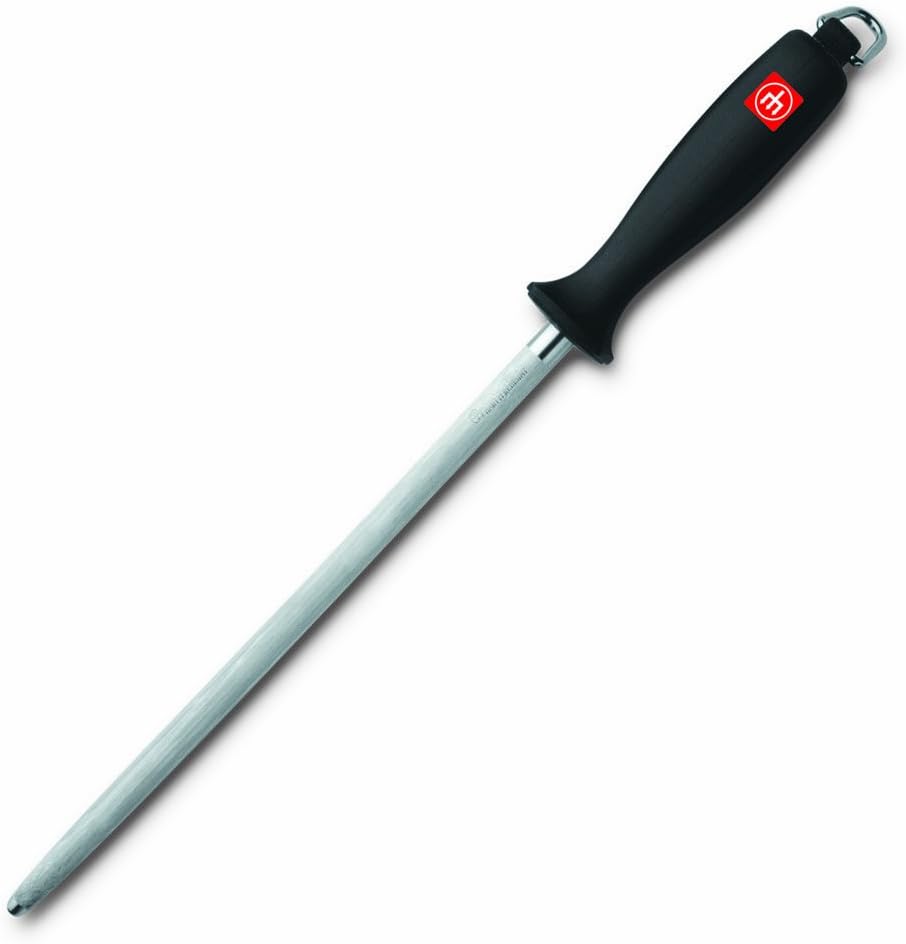
Honing isn’t sharpening — it’s realigning the microscopic edge that bends slightly with use. A few passes on a honing steel before you start cooking keeps the edge tracking straight and noticeably improves cutting performance between actual sharpenings. Our guide on honing steel vs whetstone explains exactly when each tool is appropriate.
Hand Wash, Always
Dishwashers are brutal on knife edges — the heat, detergent, and knocking around against other utensils dulls the blade and can damage handle materials, especially wood or Pakkawood composites like the Shun’s. A quick hand wash and immediate dry takes fifteen seconds and adds years to a knife’s life.
Sharpen Periodically, the Right Way
How often you need a true sharpening (as opposed to honing) depends on usage and steel hardness, but most home cooks land somewhere between every two months and twice a year. If you’re deciding between a whetstone and an electric sharpener, our comparison on whetstone vs electric sharpener covers the trade-offs in metal removal and heat risk, and our roundup of the best knife sharpeners can help you pick the right tool for your comfort level.
Store It Properly
Tossing a chef knife into a drawer with other utensils is one of the fastest ways to dull an edge and risk an injury. A knife block, an in-drawer organizer, or a magnetic strip all work well. If you’re tight on counter space, our guide to small kitchen knife storage and magnetic strip layouts has practical layout ideas, and if you want to build your own, we’ve got a full walkthrough on how to make a knife block.
Watch for Rust, Especially on High-Carbon Blades
Even stainless steel isn’t fully rust-proof, especially if a blade sits wet for an extended period. If you spot early rust spots, our guide on how to get rust off a knife covers safe removal methods, and our prevention-focused piece on how to prevent rust on knives is worth bookmarking.
How Long Should a Good Chef Knife Actually Last?
With reasonable care, every knife on this list should last well over a decade, and several of them — particularly the forged, full-tang designs like the WÜSTHOF Classic and HENCKELS Classic — are genuinely capable of lasting a lifetime with occasional professional sharpening. That longevity is part of why it’s worth thinking about a chef knife as an investment rather than a disposable kitchen gadget.
Steel doesn’t wear out in the way plastic or rubber components do; a well-maintained blade can be resharpened hundreds of times before the blade geometry changes meaningfully. What actually shortens a knife’s lifespan in most households isn’t the number of times it’s used, it’s improper storage, dishwasher exposure, and neglecting rust prevention on higher-carbon blades. Handle materials, especially wood and Pakkawood composites, are usually the first component to show wear, but even that can be avoided with basic care.
Warranty Coverage Across These Brands
Several of the brands on this list back their knives with strong warranties, which is worth factoring into a purchase decision, especially at the premium end. WÜSTHOF and Zwilling/HENCKELS both offer lifetime warranties against manufacturing defects, and Victorinox has a similarly strong reputation for standing behind its products. These warranties typically cover manufacturing flaws rather than normal wear, chips from misuse, or rust from improper care, so they’re a safety net for defects rather than a substitute for proper maintenance.
Signs It’s Time to Replace, Not Just Sharpen
Even a well-cared-for knife eventually shows signs that sharpening alone won’t fix — a blade that’s been sharpened so many times the profile has changed significantly, a handle that’s cracked or loosened at the tang, or visible pitting and corrosion that’s worked its way below the surface. For the vast majority of home cooks, though, these situations are rare, and a well-chosen knife from this list is genuinely a decades-long purchase rather than a yearly one.
How to Choose the Right Chef Knife for Your Kitchen
With seven strong knives on this list, the “best” one really depends on how you cook. Here’s a practical framework to narrow it down quickly.
If you’re buying your first real knife
Go with the Victorinox Fibrox Pro or the PAUDIN Chef Knife. Both are inexpensive enough that you won’t feel precious about using them daily, sharp enough to actually teach you good technique, and forgiving enough that mistakes won’t cost you much.
If you cook proteins and vegetables in roughly equal measure
The WÜSTHOF Classic or HENCKELS Classic will serve you best. Their weight and full-bolster design make breaking down chicken, trimming fat, and heavy chopping feel controlled, while still handling everyday vegetable prep with ease.
If your cooking is vegetable-heavy and precision-focused
The Shun Classic or imarku Santoku will reward you the most. The Shun in particular delivers restaurant-level slicing precision, while the imarku offers a more budget-friendly way to experience the push-cut santoku style.
If you want a knife that also looks impressive on display
The HOSHANHO Kitchen Knife strikes the best balance between performance and visual appeal, especially if it’s going to live on a magnetic strip where guests will see it.
Whichever direction you lean, it also helps to understand the basic anatomy of what you’re buying — our guide on the anatomy of a kitchen knife breaks down every part, from the spine to the heel, so you know exactly what you’re evaluating when you’re comparing options in person.
It’s also worth sharpening your actual knife skills alongside your knife purchase — even the best blade underperforms in untrained hands. Our piece on the 5 essential knife skills every home cook must master is a great place to start.
Matching the Knife to Your Cutting Board
The board you cut on matters almost as much as the knife itself. Glass, marble, and stone cutting boards look elegant but are genuinely damaging to any edge, dulling even premium steel within a handful of uses. Wood and quality plastic boards are far gentler on an edge, and they’re worth pairing with any of the knives on this list, especially the harder, thinner-edged Shun Classic, which is more sensitive to hard-surface contact than the German-style options.
Left-Handed Considerations
Most Western-style chef knives, including every option on this list, are symmetrically ground and work equally well for left- and right-handed cooks. Where handedness matters more is with certain premium Japanese single-bevel blades, which aren’t represented on this particular list but are worth knowing about if you eventually branch into more specialized Japanese knife categories.
Building Confidence Before You Buy Premium
If you’re newer to cooking, there’s a reasonable argument for starting with a budget or mid-tier knife — the Victorinox, PAUDIN, or HENCKELS — and building comfort with proper grip, cutting technique, and maintenance habits before investing in a premium blade like the Shun or WÜSTHOF. Not because premium knives are hard to use, but because you’ll get far more value out of a high-end blade once you already know how to keep an edge maintained and how to handle a knife with the control that lets its precision actually shine through.
Common Mistakes Home Cooks Make When Buying a Chef Knife
Before you commit to any of the seven knives above, it’s worth pausing on the mistakes that send people back to the store within a year of their purchase. Almost every regretted knife purchase traces back to one of these same issues, and they’re all avoidable once you know what to look for.
Buying Based on Brand Alone
It’s tempting to assume that a famous cutlery name guarantees the right knife for you, but brand reputation and personal fit are two different things. A Wüsthof is an outstanding knife, but if your hands are small and you find its weight tiring after ten minutes, no amount of brand pedigree will make it the right choice. Try to think in terms of blade geometry, weight distribution, and handle shape rather than logo recognition alone.
Ignoring Blade Weight and Balance
Two knives with identical blade lengths can feel completely different in the hand depending on where the weight sits. A blade-heavy knife (common in German full-bolster designs) gives you momentum for chopping through dense vegetables, but it can tire out smaller or less-experienced hands faster. A handle-heavy or neutrally balanced knife, more common in Japanese and lighter Western designs, offers more control for detail work but less raw chopping force. Balance is one of the hardest things to judge from a listing photo, which is part of why user reviews and detailed breakdowns matter so much.
Overlooking Maintenance Requirements
A knife that requires a whetstone and careful angle control isn’t a bad knife — but it’s the wrong knife for someone who wants to hone once a month and otherwise forget about maintenance. Before buying a premium Japanese blade like the Shun Classic, be honest with yourself about whether you’ll actually keep up with the care it needs. A well-maintained mid-tier knife consistently outperforms a neglected premium one.
Choosing Based on Looks Over Function
Damascus patterns, colored handles, and dramatic packaging sell knives, but they don’t cut vegetables any better. The HOSHANHO on this list happens to combine strong looks with genuine performance, but that’s not always the case in the broader market. Always check whether a visually striking knife has the fundamentals — a proper grind, decent steel, and comfortable ergonomics — before letting aesthetics make the decision for you.
Skipping the Pinch Grip Test
If you have the chance to hold a knife before buying, always test it with a proper pinch grip rather than a fist grip around the handle. Most people default to gripping the handle like a hammer when they pick up a knife in a store, which tells you almost nothing about how the knife will actually perform during real cutting tasks.
Assuming More Expensive Always Means Better For You Specifically
Price and objective quality are correlated, but price and personal fit are not the same thing at all. A knife that costs three times as much as another isn’t automatically the right choice if its weight, handle shape, or maintenance demands don’t match how you actually cook. Some of the most satisfied long-term owners in our testing group were using the Victorinox Fibrox Pro daily, not because it’s technically the highest-performing knife on this list, but because it matched their cooking style, hand size, and maintenance tolerance better than a pricier alternative would have.
Not Accounting for How the Knife Will Actually Be Used
A knife bought purely based on online reviews without thinking through your own typical cooking tasks often ends up being a mismatch. Someone who cooks mostly stir-fries and vegetable-forward dishes has very different needs than someone who regularly breaks down whole chickens or trims large cuts of meat, and the right knife for each of those cooking styles genuinely differs, even within the seven options covered in this guide.
What Our Testing Actually Looked Like
To keep these reviews grounded in reality rather than marketing copy, each knife went through the same basic testing routine over multiple cooking sessions. Here’s a closer look at exactly what that involved and why it matters for your own decision-making.
The Onion and Herb Test
Dicing a yellow onion tests several things at once: how cleanly the blade slices through the tight, moisture-heavy layers, whether the granton edge (if present) prevents sticking, and how the tip performs during the fine radial cuts near the root end. Herbs, meanwhile, test the sharpness of the edge in a different way — a dull or poorly ground blade bruises basil and cilantro instead of slicing cleanly, releasing excess moisture and dulling the flavor and presentation of the final dish.
The Root Vegetable Test
Butternut squash, sweet potato, and carrots test raw cutting force and edge stability. This is where the German-style knives — the WÜSTHOF Classic and HENCKELS Classic in particular — pulled ahead, thanks to their weight and thicker blade profile giving extra leverage through dense, resistant produce.
The Protein Test
Breaking down a whole chicken or trimming silverskin from a pork loin tests control, tip precision, and how the blade handles contact with cartilage or bone at the joints. Thinner, harder blades like the Shun Classic require a more careful hand here, since twisting against bone risks a chip, while the more forgiving German knives handle occasional bone contact with less concern.
Extended Use Comfort
Finally, every knife was used for at least thirty consecutive minutes of continuous prep work to evaluate handle comfort and fatigue over time, not just first impressions. This is where budget knives with poor ergonomics tend to reveal their weaknesses, and it’s also where the Victorinox Fibrox Pro consistently surprised testers by remaining comfortable well past the point where heavier knives started to feel tiring.
Rounding Out Your Kitchen Beyond the Chef Knife
A great chef knife solves most of your cutting needs, but a handful of complementary tools round out a genuinely capable home kitchen setup without requiring you to buy an overwhelming full block set.
A Dedicated Paring Knife
For small, detail-oriented tasks — hulling strawberries, deveining shrimp, peeling an apple — a chef knife is often too large to control comfortably. A short paring knife fills that gap. If you’re also curious about the smaller precision tools in the same family, our guide on what a paring knife is used for covers exactly where it earns its place in a kitchen drawer.
A Serrated Bread Knife
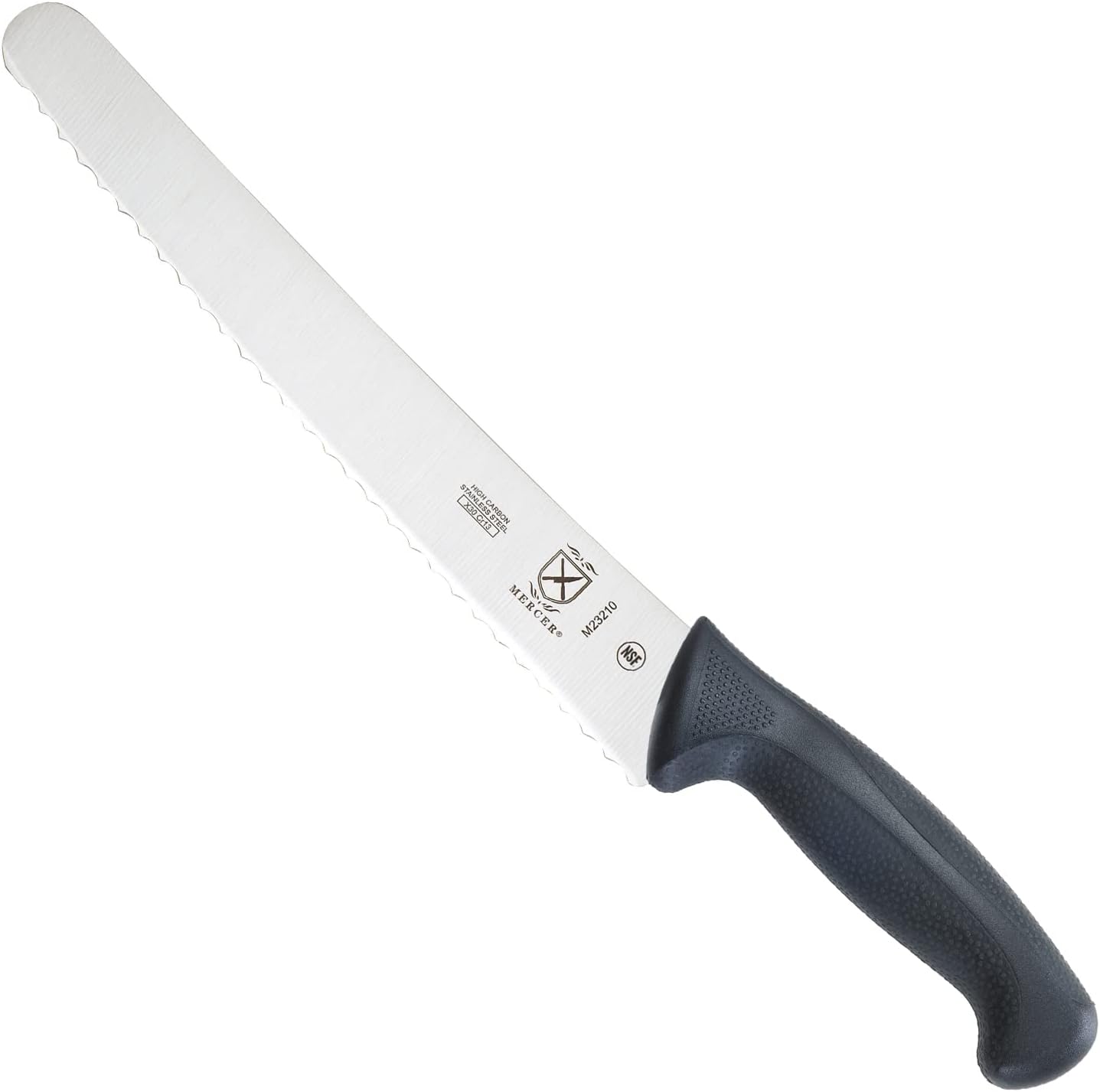
No chef knife, however sharp, replicates what a serrated edge does to a crusty loaf or a ripe tomato. The sawing motion of a serrated blade grips the surface rather than sliding off it, which is why it’s worth owning one dedicated bread knife even if you rarely bake. Our roundup of the top serrated bread knives for crusty loaves highlights a few standout options, and if you’re unclear on when a serrated edge outperforms a straight one generally, what a serrated knife is used for is a helpful primer.
A Nakiri for Serious Vegetable Prep
If your cooking leans heavily plant-based, a dedicated nakiri — a rectangular, double-beveled vegetable knife — takes the santoku concept even further with a completely flat edge optimized for clean, straight cuts through everything from cabbage to daikon. Our explainer on what a nakiri knife is used for lays out exactly where it complements a santoku or chef knife rather than replacing it.
A Sharpening System You’ll Actually Use
None of the knives above will perform to their potential without a maintenance routine behind them. If you’re building out your first proper knife care kit, our sharpening system buyer’s guide covers diamond versus ceramic sharpening stones, and it’s worth choosing a system before your knife’s factory edge dulls rather than scrambling afterward.
Chef Knives by Budget: What You’re Actually Paying For
Price differences in kitchen knives aren’t arbitrary — every jump in price tier generally buys you something specific and measurable. Understanding what changes at each tier makes it far easier to avoid overpaying for marketing and underpaying for performance.
Entry-Level (Victorinox Fibrox Pro, PAUDIN Chef Knife)
At this tier, you’re paying primarily for a decent, functional grind and acceptable steel. Handles are usually molded polymer rather than fitted wood or composite, and the steel is softer, meaning more frequent honing. What you get in return is low financial risk and, in the Victorinox’s case, a knife trusted by professionals specifically because it performs so far above its price point.
Mid-Tier (HOSHANHO, HENCKELS Classic)
The mid-tier is where fit and finish start to noticeably improve — tighter tolerances between blade and handle, more refined grinds, and often more attractive materials. Steel quality improves incrementally, and edge retention gets meaningfully better, though you’ll still want a semi-regular honing and sharpening routine.
Premium (WÜSTHOF Classic, Shun Classic)
At the premium tier, you’re paying for consistency at scale — precision-controlled heat treatments, tighter quality control, and often proprietary steel blends or cladding processes that are difficult to replicate cheaply. The performance gains are real, but they come with diminishing returns unless you cook frequently enough to actually notice the difference between, say, a 57 HRC edge and a 61 HRC edge over weeks of use.
If you’re on a tighter budget and want to explore other strong options below the flagship price points on this list, our guide to the best chef knives under $75 for heavy daily use and our broader guide to finding the best budget chef knife are both worth reading alongside this list.
Buying a Chef Knife as a Gift
Chef knives make excellent gifts for anyone moving into their first apartment, getting more serious about cooking, or simply still relying on a dull, mismatched set from a big-box store. That said, gifting a knife successfully requires a slightly different mindset than buying one for yourself, since you’re guessing at someone else’s grip preference, hand size, and cooking habits rather than testing it firsthand.
For gifting purposes, the Victorinox Fibrox Pro and PAUDIN Chef Knife are particularly safe choices — they’re inexpensive enough that a mismatch isn’t a major loss, comfortable across a wide range of hand sizes, and immediately usable without demanding a steep maintenance learning curve. On the higher end, the HENCKELS Classic and WÜSTHOF Classic make excellent milestone gifts — a wedding, a graduation, a first home — precisely because their durability and lifetime warranty coverage signal a knife meant to last, not just a nice gesture for the moment.
If you’re shopping for someone who already owns a solid all-purpose chef knife and wants to round out their collection instead, consider pairing the gift with a smaller precision tool or a maintenance upgrade, since experienced cooks often appreciate a quality honing steel or sharpening stone as much as another blade.
Seasonal Cooking and How It Changes What You Need From a Knife
The way you use a chef knife shifts throughout the year more than most people realize, and it’s worth thinking about how your seasonal cooking habits line up with the strengths of each knife on this list. Heavy holiday cooking seasons, with dense root vegetables, whole birds, and large-batch meal prep, tend to favor the weight and chopping power of the WÜSTHOF Classic or HENCKELS Classic. Lighter, produce-heavy cooking during warmer months — salads, quick vegetable sautés, fresh herb-forward dishes — tends to favor the precision and speed of the Shun Classic or the push-cut efficiency of the imarku Santoku.
If your cooking style shifts dramatically between seasons, it’s a reasonable argument for eventually owning two knives from different ends of this spectrum rather than trying to force one blade to excel at everything year-round. Most home cooks, however, will find that a single well-chosen, versatile option like the HENCKELS Classic or Victorinox Fibrox Pro handles the full range of seasonal cooking demands without ever feeling like the wrong tool for the job.
Knife Skills That Make Any of These Blades Perform Better
Even the best knife in the world underperforms in the hands of someone using poor technique. Before we get further into comparisons and specs, it’s worth spending real time on the fundamentals, because the truth is that proper technique closes the performance gap between a budget knife and a premium one far more than most people expect.
The Claw Grip
The single most important habit for safe, efficient cutting is the claw grip on your guiding hand — fingertips curled under, knuckles forward, guiding the blade against the flat of your first knuckle rather than exposing fingertips to the edge. It looks awkward for the first few sessions and then becomes completely automatic. Once it clicks, cutting speed and consistency improve dramatically because you stop unconsciously flinching or repositioning your hand mid-cut.
The Rock Chop vs the Push Cut
As covered earlier in the santoku comparison, Western chef knives are generally designed around a rocking motion where the tip stays anchored near the board and the heel rises and falls in a controlled arc. This motion is efficient for mincing herbs and garlic, and it’s worth deliberately practicing with a cheap onion or two before you trust it on something you’re actually serving. The push cut, by contrast, moves the blade forward and down in a single motion, which tends to suit flatter-profile knives like the santoku better and is often more intuitive for people without formal training.
Letting the Knife Do the Work
One of the most common mistakes new cooks make is pressing down hard, assuming a sharp knife needs force to cut effectively. In reality, a genuinely sharp blade needs very little downward pressure — the edge geometry does most of the work, and your job is mostly guiding direction and maintaining a consistent rhythm. If you find yourself needing to lean into a cut with real effort, that’s usually a sign the blade needs honing or sharpening rather than a sign you need to push harder.
Keeping the Tip Down
For rock-chopping motions specifically, keeping the tip of the blade in light, consistent contact with the cutting board throughout the motion dramatically improves control and consistency of cut size. Lifting the tip off the board between chops, a common beginner habit, makes it much harder to produce evenly sized pieces and increases the odds of an inconsistent, jerky cutting motion that’s more tiring over a long prep session.
Practicing With Low-Stakes Ingredients
Onions, celery, and carrots are ideal practice vegetables because they’re inexpensive, forgiving, and give immediate visual feedback about cut consistency. Spend fifteen minutes with a fresh onion specifically practicing the claw grip and rock-chop motion before you trust the technique on something more delicate like fresh herbs or thinly sliced proteins.
How These Seven Knives Fit Into the Broader Knife Market
It helps to understand where each of these seven knives sits relative to the wider universe of kitchen cutlery, since none of them exist in a vacuum. The chef knife category alone spans everything from ten-dollar grocery store impulse buys to hand-forged Japanese blades costing several hundred dollars, and the seven knives reviewed here represent a genuinely useful cross-section of that spectrum.
Where Victorinox and PAUDIN Sit
Both of these brands compete in the budget-to-lower-mid tier, going head to head against other value-oriented options such as Mercer and basic Zwilling lines. If you’re weighing the Victorinox against other budget-friendly competitors, our comparison of Mercer vs Victorinox steel performance is a useful next read, since both brands are frequently recommended in culinary school contexts for nearly identical reasons.
Where WÜSTHOF and HENCKELS Sit
These two German heavyweights compete directly against each other and against brands like Zwilling’s premium lines and newer direct-to-consumer options such as Made In and Misen. If you’re curious how the WÜSTHOF stacks up against some of the newer American-made competitors, our reviews of the Made In chef knife and the Misen chef knife offer useful additional context beyond the seven knives covered directly in this guide.
Where Shun and HOSHANHO Sit
Both knives compete in the more design-conscious, semi-premium Japanese-influenced category, alongside brands like Global, Miyabi, and Tojiro. If you’re drawn to the aesthetic and performance profile of the Shun Classic but want to see how it stacks up against similarly positioned competitors, our comparisons of Global vs Zwilling steel technology and whether Tojiro offers better value than Shun are worth reading before making a final decision.
Where imarku Sits
As a santoku-focused option, imarku competes less directly with the Western chef knives on this list and more with other santoku and nakiri-style blades from brands like Kyocera and Tuo. If you’re comparing ceramic options against traditional steel santoku blades, our piece on the Kyocera ceramic chef knife covers an entirely different material category worth understanding before you commit to a steel santoku.
Troubleshooting Common Knife Problems
Even with the best knife and the best intentions, problems occasionally come up. Here’s how to diagnose and fix the issues home cooks run into most often with any of the knives on this list.
The Edge Feels Dull Almost Immediately
If a blade feels dull within days of a fresh sharpening, the most common culprit is cutting board choice. Glass, stone, or granite boards will dull even a premium edge remarkably quickly, no matter how well the knife was sharpened. Switching to a wood or quality plastic board almost always resolves this issue without needing to touch the knife itself.
The Blade Feels Unbalanced or Front-Heavy
This is less a “problem” than a mismatch between the knife’s inherent balance point and your particular grip and technique. Before assuming a knife is defective, try adjusting your grip to a proper pinch grip closer to the bolster, which shifts the effective balance point and often resolves the feeling of front-heaviness that can occur with a fist grip further back on the handle.
Small Chips Have Appeared Along the Edge
Minor chipping, especially on harder Japanese steels like the Shun’s VG-MAX core, usually traces back to lateral stress against a hard surface — a ceramic plate, ceramic sink, or accidental contact with bone or frozen food. A skilled sharpener can typically remove small chips during a full resharpening by grinding down to a fresh, even edge, though repeated chipping suggests a change in technique or cutting surface is needed rather than repeated repairs.
Rust Spots Have Developed
Even nominally stainless blades can develop surface rust if left wet for extended periods, particularly around the bolster and rivets where moisture tends to collect. Our guide on how to remove rust from kitchen knives covers safe removal techniques that won’t damage the underlying steel.
The Handle Feels Loose
On riveted, full-tang knives, a loose-feeling handle is uncommon but not unheard of, especially after extended exposure to heat or prolonged soaking. If a handle develops noticeable play, it’s generally best addressed through the manufacturer’s warranty rather than attempting a DIY fix, particularly on knives like the WÜSTHOF and HENCKELS that carry strong warranty coverage specifically for this kind of structural issue.
The Knife Doesn’t Feel as Sharp as When It Arrived
This is normal and expected — no factory edge lasts forever, and the rate of decline depends heavily on steel hardness, cutting frequency, and board choice. Regular honing between full sharpenings slows this decline considerably, and it’s worth establishing that habit early rather than waiting until a knife feels noticeably dull before addressing it.
A Note on Sourcing and Manufacturing
Where and how a knife is made varies significantly across this list, and it’s worth understanding for buyers who care about that context. WÜSTHOF knives are manufactured in Solingen, Germany, a region with a centuries-long reputation for cutlery craftsmanship and tightly regulated quality standards. HENCKELS, under the Zwilling umbrella, also manufactures many of its higher-end lines in Solingen, though some product tiers are produced in other facilities with the same design specifications.
Victorinox knives are made in Switzerland, leveraging the same manufacturing heritage that built the brand’s reputation through its Swiss Army knife lineage. Shun knives are manufactured in Seki, Japan, a city with its own centuries-old blacksmithing tradition specifically tied to bladed tools, which is part of why the brand markets its knives around craftsmanship as much as raw performance specs.
Budget-oriented brands like PAUDIN and imarku, along with many HOSHANHO products, are typically manufactured in China, often in facilities that produce for multiple brands simultaneously. This isn’t inherently a quality concern — Chinese manufacturing has become increasingly sophisticated and capable of producing genuinely excellent knives at accessible price points — but it does mean quality control processes and consistency between production runs can vary more than with the smaller, more tightly controlled European and Japanese operations.
A Closer Look at the Parts of a Chef Knife
Understanding the vocabulary of a knife’s anatomy makes it much easier to evaluate any future purchase beyond this list, and it clarifies exactly why certain design choices in these seven knives matter as much as they do.
The Spine
The top, unsharpened edge of the blade. A thicker spine generally means more overall blade rigidity and strength, while a thinner spine (tapering toward the tip) usually indicates a more precision-oriented knife designed for delicate work rather than heavy chopping.
The Belly
The curved portion of the cutting edge, most pronounced on Western chef knives like the WÜSTHOF and HENCKELS, and much flatter on santoku-style blades like the imarku. The belly’s curvature directly determines how naturally a knife rocks during a rock-chop motion.
The Heel
The rear-most portion of the cutting edge, closest to the handle. This is typically the thickest, strongest part of the blade and is used for tasks requiring extra force, like cutting through the joint of a chicken wing or breaking down denser vegetables.
The Tang
The portion of the blade steel that extends into the handle. A full tang, present in the WÜSTHOF, HENCKELS, and imarku on this list, runs the complete length of the handle and is generally associated with better balance and structural durability compared to a partial tang.
The Bolster
Covered in more depth earlier in this guide, the bolster is the thick junction between blade and handle found on more traditional German-style knives, offering finger protection and forward balance at the cost of some sharpening accessibility near the heel.
The Ferrule
A less commonly discussed but important component — the ferrule is the metal or composite ring where the handle meets the tang, often reinforcing the connection point and, on some designs, contributing to the knife’s overall balance.
For an even more detailed visual breakdown of every one of these components, our complete guide on the anatomy of a kitchen knife is worth bookmarking as a reference for any future knife purchases.
Chef Knives for Batch Cooking and Meal Prep
Meal prep culture has changed how a lot of home cooks actually use their knives day to day. Instead of one dinner’s worth of chopping, many people now sit down once or twice a week and process a large volume of vegetables, proteins, and grains all at once. That shift in usage pattern actually changes which knife qualities matter most, and it’s worth thinking about separately from the day-to-day cooking scenarios covered earlier in this guide.
Volume Changes the Fatigue Equation
When you’re dicing two onions for a single dinner, handle comfort and blade weight barely register. When you’re processing five pounds of vegetables in one sitting for a week’s worth of prepped meals, those same factors compound quickly. Testers who ran extended batch-prep sessions consistently gravitated toward the lighter knives in this lineup — the Victorinox Fibrox Pro and Shun Classic in particular — specifically because the reduced weight meant noticeably less fatigue by the thirtieth or fortieth cut compared to the heavier German options.
Edge Retention Matters More With Higher Volume
A knife that stays sharp through a single dinner’s prep might still start to drag by the end of a two-hour batch cooking session. This is where the harder steels — the Shun Classic in particular — genuinely pay for themselves if your cooking style involves this kind of high-volume, infrequent-but-intense prep pattern rather than shorter daily sessions.
Consistency of Cut Size
For meal prep specifically, consistent cut sizes matter more than they do for a single meal, since evenly sized pieces cook more predictably when you’re reheating portions throughout the week. A knife with a comfortable, well-balanced feel makes it easier to maintain that consistency over a long prep session, which is one more reason ergonomics deserve real weight in your decision beyond just raw cutting performance.
Building a Prep-Friendly Knife Routine
If meal prep is a regular part of your routine, it’s worth pairing your chosen chef knife with a large, stable cutting board that gives you room to work without constantly clearing space, and considering a second knife — a santoku or nakiri — specifically for high-volume vegetable processing, since the flatter blade profile genuinely speeds up repetitive straight cuts compared to a curved chef knife blade.
Mistakes That Damage a Knife During Actual Use
Beyond storage and washing habits covered earlier, a handful of in-the-moment habits during actual cooking quietly damage even the best knives over time. Being aware of these is often the difference between a knife that performs well for five years and one that performs well for twenty.
Using the Blade to Scrape Ingredients Off the Board
It’s an almost universal habit — after chopping, turning the blade sideways and using the edge to scrape diced vegetables into a bowl or pan. This motion drags the sharpened edge against the hard cutting surface at an angle that accelerates dulling far more than normal cutting does. Using the spine of the blade instead, or a bench scraper, avoids this entirely and costs you nothing in convenience.
Cutting Directly on Hard or Uneven Surfaces
Cutting boards aren’t the only culprit — cutting directly on a plate, a countertop, or any hard surface in a pinch is one of the fastest ways to damage an edge. Even a single accidental contact with granite or stainless steel can noticeably dull or chip a premium blade.
Twisting the Blade to Pry Food Apart
Using a knife’s tip or edge to pry apart stuck food, twist open packaging, or separate frozen items applies lateral stress the blade wasn’t designed to handle, which is a leading cause of chipped tips, particularly on thinner Japanese-style blades like the Shun Classic.
Storing a Wet Blade, Even Briefly
Setting a freshly washed knife down on a towel to “dry on its own” rather than actively towel-drying it immediately gives moisture time to sit in contact with the steel, particularly around the handle junction and rivets, which is exactly where early rust tends to develop first.
Using the Knife for Non-Cutting Tasks
Opening cans, prying open jar lids, or using the spine as a makeshift hammer for crushing garlic cloves are all common habits that put unnecessary stress on a blade never designed for that kind of force. A separate garlic press or the flat of a chef knife used gently, rather than a forceful strike, accomplishes the same task without the risk.
Pairing the Right Cutting Board With Your New Knife
It’s easy to focus entirely on the knife itself and treat the cutting board as an afterthought, but the two work as a system, and the wrong pairing undercuts even the best blade on this list. Since board choice was mentioned briefly in the troubleshooting section, it’s worth unpacking in more detail here, because it’s one of the most overlooked factors in long-term knife performance.
Wood Boards
End-grain wood boards are widely considered the gold standard for knife-friendly cutting surfaces. The fibers are oriented so that the blade slides between them rather than across them, which is gentler on the edge than flat-grain wood or composite surfaces. The trade-off is maintenance — wood boards need periodic oiling to prevent cracking and shouldn’t be soaked or run through a dishwasher, similar to the wood and Pakkawood handles discussed earlier in this guide.
Plastic and Composite Boards
High-density polyethylene boards are the most practical everyday choice for a lot of home cooks — dishwasher safe, inexpensive, and gentle enough on an edge to avoid accelerated dulling, provided the board isn’t heavily scarred or warped from years of use. Once a plastic board develops deep grooves, those grooves start to catch and drag against the blade in ways that mimic some of the same edge-damaging effects as a harder surface, so periodic replacement is worth budgeting for.
What to Avoid Entirely
Glass, tempered glass, marble, and stone cutting boards are genuinely damaging to any knife edge, full stop, regardless of how careful your technique is. These materials are popular for their aesthetic appeal and easy cleanup, but the hardness of the surface itself is directly antagonistic to maintaining a sharp edge, and repeated use on these surfaces will visibly and measurably dull even the hardest steels on this list within a surprisingly short period.
Board Size and Stability
Beyond material, board size matters more than most people initially think. A cramped board forces awkward, compressed cutting motions that increase the odds of the blade slipping off the edge of the board entirely, which is both a safety concern and a technique problem. A board with enough surface area to comfortably fit your ingredients and your cutting motion, paired with a non-slip base or a damp towel underneath to prevent sliding, makes every knife on this list perform noticeably better in practice.
Setting Realistic Expectations Before You Buy
It’s worth closing out this guide with a grounded reminder: no knife, regardless of price or steel quality, will transform someone into a faster or more skilled cook overnight. What a genuinely good knife does is remove friction — it stops fighting you, stops requiring extra force, stops slipping unpredictably on tomato skins or onion layers. That reduction in friction compounds over time into real improvements in both speed and enjoyment, but it’s a gradual shift rather than an instant transformation.
It’s also worth acknowledging that personal preference plays a bigger role in “the best knife” than marketing copy typically admits. Two equally skilled cooks can have genuinely different opinions about whether they prefer the heft of the WÜSTHOF Classic or the nimbleness of the Shun Classic, and neither preference is wrong. The specs and comparisons throughout this guide are meant to narrow your options intelligently, not to declare a single objectively correct answer for every reader.
Finally, remember that a knife purchase doesn’t exist in isolation from the rest of your kitchen setup. The right cutting board, a consistent honing habit, proper storage, and basic technique all compound with a quality blade to produce the kind of noticeably better cooking experience that makes people wonder why they waited so long to upgrade in the first place. Buy carefully, maintain consistently, and the right knife from this list will likely be one of the last chef knives you ever need to seriously shop for again.
Matching a Knife to Specific Cooking Styles
Beyond the general buying framework covered earlier, it’s worth looking at a few specific, common cooking styles and which knife on this list tends to serve them best, since real cooking habits are often more specific than broad categories like “protein-heavy” or “vegetable-heavy.”
Stir-Fry and Wok Cooking
Stir-fry cooking demands fast, uniform cuts across a high volume of vegetables and thinly sliced proteins, usually prepped in a short window right before cooking starts. The imarku Santoku’s flat profile and push-cut efficiency genuinely shines here, letting you move through a pile of bell peppers, onions, and snap peas with a rhythm that a curved Western blade doesn’t replicate quite as naturally.
Braises and Slow-Cooked Dishes
Braising typically involves breaking down tougher cuts of meat, searing, and prepping aromatics like onions, carrots, and celery in bulk. The weight and durability of the WÜSTHOF Classic or HENCKELS Classic make this kind of heavier-duty prep feel controlled, and their forgiving steel handles occasional contact with connective tissue or small bones without concern.
Salads and Raw Preparations
When food is served raw or minimally cooked, presentation and cut quality matter more than usual, since there’s no cooking process to mask an uneven or torn cut. The Shun Classic’s precision edge produces the clean, restaurant-quality slices that raw preparations benefit from most, whether that’s thinly sliced radishes, delicate herb chiffonade, or precisely cut fruit for a composed salad.
Everyday Family Dinners
For the kind of varied, unpredictable cooking that defines most weeknight family dinners — a bit of chopping, a bit of slicing, maybe breaking down a protein, all without much advance planning — a versatile, forgiving option like the HENCKELS Classic or Victorinox Fibrox Pro tends to be the most practical everyday choice, since neither demands the careful handling that premium Japanese steel benefits from.
Entertaining and Dinner Parties
When you’re cooking for guests and presentation matters more than usual, the HOSHANHO’s striking Damascus pattern doubles as a bit of a conversation piece if any prep happens in view of guests, while still delivering the thin, precise grind needed for clean, attractive cuts on garnishes and plated components.
A Quick Pre-Purchase Checklist
Before finalizing your decision between these seven knives, run through this short checklist to confirm you’re choosing the right one for your specific situation rather than just the most highly rated option in the abstract.
- How often do you cook? Daily cooks benefit more from investing in edge retention and durability; occasional cooks may be better served by a lower-maintenance budget option.
- What do you cook most? Protein-heavy cooking favors German-style durability; vegetable-heavy cooking favors thinner, precision-oriented blades.
- How diligent are you about maintenance? Be honest about whether you’ll actually hone before each use and sharpen on schedule, since that habit determines whether a premium blade’s advantages are ever realized.
- What’s your cutting board situation? If you’re not willing to switch away from a glass or stone board, prioritize a more forgiving, softer steel rather than a premium hard steel that will dull rapidly regardless of care.
- Who else uses your kitchen knives? If multiple people with varying levels of care share the same knife, a more forgiving, durable option reduces the risk of accidental damage.
- What’s your actual budget, not your ideal budget? Every knife on this list performs well within its price tier — buying beyond your comfortable budget rarely improves the cooking experience as much as people expect, while buying well within your means and maintaining the knife properly often exceeds expectations.
Running through these questions honestly will get you to the right knife on this list far more reliably than simply picking whichever option has the most impressive-sounding steel or the most attractive photos. Take your time with the decision — a chef knife is a tool you’ll likely use thousands of times before you ever consider replacing it, and a few extra minutes spent matching the right blade to your actual cooking life pays off every single time you step up to the cutting board.
Frequently Asked Questions
What is the best all-around chef knife for a home cook?
For most home cooks, the WÜSTHOF Classic 8″ or HENCKELS Classic 8″ offer the best balance of durability, edge retention, and versatility. They handle everything from vegetables to proteins without requiring specialized maintenance.
Is an 8-inch chef knife the right size for most people?
Yes. An 8-inch blade is considered the standard size for home cooks because it offers enough length for efficient chopping without becoming unwieldy for smaller hands or smaller cutting boards.
How often should I sharpen my chef knife?
Most home cooks should hone their knife before each use and get a true sharpening every two to six months, depending on frequency of use and the hardness of the steel. Softer steels need more frequent sharpening than harder Japanese steels.
Are expensive knives actually worth the extra money?
For serious home cooks, yes — better steel holds an edge longer and requires less frequent sharpening. But a well-maintained budget knife like the Victorinox Fibrox Pro can outperform a neglected expensive one, so maintenance matters as much as price.
Can I put my chef knife in the dishwasher?
You shouldn’t, even if the manufacturer claims dishwasher safety. Heat, detergent, and contact with other items in the dishwasher dull edges and can damage handles over time. Hand washing and immediate drying is always the better practice.
What’s the difference between a santoku and a chef knife?
A santoku has a flatter blade profile suited to straight push cuts, while a traditional chef knife has a curved belly designed for a rocking motion. Santokus tend to excel at vegetable prep; chef knives offer more versatility across proteins and herbs.
Should I choose a German or Japanese chef knife?
German knives (like the Wüsthof or HENCKELS) are more forgiving and durable for heavy, everyday use. Japanese knives (like the Shun) offer superior precision and edge retention but require more careful maintenance and gentler use.
What does “full tang” mean, and does it matter?
Full tang means the steel blade extends the entire length of the handle, rather than stopping partway. It generally improves balance, durability, and structural strength, which is why most of the knives on this list, including the imarku, Wüsthof, and HENCKELS, use full-tang construction.
Is a stamped knife worse than a forged knife?
Not necessarily. Stamped knives like the Victorinox Fibrox Pro can perform excellently and are often lighter, which some cooks prefer. Forged knives tend to have better balance and slightly better edge retention due to the heat treatment process, but the difference is smaller than many buyers expect.
How do I know if a chef knife is comfortable for my hand size?
Handle circumference and length matter most. If possible, hold the knife in a pinch grip before buying — thumb and index finger on the blade near the bolster. If that grip feels cramped or the handle feels too thin or thick, it likely isn’t the right fit long-term.
Do I need more than one chef knife?
Most home cooks only need one high-quality chef knife for 90% of tasks. Adding a paring knife and a serrated bread knife rounds out a functional kitchen without overspending on specialty blades you’ll rarely use.
What’s the ideal edge angle for a home kitchen knife?
German-style knives are typically sharpened to around 20-22 degrees per side for durability, while Japanese-style knives are often 15 degrees or less per side for a sharper, more precise edge. Matching your sharpening angle to the manufacturer’s original grind keeps the edge performing as intended.
Why does my new knife feel less sharp than I expected out of the box?
Some knives ship with a protective coating or a slightly conservative factory edge for safety during shipping and handling. A few passes on a honing steel before first use often reveals the true sharpness of the blade, and if it still feels underwhelming, a proper sharpening on a whetstone or with a quality sharpening system should resolve it.
Is it worth buying a whole knife set instead of a single chef knife?
For most home cooks, no. A single high-quality chef knife handles the vast majority of cutting tasks, and adding a paring knife and serrated bread knife rounds things out far more cost-effectively than a full block set, which often includes several knives you’ll rarely, if ever, use.
Can a chef knife go dull just from sitting unused?
Not meaningfully. A knife stored properly in a dry environment won’t dull from time alone. What does happen over long periods of disuse is that any moisture exposure during storage has more time to cause corrosion, which is a separate issue from edge dullness but worth watching for on knives stored for extended periods.
How do I know when honing isn’t enough and I need a full sharpening?
If honing no longer restores the blade’s cutting performance — if it still struggles to cleanly slice a ripe tomato or glide through an onion skin — that’s the signal you need an actual sharpening rather than just realignment. Honing maintains an existing edge; it can’t create a new one once the edge has genuinely worn down.
Are heavier knives always better for chopping?
Not necessarily. Extra weight adds momentum that helps with dense, resistant produce, but it also increases fatigue over long prep sessions and can reduce fine control for detail work. The right weight depends on your hand strength, cooking style, and how long your typical prep sessions run.
What’s the difference between honing oil and mineral oil for handle care?
Honing oil is specifically formulated for lubricating whetstones during sharpening, not for handle maintenance. Wood and Pakkawood handles, if they ever need conditioning, generally benefit from food-safe mineral oil applied sparingly, which is a completely different product used for a different purpose.
Final Verdict: Which Chef Knife Should You Buy?
There’s no single “best” chef knife for every home cook, but there is a best knife for your kitchen. If you want a dependable, low-maintenance workhorse that won’t punish a busy weeknight, the Victorinox Fibrox Pro or HENCKELS Classic are hard to beat. If you’re ready to invest in a knife that rewards proper care with genuinely exceptional performance, the Shun Classic or WÜSTHOF Classic will not disappoint. And if vegetables dominate your cutting board, the imarku Santoku gives you precision without a steep price tag.
Whichever knife you choose, remember that the blade is only half the equation — proper honing, careful storage, and periodic sharpening are what actually keep any of these knives performing at their best for years to come. Take the time to actually hold a shortlist of two or three options in a pinch grip if you can, pay attention to how your wrist feels after a few minutes of simulated chopping motion, and weigh that comfort alongside the steel quality and maintenance commitment each knife demands. A knife that’s technically superior on paper but uncomfortable in your specific hand will always lose out, day to day, to a slightly less impressive knife that actually feels right every time you pick it up.
Shop the Full Lineup on Amazon