Understanding Knife Balance and Why It Matters
A practical, no-nonsense guide to what “balance” actually means on a knife, how it affects your cutting, and how to choose the right balance for your hands and your kitchen.
Pick up two chef knives that look nearly identical on paper — same blade length, same steel, same price range — and you’ll often notice one feels “right” in your hand while the other feels clumsy, tip-heavy, or oddly light. That difference almost never comes down to sharpness or steel quality. It comes down to balance. Balance is one of the most talked-about, least understood qualities in cutlery, and it quietly shapes how much you enjoy using a knife every single day.
This guide breaks down exactly what knife balance is, why it matters for control and fatigue, how it differs across knife types, and how to figure out what balance point actually suits your hands and your cutting style. Whether you’re shopping for a chef knife, comparing a santoku vs. nakiri, or trying to understand why your grandmother’s carbon steel blade feels better than your new stainless one, this article will give you a clear, practical framework.

Want to feel the difference balance makes for yourself? Check current pricing and availability on a well-balanced forged chef knife.
Check Price on AmazonWhat Knife Balance Actually Means
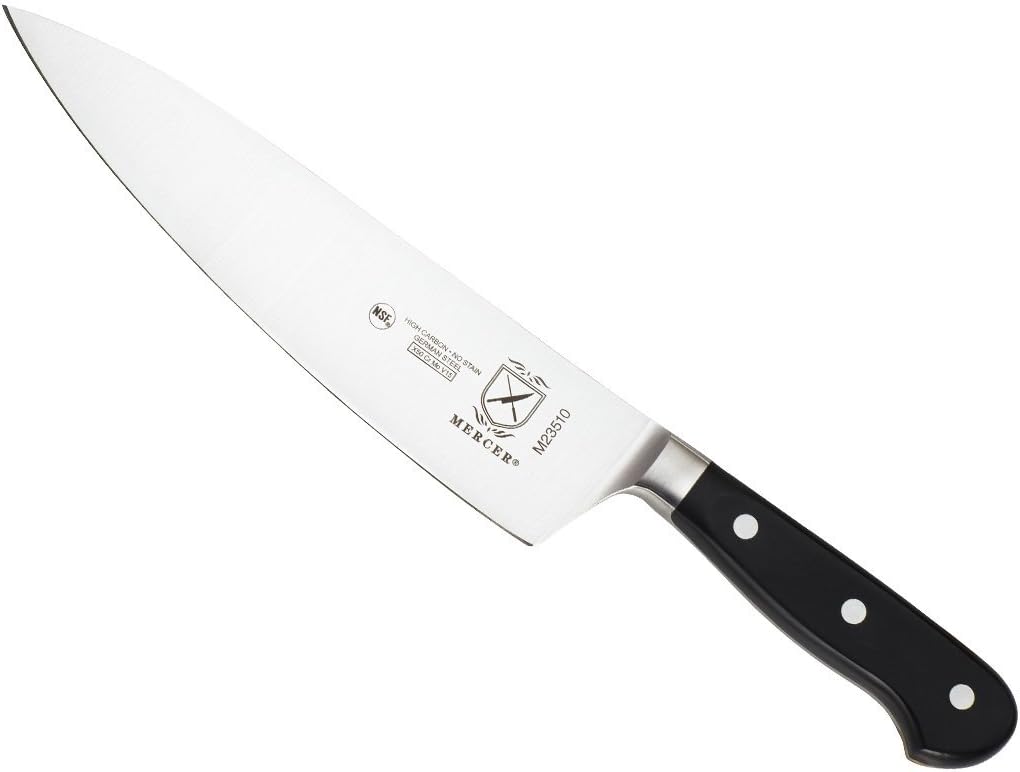
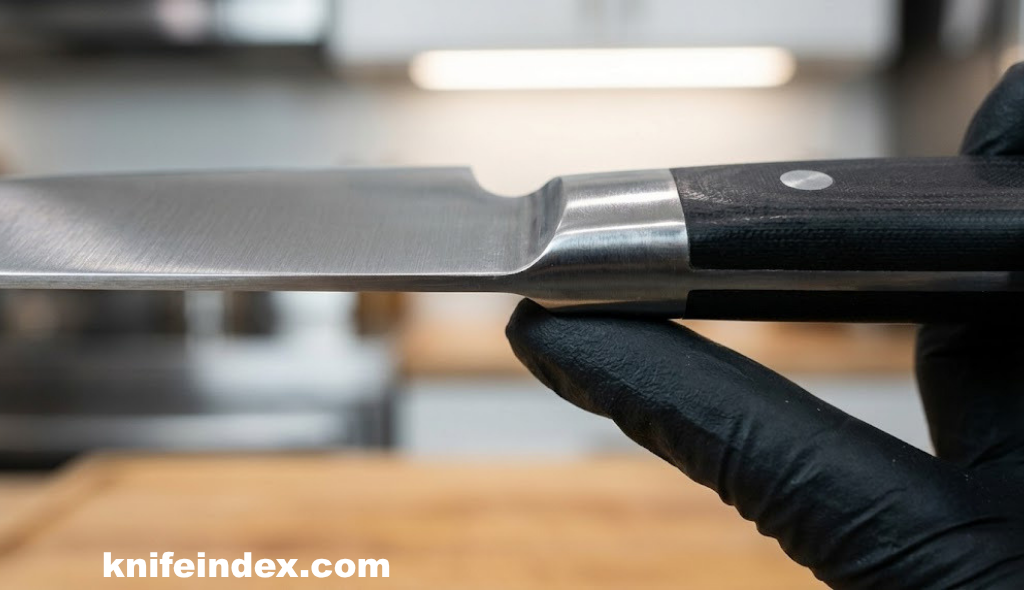
In the simplest terms, knife balance describes where a knife’s center of gravity sits relative to the point where your hand grips it. If you rest a knife on a single finger or a narrow edge directly beneath the bolster — the thick junction between blade and handle — and it sits level without tipping toward the blade or the handle, that knife is considered “balanced at the bolster.” Most cutlery guides treat this as the benchmark for a well-balanced kitchen knife, though as you’ll see later in this article, that benchmark isn’t universal.
Balance is a product of mass distribution. Every component of a knife — the blade steel, the bolster, the tang, the handle scales, and even the pins or rivets — contributes weight at a specific location along the knife’s length. Change any one of those components, and the balance point shifts. A full steel tang running the entire length of the handle pulls weight rearward. A thick, wide blade with a tall spine pulls weight forward. The balance point is simply where all of those competing forces cancel out.
It’s worth noting that balance is not a single fixed industry standard — it’s a design choice. Japanese single-bevel blades like a kiritsuke are often intentionally blade-heavy for precision push-cuts, while many German-style knives from brands compared in guides like Zwilling vs. Wusthof lean toward a neutral or slightly handle-heavy feel for rock-chopping motions.
Why Balance Matters More Than You Think
It’s tempting to dismiss balance as a minor preference, similar to handle color or blade etching. In practice, balance affects three things that matter enormously during real cooking sessions: control, fatigue, and technique compatibility.
Control
A knife that’s balanced appropriately for its intended cutting motion lets your hand make micro-adjustments without fighting the tool. A blade-heavy knife, for instance, naturally wants to fall forward and downward, which can actually help drive a rock-chop motion through dense vegetables. But that same forward pull becomes a liability during delicate tip-work, like scoring fish skin or trimming silverskin off a tenderloin, where you want the blade to stay exactly where you place it.
Fatigue
Weight that sits far from your grip point creates leverage against your wrist and forearm, even if the knife itself isn’t heavy. This is the same principle that makes a hammer with a long handle feel harder to control near the head than near the grip. Over a long prep session — say, breaking down a case of onions or dicing vegetables for a dinner service — a poorly balanced knife can produce noticeably more fatigue than a heavier knife that happens to be balanced correctly.
Technique Compatibility
Different cutting techniques favor different balance points. A push-cut technique common with Japanese gyutos benefits from a lighter, more neutral or even slightly handle-forward balance, since the motion relies on precision rather than momentum. A rock-chop technique, more common in Western kitchens, can tolerate — and sometimes benefits from — a touch more blade weight to help the edge glide through produce.
The Three Types of Knife Balance
Cutlery experts generally describe balance using three broad categories. Understanding where a knife falls on this spectrum tells you a lot about how it will behave in your hand before you ever make a cut.
1. Blade-Heavy Balance
The center of gravity sits forward of the bolster, somewhere along the blade itself. This is common in heavier cleavers, many cleaver knives, and some traditional carbon steel Japanese blades. Blade-heavy knives generate momentum on their own, which reduces the muscular effort needed to power through tough ingredients like squash or bone-in poultry.
2. Handle-Heavy Balance
The center of gravity sits behind the bolster, inside the handle. This is typical of many Western-style knives with full steel tangs and dense handle rivets. Handle-heavy knives feel more controllable for detailed tip-work but can feel sluggish for high-volume chopping since you have to supply more of the cutting force yourself.
3. Neutral (Bolster) Balance
The center of gravity sits directly at or very near the bolster — the traditional “balance point” referenced in most cutlery marketing. This is often treated as the ideal for an all-purpose chef knife because it distributes effort evenly between forward momentum and precision control, though as discussed later, “ideal” is genuinely subjective.
| Balance Type | Center of Gravity | Best For | Common In |
|---|---|---|---|
| Blade-Heavy | Forward of bolster | Chopping, splitting, momentum cuts | Cleavers, some carbon steel gyutos |
| Handle-Heavy | Behind bolster | Detail work, tip control, boning | Full-tang Western knives, boning knives |
| Neutral/Bolster | At the bolster | All-purpose prep, rock-chopping | Classic German and hybrid chef knives |
How to Test a Knife’s Balance Point
You don’t need any special equipment to check where a knife’s balance point sits. Here’s the simplest reliable method:
- Hold your index finger flat and rigid, palm up.
- Locate the bolster — the thick metal collar where the blade meets the handle.
- Rest the knife directly on your finger at that point, with the blade extending forward and the handle extending back.
- Let go gently and observe which way the knife tips.
If the blade drops immediately, the knife is blade-heavy. If the handle drops, it’s handle-heavy. If the knife hovers roughly level for a second or two before tipping slightly, it’s close to neutral — very few knives balance perfectly on a single point indefinitely, so a brief hover is a realistic sign of near-neutral balance.
A second, more functional test: hold the knife in your normal grip and make a few practice cuts on a cutting board with no food on it. Pay attention to where your wrist wants to rest and whether the tip drifts upward or downward without your input. This tells you more about real-world balance than the finger test alone, since grip pressure and hand size influence how a knife’s weight actually feels in use.

A small kitchen scale can help you compare total weight alongside balance when shopping for knives. See current options and pricing.
Check Price on AmazonBalance vs. Weight: Not the Same Thing
One of the most common misconceptions in cutlery is treating “balance” and “weight” as interchangeable. They’re related but distinct. Weight is simply the total mass of the knife — how heavy it feels when you pick it up. Balance is about where that mass is distributed along the knife’s length, regardless of the total.
Two knives can weigh exactly the same — say, 220 grams — and feel completely different in the hand if one concentrates its mass near the bolster and the other concentrates it at the very tip or deep in the handle butt. This is why “lightweight” doesn’t automatically mean “well-balanced,” and why a heavier knife can sometimes feel more nimble than a lighter one if its mass is positioned closer to the grip point.
This distinction matters a lot when comparing knives across categories like German steel vs. Japanese steel knives. German-style blades tend to run heavier overall due to thicker stock, but many are engineered with denser handle materials specifically to pull the balance point back toward the bolster, offsetting the blade’s extra mass.
Tang Construction and Its Role in Balance
The tang — the portion of the blade steel that extends into the handle — is one of the biggest single factors in a knife’s balance. Understanding tang types helps explain why certain knives feel the way they do.
Full Tang
A full tang runs the entire length of the handle and is usually visible along the top and bottom edges, sandwiched between handle scales and secured with rivets. Because steel is denser than most handle materials, a full tang shifts the balance point rearward, often producing a neutral or handle-heavy feel. You can read more about how this compares structurally in our breakdown of full tang vs. partial tang knives.
Partial or Rat-Tail Tang
A partial tang extends only partway into the handle, or narrows dramatically into a thin rod (a “rat-tail” tang) surrounded by a molded or riveted handle. This construction places less steel mass in the handle, which usually pulls the balance point forward toward the blade. Many budget knives and some traditional Japanese-handled blades use this construction, though quality varies enormously — see our look at stamped vs. forged bolster geometry for how this interacts with sharpening and durability.
Encapsulated Tang
Some modern knives use an encapsulated or hidden tang where the steel is molded into a synthetic handle material like G-10 or a composite resin. This allows manufacturers precise control over balance, since they can adjust handle density independently of the blade design — something explored further in our guide to knife handle materials.
How Handle Materials Shift the Balance
Handle material density plays a surprisingly large role in balance, especially on knives with full tangs. Here’s how common materials compare:
| Handle Material | Relative Density | Typical Balance Effect |
|---|---|---|
| Micarta | Medium | Slight rearward pull, durable feel |
| G-10 | Medium-low | Minimal shift, lightweight and stable |
| Stabilized wood | Medium | Moderate rearward pull, varies by wood species |
| Hollow polymer | Low | Pushes balance forward toward blade |
| Solid steel bolster/handle | High | Strong rearward pull, handle-heavy feel |
This is one reason two knives with identical blades can feel completely different once fitted with different handle materials — a pattern you’ll notice comparing handle-focused reviews like the Benchmade 940 Osborne against denser-handled alternatives.
Blade Geometry and Balance
Blade shape and thickness also influence balance, independent of tang or handle. A tall, wide blade — common on santoku and nakiri-style knives — carries more steel mass forward, even at the same length as a narrower blade. A thick spine that tapers gradually toward the tip, often discussed in guides on blade geometry and thin vs. thick behind the edge, distributes weight differently than a blade that stays thick near the heel and thins dramatically toward the tip.
Distal taper — the gradual thinning of the blade from heel to tip — is a technique many premium Japanese knifemakers use specifically to pull weight backward, away from the tip, without reducing overall blade length. This creates a knife that feels nimble at the tip even if the blade itself is fairly long, a hallmark of well-made Japanese gyuto knives.
Pros of Blade-Heavy Balance
- Momentum helps power through dense produce
- Less wrist effort needed for repetitive chopping
- Often pairs well with rock-chop technique
Cons of Blade-Heavy Balance
- Harder to control for delicate tip-work
- Can feel tiring during long precision tasks
- Less forgiving for beginners learning control
Balance Expectations by Knife Type
Balance isn’t judged the same way across every knife category — a boning knife and a cleaver are engineered around entirely different priorities.
Chef Knives and Gyutos
Most all-purpose chef knives aim for neutral-to-slightly-blade-forward balance, giving cooks a versatile feel for chopping, slicing, and mincing. Comparisons like Mac vs. Global often come down to exactly this kind of balance preference as much as steel type.
Santoku and Nakiri
These flat-profile vegetable knives typically favor a slightly blade-heavy feel to assist with the up-and-down chopping motion they’re designed for, as outlined in our nakiri vs. santoku comparison.
Boning and Fillet Knives
Precision-focused knives like those in our boning vs. fillet knife guide almost always favor handle-heavy balance, since fine tip control matters far more than momentum when working close to bone or skin.
Cleavers
Cleavers are intentionally blade-heavy by a wide margin — the added forward mass is the entire point, allowing the knife to do much of the chopping work through gravity and momentum alone, as detailed in our best cleaver knives guide.
Paring and Utility Knives
Small precision knives are almost always handle-heavy or very light overall, since their entire purpose revolves around control rather than power, a distinction covered in our paring vs. utility comparison.
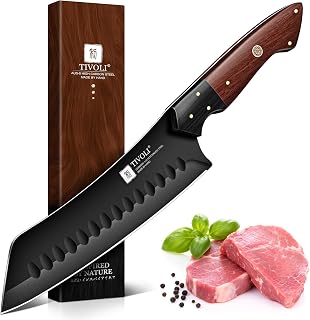
Curious how a slightly blade-forward santoku feels in hand? Compare current listings and prices.
Check Price on AmazonProfessional Chefs vs. Home Cooks: Different Balance Priorities
Professional kitchen environments often favor slightly different balance points than home kitchens, largely because of volume and repetition. A line cook breaking down cases of vegetables for hours benefits from a knife that shares some of the workload through blade-forward momentum, reducing cumulative wrist strain across a shift.
Home cooks, by contrast, typically prep smaller quantities and switch tasks more frequently — dicing an onion, then mincing garlic, then trimming chicken. For this kind of varied, lower-volume use, a neutral or slightly handle-heavy knife often feels more comfortable and less fatiguing, since precision and control matter more than sustained momentum.
This is part of why buying guides like finding the best budget chef knife often recommend handling several knives in person when possible, rather than relying purely on spec sheets, since balance preference is genuinely personal and tied to your specific cutting habits.
The Sensory Experience: Why Balance Feels So Personal
One reason balance discussions among cooks often turn into passionate, seemingly irreconcilable disagreements is that balance perception isn’t purely mechanical — it’s deeply tied to individual sensory experience, hand size, grip strength, and even years of muscle memory built around previous knives. Two people holding the exact same knife, tested at the exact same physical balance point, can genuinely disagree about whether it feels “blade-heavy” or “neutral,” and both can be right about their own perception.
Hand size plays an outsized role here. Someone with smaller hands naturally grips closer to the bolster, which places their effective pivot point nearer the knife’s true balance point, making bolster-balanced knives feel very neutral. Someone with larger hands may naturally wrap further back on the handle, shifting their effective pivot rearward and making that same knife feel comparatively blade-forward. Neither perception is wrong — they’re simply measuring the knife from different reference points.
Grip strength matters too. A stronger grip can comfortably manage a more blade-forward knife without fatigue, since the hand has more reserve strength to counteract the forward torque during precision moments. A weaker or more fatigued grip, on the other hand, will notice blade-heavy tendencies far more quickly, since there’s less muscular reserve to compensate.
Finally, prior experience shapes expectation. Cooks who learned on heavy, full-tang Western knives often perceive lighter, more neutral Japanese-style blades as feeling “insubstantial” or even poorly weighted, even when those knives are objectively well-balanced for their design intent. The reverse is equally true — cooks trained on light Japanese gyutos sometimes find German-style chef knives clumsy or front-heavy, even when those knives are balanced exactly as designed. This is worth keeping in mind before assuming any single knife is universally “well” or “poorly” balanced; much of that judgment reflects the cook’s own frame of reference as much as the knife’s actual engineering.
Real-World Examples: How Balance Plays Out Across Popular Knives
It helps to ground these concepts in specific, real examples rather than abstractions. Consider a few contrasts frequently discussed among enthusiasts and reviewers:
Heavy Full-Tang Western Chef Knives
Classic German-style chef knives, the kind compared extensively in guides like Zwilling vs. Henckels, typically use thick, triple-riveted full tangs paired with dense synthetic or wood handles. The resulting balance tends to sit very close to neutral, occasionally drifting slightly handle-heavy, which many home cooks find reassuring and stable during rock-chop motions.
Lightweight Japanese Gyutos
Many Japanese gyutos, including entries compared in our Tojiro vs. Shun breakdown, use thinner blade stock with pronounced distal taper and lighter handles. The balance point often sits close to neutral as well, but the dramatically lower overall weight makes the knife feel far more nimble and forward-agile during push-cut techniques, even at a comparable balance ratio to a heavier Western knife.
Budget-Friendly Stamped Knives
Entry-level stamped knives, often discussed in value-focused comparisons like Mosfiata chef knife review, frequently use thinner steel with partial tangs and hollow or lightweight handle scales. These knives often skew blade-light and handle-heavy simply because there’s less overall steel mass in the blade, which some cooks actually find easier to maneuver despite the knife’s lower price point.
Premium Hybrid Knives
Some premium knives deliberately blend Western durability with Japanese-inspired thinness, aiming for a hybrid balance profile. Comparisons like Mac vs. Wusthof illustrate how these hybrid approaches split the difference, often landing very close to true bolster-neutral balance while keeping overall weight moderate.
Common Myths About Knife Balance
Myth: A Heavier Knife Is Always Better Balanced
Weight and balance are separate properties, as covered earlier. A heavy knife can be poorly balanced, and a light knife can be exceptionally well balanced for its purpose.
Myth: Every Knife Should Balance at the Bolster
Bolster balance is a useful benchmark for general-purpose chef knives, but it’s not a universal rule. Specialty knives like cleavers, boning knives, and paring knives are intentionally designed away from neutral balance because their tasks demand it.
Myth: Balance Is Purely About the Blade
Handle material, tang construction, bolster size, and even rivet placement all contribute meaningfully to balance — it’s a whole-knife property, not just a function of the blade steel.
Myth: You Can’t Change a Knife’s Balance
While you can’t dramatically re-engineer a finished knife, small changes like swapping handle scales for a denser or lighter material can shift balance noticeably on knives designed for this kind of customization.
How Manufacturers Engineer Balance
Reputable knife makers treat balance as a deliberate design target, not an accident of materials. Common engineering techniques include:
- Bolster sizing: A larger, denser bolster pulls balance rearward without changing the blade itself.
- Tang shaping: Tapering or hollowing sections of a full tang fine-tunes weight distribution without sacrificing structural strength.
- Handle scale selection: Pairing a heavier blade with lighter handle scales (or vice versa) is one of the most common balance-correction techniques.
- Distal tapering: Thinning the blade gradually from heel to tip shifts mass toward the handle, a hallmark of premium forged and hand-forged blades, including many hand-forged knives.
- Counterweighting: Some high-end knives embed small dense inserts in the handle butt specifically to fine-tune the final balance point after assembly.
Brands that specialize in premium construction, like those covered in our Chris Reeve Sebenza review for folding knives, apply similarly meticulous balance engineering even outside the kitchen knife category, showing that these principles extend across the entire cutlery world.

See how a professionally engineered, balance-tuned knife set compares in current pricing.
Check Price on AmazonBalance Comparison Table: Popular Knife Categories
| Knife Type | Typical Balance | Ideal Technique | Best For |
|---|---|---|---|
| Western Chef Knife | Neutral to slightly handle-heavy | Rock-chop | All-purpose home use |
| Japanese Gyuto | Neutral to slightly blade-forward | Push-cut | Precision slicing and dicing |
| Santoku | Slightly blade-heavy | Up-down chop | Vegetable prep |
| Nakiri | Blade-heavy | Straight chop | Heavy vegetable volume |
| Boning Knife | Handle-heavy | Controlled tip work | Trimming, deboning |
| Paring Knife | Handle-heavy / very light overall | Fine detail cuts | Peeling, small precision tasks |
| Cleaver | Strongly blade-heavy | Momentum chop | Bone-in cuts, heavy chopping |
Choosing the Right Balance for You
The best way to figure out your ideal balance is to think honestly about how you actually cook, not how you imagine a “professional” cook works. Ask yourself a few questions:
- Do you mostly chop large volumes of the same ingredient, or switch between many small tasks?
- Do you use a rocking motion or a push-cut motion when you chop?
- Do you experience wrist or forearm fatigue during longer prep sessions?
- Is precision (fine dicing, trimming fat, deboning) more important to you than raw chopping speed?
If you lean toward high-volume chopping and rocking motion, a neutral-to-blade-forward knife, similar to those discussed in Shun vs. Global, will likely feel more efficient. If precision and reduced fatigue during detail work matter more, a handle-heavy option similar to knives found in our best boning knives guide is worth prioritizing.
Whenever possible, handle a knife in person before buying, or at minimum read multiple owner reviews specifically mentioning balance, since spec sheets rarely capture this quality accurately.
Regional Knife Traditions and Their Balance Philosophies
Balance philosophy isn’t just a matter of individual knife models — entire cutlery traditions have developed distinct approaches to weight distribution based on centuries of regional cooking habits, available materials, and preferred techniques. Understanding these traditions gives useful context for why certain knives feel the way they do.
German and Western European Tradition
Western European cutlery, particularly from Solingen, Germany, developed around thick, stamped or forged blade stock designed for durability and heavy-duty use across meats, bones, and dense vegetables. Full tang construction became the standard, largely because it allowed for a stronger, more durable handle joint. The natural result was a tendency toward neutral-to-handle-heavy balance, reinforced by triple-riveted handles that added mass toward the rear of the knife. This tradition prioritizes robustness and rock-chop efficiency over feather-light precision, a philosophy still visible in brand comparisons like Wusthof vs. Zwilling vs. Shun.
Japanese Tradition
Japanese blacksmithing, rooted in sword-making techniques, historically prioritized thin, hard steel with minimal unnecessary mass. This produced blades with pronounced distal taper and lighter traditional handles — often octagonal or D-shaped wood rather than riveted composite scales. The balance point on many traditional Japanese knives sits closer to neutral or even slightly forward of the bolster, but because the overall knife is lighter, the perceived heft feels dramatically different from a Western knife with similar balance ratios. This tradition prioritizes push-cut precision, a technique explored further in our yanagiba vs. sujihiki comparison.
French Tradition
French culinary knives historically split the difference between German robustness and a more refined, tapered profile, often favoring a slightly lighter overall knife than German counterparts while retaining full-tang construction. This produces a balance profile that leans neutral but with less overall mass to manage, making long prep sessions less fatiguing without sacrificing the rock-chop technique common in French kitchens.
Chinese Tradition
Chinese cleavers represent one of the most extreme and intentional balance philosophies in the cutlery world. The wide, thin blade carries substantial surface area but is engineered to be surprisingly light despite its size, with the balance point typically sitting well forward of the handle. This allows the knife to function simultaneously as a chopping tool, a scooping tool for transferring ingredients, and even a light cleaver for smaller bones, all thanks to a deliberately blade-forward design.
How Grip Style Changes the Way Balance Feels
Balance doesn’t exist in isolation from how you actually hold a knife. The same knife can feel completely different depending on your grip style, because your grip determines where the pivot point of your hand actually sits relative to the knife’s true center of gravity.
Pinch Grip
The pinch grip — gripping the blade itself just above the bolster with thumb and forefinger, while the remaining fingers wrap the handle — is the standard professional grip taught in most culinary schools. Because your hand’s pivot point sits essentially at the bolster in this grip, a knife balanced at the bolster will feel most neutral and controllable when used this way. This is one reason bolster balance became the industry benchmark in the first place: it directly maps to the most common professional grip.
Handle Grip
A full handle grip, where all fingers wrap around the handle behind the bolster, shifts your hand’s pivot point rearward. Using this grip, a bolster-balanced knife will actually feel slightly blade-heavy, since more of the knife’s mass now sits forward of where your hand is doing the pivoting. Cooks who use a handle grip often prefer knives that are engineered with a slightly rearward balance point to compensate.
Hammer Grip
A hammer grip, sometimes used for heavy chopping or cleaver work, wraps the entire hand tightly around the handle with minimal finger extension onto the blade. This grip benefits most from blade-heavy knives, since the added forward momentum does more of the chopping work with less muscular effort from the wrist and forearm.
Understanding your own natural grip tendency — something you can observe simply by watching your hand position during a normal chopping session — is one of the most overlooked steps in choosing a knife with the right balance for you.

If a push-cut technique and neutral balance sound like your style, browse current Japanese gyuto listings and pricing.
Check Price on AmazonA Closer Look at the Material Science Behind Balance
For readers who want a deeper technical understanding, balance is ultimately a physics problem involving torque and center of mass. Every component of a knife exerts a downward force proportional to its mass, at a distance from the pivot point (your finger, in the balance test, or your grip, in actual use). The knife is balanced at any point where the sum of all forward torque equals the sum of all rearward torque.
This is why small design changes can have outsized effects. A bolster that’s just a few grams heavier, positioned close to the blade-handle junction, exerts relatively little torque because it sits close to the pivot point. But a few grams added to the very tip of the blade or the very butt of the handle exerts far more torque, because torque scales with distance from the pivot, not just mass. This is precisely why manufacturers concentrate balance adjustments — like counterweighted handle butts — at the extreme ends of the knife rather than near the center, where changes would be far less effective.
Steel density also plays a quietly important role. Different steel alloys have slightly different densities, meaning two blades of identical dimensions but different steel types — say, a knife using the steel compared in our S35VN vs. S45VN guide versus one using a lighter alloy — can have measurably different balance points even with identical geometry.
Balance Principles Beyond the Kitchen
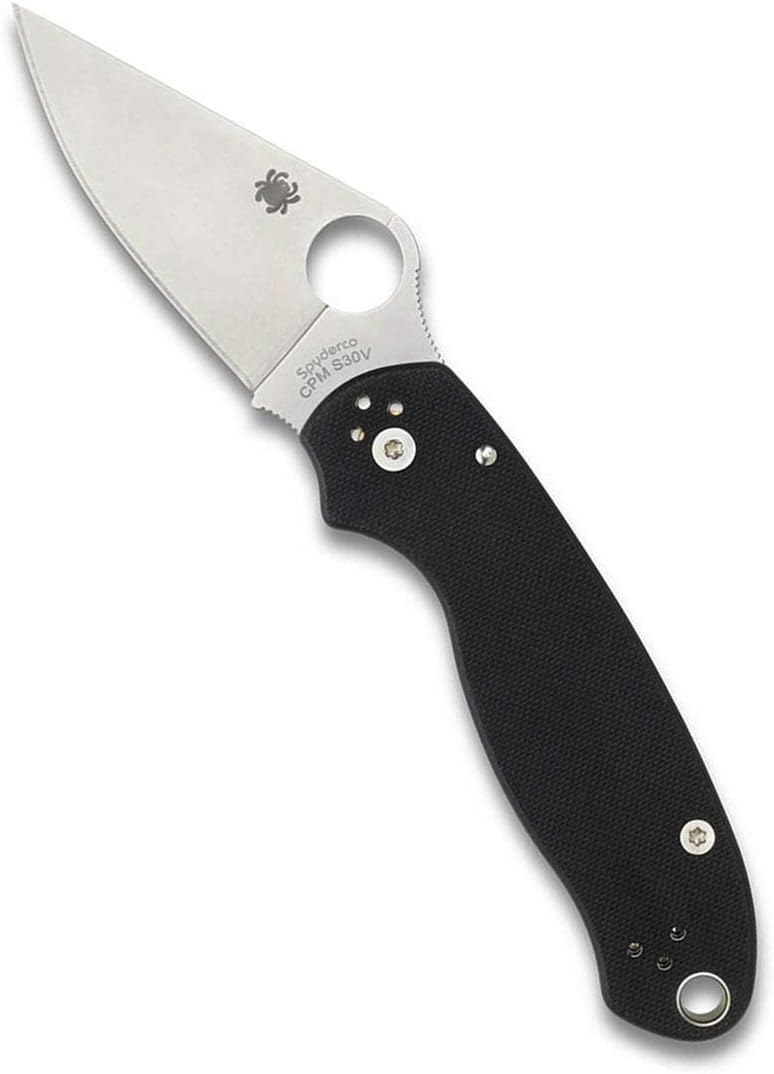
While this guide focuses primarily on kitchen knives, the same balance principles apply directly to folding and fixed-blade knives used for everyday carry, hunting, and outdoor work. A folding knife like the Benchmade Bugout is engineered to be exceptionally light and forward-neutral for comfortable daily carry, while a fixed-blade survival knife like the Morakniv Companion often carries slightly more blade-forward weight to assist with batoning and heavier outdoor tasks.
Field-dressing knives, discussed in our field dressing knife guide, tend to favor handle-heavy balance for the same reason boning knives do: fine control matters more than chopping power when working around bone and connective tissue. Meanwhile, axes and hatchets, covered in comparisons like Fiskars X27 vs. X25, take the blade-heavy philosophy to its logical extreme, since swing momentum is the entire mechanical purpose of the tool.
Even keychain and EDC knives, discussed in our keychain knives guide, are balance-engineered — usually toward extreme lightness and neutral balance — specifically so they disappear in the pocket and feel unobtrusive during light daily tasks.

Balance matters just as much outside the kitchen. Compare current pricing on a well-balanced fixed-blade outdoor knife.
Check Price on AmazonA Practical Checklist for Evaluating Balance Before You Buy
If you’re shopping for a new knife and want to evaluate balance seriously before committing, run through this checklist either in-store or by cross-referencing detailed reviews:
- Perform the finger-balance test. Note whether the knife tips forward, backward, or hovers near the bolster.
- Check the tang type. Full tang knives generally lean neutral-to-handle-heavy; partial or rat-tail tangs often lean blade-forward.
- Note the handle material. Denser materials like Micarta or stabilized wood pull balance rearward; hollow polymer handles push it forward.
- Consider blade width and spine thickness. Wider, thicker blades carry more forward mass, even at identical lengths.
- Match balance to your primary technique. Rock-choppers often prefer neutral-to-blade-forward; push-cutters often prefer neutral-to-handle-heavy.
- Test with your actual grip. A bolster balance test only tells part of the story if you don’t use a pinch grip.
- Read reviews that specifically mention balance, not just sharpness or steel type, since balance is rarely reflected accurately in spec sheets alone.
This same checklist applies whether you’re comparing everyday kitchen knives or evaluating specialty blades, including detailed brand breakdowns like our best Kizer knives guide or steel-focused comparisons like MagnaCut vs. M390, where balance considerations sit alongside edge performance.
Balance and Long-Term Knife Care
Balance isn’t entirely static over a knife’s lifetime. Repeated sharpening gradually removes small amounts of steel from the blade, which can very slightly shift the balance point forward over years of heavy use, as the blade loses mass relative to the handle. This effect is subtle and takes a long time to become noticeable, but it’s one more reason proper sharpening technique matters — see our guide on best knife sharpeners for methods that preserve blade geometry rather than aggressively reshaping it.
Handle wear, loosened rivets, or moisture absorption in wood handles can also subtly affect how balance feels over time, even if the physical balance point hasn’t changed much. Routine maintenance, including proper drying and storage discussed in our guide to preventing rust, helps preserve both the knife’s structural integrity and its handling feel.

Maintaining a knife’s edge properly helps preserve its original balance and feel over years of use. See current whetstone options.
Check Price on AmazonFrequently Asked Questions
What is considered a “well-balanced” knife?
Most cutlery experts define a well-balanced all-purpose chef knife as one whose center of gravity sits at or very near the bolster. That said, specialty knives like cleavers or paring knives are intentionally balanced away from this point to suit their specific tasks.
Does knife balance affect sharpness or edge retention?
No. Balance is purely about weight distribution and handling feel. Sharpness and edge retention depend on steel composition, heat treatment, and edge geometry, which are separate properties covered in guides like our science of edge retention article.
Is a blade-heavy or handle-heavy knife better for beginners?
Many beginners find a neutral or slightly handle-heavy knife easier to control while they’re still developing consistent knife skills, since it reduces unexpected forward momentum during early attempts at chopping.
Can I change the balance of an existing knife?
To a limited degree. Swapping handle scales for a denser or lighter material can shift balance somewhat on knives designed for this kind of modification, though it’s not possible on knives with sealed or molded handles.
Why do Japanese knives often feel different in balance than German knives?
Japanese knives frequently use thinner blade stock, distal tapering, and lighter traditional handles, often producing a more neutral or forward-light feel. German knives tend to use thicker steel and full tangs, often producing a slightly heavier, more handle-forward feel. Our German steel vs. Japanese steel comparison covers this in more depth.
Does a heavier knife always mean it’s blade-heavy?
Not necessarily. A knife can be heavy overall while still balancing neutrally or even handle-heavy, depending on how that weight is distributed between the blade, bolster, and handle.
How do I know if a knife is too blade-heavy for me?
If your wrist feels like it’s constantly fighting the knife’s forward pull during detail work, or if the tip drifts downward unintentionally during precision cuts, the knife may be too blade-heavy for your technique or hand strength.
Do cleavers violate the “ideal” balance rule?
Not really — cleavers simply have a different ideal. Their intentionally blade-heavy design is a feature, not a flaw, since it helps generate the chopping force needed for their intended tasks.
Does handle size affect balance for people with smaller or larger hands?
Indirectly, yes. A handle that’s too large or too small for your grip can change where your hand naturally applies pressure, which affects how the knife’s existing balance point feels in practice, even though the physical balance point itself doesn’t change.
Should I prioritize balance over blade steel when buying a knife?
Both matter, but balance affects your daily comfort and control far more directly than steel type in most home cooking scenarios. Many cooks find it worthwhile to prioritize balance and handle feel first, then narrow down steel options within knives that already feel comfortable.
Does balance matter for folding or pocket knives too?
Yes. Balance affects how a folding knife feels during opening, closing, and use, though the priorities shift slightly — many EDC knives favor light, neutral balance so they’re comfortable to carry and use for short, quick tasks rather than sustained chopping.
Will my grip style change what balance point I should look for?
Yes, significantly. A pinch grip user will feel a bolster-balanced knife as neutral, while a full handle grip user may perceive that same knife as slightly blade-heavy, since their hand’s pivot point sits further back on the handle.
Final Thoughts on Knife Balance
Balance is one of those qualities that’s easy to overlook on a spec sheet but impossible to ignore once you’re standing at a cutting board for twenty minutes straight. It shapes how much control you have, how tired your hand gets, and how naturally your technique flows through a task. There’s no single “correct” balance point for every cook or every knife — the right balance depends on what you cut, how you cut it, and how your hand prefers to work.
The best approach is simple: understand the tradeoffs outlined in this guide, test knives whenever you can using the finger-balance method, and pay attention to how your wrist feels during actual use rather than relying purely on marketing claims. A knife that’s balanced for your specific habits will almost always outperform a knife that’s simply expensive or well-reviewed in the abstract.
Browse Well-Balanced Chef Knives on Amazon