Paring Knife vs. Utility Knife: Which Small Blade Do You Actually Need?
In the hierarchy of kitchen tools, the mighty Chef’s Knife gets all the glory. But when you are holding a strawberry, a clove of garlic, or a sandwich, that 8-inch blade feels like overkill. This is where the small blades come out to play.
If you are browsing knifeindex.com/ to round out your knife set, you are likely staring at two options that look confusingly similar: the Paring Knife and the Utility Knife.
Is the Utility knife just a big Paring knife? Is the Paring knife just a small Utility knife? In this comprehensive guide, we will dissect the differences, the best uses, and help you decide which one belongs in your drawer (or if you need both).
This confusion is understandable. Walk down the cutlery aisle of any department store, or scroll through a knife brand’s website, and you’ll find both blades sitting in the same “small knife” category, often photographed side by side in matching sets. Manufacturers don’t always help the confusion either — some brands label their utility knife a “small chef’s knife,” while others market it as a “sandwich knife” or, if it’s Japanese-influenced, a “Petty knife.” Underneath the marketing language, though, these two tools solve genuinely different problems in the kitchen, and understanding that distinction will change how you shop for your next knife set entirely.
Below, we’ll cover blade geometry, steel and construction differences, the specific tasks each knife is built for, how to hold and use them safely, which cutting boards protect their edges best, and a full brand-by-brand breakdown so you can shop with confidence whether you’re outfitting a first apartment kitchen or upgrading a professional knife roll.
1. The Paring Knife: The Surgeon’s Scalpel
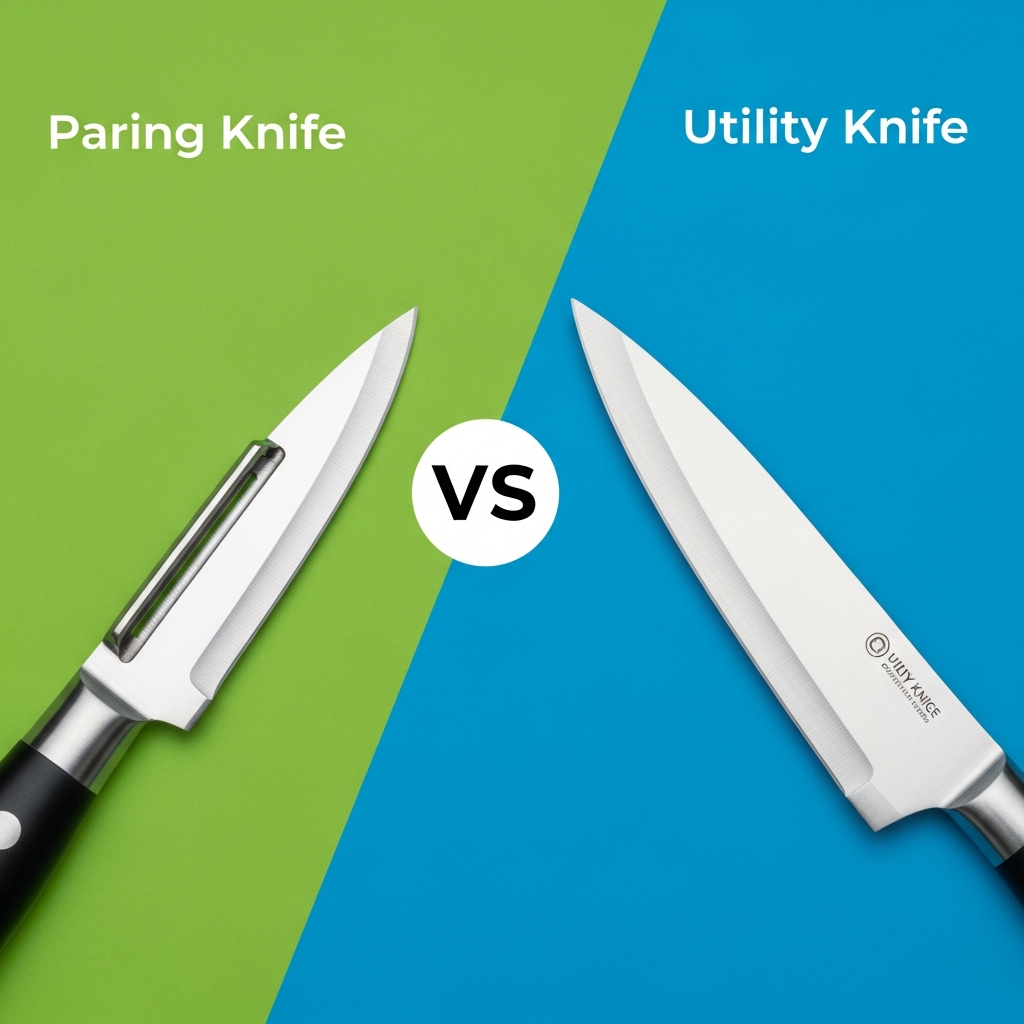
The Paring knife is the smallest knife in the bag. It typically features a blade between 2.5 to 4 inches. It is designed to be an extension of your index finger.
That “extension of your index finger” framing isn’t just a turn of phrase — it describes exactly how the knife is engineered. The blade is thin, light, and short enough that your wrist and fingers, not your shoulder or forearm, provide almost all the cutting force. Compare this to a chef’s knife, where a good chunk of the cutting power comes from the weight of the blade itself falling through the food. A paring knife has almost no weight to speak of, which is precisely why it’s so well suited to tasks that require finesse rather than force: you’re not trying to cut through something thick or resistant, you’re trying to remove a thin layer, follow a curve, or make a controlled incision exactly where you want it.
Primary Use: “Air Work”
Unlike a Chef’s Knife or a Santoku, which are designed for the cutting board, the paring knife excels at tasks performed in your hand (off the board).
- Peeling apples or potatoes.
- Hulling strawberries.
- Deveining shrimp.
- Creating garnishes.
Blade Shapes and Tip Styles
Not all paring knives look alike, and the shape of the tip changes what the knife is good at. This is one of the most overlooked details when people shop for a small blade, and it is often the difference between a knife that feels like a natural extension of your hand and one that fights you at every cut.
- Spear point (or sheep’s foot): A straight, symmetrical tip that comes to a sharp point in the center of the blade. This is the classic shape you’ll see on a Wüsthof or Victorinox paring knife, and it is the most versatile option for general peeling, trimming, and slicing.
- Bird’s beak: A curved, hook-like blade that looks almost like a tiny talon. This shape is purpose-built for turning vegetables (the classic French “tourner” technique), removing strawberry hulls, and peeling round produce like apples and potatoes in one continuous motion. It is less useful for straight cuts, so most cooks keep one as a specialty tool rather than a primary blade.
- Sheep’s foot: A flat cutting edge with a spine that curves down to meet it, eliminating the pointed tip entirely. This design is popular for herb work and safety-conscious prep because there is no sharp point to worry about.
If you only buy one paring knife, the spear point is the safest bet. If you find yourself peeling a lot of whole fruit or doing decorative garnish work, a bird’s beak paring knife earns its place as a second small blade.
Handle Materials and Grip Comfort
Because a paring knife is held “in the air” rather than braced against a cutting board, handle comfort matters more here than on almost any other knife in the block. A slippery handle on a chef’s knife is annoying; a slippery handle on a paring knife used to peel a wet potato is a genuine safety hazard.
Common handle materials include:
- POM (Polyoxymethylene) and Polypropylene: Dense, water-resistant synthetic plastics used on knives like the Victorinox Fibrox line. They are lightweight, dishwasher-tolerant, and grip well even when wet.
- Pakkawood: A resin-infused wood composite used on higher-end knives like Wüsthof and Shun. It looks like natural wood but resists moisture absorption far better than solid wood handles.
- Full Tang Steel: Some modern minimalist paring knives extend the steel all the way through the handle for a single-piece feel. These tend to be heavier and colder in the hand, which some cooks like for control and others find fatiguing during long peeling sessions.
External Insight
According to Sharp Edge Shop, “The paring knife is indispensable for delicate tasks… where precision is paramount.” Read their full comparison here: Utility Knife vs. Paring Knife: Which One Suits Your Needs?
2. The Utility Knife: The “In-Between” Hero
The Utility knife (often called a “sandwich knife”) sits in the awkward middle ground. It is usually between 5 to 7 inches long. It is too big to peel an apple comfortably in your hand, but too small (and narrow) to chop a large onion effectively.
That “awkward middle ground” is actually the entire point of the design. Think about the range of foods you cut on any given day that are bigger than a strawberry but smaller than a whole butternut squash: a block of cheddar, a couple of Roma tomatoes, a bagel, a chicken cutlet, a lemon for a cocktail. None of these genuinely need the reach or heft of an 8-inch chef’s knife, and all of them are a little unwieldy for a 3-inch paring knife. The utility knife exists specifically to cover this middle band of everyday, small-scale board work — which is also why it’s so often the second knife people reach for, right after the chef’s knife, in a real working kitchen.
Primary Use: Small Board Work
The Utility knife shines where the Chef’s knife feels clumsy.
- Slicing tomatoes or cucumbers.
- Cutting sandwiches (especially serrated versions).
- Slicing blocks of cheese.
- Cutting citrus for cocktails.
Where a Utility Knife Genuinely Outperforms a Chef’s Knife
It’s tempting to think of the utility knife purely as a “smaller chef’s knife,” but there are specific tasks where its narrower profile and shorter length actually beat the bigger blade:
- Mincing a single garlic clove or shallot: A chef’s knife needs knuckle clearance and a rocking motion that feels clumsy for one clove. A utility knife lets you mince right up close with total control.
- Portioning small cuts of meat: Trimming silverskin off a chicken breast or portioning a pork tenderloin into medallions is easier with a shorter, more maneuverable blade.
- Cutting inside tight spaces: Slicing a bagel in half, halving a small dinner roll, or working inside a lunchbox-sized cutting area all favor the utility knife’s compact swing radius.
- Chopping fresh herbs in small batches: For a tablespoon or two of chopped parsley or chives, many home cooks reach for the utility knife over a full-size chef’s knife simply because it feels less like overkill.
Straight Edge vs. Serrated vs. Granton Edge
Beyond the straight-versus-serrated question we cover below, many utility knives also come with a Granton edge — a series of small oval divots ground into the sides of the blade near the cutting edge. These air pockets reduce suction between the blade and the food, which helps prevent thin slices of cucumber, cheese, or citrus from sticking to the knife as you cut. If you do a lot of thin slicing for salads or plating, a Granton-edge utility knife is worth seeking out.
3. Head-to-Head: The Specs Breakdown
Seeing the two knives laid out side by side makes the distinction much clearer than reading about it in isolated paragraphs. Pay particular attention to the “Primary Motion” row below — it’s the single biggest factor driving every other difference between these two blades, from handle design to blade thickness to which cutting tasks each one is actually good at.
| Feature | Paring Knife | Utility Knife |
|---|---|---|
| Blade Length | 2.5″ – 4″ | 5″ – 7″ |
| Primary Motion | In-Hand (Peeling/Coring) | On-Board (Slicing/Push-cut) |
| Weight | Feather-light | Medium-light |
| Edge Type | Usually Straight | Straight or Serrated |
| Best For | Precision, Garnish, Peeling | Sandwiches, Small Veg, Cheese |
Notice that “Weight” is the only row where the two knives are genuinely close. Everything else diverges meaningfully, and it’s that divergence — not the roughly two-inch difference in blade length — that actually explains why a cook reaches for one over the other in the middle of prepping a meal. A two-inch difference sounds trivial until you realize it changes the entire grip, the entire motion, and the entire category of task the knife is suited for.
4. The “Serrated” Factor
Here is a twist: While Paring knives are almost always straight-edged, Utility knives frequently come with serrations.
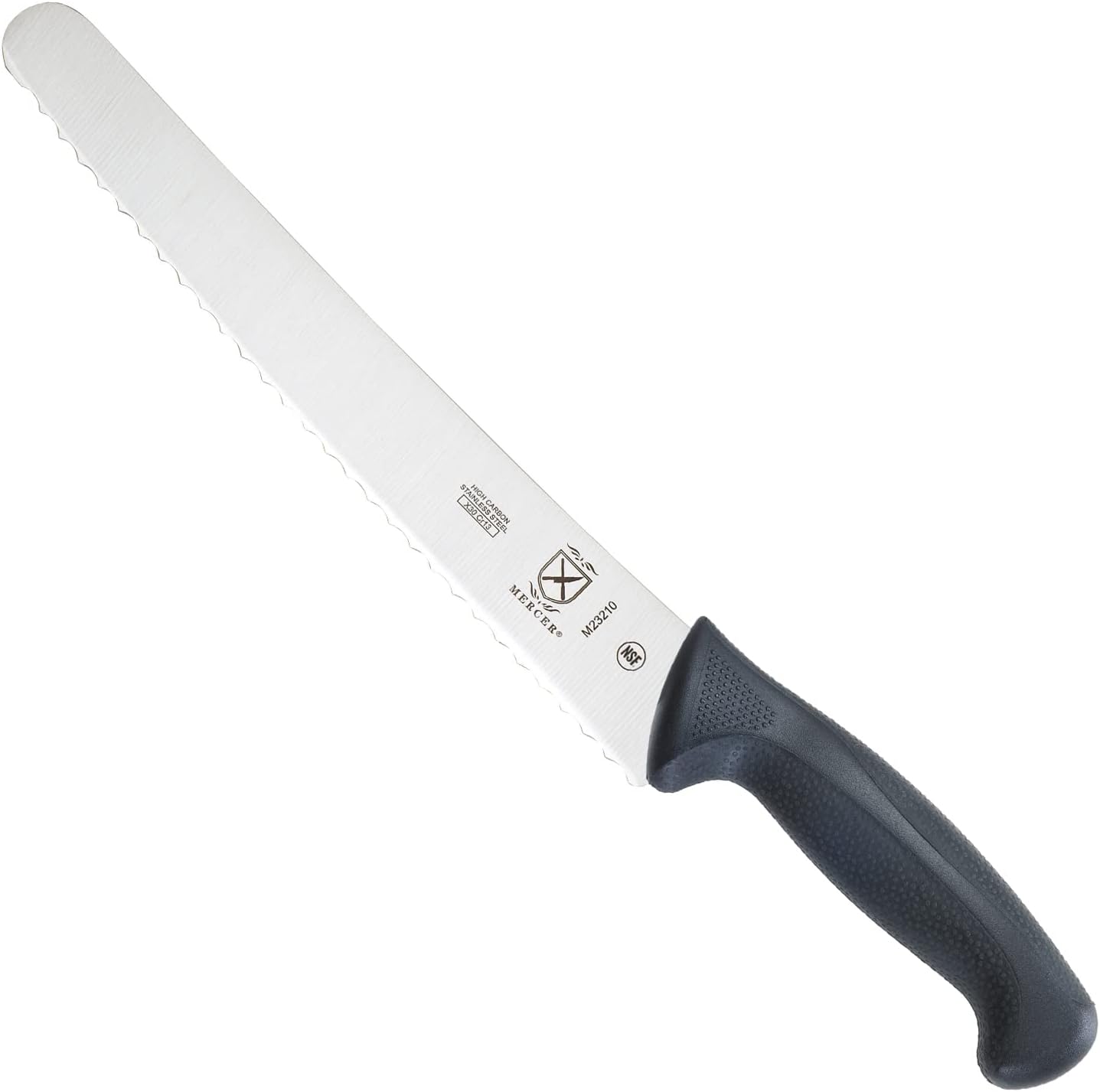
A Serrated Utility Knife (often called a Tomato Knife) is a game-changer. The teeth grab onto waxy skins (tomatoes, peppers, citrus) without slipping. It acts like a mini bread knife. If you are building a set, we highly recommend getting a serrated utility knife to complement your straight-edged chef and paring knives. (Learn more: What is a Serrated Knife Used For?).
Why Serration Matters More on Small Knives
On a large chef’s knife, serration is rare because the weight and length of the blade already generate enough force to bite through most skins in a single pass. On a small utility knife, though, you don’t have that leverage — which is exactly why a wavy edge is such a common and useful feature at this size.
A straight-edged utility knife relies entirely on sharpness to get through a tomato’s skin. The moment the edge dulls even slightly, the blade tends to skate across the surface instead of biting in, which is how so many kitchen cuts happen. A serrated edge, by contrast, uses a sawing motion: the points of the teeth puncture the skin first, and the scalloped edge behind them does the actual cutting. This means a serrated utility knife stays “functionally sharp” for a much longer stretch of its life, even as the very tips of the teeth slowly round off.
The tradeoff is that serrated blades are difficult to sharpen at home. Most people either send them out for professional sharpening every year or two, or simply replace an inexpensive serrated utility knife once it stops performing — which is one reason budget options from Mercer or Victorinox are popular in this specific category.
5. Top Product Recommendations
We have tested the best brands to find the leaders in these categories. Both of the picks below represent the sweet spot in their respective category: neither is a budget stamped blade that will need replacing within a year, and neither is so expensive that it stops making financial sense for a home kitchen. Think of these as the knives we’d recommend to a friend who asked us, point-blank, which single paring knife and which single utility knife to buy without spending hours comparing spec sheets themselves.
 Wüsthof Classic 3.5″ Paring Knife
The standard. Forged, perfectly balanced, and durable. The bolster protects your fingers during intricate work. See Wusthof vs Victorinox for more.
Check Price on Amazon Shun Classic 6″ Utility Knife
A razor-sharp slicer. The VG-MAX steel holds an edge forever, perfect for slicing meats and cheese. Read our Shun vs Wusthof comparison.
Check Price on AmazonNote that neither of these picks is the cheapest option on the market, and that’s intentional. A knife you reach for every single day — and both the paring knife and utility knife qualify, statistically speaking, as some of the most-used blades in any kitchen — is exactly the kind of purchase where spending slightly more up front pays off in edge retention, comfort, and simple day-to-day enjoyment of cooking. If budget is a hard constraint, the Victorinox and Mercer options discussed in the brand section below are perfectly capable substitutes.
6. Steel and Construction: Forged vs. Stamped
Beyond blade length, how a knife is made has a huge impact on how it feels and performs, and this is a factor people rarely think about when comparing a paring knife to a utility knife.
Forged Blades
Forged knives are made by hammering (or pressing) a single billet of heated steel into shape. This process typically produces a blade with a full bolster — the thick collar of metal where the blade meets the handle — which adds weight, balance, and a guard for your fingers. Forged paring knives, like the Wüsthof Classic featured above, tend to feel more substantial and “premium” in the hand. The tradeoff is cost: forging is a slower, more labor-intensive process, so forged knives usually carry a higher price tag.
Stamped Blades
Stamped knives are cut from a large sheet of steel, similar to a cookie cutter punching shapes from dough. They are lighter, thinner, and typically cheaper to produce. This doesn’t mean lower quality — many excellent utility and paring knives, including most of the Victorinox Fibrox line, are stamped. What you lose is the substantial bolster and the slight forward balance that forged knives offer; what you gain is a lighter blade that some cooks find less fatiguing for long prep sessions or repetitive peeling tasks.
Carbon Steel vs. Stainless Steel
Both paring and utility knives are available in either steel family, and the choice matters more for utility knives (which see more board contact and moisture exposure) than for the quick, light work typical of a paring knife.
- High-carbon stainless steel: The standard for most Western brands (Wüsthof, Zwilling, Victorinox). It resists rust well, holds a reasonably sharp edge, and requires very little maintenance beyond regular honing.
- True carbon steel: Used on some traditional and Japanese-influenced blades. It can be sharpened to a finer, more aggressive edge and often takes an edge more easily than stainless, but it will discolor and can rust if left wet, which is why many carbon steel utility knives develop a dark patina over time.
- VG-MAX and other proprietary Japanese steels: Used in knives like the Shun Classic utility knife recommended above. These are engineered stainless alloys that aim to combine the edge retention of carbon steel with the low-maintenance rust resistance of stainless.
Edge Angle: Why It Matters More Than Steel Type
One detail that rarely comes up in casual knife-buying advice is edge angle — the angle at which the blade is ground on each side of the cutting edge, usually measured in degrees per side.
- Western-style edges (17–22 degrees per side): The standard for German brands like Wüsthof and Zwilling, as well as most Victorinox and Mercer knives. This slightly wider angle produces a more durable edge that resists chipping and rolling, at some cost to ultimate sharpness.
- Japanese-style edges (12–16 degrees per side): Common on Shun, Miyabi, Global, and Tojiro. The thinner angle produces a noticeably sharper edge capable of finer, cleaner cuts, but it’s more prone to chipping if used on hard surfaces or twisted sideways mid-cut.
For a paring knife, edge angle has an outsized effect because so much of its work is fine, controlled cutting where a sharper edge genuinely changes how clean your peels and garnishes look. For a utility knife, which sees more board contact and occasional harder ingredients (a firm cheese rind, for instance), the slightly more durable Western edge angle is often the more practical choice unless you’re diligent about maintenance.
7. Pairing the Right Cutting Board with Each Knife
The board you cut on has a direct effect on how long your paring or utility knife stays sharp, and this is a keyword nearly every buyer searches for separately without realizing it connects directly back to knife choice.
- Wood and end-grain boards: The gentlest option for both knife types. The fibers of the wood are soft enough to let the blade edge sink in slightly rather than grinding against a hard surface, which preserves the edge on a Utility knife significantly longer than a glass or stone board would.
- Plastic and composite boards: A solid middle ground. They’re dishwasher-safe (useful after cutting raw meat with a Utility knife) and softer than glass, though slightly harder on an edge than wood over time.
- Glass, marble, and ceramic boards: Attractive, but genuinely bad for both knife types. These hard surfaces dull an edge remarkably fast — a single session mincing garlic with a Utility knife on a glass board can undo weeks of careful maintenance.
Because a paring knife is so often used off the board entirely (peeling in-hand), board material matters less for it directly — but a dull cutting board underneath will still tempt you to use the paring knife for tasks the utility knife should be handling, accelerating wear on both blades.
8. A Brief History: Where These Shapes Came From
The paring knife’s name comes directly from its original purpose: to “pare,” meaning to peel or trim away the outer layer of something, usually fruit. European kitchens have used small, simple peeling blades for centuries, long before the modern Western knife roll existed as a standardized set.
The utility knife’s history is more commercial than culinary. As mass-produced kitchen knife sets became popular in the 20th century, manufacturers needed a “middle” size to sell alongside the chef’s knife and paring knife to round out a set — hence the name “utility,” meaning generally useful rather than specialized. In Japan, this same size category developed somewhat independently as the “Petty” knife, borrowed from the French word petit (small), and was designed from the outset with the thinner, harder steel typical of Japanese blade traditions rather than as a Western-style catch-all.
8a. What Are These Knives Called Around the World?
Terminology for both blades shifts depending on region and culinary tradition, which can make online shopping confusing if you don’t know the local naming conventions:
- France: The paring knife is called an “office” or “couteau d’office,” reflecting its role as the workhorse of prep tasks in a professional kitchen.
- Germany: Utility knives are often labeled “Allzweckmesser” (all-purpose knife), which captures the same “bridges the gap” idea covered earlier in this guide.
- Japan: As covered above, the utility knife equivalent is the “Petty” knife, while a small Japanese paring-style blade is sometimes called a “Mukimono” knife when used specifically for decorative vegetable carving.
- United States: “Paring knife” and “utility knife” are the standard terms, though “utility knife” outside the kitchen also refers to a retractable box-cutter — worth keeping in mind if a search result seems oddly focused on construction tools instead of cutlery.
If you’re ever shopping on an international retailer’s site and can’t find a “utility knife” listed, searching for “petty knife” or “all-purpose knife” will usually surface the equivalent product.
9. Buying Guide: How to Choose the Right One for You
If you’re building out a knife collection from scratch, use this quick decision framework rather than buying both blindly:
- Cook mostly whole fruit and vegetables (peeling, coring, hulling)? Prioritize the paring knife first. A spear-point 3.5-inch blade will cover 90% of your needs.
- Cook a lot of sandwiches, cheese boards, or citrus for cocktails? Prioritize a serrated utility knife. The teeth will save you from squashed tomatoes and mangled bread.
- Cook mostly proteins and larger vegetables? You likely already lean on a chef’s knife, and a straight-edge utility knife will fill in the gaps for smaller cuts of meat.
- On a tight budget and can only buy one small knife right now? Choose the paring knife. As covered in Section 8 below, it performs tasks the utility knife simply cannot replicate.
- Buying for a first apartment or starter kitchen? Look for an affordable set that bundles both — many budget block sets from Mercer or Victorinox include a paring and utility knife alongside the chef’s knife for barely more than the cost of one premium blade.
10. Brand Comparisons
If you are loyal to a brand, here is how their small knives stack up:
Wüsthof & Zwilling (German)
German utility knives are robust. They often have a thick spine, which makes them great for slicing salami or hard cheese but less ideal for delicate work. (See Zwilling vs Henkel). The Wüsthof Classic Ikon utility knife is a favorite for its ergonomic handle.
Shun & Miyabi (Japanese)
Japanese utility knives (often called “Petty” knives) are thinner and harder. They excel at precision slicing of protein and soft fruit. However, they are brittle—don’t use them to pry apart frozen burgers! (See Miyabi vs Shun and Miyabi vs Wusthof).
Budget Kings (Mercer & Victorinox)
The Victorinox paring knife is legendary for being cheap and sharp. Mercer’s utility knives are staples in culinary schools. (See Mercer vs Victorinox and Mercer vs Wusthof).
Dalstrong and the Modern “Statement” Brands
A newer wave of cutlery brands, led by names like Dalstrong, has built a following around aggressive, high-contrast designs and thinner, harder Japanese-influenced steel at a mid-range price point. Their utility and paring knives tend to sit between the budget Mercer/Victorinox tier and the premium German or Japanese tier, offering sharper out-of-box performance than most stamped budget blades while remaining considerably cheaper than a hand-forged Shun or Miyabi. (See our full Dalstrong vs Shun breakdown.)
Global and Tojiro (Value Japanese)
For cooks who want the thinner, harder feel of Japanese steel without paying premium prices, Global and Tojiro both offer excellent Petty (utility) knives at accessible price points. Global’s one-piece stainless construction is dishwasher-tolerant in a way most Japanese blades are not, though we still recommend hand-washing to preserve the edge. (See Tojiro vs Shun.)
Price Tiers at a Glance
- Budget ($8–$20): Victorinox Fibrox, Mercer Culinary. Stamped blades, synthetic handles, excellent value and easy to sharpen.
- Mid-range ($25–$60): Wüsthof Classic, Zwilling Pro, Dalstrong Gladiator, Global. Better steel, more refined edge geometry, noticeably improved edge retention.
- Premium ($65–$150+): Shun Classic, Miyabi, Wüsthof Classic Ikon. Proprietary steels, hand-finished edges, and premium handle materials, aimed at cooks who use their knives daily and are willing to pay for marginal performance gains.
11. Maintenance and Storage
Small knives get lost easily. Proper care is essential.
- Storage: Never throw a paring knife in a drawer; you will cut yourself reaching for a spoon. Use a drawer organizer or magnetic strip.
- Sharpening: Paring knives are tricky to sharpen on large stones due to their size. We recommend a ceramic rod or a guided electric sharpener.
- Rust: High-carbon utility knives (like Dalstrong or Shun) need to be dried instantly. Learn how to remove rust.
- Travel: If you are a pro, these small knives are the first to go missing. Keep them in a knife bag.
Honing vs. Sharpening: What’s the Difference?
Many home cooks use these terms interchangeably, but they describe two different maintenance tasks, and understanding the difference will meaningfully extend the life of both knives.
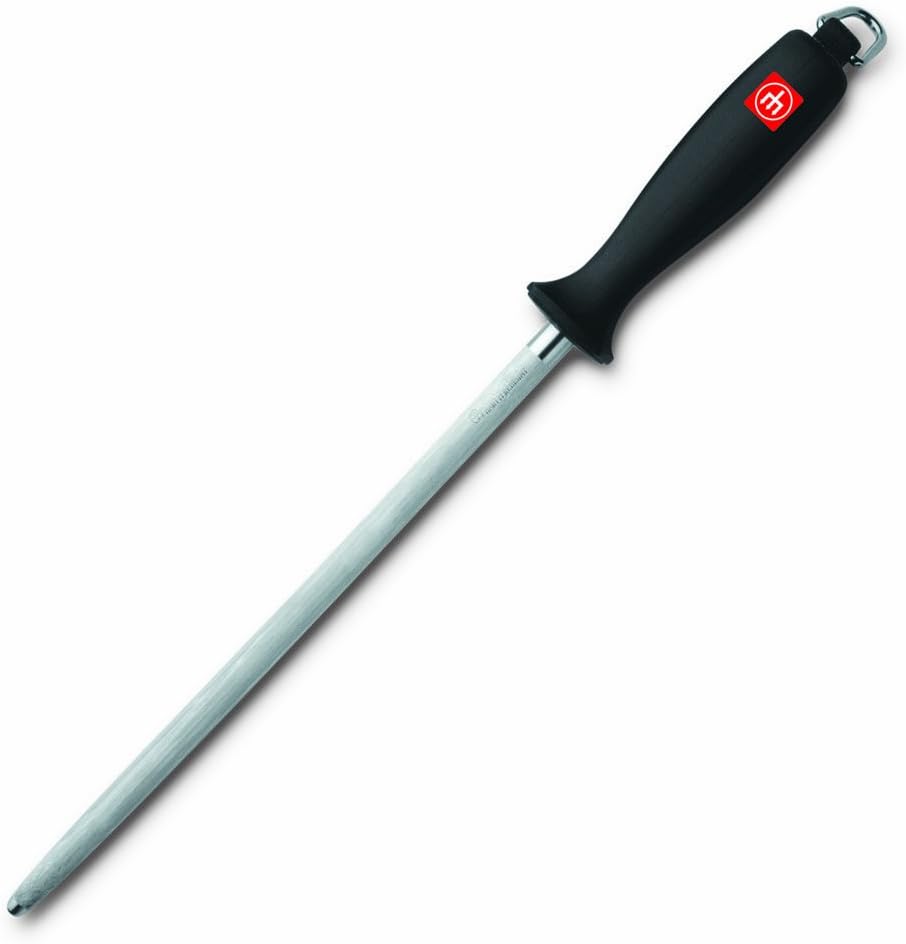
- Honing realigns the microscopic edge of the blade, which bends slightly with normal use. Running a paring or utility knife across a honing steel a few times before each use doesn’t remove metal — it just straightens what’s already there. This should happen every time you cook, ideally.
- Sharpening actually grinds away metal to create a new edge. This is needed far less often — every few months for regular home use — and is where a ceramic rod, whetstone, or electric sharpener comes in.
Because a paring knife’s blade is so short, many standard honing steels are actually too long and unwieldy for it — you end up honing more steel than blade. Look for a shorter honing rod, or simply use the base few inches of a standard one.
Dishwasher Safety: A Quick Warning
It is tempting to toss small knives into the dishwasher since they seem too minor to bother hand-washing. Resist this urge. The heat, moisture, and jostling against other utensils in a dishwasher will dull an edge far faster than normal cutting board use, and can chip a fine Japanese-style utility knife entirely. Hand wash and dry immediately, every time.
12. Can One Replace the Other?
Can a Utility Knife replace a Paring Knife?
No. It is too long to control for peeling or hulling strawberries. You will likely cut your thumb.
Can a Paring Knife replace a Utility Knife?
Sort of. A paring knife is too short to cut a sandwich in one stroke, but it can slice a tomato (messily). If you have to choose one, choose the Paring Knife. It does things no other knife can do.
However, if you find yourself reaching for a Chef’s knife but wishing it were smaller, the Utility knife is the answer. Or, consider the Japanese Nakiri or Santoku for mid-sized veg prep.
Grip and Technique: Getting the Most From Each Blade
Even the best paring or utility knife will underperform if you’re not holding it correctly. A few technique fundamentals go a long way toward safety and precision:
- Paring knife grip: Hold the blade the way you’d hold a pencil, with your thumb and forefinger pinching the bolster or the base of the blade itself, rather than gripping the handle like a hammer. This “pinch grip” gives you the fine motor control needed for peeling and garnish work.
- The claw technique for peeling: When peeling in-hand, curl the fingers of your non-knife hand into a slight claw shape around the food, using your knuckles (not fingertips) as a guide for the blade. This keeps fingertips well clear of the edge.
- Utility knife grip: Because it’s used more on the board, a utility knife benefits from the same pinch grip used on a chef’s knife — thumb and forefinger pinching the blade just above the handle, remaining fingers wrapped around the handle itself. This gives you better downward control for push-cuts through tomatoes or cheese.
- Rocking vs. push cuts: A chef’s knife rocks through food using its curved belly. Both the paring and utility knife, being straighter and shorter, are generally better suited to push cuts or pull cuts (for serrated versions) rather than a rocking motion.
Safety Considerations for Smaller Blades
Ironically, smaller knives cause a disproportionate share of home kitchen cuts, mostly because people underestimate them. A paring knife used in-hand, pointed toward your palm while peeling, carries real risk if it slips. Always peel with the blade angled away from your body and use short, controlled strokes rather than long draws. Keep both knives genuinely sharp — a dull small blade requires more pressure to cut, and it’s that extra pressure, combined with a sudden slip, that causes most injuries.
Frequently Asked Questions (FAQ)
In Japanese cutlery (like Tojiro or Global), the Utility knife is called a “Petty” knife (from the French petit). It functions identically to a Western utility knife but is usually thinner and sharper. See Tojiro vs Shun.
Yes! It is one of the most useful knives for cutting tomatoes, bagels, and citrus. It stays sharp longer than a straight edge because the teeth protect the cutting surface.
For slicing a single clove, yes. For mincing a whole bulb, no. You lack knuckle clearance on the board. Use a Chef’s knife or Santoku for chopping.
A steak knife is built for cutting cooked meat at the table, usually with a fixed serrated or micro-serrated edge and a rounded or blunt tip for safety on a dinner plate. A paring knife is a working kitchen tool meant for raw prep — peeling, hulling, and trimming — with a much finer point and edge geometry that a steak knife’s design would ruin quickly if used the same way.
Only if you frequently peel round produce like apples, potatoes, or citrus, or do decorative garnish work such as turned vegetables. For general kitchen use, a standard spear-point paring knife covers the vast majority of tasks, and a bird’s beak is best thought of as a specialty add-on rather than a replacement.
It shouldn’t, even if the manufacturer claims it’s dishwasher-safe. Heat and jostling against other utensils will dull the edge and can chip fine Japanese steel. Hand-washing and drying immediately protects both the edge and the handle material.
A 6-inch utility knife is the most common and versatile size, striking a balance between the maneuverability of a paring knife and the cutting power of a chef’s knife. Some brands offer 5-inch or 7-inch versions; go smaller if you mostly cut fruit and sandwiches, and larger if you use it as a secondary all-purpose blade for small vegetables and proteins.
12a. How to Tell If Your Knife Is Actually Sharp
Most home cooks assume their knife is sharp simply because it “cuts things,” but there’s a real difference between a knife that cuts and one that’s genuinely sharp. A few quick tests work for both paring and utility knives:
- The paper test: Hold a sheet of printer paper by one edge and try to slice through it with a light draw of the blade, no sawing. A sharp edge glides through cleanly; a dull one tears or snags.
- The tomato test: Rest the blade on the skin of a ripe tomato with no downward pressure and gently draw it back. A sharp edge should bite into the skin almost immediately rather than sliding across it.
- The fingernail test: Lightly rest the edge against your fingernail at a shallow angle. A sharp blade will “catch” slightly rather than sliding smoothly across the nail’s surface.
Run these tests every few weeks, especially on a utility knife that sees regular board contact. Catching dullness early means a quick pass on a honing rod fixes it, rather than needing a full re-sharpening later.
12b. Left-Handed Cooks: Does It Matter Here?
Unlike some specialty blades (certain traditional Japanese single-bevel knives, for example), the vast majority of Western-style paring and utility knives are ground symmetrically and work equally well for left- and right-handed cooks. The one place handedness can matter is the bird’s beak paring knife, where the curve of the blade is sometimes optimized for a particular rotational direction during peeling — left-handed cooks may find the standard curve slightly less intuitive and should look for a specifically left-handed version if they do a lot of in-hand turning work.
12c. Climate and Humidity Considerations
If you live somewhere humid, or your kitchen sees a lot of steam and moisture (common in smaller apartment kitchens with limited ventilation), carbon steel utility and paring knives require more diligence. Even a few hours left wet on a drying rack can be enough to start surface oxidation on true carbon steel. In these environments, a high-carbon stainless blade is generally the safer, lower-maintenance choice, reserving carbon steel for cooks who are willing to dry and lightly oil the blade after every single use.
12d. Professional Kitchens vs. Home Use
In a professional kitchen, both the paring and utility knife tend to be personal tools that cooks carry in their own knife rolls rather than shared house knives, largely because of how quickly a shared edge dulls under constant use. Line cooks often carry multiple paring knives (a spear point and a bird’s beak) but only one utility knife, reflecting how much more specialized peeling and garnish work is compared to the utility knife’s more general slicing role. At home, where usage is lighter and less constant, a single high-quality example of each is more than sufficient for the vast majority of cooks, and there’s rarely a practical need to own more than one of each unless you’re doing genuinely high-volume prep.
12e. Step-by-Step: Core Techniques Worth Practicing
Peeling an Apple in One Strip (Paring Knife)
Hold the apple firmly in your non-dominant hand. Starting near the stem, angle the paring knife blade at roughly 20 degrees to the surface and use short, controlled strokes of your thumb (braced against the blade’s spine) to push the peel away in a continuous ribbon. Rotate the apple toward the blade rather than moving the knife around the apple — this keeps the motion consistent and reduces slip risk.
Hulling a Strawberry (Paring Knife)
Insert the tip of the paring knife at a slight angle just beside the green leafy cap, then rotate the strawberry against the stationary blade tip in a small circular motion. This pops the hull out in one clean cone-shaped piece rather than gouging into the fruit’s flesh, which is what happens when people try to cut straight down instead.
Deveining Shrimp (Paring Knife)
Run the tip of the paring knife along the outer curve of a peeled shrimp, cutting just deep enough to expose the thin dark vein. Use the tip to lift the vein out rather than slicing through the shrimp’s flesh. A bird’s beak paring knife’s curve can make this slightly easier since it naturally follows the shrimp’s arc.
Slicing a Tomato Without Squashing It (Utility Knife)
This is where a serrated utility knife earns its keep. Use a light sawing motion rather than pressing straight down — let the teeth do the work of puncturing the skin. Slicing straight down with a straight-edged blade on a slightly underripe tomato often works fine, but a very ripe tomato will usually squash under a dull straight edge long before serration would have an issue.
Cutting a Sandwich Cleanly (Utility Knife)
Press down through the top layer of bread first with a light sawing motion, then continue the same sawing motion through the fillings and bottom slice rather than switching to a straight push-cut halfway through. This prevents the classic problem of fillings squishing out the side as the blade compresses everything on the final push through the bottom crust.
12f. Who Should Own Both?
Given everything above, the honest answer is that almost anyone who cooks regularly benefits from owning both. They occupy genuinely different niches rather than overlapping niches, which is different from, say, owning both a Chef’s knife and a Santoku — two blades that largely compete for the same jobs. A paring knife and a utility knife instead divide labor cleanly: one handles in-hand precision work, the other handles small on-board slicing that a full chef’s knife makes awkward. The only cooks who can reasonably skip one are those with very narrow, specific cooking habits — for example, someone who cooks almost exclusively large cuts of meat and root vegetables with a chef’s knife may rarely need the fine peeling work a paring knife specializes in, while someone who cooks almost entirely soups, stews, and slow-braised dishes with minimal fresh fruit prep may find a utility knife redundant next to their chef’s knife.
13. Common Mistakes People Make With Small Knives
After years of covering kitchen cutlery, a handful of mistakes show up again and again with both paring and utility knives:
- Using the wrong knife out of habit: Grabbing whichever small knife is closest rather than the one actually suited to the task — like trying to core a whole pineapple with a paring knife instead of switching to a longer utility or chef’s knife.
- Letting the edge go too long between honings: Because these knives feel “light duty,” people often skip the honing steel entirely, not realizing that a dull small blade is more dangerous than a dull large one, since it requires disproportionately more hand pressure to force through food.
- Storing them loose in a drawer: Beyond the safety risk of reaching in and finding the edge with a fingertip, loose storage causes blades to knock against other utensils, chipping fine edges over time.
- Buying based on looks rather than task fit: A beautifully photographed damascus-pattern utility knife is tempting, but if your actual daily task is peeling carrots and coring apples, that budget is better spent on a quality paring knife instead.
- Ignoring handle fit: Handle circumference and shape vary noticeably between brands. If possible, hold a knife in-store before buying, especially for a paring knife you’ll be gripping tightly for extended peeling sessions.
14. Sustainability and Longevity
A quality paring or utility knife, properly maintained, can realistically last decades — which makes it one of the more sustainable purchases in a kitchen when compared to knives that are replaced every year or two because they were never sharpened or were run through the dishwasher repeatedly. Full-tang, forged construction generally offers the best long-term durability since there’s no separate bolster or rivet assembly to loosen over time. When a blade does eventually reach the end of its life, many municipal recycling programs accept steel cutlery separately from regular curbside recycling — check local guidelines rather than throwing a worn-out utility knife in with mixed recyclables, since loose blades are a safety hazard for sanitation workers.
Conclusion: The Verdict
The battle of Paring Knife vs. Utility Knife is easily settled: You need a Paring Knife. It is non-negotiable for detail work. It is the surgeon’s scalpel of your kitchen.
The Utility Knife is a luxury. It is fantastic for sandwiches, bar fruit, and light prep, but you can technically survive without it if you have a good Chef’s Knife and a Paring Knife.
However, once you add a high-quality Utility knife (like a Mac or Wusthof) to your rotation, you might find it becomes your most-used tool for lunch prep. Check out our budget guide to find affordable versions of both!
If you’re shopping for a gift rather than for yourself, the paring knife tends to be the safer, more universally appreciated choice — nearly every cook, regardless of skill level or cuisine, will use a good paring knife regularly, whereas a utility knife’s value depends more on someone’s specific habits around sandwiches, cheese, and citrus. That said, a matched pair — a spear-point paring knife and a serrated utility knife from the same line, like the Wüsthof Classic or Victorinox Fibrox families — makes a genuinely thoughtful gift for anyone setting up a first kitchen, since it covers the two most-reached-for “small knife” jobs without the expense of a full block set.
Whichever you choose first, remember that the single biggest factor in how well either knife performs isn’t the brand name or the steel type — it’s whether you keep the edge maintained. A budget Victorinox that’s honed before every use will outperform a premium forged blade left to dull in a drawer for months at a stretch. Start with sharp, keep it sharp, and the rest of this guide becomes far less critical than simply building that habit.