Shun Classic Chef Knife Review: Is This Damascus-Clad Blade Worth The Splurge?
A hands-on look at the knife that convinced a lot of home cooks that a Japanese-style chef knife belongs in their kitchen — and where it still falls short.

Check current price and availability for the Shun Classic Chef Knife on Amazon.
Check Price on Amazon →First Impressions and Unboxing
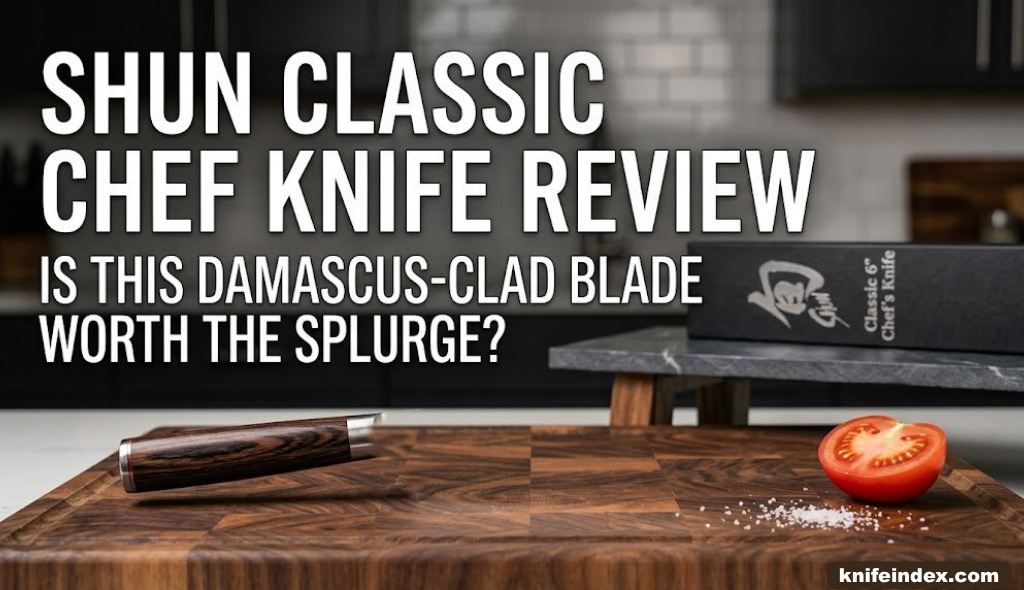
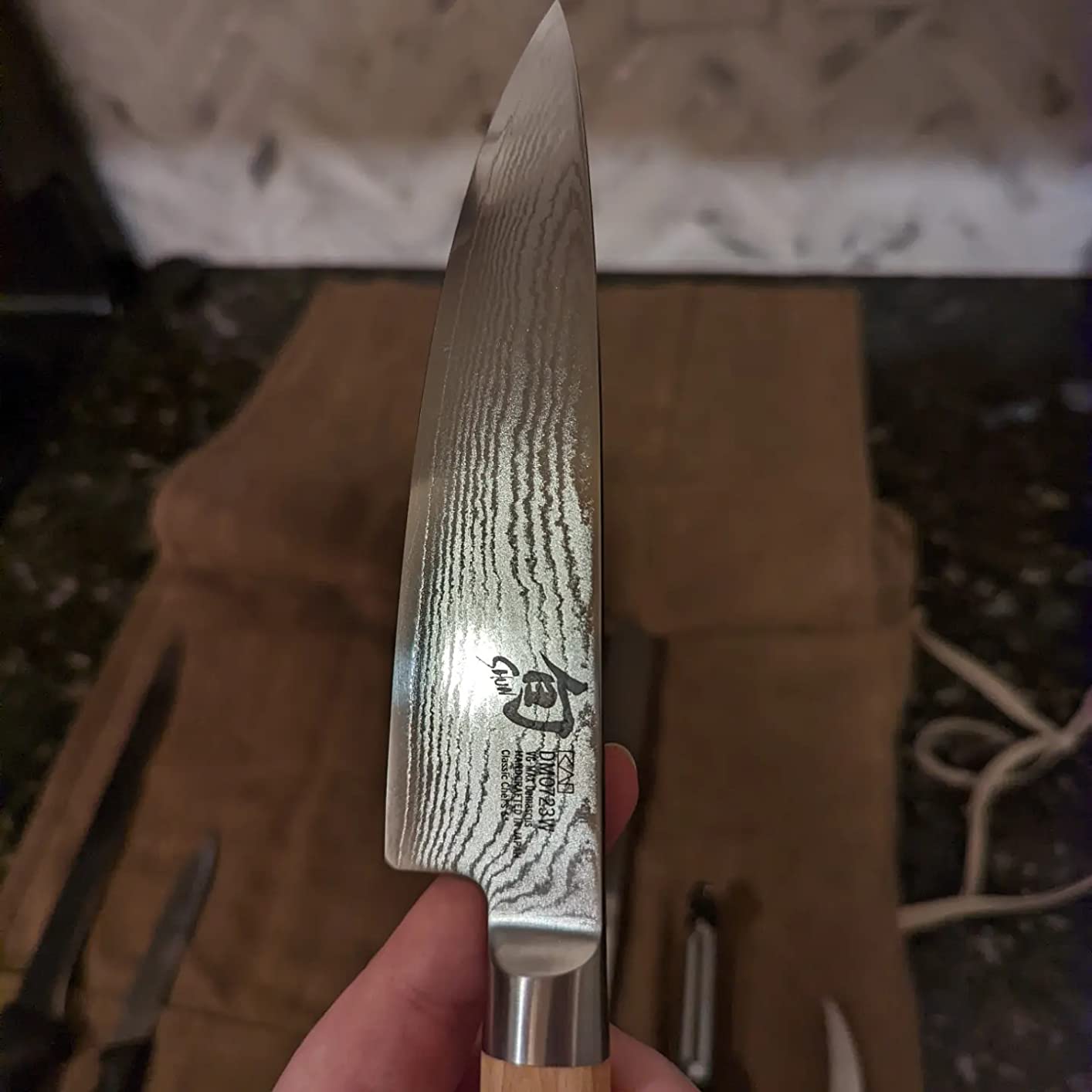
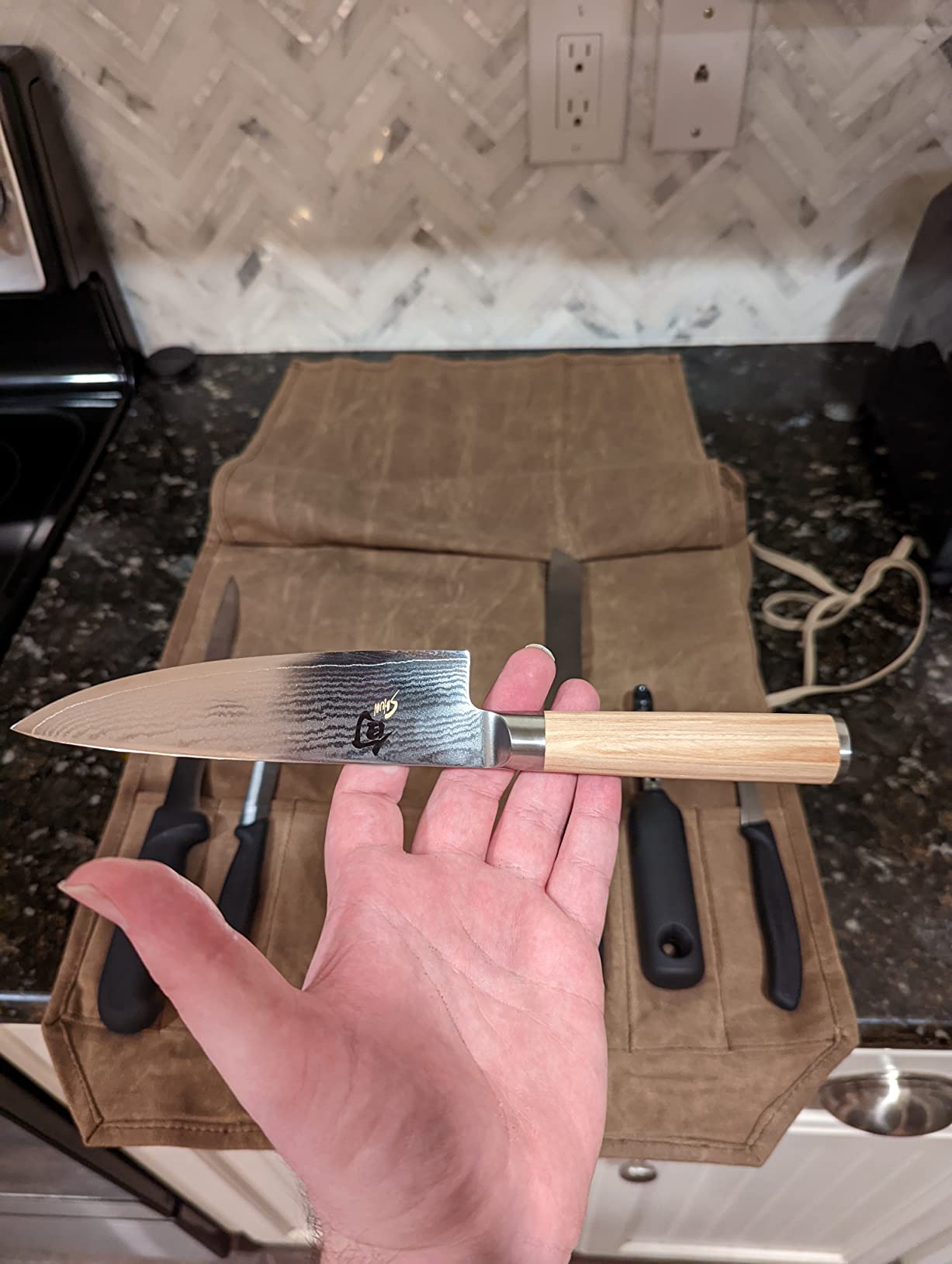
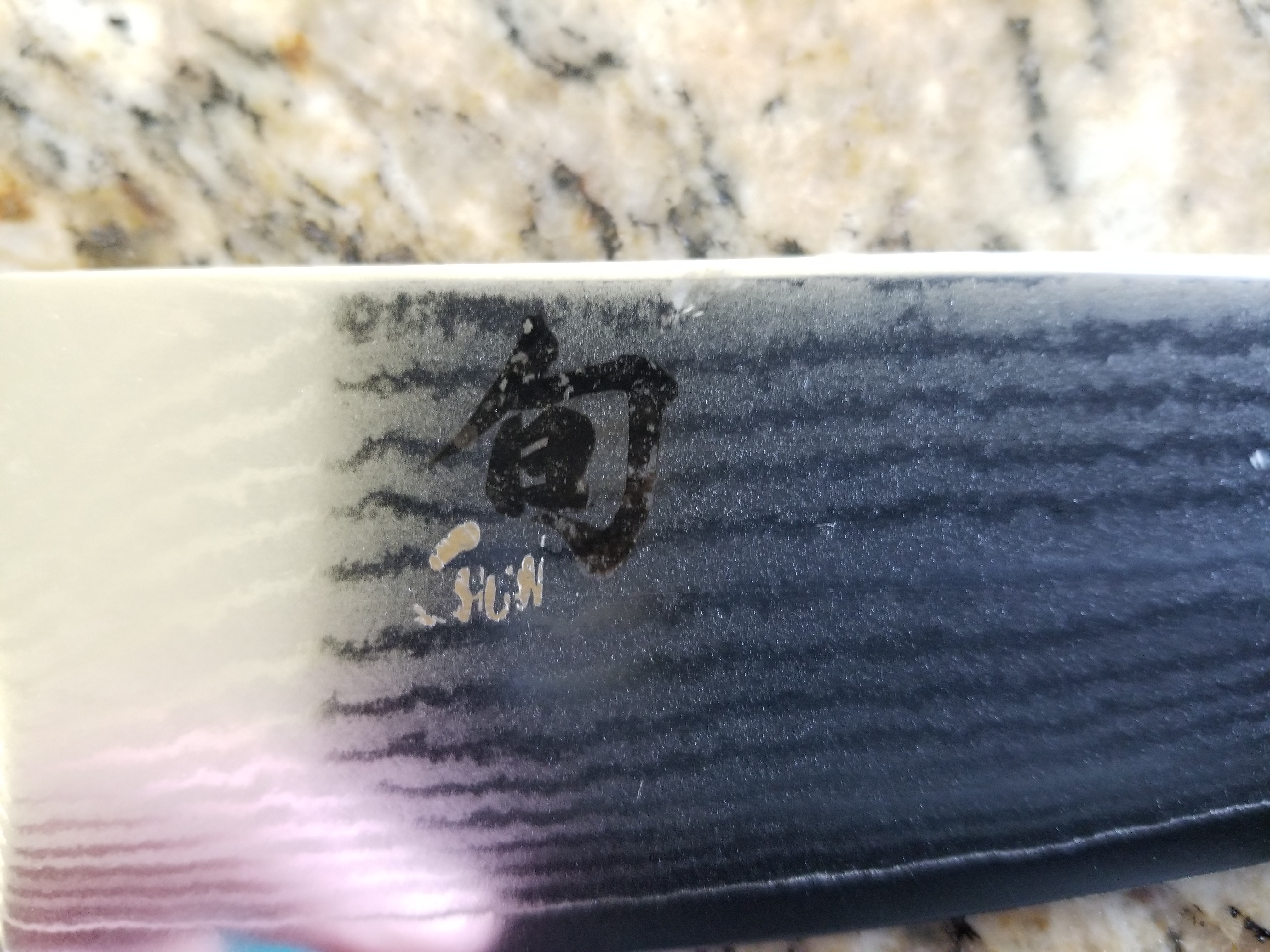
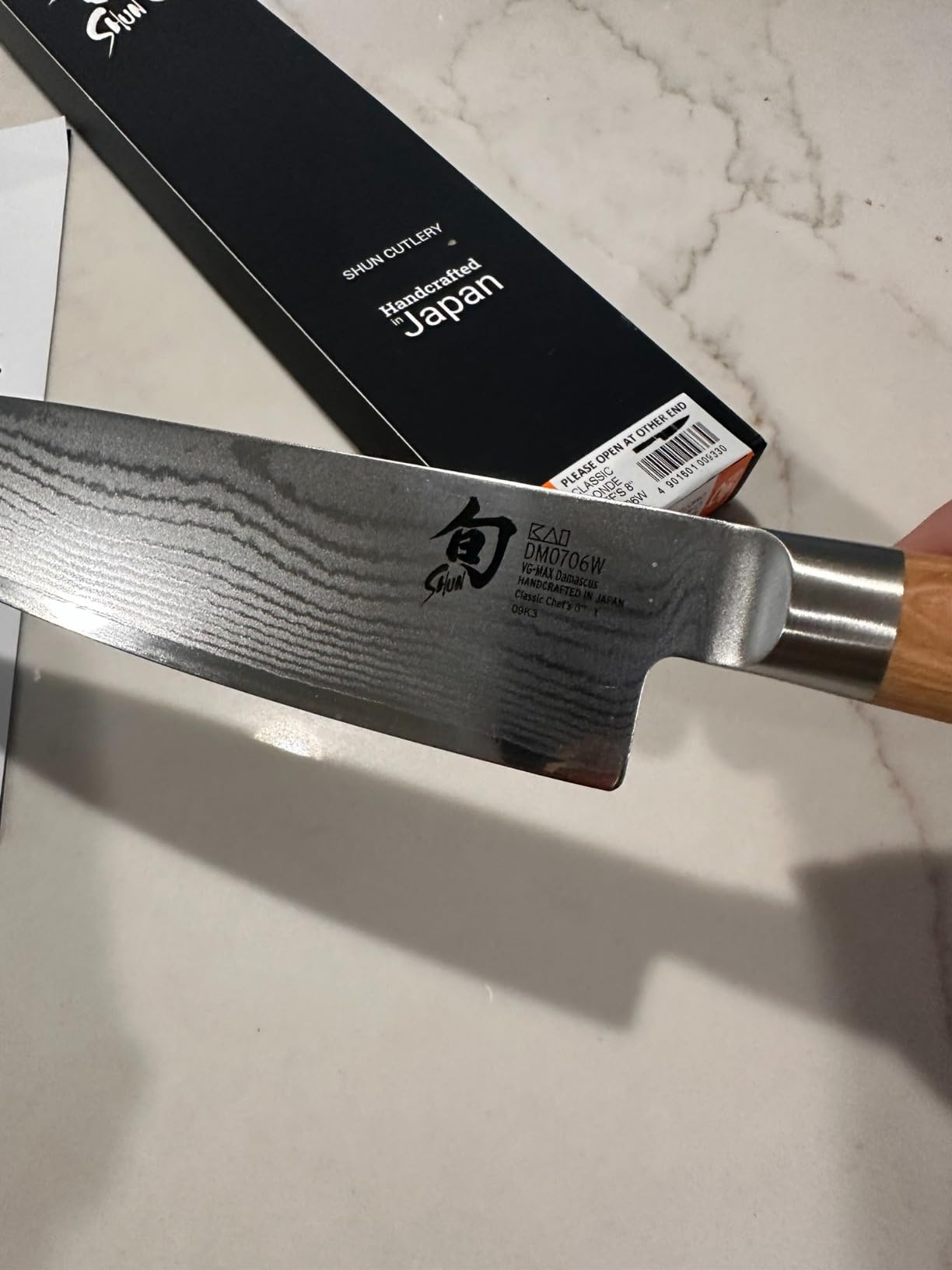
Pull the Shun Classic out of its box and the first thing you notice isn’t the edge — it’s the pattern. Layers of steel swirl across the blade face in that wavy, hammered look that Damascus-style knives are known for, and it’s genuinely striking under kitchen lighting. This isn’t a gimmick tacked on for looks, either, though it does look good sitting in a knife block. It’s the visible result of how the blade is actually constructed.
The knife arrives with a plastic edge guard, a light coating of oil on the blade to prevent shipping rust, and — depending on where you buy it — sometimes a small care card reminding you not to put it in the dishwasher. That last point matters more than it sounds, and we’ll come back to it.
Picking it up for the first time, the knife feels lighter than a typical German chef knife of the same length. If you’re coming from a heavier, thicker Western-style blade, that lighter feel can be surprising — some people love it immediately, others need a few uses to adjust. If you want a broader sense of how different blade shapes and weights feel in the hand before committing to one, our breakdown of kitchen knife anatomy is a useful starting point.
Design and Build Quality
The Shun Classic is a gyuto-style chef knife — the Japanese answer to the Western chef knife, but with a thinner blade profile and a straighter edge that favors push cuts and precision slicing over the rock-chop motion many home cooks default to. The blade is clad in 32 layers of Damascus steel on each side, which wrap around a harder VG-MAX core. That combination is the whole design philosophy of this knife in one sentence: a hard, sharp edge protected by a softer, tougher outer layer that resists chipping.
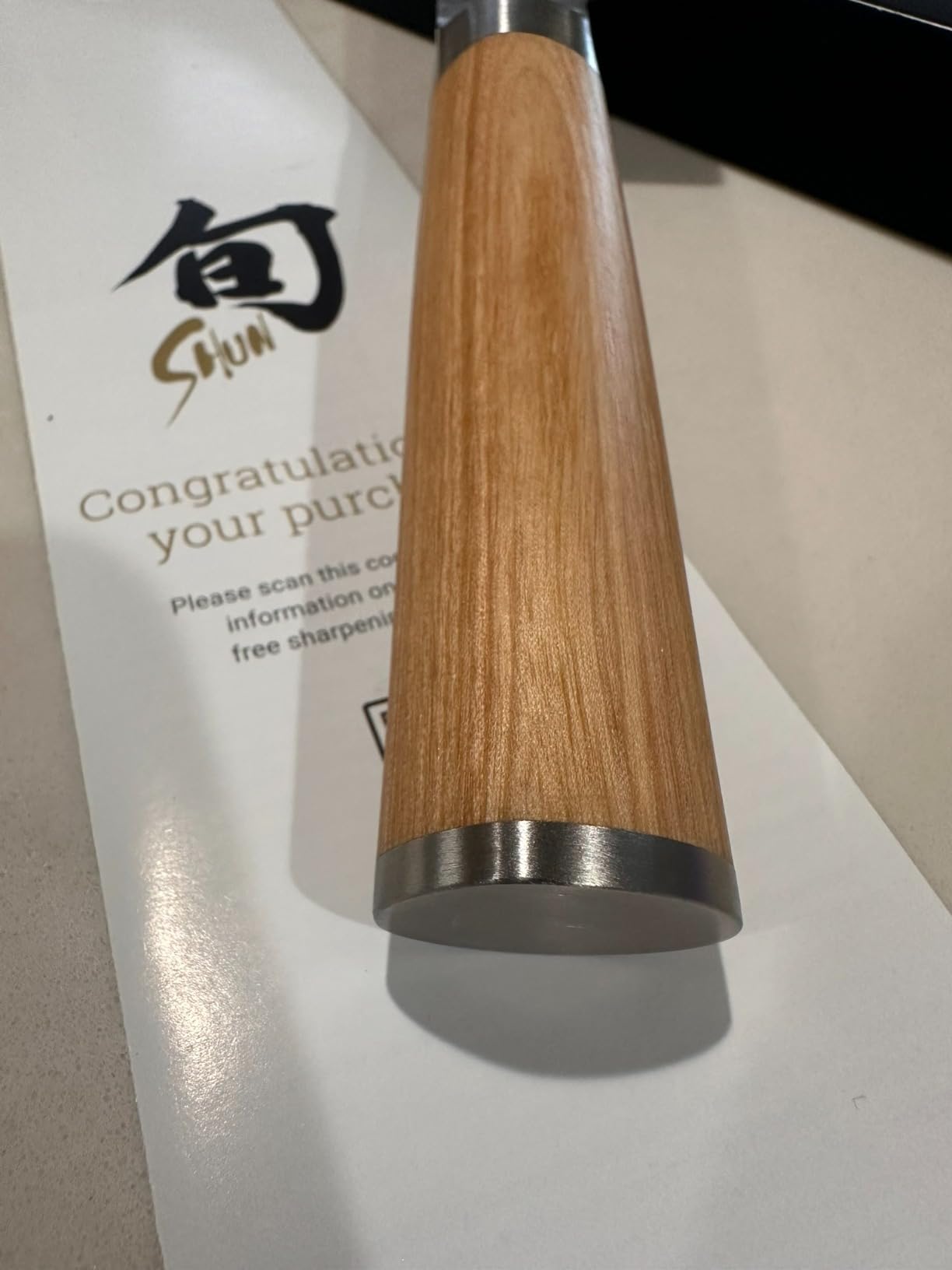
The bolster is a rounded, D-shaped piece that transitions smoothly into the PakkaWood handle — a resin-infused wood composite that’s more water-resistant than solid wood but still has real grain and warmth to it. There’s no full exposed tang here; the handle is a traditional Japanese-style D-shaped grip pinned onto a partial tang, which keeps weight low and balance close to the blade.
Blade Geometry
The edge is sharpened to roughly 16 degrees per side, noticeably thinner than the 20-22 degree edges common on German knives. Thinner edges cut with less resistance through food, but they’re also less forgiving of abuse — twisting the blade in a cut, using it on bone, or prying with it is a fast way to chip a thin edge like this. If you want to understand how edge geometry translates into real cutting feel, the discussion in our thin vs. thick behind the edge guide lays it out clearly.
See the current listing, sizes, and buyer photos on Amazon.
View on Amazon →The Steel: What Is VG-MAX?
VG-MAX is Shun’s proprietary evolution of the well-regarded VG-10 steel, with added tungsten, cobalt, and slightly higher carbon content compared to standard VG-10. In practice, that translates into a harder core (typically landing around 60-61 HRC) with better edge retention than plain VG-10, while still being stainless and reasonably easy to sharpen compared to more exotic powder steels.
If you’ve researched Japanese kitchen knives at all, you’ve probably run into the VG-10 vs. AUS-10 debate, since both show up constantly in this price range. Our VG-10 vs AUS-10 comparison is worth reading if you’re cross-shopping steels, and if you want a more direct look at how VG-MAX stacks up against the steel used in Shun’s higher-end lines, see our Miyabi SG2 vs. Shun VG-MAX breakdown.
| Property | Detail |
|---|---|
| Core steel | VG-MAX |
| Cladding | 32-layer Damascus, both sides |
| Hardness | ~60-61 HRC |
| Edge angle | ~16° per side |
| Corrosion resistance | High (stainless) |
| Ease of sharpening | Moderate — takes a fine edge well, but hard core resists coarse stones |
For a wider view of how carbon content and stainless composition affect edge behavior generally, our high-carbon vs. stainless steel breakdown is a good companion read.
Handle, Balance & Comfort
The D-shaped PakkaWood handle is where a lot of the knife’s character shows up in daily use. It’s narrower than most Western handles, tapering slightly toward the butt, and the rounded profile means there’s no sharp bolster digging into your palm during long prep sessions. For a pinch grip — thumb and forefinger choked up on the blade near the bolster, which is how most trained cooks actually hold a chef knife — the transition from blade to handle is smooth and doesn’t create a hot spot.
Balance sits just slightly forward of the bolster, which feels blade-heavy in a good way for slicing motions but can feel less planted if you’re used to a handle-heavy Western knife for chopping. Cooks with larger hands sometimes find the handle a touch slim; it’s not uncomfortable, just noticeably different from a full-size German handle. If handle comfort and grip shape are a priority for you across knife types generally, our guide to handle materials compared covers how wood composites like PakkaWood stack up against G-10, Micarta, and molded plastic.
How We Tested This Knife
A knife review is only as useful as the testing behind it, so here’s exactly what this evaluation involved rather than a vague impression formed after a single dinner prep. The goal was to put the Shun Classic through the kind of varied, repeated use a real home kitchen actually demands, not a single controlled slicing test that looks good on paper but tells you little about daily ownership.
Everyday Prep Over Several Weeks
The core of the testing was simply cooking with it — daily vegetable prep, weekly meal-prep sessions involving proteins, and the kind of miscellaneous cutting board work that fills a normal week: bread, citrus, herbs, cheese, the occasional squash. Tracking how the edge felt at the start of week one versus the end of week four gives a much more honest picture of edge retention than a single controlled cut count.
Controlled Cutting Comparisons
Alongside daily use, the knife was run through a handful of repeatable comparisons against a German chef knife and another Japanese-style gyuto: slicing through ripe tomatoes to check for skin-tearing versus clean penetration, dicing a full yellow onion for feel and consistency of cut, and portioning raw chicken breast to see how the edge handled soft protein versus how it handled the occasional light contact with a cutting board or bone fragment.
Edge Retention Checks
Rather than relying purely on feel, sharpness was checked periodically using simple paper-slicing tests — a sharp edge glides through printer paper cleanly, while a duller edge catches and tears. This was repeated at intervals throughout testing to get a rough sense of how many days of typical use the factory edge held up before needing a touch-up.
Maintenance Testing
Finally, the knife was deliberately sharpened from a dulled state on a 1000/6000 grit combination whetstone to evaluate how it responds to home sharpening, since edge retention only matters if the knife is also realistic to maintain without professional equipment. That process is detailed later in the step-by-step sharpening walkthrough further down this page.
Kitchen Performance: What It’s Actually Like to Cook With
On the cutting board, the difference between this and a thicker Western knife is obvious within the first few cuts. Slicing through a tomato, the thin edge barely dents the skin before it’s already through — no sawing, no squashing. Dicing an onion feels almost effortless, and the straighter edge profile (versus the curved belly of a German knife) means push cuts and precision slicing work better than a rocking motion.
Where it’s less at home is heavy-duty work. Breaking down a squash, cutting through small bones, or anything that asks the blade to twist or pry is exactly the kind of task that risks chipping a 16-degree edge. This is a precision tool, not a workhorse cleaver — for that kind of heavier chopping, a knife built around a thicker, tougher geometry like the ones in our best cleaver knives guide is the better fit.
Herbs, Proteins, and Fine Work
Where the Shun Classic really shines is fine prep: mincing garlic, chiffonade on basil, breaking down chicken breasts, or portioning fish. The thin blade glides through soft proteins cleanly, and for anyone doing a lot of raw fish or sushi-adjacent prep at home, this knife’s geometry has a lot in common with dedicated Japanese slicers — worth comparing against our yanagiba vs. sujihiki guide if that’s a regular part of your cooking.
Sharpness and Edge Retention
Out of the box, the factory edge on the Shun Classic is genuinely sharp — sharper than most mainstream Western knives ship from the factory. In normal home use (a mix of vegetables, proteins, and occasional bread), the edge holds a working sharpness for several weeks of near-daily cooking before it starts to feel like it’s dragging rather than slicing.
That’s a meaningfully longer stretch than most German stainless knives in the same price bracket, largely thanks to the harder VG-MAX core. The tradeoff is that once the edge does dull, it takes a bit more skill and the right equipment to bring back — this isn’t a knife you want to run through a cheap pull-through sharpener.
Long-Term Ownership Notes
A first impression tells you how a knife feels for the first few days, but the more important question for a purchase at this price point is how it holds up over months and years of real use. Several patterns become clear once the initial excitement wears off and the knife settles into a normal rotation.
The Damascus Finish Ages Gracefully — With Caveats
The rippled Damascus pattern doesn’t fade or wear off with normal hand-washing and drying, and it tends to develop a very subtle patina of fine use-marks over time that most owners find adds character rather than detracting from the look. Where it doesn’t age well is under abrasive cleaning: scouring pads, harsh degreasers, or letting acidic food residue (citrus, tomato) sit on the blade for extended periods can dull the pattern’s contrast and, in worse cases, contribute to spotting.
Edge Longevity Between Full Sharpenings
Across months of ownership, the interval between full whetstone sharpenings tends to stretch out once you develop good habits — using a wooden or soft plastic cutting board instead of glass or stone, avoiding twisting cuts, and giving the edge an occasional light strop on leather. Owners who stick to these habits often go two to three months between full sharpenings with only the occasional light touch-up in between; owners who use it on a glass cutting board or leave it in a knife drawer without a blade guard report needing to sharpen far more frequently.
Handle Durability
The PakkaWood handle holds up well against moisture compared to solid wood handles, but it’s not indestructible — repeated soaking (leaving it in a sink of soapy water, for instance) over a long period can eventually dull its finish or cause minor separation at the pin. This is really a maintenance issue rather than a design flaw: the handle is rated for hand-washing and quick drying, not extended submersion.
Resale and Perceived Value Over Time
Because Shun is a well-recognized brand with strong resale recognition, a well-maintained Classic tends to hold value better on the secondhand market than lesser-known Japanese-style knives, which is a minor but real consideration if you ever plan to upgrade to a higher-tier Shun line down the road, such as the Damascus-forward options discussed in the lineup section below.
Maintenance and Sharpening
Hand-washing and immediate drying are non-negotiable here. Despite the stainless cladding, the Damascus pattern and thin edge don’t hold up well to dishwasher cycles — heat, moisture, and knocking against other utensils are a fast way to dull or chip the edge and dull the finish. A quick wash, dry, and away into a block or on a magnetic strip is really all it takes.
For sharpening, whetstones are the right tool — a 1000/6000 grit combination stone will take this edge from dull to hair-splitting sharp, though the hardness of VG-MAX means it takes a bit longer on the coarse stone than a softer German steel would. If you’re deciding between sharpening methods generally, our comparison of whetstones vs. electric sharpeners explains why hand stones are usually the safer choice for a knife like this, and our best knife sharpeners roundup can help you pick equipment if you’re starting from scratch.
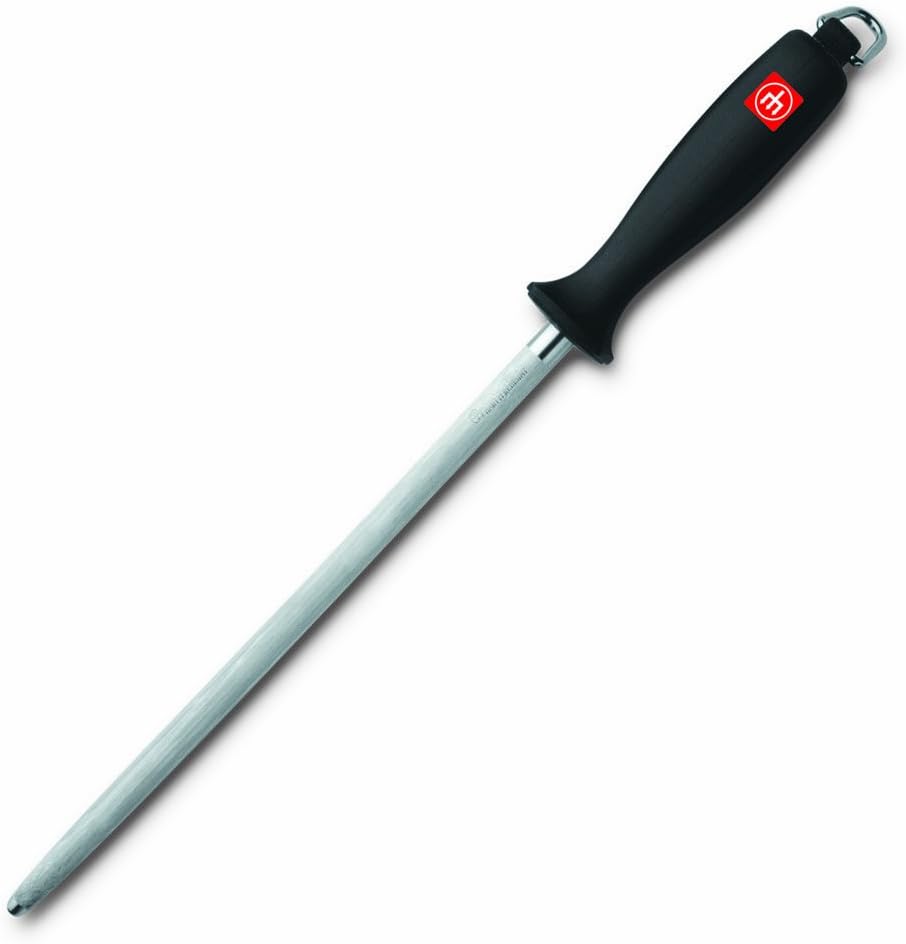
Between sharpening sessions, a honing rod won’t do much for this edge the way it would on a softer Western blade — VG-MAX doesn’t roll the way softer steels do, so a honing steel isn’t really necessary in the same way. If you want to understand that distinction better, see our honing steel vs. whetstone explainer.
Storage also matters more than people expect. A knife block, magnetic strip, or blade guard protects both the edge and the Damascus finish from the kind of drawer-clanging damage that dulls blades fast. Our guide to magnetic strip storage layouts is a good resource if counter space is tight.
Step-by-Step Sharpening Walkthrough
For owners sharpening a Japanese-style knife like this for the first time, here’s a straightforward process that works well for the Shun Classic’s 16-degree edge using a standard 1000/6000 grit combination whetstone.
1. Soak and Set Up
Soak the stone according to its manufacturer’s instructions (many combination stones need 5-10 minutes fully submerged), then set it on a stable, non-slip base — a damp towel underneath works if you don’t have a dedicated stone holder.
2. Find the Angle
Rest the blade against the stone and tilt it until you can feel the bevel sit flush, then lift slightly — most people find roughly the width of two stacked coins between the spine and the stone gets close to the 16-degree angle this knife is ground to. Consistency matters more than perfection; the same angle repeated evenly will out-perform an unstable angle that’s technically “correct” for a moment.
3. Work the Coarse Grit
Using light, even pressure, draw the blade across the 1000-grit side in smooth strokes, alternating sides every few passes to keep the edge centered. Continue until you can feel a small burr form along the opposite edge — that burr is the signal the coarse stone has done its job and it’s time to move to the fine grit.
4. Refine on the Fine Grit
Switch to the 6000-grit side and repeat the same motion with lighter pressure, which polishes the edge and removes the burr, leaving a fine, keen edge rather than a rough, toothy one.
5. Strop and Test
A few passes on a leather strop (or even the back of an old belt) removes any remaining micro-burr and aligns the very apex of the edge. Test sharpness carefully by slicing through a sheet of printer paper — a properly sharpened edge should glide through with almost no resistance or tearing.
For a more detailed general comparison of how this whole process differs from simply running a honing rod along the edge, our strop vs. honing rod guide is worth a read, and if you’d rather understand the sharpening system landscape before buying stones, our sharpening systems guide covers the diamond vs. ceramic vs. traditional whetstone debate in more depth.
Ready to add this one to your knife block? Check today’s price.
Check Price on Amazon →How the Shun Classic Compares
The Shun Classic doesn’t exist in a vacuum — it competes directly against the German heavyweights that dominate most home kitchens, plus a handful of other Japanese-style knives at similar or lower price points. Here’s how it stacks up on the specs that matter most.
| Knife | Style | Steel | Edge Angle | Best For |
|---|---|---|---|---|
| Shun Classic | Japanese gyuto | VG-MAX | ~16° | Precision slicing, fine prep |
| Wüsthof Classic 8″ | German chef | X50CrMoV15 | ~20° | Heavy chopping, durability |
| Zwilling Pro | German chef | Friodur X50CrMoV15 | ~20° | All-purpose, tough edge |
| Miyabi Birchwood | Japanese gyuto | SG2 | ~16-18° | Premium edge retention |
| Global G-2 | Japanese chef | Cromova 18 | ~15° | Lightweight all-purpose use |
For a deeper dive into the philosophical and practical differences between the two broad schools of knife-making, our German vs. Japanese steel comparison is a great primer. If you’re specifically weighing this exact matchup, we’ve also written a dedicated Shun vs. Wüsthof comparison and a Shun vs. Global comparison that go into more detail than we have room for here.
Curious how the Wüsthof Classic performs on its own merits before deciding between the two? Our full Wüsthof Classic 8-inch review covers that in depth, and the Global G-2 review is worth a look if lightweight all-metal construction appeals to you more than Damascus cladding.
Shun Classic Within Shun’s Own Lineup
It’s worth understanding where the Classic sits relative to Shun’s other product lines, since the brand name alone covers a wide spread of price points and steel choices. The Classic is generally considered Shun’s flagship mainstream line — the one most likely to show up in a well-stocked kitchen store — built around VG-MAX and the recognizable 32-layer Damascus cladding.
Above it sit lines built on more exotic core steels, most notably the SG2 (also branded R2) powder steel used in premium Shun and Miyabi knives, which pushes hardness and edge retention even further at a meaningfully higher price and with a steeper sharpening learning curve. If you’re wondering whether that step up is worth it for your kitchen, the Miyabi SG2 vs. VG-MAX comparison referenced earlier breaks down exactly what you gain and what you give up.
Below the Classic, Shun and other Japanese brands offer more affordable stamped or simpler-construction knives that trade some edge retention and fit-and-finish for a lower price — a reasonable path if you want to try the Japanese gyuto shape before committing to a premium forged knife.
Building a Knife Set Around the Shun Classic
A chef knife this precision-focused works best as part of a small, purposeful set rather than as a lone do-everything tool, since its thin edge is genuinely not suited to certain tasks. Most cooks find that pairing it with two or three complementary blades covers essentially everything a home kitchen needs.
A Serrated or Bread Knife
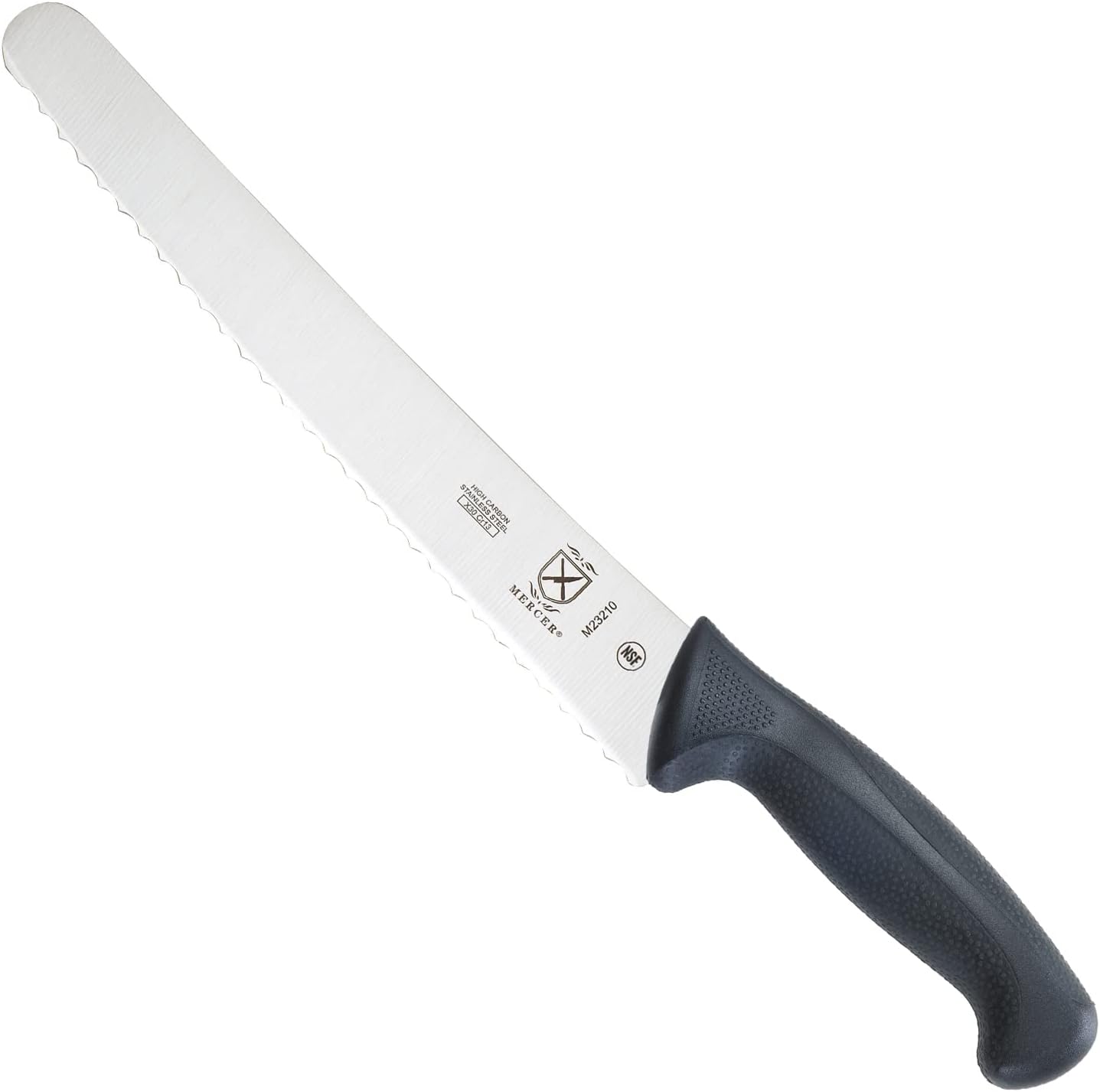
Because the Shun’s straight, thin edge isn’t built for crusty bread crusts or tomato skins under pressure, a dedicated serrated knife fills that gap without risking the chef knife’s edge. Our guide to top serrated bread knives and our comparison of slicing vs. carving knives can help round out that part of the drawer.
A Sturdier Utility or Boning Knife
For bone-in proteins, tougher root vegetables, or general “don’t want to risk the good knife” tasks, a separate boning or utility knife absorbs the abuse a thin gyuto edge shouldn’t have to. See our best boning knives guide for options that pair well alongside a precision chef knife like this one.
A Paring Knife for Detail Work
Small detail tasks — hulling strawberries, deveining shrimp, peeling garlic — are more comfortable with a smaller blade than an 8-inch gyuto, even a light one. Our overview of what a paring knife is used for covers the basics if you don’t already have one in rotation.
Who Should Actually Buy This Knife
The Shun Classic makes the most sense for home cooks who already do a fair amount of prep work — chopping vegetables regularly, portioning proteins, and generally spending real time at the cutting board — and who are willing to hand-wash and occasionally hone a knife rather than treat it as disposable kitchen hardware.
It’s a poor fit for anyone who wants a knife that can be tossed in the dishwasher, used to break down a whole chicken bone-in regularly, or handed to someone who isn’t going to respect a thin edge. If that’s your situation, a tougher, thicker-edged knife — something in the German mold, or a purpose-built boning knife for the bone-in work — will serve you better and last longer without babying.
If you’re just starting to build out a proper knife collection and aren’t sure a premium chef knife is the right first purchase, it’s worth reading our take on which three blades actually replace a full knife block before you commit.
Common Mistakes New Owners Make
A knife like this rewards a small handful of good habits and punishes a handful of common bad ones. Most disappointing ownership experiences trace back to one of the following.
Using It on the Wrong Cutting Surface
Glass and stone cutting boards are edge killers regardless of how good the steel is — they’re simply too hard and will dull a thin Japanese edge far faster than wood or soft plastic. If you’re still using a glass board, this alone may explain why the edge feels short-lived.
Treating It Like a Multi-Purpose Tool
Prying open packaging, cutting through twine, or using the tip to pop something open are all quick ways to chip or roll a thin edge that was never designed for that kind of lateral stress.
Letting It Sit in the Sink
A quick hand-wash and dry takes fifteen seconds; letting the knife soak in a sink of dishwater — especially with other utensils clanking against it — is one of the most common ways owners damage the blade and finish without realizing it happened gradually rather than all at once.
Waiting Too Long Between Touch-Ups
Because the factory edge is so sharp, it’s easy to keep using the knife well past the point where a quick strop or light sharpening session would have restored performance for much less effort than waiting until it’s fully dull and needs a longer session on the coarse stone.
Storing It Loose in a Drawer
Without a blade guard, sheath, or dedicated slot, a loose knife in a drawer is a hazard to both the edge and to fingers reaching in blind. If you don’t already have a storage solution, our DIY knife block guide or the magnetic strip layouts referenced earlier are both worth a look.
Pros and Cons
Pros
- Exceptionally sharp factory edge, thinner and more precise than most Western knives
- VG-MAX core holds an edge noticeably longer than mainstream German stainless
- Striking Damascus cladding that’s also functionally protective
- Lightweight, comfortable D-handle for long prep sessions
- Excellent for fine work: mincing, slicing proteins, precision cuts
Cons
- Thin edge is vulnerable to chipping on bone or hard twisting motions
- Not dishwasher safe — requires hand-washing and prompt drying
- Sharpening on coarse stones takes longer due to steel hardness
- Narrower handle may feel small to cooks with larger hands
- Premium price relative to comparable German options
Price and Value
The Shun Classic sits firmly in the premium tier of home-kitchen chef knives, priced above most mainstream German brands but generally below Shun’s own higher-end Damascus lines and boutique Japanese makers. Whether that premium is worth paying comes down to how much you value edge performance and fine-prep precision versus outright toughness and low-maintenance durability.
If budget is the main constraint, it’s worth comparing this against more affordable Japanese-style options before deciding — our budget chef knife buyer’s guide and Tuo chef knife review both cover knives that borrow some of the same design ideas at a fraction of the cost, even if they don’t quite match the steel or fit and finish here.
Where and How to Buy
The Shun Classic is widely available through major kitchenware retailers and online marketplaces, and pricing can fluctuate with sales events, bundle deals, and blade-length options. Buying through a reputable listing matters more than it might seem — counterfeit or gray-market Japanese knives do circulate online, typically identifiable by inconsistent Damascus patterns, missing or low-quality packaging, and prices that seem too good to be true relative to the going rate.
Checking current listings, buyer photos, and verified reviews before purchasing is a reasonable way to confirm you’re looking at genuine stock. You can check the current price, available sizes, and recent buyer feedback using the link below.
See current pricing, size options, and verified buyer reviews.
Check Price on Amazon →Final Verdict
The Shun Classic earns its reputation. It’s not the toughest knife in the drawer, and it demands a bit more care than a knife you can toss in the dishwasher and forget about — but for the specific job of fine, precise kitchen prep, few knives at this price point cut as cleanly or hold an edge as long. If you cook often enough to notice the difference between a knife that glides through an onion and one that squashes it, this is a genuine upgrade.
Buy it if you want a precision daily driver for prep work and are willing to hand-wash and occasionally sharpen it properly. Skip it if you need a low-maintenance, do-everything knife that can survive rough handling.
Ready to try the Shun Classic in your own kitchen? Check today’s price and availability.
Check Price on Amazon →Frequently Asked Questions
Is the Shun Classic dishwasher safe?
No. Despite being made from stainless steel, the Damascus cladding and thin edge don’t hold up well to dishwasher cycles. Hand-wash and dry it immediately after each use.
What steel does the Shun Classic use?
The core is VG-MAX, a proprietary evolution of VG-10 with added tungsten and cobalt, clad in 32 layers of Damascus steel on each side for protection and visual pattern.
How often does it need sharpening?
With regular home use, most owners find it holds a working edge for several weeks before needing a full sharpening on a whetstone. Light stropping can extend that further.
Can I use a honing rod on this knife?
You can, but it won’t do as much as it would on a softer German blade. VG-MAX is hard enough that it doesn’t roll the edge the way softer steels do, so honing has limited benefit here.
Is it good for cutting bone or frozen food?
No. The thin edge is optimized for precision slicing and is prone to chipping on bone, frozen foods, or anything requiring twisting or prying motions.
How does it compare to Wüsthof or Zwilling?
It’s thinner, lighter, and holds an edge longer than most German knives from Wüsthof or Zwilling, but it’s also less forgiving of rough use and requires more careful maintenance.
What size should I buy?
The 8-inch is the most versatile size for most home cooks and matches the sizing convention of most Western chef knives, making it an easy first Japanese-style knife.
Is the handle comfortable for large hands?
It’s on the narrower side compared to a full Western handle. Most users adjust quickly, but if you have particularly large hands, it’s worth handling one in person if possible.
Does it come with a warranty?
Shun backs its knives with a limited lifetime warranty against manufacturing defects, though normal wear, chipping from misuse, and dishwasher damage typically aren’t covered.
Is this a good first Japanese-style knife?
Yes, it’s one of the more approachable options for someone moving from a Western knife to a Japanese-style blade, thanks to its familiar length and moderate (not extreme) thinness compared to more specialized single-bevel knives.
What cutting board should I use with this knife?
Stick to end-grain or edge-grain wood, or a soft plastic cutting board. Glass, stone, marble, and bamboo (which is harder than it looks) all accelerate edge dulling on a thin blade like this.
Can left-handed cooks use the Shun Classic comfortably?
Yes. Unlike some traditional Japanese single-bevel knives, the Shun Classic is a double-bevel gyuto ground symmetrically, so it performs the same for left- and right-handed users without any adjustment.
How does the 8-inch compare to the 6-inch or 10-inch versions?
The 8-inch is the most versatile all-purpose length for most home cooks. The 6-inch trades some reach for more control in tighter cuts, while the 10-inch suits cooks with larger hands or who regularly break down larger cuts of protein or produce.
Will the Damascus pattern wear off over time?
No, the pattern is created through the layered construction of the blade itself rather than a surface coating, so it doesn’t wear away with normal use. It can lose some visual contrast if cleaned with abrasive scouring pads.
Is VG-MAX better than standard VG-10?
Generally yes for edge retention — VG-MAX adds tungsten and cobalt and slightly more carbon than standard VG-10, giving it a harder resulting edge, though the practical difference is more noticeable to experienced cooks than casual users.
Does this knife rust?
It’s a stainless steel blade, so rust risk is low under normal conditions. However, leaving acidic residue (citrus, tomato) on the blade for extended periods, or letting it sit wet, can still cause spotting or discoloration over time. If you do notice early rust spots, our guide on removing rust from a knife covers safe methods for stainless blades.
How do I know if the edge needs sharpening versus just honing?
If the blade struggles to slice cleanly through a ripe tomato or catches on printer paper instead of gliding through, it likely needs a full sharpening rather than just a strop or hone. Since VG-MAX doesn’t roll the way softer steels do, honing alone won’t restore a genuinely dull edge.
Is the Shun Classic worth it compared to cheaper alternatives?
If you cook often and value precision slicing and longer edge retention, most owners find the price justified. If you cook infrequently or want a low-maintenance workhorse, a mid-range German knife or budget Japanese-style option may deliver better value for your actual usage pattern.