Slicing Knife vs Carving Knife: Which One Actually Belongs In Your Kitchen?
Two long, narrow blades that look almost identical at a glance — but behave very differently once they meet a roast, a brisket, or a holiday turkey. Here’s the full breakdown of blade geometry, flexibility, edge type, and real-world performance.
Quick Overview: Slicing Knife vs Carving Knife
If you’ve ever stood in a kitchen store staring at two long, skinny knives that look almost like twins, you’re not imagining things. The slicing knife and the carving knife occupy the same general category of “long blade for cutting cooked meat,” and manufacturers don’t always make the distinction obvious on the packaging. But once you actually put both to work — on a spiral ham, a standing rib roast, a smoked brisket, or a whole roasted chicken — the differences become very clear very quickly.
A carving knife is generally the workhorse of the holiday table: rigid, moderately long, built to separate meat from bone and portion a roast into clean servings. A slicing knife, on the other hand, is the specialist: longer, often more flexible, and engineered specifically to produce thin, even, restaurant-quality slices from large cuts of cooked meat, cured meat, or smoked proteins. Some slicing knives even overlap with what’s known as a sujihiki used for slicing raw fish, though that’s a distinct Japanese-style blade with its own bevel geometry.
Below, we’re breaking down every meaningful difference — blade length, flexibility, edge style, handle ergonomics, steel choice, and the exact tasks each knife is built for — so you can figure out which one deserves a spot in your knife block, or whether you genuinely need both.

Not sure which style fits your kitchen?
Check current pricing and reviews on a top-rated carving and slicing knife set.
Check Price on AmazonWhat Is a Slicing Knife?
A slicing knife is a long, narrow-bladed knife — typically 8 to 14 inches — designed to make thin, clean, continuous cuts through large pieces of cooked or cured meat without tearing the flesh or dragging fibers out of position. The blade is usually thinner in cross-section than a chef’s knife or carving knife, which reduces friction and resistance as it passes through the food.
Many slicing knives feature a rounded or “sheepsfoot” tip rather than a sharp point, since the goal isn’t piercing — it’s drawing the blade through the meat in one smooth, continuous stroke. You’ll often see slicing knives described by more specific names depending on their exact geometry and country of origin, including ham slicers, brisket slicers, salmon slicers, and roast slicers. Some slicing knives share design DNA with sujihiki-style blades used for slicing raw fish, though true sujihikis are single-bevel or asymmetrically ground and intended for raw protein rather than cooked roasts.
The defining trait of a slicing knife is its ability to make one long pull-cut through the food rather than a sawing motion. This single-pass technique is what produces those paper-thin, evenly translucent slices you see on a deli counter or a professionally carved holiday ham.
Key Characteristics of a Slicing Knife
- Length: Usually 8–14 inches, sometimes longer for commercial use
- Blade width: Narrow, generally under 1.5 inches
- Flexibility: Ranges from semi-flexible to very flexible depending on intended use
- Tip style: Often rounded or blunt to avoid tearing meat
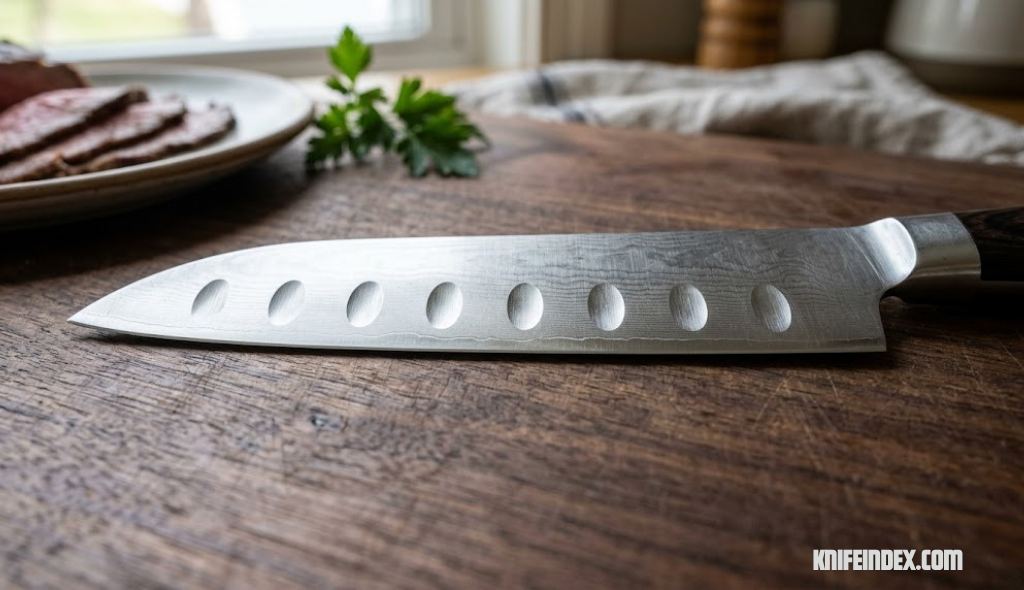
- Edge finish: Frequently features a Granton edge (scalloped hollow grooves)
What Is a Carving Knife?
A carving knife is a long, typically rigid-bladed knife — usually 8 to 10 inches — designed for portioning roasted or cooked meats that may still be attached to bone, such as a whole turkey, standing rib roast, leg of lamb, or a bone-in ham. The blade is stiffer than a slicing knife, which gives you more control when navigating around joints and bone structure.
Carving knives frequently come paired with a two-tine carving fork in a matched set, since the fork is used to stabilize the roast while the knife does the cutting. This is the knife most people picture when they think of Thanksgiving dinner or a holiday roast being portioned at the table.
Unlike a slicing knife, a carving knife typically has a pointed tip, which is useful for making initial incisions, working around bones, and separating joints. The blade is usually a bit wider than a slicing knife as well, giving it more structural rigidity for controlled, deliberate cuts.
Key Characteristics of a Carving Knife
- Length: Usually 8–10 inches
- Blade width: Slightly wider than a slicing knife for added rigidity
- Flexibility: Stiff to semi-rigid
- Tip style: Pointed, useful for working around bone
- Edge finish: Plain edge is most common, though some feature Granton grooves
Blade Length & Geometry Compared
Length is one of the first things people notice, but it’s the geometry behind that length that actually determines performance. A slicing knife’s extra length isn’t there for show — it allows the blade to complete a full pull-stroke through a large cut of meat, like a whole brisket or a spiral ham, without needing to saw back and forth. Sawing motions tend to tear meat fibers and produce ragged slices, so the longer the blade relative to the food being cut, the cleaner the result.
Carving knives, by comparison, don’t need to be quite as long because they’re typically used on smaller portions at a time — a turkey breast, a section of prime rib, individual slices off a leg of lamb. The shorter length also makes the carving knife easier to maneuver around bone, joints, and tighter spaces on the carcass.
| Attribute | Slicing Knife | Carving Knife |
|---|---|---|
| Typical Length | 8–14 inches | 8–10 inches |
| Blade Width | Narrow (under 1.5″) | Slightly wider |
| Blade Thickness | Thin, low resistance | Moderately thick, more rigid |
| Tip Shape | Rounded or blunt | Pointed |
| Primary Motion | Single long pull-stroke | Controlled short-to-medium strokes |
If you’re also curious how blade geometry affects performance on the prep side of the kitchen — not just for slicing cooked meat — our guide to blade geometry and thin vs thick behind the edge is worth a read.
Flexible vs Rigid Blades: Why It Matters
Blade flexibility might be the single most important functional difference between these two knife types, and it’s also the most misunderstood. A flexible blade isn’t a sign of lower quality — it’s an intentional design choice that lets the blade bend slightly to follow the contour of the meat as you slice, which is critical for cutting thin, even portions from an irregularly shaped roast, ham, or fillet.
Slicing knives generally fall somewhere on a spectrum from semi-flexible to highly flexible. A dedicated ham slicer or salmon slicer, for example, is often quite flexible, since the blade needs to hug the contour of the meat closely to produce paper-thin, uniform slices. A brisket slicer tends to be a bit stiffer than a ham slicer, since brisket has more structural resistance, but it’s still more flexible than a typical carving knife.
Carving knives, in contrast, are built with rigidity as a priority. Because carving knives are often used to cut through tougher connective tissue, work around bone, or apply more directed pressure when portioning a large roast, a floppy blade would actually work against you — it would deflect unpredictably instead of cutting a straight, controlled line.
When Flexible Blades Win
- Slicing boneless ham, roast beef, or brisket into thin portions
- Cutting smoked salmon or cured meats
- Following the natural curve of a rounded roast
- Producing deli-style, uniform slices
When Rigid Blades Win
- Carving a bone-in turkey or leg of lamb
- Applying direct downward pressure on tougher cuts
- Working precisely around joints and bone
- Portioning thicker, structured servings at the table
Granton Edge vs Plain Edge
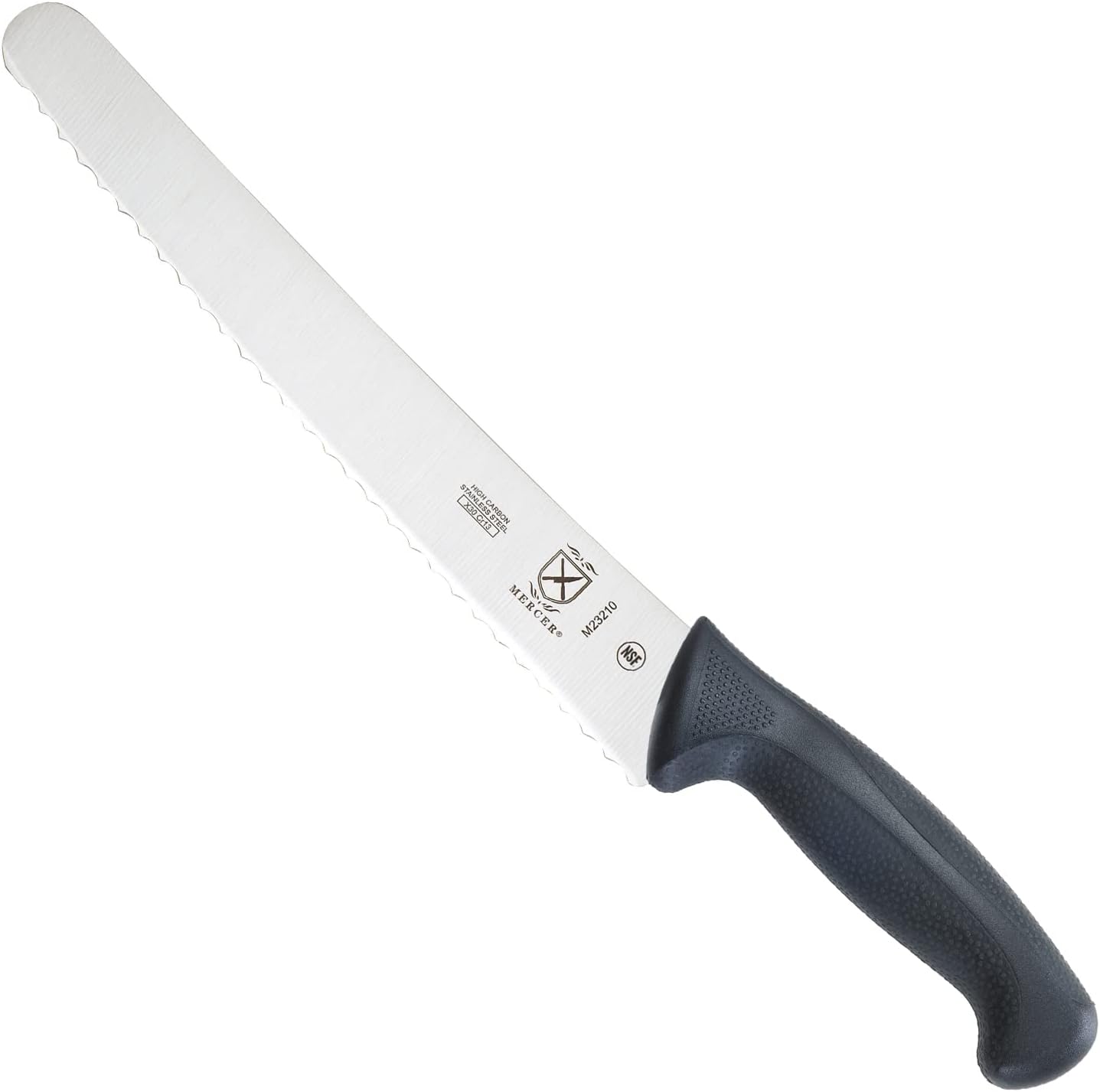
Take a close look at many slicing knives and you’ll notice a series of oval indentations running along the blade just above the cutting edge. This is called a Granton edge, and it’s a functional feature, not decoration. The scalloped grooves create small air pockets between the blade and the food, which reduces suction and friction as the knife passes through dense, moist meat. Less friction means the slice releases from the blade cleanly instead of sticking, tearing, or dragging.
This is why Granton-edge slicing knives are especially popular for ham, roast beef, and smoked salmon — all foods that are moist and prone to sticking to a plain flat blade. Carving knives can technically feature Granton edges too, though it’s less common since the primary job of a carving knife (portioning, working around bone) doesn’t rely on release performance as heavily as pure slicing does.
Plain edges, by contrast, offer a fully flat blade face with no grooves. This maximizes contact and control, which is often preferable on a carving knife where you’re making more deliberate, shorter cuts rather than one continuous glide.
Handle Design & Ergonomics
Because both knives are used for extended, repetitive cutting motions — especially during holiday meals or batch meal prep — handle comfort matters more than people expect. Slicing knives, given their length and the sweeping motion they’re used with, often have handles designed to keep your hand slightly further from the food, both for hygiene and to allow a longer, freer stroke. Carving knives tend to have a more compact, control-oriented handle shape since the motion is shorter and more deliberate.
Material choice also plays a role. Full-tang construction, where the steel extends through the entire handle, generally provides better balance and durability on both slicing and carving knives, similar to what you’d look for when evaluating full tang vs partial tang knives in any kitchen blade category. Handle materials range from classic wood to synthetic polymer, G-10, and Micarta, each with different grip, moisture resistance, and maintenance tradeoffs, which we cover in more depth in our knife handle materials comparison.
A slightly curved or drop-point handle profile is common on carving knives to help keep the wrist in a neutral position while working around bone. Slicing knives more often use a straight, minimalist handle that supports a smooth pull-through motion without unnecessary wrist rotation.
Steel & Edge Retention: What Actually Matters Here
Steel choice affects both knife types similarly in terms of general principles — harder steels hold an edge longer but can be more brittle and harder to sharpen, while softer steels sharpen easily but dull faster. For slicing and carving knives specifically, edge retention matters quite a lot, since a dull slicing knife will tear meat instead of gliding through it, and a dull carving knife will struggle around bone and connective tissue.
German-style stainless steels like X50CrMoV15 are common on mid-range carving and slicing sets because they balance edge retention, corrosion resistance, and ease of sharpening reasonably well. Higher-end slicing knives sometimes use Japanese stainless steels with higher carbon content and higher hardness ratings, offering longer edge retention at the cost of being slightly more brittle and requiring more careful sharpening technique.
If you’re deciding between stainless and high-carbon options for either knife type, our comparison of high-carbon steel vs stainless steel lays out the tradeoffs in detail, and our guide on understanding Rockwell hardness in kitchen knives explains how hardness ratings translate to real-world edge performance for long slicing and carving blades specifically.
For those comparing specific steel grades often found in premium kitchen cutlery, resources like S35VN vs S45VN, MagnaCut vs M390, and 14C28N vs Nitro-V can help you evaluate which alloy best fits your sharpening habits and usage frequency, even though these particular steels are more commonly associated with folding and fixed-blade knives than dedicated kitchen slicers.

Looking for a durable, easy-to-sharpen slicing knife?
See current options and customer ratings for stainless slicing knives built for everyday use.
View on AmazonBest Uses for a Slicing Knife
A slicing knife earns its place in the kitchen when the goal is uniform, thin, clean cuts from a boneless or mostly boneless piece of cooked meat. Think of situations where presentation matters as much as portion size.
- Ham: Especially spiral-cut or bone-in ham, where a flexible, Granton-edge slicer produces thin, even slices without tearing
- Brisket: A firmer, slightly stiffer slicing knife handles the dense muscle fibers of smoked brisket well
- Roast beef and prime rib (post-carving): Once the initial carving is done, a slicing knife creates deli-thin portions
- Smoked salmon: A long, thin, flexible blade is the standard tool for classic smoked salmon presentation
- Deli-style cold cuts and roasts: Turkey breast, pork loin, and similar cold-cut style servings
Anyone who regularly preps meals in bulk or portions large cuts of meat for meal prep will likely get more consistent, repeatable use out of a slicing knife than a carving knife, simply because the tasks tend to be boneless and volume-focused.
Best Uses for a Carving Knife
A carving knife shines specifically when bone, joints, or tougher connective structures are part of the equation, and when portioning happens at the table rather than in bulk prep.
- Whole turkey: The classic use case — separating breast, thigh, and leg meat from the bone structure
- Standing rib roast / prime rib (initial carving): Cutting the roast away from the bone before portioning
- Leg of lamb: Navigating around the bone while producing clean servings
- Whole roasted chicken: Separating joints and portioning smaller servings
- Bone-in ham (initial cuts): Making the first controlled cuts before switching to a slicing knife for thinner portions
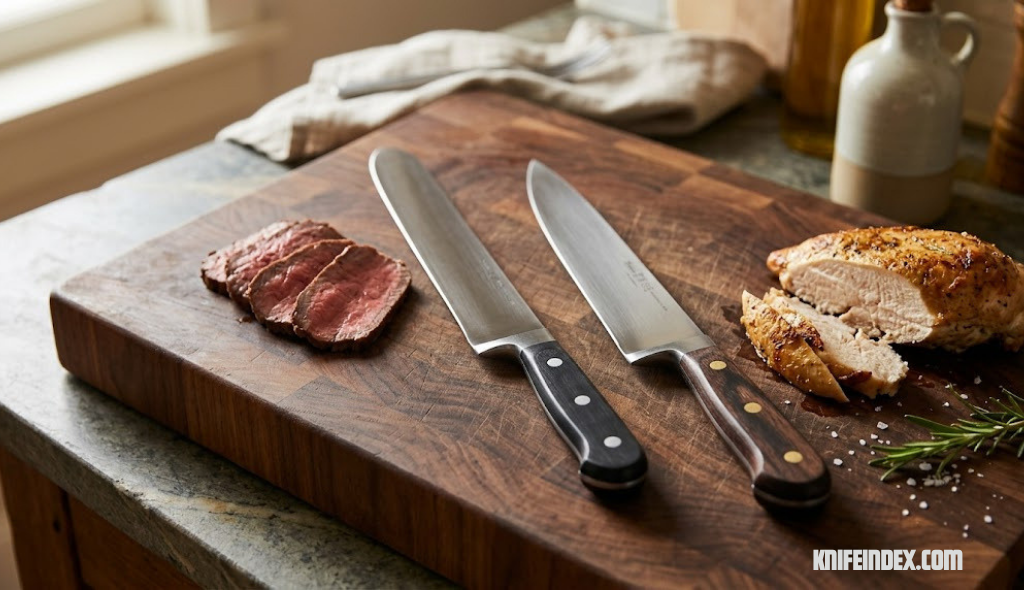
Many home cooks actually use a carving knife and a slicing knife in sequence: the carving knife does the heavy lifting of separating the roast from bone, and a slicing knife finishes the job with thin, presentation-ready cuts. If your holiday routine involves a whole turkey or bone-in roast, that combination is genuinely the most practical setup.

Prepping for a holiday roast or turkey?
A matched carving knife and fork set makes bone-in carving much easier — check today’s pricing.
Shop Carving Sets on AmazonFull Side-by-Side Comparison Table
| Feature | Slicing Knife | Carving Knife |
|---|---|---|
| Best For | Boneless, thin, uniform slices | Bone-in roasts, portioning at the table |
| Blade Length | 8–14 inches | 8–10 inches |
| Flexibility | Semi-flexible to flexible | Rigid to semi-rigid |
| Tip Shape | Rounded / blunt | Pointed |
| Common Edge | Granton (scalloped) | Plain |
| Typical Foods | Ham, brisket, salmon, deli roasts | Turkey, prime rib, leg of lamb |
| Skill Curve | Moderate — relies on smooth single strokes | Beginner-friendly — shorter controlled cuts |
| Pairs With | Meat fork or carving board with well | Two-tine carving fork |
Slicing Knife — Pros
- Produces thinner, more uniform slices
- Granton edge reduces sticking and tearing
- Great for meal-prep-style batch slicing
- Flexible blade follows the contour of the meat
Slicing Knife — Cons
- Less control around bone and joints
- Longer blade can feel unwieldy for beginners
- Not ideal for tougher, denser cuts requiring pressure
Carving Knife — Pros
- More control and precision around bone
- Shorter length is easier to maneuver
- Rigid blade applies consistent pressure
- Pairs well with a carving fork for table service
Carving Knife — Cons
- Doesn’t produce as thin or uniform a slice
- Less suited to boneless, high-volume slicing tasks
- Rigid blade can’t follow curved contours as closely
How to Choose the Right One for Your Kitchen
The honest answer for most home cooks is that the “right” choice depends entirely on what you cook most often. If your kitchen routine revolves around holiday roasts, whole turkeys, or bone-in cuts a few times a year, a quality carving knife paired with a two-tine fork will cover nearly everything you need. If you regularly prepare ham, brisket, smoked meats, or do batch meal prep involving boneless roasts, a dedicated slicing knife will consistently outperform a carving knife on slice quality and consistency.
For anyone who wants the best of both worlds without buying two separate knives, a moderately flexible 10 to 12-inch slicing knife with a slight point can function reasonably well as a hybrid, though it won’t quite match a true carving knife’s rigidity around bone or a true slicing knife’s flex for ultra-thin cuts.
Quick Decision Guide
| Your Situation | Recommended Knife |
|---|---|
| Cooking a whole turkey or bone-in roast a few times a year | Carving Knife |
| Regularly slicing ham, brisket, or smoked meats | Slicing Knife |
| Meal prepping boneless roasts in bulk | Slicing Knife |
| Hosting holiday dinners with table-side carving | Carving Knife + Fork Set |
| Want one knife that does both reasonably well | 10–12″ semi-flexible slicing knife |
If you’re building out a broader kitchen knife collection and trying to figure out which blades genuinely earn a spot in rotation, our guide on chef knife essentials and the 3 blades that can replace a full block is a useful starting point, as is our deeper look at 10 essential kitchen knives in a professional rotation.
Care & Maintenance for Long Blades
Both slicing and carving knives are long, thin-profile blades, which makes proper storage and sharpening especially important — a warped or chipped long blade is much harder to correct than a shorter utility knife. Store both knife types in a knife block, on a magnetic strip, or in individual blade guards rather than loose in a drawer, where the long edge is prone to nicking against other utensils. Our guide to small kitchen knife storage and magnetic strip layouts covers space-efficient options if you’re tight on drawer or counter space.
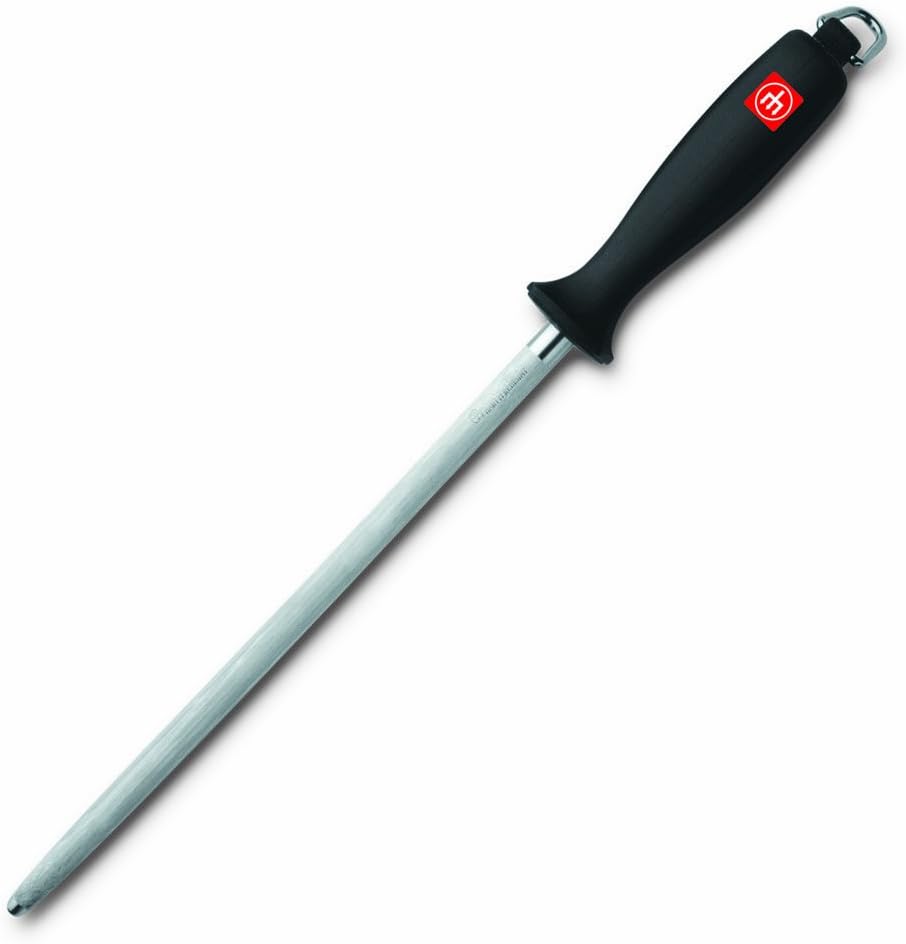
Because these blades are thin, honing before each use with a honing steel keeps the edge aligned between full sharpenings. When it’s time for an actual sharpening, a whetstone generally offers more control over the thin edge geometry than a pull-through electric sharpener, though electric sharpeners are faster for those who sharpen infrequently. Our comparison of whetstone vs electric sharpener metal removal and heat risk explains the tradeoffs in more depth, and our breakdown of honing steel vs whetstone clarifies when each tool is appropriate.
Hand-washing and immediate drying is strongly recommended for both knife types, particularly if the blade has any carbon steel content, since prolonged moisture exposure accelerates rust. If you’ve ever dealt with early-stage surface rust on a kitchen blade, our guide on how to remove rust from kitchen knives walks through safe removal methods that won’t damage the edge.

Keep your slicing or carving knife razor sharp
A quality whetstone set makes maintaining a thin, long edge much easier at home.
Check Whetstone Kits on AmazonFrequently Asked Questions
Is a slicing knife the same as a carving knife?
No. While they look similar and are sometimes used interchangeably in casual conversation, a slicing knife is generally longer, thinner, and more flexible, built for producing thin uniform slices from boneless cooked meat. A carving knife is shorter and more rigid, built for portioning meat that’s still on or near the bone.
Can I use a carving knife to slice ham?
Yes, a carving knife can slice ham, especially for the initial cuts around the bone. However, for thin, deli-style slices, a dedicated flexible slicing knife with a Granton edge will generally produce cleaner, more uniform results.
Do I really need both a slicing knife and a carving knife?
Not necessarily. Most home cooks can get by with just one, chosen based on what they cook most often. Those who regularly host holiday dinners with bone-in roasts benefit from a carving knife, while those who batch-slice boneless meats benefit more from a slicing knife.
What does the Granton edge on a slicing knife actually do?
The scalloped indentations of a Granton edge create small air pockets between the blade and the food, reducing suction and friction. This helps slices release cleanly from the blade instead of sticking or tearing.
Why are some slicing knives so flexible?
Flexibility allows the blade to follow the natural curve of a roast, ham, or fillet, which helps produce thinner, more even slices. A stiff blade would struggle to maintain consistent thickness on a rounded or irregular surface.
What’s the ideal blade length for a slicing knife?
Most home cooks do well with a 10 to 12-inch slicing knife. Longer blades, up to 14 inches, are typically used in commercial or catering settings for very large cuts of meat.
Is a carving knife good for cutting bread?
Not really. Carving knives have a plain edge best suited to meat, and lack the serration that grips a crusty crust without crushing it. For bread, a dedicated serrated bread knife is the better tool — see our guide on what a bread knife is used for for more detail.
What steel is best for a slicing or carving knife?
German stainless steels like X50CrMoV15 offer a solid balance of edge retention and easy sharpening for everyday use. Higher-carbon Japanese steels offer longer edge retention but require more careful sharpening and maintenance.
Should a slicing knife have a pointed or rounded tip?
Most dedicated slicing knives use a rounded or blunt tip since the goal is a smooth pull-through motion, not piercing. A pointed tip is more useful on a carving knife, where you may need to make initial incisions or navigate around bone.
Can a slicing knife be used on raw meat?
It’s not the ideal tool. Slicing knives are optimized for cooked, cured, or smoked proteins. For raw fish specifically, a purpose-built blade like a sujihiki performs differently — see our comparison of yanagiba vs sujihiki for slicing raw fish for more on that distinction.
How do I keep a long slicing or carving blade from warping?
Avoid soaking the blade in water, never put it in the dishwasher, and store it properly in a knife block or blade guard rather than loose in a drawer where it can flex against other objects. Hand wash and dry immediately after each use.
Is a carving fork necessary, or can I carve without one?
A carving fork isn’t strictly required, but it makes the process significantly safer and more controlled by stabilizing the roast while you cut, especially with bone-in cuts that tend to shift on the cutting board.
Final Verdict
At the end of the day, the slicing knife and carving knife aren’t really competitors — they’re specialists that solve slightly different problems. A carving knife gives you control and rigidity for bone-in roasts and table-side portioning, while a slicing knife gives you length and flexibility for thin, uniform, presentation-ready cuts from boneless meat. If your cooking involves both scenarios throughout the year, owning one of each isn’t overkill — it’s simply matching the right tool to the right cut.
Whichever direction you go, prioritize a full-tang construction, a comfortable handle, and a steel you’re willing to maintain, since a long thin blade performs at its best only when it’s properly sharpened and cared for.

Ready to add one to your kitchen?
Browse today’s best-rated slicing and carving knives and sets on Amazon.
Shop Slicing & Carving Knives