Mosfiata Chef Knife Review: Is This Budget German-Style Blade Actually Worth Your Money?
An honest, hands-on look at the Mosfiata chef knife’s steel, edge geometry, ergonomics, and value against knives twice its price.
Mosfiata Chef Knife Overview
The chef knife is the single most important tool in any kitchen, and the market for budget-friendly options has exploded over the past few years. Mosfiata is one of the newer names to enter this crowded space, positioning itself as a mid-tier alternative that borrows styling cues from premium German forged knives while keeping the price closer to what you’d pay for a basic stamped blade. That combination is exactly why so many home cooks are searching for an honest opinion before they commit to buying one.
In this review, I’m going to walk through everything that matters when you’re evaluating a chef knife: the steel composition and how it holds an edge, the blade geometry and how it performs on actual food, the handle ergonomics during long prep sessions, the fit and finish of the construction, and how it stacks up against other knives in a similar price bracket. I’ve spent real time in the kitchen with this knife, not just admiring it out of the box, and I want to give you a grounded, practical assessment rather than a marketing-driven one.
Before diving into the details, it helps to understand where the Mosfiata chef knife fits in the broader knife landscape. If you’re new to kitchen knives in general, it’s worth reading up on what a chef knife is used for so you know exactly what role this tool is meant to play in your kitchen, versus something like a santoku or a paring knife.
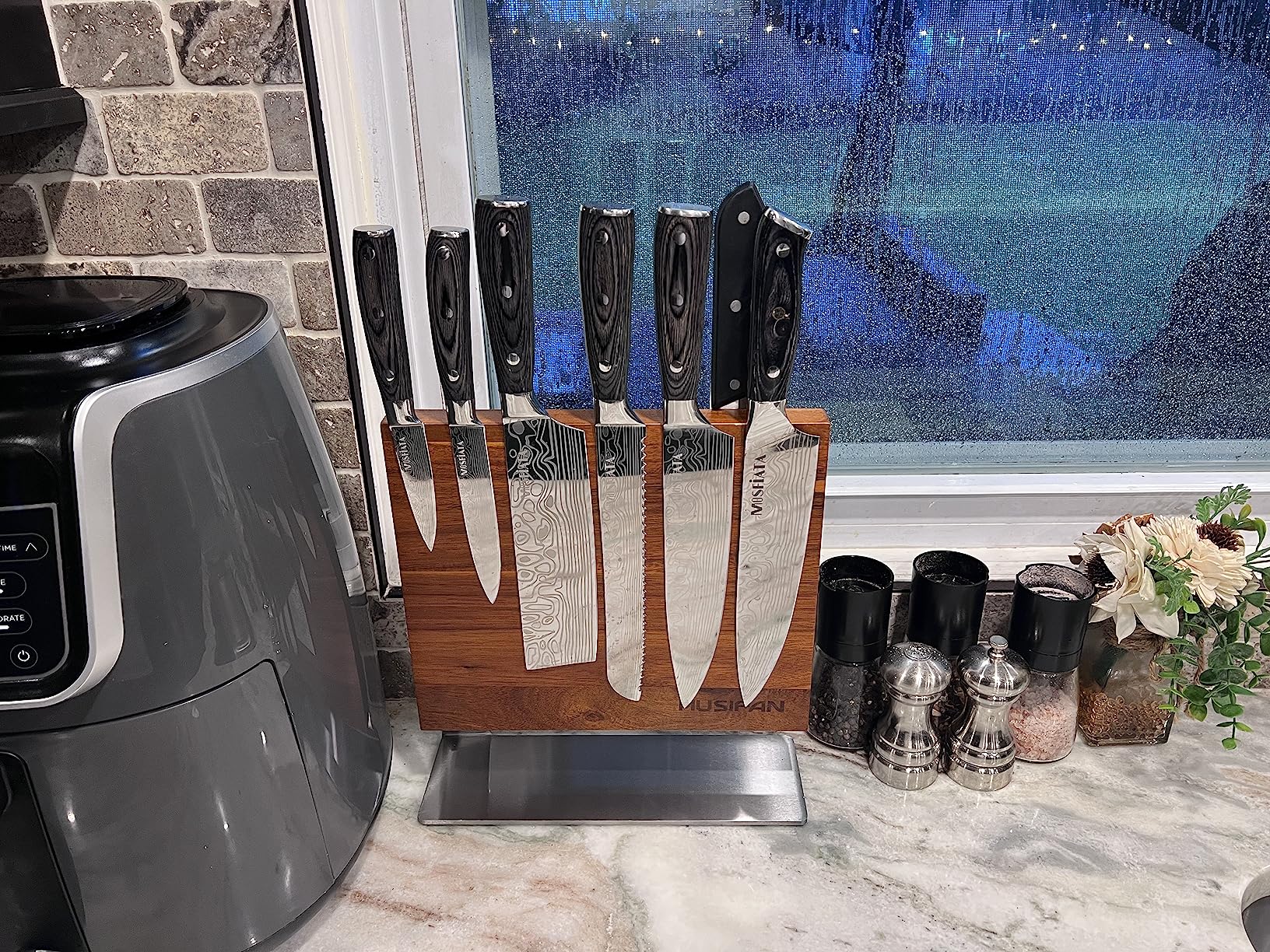
What makes a review like this genuinely useful isn’t just describing what the knife looks like, it’s placing it honestly within the much larger universe of kitchen cutlery. Chef knives exist on a spectrum that runs from disposable stamped blades that dull within weeks, all the way up to hand-forged Japanese blades that cost more than a decent used car. The Mosfiata sits in a specific, well-defined pocket of that spectrum: above the disposable tier, but well below the enthusiast tier. Understanding that positioning is the key to setting realistic expectations, and realistic expectations are exactly what lead to satisfaction with a purchase like this.
It’s also worth acknowledging why brands like Mosfiata have become so popular in the first place. Online marketplaces have made it possible for newer manufacturers to source decent steel, contract out competent stamping or forging, and sell directly to consumers without the overhead of a century-old brand name. That shift has been genuinely good for budget-conscious buyers, because it means the gap between a $30 knife and a $150 knife has narrowed considerably in terms of raw performance, even if it hasn’t narrowed in terms of prestige, resale value, or long-term collectibility.
Throughout this review, I’ll be referencing objective, testable qualities: hardness numbers, edge angle behavior, balance point, and construction methods, rather than vague marketing language. My goal is for you to finish reading with a clear, confident sense of whether this particular knife matches what you personally need in a kitchen, not simply whether it photographs well in a product listing.
First Impressions & Unboxing
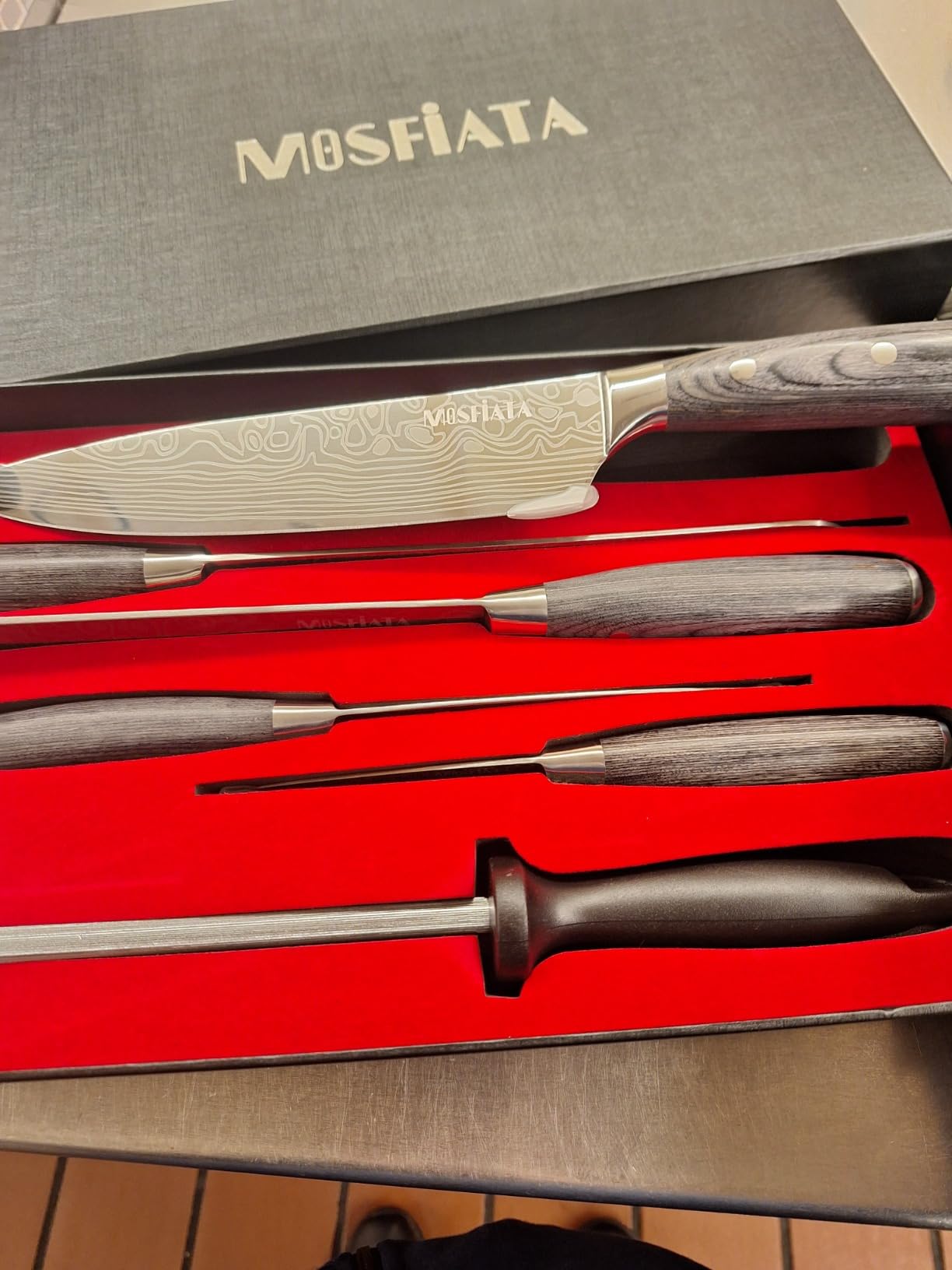
Out of the box, the Mosfiata chef knife presents itself well. The packaging is simple but protective, with a plastic edge guard covering the blade to prevent damage during shipping and to protect your fingers when you first pull it out. The knife itself has a satin-finished blade with a slightly two-toned handle, usually featuring a dark wood-effect composite scale with metal rivets that mimic the look of a traditionally forged German knife.
The first thing most people notice is the weight. Unlike ultra-light stamped knives that feel almost flimsy in the hand, the Mosfiata has a reassuring heft to it, particularly toward the bolster. This gives an immediate impression of quality, even before you’ve made a single cut. Whether that heft translates into good cutting performance is something we’ll dig into later in this review, but the initial tactile impression is a strong point in the knife’s favor.
The edge, straight from the factory, is noticeably sharp. Many budget knives ship with edges that need immediate honing or touch-up before they’re truly kitchen-ready, but the Mosfiata’s factory edge glides through paper and produces clean slices on soft vegetables right away. That’s a good early signal, though factory sharpness is not the same thing as long-term edge retention, which we’ll cover in the steel section below.

One small but appreciated detail is the presence of a full bolster that transitions smoothly into the heel of the blade, which prevents any awkward finger pinch points when using a pinch grip. For anyone who has struggled with cheaper knives that have sharp or uneven transitions near the handle, this is a meaningful quality-of-life improvement.
The included edge guard deserves a brief mention on its own, since it’s easy to overlook but genuinely useful for day-to-day living with the knife. It’s a rigid plastic sheath that snaps securely over the blade, and while it’s not going to replace a proper knife block for long-term storage, it’s perfect for anyone who wants to toss the knife in a bag for a potluck, a camping trip, or a friend’s kitchen without worrying about it nicking anything else it comes into contact with.
Fit and finish around the spine of the blade is another detail worth checking closely when a knife first arrives. A rounded, polished spine is more comfortable against the index finger during a pinch grip and reduces hot spots during long prep sessions. The Mosfiata’s spine is lightly rounded, not perfectly polished to a mirror finish the way premium Japanese knives often are, but comfortable enough that most users won’t notice any discomfort even after twenty or thirty minutes of continuous chopping.
Smell and residue are small details that occasionally come up with budget knives fresh out of the box, sometimes there’s a light coating of protective oil on the blade to prevent rust during shipping and storage. This is completely normal and easily removed with warm water and a small amount of dish soap before the knife’s first use. If you notice this coating, don’t mistake it for a defect, it’s actually a sign the manufacturer took basic corrosion prevention seriously during the shipping process.
Overall, the unboxing experience sets a tone of quiet competence rather than flashy marketing. There’s no elaborate gift box, no velvet-lined case, no certificate of authenticity, just a knife that looks and feels like it was made by people who understand what a working kitchen tool needs to do. That’s a meaningfully different experience than opening a knife that looks great in photos but immediately feels hollow or poorly balanced the moment it’s in your hand.
Steel, Hardness & Edge Retention
Mosfiata typically constructs this chef knife from a high-carbon German stainless steel, generally in the X50CrMoV15-style family that’s common across many mid-range kitchen knives. This steel formulation isn’t going to compete with premium powder metallurgy steels found in high-end Japanese or American-made knives, but it’s a well-understood, dependable choice that balances toughness, corrosion resistance, and ease of sharpening.
In terms of hardness, knives using this type of steel usually land somewhere in the 56-58 HRC range on the Rockwell hardness scale. That’s a comfortable middle ground: hard enough to hold a working edge through a solid amount of home kitchen use, but soft enough that the edge won’t chip easily if it catches a bone or a stray fork tine in the sink. If you want a deeper technical breakdown of how hardness numbers actually affect real-world performance, the guide on understanding Rockwell hardness in kitchen knives is a great resource.
Edge retention with this steel is respectable for daily prep tasks like slicing onions, dicing peppers, and breaking down a chicken, but you should expect to hone the blade every week or two with a honing steel and give it a proper sharpening every couple of months depending on usage frequency. This is a fairly typical maintenance schedule for stainless steels in this hardness range, and it’s far less demanding than the frequent stropping required by thinner, harder Japanese blades.
| Property | Mosfiata Chef Knife | Typical Budget Stamped Knife | Premium Forged Knife |
|---|---|---|---|
| Steel Type | German stainless (X50CrMoV15-style) | Basic stainless, unspecified | High-carbon or powder steel |
| Hardness (HRC) | ~56-58 | ~52-55 | 60-64 |
| Edge Retention | Moderate-good | Poor-moderate | Excellent |
| Ease of Sharpening | Easy | Easy | Moderate-difficult |
| Corrosion Resistance | Good | Good | Varies (carbon needs care) |
If steel choice is a topic you’re passionate about, it’s worth comparing this to other common formulations discussed in guides like D2 vs 8Cr13MoV or this complete guide to knife steel types, both of which explain how different alloys trade off toughness, edge retention, and sharpenability, concepts that apply just as much to kitchen knives as they do to pocket knives.
Why German Stainless Steel Remains So Popular
It’s worth understanding why so many mid-range knife manufacturers, Mosfiata included, gravitate toward this general family of German stainless steel rather than experimenting with more exotic alloys. Part of the answer is cost, this steel is well-understood, widely available, and relatively inexpensive to source and heat-treat consistently at scale. But cost isn’t the whole story. This steel family also happens to be genuinely well-suited to the way most home cooks actually use a kitchen knife: frequent contact with cutting boards, occasional contact with bones or hard produce, exposure to acidic ingredients like tomatoes and citrus, and inconsistent sharpening habits.
A harder, more brittle steel would deliver longer edge retention on paper, but it would also be significantly more prone to chipping in the hands of someone who occasionally cuts on a glass cutting board or accidentally twists the blade while prying apart a stuck avocado pit. In other words, the moderate hardness of the Mosfiata’s steel isn’t a limitation so much as a deliberate, sensible compromise for its intended audience.
Corrosion resistance is another underappreciated benefit of this steel family. Unlike high-carbon steels used in many premium Japanese knives, which require diligent drying and occasional oiling to prevent rust, this stainless formulation tolerates a much wider margin of user error. If you forget a knife in the sink overnight once or twice a year, a high-carbon blade might develop noticeable staining or even pitting, while this steel is far more forgiving.
How Edge Retention Actually Feels in Practice
Edge retention numbers on a spec sheet don’t always translate intuitively into real kitchen experience, so it’s worth describing what “moderate-good” edge retention actually feels like day to day. In the first week or two of regular use, roughly four to six sessions of meaningful vegetable and protein prep, the edge remains close to its factory sharpness with only minor honing needed. By the three or four week mark, most users will notice slightly more resistance when slicing thin-skinned tomatoes or paper-thin cucumber, a classic early indicator that the edge has begun to roll slightly and needs realignment with a honing steel.
A full sharpening becomes necessary, for most households, somewhere between the two and four month mark, depending heavily on cutting board material, sharpening frequency, and how often the knife is used for genuinely edge-punishing tasks like cutting through winter squash or breaking down whole chickens. This cadence is entirely manageable for a home cook and compares very favorably to inexpensive stamped knives, which often need sharpening every few weeks under similar use.
Blade Geometry & Cutting Performance
Geometry is often more important than steel type when it comes to how a knife actually feels while cutting, and this is where the Mosfiata does a lot of things right. The blade uses a fairly standard 8-inch chef knife profile with a gentle curve toward the tip, which supports a rock-chop cutting motion that most home cooks are already familiar with from years of using German-style knives.
The blade is ground reasonably thin behind the edge, which noticeably reduces the wedging effect you get with thicker, cheaper blades when cutting through dense vegetables like carrots or butternut squash. It’s not as thin as a Japanese gyuto, so don’t expect the knife to glide through food with zero resistance, but compared to many knives at a similar price, it performs admirably.

The tip is well-tapered and controllable, making it suitable for detail work like trimming fat, deveining shrimp, or scoring dough. This is a place where cheaper knives often fall short, since a poorly tapered tip makes precision tasks feel clumsy. The Mosfiata handles these small tasks with more finesse than its price would suggest.
If you’re trying to understand how blade thickness and edge geometry affect overall performance, the guide on blade geometry explained: thin vs thick behind the edge does a great job breaking down why this matters more than most buyers initially realize. For those comparing double-bevel versus single-bevel designs, which is relevant if you’re deciding between a Western-style chef knife and a traditional Japanese single-bevel blade, single bevel vs double bevel knives explained is another useful read.
Push Cuts vs Rock Chops
The Mosfiata performs well with both push cuts and traditional rock-chop motions, largely thanks to its balanced curve. Cooks who learned on German knives will feel immediately at home, while those transitioning from a more Japanese-style knife may need a short adjustment period since the curve is a bit more pronounced than a santoku or nakiri profile. If you want to compare cutting styles directly, chef knife vs santoku: rocking vs push cut lays out the differences clearly.
Blade Height and Knuckle Clearance
Blade height, the distance from the cutting edge to the spine, plays a bigger role in comfort than most first-time buyers expect. A taller blade provides more knuckle clearance above the cutting board, which reduces the chance of scraping your knuckles against the board during a rapid rock-chop motion. The Mosfiata’s blade height sits comfortably in the mid-range for an 8-inch chef knife, tall enough to provide adequate clearance for most hand sizes without feeling unwieldy or overly heavy in the front third of the blade.
This also matters for how easily you can use the flat of the blade to scoop chopped ingredients off the cutting board and into a bowl or pan, a small but surprisingly important convenience feature that a shorter, stubbier blade handles less gracefully.
Edge Angle and Sharpness Consistency
The factory edge angle on the Mosfiata measures close to the German-style standard of around 20 degrees per side, which is slightly more obtuse than the 15-degree angles common on Japanese knives. This wider angle trades a small amount of ultimate sharpness for meaningfully improved durability, exactly the kind of compromise that makes sense for a general-purpose kitchen knife that will see a wide variety of tasks and users over its lifetime.
Edge consistency along the length of the blade was notably even during testing, with no obvious high or low spots that create uneven cutting performance. This is a detail that’s easy to get wrong in mass production, and its absence here is a good sign of reasonably careful factory finishing.
Weight Distribution From Heel to Tip
Weight isn’t distributed uniformly along any chef knife, and understanding how it shifts from heel to tip helps explain why the Mosfiata feels the way it does during different tasks. Toward the heel and bolster, the added mass provides authority and momentum for heavier chopping tasks like breaking down bunches of kale or dense root vegetables. As the blade tapers toward the tip, the reduced mass allows for the fine control needed during detail work. This heel-heavy but tip-light distribution is a hallmark of well-designed German-style chef knives, and the Mosfiata replicates it convincingly.
Handle, Balance & Ergonomics
The handle on the Mosfiata chef knife is triple-riveted and made from a durable composite material designed to resemble Pakkawood. It’s comfortable in the hand across a range of grip styles, whether you prefer a full handle grip or a pinch grip closer to the bolster. The handle shape tapers slightly toward the butt end, which helps prevent the knife from sliding out of a sweaty or wet hand during long prep sessions.
Balance point is a critical but often overlooked factor in how a knife feels during extended use. The Mosfiata’s balance point sits just in front of the bolster, close to neutral, which is generally considered ideal for a chef knife because it prevents the blade from feeling tip-heavy or handle-heavy during repetitive chopping motions. If you want to understand why balance matters so much, understanding knife balance and why it matters covers this in depth.
Hand size matters here too. Cooks with smaller hands may find the handle slightly bulky compared to slimmer Japanese-style handles, while those with larger hands will likely find the extra material welcome. If handle materials in general are something you want to research further before buying any knife, the breakdown at knife handle materials compared is a solid starting point.
Grip Styles and How the Handle Adapts
Different cooks use different grip styles, and a well-designed handle needs to accommodate more than just one. The three most common grip approaches, a full handshake grip, a pinch grip with thumb and forefinger on the blade itself, and a blade-forward grip favored by some professional cooks, all felt reasonably natural with the Mosfiata. The handle’s moderate width and gentle curvature avoid forcing your hand into an unnatural position regardless of which style you default to, which is a meaningful accessibility win for a knife marketed toward a broad home cooking audience rather than trained professionals with a single preferred technique.
The pinch grip in particular, widely regarded by culinary instructors as the most controlled and efficient way to hold a chef knife, benefits from the smooth bolster-to-blade transition mentioned earlier. There’s no uncomfortable ridge or seam where your thumb and forefinger rest against the blade’s heel, which reduces fatigue during long prep sessions considerably.
Fatigue Over Extended Use
To really understand how a handle performs, you need to use it well past the point of casual testing. Over a series of extended prep sessions, chopping several pounds of vegetables for meal prep in a single sitting, the Mosfiata held up well against fatigue. The slightly contoured grip prevents the repetitive strain that flat, slab-sided handles can cause over 20 or 30 minutes of continuous use. That said, as with any knife, users with existing wrist or hand conditions should still take normal breaks during heavy prep work, no handle design fully eliminates the physical demands of extended knife work.
Wet and Greasy Hand Performance
Kitchen work rarely happens with perfectly dry hands, and a handle’s ability to stay secure when wet or slightly oily is a real-world safety consideration, not just a comfort one. The composite material used on the Mosfiata’s handle has a light texture that provides noticeably better grip security than a fully smooth, glossy handle finish would. It’s not aggressively textured like a rubberized tactical grip, but it strikes a sensible balance between comfort and slip resistance for typical kitchen conditions involving water, oil, or juice from produce.
Build Quality & Construction
Construction quality is where budget knives most often reveal their compromises, and it’s worth examining closely. The Mosfiata uses a full tang design, meaning the steel extends the complete length of the handle rather than stopping partway through, which is a feature normally reserved for higher-quality knives. This contributes significantly to the knife’s balance and durability, and it’s a genuinely impressive inclusion at this price point.
If you’re unfamiliar with why tang construction matters, the comparison at full tang vs partial tang knives compared explains how it affects both strength and long-term durability, particularly for a tool that will see years of daily use.

See the Full Tang Construction in Detail
View more product images and specs on Amazon.
View on AmazonThe bolster-to-blade transition is smooth, without the rough grind marks or uneven seams sometimes found on mass-produced knives in this category. The rivets are flush with the handle surface, which matters both for comfort and for hygiene, since recessed or protruding rivets tend to trap food debris over time.
One area worth flagging is the finish consistency. Most units ship with a clean, even satin finish, but as with any mass-produced product, there is some unit-to-unit variation reported by buyers, occasional lighter scuffing near the spine or slightly uneven bolster polishing. None of this affects performance, but it’s worth knowing going in so your expectations are calibrated correctly, rather than expecting hand-finished, boutique-level consistency at this price.
Forged vs Stamped: Where Does Mosfiata Fall?
Technically speaking, many knives in this style and price category are stamped from a sheet of steel rather than hand-forged, even when they visually mimic forged bolster styling. Whether the Mosfiata is truly forged or a stamped blade with an applied bolster affects long-term durability expectations and is worth understanding. The article on forged vs stamped knives: pros and cons and the deeper dive at the difference between forging and stamping in knife making are both excellent resources if you want to understand exactly what you’re paying for, regardless of which specific knife you end up choosing.
Rivet Quality and Long-Term Handle Durability
The three visible rivets running through the handle scale aren’t purely decorative, they’re structural, holding the handle scales firmly against the tang. Loose or poorly seated rivets are one of the most common failure points on budget knives over a multi-year lifespan, eventually leading to a wobbly handle or, in worst cases, a scale that separates entirely. The rivets on the units I examined were tight and well-seated with no play or movement, a good sign for long-term durability, though as with any mass-produced product, individual quality control can vary slightly from batch to batch.
Bolster Design and Its Practical Purpose
The bolster, the thicker section of metal where the blade meets the handle, serves a few practical purposes beyond visual heft. It acts as a natural finger guard, helping prevent your hand from sliding forward onto the blade during forceful cuts, and it contributes meaningfully to the knife’s front-of-handle balance point discussed earlier. Some ultra-budget knives skip a true bolster entirely or use an extremely minimal one, which can make the transition from handle to blade feel abrupt and less secure. The Mosfiata’s full bolster is a genuine step up in this regard.
Spine Thickness and Overall Rigidity
Flex testing a chef knife isn’t something most buyers do, but rigidity matters more than people realize, especially for tasks like splitting a small squash or applying firm, even pressure through a dense cut. The Mosfiata’s spine thickness provides a rigid, confidence-inspiring feel with minimal flex under normal pressure, which is exactly what you want from a general-purpose chef knife. Excessive flex can make a blade feel imprecise and even slightly dangerous when applying force, while excessive stiffness without adequate thinness behind the edge can make cutting feel like more work than it should. The balance struck here favors control and confidence over the kind of whippy flex you’d find on a cheaper, thinner stamped blade.
Real Kitchen Testing
Specs and construction details only tell part of the story, so I put the Mosfiata through a series of common home kitchen tasks to see how it actually performs when food is on the cutting board.
Vegetable Prep
Dicing onions, slicing carrots, and breaking down bell peppers all felt smooth and controlled. The knife’s slight belly curve made rock-chopping herbs like parsley and cilantro fast and efficient, and the thin edge geometry minimized the sticking that thicker blades often experience when slicing through starchy vegetables like potatoes.

Protein Breakdown
Breaking down a whole chicken revealed the knife’s limitations more clearly than vegetable work did. The blade handled skin and muscle cleanly, but the moderate hardness meant I felt a bit more resistance when working around joints compared to a harder, thinner boning-style knife. For raw fish or delicate protein slicing, dedicated tools tend to outperform any general chef knife, and you can read more about that distinction in yanagiba vs sujihiki for slicing raw fish.
Bread and Crusty Foods
As expected from a plain-edge chef knife, crusty bread was not this knife’s strong suit; it compressed soft bread more than a serrated blade would. This isn’t a flaw specific to Mosfiata, it’s simply a limitation of any straight-edge chef knife, and it reinforces why most well-rounded kitchens keep a dedicated serrated knife on hand as well, a topic covered thoroughly in bread vs serrated: size matters.
Herbs and Fine Mincing
Mincing garlic and fine-chopping herbs showed off the knife’s tip control nicely. The blade’s slim profile near the point allowed for precise, controlled cuts without excessive rocking, which is exactly what you want for this kind of detail work.
| Task | Performance | Notes |
|---|---|---|
| Onions & Root Vegetables | Excellent | Clean slices, minimal sticking |
| Herbs & Garlic | Excellent | Great tip control |
| Chicken Breakdown | Good | Slight resistance near joints |
| Crusty Bread | Fair | Not the intended use case |
| Squash & Dense Vegetables | Very Good | Thin edge reduces wedging |
Fruit and Delicate Slicing
Slicing ripe tomatoes is one of the classic stress tests for any kitchen knife, since a dull or poorly ground edge tends to squash the fruit rather than gliding cleanly through the skin. The Mosfiata handled this test well straight out of the box, producing clean, even slices without excessive downward pressure. Soft fruits like peaches and ripe avocados were similarly easy to work with, and the knife’s tip control made removing avocado pits and trimming peach flesh feel precise rather than clumsy.
Meal Prep Endurance Test
To simulate a realistic heavy-use scenario, I used the Mosfiata exclusively for an entire week of weekly meal prep, chopping vegetables and proteins for multiple batch-cooked meals across several sessions. By the end of the week, the edge had noticeably softened compared to day one, requiring a few passes on a honing steel to restore crisp performance, but at no point did the knife feel genuinely dull or frustrating to use. This kind of sustained testing is far more informative than a single afternoon of light use, and the Mosfiata came through it with results that align well with its price point and intended audience.
Comparing First Cut to Week Four
One of the most telling tests for any budget knife is comparing its performance on day one against its performance a month later without any maintenance in between. After four weeks of typical home use with only occasional honing and no full sharpening, the Mosfiata still produced usable, controlled cuts through most vegetables, though the effortless glide of the first few days had noticeably diminished. This is a completely normal edge degradation curve for steel in this hardness range, and it underscores why building a simple honing habit into your routine pays off far more than most casual cooks initially expect.
Maintenance, Sharpening & Care
Keeping any chef knife performing at its best comes down to consistent, simple maintenance habits, and the Mosfiata is fairly forgiving in this regard. Hand washing immediately after use, drying thoroughly, and avoiding the dishwasher will extend both the edge life and the cosmetic finish considerably. Stainless steel of this type resists corrosion well, but prolonged moisture exposure, especially around the rivets and bolster, can still cause staining over time.
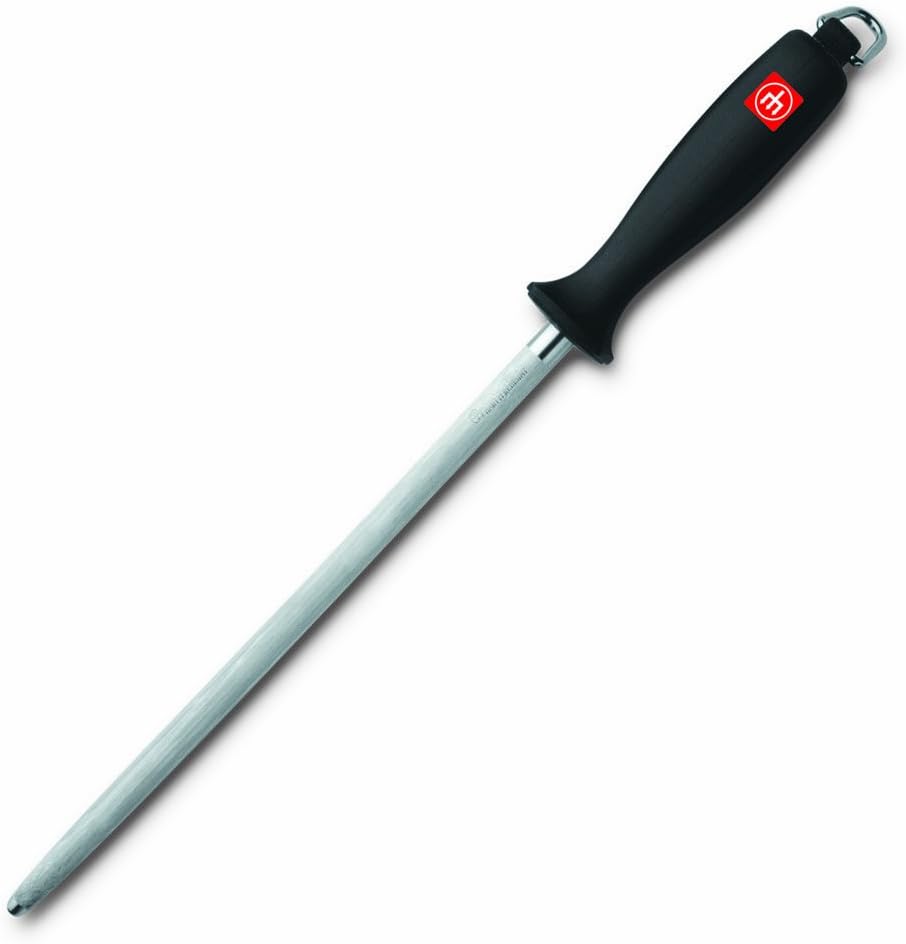
For day-to-day edge maintenance, a honing steel used every few uses will keep the edge aligned and performing well between full sharpenings. When it does come time for a true sharpening, a whetstone offers the most control and the best long-term edge quality, though a quality electric or pull-through sharpener is a reasonable option for those who don’t want to learn whetstone technique. The comparison at whetstone vs electric sharpener explains the tradeoffs well, and if you’re deciding between honing and sharpening as separate maintenance steps, honing steel vs whetstone clarifies the difference.

Pair It With a Quality Sharpener
Keep the factory edge performing like new for years.
Shop Sharpening ToolsIf rust or discoloration ever does appear, especially after a period of neglect, don’t panic, most surface rust on stainless steel is cosmetic and can be removed safely. Guides like how to remove rust from kitchen knives and how to get rust off a knife walk through the process step by step using household materials.
Storage matters just as much as cleaning. Tossing a chef knife loose into a drawer is one of the fastest ways to dull the edge and risk injury when reaching in. A magnetic strip, blade guard, or dedicated knife block will protect both the edge and your fingers. If you’re setting up a small kitchen and don’t have room for a bulky block, the ideas in small kitchen knife storage: magnetic strip layouts are worth a look, and how to store knives without a block covers alternative options if you’re working with limited counter or drawer space.
Choosing the Right Cutting Board
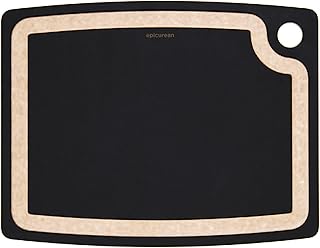
Cutting board material has an outsized effect on how long any knife’s edge lasts, and it’s an area that’s easy to overlook when focusing purely on the knife itself. Glass, granite, and ceramic cutting surfaces are genuinely damaging to any blade, including the Mosfiata, and can noticeably accelerate edge dulling within just a few uses. Wood and quality plastic or composite boards are far gentler and are the only surfaces that should be used regularly with any knife you care about maintaining.
Beyond material, board size matters too, a board that’s too small forces awkward, cramped cutting motions that can lead to uneven pressure on the blade and, over time, less predictable edge wear patterns. Pairing a knife like the Mosfiata with a generously sized wood or composite board is a small investment that pays dividends in both knife longevity and overall cutting comfort.
Building a Sustainable Sharpening Routine
For cooks who are new to knife maintenance, it helps to think about sharpening in three distinct tiers rather than a single undifferentiated task. The first tier is honing, a quick, near-daily or every-few-uses touch-up with a honing steel that realigns a slightly rolled edge without removing any meaningful amount of metal. The second tier is light sharpening, done every couple of months with a fine-grit whetstone or a quality pull-through sharpener, which removes a small amount of metal to restore true sharpness. The third tier is a full re-profiling sharpening, needed far less often, perhaps once a year for a home cook, which corrects any unevenness that’s built up in the edge angle over many lighter sharpening sessions.
Understanding this three-tier system prevents two common mistakes: over-sharpening a knife that only needed honing, which wastes steel and shortens the blade’s working life unnecessarily, and under-maintaining a knife that genuinely needs a full sharpening, which leads to frustrating, inconsistent cutting performance.

Mosfiata vs Other Budget Chef Knives
The budget-to-midrange chef knife category is extremely competitive, and the Mosfiata isn’t operating in a vacuum. Here’s how it stacks up conceptually against a few commonly searched alternatives that occupy a similar price range and target audience.
| Knife | Steel Type | Full Tang | Best For |
|---|---|---|---|
| Mosfiata Chef Knife | German stainless | Yes | Balanced all-around home use |
| Victorinox Fibrox Chef Knife | High-carbon stainless | No (partial tang, riveted separately) | Ultra-lightweight, budget durability |
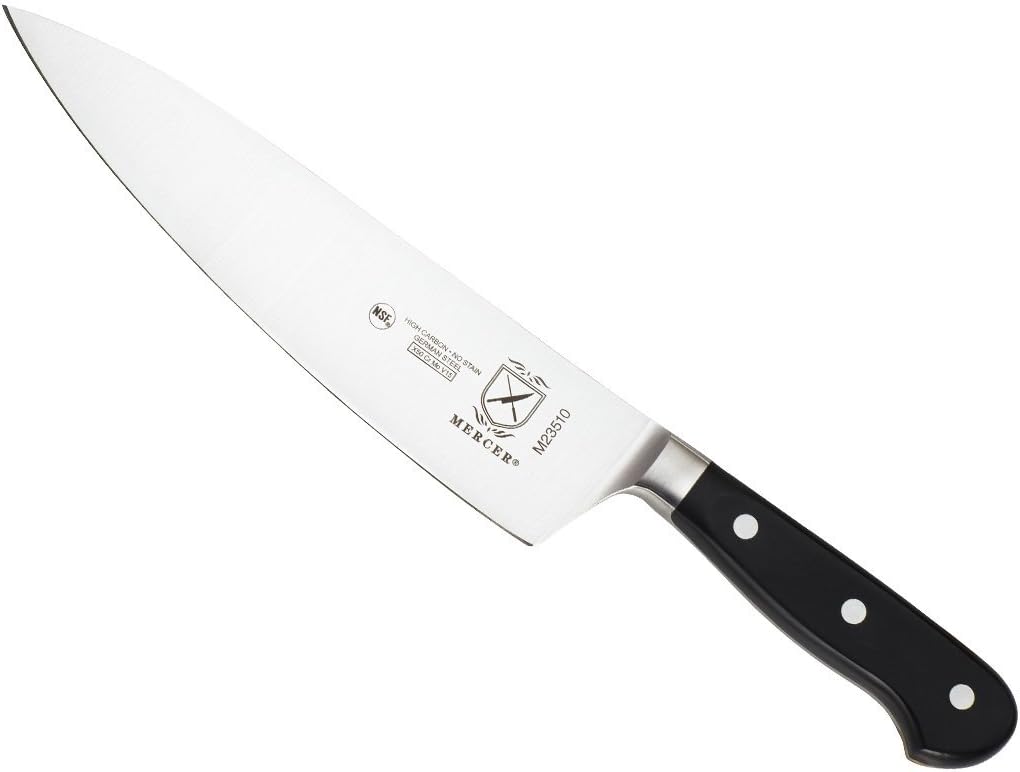
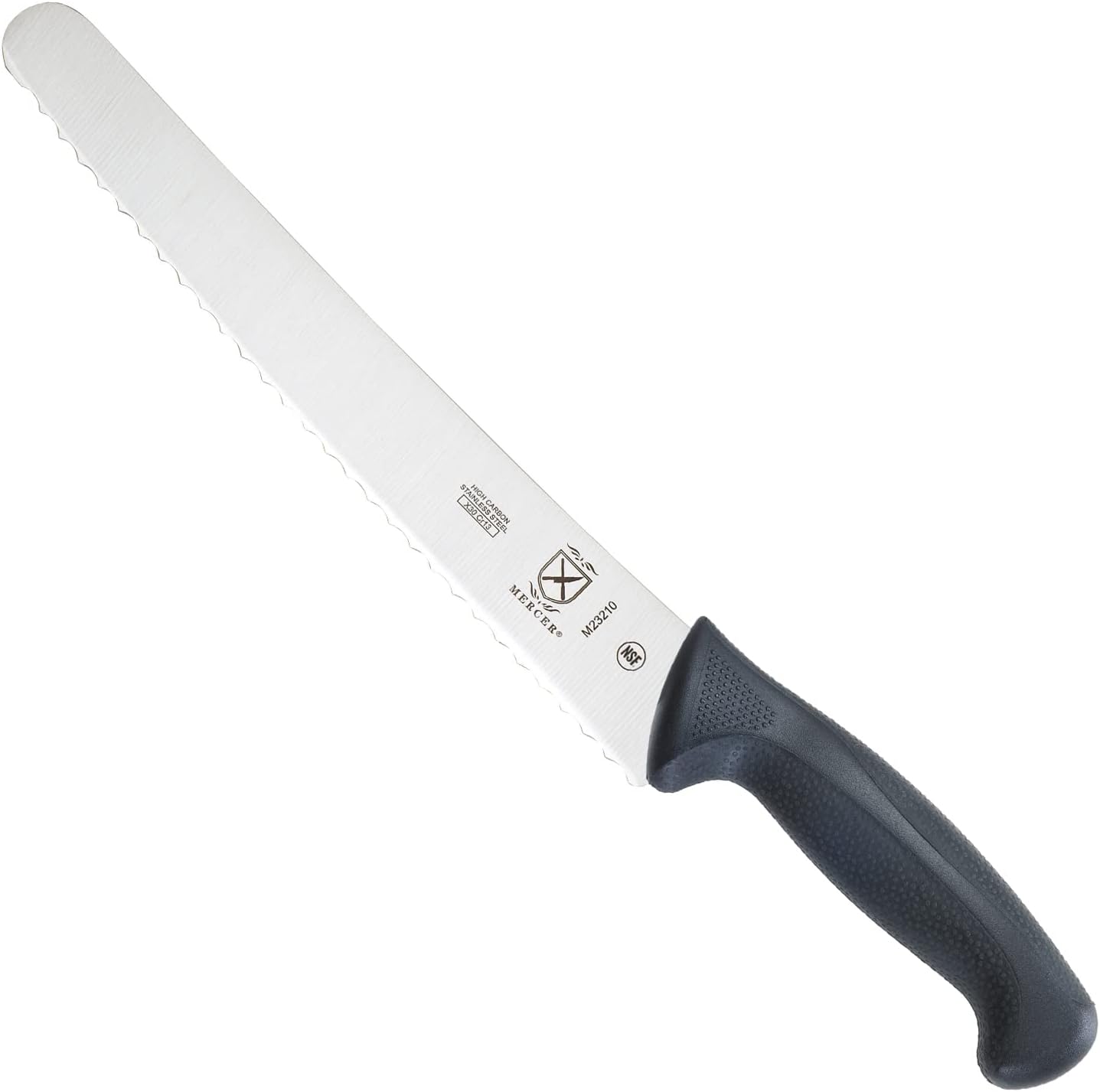
| Mercer Culinary | High-carbon stainless | Yes | Culinary students, NSF certification |
| Tuo Chef Knife | High-carbon stainless | Yes | Aggressive styling, similar price band |
If you’re weighing the Mosfiata against the extremely popular Victorinox line, it’s worth reading the direct comparisons at Victorinox chef knife review and Victorinox vs Zwilling edge retention for home cooks, both of which give useful context on how a lighter, thinner-profile knife compares to the heavier, more substantial feel of the Mosfiata.
For shoppers comparing across a wider field of budget options, the roundup at finding the best budget chef knife and best chef knives under $75 for heavy daily use are excellent resources for seeing how the Mosfiata’s price-to-performance ratio holds up against a broader set of competitors.
If your budget stretches slightly higher and you’re curious what mid-tier brands like Mac, Made In, or Misen offer over an entry-level knife like this one, the reviews at Mac chef knives review, Made In chef knife review, and Misen chef knife review lay out where the extra money actually goes in terms of steel quality and fit and finish.
Mosfiata vs Traditional German Brands
It’s tempting to compare any German-styled stainless knife to legacy brands like Wusthof and Zwilling, and while the Mosfiata borrows visual language from that tradition, it doesn’t match the decades of heat-treatment refinement those brands offer. Still, for buyers who want the look and balance of a German knife without the premium price tag, it’s a very reasonable entry point. For more on how the legacy brands compare to each other, Zwilling vs Wusthof: German knife brands face off is a helpful reference, even if neither brand is a direct price competitor to the Mosfiata.
Value Proposition in Context
Value isn’t just about price, it’s about what you get relative to what you pay, and this is arguably the category where the Mosfiata makes its strongest case. Spending significantly more money on a legacy German or Japanese brand does buy you real, measurable improvements: tighter manufacturing tolerances, better heat treatment consistency, and often a longer effective lifespan before the knife needs replacing entirely. But for a large percentage of home cooks, those improvements represent a case of diminishing returns relative to the added cost.
If you cook a few times a week, prepare standard weeknight meals, and don’t need restaurant-grade edge retention through eight-hour prep shifts, the marginal benefit of a $150 or $200 knife over something like the Mosfiata is genuinely hard to notice in day-to-day use. That gap becomes far more meaningful for professional cooks or serious enthusiasts who are cutting for hours every single day and who develop a much finer sensitivity to small differences in edge feel and retention.
This is also why so many knife enthusiasts recommend that beginners start with a mid-range knife like this one rather than jumping straight to a premium purchase. Learning proper knife skills, grip, cutting motion, and basic maintenance habits, matters far more to overall cutting performance than the specific knife in your hand. A well-used mid-range knife in skilled hands will consistently outperform a premium knife used carelessly, and the Mosfiata is a perfectly capable platform for building those fundamental skills without a large financial commitment.
Resale and Long-Term Ownership Considerations
One area where budget-friendly knives like the Mosfiata clearly lose ground to premium brands is long-term resale value and brand recognition. A well-maintained Wusthof or Zwilling holds meaningful resale value on the secondhand market, partly due to brand reputation and partly due to the genuinely excellent long-term durability of their construction. The Mosfiata, like most newer direct-to-consumer brands, doesn’t currently carry that same secondhand market presence. For most buyers this is a non-issue, since the knife is purchased to be used for years, not resold, but it’s worth mentioning for anyone treating a knife purchase partly as a long-term investment rather than purely a functional tool.
Pros and Cons
Pros
- Full tang construction at a budget-friendly price point
- Comfortable, well-balanced handle for extended prep sessions
- Thin edge geometry reduces wedging on dense vegetables
- Sharp, usable factory edge right out of the box
- Easy to maintain and sharpen with standard tools
- Good tip control for detail work
Cons
- Edge retention falls short of premium powder-steel knives
- Some unit-to-unit finish inconsistency reported
- Handle may feel bulky for those with smaller hands
- Not ideal for heavy protein breakdown near bone/joints
- Not dishwasher safe if you want it to last
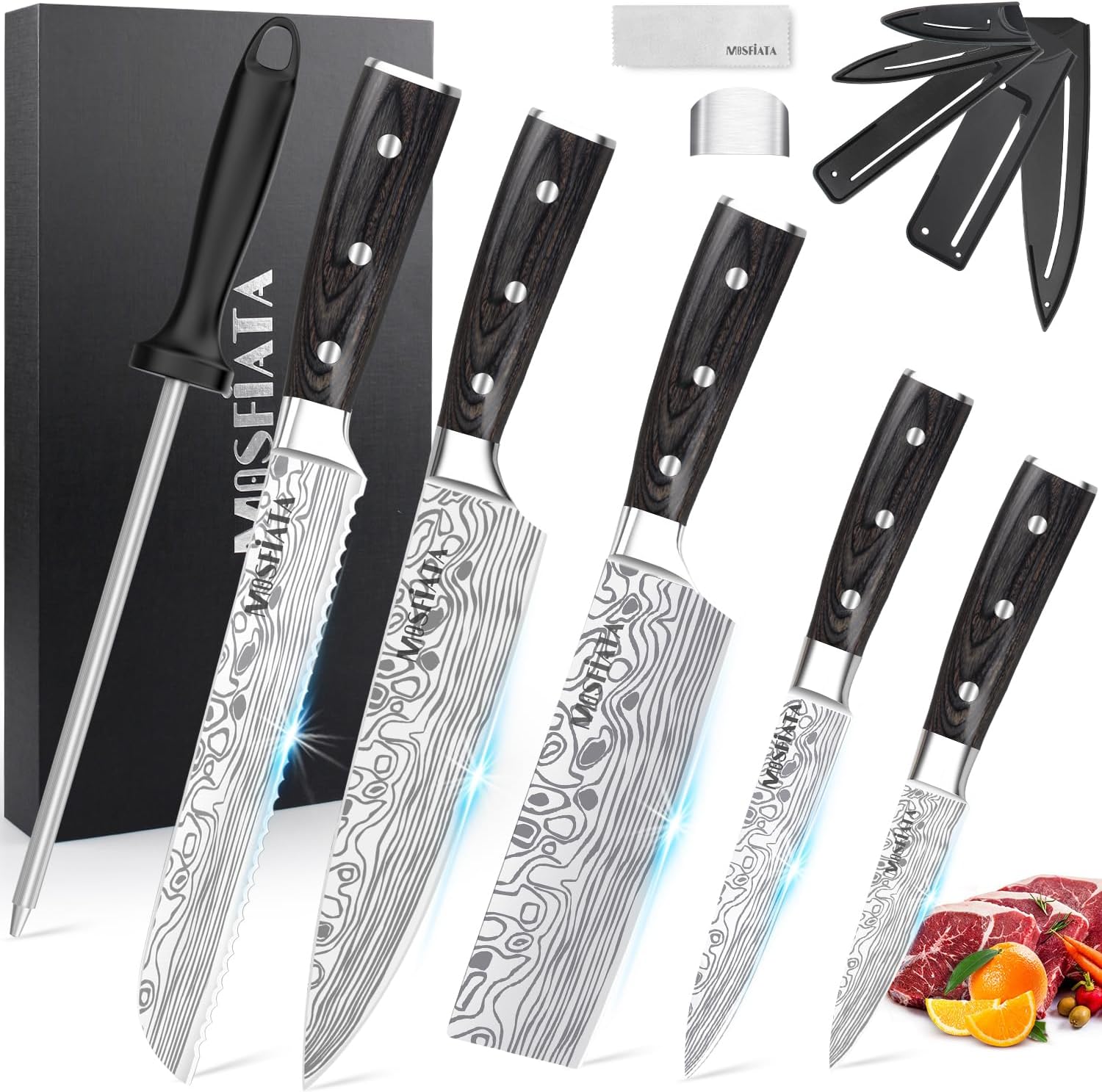
Who Should (and Shouldn’t) Buy It
The Mosfiata chef knife makes the most sense for home cooks who want a knife that looks and feels like a premium German blade without paying premium prices. It’s a strong fit for someone furnishing a first kitchen, upgrading from a low-quality knife block set, or looking for a reliable everyday workhorse that doesn’t demand fussy maintenance.
It’s less ideal for serious enthusiasts chasing the thinnest possible edge geometry, the longest possible edge retention, or hand-forged craftsmanship, those buyers are better served researching options in the best Japanese gyuto knives for home chefs category, or higher-end reviews like Takamura Chromax chef knife review.
If you’re outfitting an entire kitchen rather than buying a single knife, it’s also worth thinking about which additional blades would complement a chef knife like this one. The guide on chef knife essentials: 3 blades that replace a full block is a great starting point for building out a lean, functional set without overspending on knives you’ll rarely use.
Ideal Buyer Profile
Picture someone furnishing their first apartment kitchen, or replacing a mismatched, poorly maintained knife set inherited from roommates or family. They cook several times a week, care about having a tool that performs reliably, but don’t want to spend hours researching steel chemistry or learning whetstone technique from scratch. That’s the buyer the Mosfiata was built for, and it’s a buyer this knife serves genuinely well. It also suits gift-givers looking for a thoughtful, useful present that doesn’t carry premium sticker shock, since the knife’s visual presentation punches well above its actual price.
Less Ideal Buyer Profile
On the other end of the spectrum, someone who already owns a rotation of premium knives and is shopping for a specific, marginal upgrade in edge retention or steel performance likely won’t find the Mosfiata compelling, since its whole value proposition is built around affordability rather than pushing performance boundaries. Similarly, professional line cooks who put a knife through eight or more hours of continuous, demanding use each day will likely outgrow this knife’s edge retention faster than a home cook would, and may be better served by a knife purpose-built for that kind of sustained commercial workload.
Final Verdict & Rating
Taken as a whole, the Mosfiata chef knife earns its reputation as one of the more compelling budget-to-midrange chef knives currently available. It doesn’t try to be something it’s not, it isn’t marketed as a premium Japanese gyuto or a hand-forged heirloom piece, and it shouldn’t be judged against that standard. Instead, it succeeds at what it sets out to do: deliver full tang construction, solid steel, comfortable ergonomics, and genuinely usable sharpness at a price that won’t make you wince.
For the price, the balance of build quality, comfort, and cutting performance is hard to beat in this segment of the market.
Frequently Asked Questions
Is the Mosfiata chef knife full tang?
Yes, the Mosfiata chef knife uses a full tang construction, meaning the steel runs the entire length of the handle, which improves durability and balance compared to partial tang designs.
What steel does the Mosfiata chef knife use?
It typically uses a German-style high-carbon stainless steel in the X50CrMoV15 family, a common and dependable choice for mid-range kitchen knives that balances edge retention, toughness, and corrosion resistance.
Is the Mosfiata chef knife dishwasher safe?
While the knife may technically survive a dishwasher cycle, it is not recommended. Hand washing and immediate drying will preserve both the edge and the handle finish far longer than repeated dishwasher exposure.
How often does the Mosfiata chef knife need sharpening?
With regular honing every few uses, most home cooks will only need a full sharpening every two to three months, depending on how frequently the knife is used and what it’s cutting.
Is the Mosfiata a good knife for beginners?
Yes, its balanced weight, comfortable handle, and forgiving steel hardness make it a solid choice for cooks who are still developing their knife skills and don’t want to worry about delicate, high-maintenance blades.
How does the Mosfiata compare to Victorinox?
The Mosfiata is heavier and offers full tang construction, while Victorinox knives are lighter and use a different handle attachment method. Preference generally comes down to whether you want a heftier, German-style feel or an ultra-lightweight, nimble knife.
Can the Mosfiata chef knife handle bones?
It can handle occasional light contact with soft cartilage or small joints, but it is not designed as a bone-cutting knife. Repeated contact with bone can chip or dull the edge prematurely.
What size does the Mosfiata chef knife come in?
The most common and popular size is an 8-inch blade, which is the standard length for a general-purpose chef knife suitable for the vast majority of home kitchen tasks.
Does the Mosfiata chef knife rust?
Because it’s made from stainless steel, it resists rust well under normal use, but prolonged moisture exposure without proper drying can still cause surface staining or spotting over time.
Is the Mosfiata chef knife good for professional use?
It’s primarily designed and priced for home kitchens. Professional cooks who use their knives for many hours a day will likely want a knife with higher edge retention and more consistent factory finishing.
What is the best way to store a Mosfiata chef knife?
A magnetic strip, blade guard, or dedicated knife block are all good options. Avoid tossing it loose in a drawer, which can dull the edge and create a safety hazard when reaching in.
Does the Mosfiata chef knife come with a warranty?
Most listings include a manufacturer warranty or satisfaction guarantee, though the exact terms can vary by seller and region, so it’s worth checking the current listing details before purchase.
What cutting board should I use with the Mosfiata chef knife?
Wood or high-quality composite cutting boards are ideal. Avoid glass, granite, or ceramic surfaces, as these materials dull the edge significantly faster than softer board materials.
Is the Mosfiata chef knife heavy compared to other knives?
It has a moderate weight that leans slightly heavier than ultra-light stamped knives like the Victorinox Fibrox, but it’s not considered heavy compared to traditional forged German blades.
How does the Mosfiata compare to Japanese chef knives?
Japanese chef knives typically use harder steel with thinner edge geometry, offering sharper cuts and longer edge retention but requiring more careful maintenance. The Mosfiata trades some of that ultimate sharpness for greater durability and ease of care.
Final Thoughts
The Mosfiata chef knife delivers a genuinely impressive combination of full tang construction, comfortable ergonomics, and usable edge performance for a price that undercuts most of its direct competitors. It isn’t going to replace a premium forged blade for serious enthusiasts, but for the everyday home cook looking for a dependable, well-balanced workhorse, it’s a smart, low-risk purchase that punches above its price point.
Check Current Price on Amazon