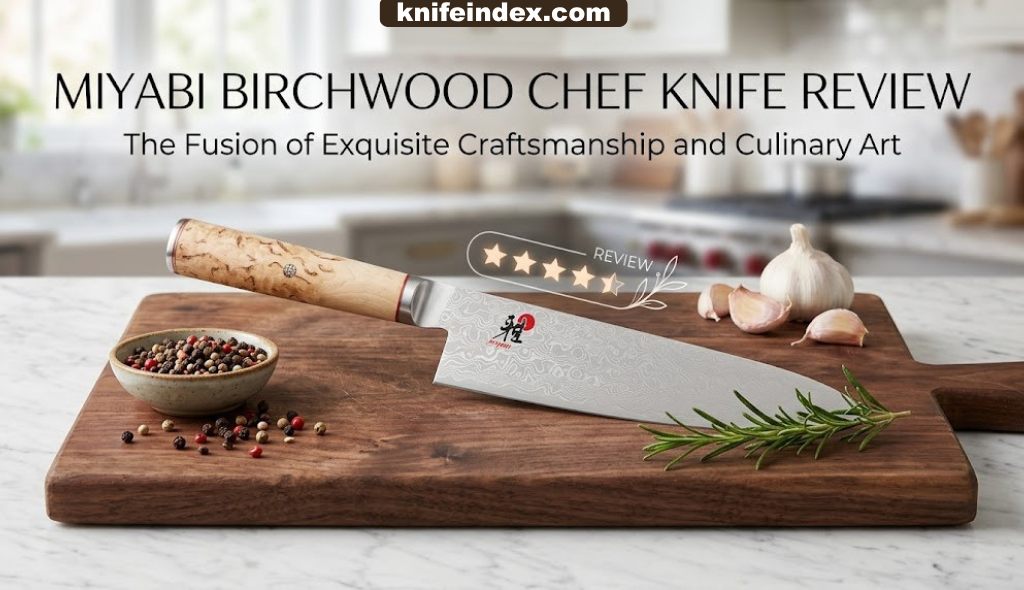
Miyabi Birchwood Chef Knife Review: Is This Japanese Masterpiece Worth the Splurge?
A deep, honest look at edge geometry, steel performance, handle comfort, and real kitchen use — so you know exactly what you’re paying for before you buy.
First Impressions and Unboxing
There’s a particular kind of quiet that happens when you slide a genuinely well-made knife out of its box for the first time. No rattling plastic, no flimsy sheath, no awkward weight distribution that makes you second-guess the purchase before you’ve even used it. That’s the sensation the Miyabi Birchwood chef knife delivers within the first thirty seconds of ownership, and it sets the tone for everything that follows in this review.
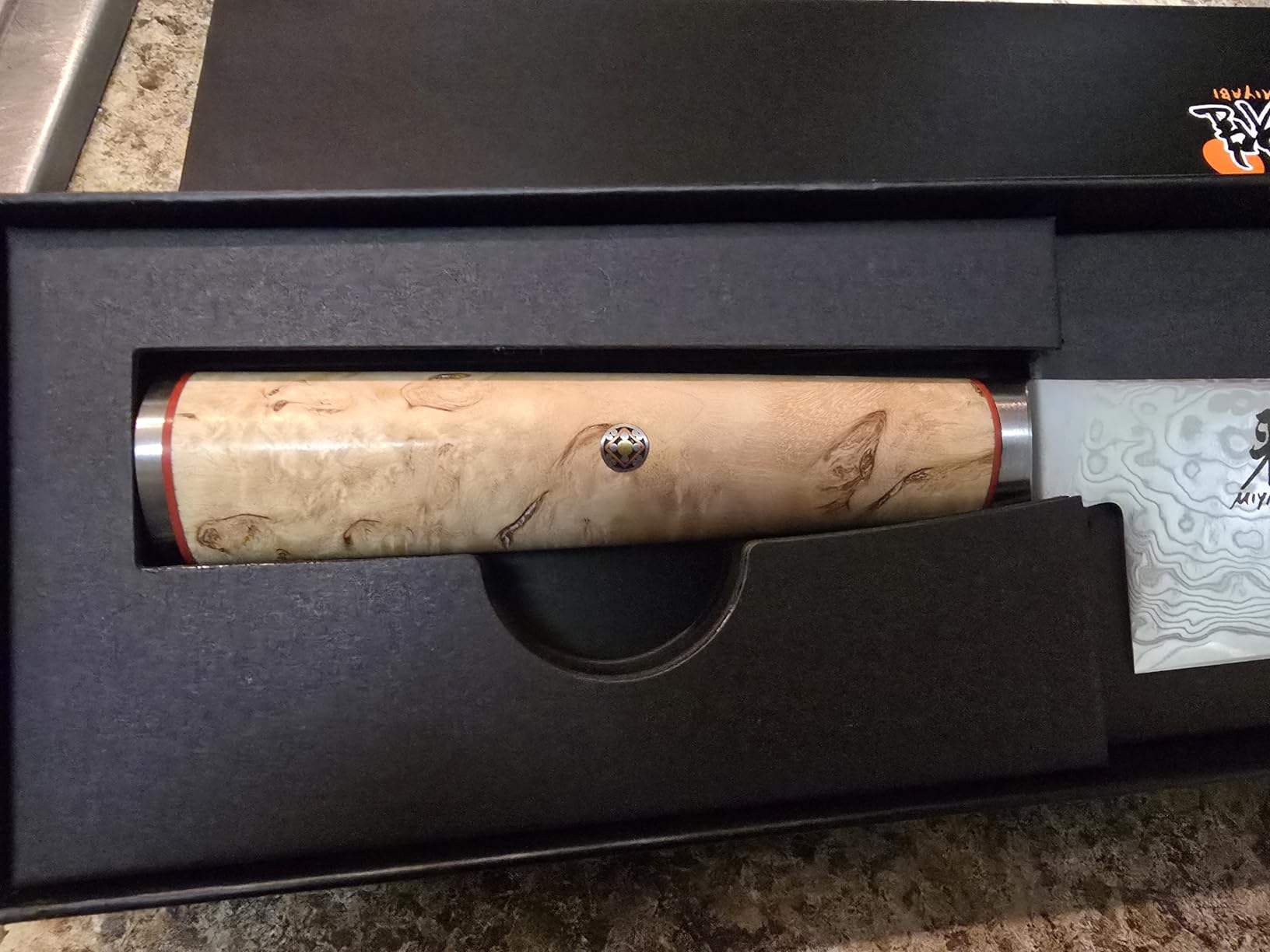
The packaging itself feels closer to what you’d expect from a piece of fine cutlery destined for a wedding gift than a working kitchen tool, which is fitting, because Miyabi has always positioned its Birchwood series somewhere between “everyday performer” and “showpiece.” Inside, the knife sits nestled in a form-fitted tray, blade guard in place, with the birch handle catching light in a way that photographs genuinely undersell. It’s one of those rare products where the in-hand experience actually exceeds the marketing images.
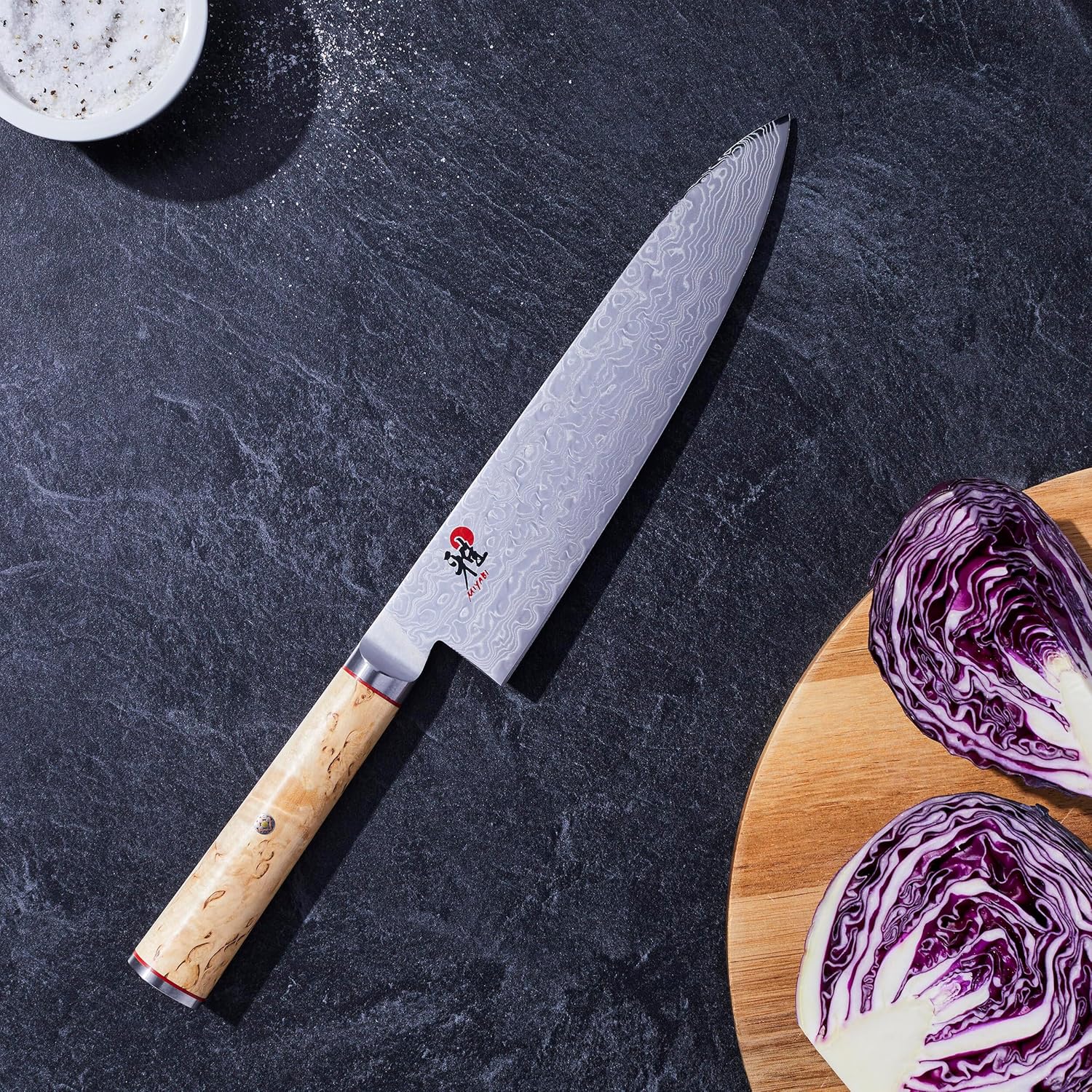
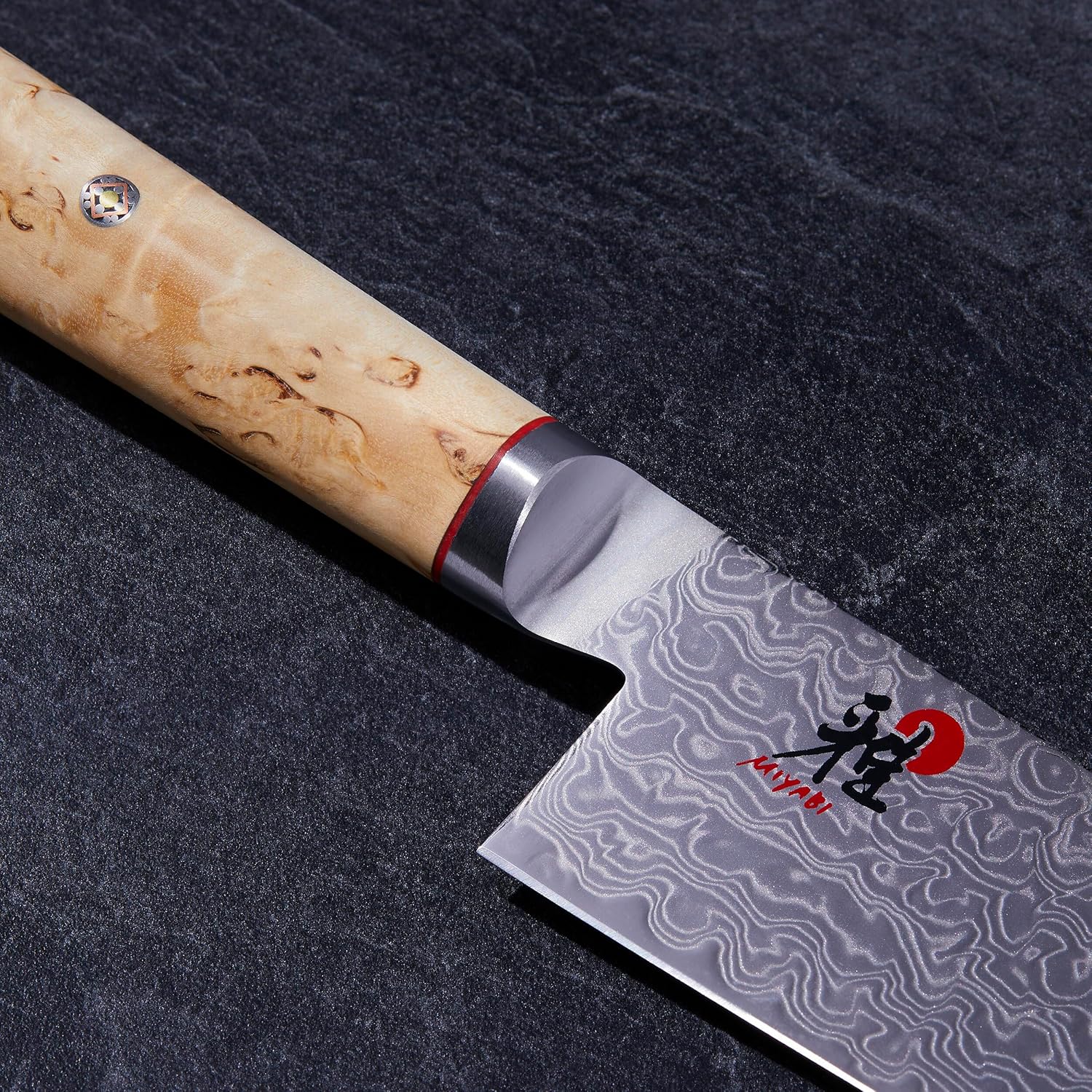
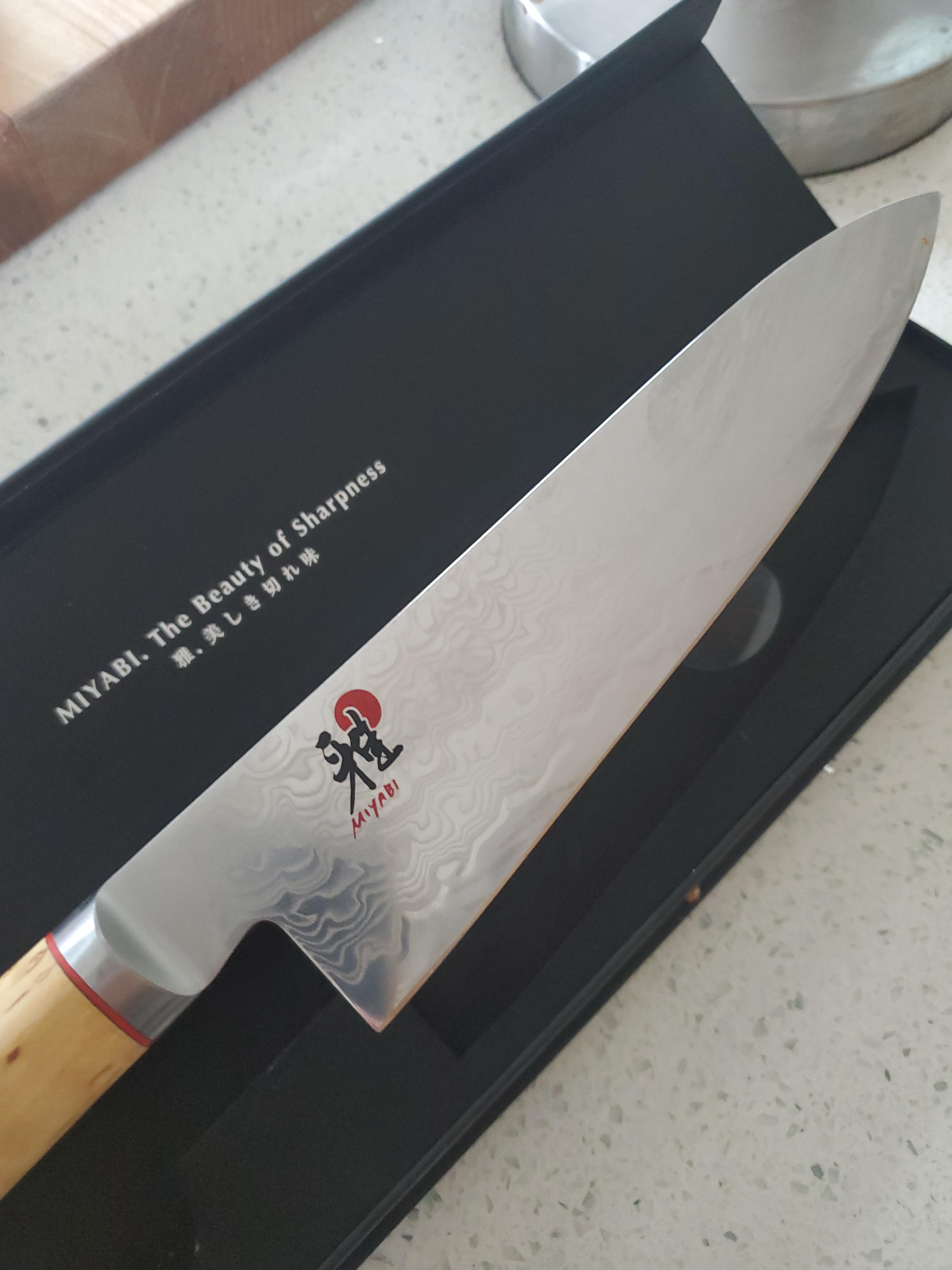
Pulling the blade guard off reveals the first real signal of what you’re dealing with: a hand-honed edge with a visible transition line between the harder SG2 micro-carbide core and the softer stainless damascus cladding layers. Under kitchen lighting, that damascus pattern shifts subtly depending on the angle, which is part of why this knife has become something of a favorite among home cooks who care about aesthetics as much as function. If you’ve spent any time reading about what damascus steel actually is and how it’s made, you’ll recognize immediately that this isn’t cosmetic etching — the layering is structural, a byproduct of the forging process itself.
The handle is where most people pause the longest during unboxing. Birchwood, as a material, has a warmth to it that synthetic handles simply can’t replicate. It’s not glossy or plasticky; it has a satin, almost matte finish that feels slightly textured under the fingers, which becomes important once you’re gripping it with wet or oily hands mid-prep.
Before diving deeper into performance, it’s worth setting expectations: this is not a budget knife, and it doesn’t try to be. If you’re coming from a big-box store knife block or even a solid mid-range option, the difference in fit and finish is immediately obvious. Whether that difference justifies the price tag for your specific cooking habits is exactly what the rest of this review is designed to help you figure out.
It’s also worth noting how this knife tends to change behavior in the kitchen almost immediately, simply because of how it looks and feels. Owners frequently report being more careful and more intentional in how they handle it compared to a knife they think of as disposable — setting it down deliberately rather than tossing it into a sink, wiping it dry as a matter of habit rather than an afterthought. That shift in behavior is a small but real part of the value proposition here: a tool that inspires better care tends to last longer and perform better over time simply because of how it’s treated, independent of the steel and construction quality underneath.
Check current price and availability — stock and pricing on premium Japanese cutlery shifts often, so it’s worth confirming before you commit.
Check Price on AmazonWhat Is the Miyabi Birchwood Line, Exactly?
Miyabi is a brand under the larger Zwilling J.A. Henckels umbrella, but don’t let that corporate connection fool you into thinking these are just German knives with a Japanese label slapped on. Miyabi knives are manufactured in Seki City, Japan — a region with a blade-making history stretching back over 780 years, historically tied to samurai sword production before the city transitioned into producing kitchen cutlery, scissors, and precision blades. That heritage matters because it explains the design philosophy baked into every Miyabi line, including Birchwood.
The “Birchwood” name refers specifically to the handle material, not a unique steel or grind. Miyabi uses this branding across a few different product tiers, but the version most people mean when they say “Miyabi Birchwood chef knife” is built around an SG2 (also called R2) powdered stainless steel core, clad in a visible damascus pattern of 100 layers, with a handle crafted from Karelian birch — a burl wood historically used in high-end Scandinavian and Russian furniture and firearm stocks for its density and grain stability.
What separates this from Miyabi’s other series, like the Kaizen or Evolution lines, comes down to three things: the handle material, the blade’s hardness rating, and the edge angle. Birchwood knives are typically sharpened to a narrower edge angle than most Western knives, generally in the 9.5 to 12 degree range per side, compared to the 20 to 22 degree per side angle common on German-style blades like those covered in this German steel vs Japanese steel knives comparison. That narrower angle is directly responsible for the slicing sensation people describe when they first use one of these — it genuinely feels like the knife is doing less work to get through food.
If you’re trying to understand where this knife sits within the broader Miyabi and Japanese cutlery landscape, it helps to think of it less as a single product and more as a philosophy applied to a specific handle aesthetic. The steel, the geometry, and the construction methods are shared with other high-end Japanese lines, but the birch handle and the layered damascus cladding are what give this particular knife its identity on the counter and, frankly, its resale appeal among collectors.
The Craftsmanship Behind Seki City Blades
It’s worth slowing down on the manufacturing story here, because it genuinely explains a lot of the price difference between this knife and a mass-produced Western equivalent. Seki City earned its reputation the hard way, over centuries, first as a center for Japanese sword production during the feudal era, and later as artisans transitioned those same forging and tempering skills toward kitchen cutlery, scissors, and razors once sword production declined after Japan’s modernization. That lineage isn’t marketing fluff — the forging techniques used to fold and laminate steel for Birchwood blades trace a direct line back to methods developed for katana production.
Miyabi’s production process for the Birchwood line blends traditional hand-finishing with modern precision manufacturing. The SG2 core is produced using powder metallurgy in a controlled industrial process, which ensures consistency at the microscopic carbide level that traditional hand-forging alone couldn’t reliably achieve. But the final stages — the edge honing, the handle fitting, the blade polishing — still involve meaningful hand labor by trained craftspeople, which is part of why production volume on lines like this stays relatively limited compared to fully automated stamped-blade production.
Every blade goes through a multi-step honing process on progressively finer whetstones before it ever reaches a retail box, and this factory edge is genuinely sharper out of the box than most consumers have ever experienced from a knife. It’s common for new owners to underestimate how sharp the edge is straight out of the packaging and to handle it with less caution than it deserves during those first few uses.
This blend of industrial precision and hand craftsmanship is really the throughline across most of Miyabi’s premium lineup, and it’s the same broader manufacturing philosophy you’ll find discussed across other well-regarded Japanese brands. If you’re curious how this compares to more heritage-focused hand-forged production, hand-forged knives explained is a useful companion read, since it draws out the distinction between fully hand-forged blades and the hybrid approach brands like Miyabi use at scale.
Steel and Blade Construction: The SG2 Core Explained
The single most important spec on this knife is the SG2 powdered steel core, and it deserves a proper explanation because it’s doing most of the heavy lifting in terms of performance.
SG2, sometimes labeled R2 depending on the supplier, is a powder metallurgy stainless steel developed in Japan. Unlike traditionally forged steel, powder steel is created by atomizing molten metal into a fine powder, then compacting and sintering it under heat and pressure. This process produces an extremely uniform carbide distribution throughout the steel, which translates into a blade that can be hardened significantly beyond what traditional stamped or even forged stainless steels typically reach.
The Miyabi Birchwood’s SG2 core is hardened to approximately 63 Rockwell (HRC), which is genuinely high for a stainless kitchen knife. For context, most Western chef knives, including well-regarded German brands, sit in the 56 to 58 HRC range. That difference of five or more points on the Rockwell scale isn’t trivial — it’s the difference between a knife that needs honing every few uses and one that can go weeks of moderate home use before it starts to feel like it’s losing bite.
The tradeoff with high-hardness steel is always brittleness. A harder edge holds its geometry longer under repeated cutting, but it’s also more prone to chipping if it strikes something unexpectedly hard — a bone, a frozen patch of food, or the edge of a ceramic plate. Miyabi addresses part of this risk through the cladding: the SG2 core is sandwiched between softer stainless steel layers on either side, folded and forged into the visible damascus pattern. This cladding isn’t purely decorative; it adds a degree of flexibility and shock absorption around the harder, more brittle core, which helps protect against catastrophic chipping during normal use.
If you want a deeper technical comparison of how SG2 stacks up against other premium steels used in high-end kitchen and pocket knives, the breakdown in Miyabi vs Shun: SG2 vs VG-MAX steel is a genuinely useful reference point, since Shun’s VG-MAX is one of the most common alternatives buyers cross-shop against this exact knife.
| Attribute | Detail |
|---|---|
| Core Steel | SG2 / R2 powdered stainless |
| Hardness | Approx. 63 HRC |
| Cladding | 100-layer stainless damascus |
| Edge Angle | Approx. 9.5–12° per side |
| Blade Style | Gyuto (Western-style chef knife profile) |
| Handle Material | Karelian birch, D-shaped |
| Construction | Full tang, three-rivet |
Visually, the blade uses a wide, flat-ish profile toward the heel that tapers into a gentle curve near the tip, which is a hybrid between traditional Japanese gyuto geometry and the rocking motion Western cooks are used to from German knives. This matters practically: if your knife skills were built on a rock-chop technique, this blade will still accommodate that motion, though it rewards a push-cut or pull-slice technique far more, which is worth practicing if you’re serious about getting the most from the geometry. For a refresher on foundational technique, the five essential knife skills every home cook must master is a solid starting point.
Handle Design and Ergonomics
Handle material is one of those specs that sounds like a minor detail until you’re forty minutes into meal prep and your grip either feels natural or starts fighting you. The Karelian birch handle on this knife is genuinely one of its standout features, and it’s worth spending real time on.
Birch, as a wood, is dense and tight-grained, which gives it a natural resistance to moisture absorption compared to softer woods. Miyabi treats and seals the handle to further reduce water uptake, which matters enormously in a kitchen environment where the handle is going to get wet, oily, and occasionally left near a sink longer than it should be. That said, this is still a natural wood handle, not a synthetic composite like G-10 or Micarta, and it does require a slightly different care mentality than a fully synthetic handle — more on that in the maintenance section.
The shape itself is a D-handle, meaning it’s asymmetrically contoured for a right-handed grip. This is a meaningful detail for left-handed cooks to know before buying, since the contour is genuinely optimized for one hand orientation, and using it in the opposite hand, while not impossible, does reduce the ergonomic benefit. If you’re shopping specifically for handle geometry across knife types, it’s worth reading up on how wood, G-10, Micarta, and plastic handle materials compare before committing to a natural wood handle knife if you’ve never owned one.
In actual use, the handle’s octagonal-leaning D-shape locks into a pinch grip extremely well. For those unfamiliar with pinch grip technique, it involves gripping the blade itself just above the bolster with your thumb and forefinger, while the remaining three fingers wrap the handle — this is the grip most professional cooks use because it gives far more control than a full-handle “hammer grip.” The Birchwood’s handle shape rewards this technique specifically, with a slight taper that naturally guides your hand into the correct position rather than requiring you to consciously find it.
The handle doesn’t just look premium — its contour actively teaches better grip technique the more you use it, which is a detail most synthetic-handled knives simply don’t replicate.
One minor drawback: because it’s a natural material, no two Birchwood handles are perfectly identical in grain pattern. Some buyers love this uniqueness; others who want visual consistency across a matched knife set may find it slightly inconsistent piece to piece. It’s a small thing, but worth knowing going in.
It’s also worth comparing this handle philosophy against what you’d find on knives outside the kitchen entirely, since the same ergonomic principles apply broadly across bladed tools. Handle contour, material grip under moisture, and how a shape guides hand placement are concerns that show up just as much in outdoor and pocket knife design as they do here — the discussion in understanding knife balance and why it matters covers these fundamentals in a way that applies just as well to a kitchen gyuto as it does to an everyday-carry folder, and it’s a useful read for anyone building a broader appreciation for what separates a genuinely ergonomic knife from one that simply looks good in photos.
Balance, Weight and Feel in Hand
Weight and balance are where a lot of premium knives either earn their price tag or fall apart under scrutiny, and this is genuinely one of the stronger areas of the Miyabi Birchwood’s design.
The 8-inch version, which is the most common configuration people buy, weighs in at roughly 6.7 ounces (190 grams), which places it on the lighter end compared to heavier German-style chef knives that often push past 8 ounces. That lighter weight is intentional and tied directly to the Japanese design philosophy behind the blade: rather than relying on the knife’s mass to power through food, the geometry and edge angle are meant to do the work, letting the cook control speed and precision rather than fighting momentum.
Balance point sits almost exactly at the bolster, right where the blade meets the handle, which is generally considered the ideal balance point for a chef knife used across a range of tasks — from fine mincing to heavier chopping. A knife balanced too far toward the blade tip feels front-heavy and tiring during repetitive cuts; one balanced too far into the handle feels unstable and imprecise during delicate work. The Birchwood threads that needle well.
In practical terms, this balance translates to noticeably less forearm fatigue during long prep sessions. Home cooks doing a big weekend cook, or anyone prepping a large batch of vegetables for meal prep, will feel this most clearly — the knife doesn’t demand the same muscular effort a heavier blade does to maintain control.
Real-World Cutting Performance
Specs and marketing language only tell part of the story. What actually matters is how the knife behaves across the tasks a chef knife is realistically asked to do in a home kitchen, so let’s walk through the categories that matter most.
Vegetable Prep
This is where the narrow edge angle shines most obviously. Slicing through onions, carrots, and dense root vegetables produces noticeably thinner, cleaner cross-sections with less resistance than a typical Western knife. There’s minimal wedging — the sensation where a thicker blade pushes food apart rather than slicing cleanly through it — which also means less bruising on delicate items like tomatoes or herbs.
Protein Work
For raw chicken, beef, and pork, the blade handles clean cuts through muscle and connective tissue with ease, though it’s worth noting this is not a boning knife, and the hardness of the steel means you should avoid using it for anything involving cutting through bone or cartilage. If your prep regularly involves breaking down whole proteins, pairing this knife with a dedicated boning or fillet knife makes sense; the guide to best boning knives for butchers and home cooks is a useful companion resource.
Herbs and Fine Mincing
Mincing garlic, chiving fresh herbs, and other fine detail work is arguably the single category where this knife feels most obviously superior to a mid-range option. The thin blade profile combined with the high hardness means the edge holds a genuinely fine apex, and that translates into herbs that stay vibrant and unbruised rather than turning into a dark, oxidized paste from a duller edge crushing rather than slicing the cell walls.
Bread and Crusty Items
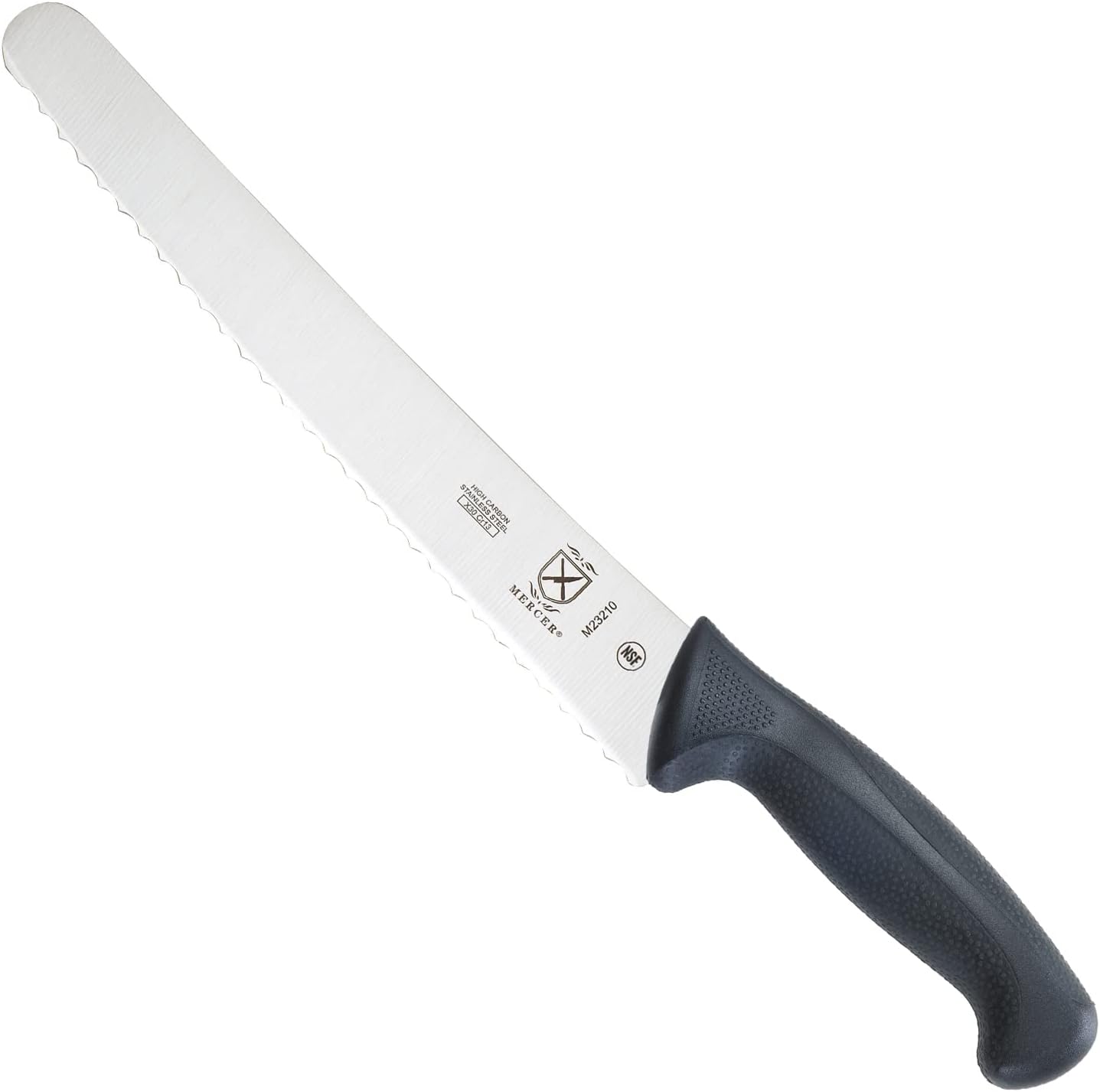
This is a category where the Birchwood is simply the wrong tool. It’s not serrated, and using any straight-edge chef knife on crusty bread will produce compression and tearing rather than clean slices. If bread is a regular part of your kitchen routine, a dedicated serrated option is worth owning alongside this knife — see bread vs serrated: does size matter for guidance on picking one.
Larger Squash and Dense Produce
Butternut squash, large melons, and other dense produce items test a knife’s ability to push through resistance without the blade binding. The Birchwood handles this reasonably well thanks to its taper, though very hard squash varieties benefit from a heavier, more robust blade — something like a santoku or a dedicated cleaver-style knife, discussed further in best cleaver knives for heavy-duty chopping, may actually outperform this knife on that specific task.
Fish and Delicate Slicing
For anyone who prepares raw fish at home — sashimi, crudo, or simply cleanly portioning fillets — this knife performs surprisingly well outside its core gyuto role, though it’s not a true substitute for a purpose-built slicing blade. The thin edge and high polish reduce the friction and drag that cause raw fish to tear rather than separate cleanly along the muscle fibers. For anyone taking this seriously enough to want a dedicated tool, it’s worth comparing the geometry differences covered in yanagiba vs sujihiki for slicing raw fish, since a single-bevel yanagiba in particular will outperform any double-bevel gyuto, including this one, on long, single-draw sashimi cuts.
Citrus and High-Acid Produce
Slicing lemons, limes, and other high-acid citrus is a small but telling test of edge sharpness — a dull or coarse edge tends to squash the fruit and lose juice before completing the cut, while a properly sharp, thin edge slices through the peel and flesh cleanly with minimal pressure. The Birchwood handles this task about as well as any knife in this review category, though it’s a good reminder to dry the blade promptly afterward, since citrus acid left sitting on any knife’s surface, stainless or not, can dull the edge slightly faster than neutral-pH foods over repeated exposure.
Repetitive High-Volume Prep
For anyone who cooks in larger batches — meal preppers, home cooks hosting frequently, or anyone processing a full week’s worth of vegetables in one sitting — the knife’s lighter weight and balance become most apparent over longer stretches of continuous cutting. Where a heavier German-style knife starts to feel fatiguing after twenty or thirty minutes of continuous chopping, the Birchwood’s balance point and lighter overall mass noticeably delay that fatigue, letting technique stay consistent later into a long prep session than it otherwise would.
What It Does Extremely Well
- Precision slicing on vegetables and herbs
- Fine mincing with minimal bruising
- Long edge retention between sharpenings
- Lightweight, low-fatigue extended use
- Exceptional fit, finish, and aesthetics
Where It Falls Short
- Not suited for bone, frozen food, or bread
- Requires more careful sharpening technique
- Natural handle needs more attentive care
- D-handle favors right-handed users
- Premium price limits accessibility
Edge Retention and Sharpening Requirements
Edge retention is arguably the strongest selling point of this knife once you move past the aesthetics. Thanks to the SG2 core’s high hardness and fine carbide structure, the Birchwood holds a working edge significantly longer than most stainless chef knives in its price range and well beyond typical German steel options.
In practical terms, moderate home use — meaning daily or near-daily prep for a household of two to four people — typically allows several weeks to a couple of months before the edge noticeably dulls enough to require a full resharpening, assuming the knife isn’t being misused on hard surfaces like glass cutting boards or being used to cut bone.
That said, high hardness comes with a real tradeoff during the sharpening process itself. This steel is genuinely harder to sharpen than a softer stainless blade, and using a standard pull-through sharpener designed for Western knives is actively discouraged — those tools apply pressure and angles suited for the wider 20-degree edges common on German blades, and using one on this knife’s narrow edge will remove far more material than necessary and can actually damage the geometry Miyabi engineered into the blade.
The right approach is a whetstone, ideally starting somewhere in the 1000-grit range for maintenance sharpening and moving to 3000-6000 grit for polishing, matched to the narrow factory angle. This is a genuine commitment, and if you’re not already comfortable with whetstone sharpening, there’s a learning curve. For buyers weighing whether to learn manual sharpening versus using an electric system, the comparison in whetstone vs electric sharpener: metal removal and heat risk lays out the tradeoffs clearly, and it’s particularly relevant for a knife hardened to this degree, since electric sharpeners generate heat that can affect a high-hardness edge more than it would a softer one.
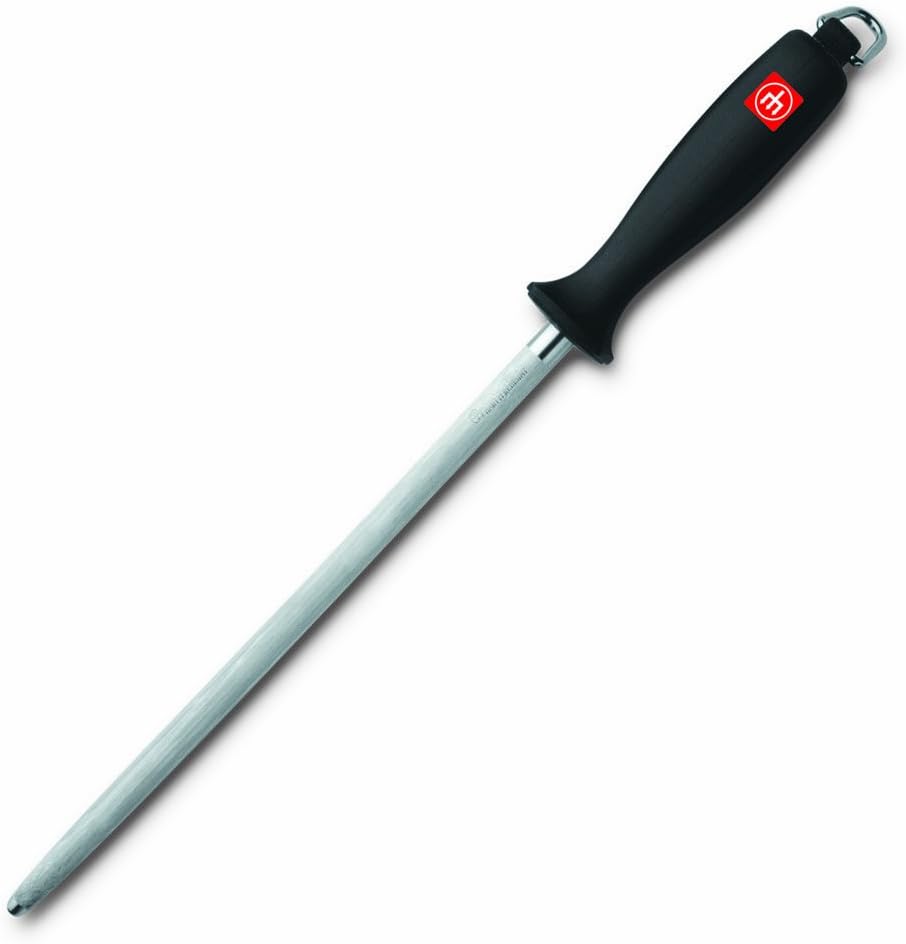
For day-to-day edge maintenance between full sharpenings, a honing rod — specifically a ceramic rather than a traditional steel rod, given this blade’s hardness — helps realign the edge and extend the interval between whetstone sessions. The distinction between honing and actual sharpening trips up a lot of new owners of premium knives, and it’s worth understanding clearly; honing steel vs whetstone: realign vs regrind covers this well.
A related habit worth adopting is stropping, which sits between honing and full sharpening in terms of intensity. Stropping on a leather or fabric strop loaded with fine polishing compound helps refine and align the very apex of the edge after whetstone work, leaving a noticeably cleaner, more polished bite without removing meaningful material. It’s an optional step, but one that experienced owners of high-hardness Japanese blades tend to adopt once they’ve moved past basic whetstone competency, since it extends the period of peak sharpness between full sharpening sessions. The distinctions between these related but different maintenance techniques are laid out clearly in strop vs honing rod: edge alignment and polishing, which is worth reading once you’re comfortable with the basics covered here.
| Maintenance Task | Recommended Tool | Frequency |
|---|---|---|
| Edge realignment | Ceramic honing rod | Every few uses |
| Full sharpening | Whetstone, 1000–6000 grit | Every 4–8 weeks (moderate use) |
| Handle conditioning | Food-safe mineral oil | Every 1–2 months |
| Deep clean | Hand wash, mild soap | After every use |
Care, Cleaning and Maintenance
Owning a knife at this level does come with more responsibility than tossing a stamped stainless blade into the dishwasher and forgetting about it. None of the requirements here are difficult, but skipping them will shorten the life and appearance of the knife noticeably.
Washing
Always hand wash, immediately after use if possible, with warm water and mild dish soap, then dry completely with a towel before storing. Never put this knife in a dishwasher. The combination of heat, moisture, and detergent chemicals is damaging to both the natural birch handle and, over time, can affect the edge and the polished cladding on the blade.
Handle Conditioning
Because the handle is a natural wood, periodic conditioning with a food-safe mineral oil helps maintain its moisture resistance and prevents the wood from drying out or developing surface cracks over years of use. This isn’t a frequent task — once every month or two under normal conditions is generally sufficient — but it’s an extra step synthetic-handled knives simply don’t require.
Storage
Loose storage in a drawer alongside other utensils is genuinely one of the fastest ways to damage this knife’s edge, since the extremely hard steel is actually harder than most other kitchen metal it might bump against, meaning it will chip rather than simply dull if struck at the wrong angle. A knife block, an in-drawer knife tray with individual slots, or a magnetic strip are all far better options. If you’re setting up storage for the first time, small kitchen knife storage and magnetic strip layouts is a helpful resource, and for anyone dealing with limited counter or drawer space, the best space-saving knife block sets for small kitchens covers options that work well alongside a single premium knife like this one rather than a full boxed set.
Rust Prevention
Despite being a stainless steel core, the cladding layers and even SG2 itself are not fully rust-proof, particularly if left wet or in contact with acidic foods for extended periods. A quick dry after washing eliminates almost all of this risk. If surface spotting does occur, the guidance in how to prevent rust on knives and, if it’s already happened, how to remove rust from kitchen knives both apply directly to this blade.
See real customer photos and current stock on Amazon before deciding — availability on the Birchwood line fluctuates.
View on AmazonLong-Term Durability: What Changes After Months of Use
A lot of reviews focus entirely on first impressions and the initial cutting test, but the more useful question for anyone spending this much on a knife is what happens after months of regular use. A few patterns show up consistently with the Birchwood over extended ownership.
The Patina and Finish
Unlike a fully carbon steel blade, which develops a visible patina from oxidation over time, the stainless cladding on this knife resists that kind of visual aging almost entirely. The blade’s damascus pattern and polished finish stay largely consistent in appearance, assuming it’s dried properly after each wash. If you’re curious about how patina development differs on carbon steel knives generally, knife patina explained: what it is and how to develop it is a useful reference, though it’s worth noting most of that discussion applies to full carbon blades rather than this knife’s stainless-clad construction.
Handle Wear
The birch handle, when conditioned periodically, holds its color and texture well. Owners who skip conditioning entirely for a year or more sometimes report the handle taking on a slightly duller, drier appearance, though this is reversible with a proper oiling session rather than permanent damage. Grain and color can also shift subtly with age and UV exposure, similar to how other fine wood products age over time.
Edge Geometry Over Repeated Sharpenings
Every sharpening session removes a small amount of material from the edge, and over years of regular whetstone maintenance, this gradually changes the blade’s profile near the edge, a natural process with any knife. Because the Birchwood starts with a very thin edge geometry, careful, consistent sharpening technique matters more here than on a thicker Western blade, where more material margin exists before geometry changes become noticeable. Cooks who invest in learning proper whetstone angle control tend to preserve the blade’s original cutting characteristics far longer than those who sharpen inconsistently.
Chip Resistance in Practice
In real-world extended use, chipping incidents are rare when the knife is used within its intended scope — vegetables, herbs, boneless proteins, and general prep work. The handful of chip complaints that show up in longer-term ownership reports almost always trace back to using the knife on bone, frozen food, or hard surfaces like glass or stone cutting boards, none of which the knife is designed for. Sticking to a wood or quality composite cutting board is a small habit that meaningfully protects this investment; the broader context around board material choice is covered well alongside sharpening topics like choosing the right sharpening system for hard steels, which touches on why board hardness matters as much as sharpening technique for edge longevity.
How the Miyabi Birchwood Compares to Other Premium Knives
No knife exists in a vacuum, and most buyers considering this knife are cross-shopping it against a handful of other well-known premium options. Here’s how it stacks up against the knives people ask about most.
| Knife | Steel | Hardness | Handle | Best For |
|---|---|---|---|---|
| Miyabi Birchwood | SG2 powdered stainless | ~63 HRC | Karelian birch (D-shape) | Precision slicing, aesthetics |
| Shun Classic | VG-MAX | ~61 HRC | PakkaWood (D-shape) | Balanced all-rounder |
| Wusthof Classic | X50CrMoV15 | ~58 HRC | Synthetic (full bolster) | Heavy chopping, durability |
| Global G-2 | Cromova 18 | ~56–58 HRC | Steel (hollow, weighted) | Lightweight all-purpose use |
| Zwilling Pro | FRIODUR stainless | ~57 HRC | Synthetic, full tang | German-style rocking cuts |
Against the Shun Classic, the comparison is the closest, since both use powder-style premium steels and similar D-shaped wood handles. The detailed breakdown in Shun vs Wusthof and the more specific Shun vs Global Japanese knives compared are both useful if you’re deciding between this exact tier of knife, though it’s worth noting Miyabi’s SG2 core generally edges out Shun’s VG-MAX slightly in raw edge retention, at the cost of being marginally more brittle.
Against German-style knives like Wusthof and Zwilling’s own Pro line, the comparison is really a philosophy difference rather than a quality difference. German knives are built heavier, softer, and more forgiving of abuse — they’re the better choice for someone who wants to rock-chop through everything without worrying much about technique or maintenance. The in-depth Wusthof Classic 8-inch chef knife review and Zwilling Pro chef knife review both make this case well, and reading them alongside this review gives a genuinely balanced picture of which philosophy suits your cooking style.
Global’s G-2 takes a different approach entirely, using a hollow steel handle for balance rather than natural wood, and a softer overall steel that trades edge retention for ease of sharpening and lower brittleness risk. The Global G-2 chef knife review covers this well for anyone who likes the Japanese blade geometry but is nervous about maintaining a 63 HRC edge.
If budget is the primary constraint and you’re not sure a knife at this price point makes sense yet, it’s worth reading finding the best budget chef knife or checking out the Mosfiata chef knife review for best bang-for-buck before committing to something in the Birchwood’s price range — there’s no shame in starting with a capable budget option and upgrading once you know your habits and preferences better.
Who Should — and Shouldn’t — Buy This Knife
Not every kitchen or cook benefits equally from a knife like this, and being honest about that is more useful than pretending it’s a universal recommendation.
This Knife Makes Sense If You:
- Cook regularly and do meaningful amounts of vegetable, herb, or protein prep each week
- Already understand or are willing to learn whetstone sharpening
- Value aesthetics and are comfortable investing in a knife that also functions as a display-worthy tool
- Are right-handed, or don’t mind a handle contour optimized for right-hand use
- Have appropriate storage (a block, tray, or magnetic strip) rather than a loose utensil drawer
You Might Want to Look Elsewhere If You:
- Want a low-maintenance knife you can toss in the dishwasher without a second thought
- Regularly cut through bone, frozen food, or use your chef knife for tasks better suited to a cleaver
- Are new to cooking and unsure whether you’ll stick with a habit that justifies this investment
- Are left-handed and want a handle shape optimized specifically for your grip
- Need a full knife set rather than a single hero blade — the Birchwood is sold primarily as an individual knife, not a set
For those still building foundational skills, it’s genuinely worth practicing technique on a more affordable knife first. The Victorinox chef knife review is a common recommendation for cooks in this position, since it teaches good habits without the financial or maintenance stakes of a premium blade.
It’s also worth thinking honestly about household dynamics if this knife is going into a shared kitchen. In homes where multiple people cook and share tools, a knife this specialized in its care requirements can become a point of friction if not everyone using it understands or respects the maintenance boundaries — the dishwasher rule in particular tends to get broken by a well-meaning roommate or family member who simply doesn’t know better. Some owners solve this by keeping the Birchwood as a personal tool used primarily by the person who bought it, while a more forgiving knife stays in general rotation for shared or casual use. That’s not a knock against the knife itself, just a practical note worth considering before it goes into a communal kitchen drawer.
Professional cooks and serious hobbyists who already own a full working knife roll tend to slot the Birchwood in as a specialized precision tool rather than an everyday workhorse, reserving it for tasks where its thin edge and slicing ability offer a genuine advantage — fine julienne work, delicate garnish prep, or presentation-focused plating — while a more robust everyday knife handles the bulk of general kitchen abuse. This isn’t a requirement for home cooks, but it’s a useful mental model: thinking of this knife as your best tool for precision work, rather than your only knife for everything, tends to lead to both better results and a longer-lasting blade.
Value, Pricing and Final Verdict
Value is always relative to what you’re comparing against and what you actually need from a knife. Judged purely on cost-per-use for someone who cooks frequently and takes care of their tools, the Miyabi Birchwood holds up well — the combination of long edge retention, exceptional cutting geometry, and genuinely durable construction (assuming proper care) means this isn’t a knife you’re likely to replace or regret in a year or two.
Where the value proposition gets murkier is for infrequent cooks, or anyone unwilling to adopt the maintenance habits — hand washing, occasional oiling, whetstone sharpening — that this knife genuinely requires to perform at its best over time. Buying this knife and treating it like a disposable utility blade is both a waste of money and a fast track to disappointment when the edge chips from being tossed carelessly into a drawer or run under a garbage disposal.
Compared against its closest direct competitors — the Shun Classic in particular — the Birchwood generally wins on raw performance metrics (hardness, edge retention, slicing precision) while being roughly comparable in price. It’s a genuinely justified premium if what you’re after is the best possible cutting experience in this style of knife, and the birch handle gives it a visual identity that’s hard to replicate elsewhere in the category.
It’s also worth thinking about value over a realistic ownership horizon rather than just the sticker price at checkout. A well-maintained Birchwood chef knife can reasonably be expected to remain a primary working knife for a decade or longer, with the only real recurring costs being occasional whetstone sharpening supplies and the small amount of mineral oil needed for handle conditioning a few times a year. Spread across that kind of timeline, the effective annual cost compares quite favorably against buying and replacing a string of cheaper knives that dull quickly, chip, or develop loose handles within a few years of regular use.
There’s also a secondary market consideration that doesn’t apply to most budget knives: well cared-for premium Japanese knives, including Miyabi’s Birchwood line, tend to hold resale value noticeably better than mass-market cutlery, particularly for buyers who keep the original box and any included documentation. That’s obviously not the primary reason to buy a knife, but it’s a meaningful difference from treating this as a purely disposable kitchen purchase, and it reinforces the broader point that this is an investment-grade tool rather than a consumable one.
Ultimately, the value question comes down to matching the knife to realistic usage patterns. A cook who uses their chef knife three or four times a week for real meal preparation, and who’s willing to spend a few minutes a month on basic maintenance, will get outsized value from this purchase over its lifetime. A cook who cooks occasionally, orders in frequently, or has historically neglected knife care in the past should weigh that honestly before committing to this price tier, regardless of how appealing the knife looks in photos.

Ready to see it for yourself? Confirm today’s price and check current customer reviews before you buy.
Check Latest PriceBuilding a Complete Kitchen Around This Knife
A chef knife this capable rarely stays alone on the counter for long. Most owners eventually find themselves rounding out a small rotation of specialized blades to cover the tasks a single gyuto-style knife isn’t designed for, and thinking through that rotation early actually helps you get more out of the Birchwood itself, since it means you’re never tempted to misuse it for jobs better handled by a dedicated tool.
A Paring Knife for Detail Work
Small, precise tasks — peeling, trimming, hulling strawberries, deveining shrimp — are technically possible with a full-size chef knife but genuinely easier and safer with a dedicated paring knife. If you don’t already own one, it’s worth understanding what a paring knife is used for before adding one to your lineup, since the size and control it offers complement a large chef knife well rather than duplicating it.
A Serrated Knife for Bread and Delicate Skins
As covered earlier, this is a genuine gap in what the Birchwood can do. A quality serrated bread knife handles crusty loaves, ripe tomatoes, and delicate-skinned fruit without the tearing or compression a straight edge produces on those items. Understanding what a serrated knife is used for makes clear why no single blade, however excellent, can cover every kitchen task.
A Santoku or Nakiri for Vegetable-Heavy Cooking
If your cooking leans heavily toward vegetable prep, a santoku or nakiri offers a flatter profile that some cooks find even more efficient for straight push-cuts than a gyuto-style blade like the Birchwood. It’s not a strict upgrade, just a different geometry suited to a different cutting style; the comparison in santoku vs nakiri for vegetable prep is worth reading if a large share of your kitchen time goes toward vegetables specifically, and what a santoku knife is used for covers the fundamentals if you’re unfamiliar with the style.
A Sharpening Setup You’ll Actually Use
Given everything covered earlier about this knife’s sharpening needs, it’s worth budgeting for a proper whetstone setup from the start rather than treating it as an optional add-on purchase later. A combination stone, typically pairing something around 1000 grit for repair work with a 3000-6000 grit stone for polishing, covers the vast majority of maintenance needs. Browsing a broader roundup like the best knife sharpeners is a reasonable starting point if you’re building this setup from scratch and want to compare stone options against other sharpening system types before deciding.
Proper Storage as Part of the System
It bears repeating because it’s genuinely one of the most common ways this type of knife gets damaged: loose drawer storage is incompatible with owning a knife this hard and this thin at the edge. Whether you choose a wall-mounted magnetic strip, an in-drawer organizer with individual knife slots, or a traditional knife block, the storage solution should be decided before the knife arrives, not improvised afterward. The comparison in magnetic knife strips and edge damage on wood-encased bars is worth a look if you’re leaning toward a magnetic solution, since not all strip designs protect the edge equally well.
A Note on Gifting and Display Value
It’s worth acknowledging directly that a meaningful share of Birchwood buyers are shopping for a gift rather than for themselves, and the knife genuinely earns its reputation in that category. The combination of visible damascus cladding, the warm birch handle, and Miyabi’s presentation packaging gives it a gift-worthy feel that’s rare in kitchen cutlery at any price point. For a cook who already has a functional but unremarkable knife block, receiving one of these as a milestone gift — a wedding, a graduation into a first apartment, a retirement from a long career, or simply a serious birthday — tends to land well precisely because it signals a level of thought beyond a generic kitchen gadget.
That said, it’s worth pairing the gift with a little context if the recipient isn’t already familiar with premium Japanese cutlery. A knife this capable, handed to someone who doesn’t know to avoid the dishwasher or a pull-through sharpener, can end up damaged within months through no fault of the blade itself. A short note about hand-washing and steering clear of bone or frozen food goes a long way toward making sure the gift is appreciated for years rather than treated like any other knife in the drawer.
Frequently Asked Questions
Is the Miyabi Birchwood dishwasher safe?
No. The combination of heat, harsh detergents, and prolonged moisture exposure in a dishwasher will damage both the natural birch handle and the polished blade finish over time. Always hand wash and dry immediately.
What size Miyabi Birchwood chef knife should I buy?
The 8-inch (20cm) version is the most versatile and commonly recommended size for home cooks handling a mix of vegetables, proteins, and general prep. Smaller hands or tighter kitchen counters may prefer a 6-inch version if available, while cooks who regularly prep large volumes of food sometimes opt for a 9.5-inch blade.
Can left-handed cooks use this knife comfortably?
The D-shaped handle is contoured specifically for right-hand use, so left-handed cooks can still use it, but they won’t get the full ergonomic benefit the handle shape is designed to provide. Some Japanese knife brands offer left-handed handle variants; it’s worth checking whether Miyabi offers one for this specific line before buying if you’re left-handed.
How often does this knife need sharpening?
For moderate home use, expect to need a full whetstone sharpening roughly every four to eight weeks, with light honing on a ceramic rod in between to maintain edge alignment. Heavier or more frequent use will shorten that interval.
Can I use a standard pull-through sharpener on this knife?
It’s strongly discouraged. Pull-through sharpeners are designed for the wider edge angles common on German-style knives and will remove excessive material while damaging the narrower factory edge angle this knife is designed around. A whetstone matched to the correct angle is the right tool.
Why is the blade so much harder than a typical Western chef knife?
The SG2 powdered steel core allows for a hardness around 63 HRC, well above the 56–58 HRC typical of most German stainless steels. This higher hardness is what allows the blade to hold an extremely thin, precise edge for much longer between sharpenings, though it does make the steel more brittle and less forgiving of abuse like cutting through bone.
Will the birch handle crack or warp over time?
With proper care — hand washing, drying immediately, and periodic oiling — the sealed and treated birch handle is quite stable and resistant to cracking or warping. Neglecting to dry it or leaving it soaking in water increases the risk significantly.
Is this knife good for someone new to cooking?
It can be, but it’s not the typical recommendation for absolute beginners, mainly due to the maintenance requirements and the financial stakes of chipping a premium blade while still developing basic knife skills. Many people prefer to build fundamentals on a more affordable knife first before investing at this level.
How does this knife compare to Wusthof or Zwilling German-style knives?
German knives are generally heavier, softer, and more forgiving of harder use, including occasional bone contact and less precise sharpening technique. The Miyabi Birchwood trades that forgiveness for significantly better edge retention and slicing precision, at the cost of requiring more careful handling and maintenance.
Does the damascus pattern affect performance, or is it just cosmetic?
The visible damascus pattern is a byproduct of the actual cladding construction, not a purely cosmetic etching. The layered stainless cladding surrounding the SG2 core does contribute real structural properties, adding a degree of flexibility and shock absorption around the harder core, though the exact aesthetic pattern itself is largely a visual result of that functional layering process.
What’s the difference between the Birchwood line and other Miyabi series?
Miyabi produces several tiers, differing primarily in handle material, blade hardness, and edge angle. The Birchwood line is distinguished by its Karelian birch handle and its use of the high-hardness SG2 core with visible damascus cladding, placing it toward the upper-premium end of Miyabi’s overall lineup.
Can this knife be used for tasks like cutting bread or frozen food?
It’s not recommended for either. The straight, non-serrated edge isn’t suited for crusty bread, and the hard, relatively brittle SG2 steel is at real risk of chipping if used on frozen food. A dedicated serrated bread knife and caution around frozen items will keep this blade performing well long-term.
What cutting board should I pair with this knife?
Wood and quality composite cutting boards are strongly preferred over glass, stone, or bamboo end-grain alternatives that are too hard. Given how thin and hard this blade’s edge is, board material has an outsized effect on how long the edge stays sharp between sharpenings, so it’s worth investing in a genuinely knife-friendly board rather than treating it as an afterthought.
Does Miyabi offer a warranty on the Birchwood line?
Miyabi, as part of the Zwilling group, generally offers a limited warranty covering manufacturing defects, though this does not cover damage from misuse, improper sharpening, dishwasher damage, or normal wear like edge dulling. It’s worth registering the product and keeping proof of purchase, and reviewing the specific warranty terms listed with your purchase, since coverage details can vary by region and retailer.
Conclusion: Should You Buy the Miyabi Birchwood Chef Knife?
After spending real time with this knife across a range of everyday kitchen tasks, the conclusion is fairly clear: this is a genuinely excellent knife for the specific type of cook it’s designed for. If you value precision slicing, long edge retention, and a tool that’s as pleasant to look at as it is to use, and you’re willing to adopt the hand-washing and whetstone-sharpening habits that come with owning premium Japanese cutlery, the Miyabi Birchwood delivers on essentially every front that matters.
It’s not the right choice for someone who wants a low-maintenance workhorse they can abuse without consequence, and it’s probably not the ideal first knife for a cook still building fundamental skills and knife-care habits. But for an intermediate to experienced home cook ready to invest in a genuine step up in both performance and craftsmanship, it’s hard to find a more complete package at this price point.
If you’ve read this far, you likely already have a good sense of whether this knife fits your kitchen and your habits. The best next step is simply confirming current pricing and availability before making the call.
See today’s price, photos, and verified reviews directly on Amazon before you decide.
Shop Miyabi Birchwood on Amazon