Best Knife Sets for Professional Chefs: The Complete Buying Guide
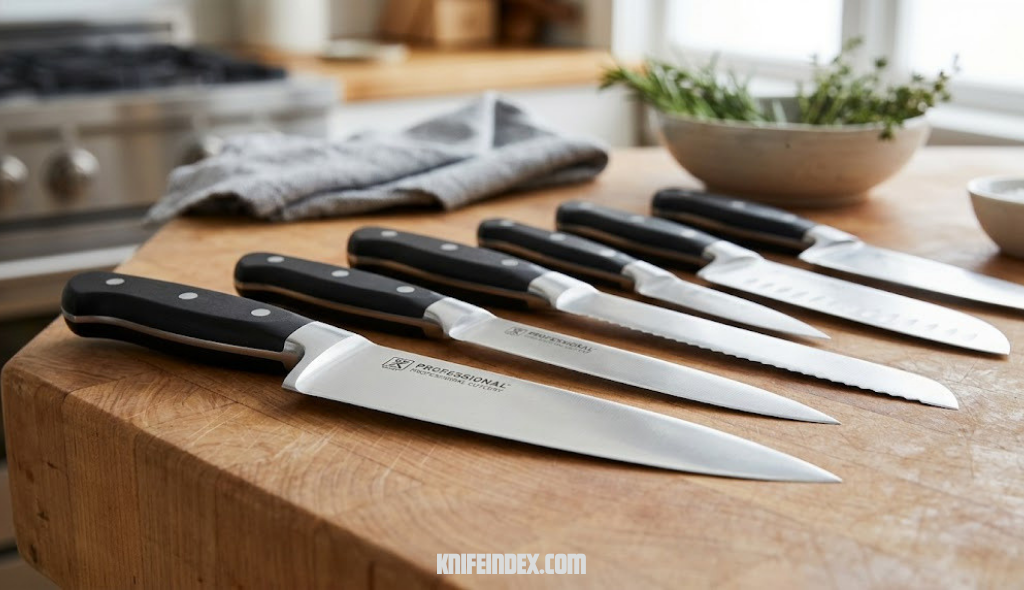
A well-chosen knife set is the backbone of every professional kitchen — this guide breaks down exactly what to look for.
Why Your Knife Set Matters More Than Any Other Tool
Walk into any professional kitchen at 5 a.m., before the ovens are even warm, and you’ll find the same ritual playing out at station after station: chefs quietly unrolling their knife rolls, running a thumb along an edge, and setting out the handful of blades they trust with their reputation. Ovens can be replaced overnight. Range hoods can be serviced. But a chef’s knives are personal, and for professionals, they are arguably the single most important investment in the entire kitchen. A great chef knife can shave minutes off prep time, reduce fatigue over a ten-hour shift, and make the difference between a clean brunoise and a bruised, uneven dice that ruins the texture of a dish.
Choosing the best knife sets for professional chefs isn’t about buying the flashiest block on the shelf. It’s about understanding steel composition, blade geometry, handle ergonomics, and how a given lineup of knives actually maps to the tasks you perform hour after hour. A home cook might get away with a single all-purpose blade. A working chef needs a coordinated system: a chef’s knife or gyuto for the bulk of prep, a santoku or nakiri for vegetables, a nimble paring knife for detail work, a serrated blade for bread and delicate produce, and often a boning or fillet knife for breaking down proteins.
This guide exists to cut through the marketing noise. We’ll walk through what separates a genuinely professional-grade knife set from a pretty box destined to dull after a month of hard use, compare six standout sets across price points and styles, and give you the vocabulary — steel types, tang construction, edge geometry — to make a confident, informed purchase. Whether you’re a line cook building your first roll, a sous chef upgrading a mismatched collection, or a head chef outfitting a new kitchen, you’ll find a set here that fits.
It’s also worth acknowledging why so many professional cooks end up disappointed with knife purchases in the first place. The vast majority of kitchen knife marketing leans on aesthetics — dramatic product photography, dark wood handles, and glossy blades photographed under studio lighting. None of that tells you anything about how the steel was heat-treated, whether the tang runs the full length of the handle, or whether the edge geometry actually suits the cutting motions you use ten hours a day. A knife that looks stunning in a marketing photo can still dull within a week if the underlying metallurgy is mediocre, and a plain-looking, unglamorous blade can outperform it for years if the fundamentals are right.
There’s also a psychological dimension to this that’s rarely discussed openly, but every chef who’s worked a busy line understands it intuitively: trust in your tools reduces cognitive load during service. When you don’t have to think about whether your knife will hold an edge through the dinner rush, or whether the handle will slip when your hands are wet from washing greens, you free up mental bandwidth for the things that actually require attention — plating, timing, communication with the rest of the line. A mediocre knife set doesn’t just slow you down physically; it adds a low-grade layer of uncertainty to every task, and that adds up over a full shift.
How We Evaluated These Knife Sets
Rather than ranking knife sets by price or brand recognition alone, we assessed each lineup against the same criteria a working kitchen actually cares about. Every pick in this guide was weighed against the following:
- Steel quality and edge retention — how long a blade holds a working edge under repeated contact with cutting boards, and how it responds to sharpening.
- Blade geometry — the thinness behind the edge, the curve of the belly for rock-chopping, and whether the profile suits push-cutting or a rocking motion.
- Handle ergonomics — grip comfort during long service, resistance to slipping when hands are wet or greasy, and balance point relative to the bolster.
- Construction — whether blades are forged or stamped, and how the tang is integrated into the handle.
- Set composition — whether the knives included actually match real kitchen tasks, rather than padding the block with redundant or rarely used blades.
- Value relative to segment — comparing each set only against others in its price bracket, since a $180 set and an $800 set serve different buyers.
- Maintenance requirements — how much upkeep (oiling, hand-washing, honing frequency) the set demands to perform at its best.
We also cross-referenced independent long-term user feedback, professional kitchen supply forums, and culinary school recommendations to make sure these picks hold up outside of a single test kitchen’s opinion.
One methodological point worth flagging: we deliberately avoided ranking sets purely on brand recognition. Some extremely well-known knife brands produce excellent premium lines and mediocre entry-level lines under the same name, and buyers often assume that brand reputation transfers evenly across a company’s entire catalog. It doesn’t. A well-regarded brand’s budget stamped set can perform noticeably worse than a lesser-known brand’s forged mid-range offering. Wherever possible, we evaluated the actual construction and steel of each specific set rather than leaning on the halo effect of a recognizable name.
We also paid close attention to how each set performed over time rather than only assessing out-of-box sharpness. Almost any knife feels impressive on the first cut; the real test is how the edge holds up after a week of daily use, how the handle wears after repeated hand-washing, and whether rivets or bolsters loosen under sustained use. Long-term durability signals — reported handle looseness, rust development along the spine, or edge chipping on bone contact — weighed more heavily in our assessment than first-impression sharpness alone.
Quick Picks: Best Knife Sets at a Glance
| Set | Best For | Steel | Price Tier |
|---|---|---|---|
| Premium Forged Chef Set | All-around professional kitchens | High-carbon stainless (German-style) | Premium |
| Japanese-Style Set | Precision prep, sushi and vegetable work | VG-10 / high-carbon core | Premium |
| Value Professional Set | Line cooks wanting durability on a budget | High-carbon stainless | Mid-range |
| German Steel Set | Heavy-duty chopping, butchery-adjacent work | X50CrMoV15-type steel | Mid-to-premium |
| Compact/Travel Set | Chefs who travel between kitchens or events | Stainless with rust resistance | Mid-range |
| Budget-Friendly Starter Set | Culinary students and new hires | Stamped stainless | Budget |

See Current Pricing on Amazon
Check availability, bundle deals, and verified buyer reviews before you commit.
Check Price on AmazonFull Comparison Table
Before diving into individual reviews, here’s a side-by-side breakdown of how these six knife sets stack up on the details that matter most to a working professional.
| Set | Piece Count | Blade Steel | Handle Material | Construction | Ideal User |
|---|---|---|---|---|---|
| Premium Forged Chef Set | 7–8 pieces | High-carbon stainless | Triple-riveted composite | Full tang, forged | Head chefs, sous chefs |
| Japanese-Style Set | 5–6 pieces | VG-10 core, clad stainless | Pakkawood | Full tang, forged | Precision-focused chefs |
| Value Professional Set | 6 pieces | High-carbon stainless | Textured polymer | Full tang, forged | Line cooks, caterers |
| German Steel Set | 7 pieces | X50CrMoV15-type | POM synthetic | Full tang, forged | Heavy chopping stations |
| Compact/Travel Set | 4–5 pieces | Stainless | Molded polymer | Full tang, stamped/forged hybrid | Traveling or event chefs |
| Budget-Friendly Starter Set | 6–8 pieces | Stamped stainless | Polypropylene | Partial tang, stamped | Culinary students |
Notice the pattern here: the more serious the set, the more consistently it favors forged construction over stamped blanks, and full tang integration over partial tang designs. That single distinction explains most of the performance gap between a $60 department-store set and a $300 professional lineup.
It’s also worth reading this table alongside your own priorities rather than treating any single column as decisive on its own. A chef prioritizing edge retention above all else might lean toward the Japanese-style set despite its lower tolerance for bone contact, while a chef running a high-volume banquet kitchen where knives get borrowed and occasionally mistreated might reasonably prioritize the German steel set’s forgiving toughness over marginally better slicing precision. There’s no single “winner” across every row of this table — only the set that best matches the specific combination of tasks, environment, and maintenance habits in your own kitchen.
1. Best Overall: Premium Forged Chef Set
Premium Forged Chef Set
The all-around top pick for busy professional kitchens.
Check Price on AmazonThis is the set we’d hand to a chef outfitting a brand-new kitchen with no legacy gear to fall back on. Every blade in the lineup is drop-forged from a single billet of high-carbon stainless steel, full tang from heel to butt, and finished with a triple-riveted handle that stays secure through years of hard, wet use. The chef’s knife — the workhorse of the set — has a gentle enough belly curve to support rock-chopping herbs, but enough straight edge near the tip for controlled push cuts through dense root vegetables.
What separates this set from imitators at a similar price is heat treatment consistency. Cheaper “premium-looking” sets often use inconsistent hardening across the blade, leading to a soft spot near the heel that rolls under repeated contact with a cutting board. This set holds a working edge through a full multi-day prep cycle before needing a hone, and it responds cleanly to a whetstone when it’s time for a full resharpen — see our guide to knife sharpeners for the right stone progression.
Pros
- Excellent edge retention through multi-day service
- Comfortable, secure grip even with wet hands
- Well-balanced blade-to-handle weight ratio
- Covers every core task without redundant pieces
Cons
- Higher upfront cost than mid-range sets
- Hand-wash only; not dishwasher safe
- Slightly heavier blades may tire smaller hands over long shifts
If you’re comparing this to individual blade purchases, it’s worth reading our breakdown of forged German-style chef knives and how full-tang construction affects long-term durability.
In practice, this set earns its “best overall” ranking because it doesn’t force a compromise on any single axis. Chefs moving from a mismatched personal collection to a unified set often notice the difference in balance most immediately — each blade in this lineup shares a consistent weight distribution, so muscle memory built on the chef’s knife transfers naturally to the utility and paring knives rather than requiring a fresh adjustment for each tool. That consistency is easy to overlook on a spec sheet but becomes obvious the moment you’re moving quickly between tasks mid-service.
2. Best Japanese-Style Set

Japanese-Style Chef Set
Ideal for chefs who prioritize precision and fine slicing work.
Check Price on AmazonJapanese-style sets trade a bit of the German-style set’s brute durability for a thinner blade profile and a harder steel core, which translates to noticeably cleaner slices on proteins and produce alike. This set builds around a VG-10 cutting core clad in softer stainless layers for corrosion resistance — a construction method that lets the edge take a finer angle without becoming brittle in daily use. If your station leans heavily on fish butchery, thin julienne work, or precision plating garnishes, this is the direction to go.
The included nakiri-style vegetable knife is a standout: its flat profile is built for a straight up-and-down push cut rather than a rock-chop, which produces more even slices on things like onions and cabbage. Chefs coming from a Western knife background sometimes need a session or two to adjust their cutting motion, but most find the transition worthwhile once they feel the reduced resistance moving through dense vegetables.
Pros
- Thinner blade geometry glides through produce and fish
- Harder steel core holds a finer edge longer
- Lightweight design reduces wrist fatigue
Cons
- Harder steel is more prone to chipping on bone contact
- Requires more careful sharpening technique
- Not ideal for heavy chopping through dense squash or bone-in cuts
For a deeper dive on why this steel behaves differently under a stone, see our comparison of high-carbon steel vs. stainless steel, and our related piece on yanagiba vs. sujihiki for slicing raw fish if seafood prep is a major part of your role.
One detail worth flagging for buyers new to Japanese-style construction: the cladding on these blades — the softer outer layers protecting the harder cutting core — means the blade can look almost two-toned along the edge once you inspect it closely under kitchen lighting. That’s not a defect; it’s the visual signature of san-mai construction, and it’s part of what allows the set to combine a hard, sharp core with a more shock-resistant exterior. Don’t mistake it for uneven finishing when comparing product photos.
3. Best Value Professional Set
Value Professional Set
Full professional performance without the premium markup.
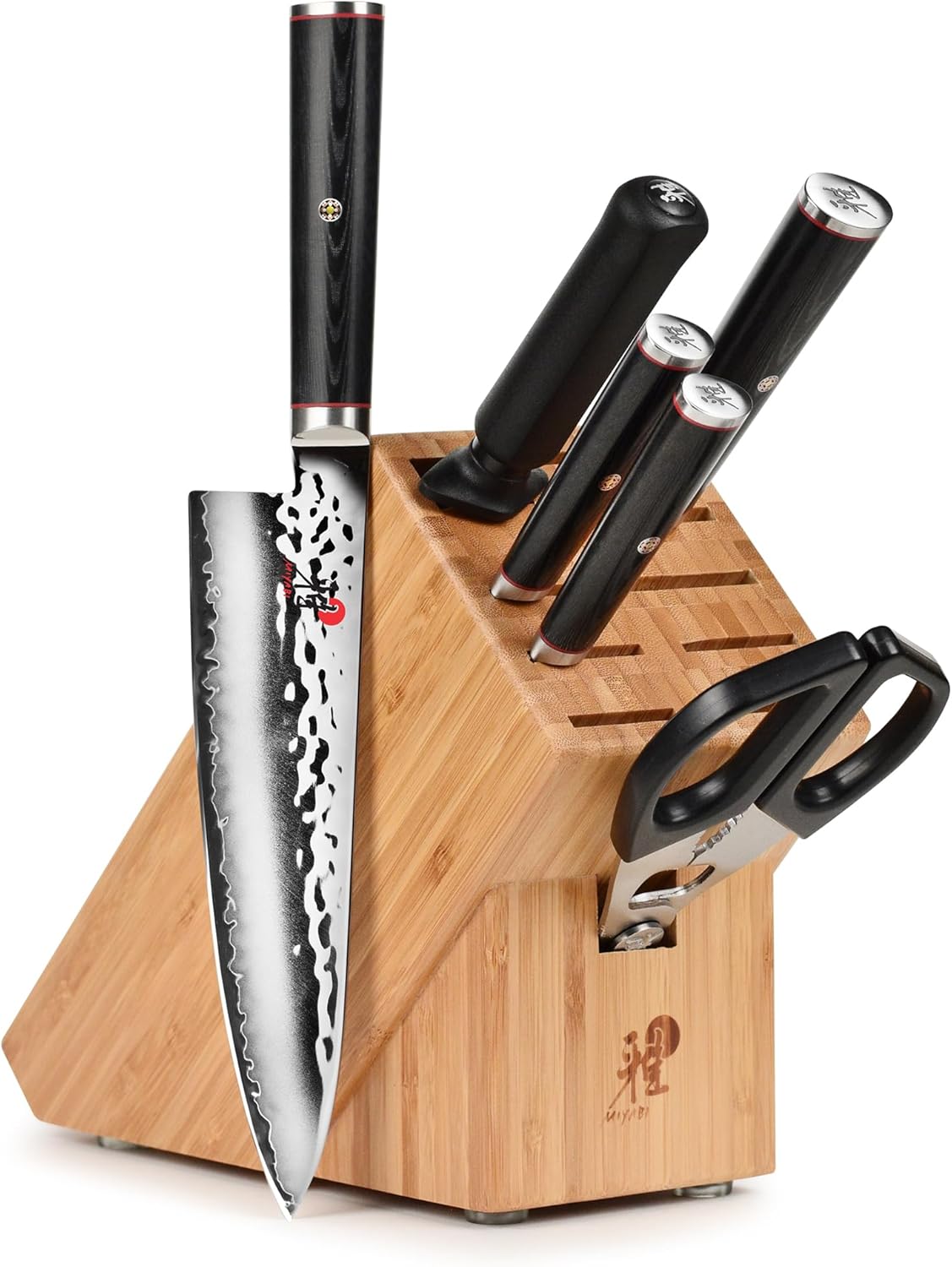
Check Price on AmazonNot every kitchen has the budget — or the appetite for handwashing rituals — that a top-tier premium set demands. This value-oriented lineup earns its spot by delivering genuinely forged, full-tang construction at a price point that undercuts the premium tier by a wide margin, without falling into stamped-blank territory. The steel isn’t quite as refined as our top pick, but it’s a legitimate high-carbon stainless alloy that takes and holds an edge well enough for daily line work.
What we appreciate most is the textured polymer handle. It’s less elegant than pakkawood or triple-riveted wood composites, but it’s genuinely more practical in a high-volume kitchen: it resists moisture absorption, shrugs off repeated sanitizing, and never needs oiling. For cooks who are hard on their gear — dropping knives in a bus tub between courses, working through back-to-back double shifts — that kind of low-maintenance durability often matters more than a fractional edge-retention edge.
Pros
- Genuine forged construction at a mid-range price
- Low-maintenance polymer handles
- Solid edge retention for daily commercial use
- Excellent balance of cost and durability
Cons
- Not as refined an edge as premium forged sets
- Fewer specialty blades included
- Handle aesthetics are more utilitarian than premium options
If you’re weighing this against a smaller individual purchase, our budget chef knife guide covers similar ground for cooks assembling a set piece by piece rather than buying a full block.
We’d also point out that this set is a smart pick for kitchens managing multiple simultaneous hires — catering operations, banquet kitchens, or restaurants with high staff turnover — where equipping several cooks at once with premium forged sets simply isn’t financially realistic. Buying two or three of this set often makes more operational sense than buying one flagship set and leaving newer hires with mismatched, lower-quality tools.
4. Best German Steel Set

German Steel Set
Built for heavy chopping and butchery-adjacent kitchen tasks.
Check Price on AmazonGerman-style steel (typically an X50CrMoV15-type alloy) is softer than Japanese VG-10 or high-end powder steels, but that’s a feature, not a flaw, for chefs who spend their shifts breaking down whole birds, splitting squash, or hacking through cases of root vegetables. Softer steel flexes rather than chips on unexpected bone contact, and it’s far more forgiving when a busy line cook grabs a honing rod between tickets instead of babying the edge with a whetstone.
This set’s blade geometry is noticeably thicker behind the edge than the Japanese-style pick above, which trades a bit of slicing finesse for durability under lateral stress — the kind of stress you get when a knife twists slightly mid-cut on a stubborn butternut squash. Read our explainer on blade geometry and thin vs. thick behind the edge for more on why this matters in practice.
Pros
- Exceptional durability under heavy chopping stress
- Forgiving of imperfect sharpening technique
- Resists chipping better than harder Japanese steels
Cons
- Requires more frequent honing to stay razor sharp
- Heavier overall weight than Japanese-style alternatives
- Less precise for ultra-fine slicing tasks
For a full brand-vs-brand breakdown of this steel family, see Zwilling vs. Wusthof German knife brands face off.
This set also tends to be the most forgiving choice for kitchens that share tools across multiple cooks with varying skill and sharpening habits. Because the steel is softer and more tolerant of an imperfect honing angle, it’s less likely to develop the uneven, jagged edge that a harder Japanese-style blade can pick up when handled inconsistently by several different people over a busy week.
5. Best Compact/Travel Set
Compact/Travel Knife Set
A tight, protective lineup for chefs who move between kitchens.
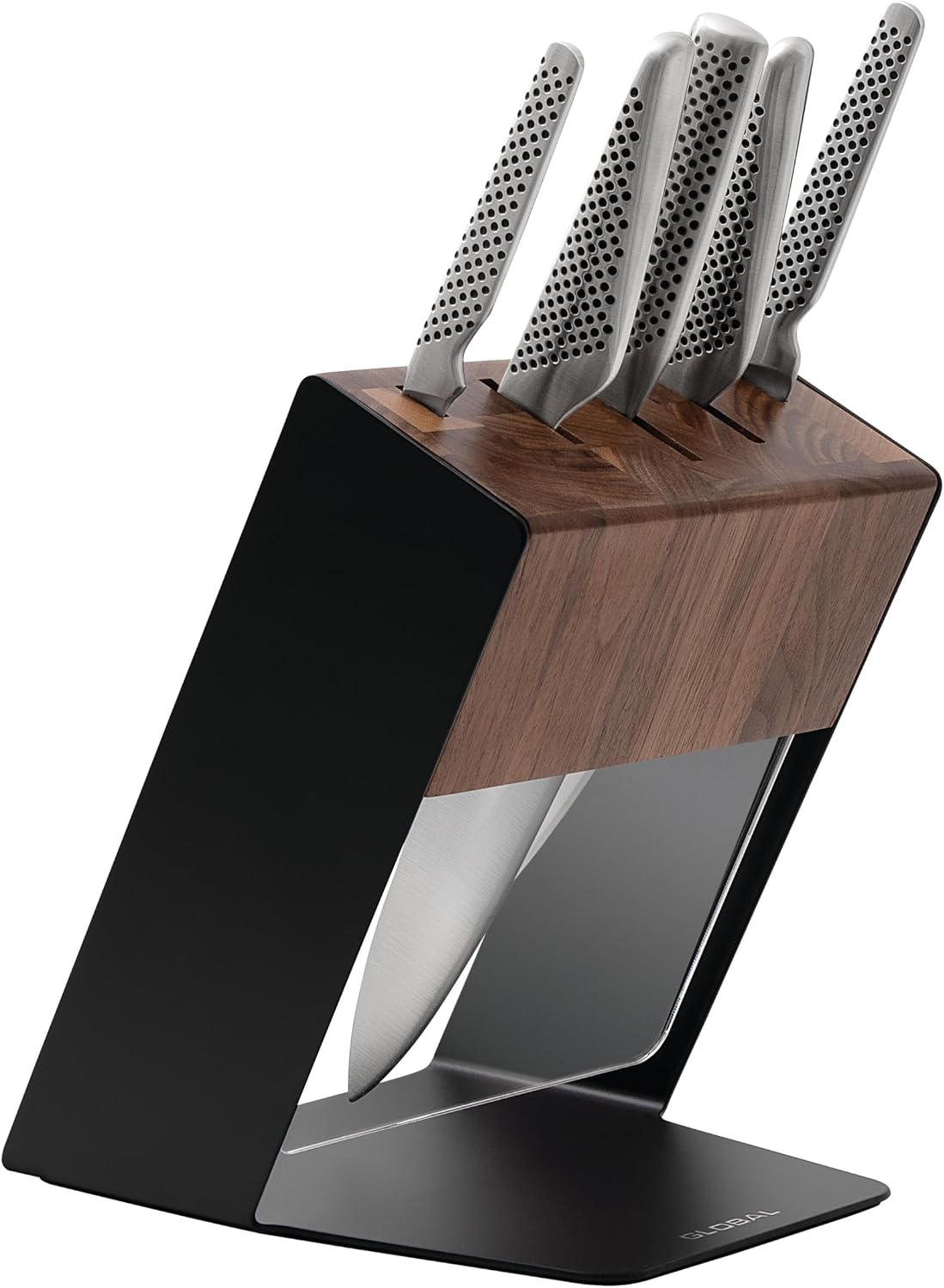
Check Price on AmazonPrivate chefs, caterers, culinary instructors, and pop-up cooks share a problem that stationary line cooks never face: their knives have to survive a car trunk, a subway ride, or a plane’s checked baggage. This compact set is built around that reality. Every blade ships in a rigid, form-fitted case that keeps edges from contacting each other, and the stainless alloy used leans toward corrosion resistance over ultimate edge retention — a sensible tradeoff when a knife roll might sit in a humid kitchen bag for hours between jobs.
The lineup is intentionally trimmed to four or five blades rather than a full eight-piece block: a chef’s knife, a paring knife, a utility blade, and often a compact serrated knife for garnish and bread work. It’s not the set we’d recommend for a stationary prep kitchen, but for its actual use case — reliability on the move — it outperforms larger sets that aren’t designed for transport.
Pros
- Protective travel case included
- Corrosion-resistant steel suited to inconsistent storage conditions
- Lightweight, easy to carry between job sites
Cons
- Smaller piece count than full kitchen sets
- Not ideal as a sole set for a high-volume stationary kitchen
- Edge retention trails dedicated premium sets slightly
If storage and transport is your main concern, our guide on how to travel with kitchen knives safely pairs well with this pick.
Chefs who work private events, meal-prep businesses, or rotate through multiple commissary kitchens each week often tell us this is the set that finally stopped their edges from arriving dull or, worse, damaged during transport. The rigid case does add a small amount of bulk to a knife bag compared to a soft roll, but the tradeoff in edge protection is almost always worth it once you’ve experienced a chipped tip from loose blades shifting in transit.
6. Best Budget-Friendly Starter Set

Budget-Friendly Starter Set
A sensible entry point for culinary students and new line cooks.
Check Price on AmazonCulinary students and cooks in their first months on a line often don’t need — or can’t yet justify — a premium set. This budget-tier lineup uses stamped stainless blades rather than forged ones, which means thinner stock cut from a flat sheet rather than hammered from a heated billet. That construction method keeps the price low, and while it won’t hold an edge as long as a forged blade, it’s a perfectly reasonable way to learn knife skills and technique without risking a significant financial loss if a knife is damaged, lost, or simply outgrown.
We’d recommend this set specifically as a starter kit, with a plan to upgrade the chef’s knife first — since that’s the blade doing 80% of the daily work — once budget allows. For students still building fundamentals, our guide to essential knife skills every cook must master is a useful companion resource.
It’s also worth setting expectations honestly here: a set at this price point is a stepping stone, not a destination. Most cooks who start with a budget set end up replacing at least the chef’s knife within their first one to two years on the job, once their technique has developed enough to notice the limitations of stamped steel. That’s a perfectly normal progression, and there’s no shame in starting here — plenty of accomplished chefs did the same.
Pros
- Low financial barrier to entry
- Good for learning fundamental knife skills
- Lightweight blades reduce fatigue for beginners
Cons
- Stamped construction dulls faster than forged blades
- Handles are less durable under heavy daily use
- Not built to last an entire professional career
Understanding Blade Steel
Every recommendation in this guide ultimately comes down to steel chemistry, so it’s worth slowing down and understanding what’s actually happening inside a blade. Steel is fundamentally an alloy of iron and carbon, with additional elements — chromium, vanadium, molybdenum, cobalt — added to influence hardness, corrosion resistance, and edge stability. More carbon generally means a harder, sharper edge that’s more brittle; more chromium generally means better rust resistance but a softer edge.
German-style knife sets typically use a steel like X50CrMoV15, which balances all three properties in favor of toughness and rust resistance over ultimate hardness — a sensible choice for chefs who value durability over razor-thin sharpness. Japanese-style sets often use VG-10, a higher-carbon steel that takes a much finer edge but demands more careful handling. At the premium end, you’ll find steels like those discussed in our MagnaCut vs. M390 comparison and S35VN vs. S45VN breakdown, though these premium powder-metallurgy steels are more common in individual knives and folding blades than full kitchen sets.
| Steel Type | Hardness (approx. HRC) | Edge Retention | Corrosion Resistance | Best For |
|---|---|---|---|---|
| German-style (X50CrMoV15) | 56–58 | Moderate | High | Heavy chopping, everyday durability |
| VG-10 (Japanese) | 60–61 | High | Moderate-High | Precision slicing, fine detail work |
| High-Carbon Stainless | 56–59 | Moderate-High | High | Balanced all-around performance |
| Stamped Stainless | 52–55 | Lower | High | Entry-level, learning, budget kitchens |
If your kitchen frequently rotates cooks and knives get borrowed, honed inconsistently, or occasionally left in a sink overnight, leaning toward a tougher, more corrosion-resistant steel will save headaches — even if it means slightly less “wow factor” on a fresh edge. For a broader read, our piece on complete guide to knife steel types goes deeper into alloy-by-alloy behavior.
It’s worth spending a moment on Rockwell hardness, since it’s the single number most frequently cited in marketing copy yet most poorly understood by buyers. The Rockwell C scale (HRC) measures a steel’s resistance to indentation, which correlates strongly — but not perfectly — with edge retention and brittleness. A blade sitting at 56 HRC will generally need sharpening more often than one at 61 HRC, but it will also tolerate more lateral stress and unexpected bone contact without chipping. Neither end of the spectrum is objectively “better” — the right hardness depends entirely on how a knife will actually be used. Our full explainer on understanding Rockwell hardness in kitchen knives covers this in more depth, including why two knives listed at the same HRC number can still feel meaningfully different in hand due to differences in heat treatment consistency and blade geometry.
Steel choice also interacts directly with sharpening frequency and technique, which in turn affects total cost of ownership over a knife’s working life. A softer, tougher steel that needs honing every shift but full sharpening only every couple of months may actually demand less total maintenance time than a harder steel that holds its edge longer between sharpenings but requires a more careful, time-consuming stone progression when it finally does need attention. Factor your own patience and sharpening skill level into the equation, not just the steel’s spec sheet.
Handle Materials Explained
A blade only performs as well as the hand controlling it, and handle material plays a bigger role in that control than most buyers assume. The three materials you’ll encounter across professional sets are wood composites (like pakkawood), synthetic polymers (POM, polypropylene), and stabilized wood with resin infusion (Micarta and G-10 style composites, more common on outdoor and pocket knives but occasionally seen on premium kitchen lines).
- Pakkawood and wood composites offer a warm, traditional grip and often look beautiful, but require occasional oiling and are less forgiving of prolonged water exposure than synthetics.
- POM and polypropylene synthetics are essentially maintenance-free, resist moisture completely, and can go through repeated sanitizing cycles without degrading — the reason most high-volume commercial kitchens lean synthetic.
- Triple-riveted composite handles combine a resin-infused wood-look material with metal rivets through the tang, giving the tactile warmth of wood with much of the durability of synthetics.
For a full breakdown of the tradeoffs, see our guide on knife handle materials compared. If you’re prone to sweaty palms during a busy service or work in a particularly humid kitchen, prioritize a textured synthetic grip over a smooth wood finish — traction under stress matters more than aesthetics when you’re moving quickly near a sharp edge.
Forged vs. Stamped Construction
This is the single biggest quality signal in any knife set, and it’s worth understanding in detail before you spend a dollar. A forged blade begins as a heated bar of steel that’s hammered and shaped under pressure, which compresses the grain structure and typically results in a thicker bolster, better balance, and a blade that holds up longer under lateral stress. A stamped blade, by contrast, is cut from a flat sheet of steel — essentially a cookie-cutter process — which is faster and cheaper but produces a thinner, lighter blade with no bolster and generally less durability.
That doesn’t mean every stamped knife is bad — some premium stamped lines from reputable brands perform admirably — but as a rule of thumb, a genuinely professional set should be forged, full tang (meaning the steel extends the full length of the handle rather than stopping partway), for maximum durability and balance. Our detailed comparison of forged vs. stamped knives walks through how to visually and physically tell the two apart when you’re inspecting a set in person or examining product photos online.
There’s a physical test worth performing if you’re able to inspect a knife in person before buying: hold the blade up and look along the spine toward the handle. On a full-tang knife, you’ll typically see a continuous strip of metal running through the center or top of the handle, sometimes visible as a distinct line where the metal meets the surrounding scales. On a partial-tang knife, the handle material will be uninterrupted plastic or composite for a portion of its length, with no metal visible beneath. This single visual check catches the vast majority of misleadingly marketed “professional” sets that are, in fact, built around thin, partial-tang stamped blanks.
Blade Geometry & Edge Angles
Beyond steel and construction, the actual shape of the blade determines how it feels in the hand and what techniques it supports. A German-style chef’s knife typically has a pronounced curved belly, built for a rocking motion where the tip stays anchored to the board while the heel lifts and falls. A Japanese-style gyuto or santoku is flatter along the edge, favoring a push-cut or chop motion where the entire blade lifts and comes straight down.
Edge angle matters just as much as blade shape. Western knives are commonly sharpened to a 20–22 degree angle per side, prioritizing durability over ultimate sharpness. Japanese knives often come sharpened to 12–15 degrees per side, favoring a thinner, sharper edge that requires more careful handling to avoid chipping. Our comparison of single-bevel vs. double-bevel knives covers an even more specialized distinction relevant to traditional Japanese blades like the yanagiba or usuba.
For working chefs, the practical takeaway is this: if your prep leans toward rock-chopping herbs and vegetables at speed, favor a curved-belly Western profile. If your prep leans toward precise, controlled slices — sashimi, delicate vegetable cuts, fine julienne — a flatter Japanese profile will reward the technique.
Blade length is another geometry-adjacent decision that gets less attention than it deserves. An 8-inch chef’s knife is the most common professional default, offering a good balance of cutting surface and maneuverability, but chefs with larger hands or those regularly breaking down larger cuts of protein sometimes prefer a 10-inch blade for the added reach and momentum. Conversely, cooks with smaller hands or those working primarily with delicate produce often find a shorter 6- to 7-inch santoku or utility-style blade easier to control with precision. There’s no universally “correct” length — only the length that matches your hand size, grip strength, and the scale of what you’re typically cutting.
Bolster design also deserves a mention. A full bolster — the thick collar of metal between blade and handle — adds weight and protects fingers from slipping onto the edge, but it can also make it harder to fully sharpen the blade’s heel over time, since the bolster physically blocks stone access to that section of the edge. Many professional-grade knives now use a partial or tapered bolster specifically to avoid this long-term sharpening limitation, a small design detail that’s worth checking if you plan to keep a set in service for many years.
What a Professional Set Should Include
Not every knife set needs a dozen blades to be complete — in fact, many of the best professional lineups are intentionally lean. Here’s what a genuinely functional professional set should cover, and what you can usually skip:
- Chef’s knife (8–10 inch): The workhorse blade responsible for the majority of daily prep. Never compromise here.
- Paring knife: For detail work — hulling strawberries, deveining shrimp, trimming small items a chef’s knife is too large for.
- Utility knife: A mid-size blade for tasks that fall between a chef’s knife and paring knife, such as slicing sandwiches or smaller produce. See our utility knife uses guide for specifics.
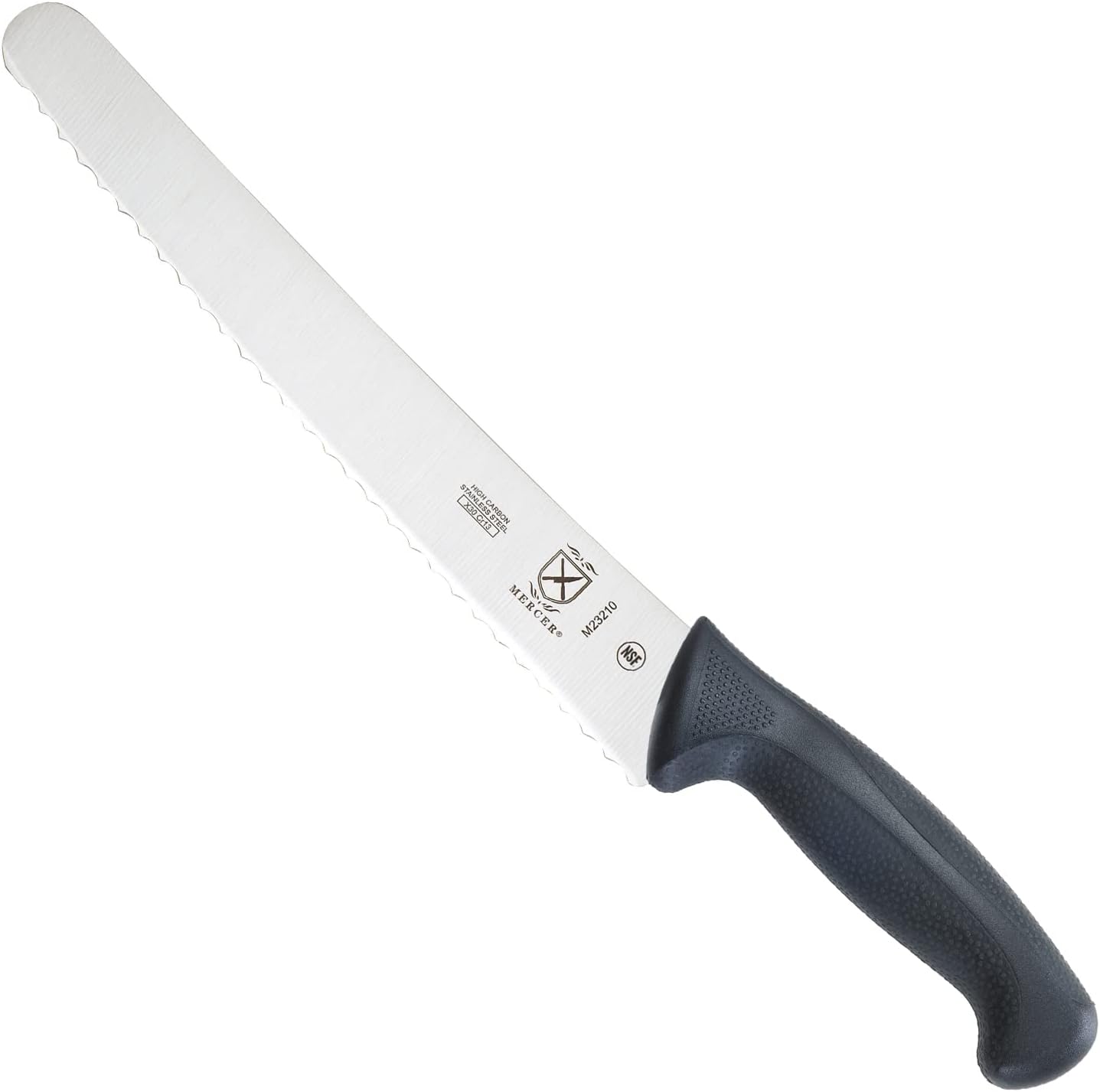
- Serrated/bread knife: Essential for crusty bread and delicate produce like tomatoes, where a straight edge would crush rather than slice. Our bread vs. serrated knife guide explains the nuance.
- Boning or fillet knife: Critical if your role involves breaking down proteins or fish; largely unnecessary if you work purely on a vegetable or pastry station. See boning vs. fillet knife differences.
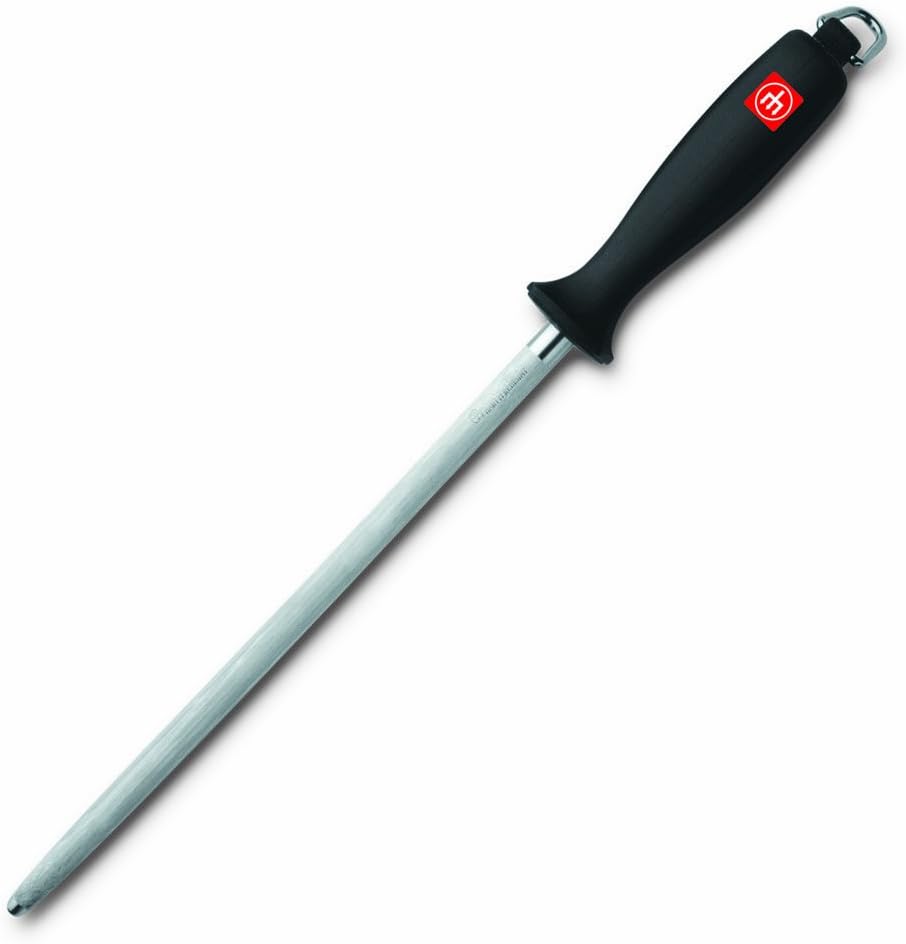
- Honing steel: Not a cutting tool, but essential for realigning an edge between full sharpenings — most quality sets include one.
- Storage block or roll: Protects edges and, in many sets, is included as part of the package.
Items you can usually skip unless your role specifically demands them: cleavers (unless you regularly break down primal cuts — see our best cleaver knives guide), specialty Japanese single-bevel blades, and redundant “steak knife” sets that duplicate a good utility blade.
It’s worth stress-testing this list against your own actual week rather than assuming every “essential” applies equally to your role. Ask yourself honestly how often you reach for each blade over a typical seven-day stretch. If a boning knife sits untouched for weeks at a time because your station rarely handles whole proteins, that budget is better redirected toward a higher-quality chef’s knife or a second paring knife for backup — the tool you use constantly deserves more investment than the one you use occasionally, regardless of what a generic “complete set” checklist suggests.
It’s also reasonable to build a set incrementally rather than buying everything at once. Many experienced chefs start with just a chef’s knife and paring knife, using rented, borrowed, or house knives for everything else, and add specialty blades only once they’ve confirmed a genuine, recurring need. This approach avoids the common trap of owning several rarely used knives that occupy roll space and require maintenance without ever pulling their weight in actual daily service.
Matching a Knife Set to Your Kitchen Role
One of the most overlooked factors in choosing a knife set is the reality that “professional chef” covers a huge range of actual daily tasks. A pastry-focused chef, a butchery-heavy steakhouse cook, and a high-volume vegetable prep specialist all need meaningfully different tools, even though all three might describe themselves simply as “chefs” on a job application. Before buying, it’s worth mapping your actual weekly task breakdown against the strengths of each set profile discussed above.
If the bulk of your day is spent on mise en place — dicing onions, mincing garlic, breaking down herbs — you’ll get the most value from a set with a comfortable, well-balanced chef’s knife and a nimble paring knife, since those two blades alone will account for the vast majority of your cuts. If your role leans toward protein fabrication, prioritize a set that includes (or pairs well with) a quality boning or fillet knife, and consider the added durability of a German-style steel that tolerates occasional bone contact without chipping. Chefs working primarily with fish and delicate garnish work will get more long-term satisfaction from a Japanese-style set’s thinner, more precise geometry, even if it demands slightly more careful handling.
It’s also worth thinking about how your kitchen physically operates. A cramped station with limited counter space benefits from a compact set that doesn’t require a full block taking up valuable real estate. A shared communal kitchen where tools get borrowed benefits from more tolerant, easy-to-maintain steel that won’t develop an uneven edge after being used — and re-honed inconsistently — by several different cooks. A private chef or caterer moving between locations weekly benefits enormously from a set built specifically for transport, even if it means sacrificing a piece or two from the lineup.
Finally, don’t overlook your own physical characteristics. Hand size, grip strength, and even the specific way you tend to hold a blade (pinch grip versus handle grip) all affect which handle shape and blade weight will feel most natural. If at all possible, handle a set in person — many culinary supply stores allow this — before committing to a purchase based on photos alone.
Care, Sharpening & Maintenance
Even the best knife set in the world will underperform without proper care, and this is where a surprising number of otherwise skilled cooks fall short. Maintenance breaks down into three distinct habits: honing, sharpening, and general care.
Honing vs. Sharpening
These terms get used interchangeably, but they describe completely different processes. Honing realigns a microscopically bent edge using a steel rod — it doesn’t remove metal, just straightens what’s already there, and should ideally happen before or after every use. Sharpening actually grinds away metal to form a new edge, typically needed every few weeks to few months depending on use frequency. Our detailed comparison of honing steel vs. whetstone covers exactly when to reach for each tool.
Choosing a Sharpening Method
Whetstones offer the most control and the best results but demand practice; electric sharpeners are faster and more forgiving but remove more metal per use and can shorten a blade’s lifespan if overused. Our guide to whetstone vs. electric sharpener metal removal and heat risk breaks down which method fits which kitchen environment.
General Care
- Hand-wash and dry knives immediately — never let them soak or air-dry in a sink, which promotes both rust and edge damage from clanging against other items.
- Store blades so the edge never contacts other metal directly — a block, magnetic strip, or blade guard all work.
- Avoid glass or stone cutting boards, which dull an edge far faster than wood or quality plastic.
- If you notice early rust spots, address them immediately using guidance from our how to remove rust from kitchen knives guide, or the more general how to prevent rust on knives resource.
- Rotate honing into your routine at the start of a shift, not just when a knife feels dull — a few passes on the steel before you begin prep keeps the edge tracking straight and reduces how often you need a full resharpen.
- Avoid using excessive force when honing; the goal is to realign the microscopic edge, not to grind it, and pressing too hard can actually damage a fine edge rather than restore it.
It’s also worth building a simple maintenance schedule rather than sharpening reactively whenever a knife “feels dull.” A reactive approach almost always means you’ve been cutting with a compromised edge for longer than you realized, since edge degradation is gradual and easy to miss day to day. A fixed schedule — hone daily, inspect weekly, sharpen on a set cadence based on your kitchen’s volume — keeps performance consistent rather than letting it slowly decay between now-and-then sharpening sessions.
Many professional kitchens designate one experienced cook to handle sharpening for the whole station, rather than leaving it to individual discretion. This isn’t about restricting autonomy; it’s about consistency. A single trained hand maintaining a consistent angle across every blade in rotation produces far more predictable results than several cooks each sharpening to their own preferred angle, which can leave a set of otherwise identical knives performing very differently from one another.
Pair Your Set With the Right Sharpening Tools
A great knife set is only half the equation — proper maintenance gear keeps every edge performing like new.
Check Price on AmazonStorage & Organization
How you store your knives between shifts matters almost as much as how you use them. A cramped drawer where blades knock against each other is one of the fastest ways to chip an edge or dull a fine bevel. Professional kitchens generally favor one of three storage approaches:
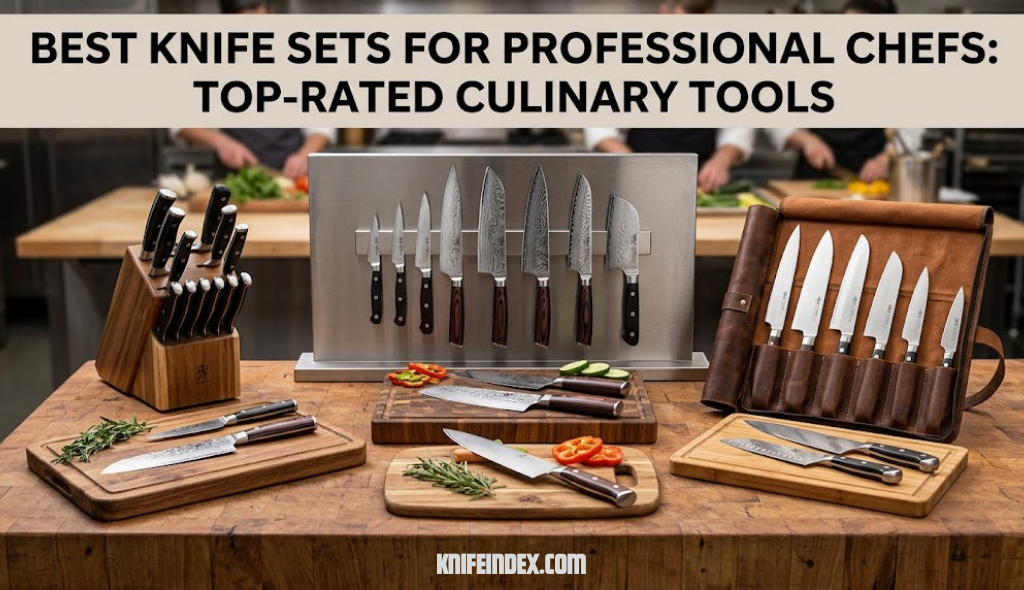
- Knife blocks: Traditional, protective, and ideal for a stationary station. Our best knife block set for small kitchens guide covers space-conscious options.
- Magnetic strips: Popular in professional kitchens for visibility and quick access, though not all strips are equal — see our comparison of magnetic knife strips and edge damage risk before mounting one.
- Knife rolls or bags: Essential for chefs who travel between kitchens; our best knife bag for chefs guide covers padded, protective options.
If you’re working in a shared kitchen, consider a personal roll even if a communal block is available — it keeps your edges protected from other cooks’ knives and prevents the mix-ups that inevitably happen when several similar-looking chef’s knives sit in the same block. For smaller home-adjacent setups, our small kitchen knife storage layouts guide and how to make a knife block tutorial are useful references, and our how to store knives without a block guide covers space-limited alternatives.
Whichever storage method you choose, consistency matters more than the specific format. Cooks who habitually return a knife to the same slot, strip position, or roll pocket after every use develop a kind of muscle memory around their tools that speeds up transitions between tasks — you reach for a blade without needing to visually search for it, because you always know exactly where it lives. This sounds like a minor detail, but over the course of a demanding shift, it removes dozens of small hesitations that would otherwise slow down your rhythm.
It’s also worth thinking about sanitation requirements specific to your kitchen. Health-code-compliant kitchens often require knives to be sanitized between uses on different proteins, which means your storage solution should support quick, repeated retrieval and return rather than a system that treats knives as a set-it-and-forget-it fixture. A magnetic strip mounted near your primary cutting station, for example, supports this kind of frequent access far better than a knife roll tucked away in a locker.
Common Buying Mistakes to Avoid
After reviewing dozens of knife sets marketed toward professionals, a handful of recurring buying mistakes stand out — mistakes that are easy to avoid once you know to look for them.
- Buying based on piece count alone. A 15-piece block with three redundant “utility” knives and a rarely used cheese knife is often worse value than a tightly curated 6-piece set.
- Ignoring tang construction. A beautiful handle means little if the blade is only partial tang — check product descriptions and images closely, or consult our stamped vs. forged bolster geometry guide to spot the difference.
- Choosing steel hardness without matching it to your actual tasks. Harder isn’t always better — see our section on blade steel above.
- Overlooking handle ergonomics for hand size. A knife that fits a large hand comfortably may be awkward for a smaller grip, and vice versa. Handle a set in person when possible.
- Assuming dishwasher-safe claims. Even when marketed as dishwasher safe, most quality kitchen knives perform and last better with hand-washing.
- Neglecting the sharpening ecosystem. Buying a beautiful set without a sharpening plan guarantees it will dull and disappoint within months.
- Chasing the most expensive option by default. A higher price doesn’t automatically mean a better fit for your specific tasks — an expensive, ultra-hard Japanese set can actually underperform a more moderately priced German-style set for a chef who does heavy daily chopping through dense vegetables.
- Underestimating the learning curve of thinner blade geometry. Cooks switching from a Western-style profile to a flatter Japanese profile sometimes assume the new blade is inferior when the real issue is an unadjusted cutting motion — give any significant style change a genuine adaptation period before judging it.
- Buying a set sight-unseen without checking return policies. Handle feel is deeply personal, and even a well-reviewed set can feel wrong in your specific hand — always confirm you can return or exchange before committing to a set you haven’t held.
Taken together, these mistakes share a common thread: they all stem from evaluating a knife set on surface-level signals — price, piece count, brand name, blade hardness in isolation — rather than on how well the set’s actual construction and geometry match real, specific tasks. Slowing down to ask “what will I actually be cutting, how often, and under what conditions” before comparing options will steer you toward a better purchase far more reliably than chasing the highest-rated set on a general marketplace listing.
Frequently Asked Questions
What is the single most important knife in a professional set?
The chef’s knife (or gyuto, in Japanese-style lineups) handles the overwhelming majority of daily prep work, from dicing onions to breaking down herbs. If you only invest in one high-quality blade, this is the one to prioritize.
How many knives does a professional chef actually need?
Most working chefs rely on five to seven core blades: a chef’s knife, paring knife, utility knife, serrated bread knife, and often a boning or fillet knife. Larger block sets frequently include redundant pieces that see little real use.
Is German steel or Japanese steel better for a professional kitchen?
Neither is universally “better” — German steel favors toughness and forgiveness under heavy chopping, while Japanese steel favors precision and edge retention for fine slicing. The right choice depends on your specific station and tasks.
How often should professional knives be sharpened?
This varies with usage volume, but most professional kitchens sharpen core knives every few weeks to every couple of months, while honing with a steel rod happens far more frequently — often daily.
Are forged knives always better than stamped knives?
Generally, yes, for durability and balance, though some premium stamped lines from reputable brands perform well. As a rule, forged, full-tang construction is the stronger signal of long-term professional quality.
Can professional knife sets go in the dishwasher?
Even when marketed as dishwasher safe, hand-washing and immediate drying is strongly recommended to preserve edge sharpness, prevent handle degradation, and avoid blade-on-blade contact damage.
What’s the difference between a santoku and a chef’s knife?
A santoku has a flatter edge suited to push-cutting and a shorter, wider blade, while a traditional chef’s knife has a curved belly built for rock-chopping. Our chef’s knife vs. santoku comparison covers this in detail.
Do I need a separate boning knife if I mostly work with vegetables?
No — a boning or fillet knife is only necessary if your role regularly involves breaking down proteins. Vegetable-focused stations are better served by investing that budget into a quality nakiri or santoku instead.
How much should a professional-grade knife set cost?
Genuinely professional forged sets typically start in the mid-range price tier and climb from there, though excellent value options exist that deliver forged, full-tang construction without premium-tier pricing.
What handle material is best for a commercial kitchen?
Synthetic polymer handles (POM, polypropylene) tend to perform best in high-volume commercial environments due to their resistance to moisture and repeated sanitizing, though wood composites offer superior grip feel for many users.
Should I buy a full block set or build my own knife roll piece by piece?
Both approaches work. A block set offers convenience and cohesive design, while building piece by piece allows you to mix steel types and brands to match specific tasks — useful for experienced chefs with strong preferences.
How do I know if a knife set is truly full tang?
Look for product images showing the metal extending through the entire handle, often visible as a metal strip along the spine and butt of the handle. Listings that emphasize “forged” and “full tang” prominently are usually a reliable signal.
What’s the biggest mistake new chefs make when buying their first set?
Prioritizing piece count over blade quality. A tightly curated set of five genuinely well-made forged knives will outperform a fifteen-piece block padded with rarely used, lower-quality blades.
How long should a professional knife set last?
A genuinely forged, full-tang set with proper maintenance can last well over a decade of regular professional use, with the chef’s knife typically needing full replacement first since it absorbs the majority of daily wear.
Is it better to buy a matched set or mix and match individual knives?
A matched set offers consistent balance and handle feel across every blade, which many cooks find speeds up technique transfer between tools. Mixing individual knives allows more flexibility to select the ideal steel and geometry for each specific task, but requires more research and typically costs more overall.
Do heavier or lighter knives perform better in a professional setting?
Neither is universally superior — heavier blades carry more momentum through dense produce with less effort, while lighter blades reduce wrist fatigue over long shifts and support faster, more precise motions. Personal grip strength and task type should guide this choice.
Final Verdict
The best knife sets for professional chefs aren’t defined by piece count, brand prestige, or how they look sitting in a block on a countertop — they’re defined by steel quality, construction integrity, and how well the lineup matches the actual tasks performed shift after shift. For most working chefs building a primary kitchen setup, the Premium Forged Chef Set stands out as the strongest all-around investment, balancing edge retention, ergonomics, and long-term durability. Chefs who lean toward precision slicing and fine produce work will find the Japanese-Style Set more rewarding, while those on a tighter budget can still equip themselves properly with the Value Professional Set.
Whatever you choose, remember that a knife set is only as good as the care behind it. Pair any purchase with proper honing habits, a sensible sharpening routine, and storage that protects the edge between uses, and a quality set can genuinely last an entire career.
Ready to Upgrade Your Kitchen?
Compare current pricing and availability on our top overall pick before you decide.
Check Price on Amazon