Boning Knife vs Fillet Knife: Which Blade Actually Belongs In Your Kitchen?
A deep, practical breakdown of blade geometry, flex, steel, and real-world performance to help you pick the right knife for meat, poultry, and fish.
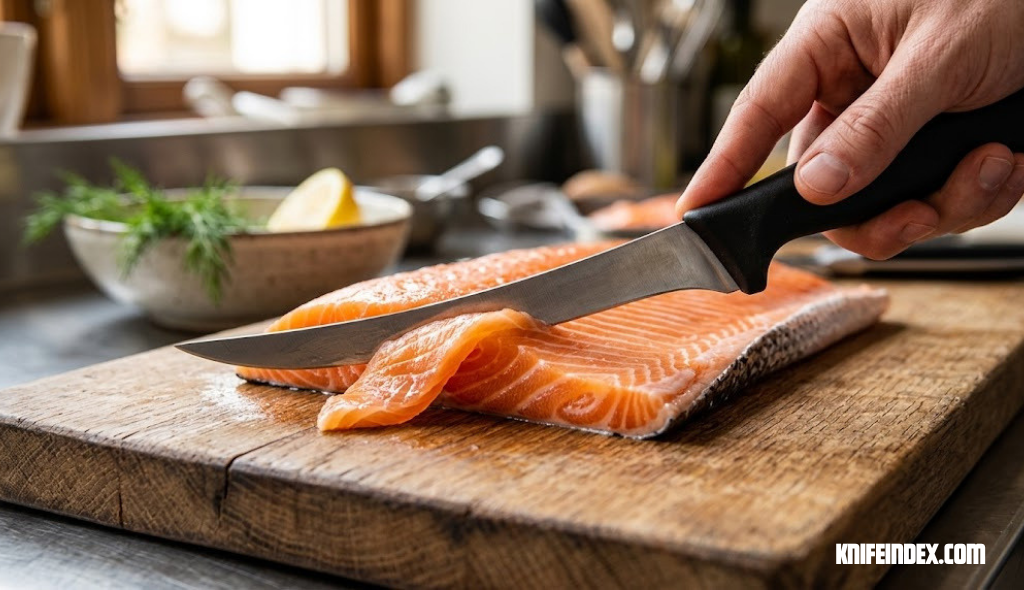
Quick Answer: Boning Knife vs Fillet Knife
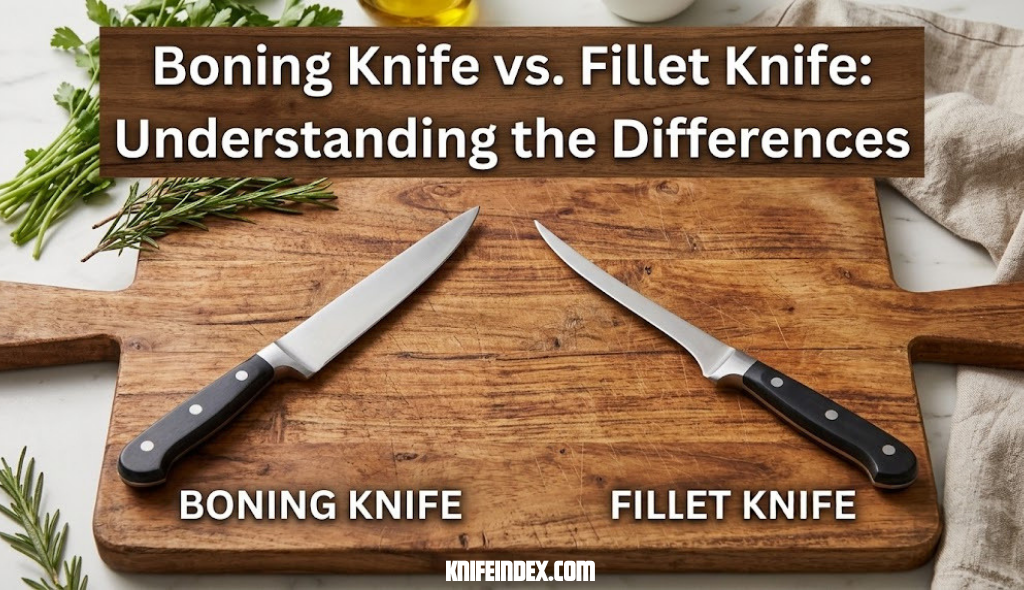
If you’re in a hurry, here’s the short version. A boning knife is built for separating meat from bone — it has a stiffer, narrower blade designed to work around joints, cartilage, and connective tissue on beef, pork, lamb, and poultry. A fillet knife is built for fish — it has a thinner, far more flexible blade that bends around the spine and rib cage of a fish to produce clean, boneless fillets with minimal waste. The two knives look similar at a glance, but the amount of flex in the blade is the single biggest difference, and it changes almost everything about how each knife performs.
If you primarily break down chickens, trim pork shoulders, or debone a leg of lamb, get a boning knife. If you primarily clean trout, bass, salmon, or saltwater catch, get a fillet knife. If you do a healthy mix of both, a semi-flex boning knife can serve as a reasonable middle ground, though it will never fillet as cleanly as a dedicated fillet blade, and it won’t muscle through joints as confidently as a stiff boning knife.
Dexter-Russell 6-Inch Boning Knife
A classic stiff-to-semi-flex boning knife trusted by butchers for decades. Great starting point if you’re new to breaking down meat.
Check Price on AmazonWhat Is a Boning Knife?
A boning knife is a narrow, pointed kitchen knife specifically shaped to separate meat from bone with as little waste and as much control as possible. The blade is typically between five and seven inches long, noticeably narrower than a chef’s knife, and tapers to a sharp point that lets you work into tight spaces around joints, ribs, and cartilage. Unlike a chef’s knife, which is built for chopping and rocking through vegetables, a boning knife is built for precision cutting along curved, uneven surfaces — the kind you encounter constantly when butchering.
Boning knives come in three flex categories: stiff, semi-flex, and flexible. A stiff boning knife holds its shape under pressure, which is exactly what you want when you’re prying meat away from a thick beef bone or working through tough connective tissue. A semi-flex model bends slightly, giving you a bit more maneuverability for poultry work. A flexible boning knife bends significantly and starts to blur the line with a fillet knife — some cooks use flexible boning knives for fish, and some use them for delicate poultry breast work where a stiff blade would be too aggressive.
Professional butchers typically own more than one boning knife specifically because different proteins call for different amounts of flex. If you’re new to butchery or breaking down whole chickens at home, a stiff or semi-flex six-inch boning knife is the most versatile starting point. For a deeper look at how blade thickness affects control during this kind of work, our blade geometry guide on thin versus thick behind the edge is worth reading before you buy.
Common Boning Knife Tasks
- Deboning a whole chicken or turkey
- Trimming silverskin and connective tissue from pork loin
- Separating a leg of lamb from the bone
- Breaking down primal cuts of beef into subprimals
- Removing rib bones from a rack before cooking
- Trimming fat caps and cartilage from roasts
What Is a Fillet Knife?
A fillet knife is a long, thin, highly flexible blade designed to glide along a fish’s spine and rib bones, separating flesh from skeleton in one smooth motion. The defining trait of a fillet knife is flex — the blade should bow significantly when pressed against a cutting board, allowing it to hug the natural curve of a fish’s body rather than cutting straight through bone and losing meat. Blade lengths typically range from six to nine inches, though larger saltwater fillet knives can run longer for bigger catches like tuna or salmon.
The flexibility of a fillet blade is what lets anglers and home cooks maximize yield. A stiff blade forced through a fish tends to cut straight lines regardless of the bone structure underneath, wasting meat and leaving bones behind in the fillet. A flexible blade follows the contour of the ribcage, letting the edge ride just above the bones and pull away a clean, nearly bone-free fillet.
Fillet knives are almost always made from thinner stock than boning knives, and many use softer, more corrosion-resistant steels because they’re frequently used near saltwater, brine, and constant moisture. If you want to understand how steel choice affects a blade’s resistance to rust in this kind of wet environment, our guide on preventing rust on knives covers practical storage habits that matter even more for fillet knives than for dry kitchen tools.
Common Fillet Knife Tasks
- Filleting freshwater fish like bass, trout, and walleye
- Filleting saltwater fish like salmon, snapper, and mahi-mahi
- Skinning a fillet after the meat is removed
- Trimming the belly and rib section for sushi-grade cuts
- Portioning larger fillets into individual servings
- Cleaning small game birds in some field-dressing situations

Rapala Fish ‘n Fillet Knife
An angler favorite with a thin, whip-flexible blade that hugs bone structure for maximum yield on freshwater and light saltwater catches.
Check Price on AmazonBlade Flex Explained: The Single Biggest Difference
If you remember one thing from this guide, remember this: flex is the defining variable that separates a boning knife from a fillet knife. Everything else — length, point shape, handle style — is secondary to how much the blade bends under lateral pressure.
A stiff boning knife is engineered to transmit force in a straight, predictable line. When you push it against a joint or lever it around a bone, the blade doesn’t wander or buckle, which gives you control and prevents the tip from snapping off in tough cartilage. This rigidity is a safety feature as much as a performance one — a blade that flexes unpredictably while you’re applying pressure near your hand is a recipe for slipping.
A fillet knife’s flex works in the opposite direction. Because fish anatomy is curved and the bones are comparatively delicate, a rigid blade would either cut through bone (wasting the knife’s edge and the fish’s meat) or refuse to follow the natural contour of the ribcage. The thin, flexible spine of a fillet blade lets the edge “read” the bone structure by feel, bending just enough to skim along the top of the ribs without digging in.
How to Test Flex Before Buying
If you’re shopping in person, hold the knife by the handle and press the tip gently against a hard surface, like a countertop, while applying light pressure. A boning knife should bend only slightly near the tip. A fillet knife should bow in a smooth, even arc along most of its length. If you’re buying online, check the manufacturer’s description for terms like “stiff,” “semi-flex,” or “flexible” — reputable brands are usually explicit about this because it’s the most important spec on the knife.
Blade Geometry and Length Compared
Beyond flex, the overall shape and length of each blade type reflects its intended job. Boning knives tend to run shorter and narrower, usually five to seven inches, with a pronounced upward curve toward a sharp point. This curve helps the knife hook around joints and follow the contour of a bone without requiring you to change your grip constantly.
Fillet knives tend to run slightly longer on average, especially models meant for larger fish, and the blade profile is typically straighter along the spine with a gradual taper to the tip. Some fillet knives, particularly those designed for large saltwater species, exceed nine inches, since a longer blade lets you complete a single fillet stroke from head to tail without repositioning the knife mid-cut.
| Trait | Boning Knife | Fillet Knife |
|---|---|---|
| Typical Length | 5–7 inches | 6–9+ inches |
| Blade Profile | Curved, upward sweep to tip | Straighter spine, gradual taper |
| Tip Shape | Sharp, narrow point for piercing | Fine point, less aggressive |
| Blade Width | Narrow but slightly thicker stock | Very thin stock throughout |
| Spine Thickness | Thicker near the heel for leverage | Thin and uniform for flex |
For a broader primer on how blade shape correlates with task before you commit to either style, take a look at our anatomy of a kitchen knife reference, which explains how spine thickness, belly curve, and tip geometry all interact.
Steel, Hardness, and Edge Retention
Steel choice matters differently for each knife because of how each is used and where. Boning knives are often made from steels that balance toughness with edge retention, since they’re regularly worked against bone and cartilage that can chip a blade that’s too hard and brittle. Many working boning knives use steels in the mid-50s to low-60s HRC range, favoring resilience over maximum sharpness longevity.
Fillet knives, by contrast, spend most of their life cutting soft flesh rather than resistant material, so manufacturers can lean toward thinner, harder edges that stay sharp longer without worrying much about chipping. However, because fillet knives are constantly exposed to water, blood, and sometimes saltwater, corrosion resistance becomes just as important as hardness. This is why you’ll see a lot of fillet knives built from stainless steels specifically chosen for rust resistance, even if they sacrifice a small amount of edge retention compared to higher-carbon alternatives.
If you want to go deeper on how specific steels perform in kitchen and field conditions, our comparisons of D2 vs 8Cr13MoV, VG10 vs AUS10, and S35VN vs S45VN all cover how carbide structure and chromium content affect real-world sharpening and rust resistance — the same principles apply whether the blade in question is a boning knife or a fillet knife.
High Carbon vs Stainless for These Two Knives
Traditional butcher shops often favor high-carbon steel boning knives because they sharpen up quickly on a steel and hold a serviceable edge through a long shift, even though they require more diligent drying and oiling to avoid rust. Fillet knives, especially those used by anglers who might leave a knife in a tackle box overnight, lean stainless far more often for practical reasons. Our full breakdown of high-carbon steel vs stainless steel walks through this tradeoff in more detail if you’re deciding between the two for either knife type.
Handle Design and Balance
Handle design differs less dramatically between the two knife types than blade geometry does, but there are still meaningful distinctions. Boning knife handles tend to be slightly thicker and more contoured, since the user is often applying twisting and prying forces that require a secure, non-slip grip, sometimes with wet or greasy hands. Textured polymer, rubberized grips, and finger guards are common on working boning knives for exactly this reason.
Fillet knife handles are often lighter and slimmer, since the technique relies more on smooth, gliding strokes than on prying force. A lighter handle also shifts the balance point of the knife slightly forward or keeps it neutral, which some anglers prefer because it reduces wrist fatigue during long fillet sessions on a boat or at a cleaning station. Handle materials for fillet knives frequently include textured rubber or cork specifically chosen for grip when hands are wet and covered in fish slime.
Balance point matters more than people expect. A blade-heavy knife can feel powerful for boning but tiring for delicate fillet work, while a handle-heavy knife feels nimble for fillets but can feel underpowered when you’re trying to lever meat off a bone. Our guide on understanding knife balance and why it matters explains how to test this yourself before buying, and our handle materials comparison breaks down which materials perform best in wet, slippery conditions.

Whetstone Sharpening Kit
Keeping either blade properly sharp matters more than which knife you choose. This dual-grit stone kit works well for both boning and fillet edges.
Check Price on AmazonBoning Knife vs Fillet Knife: Full Side-by-Side Comparison
| Category | Boning Knife | Fillet Knife |
|---|---|---|
| Primary Use | Meat and poultry deboning | Fish filleting and skinning |
| Blade Flex | Stiff to semi-flex | Flexible to very flexible |
| Typical Length | 5–7 inches | 6–9+ inches |
| Blade Thickness | Thicker stock for leverage | Thin stock for bending |
| Point Style | Sharp, upward-curved point | Fine, straighter point |
| Common Steel Focus | Toughness and edge retention balance | Corrosion resistance and slicing sharpness |
| Handle Grip | Thicker, non-slip, prying leverage | Slimmer, lighter, glide-focused |
| Skill Curve | Moderate, benefits from butchery practice | Moderate, benefits from fish anatomy familiarity |
| Interchangeable? | Can fillet small fish in a pinch | Poor substitute for heavy bone work |
Best Use Cases for Each Knife
When a Boning Knife Wins
Choose a boning knife whenever your project involves separating meat from a rigid skeletal structure — whole chickens, turkey breasts, pork shoulders, beef primals, or a leg of lamb. The stiffness of the blade gives you the confidence to apply real pressure without worrying that the knife will fold or wander off course. If you regularly buy whole animals or large cuts to break down yourself, a boning knife is one of the highest-value tools you can add to a kitchen. It also excels at trimming silverskin, removing fat caps, and portioning roasts before cooking.
When a Fillet Knife Wins
Choose a fillet knife whenever the job involves separating flesh from a flexible, curved bone structure — essentially any whole fish. The blade’s ability to bow and hug the ribcage is what produces clean fillets with minimal wasted meat and minimal bone fragments left behind. Anglers who fish regularly, home cooks who buy whole fish at the market, and anyone processing their own catch will get significantly more consistent results with a dedicated fillet knife than with any substitute.
For readers who fish specifically for sushi-grade cuts or want to understand how filleting technique changes for raw preparations, our comparison of the yanagiba vs sujihiki for slicing raw fish is a useful next read, since those specialized Japanese blades pick up where a Western fillet knife leaves off.
Pros and Cons
Boning Knife — Pros
- Excellent control near joints and bone
- Durable enough for repeated heavy use
- Works well on poultry, pork, beef, and lamb
- Sharp point pierces tough connective tissue easily
- Less prone to bending unpredictably under pressure
Boning Knife — Cons
- Too rigid for clean fish filleting
- Can waste meat when used on curved fish bones
- Stiffer blades can fatigue the wrist on long jobs
- Not ideal for very delicate slicing tasks
Fillet Knife — Pros
- Maximizes meat yield on fish
- Glides smoothly along curved bone structures
- Lighter feel reduces fatigue during long sessions
- Often more corrosion-resistant for wet environments
Fillet Knife — Cons
- Too flexible for heavy meat or poultry deboning
- Can bend or flex dangerously against thick bone
- Thinner edge is more prone to rolling on tough material
- Less useful outside of fish preparation
Can One Knife Do Both Jobs?
Technically, yes, in a limited way — but you’ll be compromising in both directions. A semi-flex boning knife can handle small, thin fish reasonably well, since the moderate flex offers a partial approximation of what a true fillet knife does. Likewise, a very flexible fillet knife can slice through soft poultry parts like chicken breast without much trouble, since there’s no dense bone resistance involved.
Where the substitution breaks down is anything involving real leverage or real bone density. Try to debone a leg of lamb with a fillet knife and the blade will bend unpredictably, making it hard to control and genuinely unsafe. Try to fillet a large salmon with a stiff boning knife and you’ll cut straight through curved rib bones, wasting a noticeable amount of meat and leaving bone fragments in the fillet.
If budget or storage space only allows for one knife and your workload is genuinely mixed, a semi-flex boning knife is usually the safer general-purpose compromise, since most home cooks debone more chicken and pork than they fillet fish. But if fish preparation is a regular part of your routine — even once a week — a dedicated fillet knife earns its spot in the drawer. For readers weighing this exact tradeoff, our boning vs fillet fish-cutting comparison walks through several real scenarios where one knife had to stand in for the other.

2-Piece Boning & Fillet Knife Combo Set
Skip the compromise entirely — this set pairs a stiff boning blade with a flexible fillet blade so you’re covered for meat and fish alike.
Check Price on AmazonHow to Choose the Right One for Your Kitchen
Start by being honest about what you actually cook. If your weekly routine leans heavily on whole chickens, pork roasts, or larger cuts of beef and lamb that you break down yourself, prioritize a boning knife first. If your routine leans toward fish — whether from fishing trips or the market — prioritize a fillet knife first. Most home cooks don’t need both immediately, and buying the one that matches your actual habits will get you more value than buying based on theoretical use.
Length Considerations
For boning knives, a 6-inch blade is the most versatile length for home use, offering enough reach for most poultry and pork tasks without becoming unwieldy in tight spaces. For fillet knives, length should scale with the size of fish you typically process — a 6-inch blade suits panfish and trout, while a 7 to 9-inch blade suits salmon, larger bass, and similar mid-size catches. Anglers targeting large saltwater species may want a longer blade still.
Flex Level Considerations
Beginners to boning should start with a stiff or semi-flex blade, since it’s more forgiving and predictable while you’re still building technique. Beginners to filleting should look for a moderately flexible blade rather than the most extreme flex on the market, since an overly whippy blade can be harder to control until you’ve developed a feel for the motion.
Budget Guidance
Both knife types are available at a wide range of price points, and for either category, a mid-range knife from a reputable maker will outperform a premium knife with poor heat treatment. Focus your budget on steel quality and fit-and-finish rather than brand name alone. If you’re also shopping for supporting tools, our everyday carry and gentleman’s knife guide and our field dressing knife roundup cover adjacent categories that often pair well with a boning or fillet knife in a serious kitchen or outdoor kit.
Care, Sharpening, and Storage
Both knife types benefit from hand washing and immediate drying rather than sitting wet in a sink, but this matters even more for fillet knives given their frequent exposure to fish oils, blood, and sometimes saltwater. Rinse a fillet knife promptly after use, dry it fully, and apply a light coat of food-safe oil if it’s a high-carbon steel. Our guide on how to get rust off a knife is a useful reference if either blade develops spotting from inconsistent drying.
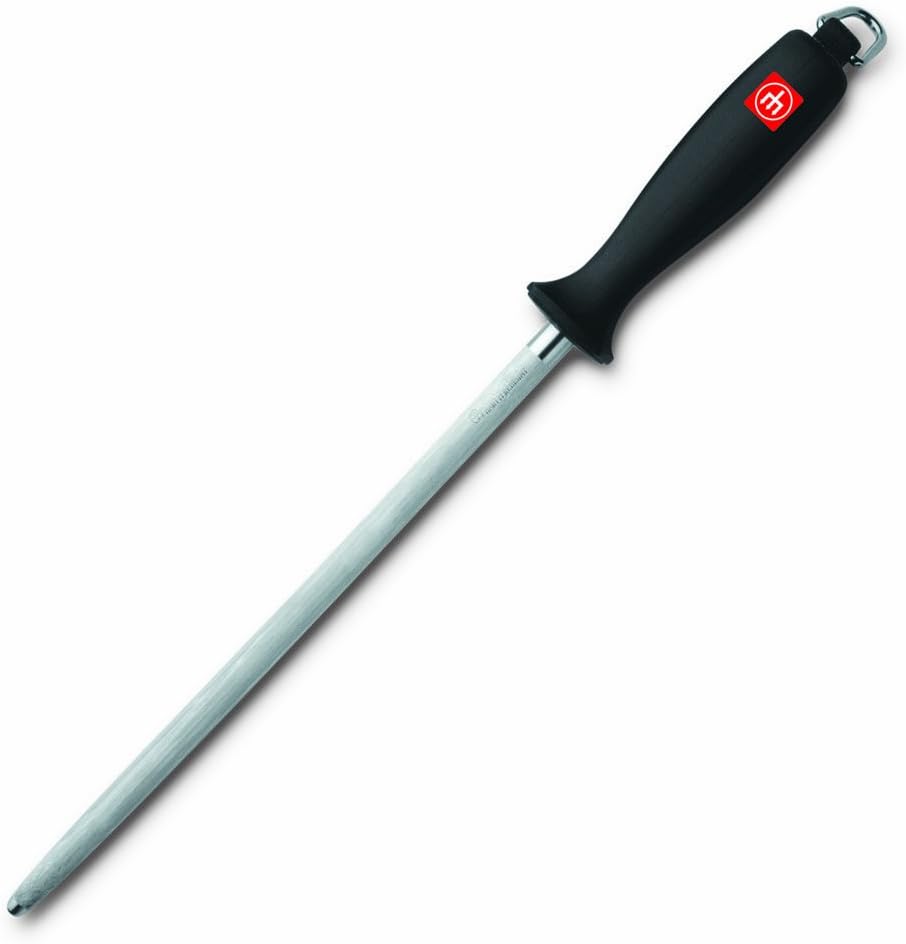
Sharpening technique is broadly similar for both, though the thinner edge geometry on most fillet knives means a slightly lighter touch is needed on the stone to avoid rolling the edge. A whetstone in the 1000 to 6000 grit range covers sharpening and polishing for either knife, and a honing rod can maintain edge alignment between full sharpenings. Our full best knife sharpeners guide compares stone, guided, and electric options if you want a more automated setup.
Storage
Because both knives have narrow, somewhat delicate tips, loose drawer storage is a common way to chip or dull them prematurely. A blade guard, knife roll, or dedicated slot in a block protects the tip and edge far better than tossing them in with other utensils. If you’re setting up a storage system from scratch, our comparison of magnetic knife strips and edge damage and our guide on how to store knives without a block both offer practical setups that protect thin, flexible blades specifically.
Recommended Picks
Best Overall Boning Knife
Look for a 6-inch semi-flex boning knife from an established maker with a full tang or well-secured handle for stability under leverage. This length and flex level handles the widest range of home butchery tasks without feeling specialized to one protein.

Victorinox 6-Inch Semi-Flex Boning Knife
A professional kitchen staple known for a comfortable Fibrox handle and reliable semi-flex blade suited to poultry, pork, and beef trimming.
Check Price on AmazonBest Overall Fillet Knife
Look for a 7-inch flexible fillet knife with a textured, non-slip handle, since most home fish preparation falls into a size range this length handles comfortably, from panfish up through mid-size salmon.

Rapala 7-Inch Fish ‘n Fillet Knife
A long-running favorite among anglers for its whip-thin, highly flexible blade and comfortable birchwood handle.
Check Price on AmazonIf you’re building out a broader knife collection alongside these two, our roundups of the best boning knives for butchers and home cooks and the best fillet knives for fish processing go deeper into individual model comparisons than a single article can cover.
Technique Differences: How the Cutting Motion Actually Changes
Even if two blades looked identical, the way you move them through the material would still differ dramatically between boning and filleting, because the underlying goal of each cut is different. Boning technique is built around short, controlled strokes combined with steady pressure and, frequently, a levering or twisting motion to separate meat from a joint. You’re often working the tip of the knife into a small pocket near a bone, then rotating your wrist to open up a channel before drawing the blade along the bone’s surface. This is a stop-and-start process — you cut a little, feel for resistance, reposition, and cut again, rather than making one long continuous pass.
Filleting technique is almost the opposite. Once the knife enters behind the gill plate or along the spine, the goal is a single, smooth, continuous stroke from head to tail that never fully lifts off the fish. Anglers describe this as “riding the bone” — you keep light, consistent pressure against the ribcage and let the flexible blade do the work of following the curve, rather than actively steering the tip the way you would with a boning knife. Stopping mid-stroke on a fillet often introduces a visible seam or a gouge where the blade re-enters at a slightly different angle, which is one reason experienced fish cleaners prioritize one uninterrupted motion.
Grip also shifts between the two tasks. Boning benefits from a firmer, more forward pinch grip close to the bolster, since you need fine control over the tip and the ability to apply real pressure without the blade twisting in your hand. Filleting benefits from a slightly looser, more relaxed grip further back on the handle, which allows the wrist and forearm to guide the natural arc of the blade rather than forcing a rigid line. Cooks who try to fillet fish using a tight boning-style grip often end up fighting the flex of the blade instead of letting it work for them.
Common Technique Mistakes
- Using boning pressure on a fillet knife: Pressing too hard with a flexible blade causes it to bow excessively and cut inconsistently, often digging into the flesh rather than skimming along the bone.
- Using fillet-style light strokes on a boning knife: A stiff blade needs deliberate, committed pressure to separate tough connective tissue; overly light strokes just skate across the surface without making progress.
- Cutting away from the body instead of a stabilized angle: Both tasks benefit from anchoring the far end of the cut (a wing joint, a fish tail) so the blade has a fixed reference point to work against.
- Ignoring the natural grain or bone line: Fighting against the grain of connective tissue or the angle of rib bones wastes meat and dulls the edge faster on either knife.
Safety Considerations for Both Knife Types
Both boning and fillet knives carry a higher-than-average injury risk compared to general kitchen knives, largely because of how close the cutting hand works to the support hand during these tasks, and because of the amount of force applied on slick, wet surfaces. Understanding the specific risks of each blade type helps you handle both more safely.
With a boning knife, the primary risk comes from the blade slipping suddenly once it breaks through resistant tissue — a phenomenon sometimes called “knife-through.” Because you’re often applying steady, building pressure against cartilage or a joint, the moment that resistance gives way, the blade can lurch forward unexpectedly if you’re not braced for it. Butchers are trained to keep their support hand and fingers well clear of the blade’s projected path and to cut with controlled, shorter strokes specifically to reduce the distance the blade can travel if it slips.
With a fillet knife, the primary risk comes from the combination of a very sharp, thin edge and consistently wet, slippery conditions — wet hands, a wet fish, and often a wet or slick cutting surface. The flexible blade itself is not inherently more dangerous, but the environment it’s typically used in increases the chance of a slip. A secure, textured handle and a stable, non-slip cutting surface make a meaningful difference here, as does keeping the knife properly sharp — a dull blade actually increases risk on both knife types because it requires more forced pressure to cut, which reduces control.
Professional Use vs Home Kitchen Use
Professional butchers and commercial fish processors approach these knives differently than most home cooks, and understanding that gap can help you set realistic expectations for your own kitchen. In a commercial setting, a butcher might go through dozens of animals in a single shift, which means the boning knife is essentially a consumable tool — resharpened multiple times per day on a honing steel, replaced on a predictable schedule, and often selected specifically for how quickly it can be re-edged rather than for maximum out-of-the-box sharpness.
Commercial fish processors treat fillet knives similarly, often keeping several on hand so a dull blade can be swapped out mid-shift while the previous one is resharpened. Speed and consistency matter more than any single blade lasting a long time, and processors frequently prefer simpler, more affordable stainless steels precisely because they’re easy to maintain at high volume.
Home cooks operate under very different constraints. You’re likely processing one chicken, one pork shoulder, or a handful of fish at a time, infrequently enough that edge retention between uses matters more than rapid resharpening mid-task. This is actually good news: it means home cooks can prioritize a knife that holds an edge well over many uses, since they won’t be running it hard enough in a single session to dull it the way a commercial operation would. It also means spending a bit more on better steel tends to pay off proportionally more for a home cook, since the knife will go longer between sharpenings.
A Closer Look at Blade Materials and Construction
Beyond the broad high-carbon versus stainless distinction covered earlier, construction method also plays a role in how each knife performs over time. Forged blades are shaped from a single heated billet of steel and are generally considered more durable and better balanced, since the forging process can create a full tang that extends through the handle. Stamped blades are cut from a flat sheet of steel and tend to be lighter and more flexible right out of the box, which is actually an advantage for some fillet knives, though it can mean less durability over the long run on a boning knife that needs to withstand real leverage.
This is one reason many working boning knives are forged rather than stamped, prioritizing the strength needed to survive repeated prying and twisting against bone. Fillet knives, on the other hand, are frequently stamped, since the thin, flexible profile the job demands is naturally suited to sheet steel construction, and the knife isn’t expected to withstand the same kind of leverage. For a full breakdown of how these two construction methods affect edge geometry, weight, and long-term durability, our forged vs stamped knives comparison covers the tradeoffs in more depth, and our explainer on the difference between forging and stamping walks through the manufacturing process itself.
Tang construction is worth checking specifically on a boning knife, since the amount of leverage applied during deboning puts real stress on the connection between blade and handle. A full tang, where the steel extends the entire length of the handle, generally provides more strength and a more secure feel than a partial tang. This matters less on a fillet knife, where the forces involved are lighter and more evenly distributed along a smooth cutting stroke rather than concentrated prying pressure. Our full tang vs partial tang comparison goes into more detail on how to evaluate this before buying either knife.
Where These Knives Overlap With Other Blade Categories
Boning and fillet knives don’t exist in isolation — they sit within a broader family of specialized cutting tools, and understanding neighboring categories can help clarify exactly why each blade is shaped the way it is. A carving knife, for example, shares the long, narrow profile of a fillet knife but is built stiffer, since it’s meant for slicing cooked, boneless meat rather than working around a skeleton. Our slicing knife vs carving knife comparison is a useful read if you’re trying to figure out whether you actually need a third specialized blade alongside your boning and fillet knives.
Similarly, a utility knife occupies a middle ground between a paring knife and a chef’s knife, and some cooks mistakenly reach for one when what they actually need is a boning knife’s curved point and flex profile. Our utility knife uses guide clarifies where that blade’s strengths actually lie so you’re not trying to force it into a job it wasn’t designed for.
For readers who process wild game in addition to store-bought meat and fish, a dedicated field dressing knife shares some DNA with the boning knife but is optimized slightly differently for skinning and initial breakdown in the field rather than fine kitchen work. Our guide to field dressing knife blade shape and steel covers that adjacent category in depth, and pairs naturally with a stiff boning knife once the animal makes it back to the kitchen.
Real-World Scenarios: Which Knife Would You Actually Reach For?
Sometimes the clearest way to understand the difference between these two knives is to walk through specific situations rather than abstract specs. Below are common kitchen and field scenarios, along with the knife that makes the most sense for each and why.
Scenario 1: Breaking Down a Whole Chicken
A whole chicken has a mix of small joints, cartilage, and thin bones that require precision without much flex. A 6-inch semi-flex or stiff boning knife handles this cleanly, letting you work the tip into the hip and shoulder joints, separate the backbone, and trim the breast away from the ribcage with minimal wasted meat. A fillet knife would bend too much at the joints to give you reliable control, and its longer length can feel awkward inside the smaller cavity of a chicken.
Scenario 2: Cleaning a Stringer of Freshly Caught Bluegill
Small panfish like bluegill have thin, delicate rib structures that reward a flexible blade. A 6-inch flexible fillet knife lets you make a single, smooth pass along the spine and ribs, maximizing yield on a fish that doesn’t offer much meat to begin with. A stiff boning knife would be far too aggressive here, likely cutting through bone and wasting a meaningful percentage of the already-small fillet.
Scenario 3: Trimming a Pork Shoulder Before Slow Cooking
Removing the fat cap and any remaining silverskin from a pork shoulder benefits from a stiffer blade that can apply consistent pressure across a long, even stroke without wandering. A boning knife, or even a slightly longer stiff fillet-style blade in a pinch, handles this well, though most home cooks will find a boning knife’s shorter length easier to control for this kind of trimming.
Scenario 4: Filleting a Large Saltwater Salmon
A larger fish like salmon has a longer, thicker ribcage that benefits from both length and flex. A 7 to 9-inch flexible fillet knife allows a single continuous stroke from behind the gills to the tail, following the curve of the larger rib structure without needing to reposition mid-cut. Anything shorter tends to force multiple overlapping strokes, which increases the risk of an uneven surface or wasted meat at the seams.
Scenario 5: Deboning a Leg of Lamb for a Roast
This is one of the more demanding boning tasks a home cook takes on, involving a long, curved bone surrounded by dense muscle and connective tissue. A stiff 6-inch boning knife provides the leverage and control needed to work along the bone’s length without bending unpredictably. Attempting this with anything flexible, including a fillet knife, would be both inefficient and genuinely more dangerous given the pressure required.
Cost, Longevity, and Getting the Most Value From Either Knife
Price alone is a poor predictor of how well a boning or fillet knife will perform, since fit-and-finish, heat treatment quality, and edge geometry vary widely even within the same price bracket. That said, there are a few general patterns worth knowing before you shop. Entry-level boning and fillet knives, often made from simple stainless steels, tend to be inexpensive, easy to sharpen, and reasonably durable for occasional home use, though they may need more frequent honing than higher-end options.
Mid-range knives typically introduce better steel formulations, improved heat treatment, and more refined handle ergonomics, and this tier tends to offer the best overall value for serious home cooks and regular anglers who use their knives often enough to notice the difference in edge retention and comfort. Premium knives, often featuring proprietary steels or hand-forged construction, deliver noticeably longer edge retention and refined balance, but the improvement over a good mid-range knife is often incremental rather than transformative for most users.
Longevity depends heavily on maintenance habits more than on the knife itself. A modestly priced boning or fillet knife that’s hand-washed, dried immediately, stored properly, and sharpened regularly will often outlast a premium knife that’s left wet in a sink or tossed loosely into a drawer. If you’re trying to decide where to allocate a limited budget, prioritizing a proper sharpening setup and safe storage solution alongside a solid mid-range knife will generally serve you better long-term than stretching for the most expensive blade available and neglecting its care.
It’s also worth considering how often you’ll actually use each knife. If fish preparation happens only a few times a year, an inexpensive but well-reviewed fillet knife is a perfectly reasonable choice, and the money saved can go toward a higher-quality boning knife if that’s the tool doing most of the work in your kitchen throughout the year. Matching your investment to your actual frequency of use, rather than buying the most expensive version of both, tends to produce the most satisfying long-term outcome.
Quick Glossary: Terms Worth Knowing
Flex: How much a blade bends under lateral pressure, ranging from stiff to semi-flex to flexible. This is the primary trait separating boning and fillet knives.
Bolster: The thicker junction between blade and handle on some knives, providing balance and a stopping point for the fingers during a pinch grip.
Tang: The portion of the blade steel that extends into the handle. A full tang runs the entire length of the handle, while a partial tang stops partway through.
Belly: The curved portion of the cutting edge, most pronounced near the tip on boning knives, which aids in rocking and hooking motions around bone.
HRC (Rockwell Hardness): A numeric scale measuring blade steel hardness, which correlates with edge retention and, at higher values, brittleness.
Silverskin: A tough, silvery connective tissue found on cuts of meat that doesn’t render down during cooking and is typically trimmed away with a boning knife before cooking.
Ribcage line: The natural curve formed by a fish’s rib bones, which a fillet knife’s flexible blade is designed to follow closely to preserve meat yield.
Having a shared vocabulary for these terms makes it easier to read product descriptions accurately and compare knives across different brands, since manufacturers don’t always use consistent marketing language even when describing the same underlying feature.
Frequently Asked Questions
Is a boning knife the same as a fillet knife?
No. While they look similar in silhouette, a boning knife has a stiffer blade meant for separating meat from bone on land animals, while a fillet knife has a much more flexible blade meant for separating flesh from the curved bone structure of fish.
Can I use a fillet knife to debone a chicken?
You can for lighter tasks like trimming chicken breast, but a fillet knife’s flex makes it a poor choice for anything involving real leverage, like separating a whole chicken from its carcass, where a boning knife’s stiffness gives you far more control.
Can I use a boning knife to fillet fish?
A semi-flex boning knife can handle small, thin fish reasonably well, but it won’t produce the clean, high-yield fillets that a dedicated flexible fillet knife will on medium to large fish, since it can’t bow along the ribcage the same way.
What blade length is best for a boning knife?
A 6-inch blade is the most versatile length for home cooks, offering enough reach for poultry, pork, and lamb tasks without being unwieldy in tighter spaces like joints and cavities.
What blade length is best for a fillet knife?
It depends on the size of fish you typically process. A 6-inch blade suits panfish and trout, while a 7 to 9-inch blade is better suited to salmon and larger catches, since a longer blade allows a full fillet stroke in one motion.
Why does a fillet knife need to be so flexible?
The flex allows the blade to bow and follow the natural curve of a fish’s ribcage and spine, letting the edge skim just above the bones rather than cutting straight through them, which preserves more meat and produces a cleaner fillet.
Why is a boning knife stiffer than a fillet knife?
Boning work involves leverage against dense, irregular bone structures in meat and poultry. A stiff blade transmits force predictably and resists bending or buckling under that pressure, which keeps the cut controlled and the user safer.
What steel is best for a boning knife?
Steels that balance toughness and edge retention tend to perform best, since the blade regularly contacts bone and cartilage that can chip a blade that’s too hard. Many working boning knives sit in the mid-50s to low-60s HRC range for this reason.
What steel is best for a fillet knife?
Corrosion-resistant stainless steels are generally preferred, since fillet knives are frequently exposed to water, blood, and sometimes saltwater. Edge retention still matters, but rust resistance is often weighted more heavily than in a dry kitchen knife.
Do I need both a boning knife and a fillet knife?
If your cooking regularly involves both whole-animal butchery and fish preparation, yes — each knife performs significantly better within its intended category. If your workload leans heavily toward one or the other, you can reasonably start with just that one.
How do I know if a knife I’m buying is stiff or flexible?
Reputable manufacturers typically label the flex level directly in the product description using terms like stiff, semi-flex, or flexible. If shopping in person, press the tip gently against a hard surface to gauge how much the blade bows.
Can a fillet knife’s flexible blade break more easily?
A flexible blade is engineered to bend rather than snap under normal use, but repeatedly forcing it against hard bone or twisting it sideways can still stress or damage the edge and tip over time, since it isn’t designed for that kind of resistance.
Conclusion: Match the Blade to the Job
The boning knife vs fillet knife debate isn’t really a competition — it’s a question of matching blade flex and geometry to the material you’re cutting. A boning knife’s stiffness gives you control and leverage against bone and joints in meat and poultry. A fillet knife’s flexibility lets it hug the curved skeletal structure of fish for cleaner, higher-yield cuts. Neither knife is a strong substitute for the other once the task gets serious, so the smartest move for most home cooks is to identify which task you do more often and buy that knife first, then add the second when your routine calls for it.
Shop Boning & Fillet Knives on Amazon