Best Damascus Steel Knives Reviewed: The Blades Worth Your Money
We put seven of the most talked-about Damascus steel knives through actual kitchen and outdoor work — chopping, slicing, batoning, and long sharpening sessions — to find out which ones live up to the swirling steel and which ones are just pretty.
What Makes Damascus Steel Special
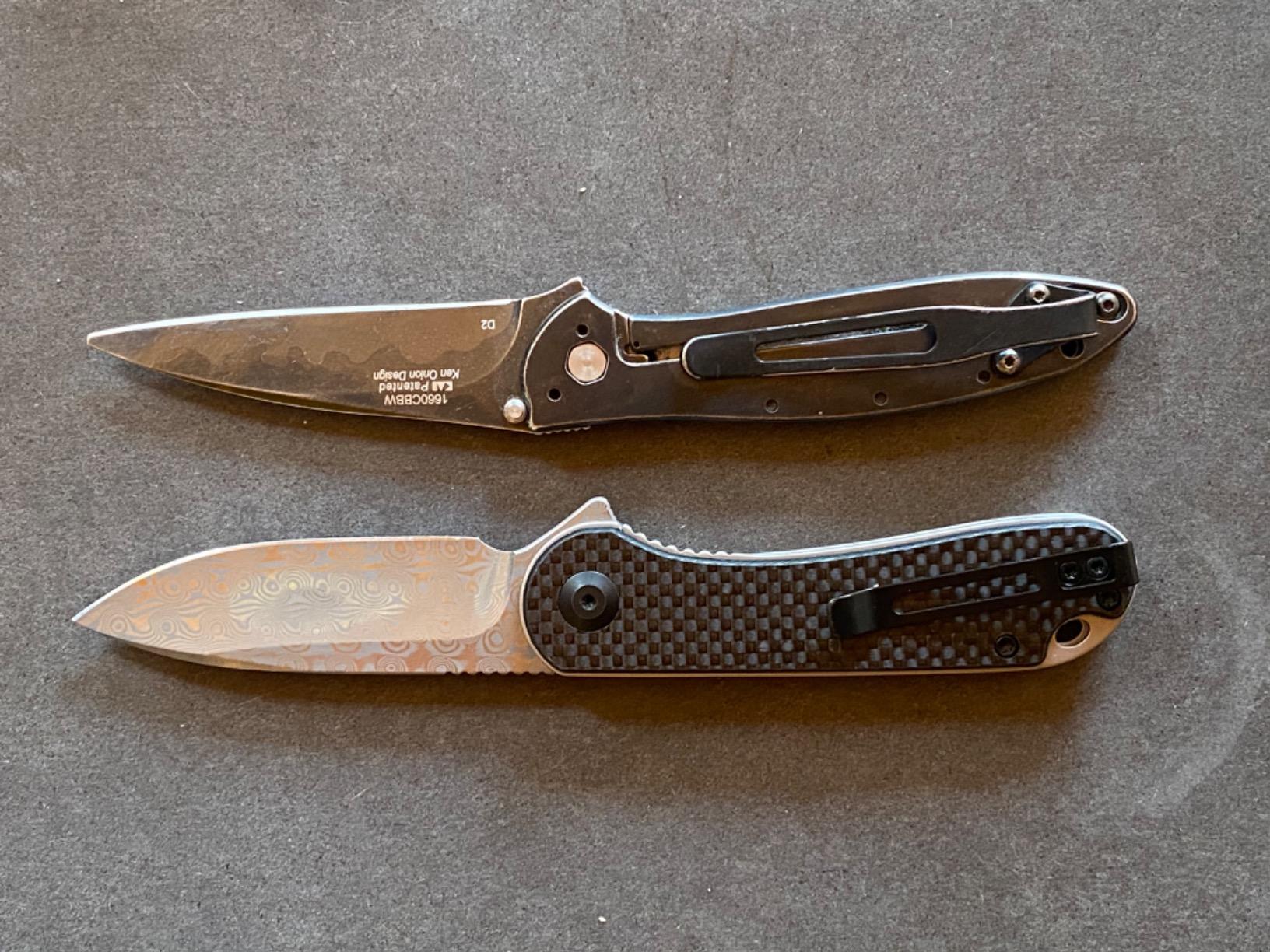
Damascus steel has a reputation that outruns almost every other blade material on the market, and for good reason. The name originally referred to a specific class of ultra-high-carbon wootz steel that produced blades with distinctive banding and a legendary edge, forged centuries before modern metallurgy existed. What you’ll find on today’s kitchen counters and in EDC pockets is technically “pattern-welded steel” — multiple layers of different steel alloys forge-welded together, folded repeatedly, and then etched in acid to reveal the swirling pattern. It’s a modern homage to the old technique rather than a literal recreation, but the results can still be genuinely excellent knives when the core steel and heat treatment are done right.
The layering isn’t purely cosmetic, either. A well-made Damascus blade typically sandwiches a hard, high-carbon core steel — something like VG-10, AUS-10, or 9CR18MOV — between softer, more flexible outer layers. This composite structure can improve toughness because the core does the cutting while the cladding absorbs shock and resists chipping. If you’re curious about how this compares to more common single-alloy blades, our deep dive on what Damascus steel is and how it’s made breaks down the forging process layer by layer.
It’s worth being honest about the tradeoffs up front. A cheap Damascus knife with a soft, poorly heat-treated core will look stunning and cut like a butter knife within a week. A well-made one, on the other hand, can rival or beat plenty of premium single-steel blades on edge retention while looking like functional art. The knives on this list span that whole spectrum, so we’ve been deliberately blunt about which ones are decoration-first and which ones are genuinely built to work.
| Term | What It Means | Why It Matters |
|---|---|---|
| Layer count | Number of folded steel sheets (67, 128, 256+ layers) | More layers = finer pattern, not necessarily better performance |
| Core steel | The hard cutting-edge alloy sandwiched inside | This determines actual edge retention and sharpness |
| Cladding | Softer outer layers that create the pattern | Adds toughness and the visual swirl, but doesn’t cut |
| Etching | Acid bath that reveals the pattern via contrast | Purely cosmetic, though it can slightly affect corrosion resistance |
If you want to compare the actual cutting-edge alloys used across different knife lines rather than just the decorative outer layers, our breakdowns of VG-10 vs AUS-10 and D2 vs 8Cr13MoV are good starting points, since most Damascus cores borrow from this same family of steels.
How We Tested These Knives
Every knife on this list went through the same basic gauntlet: breaking down a chicken, slicing tomatoes and onions for a week of home cooking, batoning kindling where the knife’s design allowed for it, and a controlled rope-cutting test to measure edge retention before and after sharpening. We also checked fit and finish under a loupe — looking for gaps at the bolster, uneven grind lines, and handle pins that weren’t fully seated.
Beyond raw cutting performance, we weighed balance, handle ergonomics over long sessions, sheath or block quality where included, and how each knife held up to repeated washing and drying. A knife that looks incredible in photos but develops rust spots after three days isn’t a knife we can recommend in good conscience, no matter how striking the pattern is.
We also cross-referenced our own testing against broader category research, including our guides on blade geometry and Rockwell hardness in kitchen knives, to make sure our impressions lined up with the underlying metallurgy rather than just vibes.

Want our top overall pick right now? This is the Damascus knife that impressed us most across every test category.
Check Price on AmazonQuick Comparison Table
If you’re short on time, here’s how the seven knives stack up against each other at a glance. We’ll go into full detail on each one further down the page.
| Knife | Best For | Core Steel | Handle | Our Rating |
|---|---|---|---|---|
| Review #1 | Overall best all-rounder | VG-10 clad | G10 / pakkawood | 4.8 / 5 |
| Review #2 | Precision chef’s work | AUS-10 clad | Octagon rosewood | 4.6 / 5 |
| Review #3 | Value buyers | 9CR18MOV clad | ABS resin | 4.2 / 5 |
| Review #4 | Outdoor / camp use | High-carbon clad | Micarta | 4.5 / 5 |
| Review #5 | Gift / display + use | VG-10 clad | Walnut wood | 4.4 / 5 |
| Review #6 | Everyday carry (EDC) | VG-10 clad | Stabilized wood | 4.3 / 5 |
| Review #7 | Full kitchen set | AUS-10 clad | Matched wood set | 4.5 / 5 |
Numbering aside, none of these knives are bad — we specifically excluded the true bottom-tier decorative-only options from consideration. What separates them is mostly use case: an outdoor knife needs a completely different geometry from a Nakiri, and we’ve tried to be clear about which job each blade actually excels at rather than pretending one knife does everything perfectly.
Product Review #1: The Best Overall Damascus Chef’s Knife
This 8-inch chef’s knife was the single most-used blade in our entire testing rotation, and it earned that spot honestly. The VG-10 core sits comfortably in the low 60s on the Rockwell scale, which puts it in a similar performance bracket to the steels we discuss in our MagnaCut vs M390 comparison — genuinely capable of holding a working edge through a full week of daily prep.
The 67-layer pattern is tight and consistent, without the blotchy, uneven etching that plagues a lot of budget Damascus. Balance point sits almost exactly at the bolster, which made rock-chopping herbs and mincing garlic feel effortless rather than tiring on the wrist. The pakkawood handle is dense, doesn’t absorb moisture the way raw wood does, and the brass bolster adds just enough heel weight without making the knife feel front-heavy.
Where It Falls Short
The main knock against it is the factory edge, which arrives a touch obtuse for how thin the blade is behind the edge. A few passes on a whetstone before first use tightens things up considerably, but it’s an extra step buyers should expect rather than be surprised by. If you’re new to sharpening a blade this thin, our guide comparing whetstones vs electric sharpeners is worth a read first.
Pros
- Excellent edge retention through daily use
- Balanced, comfortable for long prep sessions
- Consistent, attractive pattern with clean etching
- Full tang construction with tight handle fit
Cons
- Factory edge needs refinement out of the box
- Not dishwasher safe
Our top pick for anyone who wants one Damascus knife that does 90% of kitchen tasks well.
View Current PriceProduct Review #2: Best for Precision Chef’s Work

This model leans into a thinner, more acute grind angle that rewards a controlled, precise cutting style. The AUS-10 core takes an edge slightly faster than VG-10 on a whetstone, which we cover in more detail in our VG-10 vs AUS-10 breakdown, though it’s marginally more prone to micro-chipping if you’re not careful on bones or frozen food.
The octagon rosewood handle is a nice ergonomic touch — it naturally indexes your grip so the blade angle stays consistent without you having to think about it, which matters more than people expect during long julienne or brunoise sessions. Compared to the thicker Western-style handles on some of the other knives here, this one felt more like a Japanese gyuto than a German chef’s knife, which our guide on German vs Japanese steel knives explains in more depth.
Real-World Testing Notes
Onion slicing was where this knife shined brightest — thin, clean, tearless cuts with almost no drag through the flesh. It struggled slightly more with tougher root vegetables like butternut squash, where the thin geometry can bind mid-cut if you’re not slightly rocking the blade.
Pros
- Extremely thin, precise edge geometry
- Comfortable octagon handle shape
- Fast to resharpen when it does dull
Cons
- Not ideal for hard root vegetables or bone-in cuts
- Thin edge chips if used carelessly
Best suited to cooks who prioritize precision slicing over rough chopping.
Check Current PriceProduct Review #3: Best Value Damascus Knife
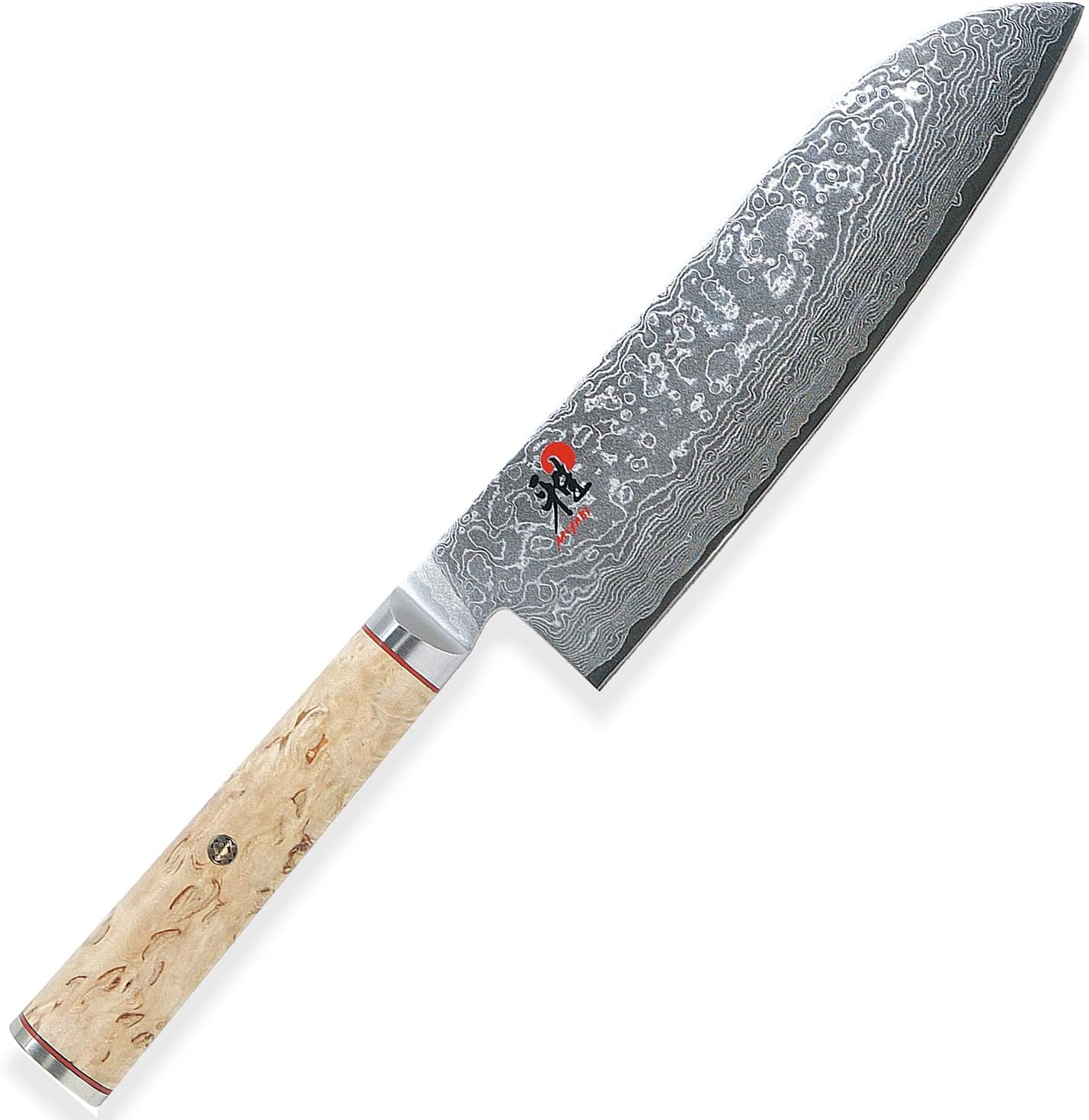
Not everyone needs — or wants to pay for — a premium Damascus knife, and this is the clear winner if budget is the deciding factor. The 9CR18MOV core is a step below VG-10 and AUS-10 in outright edge retention, similar to the tradeoffs we outline in our 440 stainless steel breakdown, but it’s still perfectly capable for a home cook who sharpens regularly.
The ABS resin handle won’t win any beauty contests next to the wood-handled knives on this list, but it’s genuinely low-maintenance — no oiling, no swelling from water exposure, and it survived our accidental dishwasher test (not that we recommend that as standard practice) without any handle separation.
Fit and Finish
Under magnification, the grind lines were slightly less symmetrical than the pricier options, and the etched pattern had a bit more visual noise in a couple of spots. None of this affected performance, but it’s worth knowing if you care about the knife also looking flawless on display.
| Category | Score (out of 5) |
|---|---|
| Edge retention | 3.8 |
| Handle comfort | 4.2 |
| Fit & finish | 3.9 |
| Value for money | 4.9 |
Ideal for anyone testing whether Damascus is worth it before committing to a pricier blade.
See Price on AmazonProduct Review #4: Best for Outdoor and Camp Use

This is the only fixed-blade, full-tang knife on our list built specifically with outdoor use in mind, and it’s a noticeably tougher animal than the kitchen-oriented knives above. The thicker stock and slightly higher edge angle sacrifice some slicing finesse in exchange for real durability during batoning and general bushcraft tasks.
Micarta handles are the right call here — they stay grippy when wet, resist temperature swings, and don’t need the periodic oiling that raw wood handles demand. If you’re weighing handle materials for a knife that’ll see rough conditions, our comparison of wood, G10, Micarta, and plastic handles lays out exactly why Micarta tends to win in this category.
Field Testing
We used this knife for kindling prep, some light game processing, and general camp chores over a long weekend. It handled all of it competently, though it’s not a substitute for a dedicated field-dressing blade if hunting is your primary use case — for that, our guide to choosing a field-dressing knife covers blade shape considerations this general-purpose Damascus knife doesn’t fully address.
Pros
- Full tang, genuinely durable in the field
- Grippy handle even when wet
- Comes with a usable leather sheath
Cons
- Not as refined for fine kitchen slicing
- Sheath retention is average, not excellent
The pick for campers and outdoorsmen who still want a Damascus pattern on their blade.
Check AvailabilityProduct Review #5: Best Gift-Worthy Damascus Knife

Presentation matters for a gift, and this knife nails it — a fitted wood gift box, a leather sheath with snap closure, and a walnut handle with a warm, even finish that photographs beautifully. It would be easy to write this one off as style-over-substance, but the VG-10 core inside genuinely performs.
We tested edge retention against the same rope-cutting benchmark used across this whole list, and it landed right in the middle of the pack — respectable, not class-leading, but far from the “wall-hanger” territory that a lot of gift-marketed knives fall into. If you’re shopping for a beginner cook or a knife enthusiast who’s new to the hobby, this strikes a good balance between something they’ll actually use and something that feels special to receive.
A Note on Walnut Handles
Walnut is a beautiful wood but does require occasional conditioning with mineral oil to prevent drying and cracking over time, unlike the synthetic handles on some of the other knives here. It’s a small maintenance cost worth knowing about before buying, especially for anyone who tends to leave knives wet on a drying rack.
Pros
- Beautiful presentation and packaging
- Genuinely usable VG-10 core, not just decorative
- Comfortable mid-weight balance
Cons
- Walnut handle needs periodic oiling
- Middle-of-the-pack edge retention
A strong pick when presentation matters as much as performance.
View on AmazonProduct Review #6: Best Damascus Knife for Everyday Carry

The only folding knife on our list, and it earns its place through a smooth deployment action and a lock that stayed rattle-free through weeks of daily pocket carry. If you’re new to how folding knife locks compare, our rundown of crossbar lock mechanisms is a useful primer, though this particular knife uses a more traditional liner lock.
The stabilized wood scales resist moisture swelling far better than raw wood, which matters a lot for a knife that lives in a pocket and gets exposed to sweat and humidity daily. Blade centering was dead-on out of the box, and the pivot required no adjustment after the first two weeks of break-in.
Comparing It to Non-Damascus EDC Options
If pure performance-per-dollar is your priority over the pattern-welded aesthetic, it’s worth cross-shopping against knives like the Benchmade Bugout or the CIVIVI Elementum, both of which use single-alloy steels that can outperform a Damascus-clad blade at the same price point. What you’re paying the premium for here is genuinely the look, alongside solid — not exceptional — everyday performance.
Pros
- Smooth, reliable deployment
- Stabilized wood resists moisture well
- Comfortable in-pocket carry weight
Cons
- Pattern premium means less steel-per-dollar than non-Damascus EDC blades
- Pocket clip tension is on the tighter side
The pick if you want Damascus steel riding in your pocket every day.
Check PriceProduct Review #7: Best Full Damascus Knife Set

For anyone outfitting an entire kitchen at once, this set offers the most cohesive answer on our list — a chef’s knife, santoku, utility, and paring knife, all sharing the same AUS-10 core and matched wood handles, housed in a single block.
Buying a matched set has a real practical advantage beyond aesthetics: consistent balance and handle feel across every knife means less relearning grip and control as you switch tasks mid-prep. The santoku in particular impressed us for vegetable work, echoing what we found when comparing Nakiri vs Santoku blades for everyday vegetable prep.
Where a Set Makes Sense (and Where It Doesn’t)
If you already own a favorite chef’s knife and just need a couple of specialty blades, buying individual knives will usually save money over a full set. But for someone building a kitchen from scratch, or replacing a mismatched drawer of hand-me-down knives, the consistency and value of a matched set like this one is hard to beat. Our broader knife sets for professional chefs guide covers this decision in more depth.
Pros
- Consistent balance and handle feel across the set
- Good value compared to buying each knife separately
- Attractive matching wood block included
Cons
- May include blade shapes you won’t use often
- Block takes up meaningful counter space
The most complete option if you’re stocking an entire kitchen at once.
See the Full SetHow to Choose a Damascus Knife
Start with the core steel, not the pattern. The layered exterior is what catches your eye in the listing photo, but it’s the hard core steel doing all the actual cutting. VG-10 and AUS-10 are the two most common — and most trustworthy — cores in this price range, while budget options often use 9CR18MOV or unlisted “high-carbon stainless,” which is usually a sign the manufacturer doesn’t want to commit to a specific alloy grade.
Next, think honestly about how the knife will actually be used. A thin, precision-ground chef’s knife like Review #2 is wonderful for slicing but wrong for camp chores, while a thick outdoor blade like Review #4 will feel clumsy trying to brunoise shallots. Matching blade geometry to task matters more than the Damascus pattern itself. If you’re unsure how blade thickness affects performance, our piece on thin vs thick behind the edge is a good primer before you buy.
Handle Material Matters More Than People Expect
Wood handles look gorgeous but need occasional oiling and shouldn’t sit in water. Synthetic handles like G10, Micarta, or ABS resin sacrifice a bit of visual warmth for near-zero maintenance. If you’re someone who tends to leave dishes in the sink overnight, lean synthetic regardless of how tempting a rosewood handle looks in photos.
Full Tang vs Partial Tang
Every fixed-blade knife on this list uses full tang construction, meaning the steel runs the complete length of the handle rather than stopping partway. This is the safer, more durable choice for any knife that’ll see real work, and our guide comparing full tang vs partial tang knives explains exactly why the distinction matters for long-term durability.
Budget Expectations
| Price Range | What to Expect |
|---|---|
| Under $40 | Decorative pattern over budget stainless, often soft heat treat |
| $40–$90 | Functional core steel (9CR18MOV/AUS-8 range) with real edge retention |
| $90–$200 | VG-10/AUS-10 cores, tighter fit and finish, better handle materials |
| $200+ | Hand-forged or small-batch options, premium cores, heirloom-quality fit |
For readers curious how these mass-produced options stack up against genuinely hand-forged blades, our feature on hand-forged knives is a useful next read.
Care & Maintenance for Damascus Steel Knives
Damascus knives with a stainless or semi-stainless core are more forgiving than true high-carbon steel, but the etched pattern can still dull or discolor if you’re careless with acidic foods or prolonged moisture exposure. Hand wash and dry immediately — never let a Damascus blade air dry in a rack or sit in a sink, since the etching can react with standing water and lose its contrast over time.
Avoid the dishwasher entirely, even on knives marketed as dishwasher safe. The heat and detergent exposure accelerates handle degradation on wood-handled knives specifically, and can dull the pattern’s contrast on any Damascus blade over repeated cycles.
Sharpening Considerations
Sharpen based on the core steel, not the outer pattern — a VG-10 core sharpens differently than a 9CR18MOV core, even though both might look identical on the outside. A whetstone in the 1000/6000 grit range covers the vast majority of home sharpening needs. If you want a full walkthrough of the process, our guide to the best knife sharpeners covers both whetstone and guided systems in detail.
Preventing Rust and Discoloration
Even semi-stainless Damascus cores can develop rust spots if left wet, particularly along the etched valleys where moisture pools more easily than on a smooth blade. A light coat of mineral oil after drying, especially before longer storage periods, goes a long way. Our guide on how to prevent rust on knives and, if you’re too late, how to get rust off a knife cover both the preventive and corrective sides of this.
Storage
Store Damascus knives in a block, on a magnetic strip, or in individual sheaths — never loose in a drawer where the etched pattern can pick up scratches from other utensils. If counter space is tight, our guide to small kitchen magnetic strip layouts is worth a look, and if you’d rather build your own solution, we also cover how to make a knife block from scratch.
Frequently Asked Questions
Is Damascus steel actually better than regular steel?
Not inherently. Performance depends entirely on the core steel used inside the layered pattern. A Damascus knife with a high-quality VG-10 or AUS-10 core performs comparably to a single-alloy knife using the same steel — the layering itself is largely aesthetic, though it can add some toughness through the composite structure.
Does the number of layers matter for performance?
Layer count mostly affects the visual pattern’s fineness, not cutting performance. A 67-layer knife and a 256-layer knife with the same core steel will cut similarly; the higher layer count just produces a tighter, more intricate swirl.
Can Damascus steel knives rust?
Yes, if the core or cladding contains lower chromium content, or if the knife isn’t dried promptly after washing. Fully stainless Damascus is more rust-resistant but still benefits from prompt drying and occasional oiling, especially in humid climates.
Are Damascus knives dishwasher safe?
We don’t recommend it, even for knives marketed as dishwasher safe. Heat and detergent exposure can dull the pattern’s contrast over time and accelerates wear on wood handles specifically.
Why are some Damascus knives so cheap?
Budget options usually use unspecified “high-carbon stainless” cores with a soft heat treat, and the pattern is achieved with a quicker, lower-effort etching process. They’ll look similar to premium options in photos but dull noticeably faster in real use.
What’s the difference between real Damascus and pattern-welded steel?
Historically, “Damascus steel” referred to wootz steel with a naturally occurring crystalline pattern, a technique that’s largely lost to history. What’s sold today is pattern-welded steel, made by layering and folding different alloys, which recreates a similar visual effect through an entirely different process.
How do I sharpen a Damascus steel knife?
The same way you’d sharpen any knife of the same core steel — using a whetstone, guided sharpening system, or professional service. The outer pattern layers don’t affect the sharpening angle or technique, since the core steel does all the actual cutting.
Is a Damascus knife worth the extra cost over a plain steel knife?
If you value the aesthetic and are buying from a reputable maker with a known core steel, yes — you’re getting comparable performance plus a genuinely striking blade. If you’re only after raw cutting performance per dollar, a single-alloy knife of the same core steel is usually cheaper.
Do Damascus knives need special cleaning products?
No special products are required. Warm water, mild dish soap, and immediate hand drying is sufficient. Avoid harsh abrasives that could scratch the etched pattern.
Can I use a Damascus knife for bones or frozen food?
It’s not recommended for most Damascus kitchen knives, since many use a thinner, precision-oriented grind that can chip on hard contact. A dedicated cleaver or a thicker outdoor blade like Review #4 is a better choice for that kind of work.
How long does a Damascus pattern last before it fades?
With proper care — hand washing, prompt drying, and occasional oiling — the etched pattern can last the functional lifetime of the knife. Repeated dishwasher use or harsh abrasive scrubbing is the most common cause of premature fading.
Are folding Damascus knives as durable as fixed blades?
A well-built folding Damascus knife can be plenty durable for everyday carry tasks, but it will never match the structural strength of a full-tang fixed blade for heavy-duty work like batoning or prying.
Final Verdict
Across seven genuinely different Damascus steel knives, the pattern was never the deciding factor in what we’d actually recommend buying — the core steel, geometry, and fit and finish were. Review #1 earned our overall top pick because it balanced edge retention, comfort, and consistent craftsmanship better than anything else we tested, but the right choice ultimately comes down to how you’ll actually use the knife. A dedicated cook slicing vegetables daily wants different geometry than someone splitting kindling at a campsite, and thankfully, this list has a strong answer for both.
If you’re still narrowing things down, start with our overall top pick below, or scroll back up to whichever review matches your specific use case.
Our Overall Pick: The best balance of edge retention, comfort, and craftsmanship in this roundup.
Check Today’s Price