Kiritsuke Knife Uses: Why This “Master Chef” Blade Belongs in Your Kit
In the hierarchy of Japanese cutlery, there is one blade that stands above the rest as a symbol of status, skill, and sheer cutting power: The Kiritsuke. With its sword-like profile and aggressive reverse-tanto tip (often called a “K-Tip”), it is arguably the most striking knife in any kitchen. The kiritsuke knife uses span far beyond what most home cooks initially realize, encompassing everything from precision vegetable work to delicate fish butchery and elegant meat presentation. Understanding the full spectrum of kiritsuke knife uses will transform how you approach meal preparation and elevate your culinary craftsmanship to professional levels.
But beyond its intimidating looks, what is a Kiritsuke knife used for? Is it just a showpiece for social media, or is it a practical tool for the home cook? Historically, in traditional Japanese kitchens, only the Executive Chef was permitted to use the Kiritsuke. It was a badge of honor, signifying mastery over both vegetable and fish preparation. The question “what is a kiritsuke knife used for” echoes through culinary forums and professional kitchens alike, as aspiring chefs seek to understand whether this legendary blade deserves a place in their arsenal. The answer lies in examining the multifaceted kiritsuke knife uses that have made it the preferred choice of master chefs for centuries. When you ask “what is a kiritsuke knife used for,” you’re really asking about the intersection of tradition, technique, and cutting-edge performance that defines Japanese culinary artistry.
Today, the landscape has changed. Brands like Shun and Dalstrong have adapted this blade for modern users. In this comprehensive guide, we will demystify the Kiritsuke, explore the critical difference between single and double bevel versions, and help you decide if you are ready to wield the “Sword of the Kitchen.” The kiritsuke knife uses we’ll explore range from basic home cooking applications to advanced professional techniques, ensuring you have a complete understanding of this remarkable tool’s capabilities. Whether you’re researching what is a kiritsuke knife used for in a commercial sushi bar or how to integrate kiritsuke knife uses into your weekly meal prep routine, this guide covers every angle with depth and precision.
External Insight
According to Chubo Knives, the Kiritsuke is prized for its versatility, capable of performing the tasks of both a Yanagiba (fish slicer) and an Usuba (vegetable knife). Read their definition here: What is a Kiritsuke Knife?
1. What is a Kiritsuke? (The Two Types)
Before buying, you must understand that there are two very different knives sold under this name. Confusing them can lead to a frustrating cooking experience. The fundamental question of what is a kiritsuke knife used for depends entirely on which type you’re holding. Each variant has distinct kiritsuke knife uses that cater to different skill levels and culinary applications. Understanding this distinction is critical because the kiritsuke knife uses for a traditional single-bevel blade differ dramatically from those of a modern double-bevel interpretation. When someone asks “what is a kiritsuke knife used for,” the answer must begin with clarifying which kiritsuke they’re referencing.
Type A: The Traditional “Hon-Kiritsuke”
This is the original. It is a Single Bevel knife (sharpened on only one side). It combines the length of a Yanagiba (for slicing sashimi) with the height and flat edge of an Usuba (for vegetables). It requires advanced knife skills because single-bevel blades “steer” or drift while cutting. (See Nakiri vs Usuba for more on single bevel geometry). The kiritsuke knife uses in this traditional context demand years of practice to master. Traditional sushi chefs spend decades perfecting the kiritsuke knife uses that their mentors passed down through generations. When investigating what is a kiritsuke knife used for in high-end omakase restaurants, you’re looking at the Hon-Kiritsuke executing precise sashimi cuts, intricate vegetable carvings, and elaborate garnishes that define the pinnacle of Japanese cuisine. The steering effect of single-bevel geometry actually becomes advantageous once mastered, as it allows for incredibly thin, consistent slices that preserve cellular integrity and enhance the texture of raw fish. These specialized kiritsuke knife uses separate the masters from the apprentices in traditional Japanese kitchens.
Type B: The Western “Kiritsuke Gyuto”
This is what 95% of home cooks should buy. It is Double Bevel (sharpened on both sides like a standard Western knife). Effectively, it is a Gyuto (Chef’s Knife) with a flat profile and a clipped K-Tip. It offers the cool aesthetics of the traditional Kiritsuke but handles like a standard Chef Knife. The kiritsuke knife uses for this modern interpretation are far more accessible to the average cooking enthusiast. You can explore most kiritsuke knife uses without the steep learning curve associated with single-bevel blades. When home cooks research what is a kiritsuke knife used for in everyday cooking scenarios, the Kiritsuke Gyuto answers that question with versatility and approachability. The double-bevel geometry ensures that kiritsuke knife uses like dicing onions, slicing tomatoes, and breaking down chickens feel intuitive rather than challenging. This democratization of kiritsuke knife uses has opened up the iconic K-tip profile to a global audience of passionate home chefs who want professional-grade performance without professional-grade complexity.
2. Primary Uses of a Kiritsuke Knife
The Kiritsuke is a multi-purpose slicer. Here is where it excels, and understanding these core kiritsuke knife uses will help you determine if this blade matches your cooking style. The versatility of kiritsuke knife uses makes it one of the most valuable additions to any serious kitchen arsenal. When evaluating what is a kiritsuke knife used for on a daily basis, you’ll discover that its applications extend far beyond what its specialized appearance suggests. Let’s dive deep into each category of kiritsuke knife uses to understand the full potential of this remarkable blade.
1. Push-Cutting Vegetables
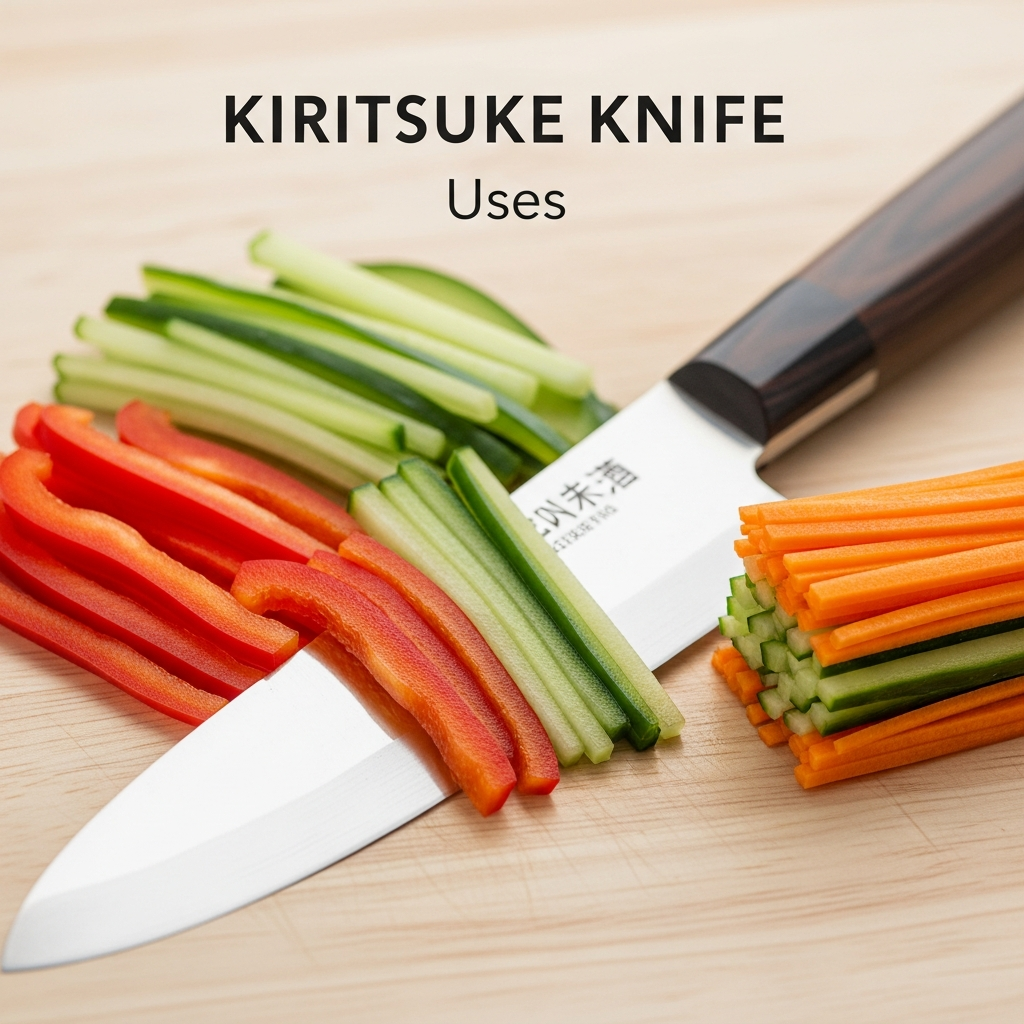
The blade profile of a Kiritsuke is incredibly flat. Unlike a rounded German knife (see Best German Knives) that rocks, the Kiritsuke is designed for “push cutting”—moving the blade forward and down. This makes it exceptional for processing large volumes of vegetables without the “accordion” effect (where pieces are stuck together). It rivals the Nakiri in this regard. These vegetable-focused kiritsuke knife uses are often the primary reason home cooks invest in this blade. The push-cutting technique unlocks precision kiritsuke knife uses that transform mundane prep work into a meditative practice. When you ask what is a kiritsuke knife used for in vegetable preparation, imagine creating paper-thin radish slices, uniform julienne carrots, and perfectly diced mirepoix with minimal effort. The flat profile eliminates the accordion effect completely, meaning your herbs stay connected to the cutting board until you’ve finished your final stroke. For meal prep enthusiasts processing pounds of vegetables weekly, these kiritsuke knife uses dramatically reduce fatigue while improving consistency. The extended blade length also means fewer strokes per ingredient, making bulk vegetable processing one of the most practical kiritsuke knife uses in a busy home kitchen.
Advanced vegetable kiritsuke knife uses include decorative cuts like katsuramuki (rotary peeling of daikon into thin sheets), sengiri (fine julienne for salads and garnishes), and mizore-giri (mincing vegetables into snow-like consistency). Each of these specialized kiritsuke knife uses showcases the blade’s exceptional control and precision. The flat edge provides consistent contact with the cutting board, eliminating the gaps that cause incomplete cuts. When mastering what is a kiritsuke knife used for in Japanese vegetable preparation specifically, you’ll discover techniques like sasagaki (shaving gobo burdock root into thin strips) and hangetsu-giri (half-moon cuts for simmered dishes) that highlight the blade’s versatility. These traditional kiritsuke knife uses connect modern cooks to centuries of Japanese culinary heritage.
2. Precision Slicing (The K-Tip)
The reverse-tanto tip isn’t just for looks. It is nimble and precise. You can use the very tip to score onions, remove eyes from potatoes, or trim silver skin from meat. It offers similar detail control to a utility knife but on a much larger blade. The K-tip enables kiritsuke knife uses that would be awkward or impossible with a traditional curved belly chef’s knife. When considering what is a kiritsuke knife used for in detail work, think of the tip as a built-in paring knife that never leaves your hand. You can score bread dough before baking, create decorative patterns on pastry, or precisely trim fat caps on premium cuts of meat—all without reaching for a separate tool. These detailed kiritsuke knife uses save time and maintain workflow momentum during complex recipes that require frequent transitions between macro and micro cutting tasks.
The angular tip geometry creates a reinforced point that resists bending or snapping during lateral movements. This structural advantage enables kiritsuke knife uses like scoring duck skin, creating air vents in pie crusts, and performing intricate garnishes on composed plates. Professional chefs who understand what is a kiritsuke knife used for in fine dining applications leverage the K-tip for tasks ranging from deveining shrimp to creating tournée cuts on root vegetables. The visual feedback provided by the clipped tip helps maintain consistent depth during scoring operations, making these precision kiritsuke knife uses more accessible to intermediate cooks developing their knife skills.
3. Slicing Cooked Proteins
Because Kiritsukes are usually long (8 to 10 inches) and made of hard Japanese steel, they act as excellent slicers. You can draw the blade through a brisket or a roast in one long motion, similar to a Slicing Knife. The sharpness ensures you don’t squeeze the juices out of the meat. Protein slicing represents some of the most satisfying kiritsuke knife uses for home entertainers and holiday meal preparers. When guests ask what is a kiritsuke knife used for as they watch you effortlessly carve a prime rib roast, the answer becomes visually apparent. The long, uninterrupted blade draws through muscle fibers cleanly, preserving the moisture that makes slow-roasted meats succulent. These presentation-focused kiritsuke knife uses elevate your hosting game and ensure every plate looks restaurant-worthy.
Beyond obvious applications like carving Thanksgiving turkey or slicing Christmas ham, specialized kiritsuke knife uses for proteins include portioning smoked salmon with zero tearing, slicing teres major into medallions without compression, and cutting against the grain on flank steak for maximum tenderness. The rigid spine prevents blade flex during long draw cuts, making these kiritsuke knife uses reliable even when working with irregularly shaped roasts. Understanding what is a kiritsuke knife used for in protein preparation means recognizing that the blade’s geometry excels at preserving the texture you worked hard to achieve during cooking. Every slice is clean, every portion is consistent, and every plate tells a story of craftsmanship.
4. Fish Preparation (Sashimi)
If you have a single-bevel Hon-Kiritsuke, this is its home turf. The geometry separates fish fibers cleanly, leaving a glossy surface on the sashimi. Even with a double-bevel version, the length allows for clean portioning of fish fillets. (Compare to: Boning vs Fillet Knife). Fish preparation stands among the most esteemed kiritsuke knife uses in Japanese culinary tradition. When researching what is a kiritsuke knife used for in professional sushi establishments, you’ll find it’s the blade of choice for executive chefs preparing omakase for discerning guests. The single-bevel geometry creates a polished, mirror-like surface on sashimi cuts that reflects light and enhances visual appeal. These refined kiritsuke knife uses demonstrate mastery over both tool and ingredient.
For home cooks using double-bevel Kiritsuke Gyutos, fish-focused kiritsuke knife uses remain impressive even without traditional single-bevel geometry. The blade length enables portioning whole sides of salmon into uniform fillets, skinning delicate fish without tearing, and creating clean cubes for poke bowls and ceviche. Understanding what is a kiritsuke knife used for in modern pescatarian cooking opens up possibilities like butterflying sardines, portioning halibut steaks, and preparing crudo with surgical precision. The thin blade profile reduces friction during draw cuts, making these kiritsuke knife uses cleaner and more efficient than using thicker Western knives that can crush delicate fish flesh.
3. Kiritsuke vs. Other Shapes
How does it stack up against the other knives in your knife block? Understanding these comparisons clarifies which kiritsuke knife uses overlap with other blades and which are unique to this specialized shape. When evaluating what is a kiritsuke knife used for that other knives cannot replicate, the answer lies in its hybrid design that bridges multiple traditional Japanese knife categories. Let’s examine each comparison in detail to map the complete landscape of kiritsuke knife uses against common alternatives.
| Knife Type | Profile | Best For | Vs. Kiritsuke |
|---|---|---|---|
| Chef Knife (Gyuto) | Curved Belly | Rock Chopping | Kiritsuke is flatter and better for push cuts. |
| Santoku | Flat / Rounded Tip | Vegetables (Home) | Kiritsuke is longer and has a sharper, more useful tip. (Read More) |
| Nakiri | Rectangular / Flat | Vegetables Only | Kiritsuke has a tip, making it more versatile for meat. (Read More) |
| Bunka | K-Tip / Flat | General Prep | Bunka is essentially a shorter Kiritsuke. |
The comparison between a Kiritsuke and a standard Gyuto illuminates the most important distinction in kiritsuke knife uses: cutting technique philosophy. While a Gyuto excels at the rock-chop motion that Western cooks learn first, the Kiritsuke demands and rewards push-cutting and pull-cutting techniques. This fundamental difference means that kiritsuke knife uses prioritize precision over speed, consistency over versatility, and clean separation over rapid processing. When you understand what is a kiritsuke knife used for in contrast to a Gyuto, you’re recognizing that these two knives represent different approaches to the same tasks. The Gyuto rocks; the Kiritsuke glides. The Gyuto curves; the Kiritsuke tracks straight. These geometric distinctions define complementary rather than competing kiritsuke knife uses in a well-rounded kitchen.
Against the Santoku, the Kiritsuke offers superior length and a more aggressive tip profile. Santoku kiritsuke knife uses overlap in the vegetable domain, but the Kiritsuke extends its utility into protein preparation with its elongated blade and precise K-tip. When weighing what is a kiritsuke knife used for versus a Santoku, consider whether you need the extra inches for slicing large roasts or fish fillets. The Santoku’s sheepsfoot tip limits detailed scoring and intricate work that the Kiritsuke’s reverse-tanto handles effortlessly. These specialized kiritsuke knife uses justify the larger blade for cooks who value tip precision alongside generous length.
The Nakiri comparison reveals perhaps the most telling distinction in kiritsuke knife uses: versatility through tip presence. While both knives feature flat profiles ideal for push-cutting vegetables, the Nakiri’s rectangular shape sacrifices all protein and detail capabilities. Kiritsuke knife uses encompass everything a Nakiri does while adding meat slicing, fish portioning, and precision tip work. For minimalists asking what is a kiritsuke knife used for that makes it worth choosing over a Nakiri, the answer is simple: a tip. That clipped point transforms a vegetable specialist into a general-purpose powerhouse, making kiritsuke knife uses far more diverse than any rectangular blade can offer.
The Bunka comparison is particularly instructive because these two knives share the K-tip design philosophy. The primary difference is size—Bunkas typically run 5-7 inches while Kiritsukes span 8-10 inches. This means Bunka kiritsuke knife uses favor smaller cutting boards, tighter workspaces, and cooks with smaller hands. The longer Kiritsuke enables kiritsuke knife uses that require full-length draw cuts through large ingredients, something a compact Bunka cannot achieve without multiple strokes. Understanding what is a kiritsuke knife used for versus a Bunka helps cooks choose between maneuverability and reach based on their kitchen setup and cooking volume.
4. Top Product Recommendations
We have analyzed the best Japanese kitchen knives to find the best Kiritsuke options for every budget. Each recommendation below excels at the kiritsuke knife uses we’ve discussed throughout this guide. Whether you’re exploring what is a kiritsuke knife used for in a professional setting or adapting kiritsuke knife uses to your home cooking routine, these blades deliver exceptional performance. We’ve selected models that represent the full spectrum of kiritsuke knife uses across different price points, steel types, and design philosophies to help you find your perfect match.
 Shun Classic 8-Inch Kiritsuke
The market leader. Double-bevel for easy use. Features a VG-MAX core and beautiful Damascus cladding. A perfect “master chef” upgrade for home cooks. See Shun vs Wusthof.
Check Price on Amazon Dalstrong Shogun Series 8.5″
Visually stunning. Uses Japanese AUS-10V steel. It has a slightly more curved belly than traditional versions, making it easier to rock chop. See Dalstrong vs Shun.
Check Price on Amazon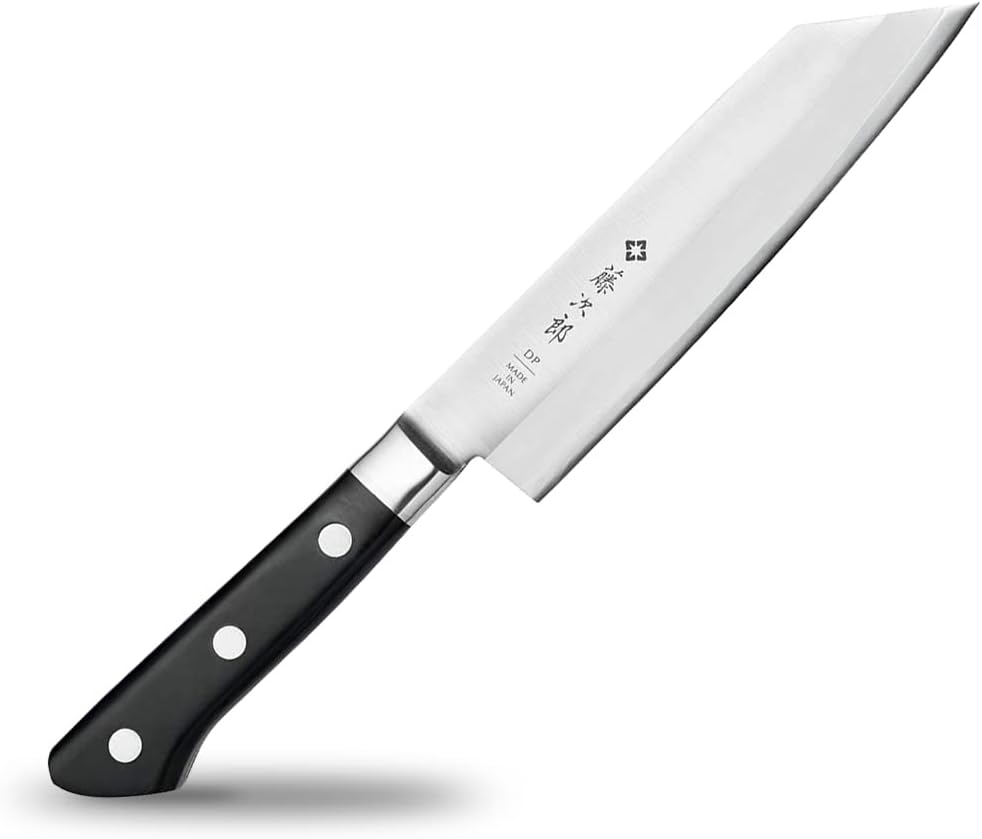 Tojiro DP Kiritsuke 8.25″
The value king. High-performance VG-10 steel without the fancy price tag. Utilitarian look but incredible cutting power. See Tojiro vs Shun.
Check Price on AmazonThe Shun Classic Kiritsuke represents the gold standard for home cooks seeking to explore elevated kiritsuke knife uses without the maintenance demands of carbon steel. Shun’s proprietary VG-MAX steel takes an exceptional edge and holds it through extended prep sessions, making this blade ideal for cooks who want to experience authentic kiritsuke knife uses without frequent sharpening interruptions. The D-shaped PakkaWood handle provides tactile feedback that guides your hand into proper pinch grip position, subtly training you toward the techniques that unlock the full potential of kiritsuke knife uses. When you invest in this Shun, you’re not just buying a knife—you’re buying entry into a community of enthusiasts who understand what is a kiritsuke knife used for and celebrate its unique capabilities.
Dalstrong’s Shogun Series interpretation of the Kiritsuke offers visual drama alongside performance that makes kiritsuke knife uses feel theatrical and special. The hammered tsuchime finish reduces food adhesion during vegetable kiritsuke knife uses, while the copper mosaic pin adds artisanal character that sparks conversation when guests observe your prep work. Dalstrong engineered slightly more belly into their profile than traditionalists might prefer, but this design choice expands kiritsuke knife uses to include gentle rock-chopping motions that pure flat-profile blades cannot accommodate. For cooks transitioning from Western knives who ask what is a kiritsuke knife used for and worry about abandoning familiar techniques, the Dalstrong provides a forgiving bridge between traditions.
The Tojiro DP Kiritsuke proves that exceptional kiritsuke knife uses need not require exceptional investment. This workhorse blade prioritizes function over form, delivering the core kiritsuke knife uses—push-cutting vegetables, slicing proteins, precision tip work—without decorative embellishments that drive up cost. Tojiro’s VG-10 steel at this price point represents extraordinary value, especially for cooks still exploring what is a kiritsuke knife used for and whether the shape suits their style. The utilitarian aesthetic appeals to professional cooks and minimalists who want reliable kiritsuke knife uses without worrying about marring an expensive finish. This is the blade that proves kiritsuke knife uses are accessible to anyone willing to learn proper technique, regardless of budget constraints.
5. Technique: How to Use It
Because the blade is flat, you cannot rock chop like you would with a Wusthof or Zwilling. If you try, the sharp K-Tip will dig into the board and potentially chip. Mastering proper technique is essential to unlocking the full spectrum of kiritsuke knife uses. When cooks ask what is a kiritsuke knife used for and then struggle with it, the problem almost always traces back to attempting Western techniques on a Japanese blade. The kiritsuke knife uses we’ve discussed require specific motions that honor the blade’s geometry. Let’s break down each essential technique that transforms kiritsuke knife uses from frustrating to fluid.
- The Push Cut: Lift the knife, push forward and down. Ideally for slicing cucumbers, onions, and peppers. This fundamental technique underpins most vegetable kiritsuke knife uses. The motion begins with the blade elevated slightly above the ingredient, then drives forward and downward in a single fluid stroke. The flat edge contacts the board evenly, severing ingredients completely without the accordion effect that plagues curved blades. Practice push cuts on green onions to develop muscle memory, then graduate to dense root vegetables like sweet potatoes and butternut squash. The push cut unlocks kiritsuke knife uses like uniform dice for mirepoix, consistent julienne for stir-fries, and elegant bias cuts for crudités platters. As you internalize this motion, you’ll discover that what is a kiritsuke knife used for becomes second nature—it’s the push-cut specialist that transforms prep work into a rhythmic, almost meditative practice.
- The Pull Cut: For slicing meat (sashimi or steak), start at the heel and pull the knife back towards you in one smooth motion. This technique defines protein-focused kiritsuke knife uses. Unlike push cutting where the blade moves away from you, the pull cut draws the edge toward your body, using the full length of the blade to create clean, single-stroke slices. The pull cut is essential for kiritsuke knife uses like portioning raw fish for sashimi, carving cooked roasts, and slicing teres major or tenderloin into medallions. Proper pull cut technique eliminates sawing motions that tear muscle fibers and release precious moisture. When you master pull cutting, kiritsuke knife uses expand to include elegant presentations where each slice tells the story of a single, intentional stroke. Guests watching you carve will understand what is a kiritsuke knife used for simply by observing the pristine surfaces left behind by proper pull-cut technique.
- The Tap Chop: For herbs, use a rapid up-down motion near the heel of the blade. This technique adapts kiritsuke knife uses for delicate herbs and aromatics that would scatter under push or pull motions. Position your guide hand on the spine near the tip for stability, then rapidly lift and drop the heel section to mince parsley, cilantro, chives, or garlic. The tap chop fills a specific niche in kiritsuke knife uses—processing lightweight, leafy ingredients that resist other cutting approaches. Unlike rock-chopping which would drive the K-tip into the board, tap-chopping keeps the tip elevated while the heel does the work. This preservation of the delicate tip is crucial for maintaining the precision capabilities that make kiritsuke knife uses so versatile. With practice, the tap chop becomes an efficient addition to your kiritsuke knife uses repertoire, handling herbs and aromatics with speed and consistency.
Beyond these three foundational techniques, advanced kiritsuke knife uses incorporate hybrid motions for specific ingredients. The draw-push combination excels at portioning dense proteins like pork loin where a single-direction stroke might stall. The angled push cut creates diagonal slices for stir-fry ingredients that maximize surface area for sauce adhesion. The guided pull cut uses your off-hand knuckles as a depth gauge for uniform slicing of ingredients like tomatoes or mozzarella. Each of these nuanced kiritsuke knife uses builds on the three fundamentals, expanding your understanding of what is a kiritsuke knife used for as your skills develop. The journey from novice to proficient kiritsuke user is measured not in months but in the gradual accumulation of techniques that compound into intuitive mastery.
6. Maintenance: Respect the Blade
A Kiritsuke is usually made of hard Japanese steel (VG10, SG2, or Blue Steel). It requires respect. Proper maintenance ensures your kiritsuke knife uses remain precise and enjoyable for years or even decades. The relationship between care and performance is direct—neglected blades produce frustrating kiritsuke knife uses regardless of your technique. Understanding what is a kiritsuke knife used for includes understanding how to preserve the characteristics that make those uses possible. Hard Japanese steel delivers the exceptional edge retention that enables clean kiritsuke knife uses, but that same hardness creates brittleness that demands careful handling. Let’s explore each maintenance domain that protects your investment in kiritsuke knife uses.
- Chipping: The tip is delicate. Do not stab into frozen food or bones. Use a cleaver for that. Chipping represents the most common tragedy in kiritsuke knife uses—a moment of carelessness destroying weeks of careful edge cultivation. The K-tip geometry that enables precise kiritsuke knife uses also concentrates stress at a vulnerable point. Frozen ingredients, hard seeds, and bones create impact forces far beyond what the hardened tip can withstand. When chips occur, they interrupt the smooth cutting experience that defines kiritsuke knife uses, catching on ingredients and tearing rather than slicing cleanly. Prevention through awareness preserves the full range of kiritsuke knife uses without the need for extensive repair. Ask yourself what is a kiritsuke knife used for before each task—if the answer involves prying, chopping through bones, or cutting frozen foods, reach for a different tool.
- Sharpening: You should use a whetstone. The flat edge makes it easier to sharpen than curved knives. Avoid pull-through sharpeners. Check our electric sharpener guide if you must use a machine, but ensure it handles 15-degree angles. Whetstone sharpening connects you to the centuries of tradition behind kiritsuke knife uses. The flat profile that enables push-cutting also simplifies stone work—you’re maintaining a consistent angle along a straight edge rather than navigating a curved belly. This geometric advantage makes kiritsuke knife uses sustainable for home cooks willing to invest in sharpening skills. The feedback loop between sharpening and cutting is particularly rewarding with kiritsuke knife uses; as your stones improve your edge, your cutting improves, which motivates further sharpening refinement. Understanding what is a kiritsuke knife used for includes understanding that peak performance requires regular maintenance, not annual professional intervention.
- Rust: If you choose a carbon steel version (like some Kamikoto or traditional brands), dry it instantly. Learn how to remove rust. Carbon steel kiritsuke knife uses come with an additional responsibility: vigilant moisture management. The reactive nature that allows carbon steel to take a keener edge also makes it vulnerable to oxidation. Every session of kiritsuke knife uses with carbon steel must conclude with thorough drying and, ideally, a light coat of camellia oil. The patina that develops over time becomes a personal record of your kiritsuke knife uses—blue and gray hues marking encounters with hot proteins, amber tones from acidic vegetables. This living finish tells the story of what is a kiritsuke knife used for in your specific kitchen, making each carbon steel blade a unique artifact of culinary history.
- Storage: Protect that tip! Use a drawer organizer, a magnetic strip, or a wooden Saya. Never throw it loose in a drawer. Storage directly impacts the longevity of kiritsuke knife uses by protecting the edge and tip from incidental damage. Loose drawer storage subjects the blade to contact with other utensils, each collision potentially dulling the edge or chipping the delicate K-tip. Magnetic strips provide easy access while displaying the knife that enables your kiritsuke knife uses, turning storage into kitchen art. Sayas offer traditional protection that honors the blade’s heritage—sliding the knife into its wooden sheath after each session of kiritsuke knife uses becomes a ritual that bookends your cooking experience. Whatever storage solution you choose, the principle remains: protect the geometry that makes kiritsuke knife uses possible by preventing uncontrolled contact with other objects.
7. Brand Battles: Who Makes the Best?
If you are deciding where to buy, here is how the brands stack up. Understanding the competitive landscape helps match your intended kiritsuke knife uses with the right manufacturer’s philosophy. Each brand approaches what is a kiritsuke knife used for with different priorities—some emphasize tradition, others innovation, and others pure value. Your specific kiritsuke knife uses profile should guide your brand selection. A home cook exploring vegetable-focused kiritsuke knife uses may prioritize different attributes than a professional seeking fish-specific kiritsuke knife uses in a high-volume environment.
- Shun vs. Miyabi: Shun offers the classic look; Miyabi (owned by Zwilling) often uses harder SG2 steel. (See Miyabi vs Shun). This rivalry illuminates different philosophies about kiritsuke knife uses. Shun prioritizes accessibility—their Kiritsuke models feature slightly softer steel that’s more forgiving during sharpening, making kiritsuke knife uses approachable for enthusiasts still developing maintenance skills. Miyabi pushes the performance envelope with harder SG2 that holds an edge through marathon prep sessions, maximizing kiritsuke knife uses for professionals who cannot pause for touch-ups during service. When evaluating what is a kiritsuke knife used for in each brand’s ecosystem, Shun answers “a versatile tool for passionate home cooks” while Miyabi answers “a precision instrument for demanding professionals.” Both perspectives are valid, and your kiritsuke knife uses pattern should determine which philosophy aligns with your needs.
- Dalstrong vs. Wusthof: Dalstrong offers the Kiritsuke shape; Wusthof sticks to Western profiles. If you want German reliability in a Kiritsuke shape, you are out of luck—stick to the Japanese brands or Dalstrong’s hybrids. (See Dalstrong vs Wusthof). This comparison highlights a fundamental truth about kiritsuke knife uses: they’re inherently tied to Japanese blade geometry. Wusthof’s commitment to Western profiles means they don’t compete in the kiritsuke space, ceding those kiritsuke knife uses to Japanese manufacturers and companies like Dalstrong that embrace Japanese design language. For cooks who love German steel but want to explore kiritsuke knife uses, Dalstrong’s hybrid approach offers a compromise—familiar durability in an unfamiliar shape. While purists might argue these aren’t authentic kiritsuke knife uses without traditional geometry, the market reality is that Dalstrong has expanded access to kiritsuke knife uses for cooks who might otherwise never try the profile.
- Budget Options: Look for Mercer or Victorinox for standard chef knives, but for a Kiritsuke, you generally need to step up to the $100+ range for decent steel. The budget reality of kiritsuke knife uses reflects the specialized nature of this blade shape. Mass-market manufacturers haven’t invested in Kiritsuke production because the market for kiritsuke knife uses remains smaller than standard chef knife demand. This means entry-level kiritsuke knife uses require a higher initial investment than entry-level Western knife uses. However, the $100 threshold opens access to legitimate kiritsuke knife uses through brands like Tojiro, Fujiwara, and occasionally Yoshihiro on sale. Below this price point, kiritsuke knife uses suffer from inferior steel that won’t hold an edge, poor grind geometry that wedges in ingredients, and inconsistent heat treatment that creates unpredictable performance. Invest appropriately to experience authentic kiritsuke knife uses rather than a compromised imitation.
8. The History and Philosophy Behind Kiritsuke Knife Uses
Understanding what is a kiritsuke knife used for requires appreciating its historical context and philosophical significance in Japanese culinary tradition. The kiritsuke emerged during Japan’s Edo period (1603-1868) as sword-making traditions adapted to peacetime needs. Master swordsmiths, prohibited from crafting weapons, turned their metallurgical expertise toward kitchen tools. The kiritsuke inherited the soul of the katana—its geometry, its steel, its deadly precision—repurposed for creative rather than destructive kiritsuke knife uses. This lineage explains the blade’s distinctive profile: the flat cutting edge mirrors the katana’s straight portion, while the K-tip echoes the sword’s reinforced point designed for piercing armor. Every kiritsuke knife uses connects to centuries of metallurgical evolution and martial discipline transformed into culinary art.
The restriction of kiritsuke knife uses to executive chefs alone wasn’t arbitrary hierarchy—it reflected genuine skill requirements. Traditional Hon-Kiritsuke demanded mastery of both Yanagiba and Usuba techniques before a chef could integrate them into unified kiritsuke knife uses. An apprentice spent years learning fish butchery on single-bevel Yanagiba, then years more mastering vegetable work on Usuba, before finally earning the right to combine these skills into kiritsuke knife uses. This progression ensured that when a chef asked what is a kiritsuke knife used for, their answer came from deep experiential knowledge rather than intellectual understanding alone. The blade’s status as a symbol of mastery was earned through genuine technical achievement.
Modern democratization of kiritsuke knife uses through double-bevel Kiritsuke Gyutos represents both progress and tension within culinary communities. Traditionalists argue that authentic kiritsuke knife uses cannot exist without single-bevel geometry—that the steering effect isn’t a bug to eliminate but a feature to master. Progressives counter that expanding access to kiritsuke knife uses honors the blade’s spirit of versatility while adapting to contemporary kitchens where specialization is impractical. Both perspectives contain truth: double-bevel Kiritsuke Gyutos enable legitimate kiritsuke knife uses that were previously inaccessible, while traditional Hon-Kiritsuke preserves techniques and kiritsuke knife uses that represent the pinnacle of Japanese knife craft. Your position in this debate should reflect your goals—are you seeking accessible kiritsuke knife uses for home cooking, or pursuing mastery of traditional Japanese culinary arts?
9. Steel Types and Their Impact on Kiritsuke Knife Uses
The steel in your Kiritsuke fundamentally shapes your experience of kiritsuke knife uses. Different steel formulations prioritize different performance characteristics, and understanding these tradeoffs helps match your kiritsuke knife uses to appropriate metallurgy. When researching what is a kiritsuke knife used for with specific steel types, consider edge retention, sharpenability, toughness, and corrosion resistance as the four pillars that define your daily experience.
VG-10 Steel: The most common steel for accessible kiritsuke knife uses, VG-10 balances performance with practicality. Cobalt and vanadium carbides provide excellent edge retention, supporting extended sessions of kiritsuke knife uses without interruption. The stainless properties mean you can focus on kiritsuke knife uses rather than worrying about immediate cleanup after cutting acidic ingredients. VG-10 sharpens readily on standard whetstones, making maintenance of kiritsuke knife uses achievable for intermediate sharpeners. The Shun Classic and Tojiro DP lines both employ VG-10 variants, demonstrating this steel’s versatility across price points for kiritsuke knife uses.
SG2/R2 Steel: Powder metallurgy SG2 represents the performance tier for demanding kiritsuke knife uses. The fine carbide structure takes a keener edge and holds it longer than VG-10, supporting professional-volume kiritsuke knife uses where sharpening breaks interrupt workflow. SG2’s hardness (typically 63-64 HRC) enables the acute edge angles that make kiritsuke knife uses feel effortless, but this hardness demands respect—lateral stress or impact can cause chipping. Brands like Miyabi and high-end Takamura employ SG2 for kiritsuke knife uses that push performance boundaries. For enthusiasts asking what is a kiritsuke knife used for at the highest level, SG2 provides the metallurgical foundation for exceptional results.
Carbon Steels (White #2, Blue #2, Blue Super): Traditional carbon steels deliver the purest kiritsuke knife uses experience for those willing to accept maintenance responsibilities. White steel’s exceptional sharpenability supports the thinnest edges and most delicate kiritsuke knife uses, but requires frequent touch-ups to maintain peak performance. Blue steel adds chromium and tungsten for improved edge retention, extending kiritsuke knife uses between sharpening sessions while preserving carbon steel’s legendary cutting feel. Blue Super represents the pinnacle—extreme hardness with enhanced wear resistance, enabling marathon kiritsuke knife uses without degradation. The patina that develops on carbon steel creates a personalized record of your kiritsuke knife uses, with colors reflecting the ingredients you process most frequently.
10. Kiritsuke Knife Uses in Professional Kitchens
Professional kitchens reveal kiritsuke knife uses at their most demanding and impressive. Understanding how professionals deploy kiritsuke knife uses provides aspirational targets for home cooks while demonstrating the blade’s ceiling of capability. When professional chefs ask what is a kiritsuke knife used for, their answers reflect the intensity and volume of commercial cooking environments where tools must perform flawlessly under pressure.
In sushi restaurants, kiritsuke knife uses center on fish butchery and sashimi preparation. Executive chefs use single-bevel Hon-Kiritsuke to portion whole tuna loins, create uniform sashimi slices, and prepare intricate neta (fish toppings) for nigiri. The single drawing stroke that defines professional sashimi kiritsuke knife uses preserves cellular structure in ways that multiple sawing strokes cannot, resulting in superior texture and appearance. Apprentices observe these kiritsuke knife uses for years before being permitted to attempt them, internalizing the technique through observation before execution. The ritualized nature of sushi kiritsuke knife uses—the specific stance, the breathing pattern, the angle of approach—transforms cutting into performance art that guests witness at omakase counters.
In Western fine dining, kiritsuke knife uses adapt Japanese precision to French and American culinary traditions. Chefs deploy Kiritsuke Gyutos for vegetable tournée cuts that demonstrate classical training, precise protein portioning that controls food cost, and elegant plating components that elevate presentation. The K-tip enables intricate garnishes—radish fans, cucumber ribbons, citrus supremes—that distinguish composed plates. Garde manger stations particularly benefit from kiritsuke knife uses for charcuterie slicing, terrines, and delicate vegetable preparations. The knife’s visual impact also matters in open kitchens where guests observe kiritsuke knife uses as part of their dining experience, the blade’s distinctive profile signaling culinary seriousness.
In catering and high-volume banquet operations, kiritsuke knife uses focus on efficiency and consistency. The flat profile enables rapid vegetable processing without the accordion effect that slows production. The blade length reduces strokes per ingredient, allowing chefs to maintain kiritsuke knife uses through hundreds of covers without fatigue. When every second counts during service, kiritsuke knife uses that combine multiple functions into single tools reduce the need to switch between specialized blades. The professional kitchen’s answer to what is a kiritsuke knife used for often emphasizes these efficiency gains—the blade that reduces tool changes and maintains consistent output throughout marathon services.
11. Kiritsuke Knife Uses for Specific Dietary Approaches
Different dietary patterns create distinct kiritsuke knife uses profiles. Understanding how kiritsuke knife uses adapt to various eating approaches helps you evaluate the blade’s relevance to your specific kitchen. When considering what is a kiritsuke knife used for in your personal cooking context, examine how your dietary preferences shape your cutting needs.
Plant-Based and Vegan Cooking: Vegetable-centric diets create intensive kiritsuke knife uses for produce processing. The flat profile excels at the high-volume vegetable prep that defines plant-based meal preparation—mountains of onions, peppers, mushrooms, and leafy greens processed weekly. Push-cutting kiritsuke knife uses eliminate the accordion effect that frustrates herb and scallion preparation. The blade length enables efficient processing of large vegetables like cabbage, winter squash, and eggplant that challenge shorter knives. For plant-based cooks, kiritsuke knife uses center on the vegetable capabilities that originally defined the blade’s hybrid design, making it perhaps more relevant to modern vegan cooking than any other specialized Japanese knife shape.
Pescatarian Cooking: Fish-focused diets unlock the full spectrum of traditional kiritsuke knife uses. From scaling and skinning to filleting and portioning, the blade handles every stage of fish preparation. Pescatarian kiritsuke knife uses include creating clean cubes for ceviche, portioning salmon fillets for weeknight dinners, and preparing delicate crudo for entertaining. The thin blade profile minimizes friction during draw cuts, preserving the texture of delicate fish that thicker Western knives compress and tear. For pescatarian cooks, kiritsuke knife uses bridge the gap between specialized fish knives and general-purpose chefs knives, providing fish-specific performance without sacrificing vegetable versatility.
Ketogenic and Carnivore Diets: Protein-heavy eating patterns emphasize kiritsuke knife uses for meat preparation and portioning. The blade length enables clean slices through large roasts and whole muscle cuts. K-tip precision supports trimming silver skin, removing fat caps, and creating uniform portions for meal prep. Carnivore kiritsuke knife uses include slicing brisket against the grain, portioning ribeye into steaks, and trimming pork shoulder for grinding. The rigid spine prevents blade flex during heavy cutting, maintaining control through dense muscle tissue. While a dedicated butcher knife might handle initial breakdown, kiritsuke knife uses for finishing and portioning ensure presentation-quality results.
Gluten-Free Baking: An unexpected category of kiritsuke knife uses emerges in gluten-free baking where dough texture differs from wheat-based traditions. The flat profile and sharp edge score gluten-free breads cleanly without dragging or tearing the fragile surface. Gluten-free kiritsuke knife uses include portioning sticky doughs, cutting brownies and bars without compression, and creating clean slices through delicate pastry. The K-tip creates precise vents in pie crusts and scores decorative patterns on bread loaves. For gluten-free bakers who struggle with crumbly textures and sticky doughs, these specialized kiritsuke knife uses solve persistent cutting challenges.
12. Kiritsuke Knife Care Through the Seasons
Seasonal cooking rhythms create cycles of intensive kiritsuke knife uses followed by periods of lighter use. Adapting your maintenance routine to these seasonal patterns ensures your blade remains ready for whatever kiritsuke knife uses the calendar demands. Understanding what is a kiritsuke knife used for across different seasons helps you anticipate maintenance needs and prevent performance degradation during peak cooking periods.
Summer: Peak produce season creates intensive vegetable kiritsuke knife uses. Tomato season tests edge retention as acidic juice accelerates oxidation on carbon steel blades. Corn processing demands clean cuts through fibrous husks and dense cobs. Melon preparation requires precise portioning that showcases kiritsuke knife uses for large fruits. Summer kiritsuke knife uses also include herb processing for fresh sauces, cucumber preparation for cold soups, and pepper dicing for salsas and salads. Increase sharpening frequency during summer to maintain peak performance through the highest-volume kiritsuke knife uses of the year. Carbon steel users should develop rapid drying habits as summer humidity accelerates rust formation during extended kiritsuke knife uses sessions.
Fall: Harvest season shifts kiritsuke knife uses toward hardy vegetables and holiday preparation. Winter squash processing demands confident technique as dense flesh challenges edge geometry. Root vegetable kiritsuke knife uses for roasting and mashing require consistent dice sizes for even cooking. Apple and pear preparation for pies and preserves benefits from the flat profile’s clean cutting action. Fall kiritsuke knife uses also include turkey carving practice as Thanksgiving approaches, protein slicing that demonstrates the blade’s versatility beyond vegetables. This season’s kiritsuke knife uses provide excellent practice opportunities for intermediate cooks developing push-cut proficiency.
Winter: Holiday cooking creates concentrated bursts of intensive kiritsuke knife uses. Prime rib carving, ham slicing, and roast portioning test protein-cutting skills developed throughout the year. Winter kiritsuke knife uses for braised meat preparation include trimming and portioning chuck, brisket, and short ribs before slow cooking. Cookie and pastry season introduces kiritsuke knife uses for portioning dough, cutting bars, and creating clean slices through delicate baked goods. The K-tip excels at decorative scoring on breads and pastries that define winter baking kiritsuke knife uses. Reduced humidity during indoor heating makes winter ideal for carbon steel kiritsuke knife uses with minimal rust concerns.
Spring: Renewal season introduces delicate kiritsuke knife uses for early produce and holiday meals. Asparagus preparation benefits from the flat profile’s clean cutting action. Pea shoots, ramps, and tender greens challenge edge sharpness as dull blades tear rather than cut. Easter and Passover kiritsuke knife uses include lamb carving, brisket slicing, and vegetable preparation for large gatherings. Spring kiritsuke knife uses transition from winter’s heavy proteins to lighter vegetable-forward cooking, demonstrating the blade’s full range as seasons shift. This seasonal transition provides natural opportunities to practice the complete spectrum of kiritsuke knife uses as ingredients change.
13. Teaching Kiritsuke Knife Uses to Others
Sharing kiritsuke knife uses with family members or cooking partners requires thoughtful instruction that builds confidence while respecting the blade’s learning curve. Teaching what is a kiritsuke knife used for extends beyond technique into philosophy—you’re transmitting not just motions but an approach to ingredients that honors Japanese culinary tradition. Effective instruction in kiritsuke knife uses sequences skills from simple to complex, building foundational competence before introducing advanced applications.
Begin with the claw grip that protects fingertips during kiritsuke knife uses. Have students practice the hand position without a knife, curling fingers under and using knuckles as blade guides. Introduce the pinch grip on the blade itself—thumb and forefinger gripping the blade just ahead of the handle—which provides the control that kiritsuke knife uses demand. These grip fundamentals precede any cutting, establishing the physical vocabulary that enables safe kiritsuke knife uses. Students who rush to cutting without internalizing grip typically develop habits that limit their eventual kiritsuke knife uses proficiency.
Introduce push cutting on soft ingredients like mushrooms or zucchini before progressing to harder vegetables. Early success builds confidence that sustains motivation through the learning curve of kiritsuke knife uses. Demonstrate each motion at full speed, then break it down into components that students can practice individually. Verbalize the internal cues you’ve developed—”weight transfers to the front foot as the blade moves forward”—to externalize tacit knowledge about kiritsuke knife uses that you may no longer consciously access. Patience during this phase determines whether students embrace kiritsuke knife uses or retreat to familiar Western techniques.
Address the fear factor that the K-tip creates for some users. The aggressive appearance that attracts experienced cooks to kiritsuke knife uses can intimidate novices. Normalize this reaction while demonstrating the control that proper technique provides. Have students practice tip-specific kiritsuke knife uses like onion scoring on halved onions before attempting full vegetable preparation. Progressive exposure builds comfort with the geometry that makes kiritsuke knife uses distinctive. The goal is not speed but confidence—kiritsuke knife uses improve with technique refinement rather than hurried execution.
14. Kiritsuke Knife Photography and Social Media
The Kiritsuke’s dramatic profile makes it exceptionally photogenic, contributing to its popularity on culinary social media. Understanding how to photograph your kiritsuke knife uses helps share your journey and connect with the global community of Japanese knife enthusiasts. The visual drama that attracted you to kiritsuke knife uses can inspire others while documenting your skill development.
Lighting determines whether kiritsuke knife uses photographs capture the blade’s character. Side lighting reveals the Damascus patterns and hammered finishes that distinguish premium Kiritsukes. Diffused natural light near windows flatters kiritsuke knife uses action shots by eliminating harsh shadows while maintaining texture detail. Avoid direct flash that creates unflattering reflections on polished blade surfaces. The visual story of kiritsuke knife uses is told through light interacting with steel—take time to position your setup for optimal results.
Composition strategies for kiritsuke knife uses photography include ingredient placement that tells a process story. Arrange vegetables in “before and after” configurations showing raw ingredients beside their processed forms. Capture kiritsuke knife uses mid-stroke with the blade in motion against colorful produce. The flat profile photographs beautifully in profile, highlighting the geometry that defines kiritsuke knife uses. Include hands in frame to provide scale and demonstrate proper grip technique. These compositional choices transform documentation of kiritsuke knife uses into compelling visual content that educates while inspiring.
Sharing kiritsuke knife uses on platforms like Instagram and Reddit connects you to communities of enthusiasts who celebrate Japanese cutlery. The #kiritsuke and #japaneseknives hashtags aggregate thousands of posts showcasing kiritsuke knife uses from home cooks and professionals worldwide. Engage with these communities by sharing not just results but process—your kiritsuke knife uses journey matters more than perfect outcomes. Questions posted about what is a kiritsuke knife used for receive thoughtful responses from experienced users eager to share knowledge. The social dimension of kiritsuke knife uses transforms solitary cooking practice into community participation.
Frequently Asked Questions (FAQ)
It is not “better,” it is different. If you prefer push-cutting and want a knife that looks incredible, the Kiritsuke is superior. If you prefer rock-chopping and want a durable workhorse, a standard Western Chef’s Knife is better. See Chef Knife vs Santoku for a similar comparison. The real question isn’t superiority but suitability—which blade matches your cutting style and the kiritsuke knife uses you’ll actually perform? Many cooks find that owning both provides complementary capabilities, with kiritsuke knife uses covering precision tasks and chef’s knife uses handling heavy chopping. Understanding what is a kiritsuke knife used for in your specific kitchen context determines whether it supplements or replaces your current primary knife.
The “Reverse Tanto” or K-Tip adds strength to the tip while keeping it thin. It allows for intricate work without the risk of the very end snapping off as easily as a needle-point tip. It is also a signature aesthetic of the blade. The engineering behind this design dates back to sword-making traditions where reinforced tips prevented breakage during thrusting motions. In kiritsuke knife uses, the K-tip serves both structural and functional purposes—it’s stronger than a traditional point for lateral work yet thinner than a bullnose for precision tasks. When considering what is a kiritsuke knife used for that requires tip strength, think scoring, detail cuts, and intricate garnishes where a fragile needle-point might fail. The K-tip enables these advanced kiritsuke knife uses while maintaining the visual identity that makes the blade instantly recognizable.
A Double Bevel Kiritsuke (like the Shun or Dalstrong) is fine for beginners who are willing to learn proper cutting technique (no rocking!). A Single Bevel Kiritsuke is NOT recommended for beginners; it requires significant skill to control the steering. Beginner-friendly kiritsuke knife uses focus on push-cutting vegetables, slicing cooked proteins, and basic herb preparation. As your skills develop, kiritsuke knife uses expand to include more demanding applications. The key to successful beginner kiritsuke knife uses is patience with the learning curve—expect awkward moments as your muscle memory adapts from rocking to pushing motions. Within weeks of consistent practice, basic kiritsuke knife uses become intuitive, opening the door to more advanced techniques. Remember that every expert’s kiritsuke knife uses began with the same fumbling first attempts you’re experiencing.
The standard is 8 inches (210mm). This provides enough length for slicing meat but is manageable for vegetables. 10-inch versions exist but can be unwieldy for home counters. Your intended kiritsuke knife uses should guide size selection. If primary kiritsuke knife uses focus on vegetable prep, an 8-inch blade provides ample length without feeling cumbersome. If protein slicing dominates your kiritsuke knife uses, consider 9.5-10 inches (240-270mm) for single-stroke cuts through large roasts and fish fillets. Smaller cooks or those with limited counter space might prefer 7-inch versions for nimble kiritsuke knife uses in tight quarters. The best approach when uncertain is to visit a knife shop and handle different sizes, simulating your typical kiritsuke knife uses to assess comfort and control. The question of what is a kiritsuke knife used for intersects with size selection—your specific applications determine optimal length.
Sharpening frequency depends on your volume of kiritsuke knife uses and the steel type. Home cooks using stainless Kiritsukes for daily kiritsuke knife uses typically need sharpening every 2-3 months with regular honing between sessions. Professional kiritsuke knife uses may require weekly touch-ups. Carbon steel blades used for intensive kiritsuke knife uses often benefit from quick touch-ups after each session. Learn to read the feedback your knife provides during kiritsuke knife uses—when push cuts require more force, when tomato skins resist penetration, when herbs bruise rather than separate cleanly, these signals indicate your blade needs attention. The relationship between sharpness and kiritsuke knife uses is immediate and apparent; dull blades transform joyful kiritsuke knife uses into frustrating struggles. Develop a sharpening schedule based on your specific kiritsuke knife uses volume rather than following generic recommendations.
This question gets to the heart of what is a kiritsuke knife used for. The Kiritsuke’s design philosophy is consolidation—it combines the vegetable capabilities of a Nakiri, the slicing performance of a Sujihiki, and the detail work of a petty knife into one blade. For minimalist cooks, kiritsuke knife uses can indeed replace multiple specialized knives. However, certain tasks remain outside kiritsuke knife uses territory—breaking down whole chickens, cutting through bones, and heavy chopping still require dedicated tools. The Kiritsuke reduces but rarely eliminates the need for complementary knives. Evaluate your cooking patterns to determine whether kiritsuke knife uses cover your primary prep tasks sufficiently to justify reducing your kit.
Conclusion: Should You Buy One?
The Kiritsuke is a blade that commands respect. It is versatile, precise, and undeniably beautiful. For the home cook who wants to move beyond the basic essential knives and master the art of the push-cut, it is a worthy investment. The kiritsuke knife uses we’ve explored throughout this guide demonstrate a blade that rewards dedication with exceptional performance across vegetables, proteins, and precision tasks. When you understand what is a kiritsuke knife used for—truly understand it, not just intellectually but through hours of practice—you join a lineage of cooks who’ve recognized that tools shape technique as much as technique shapes results.
Just remember: Buy a double-bevel version for general use, keep it sharp with a good stone, and never use it on bones. Treat it like the master’s tool it is, and it will serve you for a lifetime. The journey into kiritsuke knife uses transforms not just your cutting but your relationship with ingredients—each slice becomes intentional, each meal preparation becomes practice, and each completed dish carries the satisfaction of craftsmanship. Whether you’re drawn to kiritsuke knife uses for practical efficiency, aesthetic appreciation, or connection to culinary tradition, the blade delivers an experience that transcends mere food preparation. It’s not just a knife; it’s an invitation to elevate every moment you spend at the cutting board.
Your exploration of what is a kiritsuke knife used for doesn’t end with this guide—it begins here. Each ingredient you process, each technique you refine, each meal you create adds to your personal understanding of kiritsuke knife uses. The blade that once seemed intimidating becomes familiar, then essential, then irreplaceable. Welcome to the community of cooks who’ve discovered that kiritsuke knife uses represent not just cutting techniques but a philosophy of kitchen craftsmanship that honors ingredients through precision, care, and continuous improvement.