
Boning Knife vs. Fillet Knife: Which Blade Do You Actually Need?
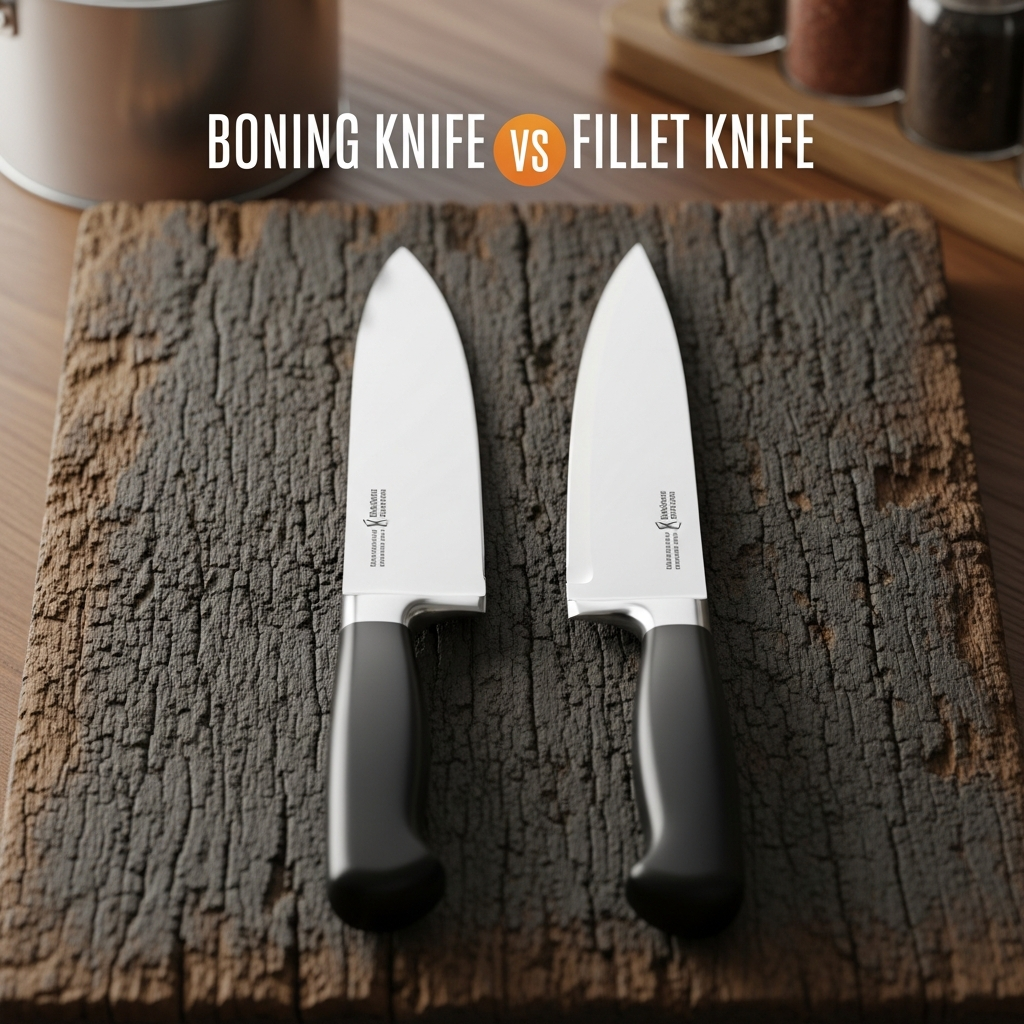
In the culinary world, preparation is everything. While a Chef’s Knife or a Santoku can handle vegetables and boneless meats effortlessly, they fail when faced with a whole chicken or a delicate trout.
This is where specialized blades come in. If you are browsing knifeindex.com/ looking to expand your kit beyond the basics, you have likely encountered the Boning Knife and the Fillet Knife. To the untrained eye, they look almost identical: long, thin, and sharp.
However, confusing these two can lead to ruined filets, damaged blades, and frustration. In this comprehensive guide, we will dissect the differences between boning and fillet knives, explore their specific uses, and help you decide which one belongs in your knife block.
Beyond the basic comparison, we’re also going to walk through exactly how professionals hold and move these blades, break down the metallurgy that separates a $25 stamped blade from a $150 forged one, cover the electric fillet knife debate for anglers who process fish in bulk, and answer the practical budgeting and maintenance questions that most guides skip entirely. By the end of this article you should be able to look at any boning or fillet knife on the market and know exactly what you’re looking at, and exactly whether it belongs in your kitchen or tackle box.
1. The Core Difference: Meat vs. Fish
The simplest way to remember the difference is this: Boning knives are for meat; Fillet knives are for fish.
- Boning Knife: Designed to separate meat from the carcass. It needs to be tough enough to scrape against hard bones (pork, beef, chicken) without chipping.
- Fillet Knife: A subset of boning knives designed specifically for fish. It needs extreme flexibility to glide between the skin and the delicate flesh of a fish.
While you can sometimes use them interchangeably, using a flexible fillet knife to disjoint a chicken might snap the tip, and using a stiff boning knife on a flounder will likely butcher the meat.
External Insight
Blade flexibility is the deciding factor. According to Made In Cookware, “Fillet knives are thinner and more flexible… Boning knives are thicker and stiffer.” Read their deep dive here: Boning Knife vs. Fillet Knife: Detailed Breakdown.
2. A Brief History: Where These Blades Came From
Neither the boning knife nor the fillet knife appeared out of nowhere. Both evolved out of butchery and fishmongering traditions that stretch back centuries, and understanding where they came from actually helps explain why they’re shaped the way they are today.
The boning knife has roots in European butchery, particularly in French and German meat-cutting traditions where whole animals were broken down by hand in back-of-house kitchens and butcher shops. Early boning blades were forged by hand, often by the same smiths who made chef’s knives and cleavers, and the narrow dagger-like profile developed specifically because it needed to slip between muscle groups and around joints without wasting meat. As commercial butchery scaled up in the 19th and 20th centuries, manufacturers began offering stiff and flexible variants to match different carcasses, which is the same stiff-versus-flexible split you see on shelves today.
Fillet knives have a more geographically diverse history, since fish processing developed independently wherever people lived near water. Scandinavian and North American commercial fisheries drove much of the modern fillet knife’s design, especially once stainless steel became affordable enough for mass production in the mid-20th century. The rise of recreational sport fishing in the United States after World War II created a consumer market for fillet knives, which is why so many budget and mid-range fillet knives today are still marketed toward anglers rather than professional chefs. Japan developed its own parallel tradition with knives like the deba and yanagiba, which serve overlapping purposes but follow a completely different grinding philosophy, usually single-bevel rather than double-bevel.
Knowing this history matters because it explains a common point of confusion: a “boning knife” and a “fillet knife” are really two branches of the same family tree that diverged based on what they needed to cut. If you understand the animal or fish you’re breaking down, you can usually predict which branch of that tree you should be reaching for.
3. Head-to-Head: The Specs Breakdown
| Feature | Boning Knife | Fillet Knife |
|---|---|---|
| Blade Stiffness | Stiff to Semi-Flexible | High Flexibility |
| Blade Length | 5 to 7 inches | 6 to 9 inches (Longer) |
| Shape | Straight or Slight Curve | Upward Curve (Trailing Point) |
| Primary Use | Removing meat from bone (Poultry, Beef, Pork) | Removing skin/bones from Fish |
| Durability | High (Thicker Spine) | Moderate (Thinner Spine) |
4. The Boning Knife: The Butcher’s Tool
A good boning knife acts like a dagger. It is designed to puncture and slice. The blade is usually narrower than a Utility Knife, allowing you to turn corners around a joint.
Stiff vs. Flexible Boning Knives
Not all boning knives are the same.
Stiff: Best for beef and pork. Brands like Wusthof excel here with forged, rigid blades.
Flexible: Best for poultry. Allows you to follow the rib cage of a chicken.
When choosing, consider the construction. A forged boning knife (see Stamped vs Forged) offers a bolster that protects your hand when things get slippery.
How to Use a Boning Knife: Step-by-Step Technique
Most home cooks who own a boning knife have never actually been shown how to use one properly, which is why so many people end up wasting meat or, worse, cutting themselves. Here is the basic technique professionals use when breaking down poultry, and it transfers reasonably well to other proteins:
- Anchor the joint. Place the bird or cut on a stable cutting board and use your non-dominant hand to hold the limb or section firmly, keeping your fingers curled away from the blade path.
- Find the joint, not the bone. Rather than sawing through bone, locate the connective cartilage between two bones. A sharp boning knife should slip through cartilage with almost no resistance.
- Use short, controlled strokes. Long sweeping cuts are for chef’s knives. Boning work is done with short strokes that follow the contour of the bone, letting the tip do most of the work.
- Angle the blade toward the bone, not the meat. Keeping the edge angled slightly against the bone (rather than into the flesh) minimizes meat loss and is the single biggest technique difference between beginners and professionals.
- Rotate the protein, not just the knife. When working around a joint or a whole limb, it is often easier to rotate the meat itself rather than contorting your wrist into an awkward angle.
Practicing on a whole chicken is the cheapest way to build this skill. A five-pound bird gives you two thighs, two drumsticks, two wings, two breasts, and a backbone to practice on, all for the price of a single grocery store chicken.
5. The Fillet Knife: The Angler’s Friend
The fillet knife is thinner and lighter. The “trailing point” tip curves upward, maximizing the slicing surface area. This allows for long, smooth strokes—essential when you want a clean filet of salmon.
Because these knives are often used in wet environments (or even on boats), grip is paramount. Many budget-friendly options, like those found in our Victorinox reviews, feature textured plastic handles that are impervious to fish slime.
How to Fillet a Fish: Step-by-Step Technique
Filleting is a different motion entirely from boning meat, and it relies on the blade’s flexibility far more than its stiffness. Here is the general approach used across most round fish, such as bass, walleye, or trout:
- Make the collar cut. Cut down behind the gills and pectoral fin, angling toward the head, until you feel the blade touch the backbone.
- Turn the blade flat. Rotate the knife ninety degrees so it lies flat against the backbone, edge facing toward the tail.
- Ride the spine. Using long, gliding strokes, run the blade along the top of the ribcage and spine toward the tail, letting the flexible blade flex slightly to hug the bone structure without cutting into it.
- Free the fillet. Once you reach the tail, either cut all the way through or leave a small hinge of skin, then fold the fillet back to expose the rib bones.
- Remove the rib cage. Angle the blade shallowly beneath the rib bones and slice them away in one continuous motion, keeping the blade as close to the bones as possible to avoid wasting meat.
- Skin the fillet. Lay the fillet skin-side down, pin the tail end with your fingers or a fork, and saw the blade between the skin and meat at a shallow angle, pushing rather than pulling.
The flexibility of a dedicated fillet knife is what makes step three and step six possible. A stiff boning knife will fight you through both of those motions, which is exactly why anglers don’t substitute one for the other if they can help it.
Curved vs. Straight Fillet Blades
Fillet knives are not all shaped the same way, and the amount of upward curve in the blade matters more than most buyers realize. A blade with a pronounced curve near the tip is generally easier for skinning, since the curve naturally rides along the skin without digging in. A straighter, longer blade is often preferred for large fish like salmon or tuna, where you need to make one long uninterrupted stroke down the length of the fillet rather than a series of shorter cuts. If you primarily process panfish and smaller freshwater species, a shorter, more curved blade in the six-inch range will usually feel more controllable than a nine-inch blade built for offshore species.
6. Top Product Recommendations
We have analyzed the best brands to find the leaders in these categories.
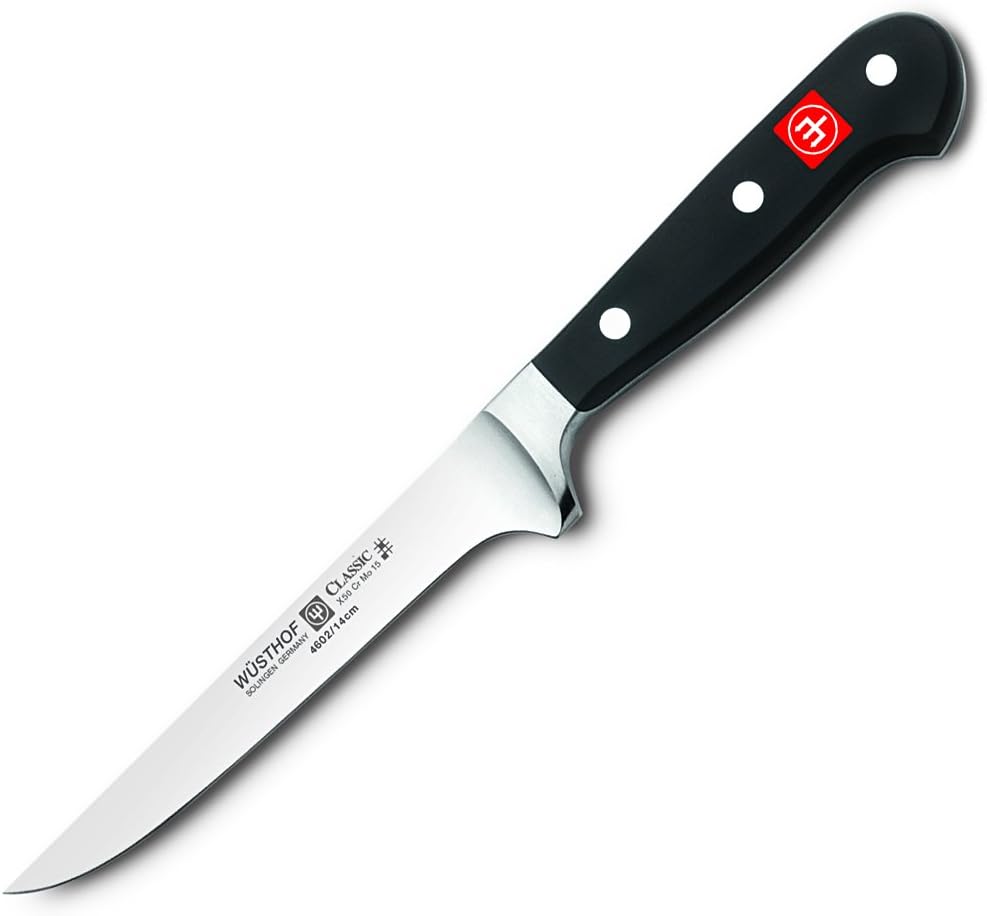 Wüsthof Classic 6″ Boning Knife
The gold standard for meat. Forged German steel with a stiff blade profile. Perfect for deboning leg of lamb or breaking down chickens. See Wusthof vs Zwilling for more.
Check Price on Amazon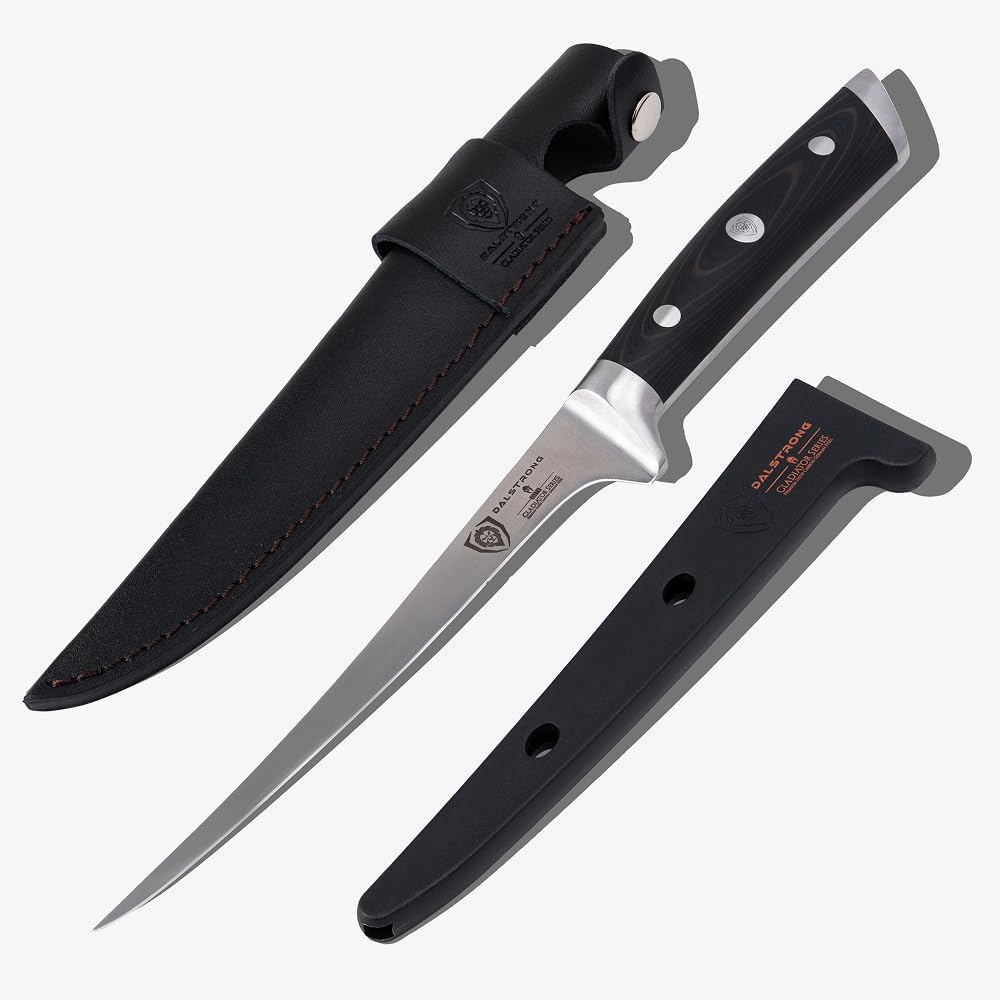 Dalstrong Gladiator 7″ Fillet Knife
Extreme flexibility meets durability. Comes with two sheaths (one for the drawer, one for the belt). Ideal for fish. Read our Dalstrong vs Wusthof comparison.
Check Price on Amazon7. Blade Steel Explained: What’s Actually Inside These Knives
Most buyers pick a boning or fillet knife based on brand name alone and never look at the steel type, which is a mistake because steel choice affects edge retention, flexibility, and corrosion resistance more than almost any other factor.
German Steel (Boning Knives)
Most boning knives from brands like Wusthof and Zwilling use German stainless steel, typically in the X50CrMoV15 family. This steel is softer than premium Japanese alloys, which sounds like a downside but is actually an advantage for boning work. Softer steel is tougher and more resistant to chipping when the edge contacts bone, and it’s easier to resharpen with a basic honing rod, which matters if you’re breaking down proteins daily.
Japanese Steel (Fillet and Honesuki Knives)
Japanese fillet and honesuki blades often use harder steels like VG-10 or AUS-8, sometimes wrapped in a softer cladding for added flexibility. Harder steel holds a finer edge longer, which matters enormously for fish work since a sharper edge glides through skin and flesh with less pressure and less risk of tearing delicate fillets. The tradeoff is that harder steel is more brittle, which is part of why you should never use a hard Japanese-steel blade to pry apart bones.
Stainless vs. High-Carbon
Because both boning and fillet knives spend so much time in contact with moisture, blood, and salt water, the overwhelming majority on the market are stainless steel rather than high-carbon. High-carbon blades take a sharper edge and are easier to sharpen, but they rust quickly if not dried immediately, which makes them a poor choice for anyone filleting fish on a boat or in a wet processing environment.
8. Full Tang vs. Partial Tang Construction
The tang is the portion of the blade steel that extends into the handle, and it has a real impact on how a boning or fillet knife performs and holds up over time.
- Full Tang: The steel runs the entire length of the handle and is usually visible along the top and bottom edge. Full tang knives are more durable, better balanced, and generally preferred for stiff boning knives that need to withstand leverage against bone.
- Partial Tang: The steel extends only partway into the handle. This is common on many fillet knives because it slightly reduces weight near the handle, which some anglers feel improves blade-tip feedback during long filleting sessions. The tradeoff is reduced durability, particularly if the knife is ever used for anything beyond light slicing.
If you plan to use your knife hard and often, whether for large-scale meat prep or filleting dozens of fish in a single session, a full tang design will hold up better over years of use, even if it costs a bit more upfront.
9. Handle Materials and Grip in Wet Conditions
Because both of these knives are frequently used around blood, fat, and fish slime, handle material is arguably as important as the blade itself.
- Textured Polypropylene or TPE: The most common choice for budget and mid-range fillet knives. These synthetic materials are inexpensive, dishwasher-tolerant on some models, and grip well even when wet.
- POM (Polyoxymethylene): A denser synthetic used on higher-end boning knives like the Wüsthof Classic line, offering a smooth but secure grip and excellent resistance to moisture absorption.
- Wood: Common on traditional Japanese honesuki and some artisan boning knives. Wood feels warm and natural in hand but requires more care, since repeated soaking can cause the handle to swell or crack over time.
- Rubberized Grips: Popular on dedicated fishing fillet knives, since the tacky rubber texture stays secure even when your hands are covered in fish oil.
If you fillet fish outdoors or on a boat, prioritize a textured or rubberized synthetic handle over a wood handle, since wet-weather performance matters more in that context than aesthetics.
10. Electric Fillet Knives vs. Manual Fillet Knives
Anyone who processes large volumes of fish, whether from a big day on the water or a bulk order from a fish market, eventually runs into the electric fillet knife debate.
When an Electric Fillet Knife Makes Sense
Electric fillet knives use a reciprocating or oscillating blade powered by a battery or corded motor, and they genuinely excel at high-volume processing. If you’re filleting a cooler full of crappie or a large catch of catfish, an electric knife can cut your processing time dramatically and reduces hand fatigue, since the motor does the sawing motion for you.
When a Manual Fillet Knife Wins
For precision work, especially on smaller or more delicate fish, a manual fillet knife still wins. You have far more control over pressure and angle with a hand blade, which matters when skinning thin fillets or working around pin bones. Manual knives are also quieter, require no batteries or charging, and are easier to maintain since there’s no motor housing or blade mechanism to clean and dry.
Many serious anglers actually own both: an electric knife for bulk processing days and a traditional manual fillet knife, like the Dalstrong Gladiator featured above, for smaller catches or presentation-quality cuts.
11. Choosing by Protein: A Practical Buying Matrix
Rather than thinking generically about “boning knife” or “fillet knife,” it helps to think about the specific protein you process most often.
| Protein | Recommended Knife Type | Why |
|---|---|---|
| Whole Chicken / Poultry | Flexible Boning Knife | Follows the rib cage and joints without wasting meat |
| Beef Brisket / Roasts | Stiff Boning Knife | Needs rigidity to trim silverskin and separate primal cuts |
| Pork Shoulder / Leg | Semi-Stiff Boning Knife | Balances control with the toughness to work around larger bones |
| Salmon / Large Fish | Long, Straight Fillet Knife (8–9″) | Allows one continuous stroke down a long fillet |
| Panfish / Trout / Small Bass | Short, Curved Fillet Knife (6″) | Better maneuverability on smaller frames |
| Catfish / Thick-Skinned Fish | Stiffer Fillet Knife or Electric Knife | Tougher skin resists a soft, overly flexible blade |
12. Japanese Alternatives: The Honesuki
If you prefer Japanese knives, you might not find a traditional flexible boning knife. Instead, Japanese chefs use a Honesuki.
The Honesuki is a triangular, stiff, poultry-boning knife. It has zero flex. It works by disjointing rather than hugging the bone. Brands like Shun and Global make excellent versions.
- See how they compare in Shun vs Wusthof.
- Check out the lightweight Global vs Wusthof options.
13. Brand Comparisons for Boning/Fillet
Different brands have different strengths when it comes to specialty blades.
Mercer & Victorinox (Budget Kings)
For students and fishermen, you don’t always need a $150 knife. The Mercer vs Victorinox battle is strong here. Both make incredible stamped boning knives with non-slip handles for under $40. They are the top choices for affordable kitchen tools.
Dalstrong (The Specialist)
Dalstrong offers highly specific shapes, including curved boning knives and flexible fillet knives in their Shogun and Gladiator series. (See Dalstrong vs Shun).
Miyabi & Tojiro (The Sharpest)
If you want a scalpel for fish, Tojiro offers amazing value (See Tojiro vs Shun). Miyabi offers exquisite Damascus finishes, but be careful—hard steel chips if it hits a bone. (See Miyabi vs Wusthof).
Budgeting: What You Actually Get at Each Price Point
Price ranges for these knives are wide, and understanding what you’re paying for helps avoid both overspending and disappointment.
- Under $25: Stamped blades, usually softer steel, plastic handles. Perfectly adequate for occasional home use but will need more frequent honing and may flex or dull faster under heavy use.
- $25–$60: The sweet spot for most home cooks and weekend anglers. Brands like Mercer, Victorinox, and Dalstrong’s entry lines live here, offering solid steel and comfortable handles without a premium price tag.
- $60–$120: Forged construction, better steel, and refined bolsters. This is where brands like Wüsthof Classic and mid-tier Shun products sit, and it’s a reasonable ceiling for a serious home cook or dedicated angler.
- $120+: Premium Japanese steel, hand-finished blades, and specialty grinds. Worth it for professionals or enthusiasts who process large volumes and can appreciate the edge retention difference, but overkill for occasional use.
14. Common Mistakes Beginners Make
Even with the right knife in hand, technique errors are the most common reason people struggle with boning and filleting. Watch for these:
- Using a dull blade and compensating with force. This is the single biggest cause of boning and filleting injuries. A sharp knife requires less pressure and is inherently more predictable and safer than a dull one.
- Sawing instead of slicing. Both boning and fillet knives are designed for smooth, continuous strokes. Short, aggressive sawing motions tend to tear rather than cut cleanly, especially on fish skin.
- Cutting toward your supporting hand. Always orient your stroke away from the hand holding the protein steady, and keep fingers curled under when stabilizing meat or fish.
- Choosing the wrong flex for the job. Beginners often buy one all-purpose “boning knife” and try to use it for both meat and fish. As covered above, the flex requirements are different enough that this compromise shows up in wasted meat and ragged fillets.
- Skipping the honing step. A boning or fillet knife loses its edge faster than a chef’s knife because of repeated contact with bone, cartilage, and skin. Honing before every use, not just sharpening occasionally, keeps the edge consistent.
- Ignoring blade flex when skinning. When skinning a fillet, beginners often push the knife too steeply into the meat. Keeping the blade angle shallow and letting the flex of the blade do the work preserves far more usable meat.
15. Maintenance and Safety
Working with raw proteins and slippery fats requires care.
- Rust: Blood and saltwater accelerate rust. Even stainless steel isn’t immune. Wash and dry immediately. See how to remove rust if spots appear.
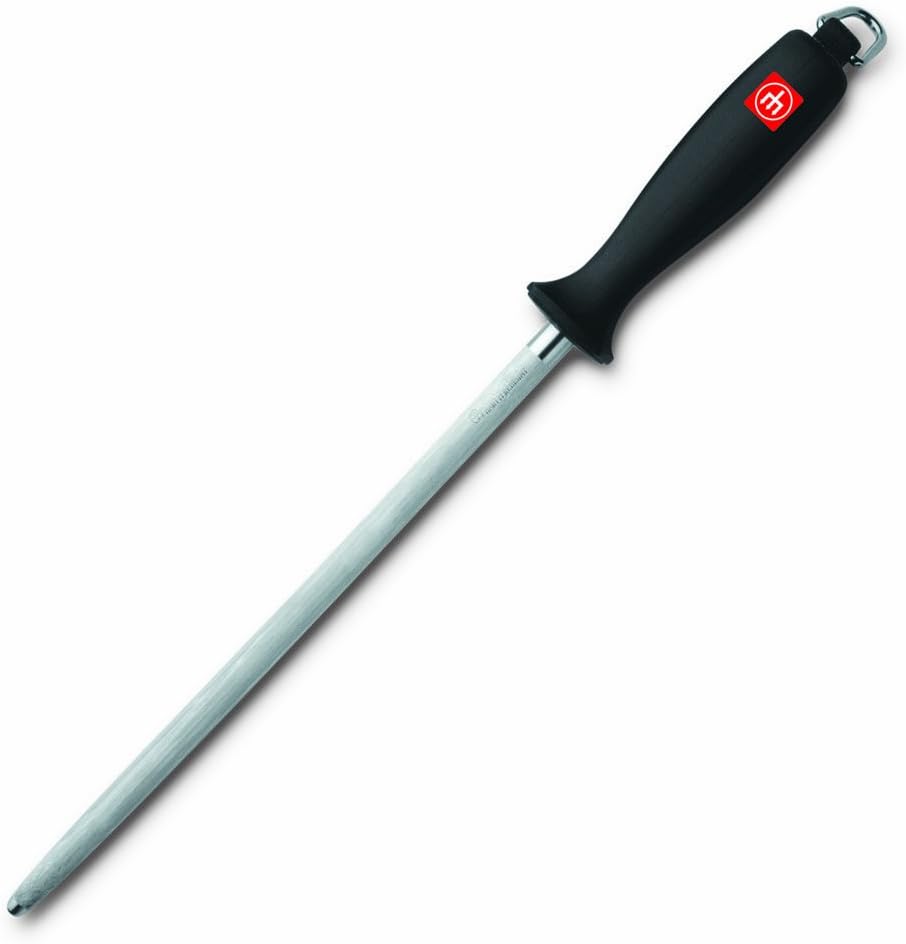
- Sharpening: A dull boning knife is dangerous because it requires more force. Use a honing rod often. For sharpening curved fillet blades, electric sharpeners are often easier than stones for beginners.
- Storage: These knives have wicked sharp tips. Never throw them in a drawer. Use a drawer organizer or a sheath. If you travel, get a knife bag.
- Dishwasher: Dishwasher safe steak knives exist, but boning knives do not. The heat destroys the handle grip and dulls the edge. Hand wash only.
Sharpening Angles for Boning and Fillet Blades
Sharpening angle matters more on these specialty knives than on a general chef’s knife. Boning knives, especially German-steel stiff variants, typically perform best at a 20 to 22 degree edge angle per side, which balances sharpness with the durability needed to work near bone. Fillet knives, by contrast, are often sharpened closer to 15 to 17 degrees per side, since a thinner, more acute edge glides through fish flesh and skin with far less drag. If you use a pull-through electric sharpener, check the manufacturer’s spec before assuming a single setting works for both knife types, since using a boning-knife angle on a fillet blade can leave the edge too thin and prone to rolling.
Deep Cleaning After Fish and Poultry Prep
Beyond the quick wash-and-dry routine, knives used heavily on raw poultry or fish benefit from periodic deep cleaning. Food safety guidance generally recommends sanitizing cutting boards and blades that contact raw poultry with a diluted bleach solution or a dedicated kitchen sanitizer, not just dish soap, since soap removes visible residue but doesn’t necessarily eliminate bacteria like salmonella or listeria. For fillet knives used outdoors or on a boat, rinsing with fresh water immediately after use (even before you get back to a sink) significantly reduces the corrosion risk from salt water and fish oils sitting on the blade for hours.
16. Boning Knife vs. Fillet Knife vs. Carving Knife vs. Utility Knife
These four blades get confused constantly because they occupy a similar length range, so here’s how to tell them apart at a glance.
- Boning Knife: Narrow, pointed, stiff-to-flexible. Built to work meat off bone, not to slice cooked meat for serving.
- Fillet Knife: Longer, thinner, highly flexible with an upward curve. Built specifically for raw fish, not meat.
- Carving Knife: Longer and generally stiffer than either, with a rounded or straight tip. Designed to slice already-cooked meat, like a roasted turkey or a standing rib roast, into neat serving portions rather than to separate raw meat from bone.
- Utility Knife: Shorter and more general-purpose, sitting between a paring knife and a chef’s knife in size. Useful for smaller cutting tasks but not designed for the specific bone-hugging or fish-skinning motions the other three excel at.
If your kitchen drawer only has room for one of these, most home cooks are better served by a boning knife, since it handles a wider range of everyday raw-protein tasks than a carving knife, which really only shines at the table.
17. Blade Grind Types: Why the Cross-Section Matters
Beyond overall flexibility, the actual cross-sectional grind of the blade affects how it performs, and this is a detail almost no buying guide covers.
Flat Grind
Most Western-style boning knives use a flat or hollow grind, where the blade tapers evenly from spine to edge. This grind is relatively easy to manufacture, easy to resharpen at home, and provides a good balance of strength and cutting performance for meat work. A flat grind is forgiving if your sharpening angle drifts slightly, which makes it a sensible choice for anyone still developing consistent freehand sharpening technique.
Hollow Grind
Many fillet knives use a hollow grind, where the blade is concave on each side, tapering to an extremely thin edge. This produces exceptional sharpness and reduces friction as the blade passes through flesh, which is exactly what you want when skinning a fillet or making a long, clean cut down a fish’s spine. The tradeoff is that hollow-ground edges are more fragile and can chip if they contact bone or cartilage, reinforcing why fillet knives should never be used for boning work.
Single Bevel vs. Double Bevel
Traditional Japanese deba and yanagiba knives, which serve a similar role to Western boning and fillet knives, are often single-bevel, meaning only one side of the blade is ground to an edge while the other stays flat. This produces an extremely precise, almost surgical cut but requires a completely different sharpening technique and a fair amount of practice to use correctly, since the blade naturally wants to veer to one side as it cuts. Nearly all Western boning and fillet knives, including every product recommended in this guide, use a double bevel, which is more forgiving and cuts in a straight line regardless of which hand you favor.
18. Blade Weight and Balance
Weight distribution matters more on a boning or fillet knife than on almost any other blade in the kitchen, because these knives are used for extended, repetitive motions rather than single heavy chops.
A boning knife that is too heavy near the tip will fatigue your wrist quickly during long poultry-breakdown sessions, since the constant short strokes rely on fine motor control rather than momentum. Most well-designed boning knives balance the weight close to the bolster, near where your index finger and thumb pinch the blade, so the tip feels light and responsive. Fillet knives take this even further, since the thinner blade and often partial tang construction shift the balance point toward the handle, which many anglers actually prefer because it improves feedback when riding the blade along a fish’s spine.
If you have the chance to handle a knife before buying, hold it the way you would actually use it (pinch grip near the bolster, not a full fist around the handle) and pay attention to whether the blade feels like it wants to droop forward. A knife that constantly fights your wrist position is going to tire you out faster regardless of how sharp the edge is.
19. Boning and Filleting Specific Species and Cuts
General technique only gets you so far. Different animals and fish species genuinely require adjustments to your approach.
Chicken and Small Poultry
Chicken bones are relatively soft and the joints are loose, which is why a flexible boning knife works so well here. Focus on locating the ball-and-socket joints at the hip, shoulder, and knee rather than trying to cut through bone directly.
Beef and Larger Roasts
Beef requires a stiffer blade because the connective tissue (silverskin and fascia) is tougher and the bones are considerably larger. A stiff boning knife lets you apply consistent pressure while trimming fat caps and separating primal cuts like the chuck or brisket without the blade wandering off course.
Pork
Pork sits in between chicken and beef in terms of bone density and connective tissue toughness, which is why a semi-stiff boning knife is often recommended as the most versatile all-purpose option if you only want to own one boning knife.
Salmon and Other Large, Fatty Fish
Salmon has a thick skin and a noticeable fat layer along the back, so a longer, moderately flexible fillet knife in the eight to nine inch range gives you the reach to complete a single fillet stroke without repositioning the fish partway through.
Trout, Bass, and Panfish
Smaller freshwater species have more delicate flesh that tears easily under an overly aggressive blade. A shorter, highly flexible six-inch fillet knife offers the control needed to work close to small rib cages without wasting meat.
Catfish and Thick-Skinned Species
Catfish skin is notoriously tough and slippery, which is part of why many catfish anglers prefer either a stiffer fillet knife or an electric fillet knife, since a very soft, flexible blade can struggle to initiate a clean skinning cut on tougher hides.
20. Left-Handed Considerations
Most Western double-bevel boning and fillet knives, including both products featured in this guide, are symmetrically ground and work equally well for left- and right-handed users, which is one advantage of the double-bevel design discussed earlier. The one place left-handed users should pay attention is bolster shape and handle contour on knives with an asymmetric or ergonomically curved grip, since some designs are subtly optimized for a right-handed pinch grip. If you are left-handed and considering a knife with a heavily contoured handle, it’s worth checking manufacturer specs or reviews specifically for left-hand comfort before buying, particularly for extended filleting sessions where hand fatigue adds up quickly.
21. A Quick Glossary of Terms
- Bolster: The thick junction between blade and handle on forged knives, adding balance and protecting fingers from slipping onto the edge.
- Trailing Point: A blade tip that curves upward above the spine line, common on fillet knives, which increases usable slicing length.
- Flex: How much a blade bends under lateral pressure; measured informally as stiff, semi-flexible, or highly flexible.
- Tang: The portion of blade steel extending into the handle; full tang runs the entire length, partial tang stops partway.
- Honing: Realigning a knife’s existing edge with a honing rod, as opposed to sharpening, which removes metal to create a new edge.
- Grind: The cross-sectional shape of the blade from spine to edge, such as flat, hollow, or convex.
- Pin Bones: The small, flexible bones embedded in fish fillets, typically removed with pliers or tweezers after filleting.
22. Who Should Buy Which Knife: A Quick Decision Guide
- Home cook who roasts whole chickens occasionally: A budget-to-mid-range flexible or semi-flexible 6-inch boning knife covers nearly everything you’ll need.
- Home cook who buys primal cuts or whole briskets: A stiffer, forged boning knife with a full tang will hold up to the extra leverage required.
- Weekend angler who fishes for panfish and trout: A shorter, highly flexible 6-inch fillet knife offers the best control on smaller frames.
- Angler targeting salmon, tuna, or other large species: An 8 to 9 inch fillet knife with moderate flex and a longer blade handles bigger fillets in fewer strokes.
- Anyone processing large volumes of fish in a single session: An electric fillet knife paired with a manual knife for finishing touches is the most efficient combination.
- Enthusiasts who want both meat and fish covered properly: Owning one dedicated boning knife and one dedicated fillet knife remains the most reliable setup, since no single blade truly excels at both jobs.
23. Testing Sharpness: How to Know Your Blade Is Actually Ready
A surprising number of people work with a knife that feels “sharp enough” simply because they’ve never used a truly sharp blade for comparison. Before starting any boning or filleting session, it’s worth running a quick sharpness check rather than assuming the edge is still good from last time.
The simplest home test is the paper test: hold a sheet of printer paper by one edge and try slicing through it with a light, controlled stroke. A properly sharp boning or fillet knife should glide through the paper cleanly, producing a smooth cut rather than tearing or snagging. If the blade catches, drags, or crumples the paper instead of slicing it, that’s a clear sign you need to hone or sharpen before you start working on meat or fish.
A second useful check is the thumbnail test, where you rest the edge lightly against your thumbnail at a shallow angle and see if it “bites” slightly into the nail surface without sliding. A dull edge will simply slide across the nail with no resistance at all. Neither test replaces a proper sharpening routine, but both are fast enough to run before every session and will save you from the far more dangerous experience of working raw protein with a blade that requires excessive force to cut.
24. Storage Solutions Compared
Because boning and fillet knives have unusually thin, exposed tips compared to a chef’s knife, storage deserves its own dedicated discussion rather than a single bullet point.
Knife Blocks
Traditional wooden knife blocks work fine for boning knives but can be risky for long, curved fillet blades if the slot doesn’t match the blade’s specific curve, since forcing a curved blade into a straight slot repeatedly can stress the tip.
Magnetic Strips
Magnetic wall strips are popular with anglers and butchers alike because they keep blades visible, dry, and off of countertops where they might be bumped or knocked into a sink full of water. The main downside is that thin, flexible fillet blades can occasionally slip off a magnetic strip if not seated firmly, so it’s worth double-checking placement, especially in a household with children.
Blade Sheaths and Guards
For fillet knives that travel, whether to a lake house, a boat, or a fishing tournament, a dedicated sheath is almost mandatory. Look for a sheath with a secure snap or buckle closure rather than a simple friction-fit sleeve, since a fillet blade sliding partway out of a loose sheath inside a tackle bag is a genuine safety hazard.
In-Drawer Organizers
If you don’t have wall or counter space for a block or magnetic strip, an in-drawer knife organizer with individual slots keeps blades separated and prevents the classic hazard of reaching blindly into a drawer full of loose knives.
25. Cleaning and Food Safety Checklist
Because boning and fillet knives spend so much of their working life in direct contact with raw animal protein, a consistent cleaning routine matters as much for food safety as it does for the longevity of the blade itself.
- Rinse the blade immediately after each cut segment when working with raw poultry, rather than waiting until the entire bird or fish is processed, to reduce cross-contamination risk between cuts.
- Wash with hot, soapy water and a dedicated sponge that isn’t also used on countertops or other kitchen tools, then dry thoroughly with a clean towel before storing.
- Avoid letting a boning or fillet knife soak in a sink alongside other dishes, both because the thin tip poses an injury risk to anyone reaching into the water and because prolonged soaking accelerates handle wear on wood or partial-tang designs.
- Sanitize the cutting board alongside the knife itself, since a perfectly clean blade paired with a contaminated board defeats the purpose of careful knife hygiene.
- If filleting fish away from a kitchen, such as on a dock or boat, carry a small bottle of biodegradable soap and fresh water specifically for blade cleaning, since salt water alone won’t remove all organic residue.
26. What Else Do You Need?
Don’t force these knives to do other jobs.
Need to chop veggies? Use a Nakiri or Santoku.
Need to slice bread? Use a serrated knife.
Need to peel? Use a paring knife.
Frequently Asked Questions (FAQ)
Yes, but it is harder. A stiff boning knife might cut through the skin of the fish rather than gliding over it. It takes more skill. For delicate fish like sole, a flexible fillet knife is much better.
It is risky. Fillet knives are thin and flexible. If you try to pop a chicken joint, the blade might bend too far or snap. Stick to a boning knife for poultry and red meat.
For a boning knife, 6 inches is the sweet spot. It offers control. For a fillet knife, 7 to 9 inches is better, as it allows you to slice across a whole fish in one stroke.
Most beginners find a semi-flexible boning knife easier to control across a range of tasks, since fully stiff blades demand more precise technique around joints, while fully flexible blades can feel unpredictable until you’ve built up muscle memory. A semi-flex model is a sensible middle ground to learn on before specializing.
Generally, yes, slightly. The oscillating blade on an electric fillet knife is less precise than a skilled hand with a manual blade, so it can leave a bit more meat on the frame, especially around the rib cage. For high-volume processing, most anglers accept this small tradeoff in exchange for the speed and reduced hand fatigue.
If you use the knife regularly, hone it before every use with a honing rod, and plan to fully resharpen every one to three months depending on frequency of use and how often the blade contacts bone. Fillet knives used mainly on skin and flesh typically hold an edge a bit longer than boning knives that repeatedly scrape against bone.
A semi-flexible boning knife can handle light fish work in a pinch, and a stiffer fillet knife can handle light poultry work, but neither will perform as well as a purpose-built blade. If budget allows, owning one of each remains the best approach for anyone who regularly processes both meat and fish.
Conclusion: The Verdict
The choice between a Boning Knife vs. Fillet Knife depends entirely on your diet.
Choose a Boning Knife If: You buy whole chickens, trim your own briskets, or break down legs of lamb. A semi-stiff 6-inch boning knife is a versatile butcher’s tool.
Choose a Fillet Knife If: You catch your own fish or buy whole fish from the market. The flexibility is non-negotiable for skinning and deboning seafood.
For the ultimate setup, serious cooks often own one of each. Check out our knife set reviews to see which collections include these specialty blades, or build your own kit with our budget recommendations.
















Pingback: Bunka Knife vs. Santoku: Which is Right for You?