Best Knives for Camping and Survival: Top Picks
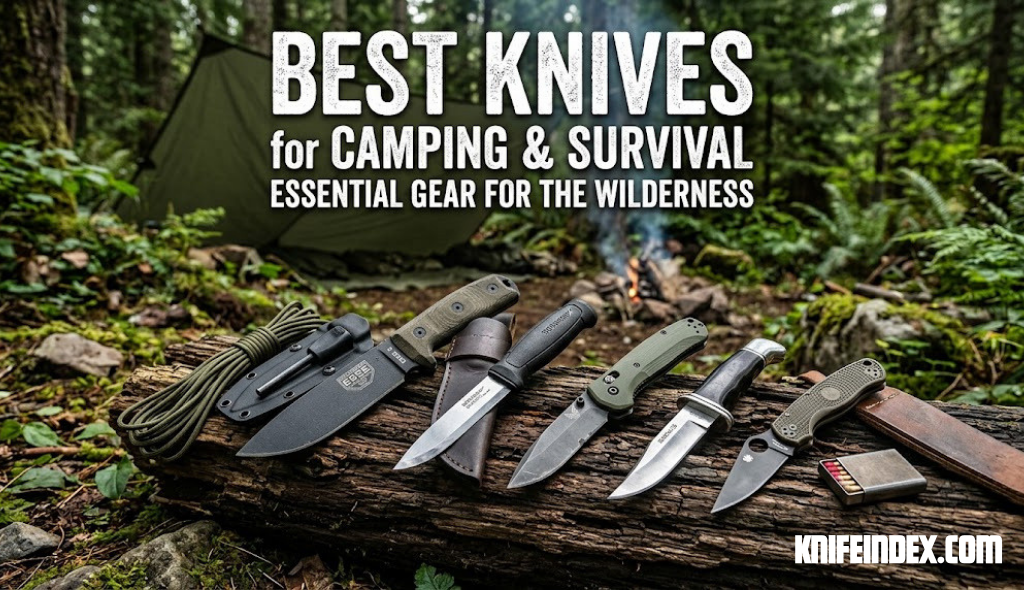
A no-nonsense field guide to the fixed-blade knives that actually earn a spot in your pack — tested against batoning, feathersticking, food prep, and the kind of abuse a trail trip throws at a blade.
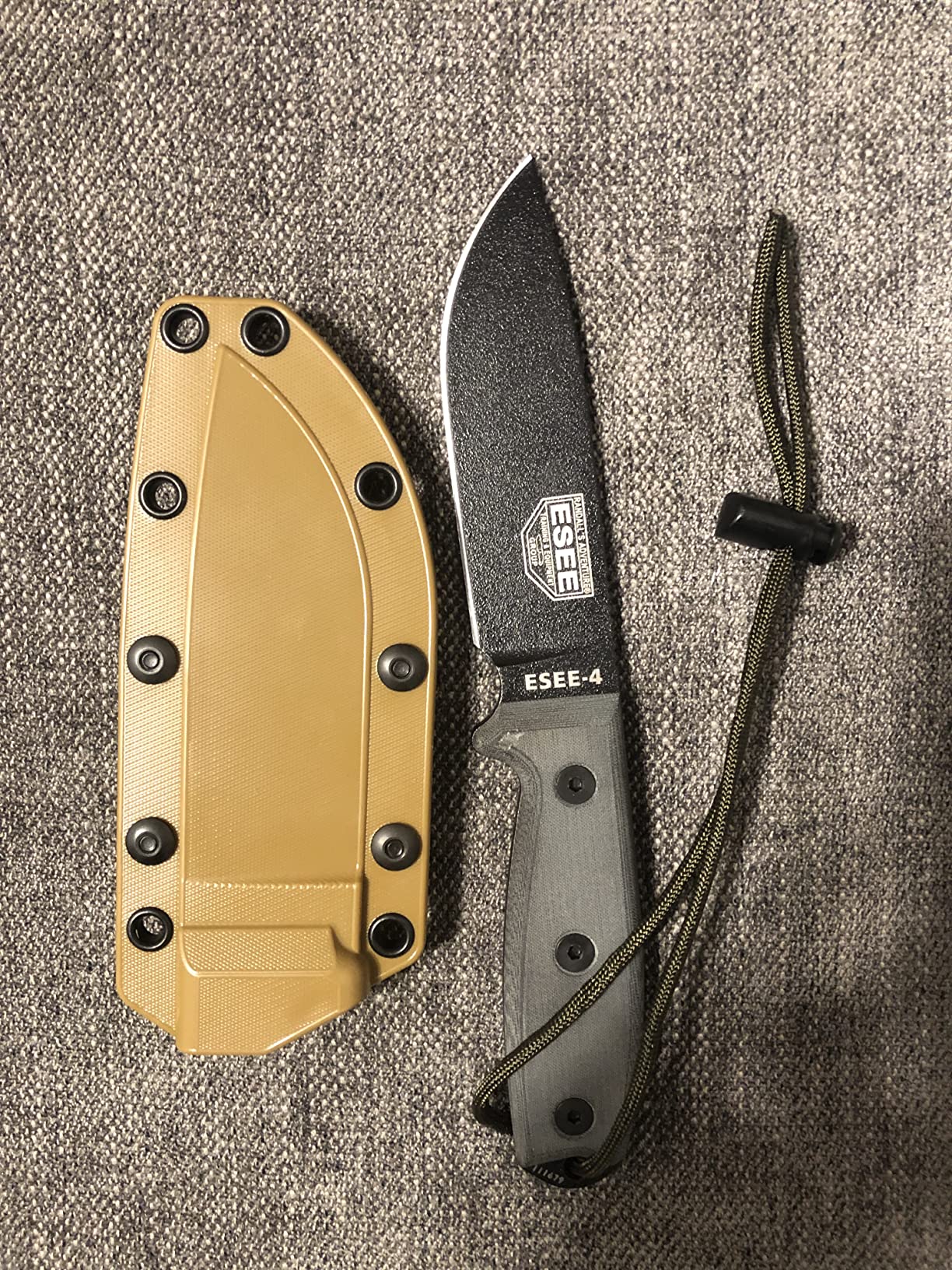
Why a Fixed Blade for Camping & Survival
Every folding knife enthusiast eventually gets asked the same question around a campfire: why not just bring a good pocket knife? The honest answer is that a folder and a fixed blade are built to solve different problems. A folding knife like the Benchmade Bugout is fantastic for everyday carry, opening packages, and light trail tasks, but the moment you introduce batoning through hardwood, prying, or repeated hard chopping, a pivot and lock become the weakest link in the system. A fixed blade has no moving parts to fail, no lock to loosen under shock, and — critically — a full tang that runs the entire length of the handle, giving you a single, unbroken piece of steel from tip to butt.
That structural simplicity is exactly why fixed blades dominate every serious camping and survival kit. When you’re miles from a hardware store and your knife needs to split kindling, dress game, cut cordage, and occasionally serve as an improvised pry bar, you want a tool that won’t fold on you — literally. This guide focuses on six fixed-blade knives that consistently show up in bushcraft classes, hunting camps, and survival courses, and we break down exactly where each one shines and where it falls short.
There’s also a psychological dimension to this that doesn’t get discussed enough. When you’re setting up camp in fading light, or you’re several hours into a hike and your hands are cold and clumsy, you want equipment that behaves predictably. A folding knife asks you to think about the lock every time you apply lateral pressure. A fixed blade asks nothing of you — you grip it and you cut. That predictability is worth more than any spec sheet number once you’re actually out in variable conditions, tired, and working by headlamp.
It’s also worth separating “survival knife” marketing from what actually matters in practice. A lot of knives sold under that label lean heavily on tactical styling — serrations, glass-breaker pommels, paracord-wrapped handles — without much regard for whether the blade geometry and steel actually perform the core survival tasks well. The six knives in this guide were chosen specifically because they prioritize function: a shape that carves cleanly, a spine that can take a baton strike, and a steel that can be resharpened without specialized equipment. None of them need a compass built into the pommel to earn their keep.
How We Chose These Knives
We didn’t pick these six knives because they’re popular on forums — we picked them because each represents a distinct approach to the same problem: surviving outdoors with one blade. Between them, they span budget-friendly stainless options, hard-use tactical designs, chopping-focused choppers, precision bushcraft tools, and a premium big-game option, which means nearly any camper reading this guide should find at least one that matches their actual needs rather than a generic “best overall” pick that ignores how differently people actually use their gear outdoors. Our criteria included steel performance (edge retention balanced against ease of field sharpening), tang construction, sheath quality, grip ergonomics in wet and gloved conditions, and — just as important — real-world price-to-performance. A $400 knife that outperforms a $70 knife by 10% isn’t automatically the better buy for most campers.
We also weighed how each knife handles the four core survival tasks: batoning through seasoned wood, carving fine feathersticks for fire starting, general utility cutting (rope, packaging, food prep), and heavier chopping when an axe or hatchet isn’t available. If you’re also considering a hatchet to pair with your knife, our breakdown of the Fiskars X7 vs X11 is worth a look, since a knife-and-hatchet combo covers almost every camp task a solo blade can’t handle alone.
Ergonomics got more weight in our evaluation than most buying guides give it. A knife that feels great in a warm showroom can feel completely different after four hours of use in 40-degree drizzle with cold, swollen fingers. We specifically looked at how each handle performed when wet, when gripped with light gloves, and when used for extended repetitive motions like carving a batch of feathersticks or processing a pile of kindling. A handle that causes hot spots or slips even slightly under those conditions dropped in our rankings regardless of how good the steel was.
Finally, we factored in what we’d call “recoverability” — how easy it is to restore a knife to peak condition after abuse. A blade that chips catastrophically on a hidden knot in firewood, or one that can’t be resharpened without a trip to a professional, is a liability in a genuine survival scenario. Every knife on this list can be brought back to a working edge with nothing more than a basic pocket stone, which matters far more in the field than a marginal edge-retention advantage that requires specialized sharpening equipment to maintain.
Quick Comparison Table
| Knife | Steel | Blade Length | Tang | Best For | Price Tier |
|---|---|---|---|---|---|
| Morakniv Garberg | Swedish 14C28N | 4.3 in | Full tang | All-around bushcraft | Budget-mid |
| Gerber StrongArm | 420HC | 4.8 in | Full tang | Batoning & hard use | Mid |
| KA-BAR Becker BK2 | 1095 Cro-Van | 5.25 in | Full tang | Chopping & camp chores | Mid |
| Fallkniven A1 | VG-10 laminate | 6.3 in | Full tang | Big-game & heavy field use | Premium |
| TOPS B.O.B. | 154CM | 4.4 in | Full tang | Bushcraft precision | Premium |
| Cold Steel Tactical Fixed Blade | SK-5 / high-carbon | ~6 in | Full tang | Tactical & heavy-duty tasks | Mid |
Every knife on this list uses a full tang, which is worth noting on its own — for a deeper explanation of why that matters, see our piece on full tang vs partial tang knives.
1. Morakniv Garberg Full Tang Fixed Blade Knife

Sweden’s most trusted bushcraft brand finally put a full tang under their legendary blade geometry — and the result is the knife most people should buy first.
The Garberg solves the one complaint bushcrafters had about Morakniv’s older Companion and Bushcraft lines: a partial or push tang that some users worried wouldn’t survive serious batoning. The Garberg’s 3mm-thick, 14C28N stainless blade runs the full length of the polymer handle, and the scandi-ground edge is exactly what you want for controlled feathersticking and clean wood carving. It’s not the flashiest knife here, but it’s arguably the most balanced — light enough to carry all day, tough enough to split kindling, and cheap enough that scratching it up in the field doesn’t sting.
14C28N is a Sandvik stainless steel that trades a bit of edge retention for genuinely excellent corrosion resistance and easy field sharpening — a fair trade for a knife that will see rain, river crossings, and fish cleaning. If you want a deeper dive on how this steel stacks up against a more premium option, check our 14C28N vs Nitro-V comparison, and if you’re weighing the Garberg against Morakniv’s cheaper folding line, our full Morakniv Garberg review covers long-term durability testing in more detail.
In hands-on use, the Garberg’s biggest strength shows up during extended carving sessions. The scandi grind rides flat against the wood with almost no guesswork, which makes it forgiving for beginners learning to make fire-starting feathersticks for the first time. Where thicker saber-ground blades tend to wedge and split wood unpredictably during fine carving, the Garberg glides through with a consistent, controllable curl. That said, don’t mistake “beginner-friendly” for “underpowered” — the 3mm blade stock has enough backbone to handle light batoning through split rounds of pine or birch without flexing or binding in the cut.
The polymer handle is where opinions split. It’s textured well enough for dry-hand use and holds up to years of abuse without cracking, but in a downpour or with sweaty palms, some users find it a touch less secure than a rubberized overmold like the one on the Gerber StrongArm below. A wrap of grip tape or a few passes with fine sandpaper on the polymer surface is a common and effective fix if you plan to use the knife in consistently wet climates. The sheath itself is a genuine highlight: it’s reversible for left- or right-hand carry, includes a small drainage hole so it doesn’t trap moisture against the blade, and locks the knife in with a firm friction fit that doesn’t loosen with age the way cheaper injection-molded sheaths sometimes do.
Pros
- Excellent edge geometry for carving and fire prep
- Full tang construction, unlike older Mora models
- Corrosion-resistant stainless steel
- Very affordable for a full-tang bushcraft knife
- Reversible polymer sheath with drainage hole
Cons
- Thin blade struggles with heavy chopping
- Handle can feel slick with wet or gloved hands
- Not ideal as a primary chopping tool
Check Price on Amazon
2. Gerber Gear StrongArm Fixed Blade Knife

Built with a rubberized diamond-textured grip and a spine designed for baton strikes, the StrongArm is the knife that shrugs off abuse other blades wouldn’t survive.
Gerber designed the StrongArm around military and first-responder feedback, and it shows. The blunt, squared spine is specifically shaped to take repeated hammer or baton strikes without deforming, which matters enormously when you’re splitting logs for a fire without an axe. The 420HC steel isn’t the toughest on this list on paper, but Gerber’s heat treatment gets solid performance out of it, and 420HC is dead simple to resharpen with a basic field stone — a real advantage when you’re weeks into a trip.
The handle geometry deserves a specific mention: the diamond-texture rubber overmold stays grippy even when soaked, which is more than can be said for some of the smooth polymer handles on cheaper knives. The MOLLE-compatible sheath also locks the knife in place with an audible click, so it won’t rattle loose on a pack frame during a rough hike. If you’re building out a broader hard-use gear kit, our writeup on the Fiskars X27 splitting axe pairs well with a StrongArm-style batoning knife for split-and-chop camp setups.
What stands out most about the StrongArm in extended field use is how little it seems to care about abuse. Repeated baton strikes onto the squared spine don’t roll or deform the edge geometry the way they might on a knife not designed with this in mind, and the coated finish holds up reasonably well against scuffs from stone and dry ground contact — though as with any coated blade, expect wear to show at the high-contact points near the edge over months of hard use. The 4.8-inch blade length sits right in the sweet spot for a do-it-all camp knife: long enough to baton effectively, short enough to still manage detail work like cleaning fish or notching tent stakes.
The full-tang pommel is flat and slightly extended, which makes it usable as a light hammer for tent stakes or fire-pit prep without transmitting excessive shock back into your grip. Combined with the secure sheath retention, this is a knife that inspires confidence when you’re working one-handed in awkward positions — reaching around a log to baton it, for example, or working by feel in low light. If your kit leans tactical, it’s also worth comparing this against a smaller backup option like the CRKT Squid, which several StrongArm owners carry as a secondary blade for fine tasks the StrongArm isn’t built for.
Pros
- Reinforced spine built specifically for batoning
- Grippy textured handle, even wet
- Secure MOLLE-compatible sheath with audible lock
- Easy to resharpen in the field
Cons
- Heavier than most knives on this list
- 420HC edge retention lags behind premium steels
- Coating can wear at contact points over time
Check Price on Amazon
3. KA-BAR Becker BK2 Campanion Fixed Blade Knife

Nicknamed the “little brother’s axe,” the BK2’s slab-sided, 0.25-inch-thick blade makes it the closest thing to a hatchet substitute you can wear on your belt.
Ethan Becker designed the BK2 specifically to bridge the gap between a knife and a small axe, and once you hold one, the intent is obvious. The blade stock is genuinely thick — a quarter inch of 1095 Cro-Van steel — which gives it serious chopping momentum for a knife its size. That mass comes at a cost: it’s not a delicate carving tool, and fine feathersticking takes more practice than it would with a thinner blade like the Garberg. But for splitting, chopping saplings, and general camp demolition work, few knives in this price range compete.
1095 Cro-Van is a high-carbon steel, which means excellent toughness and an edge that’s easy to restore in the field — but it will rust if you don’t wipe it down and oil it after wet use. This is a real consideration for camping in humid or coastal environments; our guide on how to prevent rust on knives is essentially required reading if you go this route. The BK2 also ships with a hard plastic sheath that, while not fancy, holds the knife securely and includes lashing holes for alternate carry setups.
The BK2’s factory edge is a common point of discussion in the bushcraft community — many users find it’s ground a bit obtuse out of the box, prioritizing durability over cutting efficiency. A single reprofiling session on a coarse stone transforms the knife noticeably, thinning the edge angle for cleaner slicing while retaining the strength needed for chopping. This is a worthwhile one-time investment of about twenty minutes that most serious owners make within the first few uses, and it’s a good excuse to get familiar with your sharpening setup before you actually need it in the field.
Where the BK2 truly separates itself from the rest of this lineup is raw chopping authority. Because the blade stock is so thick relative to its length, it carries momentum through a swing in a way thinner-bladed knives simply can’t replicate, letting it process small-diameter wood almost as efficiently as a compact hatchet. That thickness is also why it struggles with delicate tasks — trying to make paper-thin feathersticks with the BK2 takes real technique, since the wedge shape wants to split wood rather than shave it. Owners who love this knife typically pair it with a slimmer secondary blade, such as the Spyderco Delica 4, for the fine work the BK2 isn’t suited for.
Pros
- Thick blade stock excels at chopping and splitting
- Tough, high-carbon 1095 Cro-Van steel
- Comfortable Grivory handle, even with gloves
- Proven design used in military survival courses
Cons
- Carbon steel requires active rust prevention
- Too heavy and thick for fine detail work
- Factory edge often needs reprofiling
Check Price on Amazon
4. Fallkniven A1 Fine Edge Fixed Blade Knife
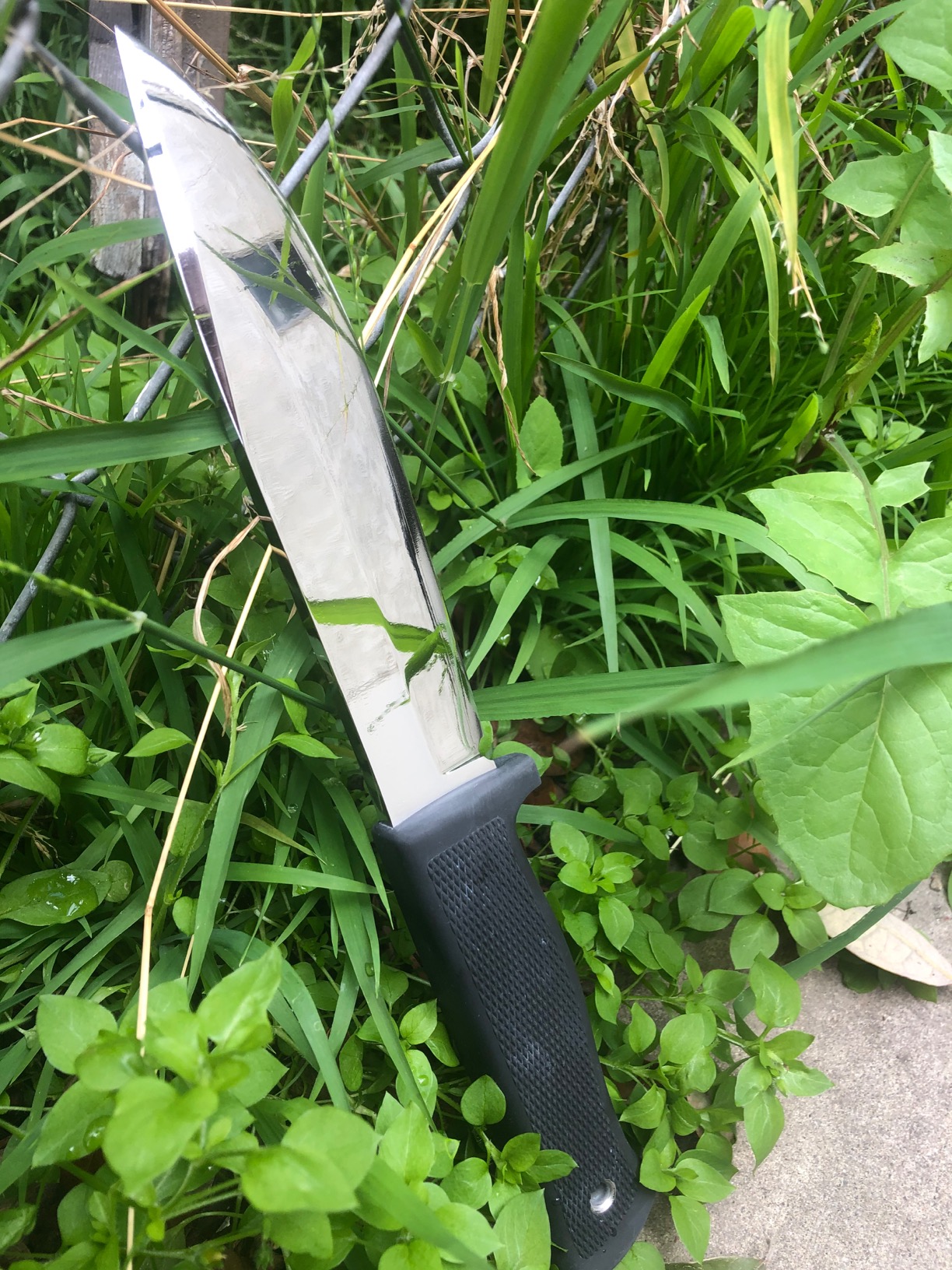
Originally developed for the Swedish military’s survival program, the A1 is oversized, laminated, and built for scenarios where failure isn’t an option.
The A1 is the largest, most expensive knife on this list, and it earns that position through construction quality rather than marketing. Its VG-10 laminate blade sandwiches a hard VG-10 core between two softer layers of stainless steel, giving you a cutting edge that holds up remarkably well while retaining enough flexibility in the outer layers to resist chipping under stress — a similar philosophy to laminated Japanese kitchen knives. If you’re curious how VG-10 compares to other popular stainless options, our VG-10 vs AUS-10 breakdown covers the tradeoffs in depth.
At 6.3 inches of blade, this isn’t a subtle knife, and it’s genuinely overkill for light camping trips. But for backcountry hunting, big-game field dressing, or extended wilderness travel where you might need to baton through thick logs or handle a large animal, the extra length and blade thickness pay off. The included leather sheath is old-world quality — properly stitched, riveted, and built to last decades rather than a single season. If field dressing is a priority for you, our guide to the best field dressing knife blade shapes explains why a drop-point profile like the A1’s works so well on game.
Handling the A1 makes its military pedigree obvious almost immediately — every dimension feels deliberate rather than decorative. The convex-ish grind (a Fallkniven signature) is thicker behind the edge than a pure scandi grind, which means it sacrifices a small amount of pure carving finesse in exchange for exceptional edge stability under lateral stress. In practice, this means you can twist the blade mid-cut, pry lightly, or push through a stubborn joint while field dressing without worrying about chipping the edge the way you might with a thinner-ground knife.
The Thermorun handle deserves specific praise for cold-weather performance. Unlike rigid polymer or wood handles that can feel slick or even brittle in freezing conditions, Thermorun stays slightly tacky and flexible down to genuinely low temperatures, which matters enormously for anyone hunting or camping into late fall and winter. Combined with the pronounced index finger guard, the A1 remains controllable even when your hands are numb from cold — a detail that separates a knife designed by people who’ve actually used one in bad conditions from one designed purely for a catalog photo. The only real downside beyond price is portability: at 6.3 inches of blade and a substantial full tang, this isn’t a knife you forget you’re carrying, which is exactly the point for its intended role.
Pros
- Laminated VG-10 offers excellent edge retention and toughness
- Premium leather sheath built to last
- Large blade handles big-game and heavy field tasks
- Comfortable Thermorun handle in cold and wet conditions
Cons
- Highest price on this list by a wide margin
- Large size is overkill for light day hikes
- Leather sheath needs occasional conditioning
Check Price on Amazon
5. TOPS Knives B.O.B. — Brothers of Bushcraft Fieldcraft Knife

Designed by bushcraft instructors, the B.O.B. is a purpose-built carving and fire-craft knife that treats fine control as a feature, not an afterthought.
Where the BK2 leans into chopping mass, the TOPS B.O.B. leans the opposite direction: a scandi-style grind, a slim profile, and 154CM stainless steel that holds a working edge far longer than mid-tier steels like 420HC while still being sharpenable with basic field stones. This is the knife you want in hand when the task is precision — carving a notch for a trap trigger, shaving fine curls for a fire, or doing detailed work on a bow drill kit. TOPS actually built input from bushcraft instructors into this design, and it shows in small details like the slightly flared pommel that prevents the knife from slipping out of a wet grip during extended carving sessions.
154CM is a stainless steel that punches above its price point for edge retention, and it’s a fair step up from the 8Cr13MoV steel found on many budget knives — our D2 vs 8Cr13MoV comparison is a good reference point if you’re shopping across a wider price range. If you’re new to bushcraft and want to understand the broader technique landscape this knife is built for, our core knife skills guide, while written with kitchen tasks in mind, covers grip and control fundamentals that carry over directly to fieldwork.
What really sets the B.O.B. apart in daily use is how little fatigue it induces during long carving sessions. Because the blade is thinner and lighter than the BK2 or A1, you can process a large batch of feathersticks, notch multiple trap components, or carve a full set of tent stakes without the wrist strain that heavier knives eventually produce. The scandi grind’s single-bevel geometry also means sharpening in the field is genuinely simple — lay the full bevel flat against a stone and maintain the existing angle, no guesswork about matching a secondary bevel required.
The one area where owners occasionally push back is bang-for-buck versus the Garberg: the B.O.B. costs meaningfully more for a similar-length blade, and casual campers who don’t specifically need premium edge retention may not notice enough day-to-day difference to justify the jump. But for anyone who takes bushcraft seriously — regularly building traps, feather sticks, notched joinery, or spending multiple seasons putting real hours on a blade — the difference in edge longevity between 154CM and 14C28N becomes very noticeable, and the B.O.B. earns its price over a longer ownership window.
Pros
- Excellent edge retention from 154CM steel
- Purpose-built for carving and fine bushcraft tasks
- Slim, lightweight profile for all-day carry
- Instructor-informed ergonomics
Cons
- Not built for heavy chopping or batoning thick logs
- Premium price for the blade length offered
- Kydex sheath retention can loosen slightly over time
Check Price on Amazon
6. Cold Steel Tactical Fixed Blade Knife

Cold Steel built its reputation on brutal durability testing, and this tactical fixed blade continues that tradition with a robust build meant to survive worst-case scenarios.
Cold Steel has long marketed its knives through extreme stress testing — chopping through car doors, prying frozen ice blocks, that sort of thing — and while your camping trip probably won’t be that dramatic, the underlying engineering translates directly into confidence for genuine survival use. This model’s handle uses an aggressive, high-traction texture that performs well in wet, muddy, or gloved conditions, and the blade geometry strikes a solid middle ground between the chopping-focused BK2 and the carving-focused B.O.B., making it a reasonable single-knife choice if you don’t want to specialize.
Where this knife differs from the others is intent: it’s built with self-defense and tactical scenarios partly in mind, in addition to camp tasks, which shows up in details like the blade’s aggressive point geometry and the secure, quick-draw sheath design. If you’re assessing knife legality for travel or carry in specific situations, our explainer on knife carry basics is a useful starting point, and our breakdown of survival neck knives covers smaller backup options that pair well with a primary tactical fixed blade like this one.
In practical camp use, the blade’s slightly modified saber grind gives it a nice middle ground: it carves better than the BK2 while chopping better than the B.O.B., which makes it one of the more genuinely “do everything reasonably well” options on this list rather than a specialist tool. That versatility is exactly why it appeals to people building a single-blade emergency kit rather than a curated collection — one knife, one sheath, one thing to grab when you need to move fast.
Cold Steel’s reputation for stress testing isn’t just marketing bravado; the company has a long, publicly documented history of subjecting its knives to abuse well beyond what any camping trip would demand, and while gimmicky, it does reflect a genuine design philosophy of building in margin. The tradeoff, as with the StrongArm, is weight and an aesthetic that leans more tactical than woodsy — something to consider if you’re outfitting a group trip where a more traditional-looking bushcraft knife might feel more appropriate. For solo survival preparedness or a bug-out kit, though, that tactical lean is a feature rather than a drawback.
Pros
- Extremely durable construction, stress-tested design lineage
- Aggressive, secure grip texture
- Versatile geometry for both camp tasks and defense
- Quick-draw sheath with solid retention
Cons
- Tactical aesthetic may feel excessive for casual camping
- Factory edge can be inconsistent out of the box
- Heavier than dedicated bushcraft knives
Check Price on Amazon
Blade Steel, Explained Simply
Steel choice is where most first-time buyers get overwhelmed, so let’s simplify it into three practical buckets. Stainless steels like the Garberg’s 14C28N or the A1’s VG-10 resist rust well and are ideal for wet environments, coastal trips, or anyone who doesn’t want to babysit their blade with oil after every use. High-carbon steels like the BK2’s 1095 Cro-Van sharpen up faster in the field and tend to be tougher against chipping, but they will develop surface rust if neglected — a fair tradeoff for many bushcrafters who prioritize edge performance and field sharpenability over convenience. Premium powder or CPM steels, while not featured heavily in this budget-conscious lineup, offer the best edge retention but usually need diamond stones to sharpen effectively.
For campers who obsess over this topic (and plenty do), our deeper comparisons like S35VN vs S45VN and MagnaCut vs M390 go further into premium territory, though for the six knives reviewed here, the practical difference in the field is smaller than steel snobs online will have you believe. What matters more is matching the steel’s maintenance profile to your actual trip conditions.
It’s worth understanding the two properties that actually define how a steel behaves in the field: hardness and toughness, and they exist in tension with each other. A harder steel holds a sharp edge longer between sharpenings, but it’s also more prone to chipping if you strike something unexpected, like a hidden knot or a rock embedded in a log. A tougher, slightly softer steel rolls or dulls a bit faster but resists chipping and is far more forgiving of the abuse a real survival scenario throws at a blade. Manufacturers pick a point on that spectrum through both alloy selection and heat treatment, which is why two knives using nominally similar steels can behave very differently in practice — heat treat quality matters as much as the steel name printed on the box.
Corrosion resistance is the other axis worth understanding, separate from hardness and toughness entirely. Stainless steels get their rust resistance from a minimum chromium content (typically around 13% or higher), which forms a passive oxide layer that protects the metal beneath. High-carbon steels either lack that chromium content or have too little of it to form a fully protective layer, which is why they need a light coat of oil after exposure to moisture. Neither category is objectively “better” — a stainless blade left wet in a pack for days won’t develop the surface rust that a high-carbon blade would, but many bushcrafters actually prefer the way carbon steel takes and holds an extremely keen edge for fine carving work, accepting the maintenance tradeoff as worthwhile.
One more practical note: don’t over-index on steel spec sheets when comparing knives at this price range. The difference between 14C28N, 420HC, 1095, 154CM, VG-10, and SK-5 in real-world camping use is measured in how many extra strokes on a stone you’ll need after a weekend trip — not in whether the knife will fail you. All six steels featured in this guide are proven, widely used choices with decades of field history behind them. Buy based on grind geometry, handle ergonomics, and sheath quality first, and treat steel type as a secondary — if still meaningful — consideration.
Common Mistakes First-Time Buyers Make
After years of watching people buy their first serious survival knife, a few patterns show up again and again. The most common mistake is oversizing: buying the biggest, most dramatic-looking blade under the assumption that bigger automatically means more capable. In reality, an oversized knife is harder to control for fine tasks, tires your wrist faster during extended carving, and is genuinely awkward to carry comfortably on a belt for a full day. Unless you have a specific need — like the big-game field dressing the Fallkniven A1 is built for — a 4 to 5-inch blade covers the overwhelming majority of camp tasks more efficiently than a 7-inch chopper.
The second common mistake is ignoring the sheath entirely. Buyers pour attention into blade steel and geometry, then get stuck with a sheath that rattles loose, retains moisture against the blade, or lacks a secure locking mechanism. A knife you can’t trust to stay put on your belt during a scramble over rocks, or one that traps water against a carbon-steel blade, undermines even the best blade design. Always check sheath retention and drainage before finalizing a purchase, not after.
The third mistake is skipping the break-in sharpening. Almost every knife, including several on this list, ships with a factory edge that’s either overly conservative for durability reasons or simply inconsistent from the factory grinding process. Spend twenty minutes on a stone before your first trip rather than discovering mid-hike that the edge isn’t performing the way you expected. And finally, buyers frequently underestimate maintenance commitment — picking a high-carbon blade for its edge performance without accounting for the discipline required to keep it dry and oiled. Be honest with yourself about how diligent you’ll actually be in the field, and let that inform stainless versus carbon steel as much as any performance spec.
Tang, Grind & Handle Materials
Every knife reviewed here uses a full tang, meaning the steel runs uninterrupted from tip to pommel beneath the handle scales. This is non-negotiable for a serious survival knife — a full tang can absorb baton strikes and prying leverage that would snap a partial or rat-tail tang clean off. Grind geometry matters just as much: a scandi grind (Garberg, B.O.B.) gives you a flat bevel that’s fantastic for controlled carving and easy field sharpening, while a saber or hollow grind (StrongArm, BK2, Cold Steel) sacrifices some carving precision for added strength behind the edge during chopping and prying.
Handle material affects grip security more than most buyers expect. Textured rubber and thermoplastic overmolds (Gerber, Cold Steel) perform best in wet or gloved conditions, while Micarta and G-10 (common on premium knives) offer excellent traction with added durability against UV and moisture over years of use. If you’re curious how handle materials compare across a wider range of knives, our handle materials breakdown covers wood, G-10, Micarta, and plastic in more detail.
Beyond material, pay attention to handle shape and finger guard design. A pronounced finger guard, like the one on the Fallkniven A1, prevents your grip from sliding forward onto the blade during a hard forward push cut — a real safety consideration when your hands are cold or wet. On the other hand, an overly aggressive guard can get in the way of certain grips used for detail carving, like a choked-up pinch grip near the blade for fine control. Most of the knives in this guide strike a reasonable middle ground, but if you have larger or smaller hands than average, it’s worth handling a knife in person, or at minimum checking the listed handle circumference, before committing.
Pommel design is a smaller detail that still matters more than it might seem. A flared or slightly extended pommel, like the ones found on the StrongArm and the B.O.B., gives you a mechanical stop that keeps the knife from sliding out of your hand during a hard swing, and it doubles as a light hammering surface for tent stakes or breaking apart kindling. A flush or rounded pommel looks cleaner but offers less positive retention in a hard-swing grip — a small tradeoff worth knowing about before you buy.
Sheaths and Carry Options
A great blade with a mediocre sheath is a genuine liability in the field — a knife that rattles loose from a poorly fitted sheath during a hike can be lost for good. Kydex and hard polymer sheaths (Morakniv, KA-BAR, Cold Steel) offer reliable, weather-resistant retention with an audible “click” on many designs, and they hold up better than leather in wet or muddy conditions. Leather sheaths (Fallkniven) look and feel premium and mold to the blade over time, but they require occasional conditioning and don’t love extended submersion.
MOLLE compatibility, as seen on the Gerber StrongArm, is worth prioritizing if you already run a pack or belt system with MOLLE webbing, since it lets you position the knife exactly where your hand naturally falls. Whichever sheath style you choose, always test the retention with the knife upside down and shaken gently before trusting it on a real trip.
Carry position is another underrated decision. A traditional belt sheath works fine for car camping and day hikes, but if you’re wearing a hip belt on a loaded backpack, a belt-carried knife can dig in uncomfortably or become hard to reach. Many backpackers opt instead for a horizontal carry position on the pack’s shoulder strap, or a drop-leg rig that keeps the knife accessible without competing with the pack’s hip belt. Try your carry setup on a short shakedown hike with a loaded pack before committing to it for a multi-day trip — what feels fine standing in a gear shop can become genuinely uncomfortable four hours into a real hike.
Lastly, consider retention redundancy. A sheath with only friction retention (no strap, no active locking mechanism) is fine for careful day use, but if you’re doing anything involving scrambling, climbing, or unpredictable movement, a secondary retention strap adds real peace of mind. Several of the knives here, including the Cold Steel and Gerber options, include this as standard, which is one more reason they show up frequently in more rugged, hard-use kits.
Field Maintenance & Rust Prevention
Regardless of which knife you choose, maintenance habits matter more than steel choice for long-term performance. Wipe the blade dry after any contact with water, food acids, or sap, and apply a light coat of mineral oil or a dedicated knife oil before storing it — this is especially critical for the carbon-steel BK2. If surface rust does appear, don’t panic; it’s usually cosmetic and removable. Our guides on how to get rust off a knife and the more detailed rust removal walkthrough cover safe methods that won’t damage the existing edge or finish.
Sharpening in the field doesn’t need to be complicated. A small diamond or ceramic field stone, paired with consistent stroke angles, will maintain any of these six knives indefinitely. If you want to build a proper sharpening kit before your next trip, our diamond vs ceramic sharpening system guide breaks down which stone type suits which steel, and our roundup of the best knife sharpeners covers portable options that pack down small enough for a backpack.
Beyond blade care, don’t neglect the sheath and any handle materials that can degrade over time. Leather sheaths benefit from an occasional application of leather conditioner or neatsfoot oil, especially after repeated wet exposure, to prevent cracking and stiffening. Kydex and polymer sheaths are essentially maintenance-free, but it’s worth periodically checking the retention screws or rivets on any adjustable-tension sheath, since these can loosen slightly with heavy use over a season. If your knife has a wood or Micarta handle rather than the synthetic options featured in this guide, a light coat of mineral oil on wood handles a few times a year prevents drying and cracking, particularly if you camp in dry, low-humidity climates.
A basic field maintenance kit doesn’t need to be elaborate: a small bottle of mineral oil, a microfiber cloth, and a compact diamond or ceramic stone cover essentially every maintenance task you’ll encounter on a trip. Keep this kit in the same pocket or pouch every time, so checking and maintaining your blade becomes an automatic part of breaking camp rather than an afterthought you remember only after rust has already set in.
Buyer’s Guide: Matching a Knife to Your Trip
Not every camping trip demands the same knife, and buying the “best” knife on paper isn’t always the right call for your actual use case. Here’s how we’d match each knife type to a trip profile:
Weekend car camping or day hikes
The Morakniv Garberg is genuinely all most casual campers will ever need. It’s light, affordable, and handles everything from food prep to light fire craft without demanding much skill or maintenance discipline.
Backcountry backpacking, multi-day trips
The TOPS B.O.B. or the Garberg both make sense here, since weight and precision matter more than brute chopping power when you’re carrying everything on your back for days at a time.
Hunting and big-game field dressing
The Fallkniven A1’s size and steel laminate structure make it the clear choice — it has the reach and edge stability to handle field dressing large game without dulling quickly.
Bug-out bags and true survival scenarios
The KA-BAR BK2 or the Cold Steel Tactical Fixed Blade both prioritize durability and chopping capability over finesse, which is exactly what an emergency-focused kit should value.
If your survival kit also includes a folding backup knife, our reviews of the Ontario RAT-1 and the Ontario RAT-2 cover two of the most trusted budget folders to pair with a fixed-blade primary.
Budget-conscious buyers
If cost is the deciding factor, the Morakniv Garberg once again rises to the top, delivering full-tang construction and a genuinely capable steel at a price point most of the other knives on this list can’t match. It’s proof that you don’t need to spend at the premium end to get a knife that will perform reliably for years of regular camping trips.
First-time knife buyers building a kit from scratch
For someone new to bushcraft and outdoor knives generally, we’d steer toward either the Garberg or the Gerber StrongArm. Both are forgiving, well-documented (meaning plenty of tutorials and community knowledge exist for them), and won’t punish a learning curve the way a premium, thinner-edged knife might if mishandled while a new user is still developing technique.
Whatever you land on, remember that the “best” knife is ultimately the one that matches your actual trips rather than the one that wins the most spec-sheet arguments online. A $400 knife that sits in a drawer because it feels too precious to risk scratching provides less real-world value than a $70 knife you actually carry and use with confidence.
Gear That Pairs Well With a Survival Knife
A great fixed blade rarely operates in isolation. Most experienced campers build a small, complementary system rather than relying on a single tool for every task. A folding knife as a backup or fine-detail companion is one of the most common additions — models like the Civivi Elementum or the Spyderco Tenacious are compact, affordable, and handle everyday cutting tasks so your primary fixed blade isn’t taking unnecessary wear from things like opening food packaging or trimming rope.
For anyone who expects to process significant amounts of firewood, a hatchet remains the most efficient tool for the job, with a knife serving as a precision complement rather than a chopping primary. Our comparisons of the Fiskars vs Estwing and Gransfors Bruk vs Hults Bruk both dig into how different hatchet designs handle shock absorption and edge geometry, which matters a lot if you’re regularly splitting seasoned hardwood.
Finally, don’t overlook proper storage and transport for your knife when it’s not in use at home. Improper storage is a leading cause of avoidable rust and edge damage between trips. If you keep a small home collection of fixed blades and folders, a guide like our how to make a knife block piece, while written with kitchen knives in mind, covers storage principles — dry environment, no blade-on-blade contact, good airflow — that apply just as well to an outdoor knife collection.
Frequently Asked Questions
What’s the best all-around knife for camping and survival?
For most people, the Morakniv Garberg offers the best balance of price, weight, and versatility. It handles food prep, fire craft, and light bushcraft tasks well without the maintenance demands of a carbon-steel blade, and its full-tang construction means it won’t let you down if you need to baton through wood for an emergency fire. That said, “best” ultimately depends on your typical trip type — hunters and backcountry travelers may find the larger Fallkniven A1 better suited to their needs.
Do I need a full tang knife for survival use?
Yes, for any knife that might see batoning, prying, or hard chopping. A full tang runs the entire length of the handle and dramatically reduces the risk of the blade snapping or separating under stress compared to partial or rat-tail tangs. Partial-tang and stick-tang knives can still be perfectly good for light utility cutting, but they’re a genuine risk to rely on as your only blade in a true survival situation where you can’t predict what tasks you’ll need to perform.
Is stainless or carbon steel better for a survival knife?
Neither is universally better — it depends on conditions. Stainless steel (like 14C28N or VG-10) resists rust and suits wet environments, while high-carbon steel (like 1095) sharpens faster in the field and holds up well to chopping, but needs more diligent rust prevention.
What blade length is ideal for a camping knife?
Most experienced campers land somewhere between 4 and 5 inches for general use, which balances control for carving with enough length for light chopping. Larger blades like the 6.3-inch Fallkniven A1 are better suited to hunting or heavy-duty field tasks.
Can these knives be used for batoning firewood?
Yes, all six knives reviewed here are full-tang and rated for batoning, though the KA-BAR BK2 and Cold Steel Tactical Fixed Blade are best suited to heavier splitting thanks to their thicker blade stock.
How often should I sharpen my survival knife?
It depends on use, but most campers touch up their edge every few days of active field use with a small stone, and do a full resharpening once or twice per season. Steels like 14C28N and 154CM stay serviceable longer between sharpenings than softer steels.
What’s the difference between a scandi grind and a saber grind?
A scandi grind has a single flat bevel that meets the edge directly, making it excellent for controlled carving and easy resharpening. A saber or hollow grind adds a secondary bevel that increases strength behind the edge, better suited to prying and heavier chopping.
Are Kydex sheaths better than leather for camping?
Kydex and hard polymer sheaths tend to perform better in wet or muddy conditions and offer more reliable, low-maintenance retention. Leather sheaths look and age beautifully but need occasional conditioning and are less ideal for extended wet exposure.
Is a fixed blade or folding knife better for survival situations?
A fixed blade is generally preferred as a primary survival tool because it has no moving parts to fail and can handle far more abuse. That said, carrying a folding knife like the CRKT Pilar as a secondary backup is a smart, common practice.
How much should I expect to spend on a good survival knife?
Reliable full-tang survival knives start around the price of the Morakniv Garberg and climb toward premium territory with knives like the Fallkniven A1. You don’t need to spend at the top of that range to get a genuinely capable knife.
Can I use one of these knives for hunting and field dressing?
Yes, though the Fallkniven A1’s size and blade geometry make it the strongest choice for field dressing large game, while smaller knives like the Garberg work fine for smaller game and general trail use.
What blade length is too big for practical camping use?
Once a fixed blade climbs past roughly 7 inches, most campers find it starts working against them for everyday tasks — food prep, carving, and fine cutting all become noticeably harder to control. Longer blades like the Fallkniven A1’s 6.3 inches sit near the upper practical limit and are best justified by a specific need, such as large-game field dressing, rather than general camp use.
Should I buy one knife or build a multi-knife kit?
Many experienced campers eventually settle on a two-knife system: a full-tang fixed blade for heavy tasks and batoning, paired with a compact folding knife for light, everyday cutting. This spreads wear across two tools and means you always have a backup if one is lost or damaged mid-trip.
Final Verdict
There isn’t a single “best” knife among these six — there’s a best knife for your specific trip. If you want one blade that does almost everything well without breaking the bank, the Morakniv Garberg is the easiest recommendation on this list. If your trips regularly involve batoning and chopping without an axe, the KA-BAR Becker BK2 or Gerber StrongArm will serve you better. Hunters and serious backcountry travelers who want a knife built to last generations should look hard at the Fallkniven A1, while dedicated bushcrafters who value precision carving over brute force will get more out of the TOPS B.O.B. And if your kit needs to double as a tactical or defense-capable tool, the Cold Steel Tactical Fixed Blade rounds out the lineup nicely.
Whichever you choose, remember that a full tang, a sensible steel for your climate, and a secure sheath matter more than marketing claims. Take care of the edge, keep it dry, and any of these six knives will outlast the trip you’re packing it for.
It’s also worth resisting the temptation to buy based purely on specifications you’ve read online without considering how a knife actually feels in your hand and fits your specific trips. Two knives with nearly identical steel and blade length can feel completely different depending on handle shape, balance point, and sheath design — details that only really reveal themselves through use. If you’re on the fence between two options on this list, lean toward whichever one matches the tasks you’ll actually be doing most often, not the one with the most impressive-sounding spec sheet.
One last piece of practical advice: however capable your knife is, it’s still just one part of a broader outdoor skill set. Knowing how to build a fire, purify water, and navigate without electronics matters far more than which steel is stamped into your blade. A great knife is a force multiplier for those skills, not a substitute for them — so invest time in practicing with whichever knife you choose long before you actually need to rely on it.
Check Price on Amazon