What Is Damascus Steel and How Is It Made?
A deep, practical look at the metal behind the mesmerizing wavy patterns on modern kitchen and pocket knives — where it came from, how bladesmiths forge it today, and what it actually means for the knife in your hand.
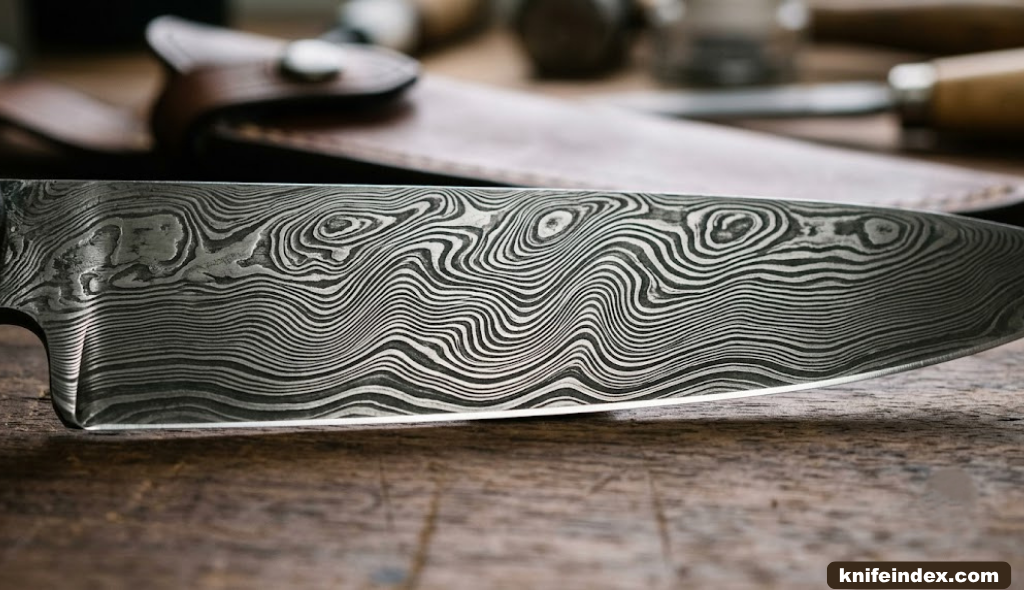
Origins of Damascus Steel
Few materials in the history of edged tools carry as much mystique as Damascus steel. The name conjures images of ancient sword markets, legendary sharpness, and blades that could supposedly cut through a silk scarf floating in the air. The story begins not in modern workshops but in the trading cities of the Middle East, where swords made from a material called wootz steel were bought, sold, and prized for their unusual rippling surface pattern and reputation for holding a keen edge.
Wootz steel itself was originally produced in southern India and Sri Lanka more than a thousand years ago, using a crucible process that trapped tiny amounts of carbon and trace elements inside the steel as it slowly cooled. When smiths later forged and polished these ingots into blades, the internal structure created faint banding and swirling patterns on the surface. Traders carried this crucible steel along caravan routes into the city of Damascus, which became a major hub for buying, working, and reselling these blades — and the city’s name eventually became attached to the steel itself, even though it was rarely produced there.
For anyone curious about how blade steel has evolved from these early crucible techniques into the alloys used today, it’s worth reading through the history of Japanese knife making, which follows a parallel but distinct evolution of layered and folded steel on the other side of the trade routes.
Historical accounts of wootz blades often describe test cuts that sound closer to legend than fact — slicing through a dropped silk handkerchief, or shaving hair cleanly off an arm without dragging. Some of that reputation was almost certainly embellished by traders eager to justify high prices, but modern metallurgical study of surviving wootz artifacts has found something genuinely unusual happening at a microscopic level. Researchers examining old wootz blades under electron microscopes discovered aligned carbide structures that likely contributed to both edge sharpness and the surface pattern’s visibility. Whether every claim about ancient wootz superiority holds up to modern scrutiny is still debated, but there’s enough real metallurgical substance behind the legend to explain why the reputation spread as far and lasted as long as it did.
The trade routes themselves played almost as large a role in the steel’s fame as the metallurgy. Damascus sat at a crossroads between the Indian subcontinent, the Middle East, and Europe, which meant that wootz ingots arriving from the south were reforged, shaped, and resold by local smiths before continuing on to buyers across the Mediterranean and beyond. European travelers returning home in the medieval period brought back stories, and sometimes actual blades, describing steel unlike anything being produced in contemporary European forges. That cultural exchange cemented “Damascus” as shorthand for exceptional, exotic blade quality — a reputation that, centuries later, still sells knives today even though the actual manufacturing process changed entirely.
It’s also worth noting that plenty of cultures independently developed their own layered or folded steel traditions without any direct link to wootz or Damascus trade. Northern European pattern-welding on Viking-era swords, and the folded steel techniques used in traditional Japanese sword and blade making, both arrived at visually similar layered effects through completely separate paths. This is part of why modern bladesmiths sometimes bristle at calling every layered blade “Damascus” — the term technically belongs to one specific historical lineage, even though it’s now used as a catch-all marketing term for any pattern-welded steel.
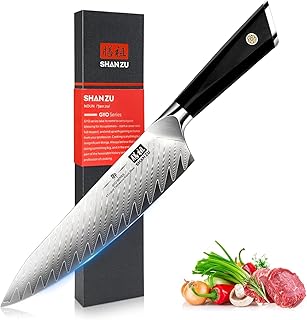
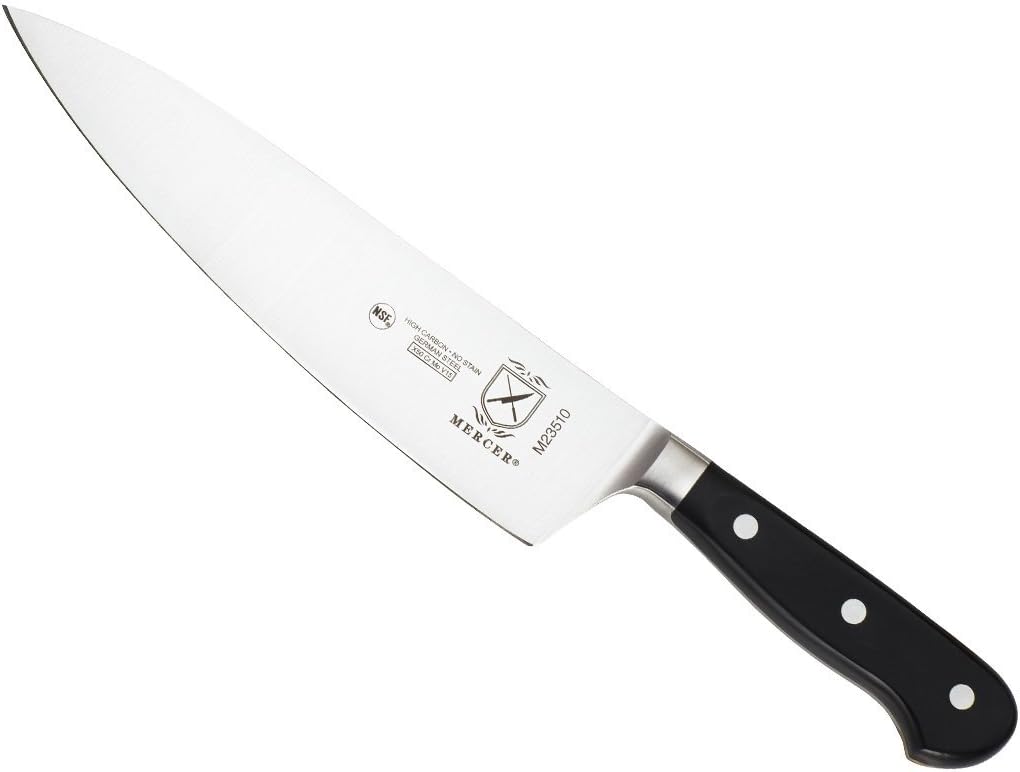
See a genuine hand-forged Damascus chef knife in action — layered steel, full tang construction, and a hardness rating built for daily kitchen work.
Check Price on AmazonHistoric Wootz vs Modern Pattern-Welded Steel
Here’s where a lot of confusion sets in, because “Damascus steel” today does not mean the same thing it meant a thousand years ago. The original wootz crucible process was lost sometime in the 18th century — the specific ore sources, smelting conditions, and trace-element chemistry that produced the characteristic banding simply weren’t documented well enough to survive, and the trade routes and furnace techniques that supported it eventually disappeared. Metallurgists and hobbyist smiths have since reverse-engineered approximations of wootz, but true historical wootz production is essentially extinct.
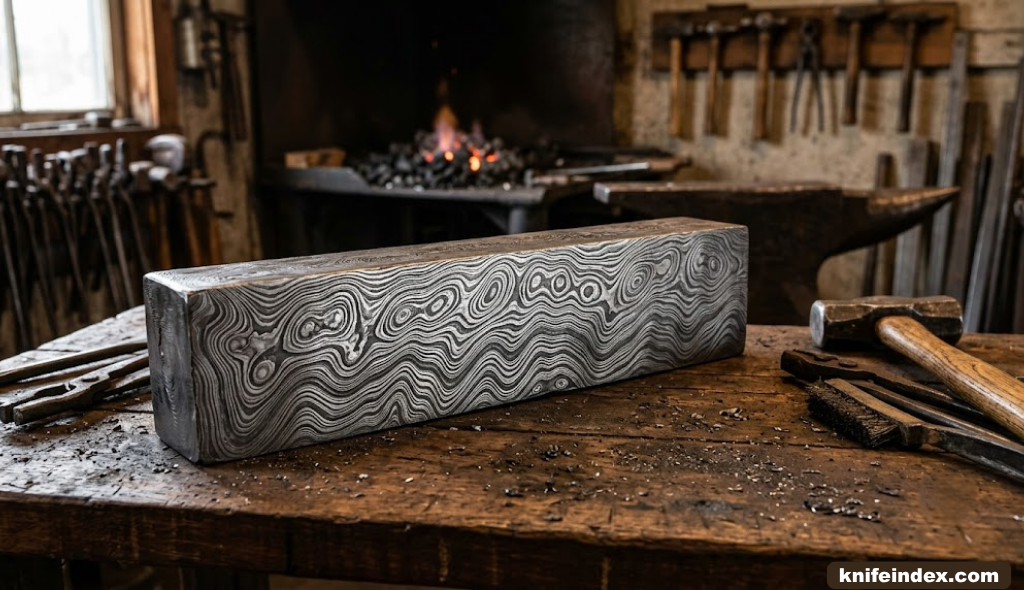
What’s sold as “Damascus steel” on knives today is almost always pattern-welded steel, sometimes called modern Damascus. This is a completely different manufacturing process that achieves a visually similar rippling or wavy surface by stacking and forge-welding together alternating layers of two or more different steel alloys, rather than relying on the internal crystalline structure of a single crucible-melted ingot. The name stuck around because the visual result — a flowing, organic pattern across the blade face — resembles what old Damascus-traded wootz blades looked like.
This distinction matters for shoppers. When a listing says “Damascus steel,” it is describing pattern-welded, layered construction, not a rediscovered ancient alloy. Understanding the difference between high-carbon and stainless steel chemistry helps make sense of why modern Damascus makers choose the specific alloy pairs they do.
The loss of the original wootz process is one of the more interesting footnotes in metallurgical history. Several theories try to explain why it disappeared: some historians point to changing trade routes cutting off access to the specific ore deposits believed to contain trace elements like vanadium that may have influenced the steel’s microstructure; others point to shifting demand as firearms replaced swords, removing the economic incentive to preserve a slow, labor-intensive process; and some simply argue that the knowledge was closely guarded within small groups of smiths and died with them when those lineages ended without apprentices. Attempts to recreate true wootz using historically accurate ore sources and smelting methods have had partial success in research settings, but nothing has scaled into commercial production, which is why every “Damascus” knife sold today, from budget kitchen sets to five-figure custom pieces, uses the pattern-welding method instead.
It’s a reasonable question to ask why pattern-welding became the accepted substitute rather than some other approach. Part of the answer is practical: forge-welding separate steel bars together is a well-understood blacksmithing skill that doesn’t require rediscovering lost crucible chemistry, and it reliably produces a similar visual result once etched. The other part of the answer is aesthetic — pattern-welded Damascus can actually be manipulated more deliberately than wootz ever could, since a smith folding and twisting layered bars has direct control over the pattern’s shape in a way that wootz’s naturally occurring bands never allowed. In some respects, modern Damascus is a more artistically flexible material than the steel it’s named after, even if it can’t claim the same unbroken historical pedigree.
How Damascus Steel Is Made Today
Modern pattern-welded Damascus is a genuinely impressive feat of hands-on metalworking, even though it isn’t the “lost ancient technique” marketing copy sometimes implies. Here is the general process bladesmiths follow, whether they’re a boutique custom maker or a factory producing Damascus-clad kitchen knives at scale. It’s worth walking through each stage in some detail, because understanding where the labor and skill actually go a long way toward explaining both the price difference between hand-forged and factory Damascus, and why two knives that look similar on the surface can perform very differently once you start cutting with them.
1. Selecting the Steel Layers
The smith starts by choosing at least two, and often three or more, different steel alloys that will contrast visually once etched. A common approach pairs a higher-carbon steel with a lower-carbon or nickel-alloyed steel, because carbon content and alloying elements etch at different rates and produce the light and dark banding that gives Damascus its signature look. The specific alloys matter enormously for the finished knife’s performance, which is why steel comparisons like D2 vs 8Cr13MoV or VG10 vs AUS10 are useful reading even outside the Damascus conversation.
2. Stacking and Forge Welding
The chosen steel bars are cleaned, stacked in an alternating sequence, and bound together, often by tack-welding the edges or wiring the stack so it holds together under heat. The stack is heated in a forge to welding temperature, then hammered — either by hand or with a power hammer — to fuse the layers into a single solid billet. This forge welding step is the technical heart of the whole process; too cold and the layers won’t bond, too hot and the steel can burn and become brittle.
Getting this step right takes real, hard-earned skill. Smiths typically coat the stack with a flux — often borax-based — before heating, which helps prevent oxidation from forming a scale layer between the plates that would stop them from bonding properly. The billet is watched closely as it heats, judged by eye based on color and the way sparks fly off the surface, since forge welding temperature sits in a fairly narrow window for most tool steels. Once it’s ready, the smith has only a few seconds to get the billet under the hammer before it cools below welding temperature, which is part of why experienced Damascus makers often work with an assistant or a power hammer rather than attempting the whole sequence solo. A failed weld isn’t always obvious immediately — sometimes a poorly bonded seam only reveals itself later, during grinding or etching, when a layer separates or a void shows up as a dark flaw in the pattern.
3. Folding and Drawing Out
Once the initial billet is welded solid, the smith typically cuts, folds, and re-welds it multiple times. Each fold doubles the layer count, so a billet that started with a dozen layers can end up with several hundred by the time folding is finished. More folds generally mean a finer, tighter pattern, while fewer folds produce bolder, more visible bands. The billet is then drawn out — hammered longer and thinner — into a bar roughly the size and shape needed for the blade blank.
Each fold-and-weld cycle carries some risk of introducing a flaw, which is why smiths generally stop at a number of folds that balances pattern fineness against the increasing chance of a bad weld somewhere in the stack. A billet folded six times from an initial 12-layer stack ends up with roughly 768 layers — the math compounds quickly, which is how some “high layer count” marketing claims on production knives reach numbers in the hundreds without requiring dozens of manual fold cycles. Factory Damascus production often automates this stage with hydraulic presses and controlled induction heating, which produces far more consistent results than hand-hammering but sacrifices some of the organic irregularity that collectors prize in fully hand-forged pieces.
4. Pattern Development
This is where the visual character of the knife takes shape. The smith can manipulate the pattern by twisting the bar, carving grooves into it before further forging, or pressing dies into the surface, all of which distort the internal layers in controlled ways. Different manipulation techniques produce the ladder, raindrop, twist, and feather patterns discussed in the next section.
This stage is arguably where the craft becomes genuinely artistic rather than purely technical. A smith deciding where to carve a groove, how many degrees to twist a section of bar, or how deep to press a patterning die is making a series of creative choices that will only become fully visible once the blade is ground and etched much later — meaning a lot of the pattern-development work happens somewhat blind, based on experience and a mental model of how the internal layers will shift once the bar is drawn out further. Experienced makers develop an intuitive sense for this, but it’s also why early attempts by less experienced smiths sometimes produce muddier, less distinct patterns than intended, even when the underlying forge-welding was technically sound.
5. Shaping the Blade
The patterned billet is forged or stock-removed into the rough shape of the finished blade — establishing the profile, the bevels, and the tip geometry. Some makers forge the edge geometry close to final shape at the anvil; others grind it in afterward on a belt grinder. This stage overlaps heavily with general blade geometry principles that apply to any knife, Damascus or not.
Choosing between forging the profile versus stock-removal grinding it from a flat bar is largely a matter of workflow and equipment rather than a hard technical requirement. Forging can save material and work-harden the steel slightly as it’s shaped, while stock removal offers more precise, repeatable control over dimensions, which is why many factory production lines favor it even for otherwise hand-crafted-looking Damascus blades. Either approach can produce an excellent final knife; what matters more is how carefully the maker controls symmetry and edge-to-spine thickness as material is removed, since uneven grinding at this stage is difficult to correct later without distorting the visible pattern.
6. Heat Treatment and Hardening
Because a Damascus blade contains at least two different alloys, heat treating it properly is more complex than treating a single mono-steel blade. The final cutting performance of the knife is determined almost entirely at this stage — quenching the blade to lock in a hard martensitic structure, then tempering it back to relieve internal stress and add toughness. This is where Rockwell hardness is established, and it’s a critical, often overlooked part of judging Damascus knife quality — a beautiful pattern on a poorly heat-treated blade will still perform badly.
The complexity comes from the fact that different steel alloys often have different ideal quenching temperatures and cooling rates. A smith working with a 1095 and 15N20 pairing, for example, has to choose a heat-treatment schedule that works reasonably well for both steels simultaneously, since they’re bonded together and will be quenched as a single unit. This is one reason serious bladesmiths spend so much time testing and refining their heat-treatment process for a given steel combination — get it wrong, and even a visually stunning billet turns into an underperforming, or in worst cases genuinely fragile, finished knife. Production knife makers dealing with clad construction sidestep some of this complexity by using a hard core steel wrapped in a soft, low-carbon cladding that doesn’t need to reach full hardness at all, since only the exposed core at the edge needs to be hardened for cutting performance.
7. Grinding, Polishing, and Etching
After hardening, the blade is ground to its final bevel and polished smooth. At this point the pattern is invisible — it only becomes visible once the blade is etched, usually in a mild acid solution such as diluted ferric chloride. The acid reacts differently with each steel type in the layers, darkening the higher-carbon or higher-chromium layers at different rates and revealing the contrast pattern. Some makers follow etching with a light buff to bring out sharper contrast, or apply a clear coating to protect the finish from fingerprints and moisture.
8. Handle Fitting and Final Assembly
The last stage is fitting the handle — whether wood, G-10, Micarta, or another material — and finishing the tang, bolster, and edge. For readers comparing handle options across knife types, the breakdown of knife handle materials applies just as much to Damascus knives as to any other blade.

Want the full look without the custom-shop price? Factory-made Damascus knife sets deliver the pattern and the performance for everyday kitchens.
View Damascus Knife SetsCustom Hand-Forged vs Factory-Produced Damascus
Not every Damascus knife comes from the same kind of shop, and the difference between a one-person forge and a large production facility shows up in both price and character. Hand-forged Damascus, made by an individual bladesmith working the steel personally through most or all of the process described above, tends to carry irregularities that are actually part of the appeal — no two billets fold or twist in exactly the same way, so every finished blade has a genuinely unique pattern. This individuality is a major reason collectors and gift buyers are drawn to custom pieces, and it’s part of the appeal covered in guides like the difference between forging and stamping in knife making.
Factory-produced Damascus, by contrast, uses mechanized presses, induction furnaces, and often laser or water-jet cutting to shape blades from patterned billets that were welded and folded using controlled, repeatable industrial processes. This doesn’t automatically mean lower quality — many respected Japanese and German kitchen knife brands produce excellent factory Damascus knives with consistent, well-controlled heat treatment that a hobbyist smith working alone might struggle to match batch after batch. What factory production sacrifices is uniqueness; blades from the same production run will share nearly identical patterns, and the billet itself is frequently purchased pre-made from a specialized steel supplier rather than forged in-house from raw bar stock.
For buyers, the practical takeaway is that neither category is inherently better — a well-heat-treated factory Damascus chef knife from an established maker will usually outperform a beginner custom smith’s early work, while a skilled independent bladesmith’s signature piece can be a genuine heirloom-quality tool. What matters is verifying the core steel, hardness, and construction quality rather than assuming “hand forged” automatically means superior performance.
Common Damascus Pattern Types
Not all Damascus patterns look alike, and the technique used to manipulate the billet has a direct effect on the finished appearance. Here are the patterns you’ll see most often on production and custom knives.
| Pattern Name | How It’s Created | Visual Result |
|---|---|---|
| Random / Organic | Layers folded and forged with no deliberate manipulation | Flowing, unpredictable wavy bands |
| Ladder | Grooves cut across the billet before forging flat | Repeating rung-like crossbars |
| Raindrop / W’s | Dimples or dots punched into the billet surface | Circular or teardrop clusters |
| Twist | Bar is twisted along its axis before drawing out | Spiraling diagonal lines |
| Feather | Billet split lengthwise and folded outward from the spine | Symmetrical feather-like fronds |
| Raindrop-Ladder Hybrid | Combination of dimpling and grooving techniques | Mixed organic and geometric bands |
Pattern choice is largely aesthetic and doesn’t meaningfully change edge performance on its own — what matters more for cutting ability is the steel selection and heat treatment discussed above, along with the underlying forged vs stamped construction of the blade.
Beyond these headline styles, many makers develop signature variations by combining two or more manipulation techniques in sequence, or by controlling exactly where on the billet a twist or grooved section is introduced. A “raindrop” effect concentrated near the spine with a smoother random pattern toward the edge, for instance, is a deliberate design choice rather than an accident of the process. Some custom smiths become known for a specific, recognizable variant of one of these patterns in the same way a painter develops a signature brushstroke, and collectors will sometimes seek out a particular maker specifically for their take on a twist or feather pattern.
The finishing technique also affects how strongly a pattern reads visually. A blade etched briefly and buffed lightly produces a subtle, almost pearlescent contrast, while a longer etch combined with an oxide-darkening treatment on the low-carbon layers creates a bold, high-contrast black-and-silver look that photographs dramatically but shows fingerprints and smudges more readily in daily kitchen use. Neither approach is objectively better — it’s a matter of personal taste and how much visual maintenance the owner is willing to do to keep the contrast looking crisp.
Steel Combinations Used in Layering
The alloy pairing chosen for the layers has a much bigger impact on real-world performance than the pattern itself. A few combinations show up repeatedly across production and custom knives:
- 1095 and 15N20 — a classic carbon-steel pairing popular with custom bladesmiths, prized for high contrast and good edge-holding, but reactive and prone to staining without care.
- VG10 core with stainless Damascus cladding — extremely common on Japanese-style kitchen knives, where a hard VG10 or similar core steel handles the actual cutting edge while soft stainless Damascus layers wrap around it purely for pattern and corrosion protection.
- SG2/R2 powder steel core — used on premium kitchen knives for higher edge retention, often paired with the same kind of steel-comparison logic found in MagnaCut vs M390.
- 420J2 or similar softer stainless cladding — used on budget-friendly Damascus knives purely for visual effect, with a separate harder core steel doing the actual cutting.
This “clad and core” construction is worth understanding before buying, because in most modern kitchen Damascus knives, the patterned outer layers are not the part of the blade doing the cutting at all — the thin core steel visible only at the edge is what determines sharpness and edge retention. This is directly comparable to how Miyabi and Shun compare their SG2 and VG-MAX core steels under similar Damascus cladding.
It’s worth explaining why manufacturers bother with a soft cladding at all instead of simply making the whole blade from the premium core steel. The answer comes down to both cost and workability. High-performance steels like SG2 or certain powder metallurgy alloys are expensive and can be difficult to forge and grind in bulk; wrapping a thin strip of that steel inside cheaper, easier-to-work stainless cladding lets manufacturers use less of the costly alloy while still getting its edge-holding benefit exactly where it matters, along the cutting bevel. The softer outer layers also add a small amount of shock absorption and make the blade marginally less prone to catastrophic chipping compared to a knife made entirely from a harder, more brittle steel — the cladding essentially acts as a buffer around a harder core, similar in principle to how composite materials are engineered in other industries.
Buyers sometimes assume that because the Damascus pattern covers the entire blade face, the whole knife is made from that patterned material. In reality, if you look closely at the edge of a typical clad Damascus kitchen knife, you’ll usually see a thin band of plain, unpatterned steel running along the very bevel — that’s the exposed core steel doing the actual cutting, while the patterned cladding stops just short of the edge itself. This detail is a useful, quick way to visually confirm that a knife uses genuine clad construction rather than a single mono-steel blade with a surface pattern etched across the entire face.
| Core Steel | Typical Hardness (HRC) | Corrosion Resistance | Best Suited For |
|---|---|---|---|
| VG10 | 60–61 | Good | Everyday kitchen chef and santoku knives |
| SG2 / R2 Powder Steel | 63–64 | Good | Premium slicers, long edge retention |
| 1095 Carbon Steel | 58–60 | Low (needs drying/oiling) | Custom outdoor and kitchen blades |
| AUS-10 | 58–59 | Moderate | Mid-range Damascus kitchen knives |
Does Damascus Actually Perform Better?
This is the question most buyers actually care about, and the honest answer is: it depends entirely on the core steel and heat treatment, not on the fact that the knife is “Damascus.” A knife with a mediocre core steel wrapped in gorgeous patterned cladding will still cut and hold an edge like a mediocre knife. Conversely, a plain-looking mono-steel blade with excellent heat treatment can outperform a flashy Damascus knife built around a soft core.
That said, there are a few genuine performance-adjacent benefits some Damascus construction can offer:
- A harder, more brittle core steel gets some added flex and toughness from being sandwiched between softer cladding layers, similar in principle to the lamination seen in traditional Japanese blades.
- The layered structure can, in some cases, create microscopic serrations along the edge as the different steels wear at slightly different rates — though this effect is subtle and shouldn’t be a primary buying reason.
- Quality control tends to correlate with price in this category, so well-made Damascus knives are often built to a higher overall standard simply because more skilled labor went into them.
For a deeper look at what actually drives long-term sharpness, the guide on the science of edge retention is more useful than pattern alone when comparing knives.
Common Performance Myths Worth Retiring
A few claims about Damascus steel circulate widely enough that they’re worth addressing directly. The idea that Damascus is automatically “harder” than other steel doesn’t hold up — hardness is a property of the specific alloy and its heat treatment, not of layering multiple steels together. Similarly, the notion that more layers means a sharper or longer-lasting edge conflates a visual characteristic with a mechanical one; layer count affects how fine the pattern looks, not how the edge behaves under a cutting board. Finally, claims that Damascus blades are inherently more flexible or less prone to chipping than mono-steel blades are only true when the specific alloy pairing was chosen deliberately for that effect — a Damascus blade built from two similarly brittle high-carbon steels won’t gain meaningful toughness just from being layered.
None of this makes Damascus a bad choice — it simply means shoppers get the best results by evaluating a Damascus knife the same way they’d evaluate any other knife: core steel, heat treatment, geometry, and fit and finish first, with the pattern treated as a genuinely nice bonus rather than the primary performance indicator.
Pros and Cons of Damascus Blades
Weighing these tradeoffs against your own priorities — budget, maintenance tolerance, and how much the aesthetic matters to you personally — is the most reliable way to decide whether Damascus construction is the right choice for a given purchase, whether that’s a daily kitchen workhorse or a special-occasion gift.
Pros
- Distinctive, one-of-a-kind visual pattern
- Often paired with premium core steels
- Layered structure can add flexibility to hard cores
- Strong gift and collector appeal
- Wide range of price points from budget to custom
Cons
- Pattern alone doesn’t guarantee cutting performance
- Higher price for the same core steel vs mono-steel knives
- More maintenance to preserve pattern contrast and finish
- Fake acid-etched “Damascus-look” blades are common at low price points
- Some carbon-steel variants are more reactive and stain-prone
What to Look For When Buying a Damascus Knife
Because the pattern itself doesn’t tell you much about performance, it’s easy for shoppers to end up choosing a knife based purely on how striking the swirl pattern looks in a product photo. That’s a completely reasonable factor to care about — the aesthetics are a real part of the appeal — but it shouldn’t be the only factor. Treat the pattern as a tiebreaker between two knives that are otherwise comparable in the ways that actually affect how the knife performs at the cutting board. Focus your buying decision on these factors instead:
- Core steel identity — reputable listings will name the actual cutting-edge steel (VG10, SG2, AUS-10, 1095, etc.), not just say “Damascus steel.”
- Stated hardness (HRC) — anything from the high 50s to low 60s HRC is typical for a well-heat-treated kitchen knife.
- Full tang construction for kitchen and fixed-blade knives, which affects balance and durability — see the breakdown on full tang vs partial tang knives.
- Layer count — often listed as something like “67-layer Damascus.” Higher isn’t automatically better; it mostly affects pattern fineness.
- Handle material and fit — check whether the handle is properly pinned or bonded, referencing the same standards used across professional chef knife sets.
- Warranty and maker reputation — established brands stand behind their heat treatment claims; lesser-known sellers often can’t verify hardness at all.
It’s also worth reading actual owner reviews rather than relying solely on product photos, since a well-lit studio image can make almost any pattern look dramatic, while real-world use photos reveal how the finish holds up to normal handling, cleaning, and light wear. Reviews that mention specific details — how the edge held up after weeks of regular use, whether the handle loosened over time, whether the pattern contrast faded — tend to be far more useful than star ratings alone. Cross-referencing a specific model against dedicated review content, such as the kind found in best Japanese gyuto knives for home chefs, can help separate genuinely well-reviewed Damascus options from ones that photograph well but underperform in daily use.

Prefer a hand-forged option? Custom-style Damascus hunting and utility knives combine pattern with real outdoor durability.
Browse Hand-Forged Damascus KnivesReal Damascus vs Etched or Printed Fakes
At very low price points, some knives marketed as “Damascus” are actually a single mono-steel blade with an acid-etched or laser-printed pattern applied to the surface — no actual layered forge-welding involved. This isn’t necessarily a scam if disclosed honestly (some brands sell these as “Damascus pattern” or “Damascus style” finishes at a fair price), but it’s worth knowing the difference before paying a premium.
| Signal | Genuine Pattern-Welded | Etched / Printed Look |
|---|---|---|
| Pattern depth | Visible in cross-section, follows blade contours | Surface-level only, flat under raking light |
| Edge inspection | Layer lines often visible near the edge bevel | No layering visible at the edge |
| Price consistency | Priced closer to premium mono-steel equivalents | Priced well below comparable mono-steel blades |
| Listing transparency | Names a specific core steel and layer count | Vague “Damascus steel” with no steel type given |
If you’re unsure, cross-reference the listed steel type against known entries like the complete guide to knife steel types to see whether the claimed core steel is even consistent with the price being asked.
Another useful trick, if you’re able to handle the knife in person before buying, is to look at how the pattern behaves in raking light — tilting the blade so light skims across the surface at a low angle. Genuine layered steel shows subtle texture and slight relief in the pattern, since the different alloys polish and etch at marginally different rates even after grinding, leaving a surface that isn’t perfectly flat at a microscopic level. A printed or superficially etched pattern tends to look uniformly flat under the same raking light, because there’s no actual difference in material depth beneath the visible marks. This test isn’t foolproof on very well-executed fake finishes, but combined with the price and listing-transparency checks above, it adds one more useful data point.
It’s also worth remembering that an etched or printed “Damascus-style” finish isn’t automatically a bad purchase — it becomes a problem only when it’s sold deceptively as genuine layered construction at a price that assumes real forge-welded steel. A budget knife honestly marketed as having a Damascus-inspired finish on a single, well-heat-treated steel can still be a perfectly good knife for its price point; the issue is purely one of matching expectations and price to what you’re actually getting.
Caring for a Damascus Blade
Damascus knives need slightly more attentive care than a plain stainless blade, mostly because of the contrast finish rather than the core steel itself.
- Hand wash and dry immediately — never leave a Damascus blade wet or run it through a dishwasher, which dulls pattern contrast and can promote spotting.
- Apply a light coat of mineral or camellia oil periodically, especially on carbon-steel-core versions, to protect against rust.
- Use a proper cutting board and avoid twisting the blade in food, protecting both the edge and the visible pattern layers near the bevel.
- Sharpen carefully — see the comparison of whetstone vs electric sharpeners for guidance on preserving the edge geometry without overheating the layered steel.
- Store in a way that avoids blade-on-blade contact, similar to the general practices outlined for building or choosing a knife block.
Long-term pattern maintenance is a slightly different concern from basic rust prevention. Over years of use, repeated washing, drying, and light oiling can gradually dull the visual contrast between layers, especially on knives that were only lightly etched at the factory. Some owners choose to re-etch a Damascus blade themselves after years of heavy use, using a diluted acid solution and careful masking of the edge bevel, though this is a delicate process best approached cautiously or left to a professional if the knife has significant sentimental or resale value. A gentler, lower-risk option is simply having the blade professionally re-polished and re-etched during a routine sharpening service, which restores contrast without the owner needing to handle acid at home.
Storage location matters more than people often assume. Humid kitchens, especially in coastal or tropical climates, accelerate spotting even on stainless-clad Damascus knives, so a knife block or sheath in a drier part of the kitchen tends to hold up better over time than one stored directly above a dishwasher or sink where steam collects. For travel, wrapping the blade in a breathable cloth rather than sealing it in plastic reduces the chance of trapped moisture causing spot corrosion mid-transit, an approach covered in more depth in the guide to traveling with kitchen knives safely.
Where Damascus Shows Up Across Different Knife Categories
Damascus construction isn’t limited to chef knives — it appears across nearly every knife category, and the practical considerations shift somewhat depending on how the blade is actually used.
Kitchen Knives
This is where Damascus is most visible commercially, spanning everything from entry-level santoku sets to premium gyuto knives. Because kitchen blades are cleaned often and stored indoors, corrosion resistance from stainless cladding is usually a bigger practical concern than it would be for an outdoor blade. Shoppers comparing options within this category often cross-reference brand-specific breakdowns like Kamikoto vs Shun or Tojiro vs Wüsthof to see how Damascus-clad kitchen knives stack up against traditional German or single-steel Japanese construction.
Pocket and Folding Knives
Damascus is also a popular upgrade option on folding EDC knives, usually offered as a premium variant of an otherwise standard model. Because folders see rougher daily handling — pocket lint, moisture, incidental drops — buyers should pay close attention to whether the Damascus is purely cosmetic cladding over a standard blade steel or whether it affects the knife’s overall specs, similar to how enthusiasts compare steel choices in guides like S35VN vs S45VN.
Hunting and Outdoor Knives
For fixed-blade hunting and bushcraft knives, Damascus construction often leans toward carbon-steel combinations for their toughness, at the cost of needing more diligent rust prevention in the field. Anyone considering a Damascus hunting knife should weigh that maintenance tradeoff against the practical demands covered in buying guides for field dressing knives.
Collector and Display Pieces
Some Damascus knives are made primarily as art objects — elaborate patterns, exotic handle materials, and presentation cases aimed at collectors rather than daily users. These pieces are judged by different standards than working knives, with craftsmanship and pattern complexity mattering more than edge geometry or practical ergonomics.
Damascus vs Other Blade Construction Types
It helps to see how Damascus fits alongside other common blade-construction categories buyers compare.
| Construction Type | Description | Typical Price Tier |
|---|---|---|
| Damascus (pattern-welded) | Layered steels forge-welded, folded, and etched for pattern | Mid to premium |
| Mono-steel forged | Single steel type forged from a bar into shape | Budget to premium |
| Stamped | Blade cut from a flat sheet of steel, not forged | Budget |
| Clad (non-Damascus) | Hard core steel wrapped in soft stainless without pattern etching | Mid-range |
Readers weighing this decision against traditional options may also want to review German steel vs Japanese steel knives, since Damascus construction shows up across both traditions in different forms.

Looking for a lighter, veg-prep focused option? Damascus-pattern santoku knives combine the layered look with a nimble, everyday blade shape.
Shop Damascus Santoku KnivesHow Damascus Construction Interacts With Blade Geometry and Anatomy
A blade’s overall geometry — the bevel angle, the thickness behind the edge, the profile curve — has a bigger day-to-day impact on cutting feel than the presence of a Damascus pattern, and understanding both together gives a fuller picture of what you’re actually buying. The anatomy of a kitchen knife — spine, belly, heel, tip, and tang — stays functionally the same whether the blade is mono-steel or Damascus-clad; the pattern is essentially a surface treatment layered over the same underlying design decisions every knife maker has to get right.
That said, there are a couple of places where Damascus construction interacts with geometry in practical ways. First, because clad Damascus blades are built from at least two bonded layers, achieving a very thin, acute edge geometry requires precise control during grinding so the softer cladding doesn’t feather out unevenly at the very edge before the harder core is fully exposed. Second, the visual pattern can actually help some users see the true bevel line more clearly during sharpening, since the contrast makes it easier to spot exactly where the edge facet meets the flat of the blade — a small but genuinely useful side benefit some experienced sharpeners mention.
Balance is another factor worth considering. Because Damascus cladding and a harder core steel don’t always have identical densities, and because full-tang Damascus knives often pair the blade with a heavier handle material to complement the finish, overall balance point can shift compared to an otherwise similar mono-steel knife. This is a minor consideration for most home cooks, but it’s worth a quick handling test in person if balance and handle feel are a priority for you, similar to the considerations discussed in guides covering why knife balance matters.
Frequently Asked Questions
Is Damascus steel stronger than regular steel?
Not inherently. Strength and edge performance come from the core steel’s alloy composition and heat treatment, not from the layered pattern itself. A well-made Damascus knife can be excellent, but the pattern alone is not a performance guarantee.
Why is it called Damascus steel if it’s not made in Damascus?
The name comes from the historic city of Damascus, which was a major trading hub where ancient wootz-steel blades were bought and sold, even though the steel itself was smelted elsewhere, primarily in South Asia.
Is modern Damascus steel the same as ancient Damascus steel?
No. Ancient Damascus-traded blades were made from wootz crucible steel, a technique lost centuries ago. Modern Damascus is pattern-welded steel, made by layering and forge-welding separate alloys — a different process that produces a visually similar wavy pattern.
Does Damascus steel rust?
It can, depending on the alloys used. Carbon-steel Damascus combinations are more reactive and need regular drying and oiling, while stainless-clad Damascus knives resist rust much better, similar to any other stainless kitchen knife.
How many layers does a good Damascus knife need?
There’s no magic number. Layer counts commonly range from around 30 to over 300. More layers generally produce a finer pattern, not necessarily a better-performing edge.
Can you sharpen a Damascus knife like a normal knife?
Yes. Sharpening technique should be based on the core steel and the blade’s edge angle, not the surface pattern. A whetstone or quality sharpening system works the same way it would on any other knife.
Why are Damascus knives more expensive?
The extra cost comes from labor-intensive forging, folding, and etching steps, along with the premium core steels often paired with Damascus cladding. Skilled hand-forged pieces command higher prices than factory-produced versions.
Is Damascus steel good for kitchen knives specifically?
Yes, when built around a solid core steel like VG10 or SG2. Many respected Japanese-style kitchen knife brands use Damascus cladding purely for visual contrast around a high-performance cutting core.
How can I tell if a Damascus knife is real or just etched to look that way?
Check whether the seller names a specific core steel and layer count, inspect the edge bevel for visible layering, and compare the price against similar mono-steel knives — genuine layered construction rarely sells at bargain-bin prices.
Does the Damascus pattern wear off over time?
The pattern itself is etched into the steel’s structure, not painted on, so it doesn’t wear off from normal use. However, heavy sharpening near the edge can gradually change how the pattern looks close to the bevel, and lack of maintenance can dull the visual contrast over time.
What’s the difference between Damascus and Damascene?
Damascus steel refers to the metal itself and its layered pattern. Damascening (or damascening inlay) is an unrelated decorative metalworking technique involving inlaying gold or silver into a separate metal surface — the similar name is a common source of confusion.
Are Damascus knives good gifts?
Generally yes. Their distinctive appearance and hand-crafted feel make them popular gift choices, particularly for cooking enthusiasts or collectors who appreciate the visual craftsmanship as much as the function.
Can Damascus steel be used for purposes other than knives?
Yes. Pattern-welded steel is also used for axe heads, custom tools, jewelry, and decorative items where the layered visual effect is desirable. The same forging, folding, and etching principles apply regardless of the final object’s shape.
Does a higher price always mean better Damascus quality?
Not necessarily. Price often reflects labor, brand reputation, and material cost, but it’s still worth verifying the specific core steel, hardness rating, and construction details rather than assuming a higher price guarantees better performance.
Is Damascus steel food safe?
Yes, when properly made and maintained. The core and cladding steels used in kitchen Damascus knives are the same food-grade alloys used in other cutlery, and there’s no added risk from the layered construction itself as long as the knife is cleaned and dried normally after use.
Conclusion
Damascus steel sits at an interesting intersection of history, craftsmanship, and marketing. The rippling pattern that makes these blades so recognizable traces back to a lost ancient technique, but the knives sold under that name today are made through an entirely different — and still genuinely skillful — process of layering, forge-welding, folding, and etching. The pattern is a hallmark of careful construction, but it is the core steel and heat treatment underneath that determine how the knife actually performs at the cutting board.
If you’re shopping for one, look past the visual appeal long enough to confirm the core steel, hardness rating, and construction quality, and you’ll end up with a knife that looks as good as it cuts. Whether you go with a factory-produced kitchen knife or a one-of-a-kind hand-forged piece from an independent smith, the same underlying checklist applies: know what steel is doing the actual cutting, confirm it’s been heat-treated properly, and let the pattern be the reward on top of a genuinely good tool rather than the whole reason for the purchase.
Explore Damascus Steel Knives on Amazon