Tojiro vs. Wusthof: The Razor vs. The Tank (Ultimate Showdown)
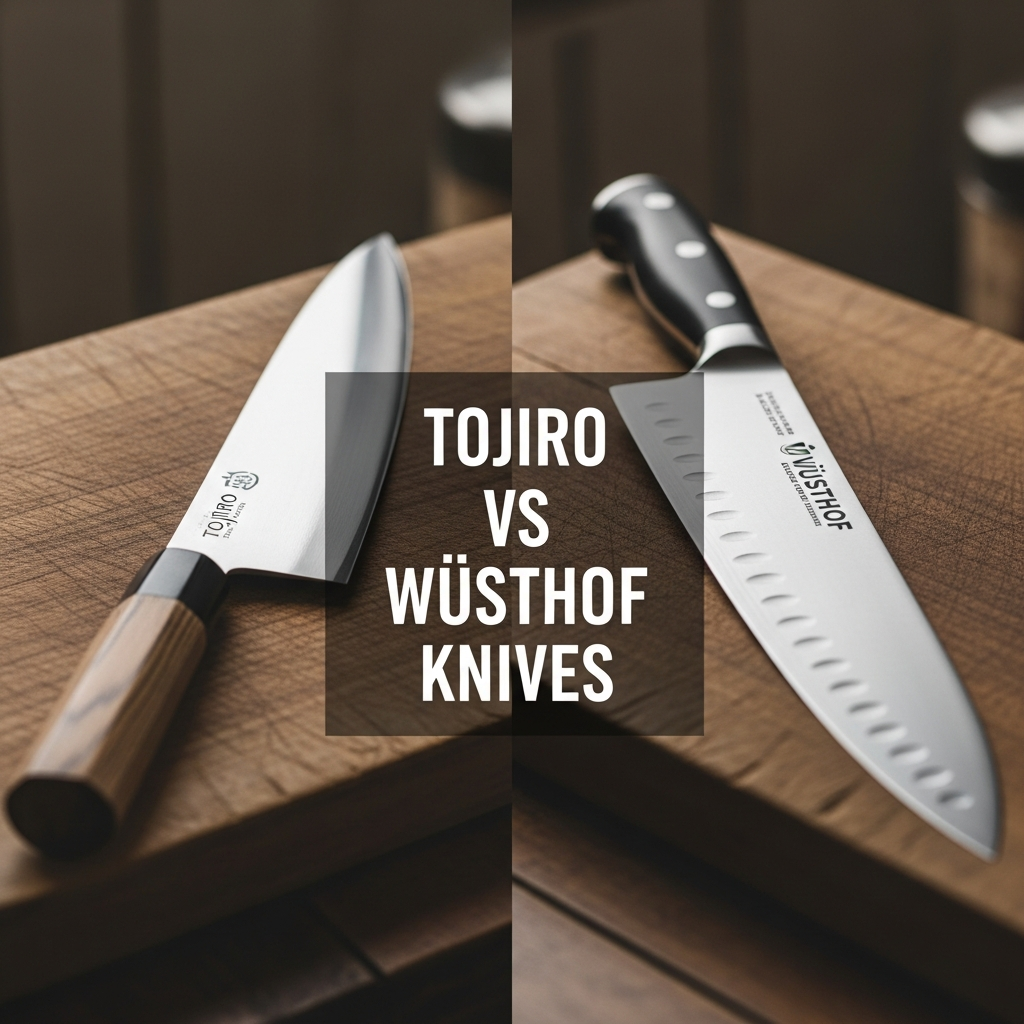
In the expansive, deeply passionate culinary world, the fiercely debated rivalry between Japanese surgical precision and German indestructible durability is eternal. If you are currently actively browsing knifeindex.com/ trying to identify the absolute perfect primary blade for your cutting board, you have undoubtedly encountered two very distinct, highly respected champions: Tojiro and Wüsthof.
Wüsthof represents the entrenched, historic establishment. Hot-forged in the legendary “City of Blades” (Solingen, Germany), these heavy-duty knives are literally built like tanks. They are meticulously designed to seamlessly endure decades of heavy abuse, accidental bone strikes, and aggressive rock-chopping techniques. They are the quintessential benchmark for premium German kitchen knives.
Tojiro, conversely, is the gritty, underdog favorite of professional line cooks and culinary students worldwide. Manufactured in the Niigata prefecture of Japan, they offer terrifyingly sharp, high-performance Japanese super-steel at an incredibly aggressive price point. This exceptional value proposition firmly establishes them as one of the best affordable chef knives on the global market. They are ultra-light, unbelievably nimble, and inherently unforgiving to poor technique.
In this exhaustively detailed Tojiro vs. Wusthof comparison, we will entirely strip away the marketing romance and hype to ruthlessly analyze the raw metallurgy, blade geometry, handle ergonomics, and real-world cutting performance to help you definitively decide which specific tool rightfully belongs in your culinary hand.
1. Brand Philosophy: Two Entirely Different Worlds
To truly appreciate how these knives perform, you must first understand the fundamental engineering philosophy that dictates their design.
Wüsthof: Heritage, Heaft, and Resilience
Wüsthof has been family-owned and operated since 1814. Their manufacturing philosophy is remarkably simple and unyielding: Create a holistic, perfectly balanced instrument that works incredibly hard and literally lasts forever. Their flagship knives are hot-forged from a single piece of steel (if you are unfamiliar with the critical difference, see our comprehensive stamped vs forged guide). They invariably feature a heavy full tang, a thick protective metal bolster to guard your fingers, and a thick spine. They are intentionally designed to be highly forgiving tools; if you make a mistake, the blade survives.
Tojiro: Pure Performance and Ruthless Efficiency
Tojiro strictly focuses on the cutting performance of the blade itself above all other considerations. They are globally famous for their iconic “DP” (Decarburization Prevention) series. This line utilizes a premium, ultra-hard VG-10 steel core brilliantly clad (sandwiched) in softer stainless steel for added protection. They heavily prioritize raw cutting geometry and terrifying sharpness over the luxurious, polished fit and finish you might find in significantly more expensive Japanese brands like Shun or Miyabi. Tojiro is not about impressing dinner guests with Damascus patterns; it is entirely about raw, unadulterated function and speed on the prep line.
Community Insight: The Reddit Consensus
The highly critical culinary community on Reddit frequently debates this exact specific matchup. The overwhelming consensus? Buy Wüsthof for absolute durability and heavy-duty tasks; buy Tojiro for pure, effortless cutting joy and slicing speed. Read the fascinating, unvarnished discussion here: Reddit: Tojiro DP or Wusthof Ikon?
2. Head-to-Head: The Technical Specs Breakdown
To make this comparison fair, we are directly comparing their respective, best-selling flagship models: the luxurious Wüsthof Classic Ikon vs. the utilitarian Tojiro DP Gyuto.
| Technical Feature | Wüsthof Classic Ikon (8″) | Tojiro DP Gyuto (8.2″) |
|---|---|---|
| Core Metallurgy | X50CrMoV15 (German Stainless) | VG-10 (Premium Japanese Stainless) |
| Rockwell Hardness (HRC) | 58 (Softer, tougher, shock-absorbent) | 60-61 (Harder, holds edge longer, brittle) |
| Factory Edge Angle | 14° per side (Proprietary PEtec) | 9-12° per side (Scalpel-thin) |
| Blade Profile & Motion | Deeply Curved Belly (For Rock-Chopping) | Flatter Edge Profile (For Push-Cutting) |
| Physical Weight | Heavy (approx. 9.1 oz) – Bolster Heavy | Light (approx. 6.3 oz) – Nimble |
| Price Tier | Premium Luxury ($$$) | High-Performance Value ($$) |
3. The Steel Showdown: Hardness vs. Toughness
The single most important differentiating factor between these two knives is the chemical composition of the metal.
Tojiro (VG-10 Core Steel)
Tojiro famously utilizes VG-10 steel, which is universally considered the gold standard entry-point for premium Japanese kitchen knives. It is extremely hard (registering 60-61 on the HRC scale). This extreme hardness is precisely what allows Tojiro to grind the edge down to an astonishingly acute 9-12 degree angle without it immediately folding over. It will literally fall through ripe tomato skins using only its own weight. However, physics dictates a trade-off: hardness equals brittleness. If you aggressively twist the Tojiro blade while wedged in a butternut squash, or violently strike a chicken bone, the microscopic edge can and will physically chip.
Wüsthof (X50CrMoV15 Steel)
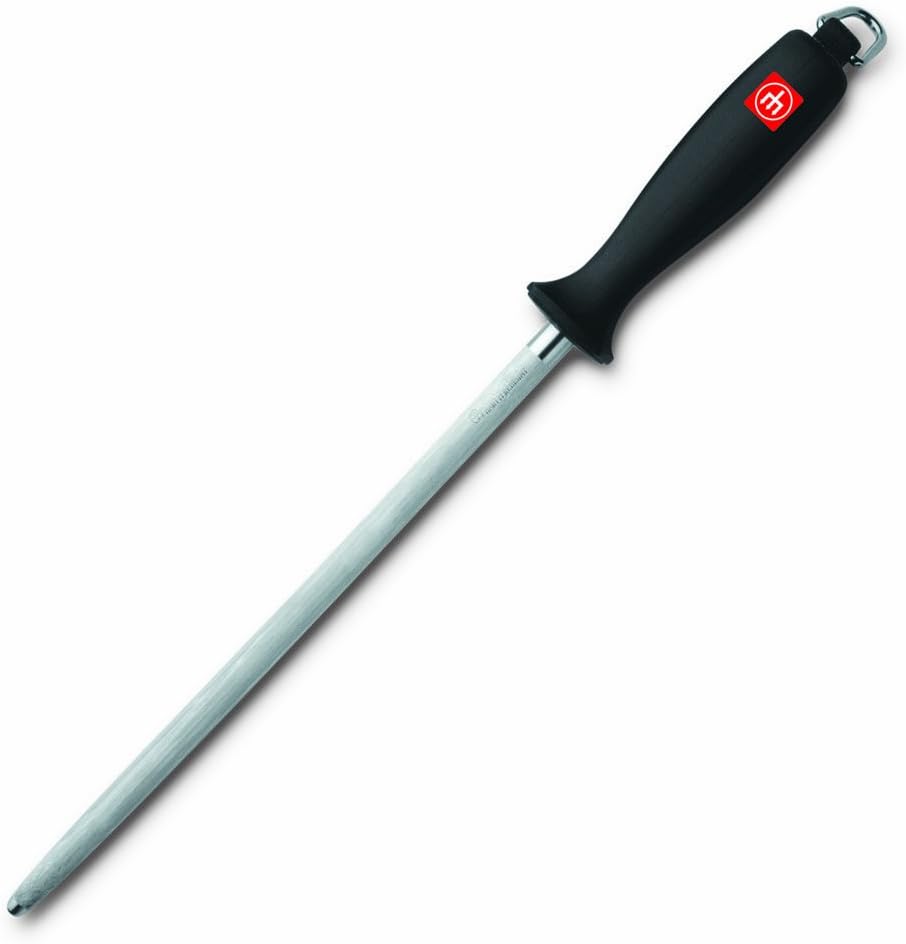
Wüsthof strictly utilizes a proprietary, highly refined German steel alloy. It is intentionally tempered to be softer (58 HRC). This means that if you subject the knife to severe abuse or impact, the microscopic edge will harmlessly “roll” or bend to the side rather than catastrophically chipping. This rolled edge can easily be stood back up in seconds using a honing steel. This makes the Wüsthof incredibly tough, highly forgiving, and definitively the safer, superior choice for heavy-duty butchery or careless users.
4. The Primary Chef’s Knife Battle
The 8-inch Chef’s knife (known as a Gyuto in Japan) is the absolute foundation of any kitchen. It handles 90% of your prep. (If you aren’t exactly sure why you need one, read our guide on what a chef knife is specifically used for).
 Wüsthof Classic Ikon 8″ Chef’s Knife
The quintessential, indestructible German tank. It features a perfectly tuned center balance, a phenomenally comfortable ergonomic handle, and a blade thick enough to safely halve dense winter squash. It is a dominant favorite in our broader Wusthof vs Victorinox budget-vs-premium comparisons.
Check Availability on Amazon Tojiro DP Gyuto 8.2-Inch
The surgical laser. It is vastly thinner, significantly lighter, and exponentially sharper straight out of the box than its German rivals. It offers true, high-end professional performance at a fraction of the expected cost. It is absolutely ideal for highly precise, volume vegetable slicing.
Check Availability on Amazon5. Ergonomics, Balance, and Handle Design
How a knife physically feels in your hand over a two-hour prep session is just as critical as the steel.
Wüsthof Classic Ikon: Luxury Ergonomics
The handle of the Classic Ikon is an absolute masterpiece of modern, contoured ergonomics. Manufactured from highly durable polyoxymethylene (POM), it is smoothly contoured to perfectly fit the natural curves of the human hand. Crucially, it features a unique “double bolster” design—adding a heavy piece of steel at the very rear (the pommel) of the handle. This perfectly counterweights the heavy German blade, placing the balance point exactly where your index finger rests in a pinch grip. It feels immensely premium and substantial.
Tojiro DP: Utilitarian Function
The Tojiro DP handle is strictly functional, somewhat blocky, and unapologetically plain. It utilizes a highly traditional, riveted Western handle shape manufactured from Eco-wood (a durable resin-treated wood composite). It objectively lacks the highly refined, seamless rounding of the Wüsthof. Due to mass production, you may occasionally feel the metal tang sitting slightly raised from the wood scales. It works perfectly fine and is very durable, but you are absolutely not paying for luxury feel here—every single penny of your investment is placed directly into the high-performance VG-10 blade.
6. Specialized Blades: Expanding Your Arsenal
If you are building a complete block, you need to consider how their other specialized shapes perform.
Vegetable Prep Specialists
If your diet consists of 80% vegetables, you must strongly consider a Nakiri vegetable cleaver. The Tojiro DP Nakiri is legendary—because the blade stock is so incredibly thin, it literally falls through dense onions without wedging or cracking them. Wüsthof’s vegetable knives are significantly thicker and heavier, which can cause fatigue.
For those preferring the pointed Santoku knife, Wüsthof heavily features a hollow Granton edge (dimples) to prevent wet potatoes from sticking, whereas Tojiro relies entirely on its pure, frictionless thin geometry.
The Crucial Bread Knife
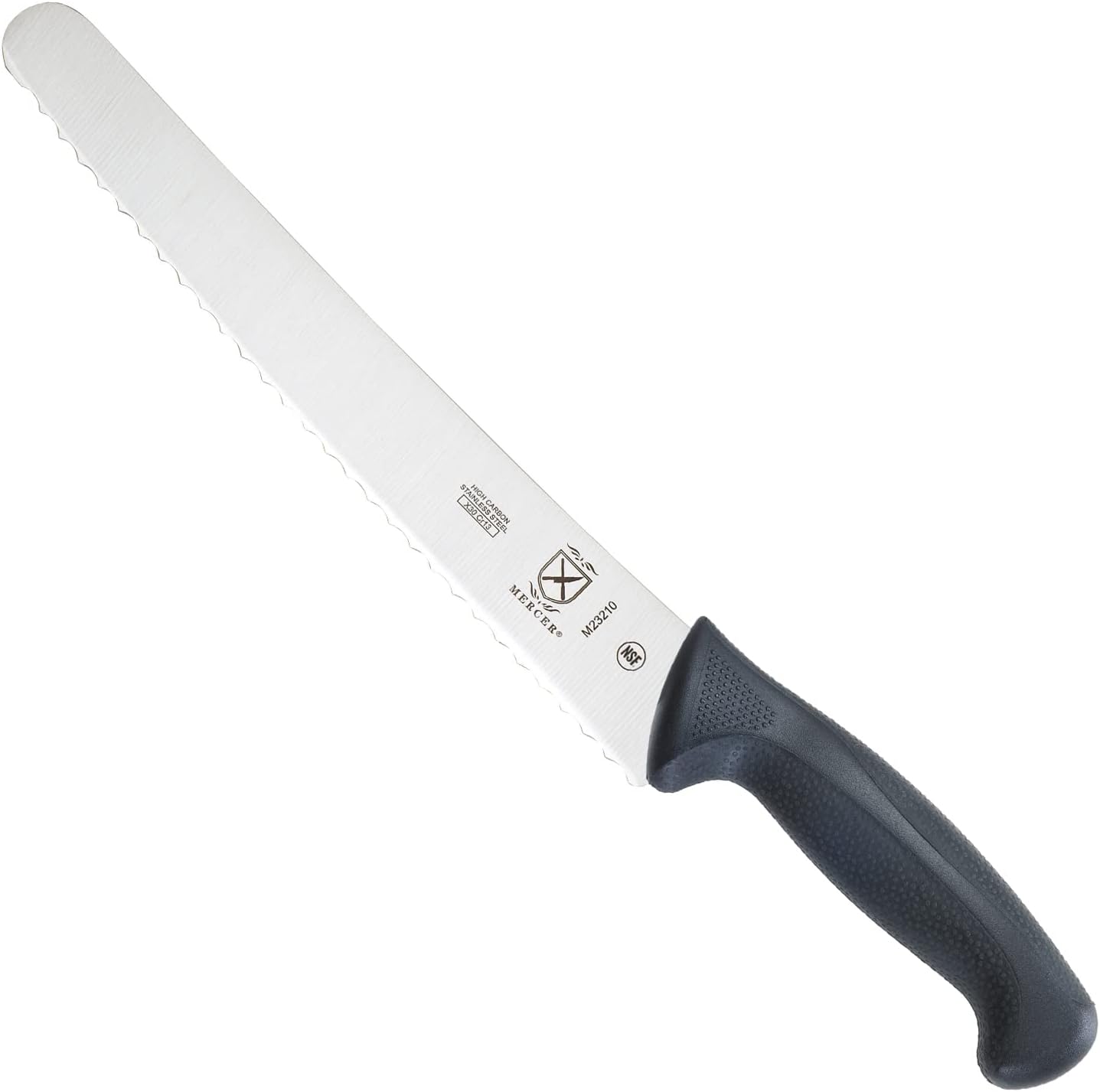
Wüsthof’s “Double Serrated” bread knife is an absolute beast for conquering rock-hard artisan sourdough crusts without slipping. However, the Tojiro F-737 Bread Slicer is a massive, viral internet icon. Why? Because it is dirt cheap, highly flexible, and terrifyingly sharp, making it unparalleled for delicately slicing soft sponge cakes and crusty bread alike. Read our extensive guide to the best bread knife to deeply understand why Tojiro is a top budget pick globally.
Paring Knives for Detail Work
For fine, intricate, off-board detail work (see what a paring knife is used for), Tojiro offers very simple, highly effective, lightweight tools. Wüsthof’s forged paring knives are notably heavier and stiffer, which many professional cooks actively prefer for maximum control when peeling tough apples or turning root vegetables.
7. The Broader Market: Comparisons to Other Brands
If you are still actively shopping around and neither brand feels quite right, consider how they stack up against the rest of the industry:
- Vs. Shun Classic: Shun is essentially the heavily marketed, “pretty” luxury version of Tojiro. Shun offers vastly superior fit, finish, and stunning Damascus visual patterns, but utilizes very similar VG-MAX steel and costs significantly more. (See our detailed Tojiro vs Shun matchup).
- Vs. Zwilling J.A. Henckels: Zwilling is Wüsthof’s primary, fierce German rival. They use identical steel but feature totally different handle ergonomics. If you hate the Wüsthof grip, look to Zwilling. (See Zwilling vs Henkel).
- Vs. Victorinox Fibrox: If the Tojiro feels too brittle for your habits, and the Wüsthof is far too expensive for your budget, the Victorinox is the ultimate stamped, commercial alternative. (See Victorinox reviews).
- Vs. Mac Professional: Mac Knives offer a brilliant hybrid: they are Japanese-made but use a softer, tougher steel than Tojiro, providing laser sharpness with German-like durability. (See Mac vs Wusthof).
8. Maintenance Protocols: The Critical Differentiating Factor
Owning a high-performance Tojiro absolutely requires significantly more respect, knowledge, and discipline than owning a Wüsthof.
- Sharpening Mechanics: A softer Wüsthof can be easily maintained daily with a standard grooved honing steel. Tojiro’s ultra-hard VG-10 steel strictly requires fine water whetstones or smooth ceramic rods. You cannot drag a Tojiro through a cheap carbide pull-through sharpener; the harsh abrasives will instantly rip and chip the delicate edge. Thoroughly check our best knives sharpener guide to learn proper techniques.
- Rust and Corrosion: While VG-10 is technically stainless, its high carbon content makes it noticeably less corrosion-resistant than German steel. You must wash and bone-dry your Tojiro immediately after use, especially after cutting acidic citrus. If you lazily leave it wet and see brown spots, you must instantly learn how to remove rust before pitting occurs.
- Safe Storage: Never, ever throw a Tojiro loosely into a chaotic utensil drawer. The brittle edge will chip instantly against metal spoons. You must utilize a wooden drawer organizer or a wall-mounted magnetic strip.
- The Dishwasher Rule: NEVER. Under any circumstances. For either brand. Read our dishwasher safe guide to understand exactly why the extreme heat and caustic detergent destroys expensive knife handles and ruins steel temper.
9. Manufacturing Origins: Solingen vs. Niigata
Understanding where and how these knives are actually produced tells you a great deal about why they perform so differently, and it’s one of the most commonly searched questions among people comparing these brands.
Solingen: The City of Blades
Wüsthof’s factory sits in Solingen, Germany, a town that has manufactured cutlery for roughly seven centuries. The “Made in Solingen” designation is not just marketing flourish; it is a legally protected regional trademark in Germany, meaning a knife can only carry that stamp if the majority of its production actually happens within the city limits. Wüsthof still operates its own foundry, running raw steel billets through a hot-forging press that stamps out the blade blank, bolster, and the beginning of the tang all in one single piece of metal. This single-piece forging process is precisely why Wüsthof knives feel so unified and structurally sound; there are no separate parts bonded together at the bolster.
Niigata: Japan’s Cutlery Prefecture
Tojiro is based in Niigata Prefecture, specifically in a region historically tied to sword and tool-making traditions dating back centuries. Unlike Wüsthof’s single-forging approach, Tojiro’s DP line uses a laminated (clad) construction. A thin core of hard VG-10 steel is sandwiched between two outer layers of softer, more corrosion-resistant stainless steel, then the whole sandwich is rolled and hammered together under heat until it fuses into a single blade blank. This cladding technique is centuries old, tracing its roots to traditional Japanese swordsmithing, where a hard cutting edge was wrapped in softer, more flexible material to prevent the whole blade from shattering under stress. Tojiro essentially industrialized this ancient technique to make ultra-hard steel accessible at mass-production prices.
10. Cost-Per-Year: A Real Ownership Value Analysis
Sticker price alone doesn’t tell the whole story. If you actually want to know which knife delivers more value over its lifetime, you need to think about cost-per-year of realistic ownership, not just the number on the box.
The Wüsthof Ownership Curve
A Wüsthof Classic Ikon is an investment purchase. Because the softer German steel resists chipping and the full-tang, forged construction resists loosening or wobbling over decades of use, many home cooks realistically expect a 20 to 30 year lifespan from a single Wüsthof knife, provided it is hand washed and occasionally professionally re-profiled. When you divide the purchase price across that kind of lifespan, the effective annual cost becomes remarkably small, even though the upfront number looks intimidating on the shelf.
The Tojiro Ownership Curve
A Tojiro DP is a performance purchase with a shorter expected service window if handled carelessly, but an equally long lifespan if the owner learns proper technique. Because the core steel is so thin and hard, a Tojiro that is never struck against bone, never dropped, and never run through a pull-through sharpener can realistically last just as long as a Wüsthof — the failure mode for Tojiro tends to be user error (chipping) rather than steel fatigue. Given that the Tojiro DP typically costs a fraction of the Wüsthof Classic Ikon, most owners find that even replacing a chipped Tojiro every several years and buying a fresh one still works out to a lower total cost of ownership than the Wüsthof, especially for someone who is comfortable maintaining their own edges on a whetstone.
11. Best Use Cases by Ingredient: A Practical Kitchen Breakdown
Rather than talking in abstractions, let’s walk through exactly how each knife behaves on the specific ingredients home cooks actually prep every single week.
Tomatoes
This is where the Tojiro’s thin, acute edge geometry shows off. The blade slices cleanly through taut tomato skin without the tearing or squashing that a duller or thicker edge causes. The Wüsthof, while perfectly capable when freshly honed, has a noticeably thicker edge shoulder that requires slightly more downward pressure to initiate the cut on delicate skins.
Onions
Both knives handle onions well, but for high-volume dicing, the Tojiro’s lighter weight reduces wrist fatigue over long sessions. The Wüsthof’s heavier belly and deep curve, however, make the classic rock-chop motion feel more stable and controlled for cooks who were trained on Western technique.
Winter Squash and Root Vegetables
This is squarely Wüsthof territory. The thicker spine and more robust edge geometry can push through dense butternut squash and beets without the risk of the blade binding or chipping. Attempting the same task with a thin Tojiro blade, especially by twisting it to pry apart a stuck cut, is one of the single most common ways owners chip their Tojiro edge.
Raw Fish and Sashimi
Neither of these particular flagship models is a dedicated sushi knife (that role belongs to single-bevel Yanagiba blades), but between the two, the Tojiro DP Gyuto’s thinner, harder edge produces cleaner, less-torn fillets on delicate fish flesh than the comparatively thicker Wüsthof blade.
Fresh Herbs
The Tojiro’s razor edge minces herbs like basil and cilantro with far less bruising and oxidative browning, since a sharper edge severs plant cells rather than crushing them. This is a genuine, measurable difference home cooks notice within the first few uses.
Raw Chicken and Poultry Breakdown
For breaking down whole chickens, including cutting through small joints and cartilage, the Wüsthof’s toughness is the safer choice. Its softer steel rolls rather than chips if it unexpectedly contacts a bone, and its heft provides more chopping force with less swing effort.
12. Left-Handed Cooks: Does Either Brand Have an Advantage?
A surprisingly common search query among people comparing these two brands is whether one is meaningfully better suited to left-handed cooks. The good news is that both the Wüsthof Classic Ikon and the Tojiro DP Gyuto use a symmetrical, double-bevel edge grind, meaning the cutting angle is ground evenly on both sides of the blade. This makes both knives fully ambidextrous right out of the box, unlike traditional single-bevel Japanese knives (such as Yanagiba or Deba styles), which are typically ground for right-handed use and require a special left-handed version to be ordered. Left-handed cooks can pick up either the Tojiro or the Wüsthof with zero compromise in cutting performance, geometry, or comfort.
13. Culinary School and Professional Kitchen Adoption
If you have ever wondered why so many culinary school supply lists specifically call out the Tojiro DP line by name, there’s a very practical reason. Culinary students are typically required to purchase a full personal knife roll early in their training, often before they have developed the technique or the budget for premium Western-forged blades. The Tojiro DP delivers genuinely professional-grade sharpness and edge geometry at a price point that a student can realistically afford multiple times over the course of their education, which matters because students inevitably damage, lose, or wear down knives during training. Professional kitchens, on the other hand, often stock at least one heavy Wüsthof or similar German forged knife specifically for the “abuse tasks” — breaking down proteins, working through connective tissue, or handling ingredients that would chip a thinner Japanese edge. Many working chefs ultimately end up owning both brands for exactly this reason: a Tojiro or similar Japanese blade for finesse work, and a Wüsthof for anything involving bones, frozen product, or high-volume brute-force prep.
14. Building a Complete Knife Set: Should You Mix Brands?
One of the more practical questions we get from readers of knifeindex.com/ is whether it makes more sense to buy a full matching set from a single brand, or deliberately mix and match Tojiro and Wüsthof pieces based on task. Our strong recommendation, based on how actual working kitchens are equipped, is to mix intentionally rather than buy a single matching block.
A Hybrid Starter Set
- Chef’s Knife (Gyuto): Tojiro DP for everyday precision vegetable and protein work.
- Bread Knife: Wüsthof’s double-serrated design for crusty artisan loaves, since serration type matters more than steel hardness here.
- Boning/Utility Knife: Wüsthof for flex and toughness when working around joints and connective tissue.
- Nakiri or Santoku: Tojiro for high-volume vegetable prep where thinness and lightness reduce fatigue.
- Paring Knife: Either brand works well; choose based on whether you prefer a lighter or heavier feel in-hand for detail work.
This hybrid approach lets each blade do the job it is objectively best suited for, rather than forcing one philosophy to handle every single task in the kitchen.
15. Warranty, Customer Service, and Long-Term Support
Warranty coverage is another frequently overlooked factor in this comparison. Wüsthof backs its Classic and Classic Ikon lines with a limited lifetime warranty covering manufacturing defects in materials and workmanship, and the brand has a well-established reputation for honoring that warranty through its official customer service channels, including replacing knives with confirmed factory flaws. Tojiro, as a more purely production-focused Japanese manufacturer sold heavily through third-party retailers and marketplaces, typically relies on the retailer’s or marketplace’s own return and defect policy rather than offering an extensive direct-to-consumer lifetime warranty program in the same way Wüsthof does. This is an important practical consideration: if warranty support and long-term brand accountability matter a great deal to you, that consideration leans in Wüsthof’s favor, whereas Tojiro buyers are generally purchasing with the understanding that they are optimizing for performance-per-dollar rather than an extensive support relationship.
16. Buying Guidance: Avoiding Counterfeits and Choosing a Reputable Listing
Because both Tojiro and Wüsthof are popular, frequently counterfeited brand names on general marketplaces, it’s worth taking a moment to buy carefully. Look for listings that clearly show the correct model name, accurate blade length, and photographs that match the manufacturer’s actual packaging and blade etching. Prices that seem dramatically lower than the typical market range for either brand are one of the most reliable red flags for counterfeit or grey-market stock. Buying through a well-reviewed, established listing — such as the specific product links referenced earlier in this guide — is one of the simplest ways to reduce the risk of receiving a knockoff blade that will neither hold an edge nor hold up to the durability claims either brand is actually known for.
17. Environmental and Sourcing Considerations
A smaller but growing number of readers ask about the sourcing and sustainability practices behind their kitchen tools. Wüsthof, as a long-established European manufacturer, operates under Germany’s comparatively strict industrial and environmental regulatory framework, and the brand has emphasized durability and repairability (through resharpening services) as part of its sustainability positioning — a knife that lasts multiple decades inherently produces less manufacturing waste over its lifetime than a series of cheaper knives that need frequent replacement. Tojiro, operating within Japan’s cutlery manufacturing regulatory environment, similarly benefits from the inherent longevity of a well-maintained VG-10 blade, though its lower price point and clad construction reflect a different manufacturing scale and cost strategy rather than an explicit sustainability marketing focus. For most environmentally conscious buyers, the single biggest factor either way is simply buying one durable, well-maintained knife instead of cycling through disposable low-quality blades every year or two.
18. Gift Guide: Which Knife Makes a Better Present?
Kitchen knives are a popular but tricky gift category, and the right pick genuinely depends on who is receiving it. A Wüsthof Classic Ikon is an excellent choice for an established home cook who already has decent knife skills and will appreciate a substantial, luxurious, low-maintenance blade they can use confidently for the rest of their life — it also presents beautifully, with a weighty, premium feel the moment it’s unboxed. A Tojiro DP, on the other hand, is a fantastic gift for an enthusiastic beginner, a culinary student, or anyone who has expressed real interest in leveling up their knife skills, precisely because it rewards proper technique with an extraordinarily satisfying, effortless cutting experience. It’s a slightly riskier gift for someone who has expressed zero interest in knife maintenance, since a neglected Tojiro can chip or dull faster than a neglected Wüsthof.
19. Common Beginner Mistakes With Each Brand
Mistakes Tojiro Owners Make
- Using a cheap pull-through or electric sharpener designed for softer Western steel, which chips the hard VG-10 edge instead of sharpening it.
- Twisting or prying the blade while it’s wedged in dense food, causing the thin edge to snap or chip at the point of stress.
- Leaving the blade wet after cutting acidic ingredients, leading to surface staining or pitting over time.
- Storing it loose in a drawer alongside metal utensils, which is one of the fastest ways to dull or chip the delicate edge.
Mistakes Wüsthof Owners Make
- Assuming the knife never needs sharpening because honing alone keeps it feeling sharp; honing only realigns the edge, it does not restore lost steel, so periodic actual sharpening is still required.
- Running it through the dishwasher, which can damage the handle material and dull the edge through contact with other utensils and harsh detergent.
- Using excessive force on tasks that don’t require it, simply because the knife feels indestructible, which can still cause unnecessary wear over time.
20. The Verdict Restated: A Quick-Reference Decision Matrix
| If You Are… | Recommended Knife |
|---|---|
| A culinary student on a tight budget | Tojiro DP Gyuto |
| Buying a lifetime “forever” knife | Wüsthof Classic Ikon |
| Sharing your kitchen with careless roommates | Wüsthof Classic Ikon |
| Comfortable using a whetstone | Tojiro DP Gyuto |
| Prepping high volumes of vegetables and herbs | Tojiro DP Gyuto |
| Regularly breaking down whole poultry | Wüsthof Classic Ikon |
| Gifting to an established home cook | Wüsthof Classic Ikon |
| Building a hybrid, task-specific knife roll | Both, for different tasks |
21. The Final Verdict: Which One Belongs in Your Hand?
The legendary battle of Tojiro vs. Wusthof ultimately boils down to a distinct choice between raw, thrilling performance-per-dollar versus indestructible, lifetime reliability and luxury feel.
You Should Absolutely Choose Wüsthof If: You want a genuine “forever knife.” You are admittedly rough on your kitchen tools, you frequently share your kitchen with family members or roommates who might misuse or neglect knives, you routinely break down whole chickens, or you highly prefer the authoritative weight and fluid rocking motion of a heavy Western blade. It is the incredibly safe, luxurious, worry-free premium choice.
You Should Absolutely Choose Tojiro If: You demand the absolute sharpest, finest edge possible for your money. You treat your culinary tools with deep respect and care, you specifically want to master delicate Japanese push-cutting knife skills, and you completely prioritize raw blade performance over a highly polished, luxurious handle. It is the true culinary enthusiast’s choice.
If you are a caterer or a traveling culinary student, both highly respected brands are deeply supported by excellent aftermarket storage options. Check out our best knife bag reviews to ensure your new investment stays safe, sharp, and protected on the road.
Expert Frequently Asked Questions (FAQ)
Absolutely not. The VG-10 steel core is exceptionally hard (60+ HRC) and ground to a very thin angle. Attempting to chop through hard bones, frozen meats, or even thick winter squash will cause the brittle edge to catastrophically chip or snap. Use a heavy Wüsthof or a dedicated meat cleaver for those high-impact tasks.
The Wüsthof Classic line is fully precision hot-forged from a single, solid piece of high-carbon stainless steel. This includes the blade, the thick finger-protecting bolster, and the full tang that extends through the handle, giving it immense structural strength and weight.
Yes, but with a slight learning curve regarding maintenance. The Tojiro DP is an incredible value, but beginners must quickly learn not to use it on bones, not to put it in the dishwasher, and how to properly use a whetstone or ceramic rod for sharpening, as cheap pull-through sharpeners will ruin the edge.
Neither has an advantage over the other for left-handed use. Both the Tojiro DP and the Wüsthof Classic Ikon use a symmetrical, double-bevel edge ground evenly on both sides, making them fully ambidextrous. This is different from traditional single-bevel Japanese knives, which are typically handed and require a specific left-handed grind.
Wüsthof offers a limited lifetime warranty against manufacturing defects and has a well-established reputation for honoring it directly. Tojiro generally relies on the retailer’s or marketplace’s return policy rather than an extensive direct manufacturer warranty program, since it is positioned primarily as a high-performance value brand.
Yes, this is extremely common. Many working chefs keep a Tojiro or similar Japanese blade for precision vegetable and protein slicing, while reserving a heavier Wüsthof or German-forged knife for tasks involving bones, connective tissue, or frozen ingredients that would risk chipping a thinner Japanese edge.