Ceramic Knives vs. Steel Knives: Which is Right for Your Kitchen?
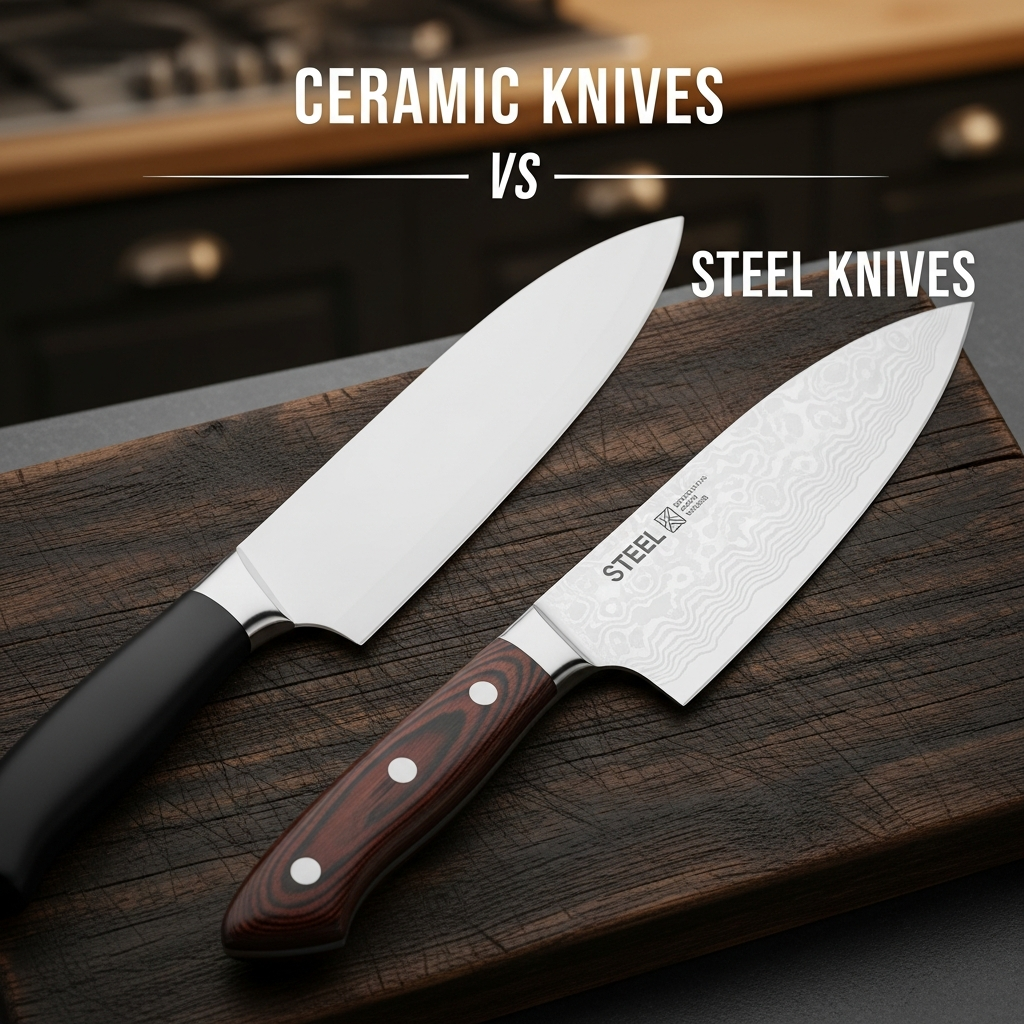
In the culinary world, steel has been the king for millennia. From ancient carbon blades to modern “super steels,” metal has shaped how we cook. But in recent decades, a challenger has emerged from the world of high-tech materials: Zirconium Dioxide, better known as Ceramic.
If you are browsing knifeindex.com/ trying to build your perfect kit, you may be wondering: Are ceramic knives just a gimmick? Can they replace my trusty Wusthof? Or are they a specialized tool for a specific job?
The Ceramic Knives vs. Steel Knives debate is a clash of physics. One offers unparalleled hardness and edge retention; the other offers durability and versatility. In this comprehensive guide, we will break down the science, the pros and cons, and help you decide which material belongs in your knife block.
1. The Science: What are they made of?
Steel Knives: The Alloy of Ages
Steel is an alloy of iron and carbon. Manufacturers add elements like Chromium (for rust resistance) and Vanadium (for hardness).
- Stainless Steel: The standard for Western kitchens (e.g., German knives like Wusthof). It resists rust but needs regular honing.
- Carbon Steel: The favorite of sushi masters (e.g., Japanese knives like Tojiro). It gets incredibly sharp but can rust if you look at it wrong. (See Stainless vs Carbon Steel).
- High-Carbon Stainless: The modern hybrid used by brands like Shun and Wusthof (VG-10, X50CrMoV15).
Ceramic Knives: The Space-Age Material
Ceramic knives are not made of the same stuff as your coffee mug. They are made from Zirconium Dioxide (Zirconia). This powder is pressed at extreme pressures and heated (sintered) to create a material that is almost as hard as a diamond.
External Insight
Oishya notes that Zirconia is “significantly harder than stainless steel,” which allows it to hold an edge “up to 10 times longer.” Read their full pros and cons list here: Ceramic Knives vs. Steel Knives: Pros & Cons.
2. Head-to-Head: The Specs Breakdown
| Feature | Steel Knives | Ceramic Knives |
|---|---|---|
| Hardness (Mohs Scale) | 5.5 – 6.5 | 8.2 (Harder than steel) |
| Edge Retention | Months (needs honing) | Years (needs no honing) |
| Durability | High (Bends/Dents) | Low (Chips/Shatters) |
| Reactivity | Can rust/react with acid | Chemically Inert (No rust) |
| Maintenance | Hone weekly, Sharpen yearly | Professional sharpening only |
| Weight | Heavy/Substantial | Feather-light |
3. Sharpness and Edge Retention
Ceramic: The Marathon Runner
Because Zirconia is so hard, a ceramic knife will stay sharp for years without maintenance. You can slice thousands of tomatoes, and it will glide through them just as easily on day 500 as day 1. This makes them excellent utility knives for fruit and veg.
Steel: The Sprinter
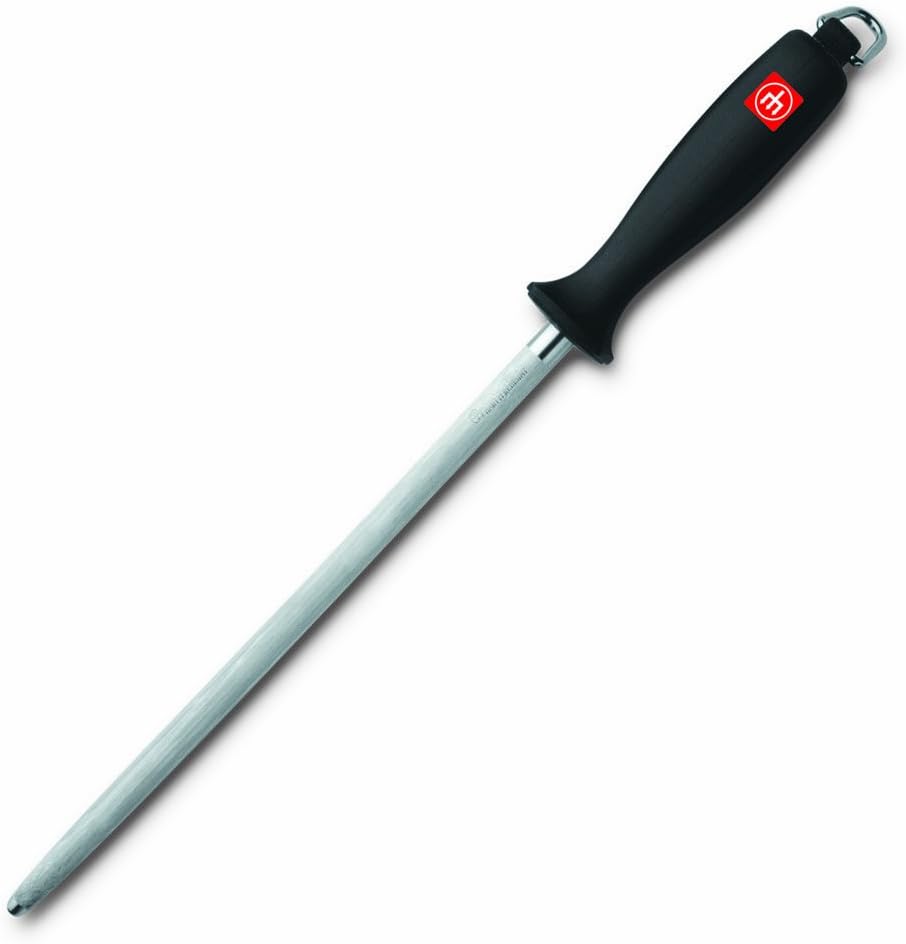
A high-end steel knife (like a Miyabi SG2 or Dalstrong Shogun) can actually get sharper than ceramic initially because steel can be ground to a finer edge. However, the edge rolls over time. You must maintain it with a honing rod (see best knives sharpener).
4. Durability and Brittleness
This is the Achilles heel of ceramic.
Steel bends. If you drop a Zwilling Pro, the tip might bend, but you can hammer it back. If you hit a bone, the edge dents.
Ceramic shatters. It has zero flexibility. If you drop a ceramic knife, it will likely snap. If you twist it in a squash or try to pry a jar open, it will chip. It is strictly for soft slicing.
For heavy tasks like breaking down chickens, you must use a steel boning knife or a cleaver.
5. Reactivity and Taste
Have you ever cut an apple with a carbon steel knife and tasted metal? That is oxidation.
Ceramic is chemically inert. It will never rust, never corrode, and never transfer metallic tastes to acidic food. This makes it the superior choice for slicing sashimi, apples, or tomatoes where purity of flavor is paramount.
Steel knives, especially high-carbon ones (like Tojiro), require care to prevent rust. Learn how to remove rust if you choose steel.
6. Top Product Recommendations
We have tested the best chef knife brands to find the leaders in both materials.
 Kyocera Revolution 7″ Ceramic Knife
The industry standard for ceramic. Incredibly lightweight, impervious to acids, and stays sharp 10x longer than steel. Ideal for fruits and boneless meats.
Check Price on Amazon Wüsthof Classic Ikon 8″ (Steel)
The ultimate all-rounder. Forged from high-carbon German steel. It can handle bones, squash, and crushing garlic. A knife for a lifetime. See Wusthof vs Victorinox.
Check Price on Amazon7. Which One Should You Buy?
Choose Steel If:
- You want one knife to do everything (Chef’s Knife or Santoku).
- You cook meat with bones or hard vegetables (pumpkins, sweet potatoes).
- You want a tool that can be sharpened at home.
- You are clumsy (it happens!). Steel survives drops.
Choose Ceramic If:
- You are a vegetarian or prep mostly soft fruits and vegetables.
- You hate sharpening knives.
- You are sensitive to metallic tastes in acidic foods.
- You want a lightweight paring knife for detail work.
8. Brand Comparisons: Where to Look?
For Steel:
The market is vast.
- Budget: Victorinox and Mercer are the kings of stamped steel value.
- Premium Western: Zwilling and Wusthof are the forged icons.
- Premium Japanese: Shun, Global, and Miyabi offer harder, sharper steel.
- Modern: Dalstrong offers high-spec steel with flashy designs.
For Ceramic:
Kyocera is the undisputed leader. Do not buy cheap, no-name ceramic knives; the zirconia is often impure and chips immediately.
9. Maintenance and Care
Regardless of material, proper care extends life.
- Storage: Ceramic MUST be protected. Use a sheath or a knife drawer organizer. Steel should be on a magnetic strip.
- Cleaning: Dishwasher safe steak knives exist, but ceramic chef knives do not. The water jets can knock them against other dishes and chip them. Hand wash only.
- Sharpening: Steel needs a manual sharpener or whetstone. Ceramic requires a diamond wheel electric sharpener. Check our electric sharpeners guide for compatible models.
10. A Brief History: How Ceramic Knives Entered the Kitchen
Steel knives have a lineage stretching back to the Iron Age, refined over centuries by European bladesmiths and Japanese swordsmiths alike. Ceramic knives, by contrast, are a genuinely modern invention. The technology traces back to Kyoto Ceramic Company (now known simply as Kyocera), a Japanese electronics and materials firm that originally developed fine zirconia ceramics for industrial applications like oxygen sensors, ballpoint pen tips, and engine components. In the early 1980s, Kyocera’s engineers realized that the same ultra-hard zirconia they were sintering for industrial parts could be ground into a cutting edge that outperformed steel in laboratory hardness tests.
The first commercial ceramic kitchen knives reached Japanese consumers in 1984, marketed as a novelty for high-end households. It took roughly two more decades for ceramic blades to gain traction in Western markets, largely because early production runs were expensive and the blades had a reputation (not entirely undeserved) for being fragile in the hands of cooks accustomed to the forgiving nature of steel. By the mid-2000s, falling manufacturing costs and improved zirconia formulations made ceramic knives affordable enough to sit on the same shelf as a mid-range Victorinox, and they became a fixture in gadget catalogs, cooking shows, and eventually big-box retailers.
Understanding this history matters because it explains why ceramic knives still feel like an outsider in a category dominated by centuries-old steel traditions. Japanese steel makers like Tojiro and German forges behind brands like Wusthof and Zwilling can draw on generations of accumulated metallurgical knowledge. Ceramic knife manufacturers, meanwhile, are still refining sintering techniques, edge geometry, and impact resistance relatively recently compared to that timeline. That is not a knock against ceramic; it simply means the category is younger and, in some ways, still catching up on real-world durability even as it wins on laboratory hardness numbers.
11. The True Cost of Ownership: Steel vs. Ceramic Over 10 Years
Sticker price alone does not tell the full financial story. A budget steel chef’s knife might cost less upfront than a premium ceramic blade, but the total cost of ownership depends heavily on how each material ages in your kitchen.
Consider a typical home cook who owns one primary chef’s knife and one paring knife. A quality steel chef’s knife, such as the Wusthof Classic Ikon referenced above, will need occasional honing (essentially free, using a rod you already own) and a professional sharpening perhaps once or twice a year, which typically runs a modest fee per knife at a local sharpening service. Done consistently, that knife can last a lifetime, and many home cooks pass steel knives down as heirlooms.
A ceramic paring or utility knife has no honing costs at all during its usable life, since the edge simply does not roll the way steel does. However, because sharpening ceramic requires a diamond-abrasive wheel or a specialized service, the per-sharpening cost is usually higher than steel, and not every local knife sharpener even offers it. The larger financial risk with ceramic is breakage: a single dropped blade or an accidental twist against a bone can mean a total loss, whereas a bent or dented steel blade can almost always be reground and salvaged. When you tally repair costs, replacement risk, and sharpening frequency over a decade, steel usually wins on pure economics for a knife that sees daily, varied use, while ceramic can be cheaper over time specifically for a low-risk role like slicing fruit, where it is rarely subjected to lateral stress.
The practical takeaway: budget for ceramic as a specialist tool with a real (if small) chance of replacement, and budget for steel as a long-term investment that rewards regular maintenance rather than punishing neglect.
12. Why Are Some Ceramic Knives Black and Others White?
If you have shopped for a ceramic knife, you have probably noticed two color options: a bright white blade and a matte black blade. This is one of the more commonly searched, and least understood, differences in the ceramic knife world.
White ceramic blades are made from zirconia in its natural sintered state. They are typically the harder of the two, since the white zirconia is fired at a higher temperature and pressure, producing a denser microstructure. White blades tend to hold their edge slightly longer, but they can also be marginally more brittle.
Black ceramic blades get their color from an additional firing process that introduces carbon into the zirconia matrix, a technique often associated with “black zirconia” formulations. This process can make the blade marginally tougher and more resistant to chipping under certain conditions, though the difference is subtle in practice and varies by manufacturer. Black blades are also popular simply for aesthetic reasons: they look sleek, hide small marks better, and pair well with modern kitchen design schemes featuring matte black hardware and appliances.
Neither color option should be treated as dramatically more durable than the other. If you are choosing between a black or white ceramic knife, prioritize the manufacturer’s reputation for quality control over the color itself. A reputable brand’s white blade will almost always outperform a no-name brand’s black blade.
13. Do Ceramic Knives Set Off Metal Detectors? Airport Security and Travel Considerations
One of the more surprising and frequently searched questions about ceramic knives concerns airport security and metal detectors. Because zirconia ceramic contains no ferrous or magnetic metal, a ceramic knife will not trigger a standard walk-through metal detector or a handheld wand in the way a steel blade would. This has occasionally fueled internet myths that ceramic knives are “invisible” to security screening, or that they are somehow a clever way to sneak a blade past checkpoints.
In reality, this is largely a non-issue in modern travel. Airport security today relies heavily on X-ray screening of carry-on and checked luggage, not just metal detectors for passengers. X-ray scanners detect an object’s shape and density profile, not just its metal content, so a ceramic knife shows up clearly on an X-ray image as a blade-shaped object, prompting the same scrutiny (and likely confiscation from carry-on luggage) as a steel knife would. Ceramic kitchen knives are also classified as prohibited items in carry-on baggage by transportation security agencies in most countries, exactly like steel knives, precisely because the ban is based on the object’s function as a cutting tool rather than its metal detectability.
If you are relocating or shipping a ceramic knife set, the safe and legal approach is the same as with steel: pack it in checked luggage, wrapped securely in its sheath or blade guard to prevent both breakage and accidental cuts to baggage handlers, and never attempt to carry any knife, ceramic or steel, through a security checkpoint in cabin luggage.
14. Environmental Impact and Sustainability
Sustainability is an increasingly common consideration for kitchenware shoppers, and the two materials differ meaningfully here. Steel is one of the most recycled materials on the planet; scrap steel knives, once retired, can be melted down and reformed into new products with relatively low energy loss compared to producing virgin steel from raw ore. Many premium steel knife manufacturers, including several of the German and Japanese forges mentioned throughout this guide, source a portion of their raw steel from recycled stock.
Zirconia ceramic, on the other hand, is not practically recyclable in the way metal is. Once a ceramic blade reaches the end of its life, whether through breakage or wear, it typically ends up in general waste, since there is no widespread industrial process for reclaiming sintered zirconia from consumer products. On the flip side, ceramic production does not require the same energy-intensive smelting and alloying processes as steel manufacturing, and zirconia knives never require chemical rust inhibitors or the periodic replacement that comes from corrosion damage.
Neither material is a clear environmental winner across the board. If end-of-life recyclability matters most to you, a well-maintained steel knife that can be melted down decades from now, or better yet, a steel knife that lasts a lifetime and never needs replacing at all, is generally the more sustainable long-term choice.
15. Task-by-Task Breakdown: What to Reach for and When
Bread and Crusty Loaves
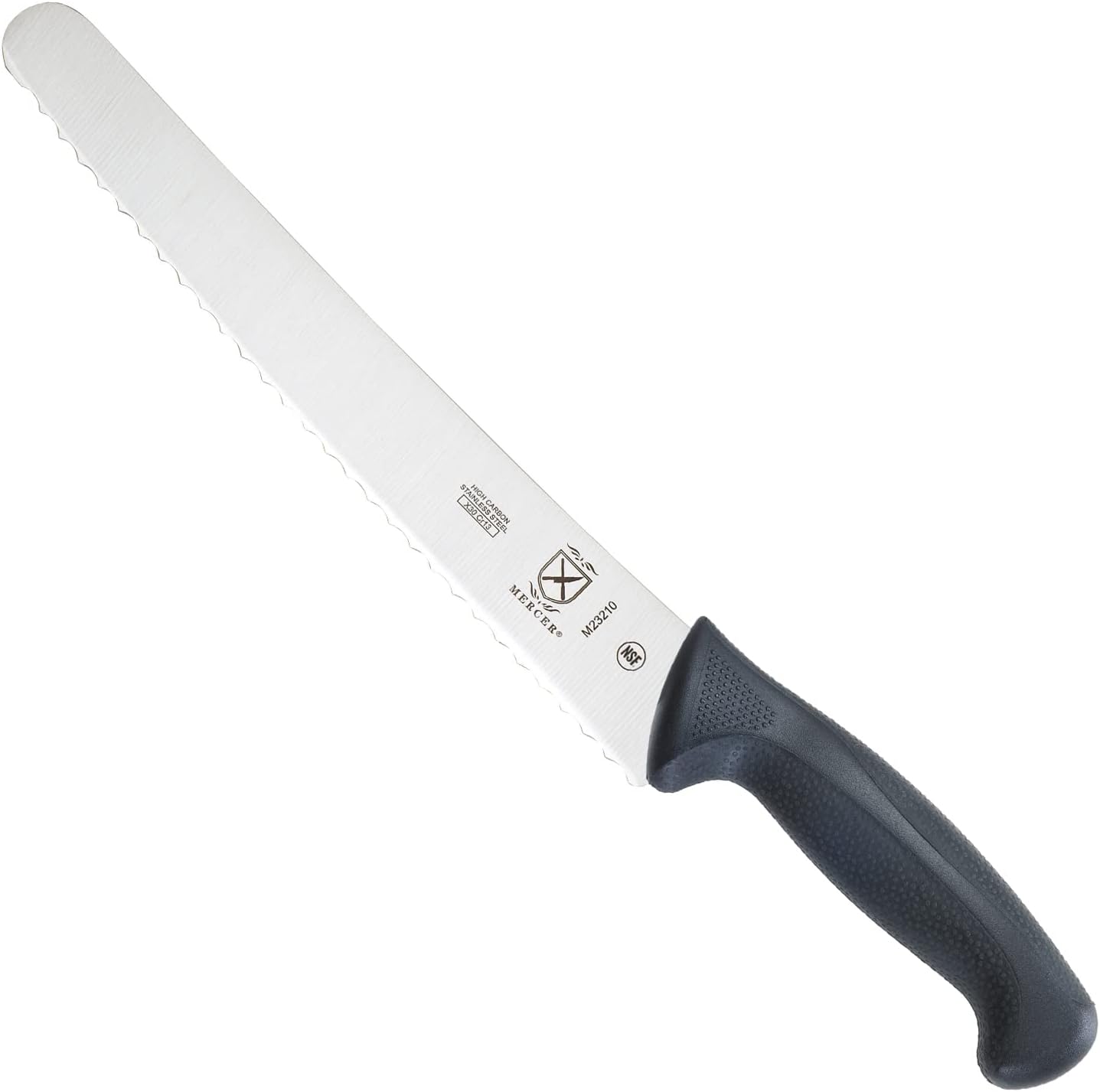
Neither ceramic nor a standard chef’s knife is ideal here; you want a serrated steel bread knife. Ceramic serrated blades exist but are rare and expensive, and the sawing motion required for crusty bread puts lateral stress on the edge that ceramic tolerates poorly. Stick with steel for this job.
Fresh Herbs and Chiffonade
This is a strong use case for either material, but a lightweight ceramic santoku or utility knife shines here. Herbs bruise easily under a heavy, dull blade, and ceramic’s razor edge produces cleaner, less-oxidized cuts on delicate basil, cilantro, and mint.
Sushi and Sashimi
Professional sushi chefs almost universally use specialized steel blades, such as a yanagiba, because the long, continuous draw-cut motion required for clean fish slices demands a blade that can be honed to an extremely fine, durable edge and resharpened frequently. Ceramic’s inability to take the same ultra-acute edge geometry, combined with its brittleness under the pressure of long slicing strokes, makes it a poor substitute for serious sashimi work, despite ceramic’s taste-neutral appeal for acidic fish preparations like ceviche.
Meat, Poultry, and Anything With Bone
Always steel. A boning knife or cleaver needs to flex slightly and absorb shock without shattering. Never use a ceramic blade near bone, cartilage, or frozen meat.
Tomatoes and Citrus
This is ceramic’s home turf. The acidic juice never reacts with the blade, there is no metallic aftertaste, and the knife stays sharp through repeated slicing without the need for mid-prep honing.
Root Vegetables and Squash
Steel is the safer choice. Dense, unevenly shaped vegetables like butternut squash or sweet potatoes can require a rocking or twisting motion to get through, and that torque is exactly what causes ceramic blades to chip or snap.
16. Common Myths About Ceramic and Steel Knives, Debunked
Myth: “Ceramic knives never need sharpening.” False. They need it far less often than steel, sometimes only once every year or two of moderate home use, but they still dull eventually and require specialized diamond sharpening when they do.
Myth: “Steel knives are always heavier and more tiring to use.” Not necessarily. Weight varies enormously by knife design; a thin Japanese steel santoku can weigh nearly the same as some ceramic blades, while a thick German bolster-heavy chef’s knife will feel substantially heavier than either.
Myth: “Ceramic is basically the same as the ceramic in your dinner plates.” Not at all. Dinnerware ceramic is typically a much softer, more porous fired clay, while knife-grade zirconia is engineered and sintered specifically for hardness and edge geometry.
Myth: “You can throw a ceramic knife in the dishwasher because it can’t rust.” Rust resistance has nothing to do with dishwasher safety here. The danger to a ceramic blade in a dishwasher is mechanical, not chemical: the tumbling and jostling of other dishes and utensils can chip the brittle edge, so hand washing remains the recommended practice for both ceramic and high-end steel knives.
Myth: “A more expensive ceramic knife will never chip.” Even the best ceramic knives from top manufacturers can chip if mishandled. Price buys you purer zirconia and better quality control, which reduces the risk, but it does not eliminate the fundamental brittleness of the material.
17. Ergonomics, Weight, and How Each Material Changes Your Knife Skills
The physical experience of using a ceramic knife differs noticeably from steel, and it is worth understanding before you buy, especially if you are used to one style. Ceramic blades are dramatically lighter than steel blades of the same size, since zirconia has a lower density than most knife steels. This lightness can feel liberating for detailed prep work like coring strawberries or peeling garlic, but it also means the knife does less of the work for you.
With a heavier steel chef’s knife, gravity and momentum assist the downward chopping motion, letting the blade’s own weight help drive it through vegetables with less hand fatigue during long prep sessions. With a feather-light ceramic blade, you have to generate more of that downward force yourself, which some cooks find tiring over an extended chopping session, while others appreciate the reduced strain on the wrist during small, repetitive cuts.
Balance point also differs. Many steel knives are designed with a bolster or heel weighting that shifts the balance point forward, near the front of the handle, which some cooks prefer for rocking cuts common with a chef’s knife or santoku. Ceramic knives, lacking a metal bolster, often balance further back toward the handle, which can feel less stable to cooks accustomed to Western steel designs but perfectly natural to those used to lighter Japanese-style blades.
18. Left-Handed Cooks and Blade Grind Considerations
An underappreciated point in the ceramic versus steel conversation is blade grind symmetry. The vast majority of ceramic kitchen knives are ground with a symmetrical, double-bevel edge, meaning the cutting angle is identical on both sides of the blade. This makes them just as comfortable for left-handed cooks as for right-handed ones, since there is no handedness bias built into the edge geometry.
Steel knives are more varied. Most Western-style steel knives, including typical offerings from Wusthof, Zwilling, and Victorinox, also use a symmetrical double-bevel grind and work equally well for both hands. However, some premium single-bevel Japanese steel knives, traditionally used for specialized tasks like filleting fish or slicing sashimi, are ground asymmetrically and manufactured specifically for right-handed use, with left-handed versions available only as special orders from select Japanese makers. If you are left-handed and considering a specialized single-bevel steel knife, always confirm the grind orientation before purchasing; this is a non-issue with nearly every ceramic knife on the market.
19. Gifting Guide: Ceramic or Steel as a Present?
Kitchen knives make a popular gift, but the two materials send a different message and suit different recipients. A ceramic knife, especially a colorful or boxed set, works well as a lighter, lower-commitment gift for a casual home cook, a college student moving into their first apartment, or anyone who primarily preps fruit, vegetables, and salads. Its low weight and rust-proof nature also make it a thoughtful gift for an older relative who may have reduced grip strength or arthritis, since there is no honing routine to maintain.
A steel knife, particularly a well-known forged option from the best chef knife brands, tends to read as a more serious, heirloom-style gift. It signals an investment in someone’s cooking hobby and suits a recipient who already cooks seriously, entertains often, or has expressed interest in upgrading their knife block. Pairing a steel gift knife with a sharpening stone or a subscription to a professional sharpening service rounds out the present nicely and addresses the maintenance steel requires.
For a gift that covers all bases, consider one of the hybrid knife sets that includes both a steel chef’s knife for heavy-duty tasks and a ceramic paring knife for lighter jobs, letting the recipient discover which material they prefer through daily use rather than committing to just one.
20. A Step-by-Step Buying Checklist
- Identify your primary use case. If you regularly break down whole chickens, cut through squash, or prep bone-in meat, prioritize a quality steel chef’s knife first.
- Decide if you want a low-maintenance specialist. If sharpening intimidates you and your prep is mostly fruit and vegetables, a ceramic utility or paring knife is a smart secondary purchase.
- Set a realistic budget for the whole system, not just one blade. Factor in a cutting board, a honing rod or whetstone for steel, and a protective sheath for ceramic.
- Buy from an established brand. For ceramic, Kyocera remains the benchmark; for steel, look to the well-known German and Japanese names covered in our brand comparison guide.
- Plan your storage before you buy. A knife drawer organizer or magnetic strip protects both materials from chipping and dulling in a cluttered drawer.
- Confirm your sharpening plan. Know in advance whether you will hone steel at home or send ceramic out for professional resharpening, so the knife stays useful for years rather than becoming a dull drawer occupant.
Frequently Asked Questions (FAQ)
Yes, for soft cheese. However, for hard blocks of parmesan or cheddar, the lateral force (twisting) can snap a ceramic blade. Use a steel utility knife instead.
It is very difficult. You need diamond stones and patience. It is often better to send them back to the manufacturer (Kyocera offers a sharpening service) or use a high-end electric sharpener specifically designed for ceramic.
You likely hit something hard (bone, pit, frozen food) or twisted the blade while cutting. Ceramic has zero flexibility. Always cut straight down or slice; never pry.
Often, yes. Zirconia can be ground to microscopic fineness. However, steel scalpels are used because they are less likely to break inside a patient!
Stick to wood or soft plastic/composite boards. Glass, marble, granite, and bamboo end-grain boards are all too hard for zirconia and will chip the edge on contact. See our full breakdown below in the cutting board section.
No. Because zirconia is non-porous and chemically inert, it does not absorb onion or garlic oils the way some steel blades and wooden handles can. A quick hand wash removes odor completely.
Not necessarily “safer” in the way most parents assume. They can still cut skin easily, and the risk of the blade snapping under twisting pressure introduces a different hazard. For children learning knife skills, a dedicated dull-edged kids’ knife, not a full ceramic or steel blade, is the better choice.
You can, but pack it carefully. Ceramic has no rust risk in humid outdoor conditions, which is a real advantage, but the same drop or impact that a steel camp knife shrugs off can snap a ceramic blade. See the outdoor use section below for a fuller comparison.
Ceramic blades are typically ground at a steeper edge angle than steel, often in the 15 to 20 degree range per side, because the material is too brittle to hold the thinner 10 to 15 degree edges common on premium Japanese steel. Details are covered further down.
21. Choosing the Right Cutting Board for Each Blade Material
The cutting board underneath your knife matters almost as much as the blade itself, and this is an area where ceramic and steel diverge sharply. Because zirconia is harder than nearly every common countertop material except natural stone and tempered glass, the choice of cutting surface can make or break (sometimes literally) a ceramic blade’s edge and longevity.
Glass and marble cutting boards are a hard no for ceramic knives. These surfaces are harder than or comparable in hardness to zirconia itself, so every stroke essentially grinds the ceramic edge against an equally hard (or harder) surface, causing rapid micro-chipping that is often invisible until the blade suddenly feels dull. Steel fares only marginally better on glass; most steel knife manufacturers, including Wusthof and Zwilling, explicitly warn against glass cutting boards because they dull steel edges far faster than wood.
Bamboo boards sit in an awkward middle ground. Bamboo is technically a grass, not a wood, and its silica content makes it considerably harder than most hardwoods. It is a reasonable surface for steel but is often too abrasive for daily ceramic use, accelerating dulling and increasing chip risk over time compared to true wood.
End-grain hardwood boards, such as maple, walnut, or cherry cut so the wood fibers face upward, are the gold standard for both materials, but especially for ceramic. The fibers act almost like a self-healing surface, closing back up slightly after each cut rather than presenting a hard, flat plane, and this cushioning effect is exactly what a brittle zirconia edge needs to survive daily use.
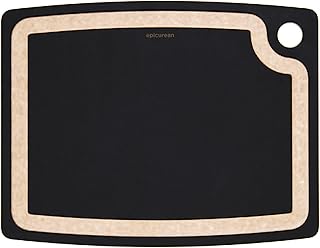
Soft plastic and composite boards (the polypropylene boards common in professional kitchens) are the second-best option for ceramic and a fully acceptable, dishwasher-friendly choice for steel. They are softer than wood in absolute terms but consistent and predictable, without the hidden hard spots that can appear in cheap, warped, or heavily used wood boards.
The practical rule: if you already own a glass, marble, or granite cutting board for its easy-clean surface, keep it for serving or as a trivet, and buy a dedicated end-grain wood or soft composite board specifically for the knife work in your kitchen, regardless of which blade material you use most.
22. How Ceramic Knives Are Actually Manufactured
Understanding the manufacturing process behind a ceramic blade helps explain both its remarkable hardness and its inherent brittleness, and it is a frequently searched topic among shoppers trying to understand what they are actually paying for.
The process begins with ultra-fine zirconium dioxide powder, which is refined to a purity level far beyond what is used in industrial ceramics like tile or brick. This powder is mixed with a small percentage of stabilizing oxides, commonly yttria, which prevents the zirconia from undergoing a destructive phase transformation when it is later heated and cooled. The stabilized powder is then compressed under enormous hydraulic pressure into a rough blade-shaped blank, a process called cold isostatic pressing.
That blank is then sintered, meaning it is fired in a kiln at extremely high temperatures, often well over 1,400 degrees Celsius, for many hours. During sintering, the zirconia particles fuse together at a molecular level, and the blank shrinks significantly (often 20 percent or more in every dimension) as it densifies into a hard, glass-like ceramic body. This shrinkage is precisely calculated by manufacturers so that the finished, ground blade ends up at the correct final dimensions.
After sintering, the rough blank is far too hard to shape with conventional steel-cutting tools. Instead, diamond-coated grinding wheels, the only material harder than sintered zirconia, are used to grind the blank down to its final blade profile and edge geometry. This diamond grinding step is slow, energy-intensive, and a major reason why quality ceramic knives command a higher price than a comparably sized stamped steel blade, even though the raw material (zirconia powder) itself is not especially expensive.
This manufacturing reality is also why cheap, no-name ceramic knives chip so easily: cutting corners anywhere in the powder purity, pressing consistency, sintering time and temperature, or final diamond grinding introduces microscopic flaws in the ceramic structure that act as chip and fracture starting points the very first time the blade meets a cutting board.
23. Blade Length and Shape: How Material Changes What is Practical
Steel knives are manufactured across an enormous range of blade lengths and shapes because forged and stamped steel can be ground into virtually any profile, from a tiny 3-inch paring knife up to a 12-inch slicing knife or a heavy cleaver. Ceramic knives, by contrast, are almost always found in a narrower length range, typically between 3 and 7 inches, and this is a direct consequence of the manufacturing limits and brittleness discussed above.
Longer ceramic blades are structurally riskier. As blade length increases, so does the leverage exerted on the material during any twisting or flexing motion, and zirconia’s total lack of flex means a long ceramic blade is disproportionately more prone to snapping than a short one under the same sideways force. This is why you will rarely find an 8-inch or larger ceramic chef’s knife from a reputable manufacturer, and why the vast majority of quality ceramic offerings, including the Kyocera lineup, top out around 6 to 7 inches for chef’s knives and are most common as 3 to 4.5-inch paring and utility blades.
Blade shape follows a similar pattern. Ceramic knives are almost universally straight-edged with a gentle curve for rock-chopping, similar to a santoku profile, because more aggressive curves and pointed tips (like a traditional Western chef’s knife tip used for delicate boning work) concentrate stress at the tip, which is the single most fragile point on any ceramic blade. Steel can be shaped into a fine, pointed tip for detail work without the same fracture risk, which is one reason steel remains the default choice for tasks requiring a sharp, maneuverable point.
24. The “Cutting Board Chatter” Difference: Noise and Feel While You Cook
An often-overlooked but frequently searched difference between ceramic and steel knives is simply how they sound and feel during use. Steel blades striking a cutting board produce a familiar, resonant chopping sound, and the metal’s slight flex transmits feedback through the handle that experienced cooks use, often unconsciously, to judge how cleanly a cut has gone through food.
Ceramic blades tend to produce a noticeably different sound: a sharper, higher-pitched click or tap rather than the duller thud of steel, since zirconia does not flex or absorb vibration the way metal does. Some home cooks find this crisper feedback satisfying, particularly when repetitively slicing something like cucumbers or strawberries. Others describe it as feeling less forgiving or more jarring on the wrist over a long prep session, precisely because none of the impact is absorbed by the blade itself; all of it transmits back into the cutting hand.
This difference is subtle and highly subjective, but it is worth testing in person if possible, for example by trying a ceramic knife at a kitchenware store demo table, before committing to a full ceramic knife set based on specs alone.
25. Ceramic and Steel Knives for Camping, Hiking, and Outdoor Cooking
Outdoor cooking presents a genuinely different set of demands than a kitchen countertop, and the ceramic versus steel calculation shifts accordingly. Camp cooking often means bone-in cuts of meat cooked over a fire, dense root vegetables, uneven or improvised cutting surfaces like a log round or a plastic plate, and knives that get tossed into a pack alongside other hard gear.
Steel is the clear default for outdoor use, and for good reason. A steel camp knife or cleaver can survive being dropped on rocks, batoned through kindling in a pinch, used to pry open a stubborn container, or pressed into service for tasks well outside typical food prep, all without catastrophic failure. It can also be quickly touched up on a small field sharpening stone if it dulls on a multi-day trip.
Ceramic’s advantages, rust immunity in humid or wet backcountry conditions and an edge that stays sharp without maintenance across an entire trip, are real, but they are outweighed for most outdoor use by the risk of a single hard impact ending the knife’s usefulness entirely, with no field-repair option available. Ceramic can still make sense as a secondary paring knife for slicing fruit and vegetables at a car-camping site with a controlled kitchen setup, packed in a rigid sheath and kept away from rough handling, but it should not be anyone’s only blade in a backcountry kit.
Field Tip
If you are building an outdoor kitchen kit, treat ceramic as a “car camping only” specialist tool. For backpacking, canoe trips, or anywhere gear takes real abuse, steel is the only responsible choice.
26. Warranties, Guarantees, and What Happens When a Blade Fails
Warranty coverage differs meaningfully between the two materials, and it is worth understanding before a knife ever chips or bends. Premium steel knife manufacturers, including Wusthof, Zwilling, and Victorinox, typically back their forged lines with long or even limited-lifetime warranties covering manufacturing defects such as a blade that develops rust prematurely under normal use, a handle that separates from the tang, or a factory grinding flaw. These warranties almost never cover damage from misuse: a bent tip from prying, chips from cutting bone with the wrong knife, or rust from genuine neglect are typically excluded.
Ceramic manufacturers, led by Kyocera, generally offer similarly structured warranties against manufacturing defects in the zirconia itself, such as a blade that chips or cracks under completely normal slicing conditions with no impact or twisting involved. However, because ceramic’s failure mode (a chip or a snap) is so often difficult to distinguish after the fact from an accidental drop or a moment of misuse, many owners find ceramic warranty claims more difficult to make successfully than steel ones, simply because the burden of proving “this was a defect, not an accident” falls more heavily on the customer.
Kyocera and several other ceramic brands also offer paid professional resharpening services, which function as a de facto maintenance warranty of sorts, extending the useful life of a blade well beyond what a home cook could achieve without specialized diamond sharpening equipment. When comparing warranties across brands, look specifically at whether accidental chip repair or replacement is offered at a discounted rate rather than assuming a “lifetime warranty” label covers the kind of damage ceramic knives are actually prone to.
27. Are Ceramic Knives Actually Safer in the Kitchen?
A persistent claim in ceramic knife marketing is that the knives are somehow “safer” than steel, largely because they are lightweight and cannot rust. It is worth separating marketing from reality here. A ceramic edge is every bit as capable of cutting skin as a steel edge, and in fact an extremely sharp, well-maintained ceramic blade can produce a cleaner, deeper cut with less resistance than a moderately dull steel knife, precisely because it meets so little resistance on the way through.
The real safety difference is more nuanced. Because ceramic knives require far less maintenance to stay sharp, a household is less likely to be using a dangerously dull knife, which is statistically a common cause of kitchen cuts, since a dull blade requires more force and is more prone to slipping off the food being cut. On the other hand, ceramic’s brittleness introduces a different hazard: a blade that chips or snaps unexpectedly can send a sharp fragment flying, and a cook who is unaware of ceramic’s twisting sensitivity may apply exactly the kind of lateral pressure that causes this kind of failure mid-cut.
For households with children learning knife skills, neither a full-size ceramic nor a full-size steel chef’s knife is the right starting tool. Dedicated dull-edged or serrated kids’ knives designed specifically for teaching cutting technique without a sharp edge are the safer choice until a child has developed consistent, controlled technique.
28. Edge Angles Explained: Why Ceramic and Steel Are Ground Differently
Edge angle, the angle at which the blade is ground on each side to form the cutting edge, is a technical detail that explains a lot about why ceramic and steel knives feel and perform differently. Premium Japanese steel knives, including many of the models discussed throughout this guide, are frequently ground at a narrow angle of around 10 to 15 degrees per side, producing an extremely thin, acute edge capable of exceptional sharpness, but one that is also more delicate and prone to rolling or micro-chipping under stress.
Ceramic blades cannot be ground this thin without becoming dangerously fragile, since zirconia has essentially no ability to flex or deform slightly under pressure the way steel does; a razor-thin ceramic edge would chip on contact with almost anything. To compensate, most ceramic knife manufacturers grind their blades at a steeper angle, commonly in the range of 15 to 20 degrees per side, trading a small amount of theoretical sharpness for a meaningfully more durable edge that can survive normal slicing tasks without immediately chipping.
This is also why ceramic sharpening services and diamond wheel sharpeners are calibrated to reproduce this specific steeper angle rather than the acute angles used on fine steel knives; sharpening a ceramic blade at too shallow an angle, even with the correct diamond abrasive, would recreate the same fragility problem the factory-ground steeper angle was designed to avoid.
29. Odor and Stain Retention: A Practical Kitchen Consideration
Beyond the well-known metallic-taste issue with reactive steels, odor retention is a smaller but genuinely searched concern for home cooks who prep a lot of pungent ingredients like garlic, onion, and fish. Zirconia ceramic is essentially non-porous at a microscopic level once fully sintered, meaning it has very little surface structure for oils and odor compounds to cling to. A quick rinse and wipe after cutting garlic or onion typically removes essentially all trace of odor from a ceramic blade.
Steel, particularly lower-quality stamped stainless steel with a less polished finish, can retain faint odors slightly longer if not washed promptly, though high-quality forged steel with a properly polished surface performs quite well in this regard too. The bigger factor for steel is not the blade itself but the handle material; wooden handles, even sealed ones, are more prone to absorbing odors over years of use than the synthetic handles (often a composite resin) used on most ceramic knives and many modern steel knives alike.
Staining follows a similar pattern. Ceramic blades essentially cannot stain from food acids or pigments, while carbon steel blades will develop a visible patina over time from exposure to acidic foods, a cosmetic change that many carbon steel enthusiasts actually consider desirable, since it can help protect against deeper corrosion, but one that stainless steel and ceramic users typically do not want to see on their blades.
30. Where Each Material Sells Best: Retail and Regional Notes
Availability and typical price points for ceramic versus steel knives vary somewhat by region and retail channel, which is worth knowing if you are comparison shopping. In Japan, where Kyocera originated the category, ceramic knives are widely available across a range of price points, from mass-market department store lines to specialty boutique offerings, and enjoy a stronger cultural foothold than in many Western markets.
In the United States and much of Europe, ceramic knives are most commonly found through major online marketplaces and kitchenware specialty retailers rather than as a standard offering in big-box department stores, where the steel knife selection remains far larger and more prominently displayed. This retail pattern reinforces the perception, not entirely inaccurate, that ceramic remains a secondary or specialty purchase for most Western home cooks rather than a primary knife block staple.
Steel knives, by contrast, are available virtually everywhere, from budget department store lines and warehouse club multi-packs up through specialty Japanese knife shops that import blades directly from individual bladesmiths. This universal availability, combined with the enormous range of price points from entry-level stamped steel to hand-forged premium blades, is one of the practical reasons steel remains the default recommendation for a first or only kitchen knife, regardless of where a shopper is located.
Conclusion: The Verdict
The Ceramic vs. Steel debate is not about replacing one with the other; it is about building a team.
Your Primary Weapon: Should be a high-quality Steel Chef’s Knife (budget friendly or premium). It is the only tool that can handle every task safely.
Your Specialist: Should be a Ceramic Paring or Utility knife. Use it for your repetitive slicing of acidic fruits, salad prep, and boneless meats. It will stay sharp forever and save your steel knife from dulling on simple tasks.
Ready to upgrade? Check out our reviews of the best knife sets to see which ones include both material types!