Meat Cleaver vs. Vegetable Cleaver: Don’t Destroy Your Knife!
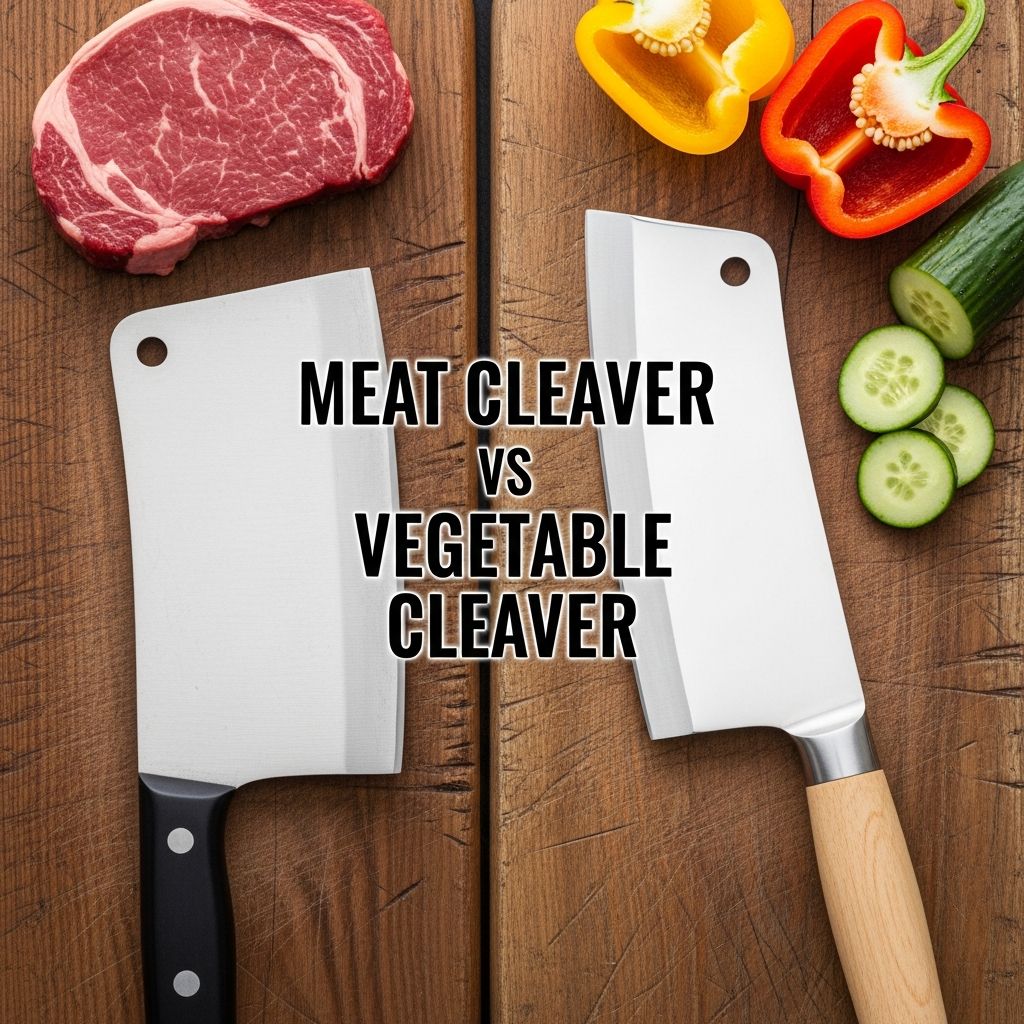
In the world of kitchen cutlery, there is no mistake more fatal to a knife than confusing a Meat Cleaver with a Vegetable Cleaver. To the untrained eye, they look remarkably similar: large, rectangular blades that look like hatchets.
However, the difference in geometry, steel thickness, and purpose is night and day. Use a meat cleaver on a tomato, and you will squash it. Use a vegetable cleaver on a chicken bone, and you will shatter the blade instantly.
If you are browsing knifeindex.com/ looking to add a powerhouse tool to your kit, this guide is essential. Whether you are comparing Shun vs. Wusthof or looking for the best affordable option, understanding this distinction will save your wallet and your fingers.
1. The Meat Cleaver: The Bone Crusher
The Meat Cleaver is the tank of the kitchen. It is designed for brute force. The blade is thick, heavy, and typically made of softer steel that will dent rather than chip upon impact.
Key Characteristics
- Spine Thickness: Thick and heavy to generate momentum.
- Edge Angle: Wide and obtuse (around 20-25 degrees).
- Steel: Tougher, softer steel (often found in German kitchen knives like Wusthof).
- Primary Use: Chopping through bones, cartilage, lobster shells, and frozen food.
If you are butchering whole chickens or ribs, this is the tool. Check out our Cleaver vs Butcher Knife comparison for more on heavy-duty tools.
2. The Vegetable Cleaver (Cai Dao / Nakiri): The Laser
The Vegetable Cleaver (often called a Chinese Cleaver or a Nakiri in Japanese contexts) is a precision instrument. It is designed for slicing, not chopping. The blade is razor-thin and incredibly sharp.
Key Characteristics
- Spine Thickness: Thin and lightweight.
- Edge Angle: Very acute (10-15 degrees).
- Steel: Harder, brittle steel (common in Japanese kitchen knives like Shun or Miyabi).
- Primary Use: Slicing vegetables paper-thin, mincing herbs, scooping food.
⚠️ The Golden Rule
NEVER use a vegetable cleaver on bones. The edge is too thin. It will crack, chip, or shatter. If you own a high-end Nakiri from a brand like Shun or Kamikoto, treat it like a scalpel, not an axe.
3. Head-to-Head: The Specs Breakdown
| Feature | Meat Cleaver | Vegetable Cleaver |
|---|---|---|
| Weight | Heavy (> 1 lb) | Light (< 0.7 lb) |
| Blade Thickness | Thick spine | Thin spine (Laser) |
| Flexibility | None (Rigid) | Slight Flex (Hard Steel) |
| Best For | Bones, Pumpkin, Lobster | Onions, Cabbage, Herbs |
| Technique | Swinging / Chopping | Push-Cutting / Slicing |
4. The “Chinese Chef’s Knife” (Cai Dao)
The Vegetable Cleaver is often referred to as a “Chinese Chef’s Knife.” In Chinese cuisine, this single tool handles 90% of kitchen tasks (smashing garlic, slicing meat, chopping veg). However, skilled chefs use different parts of the blade for different tasks.
If you want a versatile “do-it-all” knife but prefer the Japanese aesthetic, look at the Nakiri. It is smaller and easier to handle for Western cooks accustomed to a Santoku.
5. Top Product Recommendations
We have tested the best chef knife brands to find the leaders in these categories.
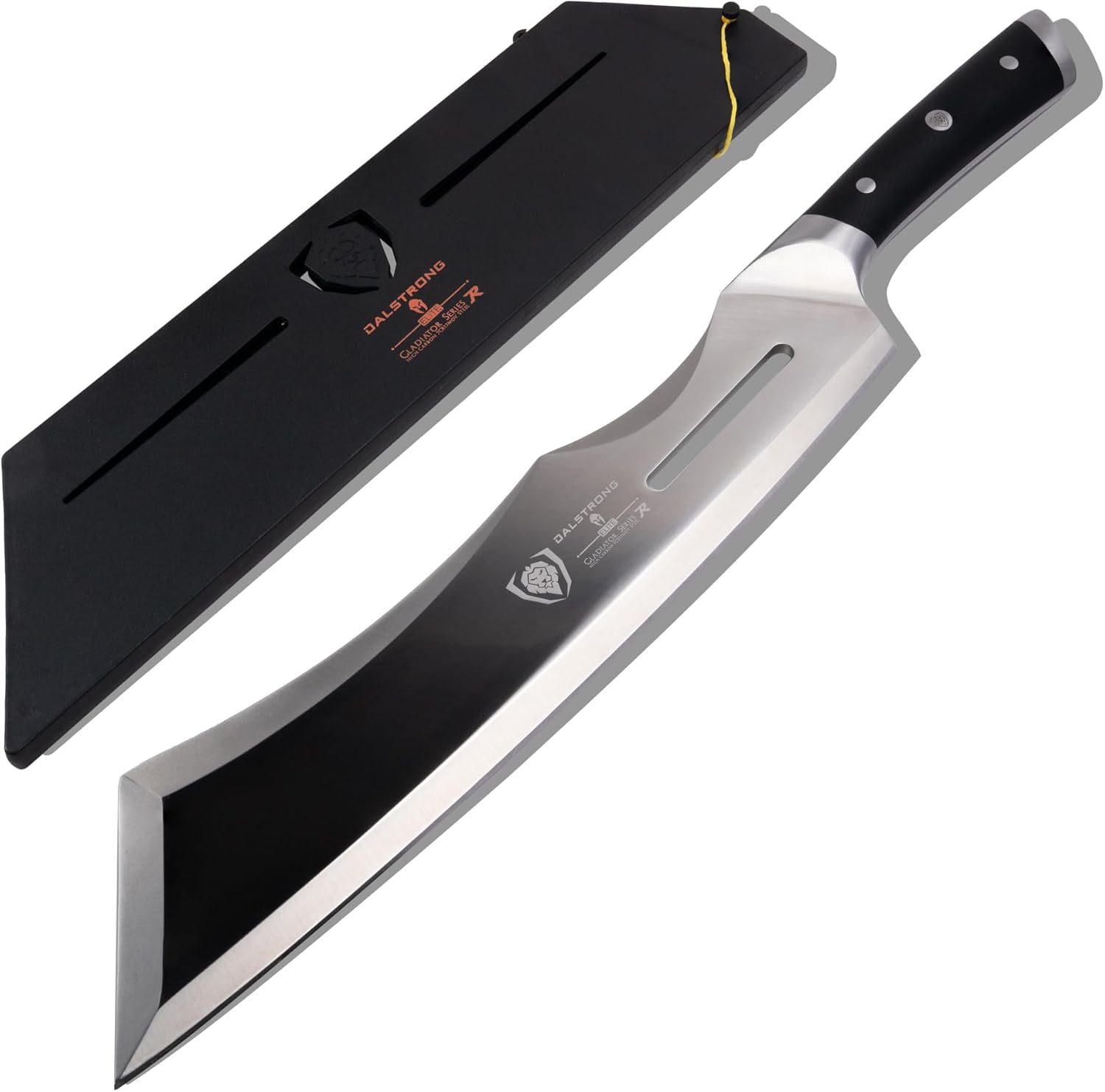 Dalstrong Gladiator Series “The Ravager”
A beast of a cleaver. Forged from high-carbon German steel. Heavy enough to go through bone, but balanced. See Dalstrong vs Wusthof for more.
Check Price on Amazon Shun Classic 6.5″ Nakiri
The vegetable master. VG-MAX steel with Damascus cladding. Incredibly sharp and agile. Perfect for prep. See Shun vs Wusthof.
Check Price on Amazon6. Brand Battles: Who Makes the Best Cleavers?
Different brands excel at different styles. Here is a quick guide:
For Heavy Duty Meat Cleavers
- Wüsthof: Their classic cleaver is virtually indestructible. Ideal for fans of German durability.
- Dalstrong: Offers aggressive, heavy cleavers in their “Shadow Black” and “Gladiator” series. (See Dalstrong vs Zwilling).
- Zwilling: Their Pro cleaver features a unique curved bolster for a comfortable pinch grip. (See Zwilling vs Henkel).
For Precise Vegetable Cleavers
- Shun: The Classic Nakiri is a legend. Beautiful and functional. (See Dalstrong vs Shun).
- Global: The G-5 is a stainless steel vegetable cleaver that is lightweight and hygienic. (See Global vs Wusthof).
- Tojiro: Offers the best value-for-money Nakiri with VG10 steel. (See Tojiro vs Shun).
- Mac: The Mac Vegetable Cleaver is a favorite of pro chefs for its razor edge. (See Mac vs Wusthof).
7. Maintenance: Heavy vs. Delicate Care
The care routine for these two knives is opposite.
Meat Cleaver Care
It takes a beating. You will need to remove nicks from the edge regularly.
Sharpening: Use a coarser grit. A sturdy electric sharpener is often fine for meat cleavers.
Storage: It is heavy; don’t put it on a weak magnetic strip. Use a drawer or hang it by the hole.
Vegetable Cleaver Care
It needs babying. The edge is delicate.
Sharpening: Requires high-grit whetstones to maintain that laser edge.
Storage: Protect the edge! Use a drawer organizer or a blade guard.
Rust: High-carbon Nakiris (like Tojiro) rust easily. Learn how to remove rust.
Video Tutorial
Watch this video to see the proper cutting technique for a Chinese Vegetable Cleaver vs. a Meat Cleaver.
8. What About Other Knives?
Don’t force your cleaver to do everything.
Need to slice bread? Use a Bread Knife.
Need to filet fish? Use a Fillet Knife.
Need to peel? Use a Paring Knife.
Need to carve a roast? Use a Slicing Knife.
Frequently Asked Questions (FAQ)
You can, but it will be clumsy. The blade is thick, so it tends to “wedge” or crack hard vegetables (like carrots) rather than slicing through them. It is also heavy, which causes fatigue.
It is for hanging. In professional butcher shops, space is limited, so cleavers are hung on meat hooks when not in use. It is not for aerodynamics!
A Nakiri is the Japanese version of a vegetable cleaver. It is usually double-beveled and smaller than a Chinese Cleaver. It is an excellent alternative to a Chef’s Knife for vegetarians.
The Mercer Culinary and Victorinox lines offer stamped vegetable cleavers that are affordable, sharp, and durable for home use.
9. The History and Origin of the Cleaver
To really understand why a meat cleaver and a vegetable cleaver diverged so sharply in design, it helps to look at where each one came from. These two tools did not evolve side by side in the same kitchen tradition. They were born in different cultures, for different jobs, and only later did Western retailers start selling them next to each other under the single umbrella term “cleaver,” which is part of why so many home cooks get confused about which one they actually need.
The Chinese vegetable cleaver, known as the cai dao, has a documented history stretching back well over a thousand years. In traditional Chinese kitchens, counter space was scarce and stoves were often communal, so cooks needed one blade that could do almost everything: slice paper-thin vegetables, mince ginger and garlic, crush aromatics with the flat of the blade, and then act as a bench scraper to shovel the prepped ingredients straight into a wok. The rectangular shape was not chosen for looks. It maximizes usable edge length while keeping the blade easy to control with a pinch grip, and the tall, flat profile means a cook’s knuckles never touch the cutting board even when using a full rocking motion.
The Western meat cleaver has a very different lineage, tracing back to European butcher shops and the professional trade of breaking down whole carcasses. Butchers needed a tool that could survive repeated, forceful impacts against bone, cartilage, and thick connective tissue without chipping or bending. That demand shaped a completely different blade geometry: thicker stock, a heavier spine, and softer, more impact-resistant steel that could be re-ground after a hard day’s work rather than shattering on the first mistake. This is also where the wide, obtuse edge angle comes from. A thin edge concentrates force into a small contact area, which is great for slicing but disastrous for chopping through bone, since it will roll, chip, or crack almost immediately.
Understanding this history explains why the two tools cannot simply be swapped. A vegetable cleaver was engineered from the ground up as a slicing and mincing tool that happens to look like a rectangle, while a meat cleaver was engineered as a percussion tool that happens to look like a knife. If you keep that origin story in mind, the rest of the buying decision becomes much easier.
10. Anatomy of a Cleaver: Understanding Every Part
Before comparing brands or reading spec sheets, it helps to know the vocabulary that knife reviewers use, because these terms show up constantly in comparison articles like Dalstrong vs Wusthof or Shun vs Wusthof.
- Spine: The top, unsharpened edge of the blade. On a meat cleaver this is thick, sometimes 4-6mm, to add chopping momentum. On a vegetable cleaver it can be under 2mm, keeping the whole tool light.
- Heel: The back corner of the cutting edge, closest to the handle. This is where the most leverage and downward force can be applied, useful for starting a chop through a joint.
- Belly: The curved or straight portion of the edge used for the bulk of slicing motion. Vegetable cleavers often have a nearly flat belly to maximize contact with a cutting board during a rocking or push cut.
- Tip: The front corner of the blade. On a cleaver this is usually squared off rather than pointed, since precision piercing work is not the tool’s job.
- Tang: The portion of the steel that extends into the handle. This affects balance and durability, which is covered in more detail below.
- Bolster: A thickened section where the blade meets the handle, sometimes used as a finger guard or to shift the balance point closer to the hand.
- Ricasso: The flat, unsharpened section of blade directly above the handle, often used to rest an index finger for control during precision cuts.
- Hanging hole: The circular cutout near the spine, primarily there so the tool can be hung on a hook in a professional kitchen, not for any aerodynamic reason.
Once you can identify these features on a photo, reading any cleaver review becomes far easier, whether you are looking at a German-made meat cleaver or a Japanese-style vegetable cleaver.
11. Forged vs. Stamped Cleavers: Which Construction Wins
Beyond the meat-versus-vegetable divide, cleavers are also split by how they are manufactured, and this matters just as much for long-term performance.
Forged Cleavers
A forged blade starts as a single bar of steel that is heated and hammered (or pressed) into shape, then heat-treated to set the hardness. Forged construction typically produces a blade with a full bolster, better weight distribution, and often superior edge retention because the grain structure of the steel is more consistent. Most premium meat cleavers, including many entries in our best chef knife brands roundup, use forged construction because the process also improves impact resistance, which is critical when the blade is regularly striking bone.
Stamped Cleavers
A stamped blade is cut from a sheet of pre-rolled steel, similar to a cookie cutter punching shapes out of dough. This is faster and cheaper to produce, and modern stamped blades using good steel can still perform very well, especially in vegetable cleavers where light weight is actually an advantage rather than a drawback. Budget options from Mercer Culinary and Victorinox are almost always stamped, and they remain excellent choices for home cooks who do not need restaurant-grade toughness.
The key takeaway: forging tends to matter more for meat cleavers, where mass and impact resistance are the whole point, while a well-made stamped blade is often perfectly adequate, and sometimes preferable, for a vegetable cleaver.
12. Full Tang vs Partial Tang: Why It Matters for a Cleaver
The tang, or the portion of the blade steel that runs into the handle, plays an outsized role in how a cleaver feels and how long it lasts.
Full tang construction means the steel runs the entire length of the handle, usually visible as a metal strip sandwiched between two handle scales. This is the standard for almost every quality meat cleaver, because the constant shock of chopping through bone would eventually loosen or crack a handle that was only partially supported by steel. A full tang also shifts the balance point of the knife closer to the hand, which reduces wrist fatigue during long butchering sessions.
Partial tang or rat-tail tang construction is more common in some vegetable cleavers and traditional Chinese cai dao, where the handle is often a simple wooden dowel fitted onto a thinner extension of the blade steel. Because vegetable cleavers are not absorbing hard impacts, this is not automatically a dealbreaker, but it is worth inspecting closely on any cleaver under about thirty dollars, since a poorly fitted partial tang is the most common failure point on cheap cleavers.
If you are buying a meat cleaver specifically to break down whole birds or cut through ribs, insist on full tang construction. For a vegetable cleaver used purely for slicing, tang length matters less than overall balance and handle comfort.
13. Single Bevel vs Double Bevel Cleavers
Another distinction that trips up shoppers is edge geometry, specifically whether the cleaver is sharpened on one side or both.
Double bevel cleavers, which describes almost every Western meat cleaver and most vegetable cleavers sold outside Japan, have a symmetrical edge ground on both sides of the blade. This is easier to sharpen, more forgiving for beginners, and works equally well for both left- and right-handed users.
Single bevel cleavers, more common in traditional Japanese and some professional Chinese kitchens, are ground on only one face, leaving the other side almost completely flat. This creates an extremely thin, precise edge that is excellent for ultra-fine vegetable slicing and produces beautifully clean cuts with minimal tearing on delicate items like herbs or fish. The tradeoff is that single bevel blades require more skill to sharpen correctly and are typically handed to left- or right-hand specific configurations, so a right-handed single bevel cleaver will feel awkward in a left hand.
For most home cooks, a double bevel vegetable cleaver like the Nakiri style covered earlier offers the best balance of sharpness and ease of maintenance. Single bevel cleavers are worth considering only if you are committed to learning proper whetstone technique.
14. Choosing the Right Cleaver Size and Weight for Your Hand
Cleavers are not one-size-fits-all, and picking the wrong dimensions is one of the most common regrets among first-time buyers.
Blade Length
Meat cleavers typically range from 6 to 8 inches of cutting edge, with some heavy-duty butcher models reaching close to 9 inches. Longer blades generate more chopping momentum but are harder to control in a small kitchen. Vegetable cleavers tend to run smaller, often 6 to 7 inches, since precision matters more than reach.
Weight and Balance
A meat cleaver should feel front-heavy, with the weight concentrated toward the tip of the blade. That forward bias is exactly what generates chopping force with minimal arm effort, similar to how a hatchet is weighted. A vegetable cleaver should feel almost neutral or even slightly handle-heavy, since it is guided through push cuts and rock chops rather than swung.
Handle Size
Cooks with smaller hands often find oversized meat cleaver handles fatiguing during long sessions. Look for handle circumference specs when available, and if you can, hold the knife in a showroom before buying, using the guidance in our section on testing quality below.
As a rule of thumb, if you primarily cook for a family of four and rarely handle whole animals, a lighter 1-pound meat cleaver and a sub-half-pound vegetable cleaver will cover nearly every task without the fatigue that comes with oversized professional gear.
15. Essential Cleaver Techniques Every Cook Should Master
Owning the right cleaver is only half the equation. Using proper technique dramatically extends the life of the blade and improves results in the kitchen.
The Guillotine Chop (Meat Cleaver)
For cutting through joints or thin bones, lift the cleaver straight up and bring it down in a single, controlled vertical strike, letting the weight of the blade do the work rather than muscling it. Avoid glancing or angled strikes, which are the leading cause of chipped edges.
The Rock Chop (Vegetable Cleaver)
Keep the tip of the blade in light contact with the board and rock the heel up and down while walking the blade forward through vegetables. This is the same motion used with a Western chef’s knife, but the taller blade of a cleaver keeps your knuckles further from the board.
The Push Cut
For very thin, precise vegetable slices, push the blade forward and down through the ingredient in one motion rather than rocking. This technique is favored with harder, thinner steel like that found in a Tojiro or Shun vegetable cleaver.
The Flat-Blade Smash
Lay the cleaver flat against a garlic clove or ginger knob and strike the spine with the heel of your palm. This crushes the aromatic, loosens the skin for easy peeling, and is one of the signature techniques that makes a vegetable cleaver so versatile in Asian cooking.
The Scoop and Transfer
Use the flat side of the blade like a mini bench scraper to lift chopped ingredients and drop them directly into a pan or bowl. This is a technique that a narrow chef’s knife simply cannot replicate as efficiently, and it is one of the biggest quality-of-life advantages of owning a proper vegetable cleaver.
16. Cleavers Around the World: Regional Variations
While this guide focuses primarily on the Chinese-style vegetable cleaver and the Western butcher’s meat cleaver, cleaver-style blades exist across many culinary traditions, and it’s worth knowing the differences if you are shopping internationally or exploring different cuisines.
- Chinese Cai Dao: Covered extensively above; the true do-it-all rectangular blade of Chinese home and restaurant kitchens.
- Japanese Nakiri: A smaller, lighter double-bevel vegetable cleaver, generally considered easier for Western cooks to adapt to than a full-size cai dao.
- Japanese Usuba: A traditional single-bevel vegetable cleaver used by professional Japanese chefs, capable of extremely thin, translucent slicing.
- Korean Cleavers: Often nearly identical in profile to the Chinese cai dao, used interchangeably for meat and vegetables in home kitchens, though generally lighter than dedicated Western meat cleavers.
- Vietnamese Dao Bau: A close cousin of the cai dao, commonly used for everything from herb prep to breaking down poultry in home cooking.
- Western Butcher Cleaver: The heavy, thick-spined tool covered in depth in this guide, purpose-built for breaking down carcasses in professional meat cutting.
- German Hybrid Cleavers: Some German manufacturers, including brands compared in our Wusthof vs Victorinox guide, produce mid-weight cleavers intended as an all-purpose bridge between the two categories, though these compromises rarely excel at either extreme task.
Knowing these regional distinctions helps explain why a “cleaver” advertised on an international marketplace can vary so dramatically in weight, bevel, and intended use. Always check the specs rather than assuming all cleavers behave the same.
17. Ceramic Cleavers and Alternative Materials
Most cleavers on the market are steel, but ceramic cleavers have carved out a niche worth understanding before you buy.
Ceramic blades, typically made from zirconium oxide, hold an extremely sharp edge for a very long time and never impart a metallic taste or discoloration to acidic ingredients like citrus or tomatoes. They are also completely rust-proof, which eliminates the maintenance concerns discussed in our care section below. However, ceramic is brittle in a way that is fundamentally different from steel brittleness. A steel vegetable cleaver might chip if abused; a ceramic blade can shatter outright if dropped on a tile floor or twisted sideways during a cut.
Because of this fragility, ceramic cleavers are only ever sold in the vegetable cleaver category. A ceramic meat cleaver does not meaningfully exist as a mainstream product, since the material simply cannot survive impact against bone. If you are drawn to ceramic for its low maintenance and edge retention, treat it as a specialty tool for delicate slicing tasks only, and keep a steel option on hand for anything heavier.
18. Common Mistakes Beginners Make With Cleavers
Even after understanding the meat-versus-vegetable divide, new cleaver owners tend to repeat a handful of avoidable mistakes.
- Using the wrong cutting surface: Glass, stone, or ceramic cutting boards will dull and chip any cleaver almost immediately. Stick to wood or quality plastic boards for both cleaver types.
- Twisting the blade to pry food apart: Cleavers, especially vegetable cleavers, are not designed to be levered sideways. Twisting motion is the single most common cause of edge chips on thin-bladed Nakiri and cai dao knives.
- Storing loose in a drawer: Letting a cleaver knock against other utensils dulls the edge and creates nicks. A dedicated drawer organizer or blade guard solves this cheaply.
- Ignoring hand placement: New users sometimes choke up too far onto the blade itself out of caution, which actually reduces control. Learning a proper pinch grip on the bolster or ricasso improves both safety and precision.
- Trying to force a vegetable cleaver through bone “just this once”: This is the single most expensive mistake covered in this entire guide, and it is almost always irreversible.
- Skipping regular honing: Even a tough meat cleaver benefits from a honing rod between full sharpening sessions to keep the edge aligned.
19. Cleaver vs. Hatchet vs. Axe: Don’t Confuse These Either
Because cleavers visually resemble small hatchets, it’s worth clarifying why kitchen cleavers and outdoor camp axes are not interchangeable, despite the superficial similarity.
A hatchet or camp axe is designed for splitting wood fibers along the grain, using a wedge-shaped cross-section that pushes material apart rather than slicing through it cleanly. The steel is thick, the edge angle is very obtuse, and food-safety coatings or polish are irrelevant to its design. A kitchen meat cleaver, while it shares a superficially similar silhouette, is engineered with food-grade steel, a food-safe finish, and an edge angle tuned for cutting through bone and cartilage rather than splitting wood grain.
Using an actual camp hatchet in the kitchen is a genuine food-safety hazard, since these tools are not manufactured, finished, or tested to food-contact standards, and may carry residues or coatings unsuitable for meal preparation. Likewise, using an expensive kitchen meat cleaver to split firewood on a camping trip will very likely destroy the edge and can crack the handle, since kitchen cleavers are not heat-treated for that kind of repeated, off-axis impact. Keep these tools in their respective worlds.
20. How Much Should You Spend? Cleaver Price Tiers Explained
Cleaver pricing varies enormously, and understanding the tiers helps you avoid both overspending and being disappointed by a bargain-bin purchase.
Budget Tier (Under $30)
Stamped construction, softer stainless steel, and simple handles dominate this range. Brands like Mercer Culinary and Victorinox deliver solid, food-safe performance here, particularly for vegetable cleavers where light stamped steel is actually an advantage.
Mid Tier ($30-$100)
This range introduces forged construction, better heat treatment, and improved edge retention. Most home cooks will find their ideal cleaver in this bracket, whether shopping for a heavy-duty meat cleaver or a sharper vegetable cleaver from a brand like Tojiro.
Premium Tier ($100-$250)
Premium steels, Damascus cladding, and refined ergonomics show up here, exemplified by cleavers like the Shun Classic Nakiri featured earlier in this guide. These knives reward proper maintenance with exceptional edge life.
Professional / Collector Tier ($250+)
Hand-forged, small-batch cleavers using exotic steels or traditional Japanese forging techniques live here. These are typically overkill for casual home cooking but prized by serious enthusiasts and professional chefs.
21. How to Test a Cleaver’s Quality Before You Buy
If you have the chance to handle a cleaver in person before purchasing, a few quick checks reveal a lot about build quality.
- Balance test: Hold the knife loosely at the pinch grip point just above the handle. A well-balanced meat cleaver should feel like it wants to tip slightly forward; a vegetable cleaver should feel nearly weightless and neutral.
- Flex test: Gently press the tip against a countertop (carefully). Excessive flex in a meat cleaver suggests soft, low-quality steel unsuited for chopping bone.
- Spine inspection: Run a finger along the spine. It should be smoothly finished, not sharp or rough, since your palm may rest against it during heavy chopping.
- Handle fit: Check for gaps between the handle scales and the tang, which indicate poor assembly and a higher risk of loosening over time.
- Edge inspection under light: Tilt the blade under a light source and look down the edge. Any visible waviness or inconsistency suggests uneven factory sharpening.
22. Left-Handed Cooks: What to Know About Cleaver Ergonomics
Most double-bevel cleavers, including nearly every product featured in this guide, work equally well for left- and right-handed cooks since the edge is symmetrical. The main consideration for left-handed users is handle shape rather than blade geometry: some ergonomic or contoured handles are molded specifically for a right-handed grip, and can feel awkward in the left hand.
The exception is single bevel cleavers, discussed earlier in this guide, which are ground specifically for one dominant hand. A left-handed cook purchasing a traditional single bevel Japanese vegetable cleaver should specifically request or verify a left-handed grind, since using a right-handed single bevel blade in the left hand will cause the knife to steer unpredictably during cuts.
23. Cleaver Safety in a Professional and Home Kitchen
Because cleavers are heavier and often used with more forceful motion than a standard chef’s knife, a few safety habits are worth building early.
- Always cut on a stable surface: A cutting board that slides during a chopping motion is dangerous with any knife, but especially with the added momentum of a meat cleaver.
- Keep your non-cutting hand in a claw grip: Curl fingertips under and guide with your knuckles, keeping fingertips well away from the blade path.
- Never catch a falling cleaver: If a cleaver slips off the counter, step back and let it fall. This applies to every knife, but the added weight of a cleaver makes the instinct to grab it especially risky.
- Dry the blade immediately after washing: Wet handles are a common cause of slips, and high-carbon steel used in many vegetable cleavers will begin to rust within minutes if left wet.
- Respect the swing radius: When using a meat cleaver’s guillotine chop, make sure nothing and no one is within the arc of the blade before striking.
24. Cleaver vs. Poultry Shears: Which Should You Reach For?
Many home cooks default to a meat cleaver for breaking down chicken, but poultry shears are often the safer and more precise choice for smaller birds, and it’s worth understanding when each tool actually wins.
Poultry shears use a scissor-like spring mechanism with a notched blade designed to grip and cut through small bones and joints with controlled hand pressure rather than swinging momentum. For a single chicken or a rack of ribs, shears are frequently faster, safer, and leave a cleaner cut than a cleaver, especially for cooks who are not confident with a guillotine chop. A meat cleaver still wins for larger cuts, thicker bones like those in a whole turkey leg, or high-volume prep where repeated shear squeezing becomes fatiguing.
Many serious home cooks eventually own both: shears for quick weeknight poultry prep and a proper meat cleaver, similar to the Dalstrong Gladiator style featured earlier, for heavier butchering tasks like breaking down a whole ham or splitting a rack of ribs.
25. Nakiri vs. Santoku vs. Vegetable Cleaver: Picking the Right Vegetable Knife
Shoppers often land on this comparison page while actually trying to decide between three different vegetable-focused knives, so it is worth untangling them directly.
Vegetable Cleaver (Cai Dao)
The largest and most rectangular of the three, offering maximum edge length and the ability to scoop and transfer ingredients. Best for cooks who prep large volumes of vegetables regularly, such as anyone cooking stir-fry style meals often.
Nakiri
A smaller, lighter rectangular blade, essentially a scaled-down Japanese take on the vegetable cleaver concept discussed throughout this guide. Easier for smaller hands and Western cooks to adopt, while still offering a flat edge ideal for straight down-and-through cuts.
Santoku
Not a cleaver at all, but often recommended alongside these tools. A Santoku has a curved tip more similar to a Western chef’s knife, trading some of the flat-edge scooping advantage for more versatility with meat, fish, and general prep. If you only want to own one all-purpose knife rather than a dedicated chef’s knife and a vegetable cleaver, a Santoku is the natural compromise pick.
If your cooking leans heavily toward vegetable-forward meals and stir-fries, a Nakiri or full vegetable cleaver will serve you better long-term than a Santoku. If you want one knife to handle everything reasonably well, the Santoku remains the more flexible generalist.
26. Buying Guide by Kitchen Type
The right cleaver purchase depends heavily on what kind of kitchen you’re actually equipping. Here is a quick-reference breakdown.
The Casual Home Cook
A single mid-tier vegetable cleaver, such as a Tojiro Nakiri, covers the vast majority of daily prep tasks. A meat cleaver is optional unless you regularly cook whole poultry or ribs.
The Home Butcher / Serious Carnivore
Invest in a heavy, full-tang forged meat cleaver like the Dalstrong Gladiator or a classic Wusthof model. Pair it with poultry shears for smaller jobs, as covered above.
The Asian-Cuisine Enthusiast
A traditional Chinese cai dao or a Nakiri-style vegetable cleaver becomes the primary daily-use knife in this kitchen, often replacing a Western chef’s knife entirely for prep work.
The Professional or Semi-Professional Kitchen
Consider owning multiple tiers: a heavy-duty bone-breaking cleaver, a precision vegetable cleaver, and possibly a single-bevel usuba for the most refined slicing work, alongside dedicated boning and fillet knives for tasks a cleaver was never meant to handle.
27. Sharpening Angles and Whetstone Grit Guide
Building on the maintenance section earlier, here is a more detailed breakdown of the angles and grits involved in keeping each cleaver type performing well.
Meat Cleaver Sharpening
Maintain the factory edge angle, typically 20 to 25 degrees per side. A coarse grit stone, roughly 400 to 600, is usually sufficient to remove nicks and re-establish the edge, since ultra-fine polishing is largely wasted on a tool meant for impact rather than delicate slicing. A quality electric sharpener set to a coarser preset can also work well for busy households.
Vegetable Cleaver Sharpening
Maintain a much narrower 10 to 15 degree angle per side. Start with a medium grit stone around 1000 to remove any dullness, then progress to a fine grit of 3000 to 6000 for a polished, push-cutting edge. This is where investing in proper whetstones pays off, since the thin edge geometry is unforgiving of coarse, uneven sharpening.
Whichever cleaver you own, maintaining a consistent angle matters more than the specific number you choose. Wildly varying your angle between sharpening sessions is the single biggest cause of an uneven, unpredictable edge over time.
28. Dishwasher Safety and Long-Term Care
It bears repeating with more specificity than the earlier care section: neither a meat cleaver nor a vegetable cleaver should ever go in a dishwasher, regardless of what the packaging claims about “dishwasher-safe” handles.
The combination of high heat, harsh detergent, and the blade knocking against other utensils during the wash cycle accelerates dulling, promotes rust on high-carbon steel, and can degrade wood or composite handle materials over time. Hand washing immediately after use, followed by thorough drying with a towel rather than air-drying, remains the standard recommended by nearly every reputable cleaver manufacturer, including the brands compared throughout our German and Japanese kitchen knife guides.
For high-carbon steel cleavers specifically, a light coating of food-safe mineral oil on the blade before long-term storage prevents surface rust from developing between uses, particularly in humid kitchens.
29. Are Cleavers a Good Gift for Home Cooks?
Cleavers, particularly attractive vegetable cleavers like the Damascus-clad Shun Classic Nakiri, make excellent gifts for cooking enthusiasts, but a few considerations improve the odds of a gift landing well.
Consider the recipient’s existing cooking style before choosing between a meat cleaver and a vegetable cleaver. A gift recipient who cooks mostly plant-forward or Asian-inspired meals will get far more use from a vegetable cleaver, while someone who regularly smokes, roasts, or breaks down whole cuts of meat will appreciate a heavy-duty option like those in our best chef knife brands guide. Pairing the knife with a proper storage solution or a basic whetstone set rounds out a thoughtful gift and signals that you understand the tool needs ongoing care.
30. Understanding Steel Types: What’s Really Inside Your Cleaver
Steel choice explains most of the performance differences discussed throughout this guide, and it is worth breaking down the specific alloys you’ll encounter while shopping.
High-Carbon Stainless Steel
This is the dominant choice for both categories today. Alloys like X50CrMoV15, commonly used in German meat cleavers, balance toughness with reasonable edge retention and strong corrosion resistance, making them forgiving for cooks who don’t want to obsess over drying the blade after every use.
VG-MAX and VG-10 Steel
Frequently found in premium Japanese vegetable cleavers, including the Shun Classic Nakiri featured earlier in this guide, these steels hold an extremely fine, sharp edge far longer than softer German alloys, at the cost of being somewhat more brittle and less forgiving of twisting or prying motions.
Carbon Steel (Non-Stainless)
Traditional Chinese cai dao and some professional Japanese cleavers use plain high-carbon steel without chromium for corrosion resistance. These blades sharpen to an exceptionally keen edge and are favored by professional chefs who don’t mind the extra maintenance, but they will rust within minutes if left wet, making the drying habits discussed in our safety section essential rather than optional.
Ceramic (Zirconium Oxide)
As discussed earlier, ceramic sits outside the traditional steel categories entirely, trading impact resistance for extreme edge retention and zero corrosion risk, exclusively in vegetable cleaver form factors.
Knowing your steel type helps set realistic expectations. A softer German stainless meat cleaver will need more frequent sharpening than a premium VG-MAX vegetable cleaver, but it will also tolerate abuse and impact that would chip the harder blade instantly, which is exactly why manufacturers match steel choice to intended use rather than mixing them randomly.
31. Sustainability and Longevity: Getting the Most From Your Investment
A well-made cleaver, properly cared for using the sharpening and storage guidance covered throughout this guide, can realistically last decades rather than years, which matters both for your wallet and for reducing kitchen tool waste over time.
Full tang, forged construction (discussed in earlier sections) tends to be the most repairable and re-sharpenable over the long term, since there is more steel mass to work with even after years of grinding away nicks and re-establishing the edge. Stamped, thinner blades eventually reach a point of diminishing returns where repeated sharpening has removed enough material that the geometry starts to change noticeably.
Buying fewer, better tools rather than replacing cheap cleavers every year or two is generally the more sustainable and cost-effective long-term strategy, whether you land on a heavy-duty option from our best chef knife brands guide or a precision vegetable cleaver profiled earlier in this article.
32. Extended FAQ: More Cleaver Questions Answered
For many Asian-cuisine-focused cooks, yes. However, the flat edge and squared tip make certain tasks, like piercing or fine tip work on delicate garnishes, more awkward than with a traditional pointed chef’s knife. Most cooks benefit from owning both rather than fully replacing one with the other.
Not necessarily. Beyond a certain point, extra weight adds fatigue without adding meaningful chopping power, and can actually reduce control and accuracy during a guillotine chop. Matching the weight to your hand size and strength, as discussed in our sizing section, matters more than simply buying the heaviest option available.
The taller blade profile, different balance point, and (for vegetable cleavers) flatter edge all require some adjustment. Most cooks adapt within a few sessions of practicing the rock chop and push cut techniques covered earlier in this guide.
A meat cleaver, particularly a forged, full-tang model, can handle occasional frozen food chopping thanks to its thick spine and impact-resistant steel. A thin vegetable cleaver should never be used this way, since frozen food behaves almost like bone and will chip a thin edge immediately.
Not necessarily, but as covered in our buying guide by kitchen type, most cooks who prep both meat and vegetables regularly find that owning both eliminates the temptation to misuse one tool for the other’s job, extending the life of both knives considerably.
33. Traveling and Shipping With a Cleaver
If you’re moving, traveling with kitchen gear, or shipping a cleaver as a gift, a few practical considerations reduce the risk of damage or an awkward encounter with security or shipping carriers.
Cleavers, because of their large blade profile, should always be wrapped in a rigid blade guard or thick cardboard sleeve and packed in checked luggage rather than a carry-on, since any large fixed blade will be confiscated at airport security screening. When shipping a cleaver, whether a heavy meat cleaver or a delicate vegetable cleaver, wrap the edge in several layers of cardboard secured with tape before boxing, and pad the handle separately if it uses a natural material like wood that can crack under shipping pressure or temperature swings. Many retailers who sell higher-end options, including brands featured in our best chef knife brands guide, already ship with reinforced blade guards for exactly this reason, but a little extra padding never hurts for long-distance moves.
34. Cleavers for Special Diets and Ingredients
Certain diets and ingredient types call for specific cleaver considerations worth knowing before you buy.
Kosher and Halal Kitchens
Many observant kosher and halal households maintain separate cleavers for meat and dairy or for meat and pareve preparation, similar to how they separate other cutting tools. A budget-friendly stamped vegetable cleaver from a brand like Mercer Culinary makes an economical option for a dedicated secondary blade in these households.
Vegan and Vegetarian Kitchens
For kitchens that never process meat or bone, a dedicated meat cleaver is rarely necessary at all, and investment should go entirely toward a quality vegetable cleaver or Nakiri, since that tool will see daily use handling everything from squash to leafy greens.
High-Volume Meal Preppers
Cooks who batch-prep vegetables for the week benefit enormously from the scoop-and-transfer technique covered earlier, making a full-size vegetable cleaver noticeably more efficient than a standard chef’s knife for repetitive, high-volume chopping sessions.
Conclusion: The Verdict
The choice between a Meat Cleaver vs. Vegetable Cleaver is simple geometry.
Choose a Meat Cleaver If: You regularly break down whole chickens, spare ribs, or tough squash. You need a tool that relies on weight and impact.
Choose a Vegetable Cleaver (Nakiri/Cai Dao) If: You want to slice piles of vegetables effortlessly. You want precision, speed, and a tool that can scoop up food from the cutting board.
Most serious kitchens need both. Check out our knife set reviews to see which collections include these specialty blades, or build your own kit with our budget recommendations.