Dalstrong vs. Zwilling: The Ultimate Showdown of Steel, Edge Retention, and Style
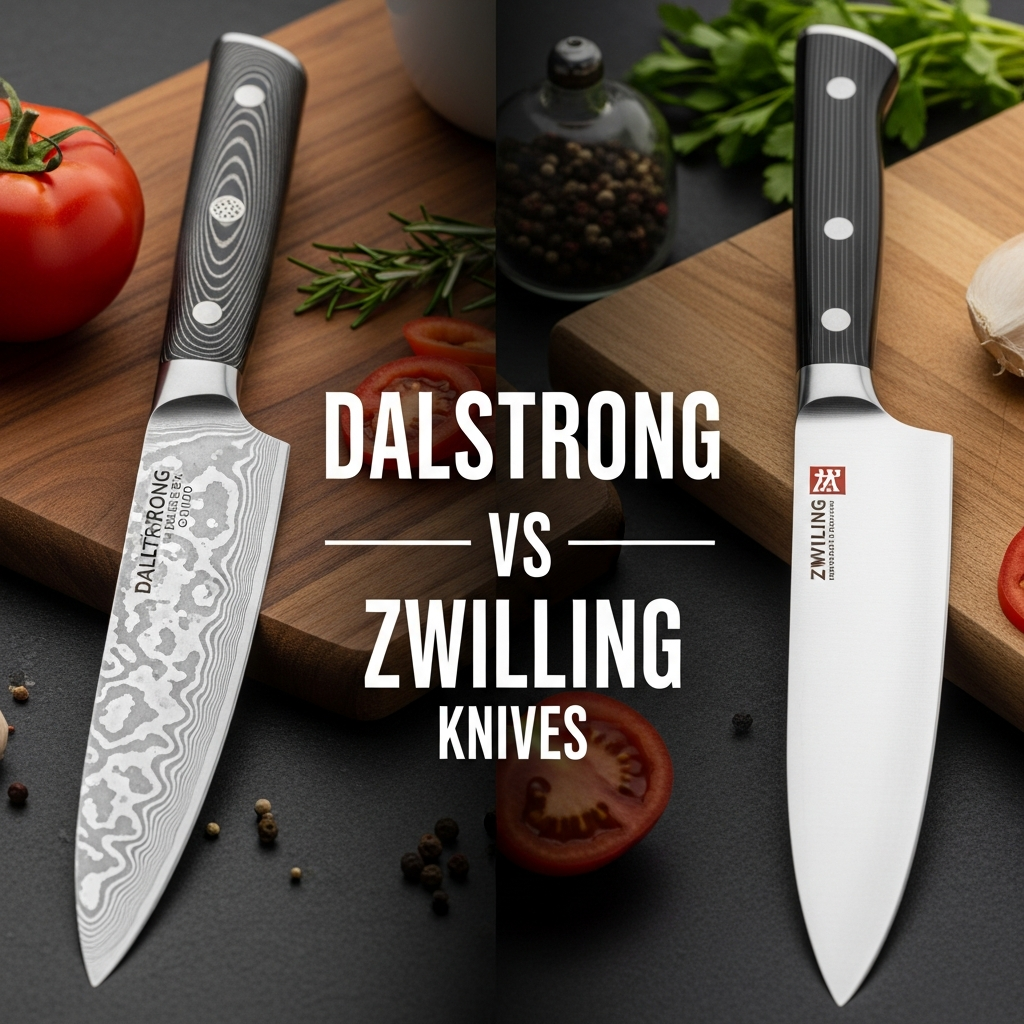
The culinary world is often divided into two fiercely loyal camps: those who swear by the unyielding reliability of historical tradition, and those who chase cutting-edge innovation and striking aesthetics. Nowhere is this clearer than in the ultimate kitchen battle of Dalstrong vs. Zwilling.
On one side sits Zwilling J.A. Henckels, a legendary company founded in Solingen, Germany—the famed “City of Blades”—in 1731. They are the absolute definition of heritage, having perfected metallurgy to produce some of the best German kitchen knives for nearly three centuries. On the other side is Dalstrong, the relentless “new kid on the block.” Founded in 2014, Dalstrong has forcefully shaken up the traditional cutlery market with flashy designs, premium Japanese “super steels,” visually stunning blade geometry, and aggressive, modern marketing tactics.
For the professional chef or passionate home cook browsing knifeindex.com, making the choice is incredibly difficult. Do you want the timeless, rock-solid reliability of a forged Zwilling blade, or the high-performance flair, sharp edge retention, and Damascus cladding of a Dalstrong? In this comprehensive, deep-dive guide, we will aggressively break down the steel compositions, Rockwell hardness ratings, ergonomic handle designs, long-term performance, and overall value to help you decide which blade deserves a spot on your cutting board.
1. Brand Philosophy: The Weight of History vs. The Hype of Innovation
Zwilling J.A. Henckels: The Unshakable Old Guard
Zwilling is one of the oldest and most respected registered trademarks in the world. They represent absolute consistency. Their flagship knives are meticulously forged in Germany using their proprietary “Friodur” ice-hardening process—a technique that rapidly cools the steel to lock in sharpness while maintaining flexibility. They prioritize incredible durability, ergonomic perfection, and functional, minimalist design. When you buy a Zwilling, you are investing in a culinary tool that has been heavily tested and continuously refined over 290 years.
Note: It is crucial not to confuse the premium Zwilling lines with their entry-level budget brand. Read our extensive Zwilling vs. Henkel knives comparison to clearly understand the stark differences in steel quality and full tang construction between the premium “Twins” logo and the budget “Halberdier” single-man logo.
Dalstrong: The Relentless Disruptor
Dalstrong is unapologetically modern, treating high-end kitchen knives not just as tools, but as bold personality statements. Designed in North America and manufactured in Yangjiang, China (a city that itself boasts a formidable 1,400-year history of knife making), Dalstrong’s primary mission is to offer ultra-premium features at accessible prices. By utilizing expensive materials like Japanese VG-10 and AUS-10V high-carbon steel cores, combined with military-grade G10 Garolite handles, they aggressively undercut legacy brands in price while over-delivering on visual impact.
External Context
Dalstrong actively compares themselves to the German giants, embracing the rivalry. They position their brand as the inevitable evolution of premium cutlery. You can read their direct, unfiltered perspective on this matchup here: Dalstrong Blog: Dalstrong vs. Zwilling.
2. Head-to-Head: The Flagship Comparison and Specifications
To make this a truly fair fight, we must compare comparable tiers. We are putting the industry-standard powerhouse, the Zwilling Pro, directly up against Dalstrong’s Western-style workhorse, the Gladiator Series, as well as their premium Japanese-style flagship, the Shogun Series.
| Feature / Specification | Zwilling Pro | Dalstrong Gladiator | Dalstrong Shogun |
|---|---|---|---|
| Steel Composition | German High Carbon (Friodur) | German X50CrMoV15 | Japanese AUS-10V Super Steel |
| Rockwell Hardness (HRC) | 57 (Optimized for toughness) | 56+ (Durable and flexible) | 62+ (Exceptional edge retention) |
| Edge Angle / Blade Geometry | 15° per side (Laser precise) | 16-18° per side (Robust) | 8-12° per side (Scalpel-like) |
| Handle Material | Traditional 3-Rivet (POM Plastic) | G10 Garolite (Military-grade) | G10 Garolite with Copper Mosaic |
| Bolster Design | Curved Half-Bolster | Full Bolster (Added weight) | Tapered Bolster |
| Aesthetic & Finish | Classic, Curves, Understated | Utilitarian, Heavy-duty | Tsunami Rose Damascus Pattern |
| Manufacturing Origin | Solingen, Germany | Yangjiang, China | Yangjiang, China |
3. Deep Dive into Steel Metallurgy: Edge Retention vs. Durability
The beating heart of any kitchen knife is its steel. The debate between Dalstrong and Zwilling largely hinges on the Rockwell Hardness Scale (HRC), which measures how hard the steel is. This directly impacts edge retention (how long the knife stays sharp) and durability (how resistant the blade is to chipping).
German Steel (Zwilling & Dalstrong Gladiator)
The Zwilling Pro and Dalstrong Gladiator both utilize high-quality German steel (specifically X50CrMoV15). This steel is intentionally forged to a slightly softer Rockwell hardness (around 56-57 HRC). Why? Because softer steel is incredibly tough. It can handle the rigorous impact of chopping through dense root vegetables, disjointing chickens, and heavy rocking motions without micro-chipping. Furthermore, German stainless steel is highly resistant to rust and stains, making it exceptionally forgiving for busy kitchens.
Japanese Super Steel (Dalstrong Shogun & Phantom Series)
Dalstrong’s higher-end lines, like the Shogun and Phantom series, step into the realm of high-carbon Japanese steels like AUS-10V. Forged to a staggering 62+ HRC, this steel is incredibly hard. This hardness allows the blade to be sharpened to a terrifyingly acute angle (8-12 degrees), offering surgical precision and vastly superior edge retention. However, there is a trade-off: harder steel is more brittle. If you strike a bone or twist the blade in a hard squash, a Japanese super steel blade is far more likely to chip than its German counterpart.
4. Performance and Feel in the Kitchen
The German Battle: Zwilling vs. Gladiator
If you are looking for a true culinary workhorse, this is your battleground. The Zwilling Pro features an ingeniously designed curved half-bolster that organically encourages a professional “pinch grip.” It truly feels like an effortless extension of your hand. Because of its tougher steel, it acts as the quintessential, do-it-all Chef’s Knife. You don’t have to baby it.
The Dalstrong Gladiator heavily mimics the classic German profile but upgrades the handle to G10 Garolite, which is substantially more resistant to heat, moisture, and impact than Zwilling’s traditional POM (Polyoxymethylene) plastic. However, Zwilling’s overall fit, finish, and balance are generally considered superior by seasoned chefs. If you are also comparing Henckels vs. Victorinox, think of the Dalstrong Gladiator as sitting comfortably in between—offering more heft and a better handle than Victorinox, but coming in cheaper than the flagship Zwilling Pro.
The Hybrid Battle: Zwilling vs. Shogun
Here is where things get intensely competitive. Dalstrong’s Shogun Series competes directly with Zwilling’s premium Japanese-manufactured lines, such as Miyabi (which Zwilling owns). Because the Shogun boasts a much thinner blade geometry and a sharper edge out of the box, it glides effortlessly through delicate proteins and soft vegetables.
If your cutting style leans toward the precision “push cut” or “slice” motion typically associated with high-end Japanese kitchen knives, the Dalstrong Shogun wins on pure cutting geometry. However, if you rely heavily on the Western “rocking” motion to mince herbs and garlic, the pronounced belly profile of the Zwilling Pro is structurally superior and more comfortable over long prep sessions.
5. Anatomy of the Blades: Tang, Bolster, and Balance
Full Tang Construction
Both Zwilling (in their premium lines) and Dalstrong feature full tang construction. This means the steel of the blade runs the entire length of the handle, sandwiched between the handle scales. A full tang is absolutely critical for proper balance, structural integrity, and leverage. A half-tang knife will eventually snap under heavy pressure, but both the Zwilling Pro and Dalstrong’s primary lines are built to withstand heavy, downward professional force.
Bolster Design: Full vs. Half
The bolster is the thick junction between the handle and the blade. Traditional German knives (like the Zwilling Four Star or classic Wüsthofs) use a full bolster, which runs all the way down to the heel of the edge. While this protects your fingers, it makes sharpening the entire length of the blade on a whetstone incredibly frustrating. The Zwilling Pro revolutionized this by introducing an angled half-bolster, offering the perfect pinch grip while allowing full-blade sharpening. Dalstrong offers a mix depending on the series, with the Gladiator leaning toward full bolsters for heavy weight, and the Shogun utilizing sleek, tapered transitions for agility.
6. Specific Knife Types Breakdown
The Flagship 8-Inch Chef’s Knife
The 8-inch Chef’s knife is arguably the most important, versatile tool in any kitchen arsenal. Zwilling’s version is slightly heavier and more authoritative, letting the weight of the blade do the work for you. Dalstrong’s Shogun version is lighter, thinner, and optimized for laser-like slicing. See our exhaustive guide on the best chef knife brands for deeper context on these profiles.
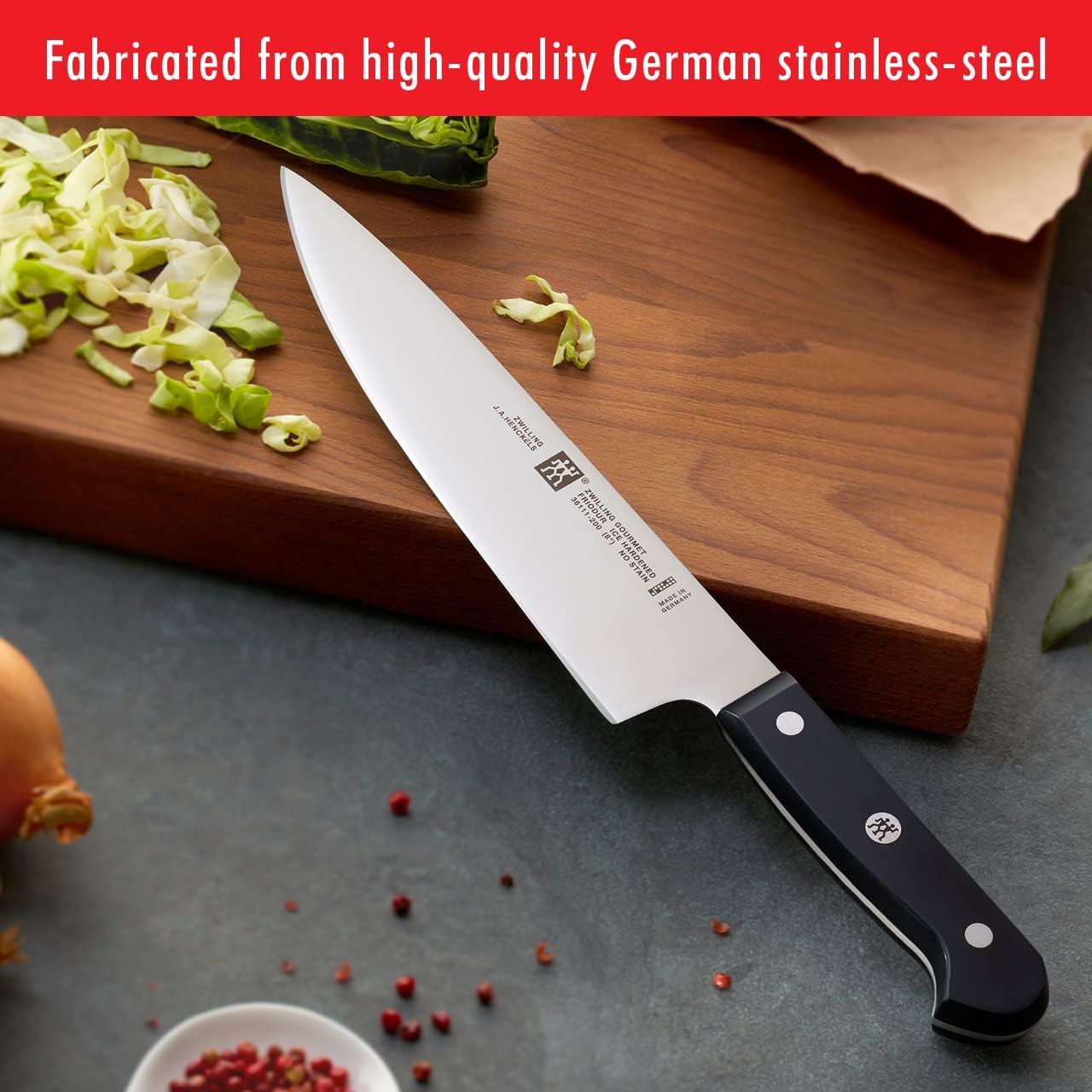 Zwilling Pro 8-Inch Chef’s Knife
The undeniable ergonomic masterpiece. The thoughtfully curved half-bolster supports the professional pinch grip perfectly. Forged in Solingen, Germany from Zwilling’s proprietary ice-hardened high-carbon stainless steel for maximum toughness.
Check Price on Amazon Dalstrong Shogun Series X 8″
An absolute visual stunner and high-performance slicer. Features an ultra-hard Japanese AUS-10V steel core protected by 67 layers of exquisite Damascus cladding. Offers incredible out-of-the-box sharpness and elite edge retention.
Check Price on AmazonExploring Specialty Blades
- Santoku Knives: The Santoku is designed for precise chopping and dicing. Zwilling’s Santoku is robust, almost feeling like a modified western chef knife. Dalstrong’s Santoku is significantly thinner, offering superior agility for delicate vegetable prep. Learn more: What is a Santoku knife used for?
- Nakiri Knives: Dedicated vegetable cleavers. Dalstrong offers incredibly aggressive, angular shapes in their “Shadow Black” and “Omega” series that look futuristic and stealthy. Zwilling keeps their Nakiri profiles strictly traditional and practical. Learn more: What is a Nakiri knife used for?
- Paring Knives: Essential for off-cutting-board tasks like peeling apples or deveining shrimp. For this delicate work, the extreme lightness and scalpel edge of Dalstrong can be a massive advantage over heavier German steel. Read our complete guide: What is a Paring knife used for?
7. The Missing Middle: Bread Knives, Boning Knives, Utility Knives, and Cleavers
Most head-to-head roundups stop at the chef’s knife and call it a day. That’s a mistake, because a full kitchen kit is judged by how well the supporting cast performs — and this is actually where the philosophical gap between Dalstrong and Zwilling widens the most. Below, we break down the four workhorse categories that get ignored far too often: bread knives, boning knives, utility knives, and cleavers.
Bread Knives: Serration Geometry Matters More Than Steel
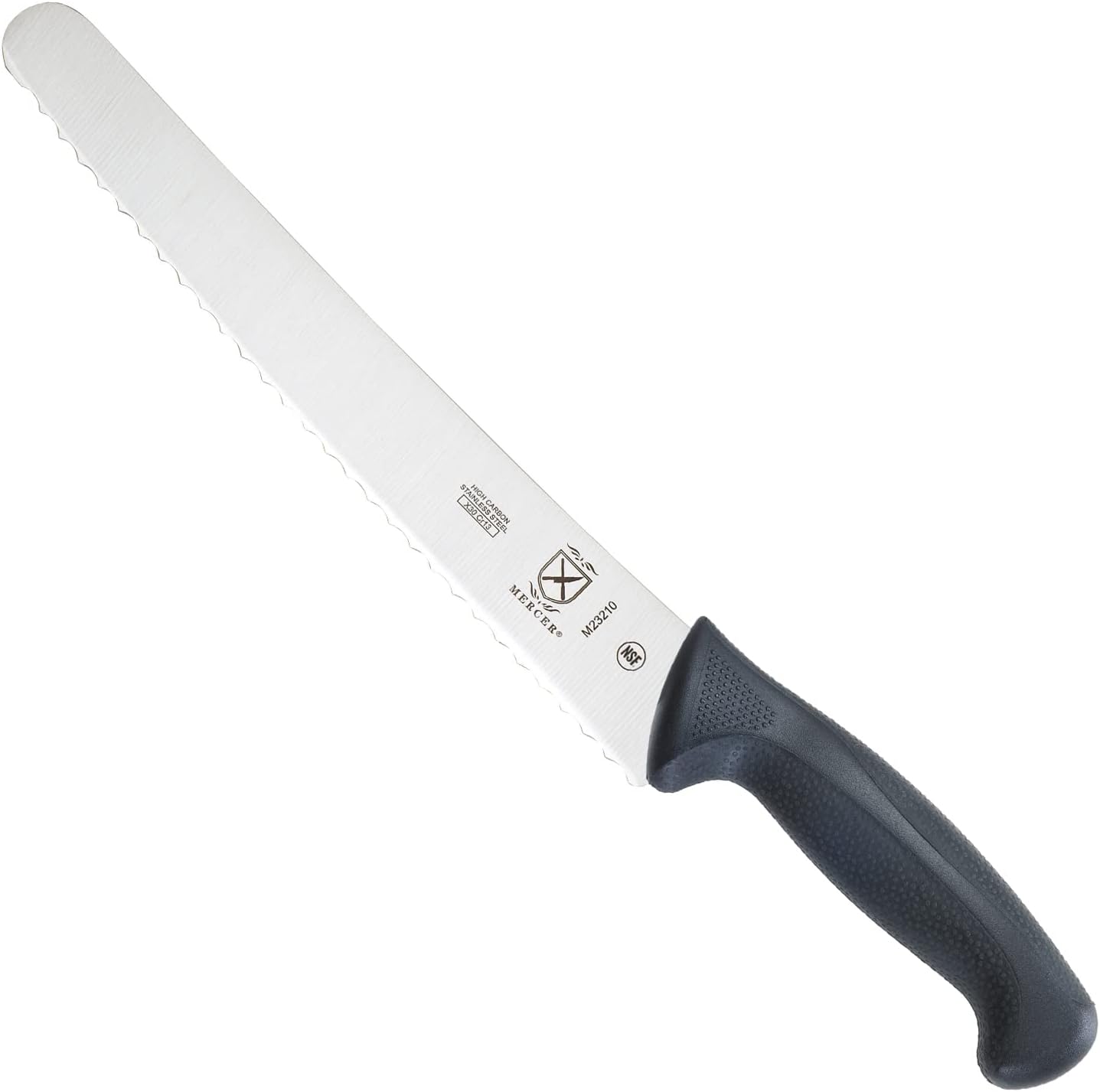
A bread knife lives and dies by its serration pattern, not its Rockwell hardness, which is why this category narrows the gap between the two brands considerably. Zwilling’s bread knives use a classic wavy-scalloped edge that’s been essentially unchanged for decades — it saws cleanly through a crusty baguette without compressing the crumb, and it’s forgiving to resharpen because a professional sharpening service can restore the scallops without specialized equipment. Dalstrong’s bread knives, by contrast, tend to use a sharper, more aggressive point-serration pattern that bites into crust almost immediately, which some bakers prefer for wet, sticky sourdough loaves but which is genuinely harder to have professionally resharpened once it dulls.
If your holiday baking rotation includes bagels, baguettes, and layer cakes that need a level, even slice, the extra-long 9-10″ bread knife options from both brands are worth prioritizing over a shorter 8″ model — length matters far more here than steel hardness.
Boning Knives: Flex Rating Is the Real Differentiator
The boning knife is the most misunderstood tool in either lineup, and it’s conspicuously absent from most comparison articles despite being essential for anyone who breaks down whole chickens, debones a leg of lamb, or trims silverskin off a pork loin. The key spec to watch isn’t steel type — it’s flex rating.
Zwilling’s boning knives (particularly their Pro flexible boning knife) use a thinner flexible blade profile that bends slightly under lateral pressure, letting the edge hug tight against bone contours without gouging the meat. Dalstrong’s boning knives, especially in the Gladiator and Shadow Black lines, tend to run stiffer, which trades a bit of contour-hugging finesse for more control when you’re pushing through cartilage and joints. Neither approach is objectively better; it comes down to whether you’re doing delicate poultry work (favor flexible) or heavier primal breakdown (favor semi-stiff or stiff).
A boning knife is genuinely one of the highest “cost savings per dollar spent” purchases in a kitchen — the ability to buy whole chickens, whole loins, or side-of-beef primals instead of pre-cut portions pays for the knife itself within a handful of trips to the butcher counter.
Utility Knives: The Most Underrated Purchase in Either Lineup
Sitting in size between a paring knife and a chef’s knife (usually 5-7 inches), the utility knife is the tool most home cooks reach for without realizing it has a name. It handles sandwich-building, slicing small fruit, trimming fat off cutlets, and general “not quite big enough for the chef’s knife” tasks. Both Zwilling and Dalstrong include a utility knife in nearly every block set, but Dalstrong distinguishes itself by offering both a plain-edge and a serrated utility option in several series — genuinely useful if your prep work swings between soft tomatoes (serrated) and firm produce (plain edge).
Cleavers: Where Dalstrong’s Aesthetic Ambition Goes All-In
Cleavers are not a traditional Zwilling strength — their catalog leans toward the refined, precision end of the spectrum rather than the heavy chopping tools associated with butchery and Chinese vegetable cleavers. Dalstrong, on the other hand, has leaned hard into cleaver design as a showcase piece, producing broad, dramatically finished cleavers (some marketed with Viking-longship and “Scorpion Series” branding) intended for both heavy bone work and theatrical vegetable prep. If cleaver-style chopping is a genuine priority — think whole duck breakdown, dense squash, or high-volume Chinese-style prep — Dalstrong currently has the deeper catalog in this specific category, while Zwilling asks you to look toward its more general-purpose chef’s knives instead.
8. Full Block Sets vs. Building a Collection Piece by Piece
One of the biggest practical decisions in this comparison isn’t “which single knife,” but “do I buy a full block set or build my own collection knife by knife?” Both brands offer compelling and very different paths here.
Dalstrong’s Set Philosophy
Dalstrong’s Gladiator series set is a genuinely strong entry point for anyone furnishing a kitchen from scratch. A typical Gladiator set bundles an 8″ chef knife, a 7″ santoku, a 9″ bread knife, a 9″ carving/slicer, a 6.5″ utility knife, a 6″ serrated utility knife, a 3.5″ paring knife, and an 8″ honing steel — essentially every knife a home cook will use in a normal week, in one purchase. The tradeoff is that entry-tier set knives are lighter and use the more affordable steel tier, so if you cook daily and lean on the chef’s knife heavily, you may outgrow the set’s flagship blade before the rest of the set wears out. Dalstrong also color-customizes several of its sets (green, red, white, blue, black handle options), which is a genuine differentiator if kitchen aesthetics and matching decor matter to you.
Zwilling’s Set Philosophy
Zwilling tends to sell its Pro line more piecemeal, encouraging cooks to build a collection around the 8″ chef’s knife first and add specialty blades as needed, though block sets are available across their various tiers (Four Star, Pro, Gourmet). This approach costs more up front for the same “full kitchen coverage,” but it means every blade in your knife block is pulling its full weight at the flagship quality tier rather than a mix of hero pieces and filler blades.
Buying Strategy
If you’re outfitting a kitchen for the first time on a budget, a Dalstrong Gladiator set gives you the broadest functional coverage per dollar. If you already own a great chef’s knife and are selectively adding specialty blades, Zwilling’s a-la-carte approach lets you invest only where you’ll actually feel the difference.
9. Honing Steels, Whetstones, and Keeping the Edge Alive
An expensive knife that’s never properly maintained will underperform a cheap knife that’s honed religiously. This section is deliberately expanded because sharpening protocol is where most buyers get into trouble.
Daily Maintenance: The Honing Steel
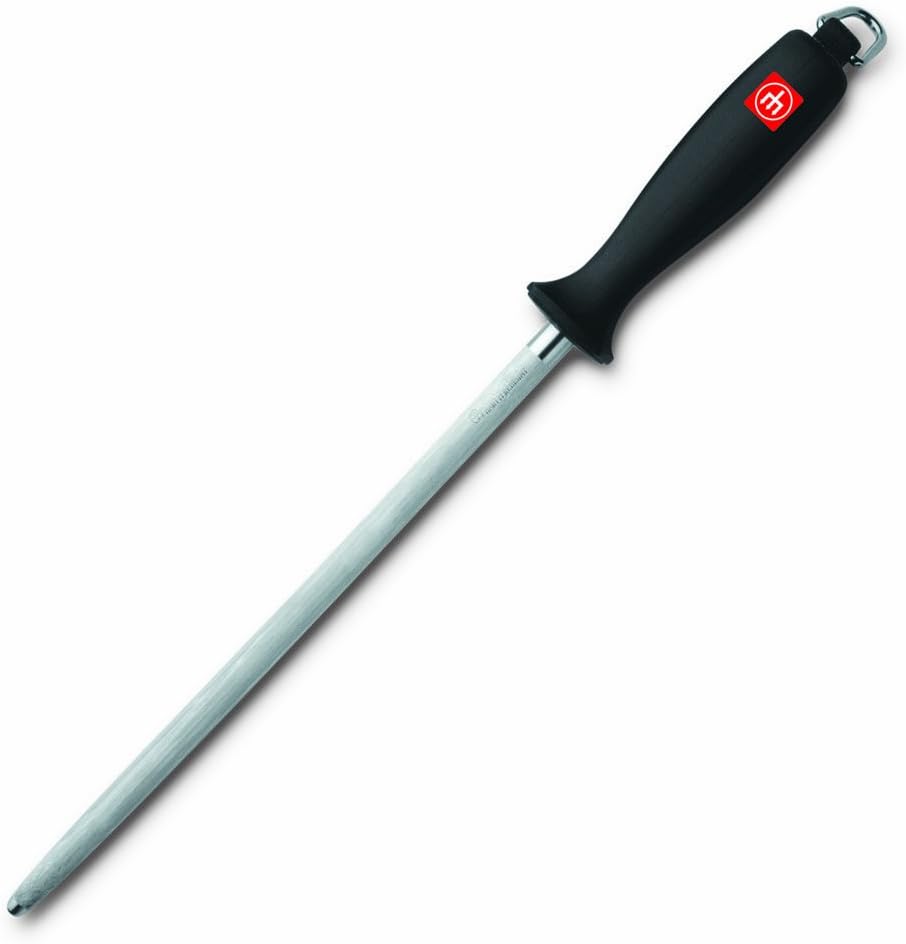
Both Zwilling and Dalstrong include a honing steel with most of their sets, but the steel itself is not interchangeable across blade hardness tiers. Zwilling’s honing rods are standard grooved steel, ideal for realigning the softer 57 HRC edge on their German-steel knives after normal use. If you own a Dalstrong Shogun or Phantom blade (62+ HRC), a standard steel honing rod is actually too aggressive and can chip the harder edge rather than realign it — you need a ceramic honing rod instead.
Weekly/Monthly Maintenance: Whetstones
Sharpening (actually removing metal to restore an edge) is a different process from honing (realigning an existing edge). German-steel knives from either brand can be maintained with a mid-grit combination whetstone (1000/6000 grit is a solid all-purpose choice) roughly every few months with normal home use. Japanese super-steel knives like the Dalstrong Shogun benefit from a finer finishing stone (up to 8000 grit) to fully exploit their acute edge angle, and because the steel is harder, sharpening sessions take noticeably longer per pass.
Storage: Protecting the Investment
However you choose between these two brands, storage protocol matters just as much as sharpening. Knives rattling loose in a drawer will chip against each other regardless of steel hardness. A dedicated drawer organizer keeps blades separated and edges protected, while a magnetic strip mount is the better choice if counter space is at a premium — our guide on how to store knives without a block covers wall-mounted, in-drawer, and sheath-based alternatives to the traditional wooden block for kitchens where counter real estate is tight.
10. Weight, Balance Point, and Wrist Fatigue Over Long Sessions
Weight distribution matters enormously for anyone prepping food for more than 20-30 minutes at a stretch, and it’s an area where the two brands diverge sharply in philosophy.
Zwilling’s Pro line is engineered with a balance point that sits almost exactly at the bolster, meaning the knife feels neutral in the hand rather than blade-heavy or handle-heavy — this reduces wrist strain over long prep sessions because you’re not fighting the knife’s momentum on every stroke. The Zwilling Four Star, an older design, is intentionally lighter still, with a fully molded handle designed explicitly to reduce fatigue for chefs working full shifts.
Dalstrong knives, particularly in the Gladiator series, tend to run slightly blade-heavy due to the thicker steel stock and full bolster design, which some cooks actually prefer because it lets the knife’s own weight do more of the chopping work — less wrist effort per stroke, but potentially more cumulative fatigue if you’re doing high-repetition fine mincing rather than heavier chopping. The Shogun series flips this entirely, using thinner Japanese-style geometry that’s dramatically lighter and better suited to precision push-cutting over long sessions.
11. Left-Handed Use and Ergonomic Symmetry
An often-overlooked buying consideration: blade grind symmetry. Both Zwilling’s and Dalstrong’s Western-style lines (Pro and Gladiator) use a symmetrical double-bevel edge, meaning they perform identically for left- and right-handed cooks. Where this gets more complicated is in Dalstrong’s more Japanese-inspired offerings — some specialty single-bevel or asymmetrically-ground blades in their premium collector lines are handed, and a left-handed cook should specifically confirm bevel symmetry before purchasing anything marketed as “Japanese-style” from either brand, since not every SKU is ambidextrous.
12. Rust Resistance, Patina, and Long-Term Blade Care by Climate
Where you live and cook actually changes which of these two brands will serve you better over a five-year ownership window.
In humid coastal climates or kitchens without great ventilation, Zwilling’s German stainless composition has a real practical edge — it’s simply more forgiving of a knife left to air dry overnight or a slightly damp cutting board. Dalstrong’s Japanese high-carbon steel variants (Shogun, Phantom) are technically also stainless-rated, but the higher carbon content that gives them superior edge retention also makes them marginally more prone to spotting and micro-pitting if not dried immediately after washing. Neither knife should ever be left wet, but Dalstrong’s premium steels demand more consistent discipline. If you do notice early spotting on either brand, our how to remove rust from kitchen knives guide walks through safe, non-abrasive recovery methods that won’t damage the existing edge geometry.
13. A Practical Glossary for First-Time Premium Knife Buyers
If some of the terminology in this guide is new to you, this glossary should clear things up before you commit to either brand.
14. Who Should Buy Which Knife: Audience-Specific Recommendations
The Weeknight Home Cook
If you cook dinner four or five nights a week and want one knife that does 90% of everything without babying, the Zwilling Pro chef’s knife or the Dalstrong Gladiator chef’s knife are both excellent, forgiving choices. Prioritize whichever handle feels better in your hand — the performance gap at this tier is smaller than the ergonomic gap.
The Ambitious Home Cook Building a Full Kit
Go with a Dalstrong Gladiator block set. The breadth of included blades (bread, utility, serrated utility, paring, carving) covers every task you’ll encounter as your cooking skills grow, without the expense of buying eight individual Zwilling Pro knives.
The Sushi and Precision-Prep Enthusiast
The Dalstrong Shogun series, with its acute edge angle and hard Japanese steel, rewards the kind of careful, precise cutting technique that sushi and delicate protein work demands. Pair it with a fine finishing whetstone.
The Butcher-at-Home / Whole-Animal Cook
Prioritize a dedicated boning knife and a cleaver over another chef’s knife. Zwilling’s flexible boning knife suits poultry-focused cooks; Dalstrong’s stiffer boning knives and dedicated cleaver lineup suit those breaking down larger primals or doing bone-in work regularly.
The Gift Buyer
Dalstrong’s striking Damascus patterns and dramatic packaging make a genuinely better unboxing gift experience, especially for a design-conscious recipient. Zwilling is the safer, more universally respected choice for someone who values heritage and brand recognition over visual flair.
15. Specialty Blades to Consider
- Santoku Knives: The Santoku is designed for precise chopping and dicing. Zwilling’s Santoku is robust, almost feeling like a modified western chef knife. Dalstrong’s Santoku is significantly thinner, offering superior agility for delicate vegetable prep. Learn more: What is a Santoku knife used for?
- Nakiri Knives: Dedicated vegetable cleavers. Dalstrong offers incredibly aggressive, angular shapes in their “Shadow Black” and “Omega” series that look futuristic and stealthy. Zwilling keeps their Nakiri profiles strictly traditional and practical. Learn more: What is a Nakiri knife used for?
- Paring Knives: Essential for off-cutting-board tasks like peeling apples or deveining shrimp. For this delicate work, the extreme lightness and scalpel edge of Dalstrong can be a massive advantage over heavier German steel. Read our complete guide: What is a Paring knife used for?
16. Expanding the Roster: Other Notable Series to Consider
Zwilling’s Alternative Heavyweights
Beyond the “Pro” line, Zwilling offers the iconic Zwilling Four Star, which has remained essentially unchanged since the 1970s. It features a fully molded handle that is lighter than riveted handles, favored by chefs trying to avoid wrist fatigue. For true aficionados, the Zwilling Kramer line—designed by Master Bladesmith Bob Kramer—offers ultra-wide blades and exotic carbon steel options, widely considered some of the finest factory-produced knives in the world.
Dalstrong’s Expansive Lineup
Dalstrong is famous for variety. The Phantom Series offers an entry into Japanese D-shaped handles and single-bevel-inspired performance without the Damascus price tag. The highly premium Omega Series utilizes American forged BD1N-VX hyper-steel for maximum edge retention. Meanwhile, the visually striking Valhalla Series appeals to collectors with resin handles and Norse-inspired design aesthetics.
17. Durability, Sharpening, and Long-Term Maintenance
Maintenance is a critical deciding factor, deeply tied into the broader stamped vs forged cutlery debate. Thankfully, the flagship lines from both of these brands utilize superior forging techniques, ensuring dense, strong steel structures.
- Chipping vs. Rolling: Because of the 57 HRC hardness, when a Zwilling blade hits something too hard, the edge tends to “roll” rather than break. This rolled edge can be easily realigned with a honing steel. Dalstrong’s Shogun series (62 HRC) will not roll; it will micro-chip. Chipping requires actual metal removal on a whetstone to repair.
- Sharpening Protocols: Zwilling knives are incredibly easy to maintain daily with a standard grooved steel honing rod. Dalstrong’s harder Japanese steels require ceramic honing rods (metal rods can damage hard steel) and dedicated wet sharpening on stones. If you are investing in a Dalstrong, you must check our best knives sharpener guide to buy proper whetstones.
- Rust and Corrosion Resistance: While both brands categorize their blades as “stainless,” Dalstrong’s high-carbon Japanese steel variants require a bit more vigilance. They should be washed and dried immediately after use to prevent micro-pitting or spotting. (For recovery tips, see: How to remove rust from kitchen knives).
18. Price, Value, and Warranty Support
Zwilling commands a premium price tag directly tied to expensive German labor, stringent quality control, and a legacy brand name. However, their knives come with a robust, highly reliable lifetime warranty, and the blades themselves routinely outlast their owners, often being passed down as family heirlooms.
Dalstrong utilizes overseas manufacturing in China to offset costs, allowing them to offer insanely high-end specifications (like 67-layer Damascus steel, G10 handles, and custom-fit sayas/sheaths) for a mid-range price. They also offer a 100% satisfaction guarantee and excellent modern customer service. If you are hunting for the absolute best affordable chef knives that look and perform like they cost twice as much, Dalstrong wins decisively on “bang for your buck.”
19. The Competition: How They Stack Up Against Other Brands
If reading this comprehensive breakdown has made you realize that neither brand perfectly aligns with your specific kitchen needs, consider these top-tier alternatives:
- Vs. Wüsthof: Zwilling’s oldest and most bitter Solingen rival. Wüsthof’s PEtec technology ensures they are generally sharper out of the box than Zwilling, while Zwilling is widely considered to have superior, more modern ergonomics (thanks to the Pro bolster). See our full breakdown here: Dalstrong vs Wusthof.
- Vs. Shun: If you are drawn to Dalstrong’s Shogun series for the Japanese aesthetic, but you demand true Japanese heritage and domestic Seki City forging rather than Dalstrong’s Chinese assembly, Shun Cutlery is the definitive answer. Read the full comparison: Dalstrong vs Shun.
- Vs. Victorinox: If aesthetics, Damascus steel, and brand prestige mean nothing to you, and you strictly want unbeatable, utilitarian performance without the premium price tag, the stamped Victorinox Fibrox remains the undisputed king of commercial kitchens. Read more: Victorinox Chef Knife Reviews.
Frequently Asked Questions (FAQ)
No, they are not. While Dalstrong utilizes imported high-carbon German steel (specifically ThyssenKrupp steel) for their Gladiator series, the actual forging, manufacturing, assembly, and polishing take place in Yangjiang, China. This globalized supply chain is precisely how they manage to keep consumer costs significantly lower than German-made Zwilling knives while maintaining high material standards.
Yes, there is a distinct hierarchy. “Zwilling” (identifiable by the Two Men logo) represents the company’s premium, flagship line, manufactured primarily in Germany or Japan. “J.A. Henckels International” (identifiable by the Single Man logo) is their budget-friendly, entry-level line, usually stamped rather than forged, and manufactured in Spain or Asia. Dalstrong’s products are designed to compete directly with the premium Zwilling line, not the budget Henckels line. For a deeper dive into this confusing branding, see: Zwilling vs Henkel Knives.
Absolutely not. High-end culinary knives should never see the inside of a dishwasher. The prolonged exposure to intense heat, harsh abrasive detergents, and the violent rattling against other cutlery will degrade the handle materials (whether POM or G10), rapidly dull the meticulously sharpened edge, and potentially introduce rust spots even on high-quality stainless steel. Even if you are simply looking for dishwasher safe steak knives, your primary chef’s knife must always be gently hand washed with mild soap and dried immediately.
We strongly recommend the Zwilling Pro (or even the Dalstrong Gladiator) for beginners. The slightly softer German steel is vastly more forgiving of sloppy cutting techniques, accidental drops, and poor sharpening attempts. Dalstrong’s premium Shogun and Phantom series feature thin, ultra-hard Japanese-style edges that require refined, experienced knife skills to avoid devastating chips or snaps.
Yes. A standard steel honing rod, the kind commonly bundled with German-steel Zwilling sets, is too aggressive for Dalstrong’s 62+ HRC Shogun and Phantom blades and can chip the edge rather than realign it. Use a ceramic honing rod on any high-hardness Japanese-style blade, and reserve the steel rod for your softer German-steel knives.
It depends on your starting point. If you’re outfitting a kitchen from scratch, a full block set (Dalstrong’s Gladiator set is a strong example) gives you broad functional coverage — chef’s, santoku, bread, utility, paring, and a honing steel — for less than buying each blade individually. If you already own a great chef’s knife and only need to fill specific gaps, buying a la carte, which is how Zwilling typically sells its Pro line, lets you invest only in the pieces you’ll actually use.
A boning knife is generally stiffer and built for working through cartilage, joints, and connective tissue on poultry, pork, and beef. A fillet knife is thinner and more flexible, designed specifically for fish, where you need the blade to hug the contour of the spine and rib bones without wasting meat. Zwilling markets a flexible boning knife that leans toward fillet-style use; Dalstrong’s boning knives run comparatively stiffer and are better suited to heavier butchery tasks.
Dalstrong has the more developed cleaver lineup for this use case, with broad, wide-bladed cleavers (including dramatic “Viking” and “Scorpion Series” designs) suited to both bone work and high-volume vegetable chopping. Zwilling does not prioritize dedicated cleaver-style blades in its core catalog, so cooks who specifically want a Chinese-style vegetable cleaver will generally find a deeper selection from Dalstrong.
Conclusion: The Final Verdict on Steel and Style
Ultimately, the fierce battle of Dalstrong vs. Zwilling cannot be decided by objective metrics alone; it is a battle of deep personal preferences, cutting styles, and kitchen philosophy.
You should choose Zwilling if: You deeply value centuries of heritage, proven heavy-duty durability, and masterclass ergonomic design. You want a tool that feels immediately natural in the hand, handles abuse with grace, and is guaranteed to survive decades of daily culinary combat. It is the safe, steadfast, professional choice favored by generations of executive chefs.
You should choose Dalstrong if: You want excitement, innovation, and visual flair injected into your daily meal prep. You want a knife that performs like a scalpel, utilizes exotic modern materials, and costs a fraction of the legacy equivalent. It is the ultimate choice for the modern, passionate home cook who wants to turn heads while achieving razor-sharp precision.
And if your needs extend beyond a single chef’s knife — into bread knives, boning knives, utility blades, or a dedicated cleaver — remember that the “winner” of this comparison can change category by category. Zwilling tends to edge ahead on ergonomics, balance, and forgiving German steel across its whole catalog, while Dalstrong tends to edge ahead on value-per-dollar, visual design, and breadth of specialty and set options. Many serious home cooks end up owning pieces from both brands, choosing whichever wins each specific task rather than committing to one manufacturer for the entire block.
Whichever masterpiece of metallurgy you choose to add to your kitchen, ensure you protect that razor edge by storing it properly. Investing in a high-quality wooden drawer organizer or mounting a sleek magnetic strip will keep your newly acquired investment safe, sharp, and ready for action for years to come.