Dalstrong vs. Victorinox: The Battle of Flash vs. Function
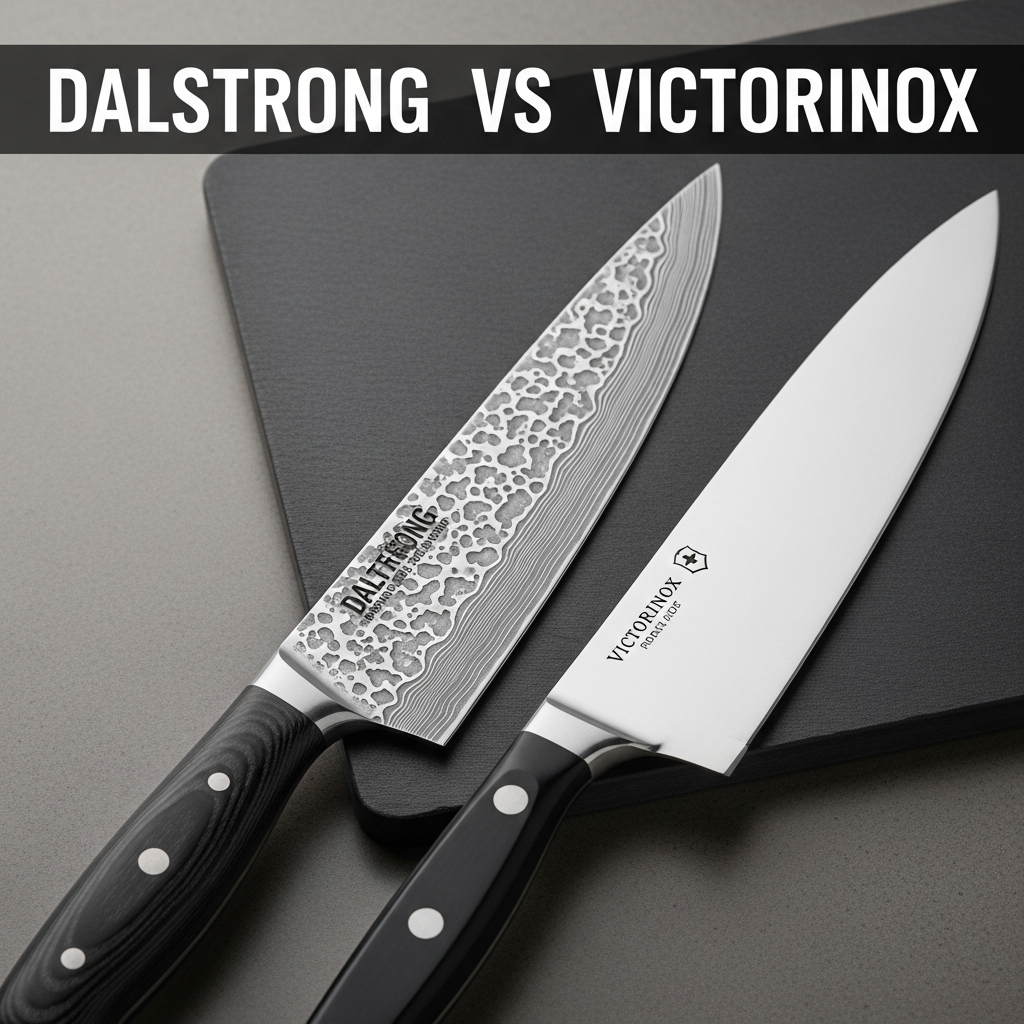
In the world of kitchen cutlery, few comparisons are as polarizing as Dalstrong vs. Victorinox. It is a clash of two completely different philosophies.
On one side, you have Victorinox, the Swiss giant behind the famous Swiss Army Knife. They represent pure utility. Their kitchen knives are often described as “ugly but effective.” They are the darling of professional butchers, culinary students, and anyone reading our Victorinox chef knife reviews.
On the other side, you have Dalstrong, the modern disruptor. They represent flair, aggression, and “unboxing experiences.” They are the knife equivalent of a sports car—flashy, high-spec, and designed to be noticed. They actively compete with legacy brands in our Dalstrong vs Wusthof and Dalstrong vs Shun comparisons.
So, do you choose the Swiss workhorse or the Global challenger? In this comprehensive guide, we will break down the steel, the design, the price, and the performance to help you make the right choice for your kitchen.
1. The Contenders: A Tale of Two Cities
Victorinox: The Pride of Ibach, Switzerland
Victorinox has been making blades since 1884. They are best known for stamped steel knives that prioritize cutting performance and hygiene over looks. The Fibrox Pro line is legendary in the industry. It appears on almost every list of best affordable chef knives because it outperforms knives costing three times as much.
Dalstrong: The Powerhouse of Yangjiang
Dalstrong was founded in 2014. They design in North America but manufacture in Yangjiang, China. They leverage global supply chains to bring premium materials (like Japanese VG10 or German X50CrMoV15 steel) to the market at competitive prices. Their branding is loud, featuring terms like “Shogun,” “Gladiator,” and “Shadow Black.”
1.5 Company Origins, Ownership, and Brand Philosophy
Before you decide which brand deserves a spot in your knife block, it helps to understand where each company came from and what values actually shape their product lines, because the backstory explains a lot about why the knives feel so different in the hand.
The Victorinox Story: 140 Years of Swiss Manufacturing
Victorinox traces its roots back to 1884, when Karl Elsener opened a cutlery workshop in the small Swiss town of Ibach. Elsener’s original goal was modest: supply the Swiss Army with a folding pocket knife that soldiers could use for everything from opening cans to disassembling a rifle. That original Swiss Army Knife became a cultural icon, and the company built an entire manufacturing philosophy around durability, simplicity, and repairability. In 2005, Victorinox acquired Wenger, the other historic Swiss Army Knife maker, consolidating its position as the dominant Swiss cutlery brand. Today Victorinox is still a family-controlled company headquartered in Ibach-Schwyz, and it manufactures the overwhelming majority of its blades domestically in Switzerland, including the kitchen knife lines that compete directly with Dalstrong. This matters to buyers who care about country-of-origin manufacturing, since “Swiss Made” carries strict legal requirements about where materials are sourced and where the bulk of production actually happens.
Victorinox’s kitchen division grew almost as an afterthought to the pocket knife business, but it quickly found a home in commercial kitchens because the manufacturing process translated so well. Stamped blade production, the same technique used for decades on folding knife blades, is fast, consistent, and inexpensive to scale, which is exactly why culinary schools and restaurant supply companies buy Fibrox knives by the crate rather than the piece.
The Dalstrong Story: A 2010s Startup Built for E-Commerce
Dalstrong is a different kind of company entirely. It was founded in the mid-2010s as a direct-to-consumer brand built explicitly around online retail, unboxing culture, and social media marketing. Rather than owning factories, Dalstrong operates as a design and branding company that partners with manufacturing facilities in Yangjiang, China, a region often nicknamed “The City of Knives” because of its concentration of blade production expertise. Dalstrong’s team designs the shapes, chooses the steel formulations, and controls the branding, packaging, and marketing, while the physical forging and grinding happens under contract manufacturing arrangements. This asset-light model lets Dalstrong launch new product lines quickly, chase trends, and undercut the pricing of century-old European brands that still carry the overhead of owning their own factories, unions, and legacy pension obligations.
This origin story explains the branding choices too. Names like “Shogun,” “Gladiator,” “Phantom,” and “Shadow Black” are not accidents. Dalstrong markets to a demographic that grew up watching unboxing videos on YouTube and wants a knife that photographs well on Instagram, arrives in premium packaging, and tells a story at the dinner party. Victorinox, by contrast, markets almost exclusively on performance-per-dollar and durability, since its core customer base is professional kitchens that could not care less about how a knife looks in a photo.
2. Head-to-Head: The Specs Breakdown
To keep this fair, we are comparing the Victorinox Fibrox Pro (the industry standard for value) against the Dalstrong Gladiator Series (their direct German-steel competitor).
| Feature | Victorinox Fibrox Pro | Dalstrong Gladiator |
|---|---|---|
| Construction | Stamped | Forged |
| Steel | X55CrMo14 (High Carbon Stainless) | X50CrMoV15 (High Carbon Stainless) |
| Hardness (HRC) | 55-56 | 56+ |
| Edge Angle | 15-20° (Varies) | 16-18° per side |
| Handle | TPE (Thermoplastic Elastomer) | G10 Garolite |
| Aesthetic | Commercial Kitchen / Utilitarian | Premium / Display Worthy |
| Price | Budget Friendly ($) | Mid-Range ($$) |
2.5 Full Product Line Comparison: Beyond the Entry-Level Knives
Most head-to-head articles stop at comparing the cheapest Victorinox model against the cheapest Dalstrong model, but that misses a huge part of the buying decision. Both brands have multiple tiers, and understanding the full lineup helps you compare apples to apples rather than accidentally comparing a $40 knife to a $150 knife.
Victorinox’s Tiered Lineup
Victorinox’s kitchen range breaks down into several distinct collections, each aimed at a different type of buyer:
- Fibrox Pro: The commercial workhorse line with the black TPE handle. This is the line most home cooks and culinary schools buy, and it’s the one referenced throughout most of this comparison.
- Swiss Classic: A step up in aesthetics, with a slightly more polished nylon handle and a broader range of colors, aimed at home cooks who want something a bit less clinical-looking on the counter.
- Grand Maître: Victorinox’s forged line, which competes more directly with German forged knives and, by extension, Dalstrong’s Gladiator series. This line uses a full bolster and a heavier, more traditional Western profile.
- Rosewood: A traditional wood-handled line that appeals to buyers who want a more classic look without abandoning Victorinox’s stamped-blade value proposition.
- Swiss Modern: A newer, design-forward line with a two-tone handle aimed at buyers who want something more visually distinctive than Fibrox but still want Victorinox’s core cutting performance.
Dalstrong’s Tiered Lineup
Dalstrong’s catalog is arguably even more segmented, since the brand releases new “series” frequently as a marketing strategy:
- Gladiator Series: The entry point into forged German steel, and the line most directly comparable to Victorinox’s Grand Maître.
- Shadow Black Series: A tactical-styled line with a black titanium nitride coating, aimed at buyers who want a stealthy, modern aesthetic.
- Phantom Series: A Japanese AUS-8 steel line with a more budget-conscious price point than the flagship Shogun series, often positioned as a “starter” Japanese-style knife.
- Shogun Series X: The flagship line, using AUS-10V Japanese super steel with a hammered Damascus-style cladding pattern, hardened to a higher HRC than the Gladiator line.
- Omega Series: A premium powder steel line marketed as Dalstrong’s top-tier offering, aimed at enthusiasts who want the hardest, most edge-retentive steel the brand sells.
When people ask “which is better, Dalstrong or Victorinox,” the honest answer depends heavily on which tier of each brand you’re actually comparing. A Victorinox Fibrox against a Dalstrong Shogun X is not a fair fight in either direction — one wins on value and ease of maintenance, the other wins on edge retention and looks — because they are simply not aimed at the same buyer.
3. Design & Ergonomics: Comfort vs. Style
The Victorinox Feel
The Fibrox handle is not pretty. It looks like black textured plastic. However, pick it up with greasy or wet hands, and you understand why pros love it. The grip is non-slip, ergonomic, and incredibly lightweight. Because the blade is stamped (read about the difference between stamped and forged knives here), it minimizes wrist fatigue during long prep sessions.
The Dalstrong Feel
The Gladiator series features a heavy, forged bolster and a G10 Garolite handle (a military-grade fiberglass composite). It feels substantial and expensive. It is heavier than the Victorinox, which some cooks prefer for driving through dense vegetables like squash. The fit and finish are polished, making it a better candidate for a magnetic strip display (see how to store knives without a block).
Weight, Balance Point, and Full Tang Construction
Weight distribution is one of the most overlooked factors in a knife comparison, and it deserves more attention here because it drives so much of the “feel” difference between these two brands. The Victorinox Fibrox 8-inch chef’s knife typically weighs in the neighborhood of 150 to 170 grams, and because the stamped blade is uniformly thin from spine to edge, the balance point sits noticeably forward of the handle, closer to the middle of the blade itself. This forward-weighted feel is common among stamped knives and gives the Fibrox a nimble, almost weightless sensation during fast rock-chopping, but it can feel a little insubstantial to cooks who grew up using heavier forged German knives.
The Dalstrong Gladiator, by contrast, typically weighs closer to 220 to 250 grams for the same blade length, and because it is a forged knife with a full tang running the entire length of the handle, the balance point sits much closer to the bolster, right where your index finger and thumb naturally pinch the blade in a proper chef’s grip. Full tang construction means the steel core of the blade extends uninterrupted through the handle scales, which is riveted or bonded in place, rather than being a separate stamped blade epoxied into a handle shell. This gives the Dalstrong a more substantial, front-heavy feel that many enthusiasts describe as more “confident” for heavy tasks like breaking down a chicken or splitting a butternut squash, but it can tire out the wrist faster during two straight hours of fine mincing work.
Neither balance point is objectively correct. Professional line cooks who spend ten-hour shifts doing repetitive prep almost universally prefer the lighter, forward-balanced feel of a stamped knife like the Fibrox, which is why you’ll see it in the hands of culinary school students worldwide. Home cooks who use their knife for shorter, more varied sessions — and who put a premium on the “feel” of quality in the hand — often gravitate toward the heavier, tang-balanced feel of the Dalstrong.
4. The Chef’s Knife Battle
The 8-inch Chef’s knife is the most critical tool in your arsenal. (Unsure why? Read what is a chef knife used for).
 Victorinox Fibrox Pro 8″ Chef’s Knife
The undisputed champion of value. Lightweight, razor-sharp, and non-slip. It lacks beauty but makes up for it in pure performance. A favorite in our Henckels vs Victorinox comparison.
Check Price on Amazon Dalstrong Gladiator Series 8″
The premium alternative. Precision forged from German steel with a hand-polished edge. It comes with a blade guard and premium packaging. Feels like a much more expensive knife.
Check Price on Amazon5. Specialty Knives: Where the Differences Widen
Vegetable Prep
For chopping vegetables, the Victorinox Santoku is a light, efficient tool. However, Dalstrong offers aggressive Nakiri knives in their “Shadow Black” and “Shogun” series that feature Japanese super-steels, putting them in a different league for hardness and edge retention.
Bread and Baking
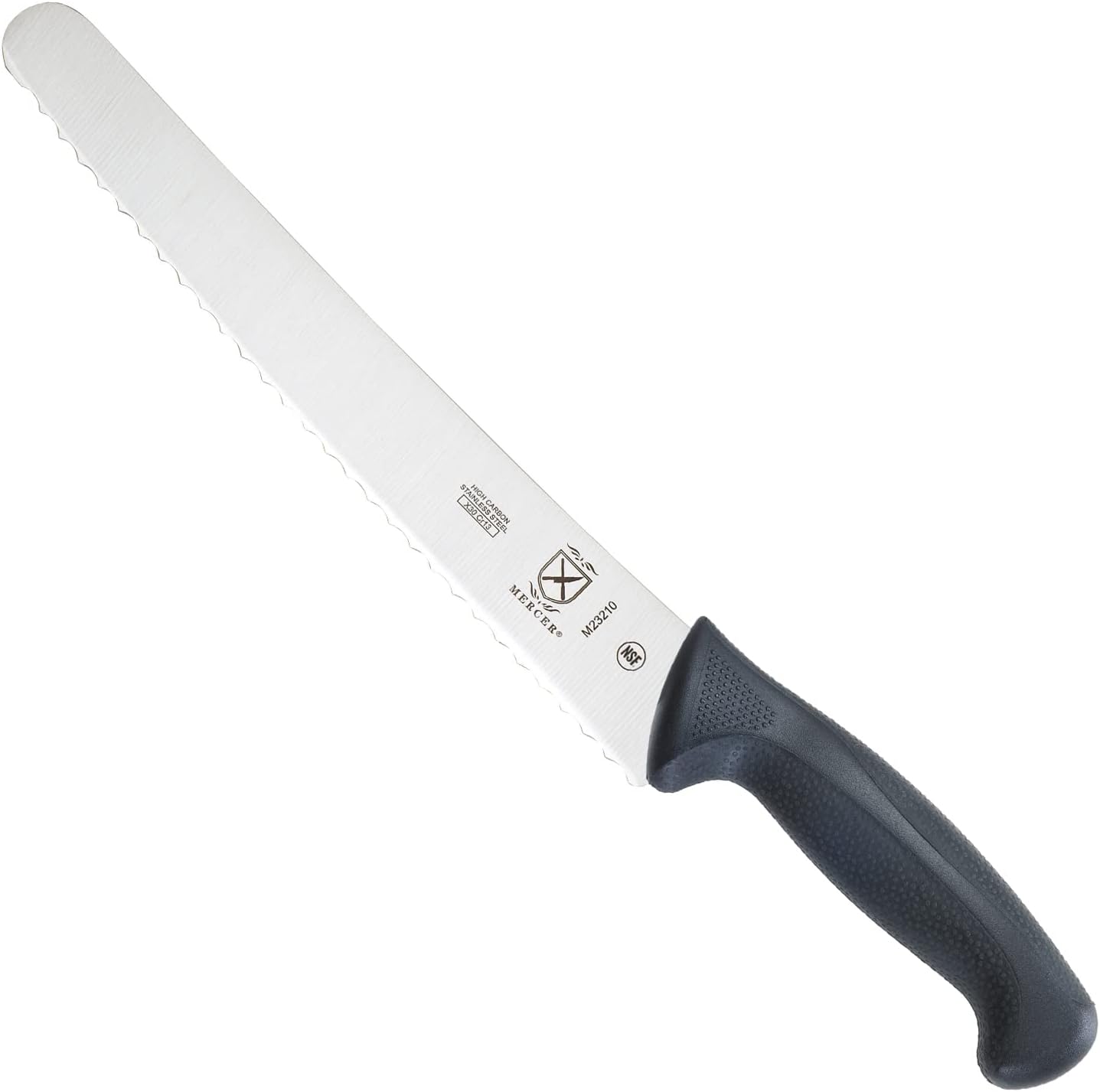
The Victorinox Bread Knife is a cult classic among bakers. Its flexible stamped blade glides through crusts. Dalstrong’s bread knives are stiffer and heavier. If you prefer a rigid blade for melons or tough crusts, Dalstrong wins. Read more in our Best Bread Knife guide.
Detail Work
For paring knives, the Victorinox paring knife is so cheap (usually under $10) and sharp that many chefs treat them as semi-disposable. Dalstrong offers “Bird’s Beak” and other specialized shapes with beautiful handles that match their sets.
Boning and Fillet Knives: A Category Victorinox Basically Owns
If there’s one knife category where Victorinox has close to zero credible competition from Dalstrong, it’s boning and fillet knives. Victorinox’s flexible boning knives are a staple in commercial meat departments, seafood counters, and hunting camps around the world, precisely because the thin, flexible stamped blade can follow the contour of a bone or a fish spine without snapping. Butchers frequently buy these knives by the dozen and treat them as consumable tools, replacing them every year or two rather than babying a single expensive knife for a decade. Dalstrong does sell fillet knives, and the flagship Shogun fillet knife is a genuinely nice piece of cutlery, but it’s priced and marketed as a display-worthy specialty item rather than a disposable workhorse, so it rarely shows up in the commercial fish-processing world the way Victorinox does. If you hunt, fish, or process your own game regularly, the Victorinox flexible boning and fillet knives are worth a dedicated look, and we cover them in more depth in our best fillet knife roundup.
Cleavers and Heavy-Duty Chopping
Neither brand is primarily known as a cleaver specialist, but both offer options worth mentioning. Victorinox’s cleaver leans on the same stamped, lightweight philosophy as the rest of the Fibrox line, making it easy to swing repeatedly without fatigue, though it lacks the mass to power through thick bone with a single strike. Dalstrong’s Gladiator and Shogun cleavers are considerably heavier and forged, giving them more chopping authority for tasks like splitting chicken bones or halving a small squash, at the cost of being noticeably more tiring to use for extended repetitive chopping.
Utility and Petty Knives
Utility knives sit in the awkward middle ground between a chef’s knife and a paring knife, and both brands treat this category as a secondary priority. Victorinox’s utility knife shares the same stamped-blade DNA as its chef’s knives, just scaled down, and is a genuinely useful all-purpose tool for slicing sandwiches, trimming small cuts of meat, or handling fruit. Dalstrong’s petty knives in the Gladiator and Shadow Black lines lean into the same forged construction and G10 handles as their larger siblings, and tend to appeal to buyers who want their entire knife set to match aesthetically rather than mixing brands.
Steak Knife Sets
Steak knives are a category where the buying decision often comes down purely to presentation, since the cutting performance differences matter less when you’re slicing already-cooked meat at the table rather than doing raw prep work. Dalstrong’s steak knife sets, often finished with the same Shadow Black coating or Damascus-style cladding as their flagship chef’s knives, are frequently purchased as gifts or for dinner parties specifically because they look impressive when laid out on the table. Victorinox steak knife sets are more restaurant-oriented, favoring durability and dishwasher tolerance (within reason) over visual drama, and are a common choice for households that host large gatherings and don’t want to babysit expensive cutlery through a busy holiday dinner. We go deeper on this specific category in our best steak knife set guide.
6. Performance and Maintenance
Sharpness
Out of the box, both are extremely sharp.
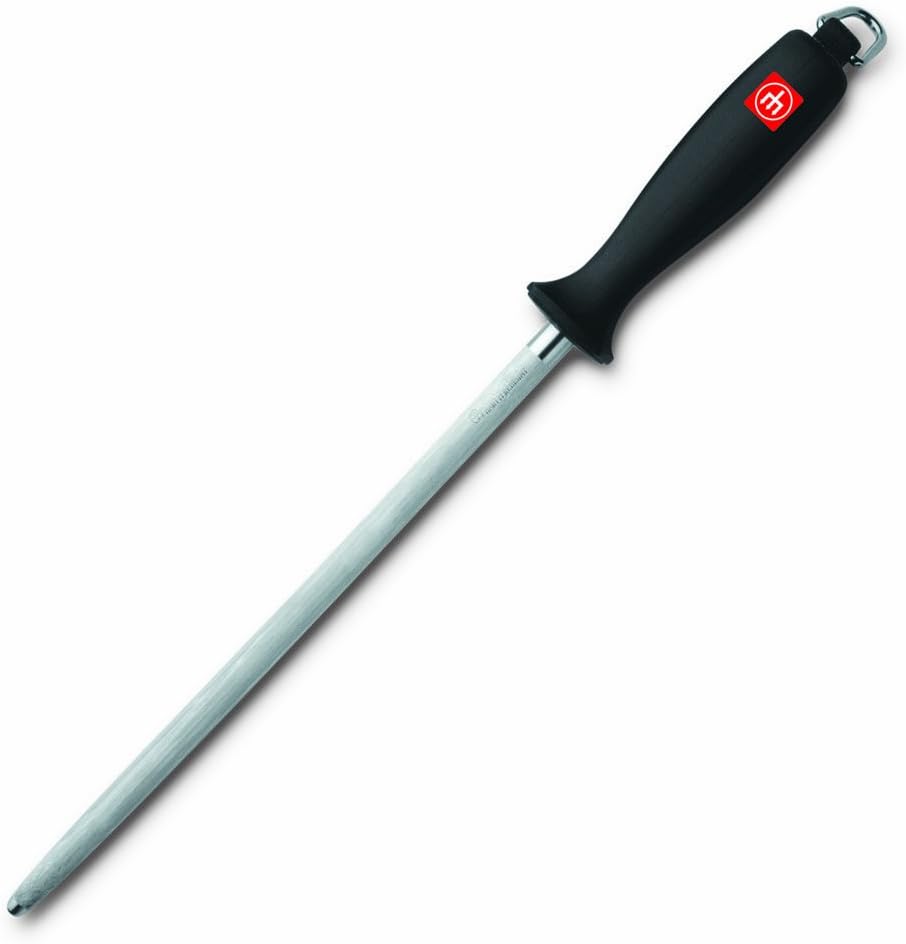
Victorinox uses a slightly softer steel (55-56 HRC). This means it dulls faster but is incredibly easy to bring back to life with a honing rod.
Dalstrong (Gladiator) is slightly harder (56+ HRC), and their Shogun series (62 HRC) is much harder. Harder steel holds an edge longer but is more brittle and harder to sharpen. Check our guide to sharpeners to see what you’ll need.
Durability
Victorinox knives are tanks. You can drop them, throw them in a bag, and abuse them. Dalstrong knives, especially the higher-end series with Japanese steel, require more care to avoid chipping. Neither should ever go in the dishwasher—see our dishwasher safe knives guide for why.
Rust Resistance
Both use stainless steel blends that are highly resistant to corrosion. However, Dalstrong’s high-carbon Japanese lines (like Shogun) need to be dried immediately. Learn how to remove rust if you forget.
Edge Retention Testing: What the Numbers Actually Mean
Edge retention is one of the most misunderstood specs in the knife world, so it’s worth explaining what actually happens when a blade “holds an edge.” Edge retention describes how long a knife stays usably sharp under normal cutting tasks before it needs to be honed or re-sharpened. It is driven primarily by two factors: the hardness of the steel (measured on the Rockwell C scale, or HRC) and the microstructure of the alloy, meaning how the carbon and other elements are distributed within the steel at a molecular level.
Victorinox’s X55CrMo14 stainless steel sits at 55-56 HRC, which is intentionally on the softer end of the kitchen knife spectrum. This is a deliberate engineering choice, not a limitation. Softer steel is more forgiving to sharpen, more resistant to chipping when it meets a bone or a frozen ingredient by accident, and easier to bring back to a working edge with nothing more than a honing steel and a few strokes on a basic sharpening stone. In a commercial kitchen where knives get honed daily and see abuse from a dozen different cooks, this tradeoff overwhelmingly favors Victorinox.
Dalstrong’s Gladiator line at 56+ HRC sits just above Victorinox, offering a modest bump in edge retention without sacrificing much toughness. The Shogun Series X, hardened to roughly 62 HRC using Japanese AUS-10V steel, sits in a completely different performance tier. At that hardness, the edge holds its working sharpness for dramatically longer between sharpenings — some enthusiasts report going weeks of daily home use before needing to touch it up — but the tradeoff is real brittleness. Harder steel is more prone to micro-chipping if it strikes a bone, a ceramic plate, or the edge of a granite countertop, and it takes noticeably longer to re-profile on a stone once it does eventually need sharpening, because you’re removing metal that resists abrasion more stubbornly.
The practical upshot: if you sharpen frequently and want quick touch-ups, Victorinox’s softer steel is friendlier. If you want to sharpen rarely and don’t mind a slower, more deliberate sharpening session every few months, Dalstrong’s harder lines pull ahead.
Care Instructions and Long-Term Maintenance
Proper care dramatically extends the life of either brand, but the specific care routine differs slightly because of the steel and construction differences.
- Washing: Both brands should be hand-washed immediately after use and dried with a towel rather than left to air dry, since standing water and food acids are the primary cause of rust spotting even on high-chromium stainless steel.
- Honing: Victorinox knives benefit from honing before nearly every use, since the softer steel edge rolls slightly with regular cutting and a honing rod realigns it in seconds. Dalstrong’s harder steel holds its geometry longer and needs honing less frequently, though a quick pass every week or two of regular use still helps.
- Sharpening frequency: Expect to fully sharpen a Fibrox knife every one to three months with regular home use, versus every three to six months for a Dalstrong Gladiator, and potentially only once or twice a year for a well-cared-for Shogun Series X.
- Storage: Both brands recommend a knife block, magnetic strip, or blade guard rather than tossing knives loose in a drawer, since edge-on-edge contact is the single fastest way to dull or chip either brand.
- Handle care: Victorinox’s TPE handles need essentially no maintenance and can handle a quick wipe with any kitchen cleaner. Dalstrong’s G10 Garolite handles are similarly low-maintenance and resistant to moisture, though any wood-accented handles in either lineup benefit from an occasional light oiling to prevent drying and cracking.
7. The “Set” Dilemma
If you are looking to outfit a whole kitchen, Dalstrong offers massive, visually stunning knife sets with blocks. They look impressive on a counter. Victorinox sets are often utilitarian rolls or simple blocks. If aesthetics matter for your kitchen renovation, Dalstrong wins.
Warranty, Customer Service, and Return Policies
Warranty coverage rarely gets discussed in knife comparisons, but it can materially affect the long-term cost of ownership, especially for a tool you might use daily for a decade or more.
Victorinox backs its kitchen knives with a lifetime warranty against manufacturing defects, which is a reflection of the company’s confidence in its stamped-steel manufacturing consistency built up over more than a century of production. Because Victorinox knives are so widely distributed through major retailers, warranty claims and replacements tend to be straightforward, and the low unit price of most Fibrox products means many buyers simply replace a damaged knife outright rather than filing a claim.
Dalstrong also offers a lifetime warranty against manufacturing defects on its knives, and the company has built a reputation for responsive, buyer-friendly customer service, partly because its direct-to-consumer business model depends heavily on positive reviews and word-of-mouth trust. Since Dalstrong sells primarily through its own website and Amazon rather than wide big-box distribution, warranty claims typically route directly through the manufacturer or through Amazon’s own return process, and the company has an incentive to resolve issues quickly given how much of its marketing relies on customer testimonials and unboxing content.
Both companies’ warranties typically exclude damage from misuse, such as putting a knife through a dishwasher, using it to pry open a can, or chipping the edge on bone or frozen food, so the practical value of “lifetime warranty” language should be read with that caveat in mind.
Cost-Per-Year Value Analysis
Sticker price alone can be misleading, so it’s worth thinking about cost-per-year of ownership rather than just the checkout total. A Victorinox Fibrox Pro chef’s knife typically costs a fraction of a comparable Dalstrong Gladiator, and if you treat both knives with reasonable care, either one can realistically last well over a decade of regular home use. On a pure cost-per-year basis, Victorinox usually comes out ahead simply because the upfront price is so low relative to its lifespan.
However, this calculation shifts if you factor in replacement sharpening tools, since Victorinox’s softer steel needs more frequent sharpening sessions, which either costs you time with a whetstone or money if you send knives out for professional sharpening. Dalstrong’s harder steel needs sharpening less often, which can offset some of its higher upfront cost over a long enough ownership period, particularly for the Shogun and Omega tiers. For most home cooks, though, the difference is marginal enough that personal preference on feel and aesthetics should be the deciding factor rather than a spreadsheet calculation of cents-per-year.
8. Who is Each Brand For?
Buy Victorinox If:
- You are a beginner cook or a student on a budget.
- You want the best performance-per-dollar ratio in the world.
- You have arthritis or weak wrists and need a lightweight knife.
- You don’t care about how the knife looks, only how it cuts.
- You want to expand your kit with budget friendly options.
Buy Dalstrong If:
- You want a knife that looks as good as it cuts.
- You prefer the weight and balance of a forged knife.
- You are looking for a gift that comes with a “wow” factor unboxing experience.
- You want access to exotic steels (like Damascus) without paying Zwilling prices.
- You want a matching set that acts as kitchen decor.
Buying Guide by Cook Type
Since “who is this knife for” questions come up constantly in reader emails and comments, here’s a more granular breakdown by the type of cook actually holding the knife:
- The culinary student: Victorinox Fibrox, without much debate. It’s what your instructors use, it’s cheap enough to replace if lost or stolen in a shared kitchen, and it’s forgiving to sharpen while you’re still learning proper knife skills.
- The line cook or restaurant professional: Victorinox for daily-driver knives that take abuse, potentially supplemented with a nicer Dalstrong or Japanese knife kept in a locked roll for careful, personal tasks like breaking down proteins.
- The enthusiastic home cook who cooks most nights: This is genuinely a toss-up, and honestly comes down to whether you enjoy the ritual of maintaining a nicer knife or just want to grab something and start chopping. Dalstrong’s Gladiator hits a nice middle ground here.
- The gift buyer: Dalstrong, almost every time. The packaging, the branding, and the visual drama of the knife itself make for a much more impressive unwrapping experience than a plain black Victorinox handle, even if the Victorinox might be the more “practical” choice.
- The outdoorsman, hunter, or angler: Victorinox, particularly their flexible boning and fillet knives, which are purpose-built for field dressing and processing game and fish.
- The knife collector or enthusiast: Dalstrong’s Shogun and Omega series offer more interesting steel chemistry and visual cladding patterns to appreciate, though serious collectors often eventually graduate to traditional Japanese single-bevel knives from dedicated artisan makers.
Gift Buying Considerations
If you’re shopping for someone else’s kitchen rather than your own, the calculus changes meaningfully. A gift recipient generally can’t “feel” the value proposition of a lightweight stamped knife the way a professional cook can — they’re much more likely to judge the gift by how it looks coming out of the box, how it feels sitting on a magnetic strip, and whether it makes their kitchen look more put-together. This is precisely the territory Dalstrong was built for. The premium packaging, the included blade guard or sheath, and the aggressive, photogenic branding all translate into a stronger unboxing moment than a plain Victorinox handle can deliver, even though the Victorinox may objectively out-perform it for daily prep work. If you do want to gift a Victorinox, consider one of their wood-handled Rosewood pieces instead of the plain black Fibrox, since the aesthetic upgrade closes much of the visual gap while keeping the beloved stamped-blade cutting performance.
Food Safety Certifications and Commercial Kitchen Compliance
For anyone buying knives for a licensed commercial kitchen, food truck, or catering operation, certification matters as much as cutting performance. Victorinox’s Fibrox handles are NSF certified, meaning they meet the National Sanitation Foundation’s standards for food equipment used in commercial settings, covering things like non-porous handle materials that resist bacterial growth and can withstand repeated commercial sanitizing. This certification is a major reason Fibrox knives dominate restaurant supply catalogs and culinary school equipment lists — health inspectors specifically look for NSF-marked equipment during commercial kitchen inspections. Dalstrong’s G10 handle material is also non-porous and hygienic by nature, but the brand’s product line is generally marketed toward home and enthusiast buyers rather than pursuing the same commercial certification pathway, so you’ll see far fewer Dalstrong knives in licensed commercial kitchens, not because the material is inferior but because the brand hasn’t prioritized the specific compliance paperwork that institutional buyers require.
9. Comparisons to Other Brands
Still unsure? See how they stack up against the rest:
- Vs. Wusthof: Wusthof is the premium version of the German style. Dalstrong Gladiator is a budget Wusthof. Victorinox is the stamped alternative. (See Wusthof vs Victorinox).
- Vs. Global: Global is lightweight like Victorinox but made of harder steel and costs much more. (See Global vs Wusthof).
- Vs. Zwilling: Zwilling is the direct competitor to Dalstrong’s Gladiator series in terms of feel, but costs more. (See Victorinox vs Zwilling).
Where Cutco, Mercer, and Other Budget Brands Fit In
Two other brands come up constantly in the same searches as Dalstrong and Victorinox, so it’s worth briefly placing them on the map. Cutco sells direct-to-consumer through in-home sales presentations rather than retail, and leans heavily on a “forever sharp” marketing angle backed by a free sharpening service program, but its knives tend to be priced significantly higher than Victorinox for comparable stamped-blade performance, largely because the sales model itself is expensive to run. Mercer Culinary occupies a similar niche to Victorinox as a culinary-school and commercial-kitchen staple, with a range of stamped and forged options at accessible price points, and is frequently cross-shopped against Fibrox by students building their first knife roll. Neither brand directly threatens Dalstrong’s “premium unboxing experience” positioning, since both compete primarily on function and value rather than visual flair.
Knife Rolls, Travel Cases, and Building a Full Kit
Once you’ve settled on a chef’s knife, the next question readers ask is how to actually transport and organize a growing collection, especially for culinary students and traveling private chefs who can’t leave knives in a stationary block at home. A quality knife roll protects blade edges during transport far better than tossing knives loose in a bag, and both brands’ knives fit standard universal knife roll slots without any brand-specific sizing issues. Victorinox’s lighter stamped knives are a popular choice specifically for a travel or school kit because the overall bag weight stays manageable when you’re carrying six or eight pieces plus sharpening tools across a campus or between job sites. If you’re assembling a full working kit for the first time, our knife bag guide covers roll capacity, edge-guard quality, and pocket layout in more detail.
Frequently Asked Questions (FAQ)
Yes. Dalstrong manufactures in Yangjiang, China, “The City of Knives.” They import steel from Germany, Japan, and the USA, but the assembly is Chinese. This allows them to keep costs lower than European-made brands like Wusthof.
Victorinox uses stamped manufacturing (punching blades from a sheet) rather than forging. This is faster and cheaper. They also use TPE plastic handles instead of expensive woods or composites. They pass these savings to you.
Some do, but Victorinox is far more common in commercial kitchens due to its durability and low cost. Dalstrong is more popular among home enthusiasts and chefs who build their own personal kits.
Yes. Victorinox is very easy to sharpen with any standard sharpener. Dalstrong’s German lines are also easy. However, Dalstrong’s Shogun (Japanese) series requires more skill or an electric sharpener designed for Asian angles.
Dalstrong was founded in the mid-2010s as a direct-to-consumer cutlery brand. The company designs and brands its knives in North America while contracting manufacturing to facilities in Yangjiang, China, an asset-light model that lets it launch new product lines quickly compared to century-old European manufacturers that own their own factories.
Yes. Victorinox is headquartered in Ibach-Schwyz, Switzerland, and manufactures the vast majority of its knives domestically, which is required to legally use “Swiss Made” branding. This is a key differentiator from Dalstrong’s overseas contract manufacturing model.
Both Victorinox and Dalstrong offer a lifetime warranty against manufacturing defects. In practice, Victorinox’s low price point means many buyers simply replace a damaged knife rather than filing a claim, while Dalstrong’s direct-to-consumer model tends to make its customer service team quite responsive to warranty requests.
Yes. Victorinox’s Fibrox handles carry NSF certification, which is a major reason the line dominates culinary school and restaurant supply catalogs. Dalstrong’s handle materials are hygienic as well, but the brand has not pursued the same commercial certification pathway and is marketed primarily toward home and enthusiast cooks.
Expect to fully sharpen a Victorinox Fibrox roughly every one to three months with regular home use, since its softer steel edge rolls faster. A Dalstrong Gladiator typically needs sharpening every three to six months, and the harder Shogun Series X can go six months to a year between full sharpenings, though it takes longer to re-profile once it does need attention.
Dalstrong is generally the stronger gift choice because of its premium packaging, included blade guard, and visually striking handle and blade finishes. Victorinox’s plain black Fibrox handle is a workhorse but doesn’t deliver the same “wow factor” when unwrapped, though its wood-handled Rosewood line splits the difference nicely.
Gladiator is Dalstrong’s forged German-steel line and its most direct competitor to Victorinox’s forged Grand Maître line. Phantom uses a more affordable Japanese AUS-8 steel as an entry point into Japanese-style cutlery. Shogun Series X is the flagship line, using harder AUS-10V Japanese steel with a Damascus-style cladding pattern for both performance and visual appeal.
Dalstrong’s forged lines, including the Gladiator and Shogun series, use full tang construction, where the steel core runs the entire length of the handle beneath the G10 scales. Victorinox’s Fibrox line is a stamped blade rather than a traditional full tang design, though the handle is securely riveted and extremely durable despite the different construction method.
10. Steel Chemistry Deep Dive: What’s Actually Inside the Blade
Marketing copy loves to throw around steel names and alloy codes, but few articles actually explain what those codes mean or why they matter to how a knife performs in your hand. Since steel chemistry is the single biggest driver of the practical differences between these two brands, it’s worth slowing down and walking through it properly.
Understanding X55CrMo14 (Victorinox)
Victorinox’s stainless steel formulation, X55CrMo14, follows the European steel-naming convention where the leading number indicates carbon content (roughly 0.55% in this case) and the following letters and numbers indicate the alloying elements and their percentages: Cr for chromium (around 14%) and Mo for molybdenum. This is a relatively simple, well-understood stainless alloy that has been refined over decades of European cutlery production. The chromium content well above the 10.5% threshold required for a steel to be classified as stainless makes this an extremely rust-resistant formulation, which matters enormously in a commercial kitchen environment where knives get wet constantly and rarely get dried immediately between uses. The molybdenum addition improves the steel’s resistance to pitting corrosion and adds a small amount of extra hardness and wear resistance compared to a plain chromium stainless steel.
The moderate carbon content is a deliberate design choice rather than a cost-cutting shortcut. Higher carbon content generally means the steel can be hardened further and hold a sharper edge longer, but it also makes the steel more brittle and harder to sharpen. Victorinox chose a carbon level that lands the finished blade around 55-56 HRC specifically because that hardness range sharpens easily with basic tools, resists chipping when it encounters a bone or a countertop by accident, and can be brought back to a working edge in under a minute with nothing more than a honing steel. This is precisely the profile a commercial kitchen needs, where a dozen different cooks with varying skill levels are handling the same knives daily.
Understanding X50CrMoV15 (Dalstrong Gladiator)
Dalstrong’s Gladiator series uses X50CrMoV15, a German steel formulation similar in spirit to what you’d find in many Wusthof and Zwilling knives. The naming follows the same convention: roughly 0.50% carbon, chromium around 15%, molybdenum, and critically, a vanadium (V) addition. Vanadium is a key differentiator here — it forms extremely hard carbide particles within the steel’s microstructure, which meaningfully improves wear resistance and edge retention compared to a vanadium-free formulation, without sacrificing much toughness. This is why the Gladiator series can hold an edge slightly longer than the Victorinox Fibrox despite having comparable carbon content, and it’s a big part of why German-steel enthusiasts consider vanadium additions worth paying extra for.
The higher chromium content (15% versus Victorinox’s 14%) also provides slightly better corrosion resistance on paper, though in practical terms both steels are extremely rust-resistant when dried properly after use, and the difference is unlikely to be noticeable in a typical home kitchen.
Understanding AUS-10V and AUS-8 (Dalstrong Shogun and Phantom)
Dalstrong’s Japanese-inspired lines use entirely different steel families, imported from Japanese steel mills rather than German ones. AUS-10V, used in the flagship Shogun Series X, is a higher-carbon stainless steel (typically in the 0.95-1.10% carbon range) with a vanadium addition similar in purpose to the German X50CrMoV15, but starting from a much harder base steel. This is why Shogun knives can be hardened to roughly 62 HRC, a full six to seven points higher than the Gladiator line and Victorinox’s Fibrox, unlocking meaningfully longer edge retention at the cost of increased brittleness and a more involved sharpening process. AUS-8, used in the more budget-friendly Phantom series, is a similar family of steel with slightly lower carbon content, landing in a middle-ground hardness range between the German Gladiator line and the flagship Japanese Shogun line — a sensible entry point for buyers curious about Japanese steel without committing to the price or maintenance demands of AUS-10V.
Damascus Cladding: Performance or Purely Cosmetic?
Many of Dalstrong’s flagship knives feature a rippled, wavy pattern on the blade face that’s marketed as “Damascus steel.” It’s worth being precise about what this actually is, because the term gets used loosely in modern cutlery marketing. Historical Damascus steel referred to a specific ancient forging technique that produced unique mechanical properties through folding and forge-welding different iron alloys together. Modern “Damascus-style” knives, including most of Dalstrong’s Shogun line, are typically a hard, high-performance core steel (like the AUS-10V mentioned above) sandwiched between layers of softer, decorative stainless steel that’s been etched to reveal a wavy pattern. The pattern itself is almost entirely cosmetic — it doesn’t meaningfully change the cutting performance, which is determined by the core steel and the edge geometry. The outer cladding layers do add a small amount of corrosion resistance and can make the blade marginally more resistant to chipping along the spine, but the primary purpose is visual appeal. Victorinox does not offer any Damascus-clad options across its kitchen lineup, staying consistent with its utilitarian, no-frills brand identity.
11. Manufacturing Process and Quality Control
Stamping vs. Forging: A More Technical Look
We’ve mentioned stamped versus forged construction throughout this comparison, but it’s worth explaining the actual manufacturing steps, since the process has real consequences for the finished knife’s consistency and cost.
Stamped blade production starts with a large sheet of steel that has already been rolled to the target thickness at the steel mill. A stamping press then punches out the blade blank in a single motion, similar to a cookie cutter, and the blank is subsequently ground, beveled, heat-treated, and polished. This process is extremely fast, highly consistent from piece to piece, and dramatically cheaper than forging, since there’s no need for a skilled forge operator to hammer and shape each blade individually. The tradeoff is that a stamped blade has a uniform thickness from the spine to a point near the edge, which limits how much the manufacturer can sculpt the blade’s weight distribution or bolster shape.
Forged blade production starts with a steel billet (a thick chunk of raw steel) that gets heated to a high temperature and then hammered or pressed into a rough blade shape, either by a skilled craftsperson or, more commonly in modern factories, a hydraulic drop-forge machine. This process allows the manufacturer to build in a full tang, a substantial bolster for balance and finger protection, and a blade profile that tapers in thickness from spine to edge and from heel to tip — all details that would be impossible or prohibitively expensive to achieve through stamping alone. Forging is slower and more labor- and energy-intensive, which is directly reflected in the higher price of forged knives across the industry, not just for Dalstrong but for every forged competitor including Wusthof and Zwilling.
Quality Control and Consistency
Victorinox’s century-plus of stamped-blade manufacturing experience shows up in remarkable batch-to-batch consistency — pick up ten Fibrox knives off a shelf and they will feel virtually identical in weight, balance, and edge geometry. This consistency is part of why culinary schools and restaurant chains standardize on the brand; a replacement knife behaves exactly like the one it replaced. Dalstrong’s contract manufacturing model in Yangjiang generally produces good consistency as well, though some enthusiast forums and long-time owners note slightly more piece-to-piece variation in edge finishing and handle fit on certain production runs compared to Victorinox’s remarkably uniform output, which is a natural consequence of forged production being inherently harder to standardize than stamped production, combined with the practical realities of working with a contract manufacturer rather than an owned factory.
12. Sustainability, Ethics, and Packaging Considerations
An increasing number of buyers factor in manufacturing footprint and packaging waste when comparing kitchen brands, so it’s worth addressing directly.
Victorinox’s Swiss manufacturing base means shorter supply chains for European and nearby markets, and the company has publicly emphasized durability and repairability as sustainability strategies — a knife that lasts thirty years and gets used daily in a commercial kitchen has a much smaller lifetime environmental footprint than a knife that gets replaced every few years, even if the manufacturing process itself isn’t marketed with heavy sustainability branding. The company’s stamped-blade production is also less energy-intensive per unit than forging, since it skips the high-temperature reheating and hammering stages.
Dalstrong’s packaging is a notable part of its brand identity, with most knives arriving in sturdy branded boxes, a fitted blade guard or sheath, and sometimes additional presentation materials designed to enhance the unboxing experience for social media and gifting purposes. This packaging adds cost and material use compared to Victorinox’s comparatively minimal retail packaging, though Dalstrong has introduced recyclable packaging materials in some of its more recent product lines in response to buyer feedback on this exact point. Shipping distance is also a factor worth considering: Dalstrong’s overseas manufacturing in China means a longer supply chain to reach North American and European customers compared to Victorinox’s more geographically concentrated Swiss production and distribution network.
13. Sharpening Angles and Technique Differences
Because Victorinox and Dalstrong draw on different cutlery traditions, the recommended sharpening angle differs meaningfully between them, and getting this wrong is one of the most common mistakes home sharpeners make.
Victorinox’s Fibrox and other Western-style lines are typically sharpened to a 20-degree angle per side (a 40-degree inclusive angle), which is the traditional European standard. This wider angle produces a slightly less acute edge that’s more durable against lateral stress and easier to maintain freehand on a basic sharpening stone or with a pull-through sharpener, since the wider angle is more forgiving of small inconsistencies in your sharpening motion.
Dalstrong’s German-steel Gladiator line follows a similar Western sharpening convention, typically ground to somewhere between 16 and 18 degrees per side, a bit more acute than traditional Victorinox but still within familiar Western sharpening territory. The Japanese-inspired Shogun and Phantom lines, however, are ground to a noticeably more acute angle, often in the 12 to 15 degree per side range, following Japanese cutlery convention. This more acute angle produces a noticeably sharper, thinner edge capable of finer, more precise cuts, but it demands more sharpening skill and precision to maintain, since a shallower angle is less forgiving of hand-angle drift during sharpening and more prone to micro-chipping under lateral stress. If you’re new to sharpening and pick up a Shogun series knife, investing in an angle-guided sharpening system rather than freehanding on a stone is strongly recommended until you build up the muscle memory for a consistent angle.
14. Cutting Board Pairing and Countertop Considerations
The cutting surface you pair with either knife has a bigger impact on edge life than most buyers realize, and this matters more for the harder Dalstrong lines than for the more forgiving Victorinox steel. Glass, granite, marble, and ceramic cutting surfaces are dramatically harder than any kitchen knife steel and will rapidly dull and potentially chip an edge, regardless of brand, so they should be avoided entirely for food prep despite how attractive they look on a countertop. Wood and quality plastic or composite cutting boards are gentle enough to preserve an edge for both brands, though the harder, more brittle Japanese-steel Shogun and Omega lines benefit even more from a soft end-grain wood board than the more forgiving Victorinox Fibrox does, since the softer board reduces the repeated micro-impacts that contribute to edge chipping over the life of a harder blade. If you’re setting up a full prep station around a new knife purchase, it’s worth reading a dedicated cutting board guide before deciding on a surface, since the wrong board can undo a lot of the edge-retention advantage you paid extra for with a harder steel.
15. Resale Value and Long-Term Ownership
Resale value rarely factors into a kitchen knife purchase decision, since most buyers plan to use a knife until it wears out rather than reselling it. Still, it’s worth noting for completeness. Victorinox knives hold their value reasonably well on the secondhand market precisely because the brand’s reputation for durability means a used Fibrox knife in good condition is still considered a fully functional, desirable tool by budget-conscious buyers, culinary students, and thrift shoppers. Dalstrong’s higher-end Shogun and Omega pieces occasionally attract enthusiast collector interest on secondhand marketplaces, particularly limited-edition releases or discontinued handle colors, though this is a niche market compared to the much larger and more liquid market for used Japanese single-bevel knives from dedicated artisan makers. For the vast majority of buyers in either camp, the practical expectation should be that you’ll use the knife until it’s worn out or lost, not that you’ll recoup meaningful resale value later.
16. Customer Review Patterns and Common Complaints
Reading through a large sample of verified purchase reviews across major retailers reveals some consistent patterns worth summarizing for buyers doing their own research.
The most common praise for Victorinox centers on the knife arriving razor-sharp out of the box, staying comfortable through long prep sessions thanks to the light weight and grippy handle, and simply lasting for years without complaint. The most common complaints are almost entirely aesthetic — buyers occasionally mention that the black plastic handle looks cheap sitting in a nice kitchen, or that they wish the brand offered more color and finish options for the price.
The most common praise for Dalstrong centers on the unboxing experience, the visual impact of the blade finish, and the perceived quality-for-price compared to legacy European brands like Wusthof and Zwilling. The most common complaints reference occasional piece-to-piece inconsistency in edge sharpness straight out of the box (with some buyers needing to do a quick touch-up sharpening on arrival), and a learning curve around properly maintaining the harder Japanese-steel lines, particularly for buyers upgrading from a much softer Western knife for the first time and not realizing the sharpening angle and frequency needs to change.
17. Glossary of Key Terms Used in This Comparison
- HRC (Rockwell C Hardness): A standardized scale measuring how resistant a material is to indentation, used across the cutlery industry to describe blade steel hardness. Higher numbers mean harder, more edge-retentive, and generally more brittle steel.
- Stamped blade: A blade cut from a pre-rolled sheet of steel using a stamping press, rather than forged from a heated billet. Faster and cheaper to produce, and generally lighter with a more uniform thickness.
- Forged blade: A blade shaped from a heated steel billet using hammering or hydraulic pressing, allowing for a full tang, integrated bolster, and tapered thickness profile.
- Full tang: Construction where the steel blade extends uninterrupted through the entire length of the handle, typically visible as a strip of metal sandwiched between handle scales.
- Bolster: The thick junction between the blade and handle on a forged knife, which adds weight for balance and protects the fingers from the cutting edge during a proper pinch grip.
- G10 Garolite: A fiberglass-and-resin composite handle material known for being extremely durable, moisture-resistant, and grippy even when wet.
- TPE (Thermoplastic Elastomer): A rubber-like plastic used for Victorinox’s Fibrox handles, valued for its non-slip texture and low cost.
- Vanadium carbide: Extremely hard particles formed within certain steel alloys by adding vanadium, which meaningfully improves wear resistance and edge retention.
- Damascus-style cladding: A modern manufacturing technique that sandwiches a hard core steel between softer, decoratively etched outer layers to create a wavy visual pattern, primarily cosmetic rather than performance-enhancing.
- NSF certification: A food-safety certification from the National Sanitation Foundation indicating equipment meets standards required for use in licensed commercial kitchens.
18. Regional Availability
Victorinox’s century-long global distribution network means its kitchen knives are broadly available through major retailers, restaurant supply stores, and department stores across North America, Europe, and much of Asia, in addition to online marketplaces. Dalstrong, being a younger, direct-to-consumer-focused brand, sells primarily through its own website and Amazon, with a more limited physical retail footprint, though its online-first strategy means shipping to most countries is straightforward even where physical retail presence is thin. If you prefer to handle a knife in person before buying, you’re generally more likely to find a Victorinox on a store shelf near you than a Dalstrong, which is worth factoring in if in-hand evaluation matters to your purchase decision.
Conclusion: The Verdict
The battle of Dalstrong vs. Victorinox is a battle between the head and the heart.
The Rational Choice: Victorinox. If you want a tool that simply works, never fails, and costs less than a dinner for two, buy the Fibrox Pro. It is the best value in the industry.
The Emotional Choice: Dalstrong. If cooking is a passion and you want tools that inspire you, buy Dalstrong. The weight, the finish, and the aesthetics make prep work feel like an event rather than a chore.
Whichever you choose, keep them safe. Invest in a knife bag or a drawer organizer to ensure your new blade lasts a lifetime.