The Science of Edge Retention: Why Some Knives Stay Sharp Longer
A deep, practical look at the metallurgy, geometry, and heat treatment that determine how long a blade holds its edge — and why two knives with the same steel can perform completely differently.
1. What Edge Retention Actually Means
Edge retention is one of those terms that gets thrown around constantly in knife reviews, forum debates, and marketing copy, yet very few people stop to define it precisely. At its core, edge retention describes how long a blade maintains a functional, sharp edge under normal cutting use before it needs to be resharpened. It is not a single fixed property of a steel — it is the outcome of several interacting variables working together: the steel’s chemical composition, how it was heat treated, the geometry ground into the blade, and the tasks it is actually used for.
A common misconception is that edge retention is purely about hardness. A harder steel can hold a fine apex longer under abrasive wear, but hardness alone doesn’t guarantee good retention. A blade can be extremely hard and still lose its edge quickly if the edge is too thin and rolls or chips on contact, or if the heat treatment left the microstructure brittle and prone to micro-fracturing. This is why two knives made from ostensibly similar steels — say, two different 14C28N blades — can feel completely different in daily use depending on who ground the bevel and how the factory ran its heat treat.
Understanding edge retention properly means separating three related but distinct ideas: hardness (resistance to plastic deformation, measured on the Rockwell C scale), wear resistance (resistance to abrasive material loss, largely driven by carbide content), and toughness (resistance to fracture or chipping under impact or lateral stress). A steel can excel at one and lag in another. High-carbide “super steels” like S35VN and S45VN trade some toughness for exceptional wear resistance, while simpler steels like 8Cr13MoV sharpen easily and recover toughness quickly but wear down faster in abrasive cutting tasks.
For the average cook or everyday carry enthusiast, this distinction matters practically. If you’re breaking down cardboard boxes daily, wear resistance dominates your experience. If you’re using a knife to baton wood or pry occasionally, toughness matters more, and a blade optimized purely for wear resistance might chip. Edge retention, in other words, isn’t a leaderboard stat — it’s a performance profile that has to be matched to what the knife will actually be asked to do.

Want a blade that balances high wear resistance with real-world toughness? The Benchmade Bugout is a favorite among EDC carriers for exactly this reason.
Check Price on Amazon2. Steel Microstructure and Carbide Behavior
To understand why some blades hold an edge dramatically longer than others, you have to zoom in — literally — to the microscopic structure of the steel. Knife steel isn’t a homogenous block of iron; it’s a matrix of iron crystals (the “matrix” or “matrix phase”) embedded with harder particles called carbides. These carbides form when carbon bonds with alloying elements like chromium, vanadium, molybdenum, or tungsten during the melting and heat-treating process.
Carbides are, in simple terms, tiny islands of extreme hardness suspended inside a comparatively softer steel matrix. Vanadium carbides, for instance, can reach hardness levels far exceeding the surrounding matrix, acting like embedded diamonds that resist abrasive wear as the blade cuts through fibrous or gritty material. The more evenly distributed and finely dispersed these carbides are, the better the edge holds up, because a well-dispersed carbide structure resists both abrasive wear and edge chipping.
This is where things get interesting: not all carbides are created equal, and not all steels distribute them the same way. Chromium carbides are relatively large and, if not properly refined during manufacturing, can create weak points where the edge is prone to micro-chipping. Vanadium carbides tend to be smaller and more evenly distributed, which is part of why vanadium-rich steels like MagnaCut and M390 can achieve very fine, durable edges despite their high hardness.
Powder metallurgy (PM) steels — a manufacturing process where molten steel is atomized into fine powder and then compacted under heat and pressure — represent a major leap in carbide control. Traditional ingot-cast steels can develop larger, unevenly distributed carbide clusters as the metal cools slowly, whereas PM steels cool almost instantly, locking in a much finer and more homogenous carbide structure. This is a core reason why modern “super steels” like CPM-S30V, CPM-S35VN, and Bohler M390 outperform older ingot steels of similar chemical composition in real-world edge retention tests.
| Carbide Type | Typical Hardness (HV) | Effect on Edge Retention | Trade-off |
|---|---|---|---|
| Chromium carbides (Cr23C6) | ~1200-1600 | Good corrosion resistance, moderate wear resistance | Can be coarse if not refined; slightly lower toughness |
| Vanadium carbides (VC) | ~2000-2800 | Excellent wear resistance, fine edge stability | Harder to sharpen without diamond abrasives |
| Molybdenum carbides | ~1500 | Improves toughness and secondary hardening | Smaller contribution to raw wear resistance |
| Tungsten carbides | ~1800-2400 | High wear resistance in tool steels | Less common in stainless cutlery steels |
None of this happens in isolation from heat treatment, which brings us to arguably the single most underrated factor in edge retention — one that consumers almost never get visibility into.
3. Hardness vs. Toughness: The Central Trade-off
Every knife steel decision is ultimately a negotiation between hardness and toughness, because in almost every practical alloy, pushing one up tends to pull the other down. Hardness, measured on the Rockwell C (HRC) scale, describes a material’s resistance to being permanently deformed — essentially, how well the edge resists rolling or bending sideways when it meets resistance. Toughness describes the material’s ability to absorb energy and resist cracking or chipping when subjected to sudden impact or lateral stress.
A blade that is too hard for its application becomes brittle at the edge. Push it into a knot in a cutting board, or twist it while prying, and instead of rolling (which can be fixed with a few strokes on a hone), it chips — which requires actual regrinding to fix. A blade that is too soft, on the other hand, will resist chipping admirably but will roll or fold under the same stress, requiring frequent honing and losing its working sharpness quickly during hard use.
This is why the Rockwell hardness number alone is a poor predictor of real-world edge retention. A knife at 62 HRC using a well-refined, fine-carbide steel with a properly executed heat treatment can outperform a knife at 58 HRC using a coarser steel with an inconsistent quench. The number tells you the deformation resistance, but not the fracture toughness, not the carbide distribution, and not the internal residual stress left behind by the tempering cycle.
Higher Hardness (60+ HRC)
- Holds a fine edge longer under abrasive wear
- Resists rolling when slicing tough fibrous material
- Often paired with premium wear-resistant steels
Higher Hardness Trade-offs
- More prone to micro-chipping on hard contact
- Harder to resharpen, especially freehand
- Less forgiving of prying or twisting stress
This trade-off explains why manufacturers rarely chase the absolute maximum hardness a steel can theoretically reach. Instead, most premium cutlery brands run their steels a few points below peak hardness — a practice sometimes called “detempering” the edge slightly to buy back toughness — because a knife that chips in normal use is a worse product than one that needs honing slightly more often. This is exactly why you’ll often see the same steel, like 14C28N, run at noticeably different hardness specs across different brands, each making a deliberate choice about where on the hardness-toughness curve they want to sit.
4. Heat Treatment: The Hidden Variable
If steel type is the recipe, heat treatment is the cooking — and it’s the variable that consumers have the least visibility into, yet arguably the one that matters most. Two knives stamped with the identical steel designation can behave in wildly different ways in daily use purely because of how that steel was heated, quenched, and tempered.
The heat treatment process generally follows three stages. First, austenitizing: the steel is heated to a temperature (often 1900-2100°F depending on the alloy) high enough to dissolve carbides into a uniform crystal structure called austenite. Second, quenching: the steel is rapidly cooled — in oil, air, or specialized quenchants — to transform that austenite into martensite, the hard crystalline structure responsible for a blade’s cutting hardness. Third, tempering: the blade is reheated to a much lower temperature (often 300-400°F) for one or more cycles, relieving internal stress and converting some of the brittle as-quenched martensite into a tougher, more stable form.
Each of these stages has to be controlled with real precision. Austenitize too hot or too long, and you get excessive grain growth, weakening the steel’s toughness even if the hardness number looks good on paper. Quench too slowly, and you get incomplete martensite transformation, leaving soft spots that wear unevenly. Skip or shortcut tempering cycles, and the blade retains dangerous internal stress that manifests as brittleness or even cracking during use.
This is exactly why brands that run their own in-house heat treatment, or contract with specialized metallurgical heat-treat facilities (like Bos Heat Treat, Peters’ Heat Treat, or NJSB), tend to produce more consistent edge retention than mass manufacturers relying on generic factory quench-and-temper cycles. The difference isn’t always visible in the steel spec sheet — it shows up in how the knife actually performs after six months of kitchen use.
Cryogenic treatment (sometimes called sub-zero quenching) has also become common in premium knife production, where blades are cooled to sub-zero temperatures — sometimes as low as -300°F using liquid nitrogen — after the initial quench. This step converts retained austenite (a soft, untransformed phase that can linger after quenching) into additional martensite, improving both hardness consistency and wear resistance. It’s a subtle process step, but it’s part of why modern premium production knives often outperform older production runs of the exact same steel.

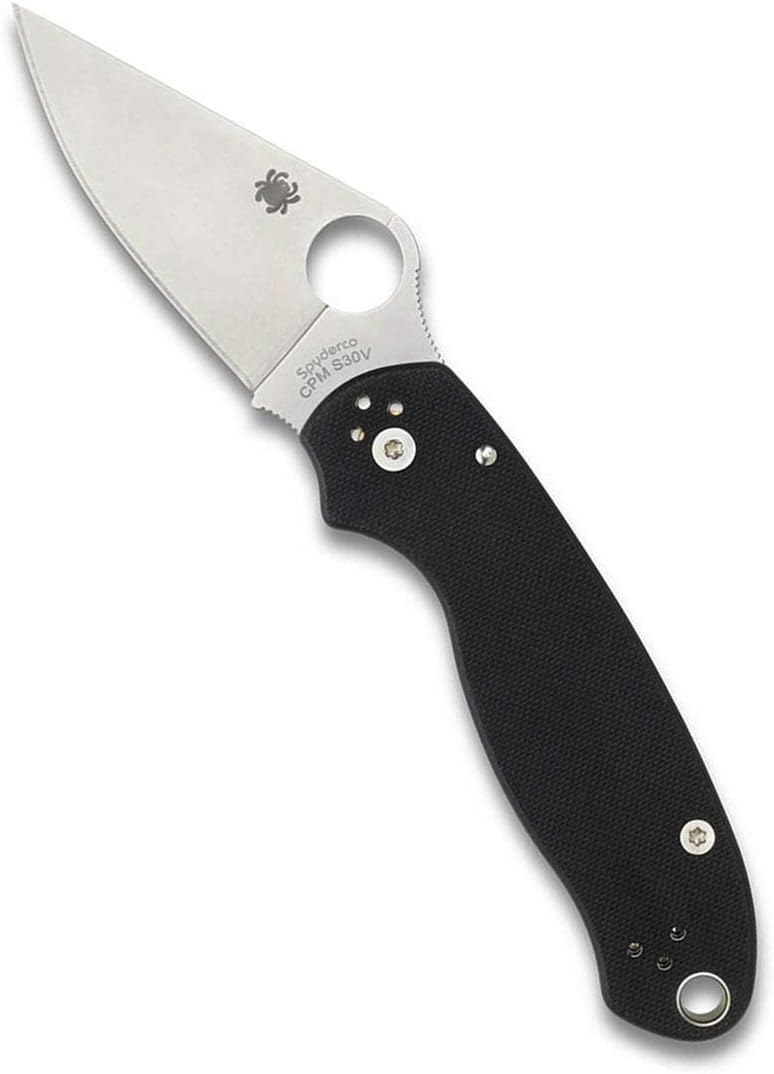
Spyderco is well known for meticulous, consistent heat treatment across its lineup — the Paramilitary 2 is a benchmark example of steel spec meeting real execution.
Check Price on Amazon5. Steel Families Compared
Knife steels are typically grouped into families based on their dominant alloying strategy: simple carbon steels, classic stainless steels, high-vanadium “super steels,” and specialty steels like powder-metallurgy tool steels. Each family carries a distinct edge retention profile.
Simple high-carbon steels (like 1095, O1, and W2) contain minimal chromium and rely almost entirely on carbon content for hardness. They sharpen very easily, take an extremely fine edge, and — counterintuitively — often achieve excellent slicing edge retention despite modest wear-resistance numbers, because the edge geometry can be ground thinner without sacrificing durability. Their major downside is poor corrosion resistance, requiring active maintenance to prevent rust.
Classic stainless steels (420HC, 440C, 8Cr13MoV, AUS-8) trade some hardness ceiling for chromium content high enough to resist corrosion. These are the workhorse steels of budget and mid-range cutlery, offering decent edge retention with easy sharpening and low maintenance. The VG-10 vs AUS-10 comparison is a good example of how two steels in this broad category can still differ meaningfully in wear resistance and toughness balance.
Premium “super steels” (S30V, S35VN, S45VN, M390, MagnaCut) use powder metallurgy and higher vanadium/niobium content to dramatically improve wear resistance and edge stability at high hardness, without sacrificing as much toughness as older high-carbide steels did. These represent the current high-water mark for balanced edge retention in production cutlery, and the ongoing S35VN vs S45VN debate reflects just how incremental (but real) the gains are becoming at this tier.
Specialty tool steels (CruWear, 3V, Elmax) originate from industrial cutting-tool applications and bring exceptional toughness-to-hardness ratios, often favored in hard-use fixed blades and choppers. The CruWear vs 3V comparison highlights how these steels prioritize surviving impact over pure wear resistance, an inversion of the priorities seen in typical EDC folder steels.
| Steel | Typical HRC | Wear Resistance | Toughness | Ease of Sharpening |
|---|---|---|---|---|
| 1095 Carbon | 56-58 | Moderate | Good | Very Easy |
| 420HC | 56-58 | Moderate | Good | Easy |
| 8Cr13MoV | 58-60 | Moderate | Good | Easy |
| VG-10 | 60-61 | Good | Moderate | Moderate |
| S35VN | 60-62 | Very Good | Good | Moderate-Hard |
| M390 | 61-62 | Excellent | Moderate | Hard |
| MagnaCut | 62-64 | Excellent | Very Good | Hard |
| 3V | 58-60 | Good | Excellent | Moderate |
It’s also worth noting that not every “premium” steel outperforms every “budget” steel in practice. A well-heat-treated 14C28N blade from a reputable maker can outlast a poorly executed super-steel blade from a manufacturer cutting corners. The D2 vs 8Cr13MoV comparison is a good illustration of a semi-stainless tool steel (D2) that punches well above typical stainless categories in wear resistance, while sacrificing some corrosion resistance in exchange.
6. Blade Geometry and Edge Angle
Steel chemistry gets most of the attention, but geometry is arguably just as important to perceived edge retention — and it’s completely free to optimize, since it doesn’t require any change in material. Geometry refers to two related but distinct measurements: the primary grind (how the blade thins from the spine down toward the edge) and the edge bevel angle (the actual angle ground at the very apex that does the cutting).
A thinner edge bevel, all else equal, will feel sharper for longer in slicing tasks because less force is required to push material apart, meaning less stress accumulates at the apex per cut. However, a thinner edge is also inherently more fragile — it has less metal supporting it, making it more prone to rolling or micro-chipping when it contacts hard surfaces like cutting boards, bone, or grit embedded in food.
This is why professional sharpeners often talk about “geometry doing the work that steel gets credit for.” A knife re-profiled to a lower, more acute edge angle (say, 15 degrees per side instead of a factory 20 degrees) will often feel like it holds an edge dramatically longer in the kitchen — not because the steel changed, but because the thinner edge cuts more efficiently and rolls less under lighter, more controlled cutting pressure.
| Edge Angle (per side) | Typical Use Case | Sharpness Feel | Durability |
|---|---|---|---|
| 10-13° | Japanese kitchen knives, straight razors | Extremely sharp, effortless slicing | Fragile, needs careful use |
| 15-17° | Premium Western chef knives, EDC folders | Very sharp, good slicing | Moderate, general kitchen safe |
| 20-22° | General-purpose Western knives | Sharp, versatile | Durable, tolerant of misuse |
| 25-30° | Hard-use fixed blades, choppers | Less acute, more robust | Very durable, chip-resistant |
Blade grind style also matters. A full flat grind thins the blade evenly from spine to edge, offering excellent slicing performance but a bit less strength behind the edge compared to a hollow or convex grind. A convex grind, common on many outdoor and bushcraft knives like the Morakniv Garberg, tapers the edge in a curved profile that supports the apex with more material immediately behind it, which is part of why convex-ground blades often chip less in hard outdoor use despite similar steel hardness to flat-ground counterparts.
Blade thickness behind the edge (often abbreviated BTE) is another geometry factor that gets far less attention than it deserves. Two knives can share the exact same edge angle but differ significantly in how “wedgy” they feel cutting through dense material, purely because one has more metal mass immediately behind the edge bevel. Thinner BTE improves cutting efficiency but reduces edge support, again reinforcing that edge retention is a systems problem, not a single-variable one.

The Morakniv Garberg is a great example of geometry doing heavy lifting — a robust convex-leaning grind on an affordable stainless steel that holds up remarkably well outdoors.
Check Price on Amazon7. How an Edge Actually Dulls
To appreciate what “edge retention” is fighting against, it helps to understand what dulling physically is. An edge doesn’t dull through some abstract, uniform process — it dulls through a combination of specific, observable mechanical failures happening at a microscopic scale, usually in some blend of three modes: abrasive wear, rolling (plastic deformation), and micro-chipping (fracture).
Abrasive wear happens when the material being cut contains particles harder than the steel’s matrix — think of the silica in vegetable skins, the grit on a cutting board, or dust embedded in rope fibers. These particles gradually grind away at the very apex of the edge, widening it from a fine point into a rounded, less effective edge. This is the wear mode that carbide content and hardness most directly combat.
Rolling occurs when the edge apex is pushed sideways under load rather than sliced cleanly through material, causing the thin apex to fold over microscopically rather than break off. This is common with softer steels or thinner edge geometries used on harder materials, and it’s why a “dull” kitchen knife often isn’t actually worn down — it just needs a few strokes on a honing rod to realign the rolled edge back into position, restoring sharpness instantly.
Micro-chipping happens when the edge is too brittle or too thin to absorb a sudden lateral or impact stress, and instead of rolling, a tiny piece of the apex fractures away entirely. Once this happens, honing won’t fix it — the edge needs to be reground to remove the damaged section. This is the failure mode most associated with overly hard, thin-edged blades used on harder-than-intended materials, like accidentally cutting into bone with a fine kitchen slicer.
Understanding which failure mode is dominant in your use case actually tells you what to look for in a knife. If you primarily deal with abrasive wear (cutting rope, cardboard, or fibrous vegetables), prioritize wear resistance and carbide-rich steels. If you deal mostly with rolling from repetitive board contact, prioritize a slightly higher hardness and consistent honing habit. If you’re worried about chipping from occasional harder contact (bone, frozen food, prying), prioritize toughness and a slightly more obtuse edge angle over raw hardness.
8. Coatings, Cladding, and Surface Treatments
Beyond the core steel and its heat treatment, many knives incorporate surface treatments that influence perceived edge retention, corrosion resistance, and friction during cutting — even though they don’t change the underlying steel’s mechanical properties at the apex.
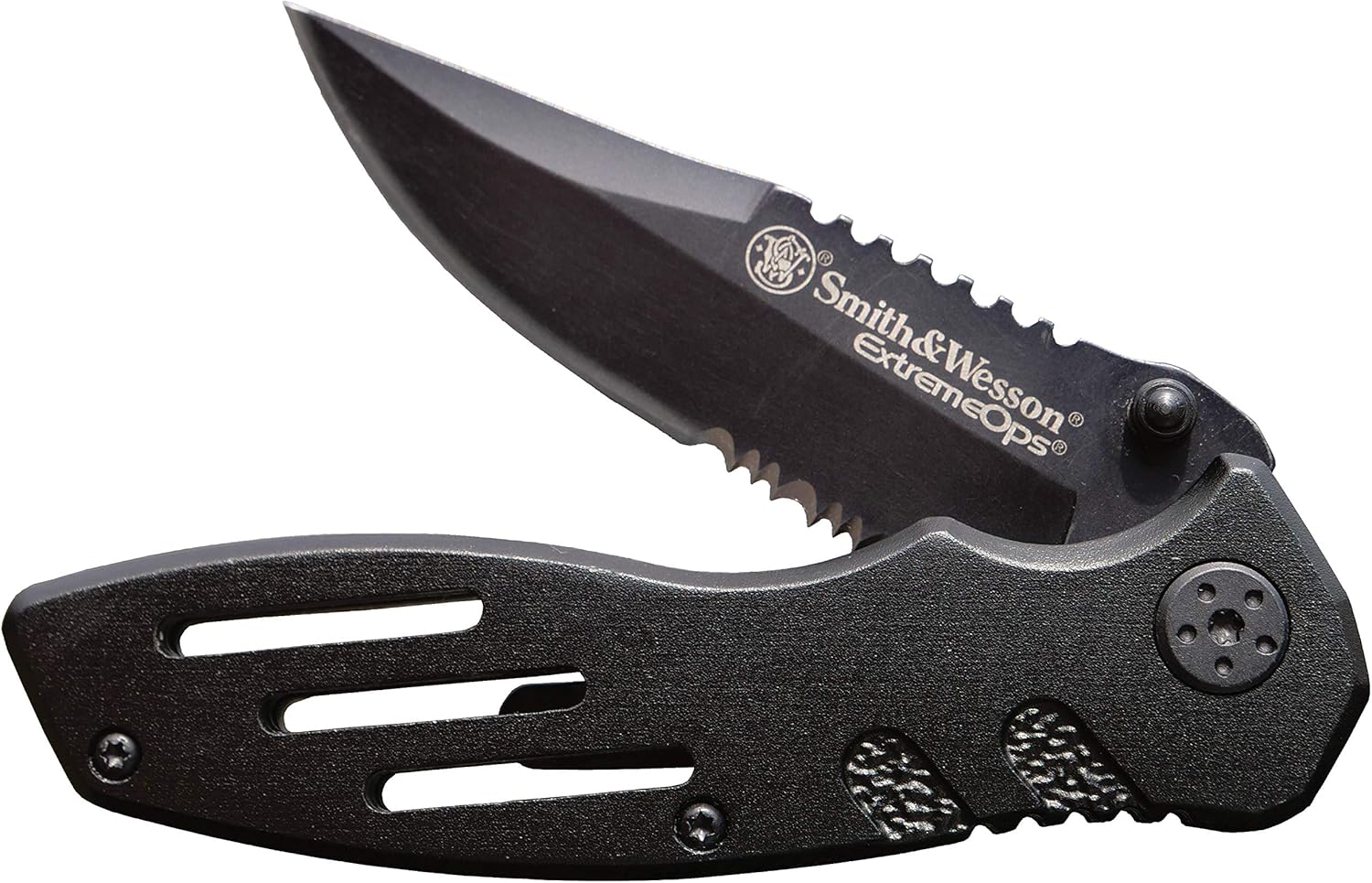
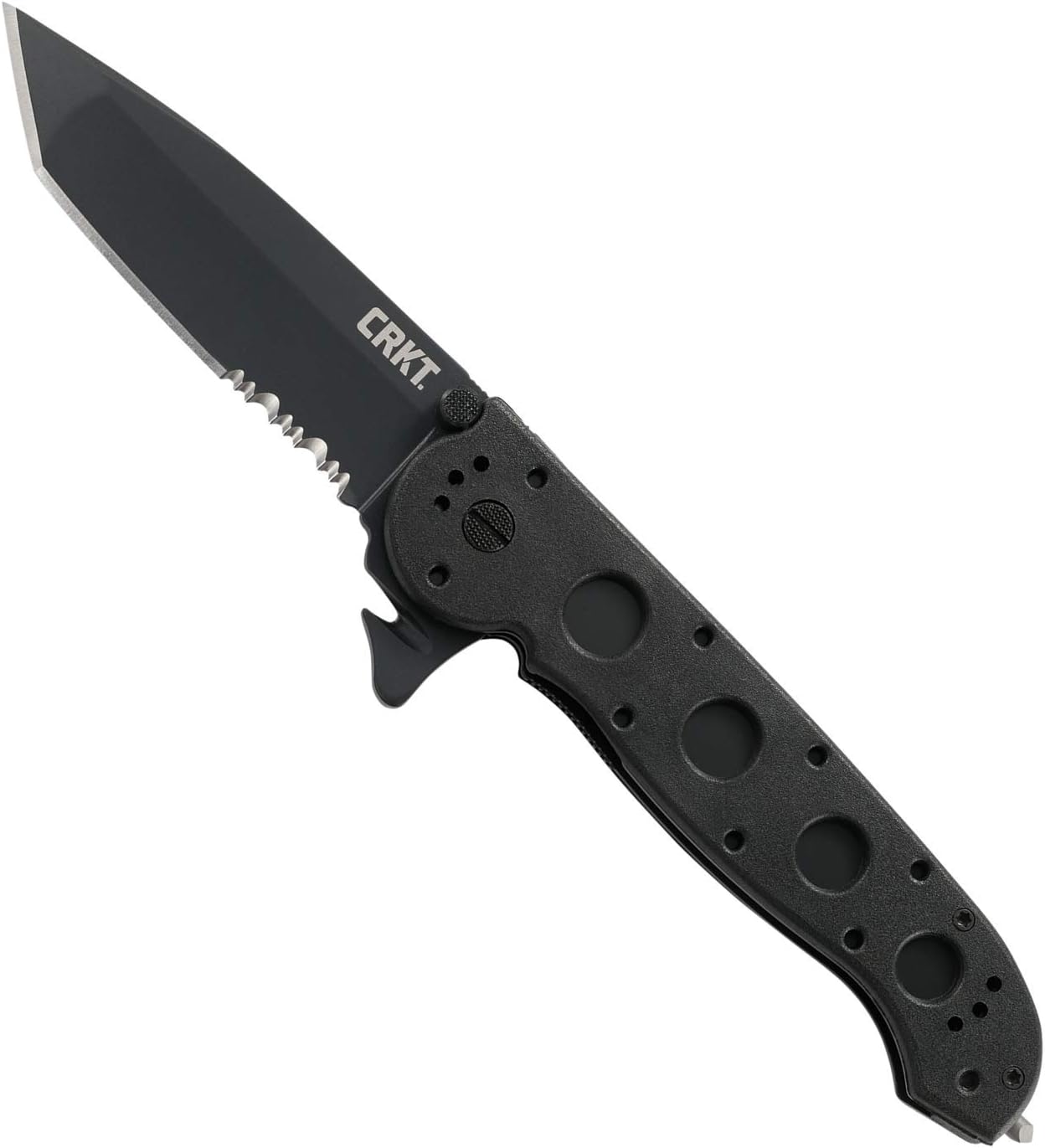
Physical vapor deposition (PVD) coatings, like the black or bronze finishes seen on many tactical folders, add a thin, extremely hard ceramic-like layer (often titanium nitride or similar) to the blade surface. This layer resists corrosion and reduces friction during cutting, which can make an edge feel like it’s staying sharper longer simply because it’s slicing more efficiently through sticky or fibrous material — though the actual apex hardness underneath is unaffected once the coating wears away at the very edge itself.
Clad construction, common in Japanese kitchen knives, sandwiches a hard, high-carbon core steel between two softer, tougher outer layers of stainless steel. This design lets manufacturers use extremely hard, wear-resistant (but brittle) core steels — sometimes reaching 63-65 HRC — without the whole blade becoming dangerously brittle, because the softer cladding absorbs lateral shock while the thin hard core does the actual cutting and holds the fine edge.
Differential hardening, seen in traditional Japanese blades and some Western hard-use knives, intentionally heat-treats the edge to a higher hardness than the spine, often visible as a hamon line. This produces a blade with a very hard, wear-resistant cutting edge backed by a softer, more shock-absorbent spine — effectively engineering the hardness-toughness trade-off directly into the geometry of a single piece of steel rather than relying purely on alloy chemistry.
None of these surface or construction techniques change the fundamental physics discussed earlier — they’re ways of applying the hardness-toughness trade-off more surgically to different parts of the same blade, rather than accepting a single compromise hardness across the entire piece of steel.
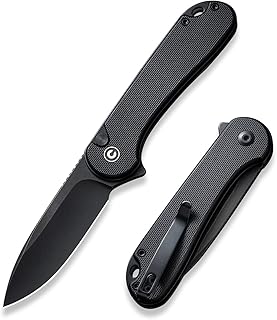
Looking for a well-balanced everyday folder with a durable stonewash or coated finish and solid factory edge geometry? The CIVIVI Elementum consistently punches above its price point.
Check Price on Amazon9. Matching Steel to Use Case
The “best” edge-retention steel doesn’t exist in a vacuum — it exists relative to what you’re actually cutting, how often you’re willing to sharpen, and what failure mode (rolling, chipping, or wear) you’re most trying to avoid. This is why a steel that’s ideal for a kitchen chef’s knife might be a poor choice for a hard-use bushcraft blade, even if both knives are described as having “great edge retention” in their respective categories.
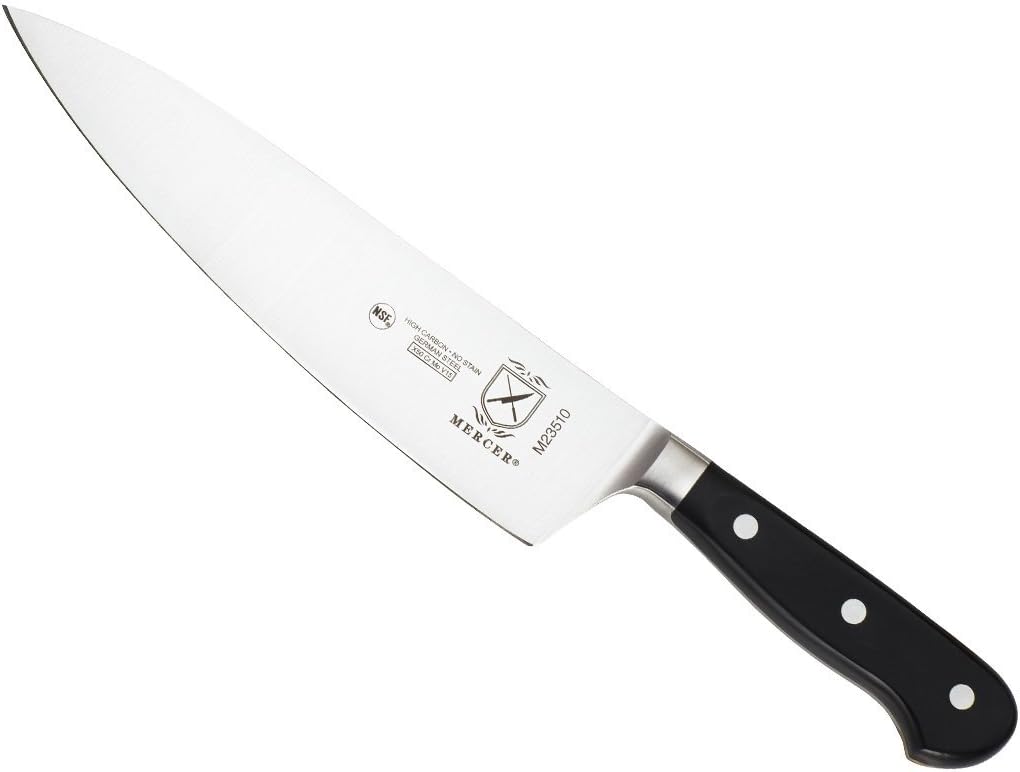
Kitchen knives generally benefit from thinner geometry and moderate-to-high hardness steels that take a keen edge easily, since the primary task (slicing food) rarely subjects the edge to lateral stress or impact. Steels like VG-10, AUS-10, and various proprietary blends used in MAC and similar Japanese-style chef knives are optimized specifically for this profile: fine, hard edges without excessive toughness demands.
Everyday carry folders need to balance edge retention against the reality of occasional harder use — cutting into packaging tape with embedded staples, scraping paint, or opening cardboard boxes with grit. Steels like S35VN or 14C28N in a moderate 20-degree edge angle strike a reasonable middle ground here, which explains their popularity in knives like the Benchmade 940 Osborne.
Hard-use and outdoor knives — batoning wood, field dressing game, general bushcraft tasks — prioritize toughness far more heavily, since chipping in the field is a much bigger practical problem than needing to hone the edge slightly more often. This is why steels like CruWear, 3V, or even simpler high-carbon steels remain popular in this category, valued for their ability to survive impact without complaint, as seen in knives built for tasks outlined in the field dressing knife buyer’s guide.
Axes and hatchets, while a different tool category, follow the exact same physics. A splitting axe head needs toughness to survive repeated impact into knotty wood, while a precision carving hatchet can lean toward a slightly harder, more wear-resistant edge. The ongoing Fiskars vs Estwing shock reduction comparison illustrates how even non-knife cutting tools are engineered around this same hardness-toughness spectrum.
| Use Case | Priority | Recommended Steel Profile | Ideal Edge Angle |
|---|---|---|---|
| Kitchen prep / slicing | Fine edge, easy resharpening | VG-10, AUS-10, high-carbon clad | 12-16° per side |
| Everyday carry folder | Balanced wear resistance + toughness | S35VN, 14C28N, D2 | 17-20° per side |
| Outdoor / bushcraft | Toughness, chip resistance | 3V, CruWear, 1095 | 20-25° per side |
| Heavy chopping / axes | Impact survival | Simple carbon or low-alloy tool steel | 25-30° per side |
10. Maintenance Habits That Extend Edge Life
Steel selection and heat treatment set the ceiling for how long an edge can last, but maintenance habits determine how close you actually get to that ceiling in daily use. Even the best super-steel blade will underperform a modest stainless steel if it’s maintained poorly, and conversely, disciplined maintenance can make a budget knife feel like it holds an edge far longer than its steel chart would suggest.
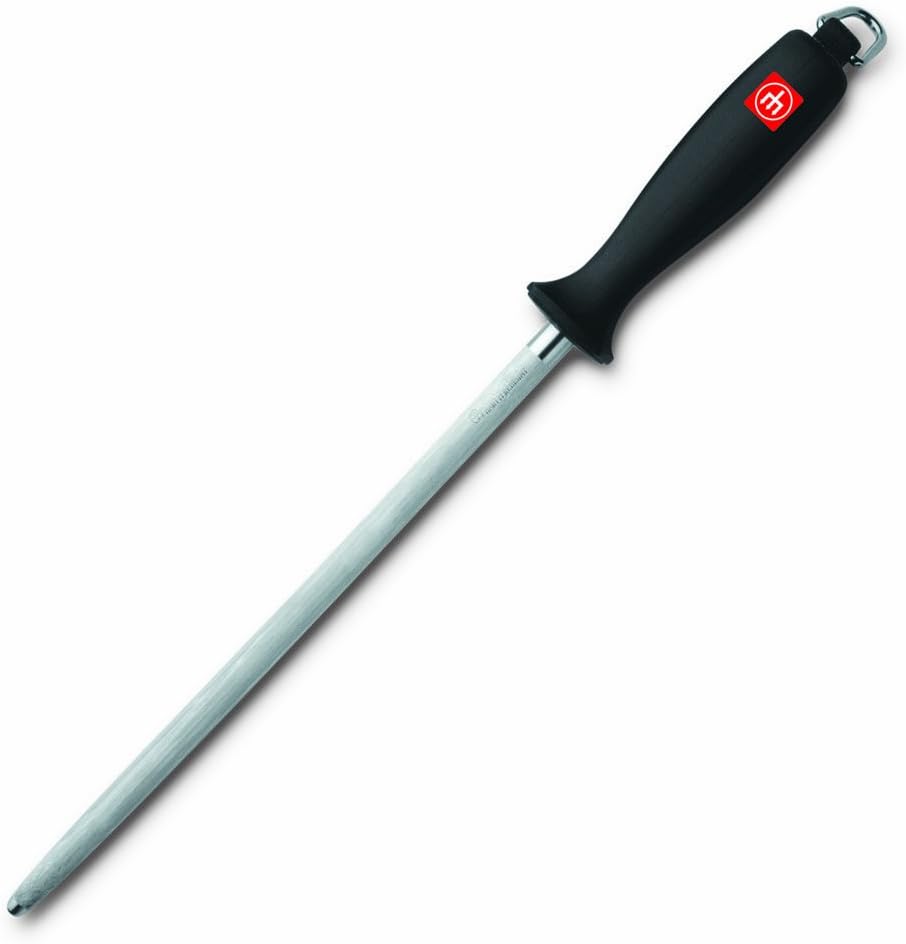
The single most impactful (and most skipped) habit is regular honing. A honing rod doesn’t remove metal — it realigns a rolled edge back into position, restoring sharpness without any actual sharpening. Doing this before or after each significant use session dramatically slows the rate at which an edge feels “dull,” because it catches and corrects rolling before it compounds into something that requires actual abrasive sharpening.
Cutting surface choice matters enormously and is often overlooked entirely. Glass, stone, and ceramic cutting boards are dramatically harder than any knife edge and will accelerate wear and rolling with every single cut. Wood and quality plastic boards are far kinder to an edge, which is why professional kitchens almost universally standardize on end-grain wood or soft polymer boards.
Proper storage prevents both corrosion and unnecessary edge contact damage. Tossing knives loose into a drawer causes edge-to-edge and edge-to-metal contact that dulls and chips blades unnecessarily. A dedicated knife block or a properly designed magnetic strip with wood-encased bars protects the edge from this entirely avoidable wear.
Sharpening technique and tool choice round out the picture. A consistent angle, appropriate grit progression, and the right abrasive medium for the steel in question (diamond stones are typically necessary for high-vanadium super steels, while simpler steels sharpen fine on standard aluminum oxide or water stones) all affect how well an edge is restored and how long that restoration lasts before the next touch-up is needed. The diamond vs ceramic sharpening system comparison is a useful reference point for matching abrasive choice to steel hardness.
Habits That Extend Edge Life
- Honing before/after significant cutting sessions
- Using wood or soft polymer cutting boards
- Storing blades edge-protected, not loose in a drawer
- Drying blades immediately after washing
- Sharpening at a consistent, appropriate angle
Habits That Shorten Edge Life
- Cutting on glass, stone, or ceramic surfaces
- Letting blades soak in a sink with other utensils
- Using a knife to pry or twist against grain
- Ignoring rolling until it becomes chipping
- Sharpening freehand at inconsistent angles

A quality whetstone system remains one of the best investments for genuinely extending any knife’s practical edge life, regardless of steel type.
Check Price on Amazon11. Common Myths About Edge Retention
Myth: Harder steel always means better edge retention. As covered extensively above, hardness is only one piece of the puzzle. Wear resistance (carbide content and distribution), toughness, and geometry all play equally significant roles. A hard but brittle edge that chips constantly delivers worse real-world edge retention than a slightly softer, tougher edge that simply rolls and can be honed back into service quickly.
Myth: Expensive steel always outperforms budget steel. Heat treatment execution can outweigh raw steel chemistry advantages, as demonstrated repeatedly by well-executed budget steels like 420HC in Buck’s production versus poorly executed “premium” steels from manufacturers with inconsistent quality control. Price correlates with edge retention potential, not guaranteed edge retention outcome.
Myth: A knife that needs frequent honing has bad steel. Needing regular honing is often a sign of thin, efficient edge geometry — not poor steel. Professional chefs hone their knives before nearly every use precisely because thin, high-performance edges roll more readily under normal kitchen contact, and honing is the correct, fast fix, not a sign of a failing knife.
Myth: Stainless steel can’t hold an edge as well as carbon steel. This was truer decades ago than it is today. Modern powder-metallurgy stainless steels like MagnaCut and M390 rival or exceed traditional high-carbon steels in wear resistance while offering vastly superior corrosion resistance, closing a gap that used to be much wider.
Myth: A mirror-polished edge holds up longer than a toothy, coarser edge. For push-cutting tasks (like slicing through a tomato), a polished edge is genuinely sharper. But for many practical tasks involving fibrous material, a slightly toothy edge from a coarser grit stone can outperform a polished one, because the micro-serrations bite into fibers rather than sliding across them — and a coarser finish is also often more forgiving of minor rolling before it becomes noticeable.
Myth: You should always sharpen to the thinnest possible angle for best edge retention. Thinner angles improve initial sharpness and cutting efficiency, but if pushed too far for the intended use case, they dramatically reduce the edge’s practical durability, leading to more frequent chipping and a net loss in real-world edge retention despite the theoretical sharpness gain.
12. Choosing a Knife for Long-Lasting Sharpness
Bringing everything together, choosing a knife that will genuinely hold its edge well in your specific use case means looking past the steel name alone and considering the full system: steel chemistry, heat treatment reputation of the specific brand, blade geometry, and your own maintenance habits and tolerance for sharpening frequency.
Start by honestly assessing your primary use case. If you’re mostly slicing food in a kitchen, prioritize thin geometry and a steel that sharpens easily and takes a fine edge, since you’ll likely be honing or touching up frequently regardless of steel choice — German vs Japanese steel philosophy comparison is a useful place to start this evaluation. If you’re carrying a folder for general daily tasks, look for a balanced mid-to-premium steel like S35VN or 14C28N with a moderate edge angle from a manufacturer known for consistent heat treatment, such as Spyderco or Benchmade.
If you’re buying for outdoor or hard-use scenarios, resist the temptation to chase the highest hardness number and instead look for steels and grinds specifically marketed toward toughness, like the Ontario RAT-1 or knives running CruWear or 3V steel. Reading dedicated brand and steel breakdowns — like the Kizer premium production overview — can help you understand whether a manufacturer has a track record of matching steel choice to sensible heat treatment execution, rather than just chasing an impressive spec sheet.
Finally, don’t underestimate your own role in the equation. A modestly specced knife maintained diligently — honed regularly, cut on appropriate surfaces, sharpened at a consistent angle — will often outperform a premium steel blade neglected and abused. Edge retention, in the end, is a partnership between the steel, the maker, and the person actually using the knife day to day.

Looking for a genuinely tough, budget-friendly folder with a forgiving edge that’s hard to chip in daily use? The Ontario RAT-1 remains a longtime favorite for exactly that reason.
Check Price on AmazonFrequently Asked Questions
What steel has the best edge retention?
Among widely available production steels, powder-metallurgy super steels like MagnaCut, M390, and S45VN currently offer the best overall balance of wear resistance and toughness, but “best” depends heavily on execution — a well-heat-treated mid-tier steel can outperform a poorly executed premium one in real-world use.
Does a higher Rockwell hardness always mean better edge retention?
No. Hardness resists deformation, but wear resistance (driven by carbide content) and toughness (resistance to chipping) are equally important. A very hard but brittle edge can chip and perform worse in practice than a slightly softer, tougher one.
Why do two knives with the same steel perform differently?
Heat treatment execution varies significantly between manufacturers, even using identical steel. Austenitizing temperature, quench speed, tempering cycles, and cryogenic treatment all influence real-world performance independent of the steel’s chemical composition.
Is a thinner edge always sharper for longer?
A thinner edge cuts more efficiently and feels sharper initially, but it’s also more fragile and prone to rolling or chipping. The ideal edge angle balances sharpness against the durability your specific use case demands.
How often should I hone versus sharpen my knife?
Honing (realigning a rolled edge) can be done before or after most significant cutting sessions and requires no metal removal. Actual sharpening, which removes metal to create a new edge, is typically needed every few weeks to few months depending on use frequency and edge geometry.
Does stainless steel hold an edge as well as carbon steel?
Modern powder-metallurgy stainless steels rival or exceed traditional high-carbon steels in edge retention while offering far superior corrosion resistance. Older or simpler stainless steels may still lag behind good carbon steel in pure wear resistance.
What causes a knife edge to chip instead of just going dull?
Chipping occurs when the edge is too brittle or too thin for the stress applied to it, causing a small fracture rather than a controlled roll. This is more common with very hard, thin-ground edges used on unexpectedly hard materials like bone or frozen food.
Does cutting board material really affect edge retention?
Yes, significantly. Glass, stone, and ceramic boards are much harder than any blade edge and accelerate wear and rolling with every cut. Wood and quality polymer boards are far gentler on an edge and are standard in professional kitchens for this reason.
Are coated blades better for edge retention?
Coatings like PVD improve corrosion resistance and reduce cutting friction, which can make an edge feel like it’s performing better for longer, but they don’t change the underlying hardness or wear resistance of the steel at the actual cutting apex.
Why do some cheap knives outperform expensive ones in edge retention?
Heat treatment quality and execution can matter more than raw steel chemistry. A budget steel heat treated meticulously by an experienced manufacturer can outperform a premium steel processed with inconsistent factory quench and temper cycles.
Is edge retention the same as sharpness?
No. Sharpness describes how fine and effective an edge currently is at a given moment. Edge retention describes how long that sharpness lasts under normal use before it needs to be restored through honing or sharpening.
Does blade geometry matter more than steel type?
Both matter, but geometry is often underrated. A well-ground, appropriately thin edge on a modest steel can outperform a poorly ground, overly thick edge on a premium steel, since geometry directly affects cutting efficiency and stress at the apex.
Final Thoughts
Edge retention isn’t a single number you can read off a spec sheet — it’s the combined result of steel chemistry, carbide structure, heat treatment execution, blade geometry, and how well the knife is maintained day to day. Understanding these layered variables lets you look past marketing claims and choose a blade genuinely suited to how you actually cut, rather than chasing a steel name that sounds impressive but might not match your real-world needs.
Whether you’re outfitting a kitchen, building an everyday carry rotation, or preparing gear for the outdoors, matching the right steel and geometry to your actual use case — and maintaining it properly — will do more for long-lasting sharpness than any single spec ever could.
Shop Sharpening Kits on Amazon