
What Is a Chef Knife Used For? The Complete Guide to the Kitchen Workhorse
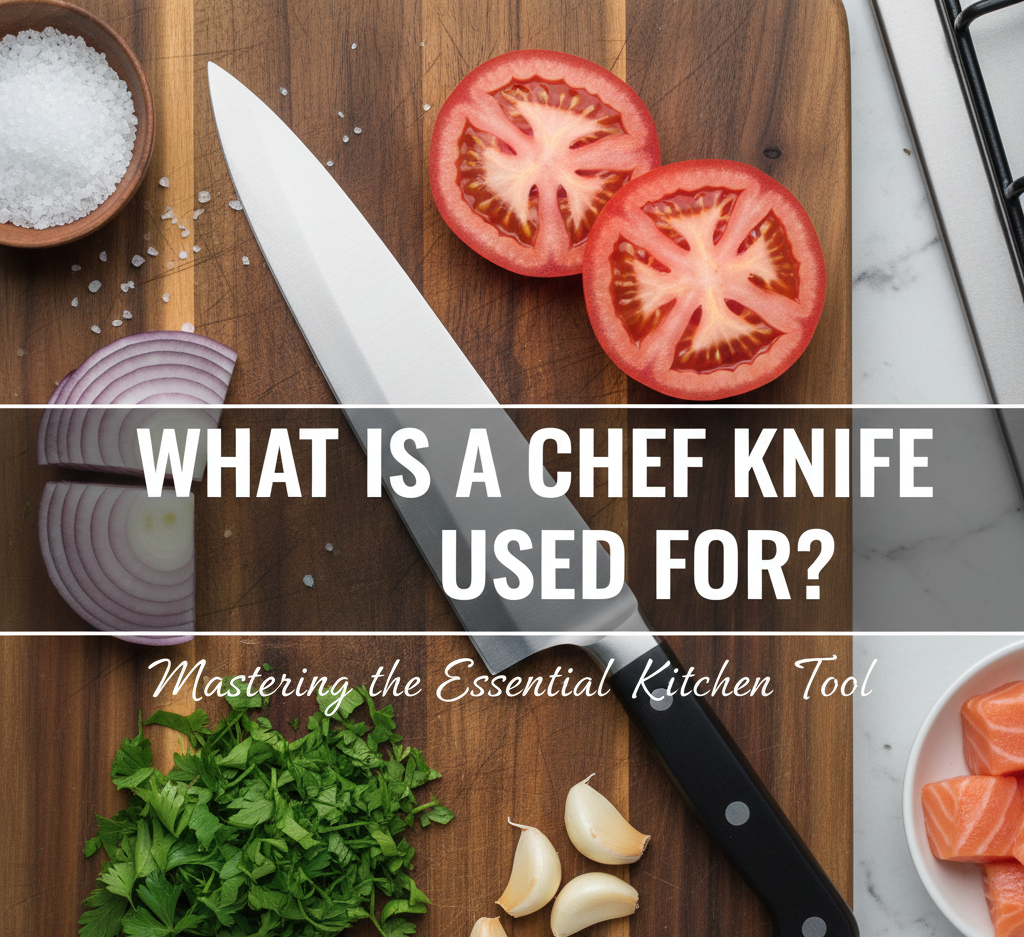
In the culinary world, there is one tool that reigns supreme. It is not the blender, the sous-vide machine, or the fancy copper pan. It is the Chef’s Knife. But for the beginner cook or the enthusiast looking to upgrade their arsenal, the question remains: what is a chef knife used for exactly?
Is it just for chopping onions? Can it handle bones? And why are there so many different shapes and sizes? At knifeindex.com, we believe that understanding your primary tool is the first step to becoming a better cook.
In this comprehensive guide, we will break down the anatomy, the techniques, the brand battles (like Shun vs. Wusthof), and the essential maintenance required to keep your blade singing.
1. The Definition: What Makes a Chef’s Knife?
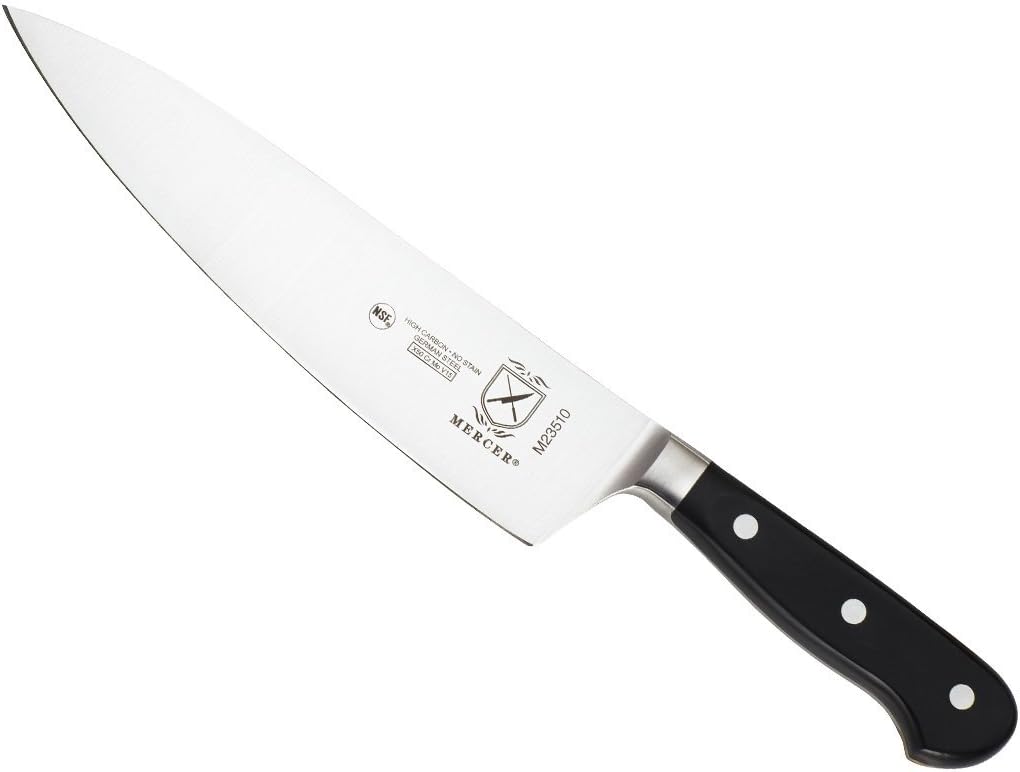
A chef’s knife (or cook’s knife) is a multi-purpose blade, typically 8 inches in length, designed to perform 90% of kitchen tasks. It is defined by a blade that tapers to a point and a “belly” (the curved edge) that allows the knife to rock back and forth on the cutting board.
External Definition
According to Le Creuset, “A chef’s knife is among the most versatile knives… The curve of the blade allows for a rocking motion.” Read their full glossary entry here: Le Creuset Glossary: Chef’s Knife.
Anatomy of the Blade
To use it well, you must understand how it is built. High-quality options, like those seen in our best chef knife brands guide, are often forged from a single piece of steel. This brings us to a critical distinction: the difference between stamped and forged knives. A forged knife usually has a bolster (a thick band of steel) for balance, while a stamped knife is lighter and more affordable.
2. The Core Tasks: What Can It Do?
The chef’s knife is the jack-of-all-trades. Here are its primary functions:
- Slicing Meat: Whether it’s raw chicken breast or cooked steak, the length of the blade allows for smooth, long strokes.
- Dicing Vegetables: This is where the knife shines. From onions to carrots, the weight of the blade helps drive through dense produce.
- Mincing Herbs: Using the “rocking motion,” a chef’s knife can turn basil or parsley into fine dust in seconds.
- Crushing Garlic: Using the flat side of the blade (carefully!), you can smash garlic cloves to peel them easily.
What It Is NOT Used For
Despite its versatility, it is not invincible. Do not use your chef’s knife for:
- Butchering Bones: This will chip the edge. Use a cleaver or a heavy-duty poultry shear.
- Frozen Food: Ice crystals are harder than steel. You will snap the tip.
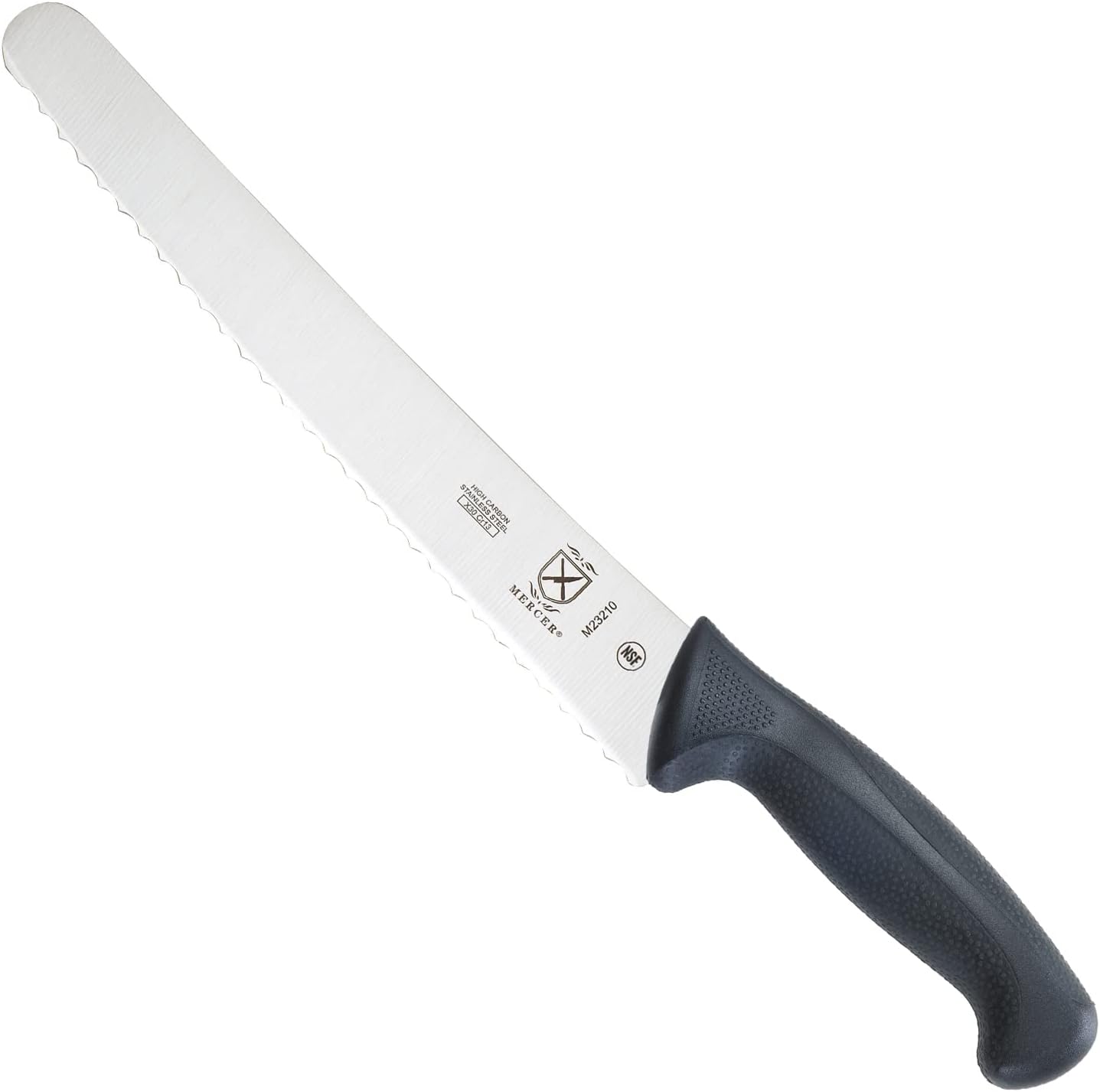
- Bread: While it can cut bread, it will squash the loaf. Read our guide on the best bread knife to see why serrations are necessary.
3. German vs. Japanese: The Great Divide
When shopping for a chef’s knife, you will encounter two main philosophies: The Western (German) style and the Eastern (Japanese) style. This is the core of the best German kitchen knives vs. best Japanese kitchen knives debate.
| Feature | German (e.g., Wusthof, Zwilling) | Japanese (e.g., Shun, Miyabi) |
|---|---|---|
| Blade Profile | More curved (big belly) for rocking. | Flatter profile for push-cutting. |
| Steel | Softer (56-58 HRC), durable, tough. | Harder (60-62 HRC), sharper, brittle. |
| Edge Angle | ~20 degrees per side. | ~15 degrees per side (Razor sharp). |
| Weight | Heavier, feels substantial. | Lighter, nimble. |
If you are debating specific brands, check our detailed comparisons like Wusthof vs Zwilling vs Shun or Zwilling vs Henkel knives.
4. Chef’s Knife vs. The Rest of the Block
How does the chef’s knife compare to other specialty blades? Understanding these differences ensures you pick the right tool for the job.
Vs. Santoku
The Santoku is the Japanese answer to the Chef’s knife. It is shorter, flatter, and excellent for chopping vegetables. If you prefer an up-and-down chopping motion over rocking, read our guide: What is a Santoku Knife Used For?
Vs. Nakiri
The Nakiri is a rectangular blade designed exclusively for vegetables. It has no tip, so it cannot rock. It is a specialist tool. Learn more here: What is a Nakiri Knife Used For?
Vs. Paring Knife
The Chef’s knife handles the board work; the paring knife handles the air work. For peeling apples or deveining shrimp, the massive blade of a chef’s knife is clumsy and dangerous. See: What is a Paring Knife Used For?
Vs. Serrated Knife
For anything with a hard crust and soft interior (bread) or a waxy skin (tomatoes), the saw-like teeth of a serrated knife are superior. See: What is a Serrated Knife Used For?
5. Top Product Recommendations
We have tested hundreds of blades. Based on our Victorinox chef knife reviews and high-end brand battles, here are the top 3 choices for every budget.
 Wüsthof Classic Ikon 8″ Chef’s Knife
The gold standard of German engineering. Perfect balance, razor-sharp, and built to last a lifetime. A frequent winner in our Wusthof vs Victorinox comparisons.
Check Price on Amazon Victorinox Fibrox Pro 8″
Consistently rated as the best budget chef knife in the world. Stamped steel, non-slip handle, and sharper than knives costing twice as much.
Check Price on Amazon Shun Classic 8″ Chef’s Knife
For those who want beauty and performance. The Damascus cladding prevents sticking, and the VG-MAX core is incredibly hard. See how it stacks up in Shun vs Wusthof.
Check Price on Amazon6. Maintenance: Respect the Tool
A dull chef’s knife is the most dangerous tool in the kitchen because it requires more force to cut, leading to slips. Here is how to keep it safe.
Sharpening vs. Honing
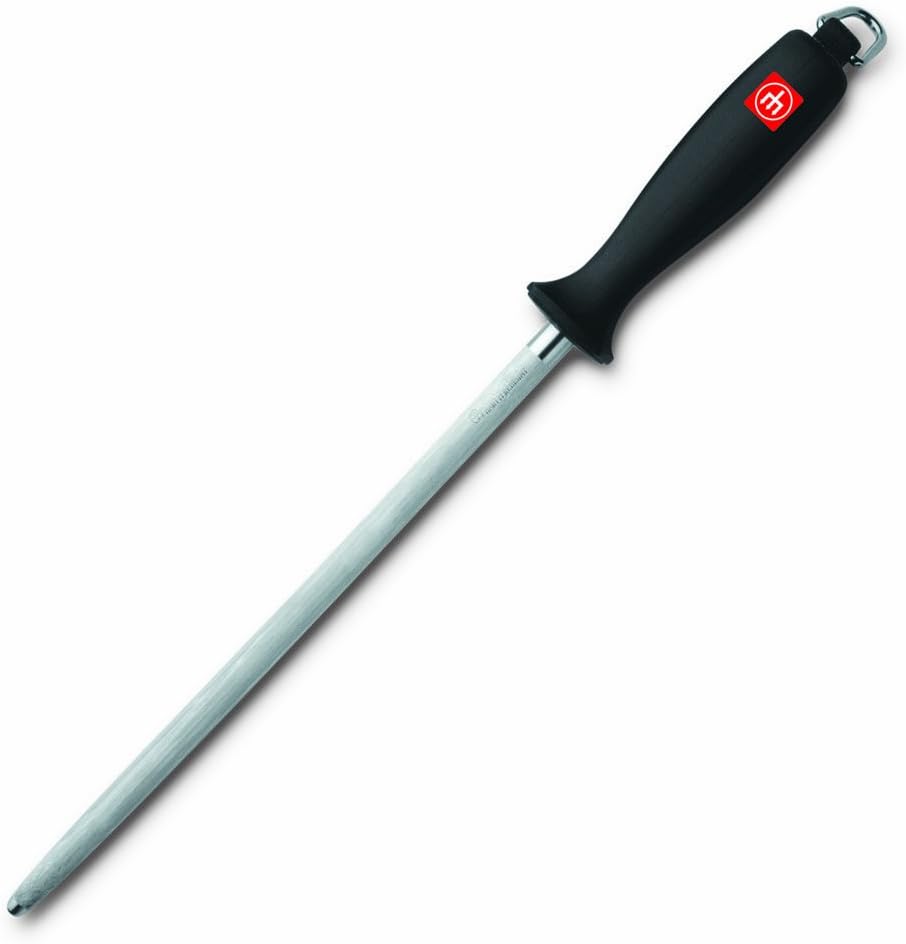
This is a common confusion. Honing (using a steel rod) realigns the microscopic teeth of the blade. You should do this before every use. Sharpening (removing metal to create a new edge) should be done 1-2 times a year.
- For maintenance tools, check our guide on the best knives sharpener.
- If you aren’t comfortable with stones, consider the best knife electric sharpeners for consistent angles.
- For quick touch-ups, the best knife sharpener (manual pull-through) is acceptable for budget knives like the Victorinox.
Storage and Safety
Never throw your chef’s knife in a drawer loose. It ruins the edge and is a hazard. We recommend:
- For Countertops: The best knife set with block keeps blades accessible and safe.
- For Drawers: Use a dedicated knife drawer organizer.
- For Display: Magnetic knife holders are hygienic and look professional.
- For Travel: Professional chefs should invest in the best knife bag for chefs.
⚠️ The Dishwasher Warning
Do not put your chef’s knife in the dishwasher. The heat expands the handle, and the detergent dulls the blade. While there are some best dishwasher safe steak knives, high-carbon chef knives must be hand-washed and dried immediately.
7. Budget Considerations
You don’t need to spend $200 to get a good knife. If you are just starting, explore our list of the best affordable chef knives. Often, brands like Henckels (International) vs Victorinox offer 80% of the performance for 30% of the price.
Frequently Asked Questions (FAQ)
It was originally developed for slicing and disjointing large cuts of beef. Today, it is the primary general-utility knife for most Western cooks.
The standard is 8 inches (20cm). This offers enough length to slice through large items but is manageable for most hands. 6-inch versions exist for smaller hands, and 10-inch versions for pros handling large produce like watermelons.
They are owned by the same company, but Zwilling is the premium line (often forged, made in Germany), while J.A. Henckels International is the budget line (often stamped, made in Spain or Asia). Read our full Zwilling vs Henkel comparison.
We usually recommend buying a high-quality single chef’s knife first. However, if you need a bread knife and a paring knife too, a set can offer value. Check our best knife set reviews.
8. Proper Grip and Cutting Techniques
Owning a great chef’s knife is only half the equation. How you hold it and how you move it determines whether you get restaurant-quality cuts or a cutting board full of mangled vegetables. Professional culinary schools spend the first week of instruction purely on grip and motion before students are even allowed near a stove.
The Pinch Grip
The single most important upgrade any home cook can make is abandoning the “hammer grip” (wrapping all fingers around the handle) in favor of the pinch grip. To do this, pinch the blade itself — not the handle — between your thumb and the side of your index finger, right where the blade meets the bolster. The remaining three fingers wrap around the handle for control. This grip moves the pivot point of the knife forward, onto the blade, which dramatically increases precision and reduces wrist fatigue during long prep sessions.
The Claw Grip (Guiding Hand)
Your non-dominant hand is just as important as your knife hand. The “claw grip” involves curling your fingertips under so your knuckles face the blade, using the flat side of the knife to ride against your first knuckle as a guide. This keeps your fingertips tucked safely away from the edge while allowing you to feed the food into the blade at a consistent rate. It looks awkward for the first few days of practice, but within a week it becomes automatic muscle memory.
The Rocking Motion vs. Push Cutting
As mentioned earlier, German-style knives favor a rocking motion where the tip stays anchored on the board and the heel lifts and falls in a smooth arc. Japanese-style knives, with their flatter profile, favor push cutting — a full forward-and-down stroke where the entire blade travels through the food in one pass. Neither is “correct”; they are simply optimized for different blade geometries. Trying to rock a flat-profile Japanese knife will leave uncut food at the tip, while trying to push-cut with a heavily bellied German blade wastes the curve’s benefit.
Common Knife Cuts Every Cook Should Know
- Julienne: Thin matchstick cuts, roughly 1/8 inch by 1/8 inch by 2-3 inches, used for garnishes and stir-fries.
- Batonnet: A slightly thicker matchstick, about 1/4 inch by 1/4 inch, often the intermediate step before a small dice.
- Brunoise: A fine dice made by cutting julienne strips crosswise into tiny cubes, essential for classic French mirepoix and garnishes.
- Small, Medium, and Large Dice: Cubes ranging from 1/8 inch up to 3/4 inch, used depending on cooking time and presentation.
- Chiffonade: Rolling leafy herbs or greens like basil into a tight cigar shape and slicing thinly to create ribbons.
- Rondelle: Round or oval slices from cylindrical vegetables like carrots or cucumbers, achieved with a straight downward cut.
- Bias Cut: An angled slice that increases the surface area of vegetables like celery or scallions, popular in stir-fry cooking.
Mastering these cuts is less about memorizing definitions and more about repetition. Professional chefs recommend practicing on cheap onions or carrots until the motion feels effortless before attempting them on expensive proteins or delicate herbs.
9. Understanding Blade Steel: What Your Knife Is Actually Made Of
Not all steel is created equal, and the type of steel used in your chef’s knife affects everything from edge retention to how often you need to sharpen it. This is one of the most overlooked factors when shoppers compare blades, yet it explains most of the price difference between a $30 knife and a $300 knife.
Stainless Steel
The vast majority of Western chef’s knives, including most entries in our best German kitchen knives roundup, use stainless steel alloys such as X50CrMoV15. These blends include chromium, which forms a passive oxide layer that resists rust and staining. The tradeoff is that stainless steel is generally softer, meaning it dulls faster than high-carbon alternatives but is far more forgiving for cooks who don’t want to fuss over maintenance.
High-Carbon Steel
Favored by traditionalists and many Japanese knife makers, high-carbon steel (often blends like White Steel #2 or Blue Steel #1) can be sharpened to an extremely fine edge and holds that edge far longer than standard stainless. The catch is reactivity: high-carbon blades will develop a gray-blue patina over time and can rust within hours if left wet. Owners of carbon steel knives typically wipe the blade dry after every single cut of an acidic ingredient like a tomato or lemon.
Powder Metallurgy (PM) Steel
Higher-end Japanese knives sometimes use powder steels such as SG2/R2 or ZDP-189. These are created by atomizing molten steel into powder and compressing it under extreme heat, producing an incredibly fine, uniform grain structure. The result is a blade that takes an exceptionally sharp edge and holds it for a long time, but the process is expensive, which is reflected in the retail price of knives that use it.
Ceramic Blades
A small niche of knives use zirconium oxide ceramic instead of steel. These blades never need honing and hold an edge for months, but they are extremely brittle. A ceramic chef’s knife can shatter if dropped or twisted while cutting, and it cannot be re-sharpened with standard steel tools, so most professional kitchens avoid them for anything beyond light paring tasks.
| Steel Type | Hardness (HRC) | Edge Retention | Maintenance Needs |
|---|---|---|---|
| Standard Stainless (German) | 56-58 | Moderate | Low — wipe and hone regularly |
| High-Carbon (Japanese) | 60-63 | Excellent | High — dry immediately, oil occasionally |
| Powder Metallurgy | 62-66 | Outstanding | Moderate — careful sharpening only |
| Ceramic | N/A (very hard, brittle) | Very Long | Low, but cannot be resharpened easily |
10. Tang, Bolster, and Handle Construction Explained
Beyond the blade itself, the way a knife is assembled has a huge impact on balance, durability, and comfort over long prep sessions.
Full Tang vs. Partial Tang
The “tang” is the portion of the blade metal that extends into the handle. A full tang runs the entire length of the handle and is usually visible as a metal strip sandwiched between two handle scales, riveted in place. This construction is stronger and gives the knife better balance, which is why nearly every serious chef’s knife — including the options in our best chef knife brands guide — uses it. A partial tang extends only partway into the handle and is typically found on cheaper knives; it tends to feel blade-heavy and is more prone to breaking at the handle junction over years of use.
The Bolster
The bolster is the thick collar of metal between the blade and the handle on forged knives. It serves two purposes: it shifts the balance point of the knife back toward the handle, and it protects the user’s fingers from sliding forward onto the blade during aggressive cutting. Some modern designs use a partial bolster or no bolster at all to allow the full length of the blade edge to be sharpened, since a full bolster can block the heel of the blade from reaching the sharpening stone.
Handle Materials
- POM (Polyoxymethylene) / Polypropylene: Used on knives like the Victorinox Fibrox, this synthetic material is lightweight, textured for grip even when wet, and impervious to moisture — ideal for busy professional kitchens.
- Pakkawood: A resin-infused wood composite common on Japanese knives such as Shun. It offers the warmth and look of natural wood with far greater water resistance than solid wood.
- Solid Wood (e.g., Walnut, Rosewood): Beautiful and traditional, but requires more care, as untreated wood can crack or harbor bacteria if not dried properly.
- G10 / Micarta: Fiberglass-resin composites popular with custom and outdoor-knife makers, prized for being nearly indestructible and completely waterproof.
Handle Shapes: Western Oval vs. Japanese Octagonal
Western handles are typically oval or slightly contoured to fit a relaxed hand. Traditional Japanese wa-handles are often octagonal or D-shaped and considerably lighter, shifting the knife’s balance point toward the blade itself, which many users find increases precision during push cuts.
11. A Brief History of the Chef’s Knife
The chef’s knife as we know it today traces its lineage back to the French culinary tradition of the 18th and 19th centuries, when large “chef’s” or “cook’s” knives were developed for breaking down whole animal carcasses in professional kitchens. The curved belly of the blade — still the defining feature of German-style knives today — was specifically designed to allow butchers and cooks to rock through cartilage and joints efficiently.
German cutlery towns like Solingen became centers of blade production in the 19th century, refining the forging techniques that brands such as Wüsthof and Zwilling still use. Meanwhile, in Japan, blacksmithing traditions rooted in samurai sword-making were redirected toward kitchen cutlery after swords were banned for civilian use in the late 1800s. This is why many Japanese kitchen knives echo the single-bevel geometry and folded-steel techniques of traditional swordsmithing.
The two traditions remained largely separate until the late 20th century, when globalization and the rise of professional culinary media introduced Western chefs to Japanese blades, and vice versa. Today’s market — reflected in comparisons like Wusthof vs Zwilling vs Shun — is a direct result of these two centuries-old traditions converging.
12. Chef’s Knife vs. Chinese Vegetable Cleaver
One knife that often confuses newcomers is the Chinese vegetable cleaver (sometimes called a caidao). Despite its imposing rectangular shape, it is not meant for hacking through bones — that’s a job for a heavier bone cleaver. The vegetable cleaver is a thin, light, general-purpose blade used across Chinese and broader Asian cooking in much the same role a chef’s knife plays in Western kitchens.
The main difference is the blade shape: the cleaver’s tall, flat profile allows the side of the blade to be used as a bench scraper, transferring chopped ingredients from the board to the wok in one smooth motion. A chef’s knife’s tapered point, by contrast, is better suited for detail work like trimming fat or scoring meat. Cooks who frequently prepare Asian cuisine often keep both a chef’s knife and a vegetable cleaver in rotation, much as they might keep both a santoku and a Western chef’s knife.
13. Single Bevel vs. Double Bevel Edges
Another important distinction that shoppers researching Japanese cutlery will encounter is single bevel versus double bevel grinds.
A double bevel edge is sharpened symmetrically on both sides of the blade, meeting in the center. This is the standard for essentially all Western chef’s knives and most general-purpose Japanese knives like the santoku or gyuto, and it is what makes a knife equally usable by left- and right-handed cooks.
A single bevel edge is ground on only one side of the blade, with the other side left completely flat. This design, found on traditional Japanese knives like the yanagiba (used for sashimi) or usuba (used for delicate vegetable work), allows for an extremely thin, precise edge but requires the user to compensate for the blade naturally veering to one side as it cuts. Single bevel knives are also handedness-specific — a right-handed single bevel knife will feel wrong and cut poorly in a left-handed cook’s grip.
14. Choosing a Chef’s Knife for Your Hand Size and Grip Style
Fit matters as much as brand reputation. A knife that is perfect for a line cook with large hands may feel unwieldy for someone with a smaller grip.
Blade Length
While 8 inches is the industry standard, cooks with smaller hands or limited counter space often find a 6-inch chef’s knife easier to control, especially for detailed work. Professional cooks handling large cuts of meat or bulk vegetable prep sometimes prefer a 10-inch blade for the extra reach and momentum it provides on each stroke.
Handle Circumference
A handle that is too thick can strain the hand during a full pinch grip, while a handle that is too thin can feel unstable during forceful cuts. If possible, always hold a knife before buying, or check a retailer’s return policy, since handle comfort is highly individual and can’t be judged from photos alone.
Weight and Balance Point
Some cooks prefer a blade-heavy knife that “does the work for you” through momentum, which many find pairs well with the heavier German-style blades. Others prefer a light, nimble, handle-balanced knife for speed and control, which is often the appeal of thinner Japanese-style blades. Neither preference is wrong; it comes down to cutting style and hand strength.
15. Left-Handed Chef’s Knives
Most double-bevel chef’s knives are functionally ambidextrous, since the symmetrical edge cuts the same way regardless of which hand holds it. However, left-handed cooks should still be aware of a few design quirks. Bolster shape and handle contouring on some ergonomic designs are molded specifically for a right-handed grip, which can feel awkward in the left hand. Additionally, any single-bevel Japanese knife is handedness-specific and must be purchased in a left-handed configuration if needed — always check the product listing carefully, as most manufacturers default to right-handed grinds unless otherwise specified.
16. Whetstone Sharpening: Understanding Grit Numbers
For cooks who want to go beyond a basic pull-through sharpener, learning to use a whetstone unlocks a level of sharpness that mechanical sharpeners simply can’t match, particularly for hard Japanese steels.
- Coarse (120-400 grit): Used only for repairing damaged edges, chips, or drastically changing an edge angle. Most home cooks will rarely need to go this low.
- Medium (600-1000 grit): The workhorse range for regular sharpening sessions when a blade has become noticeably dull.
- Fine (2000-3000 grit): Refines the edge left by a medium stone, removing scratches and beginning to polish the bevel.
- Ultra-fine / Polishing (5000-8000+ grit): Used to create a mirror polish and razor-fine edge, popular among Japanese knife enthusiasts chasing the sharpest possible result.
A common beginner mistake is jumping straight to a high-grit polishing stone without first establishing a proper edge on a medium stone — this wastes time and rarely fixes a truly dull blade. If manual sharpening feels intimidating, the best knife electric sharpeners can replicate consistent angles mechanically, though purists argue they remove more metal than necessary over the life of the knife.
17. Carbon Steel Patina and Rust Prevention
If you’ve opted for a high-carbon blade for its superior edge retention, you’ll need to understand patina — the natural, protective oxide layer that forms on the steel’s surface with use.
What Is Patina?
Patina appears as gray, blue, or brownish discoloration on the blade, caused by the steel reacting with acids and oxygen. Unlike rust, patina is not damaging — in fact, it acts as a mild protective barrier against further corrosion, similar to the seasoning on a cast iron pan. Many carbon steel owners deliberately “force” an even patina early in a knife’s life by wiping it with diluted vinegar or slicing citrus, resulting in a more uniform, attractive finish than the blotchy patina that develops naturally.
Preventing Rust
Rust, unlike patina, is destructive and pitted. To prevent it: always hand wash and dry your carbon steel knife immediately after use, never let it soak in a sink, avoid leaving it in contact with acidic or salty foods for extended periods, and apply a light coat of food-safe mineral oil (such as camellia oil, traditional in Japan) before long-term storage.
Removing Existing Rust
Light surface rust can often be buffed away using a paste of baking soda and water or a fine abrasive sponge, followed by re-oiling. More severe rust may require a rust eraser or a light pass on a coarse whetstone. If in doubt, professional sharpening services can restore a heavily rusted blade far more safely than aggressive home remedies.
18. Knife Safety Tips for Home Cooks
Kitchen knife injuries are among the most common home accidents, but nearly all are preventable with a few consistent habits.
- Keep it sharp. Counterintuitively, dull knives cause more injuries than sharp ones because they require excess force and are more likely to slip.
- Stabilize your cutting board. Place a damp towel or a silicone mat underneath to stop it from sliding during forceful cuts.
- Never try to catch a falling knife. Step back and let it drop; reflexively grabbing for it is how most severe finger injuries occur.
- Cut away from your body whenever using a knife off the cutting board, such as trimming fat from a roast.
- Never leave a knife submerged in a sink full of soapy water, where the next person washing dishes cannot see the blade.
- Walk with the blade pointed down and parallel to your leg, and always announce “knife” when moving through a busy kitchen, a habit borrowed directly from professional brigades.
- Store it properly using a knife block, a drawer organizer, or magnetic knife holders rather than a loose drawer.
19. The Chef’s Knife in a Professional Kitchen
In a professional setting, the chef’s knife is more than a tool — it’s a personal extension of a cook’s identity, and understanding its role helps explain why home cooks are often encouraged to treat their own knife the same way.
Mise en Place
The French term mise en place, meaning “everything in its place,” describes the preparation ritual that happens before any cooking begins, and the chef’s knife is at the center of it. Vegetables are washed, trimmed, and cut to uniform sizes using the techniques described earlier, proteins are portioned, and garnishes are prepped — all before a single burner is turned on. A cook’s speed and precision with a chef’s knife during mise en place directly determines how smoothly the rest of service will run.
The Brigade System
Auguste Escoffier’s classic kitchen brigade system assigns each station (garde manger, saucier, poissonnier, and so on) its own prep responsibilities, but nearly every station relies on a chef’s knife as the default tool. This is why, in most professional kitchens, cooks are expected to bring and maintain their own personal knife rather than share a communal one — much like a carpenter brings their own hand tools.
Cutting Board Etiquette and Food Safety
Professional kitchens typically use color-coded cutting boards (commonly red for raw meat, yellow for poultry, blue for seafood, green for produce, and white for dairy or bread) to prevent cross-contamination. Home cooks can adopt a simplified version of this system — even just two boards, one for raw proteins and one for produce — to significantly reduce foodborne illness risk, regardless of how sharp or well-maintained the chef’s knife itself is.
20. Knife Accessories Worth Owning
A great chef’s knife deserves the right supporting gear. Beyond the storage solutions already mentioned, consider these accessories:
- Blade Guards / Edge Sheaths: Slim plastic or wood covers that slide over the edge, essential for safely storing a knife in a bag or drawer without a block.
- Honing Steel: A ridged or smooth steel rod used before nearly every cooking session to realign the edge, distinct from actual sharpening.
- Cutting Boards: Wood and high-density plastic boards are gentler on an edge than glass or stone, which can chip or dull a blade almost immediately.
- Knife Rolls: The traditional choice for culinary students and traveling professionals; see our guide to the best knife bag for chefs for options that protect multiple blades at once.
- Cut-Resistant Gloves: Increasingly popular for beginners still building their claw-grip muscle memory, particularly when handling especially hard or slippery produce like butternut squash.
21. Sustainability and Ethical Considerations
As with most consumer goods, knife buyers are increasingly asking about the environmental and ethical footprint of their purchases. A well-made chef’s knife is inherently one of the more sustainable kitchen tools available, since a quality forged blade — properly maintained — can genuinely last multiple lifetimes and often becomes a family heirloom rather than landfill waste. When shopping with sustainability in mind, look for brands that disclose their sourcing of steel and wood, favor FSC-certified wood handles over unspecified composites, and offer lifetime warranties or sharpening services that extend the usable life of the blade rather than encouraging disposal and replacement.
22. Buying a Chef’s Knife as a Gift
A chef’s knife is a wonderful, meaningful gift, but it comes with a few unique considerations that other kitchen gadgets don’t. First, be mindful of the old superstition that gifting a knife “cuts” a relationship — many cultures suggest including a small coin in the packaging so the recipient can symbolically “buy” the knife from you, neutralizing the superstition. Second, consider the recipient’s existing skill level: a heavy, premium Japanese blade with a thin, brittle edge can be intimidating or even risky for a true beginner, while an approachable, forgiving option like the budget-friendly Victorinox Fibrox is often a safer, more universally appreciated starting point. Finally, pairing the knife with a basic honing steel or a simple cutting board rounds out the gift and signals that you thought about how the recipient will actually maintain and use it.
23. Culinary School and Professional Knife Kit Requirements
Students entering culinary school are typically required to purchase a full knife kit before their first class, and the chef’s knife is always the centerpiece. Most programs specify a minimum blade length (commonly 8 or 10 inches), require a specific steel hardness range for consistency during sharpening instruction, and often mandate a particular handle style for uniformity during technique grading. Beyond the chef’s knife itself, standard kits typically include a paring knife, a boning or fillet knife, a serrated bread knife, a honing steel, and a knife roll for transport — many of the same categories covered throughout this guide. Students are also usually taught proper sharpening technique in their first weeks, reinforcing that knife skills and knife maintenance are treated as inseparable parts of professional training.
24. Common Chef’s Knife Mistakes Beginners Make
- Using the hammer grip exclusively: Leads to poor control and faster fatigue; the pinch grip described earlier should become the default.
- Sawing instead of slicing: Dragging a knife back and forth repeatedly rather than committing to a smooth, confident stroke dulls the edge faster and produces ragged cuts.
- Cutting on hard surfaces: Glass and stone cutting boards look attractive but will dull an edge within a single use.
- Storing blade-to-blade in a drawer: Causes chips and micro-damage that accumulate over time.
- Ignoring honing: Skipping the pre-use honing ritual means the edge degrades faster, requiring more frequent full sharpening.
- Buying a full block set instead of one great knife: Beginners are often better served investing in one high-quality chef’s knife than a twelve-piece set full of rarely used blades.
- Washing carbon steel in the dishwasher: As covered earlier, this is one of the fastest ways to ruin both the edge and the handle of any knife, but it’s especially damaging to reactive carbon steel.
Extended FAQ
For a home cook using the knife a few times a week, a full sharpening session on a whetstone roughly two to four times a year is typical, supplemented by honing before nearly every use. Professional cooks using their knife daily may sharpen weekly or even more often depending on the steel type.
Neither is objectively better — it depends on technique and hand strength. Heavier, blade-forward knives suit cooks who rely on the knife’s own momentum, while lighter, balanced knives suit cooks who prefer precise, controlled push cuts.
For roughly 90% of home cooking tasks, yes. Most cooks only truly need to add a paring knife for detail work and a serrated bread knife, as outlined in section 4 of this guide, before a chef’s knife covers nearly everything else.
This is usually a sign that home sharpening tools or technique aren’t fully restoring the edge geometry. A professional sharpening service or a proper whetstone progression, as described in section 16, will typically outperform a quick pass on a basic pull-through sharpener.
For standard double-bevel knives, generally no, since the symmetrical edge performs the same regardless of hand. It becomes worth considering only for single-bevel Japanese knives, where the grind is handedness-specific.
Conclusion
So, what is a chef knife used for? In short: Everything. It is the extension of your hand in the kitchen. Whether you are prepping a simple salad or breaking down a chicken for a roast, the chef’s knife is the tool that makes it possible.
Investing in a good one—whether it’s a workhorse Victorinox or Zwilling—will transform cooking from a chore into a joy. Keep it sharp, keep it clean, and it will serve you for a lifetime.
















Pingback: Bunka Knife vs. Santoku: Which is Right for You?