7 Best Pocket Knives for Everyday Carry
Tested picks across budget, mid-range, and premium tiers — with steel, lock type, and real-world carry notes for every option.
Why Your EDC Knife Choice Matters
A pocket knife is one of the few tools that rides with you every single day, through every kind of task life throws at it — slicing open packages, breaking down cardboard, prepping food on a camping trip, cutting loose threads, or handling the dozen small jobs that never make it onto a to-do list. Because it’s used so often and so casually, the difference between a knife that fits your hand and habits and one that doesn’t becomes obvious fast. A blade that’s too heavy drags on your pocket. A lock that’s stiff or awkward slows you down when you need speed. Steel that dulls after a week of cardboard duty means constant re-sharpening instead of just cutting.
This guide focuses specifically on everyday carry performance, not tactical or collector appeal. Every knife here was evaluated on how it behaves after weeks of pocket time: edge retention on mixed-use tasks, how the deployment method holds up to one-handed opening, whether the clip digs into your leg while sitting, and whether the overall footprint earns its place in your pocket next to keys and a phone. We’ve also cross-referenced steel performance against our own 14C28N vs Nitro-V breakdown and D2 vs 8Cr13MoV comparison so the recommendations below aren’t just vibes — they’re grounded in how these steels actually perform over time.
Whether you’re picking your very first serious EDC knife or replacing a blade that’s finally given out after years of service, the seven picks below cover the full spectrum: featherweight budget champs, do-everything mid-range workhorses, and a couple of premium options worth the extra cost if you want the best possible steel and fit-and-finish.
It’s also worth noting that “best” doesn’t mean the same thing to every carrier. A contractor who’s cutting drywall tape and zip ties all day has completely different priorities than someone who mostly opens mail and breaks down the occasional shipping box at a desk job. That’s why this list intentionally spans very different use cases rather than crowning a single universal winner. Some readers will land on the Benchmade Bugout because they want to forget it’s even in their pocket. Others will gravitate toward the Ontario RAT 1 precisely because it’s heavier and thicker — that mass is a feature, not a flaw, when the knife’s job is to survive genuinely rough treatment.
We’ve also tried to be honest about where each knife falls short. No blade at any price is perfect for every task, and part of choosing well is understanding the specific trade-offs you’re accepting. A thin, ultralight blade will always be more prone to flex under prying loads than a thick stock knife, just as a budget steel will always need more frequent sharpening than a premium powder steel. None of that makes the lighter or cheaper option a bad choice — it just means the right pick depends entirely on matching the knife’s strengths to your actual daily tasks rather than chasing spec-sheet numbers in isolation.

Check Price on Amazon
What Makes a Great EDC Knife
Before jumping into individual reviews, it helps to know exactly what separates a genuinely good everyday carry knife from one that just looks good in marketing photos. We weighed each pick against the same five criteria.
Blade Steel
Steel choice determines edge retention, corrosion resistance, and how easy the knife is to sharpen at home. Budget knives typically use steels like 8Cr13MoV or 14C28N, which sharpen easily but need more frequent touch-ups. Mid-range and premium knives step up to steels like S30V, S35VN, or CPM-154, trading slightly harder sharpening for weeks of extra cutting between touch-ups. If you want the full technical rundown, our S35VN vs S45VN comparison and VG10 vs AUS10 guide go deeper into composition and heat treatment.
Lock Mechanism
A lock needs to be secure under lateral pressure, easy to disengage with one hand, and resistant to unintentional closure. Liner locks, frame locks, back locks (lockbacks), and axis-style locks all show up in this list, each with different trade-offs covered later in this guide.
Weight and Carry Footprint
An EDC knife you forget you’re carrying gets carried every day. One that weighs down your pocket gets left in a drawer. We prioritized knives under 4 ounces wherever possible, while still noting heavier options that earn their weight with extra capability.
Deployment Speed
Thumb studs, thumb holes, flippers, and assisted-opening mechanisms all affect how quickly you can get a blade into action one-handed. This matters more than most buyers expect until they’re standing at a delivery van with tape-wrapped boxes and one free hand.
Value for the Price Tier
A $30 knife and a $150 knife are not competing for the same buyer, so each pick here is judged against knives in its own price bracket rather than against the field as a whole.
Handle Ergonomics and Grip
A knife spends most of its life closed in a pocket, but the moments it’s open are the ones that actually matter, and handle shape has an outsized effect on control during those moments. Jimping (the small grooves cut into the spine or choil), scale texture, and overall handle contour all determine whether a knife feels secure during push cuts or slips slightly when your hands are cold or damp. We paid particular attention to how each handle performed during extended use rather than just a quick handshake test in the store.
Pocket Clip Design
An overlooked detail that makes or breaks daily carry comfort is the pocket clip. Deep-carry clips that bury most of the handle below the pocket line draw far less attention than clips that leave two inches of handle exposed. Clip tension also matters: too loose and the knife can work its way out during normal movement; too tight and it damages pocket fabric or becomes difficult to remove one-handed. Several knives on this list offer four-position clip mounting (tip-up or tip-down, left or right), which is a meaningful advantage for left-handed carriers who are otherwise stuck with right-hand-only designs on cheaper knives.
Build Quality and Tolerances
Beyond the headline specs, small manufacturing details separate a knife that feels tight and confident from one that rattles after a few weeks of carry. Blade centering (whether the edge sits perfectly centered between the handle scales when closed), pivot adjustability, and consistent lock engagement across units of the same model all factor into long-term satisfaction. Brands with strong quality control, like Spyderco and Benchmade, tend to have fewer unit-to-unit variations than budget brands manufacturing at higher volume and lower cost, though CIVIVI and QSP have both closed that gap significantly in recent years.
Quick Comparison Table
| Knife | Steel | Lock Type | Weight | Blade Length | Best For |
|---|---|---|---|---|---|
| Benchmade Bugout | S30V / S90V | AXIS Lock | 1.85 oz | 3.24 in | Ultralight all-day carry |
| Spyderco Delica 4 | VG-10 | Back Lock | 2.5 oz | 2.90 in | Proven daily workhorse |
| CRKT Pilar | 8Cr13MoV | Frame Lock | 2.6 oz | 2.41 in | Compact office & travel |
| CIVIVI Elementum | D2 / 14C28N | Liner Lock | 3.0 oz | 2.96 in | Best budget-to-premium value |
| Ontario RAT 1 | AUS-8 / D2 | Liner Lock | 4.2 oz | 3.60 in | Heavy-use durability |
| Spyderco Paramilitary 2 | CPM-S45VN | Compression Lock | 3.75 oz | 3.44 in | Premium do-it-all EDC |
| QSP Hawk | 14C28N | Liner Lock | 3.2 oz | 3.15 in | Best budget steel pick |
1. Benchmade Bugout — Best Overall

The Bugout earns its reputation as the default answer to “what EDC knife should I buy” for a simple reason: it disappears in the pocket. At just 1.85 ounces, it’s noticeably lighter than nearly everything else in this list, yet the grivory handle scales keep it from feeling flimsy in hand. Benchmade’s AXIS lock is the standout feature — a spring-loaded bar that locks the blade open under spring tension and disengages with a simple pull-back motion from either side, making it fully ambidextrous and fast.
Full-size CPM-S30V steel (with an S90V premium option available) gives it solid edge retention for its weight class, though the thin blade stock means it’s better suited to slicing tasks than heavy prying. If you’re doing back-to-back cardboard breakdown all day, expect to touch up the edge every couple of weeks rather than months. For comparison against a heavier-duty steel option in the same price range, see our Benchmade 940 Osborne review.
What really sets the Bugout apart in daily use is how quickly it becomes invisible. Most EDC knives announce themselves through pocket weight or clip bulk; the Bugout simply doesn’t. Over weeks of carry, testers repeatedly forgot it was clipped in until they needed it, which is arguably the single highest compliment an everyday carry tool can earn. The drop-point blade shape is versatile enough for opening packages, food prep, and light utility tasks without feeling specialized in any one direction, and the deep-carry clip keeps only a sliver of handle visible above the pocket line.
Benchmade also backs the Bugout with its LifeSharp service, which includes free sharpening and basic maintenance for the life of the knife when sent back to the factory — a detail that matters more than it seems once the factory edge eventually degrades. The main criticism worth repeating is that the handle, while durable, doesn’t feel as premium in the hand as G10 or Micarta scales found on some competitors; it’s a deliberate weight-saving trade-off rather than a flaw, but buyers who prioritize handle feel over raw weight should be aware of it going in.
Pros
- Exceptionally light for all-day pocket carry
- Ambidextrous AXIS lock is fast and secure
- Deep-carry pocket clip stays nearly invisible
Cons
- Thin blade stock isn’t ideal for heavy prying
- Premium price for a non-premium steel tier

Check Price on Amazon
2. Spyderco Delica 4 — Best Proven Workhorse
The Delica 4 has been in continuous production for decades, and that longevity isn’t an accident. Spyderco’s signature round thumb hole makes one-handed opening intuitive for both right- and left-handed users, and the FRN handle with bi-directional texturing stays grippy even with wet or gloved hands. VG-10 steel isn’t the hardest wearing option on this list, but it strikes a friendly balance between edge retention and ease of touch-up sharpening on a basic stone or pull-through.
The back lock (lockback) mechanism is old-school but reliable, with an audible click that confirms full lockup every time. It’s not quite as fast to close one-handed as a liner or AXIS lock, but for a knife this size, that’s a minor trade-off. If you want a similarly proven Spyderco option with a bit more premium steel, our Spyderco Tenacious review and Paramilitary 2 review are worth reading side by side with this one.
Part of the Delica 4’s staying power comes down to how many small design details have been refined across four generations. The current version includes a four-way pocket clip, phosphor bronze washers for a smoother pivot action than earlier models, and a full flat grind that slices notably better than the hollow grinds found on some competing budget-to-mid-range knives. At 2.5 ounces it sits comfortably between the ultralight Bugout and the heavier RAT 1, making it a genuinely versatile middle-ground option for buyers who aren’t sure yet which end of that spectrum they prefer.
Spyderco also offers the Delica 4 in a wide range of handle materials and blade finishes, including a serrated edge option that’s worth considering if you regularly cut rope, webbing, or other fibrous materials where a partially serrated edge maintains bite longer than a plain edge. For buyers who want a slightly larger version of the same proven formula, the Endura 4 shares nearly identical design language in a bigger package.
Pros
- Decades-proven reliability and parts availability
- Ambidextrous thumb-hole opening
- Easy to sharpen VG-10 steel
Cons
- Back lock is slower to close one-handed
- FRN handle feels less premium than G10 options

Check Price on Amazon
3. CRKT Pilar — Best Compact Option
Designed by Jesper Voxnaes, the Pilar takes cues from traditional Scandinavian sailor’s knives and shrinks the whole package down to something you’ll barely notice clipped inside a shirt pocket. The flipper tab deploys the blade with a satisfying snap thanks to the IKBS ball-bearing pivot system, and the frame lock handle gives it a sturdier in-hand feel than its small size suggests.
8Cr13MoV steel is the budget-tier standard here, meaning you’ll sharpen more often than with the pricier options on this list, but it’s forgiving steel that’s easy to bring back to a working edge on basic equipment. This is less a heavy-use tool and more a precision, low-profile blade for opening mail, breaking down small boxes, and general fidgeting-friendly carry. If compact carry is your priority, also compare it against our keychain knife buyer’s guide and CRKT Squid review.
Pros
- Small footprint disappears in any pocket
- Smooth ball-bearing flipper action
- Budget-friendly price point
Cons
- 8Cr13MoV needs frequent touch-ups
- Blade is too short for heavier cutting tasks

Check Price on Amazon
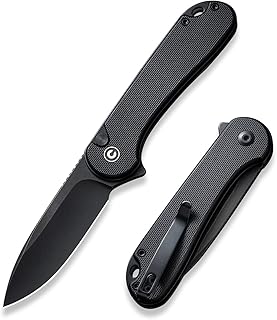
4. CIVIVI Elementum — Best Value
CIVIVI has built its reputation on delivering fit-and-finish that punches well above its price bracket, and the Elementum is the clearest example of that in its lineup. Available in D2 or 14C28N depending on the version, the blade holds a working edge longer than most knives at this price and the liner lock engages with confidence, without the wobble sometimes found in budget frame or liner locks.
The teardrop-shaped handle fits a wide range of hand sizes comfortably, and the thumb-stud deployment is smooth from day one without needing a break-in period. For anyone comparing D2 against other budget-friendly steels, our D2 vs 8Cr13MoV breakdown explains exactly why this steel choice matters for edge retention. If you like the Elementum’s value proposition, CIVIVI’s sister brand is also covered in our CJRB Pyrite review.
Pros
- Fit and finish well above its price point
- Comfortable ergonomic handle shape
- Strong edge retention for the cost
Cons
- D2 version is prone to surface rust if neglected
- Liner lock has slight side-to-side play on some units
Check Price on Amazon
5. Ontario RAT 1 — Best for Heavy-Duty Use
If your everyday carry involves more abuse than the average commuter’s knife — job sites, camping trips, yard work — the RAT 1 is built with that in mind. It’s noticeably heavier and thicker than the other knives on this list, and that extra material translates directly into stiffness under lateral pressure and resistance to blade flex during harder cutting tasks.
AUS-8 is the standard steel, offering easy sharpening and decent toughness, while a D2 version is available for buyers who want better edge retention and don’t mind slightly more sharpening effort. The oversized handle and thumb studs make this knife comfortable even with gloves on, a detail that matters if you’re using it outdoors in cold weather. We cover the smaller sibling in our Ontario RAT 2 review, and if you want a fixed-blade alternative built for similarly hard use, check our full Ontario RAT 1 breakdown.
Pros
- Thick, rigid blade handles hard use well
- Comfortable oversized handle, even with gloves
- Affordable for the amount of steel you get
Cons
- Noticeably heavier and bulkier in the pocket
- Not ideal for slim-fit pants or dress carry

Check Price on Amazon
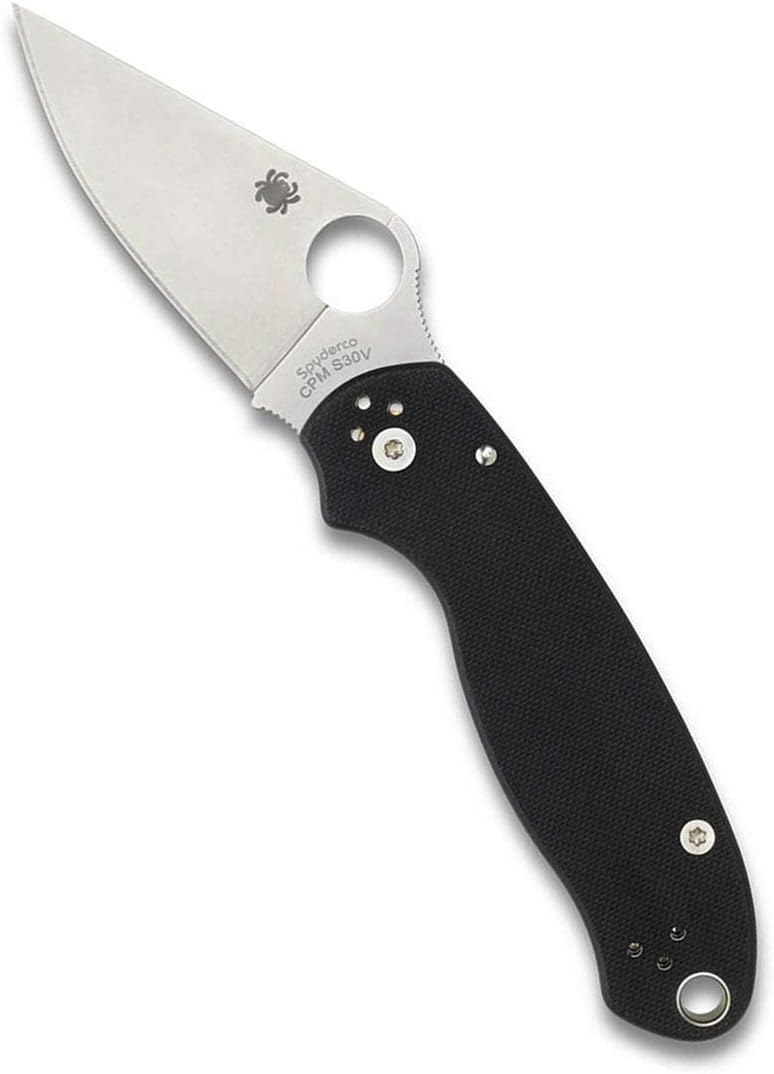
6. Spyderco Paramilitary 2 — Best Premium Pick
The Paramilitary 2 is frequently cited as one of the best all-around EDC folders ever produced, and after extended carry it’s easy to see why. CPM-S45VN steel delivers excellent edge retention, solid corrosion resistance, and reasonable ease of sharpening for a premium powder steel — a rare balance that fewer steels manage this well. For a full technical comparison, our MagnaCut vs M390 guide is a useful companion read on where S45VN sits among modern premium steels.
Spyderco’s Compression Lock places the locking bar on the spine rather than inside the handle, which keeps fingers well clear of the blade path during closing and adds a genuine safety margin over traditional liner locks. The G10 handle scales provide secure grip in wet conditions, and the clip allows for tip-up or tip-down, four-position carry. It’s a larger and heavier knife than most on this list, so it won’t suit ultralight-carry preferences, but for buyers who want the best all-around performance and are willing to pay for it, this is the pick.
Pros
- Excellent premium steel with strong edge retention
- Compression Lock adds a real safety margin
- Four-position pocket clip for full carry flexibility
Cons
- Higher price point than most EDC buyers expect to pay
- Larger footprint than pocket-minimalist options

Check Price on Amazon
7. QSP Hawk — Best Budget Steel Pick
The QSP Hawk stands out in the budget bracket for one specific reason: 14C28N steel, a Sandvik-produced Swedish steel that offers noticeably better edge retention and corrosion resistance than the 8Cr13MoV steel found in most knives at this price. Our 14C28N vs Nitro-V comparison breaks down exactly how this steel performs against pricier alternatives, and the short version is that it consistently overdelivers for its cost tier.
The drop-point blade shape is a versatile, all-purpose profile suited to slicing, piercing, and general utility work, while the liner lock and flipper deployment feel more refined than the price tag suggests. G10 handle scales add grip texture without adding meaningful weight. If you’re building out a first EDC collection on a budget, also see our roundup of button-lock knives under $100 for a different deployment style at a similar price point.
Pros
- 14C28N steel outperforms most knives in its price class
- Smooth flipper deployment for a budget knife
- Versatile drop-point blade shape
Cons
- Pocket clip is tighter than some users prefer
- Limited color and scale material options

Check Price on Amazon
Steel Types Explained
Steel choice is the single biggest factor separating an EDC knife’s day-to-day performance from its price tag. Broadly, steels fall into three tiers relevant to this list.
Budget Steels (8Cr13MoV, AUS-8)
These steels are soft enough to sharpen quickly on basic stones or pull-through sharpeners, but they lose their edge faster under repeated cardboard, rope, or food-prep use. They’re a reasonable choice for casual users who don’t mind touching up the edge every week or two.
Mid-Tier Steels (14C28N, D2, VG-10)
This tier offers a meaningful step up in edge retention while remaining approachable to sharpen at home. D2 in particular is semi-stainless, meaning it needs slightly more corrosion care than fully stainless options — see our guide on how to prevent rust on knives if you go this route.
Premium Steels (S30V, S35VN, S45VN, CPM-154)
These powder-metallurgy steels hold an edge substantially longer between sharpenings, at the cost of needing diamond stones or ceramic rods for touch-ups rather than basic steel-on-steel sharpeners. If you cut daily and don’t want to think about your edge for weeks at a time, this tier is worth the added cost.
Lock Mechanisms Compared
| Lock Type | Strength | One-Hand Close | Found On |
|---|---|---|---|
| AXIS Lock | Excellent | Yes, ambidextrous | Benchmade Bugout |
| Back Lock | Very Good | Difficult | Spyderco Delica 4 |
| Frame Lock | Very Good | Yes | CRKT Pilar |
| Liner Lock | Good | Yes | Elementum, RAT 1, Hawk |
| Compression Lock | Excellent | Yes, safer geometry | Paramilitary 2 |
No single lock type is objectively “best” — each is a trade-off between strength, closing safety, and ambidextrous use. If you carry in a job where you’re regularly using the knife with cold or gloved hands, AXIS and Compression locks tend to be the most forgiving.
Carry Laws & Legal Basics
Knife carry laws vary significantly by state, city, and even by workplace policy, so it’s worth checking your local regulations before assuming any knife on this list is legal to carry everywhere. Blade length limits, lock type restrictions, and concealed-carry rules differ widely across jurisdictions. For a broader overview of how age and other carry restrictions apply, our guide on minors carrying knives and our explainer on why butterfly knives are restricted in some states are useful starting points for understanding how these laws are typically structured.
As a general rule, all seven knives reviewed here are standard folding designs with legal blade lengths in the majority of U.S. states, but always verify local ordinances, especially if you travel for work or plan to carry across state lines.
Maintenance & Care
Even the best steel will underperform if it isn’t cared for properly. A few habits go a long way toward extending the life of any EDC knife.
Cleaning
Wipe the blade down after any use involving food, especially acidic items, and avoid letting moisture sit in the pivot area. A quick wipe takes seconds and prevents most surface corrosion issues before they start.
Lubrication
A drop of light oil on the pivot every few weeks keeps deployment smooth and prevents the kind of grit buildup that eventually causes stiff or gritty action.
Rust Prevention
Carbon-leaning steels like D2 and AUS-8 benefit the most from a light coat of oil if you live somewhere humid. If rust does appear, our guide on how to get rust off a knife walks through safe removal methods that won’t damage the edge.
Sharpening Routine
Rather than waiting until a blade is fully dull, a quick touch-up on a fine stone or ceramic rod every couple of weeks maintains a working edge far more efficiently than periodic full re-grinds.
How to Choose for Your Lifestyle
With seven strong options above, the right choice really comes down to how and where you’ll actually use the knife day to day.
- Minimalist, forgets-it’s-there carry: Benchmade Bugout
- Proven, no-surprises daily tool: Spyderco Delica 4
- Slim office or travel carry: CRKT Pilar
- Best bang-for-buck overall: CIVIVI Elementum
- Job site or outdoor abuse: Ontario RAT 1
- Willing to spend for the best: Spyderco Paramilitary 2
- Tight budget, still want good steel: QSP Hawk
If none of these quite match your use case, our broader everyday carry buyer’s guide and best gentleman’s knives roundup cover a wider range of styles, including dressier options and specialty use cases.
Frequently Asked Questions
What is the single best pocket knife for everyday carry?
For most people, the Benchmade Bugout is the best overall pick thanks to its extremely low weight, reliable AXIS lock, and solid S30V steel, though the CIVIVI Elementum is a stronger choice if budget is the primary concern.
What blade length is legal to carry in most states?
Many U.S. states allow folding blades up to 3 or 4 inches, but limits vary significantly by city and state, so always check local ordinances before carrying, especially across state lines.
How often should I sharpen my EDC knife?
Budget steels typically need touch-ups every one to two weeks of regular use, while premium powder steels can go several weeks to a couple of months between sharpenings, depending on cutting tasks.
Is a liner lock or a frame lock safer?
Frame locks generally use thicker locking material and tend to hold up slightly better under sustained lateral pressure, but a well-made liner lock is perfectly safe for typical EDC tasks.
What’s the difference between D2 and 8Cr13MoV steel?
D2 holds an edge noticeably longer and resists wear better, while 8Cr13MoV sharpens faster and resists corrosion slightly better; our full D2 vs 8Cr13MoV comparison breaks down the details.
Can I carry a pocket knife on an airplane?
No, folding knives of any size are prohibited in carry-on luggage under current TSA rules and must be packed in checked baggage instead.
What’s the best budget pocket knife with good steel?
The QSP Hawk stands out in the budget category because it uses 14C28N steel, which outperforms the more common 8Cr13MoV found at similar price points.
Do heavier knives cut better than lightweight ones?
Not necessarily — blade geometry, grind, and steel matter far more for cutting performance than overall knife weight, which mainly affects prying strength and pocket comfort.
How do I know if a lock is engaging properly?
You should feel and often hear a distinct click when the blade reaches full open, and the blade shouldn’t move at all when you apply light spine pressure with the lock engaged.
Should beginners start with a cheaper knife?
Starting with a budget or mid-range option like the CIVIVI Elementum or QSP Hawk is a smart way to learn your preferences in size, lock type, and steel before investing in a premium knife.
Final Verdict
All seven knives on this list earn their spot for different reasons, and the “best” one really depends on how you plan to use it. If you want a single, low-risk recommendation, the Benchmade Bugout covers the widest range of everyday needs with the least amount of downside, while the CIVIVI Elementum is the smartest choice if you want the most performance for the least money.
Whichever you choose, pair it with a basic sharpening routine and a bit of rust prevention care, and any of these blades should serve reliably for years of daily use.
Shop All EDC Pocket Knives on Amazon