7 Best Hunting Knives for Outdoor Use
A field-tested buying guide to the fixed blades and folders that actually earn a spot on your belt this season.
Why Trust This Guide
A hunting knife is not a knife you buy on looks. It is the tool you reach for after the shot, when your hands are cold, the light is fading, and you have twenty minutes before the meat starts to spoil. We built this guide around real field use — skinning, caping, quartering, and general camp chores — rather than spec sheets alone. Every recommendation below is chosen for a specific job so you can match the knife to the way you actually hunt, whether that is whitetail in thick brush, elk in the backcountry, or small game close to camp.
If you are still deciding what shape of blade suits your hunting style, our field dressing knife blade shape guide is a good companion read before you commit to a purchase.
How We Picked These Knives
We weighed four things above everything else: edge retention in wet, greasy conditions; how comfortable the handle stays over a long field session; how easy the knife is to resharpen with basic gear back at camp; and overall value for the steel and construction on offer. We also leaned on our broader steel comparisons, including D2 vs 8Cr13MoV and 14C28N vs Nitro-V, to judge how each blade steel below actually behaves outside a lab spec sheet.
None of these picks are theoretical. They represent knife families and steel/handle combinations that consistently perform well for hunters who process their own game rather than hand it off to a processor.
Quick Comparison Table
| Knife | Blade Type | Steel | Tang | Best For |
|---|---|---|---|---|
| Pick 1 — Best Overall | Drop Point | CPM-S30V class | Full Tang | All-around big game |
| Pick 2 — Best Budget | Drop Point | 8Cr13MoV | Full Tang | New hunters |
| Pick 3 — Field Dressing | Gut Hook / Drop Point | 420HC | Full Tang | Quick field dressing |
| Pick 4 — Folding Hunter | Clip Point | CPM-154 | Liner Lock Folder | Compact carry |
| Pick 5 — Premium Steel | Drop Point | MagnaCut | Full Tang | Serious edge retention |
| Pick 6 — Drop Point All-Rounder | Drop Point | 1095 Carbon | Full Tang | Batoning + skinning |
| Pick 7 — Backcountry Survival | Scandi Grind | Sandvik 14C28N | Full Tang | Multi-day trips |
For a deeper dive into steel chemistry across these categories, see our MagnaCut vs M390 and S35VN vs S45VN breakdowns.
1. Best Overall: Full-Tang Drop Point Fixed Blade
This is the knife we’d hand a first-time hunter who only wants to own one blade. A 4-inch drop point in a premium powder-metallurgy steel holds an edge through an entire deer without a touch-up, and the full-tang construction means there’s no weak point when you’re levering through joints. The handle geometry favors a saber grip for skinning and a pinch grip for detail work around the ribs.
Pros
- Excellent edge retention through a full field session
- Full tang holds up to light prying
- Comfortable in both wet and gloved hands
Cons
- Premium steel costs more to resharpen equipment
- Slightly heavier than a folder

Check current pricing and availability for this style of full-tang drop point hunting knife on Amazon.
View on AmazonIf you like the idea of a full-tang workhorse but want something built for harder outdoor use beyond hunting, our Morakniv Garberg review is worth a look.
2. Best Budget Pick
You don’t need to spend a paycheck to get a knife that field dresses a deer competently. Budget drop points in 8Cr13MoV steel won’t hold an edge as long as premium powder steels, but they sharpen back up in minutes on a basic stone, and at this price point you won’t hesitate to use the knife hard. This is the pick for a hunter building out a first kit or outfitting a young hunter.
Pros
- Very affordable
- Easy to resharpen at camp
- Low-risk for beginners
Cons
- Edge dulls faster on bone contact
- Handle materials are more basic

Compare budget-friendly hunting knife options currently in stock.
View on AmazonFor a steel comparison relevant to this price bracket, read our VG10 vs AUS10 guide, and if rust prevention worries you at this price point, our rust prevention guide covers the basics.
3. Best for Field Dressing
Purpose-built field dressing knives typically pair a drop point or gut hook blade with a slim, controllable handle so you can work close to the hide without wasted meat. A 420HC blade is a smart choice here — it’s stainless, easy to touch up between animals, and tough enough for the joint work involved in quartering.
Pros
- Precise control for delicate cuts
- Corrosion resistant for wet, bloody work
- Gut hook variant speeds up field dressing
Cons
- Less suited to camp chores like batoning
- Gut hook needs extra care sharpening

See current field dressing and gut hook knife listings.
View on AmazonFor a curated shortlist built specifically around this task, check our 10 best knives for field dressing.
4. Best Folding Hunter
Not every hunter wants a fixed blade riding on their belt all day. A quality folding hunter in CPM-154 gives you near fixed-blade edge performance in a package that disappears into a pocket between kills. Look for a sturdy liner lock or frame lock and a blade long enough — around 3.5 to 4 inches — to still handle real skinning work.
Pros
- Compact and pocket-friendly
- Strong lockup for controlled cuts
- Doubles as an everyday carry knife
Cons
- Folding mechanism can jam if not cleaned after wet use
- Less leverage than a fixed blade for heavy tasks

Browse folding hunter knives with locking blades on Amazon.
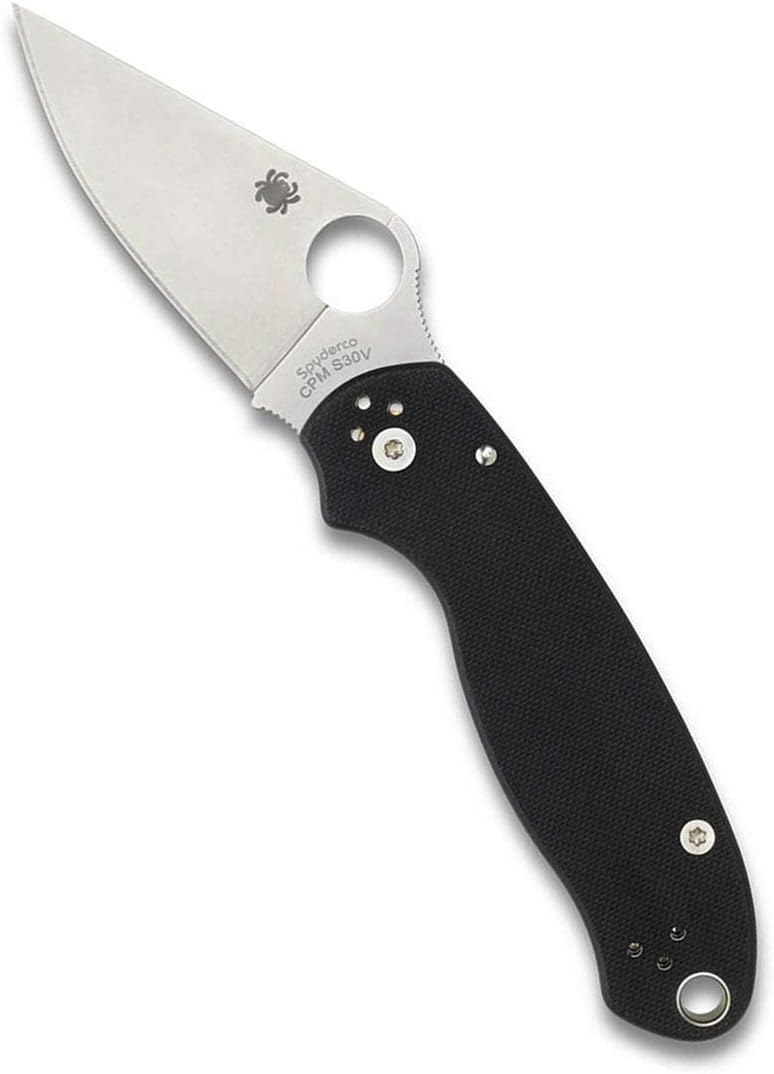
View on AmazonIf a reliable folder is your priority, our reviews of the Benchmade Bugout and Spyderco Paramilitary 2 both make strong cases for a folder as your primary hunting blade.
5. Best Premium Steel
If you hunt often enough that resharpening frequency actually matters to your season, a MagnaCut-class blade is worth the premium. This steel was engineered specifically to balance edge retention, toughness, and corrosion resistance — three properties that are normally a trade-off against one another. It holds a working edge through multiple animals before needing more than a strop.
Pros
- Outstanding edge retention
- Excellent corrosion resistance
- Tough enough to avoid chipping on bone
Cons
- Premium price
- Harder steel takes longer to fully resharpen from a dull edge

Check pricing on premium steel hunting knives available now.
View on AmazonCurious how this steel stacks up against other top performers? Our CruWear vs 3V comparison covers the toughness side of that equation in depth.
6. Best Drop Point All-Rounder
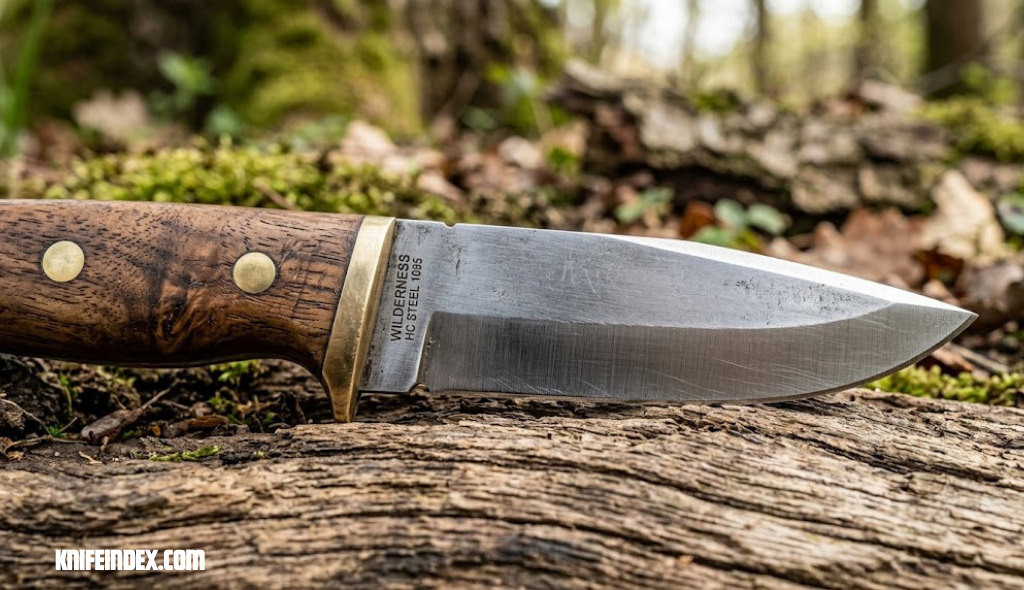
Carbon steel has a loyal following among hunters for good reason — 1095 sharpens to a scary-sharp edge quickly and is simple to maintain with basic stones. A drop point in 1095 handles skinning, batoning kindling at camp, and general chores without complaint, as long as you dry it and oil the blade after wet use.
Pros
- Takes an extremely sharp edge
- Simple, fast field sharpening
- Tough and shock resistant
Cons
- Prone to rust without maintenance
- Needs more frequent care than stainless options

Browse 1095 carbon steel drop point hunting knives.
View on AmazonOur Ontario RAT-1 review and RAT-2 review are both good examples of this carbon-friendly, budget-conscious philosophy applied to folding designs, if you want the same feel in a pocket knife.
7. Best for Backcountry Survival
For multi-day backcountry hunts where the knife might double as a survival tool, a Scandi-ground fixed blade in Sandvik 14C28N earns its place. The Scandi grind is exceptionally easy to resharpen freehand without a jig — useful when you’re days from a proper sharpening station — and the steel resists corrosion well in wet, cold conditions.
Pros
- Easy freehand sharpening in the field
- Good corrosion resistance
- Versatile for both game processing and camp tasks
Cons
- Scandi grind is less ideal for fine detail skinning
- Not as tough for heavy prying as a full flat grind

See Scandi grind survival and bushcraft hunting knives.
View on AmazonThis same steel and grind philosophy shows up in our Morakniv Companion review — a proven budget bushcraft option many hunters keep as a backup blade.
Blade Shapes Explained
Drop point blades are the most versatile shape for hunting because the spine curves gently down to the tip, keeping the point strong and controllable — ideal for skinning without punching through the hide accidentally. Clip point blades have a more pronounced, thinner tip, useful for detail work but slightly more fragile. Gut hook blades add a small hooked notch for opening the abdominal cavity quickly without nicking the intestines. Scandi grinds aren’t a shape so much as a grind style — a single flat bevel that runs from the spine to the edge, prized for ease of sharpening.
Full tang vs partial tang construction also affects how a blade shape performs under stress; we break that down further in the tang section below.
Steel Types for Hunting Knives
| Steel | Edge Retention | Corrosion Resistance | Ease of Sharpening |
|---|---|---|---|
| 8Cr13MoV | Fair | Good | Easy |
| 420HC | Fair | Very Good | Easy |
| CPM-154 | Very Good | Good | Moderate |
| MagnaCut | Excellent | Excellent | Moderate |
| 1095 Carbon | Good | Poor (needs oiling) | Easy |
| 14C28N | Good | Very Good | Easy |
For steel decisions outside the hunting-specific picks above, our broader guides on D2 vs 8Cr13MoV and Buck’s 420HC heat treat breakdown are excellent follow-up reading.
Handle Materials Compared
Handle material matters more on a hunting knife than almost any other type of blade, because your hands will be wet, cold, and often gloved. Textured G-10 and Micarta grip well even when slick with blood or rain. Rubberized or TPR overmolds are cheaper and still grip decently but wear faster. Wood handles look classic and feel warm in the hand but need more upkeep to resist swelling or cracking. Bone and stag handles are attractive but can become slippery when wet, so we generally recommend them for display or dry-weather carry rather than a primary field blade.
Full Tang vs Partial Tang
A full-tang knife has steel running the entire length of the handle, making it far more resistant to snapping under lateral stress — important if you ever need to pry apart a joint. A partial or hidden tang knife is lighter and often cheaper, but has a weak point where the tang meets the handle material. For hunting, where you’re occasionally levering through cartilage and joints, full tang is the safer long-term investment.
Carry, Sharpening & Care
Most hunting knives ship with a leather or Kydex sheath, and both work fine as long as you keep the blade dry before storing it. After field dressing, wipe the blade down immediately, wash with warm soapy water once you’re back at camp, and dry it fully before sheathing — this single habit prevents the majority of rust issues, especially on carbon steel blades. A pocket-sized diamond stone or ceramic rod is enough to maintain an edge through a hunting trip; save the full resharpen for when you’re home.
For a complete walkthrough of maintenance routines, our guide on removing rust from a knife and our knife storage guide are useful references for keeping your kit in top shape between seasons.
Best Hunting Knife by Game Type
The single biggest mistake hunters make when choosing a blade is buying “a hunting knife” instead of thinking about the specific animal on the other end of it. A knife that’s perfect for whitetail deer can feel undersized and fussy on elk, and a knife built for elk-sized joints can feel clumsy and overbuilt on squirrel or rabbit. Matching blade size, tip strength, and edge geometry to your primary quarry will save you time in the field and produce cleaner meat.
Whitetail and Mule Deer
Deer-sized game is the most common use case for a hunting knife in North America, and it’s also the most forgiving. A 3.5 to 4 inch drop point handles the entire process — from opening the hide to separating the backstraps — without needing a second tool. This is the sweet spot where Pick 1, Pick 2, and Pick 6 from our list above all excel. If you process a lot of deer each season, a dedicated caping knife for the head and cape is a worthwhile add-on if you plan to mount the animal.
Elk and Large Big Game
Elk, moose, and other large ungulates put more strain on a blade because you’re working through thicker hide, heavier muscle groups, and larger joints. A slightly longer 4.5 to 5 inch drop point with a full tang and a tougher steel — something like our Pick 5 in MagnaCut or Pick 6 in 1095 — holds up better to the extended workload of a full quarter-out in the field. Many elk hunters also carry a small folding knife as a backup in case the primary blade dulls mid-process, since a downed elk can mean two to three hours of continuous cutting.
Wild Boar and Feral Hogs
Hog hide is notoriously tough and often caked in mud, which dulls an edge faster than deer or elk work. Stainless steels with strong corrosion resistance, like 420HC or 14C28N, are a smart choice here since you’ll likely be rinsing the blade repeatedly during the process. A drop point with a slightly thicker spine resists rolling when it contacts cartilage in the shoulder and hip joints.
Upland Birds and Waterfowl
Birds call for an entirely different tool profile — a short, thin blade in the 2.5 to 3 inch range with a fine point for detail work around the breast and wing joints. A folding hunter like Pick 4 works well here, or a dedicated small paring-style fixed blade. Heavy-duty full tang knives are overkill and actually harder to control on this scale of game.
Small Game: Rabbit and Squirrel
Small game processing rewards precision over toughness. A short, thin drop point or a compact folder gives you the control needed to skin without puncturing the abdominal cavity. Many small-game hunters keep a dedicated small blade in their kit separate from their primary deer or elk knife, since swapping between a large and small blade repeatedly during a hunt is impractical.
For hunters who process multiple species across a season, our field dressing blade shape guide goes deeper into how tip geometry changes with the animal you’re working on.
Skinning Knife vs Caping Knife
These two terms get used interchangeably by beginners, but they describe genuinely different tools built for different jobs. Understanding the distinction will save you frustration — and possibly a ruined cape if you’re planning a shoulder mount.
What a Skinning Knife Is Built For
A skinning knife typically has a more pronounced belly — the curved portion of the edge — which lets you make long, sweeping strokes to separate hide from muscle efficiently. Skinner blades are often shorter and wider than a general-purpose hunting knife, trading tip precision for cutting efficiency across large flat areas like the back, flanks, and hindquarters.
What a Caping Knife Is Built For
A caping knife is a specialist’s tool, built for the detail work around the head, ears, eyes, lips, and nose when preparing an animal for a taxidermy mount. These blades are short — usually under 3 inches — with a fine, controllable tip and a thin edge that lets you work precisely in tight areas without tearing the delicate hide needed for a clean mount. If you plan to mount even one animal per season, a dedicated caping knife pays for itself the first time you use it, since attempting cape work with a general drop point often damages the hide around the face.
Can One Knife Do Both Jobs?
For hunters who don’t mount their animals, a single well-chosen drop point — like most of the picks in this guide — comfortably handles both general skinning and light detail work. It’s only when taxidermy enters the picture that a second, specialized caping blade becomes worth the extra cost and pack weight.
Matching Blade Length to Game Size
Blade length is one of the most misunderstood specs on a hunting knife. Longer isn’t automatically better — in fact, an oversized blade is genuinely harder to control during the detail work that makes up most of a field dressing job. Use the table below as a starting point, then adjust based on your own hand size and preferred grip style.
| Game Type | Recommended Blade Length | Notes |
|---|---|---|
| Small Game (rabbit, squirrel) | 2.5–3 in | Prioritize control over reach |
| Upland Birds & Waterfowl | 2.5–3 in | Thin, fine tip preferred |
| Whitetail & Mule Deer | 3.5–4 in | Balanced all-purpose length |
| Wild Boar | 4–4.5 in | Slightly thicker spine helps |
| Elk & Large Big Game | 4.5–5 in | More reach for large joints |
| Caping / Detail Work | Under 3 in | Precision over reach, any game size |
A blade that’s too long for the job doesn’t just get in the way — it also increases the chance of an accidental slip because you’re fighting the knife’s proportions instead of working with them. If you only own one hunting knife and hunt a mix of species, the 3.5 to 4 inch range remains the safest all-around compromise, which is why it’s the length used across most of our top picks above.
Blade Coatings Explained
Beyond the steel itself, many hunting knives come with a surface coating that changes how the blade performs and looks in the field. Understanding what each coating actually does helps you avoid paying extra for a finish that doesn’t match your needs.
Black Oxide and Titanium Nitride (TiN)
These coatings add a thin protective layer that improves corrosion resistance and reduces glare — useful if you’re hunting in a way where a shiny blade could spook game or draw unwanted attention. They also add minor lubricity, making cuts feel slightly smoother through hide and connective tissue.
Cerakote and Ceramic Coatings
Popular on tactical and hard-use knives, Cerakote adds a durable, scratch-resistant finish available in various colors, which some hunters use for blaze-orange visibility so a set-down knife doesn’t get lost in leaves or snow. It also adds a layer of corrosion protection on carbon steel blades that would otherwise need frequent oiling.
DLC (Diamond-Like Carbon)
DLC coatings are harder and more wear-resistant than most alternatives, offering excellent corrosion protection and a low-friction surface. They’re more common on premium knives given the added manufacturing cost, but they hold up exceptionally well over years of field use.
Uncoated / Bare Blades
Many hunters actually prefer an uncoated blade, particularly in stainless steels, because there’s no coating to wear through unevenly over time, and touch-up sharpening doesn’t risk damaging a finish. For carbon steel blades left uncoated, developing a stable patina (see our patina guide) provides a similar layer of natural corrosion resistance.
Sheath Types: Kydex, Leather & Nylon
The sheath that comes with your hunting knife matters almost as much as the blade itself, since it affects how quickly and safely you can access the knife, and how well it protects both the edge and you during transport.
Kydex Sheaths
Kydex is a rigid thermoplastic that holds its shape permanently, giving you a satisfying, audible “click” retention when the knife seats fully. It’s impervious to moisture, doesn’t absorb blood or odor, and wipes clean in seconds — a major advantage during a busy hunting season when you don’t have time for sheath maintenance. The tradeoff is a slightly more clinical, less traditional look, and Kydex can occasionally develop a faint squeak if not lightly waxed.
Leather Sheaths
Leather is the traditional choice and still popular for its classic look and quiet, silent draw. It molds to the knife shape over time and offers good abrasion resistance. The downside is moisture sensitivity — a wet leather sheath left with a blade inside overnight is one of the most common causes of rust on an otherwise well-maintained knife, so leather requires more diligence in wet conditions.
Nylon and Cordura Sheaths
Nylon sheaths are lightweight, inexpensive, and often include additional features like sharpening stone pockets or MOLLE attachment loops. They dry faster than leather but generally offer looser retention and less structure, so the knife can shift more during rough terrain.
Whichever sheath style you carry, our safe knife transport guide covers general principles that apply equally well to carrying a hunting knife to and from the field.
Weight, Balance & Grip Ergonomics
A knife’s on-paper specs rarely tell you how it will actually feel three hours into processing an animal in freezing temperatures. Weight and balance deserve more attention than most buying guides give them.
Blade-Heavy vs Handle-Heavy Balance
A knife balanced slightly toward the blade tends to feel more efficient during long skinning strokes, since the weight helps carry the cut. A handle-heavy knife feels more nimble for detail work but can feel tiring during repetitive slicing motions. Most all-purpose hunting knives aim for a neutral balance point right around the front of the handle — a reasonable compromise for hunters who do both broad skinning strokes and precise joint work in the same session.
Grip Shape and Glove Compatibility
Cold-weather hunts often mean gloved hands, and a handle that feels perfectly sized bare-handed can feel cramped with gloves on. Handles with a slightly larger circumference and subtle finger grooves — rather than aggressive, deeply cut grooves — tend to accommodate both bare and gloved grips without forcing your hand into one fixed position. Test-gripping a knife with gloves on, if possible, is one of the most overlooked steps buyers skip before purchasing.
Guard and Choke-Up Room
A modest finger guard prevents your hand from sliding onto the edge during a hard push cut, but an oversized guard can prevent you from choking up on the blade for detail work — a grip many hunters rely on around joints and the ribcage. Look for a guard substantial enough for safety without blocking a forward pinch grip entirely.
Hunting Knife Laws & Legal Carry
Knife laws vary significantly by state and country, and it’s worth a few minutes of research before you assume any knife is automatically legal to carry into the field or transport in a vehicle. Most jurisdictions treat fixed-blade hunting knives permissively when carried openly for a hunting or outdoor purpose, but concealed carry rules, blade length limits, and automatic-opening restrictions can all apply depending on where you hunt.
A few general principles are worth knowing: many states distinguish between “hunting and fishing” exemptions and general concealed-weapon statutes, meaning a knife legal to carry while actively hunting may fall under different rules once you’re back in town. Some states also restrict certain folding knife locking mechanisms differently than fixed blades. If you’re hunting across state lines or on public land with mixed jurisdiction, it’s worth a quick check of that state’s specific statute rather than assuming your home state’s rules travel with you.
For age-related carry questions specifically, our guide on minors carrying a knife covers a commonly overlooked area of these laws, and our explainer on why certain knife mechanisms are restricted gives useful background on how lawmakers typically categorize blade types.
Popular Hunting Knife Brands Compared
Brand reputation is a reasonable shortcut when you don’t have time to evaluate every spec yourself, but different brands tend to specialize in different price tiers and design philosophies. Here’s a general sense of where the major names land.
| Brand | Typical Price Tier | Known For |
|---|---|---|
| Buck Knives | Budget to Mid | Classic full-tang fixed blades, reliable 420HC |
| Morakniv | Budget | Scandi grinds, exceptional value |
| Benchmade | Premium | Precision folders, premium steels |
| Spyderco | Mid to Premium | Innovative locks, ergonomic handles |
| Ontario Knife Co. | Budget to Mid | Tough, no-frills fixed blades |
| Kershaw | Budget to Mid | Assisted openers, wide model range |
| CIVIVI / CJRB | Budget to Mid | Modern designs at accessible prices |
If you’re weighing specific models against each other, our in-depth comparisons of the Benchmade 940 Osborne, the CIVIVI Elementum, and the Spyderco Tenacious go well beyond the hunting-specific scope of this guide and are worth reading if a folder is on your shortlist.
Gift Guide: Hunting Knives for Every Budget
Hunting knives are a perennial favorite gift for hunters, but choosing one for someone else can feel risky if you don’t know their exact preferences. These tiers should help narrow the decision regardless of budget.
Under $50: Thoughtful and Practical
At this price point, a solid full-tang 8Cr13MoV or 420HC drop point with a nylon or basic Kydex sheath makes a genuinely useful gift without financial pressure. It’s a safe choice for a new hunter, a young hunter starting out, or as a backup blade for an experienced one.
$50–$150: The Sweet Spot
This range covers most of the field-proven fixed blades and folders that serious hunters actually reach for season after season — full-tang builds in tougher mid-tier steels, quality leather or Kydex sheaths, and well-known brand reliability.
$150+: A Serious Statement Gift
Premium steels like MagnaCut or CPM-154, custom handle materials, and hand-finished sheaths live in this tier. This is the range for milestone gifts — a first successful hunt, a retirement, or an heirloom piece meant to be passed down.
Whatever the budget, our gentleman’s knife buying guide is a useful cross-reference if the recipient also carries a knife day-to-day beyond hunting season.
Seasonal Maintenance Schedule
A hunting knife that only gets attention once a year during the season tends to develop small issues that compound over time — light surface rust, a slightly rolled edge, or a stiff sheath. A simple seasonal routine keeps the knife field-ready without much effort.
Pre-Season (4–6 Weeks Before Opening Day)
Inspect the blade for any rust spots from off-season storage, fully resharpen the edge from scratch rather than just stropping it, and check the sheath’s stitching or Kydex rivets for wear. This is also the time to replace a cracked or overly stiff sheath before it becomes a field problem.
In-Season (Weekly During Active Hunting)
Wipe the blade down after every use, even if it looks clean, and do a quick touch-up with a ceramic rod or pocket sharpener before each outing. A five-minute routine here prevents the edge from degrading gradually across a busy season.
Post-Season (Before Long-Term Storage)
Give the blade a full clean, a proper sharpening, and a light coat of oil if it’s a carbon steel blade. Store the knife outside its sheath in a dry environment if possible, since leather sheaths especially can trap residual moisture against the blade over months of storage.
Our full rust prevention guide and sharpener recommendations pair well with this schedule if you want to build out a more complete maintenance kit.
Common Mistakes Hunters Make With Knives
Even experienced hunters fall into a few avoidable habits that shorten a knife’s lifespan or make fieldwork harder than it needs to be.
Buying One Knife to Do Every Job
A knife sized for elk will feel clumsy on grouse, and a knife sized for grouse won’t hold up to elk. If you hunt multiple species regularly, a second smaller or larger blade is a modest investment that pays off in control and efficiency.
Storing a Wet Knife in Its Sheath
This is the single most common cause of rust and pitting, especially with leather sheaths. Always dry the blade fully before sheathing it for any length of time.
Ignoring the Edge Until It’s Fully Dull
Waiting until a blade is completely dull to sharpen it means a much longer resharpening session and more steel removed over the knife’s lifetime. Frequent light touch-ups extend both edge life and the knife’s overall lifespan.
Choosing Looks Over Function
A beautifully finished knife with a fragile tip or slippery handle will disappoint in real field conditions. Prioritize grip security, tip strength for your target game, and steel suited to your climate before finish and aesthetics.
Neglecting the Sheath
A cracked, loose, or overly tight sheath is a safety issue as much as a convenience one. Replacing a worn sheath is inexpensive compared to the injury risk of a knife that doesn’t seat or draw properly.
Frequently Asked Questions
What blade length is best for a hunting knife?
Most hunters do fine with a 3.5 to 4.5 inch blade. Anything longer becomes harder to control during detail work like skinning around joints, while anything much shorter struggles with quartering larger game.
Is a fixed blade or folding knife better for hunting?
Fixed blades are stronger and easier to clean thoroughly, making them the traditional choice for field dressing. Folding hunters are lighter to carry and still perform well for most hunters who prioritize convenience.
Do I need a gut hook on my hunting knife?
A gut hook speeds up opening the abdominal cavity without nicking the intestines, but it’s not essential — many experienced hunters do the same job carefully with a standard drop point.
What steel holds an edge longest for field dressing a deer?
Premium powder-metallurgy steels like MagnaCut or CPM-154 hold an edge the longest, often processing multiple animals before needing a touch-up.
How often should I sharpen my hunting knife?
A quick touch-up with a ceramic rod or diamond stone between animals is usually enough. A full resharpen is best done once or twice per season, depending on how often you hunt.
Can I use the same knife for skinning and quartering?
Yes, a drop point knife in the 3.5-4.5 inch range handles both tasks well. Serious processors sometimes prefer a dedicated caping knife for detail work, but one good all-around blade covers most needs.
Is carbon steel or stainless steel better for a hunting knife?
Carbon steel sharpens faster and takes a keener edge but requires more diligent drying and oiling to avoid rust. Stainless steel is lower maintenance and better suited to wet climates or hunters who don’t want to fuss over care.
What handle material is safest when wet?
Textured G-10 or Micarta handles maintain grip even when covered in blood, water, or grease, making them a safer choice than smooth wood, bone, or stag handles for field use.
Should a hunting knife be full tang?
Full tang construction is generally preferred for hunting knives because it holds up better to the lateral stress of separating joints and quartering game.
How do I prevent my hunting knife from rusting?
Dry the blade fully after use, avoid storing it in a damp leather sheath long-term, and apply a light coat of mineral oil to carbon steel blades before storage.
Final Verdict
There’s no single best hunting knife for every hunter — the right pick depends on how much processing you do yourself, the climate you hunt in, and whether you’d rather carry a fixed blade or a folder. If you only want one knife, a full-tang drop point in a premium steel like MagnaCut or CPM-154 will cover nearly everything you throw at it. If you’re just getting started, a budget 8Cr13MoV drop point lets you learn the ropes without financial pressure.
Whichever knife you choose, the habits matter as much as the steel: keep it sharp, keep it dry, and keep it clean between animals. That routine will get more useful life out of a budget blade than neglect will out of a premium one.

Ready to gear up? Browse our top-recommended hunting knives on Amazon.
Shop Hunting Knives on Amazon