Buck Knives Review: Is the Legend Still Sharp?
There are few names in the cutlery industry that evoke as much nostalgia, respect, and debate as Buck Knives. From the belts of deer hunters in the 1960s to the pockets of modern EDC enthusiasts, the brand has cemented itself as an American icon. But does the legacy hold up against modern super-steels and high-tech manufacturing? In this comprehensive Buck Knives review, we dive deep into the metallurgy, the “forever warranty,” and the real-world performance of their most famous blades to determine if they are still the best outdoor knives for your money.
The Buck Legacy: More Than Just Brass and Wood
When Hoyt Buck produced the first Buck Knife in 1902, he was a young Kansas blacksmith looking for a better way to temper steel so it would hold an edge longer. Fast forward over a century, and that quest for the perfect heat treat remains the company’s backbone. Unlike many brands that simply stamp out blades from generic sheets of metal, Buck is famous for the “Paul Bos Heat Treat.”
Paul Bos, an industry legend, developed a heat-treating protocol for Buck that squeezes every ounce of performance out of standard steels. This is why a standard Buck 110 review often praises its edge retention even though the steel chart suggests it should be average. It is the alchemy of manufacturing that separates Buck from the budget blades you might find in M-Tech knife reviews or similar entry-level imports.
Today, Buck operates out of Post Falls, Idaho. While they do have a select few budget models made overseas, their core lineup—the knives that matter—are proudly made in the USA. They occupy a unique space in the market: higher quality than the mass-produced blister packs at big-box stores, yet more affordable than premium boutique brands.
In-Depth Analysis: Performance and Build
Build Quality and Materials
Buck is synonymous with durability. The classic “Folding Hunter” and “Special” fixed blades are built like tanks. We are talking about heavy brass bolsters, genuine ebony wood (which Buck sustainably sources through a partnership with Taylor Guitars), and robust phenolic resins.
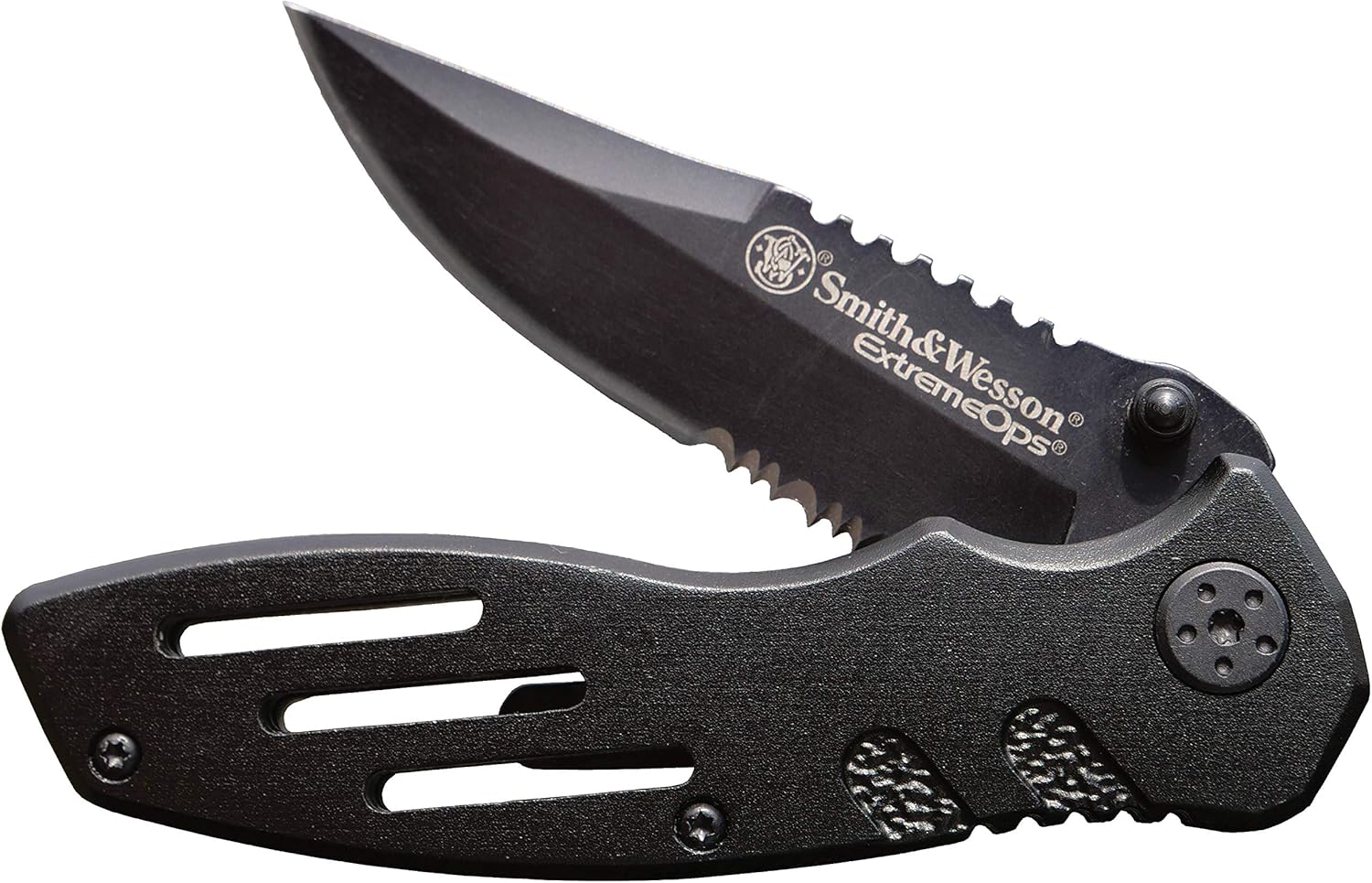
However, the build quality goes beyond aesthetics. The fit and finish on USA-made Bucks are consistently high. The transitions between the wood and the brass are smooth—you can’t feel the seam with your fingernail. This level of refinement is often missing in competitors discussed in Smith & Wesson knife reviews, where jagged edges or gaps in the liners can be common.
That said, traditional Buck knives are heavy. A Buck 110 weighs over 7 ounces. In a world where people count grams for their hiking gear, this can be a drawback. But for many, that weight signals reliability. It feels like a tool, not a toy.
Blade Performance and The “Bos” Factor
Most standard Buck knives use **420HC Stainless Steel**. In the broader knife world, 420HC is considered an entry-level steel. It is generally soft and easy to sharpen but rarely praised for edge retention.
This is where Buck is different. Thanks to their cryogenic heat treatment process (freezing the steel to -110°F during tempering), Buck’s 420HC performs significantly better than the same steel from other manufacturers. It offers excellent corrosion resistance and toughness. While it won’t hold an edge as long as the CPM-S30V seen in our Kershaw Blur S30V review, it is incredibly easy to resharpen in the field.
For those demanding premium performance, Buck has introduced their “Pro” lines, which utilize S30V, S35VN, and even MagnaCut steels. This allows the brand to compete directly with high-end tactical manufacturers.
Locking Mechanisms
The lockback mechanism found on the 110 and 112 is legendary for a reason. It is one of the strongest locking mechanisms ever invented. When that bar snaps into place, the blade is virtually a fixed blade. It handles negative pressure (whacking the spine) better than many liner locks.
However, it is not a “fidget-friendly” mechanism. It requires two hands to close safely. If you are looking for rapid deployment and one-handed closing, you might prefer the XR locks mentioned in our SOG-TAC XR review. But for pure safety and strength during heavy cutting tasks like field dressing a deer, the Buck lockback is superior.
Ergonomics and Grip
Buck designs are generally traditional. The handles are contoured but lack the aggressive finger choils or gimping found on modern tactical knives. The smooth phenolic handles of the 119 Special are comfortable but can become slippery when wet with blood or water.
Conversely, the wood handles on the 110 provide a bit more traction and warmth. For those who dislike the cold, slick feel of aluminum or steel handles, the organic feel of a Buck knife is a major selling point.
Check Price on AmazonThe Legends: Best Buck Knives Reviewed

1. Buck 110 Folding Hunter
The Buck 110 is arguably the most famous folding knife in history. Released in 1964, it revolutionized the industry by proving a folding knife could be strong enough for hunting.
The Experience: It is heavy, shiny, and beautiful. The clip point blade is fantastic for piercing and slicing. It has a hollow grind that makes it an exceptional slicer for meat and apples alike. It is not an EDC for gym shorts, but it is the ultimate belt knife.
Compared to the lightweight utility of something like the Ka-Bar Dozier, the 110 feels like a piece of heavy machinery. It invokes a sense of heritage that plastic knives simply cannot replicate.
- Blade Length: 3.75″
- Steel: 420HC (Standard) or S30V (Pro)
- Handle: Ebony Crelicam Wood & Brass
- Lock: Lockback
Verdict: The absolute King of classic folders. Every knife enthusiast should own one.
Check Price on Amazon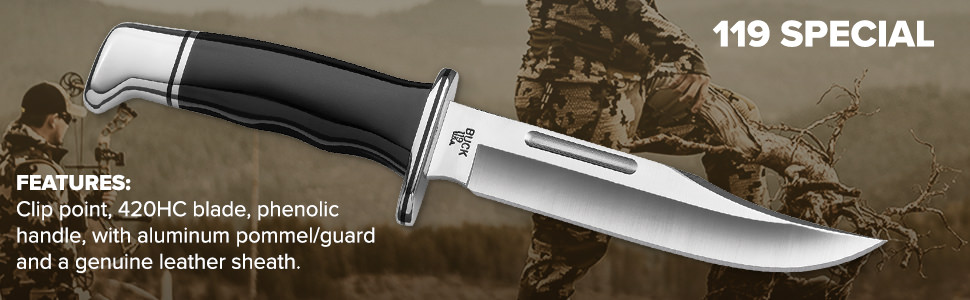
2. Buck 119 Special
If the 110 is the famous folder, the Buck 119 Special is the movie star fixed blade. Known for its distinct clip point and blood groove (fuller), it has appeared in countless films (often in the hands of the villain, ironically, despite being a hunting knife).
The Experience: This is a dedicated outdoor knife. The Phenolic handle is indestructible, though slick. The aluminum pommel and guard are perfectly fitted. While we might look at the Fallkniven S1 for pure survival durability due to its convex grind, the Buck 119 excels at processing game and general camp chores. The tip is very fine, which is great for detail work but means you shouldn’t pry with it.
- Blade Length: 6.0″
- Steel: 420HC
- Handle: Black Phenolic
- Sheath: Genuine Leather
Verdict: The best-looking hunting knife ever made, with performance to match at a great price point.
Check Price on Amazon
3. Buck 112 Ranger
For many, the 110 is just too big for daily carry. Enter the Buck 112 Ranger. It features the same build quality, brass, and wood, but in a shorter, more manageable package.
The Experience: This fits much better in the hand for average users. It retains the clip point blade but shortens it to 3 inches. It is still heavy for its size compared to modern options like the Victorinox Cadet, but it handles hard use much better than a Swiss Army Knife.
Verdict: The “Goldilocks” size for a traditional lockback.
Check Price on Amazon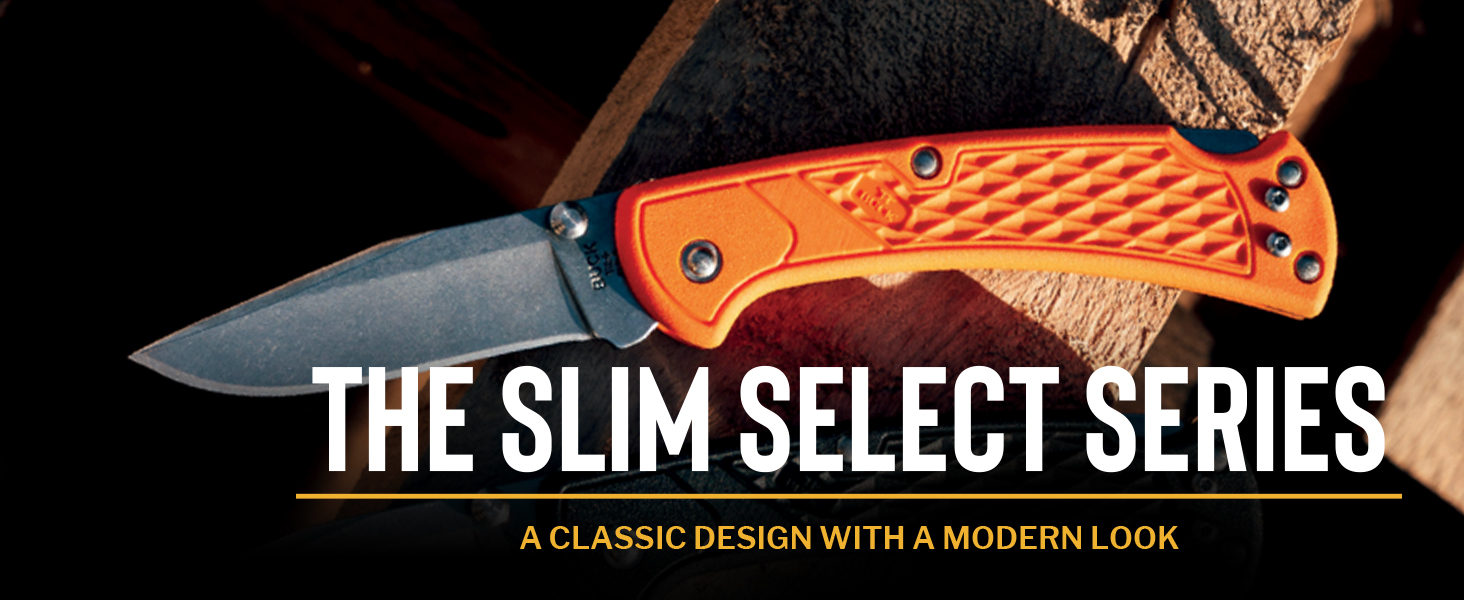
4. Buck 110 Slim Select
Buck realized they were losing the modern EDC market to brands like Spyderco and Kershaw. Their answer was the Slim Series. This takes the geometry of the 110 but replaces the heavy brass and wood with lightweight GFN (Glass Filled Nylon) and adds a thumb stud and pocket clip.
The Experience: This is a fantastic budget EDC. It competes directly with the knives in our Blue Ridge Knives reviews but offers that superior Bos heat treat. It’s light, functional, and deeply affordable.
Verdict: The modern evolution of a classic. Perfect for those who want a Buck with a pocket clip.
Check Price on AmazonSee Buck Knives in Action
Sometimes you need to see the scale and finish of these knives to truly appreciate them. Check out this overview of the Buck 110 and 112 comparison to see which size might fit your hand better.
Buck vs. The World: How They Compare
Buck vs. Case Knives
Both are American legends. Case is known for their slipjoints (knives that don’t lock), like the Trapper and Stockman. Buck is known for the Lockback. If you want a non-threatening pocket knife for whittling, Case is great. If you need a knife for hunting or safety, Buck wins on strength.
Buck vs. Modern Tactical Brands (Spyderco, ZT, Cold Steel)
Comparing a Buck 110 to a Zero Tolerance flipper (see our ZT knife reviews) is apples to oranges. ZT uses powder metallurgy steels and titanium frames for high-speed deployment and lighter weight. Buck focuses on tradition and cutting geometry.
However, for pure outdoor survival, a Buck 119 holds its own against the Cold Steel Wild West Bowie. While the Bowie is a chopper, the Buck is a processor. If you are field dressing an elk, you want the Buck. If you are building a shelter, you might want the Cold Steel or an ESEE JG3.
Buck vs. Budget Folders
Against budget options like the QSP Hawk, Buck offers better warranty support and USA manufacturing (on most models). The QSP might use D2 steel which holds an edge longer, but D2 is harder to sharpen and can rust. Buck’s 420HC is virtually rust-proof and field-sharpenable.
Key Features of Buck Knives
- Paul Bos Heat Treat: The industry gold standard for heat treating 420HC steel.
- Forever Warranty: Buck guarantees their knives against defects in material and workmanship for the life of the knife.
- Hollow Grind: Most Buck hunting knives feature a deep hollow grind, making them incredible slicers.
- Classic Materials: Heavy use of Brass, Nickel Silver, Ebony, and Phenolic resin.
- Made in USA: The majority of their iconic models are manufactured in Post Falls, Idaho.
- Custom Shop: Buck is one of the few production companies that allows you to fully customize a 110 or 119 with exotic steels and handles on their website.
Pros and Cons
| Pros | Cons |
|---|---|
|
|
Buying Guide: Which Buck is Right for You?
For the Hunter
If you are processing deer or large game, the Buck 113 Ranger Skinner or the classic Buck 119 Special are your best bets. For a folder, the 110 is the standard, but consider the 110 Hunter Sport for a lighter weight version with S30V steel.
For Everyday Carry (EDC)
If you work in an office, the heavy 110 might pull your pants down. Look at the Buck 112 Ranger or the Buck 501 Squire. If you want something modern with a pocket clip, the Buck Spitfire or the 110 Slim Pro are excellent choices that compete with the functionality seen in our Spyderco reviews.
For Survival/Camping
While Buck is known for hunting, the Buck 124 Frontiersman or the Buck 104 Compadre are built for camp tasks. They are full tang and robust. However, for salt-water environments, you might want to look at specialized rust-proof options like those mentioned in the Spyderco Caribbean review.
Frequently Asked Questions
1. Are all Buck Knives made in the USA?
No. Approximately 80-85% of their knives, including all the classic 110s, 119s, and high-end models, are made in Post Falls, Idaho. Some budget fixed blades and folders are made overseas to keep costs down. Always check the packaging or the blade stamp—USA models are clearly marked “USA”.
2. What is the “Forever Warranty”?
Buck warrants that each knife will be free of defects in material and workmanship for the life of the knife. They will repair or replace it. This does not cover normal wear and tear or misuse (like using your knife as a screwdriver).
3. How often do I need to sharpen a Buck Knife?
It depends on usage. With the standard 420HC steel, if you use it daily for cardboard or wood, you will likely need to touch up the edge once a week. The Pro models with S30V will hold an edge much longer but are harder to sharpen.
4. Can I buy a Buck 110 with a pocket clip?
Yes. The Buck 110 Slim series and the 110 Hunter Sport models come with pocket clips. The traditional brass and wood 110 comes with a leather belt sheath, not a clip.
5. Is the Buck 119 a full tang knife?
Technically, it is a “rat-tail” tang, meaning the steel narrows as it goes through the handle. While not as robust as the full-width tang found in a Fallkniven S1, it is more than strong enough for hunting and general camping. It has proven itself for over 70 years.
6. How do I clean my Buck Knife?
For the folders, use compressed air to blow out pocket lint. You can wash it with mild soap and warm water, but be sure to dry it thoroughly and oil the pivot. Brass bolsters can be polished with standard metal polish if they tarnish (patina).
7. Why does my Buck knife utilize a hollow grind?
A hollow grind creates a very thin edge behind the blade. This maximizes slicing performance, making it ideal for skinning and food prep. It is less durable for chopping than a flat or convex grind, but superior for slicing.
8. What is the date code on my Buck Knife?
Buck stamps a symbol next to the model number on the blade to indicate the year of manufacture. You can look up these symbols on the Buck Knives website to date your specific knife.
A Complete Buck Knives History Timeline
To really understand why Buck Knives commands the loyalty it does, it helps to walk through the decades that built the brand. This isn’t just corporate trivia—it explains design decisions that still show up on today’s blades.
1902-1940s: The Blacksmith Years
Hoyt Buck started by reworking worn-out files into hand-forged fixed blade knives, a hobby that grew into a side business while he worked as a railroad blacksmith. His early knives were sold directly to hunters and outdoorsmen who valued an edge that didn’t roll over after a few strokes on a whetstone. This period established Buck’s founding obsession: heat treatment, not flashy materials, is what makes a working knife good.
1940s-1950s: Al Buck and the Move to San Diego
Hoyt’s son, Al Buck, took the reins and formally incorporated H.H. Buck & Son in 1961 after relocating the growing operation to San Diego, California. Al was a marketer as much as a craftsman, and he understood that a knife needed a story as much as it needed steel. He began building the relationships with hunting and outdoor publications that would later make Buck a household name among American sportsmen.
1964: The Year the 110 Changed Everything
The launch of the Buck 110 Folding Hunter is the single most important event in the company’s history. Before 1964, a serious hunter carried a fixed blade because folders were considered flimsy toys unsuitable for field dressing game. The 110’s brass-lined lockback construction proved a folding knife could survive real outdoor abuse, and it single-handedly created the “folding hunter” category that dozens of other brands have imitated ever since.
1990s-2000s: The Move to Idaho and the Bos Partnership
Rising real estate costs and a search for a more efficient manufacturing footprint pushed Buck to relocate to Post Falls, Idaho in 2005, where the company still operates today. It was during the decades leading up to this move that Buck cemented its partnership with heat-treat specialist Paul Bos, whose cryogenic quench-and-temper process became the technical backbone referenced throughout this review.
Modern Era: Diversification into Super-Steels
Over the past fifteen years, Buck has quietly expanded beyond 420HC into premium powder-metallurgy steels for its “Pro” and limited-run lines, while still anchoring the catalog around the affordable classics that made the company famous. This dual strategy—heritage models for tradition, premium models for performance shoppers—is why Buck can appear in the same buying guide as both a $40 Vantage and a $250 MagnaCut custom.
Buck Knife Steel Guide: 420HC vs. S30V vs. S35VN vs. MagnaCut vs. D2
One of the most searched questions about this brand is simply “what steel does Buck use,” so let’s break down every option you’ll actually encounter when shopping their lineup.
420HC: The Workhorse
This is the steel on the overwhelming majority of Buck knives, including the standard 110, 112, and 119. On paper, 420HC has modest chromium content and a simple composition that would normally translate to average edge retention. In practice, the Bos heat treat pushes hardness into the 58-59 HRC range, which is unusually high for this alloy family and gives it a meaningfully better balance of toughness, corrosion resistance, and edge-holding than 420HC from other manufacturers.
S30V and S35VN: The Pro Line Upgrade
These are powder-metallurgy stainless steels loaded with vanadium carbides, which translates to noticeably longer edge retention than 420HC at the cost of a harder, slower sharpening experience. S35VN is a refinement of S30V with slightly improved toughness and easier sharpening, and you’ll find it on higher-end Buck Pro folders aimed at buyers who already own a diamond stone or ceramic rod.
MagnaCut: The New Benchmark
Buck has begun offering MagnaCut on select premium and custom-shop models. Developed specifically to balance corrosion resistance, toughness, and edge retention better than older premium steels, MagnaCut is widely regarded by the knife community as one of the best all-around modern stainless options, and its presence in the Buck catalog signals the brand’s willingness to chase genuinely cutting-edge metallurgy rather than resting on nostalgia alone.
D2: Where Buck Doesn’t Compete
D2 is a semi-stainless tool steel favored by budget-to-midrange competitors for its excellent edge retention. Buck rarely uses D2 across its catalog, largely because D2 is prone to staining and rust in ways that conflict with the brand’s promise of low-maintenance, field-reliable blades. If pure edge-holding is your only priority and you don’t mind extra maintenance, a D2 competitor may out-perform a standard Buck; if you want a knife you can neglect for a season and still trust, Buck’s steel choices make more sense.
Quick Steel Comparison Table
| Steel | Edge Retention | Ease of Sharpening | Corrosion Resistance | Typical Use |
|---|---|---|---|---|
| 420HC (Bos Treated) | Moderate | Very Easy | Excellent | Standard 110, 112, 119 |
| S30V | High | Moderate | Very Good | Pro Series folders |
| S35VN | High | Moderate-Easy | Very Good | Pro Series, Custom Shop |
| MagnaCut | Very High | Moderate | Excellent | Premium and Custom Shop models |
How to Sharpen a Buck Knife: A Step-By-Step Guide
Because so much of Buck’s reputation rests on ease of sharpening, it’s worth explaining exactly how to keep one of these blades at its best.
Choosing Your Sharpening Angle
Most standard Buck hollow-ground blades respond best to a 15-17 degree angle per side. This matches the factory hollow grind and preserves the thin geometry that makes the 420HC such a good slicer. Going steeper (20-22 degrees) will make the edge more durable for chopping tasks but will sacrifice some of that famous slicing performance.
Tools That Work Best
Because 420HC is a relatively soft steel, you don’t need diamond plates to make progress. A basic oil stone or a guided system with fine and medium ceramic rods will get a Buck knife shaving sharp in a few minutes. Pro-line S30V and S35VN blades benefit from a diamond stone for the coarse stage, followed by ceramic for the polishing stage, since vanadium carbides resist softer abrasives.
Step-By-Step Process
- Wipe the blade clean and inspect the edge under good light for nicks or rolls.
- Set your stone or guided system to the target angle (15-17 degrees for standard 420HC models).
- Draw the blade across the coarse grit in smooth, consistent strokes, alternating sides evenly.
- Feel for a burr along the entire edge before moving to a finer grit.
- Finish with light, alternating passes on a fine stone or strop to remove the burr and polish the edge.
- Test sharpness on paper or by shaving arm hair, then wipe down and lightly oil the blade before storage.
Maintaining the Edge Between Full Sharpenings
A few passes on a ceramic honing rod every couple of weeks of regular use will keep a Buck edge performing well between full sharpening sessions, dramatically extending the time between trips to the stone.
Buck Knife Maintenance and Long-Term Care
A Buck knife is built to be passed down, but only if it’s cared for properly. Here’s how to make sure yours lasts generations.
Pivot Lubrication
Folders like the 110 and 112 rely on a smooth pivot for reliable one-handed opening once broken in. A drop of light machine oil or a purpose-made knife lubricant applied to the pivot every few months keeps the action smooth and prevents the brass washers from wearing unevenly.
Caring for Wood and Ebony Handles
The Dymondwood and ebony handles on models like the 110 benefit from an occasional wipe with mineral oil or a dedicated wood conditioner, which prevents the material from drying out and helps preserve its rich color over decades of use.
Preventing Brass Tarnish
The brass bolsters on classic Buck models will naturally darken with age, a patina that many collectors actually prefer. If you want to keep the shine, a standard metal polish applied with a soft cloth a few times a year will do the trick without damaging the finish.
Storing Your Buck Knife
Avoid storing leather-sheathed fixed blades like the 119 Special inside the sheath for extended periods, since leather can trap moisture against the steel and promote corrosion even on stainless blades. A dry cabinet or knife roll is a better long-term home.
Are Buck Knives Good for Left-Handed Users?
This is a common question for anyone comparing folding hunters, since not every lock type is ambidextrous.
The good news is that the classic Buck lockback mechanism found on the 110 and 112 is fully ambidextrous. Because you release the lock by pressing down on the exposed bar near the pivot with either hand, left-handed users have no disadvantage compared to right-handed users, unlike some liner-lock or frame-lock designs that favor one hand for safe closing.
Where left-handed users may notice a difference is on the modern clip-point Pro and Slim models that use a pocket clip, since Buck typically ships these with a right-side, tip-up carry configuration. Some Slim Select models offer reversible clips, so it’s worth checking the specific model’s spec sheet if carry orientation matters to you.
Buck vs. Benchmade: Heritage vs. High-Tech
Benchmade represents almost the opposite philosophy from classic Buck. Where Buck leans on simple, field-serviceable lockbacks and affordable steel, Benchmade builds around the AXIS lock, premium powder steels, and a manufacturing tolerance aimed at the tactical and EDC enthusiast market.
In terms of raw lock strength, both brands are excellent, but the AXIS lock offers effortless one-handed opening and closing, which the traditional Buck lockback cannot match. However, Buck wins decisively on price-to-durability ratio; you can buy two or three Buck 110s for the price of a single mid-tier Benchmade, and the Buck will still outlast the average user’s lifetime with basic care.
If your priority is tactical one-handed deployment and premium steel out of the box, Benchmade is the better fit. If you want a knife that channels American hunting heritage at a fraction of the cost, Buck remains unmatched.
Buck Knives vs. Multitools: Do You Need Both?
A common question from new outdoorsmen is whether a multitool like a Leatherman replaces the need for a dedicated knife. The honest answer is no—they solve different problems.
Multitools pack pliers, screwdrivers, and a compromise blade into one pocket-friendly package, making them excellent for mechanical fixes and camp chores. But the knife blade on a multitool is almost always shorter, thinner in stock, and harder to deploy quickly than a dedicated folder like the Buck 110. For any task involving repeated cutting, slicing, or game processing, a purpose-built Buck blade will outperform a multitool’s knife implement every time. Many experienced outdoorsmen carry both: a multitool for mechanical tasks and a Buck folder or fixed blade for cutting work.
Best Buck Knives for Smaller Hands
The full-size 110 and 119 are large knives designed around an average adult male grip, and some users with smaller hands find them bulky to carry and control. Fortunately, Buck’s catalog has several better-suited alternatives.
The Buck 112 Ranger shrinks the 110’s proportions into a handle that fits smaller and medium hands far more naturally while keeping the same brass-and-wood construction quality. The Buck 501 Squire goes even further, offering a genuinely compact lockback with a shorter blade and slimmer handle that slips easily into smaller pockets. For a fixed blade alternative to the large 119, the more modestly sized Buck 103 Skinner offers a shorter, more controllable grip that many smaller-handed hunters prefer for detail work like caping and skinning.
Are Buck Knives Legal to Carry? A State-by-State Overview
Because Buck’s lineup spans lockback folders, assisted-opening models, and fixed blades, legality varies more by knife type and blade length than by brand.
In the vast majority of US states, a folding lockback under 4 inches, like the standard Buck 110 or 112, is legal to carry openly and in most cases concealed. Fixed blades like the 119 Special are generally legal to carry openly in a belt sheath in most states, though a smaller number of jurisdictions restrict concealed carry of fixed blades over a certain length, and some cities layer on stricter local ordinances than state law requires.
Because knife law changes frequently and varies by city as well as state, always verify current regulations for your specific location and travel destinations before carrying any knife, including a Buck, in public.
Buck’s Custom Shop: Building Your Own 110 or 119
One of Buck’s most underrated features is its online Custom Shop, which lets buyers configure the two most iconic models—the 110 and 119—from the ground up.
Through the Custom Shop, buyers can select from a range of premium steels including S35VN and MagnaCut, choose exotic handle materials like stabilized wood, mammoth ivory alternatives, or carbon fiber, and even select custom bolster finishes. Turnaround time is longer than a stock purchase, and pricing climbs quickly with premium materials, but the result is a knife that carries the exact heritage silhouette collectors love while matching the specification of a boutique custom maker. For gift-giving, the Custom Shop also allows engraving, which turns a 110 or 119 into a genuine heirloom piece rather than an off-the-shelf purchase.
More Buck Models Worth Knowing
5. Buck 501 Squire
The Buck 501 Squire is a compact lockback aimed squarely at buyers who love the 110’s DNA but want something that disappears into a pocket. It uses the same brass-and-wood construction language in a much smaller footprint.
Verdict: The best entry point for anyone who wants classic Buck styling in a genuinely pocketable size.
6. Buck 124 Frontiersman
The Buck 124 Frontiersman is a large, full-tang fixed blade built for camp chores rather than fine skinning work. Its clip point and substantial spine make it capable of light batoning, something the thinner 119 should never be used for.
Verdict: The camp-focused alternative to the more delicate 119, better suited for firewood processing and rugged bushcraft tasks.
7. Buck Vantage Series
The Buck Vantage line represents Buck’s most modern EDC design, with a liner lock, deep-carry pocket clip, and thumb studs for fast one-handed opening. Available in multiple sizes (Avid, Select, Force), it competes directly with mainstream tactical folders while retaining Buck’s excellent heat treat.
Verdict: The best choice for buyers who want a modern EDC silhouette without leaving the Buck ecosystem.
8. Buck 103 Skinner
A compact fixed blade purpose-built for skinning and caping game, the Buck 103 Skinner pairs a shorter, more curved blade with the same phenolic handle material found on the 119.
Verdict: The specialist’s choice for anyone who processes a lot of game and wants a dedicated skinning tool alongside a general-purpose knife.
Buck Knife Collecting: Value, Rarity, and Resale
Because Buck has been in continuous production for over a century, the brand has developed a genuine collector community, and certain models command real premiums on the secondary market.
What Drives Value
Early San Diego-manufactured 110s, limited commemorative runs, and discontinued handle materials tend to hold or increase in value over time, especially in unused, boxed condition. The date stamp on the blade, referenced earlier in the FAQ section, is the first thing serious collectors check, since certain early production years are scarcer than others.
Buying Vintage Buck Knives
When shopping the secondary market, inspect the lockback action for looseness, check the blade for over-sharpening that has visibly thinned the original grind, and confirm the tang stamp matches the claimed production era. A knife in honest, lightly-used condition is generally a better long-term buy than one that’s been aggressively restored or re-ground.
Resale Expectations for Modern Models
Current-production standard models like the 110 and 112 hold their value reasonably well on the used market thanks to steady demand and the forever warranty, which transfers with the knife. Limited-edition and Custom Shop pieces tend to hold value best of all, since their premium materials and low production numbers appeal directly to the collector segment.
How to Spot a Fake Buck Knife
Buck’s popularity has unfortunately made it a frequent target for counterfeiters, particularly on third-party marketplaces. A few checks can help you avoid getting burned.
- Tang Stamp Quality: Genuine Buck knives have a crisp, evenly struck tang stamp. Fakes often show shallow, blurry, or misaligned stamping.
- Brass Bolster Fit: Authentic bolsters have seamless transitions to the handle scales. Gaps or visible glue lines are a red flag.
- Weight and Balance: Counterfeits frequently use cheaper pot-metal alloys that feel noticeably lighter or unbalanced compared to a genuine brass-and-steel 110.
- Seller Legitimacy: Buy from Buck’s official site, authorized dealers, or well-established retailers rather than unfamiliar third-party marketplace listings offering suspiciously deep discounts.
- Warranty Registration: A genuine Buck knife’s serial and date stamp can typically be verified through Buck’s customer service if you have doubts about authenticity.
Buck Knives in Military, Law Enforcement, and Professional Use
While Buck is best known in the hunting and outdoor space, several models have a documented history of use among military personnel and outdoor professionals.
The 119 Special in particular has a long association with military service members, many of whom purchased or were issued the knife as a rugged, dependable personal fixed blade during various conflicts throughout the latter half of the twentieth century. Search-and-rescue teams, wildlife biologists, and professional hunting guides continue to favor Buck fixed blades for the same reasons that made them popular decades ago: the steel is easy to touch up in the field with minimal gear, and the forever warranty means a professional tool doesn’t become a liability if it fails.
What Hunters, Collectors, and Knife Communities Say
Across hunting forums, knife collector groups, and outdoor gear communities, a few consistent themes emerge about Buck ownership.
Long-time hunters frequently cite the 119 Special and 110 as “the knife their father or grandfather carried,” reinforcing the brand’s multi-generational appeal. Knife community discussions often note that while enthusiasts chasing the newest powder-metallurgy steels may look past Buck’s standard 420HC lineup, most acknowledge that few brands match Buck’s combination of reliability, warranty support, and affordability for a knife that will actually see hard field use rather than sit in a display case.
Professional guides and outfitters who equip clients often specifically recommend Buck fixed blades for first-time hunters, citing the low learning curve for maintenance and the confidence that comes from a lifetime warranty backing an inexpensive tool.
Buck Knives as Gifts: A Buying Guide
Few tools make a more meaningful gift than a well-chosen knife, and Buck’s heritage models are particularly well suited to milestone occasions.
For a First Hunt or Rite of Passage
A Buck 110 or Buck 112 Ranger, especially engraved through the Custom Shop, makes a memorable gift for a young hunter’s first season, pairing sentimental value with genuine field usefulness.
For a Retirement or Career Milestone
The Buck 119 Special, with its distinctive silhouette, works well as a retirement gift for military, law enforcement, or outdoor-industry professionals, particularly when personalized with an engraved handle or presentation box.
For the Everyday Carry Enthusiast
A Buck Vantage or 110 Slim Select suits a gift recipient who wants a practical daily tool rather than a display piece, offering modern carry convenience without abandoning the brand’s core value proposition.
Budget-Friendly Options
The Buck 501 Squire delivers genuine Buck quality at an accessible price point, making it a smart choice for stocking stuffers or smaller gift budgets without feeling like a compromise.
More Frequently Asked Questions
9. What angle should I use to sharpen a Buck knife?
For standard hollow-ground models like the 110 and 119, aim for 15-17 degrees per side to match the factory grind. Pro-line models in S30V or S35VN can use the same angle, though a slightly steeper edge will hold up better under harder use.
10. Does Buck make left-handed friendly knives?
Yes. The classic lockback mechanism is fully ambidextrous, though some clip-carry Pro and Slim models ship configured for right-side carry by default.
11. What’s the difference between the Buck 110 and 112?
The 112 Ranger is essentially a scaled-down 110 with a shorter blade and more compact handle, better suited to smaller hands or everyday carry, while the 110 remains the larger, more traditional belt knife.
12. Can I put a MagnaCut blade on a classic 110 handle?
Yes, through Buck’s Custom Shop you can configure a 110 or 119 with a MagnaCut blade alongside your choice of premium handle materials.
13. Are Buck knives good for self-defense?
While Buck knives are designed primarily as hunting and utility tools rather than dedicated self-defense weapons, the strength of the lockback mechanism and the piercing capability of the clip-point blade mean many owners consider them a capable secondary option in a pinch.
14. How do I identify the age of a vintage Buck knife?
Check the tang stamp for Buck’s date code system, which uses symbols corresponding to specific manufacturing years; Buck’s customer service and several collector reference guides can help decode older stamps.
15. Do Buck knives rust?
Standard 420HC and premium stainless options like S30V, S35VN, and MagnaCut all offer strong corrosion resistance, but no stainless steel is fully rust-proof. Regular cleaning and occasional oiling, especially after exposure to salt water or blood, will prevent staining and pitting.
16. What is the resale value of a used Buck knife?
Standard current-production models hold moderate resale value thanks to steady demand and the transferable forever warranty, while vintage, limited-edition, and Custom Shop pieces can command significant premiums among collectors.
Final Verdict: Is a Buck Knife Worth It?
In an era of $400 titanium flippers and super-steels that require diamond plates to sharpen, Buck Knives remains a refreshing constant. They offer a masterclass in how to make a tool that works, lasts, and carries a soul.
Whether you choose the iconic Buck 110 for its history, the Buck 119 for your next hunting trip, or a Buck Slim for your EDC, you are buying into a legacy of American craftsmanship. They are not the most high-tech knives on the market, but they are undeniably some of the most effective.
If you want a knife that you can pass down to your grandchildren, knowing it will work just as well for them as it did for you, get a Buck.
Check Price on Amazon