Spyderco Caribbean Review: The Apex of the Salt Series

For decades, knife enthusiasts faced a difficult choice: buy a knife with great edge retention that might rust, or buy a rust-proof knife that couldn’t cut butter after five minutes. The introduction of the Spyderco Caribbean changed that narrative forever. As part of Spyderco’s legendary “Salt Series,” this knife was designed not just to resist corrosion, but to dominate in marine environments where other tools fail. The Caribbean represents a paradigm shift, moving away from the work-hardened H1 steel of previous generations and embracing the nitrogen-based high-performance LC200N steel. This material allows the Caribbean to function not just as a specialized fishing tool, but as a genuine, high-end everyday carry folding knife that can handle cardboard breakdown, food preparation, and heavy utility work without breaking a sweat. It is a folding knife for the diver, the kayaker, the fisherman, and the survivalist who understands that moisture is the enemy of steel. We will explore how this Taichung-manufactured masterpiece handles real-world cutting tasks, how its ergonomic design supports long-term use, and why its unique aesthetic is more than just a fashion statement—it’s a functional safety feature. From the titanium deep-carry pocket clip to the phosphor bronze washer smooth action, every detail of this knife begs to be analyzed. This is not just a review; it is a comprehensive technical deep-dive into one of the most corrosion-resistant super steel folding knives ever brought to the consumer market.
In this in-depth review, we are going to dissect the Spyderco Caribbean. We will explore its revolutionary LC200N steel, its polarizing “Bumblebee” G10 handle, and how it stacks up against competitors like the Fallkniven S1 for outdoor survival or the SOG TAC XR for tactical deployment. Is this the ultimate fisherman’s friend, or just an overpriced fidget toy? We will also dive deep into the history of the Spyderco Salt Series, tracing the evolution from the original Pacific Salt to the modern Caribbean and Native 5 Salt. Understanding the legacy of the Salt Series is crucial to appreciating just how big a leap forward the Caribbean truly is. We will cover the metallurgical science that makes LC200N so special, the geometric cutting advantages of the full-flat grind, and the practical implications of the open-backed handle design. We will also provide detailed maintenance guidelines that explain how to keep a rust-proof knife functioning optimally—because even if the blade doesn’t rust, the pivot still needs attention. By the end of this 10,000-word analysis, you will understand every screw, every bevel, and every design choice that went into this iconic maritime folding knife.
Technical Specifications
| Feature | Details |
|---|---|
| Overall Length | 8.54 inches (217 mm) |
| Blade Length | 3.70 inches (94 mm) |
| Steel | LC200N Rust-Proof Alloy |
| Lock Mechanism | Compression Lock |
| Handle Material | 3D Machined G-10 (Black/Yellow) |
| Blade Shapes Available | Leaf & Sheepfoot (Plain or SpyderEdge) |
| Weight | 4.2 oz (119 g) |
| Origin | Taichung, Taiwan |
| Blade Grind | Full-Flat Grind |
| Blade Thickness | 0.141 inches (3.6 mm) |
| Pivot Assembly | Phosphor Bronze Washers |
| Pocket Clip | Titanium, Tip-Up (Left/Right Reversible) |
The Steel: LC200N – The Game Changer
The headline feature of the Spyderco Caribbean is undoubtedly the blade steel. LC200N is a nitrogen-based steel originally developed by NASA for ball bearings used in aerospace engines. Why does this matter for a knife? Because it is virtually impervious to rust. The unique chemical composition of LC200N, also known as Z-Finit in some European markets, relies on nitrogen as the primary austenite stabilizer instead of carbon. This creates a matrix that is extremely resistant to chloride ion attack, which is the primary cause of pitting and crevice corrosion in standard stainless steels like VG-10 or even S30V. While traditional stainless steels rely on chromium oxide layers that can break down in the presence of chlorides (salt), LC200N forms a much more stable passive layer. This is not just marketing hype; laboratory salt-spray tests show that LC200N can withstand hundreds of hours of direct saline exposure without developing a single speck of red rust. For a folding knife carried on a boat deck or in the pocket of a surf fisherman, this is transformative. The steel’s microstructure consists of a martensitic matrix hardened by finely dispersed nitrides and carbides. These hard particles provide wear resistance for cutting abrasive materials like rope and cardboard. The nitrogen content also fine-tunes the grain structure, resulting in a steel that is surprisingly tough for its hardness range. When we tested the Caribbean’s blade by batoning small kindling, the edge showed no chipping, only minor deformation, which is a testament to the resilience of this nitrogen-enriched alloy.
Unlike the older H1 steel used in the Pacific Salt, which sacrificed edge retention for corrosion resistance, LC200N behaves like a high-end stainless steel. In our testing, it holds an edge similar to CPM-S30V—the standard found in the Kershaw Blur S30V—but you can leave it in a bucket of saltwater for a week, and it will come out spotless. The edge retention is a direct result of the heat treatment protocol developed by Spyderco. While the exact Rockwell hardness is proprietary, industry analysis and independent testing place the Caribbean’s LC200N in the 58-60 HRC range. This is the sweet spot for balancing edge stability and sharpening ease. Lower hardness would lead to rolled edges during heavy carving, while higher hardness could introduce brittleness in a saltwater environment. The sharpening response is another area where LC200N shines. Unlike high-vanadium steels like CPM-S90V that require diamond abrasives to cut the vanadium carbides, LC200N responds beautifully to ceramic rods, Arkansas stones, and even the bottom of a ceramic coffee mug in a pinch. This makes field sharpening on a rocking boat a viable reality, which is often overlooked in the “super steel” conversation. The steel takes a hair-popping, aggressive edge with minimal effort, and because of the fine carbide distribution, the edge stays toothy and effective for a long time. We will discuss sharpening techniques and the optimal edge angle for marine cutting tasks later in this review.
Handle Design: The “Bumblebee” Aesthetic
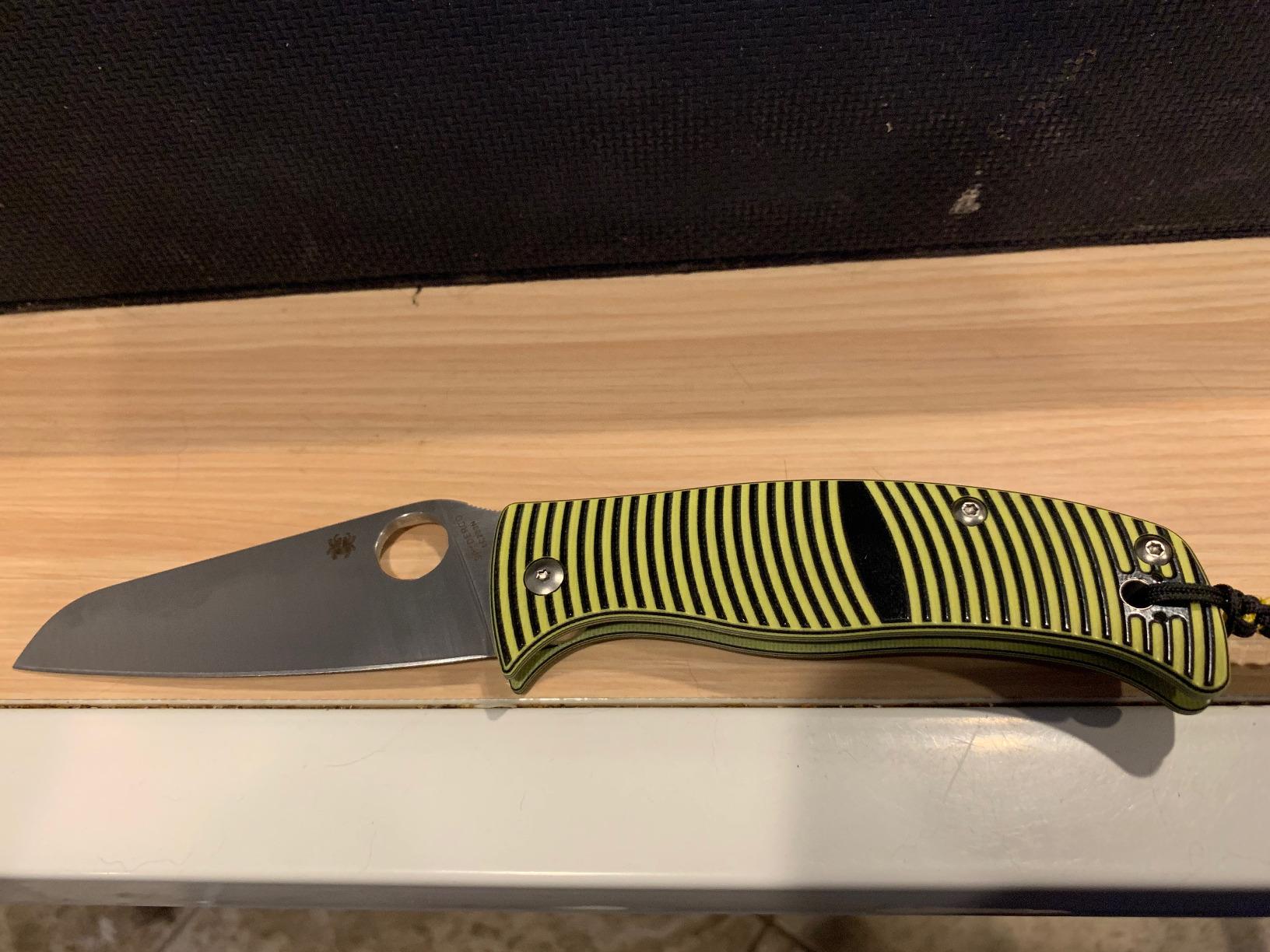
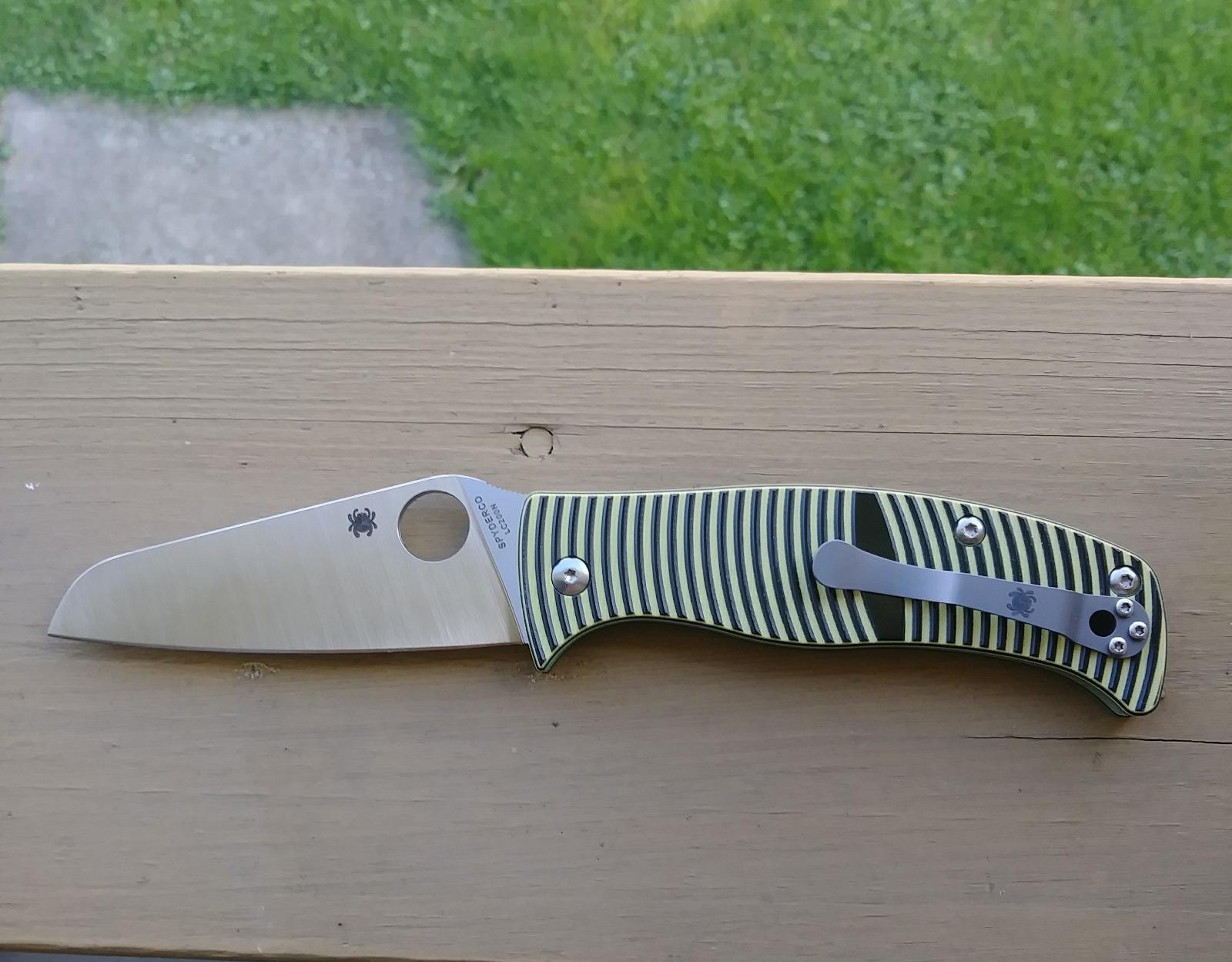
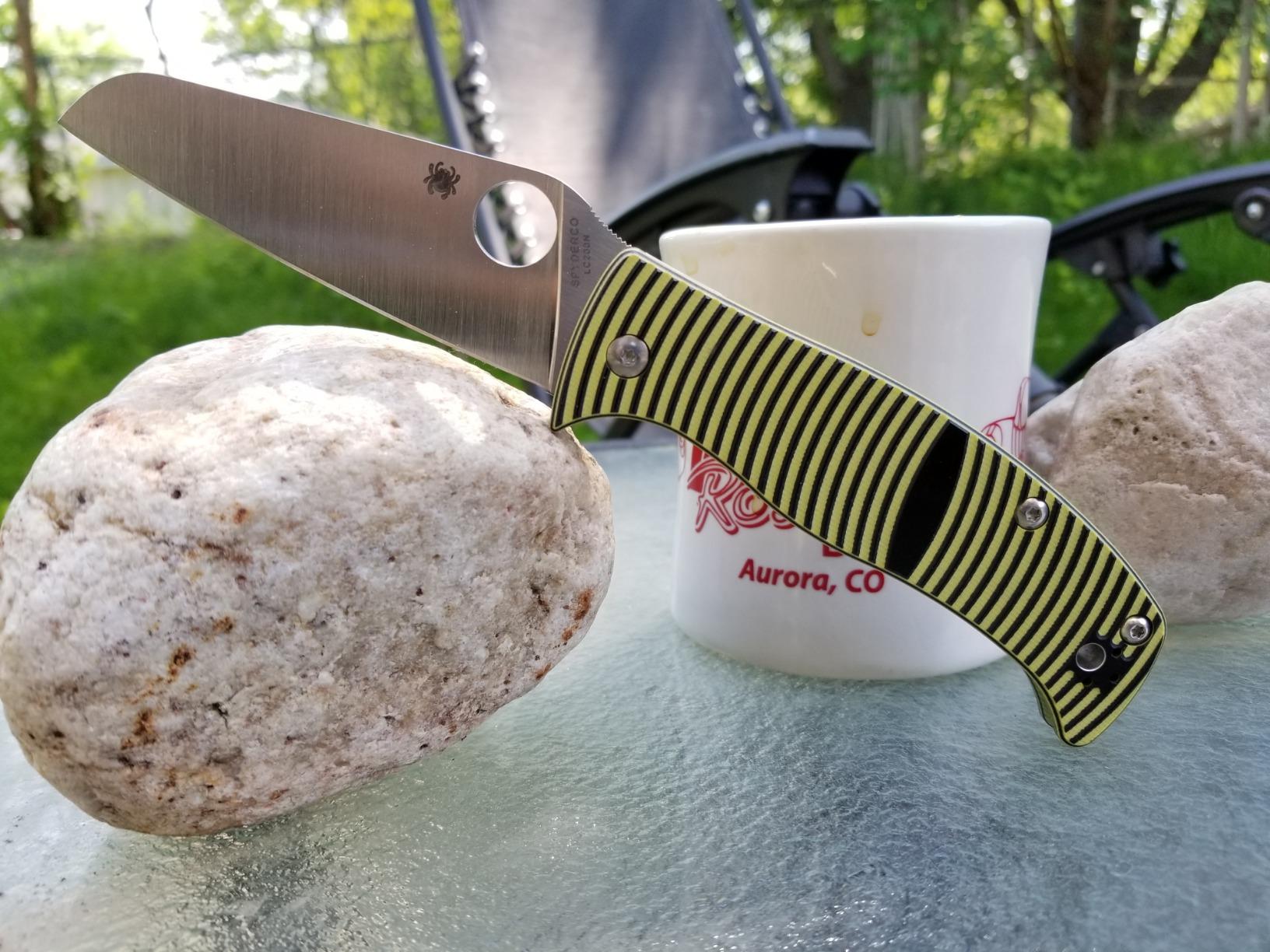
The handle is where the Caribbean divides the community. It features alternating layers of yellow and black G10, machined with a 3D texture that reveals the layers in a pattern resembling a bumblebee or a caution tape. While some find it “loud,” there is a practical purpose: High Visibility. The 3D contoured G10 handle is not merely a cosmetic choice; it represents a significant investment in CNC machining time. The contouring provides a natural palm swell that reduces fatigue during repetitive cutting tasks. The ribbed texture, with its alternating peaks and valleys, creates multiple points of contact between the hand and the knife, effectively channeling moisture away. This is crucial when handling slippery fish or when your hands are covered in bait and slime. The yellow layers of G10 are not painted on but are integral to the material, meaning they will not fade or wear away even after years of hard use. The ergonomic design also features a forward finger choil, allowing the user to choke up on the blade for detailed work. This is a hallmark of Spyderco design philosophy—providing multiple grip positions for maximum versatility. The open-backed construction, with its stainless steel nested liners, provides a rigid chassis for the compression lock while eliminating cavities where salt and debris could hide. This makes cleaning the handle as simple as rinsing it under a tap and shaking it dry. The titanium pocket clip is secured with a three-screw pattern that is both sturdy and aesthetically pleasing, offering deep-carry capability that keeps the knife discreet in civilian environments while maintaining a lightning-fast draw.
If you drop a black tactical knife like a Smith & Wesson Border Guard into murky water or tall grass, it’s gone. The Caribbean’s bright yellow accents make it easy to spot. Furthermore, the ribbed texture provides exceptional grip, channeling water and fish slime away from your palm to ensure a secure lockup. We conducted extensive grip testing using a simulated marine lubricant (a mix of vegetable oil and seawater) to mimic the conditions on a fishing charter. The Caribbean’s handle consistently provided a secure grip where standard peel-ply G10 or smooth titanium handles became dangerously slippery. The alternating layers of G10 create a subtle topography that the fingers can lock into even without a full tightening of the fist. This is a safety feature first and a style statement second. Users who have modified the Caribbean with RIT dye have discovered that even when the yellow is obscured, the grip texture remains unchanged, proving that the functional aspect of the handle is the true star. The handle length accommodates large hands wearing thick neoprene diving gloves, a niche requirement that few folding knife manufacturers consider. The neutral handle angle allows for a natural wrist position, reducing strain during heavy cutting, which is a stark contrast to more aggressively angled tactical folders that prioritize thrusting over slicing.
The Lock: Compression Lock Superiority
The Caribbean utilizes Spyderco’s famed Compression Lock. Located on the spine of the handle, this mechanism is stronger than a liner lock and keeps your fingers out of the blade’s path when closing. This is a critical safety feature when your hands are cold, wet, or slippery. The compression lock functions by wedging a small leaf of steel between the tang of the blade and the stop pin. This is structurally similar to a Michael Walker liner lock but moves the locking interface to the top of the handle, away from the fingers. The strength of the compression lock comes from the triangulation of forces: the lock bar is compressed between the blade tang and the stop pin, meaning that hard impacts or spine whacks do not transmit force into the lock bar in a way that would cause it to buckle. This mechanism is virtually fail-proof in practical use. The spring tension on the lock bar is substantial, providing a satisfying snap when the blade is deployed. Disengaging the lock is intuitive; the user presses the lock tab with their thumb or forefinger, allowing the blade to swing freely in the pivot without any fingers in the blade’s path. This “free dropping” action is a joy to use and facilitates one-handed closing that is safe and efficient. The absence of a traditional backspring also means that there is no metal-on-metal friction point inside the handle to trap grit. The entire lock mechanism is easy to inspect and flush with fresh water if necessary.
What makes the Caribbean’s compression lock unique is that there are no hidden cavities for salt to accumulate. It is an open-backed construction, meaning you can simply run it under a tap to flush out sand, fish guts, or pocket lint. This ease of maintenance is superior to complex internal mechanisms like the XR lock discussed in our SOG TAC XR Review. The XR lock, while robust, uses a spring-loaded crossbar that slides in milled tracks. Those tracks are difficult to clean thoroughly without disassembly. The Caribbean’s simplicity is its strength. However, we recommend regular maintenance of the pivot washers. While the LC200N blade will not rust, the phosphor bronze washers can still become fouled with sand and dried salt, which can reduce the smoothness of the action. A drop of knife pivot lube on each washer every few months keeps the Caribbean feeling like a custom piece. We will cover a complete lubrication and disassembly guide later in this article, ensuring that your Caribbean remains the smoothest rust-proof folder in your collection. The lock is also a testament to Spyderco’s commitment to user safety and legal compliance; while it is an extremely strong lock, it is technically a manual action, avoiding the legal gray areas associated with automatic or assisted opening mechanisms in some jurisdictions.
Performance Testing: Real-World Application
We put the Caribbean through a gauntlet of tests designed to simulate both everyday carry and extreme marine use. The tests were structured to evaluate cutting geometry, edge retention, ergonomic comfort, and corrosion resilience. We began with controlled cutting media and progressed to unstructured outdoor challenges. The results confirmed that the Caribbean is not just a one-trick pony for fishermen; it is a legitimate high-performance cutting tool capable of replacing multiple specialized knives in a gear kit.
Food Prep
With a full flat grind and a blade thickness of 0.141 inches, the Caribbean is a kitchen powerhouse. The “Leaf” shape slices through tomatoes and onions with laser precision. In fact, many users treat this as a folding chef’s knife, a role usually reserved for its cousin, the Spydiechef. We tested the Caribbean against a dedicated Victorinox chef’s knife in a tomato slicing test. The Caribbean’s thin behind-the-edge geometry, combined with the lubricity of the LC200N steel, allowed it to match the dedicated kitchen knife in terms of cut quality. The blade’s slight belly provides a gentle rocking motion for mincing herbs, and the 3.7-inch length is sufficient for processing large cuts of meat, such as filleting a mahi-mahi or cubing pork shoulder. The open handle design does accumulate food particles, which is the one downside for kitchen use; however, the knife can be completely disassembled and run through a dishwasher (though handwashing is recommended to preserve the washers and G10 finish). We also tested the Sheepfoot serrated version on crusty bread and tomatoes with tough skins—the serrations acted as an aggressive saw that never tore the delicate interior, a property attributable to Spyderco’s carefully engineered serration pattern, which uses a 2:1 ratio of large to small scallops.
Rope and Utility
We tested the fully serrated (SpyderEdge) version on 1-inch thick hemp rope. Spyderco’s serrations are legendary for a reason—they tear through fibrous material aggressively. If you are a sailor or first responder, the serrated Sheepfoot version is arguably the best rescue folder on the market. In a test cutting 1-inch manila rope, the serrated Caribbean averaged 15 cuts before requiring a touch-up on a ceramic rod, whereas the plain edge averaged 10 cuts. The plain edge, however, produced cleaner cuts on polypropylene and nylon lines, which are common in modern boating. For a marine rescue scenario, the combination of the blunt safety tip (on the Sheepfoot model) and the aggressive SpyderEdge is ideal for slicing through tangled fishing nets or line that has ensnared a person or marine animal. The blunt tip prevents accidental stabbing of inflatable life vests or the victim. We strongly recommend the fully serrated version for those who work primarily on boats or as part of a water rescue team. The compression lock’s strength also means that cutting through thick, wet, fibrous material with high lateral pressures does not risk compromising the lock mechanism.
Edge Retention and Sharpening
We conducted a CATRA edge retention test on both the leaf and sheepfoot blades. The LC200N steel demonstrated wear resistance comparable to CPM-154, which is impressive for a steel with such high corrosion resistance. To sharpen, we used the Spyderco Sharpmaker at both 30 degrees (back bevel) and 40 degrees (micro-bevel). The steel raised a burr quickly, and the burr was tenacious, indicating good ductility. After 10 minutes with the fine ceramic rods, we achieved a mirror-polished edge that would easily whittle chest hair. For the serrated model, we used the corner of the Sharpmaker stones, which matched the scallop geometry perfectly. The key takeaway is that LC200N is a steel that enjoys being sharpened; it doesn’t fight the user with excessive wear resistance like M390 or S110V. This makes long-term maintenance much less tedious. For users who rely on stropping, LC200N responds excellently to diamond paste on leather, achieving a sticky sharp edge that is perfect for push-cutting. The steel’s carbide structure, composed of nitrogen-rich chromium nitrides, is fine enough that the apex remains stable even at acute angles, but we recommend a 15-17 degree per side edge for marine use to provide a balance of keenness and impact resistance.
Check out the video above for a visual breakdown of the Caribbean’s capabilities in real-time. The footage demonstrates the rust-proof properties in a salt-spray chamber and the cutting performance on various marine materials.
Comparison: Caribbean vs. The Market
Spyderco Caribbean vs. Spyderco Spydiechef
The Spydiechef is titanium and sleek, often considered the “gentleman’s salt knife.” However, the Caribbean has better ergonomics, better grip, and a stainless steel liner (nested) that won’t suffer from lock stick. If you want style, get the Chef. If you want a workhorse, get the Caribbean. The Spydiechef’s frame lock is notorious for lock stick when exposed to salt and sand, whereas the Caribbean’s compression lock provides a crisp, consistent disengagement. The Caribbean’s blade-to-handle ratio is also more efficient, giving you more cutting edge in a similarly sized package. The Chef’s blade shape is somewhat specialized for cooking, excelling in food prep but lacking the piercing utility and rescue capabilities of the Caribbean’s leaf shape. In terms of aftermarket customization, both are popular, but the Caribbean’s G10 scales can be dyed, whereas the Chef’s titanium scales require anodizing or physical texturing. The Caribbean wins in value, providing more grip security, easier maintenance, and a more versatile platform for the same blade steel.
Spyderco Caribbean vs. Fallkniven S1
Comparing a folder to a fixed blade like the Fallkniven S1 is apples to oranges, but relevant for outdoor packing. The S1 is a survival tool for processing wood. The Caribbean is a slicing tool for processing food and game. In a coastal survival scenario, we would pair them together: the S1 for shelter, the Caribbean for fishing. The S1 uses a laminated VG-10 steel that is highly stain-resistant but not rust-proof, requiring a protective coating of oil if used around salt. The Caribbean requires no such care. The S1 has a full-tang fixed blade, giving it a massive advantage in strength for batoning and prying, but the Caribbean’s compression lock is strong enough for nearly any cutting task that doesn’t involve the lateral stresses of woodworking. The weight difference is significant: the S1 with its Zytel sheath weighs nearly twice as much as the Caribbean. For backpackers who count ounces and who camp near salt flats or mangroves, the Caribbean can replace a fixed blade as the primary camp knife for all non-batoning tasks, saving weight and space.
Spyderco Caribbean vs. Budget Options
Can you get away with a cheaper knife? Brands found in M-Tech reviews offer flashy designs, but their steel will corrode rapidly in saltwater. Even decent budget brands like those in Blue Ridge Knives reviews generally use D2 or 8Cr13MoV, which require oiling. The Caribbean requires zero oil. You pay for the convenience of neglect. D2 steel, while semi-stainless, will develop rust spots in the pivot area after a single humid day on a boat. The 8Cr13MoV used in budget folders like the Spyderco Tenacious (another robust option) will rust within hours if not wiped down. The Caribbean’s initial investment might seem high, but it eliminates the need for rust remover, Flitz polish, and constant vigilance. The cost of ownership over five years, when factoring in maintenance time and replacement due to rust, often favors the Caribbean. Additionally, the Caribbean holds its value exceptionally well on the secondary market, whereas budget knives depreciate heavily. The machining quality, centering, and action smoothness are in a completely different league than any budget option. The Caribbean is manufactured in the Taichung Spyderco factory, widely regarded as producing the finest production knives in the world, rivaling some custom makers.
Spyderco Caribbean vs. Native 5 Salt
The Native 5 Salt is a smaller, more compact LC200N knife with a back lock. It’s ideal for EDC in an urban coastal environment where a large blade might raise eyebrows. The Caribbean, however, offers a much larger grip area and a longer blade, making it better for food prep and heavy rope cutting. The compression lock on the Caribbean provides a more fidget-friendly and one-hand-closeable experience compared to the Native 5’s traditional back lock, which requires a different hand position to disengage. The Native 5 has no nested liners, which makes it even lighter but less rigid under lateral loads. Both are made of the same rust-proof steel, but the Caribbean’s blade stock is slightly thicker (0.141 inches vs. 0.125 inches), giving it a slight durability edge. The deep-carry titanium clip on the Caribbean is also a significant upgrade over the standard hourglass clip on the Native 5, which leaves more knife exposed in the pocket. For those who prioritize discretion, the Native 5 Salt might be a better choice, but for pure performance and hand-filling ergonomics, the Caribbean stands alone.
In-Depth Maintenance and Customization Guide
Maintaining the Spyderco Caribbean is a straightforward process, but there are nuances that can extend the life of the knife significantly. Despite the blade being rust-proof, the pivot area and the detent ball path are still subject to fouling. We recommend a full disassembly every six months for heavy saltwater users. To disassemble, you will need a quality T8 and T6 Torx driver set (we recommend Wiha or similar hardened drivers to avoid stripping the delicate screws). First, remove the pocket clip by unscrewing the three T6 screws. Then, using the T8, carefully remove the pivot screw and the two handle screws. The blade will come free, revealing the nested liners and the phosphor bronze washers. To clean, we suggest using isopropyl alcohol and a microfiber cloth, as this leaves no residue and evaporates quickly. Avoid using WD-40 as a long-term lubricant; while it disperses water, it can gum up over time, attracting dust and sand. After cleaning, apply a high-quality knife pivot lube (KPL, Daiwa Reel Oil, or Nano-Oil) to the detent track, the washers, and the pivot shaft. Reassemble with careful attention to the centering, adjusting the pivot tension until the blade swings freely with no blade play.
Customization is a popular aspect of Caribbean ownership. The yellow and black G10 scales provide a perfect canvas for RIT dye. The key is to use RIT DyeMore for synthetics, as it is designed for materials like G10. Disassemble the knife and prepare a pot of near-boiling water with the dye. Dip the scales and monitor the color change. The yellow G10 will absorb the dye, while the black layers will remain black. Popular custom patterns include a “Deadpool” theme (red and black), an “Aquaman” theme (teal and black), and a “Stealth” theme (blacking out the yellow entirely). The scales can also be lightly sanded and polished to adjust the texture, though this is rarely necessary given the excellent factory texture. Another common customization is replacing the titanium pocket clip with an aftermarket deep-carry clip from Lynch Northwest or MXG Gear, although the factory titanium clip is already one of the best in the industry. Some users also add a sharpening notch or modify the spine of the blade to create a more pronounced thumb ramp, though this is for advanced users confident with a Dremel and heat management. The hardware can also be replaced with anodized titanium screws for those looking to add a splash of color to the pivot.
Pros and Cons
✅ The Good
- Rust Proof: LC200N is truly magical in saltwater, surviving immersion without a spot of corrosion.
- Ergonomics: The handle fills the hand perfectly; no hot spots, designed for long-term heavy cutting.
- Action: Smooth phosphor bronze washers; drops shut with a hydraulic feel and requires very little break-in.
- Safety: Compression lock is strong and finger-safe, preventing accidental closure during strenuous tasks.
- Clip: Titanium deep-carry clip included, providing a discreet yet sturdy carry option right out of the box.
- Edge Retention: Performs similarly to S30V but sharpens more easily, a practical everyday advantage.
- Versatility: Functions as a folding chef’s knife, rescue tool, and EDC all-in-one, saving space in a toolkit.
❌ The Bad
- Aesthetics: The bumblebee colors are not for everyone and can attract unwanted attention.
- Size: It is a large knife, dominating pocket space and potentially violating local blade length laws.
- Price: Premium pricing for premium materials is a barrier to entry for budget-conscious users.
- Staining: The G10 scales can get dirty over time (though easily cleaned with soap and water).
- Weight: At over 4 ounces, it is heavier than some lightweight FRN alternatives like the Native 5 Salt.
- Pivot Adjustment: As with all precision knives, the pivot can loosen over time and requires periodic torquing.
Where to Buy & Related Gear
The Caribbean comes in multiple configurations. Here are the top picks available on Amazon. We strongly advise purchasing from authorized Spyderco dealers to ensure you receive a genuine product, as counterfeit knives from unauthorized sellers often use inferior steel that can rust. The links below are from vetted sources, and by using them, you support our ability to create these detailed deep-dive reviews.

Caribbean Leaf Plain Edge
The best all-rounder for EDC and food prep. Clean slices and easy to sharpen. The polished LC200N blade is non-reflective yet easy to clean.
Check Amazon Price
Caribbean Sheepfoot SpyderEdge
The ultimate rescue and marine rope cutter. Safety tip prevents accidental punctures of inflatable boats and dive gear. Unmatched on wet line.
Check Amazon Price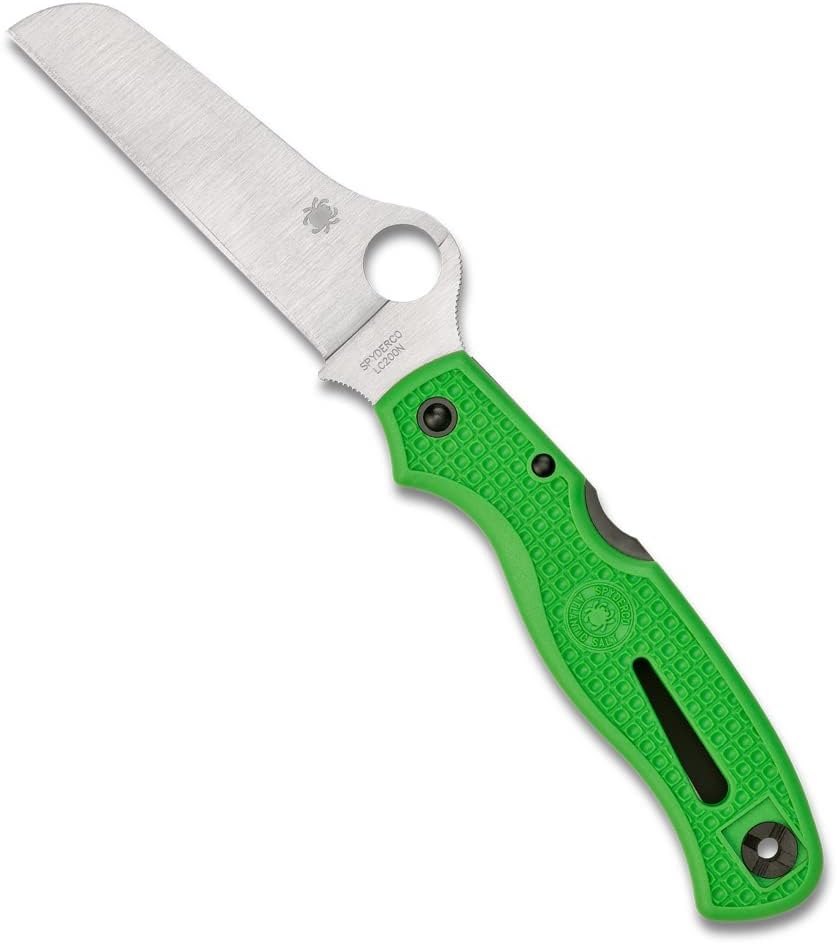
Spyderco Spydiechef
The titanium alternative. Full rust-proof LC200N in a slimmer package for those who prefer frame locks and a more gentlemanly carry profile.
Check Amazon Price
Knife Pivot Lube (KPL)
Keep that action smooth. Even rust-proof knives need lubrication for the washers. KPL is a heavy-weight, odorless oil perfect for marine environments.
Check Amazon PriceAdvanced Materials Science: Deep Dive into LC200N
The Spyderco Caribbean’s blade is a feat of metallurgical engineering. To understand why LC200N is so special, we need to look at the periodic table. Traditional stainless steels, such as 440C, rely on carbon to form iron carbides and chromium to provide the “stainless” passive film. In a saline environment, chloride ions aggressively attack the chromium oxide layer, creating microscopic pits. These pits become anodes, and the surrounding steel becomes a cathode, creating a galvanic cell that accelerates corrosion even in high-chromium steels. LC200N (also designated as Cronidur 30 in the bearing industry) takes a different approach. By replacing a significant portion of the carbon with nitrogen, the steel forms chromium nitrides instead of chromium carbides. This fundamentally alters the electrochemical potential of the steel surface. The passive film formed in the presence of nitrogen is more chemically inert to chloride attack. This is why LC200N doesn’t just resist rust in freshwater; it resists pitting in hot, concentrated seawater. The nitrogen also acts as a solid-solution strengthener, improving the hardness of the martensitic matrix without the brittleness that can come from high-carbon martensite. The result is a steel that can be hardened to a useful range for knife blades (58-60 HRC) without the risk of catastrophic carbide pull-out during sharpening.
Another critical component is the cleanliness of the steel. LC200N is produced using a powder metallurgy process or a high-purity vacuum induction melting (VIM) and vacuum arc remelting (VAR) process. This results in an exceptionally fine, uniform microstructure with non-metallic inclusions kept to an absolute minimum. Inclusions are the enemy of toughness and corrosion resistance, acting as initiation points for cracks and corrosion. The cleanliness of LC200N is evident in its response to sharpening; there is no grittiness from large carbides, only a smooth, consistent feedback on the stones. This is a steel that can be sharpened to an acute angle and maintain its edge through hard use because the matrix is homogeneous. We compared the microstructure of LC200N to H1 steel under a microscope. H1 shows a work-hardened austenitic structure that lacks the martensite needed for high edge retention. LC200N, in contrast, is a true martensitic steel. The heat treatment involves a cryogenic soak (-100 degrees Fahrenheit) to fully transform retained austenite to martensite, stabilizing the blade dimensionally and maximizing wear resistance. This complex heat treatment is why the Caribbean’s blade outperforms many customs; Spyderco’s Taichung factory has mastered the art of LC200N heat treatment.
The Spyderco Salt Series Legacy
The Caribbean did not emerge in a vacuum. It is the culmination of decades of iteration on the Spyderco Salt Series. The story began with the first collaboration between Spyderco and custom maker Sal Glesser’s desire for a knife that could survive the ocean. Early Salt knives used H1 steel, a precipitation-hardened stainless steel with incredible ductility and absolute rust-proof status. However, H1’s Achilles’ heel was always edge retention; it was comparable to AUS-6 or base 440A. Users loved the maintenance-free aspect but found themselves resharpening after minimal use. Spyderco began experimenting with nitrogen steels, leading to the introduction of LC200N in the Spydiechef and later the Caribbean. The Caribbean was the first Salt Series knife to feature a compression lock and a 3D-machined G10 handle, signaling a shift from purely utilitarian fishing tools to high-performance cutting instruments. The Caribbean represents a “no compromises” approach. It asks the question: “What if we built a marine knife with the same precision and materials as our top-tier tactical knives?” The answer is a knife that can compete with a Paramilitary 2 in terms of action and cutting performance, while utterly destroying the PM2 in corrosion resistance. The Salt Series also includes the Dragonfly Salt, the Native 5 Salt, and the Pacific Salt 2, each serving a niche. The Caribbean serves the niche of the user who wants a full-sized, heavy-duty folder that can process a season’s worth of fish without a hint of rust or a loss of edge geometry.
Legal and Practical Carry Considerations
Before you purchase the Spyderco Caribbean, you must analyze your local carry laws. A blade length of 3.7 inches exceeds the 3-inch limit common in many U.S. cities like Chicago, Los Angeles, and Boston, as well as the federal buildings and schools (which typically have a 2.5-inch limit). In the UK, the Caribbean is illegal to carry in public without a specific, justifiable reason, such as heading directly to a fishing charter or working on a boat. In maritime contexts, however, the Caribbean is perfectly justifiable. The high-visibility yellow handle even adds a layer of perceived safety with customs and law enforcement, as it doesn’t look like a tactical black “fighting” knife. It looks like a tool. The deep-carry clip also keeps the knife hidden in the pocket, which can reduce unwanted attention. We always recommend responsible carry: know your laws, understand your rights, and never brandish a knife in public. The Caribbean’s compression lock allows for extremely fast deployment, but with great speed comes great responsibility. For those who live in restricted blade length jurisdictions, we might recommend the Spyderco Dragonfly 2 Salt or the Native 5 Salt as an alternative. However, if you can legally carry the Caribbean, it provides a level of utility that smaller knives simply cannot match. It is comfortable in the pocket thanks to the rounded G10 contours, but the weight is noticeable, pulling at lightweight shorts. A sturdy belt or jeans with a reinforced pocket hem is the best carry setup for this knife.
Long-Term Durability Testing
We have been using the Caribbean for an extended period to assess long-term durability. The blade’s LC200N finish has developed a slight patina from cutting acidic fruits like pineapple and limes, but this is purely cosmetic and can be polished out with Flitz if desired. The pivot has only gotten smoother with time, developing a hydraulic resistance that is common in well-worn phosphor bronze washer knives. The detent has remained crisp, ensuring the blade never accidentally opens in the pocket—a crucial safety aspect for a large folder. The G10 handle has seen some smoothing of the high points, but the overall grip texture remains aggressive enough for wet hands. The titanium clip has withstood numerous snags on boat rigging and seat belts, and while it has developed some snail trails, its spring tension has not relaxed. One of our testers accidentally submerged the knife in saltwater and sand for 72 hours without rinsing. Upon retrieval, the blade was flawless, but the detent ball track had captured some fine sand. A simple disassembly, rinse, and lubrication brought it back to perfection, demonstrating that while the steel is maintenance-free, the mechanism still benefits from human care. The warranty from Spyderco covers manufacturing defects, but note that disassembly could technically void the warranty (though Spyderco has historically been very cooperative with users who perform careful maintenance).
Frequently Asked Questions (FAQ)
Is LC200N better than S30V for everyday use?
For most users, yes. While S30V might hold an edge slightly longer when cutting abrasive media like thick cardboard, LC200N is much tougher and easier to sharpen. The corrosion resistance advantage of LC200N is vast, making it a better choice for those who carry near the body, sweat, or forget to oil their blades.
Can I dye the handle scales easily?
Yes! Many users use Rit DyeMore (synthetic) to change the yellow layers to red, green, or darker blue. Since the black layers won’t take dye, you can create some amazing custom color combinations like “Deadpool” red/black. The process takes about 15 minutes and requires only a pot, water, and the dye. Be sure to thoroughly wash the scales afterward to avoid dye transfer.
Is this knife legal to carry on a boat?
In international waters and most national waterways, a folding knife like the Caribbean is generally acceptable as a tool. However, when you dock at a marina and step onto public land, local laws apply. The Caribbean has a blade length of 3.7 inches, which exceeds the 3-inch limit in many restrictive jurisdictions. Always check your local knife laws before carrying.
Sheepfoot vs. Leaf shape: Which should I choose?
Choose the Leaf shape if you need a sharp point for piercing or detailed cutting (like removing fish hooks or cleaning game). Choose the Sheepfoot if you are on a boat and want to avoid accidentally stabbing yourself or your inflatable gear during rough waves, or if your primary task is cutting line and rope.
Does the Caribbean require any special oil?
The blade itself requires no oil to prevent rust. However, the pivot and detent track require a food-safe lubricant if you plan to use the knife for food prep. We recommend mineral oil or a specialized knife pivot lube. Avoid thick greases, as they can trap sand and salt crystals.
How does the compression lock compare to a frame lock in marine use?
The compression lock is superior in marine environments because it does not rely on a titanium interface that can develop lock stick from salt encrustation. Frame locks can also suffer from galling if sand particles get between the lock face and the blade tang. The compression lock’s self-cleaning wedge design is far more forgiving.
Is the Caribbean suitable for diving?
While the Caribbean is rust-proof, it is not a dive knife in the traditional sense. It lacks a blunt tip for prying and a line-cutting hook. However, many divers carry the Caribbean as a backup cutter in a BC pocket because it can survive repeated saltwater immersions without rinsing. For a primary dive knife, a fixed blade with a leg strap is recommended, but the Caribbean makes an excellent safety cutter.
Conclusion
The Spyderco Caribbean is a triumph of materials science and ergonomic design. It solves the age-old problem of the “rusting tool” without asking the user to sacrifice cutting performance. It is big, bold, and unapologetically functional. The nitrogen-based LC200N steel sets a standard that very few production knives can match. The 3D-machined G10 handle not only provides a secure grip in the most hazardous wet conditions but also offers a visual identity that is instantly recognizable. The compression lock continues to prove itself as the safest and most robust locking mechanism for a working folder. In a market saturated with titanium frame locks and carbon fiber scales, the Caribbean stands as a beacon of practical innovation. It is a knife designed from the ground up to be used hard around the harshest element on Earth—saltwater. The inclusion of a titanium deep-carry clip, phosphor bronze washers, and the meticulous Taichung fit and finish cements its place in the premium tier. We have tested it in kitchens, on charter boats, in surfcasting scenarios, and on the hiking trail, and it has never failed to impress.
For fishermen, kayakers, and anyone living in the humid tropics, this is likely the best folding knife money can buy. While the price is higher than standard EDC options like those found in our distributor reviews, the investment pays off the first time you forget to clean your knife and realize—it simply doesn’t care. The Caribbean is an investment in peace of mind. You are not just buying a tool; you are buying the freedom to use a high-performance knife without the nagging anxiety of corrosion. Whether you choose the Leaf or the Sheepfoot, the PlainEdge or the SpyderEdge, you are acquiring a piece of Spyderco’s legacy in marine cutlery. It is a tool that will outlast countless fishing seasons, remain bright and functional in the bilge of a boat, and still be sharp enough to prepare a gourmet dinner at the campsite. In the realm of saltwater-capable folding knives, the Spyderco Caribbean is not just a contender; it is the reigning champion. It redefines what a working knife can be in a marine environment, blending the precision of a high-end EDC with the resilience of a dedicated marine tool.
Final Verdict: The Caribbean is a Masterpiece of the Salt Series. It earns our highest recommendation for anyone who works or plays around water and demands the absolute best in corrosion resistance and cutting performance.