Fallkniven S1 Review: The Ultimate Forest Knife or Overpriced Steel?
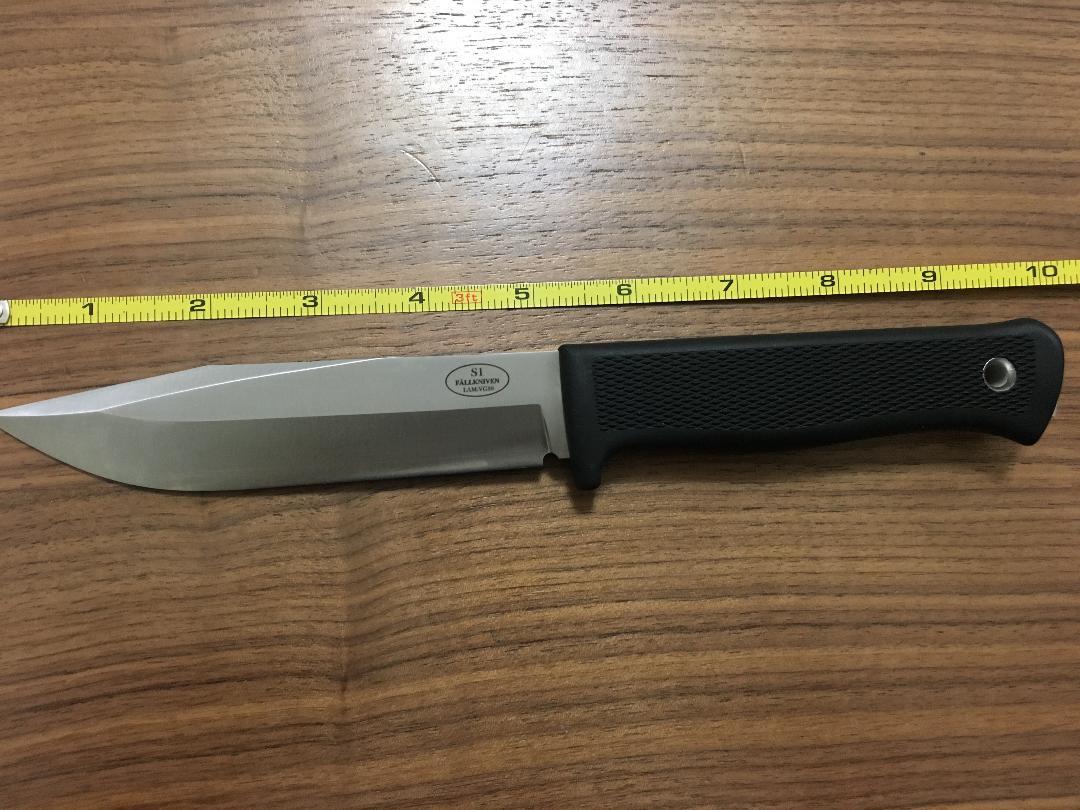
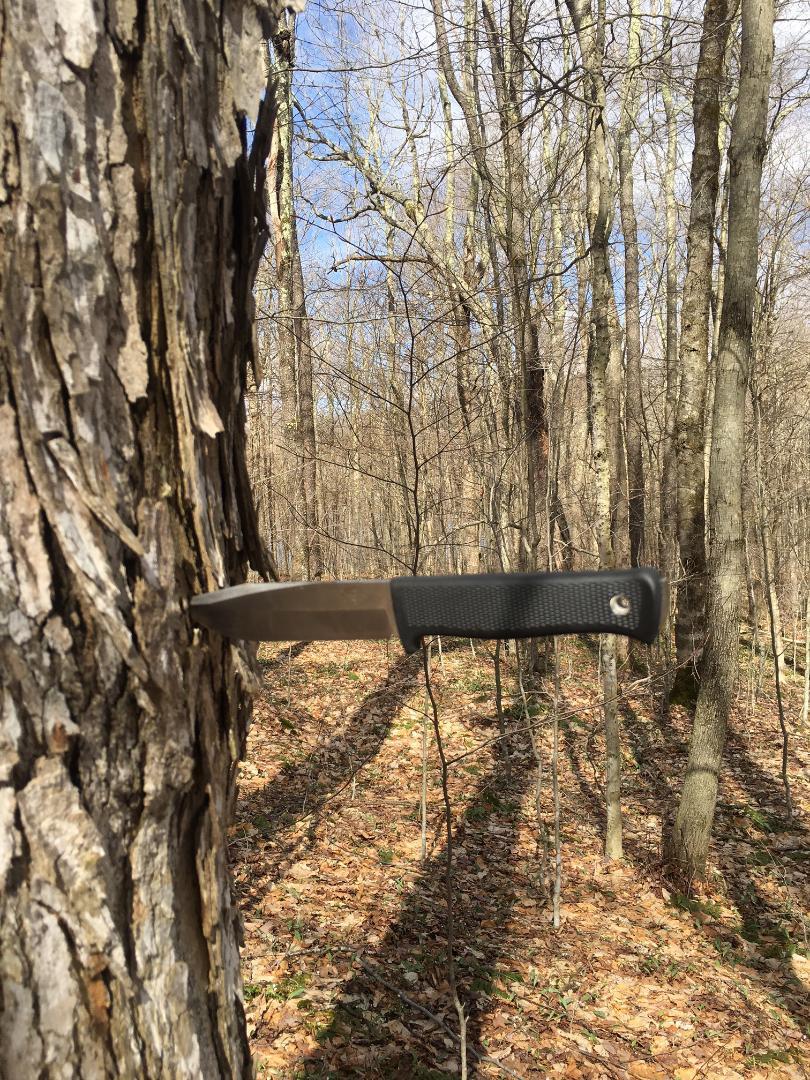
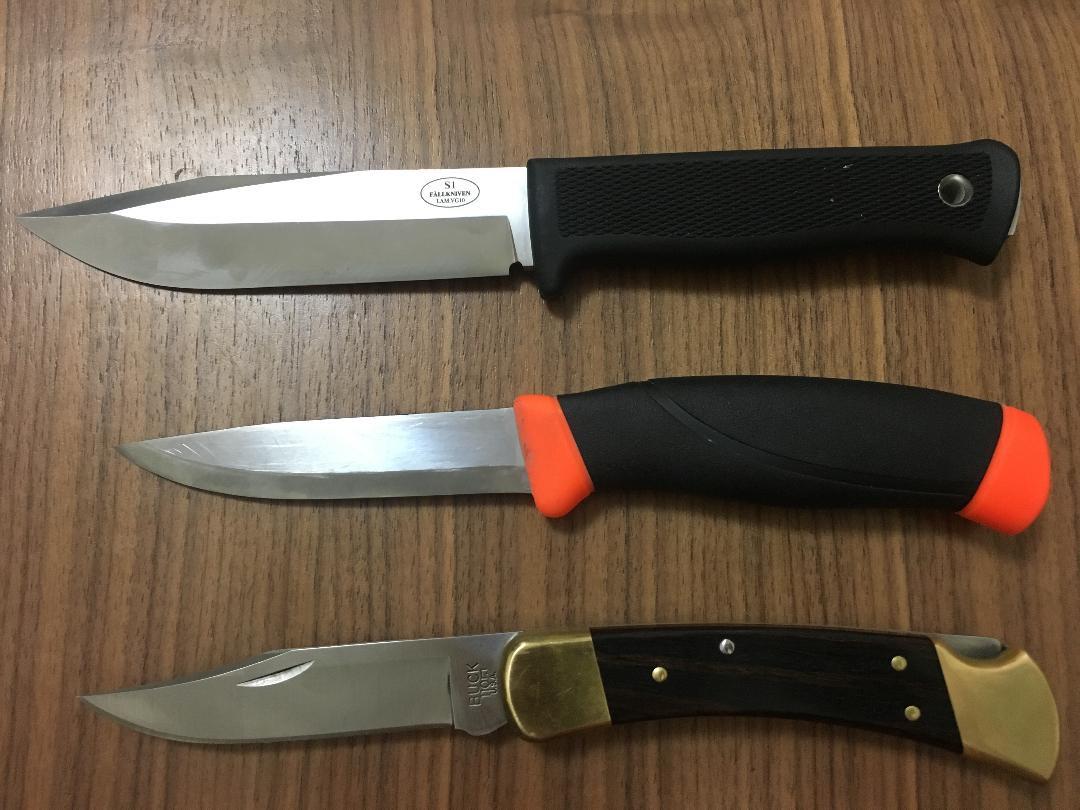
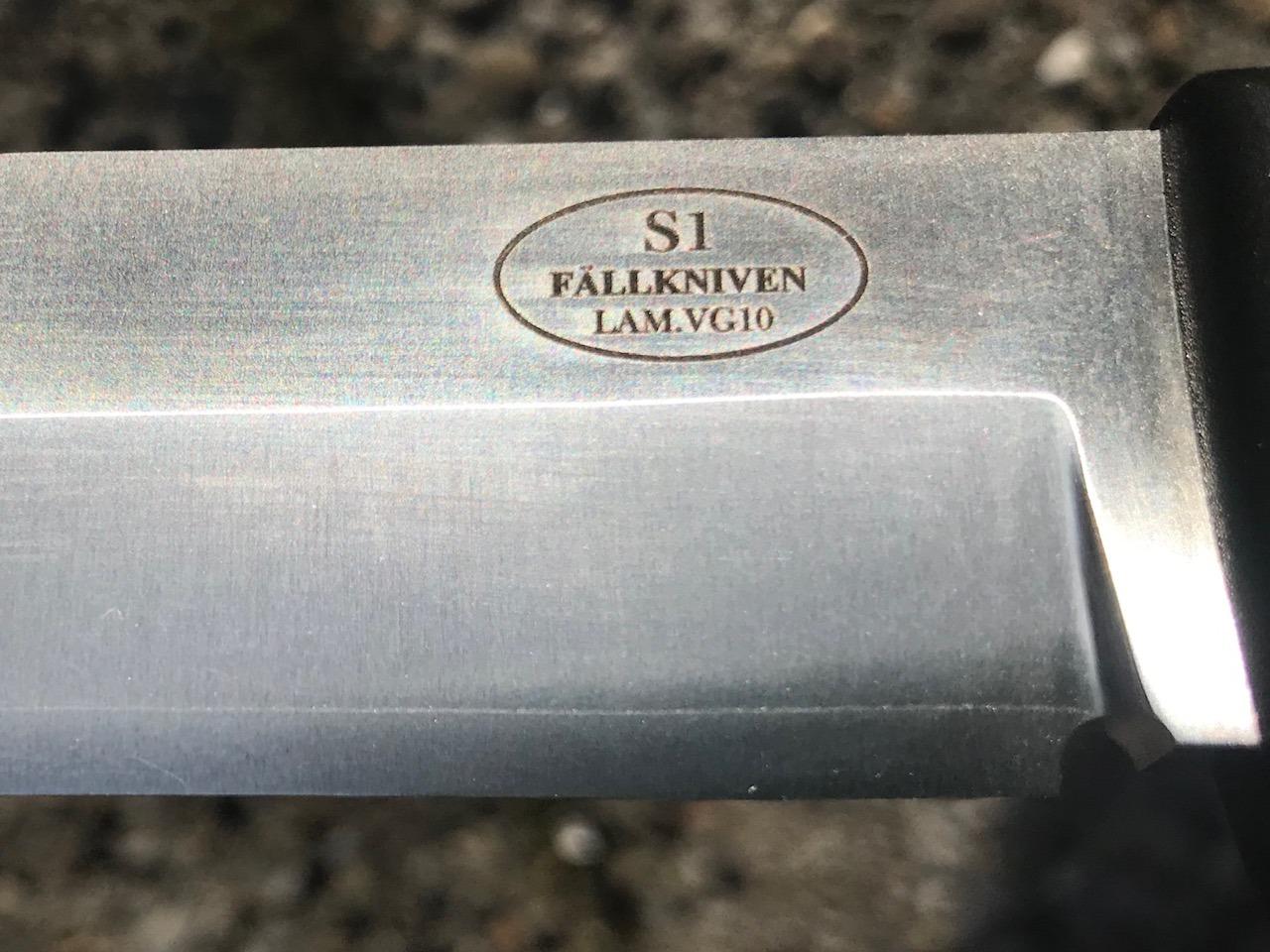
When discussing the “Holy Trinity” of survival knives, the conversation inevitably turns to Sweden. While Mora dominates the budget sector, Fallkniven rules the premium space. Today, we are conducting an exhaustive Fallkniven S1 review, the “Forest Knife” that sits comfortably between the pilot-sized F1 and the tank-like A1.
Is the S1 the Goldilocks of the survival world? Or does it suffer from “middle child syndrome”? In the vast landscape of cutlery, from budget-friendly options found in M-Tech knife reviews to high-end tactical folders like the SOG TAC XR, the fixed blade remains the king of the wilderness. Let’s dissect the S1 to see if it deserves a spot on your belt.
Technical Specifications
| Attribute | Specification |
|---|---|
| Total Length | 9.7 inches (247 mm) |
| Blade Length | 5.1 inches (130 mm) |
| Blade Thickness | 0.2 inches (5 mm) |
| Steel Type | Laminated VG10 (HRC 59) |
| Blade Geometry | Convex Grind |
| Handle Material | Thermorun |
| Weight (Knife Only) | 6.7 oz (190 g) |
| Origin | Made in Japan (Swedish Design) |
The Blade: Laminated VG10 & The Convex Edge
The soul of the Fallkniven S1 is its steel. Unlike the powder metallurgy steels often discussed in our Kershaw Blur S30V review, Fallkniven utilizes a Laminated VG10 construction. This is a sandwich technique: the core is high-carbon VG10 for a razor-sharp edge, while the outer layers are 420J2 stainless steel. This combination provides incredible tensile strength, purportedly 20% stronger than a solid VG10 blade.
But the real magic—and controversy—lies in the geometry. The S1 features a full Convex Grind. Unlike a hollow grind (common in hunting knives) or a flat grind (common in kitchen knives), a convex grind curves down to the edge like an axe. This provides immense support behind the edge, making it structurally superior for chopping and batoning wood.
However, users transitioning from standard factory edges might find sharpening a convex edge challenging. It requires a mousepad and sandpaper technique or a slack-belt grinder, rather than the standard stones you might use for a Smith & Wesson tactical knife.
The Metallurgical Heart: Deconstructing Laminated VG10
To truly appreciate the Fallkniven S1 Forest Knife, one must step into the world of metallurgy. The term “laminated steel” often evokes images of ancient samurai swords, and rightfully so. The process mirrors the traditional Japanese method of forge-welding hard, high-carbon steel to a softer, shock-absorbing iron backing. The modern iteration, pioneered and perfected by Takefu Special Steel in Japan, centers on a core of VG10. This core represents a “super steel” of its era, originally designed for premium kitchen cutlery requiring a long-lasting, toothy edge on fibrous materials like meat and vegetation. The composition of VG10 is a careful balance: 1% Carbon, 15% Chromium, 1.5% Cobalt, 0.5% Manganese, 0.5% Molybdenum, and 0.3% Vanadium. Each element plays a distinct role. Carbon forms hard carbides and provides the fundamental hardness of the martensitic structure. Chromium provides the stainless quality, pushing corrosion resistance well past what high-carbon simple steels can achieve. Cobalt strengthens the matrix of the steel, allowing the iron atoms to bond more tightly. Molybdenum enhances hardenability and prevents brittleness during the heat-treating process, while Vanadium refines the grain structure and forms the hardest, smallest carbides for edge retention. This is not a simple chunk of cutlery; it is a meticulously engineered alloy.
The lamination process, however, is what transforms VG10 from a brittle laser into a robust survival tool. The outer cladding of 420J2 stainless steel is significantly softer, typically around HRC 46-50. This differential hardening is the secret to the S1’s legendary toughness. When the knife experiences lateral stress—such as when you are prying out a knot of hard pine or torquing the blade during a batoning mis-strike—the hard, brittle VG10 core wants to crack. However, the stress is immediately absorbed and distributed by the thick, ductile 420J2 jackets. This creates a compression-tension dynamic: the outer layers hold the core in a state of compression, making it dramatically harder to initiate a fracture. It is the same principle that makes a tempered glass windshield stronger than a simple pane of glass. The visual manifestation of this process is a distinct, wavy lamination line visible near the cutting edge, a hallmark of quality that tells the user this is not a stamped, mono-steel blank. This three-layer sandwich effectively creates a blade that thinks it is a spring. It bends farther before breaking, snapping back to true with a resilience that has saved countless knives in the field. This is the fundamental reason the Fallkniven S1 review narrative always circles back to “bombproof” reliability.
Convex Geometry: The Physics of Cutting vs. Splitting
The industrial design of the S1’s blade geometry is a masterclass in outdoor physics. A “V” edge, whether flat or hollow ground, represents a two-dimensional compromise. The flat grind on a classic chef’s knife is exceptional for slicing soft, homogenous media because it transitions through the material with minimal shoulder friction. The hollow grind, popular on many hunting knives like the classic Buck pattern, creates an extremely acute, delicate edge for initiating cuts, but it leaves a thin, unsupported apex that collapses under hard use. The convex grind, often mistakenly called an “axe grind,” abandons the concept of a straight bevel entirely. Instead, it is a continuous, gently curving radius from the spine’s full thickness down to the apex. The cross-section resembles a smooth, elongated raindrop. This shape acts as a mechanical wedge. As the blade enters a piece of wood, the material is not simply sliced; it is physically displaced outward. The absence of a defined bevel shoulder means there is no abrupt transition point for the material to catch on, allowing the blade to be driven deep into a log. The friction is distributed over a wider, curving area, which paradoxically can make a convex edge slice through resilient materials like rope or meat with surprising efficiency once the initial cut is initiated.
This geometry has profound implications for bushcraft. When batoning firewood, a flat-ground knife often gets stuck mid-way, requiring excessive hammering that can damage the spine. The convex wedge of the S1, however, initiates a progressive split. The blade gently forces the fibers apart, reducing binding and allowing a single, smooth strike to process even knotty hardwoods. The edge support is immense; the cross-sectional thickness just behind the apex is significantly greater than any flat grind, making edge deformation or chipping far less likely. This is why the S1 can survive the “destruction test” of being hammered sideways through a log or stabbing into a metal drum without the edge catastrophically failing. The trade-off is a loss of absolute sharpness feel. A convex edge will never “whittle a single hair” in the way a perfectly honed straight razor might, because the micro-bevel is supported by a thick wedge of steel. It separates material through a combination of wedge-driven splitting and microscopically tearing, rather than pure planar slicing. This is the optimal trade-off for a woodcraft blade, where edge stability in the face of knots, grit, and lateral force is infinitely more valuable than the ability to make clean cross-grain push cuts in newsprint.
Thermorun Handle: Advanced Elastomer Dynamics
The choice of Thermorun for the handle of the Fallkniven S1 represents a deliberate engineering choice over traditional materials like wood, leather, or even Micarta. Thermorun is a thermoplastic elastomer (TPE) based on olefin, giving it unique characteristics distinct from standard Kraton or rubber. Its molecular structure is a closed-cell matrix. This means that unlike Micarta, which can harbor bacteria and organic matter in its fibrous surface, or a leather washer handle that acts like a sponge, the Thermorun handle is chemically non-porous. In a survival or field dressing context, this allows for true sterilization. Blood, fat, and sap can be rinsed off with hot water and soap without leaving a biological residue that could degrade the material or cause cross-contamination when later using the knife for food preparation. The grip dynamic is also unique. Thermorun does not get slippery in the traditional sense when wet. Many synthetic grips rely on aggressive checkering to provide mechanical grip, but this often shreds hands during prolonged carving without gloves. Thermorun provides a molecular grip; the material itself has a slightly tacky coefficient of friction that increases slightly when hydrated, similar to the texture of a slightly damp leather. This allows for a very secure grip without extreme finger grooves.
The internal tang design also contributes to the ergonomic story. The S1 uses a stick tang that extends deeply into the handle, encased and sealed within the injection-molded Thermorun. This is not a full tang in the sense of visible steel plates with scales attached. The advantage is vibration dampening. When you strike a log with a full tang knife, the harmonic shockwave travels undampened from the blade tip directly into the ulna and radius bones of your forearm. Extended chopping sessions with a full-tang, hard-handled knife can lead to “white finger” syndrome and nerve fatigue. The Thermorun, being a viscoelastic material, converts kinetic shock energy into a tiny amount of heat, effectively isolating the user’s hand from the high-frequency vibrations of impact. The subtle palm swell and the hooked pommel hook are not merely decorative. The hook allows a grip where the pinky finger locks behind the swell, preventing the knife from flying out of the hand during a heavy overhead swing. The lack of a metal pommel cap also prevents the “heat sink” effect in winter, meaning the S1 can be handled bare-handed in sub-zero temperatures without instantly freezing the skin.
Survival Application: The Art of Batoning and Kindling
The Fallkniven S1’s design parameters align perfectly with the most critical survival fire-lighting technique: batoning. In a wet environment, the surface of wood is soaked, but the interior is dry. The S1’s 5mm spine is sharp, ground at precisely 90 degrees. This is not an accident. A 90-degree spine acts as a scraper, a draw knife, and most importantly, a ferrocerium striker. When you strike a ferro rod with the spine of the S1, the sharp corner shears off particles of the mischmetal, exposing them to oxygen where they instantly ignite at over 5,500 degrees Fahrenheit. A rounded or poorly ground spine will glance off without producing a shower. To perform the technique, place the S1’s edge on top of a log perpendicular to the grain. Strike the spine with a heavy wooden baton. The convex grind will naturally want to split the fibers rather than penetrate diagonally. The key is to use a wooden baton, not a metal hammer. A metal hammer transfers crushing shock through the entire blade, while a wooden baton sacrifices its own structure, absorbing the shock and preserving the integrity of the VG10 core. Once the blade is embedded, you can hammer it through the log, splitting it cleanly into quarters. From there, the S1 becomes a master carver for creating feather sticks. The thick blade provides a stable platform to guide the edge, allowing you to curl thin, combustible shavings of dry inner wood that will catch even the faintest spark.
Beyond fire, the S1 excels at shelter construction. The 5.1-inch blade is long enough to cut conifer boughs for insulation bedding, yet short enough to carve notches for dead-fall traps and pot hangers. The point geometry is a classic drop-point, providing a strong tip that aligns with the centerline of force. This makes the S1 suitable for light boring tasks, such as drilling holes in wooden slats for lashing or reaming out a hole in a bone needle. However, the blade is not a dedicated drilling tool, and aggressive twisting should be avoided to prevent tip damage. The knife also functions well for processing game. The clip point allows for the initial hide puncture, and the continuous belly curve excels at skinning with a push cut, separating the hide from the meat efficiently. The stainless properties here are crucial; blood and viscera are highly corrosive to carbon steel, but the S1 washes clean without fear of red rust forming instantly. This dual-purpose capability—firecraft and game processing—positions the S1 uniquely in the survival knife category, bridging the gap between a heavy chopper and a delicate boning knife.
The Sharpening Paradox: Maintaining a Convex Edge in the Field
The most frequent criticism encountered in any Fallkniven S1 review is the sharpening difficulty, yet this challenge is often overstated. Maintenance of a convex edge does require abandoning the muscle memory of a flat bench stone. The goal is not to create two intersecting flat planes, but to refine a continuous curve. The principle is “stropping on a compliant substrate.” The most famous method is the “mousepad trick.” Place a sheet of high-grit wet/dry sandpaper (600 to 2000 grit) onto a soft mousepad. The soft neoprene deforms under the pressure of the blade, wrapping around the convex curve. You draw the knife backward away from the edge (spine-first) as if stropping on a leather belt. The sandpaper cuts the edge while the pad provides the contouring. This creates a microscopically polished, geometrically perfect convex edge. For field maintenance, a strop loaded with chromium oxide or diamond paste is sufficient to realign the microscopic teeth of the VG10 without removing significant steel. The hardness of VG10 is such that it rarely needs complete regrinding; it maintains a working edge tenaciously, and touch-ups are rapid.
For those who prefer a more controlled system, sharpening a convex edge can be approximated on bench stones using a “rocking” motion, gradually transitioning through the curve, though this requires significant practice. The risk is creating a flat micro-bevel, which negates the strength advantages of the convex geometry and creates a stress riser that can lead to chipping. It is a common error made by those transitioning from tactical folders. The investment in learning convex maintenance is the hidden cost of the S1, but the reward is a self-reliant sharpening skill that serves the user across all tools, from axes to gouges. The Fallkniven DC4 stone is the perfect companion, offering a diamond side to reset the geometry if needed and a ceramic side to polish and refine the apex to a mirror-like, aggressive cutting state.
Sheath Strategy: Zytel vs. Leather and the Carry Question
Fallkniven ships the S1 with a Zytel sheath, a decision driven entirely by survival pragmatism that often clashes with aesthetic sensibilities. Zytel is a glass-reinforced nylon, a thermoplastic that offers incredible dimensional stability. It does not absorb water, meaning it freezes at the same rate as the air, not becoming a block of ice that locks the blade in place like a wet leather sheath. It drains instantly. If the sheath fills with mud, blood, or saltwater, a quick rinse under a stream renders it completely clean. The retention is provided by a simple friction lock against the Thermorun handle, which produces a distinct “click” on insertion. The downside is the rattle. The hard plastic transmits sound, a distinct disadvantage when stalking game, and the utilitarian look lacks the patina and beauty of leather. The alternative is the Fallkniven leather sheath, often purchased as an upgrade. A heavy, 3mm vegetable-tanned cowhide with a deep pouch, it offers silence and tradition. However, tannic acids in the leather can, over extremely long periods of damp storage, cause micro-pitting on even stainless steel if the knife is not occasionally oiled. The debate mirrors the larger survival philosophy: high-tech, low-maintenance synthetics versus traditional, high-maintenance organic materials. For a bug-out bag or marine environment, Zytel is king. For a belt knife used in northern boreal forests on day trips, the leather offers a soul and silence that cannot be matched by plastic.
Comparative Analysis: The S1 Against a Spectrum of Rivals
Fallkniven S1 vs. Fällkniven A1: Scalpel vs. Axe
The A1 Survival Knife is a legendary chopper with a 6.3-inch blade and a massive 6mm thick spine. It is a weaponized pry bar that can split a moose pelvis. The S1 is not a direct competitor to the A1; it is the alternative for the minimalist. The A1 weighs nearly a full pound, making it belt-heavy and requiring conscious decisions about packing. The S1 disappears on a pack strap. The S1 can perform approximately 80% of the A1’s heavy tasks, but with significantly more finesse. You can carve a net needle with an S1; you would struggle with the A1. The S1 is thus the better choice for the “one tool option” philosophy, whereas the A1 expects a companion—a smaller knife or axe—for detail work.
Fallkniven S1 vs. Bark River Bravo 1
The Bark River Bravo 1 is the natural American competitor, typically offered in A2 tool steel or CPM 3V. The Bark River features a full convex grind similar to the S1, but the materials differ starkly. A2 steel is a semi-stainless carbon steel that takes a deadly edge and is much easier to sharpen than VG10, but it will rust if left in a kayak bag overnight. The CPM 3V variant of the Bark River offers a toughness that rivals or exceeds the Fallkniven, with superior edge retention. However, the Bark River handle ergonomics, with their generous palm swell and Micarta scales, are frequently cited as superior to the relatively slim Thermorun of the S1. The choice here often comes down to hand size and steel philosophy: Fallkniven offers metallurgical complexity and absolute stainlessness; Bark River offers custom-grade ergonomics and American craftsmanship, often at a higher price point.
Fallkniven S1 vs. ESEE 6
The ESEE 6 is the carbon steel workhorse from the USA, featuring a 1095 high-carbon steel blade with a tough, textured powder coat. The ESEE 6 has a 4.75-inch blade, slightly shorter than the S1, but a more aggressive handle texture. In terms of grip security with muddy, bloody hands, the ESEE’s Micarta slabs are superior to the S1’s Thermorun. However, the 1095 steel requires constant vigilance. A single night of neglect in a wet sheath can result in surface rust. The ESEE’s flat saber grind does not split wood as efficiently as the S1’s convex wedge, making batoning harder. However, ESEE’s “no questions asked” lifetime warranty is the industry’s best, offering a psychological safety net that Fallkniven cannot match. The Fallkniven appeals to the user who trusts the material to not fail; the ESEE appeals to the user who wants a company that guarantees replacement if it does.
Fallkniven S1 vs. Cold Steel SRK
The Cold Steel SRK (Survival Rescue Knife) represents the budget alternative to premium Swedish cutlery. The modern SRK uses SK-5 high-carbon steel or CPM-3V in its premium version. The Cold Steel has a distinctly “tactical” feel, with a more aggressive clip point and a heavier, rubberized Kray-Ex handle. In sheer destructive testing, the SRK can be batoned through bricks and car hoods due to its thick stock. However, the S1 cuts much better. The SRK’s thick, tough coating creates friction when slicing through fibrous materials, while the S1’s smooth, uncoated laminated steel glides. The SRK is a “smash and break” tool; the S1 is a “cut and craft” tool. The S1’s superior edge retention and stainless properties justify the price delta for anyone who actually plans to use the knife for processing game or building long-term shelter.
Advanced Field Techniques: Trapping and Processing
The Fallkniven S1 reveals its Scandinavian design heritage in its ability to process fish and small game. The blade shape is inherently a “bird and trout” pattern scaled up. For a survival situation where procuring protein is key, the S1 can clean a salmon efficiently. The continuous belly curve allows for the “zip cut” technique, where the knife traces the belly from vent to gills in one smooth motion without snagging on bone. The fine tip allows for delicate removal of the blood line along the spine. For small mammals, the S1 excels at the “cuff and pull” skinning method, where the hide is separated with a thumb pressed against the blade spine, a technique dangerous with a duller or poorly shaped knife. The full tang is essential for jointing; light taps on the spine separate squirrel and rabbit joints without fracturing the bone into sharp shards that ruin the stew pot. Furthermore, the knife can be used to create digging sticks for root vegetables (cattails, burdock, wild onions). By batoning the S1 into a sapling, one can split it, create a sharpened angle on a hardwood tip, and lash it securely. This transforms the S1 from a simple cutting tool into a manufacturing platform for more complex wooden implements, a key tenet of bushcraft survival strategy.
The Wilderness Navigation and Signaling Asset
While primarily a cutting tool, the Fallkniven S1’s specific material properties make it a useful asset in navigation and signaling. The highly polished, uncoated blade surface is a survival mirror. By holding the blade carefully and reflecting sunlight, the VG10 steel produces a bright, focused flash visible for miles. Unlike a purpose-made signal mirror with a sighting grid, the blade requires practice to aim, but it is a valid backup. The hollow grind on some competitors makes this difficult, but the convex surface of the S1 still provides a sufficiently flat plane laterally to catch and direct sunlight. For navigation, the blade can be used to construct an improvised compass. Stroking a small needle or a thin sliver of wire repeatedly against the blade in one direction magnetizes the metal. Floated on a leaf in still water, it will align north-south. While not a replacement for a dedicated orienteering compass, in a grid-down, lost-in-the-wild scenario where electronics have failed, this physics-based backup can provide a crucial directional bearing to avoid walking in circles, a common cause of fatality in dense forest environments.
Limitations and the “Knife Destroys Itself” Myth
The internet is littered with hyperbolic tales of VG10 blades “exploding” during hard use. The reality is more nuanced and almost always involves user error in the form of lateral prying. The S1’s tang, while robust, is still a stick tang. It does not have the brute cross-sectional area of a full, skeletonized tang. Using the knife to pry apart frozen logs or lever heavy rocks will eventually cause a crack. The blade is a cutting, splitting, and slicing instrument, not a crowbar. The laminated structure fails gracefully, however, where a mono-steel knife might snap clean in half, the softer 420J2 jackets usually hold the core fragments together, leaving the user with a broken but functional sharpened pry bar to finish the job. The handle material, Thermorun, can be damaged by prolonged exposure to DEET-based insect repellents and some strong solvents. Users who apply bug spray directly to their hands and then handle the knife extensively can find the surface becomes tacky or degrades slowly. This is a material compatibility issue common to many synthetic elastomers. Finally, the blade’s relatively narrow profile limits its ability as a dedicated carving chisel for large bowls or spoons. The thickness prevents tight-radius curves. For advanced carving, a smaller, thinner-bladed companion knife, like a Mora spoon knife, is recommended, adhering to the “one is none” philosophy of wilderness preparation.
Psychological Edge: The Companion Effect of Premium Gear
An often-overlooked aspect of survival gear is its psychological impact, a domain where the Fallkniven S1 excels. In a high-stress emergency, confidence in your tools directly translates to calm decision-making. The unmistakable heft, the balance point directly at the index finger, the industrial perfection of the lamination line—these sensory inputs reassure the brain. This is the “companion effect.” When you are cold, tired, and scared, a knife that requires constant fussing—sharpening, oiling, worrying about rust—becomes a mental drain. A piece of gear that you trust implicitly frees up cognitive load for the real survival tasks: assessing the weather, locating water, and constructing a thermal bed. The Fallkniven S1 commands that trust from the moment you hold it. It feels like a piece of surgical equipment forged for the outdoors, not a novelty gadget. This psychological confidence reduces the likelihood of panic-induced mistakes, which are often more deadly than environmental factors. The very act of unsheathing the knife and feeling the positive “click” of the Zytel retention is a grounding ritual in the chaos of the wild.
Historical Lineage: From Samurai Swords to Scandinavian Forests
The story of the S1 is a transcontinental one. Fallkniven AB is a Swedish company born in the harsh, subarctic climate of northern Sweden, a land of dense taiga, fjords, and extreme temperature swings. Their design philosophy is “clean utility.” The decision to manufacture in Seki City, Japan, was not cost-cutting; it was a deliberate quest for the world’s best laminated steel craftsmen. Seki City has been the center of Japanese swordsmithing for over 800 years. The forging traditions of the katana—creating a blade with a hard edge and a soft spine—are directly applied to the VG10 lamination process. This cross-pollination of Swedish wilderness pragmatism and Japanese metallurgical artistry is what defines the S1. It is a tool designed by people who understand that winter temperatures drop below -30°C, where steel becomes brittle, and manufactured by people who understand that the crystalline structure of steel determines whether you live or die. The S1 is the modern iteration of the Samurai Ko-Wakizashi, scaled down for the modern explorer. It sheds the ceremonial trappings but retains the functional soul of a differentially hardened blade. This heritage justifies the premium price tag, placing the S1 in a category of heirloom tools rather than disposable outdoor gear.
Accessorizing the S1: The Complete System
Maximizing the potential of the Fallkniven S1 involves integrating it into a system of gear. Beyond the knife itself, the forethought is in the carry. Many serious users replace the factory Zytel dangler with a custom Kydex rig for scout carry, allowing horizontal belt placement that conceals the knife under a jacket while keeping it accessible. A fire steel loop integrated into the Kydex press keeps the ferro rod immediately adjacent to the spine. The choice of lanyard is functional: a high-visibility orange paracord with a breakaway bead gives a retrieval option if the knife is dropped in deep snow or swift water. The knife also pairs well with a Gränsfors Bruks Small Forest Axe for camp logistics—the S1 handles fine carving, food, and fire prep, the axe handles shelter poles and heavy splitting. This triumvirate of tool, fire, and shelter axis is the cornerstone of boreal survival. The knife’s stainless nature means it thrives in a dedicated survival kit tin kept in a kayak or snowmobile, ready for deployment without worrying about a thick layer of Cosmoline or rust pitting from condensation. The S1 is not a standalone knife; it is the modular core of a wilderness lifestyle.
Real-World User Profiles: From Bushcrafters to Pilots
Who actually carries this knife into the wilderness, and why? The profiles are diverse. The professional hunting guide values the S1 for the final dispatch and field dressing of large ungulates. The Thermorun handle provides a non-slip grip even when covered in blood and fat, unlike a polished bone or wood handle. The blade length allows for a clean severing of the trachea and carotid artery with a single stroke, a humane requirement for ethical hunting. The bushcraft instructor values the S1 for teaching. Its convex edge serves as a benchmark for explaining complex geometry to students, and its indestructibility means it survives the ham-fisted batoning technique of a dozen novices over a week-long course. The airborne search-and-rescue (SAR) paramedic carries the F1 or S1 because it is certified gear. When dangling from a winch line or cutting through a jammed seatbelt in a wrecked fuselage, the knife must not fold, and the tip must penetrate synthetic webbing without glancing. The S1’s drop point provides that penetration control. The long-distance hiker on the Pacific Crest Trail will find the S1 overbuilt, opting for smaller knives, but the solo off-trail explorer navigating the Alaskan or Siberian wilderness considers the S1 the lightest knife they would trust for grizzly country—a psychological talisman against the deep dark, a piece of unshakeable steel in an unpredictable landscape.
Common Modifications and Aftermarket Customization
The Fallkniven S1 community is a culture of tweakers. A common modification involves the spine. While already sharp, many users will take a fine file and refine the 90-degree angle to a perfectly uniform, burred edge specifically to enhance ferro rod scraping. The result is a massive shower of sparks with minimal downward pressure, conserving energy in cold environments. Another controversial modification is the “stripping” of the blade. Some users polish the blade to a near-mirror finish not just for aesthetics, but to reduce friction during cuts and, more importantly, to improve corrosion resistance. A mirrored surface has fewer microscopic pits for moisture to sit in. However, this removes the subtle factory texture and can be a time-consuming labor of love. Handle modifications are less common due to the injection-molded nature of Thermorun, but some users will carefully apply a stippling pattern using a soldering iron to the smooth areas, creating a more aggressive texture for gloved use. The most practical “modification” is simply the forced patina. While VG10 is stainless, the exposed core edge can be treated with a patina-forcing agent like hot vinegar or mustard to create a dark grey protective oxide, adding a slight carbon-steel-like character to the appearance while adding a negligible layer of rust proofing to the microscopic carbide boundaries.
Identifying Counterfeit Fallkniven S1 Knives
The popularity of the Fallkniven S1 has given rise to a market of sophisticated counterfeits, often originating from overseas manufacturing hubs. A genuine Fallkniven S1 has distinct markers that require scrutiny. The lamination line on a fake is typically painted or etched superficially and does not follow the curves of the primary grind. In a real S1, the lamination line undulates naturally with the bevel, visible on both sides but not perfectly symmetrical. The Thermorun handle on a fake often has a petroleum-like smell and a glossy sheen, whereas the genuine material is slightly matte and chemically odorless. The tang stamp “FÄLLKNIVEN” is cold-stamped on the genuine article, creating a clean, crisp indentation without displaced material; fakes often use laser engraving that looks black and burnt inside the stamp. The weight is a significant giveaway. The sophisticated 3-layer laminate and dense Thermorun result in a balanced heft of 6.7 ounces. Counterfeits, using solid mid-grade stainless and cheaper synthetic handle materials, often feel lighter and “hollow” in hand. Finally, the edge out of the box on a genuine S1 is sharpened on a convex wheel, leaving a consistent, slightly satin scratch pattern perpendicular to the edge. A fake will almost always have a standard V-bevel sharpened on a belt grinder with a finer, glossier scratch pattern that runs parallel to the edge. Do not gamble on extreme discounts; the S1 is a premium commodity with a stable price floor.
Long-Term Sustainability: The Heirloom Perspective
In an age of disposable consumer culture, the Fallkniven S1 stands as an antidote, designed for intergenerational transfer. The materials are selected for longevity. The laminated steel, if not catastrophically destroyed, can be sharpened tens of thousands of times over a century of regular use. The blade will literally wear down into a slender fillet knife before becoming unusable. The Thermorun handle does not rot, absorb odors permanently, or shrink over time, unlike leather and wood. There are no organic components to replace. This represents a sustainable economic model: pay once, use for a lifetime, and pass it on. The scratches and patina acquired over a lifetime of campfires, successful hunts, and emergency situations become a biographical record etched into the steel. An S1 owned by a grandfather on a Yukon trapping line carries a story in every scuff. This is the value proposition that transcends the simple sum of its components. When you factor in the cost amortized over fifty years of reliable, rust-proof, unbreakable service, the initially steep price becomes arguably modest. It is an heirloom tool, not a seasonal gadget, and its simplicity ensures it will never become technologically obsolete. In the wilderness, a sharp piece of shaped steel remains the fundamental human tool, and the S1 represents the apex of that evolutionary arc.
Ergonomics and Handle Design
The S1 employs a Thermorun handle. This synthetic rubber material is grippy, shock-absorbent, and impervious to weather changes. Whether you are in the freezing Arctic or a humid jungle, Thermorun stays consistent.
The handle is slimmer than the larger A1 model, which allows for better dexterity during fine carving tasks. However, some users with large hands report that the handle feels slightly too thin for prolonged chopping sessions. It lacks the aggressive contouring found in some custom handles, opting instead for a straightforward, utilitarian diamond pattern.
Comparison: S1 vs. The World
Fallkniven S1 vs. Fallkniven F1
The F1 is the official survival knife of the Swedish Air Force pilots. It is smaller (3.8-inch blade) and more compact. If you are looking for an EDC fixed blade or something for a small survival kit, the F1 is superior. However, for processing firewood, batoning logs, and clearing light brush, the S1’s extra inch and thickness give it significantly more leverage and chopping power.
Fallkniven S1 vs. Tactical Options
Comparing the S1 to tactical knives creates an interesting dichotomy. If you look at our SOG TAC XR Review, you see a focus on rapid deployment, locking mechanisms, and self-defense. The S1 is a different beast. It is slower to deploy from a leather or Zytel sheath but offers reliability that no folding knife can match. You cannot baton a log with a SOG TAC XR without risking the lock, but the S1 asks for more.
Fallkniven S1 vs. Budget Alternatives
Is the premium price tag worth it? When you browse Blue Ridge Knives reviews or look at budget imports, you see decent steels like 8Cr13MoV. However, the S1’s laminated steel ensures that even if the knife bends under extreme stress, it is less likely to snap catastrophically compared to cheaper, mono-steel blades. You are paying for that insurance policy in the deep woods.
Field Performance: The Destruction Test
Words can only convey so much. To truly understand the capability of the Fallkniven S1, one must see it in action. It is capable of chopping through hardwoods that would chip lesser blades. The spine is ground at a sharp 90-degree angle, making it an excellent striker for ferrocerium rods—a crucial feature for fire starting.
Above: Watch the incredible resilience of the Fallkniven S1 in this field test.
Pros and Cons Verdict
✅ The Good
- Laminated Steel: Incredibly tough and resistant to snapping.
- Convex Grind: Superior wood processing capability; acts like a wedge.
- Stainless: High corrosion resistance for wet environments.
- Spine: Sharp 90-degree spine for fire steel use.
- Weight: Ideally balanced—light enough to carry, heavy enough to chop.
❌ The Bad
- Price: It is a significant investment compared to carbon steel alternatives.
- Sharpening: Convex edges have a learning curve for maintenance.
- Sheath: The Zytel sheath rattles and feels cheap compared to the knife quality.
- Handle Size: May be too slim for users with XXL hands.
Related Amazon Products
If you are considering the S1, here are the best purchasing options and essential accessories available on Amazon. (Images are for representation).

Fallkniven S1 Forest Knife
The subject of our review. Laminated VG10 steel with a Zytel sheath. The ultimate survival companion.
Check Price on Amazon
Fallkniven F1
The compact brother. Perfect if you find the S1 too large for belt carry. A legend in its own right.
Check Price on Amazon
ESEE 6
The Carbon Steel alternative. Easier to sharpen in the field, but requires oil to prevent rust. Great warranty.
Check Price on Amazon
Fallkniven DC4 Whetstone
Essential for VG10 steel. A pocket-sized combination of diamond and ceramic stone designed for these knives.
Check Price on AmazonFrequently Asked Questions (FAQ)
Is the Fallkniven S1 better than the A1?
It depends on the use case. The A1 is a chopper, significantly heavier and thicker (6mm). If you need to build a shelter from scratch, the A1 is better. For general camping, hunting, and food prep, the S1 is much more versatile and less tiring to use.
Does the Laminated VG10 steel chip?
VG10 is a hard steel, and hard steels can chip if they hit rocks or nails. However, the convex grind adds material behind the edge to support it. Micro-chipping can happen, but it is easily sharpened out. The lamination prevents the blade from snapping in half.
Leather sheath vs. Zytel sheath: Which is better?
The Leather sheath looks traditional and is silent, making it great for hunting. However, it retains moisture which can harm the blade long-term. The Zytel sheath is ugly and rattles, but it is safer, drains water instantly, and is virtually indestructible. For survival, choose Zytel.
How do I sharpen the convex edge?
The “mousepad method” is popular: place wet/dry sandpaper over a mousepad and stroke the knife backwards (stropping motion). The soft pad contours the paper to the convex curve. Alternatively, use a leather strop with compound for maintenance.
Conclusion
The Fallkniven S1 is a masterpiece of functional design. It lacks the bells and whistles of modern “tacticool” knives, but it makes up for it with sheer performance. It is a tool designed to keep you alive.
While the handle ergonomics might not suit everyone, and the sheath leaves something to be desired, the blade itself is arguably one of the best mass-produced survival blades on the planet. It bridges the gap between the compact utility of the F1 and the brute force of the A1 perfectly.
If you are looking for more budget-friendly options, don’t forget to check our M-Tech reviews, or for something purely tactical, revisit our SOG TAC XR analysis. But if the wilderness is calling, the S1 is the answer.