Carving Knife vs. Slicing Knife: Which Blade Belongs at Your Holiday Table?
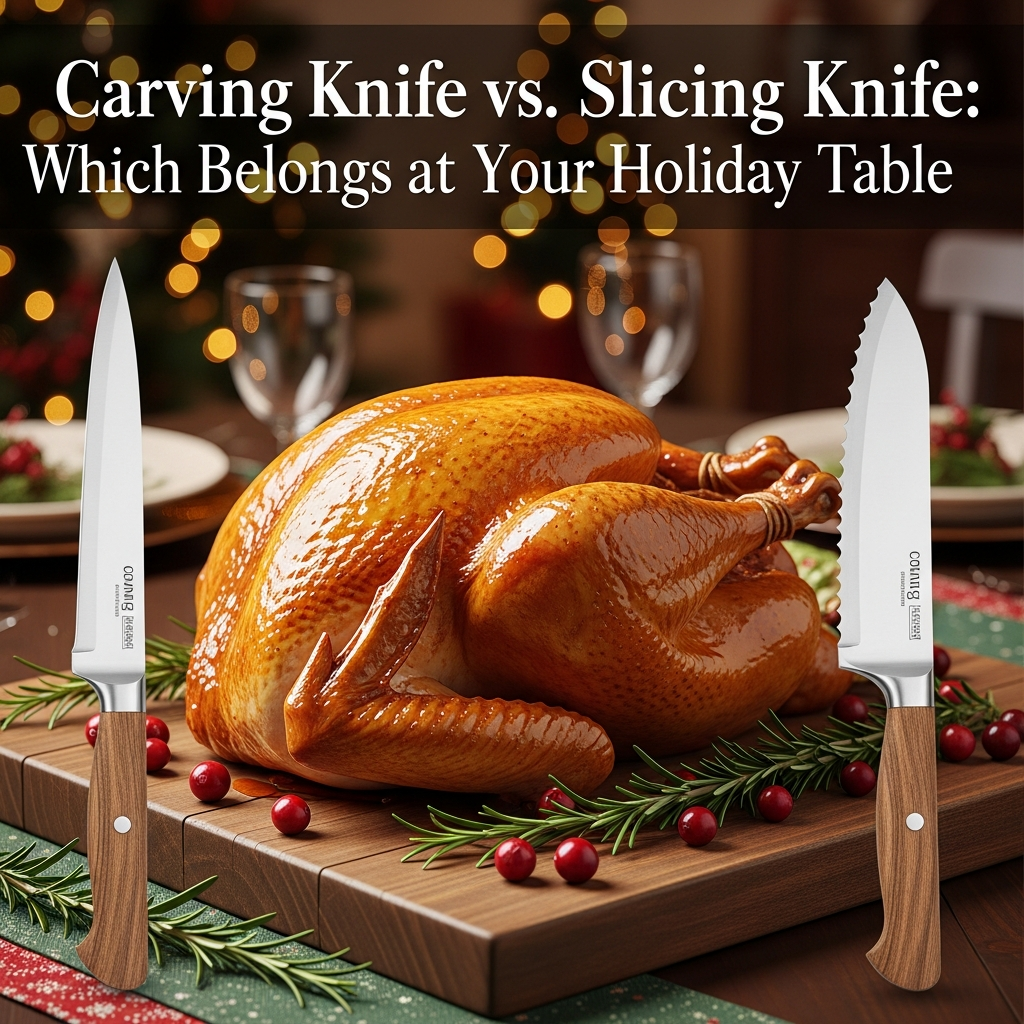
The turkey is roasted to perfection. The brisket has been smoking for 12 hours. The guests are seated. You reach for a knife to serve the masterpiece, but which one do you grab? A Carving Knife or a Slicing Knife?
While often used interchangeably in casual conversation, these two blades serve distinct purposes in the culinary world. Using the wrong one can turn a beautiful roast into a ragged mess. If you are browsing knifeindex.com/ looking to upgrade your Sunday roast game, this guide is for you.
In this comprehensive comparison, we will dissect the anatomy, flexibility, and ideal uses for each. Whether you are a fan of German precision (like Wusthof vs. Victorinox) or Japanese elegance (Shun vs. Wusthof), understanding this difference is the key to perfect presentation.
1. Definitions: What Are We Cutting?
The Carving Knife
The Carving knife is designed for structure. It is typically 8 to 10 inches long with a rigid (stiff) blade that tapers to a sharp point. Its primary job is to work around bones and joints. Think of a Thanksgiving turkey or a leg of lamb. You need a blade that won’t bend when you hit cartilage.
The Slicing Knife
The Slicing knife is designed for distance. It is usually longer (10 to 14 inches) with a long, parallel blade that often has a rounded tip (bullnose). It is thinner and more flexible. Its job is to cut thin, uniform slices of boneless meat, like ham, brisket, or salmon, in one single stroke.
Video Demonstration
Watching these knives in action clarifies the difference immediately. Check out this demonstration on how to use them effectively.
2. Head-to-Head: The Specs Breakdown
| Feature | Carving Knife | Slicing Knife |
|---|---|---|
| Blade Length | 8″ – 10″ | 10″ – 14″ |
| Flexibility | Stiff / Rigid | Flexible to Semi-Flexible |
| Tip Shape | Pointed (for joints) | Rounded (Bullnose) |
| Primary Target | Poultry, Bone-in Roasts | Ham, Brisket, Salmon, Cakes |
| Edge Type | Straight | Straight or Granton (Dimpled) |
3. The Carving Knife: The Joint Specialist
Because carving often involves navigating around a carcass (like a chicken or turkey), the Carving Knife shares some DNA with a Boning Knife, but it is much longer. The pointed tip allows you to get into the joint to separate the leg from the body.
Best For:
- Whole Turkey or Chicken
- Leg of Lamb (Bone-in)
- Prime Rib (Bone-in)
4. The Slicing Knife: The Brisket King
The Slicing knife is all about the “draw.” You want to slice the meat in one long, backward motion without sawing. Sawing creates jagged edges and squeezes out juices. The extra length (up to 14 inches) facilitates this.
Many slicing knives feature a Granton Edge (hollow oval divots). This creates air pockets to prevent the meat from sticking to the blade, ensuring the slice falls away cleanly. (This is similar to the edge found on a Santoku).
Best For:
- Smoked Brisket
- Christmas Ham
- Smoked Salmon (requires a flexible slicer)
- Large Cakes (leveling layers)
5. Top Product Recommendations
We have analyzed the best chef knife brands to bring you the champions of the roast.
 Wüsthof Classic Ikon 9″ Carving Knife
The ultimate tool for Thanksgiving. The stiff blade and pointed tip make disjointing a turkey effortless. Precision forged for perfect balance. See Wusthof vs Victorinox for more.
Check Price on Amazon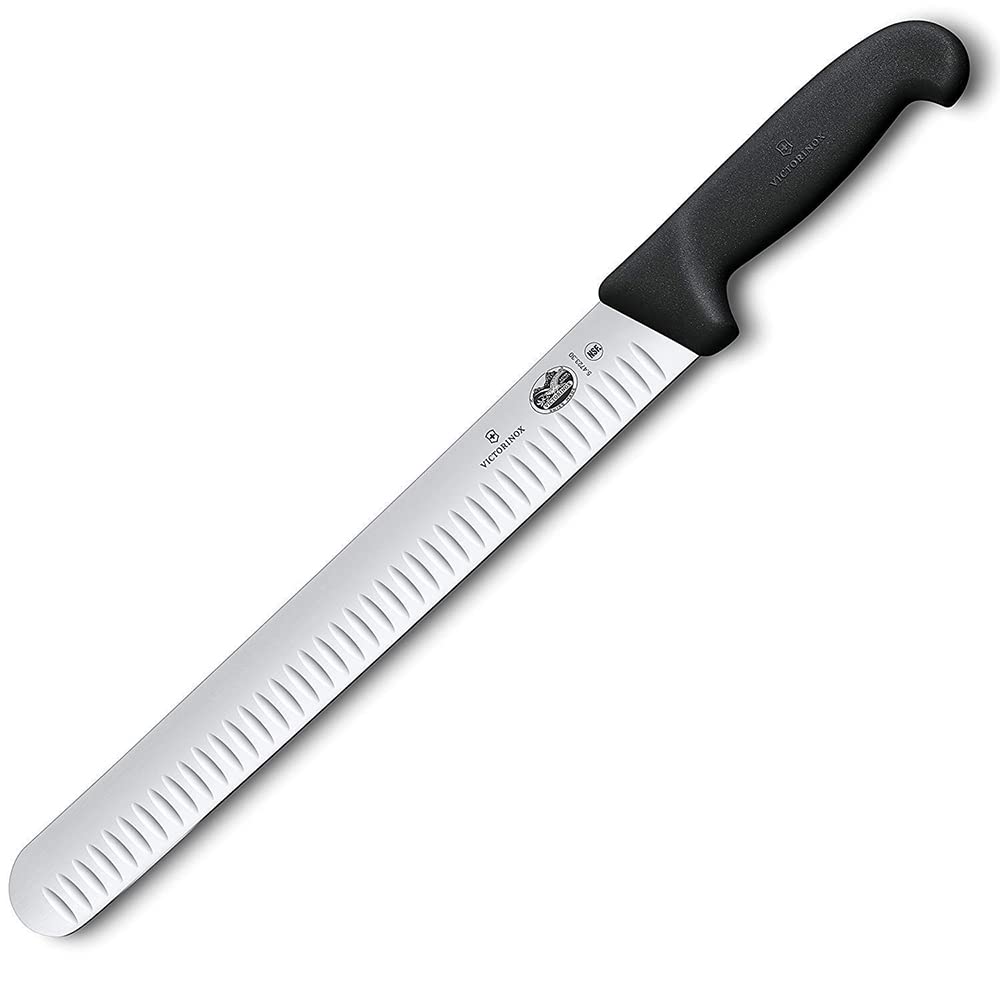 Victorinox Fibrox Pro 12″ Slicer
The Pitmaster’s favorite. Long, flexible, and featuring a Granton edge. It slices brisket like butter. Unbeatable value. Read our Victorinox reviews.
Check Price on Amazon6. Brand Comparisons: Who Makes the Best?
Wüsthof & Zwilling (The German Classics)
Both brands offer excellent Carving sets (often sold with a fork). Their knives are rigid and durable.
Zwilling: Their Pro line features a unique curved bolster for grip. (See Zwilling vs Henkel).
Wusthof: The Classic Ikon is a favorite for its ergonomic handle.
Shun & Miyabi (The Japanese Precision)
Japanese slicers (Sujihiki) are harder and sharper.
Shun: Offers beautiful Damascus slicers that look stunning at a dinner party. (See Shun vs Wusthof).
Miyabi: Their Birchwood slicer is a work of art, but brittle. Be careful around bones! (See Miyabi vs Shun).
Dalstrong & Mercer (The Value/Flash)
Dalstrong: Their “Shogun” slicers are massive and impressive looking. Great for BBQ presentation. (See Dalstrong vs Wusthof).
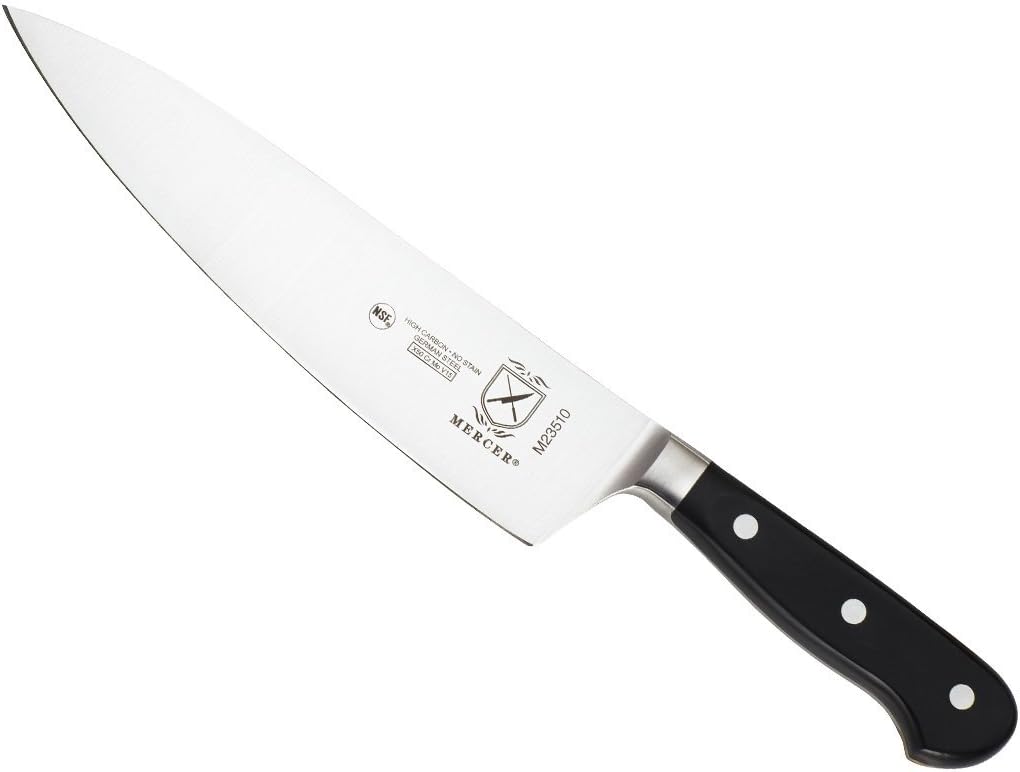
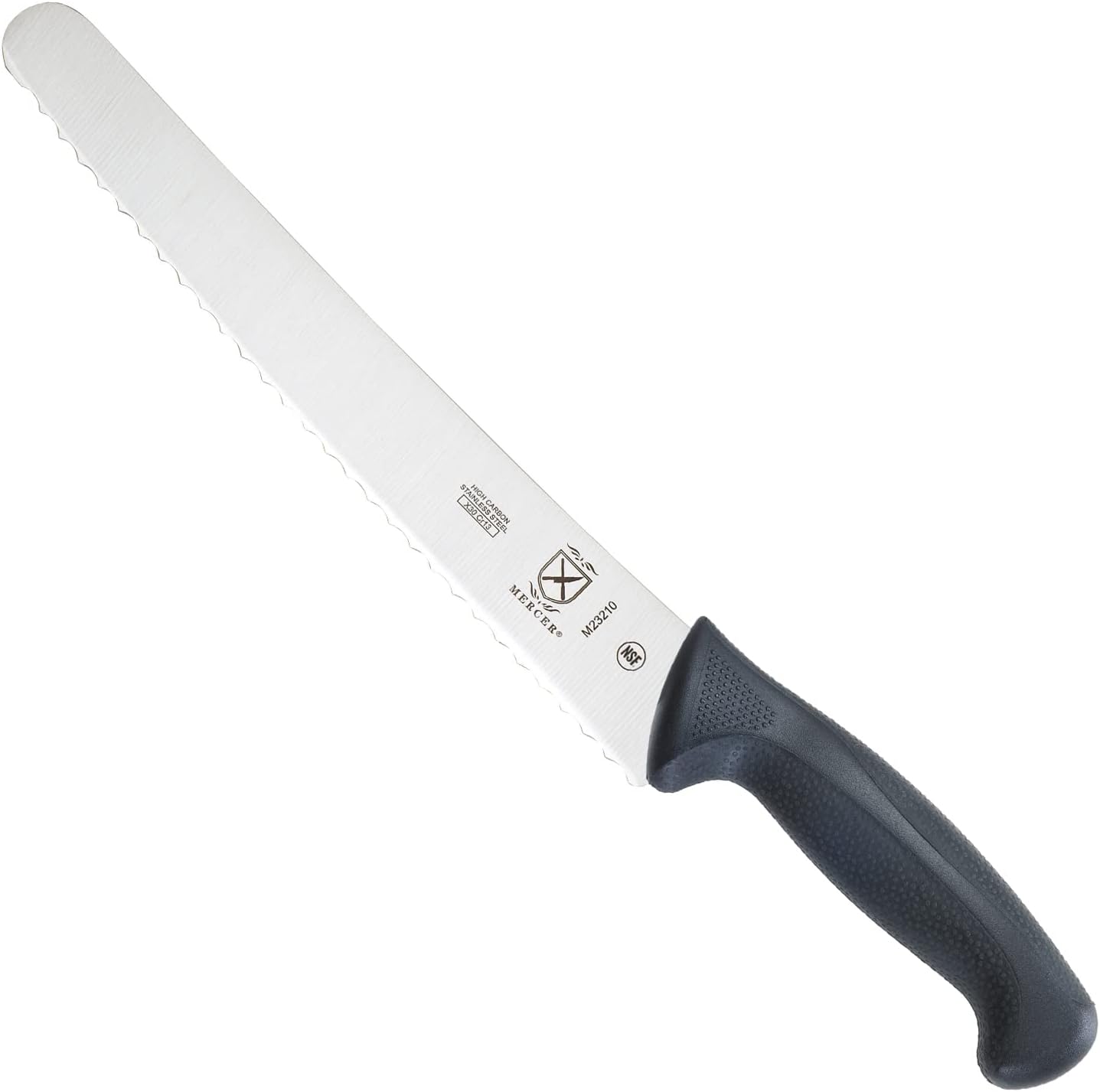
Mercer: The Millennia slicer is the budget king, often found in culinary schools. (See Mercer vs Wusthof).
7. Maintenance: Keep the Edge Razor Sharp
A dull carving knife tears meat. Keep it sharp.
- Sharpening: Slicing knives are long. Ensure your whetstone or electric sharpener can handle the length.
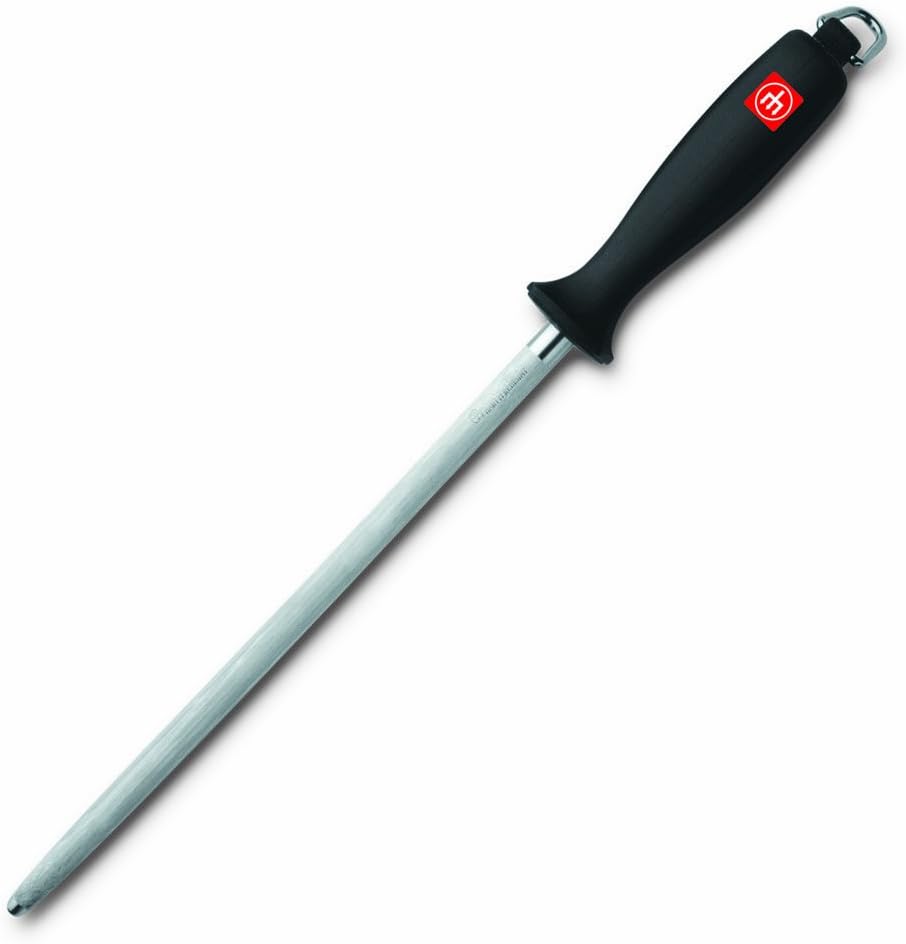
- Honing: Hone before every roast.
- Storage: These knives are too long for standard blocks. Use a drawer organizer or a knife bag. Never throw them loose in a drawer.
- Rust: High carbon slicers need to be dried instantly. Learn how to remove rust.
8. What About Other Knives?
Don’t use a slicer for everything.
Need to chop veggies? Use a Santoku or Nakiri.
Need to slice crusty bread? Use a bread knife (serrated).
Need to peel? Use a paring knife.
Eating the steak? Use steak knives.
Frequently Asked Questions (FAQ)
Yes, but it isn’t ideal. A Chef’s knife is shorter and thicker. It creates more friction (drag) when slicing through large roasts, and the blade height can get stuck in the meat. A slicer is more efficient.
A Sujihiki is the Japanese equivalent of a Slicing knife. It is double-beveled and typically made of harder steel than Western slicers. It is excellent for both sushi and roast beef. Brands like Tojiro and Shun make great ones.
Generally, no. A straight edge produces a cleaner cut on meat, keeping the juices inside. Serrated slicers (like bread knives) tear the fibers of the meat. Only use serrated if the meat has a very hard crust.
9. Blade Steel Explained: Why Metal Choice Changes Everything
Most shoppers focus on length and flexibility, but the steel behind the edge is arguably the bigger keyword gap in this conversation, and it changes how a carving or slicing knife actually performs at the table. Steel dictates edge retention, how the blade reacts to bone contact, and how much upkeep you are signing up for.
German Stainless Steel (X50CrMoV15 and similar)
Wüsthof, Zwilling, and Victorinox typically use softer, tougher stainless alloys in the 56-58 HRC range. This is a deliberate choice for carving knives: a slightly softer edge flexes microscopically instead of chipping when it grazes a turkey wishbone or a lamb joint. The tradeoff is that these blades dull faster than harder Japanese steels and need more frequent honing, but they are far more forgiving for a once-a-year holiday carver who is not obsessing over blade care.
Japanese High-Carbon Stainless (VG-10, AUS-10, SG2/R2)
Shun and Miyabi slicers lean on harder Japanese steels, often 60-63 HRC. This is why a Sujihiki-style slicer feels like it glides through a brisket with almost no resistance; the thinner, harder edge holds a finer angle longer. The catch is brittleness. A hard Japanese slicer should never be used to pry a bone loose or chop through cartilage, since a chip in a 61 HRC edge is far more likely than in a 56 HRC German blade. If your carving routine regularly includes bone-in poultry, pair a German carving knife for the joints with a Japanese slicer reserved strictly for the boneless portions.
Carbon Steel (Non-Stainless)
A shrinking niche, but some traditional slicers (and many vintage carving sets found at estate sales) use plain high-carbon steel without chromium. These sharpen to an aggressive edge and are beloved by old-school pitmasters for brisket, but they will rust within minutes if left wet on a cutting board. If you inherit or buy one of these, drying it immediately after every cut is non-negotiable, and a light coat of mineral oil before storage prevents the patina from turning into pitting.
Steel Cheat Sheet
Softer steel (German stainless) = tougher, more forgiving, needs honing more often, ideal for carving around bone. Harder steel (Japanese stainless) = sharper for longer, thinner slices, more prone to chipping, ideal for boneless slicing. Carbon steel = sharpest of all, but demands religious drying and oiling.
10. Handle Materials and Ergonomics: The Overlooked Comfort Factor
A carving session at a holiday dinner can last 10-15 minutes of continuous cutting in front of an audience, which is longer than almost any other kitchen task performed in one sitting. Handle comfort matters more here than on a paring knife you use for five seconds at a time.
Polymer and Fibrox Handles
Victorinox’s Fibrox handle is textured, lightweight, and grippy even when wet from basting juices. It is the choice most professional carvers and culinary school instructors reach for precisely because it will not slip mid-slice, even without a towel to dry your hands first.
POM and Synthetic Ergonomic Handles
Wüsthof’s Classic Ikon and Zwilling’s Pro line use contoured POM (polyoxymethylene) handles shaped to cradle the fingers. These add a small learning curve since the finger grooves are sized for an average hand, but they reduce fatigue significantly during long carving sessions and provide excellent control when navigating around a turkey carcass.
Pakkawood and Traditional Wood Handles
Many Japanese Sujihiki-style slicers and traditional carving sets use pakkawood, a resin-stabilized wood laminate. It looks striking on a dinner table (a real factor if you are carving in front of guests) but it is generally smoother and offers less mechanical grip than a textured polymer handle, so a firm, dry grip technique becomes more important.
Left-Handed Considerations
Most carving and slicing knives are technically ambidextrous since the blade grind is usually a flat, symmetrical edge rather than the single-bevel grind found on true Japanese Sujihiki knives. However, left-handed carvers should pay attention to bolster shape; some German designs (particularly Zwilling’s curved bolster) are subtly optimized for a right-handed pinch grip. If you carve left-handed, a straight, symmetrical bolster like the one on the Victorinox Fibrox slicer tends to feel more neutral in the hand.
11. Weight and Balance: Why It Affects Slice Quality
Balance point is a keyword gap almost no comparison article covers, yet it directly affects how clean your slices come out. A carving knife that is blade-heavy will want to “dive” into the meat, which is useful for the initial cut through a turkey breast but can be tiring over a full bird. A slicing knife that is well-balanced near the bolster allows the long blade to glide in a smooth draw motion without the tip dipping or wobbling, which is exactly what produces those thin, even slices instead of a jagged, uneven cut.
As a rule of thumb: heavier, blade-forward carving knives (common in German forged designs) suit bone-in work where you want the weight to help you through cartilage. Lighter, handle-balanced slicing knives (common in Japanese stamped and semi-stamped designs) suit the long, controlled draw strokes needed for brisket, ham, and salmon.
12. Step-by-Step: How to Carve a Whole Turkey
- Rest the bird. Let the turkey rest 20-30 minutes after roasting so the juices redistribute before you cut.
- Remove the legs first. Using the pointed tip of your carving knife, cut through the skin between the thigh and the body, then pop the joint by gently pulling the leg outward and slicing through the connective tissue you expose.
- Separate the thigh from the drumstick. Find the joint line (you can usually see a thin seam of fat) and cut straight through it.
- Remove the breast in one piece. Cut along one side of the breastbone from top to bottom, keeping the blade angled against the ribcage, then lift the whole breast half away from the carcass.
- Slice the breast against the grain. Lay the breast on a cutting board and slice crosswise into half-inch pieces using a slicing knife for the cleanest, most even presentation.
- Repeat on the other side and arrange everything on a platter, spooning pan juices over the top.
13. Step-by-Step: How to Slice a Smoked Brisket
- Identify the grain direction. Brisket has two muscles (the point and the flat) running in different directions, so you will need to rotate the meat roughly 90 degrees partway through slicing.
- Rest the brisket for at least 30-45 minutes, tented loosely in foil, so the fat redistributes.
- Trim the fat cap if it is thicker than a quarter inch, using a shorter utility or boning knife rather than your long slicer.
- Slice the flat first, cutting against the grain in slices about the thickness of a pencil, using the full length of your slicing knife in a single smooth draw rather than sawing back and forth.
- Rotate to the point once you reach it, since the grain direction changes, and continue slicing against the new grain direction.
- Serve immediately since brisket slices dry out quickly once cut.
14. Step-by-Step: How to Carve a Bone-In Ham
- Stabilize the ham flat-side down on a cutting board so it does not roll while you cut.
- Cut a few slices from the thin side to create a flat, stable base, then flip the ham onto that flat surface.
- Slice down to the bone in parallel cuts about a quarter-inch apart using a long slicing knife, especially one with a Granton edge so the slices release cleanly.
- Run the knife horizontally along the bone to free the slices, using the carving knife’s pointed tip if the bone shape requires more precision.
- Repeat on the opposite side once the first side is fully sliced away.
15. Step-by-Step: How to Carve a Bone-In Prime Rib or Leg of Lamb
- Remove the bones first if you want the cleanest slices; run the tip of a carving knife along the rib bones to separate the rack from the eye of meat.
- Rest the roast for at least 15-20 minutes before cutting to avoid losing juices.
- Slice against the grain in slices between a third and half an inch thick, using slow, deliberate draw strokes rather than pressing straight down.
- For leg of lamb, carve at a slight diagonal angle following the natural shape of the muscle, working from the shank end toward the hip for the most tender slices.
16. Electric Carving Knives: Are They Worth It?
Electric carving knives use a reciprocating dual-blade motion to saw through meat with minimal hand fatigue, and they solve a real problem for anyone with wrist or grip strength limitations, or for carving very large cuts like a whole ham or a big turkey quickly for a large gathering. The tradeoff is presentation: an electric knife’s sawing motion tends to produce a slightly more textured, less glassy-smooth slice than a well-honed manual slicing knife pulled through in one draw stroke. For everyday holiday hosting where speed and ease matter more than magazine-cover presentation, an electric carving knife is a reasonable alternative. For a dinner where the visual of the slice matters (a catered-style ham or a competition brisket), a sharp manual slicer edges out the electric option every time.
17. Pairing Your Knife: Carving Forks and Cutting Boards
A carving knife is only half of the traditional set. A two-pronged carving fork stabilizes the meat and keeps your non-cutting hand safely out of the blade’s path, which matters more with a long slicing knife where your hand may otherwise creep closer to the tip as you run out of board space. Most premium carving knife sets are sold with a matching fork for exactly this reason.
Board choice matters too. A large, juice-groove cutting board gives a long slicer room to complete a full draw stroke without running off the edge, which is a common mistake home cooks make when they try to carve a turkey on a small prep board designed for chopping vegetables. Look for a board at least 18 inches long when pairing it with a 12-14 inch slicing knife.
18. Common Carving Mistakes to Avoid
- Sawing instead of drawing. Sawing a slicing knife back and forth tears the meat fibers and squeezes out juices; always pull the full length of the blade through in one smooth motion.
- Skipping the rest period. Cutting into a roast too soon after it comes off the heat causes juices to run out onto the board instead of staying in the meat.
- Cutting with the grain instead of against it. Slicing with the grain produces stringy, chewy pieces; always identify the direction of the muscle fibers and cut perpendicular to them.
- Using a dull blade. A dull edge crushes meat fibers rather than slicing cleanly through them, which is the single biggest cause of ragged, torn slices.
- Using the wrong knife for the job. Forcing a rigid carving knife through boneless brisket, or trying to use a flexible slicer to pry apart a joint, leads to poor results and unnecessary blade stress.
19. Buying Guide by Budget
Budget Tier (Under $40)
The Mercer Millennia slicer is the standard recommendation here; it is what many culinary schools issue to students, and it holds a workable edge for the price. Expect polymer handles and stamped (not forged) blades at this tier.
Mid-Range Tier ($40-$100)
The Victorinox Fibrox Pro slicer sits comfortably in this range and remains the value benchmark that professional kitchens actually use daily, not just recommend for beginners. A Wüsthof Gourmet or Zwilling Twin Signature carving knife also lands in this bracket.
Premium Tier ($100-$200+)
The Wüsthof Classic Ikon and Zwilling Pro lines represent forged German craftsmanship with ergonomic handles built to last decades. On the Japanese side, entry-level Shun Classic slicers enter this range and deliver noticeably sharper factory edges.
Luxury Tier ($200+)
Miyabi Birchwood and higher-end Shun Damascus slicers fall here, prized as much for their visual craftsmanship as their cutting performance, plus premium Dalstrong Shogun series pieces for those who want a dramatic, oversized presentation blade for BBQ events.
20. Gift Guide: Carving Sets for Special Occasions
Carving and slicing knives are a popular wedding, housewarming, and retirement gift, especially as boxed sets that include a matching fork and a wooden presentation case. When choosing a gift set, matching the knife to the recipient’s typical cooking style matters more than brand prestige: a family that roasts a turkey every Thanksgiving will get more use from a German carving knife and fork set, while a dedicated home barbecue enthusiast will appreciate a long, flexible slicer better suited to brisket. Engraved handles and personalized presentation boxes are widely available from most major brands and make the gift feel occasion-specific rather than purely functional.
21. Storage and Long-Term Care Deep Dive
Because carving and slicing knives are longer than almost anything else in a standard block, storage deserves its own section beyond the basics already covered above. A blade edge that repeatedly rubs against other knives in a drawer will dull far faster than one stored properly. In-drawer knife trays with individual slots protect the edge and prevent the classic problem of a 12-14 inch slicer simply not fitting in a standard block at all. For anyone who only carves a few times a year, a padded knife roll or bag stored in a closet is often more practical than dedicating permanent counter space to a knife you use four times annually.
Between uses, a light film of food-safe mineral oil on carbon or high-carbon stainless blades prevents oxidation, particularly in humid kitchens. Stainless German blades are more forgiving here but still benefit from being hand-dried immediately rather than left to air-dry in a rack, where trapped moisture around the bolster can eventually lead to spotting.
22. Choosing the Right Size for Your Roast
| Roast Type | Recommended Knife | Ideal Blade Length |
|---|---|---|
| Whole Turkey / Chicken | Carving Knife | 8″ – 9″ |
| Leg of Lamb / Prime Rib | Carving Knife | 9″ – 10″ |
| Bone-In Ham | Slicing Knife (Granton Edge) | 10″ – 12″ |
| Smoked Brisket | Slicing Knife | 12″ – 14″ |
| Smoked Salmon | Flexible Slicing Knife | 10″ – 12″ |
As a general rule, the blade should be a few inches longer than the widest point of whatever you are cutting, so you can complete a slice in one continuous draw stroke without having to saw back and forth partway through.
23. A Brief History of the Carving Knife
Carving as a formal skill dates back centuries, when the head of a household or a trained “carver” servant was responsible for portioning meat at the table as a display of hospitality and status. Long, narrow blades designed specifically for slicing roasted meat appear in European cutlery catalogs as early as the 18th century, often sold as matched sets with a two-tined fork whose job was to hold the roast steady without a carver needing to grip the hot meat directly. The distinction between a stiffer carving blade for poultry and game versus a longer, more flexible slicer for ham emerged as a practical response to the different textures of roasted versus cured meats, and that same split has carried through essentially unchanged into the modern lineup from German and Japanese manufacturers today.
The Japanese Sujihiki, by contrast, developed along a separate lineage rooted in traditional single-bevel Japanese blade-smithing, originally intended for slicing raw fish and only later adapted by Western cooks as a general-purpose slicing knife for roasts. Understanding this dual history explains why the two traditions still diverge in bevel geometry, hardness, and handle style even though they solve the same basic problem.
24. Single-Bevel vs. Double-Bevel Slicers
Most Western-style slicing knives, including the Victorinox and Wüsthof models featured above, use a double-bevel edge ground evenly on both sides, which is symmetrical and works equally well whether you are right- or left-handed. Traditional Japanese Sujihiki knives, however, are often ground with a single bevel (sometimes called a “true” Sujihiki), meaning one side of the blade is flat and the other carries the entire edge angle. This produces an exceptionally thin, precise slice ideal for delicate proteins like raw fish, but it requires the user to account for the blade’s natural tendency to veer slightly to one side during a cut, and single-bevel knives are typically made specifically for right-handed or left-handed use, unlike their double-bevel counterparts. For most home cooks carving a holiday roast, a double-bevel slicer is the more practical, forgiving choice; a single-bevel Sujihiki is better suited to cooks who have already developed the technique to control that natural drift.
25. Dishwasher Safety and Everyday Cleaning
None of the knives discussed in this guide should go in the dishwasher, regardless of what the manufacturer’s marketing implies about “dishwasher-safe” stainless construction. Prolonged heat, moisture, and detergent exposure can dull the edge, cause micro-corrosion at the bolster where the blade meets the handle, and in the case of wood or pakkawood handles, lead to cracking or warping over repeated cycles. The correct routine is simple: hand-wash with warm water and mild soap immediately after use, dry thoroughly with a towel before the blade air-dries on its own, and store it separately from other utensils rather than tossed into a communal drying rack where the edge can knock against other flatware.
26. Professional Tips from Working Carvers
- Warm the blade slightly before cutting into a very cold or refrigerated ham; some catering carvers run the blade briefly under warm water and dry it, which can help the edge glide through cold fat more cleanly.
- Wipe the blade between cuts on a damp towel if you notice fat or connective tissue building up on the edge, since residue on the blade increases friction and drag on subsequent slices.
- Angle the blade slightly rather than cutting perfectly perpendicular to the cutting board; a slight bias angle, especially on brisket and salmon, produces wider, more visually appealing slices from the same thickness of cut.
- Keep your non-cutting hand low and flat on top of the meat using a claw grip, moving it backward in sync with each slice rather than holding a fixed position, which is a technique borrowed directly from professional kitchen knife safety training.
- Re-hone between roasts, not just before the season starts; a few passes on a honing steel immediately before carving realigns any micro-rolled edge from storage or transport.
27. Safety Considerations When Carving
Long slicing knives carry a higher risk profile than shorter kitchen knives simply because of blade length and the tendency to lose focus during a long carving session in front of guests. A stable, non-slip cutting board is essential; a board that shifts mid-cut is one of the most common causes of carving injuries. Always cut on a flat, secure surface, keep your fingers curled under and away from the blade path when steadying the meat, and never attempt to catch a falling knife. Because slicing knives are thin and flexible by design, applying excessive downward force to “push” through resistance is both ineffective and dangerous; if the blade is not moving smoothly through the meat, the correct response is to stop and re-hone or sharpen the edge rather than force the cut.
28. Restaurant and Catering Use: What Professionals Actually Buy
Commercial kitchens and catering operations tend to standardize on Victorinox Fibrox slicers and carving knives specifically because of their combination of low cost, NSF-certified handles, and consistent factory edge quality, which matters when a kitchen may be replacing or restocking knives regularly. Higher-end restaurants doing tableside carving service (a classic steakhouse presentation, for example) often invest in a forged German carving set purely for the visual presentation in front of diners, even though the practical cutting performance difference over a well-maintained Fibrox blade is minor. This is a useful data point for home cooks: the knife professional kitchens actually reach for day to day is rarely the most expensive option on the market, and matching your purchase to how often you actually carve is more important than chasing a premium brand name.
29. Glossary of Carving and Slicing Knife Terms
- Bolster: The thick junction between the blade and handle, which affects balance and provides a safety guard for the fingers.
- Granton Edge: Oval divots ground into the sides of a blade to reduce friction and prevent food from sticking during a cut.
- Bullnose Tip: A rounded, blunt blade tip common on slicing knives, designed for safety and control during long draw strokes rather than piercing.
- Sujihiki: The Japanese-style slicing knife, traditionally single-beveled, used for both fish and roasted meat.
- HRC (Rockwell Hardness): A numeric scale measuring blade steel hardness; higher numbers indicate a harder, more edge-retentive but more brittle blade.
- Full Tang: Construction where the blade’s steel extends the full length of the handle, generally associated with better balance and durability in carving knives.
- Draw Cut: The primary slicing technique for these knives, pulling the blade backward through the meat in one continuous stroke rather than pressing straight down.
30. Extended FAQ: More Reader Questions Answered
If your cooking regularly spans both bone-in roasts and boneless cuts, yes; the stiffness needed to navigate a turkey joint is the opposite of what makes a slicer glide cleanly through brisket or ham. If you only ever cook one type of roast, a single well-chosen knife suited to that specific task is perfectly adequate.
A 9-inch carving knife and a 10 to 12-inch slicing knife cover the vast majority of home cooking scenarios without becoming unwieldy for someone still building carving confidence.
Not effectively. Slicing knives have a smooth or Granton straight edge meant for soft, boneless meat, while bread requires a serrated edge to bite through a hard crust without crushing the soft interior.
Honing (realigning the edge with a honing steel) should happen before every carving session. Actual sharpening (removing metal to create a new edge) is typically needed only every few months for a knife used occasionally, or roughly every few weeks for a knife in near-daily use.
Lighter, well-balanced knives are generally easier for beginners to control, since a heavy blade-forward knife can feel unpredictable until you have developed a feel for guiding it through joints and cartilage.
31. Carving Traditions Around the World
The formal Sunday roast tradition in Britain kept the carving knife and fork as a fixture of the dining table long after most other specialty knives fell out of everyday household use, and it remains common in the UK for a carving set to be a standard wedding registry item independent of any broader cutlery purchase. In France, the tradition leans more toward boneless roasts and pâtés, which explains why French kitchen supply catalogs tend to favor longer, thinner slicing blades over the shorter, stiffer carving knife style more associated with German and British poultry carving. In the American South, the rise of barbecue culture turned the long slicing knife into an essential pitmaster tool independent of any holiday occasion, used several times a week rather than a few times a year, which is part of why brands like Dalstrong market oversized “Shogun” slicers specifically toward that audience rather than the traditional holiday host. Recognizing which tradition your own cooking style falls into can help clarify which knife deserves the bigger investment in your kitchen.
32. Comparing Warranties and After-Sales Support by Brand
| Brand | Typical Warranty | Resharpening Support |
|---|---|---|
| Wüsthof | Limited lifetime against defects | Factory resharpening program available |
| Zwilling | Limited lifetime against defects | Factory resharpening program available |
| Victorinox | Limited lifetime against defects | No factory resharpening, easy to self-sharpen |
| Shun | Limited lifetime against defects | Complimentary factory sharpening (shipping fees may apply) |
| Mercer | Limited warranty, shorter coverage window | No factory program; budget-friendly to self-sharpen |
A lifetime warranty against manufacturing defects is standard across nearly every reputable brand covered in this guide, but it is worth noting that these warranties almost universally exclude normal wear, edge dulling, chipping from bone contact, or rust from improper drying, since those outcomes fall under user care rather than a manufacturing flaw. Choosing a brand with an active factory resharpening program can meaningfully extend the useful life of a premium slicer if you carve frequently enough to wear down the edge geometry over several years.
33. Sustainability and Materials Sourcing
Buyers increasingly ask about the environmental footprint of their kitchen tools, and carving knives are no exception. German manufacturers like Wüsthof and Zwilling have long operated forges in Solingen with established environmental compliance standards, while Japanese brands such as Shun and Miyabi typically publish information about the specific steel mills supplying their blade stock, appealing to buyers who want traceability. Handle materials matter here too: pakkawood is a composite of real wood fibers and resin, which uses less old-growth timber per handle than a solid wood handle of equivalent durability, while polymer handles like Fibrox are typically petroleum-based but last for decades without needing replacement, which is its own form of long-term sustainability through durability rather than renewable material sourcing.
34. Choosing a Carving Knife as a Gift for a Home Chef
Beyond the general gift guide covered earlier, it is worth calling out what actually makes a carving or slicing knife a memorable, well-used gift rather than one that sits in a drawer. Ask, or observe, what the recipient already cooks most often: someone who hosts holiday dinners every year gets more genuine use from a matched carving knife and fork presentation set, ideally with an engraved handle or a wooden gift box, while someone who smokes meat as a hobby will appreciate a long, Granton-edge slicer more suited to brisket and pulled cuts. Avoiding decision fatigue matters too; rather than presenting an overwhelming range of options, most recipients respond best to a single, well-chosen knife matched confidently to their specific cooking habits rather than a generic “chef’s choice” bundle.
35. Quick-Reference Decision Checklist
- Cooking mostly bone-in poultry or roasts? Choose a stiff, pointed carving knife in the 8-10 inch range.
- Cooking mostly boneless cuts like ham, brisket, or salmon? Choose a longer, more flexible slicing knife, ideally with a Granton edge.
- Carving only a few times a year? Prioritize a forgiving German stainless blade that tolerates infrequent honing.
- Carving weekly or as a barbecue hobby? Consider investing in a harder Japanese steel slicer for superior edge retention between uses.
- Limited storage space? Look at drawer trays or knife rolls rather than trying to fit a 12-14 inch blade into a standard block.
- Buying as a gift? Match the knife type to the recipient’s actual cooking habits rather than defaulting to the most expensive set available.
36. Sujihiki Deep Dive: The Japanese Alternative Explained Further
Because the Sujihiki keeps coming up throughout this comparison, it deserves a closer look on its own terms rather than only as a footnote to Western slicing knives. A true Sujihiki is narrower in blade height than a Western slicer, typically measuring under an inch and a half from spine to edge, which reduces drag as the blade passes through the meat and is part of why these knives feel so effortless on a well-trimmed roast. The name itself translates roughly to “flesh puller,” a direct reference to the draw-cutting technique the knife was designed around from the outset. While originally intended for slicing raw fish for sashimi presentations, the same thin, hard, draw-oriented geometry translates naturally to roast beef, ham, and other boneless proteins, which is why Japanese cutlery brands market their Sujihiki lines heavily toward Western carving and slicing use rather than only to sushi chefs. A cook comfortable maintaining a harder Japanese edge, and who exclusively works with boneless cuts, will often find a quality Sujihiki outperforms even a premium German slicer in raw slicing precision, at the cost of the added care a harder, thinner blade demands.
37. How Blade Flexibility Is Actually Measured and Why It Matters
Flexibility in a slicing knife is not a marketing abstraction; it comes down to a combination of blade thickness (often under 2mm near the spine on true slicers) and steel temper. A flexible slicer will visibly bow when you press the tip against a cutting board and apply moderate pressure, and that bow is what allows the knife to hug the contour of a curved ham or a rounded salmon fillet rather than cutting a flat, unnatural line straight through the meat. Rigid carving knives, by contrast, are intentionally tempered and ground thicker specifically so they hold a straight line under pressure, which is exactly the property you want when working near a bone that could otherwise deflect a thinner blade off course. When shopping, a quick way to gauge flexibility from product photos or in-store handling is to look at how thin the blade appears in profile; a slicer that looks almost paper-thin near the tip is built for flex, while a carving knife with a visibly thicker spine is built for rigidity.
38. Seasonal Buying Patterns and When to Shop
Demand for carving knives spikes predictably in the weeks leading up to major holiday roasting occasions, and retailers often run their steepest discounts either well before that rush or immediately after, once the seasonal demand has passed. Buying a carving set in the off-season, rather than the week before a major holiday, typically means better pricing and a wider in-stock selection, since popular models can sell out of specific sizes during peak weeks. For anyone planning to host a major holiday meal for the first time, sourcing the knife at least a few weeks in advance also leaves time to practice basic carving technique on a smaller weeknight roast chicken before performing in front of a full table of guests.
39. Matching Knife Choice to Cooking Method
The cooking method behind a roast changes how it behaves under the blade almost as much as whether it is bone-in or boneless. A slow-smoked brisket develops a firm bark on the outside and a tender interior, which favors a longer slicer that can pass through both textures in a single stroke without dragging. A traditionally oven-roasted turkey develops crisp skin that a stiffer carving knife handles more predictably, since a very thin, flexible blade can sometimes tear delicate crackled skin rather than slicing through it cleanly. A poached or braised ham, softer than a smoked one, benefits from the thinnest, most flexible slicer available, since minimal resistance is needed and a stiffer blade risks compressing the tender meat instead of gliding through it. Thinking through the specific cooking method, not just the protein type, is a subtle but genuinely useful refinement to the buying decision covered throughout this guide.
40. Final Thoughts on Building a Complete Carving Toolkit
Most serious home cooks eventually end up owning both a carving knife and a slicing knife rather than choosing one over the other permanently, simply because holiday and everyday cooking naturally spans both bone-in and boneless proteins over the course of a year. Building the toolkit gradually, starting with whichever knife matches your most frequent cooking style and adding the second only once you find yourself reaching for the wrong tool out of necessity, tends to be a more satisfying and cost-effective path than buying a full matched set all at once before you know how often you will actually use each piece.
Conclusion: The Verdict
The choice between a Carving Knife vs. Slicing Knife depends on your menu.
Choose a Carving Knife If: You cook a lot of poultry (turkey, chicken) or bone-in roasts (lamb, prime rib). You need the stiffness and the pointed tip to navigate joints.
Choose a Slicing Knife If: You are a BBQ enthusiast doing briskets, you bake large hams, or you serve boneless roasts. The length and flexibility will give you those perfect, Instagram-worthy slices.
Whichever you choose, remember that presentation is flavor. A clean slice tastes better. Check out our knife set reviews to see if you can get both in a bundle!