Difference Between Stamped and Forged Knives: The Ultimate Guide to Kitchen Steel
When you start your journey into high-quality cutlery—perhaps browsing knifeindex.com for your first serious chef’s knife—you hit a fork in the road immediately. On one side, you have heavy, substantial blades with thick bolsters. On the other, lighter, thinner blades that seem effortless to lift.
This is the great debate: Stamped vs. Forged Knives.
For decades, the culinary world held a snobbish view: Forged was “pro,” and stamped was “cheap.” But technology has changed. Today, the lines are blurred. Is a heavy Wusthof better than a nimble Victorinox? Does the manufacturing process actually affect how you slice a tomato or carve a roast?
In this comprehensive guide, we will break down the metallurgy, the mechanics, and the myths. Whether you are debating Wusthof vs. Victorinox or looking for the best budget chef knife, understanding this fundamental difference is the key to buying the right tool.
This is also one of those topics where the internet is full of half-truths repeated so often they’ve calcified into “common knowledge.” Somewhere along the way, “forged” became a stand-in for “good” and “stamped” became a stand-in for “cheap,” and neither of those shortcuts has been true for a long time. Below, we’re going to slow down and actually look at what happens to steel during each process, what that means for the knife you hold in your hand, and — just as importantly — what it does not mean. By the end of this guide you should be able to walk into a kitchen store, pick up any knife on the shelf, and know within seconds which category it belongs to and whether that matters for how you actually cook.
1. What is a Forged Knife? The Heavyweight Contender
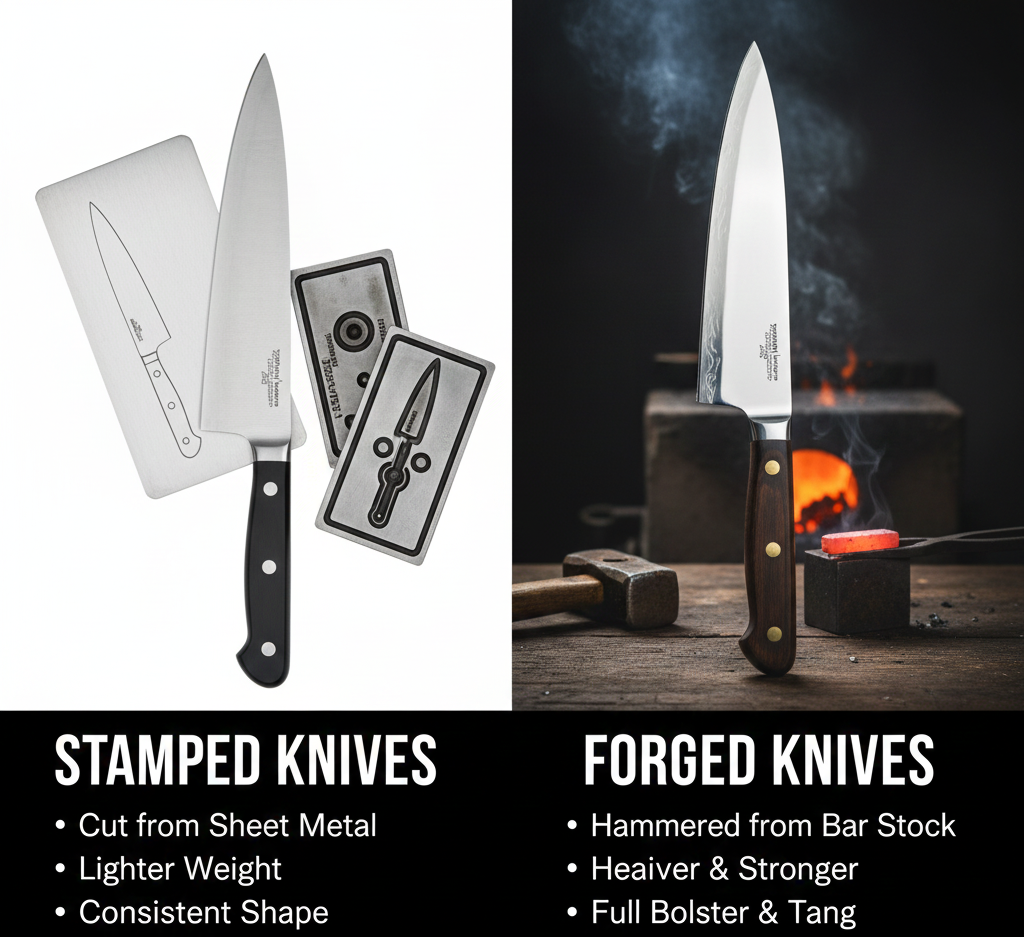
Close your eyes and picture a classic chef’s knife. You are likely picturing a forged blade. Forging is the traditional method of knife making, dating back centuries to blacksmiths hammering hot steel on anvils.
The Process
Modern forged knives are made using a technique called “hot drop forging.” A single bar of high-carbon steel is heated to extreme temperatures and then pounded into shape by a massive mechanical hammer. The steel is then tempered, ground, and honed.
Key Characteristics
- The Bolster: This is the dead giveaway. Forged knives usually have a thick band of steel between the blade and the handle. This adds weight and protects your fingers.
- Full Tang: The steel usually runs from the tip of the blade all the way to the butt of the handle, visible in the handle scales.
- Weight and Balance: These knives feel substantial. They have a forward-weighted balance that helps the knife “fall” through food.
Classic examples of this style can be found in our reviews of the best German kitchen knives, such as Wusthof Classic or Zwilling Pro.
External Insight
For a technical breakdown of the heating process, The Spruce Eats offers a great summary: What Is a Forged Knife? What Is a Stamped Knife?
A Closer Look at Hot Drop Forging, Step by Step
It’s worth slowing down on the actual mechanics here, because “forging” gets used as a marketing word almost as often as it gets used as an engineering term. In a real hot-drop-forging operation, a machine called a billet cutter first slices a length of steel bar stock into individual blanks, each one roughly the size and shape needed to become a single knife. That blank is heated in an induction furnace or gas-fired oven until it glows orange, typically somewhere in the neighborhood of 1,900–2,100°F, well above the steel’s critical temperature where its internal crystal structure becomes workable.
The glowing blank is then placed into a die — essentially a metal mold carved with the negative shape of the knife — and a drop hammer or hydraulic press slams down on it with tremendous force, sometimes several thousand pounds per square inch. In a single strike, or a short series of strikes, the steel is squeezed into the rough silhouette of a blade, bolster, and the beginning of a tang. This is fundamentally different from carving or grinding, because the metal is being displaced rather than removed. The grain structure of the steel actually flows and compresses along the contours of the die, which is part of why forged steel can end up with slightly different mechanical properties at the microscopic level compared to steel that was simply cut from a flat sheet.
After the initial strike, the rough-forged blank — sometimes called a “forging” in industry parlance — goes through a series of secondary operations: trimming the flash (the thin excess steel squeezed out at the die’s parting line), annealing to soften the steel so it can be machined, rough grinding to establish the bevel and profile, heat treatment (hardening and tempering) to bring the blade to its final working hardness, and then finish grinding, polishing, and handle attachment. A single high-end forged chef’s knife can pass through a dozen or more discrete manufacturing stations before it’s boxed and shipped, which is a major reason forged lines take longer to produce and cost more per unit than stamped lines.
Why Forging Became the “Professional” Standard
The reputation forged knives carry didn’t come from nowhere. Before industrial stamping presses existed, essentially all serious cutlery was forged by hand, because it was the only practical way to produce a blade that held an edge and survived hard daily use. European cutlery centers like Solingen in Germany and Thiers in France built centuries of reputation around forged blades, and that heritage became deeply embedded in how professional kitchens think about tools. When culinary schools stock their teaching kitchens, they have historically leaned toward forged knives from established German and French houses, and that habit trickles down through generations of chefs who then buy what they trained on.
There’s also a genuine ergonomic argument behind the preference, separate from tradition. The added mass of a bolstered, full-tang knife changes how the knife behaves during a rocking chop. A heavier blade carries more momentum through the cut, which some cooks find lets them use less muscular effort per stroke, especially on dense, fibrous vegetables like carrots, celery root, or winter squash. It’s not that a stamped knife can’t cut those foods — it absolutely can — but the sensation is different, and a lot of chefs who trained on heavier knives describe stamped blades as feeling “thin” or “flighty” the first time they pick one up.
2. What is a Stamped Knife? The Precision Instrument
For years, “stamped” was synonymous with “flimsy.” That is no longer true. High-end stamped knives are marvels of modern engineering.
The Process
Think of this like a cookie cutter. A large sheet of stainless steel is fed into a machine, and a laser or a high-tonnage press stamps out the blade shape. The blade is then tempered, heat-treated, and sharpened.
Key Characteristics
- No Bolster: The blade flows directly into the handle. This makes the knife lighter and easier to sharpen from heel to tip.
- Lightweight: Without the extra steel of a bolster, these knives are significantly lighter. This reduces wrist fatigue during high-volume prep.
- Flexibility: Stamped blades are often thinner and slightly more flexible, which is ideal for tasks like boning or filleting.
The most famous example of a high-quality stamped knife is the Victorinox Fibrox Pro. Read our Victorinox Chef Knife reviews to see why pros love them.
How Modern Stamping Actually Works
Industrial knife stamping today is far more precise than the old image of a factory punch crudely whacking out blade shapes. Manufacturers typically start with coiled sheet steel of a specified thickness and alloy, which is fed through a computer-controlled press. A progressive die — a single tool with multiple stations — can pierce mounting holes, cut the outer profile, and even begin to form a partial bolster or finger guard in one continuous pass. Laser cutting has become common for premium stamped lines because it allows for tighter tolerances and more intricate blade profiles than a mechanical punch, at the cost of being slower per unit.
Once the blank is cut, it goes through essentially the same downstream steps as a forged blade: hardening, tempering, grinding, polishing, and handle assembly. This is the part that surprises people the most — the heat treatment that determines a knife’s actual hardness and edge-holding ability is applied after shaping, regardless of whether the shaping method was forging or stamping. That single fact undercuts a huge amount of the folklore around this topic.
The Rise of the “Premium Stamped” Category
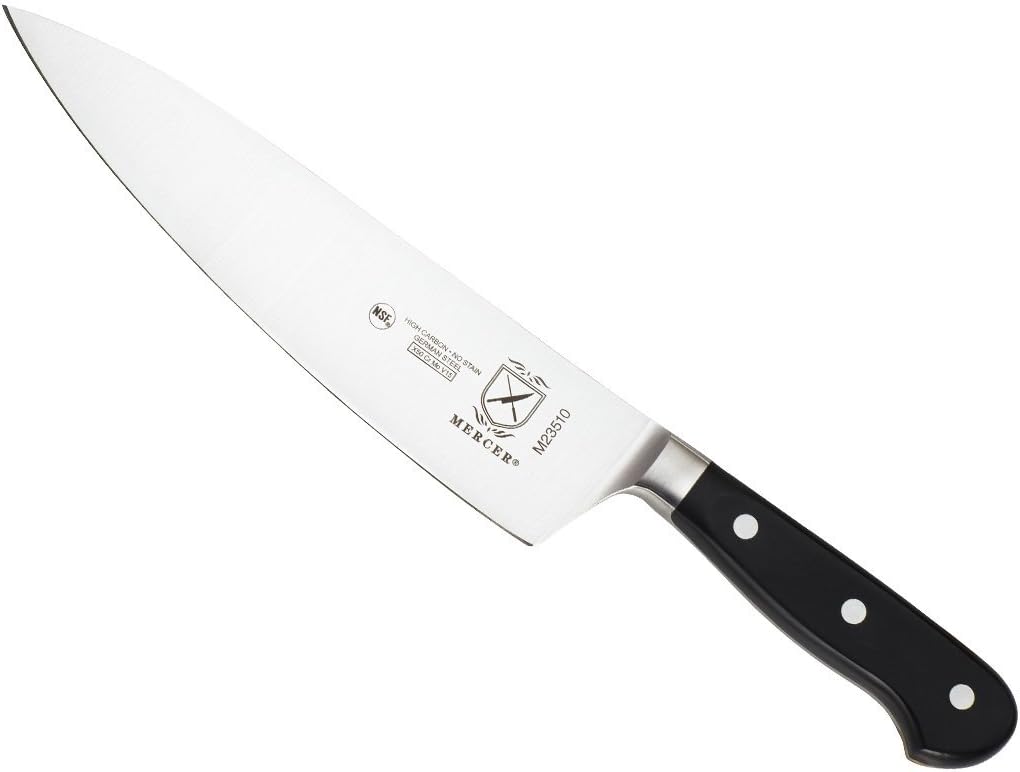
What’s genuinely changed in the last two decades is the emergence of stamped knives that compete directly with mid-range forged knives on performance. Brands like Victorinox, Mercer, Tojiro, and Global (which uses a related but distinct all-metal construction) proved that a well-designed, well-heat-treated stamped blade in a good high-carbon stainless alloy can take an edge just as fine as a forged blade, hold that edge comparably well, and often outperform a cheap forged knife made from soft, poorly heat-treated steel. Restaurant supply companies have leaned into this hard, because commercial kitchens buying dozens of knives at once need tools that are affordable to replace, easy to re-sharpen quickly between services, and light enough that a line cook can use one for a ten-hour shift without hand strain.
3. Head-to-Head Comparison: The Cheat Sheet
If you are in a rush, here is the breakdown of the differences that actually matter to your cooking.
| Feature | Forged Knives | Stamped Knives |
|---|---|---|
| Weight | Heavy, substantial feeling. | Lightweight, nimble. |
| Bolster | Yes (usually thick). | No (or very minimal). |
| Balance | Balanced toward the center/handle. | Blade-heavy (but light overall). |
| Sharpening | Bolster can interfere with sharpening stone. | Easy to sharpen full length. |
| Price | Expensive ($100 – $300+). | Affordable ($30 – $80). |
| Best For | Heavy chopping, rock chopping. | Slicing, precision, long prep sessions. |
Extended Comparison: The Details the Quick Table Skips
The cheat sheet above is a great starting point, but a handful of variables deserve their own explanation because they get misunderstood constantly, and understanding them will make you a much smarter shopper.
| Attribute | Forged Knives | Stamped Knives |
|---|---|---|
| Typical Blade Thickness (Spine) | 2.5–3.5mm at the heel, tapering toward the tip. | 1.5–2.5mm at the heel, generally thinner overall. |
| Steel Grain Structure | Compressed and shaped under pressure; grain flows with the blade contour. | Cut from flat-rolled sheet; grain runs in the original rolling direction. |
| Typical Hardness (Rockwell C) | 54–58 HRC (German style), up to 60–62 HRC (Japanese forged). | 52–58 HRC, varies widely by brand and steel grade. |
| Tang Style | Almost always full tang. | Full, partial, or rat-tail tang depending on brand and price point. |
| Corrosion Resistance | Depends on alloy; high-carbon forged blades may need more diligent drying. | Usually higher-chromium stainless alloys; generally more forgiving. |
| Production Speed | Slower; multiple heating and hammering stages per blade. | Faster; suited to high-volume, consistent output. |
| Typical Warranty | Often lifetime warranty against manufacturing defects on flagship lines. | Often lifetime warranty as well, though terms vary by brand. |
4. The Great Debate: Performance in the Kitchen
Durability and Hardness
There is a myth that forged steel is harder. This is false. Hardness is determined by the heat treatment (Rockwell scale), not just the shaping method. For example, a stamped Shun knife (which uses a hybrid technique) can be harder than a forged Henckels.
However, forged knives are more rigid. If you are cutting a pumpkin or a watermelon, a forged knife won’t flex. A thin stamped knife might wobble in a dense vegetable.
Understanding the Rockwell Hardness Scale
Since hardness comes up constantly in these comparisons, it’s worth actually explaining what the number means. The Rockwell C scale (abbreviated HRC) measures a material’s resistance to indentation by pressing a diamond cone into the steel under a controlled load and measuring how deep it sinks. For kitchen knives, most quality blades fall somewhere between 52 and 62 HRC. A lower number, in the low-to-mid 50s, generally means the steel is a bit softer, which translates to a blade that’s easier to resharpen and more resistant to chipping, but that dulls a little faster. A higher number, pushing toward 60 and beyond, means the steel holds a sharp edge much longer between sharpenings, but it becomes more brittle and can chip if it strikes a bone or a hard cutting board edge.
This matters directly to the stamped-versus-forged conversation because hardness is a property of the heat treatment, applied after the blade is shaped, not a property of whether the steel was hammered or cut. A manufacturer can take the exact same steel billet, forge half of it into blades and stamp the other half from sheet stock cut from a similar alloy, run both batches through an identical hardening and tempering cycle, and end up with two knives of nearly the same hardness. The shaping method influences grain flow and, in some cases, the internal consistency of the steel, but it does not by itself determine the HRC rating on the box.
Edge Retention
Edge retention depends on the steel quality. A stamped knife made of high-carbon stainless steel (like the Global G-2) will hold an edge just as well as a forged Wusthof. If you are worried about keeping them sharp, check out our guide on the best knife electric sharpeners.
High Carbon Steel vs. Stainless Steel vs. High Carbon Stainless Steel
This is arguably the single biggest keyword gap in most stamped-versus-forged articles, because the steel alloy matters at least as much as the manufacturing method, and the two get conflated constantly. There are really three broad families worth knowing:
- Carbon steel is prized for taking an extremely sharp edge and being relatively easy to resharpen, but it contains little to no chromium, so it will rust, discolor, and even develop a dark patina if left wet or exposed to acidic foods. Many traditional Japanese blades and some high-end Western chef’s knives still use carbon steel because professional cooks are willing to trade convenience for edge performance.
- Stainless steel contains a higher percentage of chromium (generally at least 10.5%), which forms a passive, corrosion-resistant layer on the surface. It’s far more forgiving for home kitchens because it tolerates being left in a sink or wiped down quickly, but pure stainless alloys historically didn’t hold an edge quite as long as carbon steel.
- High-carbon stainless steel is the modern compromise, and it’s what most quality knives — forged or stamped — actually use today. Alloys like X50CrMoV15 (common in German knives) or various VG and AUS series steels (common in Japanese-influenced designs) are engineered to combine reasonable rust resistance with better edge retention than plain stainless.
The practical takeaway: don’t assume a forged knife automatically has “better steel” than a stamped one. Always check the actual alloy designation on the product listing or spec sheet, because a well-made stamped knife in a good high-carbon stainless alloy will out-perform a poorly heat-treated forged knife in a mediocre alloy every time.
Ergonomics and Fatigue
This is where the battle of Wusthof vs. Victorinox is fought. If you have large hands and rely on the weight of the knife to do the work, go forged. If you have smaller hands, arthritis, or chop for hours at a time, the lightness of a stamped knife is a godsend.
Balance Point and Grip Style
Balance point is a related but distinct concept from raw weight, and it’s one of the most useful things to actually test in a store before buying. To find a knife’s balance point, rest the blade across a single extended finger, right where the bolster (or the equivalent spot on a stamped knife) meets the handle, and see whether the knife tips toward the blade or the handle. Forged knives, thanks to the mass concentrated in the bolster and full tang, often balance right at the bolster or slightly into the handle, which many cooks describe as feeling “centered” or “controlled.” Stamped knives, lacking that extra bolster mass, more often balance slightly forward into the blade, even though the overall knife weighs less. Neither balance point is objectively correct — it comes down to grip style. Cooks who use a pinch grip (thumb and forefinger gripping the blade itself, just in front of the handle) tend to prefer a balance point close to the pinch location, which favors bolstered forged knives. Cooks who use a handle grip, gripping further back, sometimes prefer the lighter, more blade-forward feel of a stamped knife because it still moves predictably even without bolster mass to anchor it.
Full Tang, Partial Tang, and Rat-Tail Tang Explained
Tang construction is another area where stamped knives get an unfairly broad reputation. The tang is the portion of the blade steel that extends back into the handle, and there are three common configurations worth knowing:
- Full tang: The steel runs the entire length of the handle at close to the same width as the blade, usually visible as a metal line sandwiched between the handle scales. This is standard on nearly all forged knives and on premium stamped knives as well.
- Partial tang: The steel extends only part of the way into the handle before the rest of the grip is molded plastic or another material. This is more common on budget stamped knives, and it can reduce durability and change the balance, but it isn’t automatically unsafe on a well-engineered knife.
- Rat-tail tang: A narrow rod of steel extends into the handle, often surrounded by an injection-molded polymer grip. Some very well-regarded stamped knives, including several professional-grade lines, use a rat-tail tang successfully because the surrounding polymer bonds so tightly to the steel that there’s no meaningful loss of strength in normal kitchen use.
The practical lesson: don’t reject a stamped knife purely because it isn’t full tang. Look at the specific construction, the brand’s reputation for durability, and — if possible — actual owner reviews describing years of use, rather than assuming tang length alone predicts longevity.
Damascus and Layered Steel: Where Forging Gets Artistic
No discussion of forged knives is complete without mentioning Damascus-style and other layered steels, since this is where forging moves from purely functional to genuinely decorative. Modern “Damascus” knives — a nod to, but not literally the same process as, the historical Middle Eastern wootz-steel blades — are made by forge-welding multiple layers of two or more different steel alloys together, then folding and hammering them repeatedly until dozens or even hundreds of layers are compressed into a single billet. When the finished blade is etched with a mild acid, the different alloys corrode at different rates, revealing a rippling, wood-grain-like pattern along the blade face. It’s important to know that the layered pattern itself doesn’t necessarily make the knife sharper or more durable — the actual cutting edge is usually a harder core steel sandwiched inside the softer, more flexible outer layers, a construction sometimes called “San Mai” in Japanese blade-smithing. The outer layers protect that hard core from chipping, while the pattern is largely aesthetic. Stamped knives can also be given a faux-Damascus finish through etching or laser engraving on plain steel, so if the layered look matters to you, it’s worth asking a retailer directly whether a given knife is genuinely forge-welded Damascus or a printed pattern on standard stainless.
5. Specific Knife Types: Does It Matter?
The manufacturing method impacts certain knife shapes more than others.
- Chef’s Knife: Both methods work well. It’s personal preference.
- Paring Knife: Stamped is often better. You want a paring knife to be light and nimble for air-work. (See: What is a Paring Knife Used For?).
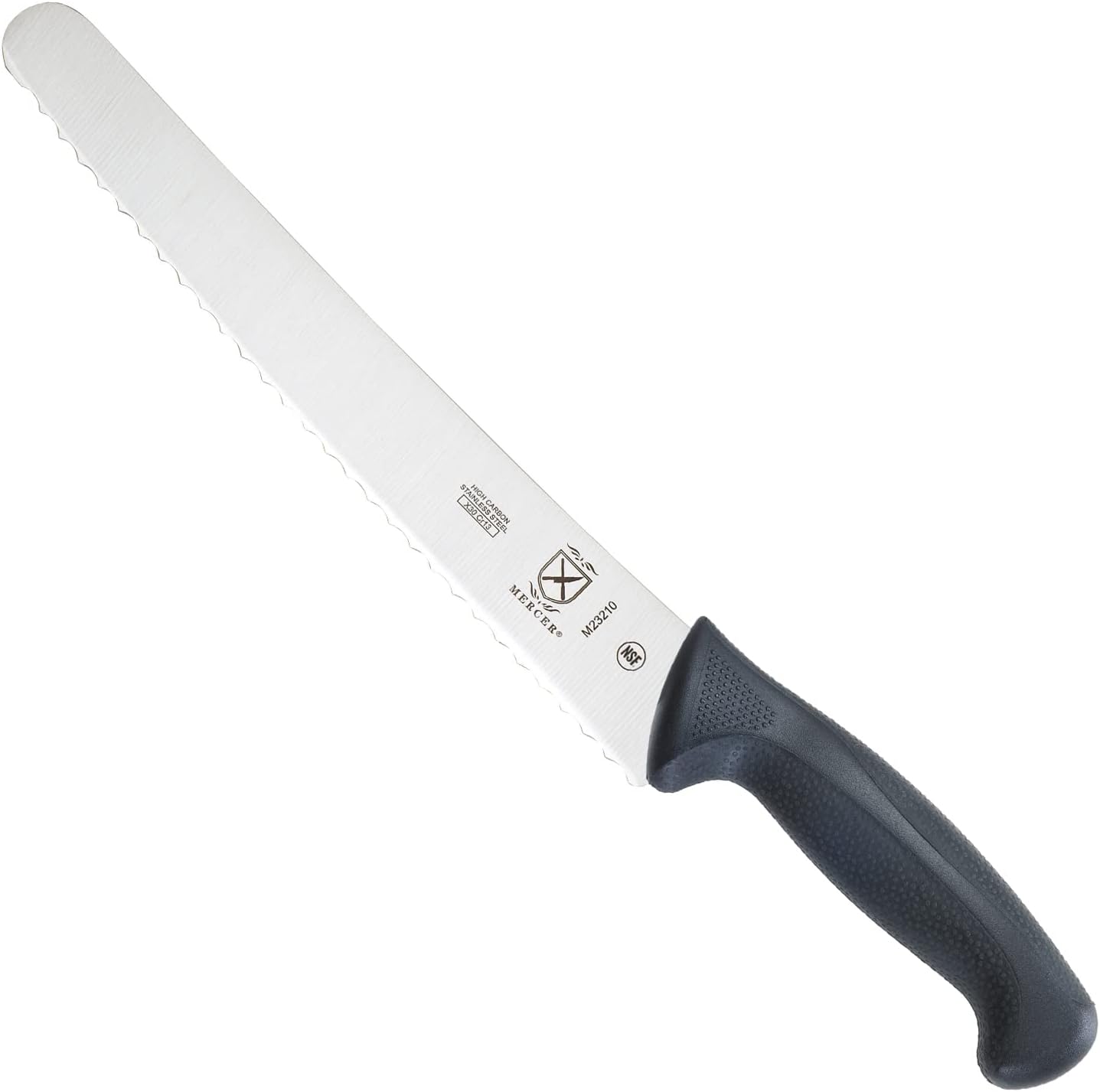
- Serrated/Bread Knife: Save your money. A stamped bread knife works perfectly. You don’t need a heavy forged blade to saw through crust. (See: Best Bread Knife).
- Cleaver/Nakiri: For a Nakiri, weight can be helpful, but thinness is key for vegetable slices. Many Japanese Nakiris are forged but extremely thin. (See: What is a Nakiri Knife Used For?).
Boning and Filleting Knives
Boning and filleting knives deserve special mention because they represent one of the clearest cases where manufacturing method genuinely dictates function. A boning knife needs to flex slightly to follow the contour of bone and joint, while a fillet knife needs even more flex to glide along a fish’s skin without wasting meat. Because stamped blades are typically thinner and inherently more flexible than a comparably sized forged blade, the vast majority of dedicated boning and fillet knives on the market — even from brands that primarily sell forged chef’s knives — are stamped. Forging a knife meant to flex would work against the rigidity that forging tends to produce, so manufacturers generally don’t bother.
Santoku and Utility Knives
Santoku knives, the shorter, flatter-profiled Japanese-style all-purpose blade, are produced in both forged and stamped versions in roughly equal numbers, and the choice tends to track more with the brand’s overall design philosophy than with any hard technical requirement. A forged Santoku will usually carry more of that centered, bolster-anchored balance, while a stamped Santoku stays extremely light, which many home cooks find pairs well with the santoku’s typical straight-edge, push-cutting technique rather than the rocking motion associated with a curved chef’s knife. Utility knives, the mid-size blade between a paring knife and a chef’s knife, follow a similar pattern — either construction works, and the decision usually comes down to matching the rest of a knife set.
6. Top Product Recommendations
Based on our extensive internal reviews, here are the top examples of each category available on Amazon.
 Wüsthof Classic Ikon 8″ Chef’s Knife
The king of forged knives. Features a double bolster for perfect balance and a contoured handle. Ideally suited for those who love German engineering.
Check Price on Amazon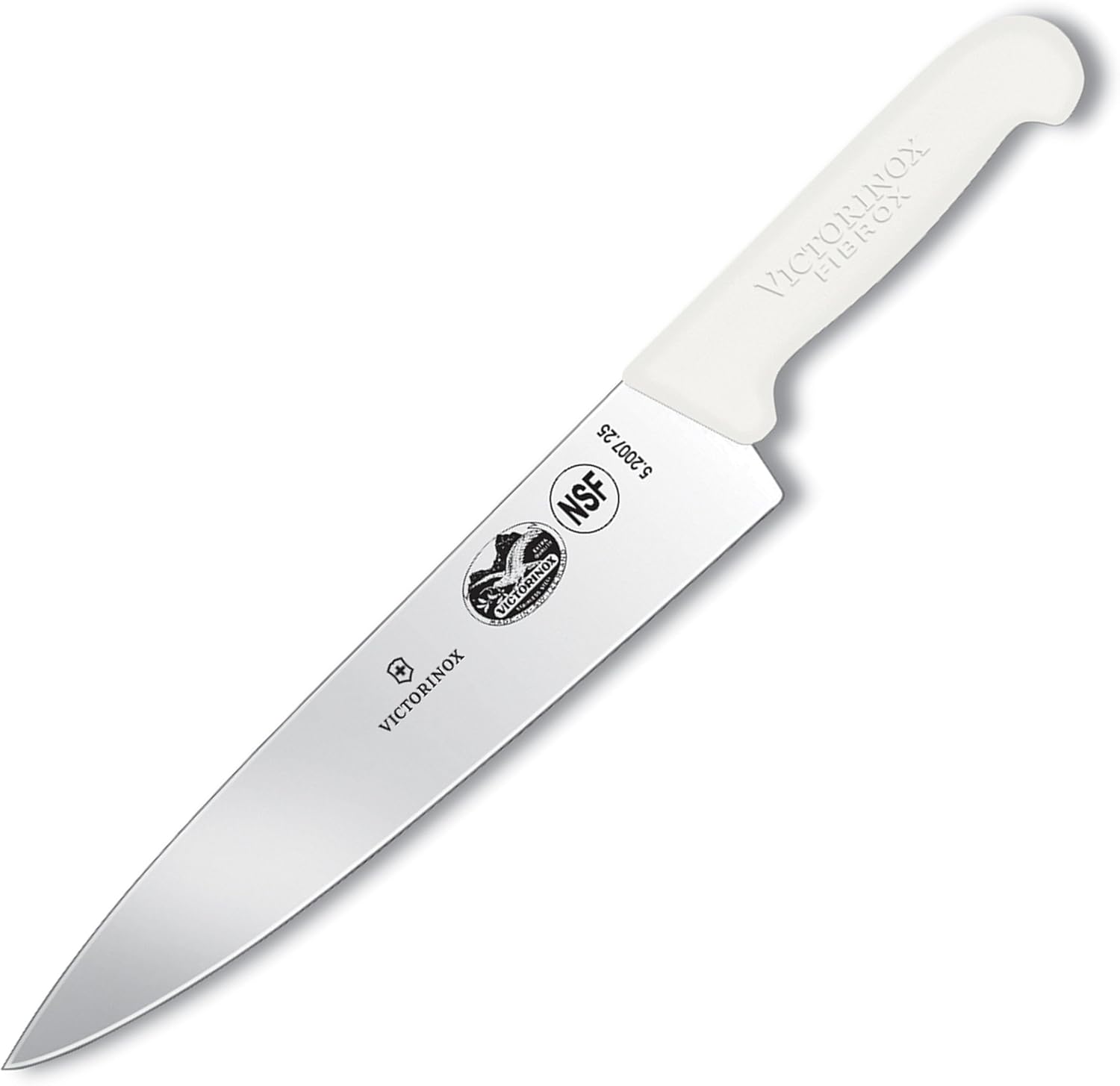 Victorinox Fibrox Pro 8″ Chef’s Knife
The legend. Stamped from high-carbon stainless steel. It wins almost every “best value” award. Read our full Henckels vs Victorinox comparison.
Check Price on Amazon Shun Classic 8″ Chef’s Knife
A mix of techniques. It uses advanced metallurgy with a forged feel but thinner profile. A top contender in our Japanese knives guide.
Check Price on Amazon7. The Price Factor: Is Forged Worth the Money?
Forged knives are expensive because the process is labor-intensive and slow. Stamped knives are cheaper because they can be mass-produced efficiently.
However, cheaper does not mean worse.
If you are looking for the best affordable chef knives, a high-quality stamped knife (like Global or Victorinox) will outperform a cheap, low-quality forged knife every single time. Do not buy a $20 “forged” knife from a discount bin; the steel will be soft and the handle will likely crack.
Where the Extra Money Actually Goes
It helps to understand the cost breakdown behind a forged knife’s price tag, because it isn’t just marketing markup. Forging requires specialized capital equipment — induction furnaces, drop hammers or hydraulic presses, dedicated dies for each knife model — and those dies wear out and need to be replaced or refurbished periodically. The process also takes meaningfully more labor time per unit, since a single blade passes through more discrete manufacturing stations, several of which (like hand-fitting a bolster or hand-finishing a handle) still involve skilled manual work even in modern factories. Energy costs are higher too, since heating steel to forging temperature and holding it there consumes significant power. Add in typically higher material costs, since forged lines more often use premium alloys and thicker stock, and you end up with a per-unit cost that’s genuinely higher to produce, not simply higher because of brand prestige.
Stamped knives benefit from the opposite economics: sheet steel can be purchased in bulk coils, a single progressive die can process thousands of blanks per shift with minimal labor per piece, and the whole line can run largely automated. That’s not a knock on quality — it’s simply a different, more efficient production model that passes real savings to the buyer.
Resale Value and Long-Term Cost of Ownership
A factor that rarely comes up in these comparisons is long-term cost of ownership. A well-maintained forged knife from a reputable brand can last a working lifetime — decades of daily use are common with proper sharpening and care — and flagship forged lines often carry a strong secondary market, meaning a used Wüsthof or Zwilling in good condition retains meaningful resale value. Stamped knives, particularly budget models, are more often treated as semi-disposable: inexpensive enough to replace every few years rather than resharpen indefinitely, which for a high-turnover commercial kitchen is actually a feature, not a drawback, since it avoids downtime waiting for professional sharpening services.
8. Maintenance and Care
Regardless of whether you choose stamped or forged, maintenance is non-negotiable.
- Honing: Use a honing steel before every use.
- Sharpening: Forged knives with full bolsters are harder to sharpen at the heel. You might need the best manual sharpeners to get that area. Stamped knives are easy to sharpen from tip to heel.
- Storage: Heavy forged knives can damage magnetic strips if they slide. Ensure you have the best knife set with block or a sturdy knife drawer organizer.
- Transport: Professionals using forged knives need heavy-duty luggage. Check out the best knife bag for chefs.
Preventing Rust and Corrosion
Regardless of construction method, corrosion resistance comes down to alloy chemistry and how you treat the blade day to day, so the care routine is nearly identical for stamped and forged knives. Always hand wash and dry your knife immediately after use rather than letting it sit wet in a sink, especially after cutting acidic ingredients like citrus, tomatoes, or vinegar-based marinades, which can accelerate surface staining even on stainless alloys. If you notice small orange or brown spots forming, that’s usually surface oxidation rather than deep rust, and it can often be buffed out with a stainless steel cleaner or a paste of baking soda and water before it progresses further. Carbon steel blades, whether forged or stamped, need an extra layer of diligence: a light coat of food-safe mineral oil after drying helps prevent the kind of rapid flash-rusting that untreated carbon steel is prone to, particularly in humid kitchens.
Handle Materials and Their Own Maintenance Needs
Handle material is a separate variable from blade construction, but the two often travel together in ways worth knowing. Traditional forged knives frequently pair with dense, moisture-resistant synthetic handles like POM (polyoxymethylene) or fiberglass-reinforced nylon, both chosen because they resist the swelling and cracking that can plague natural wood handles exposed to repeated wet-dry cycles. Higher-end forged knives sometimes use stabilized wood or Pakkawood (a resin-infused laminated wood) for a more traditional look while retaining reasonable moisture resistance. Stamped knives, especially budget and mid-range commercial lines, most often use molded polypropylene handles, prized for being essentially maintenance-free, highly resistant to bacteria absorption, and — in the case of Victorinox’s Fibrox line — specifically engineered with a textured, slip-resistant surface that stays grippy even when wet with soapy water or fish oils. In all cases, avoid soaking any handle material in water for extended periods and avoid the dishwasher, which can degrade adhesives and finishes over time even on handles marketed as dishwasher-safe.
Cutting Board Choice Matters More Than People Realize
One maintenance factor that has nothing to do with stamped versus forged but affects both equally is your cutting surface. Hard surfaces like glass, stone, or unfinished ceramic will dull any blade dramatically faster than a wood or high-quality plastic board, regardless of how the knife itself was made or how hard its steel is. If you’ve invested in a quality knife of either type, pairing it with a forgiving end-grain wood or soft polyethylene cutting board will do more for long-term edge retention than almost any other single decision you make.
9. Knife Anatomy: A Field Guide
Before we go further into buying advice, it helps to have a shared vocabulary for the parts of a knife, since several of the terms above — bolster, tang, spine — assume you already know where those parts are. Here’s a quick reference glossary covering the anatomy terms that matter most when comparing stamped and forged blades.
10. Choosing By Cook Type: A Practical Buying Framework
With all the technical background covered, it’s worth translating this into a straightforward decision framework based on who’s actually doing the cooking.
The Home Cook Who Cooks a Few Times a Week
For most home cooks, a well-made stamped knife is the smarter starting point. The Victorinox Fibrox Pro has become a default recommendation among professional reviewers precisely because it delivers most of the practical performance of a much pricier forged knife — sharp out of the box, easy to maintain, comfortable for hours of use — at a fraction of the cost. If budget allows for an upgrade later, a mid-range forged knife can be added to the collection once you’ve developed a clearer sense of your own grip style and cutting preferences.
The Enthusiast Building a Long-Term Collection
If cooking is a genuine hobby and you plan to own a knife for decades, investing in a forged knife from an established maker makes more sense, both for the balance many enthusiasts prefer and for the resale and heirloom value discussed earlier. This is also where exploring Japanese-influenced forged options, layered Damascus construction, or specialty steels becomes worthwhile, since the marginal performance gains of premium steel are more noticeable to someone who sharpens and uses their knife frequently enough to feel the difference.
The Professional Line Cook
Professional kitchens overwhelmingly favor lightweight, easy-to-sharpen stamped knives for day-to-day line work, precisely because of the fatigue and speed-of-maintenance factors discussed earlier. Many chefs keep a single forged knife for specific heavy tasks — breaking down proteins, splitting bone-in cuts — while relying on stamped blades for the bulk of their prep list. This split-kit approach is worth considering even for ambitious home cooks who do a lot of high-volume cooking.
Cooks With Hand Strain, Arthritis, or Wrist Issues
For anyone managing chronic hand or wrist discomfort, the weight difference between stamped and forged knives is not a minor preference — it can be the difference between being able to comfortably prep a meal and not. A lightweight stamped knife with a well-designed ergonomic handle reduces the cumulative strain of repetitive cutting motions considerably compared to a heavier forged blade, and is generally the safer recommendation for this group.
11. Common Myths About Stamped and Forged Knives
Given how much folklore surrounds this topic, it’s worth directly debunking a few persistent myths in one place.
- Myth: Forged always means sharper. Sharpness is a function of edge angle and sharpening skill, not manufacturing method. A well-sharpened stamped knife can be just as sharp, or sharper, than a poorly sharpened forged knife.
- Myth: Stamped knives are always cheap and low quality. Premium stamped lines from reputable brands use quality alloys and careful heat treatment, and can outperform low-end forged knives easily.
- Myth: A bolster makes a knife safer. A bolster provides a stopping point for a pinch grip, which some cooks find helps prevent their hand from sliding onto the blade, but it isn’t a substitute for basic knife safety and proper cutting technique.
- Myth: All Damascus-patterned knives are hand-forged and use exotic steel. Some inexpensive knives feature a printed or acid-etched pattern on ordinary stainless steel purely for visual appeal, without true forge-welded layered construction.
- Myth: Heavier always means better control. Control is a function of grip, balance point, and familiarity with a specific knife, not raw weight alone. Many professional cooks control a light stamped knife with excellent precision.
12. A Brief History of Knife Manufacturing
Understanding where these two manufacturing philosophies came from adds useful context to the modern debate. Hand forging is effectively as old as ironworking itself, refined over centuries by blacksmiths across Europe and Asia who each developed regional techniques suited to their available ore and tools. German cutlery centers, particularly Solingen, built an enduring reputation starting in the medieval period, eventually mechanizing much of the forging process during the industrial era while retaining the fundamental hammer-and-die approach. Japanese blade-smithing developed largely in parallel, drawing heavily on sword-making traditions and techniques like differential hardening and folded, layered steel construction that later influenced Western Damascus-style knives.
Industrial stamping only became viable for cutlery once precision sheet-metal presses and consistent steel rolling technology matured in the 20th century. Early stamped knives, produced primarily to meet growing post-war demand for affordable kitchenware, genuinely did suffer from inconsistent heat treatment and thin, flexible steel that struggled to hold an edge — which is exactly where the “stamped equals cheap” reputation was earned. It wasn’t until manufacturing tolerances, steel metallurgy, and heat-treatment consistency improved dramatically in the late 20th and early 21st centuries that stamped knives closed the performance gap enough to be taken seriously by professionals, culminating in widely respected product lines that now sit in nearly every commercial kitchen in the country.
Frequently Asked Questions (FAQ)
No. Sharpness is determined by the edge angle and the quality of the sharpening, not the manufacturing method. A stamped knife can be sharpened to a razor edge (often sharper than forged because the blade is thinner). See our guide on the best knife sharpeners.
Absolutely. Many professional chefs prefer stamped knives (like Victorinox or Global) for high-volume prep because they are lighter and cause less fatigue over a 12-hour shift.
The bolster adds weight to the handle to balance the long blade. It also provides a smooth transition point for a “pinch grip” and protects the fingers from slipping onto the sharp edge.
Zwilling makes both. Their “Pro” and “Four Star” lines are forged. Their “Signature” or “Gourmet” lines are stamped. This is a key difference in the Zwilling vs. Henkel comparison.
Even though stamped knives often have synthetic handles (like Fibrox), we never recommend it. High heat and detergent ruin the edge. Even dishwasher safe steak knives eventually degrade. Wash by hand.
Most quality kitchen knives fall between 54 and 60 HRC. Lower in that range favors easier sharpening and more chip resistance; higher favors longer edge retention but slightly more brittleness. Neither stamped nor forged construction guarantees a particular hardness — that comes from the heat treatment.
It can improve durability and balance, but a well-engineered partial or rat-tail tang on a reputable stamped knife can still be perfectly reliable for normal home kitchen use. Check brand reputation and reviews rather than ruling out a knife on tang length alone.
Neither is universally “better.” High carbon steel typically takes a sharper edge and is easier to resharpen but rusts more easily. Stainless steel resists corrosion better but historically held an edge slightly less long. Most modern quality knives use high-carbon stainless steel, a compromise between the two.
True Damascus-style knives require forge-welding and folding multiple layers of steel together, a labor- and time-intensive process. The pattern itself is largely decorative, with a harder core steel providing the actual cutting performance, but the craftsmanship involved drives up the price.
Sharpening frequency depends more on steel hardness and how the knife is used than on whether it’s stamped or forged. As a general guideline, home cooks should hone before each use and fully sharpen every few months, adjusting based on how the edge feels during use.
Conclusion: Which Should You Buy?
The difference between stamped and forged knives is no longer a question of quality, but of preference.
Choose a Forged Knife if: You love the feeling of a heavy tool, you do a lot of heavy-duty rock chopping, and you appreciate the traditional aesthetic and balance of a bolster.
Choose a Stamped Knife if: You want agility, you have smaller hands, you prep vegetables for hours at a time, or you want the best performance for your dollar.
Ultimately, the best knife is the one that feels right in your hand. We recommend trying both. Start with our guide on best chef knife brands to find the perfect manufacturer for your style.
If you take away one thing from this guide, let it be this: the words “stamped” and “forged” describe a manufacturing process, not a quality tier. The alloy, the heat treatment, the grind, and the fit and finish determine how a knife performs — and both manufacturing methods, in skilled hands, can produce excellent tools. Judge the knife in front of you on its actual specifications and how it feels in your grip, not on which side of this old debate it happens to fall on.