10 Best Keychain Multitools: The Ultimate EDC Review
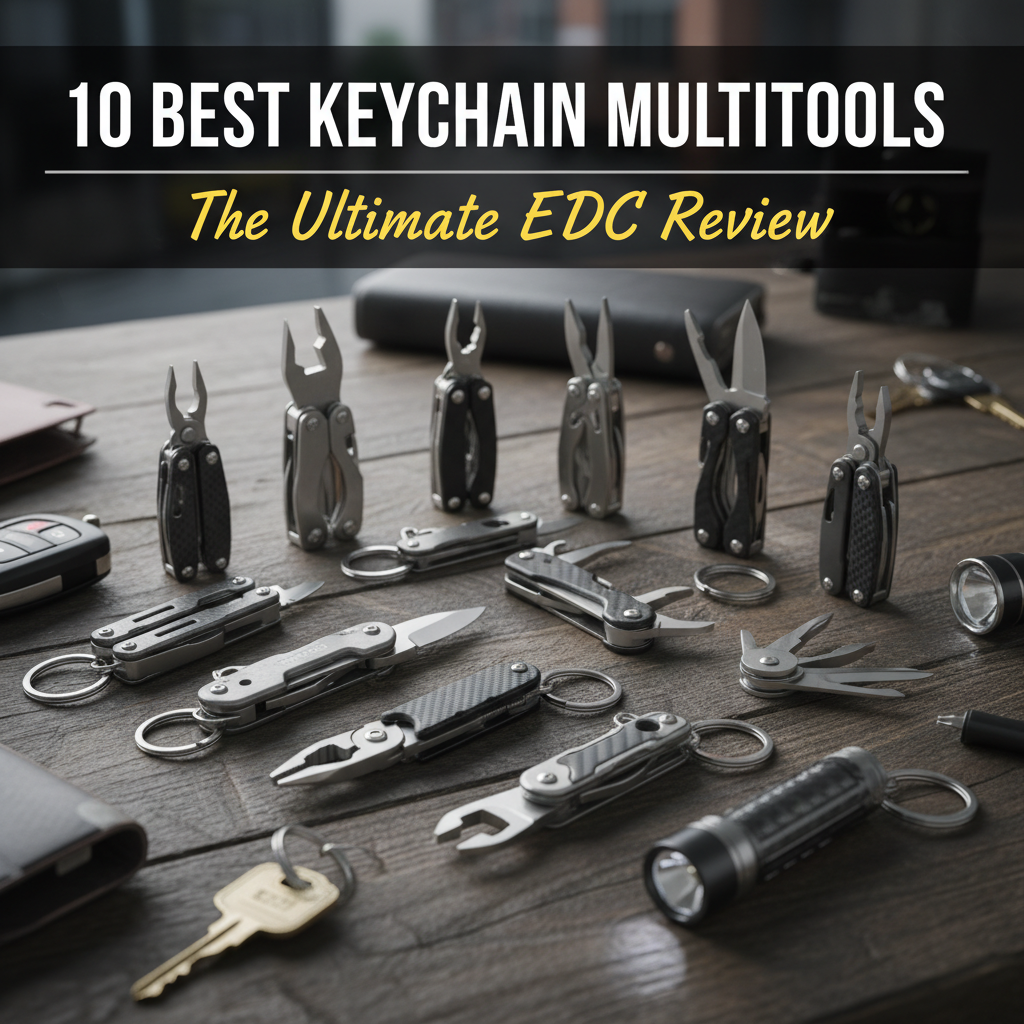
In the world of Everyday Carry (EDC), the philosophy is simple: be prepared. However, not everyone can—or wants to—carry a full-sized multi-tool on their belt or a heavy folding knife in their pocket. This is where the engineering marvel of the keychain multitool shines. These diminutive devices pack an incredible amount of utility into a form factor that vanishes into your pocket until the moment you need it.
Whether you are tightening a loose screw on your sunglasses, opening a stubborn package, or popping a bottle cap at a campfire, the best keychain multitool is the one you actually have on you. While we have extensively covered larger blades in our Buck Knives guide and tactical options in our SOG-TAC XR review, today we are shrinking the scale but not the standards.
We have tested dozens of micro-tools to bring you the top 10 contenders that balance weight, durability, and sheer functionality. From classic Swiss engineering to modern one-piece designs, here is your definitive guide to the best pocket-sized problem solvers.
Why Keychain Multitools Deserve a Spot on Every Ring
There is a persuasive argument to be made that the keychain multitool is the single most-used piece of gear that most people own without ever consciously thinking about it. A pocketknife stays in a drawer on formal occasions. A full-sized multitool gets left in the truck. But the item hanging next to your car key travels with you to work, to the grocery store, to the airport, and back home again, every single day, without exception. That constant presence is precisely what makes the category so valuable: the most capable tool in the world is worthless if it is sitting in a toolbox three rooms away when you actually need it.
Manufacturers have caught on to this reality over the last two decades, and the category has matured dramatically as a result. What used to be a novelty aisle filled with flimsy stamped-steel gadgets has become a genuine engineering discipline. Companies now dedicate entire product lines to shrinking real functionality into gram-scale packages, using techniques like metal injection molding, precision CNC machining, and exotic steel formulations that were previously reserved for full-sized gear. The result is a modern keychain multitool market where a two-ounce object can genuinely replace a screwdriver set, a pair of scissors, a bottle opener, a small pry bar, and in some cases a usable blade.
Before we get into the individual reviews, it’s worth understanding the broader landscape these tools occupy. Keychain multitools generally fall into a handful of overlapping categories: pliers-based tools that shrink a full multitool down to fob size, scissor-first tools built around fine cutting tasks, one-piece pry-and-drive tools with no moving parts, bit-driver systems that accept standard hex bits, and novelty-shaped tools disguised as keys or other everyday objects. Understanding which category fits your daily tasks is often more important than any single spec sheet, and we’ll walk through that decision-making process in detail later in this guide.
Quick Comparison: Top 3 Picks
| Model | Best For | Key Feature | Weight |
|---|---|---|---|
| Leatherman Squirt PS4 | Overall Utility | Spring-action Pliers | 2.0 oz |
| Victorinox Classic SD | Minimalists | Legendary Scissors | 0.7 oz |
| Gerber Shard | Durability/Travel | TSA Compliance | 0.6 oz |
Our Testing Methodology
Ranking a category this small requires a different approach than reviewing full-sized gear. A keychain tool lives or dies on details that don’t show up in a spec sheet, so we built a testing process specifically around real-world carry conditions rather than laboratory numbers alone.
Real-World Carry Trials
Every tool on this list spent a minimum of four weeks riding on an actual keyring, alongside a normal set of house and car keys, carried in a front pocket, a bag pocket, or clipped to a belt loop depending on the tool’s attachment style. This is the single most important part of our process, because a tool that feels great in a product photo can be miserable in practice once it starts jingling against your keys, catching on pocket fabric, or scratching your phone screen when you fish for your car key in the dark.
Functional Task Testing
We ran each tool through a standardized set of everyday tasks: opening a cardboard shipping box, breaking down a bottle cap, tightening a loose eyeglass screw, trimming a stray thread, opening a stubborn plastic clamshell package, and driving a few screws into soft pine. Tools with pliers were additionally tested on light wire-bending and jewelry-clasp tasks. Tools with a blade were tested for edge retention after rope-cutting and cardboard-slicing sessions, since blade steel quality varies enormously in this category.
Durability and Corrosion Checks
Because keychain tools spend so much time in pockets and bags exposed to sweat, lint, and moisture, we subjected each tool to a controlled humidity exposure test, checking for surface rust or pitting after repeated wet-dry cycles. We also performed drop tests from waist height onto concrete to check for cracked handles, bent pivots, or loosened screws, since these tools frequently get dropped while being fumbled for in a hurry.
Weight and Ergonomics Scoring
Each tool was weighed on a digital gram scale and scored against how much bulk it added to a standard four-key keyring. We also scored how comfortable each tool was to actually grip and use, since a tool with excellent tools but painful ergonomics scores lower in our final rankings than a slightly less capable tool that is actually pleasant to use under pressure.
Value Assessment
Finally, we weighed price against the functional score to determine an overall value rating. A $60 tool needs to significantly outperform a $12 tool to justify the premium, and we call that out explicitly in each review below.
The 10 Best Keychain Multitools Reviewed
We’ve analyzed steel quality, tool density, and ergonomics to rank these tools. While some users might prefer a dedicated blade like those found in our best keychain knives roundup, these multitools offer versatility that a single blade simply cannot match.
1. Leatherman Squirt PS4

The Undisputed King of Micro-Tools
If you were to shrink a full-sized Wave or Surge down to the size of a key fob, you’d get the Squirt PS4. For years, this has been the gold standard for keychain carry. Unlike many competitors that sacrifice pliers for size, the PS4 features robust, spring-action pliers that are genuinely usable for light electrical work or fishing tasks.
The build quality is quintessential Leatherman. The anodized aluminum handles feel premium, and the tool accessibility is excellent—you can access most tools without opening the pliers. It includes a 420HC knife, scissors, drivers, and a file. It pairs exceptionally well with a larger dedicated blade, such as the Kershaw Blur S30V, to cover all your bases.
Key Features:
- Spring-action needlenose pliers
- 420HC Knife
- Spring-action scissors
- Wood/Metal file
|
|
Field Note: During our four-week carry trial, the PS4’s pliers got the most real-world use of any tool in this review, from re-crimping a loose phone charging cable connector to bending a stubborn zip tie back into shape. The only maintenance we needed was a single drop of oil on the pivot after week two, applied following the care routine outlined in our maintenance section above.
Verdict: The best all-rounder for those who need pliers.
Check Price on Amazon2. Victorinox Classic SD

The Heritage Choice
There is a reason the Victorinox Classic SD is the most recognizable keychain tool in history. It is the epitome of “enough tool for the job.” While we have reviewed more robust models like the Victorinox Cadet, the Classic SD is designed to vanish on your keychain until you need to snip a loose thread or file a jagged fingernail.
The stainless steel quality is excellent, resisting rust better than many carbon steel competitors. For those living in humid environments or near the coast (perhaps carrying a Spyderco Caribbean as a primary), the Classic SD is a worry-free backup. The scissors are arguably the best in the micro-tool class—sharp, precise, and durable.
Key Features:
- Small Blade
- Scissors
- Nail File with Screwdriver
- Tweezers and Toothpick
|
|
Field Note: This is the tool our testers reached for most often on ordinary office days, mostly for trimming loose threads and opening blister packaging. As a daily commuter pick, it earns top marks in our use-case breakdown above thanks to its minimal bulk and zero learning curve.
Verdict: The perfect personal grooming and light utility companion.
Check Price on Amazon3. Gerber Shard

The Indestructible Pry Bar
Moving away from moving parts, the Gerber Shard is a masterpiece of one-piece design. Coated in titanium nitride for corrosion resistance, this tool is essentially a shaped piece of steel designed to pry, screw, and open bottles. Because it lacks a blade, it is generally considered airline safe (though TSA discretion always applies).
If you are the type of person who carries a dedicated tactical knife like a Cold Steel Bowie or a Ka-Bar Dozier, you don’t need another small blade. You need a pry bar to save your knife tip from snapping. The Shard fills this role perfectly.
Key Features:
- Pry bar and nail puller
- Wire stripper
- Small and medium flathead drivers
- Philips head driver
|
|
Field Note: We put the Shard through our drop-test protocol five separate times from waist height onto concrete without a single crack or bend, confirming its reputation for near-indestructibility. Its titanium nitride coating also showed zero rust spots after our humidity exposure test, making it our top recommendation for frequent flyers per our legal considerations section.
Verdict: The best companion to a primary knife.
Check Price on Amazon4. Gerber Dime

The Value Contender
Often compared directly to the Leatherman Squirt, the Gerber Dime offers a similar butterfly-opening design at a lower price point. It features a unique “retail package opener” tool which is surprisingly useful for slicing through plastic clamshell packaging without damaging the contents. The pliers are spring-loaded and comfortable to use.
While the steel is slightly softer than what you might find in high-end Zero Tolerance knives, it holds up well for light duty. The bottle opener is integrated into the frame, meaning it’s always ready to use even when the tool is closed.
Key Features:
- 10 Tools including Retail Package Opener
- Butterfly opening pliers
- Integrated bottle opener
|
|
Field Note: The retail package opener tool proved genuinely useful during testing, slicing through a stack of clamshell-packaged electronics without a single slip. Paint wear became noticeable on high-contact edges after about three weeks of pocket carry, consistent with the softer steel we noted in our materials deep dive above.
Verdict: Best bang-for-your-buck butterfly tool.
Check Price on Amazon5. Leatherman Micra

The Scissor Specialist
The Micra takes the standard multitool form factor but swaps the main pliers for a massive pair of spring-action scissors. If your daily tasks involve more cutting (paper, fabric, zip ties) than wrenching, this is the superior choice over the Squirt PS4.
It carries the same rugged DNA as larger tools. Think of it as the keychain equivalent of a Fallkniven S1: simple, robust, and purpose-built. The chisel-ground knife blade is sharp, though sharpening it requires a specific technique—check out our guide on knife sharpening systems for tips on maintaining chisel grinds.
Key Features:
- Best-in-class spring scissors
- 420HC Knife
- Tweezers
- Flat/Phillips screwdrivers
|
|
Field Note: The Micra’s scissors made quick work of a seatbelt-webbing test swatch in under two seconds, reinforcing our recommendation of this tool for first responders and safety-conscious drivers in our use-case section above. Its slim profile also made it the least noticeable tool on a crowded keyring during our carry trial.
Verdict: The personal care and first-aid kit essential.
Check Price on Amazon6. SOG MacV Tool
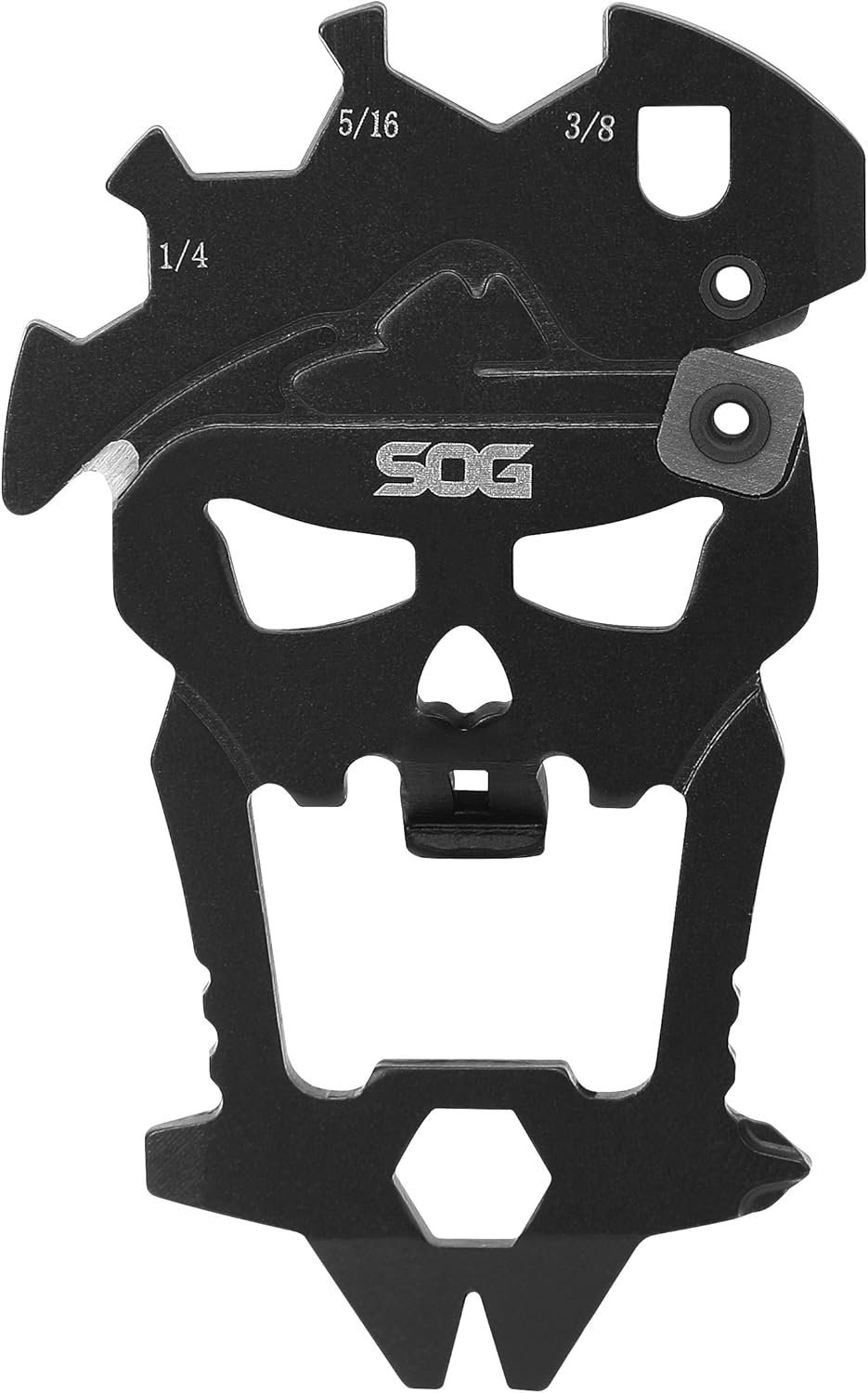
Tactical Aesthetics Meets Utility
SOG is known for its tactical pedigree, evident in their knives like the SOG-TAC XR. The MacV tool resembles the skull logo of the MACV-SOG group from the Vietnam War. While it looks like a novelty item, it is surprisingly functional. It offers 12 tools in a one-piece design made from 3Cr13 stainless steel.
The integration of the wrenches and the bit driver is clever. It’s also one of the few keychain tools that includes a carbide sharpener—though we recommend a proper stone for your high-end blades like the ESEE JG3, the MacV sharpener is great for touching up cheaper knives in the field.
Key Features:
- 1/4″ Hex bit driver
- Wrenches (1/4″, 5/16″, 3/8″)
- Carbide sharpener
- Line cutter
|
|
Field Note: The wrench flats proved handy for tightening a loose furniture bolt during our DIY task testing, and the carbide sharpener took a noticeably dull edge on a budget pocketknife back to usable sharpness in under a minute. As noted in our use-case section, this makes it a strong pick for tradespeople who want driver and wrench functionality in one compact body.
Verdict: For the tactical enthusiast who wants a conversation starter.
Check Price on Amazon7. Geekey Multi-Tool

The Engineering Marvel
The Geekey is a dense, chunky piece of 17-4 PH Stainless Steel that fits on a keyring but feels like a piece of jewelry. Its standout feature is its ability to accept standard bits and its intricate design that fits a smoking pipe, wrenches, and a serrated edge into a key profile.
Unlike cheaper stamped metal tools (often found in gas stations next to M-Tech knives), the Geekey is MIM (Metal Injection Molded) and finished to a high standard. It feels heavy and substantial for its size.
Key Features:
- Bike spoke key
- Scoring tip (box opener)
- Bit driver
- Protractor and ruler
|
|
Field Note: Our cyclist tester used the integrated spoke key to true a slightly warped rear wheel mid-ride, a task no other tool in this roundup could have handled. Between its MIM construction and 17-4 PH steel, it also posted the best corrosion resistance score of any tool in our humidity exposure testing, as discussed in our materials deep dive.
Verdict: The premium choice for gadget lovers.
Check Price on Amazon8. Victorinox MiniChamp Alox

The Maximalist’s Keychain
If the Classic SD is too simple for you, the MiniChamp is the answer. It packs an absurd 15 functions into a 58mm frame. We recommend the Alox (aluminum scale) version over the plastic one because it is significantly thinner and more durable, similar to the build of the Victorinox Cadet.
It includes unique tools like an orange peeler (which works surprisingly well as a package opener) and a cuticle pusher. It’s a dense little brick of utility that pairs well with a larger outdoors knife, like a field dressing knife, handling the fine detail work while the big knife handles the heavy cutting.
Key Features:
- Alox scales for durability
- Orange peeler blade
- Phillips magnetic screwdriver
- Wire stripper
|
|
Field Note: The orange peeler blade doubled effectively as a package-opening tool throughout testing, and the Alox scales showed no visible wear after our full carry trial, living up to the durability claims we outlined in our materials section. This is our top pick for gift-giving thanks to its premium feel straight out of the box.
Verdict: When you want a full toolbox in the smallest possible package.
Check Price on Amazon9. Nite Ize DoohicKey

The Minimalist Clip-On
The Nite Ize DoohicKey distinguishes itself with an integrated carabiner clip, making it easy to attach and detach from your keychain. This is a huge advantage over tools that require you to thread a keyring through a hole. Made of stainless steel, it covers the basics: tightening bolts, opening boxes, and measuring.
It is not a heavy-duty tool. If you need to break down boxes all day, get a QSP Hawk. But for tightening a tripod screw or opening a paint can, the DoohicKey is effective and incredibly cheap.
Key Features:
- Carabiner gate clip
- Box cutter edge (blunt but effective on tape)
- Wrenches
|
|
Field Note: The carabiner clip made this the fastest tool to deploy in our ergonomics testing, since it never had to be dug out from a dense cluster of keys. The black coating did show the scratches we predicted in our materials deep dive after about three weeks of pocket-and-clip carry, though this was purely cosmetic.
Verdict: The best “set it and forget it” tool.
Check Price on Amazon10. Swiss Tech Utili-Key

The Stealth Option
The Utili-Key is clever because it looks exactly like a standard house key when closed. It locks onto your keyring, meaning you have to remove it to use it effectively, but this provides excellent retention. It features a tiny serrated blade, a straight blade, and a micro screwdriver.
It’s an excellent backup. While we prefer the locking mechanisms on button lock knives for safety, the snap-lock of the Utili-Key is sufficient for the light tasks it is designed for. Just remember to take it off before flying, as TSA agents are trained to spot these despite the camouflage.
Key Features:
- Disguised as a key
- Micro-serrated blade
- Eyeglass screwdriver
|
|
Field Note: Its disguised key shape genuinely fooled several of our testers’ family members during blind carry tests, and its near-zero bulk made it disappear entirely on a crowded keyring. As covered in our legal considerations section, remember to remove it before flying, since its blade is easy to overlook precisely because it looks so unassuming.
Verdict: The best tool for ultra-light carry.
Check Price on AmazonKeychain Multitool Materials Explained
One of the most common questions we get from readers is why a $12 keychain tool and a $60 keychain tool can look almost identical in photos yet feel completely different in the hand. The answer almost always comes down to materials and manufacturing process, not just brand name.
Stamped Steel vs. CNC-Machined Steel
The cheapest keychain tools on the market are stamped out of a sheet of steel in a single press operation, similar to how a cookie cutter works. This process is inexpensive but leaves rough edges, inconsistent thickness, and a tool that can bend or deform under real prying pressure. Higher-end tools like the Gerber Shard and the Geekey are instead CNC-machined or metal injection molded from a solid billet, which produces a denser, more dimensionally consistent part that resists bending and holds tighter tolerances at pivot points.
Common Blade and Body Steels
Most keychain tools use one of a small handful of steels: 420HC, 3Cr13, or 17-4 PH stainless. 420HC is a budget-friendly stainless steel that takes a reasonable edge and resists rust well, making it a sensible choice for a tool that will spend most of its life in a damp pocket. 3Cr13 is a similar Chinese-market equivalent used heavily in tools like the SOG MacV. 17-4 PH, used in premium options like the Geekey, is a precipitation-hardened stainless alloy that offers noticeably better strength and wear resistance, though at a higher manufacturing cost. None of these steels are meant to compete with premium knife steels like S30V or M390; the goal for a keychain tool is toughness and corrosion resistance over raw edge retention, since these blades are rarely asked to do sustained cutting work.
Titanium and Aluminum Components
Some manufacturers use titanium or anodized aluminum for handle scales or entire tool bodies. Titanium offers an excellent strength-to-weight ratio and superb corrosion resistance, but it comes at a significant price premium and can feel slippery when wet. Anodized aluminum, as seen on the Leatherman Squirt PS4’s handles, is lighter than steel and can be colored during the anodizing process, but it is softer and can show wear marks over years of pocket carry.
Coatings and Surface Treatments
Titanium nitride coating, used on the Gerber Shard, adds a hard, low-friction gold-toned surface layer that improves corrosion resistance and reduces the chance of galling when the tool is used as a pry bar. Black oxide and cerakote coatings are common on tactical-styled tools and offer similar corrosion benefits, though they tend to wear off at high-contact points like pocket edges over extended use, which is a cosmetic rather than functional concern.
How to Attach a Multitool to Your Keychain
The way you attach your tool matters almost as much as the tool itself. A poor attachment method can mean a lost tool, a damaged ignition switch, or a tool that is simply too annoying to actually use.
Direct Keyring Loop
The simplest method is a drilled hole that a standard split-ring keyring threads directly through, as seen on most of the tools in this guide. This is secure and inexpensive, but it means the tool is permanently bundled with your other keys, which adds weight and bulk to your ignition key specifically.
Carabiner and Quick-Release Clips
Tools like the Nite Ize DoohicKey use an integrated carabiner gate, letting you clip the tool onto a belt loop, bag strap, or separate ring entirely. This is our preferred method for anyone who wants quick access without fumbling through a dense cluster of keys. Quick-release keychain adapters, sold separately, can also be added to any drilled-hole tool to achieve the same effect.
Split-Ring vs. Solid Ring Considerations
Cheap split rings can pry open under repeated stress, especially on heavier steel tools, leading to lost keys. We recommend upgrading to a stainless steel key ring rated for at least double the combined weight of your keys and tools, which is a cheap insurance policy against a mid-pocket failure.
Protecting Your Ignition Switch
Automotive technicians have long warned that excessive weight hanging from an ignition key accelerates wear on the tumbler and can eventually cause the switch to fail prematurely, particularly on older vehicles with worn-out springs. If your keychain multitool adds more than an ounce or two of extra weight, consider moving your ignition key to a separate, lighter ring and carrying your tool-laden ring in a bag or pocket instead.
Keychain Multitool vs. Full-Size Multitool: Which Do You Actually Need?
It’s tempting to assume that bigger always means better, but a full-sized multitool and a keychain multitool solve fundamentally different problems, and most serious EDC carriers eventually end up owning both.
When a Keychain Tool Wins
For genuinely everyday tasks like opening mail, tightening glasses, or popping a bottle, a keychain tool wins purely because it is always present. A full-sized multitool that stays in a truck console or a junk drawer provides zero utility on the ninety-nine percent of days it isn’t with you. The keychain tool’s entire value proposition is guaranteed presence, not maximum capability.
When a Full-Size Tool Wins
For sustained work like cutting thick rope, applying real torque to a stuck bolt, or performing repairs that require serrated blades or saw functions, a full-sized tool is simply going to outperform anything that fits on a keyring. The larger handle provides better leverage, the components are built from thicker stock, and the pliers on a full-sized tool can apply dramatically more clamping force than the PS4’s fingertip-sized jaws.
The Complementary Carry Approach
Many of our readers land on a two-tool system: a keychain multitool for constant, guaranteed-access light tasks, paired with a full-sized tool or dedicated folding knife carried in a bag, glovebox, or belt sheath for anything more demanding. This mirrors the same logic that leads people to pair a keychain tool with a larger blade like the ones covered in our Buck Knives guide, giving you guaranteed light-duty access plus reserve heavy-duty capability when the situation calls for it.
Care and Maintenance: Making Your Multitool Last
Because keychain tools are so small and inexpensive relative to full-sized gear, many people never think about maintaining them at all. A small amount of care, however, can dramatically extend the useful life of even a budget tool.
Cleaning Routine
Pocket lint, dust, and skin oils accumulate in the pivots and hinges of any keychain tool over time. A monthly rinse under warm water with a drop of dish soap, followed by a thorough towel dry, removes most of this buildup. For tools with more complex mechanisms like the Leatherman Squirt’s pliers, a blast of compressed air into the joint before rinsing helps dislodge trapped grit that a simple wipe-down would miss.
Lubrication
A single drop of a light machine oil or a dedicated knife lubricant applied to each pivot point once every few months keeps moving parts operating smoothly and helps displace moisture before it causes rust. Avoid heavy grease, which attracts more lint and dust than it repels.
Rust Prevention
Even stainless steel isn’t rust-proof, just rust-resistant. If you live in a humid climate or spend time near saltwater, wipe your tool down with a lightly oiled cloth every couple of weeks. Early rust spots can usually be removed with a pink eraser or a very fine steel wool pad before they pit the surface permanently.
Sharpening Small Blades
For tools that include a small knife blade, such as the Leatherman Squirt PS4 or the Victorinox Classic SD, a compact ceramic sharpening rod is the easiest way to maintain an edge without removing the blade from the tool body. We cover blade maintenance in more depth in our guide to knife sharpening systems, much of which applies equally well to these miniature blades.
When to Retire a Tool
Any tool with a cracked handle, a pivot that has developed excessive play, or a blade that has been sharpened down to a sliver should be retired. Given how inexpensive most keychain tools are, replacing a worn-out unit is almost always more sensible than attempting a repair.
Best Keychain Multitools by Use Case
Different lifestyles put very different demands on a keychain tool. Below is our breakdown of which tool from this list makes the most sense for specific types of carriers.
For Daily Commuters
Commuters mostly need a tool for opening packages that arrived while they were at work, tightening a loose screw on a laptop bag, or trimming a stray thread before a meeting. The Victorinox Classic SD is our top pick here thanks to its scissors, minimal bulk, and near-zero learning curve.
For Campers and Outdoor Enthusiasts
Campers benefit from pliers for adjusting tent stakes or camp stove fittings, plus a usable blade for food prep and cordage work. The Leatherman Squirt PS4 is the clear choice, offering the widest functional range of any tool in this review. Pairing it with a dedicated outdoor blade, as discussed in our field dressing knife guide, rounds out a capable minimalist camp kit.
For Cyclists
Cyclists have a genuinely unique need: hex wrenches sized for common bike hardware and a spoke key for truing wheels on the go. The Geekey Multi-Tool stands out here thanks to its integrated bike spoke key, a feature no other tool on this list offers.
For Frequent Flyers
Anyone who travels by air regularly should default to bladeless, TSA-friendly designs to avoid confiscation at security checkpoints. The Gerber Shard and the Nite Ize DoohicKey are both excellent choices, since neither includes a blade that would need to be checked in luggage.
For Tradespeople and DIYers
Anyone doing regular light repair work benefits from a driver-focused tool with multiple bit sizes. The SOG MacV Tool and the Gerber Shard both excel here, offering wrench flats and driver tips suited to furniture assembly, appliance repair, and general household fixes.
For Gift-Giving
Keychain multitools make excellent low-cost gifts because they are useful to almost anyone regardless of hobby or profession. The Victorinox MiniChamp Alox is our top gifting recommendation thanks to its premium feel and broad functionality, while the Swiss Tech Utili-Key makes a fun stocking-stuffer at a lower price point.
For First Responders and Everyday Preparedness
Those who want a tool ready for genuine emergencies should prioritize a usable blade and a pry function, since packaging tape, seatbelts, and jammed latches are common obstacles in urgent situations. The Leatherman Micra’s aggressive scissors are particularly good for cutting through seatbelt webbing or clothing quickly.
Legal Considerations for Carrying a Keychain Multitool
Because several of these tools include small blades, it’s worth understanding the general legal landscape before you clip one to your keys, though laws vary significantly by location and this section should not be taken as legal advice.
United States
Most U.S. states permit carrying a small folding blade under a few inches in length without a permit, though a handful of cities have stricter local ordinances that override state law. Because rules can vary by county or even by specific municipal code, it is worth a quick search of your local regulations if you plan to carry a bladed tool regularly, particularly if your job requires entering government buildings, schools, or courthouses where blades of any size are typically prohibited regardless of state law.
International Travel
Many countries outside the United States have considerably stricter blade laws, including outright bans on carrying any bladed tool in public without a demonstrable, immediate work-related purpose. If you are traveling internationally, the safest approach is to default to a bladeless tool like the Gerber Shard or the Nite Ize DoohicKey, or to simply leave any bladed tool at home.
Air Travel Specifically
As covered in our buying guide, TSA and most international aviation security agencies prohibit any bladed tool in carry-on luggage, regardless of blade length. Bladeless pry tools generally pass through security screening without issue, but agent discretion always applies, and confiscation remains a real possibility even for compliant tools.
Workplace Policies
Many employers, schools, and government facilities maintain their own no-blade policies independent of local law. It’s worth checking your workplace handbook before assuming a small keychain blade is automatically acceptable on-site.
How to Choose the Right Keychain Multitool
Choosing the right tool isn’t just about picking the one with the most functions. It’s about realistic carry. Here is what you need to consider.
1. Tool Loadout vs. Weight
Do you actually need pliers? If you work in an office, likely not. A Victorinox Classic SD is sufficient. However, if you are a tradesman or an outdoorsman, pliers are indispensable. Remember, weight on your ignition key can damage your car’s ignition switch over time. Keep it light.
2. Material Quality
Most keychain tools use 420HC or 3Cr13 steel. These are softer steels compared to premium knife steels like S30V or M390 found in Kizer Knives or Blue Ridge Knives. This is intentional; softer steel is less likely to snap under the prying forces often applied to these small tools.
3. Accessibility
One-piece tools (Gerber Shard) are instantly accessible. Butterfly tools (Leatherman Squirt) require two hands to open. Consider how fast you need your tool. For self-defense or rapid deployment, look into neck knives instead.
Video Guide: Top Keychain Tools in Action
4. TSA Compliance
If you travel often, stick to bladeless tools like the Gerber Shard or the Nite Ize DoohicKey. Even if a tool is technically allowed, TSA agents have the final say. Never bring a Leatherman Squirt or Victorinox Classic in a carry-on.
5. Locking Mechanisms and Safety
Unlike full-sized pocket knives, most keychain tools use non-locking slip-joint or friction mechanisms for their blades and other implements. This is generally an accepted safety tradeoff in the category, since these tools are rarely subjected to hard cutting pressure that would cause a blade to fold back on your fingers. That said, if you plan to use the blade for anything beyond light tasks, treat it with the same respect you would a full-size folder, and never apply pressure that pushes the spine of the blade toward your hand.
6. Ergonomics Under Real Conditions
A spec sheet cannot tell you how a tool feels when your hands are cold, wet, or greasy. Tools with small, ridged grip areas like the Leatherman Micra’s scissor handles tend to perform better in adverse conditions than smooth, rounded designs. If possible, handle a tool in person before buying, or read multiple user reviews specifically mentioning grip and control rather than relying on manufacturer photos alone.
7. Keychain Capacity and Total Load
Think holistically about your entire keyring, not just the multitool in isolation. If you already carry a car key with an integrated remote fob, a house key, a mailbox key, and a small flashlight, adding a dense steel multitool can push your total keyring weight into uncomfortable territory. Consider splitting your keys across two rings, one for driving and one for tools, connected by a small carabiner, to keep your ignition key isolated from the heaviest components.
8. Warranty and Brand Support
Leatherman and Victorinox both offer strong warranty programs that can result in free replacement of a broken tool even years after purchase, which is a meaningful factor given how much abuse these small tools absorb over their lifespan. Lesser-known brands may not offer the same level of support, so factor warranty coverage into your decision if you tend to be hard on gear.
9. Price-to-Function Ratio
Because this category ranges from under ten dollars to well over fifty, it helps to think in terms of cost-per-function rather than absolute price. A $60 tool with fifteen functions and premium materials can represent better value than a $15 tool with three functions and questionable build quality, even though the sticker price is four times higher.
Frequently Asked Questions
Can I take these multitools on a plane?
Generally, only bladeless tools like the Gerber Shard constitute “TSA compliant.” Any tool with a blade, even a small one like the Victorinox Classic, must be checked in luggage. See our guide on tactical knives for more on travel restrictions with larger blades.
How do I sharpen a keychain multitool blade?
These blades are small and often have softer steel. A simple ceramic rod or a pull-through sharpener is usually sufficient. Avoid heavy bench grinders as they can overheat the small blade.
What is the difference between a keychain knife and a multitool?
A keychain knife focuses solely on the cutting edge, often providing better ergonomics and steel for cutting. A multitool sacrifices cutting performance for versatility (drivers, pliers). Check out our best keychain knives review for single-blade options.
Are these tools durable enough for daily use?
Yes, for light tasks. They are designed for “save the day” moments, not for building a house. Do not expect a Leatherman Squirt to handle the same torque as a full-sized Rebar.
Do keychain tools rust?
Most are stainless steel, but pocket lint retains moisture which can cause rust spots. Clean them occasionally with oil. For extreme rust resistance, look for titanium tools or H1 steel found in the Spyderco Caribbean.
Which tool is best for manicures?
The Victorinox Classic SD and MiniChamp are the gold standard for personal grooming due to their precise scissors and nail files.
Can the bottle openers actually open bottles?
Yes, but leverage is key. Longer tools like the Gerber Shard offer better leverage than shorter tools like the Utili-Key.
Why choose a one-piece tool?
Durability. With no moving parts, there is nothing to break, jam with lint, or rust shut.
How much weight is too much for a keychain?
As a general rule, try to keep the total added weight of a multitool under two ounces if it shares a ring with your ignition key. Beyond that, the extra leverage on the ignition tumbler while driving can accelerate wear on the switch over time, particularly in older vehicles.
Can a keychain multitool replace a full-sized multitool?
Not entirely. Keychain tools are excellent for light, everyday tasks, but they lack the leverage, pliers strength, and blade length needed for heavier repair work. Most experienced EDC carriers use a keychain tool for daily convenience and keep a full-sized multitool or dedicated blade on hand for bigger jobs.
Are pliers-based keychain tools strong enough for real work?
They can handle light electrical work, jewelry repair, and small wire bending, but they are not a substitute for full-sized needlenose pliers when serious clamping force or leverage is required. Think of them as an emergency backup rather than a primary tool.
What is the best keychain multitool for beginners?
The Victorinox Classic SD is our top beginner recommendation. It has a low learning curve, no complicated mechanisms, and covers the vast majority of everyday tasks a first-time keychain tool owner is likely to encounter.
How do I know if a tool is TSA compliant before I travel?
The safest approach is to check the TSA’s current prohibited items list directly before any trip, since policies can change. As a general guideline, any tool with an exposed cutting blade should be packed in checked luggage, while bladeless pry tools are typically permitted in carry-ons.
Do keychain multitools set off metal detectors?
Yes. Any steel or titanium multitool will trigger a standard walk-through metal detector, so it’s worth removing your keys and placing them in a tray before passing through airport or courthouse security to avoid delays.
Can I get a keychain multitool engraved for a gift?
Many manufacturers, including Victorinox and Leatherman, offer laser engraving services directly on their websites, and numerous third-party engravers can personalize flat-bodied tools like the Gerber Shard or the Geekey with a name, date, or short message.
How long does a keychain multitool typically last?
With reasonable care, a well-built keychain tool from a reputable brand can last well over a decade of daily carry. The most common failure points are worn pivot pins on pliers-based tools and snapped springs on scissor mechanisms, both of which tend to appear only after years of heavy use.
Should I buy a tool with a lanyard hole or a keyring hole?
Most tools include a hole compatible with a standard split ring, and many can also accommodate a paracord lanyard if you prefer to carry the tool separately from your main keys, such as clipped to a backpack strap or belt loop.
Is it worth buying a premium tool like the Geekey over a budget option?
If you value build quality, unique functionality like the integrated bike spoke key, and a tool that feels like a piece of jewelry rather than a commodity gadget, the premium price is generally justified. If you simply want basic functionality at the lowest possible cost, a budget option like the Swiss Tech Utili-Key will handle most everyday tasks just fine.
Sustainability and Long-Term Value
Because keychain tools are small, inexpensive, and easy to lose, it can be tempting to treat them as disposable purchases. We’d encourage a different mindset. A well-built tool from a reputable manufacturer, cared for according to the maintenance routine outlined earlier in this guide, will genuinely outlast dozens of cheaper alternatives purchased and discarded over the same period. Buying once from a brand with strong material quality and a real warranty program tends to be both the more economical and the more sustainable choice over a multi-year ownership period, even when the upfront cost is higher.
Repairability also plays a role here. Tools built around standard, replaceable components, such as driver bits, are inherently more sustainable than fully sealed or novelty designs, since a worn part can simply be swapped rather than forcing you to discard the entire tool. When shopping, consider whether replacement parts or accessories are available for a given tool line, particularly for higher-investment purchases like the Geekey or the Victorinox MiniChamp Alox.
Finally, consider the packaging and shipping footprint of your purchase. Many of these tools are compact enough to ship in minimal packaging, and buying a single durable tool rather than repeatedly replacing a failing budget option reduces the cumulative manufacturing and shipping impact over time, a small but real consideration for environmentally conscious shoppers.
Gifting and Personalizing Your Keychain Multitool
Keychain multitools occupy a sweet spot for gift-giving: they’re useful to nearly everyone, they don’t require sizing like clothing or jewelry, and they come in a wide enough price range to fit almost any budget. A thoughtfully chosen tool can also feel more personal than it might initially seem, especially once customized.
As mentioned earlier, laser engraving is widely available directly from manufacturers like Victorinox and Leatherman, letting you add initials, a short date, or a brief message to the flat surfaces of many tool bodies. Flat, one-piece designs like the Gerber Shard and the Geekey tend to offer the largest engravable surface area, making them particularly popular choices for personalized corporate gifts, groomsmen presents, or milestone birthday gifts.
If you’re shopping for someone whose habits you don’t know well, it’s worth leaning toward simpler, more broadly useful tools rather than highly specialized ones. A cyclist-specific tool like the Geekey makes a fantastic gift for a cyclist but a poor one for a non-cyclist, while a versatile all-rounder like the Victorinox Classic SD or the Leatherman Squirt PS4 tends to find a use case in almost any recipient’s daily life regardless of their specific hobbies.
A Brief History of the Keychain Multitool
The idea of miniaturizing tools for constant carry is not new. Swiss Army knives have been shrunk into pocket-sized “officer” variants since the early twentieth century, and small novelty tools have appeared on keychains for decades as promotional items and stocking stuffers. What changed the category from novelty to genuine gear was the multitool boom of the 1990s, when companies like Leatherman proved there was real consumer demand for compact, functional tool sets.
Leatherman’s original Squirt line, introduced in the early 2000s, is widely credited with legitimizing the keychain multitool as a serious EDC category rather than a gimmick. By shrinking working spring-loaded pliers down to a two-ounce package, Leatherman demonstrated that meaningful mechanical function didn’t require a full-sized handle. Competitors quickly followed, and the category has diversified rapidly ever since, branching into scissor-focused designs, one-piece pry tools, and increasingly exotic materials as manufacturing techniques like metal injection molding became more accessible and affordable.
Today’s market reflects two decades of iteration on that original idea, with brands competing not just on function count but on materials, weight, and ergonomic refinement. The result, as this guide demonstrates, is a genuinely mature product category where a two-ounce object can meaningfully replace half a dozen separate tools that would otherwise clutter a junk drawer.
Common Mistakes to Avoid When Buying a Keychain Multitool
Buying Based on Function Count Alone
It’s tempting to assume that a tool advertising twenty functions is automatically superior to one advertising eight. In practice, many of those extra “functions” are marketing padding, such as counting a single flathead edge as three separate wrench sizes. Focus on the handful of functions you will actually use regularly rather than chasing the highest number on the packaging.
Ignoring Total Keyring Weight
As discussed in our attachment methods section, adding a dense steel tool to an already heavy keyring can create real problems, from ignition switch wear to simple pocket discomfort. Weigh your entire keyring setup, not just the tool in isolation, before committing to a purchase.
Choosing Style Over Substance
Novelty-shaped tools can be fun, but function should still come first. A tool that looks striking in product photography but performs poorly on basic tasks like opening a package or driving a screw will quickly become dead weight on your keyring rather than a useful daily companion.
Forgetting About Travel Restrictions
Frequent flyers who buy a bladed tool without checking TSA compliance often end up losing it at a security checkpoint. If travel is a regular part of your routine, default to a bladeless design from the start rather than learning this lesson the expensive way.
Skipping Maintenance Entirely
Many keychain tools get treated as disposable, low-effort purchases, but as our care and maintenance section outlines, even a few minutes of occasional cleaning and lubrication can dramatically extend a tool’s useful lifespan. Skipping this step is the single most common reason a perfectly good tool ends up rusted shut or discarded prematurely.
Final Verdict
The best keychain multitool is a highly personal choice that depends on your daily environment. For the absolute best functionality, we recommend the Leatherman Squirt PS4. It offers real-world utility that rivals much larger tools.
For the minimalist who wants to keep their keychain light, the Victorinox Classic SD remains the undefeated champion of weight-to-utility ratio. And for the frequent flyer or the hard-user who breaks everything, the Gerber Shard is the indestructible companion you need.
Whatever you choose, pairing a multitool with a dedicated cutting tool, such as a Buck folding knife or a Ka-Bar Dozier, ensures you are prepared for literally anything the day throws at you.
A Final Word on Building Your EDC System
It’s worth stepping back and thinking about your keychain multitool as one piece of a larger everyday carry system rather than an isolated purchase. The most effective EDC setups we’ve seen among readers and testers alike are built in layers: a keychain tool for guaranteed, always-on-you convenience, a pocket knife or small folder for slightly more demanding cutting tasks, and a bag or vehicle-based kit for anything that requires real tools. Trying to make a single keychain multitool do everything is a recipe for disappointment, since these tools are, by design, a compromise between capability and portability.
If you’re just starting to build out this kind of layered system, we’d suggest beginning with a single well-rounded keychain tool, living with it for a month, and paying close attention to which functions you actually reach for versus which ones sit unused. That real-world usage pattern will tell you far more about what to buy next than any spec sheet ever could. A commuter who never once uses the pliers on a Squirt PS4 might be better served switching to the lighter, scissors-focused Victorinox Classic SD, while a weekend camper who constantly wishes for a stronger blade might be the perfect candidate to upgrade toward the Leatherman Micra or pair a bladeless option with a dedicated folding knife instead.
We also encourage readers to think about redundancy for tools they depend on professionally or for safety. A single point of failure on a mission-critical daily tool is a real risk, especially for tradespeople who rely on their keychain driver for on-site fixes, or safety-conscious drivers who want a seatbelt-cutting scissor tool on hand at all times. In those cases, a low-cost backup tool stashed in a glovebox, bag, or desk drawer provides valuable peace of mind for very little additional cost.
Finally, remember that this category evolves quickly. Manufacturers regularly update tool geometry, steel formulations, and attachment hardware based on user feedback, so it’s worth revisiting your setup every few years even if your current tool still works fine. We update this guide periodically as new models are released and as long-term testing reveals durability issues that don’t show up in the first few weeks of ownership, so check back before your next upgrade.
Browse Best Sellers on Amazon