Cold Steel Wild West Bowie Review: A Modern Frontier Legend?
There are knives you buy to quietly open Amazon packages or slice an apple in the breakroom—like the discreet and highly reliable Ka-Bar Dozier—and then there are knives you buy because, deep down, you harbor an irrepressible desire to feel like a 19th-century frontier legend. The Cold Steel Wild West Bowie falls unapologetically into the second category. It is massive, incredibly intimidating, and dripping with raw, historical Americana style.
We are currently living in a golden age of knife manufacturing, where the market is thoroughly flooded with ultra-modern tactical folders, button locks, and flippers. You can easily pick up an aggressively styled SOG-TAC XR for tactical defense, or marvel at the space-age super steels and titanium frames found in Zero Tolerance knives. In stark contrast to these modern marvels, the Wild West Bowie is a refreshing, heavy-metal blast from the past. It eschews ball-bearings and pocket clips in favor of a massive slab of carbon steel and rich wood.
But the burning question remains: is this 16-inch giant merely an oversized novelty wall-hanger for Western movie enthusiasts, or can it actually handle the brutal, unforgiving rigors of deep-woods camp life? Cold Steel, as a company, is famous worldwide for pushing boundaries and demanding extreme performance from their tools. Whether it’s their budget-friendly neck knives or their absolute behemoth swords, they rarely miss the mark on durability. In this exhaustive, deep-dive review, we are going to painstakingly analyze the metallurgy, historical design, ergonomics, and real-world field performance of this 10.75-inch beast to see if it truly deserves a prominent spot on your belt.
The Legend of the Bowie: A Bloody History
Before we can accurately judge the Cold Steel Wild West Bowie, we must understand the cultural and historical weight this specific knife profile carries. The “Bowie Knife” is not just a tool; it is arguably the most famous fixed-blade design in American history, born from frontier violence and mythologized by pop culture.
The legend began in 1827 at the infamous Vidalia Sandbar Fight, a duel on a sandbar in the Mississippi River that devolved into a brutal, bloody brawl. James (Jim) Bowie, despite being shot and stabbed multiple times with a sword cane, used a massive butcher-style knife to defend himself, killing one man and severely wounding another. The knife Jim Bowie used was allegedly designed by his brother, Rezin Bowie, and forged by a local blacksmith named Jesse Clifft out of an old metal file.
“These formidable instruments… are the pride of an Arkansas blood, and got their name of Bowie knives from a conspicuous person of this fiery climate.” – George William Featherstonhaugh, 1847
News of Bowie’s survival and deadly prowess spread like wildfire across the nation. Suddenly, every frontiersman, soldier, and civilian wanted a “Bowie knife.” While the original knife looked more like a large Spanish butcher knife, the design rapidly evolved. By the mid-19th century, the defining characteristics of a true Bowie knife were solidified: a massive blade (often 9 to 12 inches long), a pronounced crossguard to protect the hand, and a sweeping “clip point” with a sharpened false edge (swedge) designed specifically for devastating back-cuts in close-quarters combat.
The Cold Steel Wild West Bowie is a direct, loving homage to these later, highly refined 19th-century designs. It captures the exact aesthetic of the knives carried by cowboys, outlaws, and soldiers during the American expansion, offering modern users a tangible connection to that rugged era.
Technical Specifications
Let’s look at the raw numbers. The dimensions of this knife dictate its usage—this is a weight-forward chopper, designed to generate massive kinetic energy.
| Specification | Details |
|---|---|
| Blade Length | 10.75 Inches (27.3 cm) |
| Overall Length | 16 Inches (40.6 cm) |
| Blade Steel | 1090 High Carbon Steel |
| Handle Material | Rosewood / Sal Wood Scales |
| Weight | 23.1 oz (655 grams / approx 1.4 lbs) |
| Blade Thickness | 4.75 mm |
| Grind | Saber Grind with False Top Edge (Swedge) |
| Sheath | Traditional Black Leather with Swivel Belt Loop & Leg Strap |
The Steel: The Science of 1090 High Carbon
The absolute heart and soul of the Wild West Bowie is its massive, 10.75-inch slab of 1090 High Carbon Steel. To the untrained eye, steel is just steel. But in the world of knife making, the chemical composition of the blade dictates everything about how it will perform in the wild.
Unlike the highly corrosion-resistant, nitrogen-enriched stainless steel you might find in a high-end saltwater knife like the Spyderco Caribbean, 1090 is an old-school, highly reactive carbon steel. It contains approximately 0.90% carbon. In the metallurgical hierarchy, this places it right between the ultra-tough 1060 steel (often used for beginner swords) and the highly brittle, edge-retaining 1095 steel (used in premium skinners).
Why did Cold Steel choose 1090 over modern stainless?
Because a knife of this staggering size and weight (23.1 ounces) is essentially a short sword or a hatchet replacement. Its primary function is chopping, hacking, and enduring massive kinetic impact. If you were to violently chop into a dense, seasoned hardwood log with a hard, brittle stainless steel blade, the microscopic edge would likely chip, shatter, or snap entirely under the lateral stress.
1090 High Carbon, when expertly heat-treated by Cold Steel, acts as an incredible shock absorber. It possesses immense toughness and ductility, meaning that if it strikes a hard knot in a piece of wood, the edge is far more likely to safely “roll” or bend rather than catastrophically fracture. It behaves quite similarly to the legendary steel found in heavy-duty military and bushcraft survival knives, such as the Fallkniven S1, though the S1 utilizes a modern laminated cobalt steel which is arguably more technologically advanced (and significantly more expensive).
The Trade-Off (Rust Warning): There is no free lunch in metallurgy. Because 1090 lacks the chromium required to be “stainless,” it will rust. If you are accustomed to the incredibly low-maintenance, set-it-and-forget-it nature of an EDC knife like a Kershaw Blur in S30V, you must severely adjust your habits. You cannot put this Bowie away wet. You must clean it, dry it, and coat it in a light layer of oil after every single use. Over time, acidic materials like wood sap and meat blood will cause the steel to develop a dark, grey/blue “patina.” This patina is actually highly desirable, as it adds incredible historical character to the blade and forms a mild protective barrier against destructive red rust.
Aesthetics, Ergonomics, and The S-Guard
The Rosewood Handle
Moving down from the blade, the handle features beautiful, classic Rosewood (or Malaysian Sal wood) scales, securely fastened to the thick full tang via heavy brass screws. This wood creates a warm, deeply organic feel that aggressively textured synthetic materials—like the G10 or FRN found on modern folders like the Spyderco Caribbean—simply cannot replicate.
The handle is exceptionally long (over 5.25 inches), allowing it to easily accommodate users with extra-large hands or those wearing thick leather winter gloves. The profile features a distinct “pistol grip” curve at the pommel (the butt of the knife). This isn’t just for looks; when you are swinging a 1.4-pound blade at a tree branch, centrifugal force desperately wants to rip the knife from your grasp. That curved pommel hooks securely into the heel of your hand, locking the knife in place during heavy chopping swings.
The Traditional Brass S-Guard
A true Bowie knife is defined by its guard, and the Wild West Bowie sports a massive, traditional brass “S-Guard.” Historically, this sweeping S-shape served two vital martial purposes: the bottom lug prevented the user’s hand from sliding forward onto their own razor-sharp blade during a violent thrust, while the top lug was designed to literally catch and bind an opponent’s blade in a defensive parry.
In a modern, non-combat context, the guard remains incredibly useful. When your hands are wet with sweat, rain, or field-dressing fluids, the guard guarantees absolute safety. Furthermore, the brilliant polished brass creates a stunning visual contrast against the dark wood and satin steel, making it look significantly more premium and refined than the cheap, painted “gas station” knives we so often critique in M-Tech reviews.
Weight and Balance
Make no mistake: weighing in at 23.1 ounces, this knife is unapologetically blade-heavy. The balance point rests several inches forward of the brass guard. This forward-weighted geometry is a highly intentional design choice. It allows gravity and momentum to do the hard work for you, helping the blade bite deep into wood, functioning much like a high-performance camp hatchet or the ESEE JG3‘s massive older brother.
The Traditional Leather Sheath
A massive fixed blade is only as good as the system used to carry it. Cold Steel absolutely nailed the aesthetic here, providing a high-quality, traditional black leather sheath. It features heavy-duty stitching and is reinforced to prevent the razor-sharp 10.75-inch blade from slicing through the leather during unsheathing.
The most crucial feature of this sheath is the brass swivel belt loop (dangler system). When you strap a 16-inch rigid object to your hip, sitting down on a log, crouching to start a fire, or getting into a truck becomes a geometric nightmare. The swivel allows the sheath to articulate and move with your leg, preventing the handle from jamming into your ribs.
Additionally, it includes a leather leg tie-down strap at the bottom. Tying the sheath to your thigh is highly recommended; otherwise, a knife of this immense weight will act like a pendulum, uncomfortably slapping against your leg with every step you take on the trail.
Field Test: Real-World Performance
Historical romance is wonderful, but we took the Wild West Bowie out into the timber to see if it could handle actual, grueling camp work.
- Heavy Chopping & Limbing: This is where the knife earns its keep. The saber grind, combined with the 4.75mm thickness and extreme forward-weight distribution, allows it to absolutely obliterate tree limbs. It easily took down 3-to-4 inch seasoned oak branches in just a few swings. It hits significantly harder than many dedicated camp hatchets, biting deep and throwing massive wood chips.
- Batoning (Wood Splitting): We batoned the spine of the Bowie with a heavy wooden mallet to split firewood. The 1090 steel held up beautifully. The thick spine easily handled the abuse without warping, and the edge showed absolutely no signs of rolling, chipping, or deformation. The brass guard remained rock-solid and tight, which is a common failure point on cheaper, poorly constructed bowies.
- Slicing & Fine Tasks: While it arrives from the factory with a terrifyingly sharp edge, physics cannot be ignored. The blade is thick, and the saber grind acts as a wedge. It is not going to slice delicate tomatoes as thinly or efficiently as a dedicated EDC slicer like the QSP Hawk or the incredibly thin Victorinox Cadet. It’s a splitting wedge and a meat cleaver, not a delicate surgical scalpel. Carving fine feather sticks for a fire requires choking up very high on the blade, which can be fatiguing.
- Camp Kitchen & Processing: For processing large game, chopping through cartilage and bone, or aggressively cubing thick root vegetables, the Bowie is a monster. However, its sheer size makes detailed kitchen prep somewhat comical and cumbersome.
To truly understand the sheer scale and chopping power of this blade in action, check out this demonstration video:
Comparison: Old School vs. New School Rivals
How does the Wild West Bowie stack up against other legendary large fixed blades on the market?
Vs. Modern Tactical Knives: If your primary goal is self-defense, urban preparedness, or tactical loadouts in a modern context, a dedicated tactical folder like a Smith & Wesson tactical folder or a SOG-TAC XR is infinitely easier to carry, deploy, and conceal. The Wild West Bowie is a massive, highly visible statement piece; it is absolutely not designed for covert carry or modern urban environments.
Vs. Budget Classic Bowies: You will frequently see similar-looking, traditional western knives in hardware stores from budget import brands like Blue Ridge Knives or Timber Rattler. The vast difference lies in the proprietary heat treatment. Cold Steel has masterfully perfected the heat treat of their 1090 steel, ensuring the blade flexes and returns to true without snapping under extreme stress. Cheaper, generic bowies are notorious for possessing weak, rat-tail tangs that catastrophically snap at the hilt during heavy chopping.
Vs. Cold Steel Trail Master: The Trail Master is Cold Steel’s modern survival bowie. It features a shock-absorbing Kraton (rubberized) handle and often utilizes SK-5 or O-1 tool steel. The Trail Master is objectively better suited for pure, modern survival and military applications due to its handle grip in wet conditions. However, the Wild West Bowie wins flawlessly on pure aesthetics, historical charm, and “cool factor.”
The Western W49 Legacy: Where the Wild West Bowie Really Comes From
Any serious discussion of the Cold Steel Wild West Bowie has to reckon with a piece of trivia that most casual buyers never learn: this knife is not a purely original Cold Steel design. It is, in fact, a faithful and unapologetic tribute to the Western W49, a legendary bowie pattern produced decades ago by the Western Cutlery Company of Boulder, Colorado. Western Cutlery built an enormous reputation throughout the mid-20th century for producing rugged, working-man’s fixed blades, and the W49 in particular became something of a holy grail among collectors of vintage American cutlery.
The original W49 has been out of production for a very long time, and genuine examples in good condition now change hands among collectors for prices that would make most modern knife buyers wince. Battered, well-loved specimens still fetch a healthy sum on the secondary market, while pristine, unused examples in their original boxes can command truly eye-watering figures. For the average enthusiast who simply wants to own and use a knife with that exact silhouette—the same clip point, the same sweeping brass guard, the same proportions—hunting down an original W49 is simply not realistic.
This is precisely the gap the Cold Steel Wild West Bowie was built to fill. Rather than reinventing the wheel, Cold Steel essentially reverse-engineered the dimensions, guard shape, and general profile of the beloved W49 and reproduced it using modern manufacturing tolerances and a dependable, well-understood steel. The result is a knife that lets everyday buyers experience that classic, mid-century Western Cutlery silhouette without needing a collector’s budget or a lucky estate-sale find.
Does the Homage Hold Up Against the Original?
Purists and vintage cutlery collectors will always tell you that nothing perfectly replicates the character of a knife that was hand-finished on now-retired machinery decades ago. There are subtle differences in grind consistency, the exact temper of the steel, and the fit of the guard that separate a genuine vintage W49 from any modern tribute. That said, most people who compare the two side by side come away impressed with how closely Cold Steel nailed the overall geometry and “feel in hand.” The blade profile, the length of the clip point, and the aggressive forward balance are all remarkably faithful to the original pattern.
Where the tribute diverges most noticeably is in fit and finish consistency. Vintage Western Cutlery knives, despite their age, often exhibit a level of hand-finishing polish that can be hit-or-miss on a mass-produced modern tribute. This isn’t necessarily a knock against Cold Steel so much as an honest acknowledgment of what changes when a boutique, hand-assembled pattern gets scaled up for wider retail distribution at an accessible price point.
For collectors who specifically want the Western Cutlery name stamped on their blade, no modern knife—including this one—will ever be a true substitute. But for the overwhelming majority of buyers who simply want to own, use, and enjoy that classic silhouette without worrying about babying a fragile piece of collectible history, the Wild West Bowie is widely regarded as one of the best value tributes to the W49 pattern currently available anywhere.
The Loose Guard Controversy: Addressing Cold Steel’s Most Common Complaint
No honest, comprehensive review of the Wild West Bowie would be complete without directly confronting the single most persistent complaint that surfaces across knife forums, YouTube comment sections, and retailer review pages: guard rattle. If you spend any time researching this knife before buying, you will inevitably stumble across owners reporting that their brass S-guard developed a small amount of play or an audible rattle after a period of hard use, particularly heavy batoning or repeated spine-strikes with a mallet.
It’s worth being transparent about why this happens rather than pretending the issue doesn’t exist. On a full-tang bowie of this style, the guard is typically seated against the wooden scales and held in place by the compression of the handle assembly rather than being pinned or soldered directly to the tang itself. Under normal cutting, chopping, and slicing use, this assembly stays perfectly snug. However, under sustained, repeated impact—especially the kind of aggressive baton work where you are essentially using a mallet to hammer the spine of the blade through logs—the wood fibers in the scales can compress ever so slightly over time. That microscopic compression is sometimes enough to introduce a small amount of play in the guard, which then manifests as a rattle or a barely perceptible wiggle when the blade is shaken.
Is This a Deal-Breaker?
For the vast majority of owners, no. The guard loosening, when it happens at all, tends to be a cosmetic and auditory annoyance rather than a structural failure. The full tang underneath is not compromised, the blade does not become unsafe to use, and the knife continues to chop, split, and cut exactly as well as it did on day one. Most owners who experience a bit of guard play report that it stabilizes after the initial break-in period and does not continue to worsen with additional use.
That said, if you are the type of user who demands absolute, showroom-tight fit and finish indefinitely, this is a real characteristic of the design you should go in expecting, not a flaw exclusive to a “bad” individual unit. It appears frequently enough across independent reviews and owner reports that it should be treated as a known trait of this pattern rather than a rare manufacturing defect.
How to Prevent and Fix a Loose Guard
If you want to minimize the odds of ever experiencing this issue, the simplest preventative step is to moderate how you use the knife for the heaviest, most repetitive baton work. Save the truly punishing, extended batoning sessions for a dedicated splitting tool or hatchet, and reserve the Bowie for the chopping and limbing tasks it is genuinely engineered to dominate. If you do notice slight guard play developing, many owners have successfully resolved it with a small, careful application of a strong wood glue or epoxy worked into the guard-to-scale junction, followed by clamping the assembly overnight while the adhesive cures. This is a simple weekend fix that restores a rock-solid fit without requiring you to send the knife back to the manufacturer.
If your particular knife arrives with the guard already loose out of the box, or if it develops significant play very early in its service life, that is a legitimate case for reaching out to Cold Steel’s customer service or your retailer for a replacement, since that would fall outside the range of normal wear.
Is the Wild West Bowie Legal to Own and Carry?
Because this is such an imposing, visually striking blade, a huge number of prospective buyers arrive at their purchase decision with real questions about legality. It’s an important topic to address honestly, because knife laws in this category are genuinely complicated and vary enormously depending on where you live.
In the vast majority of jurisdictions, simply owning a large fixed-blade bowie knife inside your own home is completely unrestricted. The legal complications tend to arise around two separate questions: how long a blade you are permitted to carry on your person in public, and whether “bowie knives” are called out by name in local statutes as a restricted category, independent of blade length.
Blade Length Restrictions
Many states, counties, and cities impose a maximum blade length for knives that can be legally carried openly or concealed in public. These limits vary widely—some jurisdictions cap general carry at a few inches, while others have no blade-length restriction at all for open carry but impose limits specifically on concealed carry. At 10.75 inches of blade, the Wild West Bowie exceeds the legal open or concealed carry length in a significant number of areas, even in places where smaller fixed blades or folding knives are carried without a second thought.
“Bowie Knife” Specific Statutes
Complicating matters further, a handful of state and local laws specifically single out “bowie knives,” “dirks,” or similarly named large fighting-style blades as restricted categories, sometimes independent of the general blade-length rules that apply to other knives. This is a legacy of 19th-century legislation passed in direct response to the very violence that made the Bowie name famous in the first place, and in some jurisdictions those old statutes—or modern updates to them—remain on the books today.
Our Recommendation
Because knife law is so fragmented and changes over time, we cannot responsibly tell you a specific length or category is universally legal to carry in your area. Before you strap this Bowie to your belt for a hike, a hunting trip, or any outing where you might cross jurisdictional lines, take the time to look up your specific state and local knife statutes, and check the laws of any location you plan to travel through along the way. For the overwhelming majority of owners, the safest and most common use case for this knife is as a home-defense piece, a display item, or a dedicated tool that stays in a truck, cabin, hunting camp, or backyard rather than something carried daily on your person through populated areas.
Price and Value: Is the Wild West Bowie Worth the Money?
Value is always relative to what else is available at a similar price point, so it’s worth stepping back and asking what else your money could buy in the large fixed-blade category before deciding whether the Wild West Bowie represents smart spending.
At its typical street price, the Wild West Bowie sits in an interesting middle ground. It costs meaningfully more than the mass-produced, stamped-steel “wall hanger” bowies you’ll find at flea markets, gas stations, or bargain outdoor stores—the type of knife that looks superficially similar in photos but arrives with a soft, poorly heat-treated blade, a hollow or partial tang, and a guard that is loose from the moment it leaves the box. Those knives are priced accordingly because they are essentially decorative props rather than tools meant for real use.
At the same time, the Wild West Bowie costs considerably less than a genuine, hand-fitted custom bowie from an individual bladesmith, and dramatically less than an authentic vintage Western Cutlery W49 in collector condition. This positions it squarely as a “prosumer” option: a knife built with genuine, functional heat-treated carbon steel and real fit-and-finish standards, priced for buyers who want authentic performance and historical styling without custom-shop or collector-market pricing.
What You’re Actually Paying For
A large portion of the cost goes toward the sheer volume of steel involved—a blade of this length and thickness requires significantly more raw material and stock removal than a typical folding knife or small fixed blade. You are also paying for genuine wood scales rather than injection-molded synthetic handles, a leather sheath with a functional dangler and leg-tie system rather than a basic nylon pouch, and Cold Steel’s decades of accumulated experience in heat-treating high-carbon steel specifically for hard-use chopping applications.
Compared to buying a dedicated camp hatchet and a separate mid-size fixed blade to cover the same range of chopping and utility tasks, the Wild West Bowie can actually represent solid combined value for buyers who want one tool that handles both roles reasonably well, even if it’s not the single best tool at either individual task compared to specialized gear.
Long-Term Ownership: How the Patina Develops Over Months and Years
Buying a high-carbon steel knife like the Wild West Bowie is fundamentally different from buying a modern stainless folder, and it’s worth setting realistic expectations for what ownership looks like six months, a year, and several years down the road, rather than just focusing on the knife fresh out of the box.
The First Few Months
Fresh from the factory, the blade typically carries a bright, satin-finished surface. Within the first several uses—especially if you’re cutting produce, processing game, or working with green, sap-heavy wood—you will likely notice the first faint gray or straw-colored discoloration beginning to form along the edge and primary grind. This is completely normal and represents the very beginning of the protective patina layer that high-carbon steel owners often come to appreciate rather than fear.
Six Months to a Year
With consistent use and proper post-use cleaning and oiling, most owners find that a fairly even, dark gray-to-blue patina establishes itself across the blade within the first year. This patina is not rust—it is a stable oxide layer that actually helps protect the underlying steel from the more destructive, pitting red rust that occurs when bare, unprotected high-carbon steel is left wet or exposed to humidity for extended periods. Many long-term owners deliberately encourage this patina to form evenly by wiping the blade with diluted vinegar or mustard as a “forced patina” technique, which some believe creates a more robust protective layer than patina that develops passively.
Multiple Years of Ownership
Knives that are properly maintained—cleaned, dried, and oiled after every use, with a heavier coat applied before any long-term storage—can remain essentially rust-free for years despite the reactive nature of 1090 steel. Owners who neglect this basic maintenance routine, on the other hand, especially those who store the blade in the leather sheath while still damp, are the ones who report disappointing surface rust and pitting showing up within a matter of months. The sheath itself, being leather, can actually trap ambient moisture against the blade if the knife isn’t fully dry before it’s holstered, so many experienced owners recommend storing the knife out of its sheath during long idle periods, wrapped instead in a lightly oiled cloth.
The overall lesson for long-term ownership is straightforward: this is not a “buy it and forget it” knife in the way a modern stainless folder is. It rewards a small amount of consistent post-use ritual with decades of reliable service, and punishes neglect relatively quickly compared to corrosion-resistant alternatives.
Sharpening Guide: Restoring the Edge and Maintaining the Recurve
Because the FAQ section only briefly touches on sharpening, it’s worth walking through a genuinely practical, step-by-step approach for owners who want to keep this blade working at its best over the long haul.
Choosing the Right Angle
Given the saber grind and the knife’s role as a chopper rather than a fine slicer, most experienced sharpeners recommend maintaining a slightly more obtuse edge angle than you would use on a delicate EDC folder—something in the neighborhood of a moderately wide inclusive angle rather than a razor-thin one. A slightly more robust edge angle sacrifices a small amount of push-cutting sharpness in exchange for significantly better edge retention and chip resistance when the blade is biting into wood, bone, or cartilage.
Working the Clip Point and Swedge
The false top edge, or swedge, along the clip point is a detail that many first-time bowie owners overlook when sharpening, either ignoring it entirely or accidentally rounding it off during general blade maintenance. If you want to preserve the knife’s historically accurate back-cutting capability, periodically touching up this swedge with a fine stone at a shallow angle keeps the classic bowie profile intact and functional, rather than letting it round over into a purely decorative feature.
Tools That Make the Job Easier
For the sweeping belly of the main edge, a narrow round or half-round ceramic rod, or a flexible diamond sharpening card, allows you to follow the curve of the blade far more naturally than a flat bench stone, which tends to only contact the straighter sections of the edge unless you deliberately roll your wrist through the stroke. Some owners with more sharpening experience also use a slack-belt sanding setup for faster, more even results across the entire recurve, though this method carries a steeper learning curve and a real risk of overheating the edge if you’re not careful with pressure and speed.
Field Maintenance vs. Full Restoration
For day-to-day field maintenance, a few light passes with a ceramic rod or a pocket diamond hone after a chopping session is usually enough to knock down any minor rolling and keep the edge biting well. Full restoration—taking the edge back to a fresh, uniform bevel after heavier use or accidental damage—is best done at home with a proper progression of coarse-to-fine stones, and 1090 steel’s relative softness compared to modern powder-metallurgy super-steels means this full restoration process moves noticeably faster than it would on a premium stainless blade, even for less experienced sharpeners.
Who Should (and Shouldn’t) Buy the Wild West Bowie
Given everything covered above, it’s worth being direct about the type of buyer this knife is genuinely built for, and the type of buyer who will likely end up disappointed.
You’ll Probably Love This Knife If…
- You want a dedicated camp chopper that can also serve as a striking historical display piece when it’s not in the field.
- You appreciate the ritual of maintaining high-carbon steel and don’t mind the extra oiling and cleaning it demands.
- You’re specifically drawn to the Western W49 silhouette but can’t justify collector pricing for an original.
- You primarily plan to keep the knife at a fixed base—a truck, cabin, hunting camp, or home—rather than carrying it daily in public.
- You value historical authenticity and “cool factor” as much as raw technical performance.
You Might Want to Look Elsewhere If…
- You need a knife for daily concealed or open carry in an area with strict blade-length or bowie-specific statutes.
- You want a truly low-maintenance blade and have no interest in oiling and monitoring a high-carbon steel for rust.
- Your primary use case is fine slicing, food prep, or delicate detail carving rather than chopping and camp work.
- You’re bothered by the possibility of minor guard rattle developing under sustained heavy baton use.
- You need a knife with a rubberized, non-slip grip for constant wet-weather or saltwater conditions.
Get the Gear: Elevate Your Kit
If you are looking to acquire this absolute beast of a blade, or if you need the proper maintenance gear to keep high-carbon steel in pristine condition, here are our top, rigorously tested recommendations.

Cold Steel Wild West Bowie
The main event. 10.75″ of expertly heat-treated 1090 Carbon Steel, genuine Rosewood scales, and a heavy brass S-guard. A true modern classic.
Check Price on Amazon
Blade Maintenance Oil
Absolutely essential for preventing red rust, pitting, and corrosion on 1090 High Carbon Steel. Keep your Bowie protected after heavy field use.
Check Price on Amazon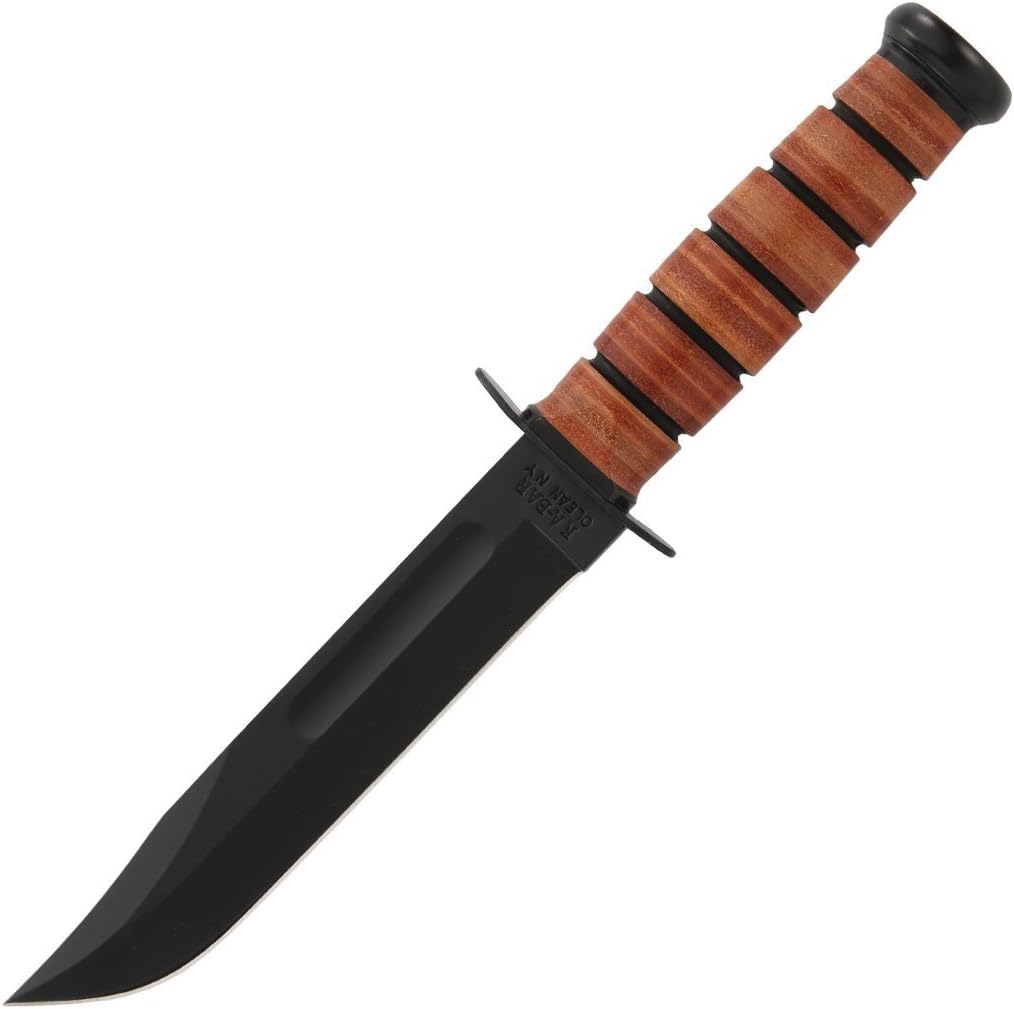
Ka-Bar USMC Fighting Knife
Looking for a historical, combat-proven fixed blade that is slightly smaller and more manageable for standard camp tasks? This is the legendary alternative.
Check Price on AmazonFrequently Asked Questions (FAQ)
Final Verdict: A Functional Masterpiece
The Cold Steel Wild West Bowie is infinitely more than just a nostalgic novelty or a prop for a cowboy costume; it is a highly capable, devastatingly effective tool that pays immense respect to the rugged American frontier. It offers incredible, undeniable value for the massive amount of premium high-carbon steel and beautiful wood craftsmanship you receive in the box.
While it is almost certainly not going to replace your lightweight daily carry pocket folder (unless your daily commute involves traversing the untamed wilderness), it is a genuinely fantastic, highly functional addition to any knife collection, hunting pack, or deep-woods camping kit.
If you deeply appreciate the rugged, “overbuilt” manufacturing philosophy of modern brands like Zero Tolerance but want that indestructible reliability packaged in a classic, historically significant fixed-blade format, the Wild West Bowie will absolutely not disappoint. It flawlessly captures the romantic, untamed spirit of the Old West while simultaneously delivering the brutal, hard-use performance expected of a modern survival tool.