Mac vs. Wusthof: The Razor-Sharp Hybrid vs. The German Tank
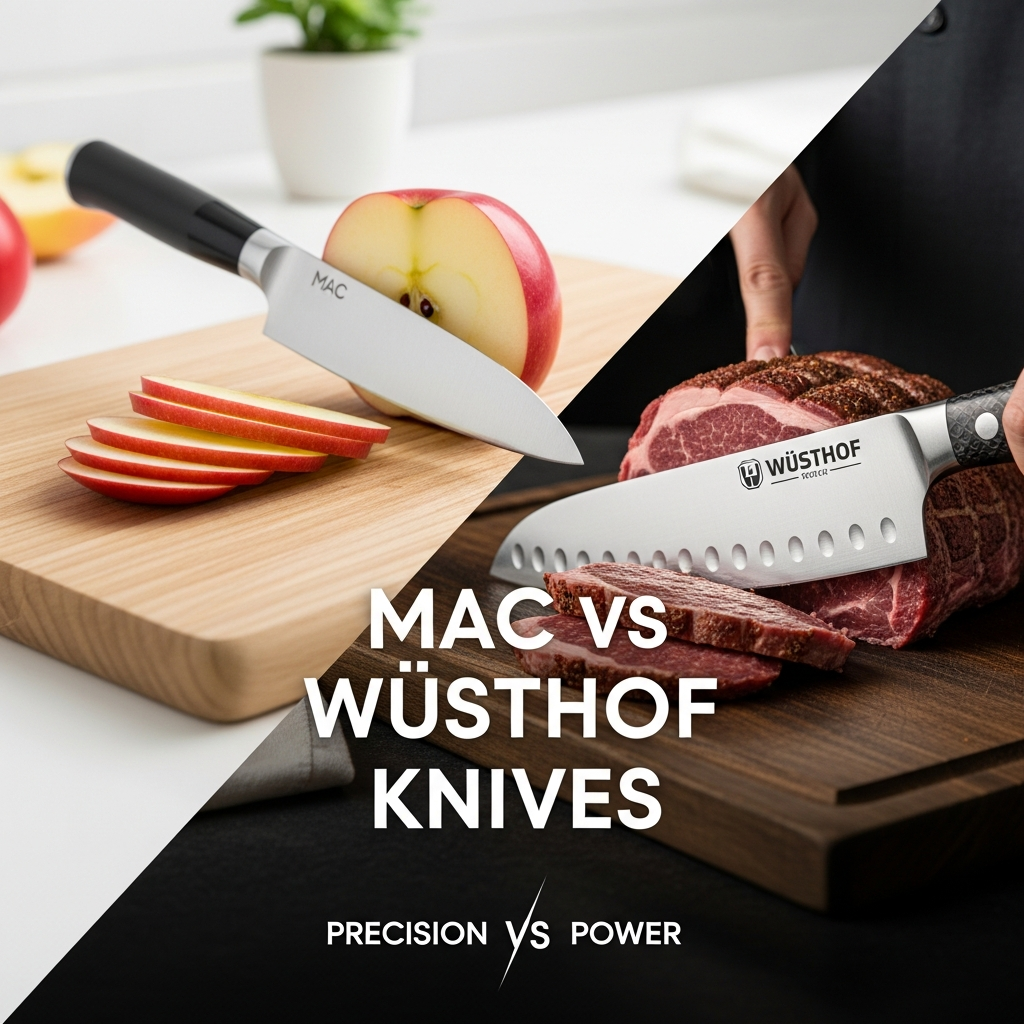
In the vast world of kitchen cutlery, most debates settle into a predictable rhythm: “German Durability” versus “Japanese Precision.” But what if you could have both? Enter the Mac vs. Wusthof rivalry.
On one side, you have Wüsthof, the king of Solingen, Germany. They produce the quintessential German kitchen knives—heavy, forged, and nearly indestructible. On the other side, you have Mac, a Japanese brand that famously blends Western durability with Eastern sharpness. Mac knives are the secret weapon of many professional chefs, often called “the world’s sharpest knives.”
If you are browsing knifeindex.com/ looking for your “forever knife,” this comparison is critical. Do you want the robust, rock-chopping power of Wusthof, or the laser-like, push-cutting precision of Mac? In this comprehensive guide, we will analyze the steel, geometry, and soul of these two titans — and, further down, every line, size, price tier, and use-case scenario you might be searching for before you buy.
1. Brand Philosophy: Two Different Worlds
Wüsthof: The Heritage of Solingen
Wusthof is the establishment. Founded in 1814, they represent the “old world.” Their knives are typically forged (learn more in our stamped vs forged guide) and feature a full bolster. They are designed to take a beating, survive the dishwasher (though you shouldn’t—see our dishwasher safe guide), and last for generations.
Mac: The Professional’s Secret
Mac was founded in Japan in 1964. Their philosophy is simple: Create a safer, sharper, lighter knife. They use a hybrid approach—Japanese steel and thin geometry, but often with Western-style handles. They are typically stamped but feel incredibly solid. They are frequently cited in our best Japanese kitchen knives lists as the most user-friendly option.
External Insight
According to Prudent Reviews, Mac knives are often favored for their edge retention, while Wusthof wins on handle comfort and durability. Read their deep dive here: Wusthof vs. Mac: The Definitive Comparison.
2. Head-to-Head: The Specs Breakdown
We are comparing the flagships: Wüsthof Classic Ikon vs. Mac Professional (MTH-80).
| Feature | Wüsthof Classic Ikon | Mac Professional (MTH-80) |
|---|---|---|
| Steel | X50CrMoV15 (German) | Proprietary High-Carbon (Japanese) |
| Hardness (HRC) | 58 | 59-61 |
| Edge Angle | 14° per side (PEtec) | 15° per side |
| Construction | Precision Forged | Stamped |
| Weight | Heavy / Substantial | Light / Agile |
| Handle | Contoured POM (Synthetic) | Pakkawood (Wood/Resin) |
3. The Steel and The Edge
Wusthof: Toughness Over Hardness
Wusthof uses X50CrMoV15 steel hardened to 58 HRC. This is “soft” compared to Japanese standards, but it makes the knife incredibly tough. It won’t chip easily if you hit a bone or a frozen pea. It is also very easy to hone back to sharpness. (Check our guide to sharpeners for tips).
Mac: The Edge of Glory
Mac uses a proprietary high-carbon steel including Tungsten, Molybdenum, and Vanadium. It is harder (up to 61 HRC). This allows it to take a screaming sharp edge and hold it longer than Wusthof. However, because the blade is thin and hard, it is more brittle. You cannot use a Mac to hack through chicken bones.
4. The Chef’s Knife Battle
The 8-inch Chef’s knife is the most important tool you will own. (Read what is a chef knife used for).
 Wüsthof Classic Ikon 8″ Chef’s Knife
The German masterpiece. Perfect balance, contoured handle, and a half-bolster that allows for full-blade sharpening. It feels authoritative and safe.
Check Price on Amazon Mac Professional (MTH-80) 8″ Chef’s Knife
The “Mighty” Mac. Featuring a thin blade with dimples to prevent sticking. It cuts through carrots like they are butter. The choice of Gordon Ramsay.
Check Price on Amazon5. Detailed Comparisons by Knife Type
Vegetable Prep (Santoku & Nakiri)
Mac shines here. Their thin blades glide through dense vegetables without wedging (cracking the vegetable).
If you love the Nakiri style, Mac makes an excellent, lightweight version. Wusthof’s Santoku is heavier and better for those who prefer the Santoku shape but want a Western feel.
Bread Knives
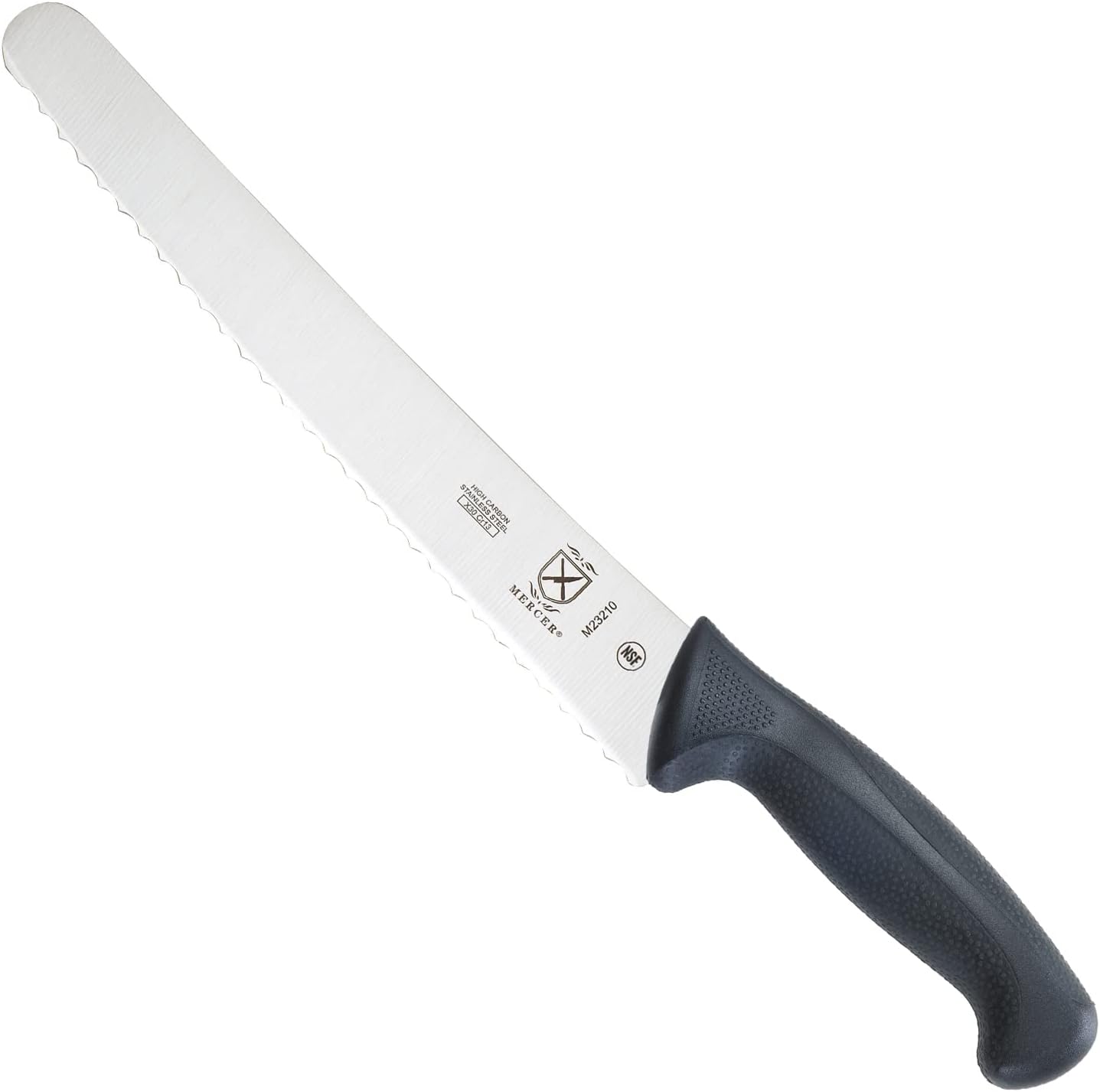
Wusthof’s “Double Serrated” bread knife is legendary for hard crusts. However, Mac’s “Superior Bread Knife” has a cult following because its unique scalloped edge creates almost zero crumbs. Read our guide to the best bread knife to see where they rank.
Paring Knives
For detail work, Mac’s paring knives are incredibly nimble. Wusthof’s are heavier, which some cooks prefer for control. (See: What is a paring knife used for?).
6. How They Compare to the Rest
Still undecided? Here is how Mac and Wusthof stack up against other major players:
- Vs. Shun: Shun is Wusthof’s main Japanese rival. Shun is flashier (Damascus) and more brittle than Mac. Mac is more utilitarian. (See Shun vs Wusthof).
- Vs. Global: Global is metal-handled and futuristic. Mac has a traditional handle feel but similar sharpness. (See Global vs Wusthof).
- Vs. Victorinox: If Mac and Wusthof are too expensive, Victorinox is the best budget alternative. (See Wusthof vs Victorinox).
- Vs. Zwilling: Zwilling is Wusthof’s twin. Very similar performance. (See Zwilling vs Henkel).
7. Maintenance and Care
Both require care, but Mac requires more care.
- Rust: Mac’s steel is stain-resistant but not stainless. It can spot if left wet. Wusthof is very resistant. Learn how to remove rust just in case.
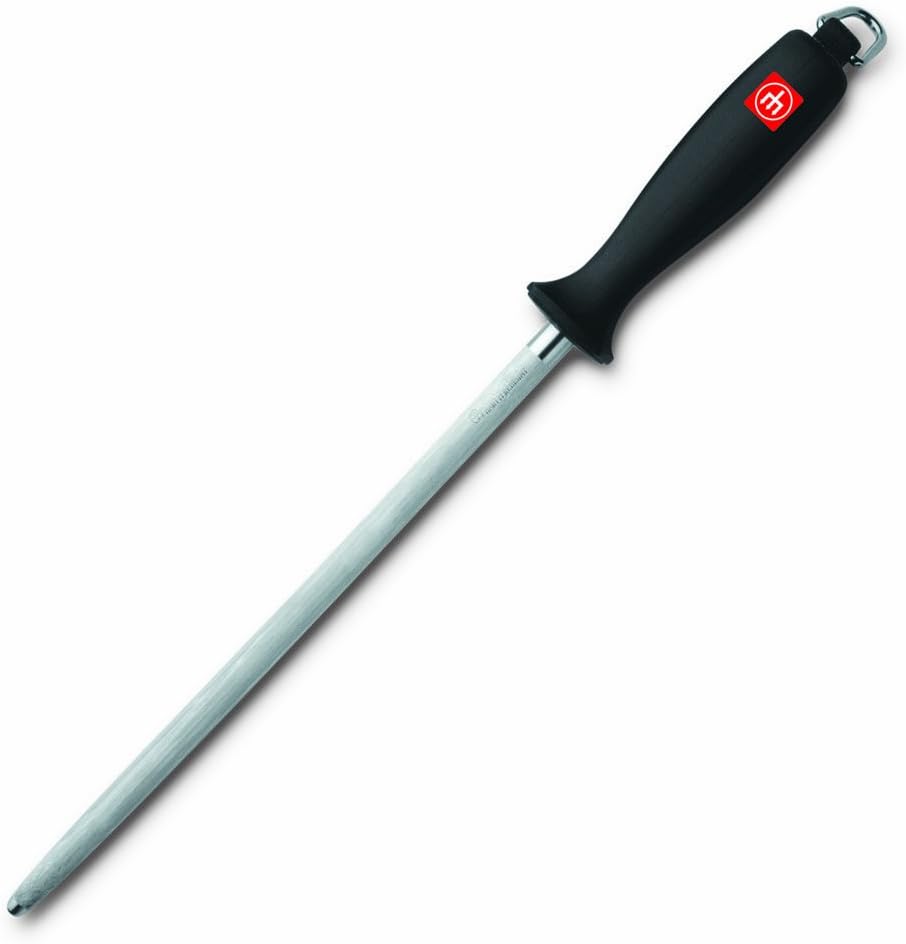
- Sharpening: Mac knives are harder. You might want to use a ceramic rod rather than a steel honing rod. Wusthof takes a steel rod beautifully.
- Storage: Never throw a Mac knife in a drawer; it will chip. Use a drawer organizer or a magnetic strip. Wusthof is tougher but still deserves respect.
8. Price and Value
Wusthof is a premium investment. You pay for the brand, the lifetime warranty, and the German manufacturing.
Mac is pricey but often slightly cheaper than Wusthof’s top lines. It offers incredible performance per dollar.
If both are out of budget, check our best affordable chef knives or budget guides.
9. Full Wüsthof Line Comparison: Which Series Should You Buy?
One of the most common points of confusion for shoppers isn’t “Mac vs Wusthof” at all — it’s figuring out which Wüsthof line to buy in the first place. Wüsthof sells several distinct forged collections, and they are not interchangeable in feel, price, or handle shape. Understanding this internal lineup matters because when people search for “Wusthof Classic vs Classic Ikon” or “Wusthof Gourmet vs Classic,” they are really asking a version of the same question this article is built to answer: how much precision, comfort, and investment do you actually need?
Wüsthof Classic
The original. A synthetic textured handle, a traditional full bolster, and the brand’s signature Precision Edge Technology (PEtec) 14-degree edge. This is the knife most culinary schools hand new students, and it remains the reference point every other Wüsthof line is measured against.
Wüsthof Classic Ikon
The flagship. Same blade steel and geometry as the Classic, but with a more ergonomic, contoured “double bolster” handle that many cooks find easier to grip during long prep sessions. It’s the line featured in the head-to-head comparison above because it represents Wüsthof at its best.
Wüsthof Gourmet
The entry point. Stamped rather than forged, with a simpler synthetic handle and no bolster. It’s noticeably lighter and more affordable, making it a common recommendation in our best affordable chef knives roundup. If you’re comparing a Wüsthof Gourmet against a Mac, remember you’re comparing Wüsthof’s budget tier against Mac’s mid-tier, which skews the “value” conversation.
Wüsthof Epicure
A more design-forward line with olive-wood handles. Performance is close to the Classic, but the aesthetic — and price — are elevated. This is frequently the line recommended in gift guides because of its striking look on a knife block.
Wüsthof Amici and Urban Farmer
Two more style-driven forged lines with different handle woods and finishes (walnut for Amici, a rougher rustic wood for Urban Farmer). Blade performance across nearly the entire forged Wüsthof catalog is very similar; what changes is the handle material, weight distribution, and price.
| Wüsthof Line | Construction | Handle | Best For |
|---|---|---|---|
| Gourmet | Stamped | Basic synthetic | First-time buyers, backup knives |
| Classic | Forged | Textured synthetic + bolster | Culinary students, all-rounders |
| Classic Ikon | Forged | Contoured synthetic | Long prep sessions, ergonomics |
| Epicure | Forged | Olive wood | Gifting, kitchen aesthetics |
| Amici / Urban Farmer | Forged | Walnut / rustic wood | Style-focused buyers |
10. Full Mac Line Comparison: Original vs Professional vs Superior
Mac’s catalog is smaller and simpler than Wüsthof’s, but the differences between series matter just as much, especially around tang construction and blade thickness.
Mac Original Series
Mac’s most affordable line, recognizable by its black handle and half-tang construction. It’s thinner and lighter than the Professional series, which makes it exceptionally nimble but slightly less durable for heavy use. This is the series most often recommended to home cooks stepping up from a big-box store knife for the first time.
Mac Professional Series (MTH/PKF/HB)
The line featured in this comparison. Full-tang construction, dimpled “hollow edge” options that reduce food sticking, and a Pakkawood handle. This is Mac’s line most frequently found in restaurant kitchens, and it’s the direct competitor to the Wüsthof Classic Ikon in terms of positioning and price.
Mac Superior Series
A step up in materials, often featuring a Damascus-style cladding for looks and a slightly refined handle. Performance is close to the Professional series, but the price climbs because of the visual upgrade.
Mac Ultimate and Molybdenum Series
Mac’s premium and entry-level bookends respectively. The Ultimate series uses harder, more premium steel for enthusiasts who want maximum edge retention, while the Molybdenum series trims cost for buyers who want the Mac feel on a tighter budget.
| Mac Line | Tang | Handle | Best For |
|---|---|---|---|
| Original | Half-tang | Black synthetic | Budget-conscious upgraders |
| Professional | Full-tang | Pakkawood | Serious home cooks & pros |
| Superior | Full-tang | Refined Pakkawood | Buyers who also want visual flair |
| Ultimate | Full-tang | Premium Pakkawood | Enthusiasts chasing max edge retention |
11. Weight, Balance, and Blade Length: The Numbers That Matter
“Light” and “heavy” are subjective until you see the actual numbers. An 8-inch Wüsthof Classic Ikon chef’s knife typically weighs somewhere in the 8-ounce range with the handle, while a comparable 8-inch Mac Professional chef’s knife typically comes in closer to 6 ounces. That two-ounce difference sounds small on paper, but after two hours of continuous prep work, it is the difference between wrist fatigue and feeling like you could keep going.
Blade length is another place people get tripped up while shopping. Wüsthof sells its chef’s knives in 6″, 7″, 8″, 9″, and 10″ options across most lines. Mac’s most popular chef’s knife (the MTH-80) is 8 inches, but the brand also sells a 6.5″ version (MTH-67) for cooks with smaller hands or tighter cutting boards, and larger 9.5″–10″ options for cooks who prefer a longer stroke. If you have small hands or a compact kitchen, the Mac 6.5″ is worth cross-shopping against the Wüsthof 6″ Classic before you commit to either brand’s 8-inch flagship.
12. Full Tang vs Half Tang: Why It Matters for This Comparison
The “tang” is the portion of the blade steel that extends into the handle. A full-tang knife has steel running the entire length of the handle, visible along the top and bottom edges, and is generally considered more durable and better balanced. A half-tang (sometimes called a partial tang) has steel extending only partway into the handle.
Every Wüsthof forged knife in the Classic, Classic Ikon, Epicure, and similar lines is full-tang. Mac is more nuanced: the entry-level Original series is typically half-tang, while the Professional and above lines are full-tang. If full-tang construction is a non-negotiable for you, make sure you’re comparing Wüsthof’s forged lines against Mac’s Professional series or higher, not the Mac Original — otherwise you’re not making an apples-to-apples comparison.
13. Country of Manufacture and “Made In” Claims
Wüsthof knives are manufactured in Solingen, Germany, a city so historically tied to cutlery that “Solingen” functions almost as a quality mark in itself, similar to how “Sheffield” once did for English steel. Every knife in the core forged lineup is produced at Wüsthof’s own factory rather than outsourced.
Mac knives are manufactured in Japan, primarily out of Seki City and the Niigata region — two of the country’s most storied blacksmithing centers, also home to brands like Shun and many artisan bladesmiths. Both companies control their own manufacturing rather than relying on third-party factories, which is part of why both brands can maintain consistent quality control across a full product line.
14. Warranty and Lifetime Support Compared
Wüsthof backs its knives with a limited lifetime warranty against manufacturing defects, and the brand has built decades of trust around honoring that promise. Mac also offers a manufacturer’s warranty against defects in materials and workmanship, though the specific terms and length can vary by retailer and region, so it’s worth confirming the exact policy with the seller at time of purchase.
Neither warranty covers ordinary wear, chips from cutting bone or frozen food, rust from improper storage, or damage from dishwasher use — which is why the maintenance section above matters as much as the spec sheet.
15. Mac vs Wusthof: What Home Cooks Say Online
Search “Mac vs Wusthof Reddit” or browse cooking forums and a consistent pattern emerges. Home cooks who came up using European or American knives tend to reach for Wüsthof first because the weight and bolster feel familiar and forgiving. Cooks who trained in professional kitchens, or who have spent time with thinner Japanese blades, tend to gravitate toward Mac once they get past the learning curve of using a lighter, less forgiving knife.
A recurring theme in these discussions is that people rarely regret owning both. A Wüsthof for rock-chopping, disjointing poultry, and general heavy-duty tasks, paired with a Mac for fine vegetable work and protein slicing, is one of the most commonly recommended two-knife starter sets among enthusiasts who have tried a wide range of brands.
16. Knife Sets: Mac vs Wusthof Block Sets
Both brands sell multi-piece knife block sets, and the calculus here is different than buying a single chef’s knife. Wüsthof’s block sets (in Classic and Gourmet lines especially) are widely available and tend to include a chef’s knife, paring knife, utility knife, bread knife, honing steel, kitchen shears, and a wooden block — a genuinely complete starter kit for a first kitchen.
Mac’s set offerings are more limited; the brand is more commonly purchased knife-by-knife, building a personalized roll or block over time rather than buying a pre-packaged set. If you want a complete, guaranteed-to-match set out of the box, Wüsthof currently has the stronger set lineup. If you’d rather curate your own collection piece by piece and only buy what you’ll actually use, Mac’s à la carte approach suits that shopping style better.
17. Task-by-Task: Which Knife Wins for Specific Jobs
Boning and Breaking Down Poultry
Wusthof wins clearly here. The tougher steel and thicker spine can handle twisting through joints and occasional contact with bone without chipping. A Mac chef’s knife is not designed for this task, and using one to break down a whole chicken is one of the fastest ways to damage the edge.
Slicing Raw Fish and Sushi-Style Prep
Mac’s thin, hard, hollow-edge blades are far better suited to clean, single-pass slices of fish and sashimi than Wusthof’s thicker Western geometry. If sushi or crudo prep is a regular part of your cooking, a Mac (or a dedicated Japanese slicer) will outperform a German chef’s knife by a wide margin.
Carving Roasts and Large Cuts of Meat
This is closer, but Mac’s edge retention and thin profile give it a slight advantage for producing clean, thin slices off a roast, while Wusthof’s carving knives offer more heft and control for cooks who prefer a firmer feel.
Everyday Onion, Garlic, and Herb Prep
Both perform excellently, and this is genuinely a matter of preference. Mac’s lighter weight rewards a faster prep style; Wusthof’s heavier blade does more of the work for you on tougher vegetables like winter squash.
18. Left-Handed Use
Good news for left-handed cooks: both the Wüsthof Classic Ikon and the Mac Professional are ground symmetrically (not single-bevel), meaning both knives work equally well in either hand without the edge geometry favoring right-handed use. This differs from traditional single-bevel Japanese knives, which are usually handed and require a specific left-handed grind on request.
19. Honing Steel vs Whetstone: What Each Brand Recommends
Because Wüsthof’s steel is relatively soft and tough, a traditional honing steel realigns the edge quickly and can be used before nearly every use without much risk. Mac’s harder steel holds its edge longer between sharpenings, but a standard steel honing rod can be too aggressive and risks micro-chipping; a ceramic honing rod or occasional light touch-up on a fine whetstone is the safer routine. For anyone maintaining both brands in the same knife roll, it’s worth keeping two separate honing tools on hand rather than using one rod for everything.
20. Gift Guide: Choosing Between Mac and Wusthof as a Present
If you’re buying for someone else, Wüsthof is generally the safer gift. It’s more forgiving of imperfect technique, easier to maintain, and the brand recognition alone tends to land well. Mac is the better gift for someone who already cooks seriously, has mentioned wanting a “sharper” knife, or has expressed interest in Japanese-style cutlery — because it comes with a slightly steeper learning curve that a beginner may not appreciate.
21. Longevity and Resale Considerations
Well-maintained knives from either brand can realistically last decades. Wüsthof’s toughness means it tolerates years of imperfect care and still performs reliably. A Mac requires more consistent, careful maintenance to reach the same lifespan, but when properly cared for, its harder steel means the edge geometry holds up impressively well over time. Neither brand has a significant secondary resale market the way certain boutique Japanese blacksmiths do, so buy either for use, not as an investment piece.
22. Quick-Answer Summary Table
| Priority | Winner |
|---|---|
| Beginner-friendliness | Wüsthof |
| Raw sharpness / edge retention | Mac |
| Durability against bone/frozen food | Wüsthof |
| Fish & delicate protein slicing | Mac |
| Low-maintenance ownership | Wüsthof |
| Lightweight, fatigue-free prep | Mac |
| Complete starter block sets | Wüsthof |
| Gifting to a beginner | Wüsthof |
| Gifting to a serious home cook | Mac |
23. The History of Solingen vs. Seki City: Why Geography Shaped These Knives
To really understand why a Wüsthof and a Mac feel so different in the hand, it helps to zoom out to the towns where they’re made. Solingen, Germany has been known as the “City of Blades” since the medieval period, when local guilds controlled sword and blade production along the Wupper River. The soft water and abundant iron ore in the region made it a natural hub for metalworking, and by the time cutlery became the dominant product centuries later, Solingen workshops had already built centuries of institutional knowledge around forging thick, durable steel that could survive rough handling. Wüsthof, founded there in 1814, inherited that DNA directly. The brand’s entire design language — thick spines, full bolsters, forgiving edge angles — is a continuation of a blacksmithing tradition built around swords and tools that needed to survive battlefield and workshop conditions, not delicate slicing.
Seki City, Japan tells a different story. Located in Gifu Prefecture, Seki has been a center of Japanese sword-making since the Kamakura period roughly 800 years ago, prized for producing blades that were simultaneously sharp and resilient using differential hardening techniques. When Japan’s sword industry contracted after the Meiji era banned the public carrying of swords, Seki’s blacksmiths pivoted their expertise toward kitchen cutlery, pocket knives, and razors. That heritage of thin, hard, exceptionally sharp steel — originally developed for cutting through armor and silk with equal precision — is the same lineage Mac draws from when it produces a chef’s knife that can shave paper-thin slices of daikon. Mac itself was founded in 1964, relatively young compared to Wüsthof, but it was built by artisans steeped in a much older regional tradition of thin, hard-edged blade work.
This geography-driven history explains almost every technical difference covered earlier in this guide. Wüsthof’s thicker, softer, tougher steel is a direct descendant of tool and sword-making traditions built for durability under stress. Mac’s thinner, harder, sharper steel is a direct descendant of a tradition built for precision cutting first and impact resistance second. Neither approach is “wrong” — they’re simply optimized for different jobs, the same way a sledgehammer and a scalpel are both correct tools depending on what you’re trying to do.
24. Understanding Rockwell Hardness (HRC) in Plain English
The HRC numbers mentioned earlier in this guide (58 for Wüsthof, 59–61 for Mac) come from the Rockwell C hardness scale, a standardized way of measuring how resistant a material is to indentation. In blade steel, higher HRC generally correlates with better edge retention — the steel holds a sharp edge longer before it needs to be resharpened — but it comes at the cost of increased brittleness. Softer steel bends or rolls under stress rather than chipping, while harder steel resists bending but can crack or chip if flexed too far or struck at the wrong angle.
Most Western knife brands, including Wüsthof, intentionally target the 56–58 HRC range because their customers — home cooks and professional line cooks working in fast-paced, high-volume environments — need a knife that survives inconsistent technique, occasional bone contact, and less-than-gentle handling. Japanese-influenced brands like Mac typically target 59–63 HRC because their design philosophy assumes a more careful user who prioritizes cutting performance and is willing to trade some impact resistance for a longer-lasting, sharper edge. Neither number is “better” in isolation; it only becomes meaningful once you factor in how carefully the knife will actually be used day to day.
25. Blade Geometry Explained: Why Thinness Changes Everything
Beyond steel hardness, the single biggest factor separating how a Mac and a Wüsthof feel when cutting is blade geometry — specifically, how thick the blade is behind the edge and how quickly it tapers from spine to edge. A thinner blade requires less force to push through food because there’s less material displacing the item being cut, which is why a Mac chef’s knife can glide through a carrot with almost no resistance, producing a clean cut with minimal cell damage to the vegetable. A thicker blade, like Wüsthof’s, has to wedge food apart as it cuts, which requires more force but also means the blade is inherently less likely to flex, bind, or chip when it encounters something unexpectedly firm, like a squash stem or a chicken joint.
This is also why the “hollow edge” or dimpled design on many Mac Professional knives exists. Even a thin blade can still create suction against sticky foods like potato or cucumber, causing slices to cling to the sides of the blade. The dimples introduce small air pockets that break that suction, letting food fall away cleanly — a feature Wüsthof’s thicker Classic Ikon line generally doesn’t need because its blade profile doesn’t create the same amount of surface contact in the first place.
26. Handle Ergonomics: POM vs. Pakkawood in Daily Use
Wüsthof’s synthetic POM (polyoxymethylene) handles are engineered for consistency. They’re non-porous, completely impervious to water and bacteria, and manufactured to extremely tight tolerances, meaning every Classic Ikon handle feels identical out of the box. The material is also naturally grippy, even when wet, which matters enormously in a professional kitchen where hands are constantly being rinsed. The tradeoff is that POM has a slightly less “premium” tactile feel compared to natural materials — some cooks describe it as a bit clinical or plasticky, even though functionally it performs exceptionally well.
Mac’s Pakkawood handles are made from layered wood veneers impregnated with resin, giving them the visual warmth of real wood combined with much better water resistance than untreated wood would offer. Pakkawood is common across the Japanese knife industry precisely because it splits the difference between traditional wooden handles (which look and feel great but can crack, swell, or harbor bacteria if not cared for) and fully synthetic handles (which are bulletproof but can feel cold or generic). In daily use, most cooks find Pakkawood slightly more comfortable for extended sessions because of its marginally warmer feel, though this is one of the more subjective differences between the two brands and comes down heavily on personal preference.
27. Prep Speed: Does a Lighter Knife Actually Make You Faster?
A common claim among Mac owners is that the lighter weight translates directly into faster prep speed, and there’s real physical logic behind it. A lighter blade requires less muscular effort to accelerate and decelerate with each cutting stroke, which matters enormously when you’re making hundreds of repetitive cuts during something like dicing a case of onions. Over the course of an hour of continuous prep, the cumulative fatigue savings from a 6-ounce knife versus an 8-ounce knife can be significant, particularly for the wrist and forearm.
That said, weight isn’t the only factor in speed. Wüsthof’s heavier blade carries more momentum through each cut, which means the knife itself does more of the “work” of separating tough vegetables, reducing the need to apply additional downward force from your arm. Some cooks find this actually makes them faster on dense produce like butternut squash or celeriac, where a lighter blade can bounce or require a second pass. In practice, most professional kitchens end up using both styles situationally — a heavier Western knife for the bulk break-down work, and a lighter Japanese-style knife for fine, high-precision finishing cuts.
28. Noise, Feedback, and “Feel” While Cutting
This is a less commonly discussed but frequently mentioned difference among people who’ve used both brands extensively. Wüsthof’s thicker blade produces a deeper, more solid “thunk” sound and a firmer tactile feedback against the cutting board, which many cooks find reassuring — it feels like the knife is doing something substantial. Mac’s thinner blade produces a quieter, higher-pitched sound and a lighter, almost effortless feel, which some cooks describe as “disappearing” in the hand during use. Neither sensation affects cutting performance, but it does shape the overall experience of cooking with each brand, and it’s part of why people tend to develop strong brand loyalty once they’ve spent real time with one style or the other.
29. Common Complaints and Known Weaknesses of Each Brand
Common Wüsthof Complaints
- Heavier weight can cause fatigue during very long prep sessions compared to lighter Japanese-style alternatives.
- The synthetic handle, while extremely durable, is sometimes described as less premium-feeling than natural wood or Pakkawood.
- Price climbs quickly once you move beyond the base Gourmet line into the forged Classic and Classic Ikon collections.
Common Mac Complaints
- The half-tang construction on the entry-level Original series can feel less substantial or balanced compared to full-tang Western knives.
- Steel is stain-resistant rather than fully stainless, meaning it requires more diligent drying to avoid spotting.
- The harder, thinner blade is genuinely more prone to chipping if used incorrectly — twisting in a jar lid, prying, or cutting through bone are all common ways new owners accidentally damage the edge.
- Fewer complete matching set options compared to Wüsthof’s extensive block-set catalog.
30. Cutting Board Compatibility: Does It Matter Which Brand You Use?
Both Mac and Wüsthof knives perform best on softer cutting surfaces — end-grain wood or high-quality plastic — rather than glass, marble, or stone boards, which dull any blade far faster than the steel itself would normally wear. Because Mac’s edge is harder and thinner, it is somewhat more sensitive to board choice; using a Mac chef’s knife on a hard surface will visibly degrade its edge faster than doing the same with a Wüsthof. If you’re not willing to invest in a proper end-grain or edge-grain wood cutting board, Wüsthof’s tougher steel will tolerate a mediocre cutting surface better over the long run.
31. How Each Brand Performs in Commercial Kitchen Environments
In professional settings, the choice often comes down to station assignment rather than personal preference alone. Butchery and breakdown stations, where cooks are working through primal cuts, disjointing poultry, or trimming silverskin near bone, are dominated by tougher Western-style knives like Wüsthof because the tolerance for occasional bone contact and rough handling is simply higher. Garde manger and vegetable stations, where speed and clean, precise cuts on produce matter most, see much heavier use of thin, hard Japanese-influenced knives like Mac. Many chefs who rotate between stations over a career end up owning both brands for exactly this reason — not as a redundancy, but as two purpose-built tools for two different jobs within the same kitchen.
32. Sustainability and Manufacturing Practices
Both companies manufacture in-house rather than outsourcing to third-party factories, which gives each brand tighter control over quality and, generally, more transparency around labor and production practices compared to knives manufactured anonymously overseas. Wüsthof has operated out of the same Solingen facility for generations, and Mac’s production remains centered in Japan’s traditional cutlery regions rather than being moved to lower-cost manufacturing hubs. Neither brand publishes extensive environmental impact reporting compared to some larger consumer goods companies, but the relatively long product lifespan of a well-maintained knife from either brand — often decades — means the effective environmental cost per year of use is low compared to disposable, low-quality knives that get replaced every year or two.
33. Building a Balanced Knife Roll: Mixing Mac and Wusthof
For cooks who don’t want to pick a side, a mixed knife roll is a completely reasonable — and common — approach. A typical balanced setup might include a Wüsthof chef’s knife or santoku for general-purpose and heavier-duty tasks, a Mac paring or utility knife for fine detail work, and a Wüsthof bread knife for its superior performance on hard crusts. This kind of mixed collection lets you lean on each brand’s actual strengths rather than forcing one knife to do every job in the kitchen. If you’re building a roll this way, it’s worth budgeting for two separate honing routines, since as discussed earlier, the two steels respond differently to a standard honing rod.
34. Final Buying Checklist
- If you regularly break down whole chickens, fish with bones, or root vegetables like butternut squash — lean Wüsthof.
- If you regularly slice fish, delicate proteins, or fine julienne vegetables — lean Mac.
- If you want one knife that survives imperfect technique and casual handling — lean Wüsthof.
- If you’re willing to hand wash, dry immediately, and store carefully in exchange for maximum sharpness — lean Mac.
- If you want a complete matching set out of the box — lean Wüsthof.
- If you’d rather build a personalized collection knife by knife — lean Mac.
- If budget is the top priority — start with the Wüsthof Gourmet or Mac Original series rather than the flagship lines compared throughout this guide.
35. Sharpening Angle Deep Dive: 14° vs 15° and Why It’s Not the Full Story
Wüsthof’s PEtec edge is ground at roughly 14 degrees per side (28 degrees inclusive), while Mac’s Professional line sits around 15 degrees per side (30 degrees inclusive). On paper, that makes Wüsthof’s angle marginally more acute, which would suggest it should be the sharper of the two — but real-world sharpness is determined by more than inclusive angle alone. Steel hardness, the quality of the final polish on the edge, and how thin the blade is directly behind the edge (sometimes called the “behind-the-edge thickness”) all combine to determine how a knife actually performs when it meets food. Mac’s harder steel allows the edge to be finished to a finer, more consistent apex without rolling under pressure, which is a major reason it out-cuts Wüsthof in raw sharpness testing despite the slightly wider inclusive angle. This is a useful reminder for anyone shopping by spec sheet alone: edge angle is only one variable in a much larger equation, and it should never be read in isolation from steel hardness and grind quality.
For DIY sharpening at home, this angle difference has a practical consequence. If you own both brands and use a fixed-angle sharpening system, you’ll need to adjust the guide between knives rather than running both through the same setting — using a 15-degree setting on a Wüsthof, or a 14-degree setting on a Mac, will still produce a usable edge, but it won’t match the factory geometry and can subtly change how the knife performs over repeated sharpenings.
36. Corrosion Resistance and Chemical Composition Compared
Wüsthof’s X50CrMoV15 steel gets its excellent corrosion resistance primarily from a high chromium content — roughly 15% — which forms a passive protective layer on the steel’s surface and makes it highly resistant to rust even with less-than-perfect care. This is part of why Wüsthof has a reputation as an extremely low-maintenance knife; you genuinely can leave it out on the counter for a while without much risk.
Mac’s proprietary blend uses less chromium relative to its carbon content, which is exactly what allows it to reach the higher hardness levels discussed earlier, but it also means the passive protective layer is thinner and less robust. This is why Mac knives are frequently described as “stain-resistant” rather than fully “stainless” in the strict metallurgical sense. In humid climates or kitchens where knives are regularly left wet, this difference becomes more noticeable, and it’s one more reason the maintenance routines for the two brands diverge as much as they do.
37. Weight Distribution and Balance Point
Beyond total weight, where that weight sits along the knife matters just as much for how a knife feels in use. Wüsthof’s full bolster shifts a meaningful amount of mass toward the front of the handle, near the heel of the blade, which creates a balance point that typically falls right around the bolster itself. This forward-leaning balance is part of why Wüsthof knives feel so stable and confidence-inspiring during heavier chopping motions — the weight is working with your chopping stroke rather than against it.
Mac’s lighter, thinner blade combined with its Pakkawood handle typically produces a balance point closer to the handle itself, sometimes right at the point where blade meets handle. This handle-forward balance contributes to the nimble, “extension of the hand” feeling Mac owners frequently describe, since less of the knife’s mass needs to be actively controlled during fast, precise cutting motions. Neither balance point is objectively superior; they’re simply suited to different cutting styles, mirroring the broader rock-chop versus push-cut philosophy that runs through this entire comparison.
38. Price Tiers Across Both Brands at a Glance
| Tier | Wüsthof Line | Mac Line |
|---|---|---|
| Entry-level | Gourmet | Original |
| Mid-tier / Flagship | Classic / Classic Ikon | Professional |
| Premium | Epicure / Amici | Superior |
| Top-of-line | Classic Ikon (special editions) | Ultimate |
Framing the two brands by tier rather than by single flagship model is the most accurate way to comparison-shop. Comparing a Wüsthof Gourmet against a Mac Ultimate, for example, isn’t a fair fight — you’d expect the Mac to win on nearly every metric simply because it occupies a higher price and craftsmanship tier. The fairest, most representative comparison remains the one at the top of this guide: Classic Ikon versus Professional, since both occupy roughly the same mid-to-upper price bracket and target the same serious home cook and working professional audience.
39. Regional Availability and Where to Buy
Wüsthof has broad global distribution through department stores, specialty cookware retailers, and major online marketplaces, making it one of the easiest premium knife brands to physically handle before buying. Mac has historically had a narrower retail footprint, more commonly found through specialty kitchen supply stores, restaurant supply retailers, and online marketplaces rather than general department stores. If trying before buying matters to you, Wüsthof is simply easier to test in person; if you’re comfortable buying based on specs and reviews, both brands are readily available through major online retailers.
40. Putting It All Together: A Realistic Ownership Scenario
Imagine two home cooks a year after their purchase. The Wüsthof owner has used their Classic Ikon almost daily, occasionally tossed it in the sink with other dishes, honed it every few weeks, and sent it out for professional sharpening once. The blade still looks and performs almost like new, with no chips and only minor cosmetic wear on the handle. The Mac owner has used their Professional chef’s knife just as often, but has been diligent about hand washing, drying immediately, and storing it on a magnetic strip rather than in a drawer. Their knife is, by most measures, still noticeably sharper than the Wüsthof at the one-year mark — but it also required more consistent care to get there, and a single moment of carelessness, like tossing it in a sink full of other dishes, would have been far more likely to cause damage than the same mistake with the Wüsthof.
This scenario captures the real, practical difference between these two brands better than any spec sheet. Both are exceptional knives capable of a lifetime of service. The real decision isn’t about which brand makes a “better” knife in the abstract — it’s about being honest with yourself about how much day-to-day care you’re willing to invest in exchange for a sharper, lighter cutting experience.
Frequently Asked Questions (FAQ)
Not always. Many Mac knives (like the Original series) have a half-tang. The Professional series (MTH-80) has a full tang. This keeps the knife light but can feel less balanced than a Wusthof to some users.
Wusthof. It is more forgiving. If you twist the blade or scrape the cutting board, a Wusthof will survive. A Mac might chip. Wusthof is the safer learning tool.
Yes, but be careful. You need a sharpener designed for Asian angles (15 degrees). Standard Western sharpeners will ruin the edge geometry. See our electric sharpener guide for compatible models.
Many Mac knives feature a hole near the tip so you can hang them. It is a signature design element from their early days.
Neither is objectively “better” — they’re built around different priorities. Mac optimizes for sharpness and lightness; Wusthof optimizes for toughness and forgiveness. The right choice depends on your cutting style, how much maintenance you’re willing to do, and what you cook most often.
No. Hand wash and dry immediately. This applies even more strictly to Mac than to Wusthof, since Mac’s steel is stain-resistant rather than fully stainless and is more prone to spotting or corrosion if left wet.
Both are common in professional kitchens, but Mac has a particularly strong following among chefs who prioritize speed and precision in high-volume vegetable and protein prep, while Wusthof remains a staple for line cooks who need a knife that can survive rough daily handling.
If you’re specifically weighing Wusthof against the Mac Professional series, the Classic Ikon is the fairer comparison — it’s Wüsthof’s ergonomics-focused flagship and sits closer to the Mac Professional in price and positioning than the base Classic does.
Conclusion: The Verdict
The Mac vs. Wusthof battle is a choice between two styles of cooking.
Choose Wüsthof If: You are a “rock chopper.” You want a knife that feels substantial, can handle heavy-duty tasks (like splitting chickens), and requires low maintenance. It is the tank of the kitchen.
Choose Mac If: You are a “push cutter.” You value extreme sharpness and ease of slicing above all else. You treat your tools with care and want a knife that makes prep work feel effortless. It is the sports car of the kitchen.
Whichever you choose, ensure you have a safe way to transport them. Check our knife bag reviews if you plan to take your new blade on the road.